Categories
Excerpt

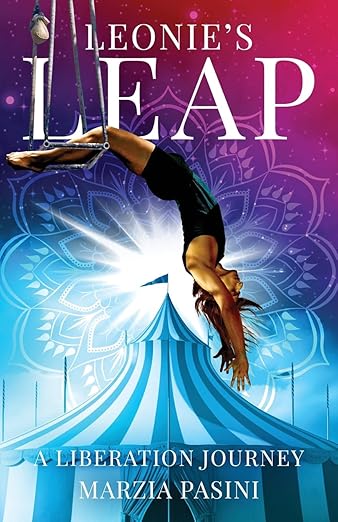
Leonie’s Leap

Title: Leonie’s Leap

Author: Marzia Pasini

Publisher: Atmosphere Press

“Son,” Hridaya whispered again, this time with an edge that made him quiver. “Do you know why you’re here?”

“I don’t,” Leonie answered, still shaken by his visions.

“Then I’ll tell you: this is your last incarnation. Your chance to break free from the cycles of separation and denial that have kept you bound. Do you know what this means?”

“I don’t,” he admitted.

Hridaya took a moment to adjust his robe, then gripped Leonie’s forearm, his voice low. “It means your ancient soul chose to return to this plane one last time for the purpose of liberation. Divine destiny is with you, but you still have the will to reject it. If you turn away, the universe will keep sending the lessons you need to learn. Ignore them, and they’ll get harsher. Do you understand?”

Leonie shrugged in resignation. “What does it matter what I’ve come here to learn?” he murmured, his gaze falling to the ground. “I’m all alone, anyway.”

“Nonsense,” Hridaya countered, his grip on Leonie’s palm firming.

“You are no orphan, but a beloved child of the universe. Though you may feel displaced, your soul is anchored to the womb of the world; your hands inter-twined with the pulse of creation. It is only in the folly of ignorance that we choose to desert ourselves, becoming orphans to our very own souls.

“Look,” he said, squinting his blind eyes as if sensing Leonie’s pain, “I know life doesn’t always add up the way we want it to, but that doesn’t mean we should stop counting our blessings. You see, there is no good or bad luck, really, only wisdom to be gained from our unmendable human condition.

“Our personal stories shape us, but they do not limit or define us. In the end, who we truly are escapes all form and definition. It doesn’t matter, then, what star you were born under or which side of the river you drank from— obstacles will arise either way. You must not get discouraged, son. We are here to pave the way for each other, learning to see clearer so we can love better.

“The fortuneteller paused, as though listening for a distant whisper only he could hear. Then, with his head tilted toward the sky, he continued: “At any point, we can give our life a hundred different names or simply call it grace. It all depends on how well we learn to see through things. Sometimes the greatest trials turn out to be our highest blessings. Other times, we are left with indelible wounds, marks that cannot be erased or repaired. But if we carry our hurt with grace, the scars stitched onto our skin become luminous constellations guiding our way home.

“Now happiness is the common road. But freedom? Here the road forks. The path of freedom is not the way of the masses, nor the aspiration of the tribe. Many of us meddle with freedom, but freedom has little to do with getting things our way, possessing what we desire, or feeling good about this or that.

“Before we’re born, freedom is woven into the fabric of our souls. As children, we understand this instinctively, but as we grow, this knowingness fades, leaving us nostalgic or in denial. Only a rare, disgruntled minority set off on a quest to reclaim what’s been lost. Some journey far, sometimes to the farthest edges of the earth. Don’t get me wrong. At times, the search is required. Yet what really matters is never the distance we travel, but how deep we are willing to dive to illuminate the shadows.

“Son,” the fortuneteller leaned in, his voice dropping to a secretive whisper. “You’ll hear many promising you something better or more. It seems to me everyone hopes to hoard magic, but the pot of gold doesn’t just sit at the end of the rainbow. Treasures pepper the trail. Each day, the path unfolds, ever unwritten. Now tell me, what does your heart long to know more than anything so it may be made free again?”

Silence pervaded the forest once more. A gentle breeze brushed against Leonie’s face as he gazed out at the water, then back at the man. “The truth about my mother,” he uttered. “That is what I’d like to know most.”

Hridaya sighed deeply. “The truth, son, will set you free, but to do so, it must break open your heart first. Are you sure this is what you want to know more than anything?”

A tremor rippled through Leonie’s heart. He knew that the truth, whatever it was, would hit like a punch to his chest.

***

Dearheart, perhaps you, too, have felt the sudden whack of truth—a force you have avoided, fearing it could shatter the world as you know it. Be honest: how often have you told a white lie to help someone save face or feel better? How many times has something inside you desperately wanted to live out the truth, and at the same time hoped it would never be revealed?

There’s no escaping it: the truth is seldom subtle. It’s a hurricane, exposing what you’ve kept covered. If we let the truth be destructive, it will wreak havoc. Yet honesty doesn’t have to be crushing; it can be as gentle as blushing. Gentle honesty is wise and discerning. It doesn’t weaken relationships; it deepens them. Speaking the truth is never about being rude, harsh, or unfiltered—it’s about upholding integrity in the centre of your heart. After all, honesty is a prickly rose. It must be handled with care, carried with grace, and delivered with unbending kindness. Even if it’s tough, lean into the hard conversations softly and speak your heart boldly. Stand for the truth—whatever the cost. Anything less is fickle, unreliable, and untrustworthy.

Dearheart, have you ever wondered about that tingle keeping you awake at night? Where does the fiery inspiration spark from? Why does your soul beckon you in? Consciousness is ever awake, whether you are asleep, stumbling, or taking the leap. It patiently waits for you to unlock the mysteries of your spirit and embrace the liberating journey that awaits.

About the Book

Leonie’s Leap tells of the adventures of a fifteen-year-old orphaned acrobat who escapes his dreary life to join the circus as a trapeze artist. Just as the daring acrobat takes the bold plunge into the unknown, your inner exploration reveals the hidden wonders within.

Your capacity to return to this wild inner landscape is the answer to your deepest longing, the home where every prayer settles. It doesn’t matter where you come from or what path you have chosen—every bit of YOU knows it: you were born to live vibrantly from your depths. The world needs you to dwell in your wildly liberated heart. It breathes through your sacred dreams. Your wings. Your feet.

Are you ready to leap?

About the Author

Marzia Pasini is a writer and life coach devoted to heart consciousness and the sacred return to self. With a background in Philosophy and a Master’s in Comparative Politics from the London School of Economics, she began her career in international development, working with the United Nations and the Office of Her Majesty Queen Rania of Jordan. Two life-altering health crises sparked a profound inner shift, inspiring her to help others reconnect with their inner freedom and truth. She has also authored a children’s book Satya and the Sun, which follows a young girl on a magical journey through her fear of the dark—offering an empowering reflection on change, trust, and the unknown.

Originally from Italy, Marzia has lived in six countries and now makes her home in India with her husband and two children.

.

PLEASE NOTE: ARTICLES CAN ONLY BE REPRODUCED IN OTHER SITES WITH DUE ACKNOWLEDGEMENT TO BORDERLESS JOURNAL

Click here to access the Borderless anthology, Monalisa No Longer Smiles

Click here to access Monalisa No Longer Smiles on Kindle Amazon International
Categories
Review

Saga of Palestinian Identity

Book Review by Bhaskar Parichha

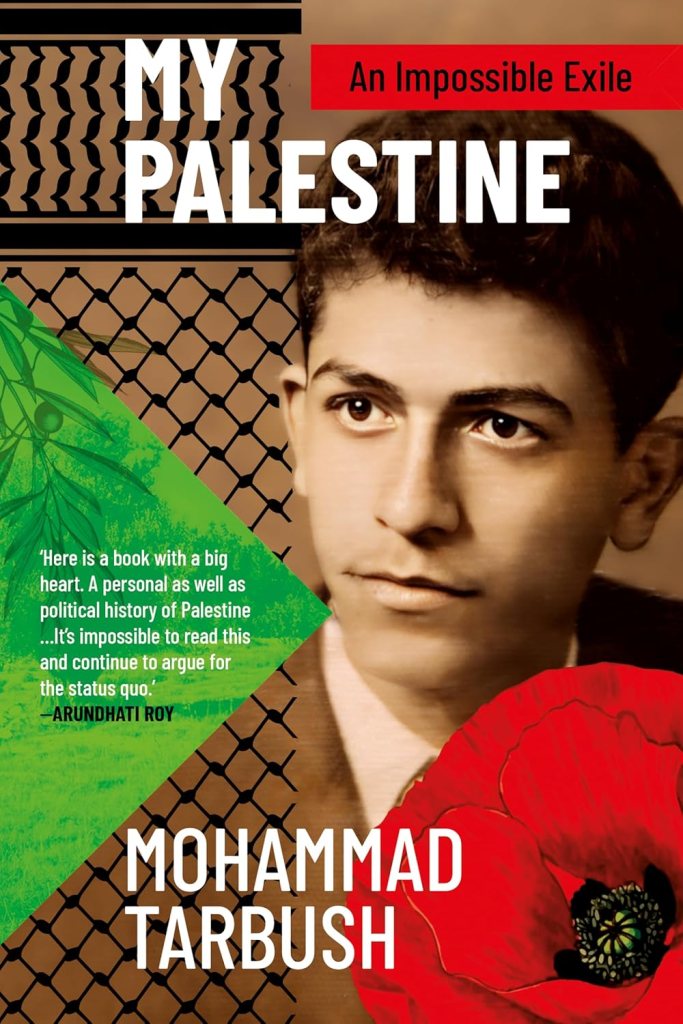
Title: My Palestine: An Impossible Exile 

Author: Mohammad Tarbush 

Publisher: Speaking Tiger Books

“The theme of this book is Palestine and its history, and the displacement and exile of its people. But it is, above all, a human story… My father’s story makes the basic point that, like all people, the Palestinians are made of flesh and blood and their children feel the agony of pain as strongly as they enjoy the warmth of happiness.”

—Nada Tarbush (Son of Mohammed Tarbush) in the ‘Foreword’.

Mohammad Tarbush was born in Beit Nattif, located in proximity to Jerusalem. In 1988, he assumed the role of managing director at Deutsche Bank, subsequently moving to UBS. He has authored multiple books, including Reflections of a Palestinian. His articles concerning Palestine have been published in various esteemed outlets, such as the International Herald Tribune, The Guardian, and the Financial Times among others.

 As a child, he and his family were compelled to leave their village along with the entire community following the Zionist victory that resulted in the formation of the State of Israel. This upheaval marked a profound turning point in their lives, as they were forced to abandon their homes, their memories, and the land that had been their ancestral heritage for generations. The trauma of displacement was palpable, as families were torn apart and communities fragmented, leaving behind a deep sense of loss and longing.

Subsequently, as displaced refugees in the West Bank, the family fell into a state of poverty. The harsh realities of refugee life were stark — they struggled to find adequate shelter, access to education, and basic necessities. The once vibrant community they had known was replaced by a life of uncertainty and hardship, where every day was a battle for survival. The children, including him, were often caught in the crossfire of political tensions, their dreams overshadowed by the weight of their circumstances. Yet, amidst the adversity, a resilient spirit emerged, fostering a sense of solidarity among the displaced families.

During his teenage years, Tarbush departed from home, ostensibly to visit relatives in Jordan; however, he embarked on a year-long hitchhiking adventure across Europe. This journey was not merely a quest for adventure but a profound exploration of identity and purpose.

As he traversed the diverse landscapes of Europe, he encountered a myriad of cultures, ideas, and perspectives that broadened his worldview. Each hitchhike brought new experiences, from the bustling streets of Paris to the serene countryside of Italy, and he absorbed the lessons of resilience and ambition that he witnessed in the lives of others.

Ultimately, he achieved great success as an international banker, navigating the complex world of finance with skill and acumen. His rise in the banking sector was marked by a blend of hard work, strategic thinking, and an innate ability to connect with people from various backgrounds.

Despite his professional accomplishments, he remained deeply aware of his roots and the struggles of his people. He became a significant, albeit discreet, advocate for the Palestinian cause, using his influence and resources to raise awareness and support for those who continued to suffer from the consequences of displacement and conflict.

Through his advocacy, Tarbush sought to bridge the gap between his successful life in the West and the harsh realities faced by his community back home. He understood that his journey was not just about personal achievement but also about giving voice to the voiceless and fighting for justice. His story became a testament to resilience.

In My Palestine, Mohammad Tarbush intertwines a moving personal narrative with sharp political and economic analysis, reflecting on the significant events that have influenced the history of Israel, Palestine, and the contemporary Middle East.

The sturdy book offers a profound exploration of the Palestinian experience, capturing the essence of resilience that defines a people who have faced immense challenges and adversities. Through a lens of deep empathy and insight, the narrative delves into the multifaceted struggles and triumphs of the Palestinian community, illustrating how they navigate the calamities that have profoundly impacted their lives.

 At its core, the narrative serves as a heartfelt and poignant testament to the ingenuity of the human spirit. It highlights not only the hardships endured but also the remarkable ways in which individuals and communities adapt, innovate, and find strength in the face of overwhelming odds. The stories woven throughout the narrative reflect a rich tapestry of cultural heritage, personal sacrifice, and unwavering hope, showcasing how the Palestinian people maintain their identity and dignity despite the challenges they encounter.

The book chronicles the everyday realities of those living in a region marked by conflict and uncertainty. It emphasises the importance of storytelling as a means of preserving history and fostering understanding, allowing the voices of the Palestinian people to resonate with authenticity and depth.

Through vivid imagery and compelling accounts, the narrative underscores the resilience that is not merely a response to adversity but a fundamental aspect of the Palestinian identity.

Bhaskar Parichha is a journalist and author of Cyclones in Odisha: Landfall, Wreckage and Resilience, UnbiasedNo Strings Attached: Writings on Odisha and Biju Patnaik – A Political Biography. He lives in Bhubaneswar and writes bilingually. Besides writing for newspapers, he also reviews books on various media platforms.

.

PLEASE NOTE: ARTICLES CAN ONLY BE REPRODUCED IN OTHER SITES WITH DUE ACKNOWLEDGEMENT TO BORDERLESS JOURNAL

Click here to access the Borderless anthology, Monalisa No Longer Smiles

Click here to access Monalisa No Longer Smiles on Amazon International

Categories
Review

Camel Karma

Book Review by Somdatta Mandal

Title: Camel Karma: Twenty Years Among India’s Camel Nomads

Author: Ilse Kohler-Rollefson

Publisher: Speaking Tiger Books

Whenever we read about travel narratives by foreigners in India, especially Westerners, we assume it to be primarily superficial, skin-deep, and without much contact with ground reality. This non-fiction book, that can also be read as a sort of travelogue, busts that myth. It begins with a German veterinarian, Ilse Kohler-Rollefson’s arrival in Rajasthan in 1991 and almost twenty-five years of association with the same. On a field trip to Jordan in 1979, she first became fascinated by the relationship between pastoral peoples and the camels they shared their lives with. After a brief stint of camel field research in Sudan’s eastern desert, her choice to continue her research on camel husbandry led her naturally to India, the country with the third-largest camel population in the world, and she arrived at the National Research Centre on Camel (NRCC) in Bikaner, Rajasthan. Wanting to know more about the practical aspects of camel-keeping or its cultural foundation, she encountered the Rebaris, also called Raikas in Marwar, who are proper breeders of camels and whose whole lifestyle centred around it. She writes, “To me it seemed that the Raikas’ relationship with their animals was equally worthy of conservation as a uniquely human heritage.”

Historically, the Raika of Rajasthan have had a unique and enduring relationship with camels. They offer a compassionate alternative by keeping farm animals as part of nature, allowing them to move and do so in herds. Farm animals can thus extend their potential as humanity’s greatest asset. Their entire existence revolves around looking after the needs of these animals which, in turn, provide them with sustenance, wealth and companionship. Ilse is immediately enthralled by Raika’s intimate relationship with their animals, but she is also confronted with their existential problems.

For her, her research among them gave her not just a glimpse of the history and culture of Rajasthan, but also a way forward in her personal journey. Denying all kinds of creature comforts, the hope of saving both the camel and the Raika way of life took her and her spirited ally, Hanwant Singh Rathore, from vet labs in the city, to Raika settlements in the remotest corners of the Thar Desert, and everywhere in between. The intractable dilemmas— both bureaucratic and cultural—they were often confronted with required creative solutions. As they adapted to their circumstances, they found their orthodox Raika friends adapting with them. Kohler-Rollefson’s is a journey that is often exasperating, sometimes funny, but keeps revealing unexpected layers of rural Rajasthani mores and diverse cultures that make it such a fascinating place.

Spending her own research grants on a shoe-string budget, Kohler-Rollefson set up a base office in Sadri, close to the Kumbhalgarh Wildlife Sanctuary at the foothills of the Aravalli mountains, where she employs several Indians as research assistants (none of whom stay for long), veterinarians who help in administering the teeka, the vaccines to eradicate common camel diseases. With her trusted driver cum translator, her ally, she interacts with several nomadic tribes who rear camels, but whose caste and culture are radically different from one another as chalk and cheese. The narrative also gives details about her interactions with the local people — some of whom had earlier eyed her with suspicion of being an outsider, but later accepted her whole-heartedly.

She describes the sign-language with which she interacts with the womenfolk in the Raika households, her regular visits to the annual animal fair at Puskar, where she even bought a young female camel and named her Mira, leaving her to grow up and breed with the other camels of the Raika. Kohler-Rollefson learned that the Raika did not sell camel milk or eat camel meat. They used other camel by-products, but clearly the economic returns from a camel did not seem optimal. Mostly, they bred female camels to give birth to male camels that could be sold to other caste for work. She was surprised to find that “these camels resembled family members and were treated almost as intimately; nobody was afraid of them.”

Despite repeated setbacks, both from government apathy as well as social taboos, Kohler-Rollefson’s dedication to the cause was so sincere that she was able to found many organisations like the Lokhit Pashu-Palak Sansthan (LPPS), including the Camel Husbandry Improvement Project (CHIP), promote the study and documentation of ethno-veterinarian practices (the melding of traditional and modern approaches to treating camel diseases), highlighting the Raika’s grazing needs at the World Parks Conference (2003), and along with Rathore and a Raika team, even embarking on an arduous 800 km long yatra  on camelback throughout Rajasthan to raise awareness and draw attention to the dwindling camel numbers.

She successfully organised a meeting where apart from the traditional Raika constituency, she could include members from a range of castes spanning the whole social spectrum of Rajasthan – Rajputs from Jaisalmer, Bishnois from Barmer, Jats from Bikaner, Gujjars from Nagaur and Sindhi Muslims from deep in the Thar. She even escorted a group of Raika, including a colourful Bhopa (a wandering minstrel who sings and narrates the story of various episodes of the mythical Pabuji’s life through unfolding of cloth scrolls) to Germany and then to Interlaken, Switzerland for an FAO (Food and Agriculture Organisation of the United Nations) conference. She set up the League for Pastoral Peoples and Endogeneous Livestock Development (LPP) in Germany. In other words, Kohler-Rollefson has been successful in drawing attention to the problems of camels rearing at an international level.

The first edition of this book came out in 2014. Since then, they have had a daunting roller-coaster ride, shuttling back and forth between the depths of despair where they thought all was lost to exhilarating heights from which they fleetingly espied camel nirvana: a scenario where camels, people, and the environment live together in harmony and mutually support each other. Interestingly, the second revised edition of Camel Karma was published in 2023 and the other good news is that 2024 has been declared the International Year of Camelids by the United Nations General Assembly, with the stated goal of raising awareness of the contribution of camelids to livelihoods, food security and nutrition. It also aims at encouraging all stakeholders, including national governments, to work towards recognising and valuing the economic, social, and cultural importance of camelids in the lives of communities, especially those that are highly vulnerable to extreme poverty.

In combination with the India government’s recent discovery and appreciation of the country’s pastoralist cultures, this may be just the constellation that successfully revives India’s camel sector. In a scenario where companies and countries are competing for shares in the globalised market, the unique selling point of Rajasthan’s camel milk is the Raika’s heritage of producing milk humanely and with compassion. The biodiverse diet of the state’s camels is composed of ayurvedic plants that add another unique quality.

Thus, it seems appropriate that we all read Camel Karma now and let the world know about the unique Raika heritage and to serve as a baseline to look back on ten or twenty years from now. Despite the rapid technological development in all spheres of life, the author sees a future, and even an urgent need, for both the camel and for the Raika and other nomadic livestock keepers. She is optimistic for several reasons as everything in India is cyclical. The camel is a versatile and multipurpose animal that can fulfil many basic needs of humans. Its role as transport and farm animal is certainly on the retreat, so long as oil is available and affordable. Yet its potential as a dairy animal remains huge. Apart from that, there is a range of other eco-friendly products that can be made from happy living camels and that may just satisfy that budding urge of urbanites – in India and abroad – to re-connect with nature.

Apart from wholeheartedly praising the endeavour of Kohler-Rollefson in spending twenty years of her life among India’s camel nomads, in sacrificing her personal and family life for the welfare of the camels, and in drawing the attention to their problems in various fora in the international context, Camel Karma is a must read for everyone who is interested in learning about the socio-economic lifestyle of several castes and tribes of rural people in Rajasthan. We are looking forward to reading the sequel to this book which the author is planning to write, and which she tentatively calls “Camel Dharma” – a book about finding the right way of living with camels!

.

Somdatta Mandal, critic, and translator, is former Professor of English at Visva-Bharati, Santiniketan, India

.

PLEASE NOTE: ARTICLES CAN ONLY BE REPRODUCED IN OTHER SITES WITH DUE ACKNOWLEDGEMENT TO BORDERLESS JOURNAL

Click here to access the Borderless anthology, Monalisa No Longer Smiles

Click here to access Monalisa No Longer Smiles on Kindle Amazon International

Categories
Review

Ever Since I Did Not Die

Book Review by Rakhi Dalal

Title: Ever Since I Did Not Die

Author: Ramy Al-Asheq

Translator: Isis Nusair

Publisher: Seagull Books

How does one write about the experiences of war, escape and migration? For one who has not died and has lived on to tell the stories, what form of language can justifiably give voice to the atrocities endured or horrors encountered? Can the ugliness of wars be borne by poetry or the distress experienced, articulated reasonably by prose?

Ramy Al-Asheq, a Syrian-Palestinian poet who writes in Arabic, was born in Yarmouk camp for Palestinian refugees in Damascus. In 2011, during the Syrian revolution, he was imprisoned and persecuted by the Assad regime. After being released from jail, he was recaptured and imprisoned in Jordan again. He escaped the prison and spent two years under a fake name in Jordan during which he won the Heinrich Böll fellowship, which allowed him to move to Germany in 2014. He currently lives in Berlin. He has founded a German-Arabic cultural magazine, called FANN, and is a curator for Literaturhaus Berlin. Ever Since I Didn’t Die was written between 2014 and 2016 and was published in 2016. It has now been translated into English. His most recent poetry collection, My Heart Became a Bomb, was published in 2021.

Refusing to classify this collection as prose or poetry, in the preface of the book, the author says:

“I gather these texts like someone collecting body parts. Here are the pieces of my body, haphazardly brought together in a paper bag. This randomness of body parts is real in its destruction. Bloody at times, violent, honest, imaginary, personal. It looks like me with all my madness and sickness, how the revolution made me grow, what the war broke inside and what exile chipped away.”

The author’s voice aches with pain. In a world where nations are maddened by the desire to seek control and exercise unquestionable power, war ‘reaches across the horizon, loftier and older than peace’, leaving behind lives fractured by violence, displacement or exile, lives shattered and left crippled; their stories do not belong to an individual but map out the collective grief of all those forced to flee their homes.

Al-Asheq recounts the tragedies brought about by wars and oppression, by militarisation which seeks to replace the God of people by God of death, resulting in a place inhabited not by those living but by people dead-alive, turning a paradise into a wasteland. Those who escape the paradise are compelled to find shelter in distant camps. He also writes about the othering of refugees in a refugee camp, about how even after being born or living in a camp for decades, they are still seen as others, as people from distant lands who do not belong and cannot become citizens of the country they seek shelter in.

He writes of a mind in delirium which after having witnessed a massacre, becomes frenzied as if touched by jinn. His pen assumes the identity of a woman who cuts her braid and fights for revenge against the oppressor. With trembling words, he speaks of the bodies of women which are turned into sites of violence, where ‘from head to toe, the body turns into openings for death to penetrate’. He does not shy away from admitting his own cowardice which made him flee even when he wanted to scream with revenge, anger and hatred.

Al-Asheq tries to conjure up his lover as if to meet her in the sentences he weaves. His words reverberate with a yearning ‘like the sound of a lute when strummed’. Conversely however, they also deliberate on killing loved ones in his imagination, if only to get rid of their memories which do not leave him.

The seventeen texts which make this collection are marked by dualities which become part of everyday living of those wrecked by the violence. They cling to life in the face of death, their moments of relief tinged by the pain of loss, the longing for love accompanied by a despair as dark as a bleak night in prison.

In his narrative, the idea of homeland doesn’t assume the accepted notion of a place of belonging. He believes in the idea of a world where countries are without borders and humans can travel as freely as the migratory birds do.

For someone who did not die and lived on to tell his stories, Al-Asheq admits that fear has been the most honest feeling he has known. If not for that, he would have died and become a hero. And because ‘there can be no hero on a land sown with injustice, he thinks there is nothing deserving in heroism’.

“Ever since I did not die, I have lost my identity he declares in the last chapter, an identity which was imposed upon him by a totalitarian regime and an affiliation to which only meant a life threatened by violence and shadowed by death. Loosing that identity and transformed by his experiences, the author returns to life to chronicle those sketches which may be identified with stories of millions of displaced people around the world. Perhaps texts like these can give voice to those voiceless and move the humankind to heal this world broken by injustice.    

.

Rakhi Dalal is an educator by profession. When not working, she can usually be found reading books or writing about reading them. She writes at https://rakhidalal.blogspot.com/ .

.

PLEASE NOTE: ARTICLES CAN ONLY BE REPRODUCED IN OTHER SITES WITH DUE ACKNOWLEDGEMENT TO BORDERLESS JOURNAL.