Poem by Quazi Johirul Islam, translated from Bengali by Professor Fakrul Alam
Perhaps you never ever noticed me
Reading this book day after day,
Or seen me looking from cover to cover
For other books in it, single-mindedly.

Tick tock the body clock kept beating.
Day would end and evening descend,
Time after time to the old page I’d return,
And yet I could never ever finish reading;

I had dipped in a river with no water at all,
I’d keep going down and down and still feel
I’d lost all sense of where I was—east or west;
This drying river would swallow me up whole!

A little later, all traces of the evening will disappear.
A shock will paralyse this desert-like land,
But the book will get stuck in the midst of the sand,
Perhaps, only for someone to lift it with his hand!

If you manage to take the book up in your hand,
No letter of the alphabet anywhere in it you’d see,
For this book full of white pages you took from the sand
Was the favourite reading matter of poet Jalal Uddin Rumi!
Quazi Johirul Islam has been writing for over 3 decades. He has published more than 90 books, 39 of them are collections of poetry. His travelogues are very popular. He has been with United Nations, has traveled all over the world, worked in conflict zones, his bag is full of colourful experiences. In 2023, Quazi was awarded Peace Run Torch Bearer Award by Sri Chinmoy Centre, New York. He has also received many awards and honours in Bangladesh, India and abroad.
Poetry by Quazi Johirul Islam, translated from Bengali by Fakrul Alam
The Creation of Adam by Michelangelo(1475-1564), Sistine Chapel. Courtesy: Creative Commons
One day I too burst into protest like marginal people do
Clamouring for longevity.

Despite evolving for millions of years
How could us civilised, highly intelligent creatures
 have such short life spans?
This should never have happened!
When a man succeeds to stand tall on his own merit
Comes the call: “Exit from this world….”
How ridiculous! No way one should accept such a summon!
A man with a life span of only 60, 70 or 80?
Maximum 90, or—with an exception or two—a century—
Does this make any sense?

Humans should live as long as they want to.
Like a ruler of any impoverished nation,
God has seemingly dictated even our retirement age!
Look at the developed countries of the world, O God,
No retirement age there! One retires when one wants to
And no one is forced into retirement.
Humans should live or die as long as they want to.
I want the freedom to choose death
I called out to all at the top of my voice—
“Let us all die only when we want to!”
To my protests the Compassionate Almighty paid heed
And came down to our protest meet.
Putting a hand on my shoulder, he said,
“How long would you like to live?”
I could have asked Him then to give me
Four or five hundreds, or even a thousand years of life,
But I didn’t, not being the kind of opportunistic leader
Who’ll slow down a movement by accepting bribes!
I had confronted the Almighty face to face
And told him: “Till the time you can ensure the right
To die, only when a human being wants to die,
Our movement for this cause will go on and on!
A smile on his face, God said: “Haven’t you realised yet
It’s up to every human being to decide his or her fate!
I’ve shark bone hangers holding up millions of fleshy dresses
All kinds of fleshy dresses sway in the breeze,
But what makes you think such dresses equate life?”

“Life, for sure, is strewn across the ways of the world
Marked by the footsteps of your kind
Every day you fidget and frown
And draw images one way or the other
Serve those who are in distress or need help
Embrace trees and burst into tears
Such going-on typify your lives.

“Clothes wear and tear
There comes a day when they have to be thrown away
Do you want eternal life for your attire?

“You’ll live by the footsteps you etch on earth
Didn’t your predecessors themselves decide on how long they would live?
Didn’t Moses, Christ, Mohammed, Buddha, Socrates, Rabindranath and Einstein
Decide in their own ways how long they would be living?

“Decide on your own how long you want to live
Stop worrying about how long your clothes will last!”
Quazi Johirul Islam has been writing for over 3 decades. He has published more than 90 books, 39 of them are collections of poetry. His travelogues are very popular. He has been with United Nations, has traveled all over the world, worked in conflict zones, his bag is full of colourful experiences. In 2023, Quazi was awarded Peace Run Torch Bearer Award by Sri Chinmoy Centre, New York. He has also received many awards and honours in Bangladesh, India and abroad.
Going up from East River to all heated up 46 Street,
Crossing quite a few avenues one after another,
Just where 5th Avenue comes into view jarringly,
One comes across America’s biggest bookstore, Barnes and Nobles,
Poised at this point of the city like an ancient philosopher.
And when I say “biggest”, I mean one store of a really big bookshop chain.
There may perhaps be a bigger shop than this one somewhere else,
Or perhaps there may be none comparable in size!

On weekdays I stand there for some time around ten
Perhaps because of its proximity to Diamond District,
The morning sunlight here—an amalgam of diamond and gold—
Streams onto the 5th Avenue pavement.

Perhaps to pick them up,
Causal and loosely clad, white-skinned women flood the street.
Usually, I buy a glass of smoothie from the Mohican youth
Making energy drinks on his machine,
Savouring afterwards a glass of the diamond-gold drink.

I can take many roads to come to F train station,
But I always use this particular crossing point.
On evenings, while returning from the UN building,
Unthinkingly, I enter Barnes and Noble’s cavernous stomach
Two concrete monsters cover the orange-coloured cloud.
What can a man possibly need in a bookshop?
It is quite one thing if it is a bar or a meat shop!
Of course, Americans crowd vegan shops nowadays,
Who knows if one day vegans will alter the American language?

From some aisle of the shop, on any given day, I’ll pick up any one.
The other day it was that old man from the Vermont Hills, Frost.
As soon as I picked him up, he wanted to make me wise in my ways.
“Try and fathom out the music of verse—that is it essence!”
What rubbish! The guy is still stuck in the 1960s!
The world of poetry has marched forward a lot,
And has been crossing all sorts of holes and pits nowadays,
And prose’s highs and lows.
The old man is such an ignoramus!

Holding a milk-honey concoction on her lap sat the Punjabi girl, Rupi Kaur.
Seeing me, she sprang into my lap.
India seemed to tremble as fingers touched soft dark skin.
Though someone who was still in her teens only yesterday,
She couldn’t resist dishing out advice. She said:
“Forge a knife on your own dear poet; hold the weapon in your hand,
The time has come to slice things with one stroke after another!”

The day I banged against Rae Armantrout, was the day I learnt about her verse,
About how in their silences became representative of language movement poetry.

I saw many others in their welcoming aisle as well!

I saw Ezra Pound trying to suppress a smile when I entered,
For sure I did not dare go near him out of fear
But let me whisper this into your ears:
I sure did mangle his poetry in trying to translate it!

I saw Amiri Baraka’s unruly beard fly in the air conditioner’s wind.
Nude Ginsberg was walking up the stairs leading to the second floor,
Shouting as he did so, “They don’t understand people’s sufferings
So obsessed are they with “development”!
John Ashberry was looking at the Hudson with one eye,
His tears stonily registering some hidden pain there
The other eye was all ablaze
All of a sudden, like a scene in some animation film,
The man’s eye’s fire made Manhattan burn.

I fled the fire that was burning so
Thinking as I did then—
How could Barnes and Nobles accommodate such hostile pronouncements,
                                                                                              such wrath!

				Holliswood, New York
				24 June, 2022
Quazi Johirul Islam has been writing for over 3 decades. He has published more than 90 books, 39 of them are collections of poetry. His travelogues are very popular. He has been with United Nations, has traveled all over the world, worked in conflict zones, his bag is full of colourful experiences. In 2023, Quazi was awarded Peace Run Torch Bearer Award by Sri Chinmoy Centre, New York. He has also received many awards and honours in Bangladesh, India and abroad.
Poem by Quazi Johirul Islam, translated from Bengali by Professor Fakrul Alam
Quazi Johirul Islam
As a boy I heard the same story from my father again and again:
My grandfather hadn’t left behind for his son any kind of plot
Where seeds could be planted that would yield a garden full of yummy stories.
In the same vein, a hunger for stories engrossed me in my childhood and teens.

I know that all ye still to be born children
Will cry glumly like I once had, hungry for stories.
That is why I’d braved cresting, roaring waves,
Cooked soups of stories on immigrant cookers on wintry nights;
Diving to the bottom of the sea, I’d seen how marine species
Dance to the rhythm of hidden waves,
And write on whale bodies of the sea!
From empty spaces, I captured wild African stories of desert bisons;
Standing in the chilling North Pole blizzards,
I was able to divine stories of stormy nights;
From Gibraltar, I fetched the bright light of new stories
Which I then strewed on Casablanca’s ancient eyes!

Out of my sweat and blood, I create endless stories for coming generations
For I know that even though all other causes of hunger may die,
What will only survive in the dark is the hunger for more and more stories.

From wintry prairies to grey Savannahs,
And in all pathways of the world,
I’ve been sowing seeds of new stories every day.
Climbing down from the lap of juicy fruit-filled gardens,
Seated on the soft mat that is earth,
They keep developing the craving for new stories endlessly.
Endlessly, the hunger for untold stories
Vibrate all sleepy pathways of the world!
Quazi Johirul Islam has been writing for over 3 decades. He has published more than 90 books, 39 of them are collections of poetry. His travelogues are very popular. He has been with United Nations, has traveled all over the world, worked in conflict zones, his bag is full of colourful experiences. In 2023, Quazi was awarded Peace Run Torch Bearer Award by Sri Chinmoy Centre, New York. He has also received many awards and honors in Bangladesh, India and abroad.
The Sun’s old. Deadly rays leak out of its decrepit body,
Lashing planets, satellites and asteroids.
Fleeing for dear life, humans and animals run helter-skelter.

Unable to endure the sun’s excruciating heat,
Men and women prepare to move with the Earth forever—
Moving with the planet they love more than any other,
They will seek sanctuary in some distant young galaxy,
Just as bewildered people, uprooted by some raging riot somewhere,
Flee far away to some distant land, lives in their hands,
Forsaking their country, destined to be refugees forever.

One morning, at sunrise,
Planets, satellites and asteroids will stare in astonishment.
At a nine-planet orbital village, a stellar union council of nine wards,
Looking immense, elliptical, though everything else will be the same!
Other planets will be in their orbits as always!
Only cunning, conniving and naughty earth will elude their gaze!

The Sun, that incarnate ball of fire, will be so fiery and indignant then
That it will dart out its mile-after-mile long murky tongue
Spewing furious fumes of loud hitherto unheard curses,
Gurgling lava spilling out from some swollen uvula forever...
It will pursue Earth as long as it can, chastising it all the time
It will flicker its fiery, thundering, curses-spewing tongue incessantly!

As it flees, casting furtive backward glances,
Will Earth ponder for even a moment and exclaim:
“Alas, what’s going to happen to those ill-fated planets—
To Mercury, Venus and Mars?”
Masud Khan (b. 1959) is a Bengali poet and writer. He has, authored nine volumes of poetry and three volumes of prose and fiction. His poems and fictions (in translation) have appeared in journals including Asiatic, Contemporary Literary Horizon, Six Seasons Review, Kaurab, 3c World Fiction, Ragazine.cc, Nebo: A literary Journal, Last Bench, Urhalpul, Tower Journal, Muse Poetry, Word Machine, and anthologies including Language for a New Century: Contemporary Poetry from the Middle East, Asia, and Beyond (W.W. Norton & Co., NY/London); Contemporary Literary Horizon Anthology,Bucharest; Intercontinental Anthology of Poetry on Universal Peace (Global Fraternity of Poets); and Padma Meghna Jamuna: Modern Poetry from Bangladesh (Foundation of SAARC Writers and Literature, New Delhi). Two volumes of his poems have been published as translations, Poems of Masud Khan(English), Antivirus Publications, UK, and Carnival Time and Other Poems (English and Spanish), Bibliotheca Universalis, Romania. Born and brought up in Bangladesh, Masud Khan lives in Canada and teaches at a college in Toronto.
RAIN - 1
It’s raining abroad now, in countries close by or far away.
Occasionally a cold wind from some other land blows this way
This summer evening brings with it sadness and beauty
Blowing this way from some distant land!
A cold, cold wind keeps blowing
Slowly stirring desire, fomenting longing
For alien rituals on such an evening.
In the distance, in a riverbank ruled by beauty
In another land, wonderfully wet in the rain,
Lightning flashes time and again
Stirring desire for one’s lover steadily
Inevitably, on such an evening!
Towards my homeland
The cold wind keeps blowing
O my alien lover
Where could you be staying?RAIN - 2
It’s raining
Over distant lands
Over Brahma’s world,
Over Rangpur and Bogra’s vast expanse
In alluvial plains,
The rain veils Burma’s evening fields
And keeps streaming down.
And below these lightning flashes,
At the rain-formed night’s third quarter
Radiant races
Spring up at home or abroad
Like hyperactive frogs leaping
Into the unknown.
Provoked by thunder and lightning’s violent outbursts,
Allured by their promises,
In the thick veil
And swirling stream,
In the darkness of the wet wind,
In the eastern expanse,
Underneath the sky
In vast and empty fields
Under the vast spread-out arum fields of the east,
Incredibly, unformed new nations emerge --
Innumerable unsteady chaotic nations,
Restless, perturbed, incapable of standing up,
Lending themselves to grotesque maps,
Forming unstable, quivering, permeable boundaries
Governed by ill-defined laws and dwarf impotent ombudsmen
And armies marching past unimpressively,
They spring for no good reason
And seem destined to be doomed.
The night draws to a close. The rain too appears spent.
When day’s first light breaks out,
Those nations that would thrive and grow
And glow with innumerable rituals and fast-spreading religions
Feel their bodies disintegrating and disappearing
Under the vast spread-out arum fields of the east.
*Rangpur, Bogra— Two small cities in the northern part of Bangladesh
Masud Khan (b. 1959) is a Bengali poet and writer. He has, authored nine volumes of poetry and three volumes of prose and fiction. His poems and fictions (in translation) have appeared in journals including Asiatic, Contemporary Literary Horizon, Six Seasons Review, Kaurab, 3c World Fiction, Ragazine.cc, Nebo: A literary Journal, Last Bench, Urhalpul, Tower Journal, Muse Poetry, Word Machine, and anthologies including Language for a New Century: Contemporary Poetry from the Middle East, Asia, and Beyond (W.W. Norton & Co., NY/London); Contemporary Literary Horizon Anthology,Bucharest; Intercontinental Anthology of Poetry on Universal Peace (Global Fraternity of Poets); and Padma Meghna Jamuna: Modern Poetry from Bangladesh(Foundation of SAARC Writers and Literature, New Delhi). Two volumes of his poems have been published as translations, Poems of Masud Khan(English), Antivirus Publications, UK, and Carnival Time and Other Poems (English and Spanish), Bibliotheca Universalis, Romania. Born and brought up in Bangladesh, Masud Khan lives in Canada and teaches at a college in Toronto.
HOMA-BIRD

Once I fall, how much must I drop down before I can rise up again?

As this thought crosses my mind, I am reminded of the Homa-bird found high in the sky. It even lays its eggs there. The eggs then fall down. But because the bird lives so high in the sky its eggs take ages to fall. Its chicks hatch even as the eggs descend. And then it’s time for the chicks to fall. As they begin to fall the chicks sprout eyes and feathers and wings. And one day they discover that they are falling down and down. It is then that they begin to fly to their mothers high up in the sky. They fly so high now that they emerge as specks scattered all along the spread-out body of the sky

We are of the breed of these birds. We procreate, raise children; we drop down and rise up again!

[Homapakhi; Translated by Fakrul Alam]

GONE WHO KNOWS WHERE

An unending queue of children flowed forward
Going who knows where?

With great difficulty, I spotted my own child there.
But when I tried kissing him
I ended up kissing someone else’s child!

And then I lost him— lost him forever!
Dazed, distressed— I seem doomed to a lifetime of waiting.

[Aggato Uddesh; Translated by Fakrul Alam]


REJECTION

Abruptly today a baby is expelled from its mother’s breasts.
Though it keeps gravitating towards her— hopefully—
It continues to be rejected. Startled, it still keeps trying....

How can the innocent baby make sense of such evictions?
It can comprehend nothing— neither the implications
Nor the reasons behind its mother’s bizarre actions.
All it can do is wonder— is mother playing with it?
Or is she just being cruel, suddenly unmotherly,
Distracted by the sudden heat wave of the season?

The baby broods, all alone, helpless. And then once again
It turns towards its mother, only for another round of rejection...

Now inconsolable, it breaks out into tears, feeling hurt
And rejected, sobbing endlessly till sleep silences it...

Only its craving for love keeps striking one’s ears
Its magnitude scattering here, there, everywhere!

[Protyakhyan; Translated by Fakrul Alam]
Masud Khan (b. 1959) is a Bengali poet and writer. He has, authored nine volumes of poetry and three volumes of prose and fiction. His poems and fictions (in translation) have appeared in journals including Asiatic, Contemporary Literary Horizon, Six Seasons Review, Kaurab, 3c World Fiction, Ragazine.cc, Nebo: A literary Journal, Last Bench, Urhalpul, Tower Journal, Muse Poetry, Word Machine, and anthologies including Language for a New Century: Contemporary Poetry from the Middle East, Asia, and Beyond (W.W. Norton & Co., NY/London); Contemporary Literary Horizon Anthology,Bucharest; Intercontinental Anthology of Poetry on Universal Peace (Global Fraternity of Poets); and Padma Meghna Jamuna: Modern Poetry from Bangladesh(Foundation of SAARC Writers and Literature, New Delhi). Two volumes of his poems have been published as translations, Poems of Masud Khan(English), Antivirus Publications, UK, and Carnival Time and Other Poems (English and Spanish), Bibliotheca Universalis, Romania. Born and brought up in Bangladesh, Masud Khan lives in Canada and teaches at a college in Toronto.
It’s carnival time today.
Serfs and plebeians pour into streets.
Behold the giggling, decked up undertaker’s wife,
That man over there, completely soused, is her spouse!
He holds his pay tight in his fists and grins grotesquely,
See the sweeper there, lips reddened by betel leaf!

There he is— the constable— sporting a shiny wristband.
And look at that rotund young eunuch—
All merry, like dusky Abyssinians or Afghan revellers in the rain.

Today it’s time to collect wages and bonuses and forget files.
Today superiors have trade place with subordinates

And mandarins have transformed themselves into mere clerks.

The roly-poly slave and Kishorimohon Das
Sleep fitfully next to each other near the town reservoir,
Stirred again and again by the mayor’s snores,

The hapless water bearer gets completely wet.
The woman over there is a streetwalker,
Visiting town for the first time with her snotty-nosed brother.
That man there trades in lead, and there is the perfume seller,
He is the accountant, and he, the treasurer,
And next to him on this day of intermittent rain
Is the petty thief’s no-good brother.
And there— leaning, bent by the weight of his imagination,
As if in a trance, is the poet, the king of poets!

This day all have spilled out into the streets and stroll there
Endlessly — intransitive
Wrapped in newly spun silk.
Masud Khan (b. 1959) is a Bengali poet and writer. He has, authored nine volumes of poetry and three volumes of prose and fiction. His poems and fictions (in translation) have appeared in journals including Asiatic, Contemporary Literary Horizon, Six Seasons Review, Kaurab, 3c World Fiction, Ragazine.cc, Nebo: A literary Journal, Last Bench, Urhalpul, Tower Journal, Muse Poetry, Word Machine, and anthologies including Language for a New Century: Contemporary Poetry from the Middle East, Asia, and Beyond (W.W. Norton & Co., NY/London); Contemporary Literary Horizon Anthology,Bucharest; Intercontinental Anthology of Poetry on Universal Peace (Global Fraternity of Poets); and Padma Meghna Jamuna: Modern Poetry from Bangladesh(Foundation of SAARC Writers and Literature, New Delhi). Two volumes of his poems have been published as translations, Poems of Masud Khan(English), Antivirus Publications, UK, and Carnival Time and Other Poems (English and Spanish), Bibliotheca Universalis, Romania. Born and brought up in Bangladesh, Masud Khan lives in Canada and teaches at a college in Toronto.
ProfessorFakrul Alam brings to us a discussion on and translations of Tagore songs on the season that follows the scorching heat of summer months
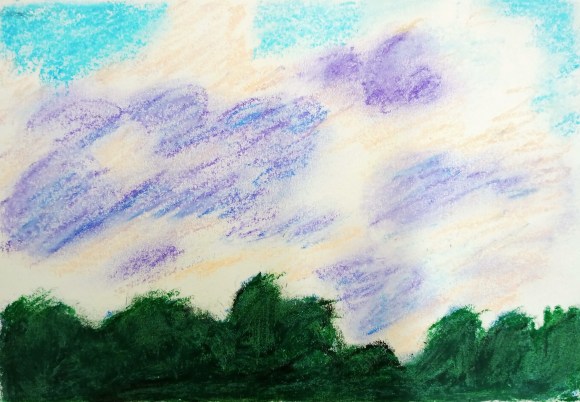
Art by Sohana Manzoor
A rough count of the songs collected in Gitabitan in the section titled “Prakriti” or “Nature” reveals that Rabindranath Tagore composed about sixteen songs of summer, more than 100 monsoonal ones, 33 songs of Sharat or early autumn, five of Hemonto or late autumn, and a dozen or so songs of winter. In addition, he has left us around 93 songs of spring. For many decades, I kept wondering how Rabindranath managed to end up with such a lopsided list as far as his songs of the six Bengali seasons are concerned. After all, late autumn and winter are enjoyable seasons when Bengal is blissfully heat-free and the weather quite mild and bearable; why, then, did he show such fondness for the wet monsoonal months and the rapidly warming and (at its end quite unbearably hot) springtime? But I am puzzled no longer by his preference for our Borsha, for it now seems clear to me that he had good reasons to prefer the monsoonal months over all else. In recent decades, now that I fancy I have something of what Wordsworth calls the “philosophic mind” (and in this age of global warming as well!), I can appreciate fully why the monsoonal months stimulated Rabindranath so continuously into songs.
Think of the summer months. From mid-April till the second week of June, the weather torments us all over Bangladesh with stifling heat and unbearable humidity. Who in these weeks of scorching sun, steadily frying dampness and seemingly immobile and incredibly muggy air does not yearned for an ever-increasing cloud cover leading to sudden bursts of showers and rainy conditions? Isn’t the monsoon a huge relief after the summer months, despite the flaming krishnachuras [flame of the forest] and the seemingly endless stream of summer fruits that arrive in our market then? Don’t we all look forward to the pitter patter of raindrops, even if accompanied by thunder and lightning, when hot and dry ourselves? And isn’t the fresh green look of nature after a burst of rain so very soothing?
As in his devotional and love poems, Rabindranath captures feelingly in his monsoonal song-lyrics a variety of moods. One such mood is the longing for relief from an oppressive presence. Registering the cruel heat and humidity of our late spring and summer, his songs often exult in the respite that the monsoons afford us. Hear him thus dramatise the excitement all life forms feel just before, during and after the coming of the monsoons, in the opening two stanzas of the song-lyric ‘Oi Ashe Oi Oti Bhairob Horoshe’[i] [The Clouds Arrive Amidst Joy]
There, there they come — monsoonal clouds—
Exhilarating, awesome, moisture-laden,
Fragrant, earth-soaked, dense, rejuvenated
Dark-hued, somber, glorious— ready to burst!

Their deep rumblings quiver dark-blue forests
Tense peacocks out on strolls cry out,
The whole world is thrilled, overwhelmed.
Intense, amazing—monsoon is on its way!
Indeed, song after song of Gitabitan record Rabindranath’s fascinated melodic outburst after a dramatic monsoonal outburst. Here is another example, ‘Prochondo Gorjone Ashile Eki Durdeen’, [Amidst Thunder comes a Dreaded Day].
Such a dreadful day, so full of rolling, thundering sounds
Disquieting cloud buildups, ominous endless outbursts!
Such a thick cloud cover; serpentine lightning, scarring night
Making the sky stream tears despite its totally blinded eyes!
But abandon all your fears; stir O scared and slothful ones.
Cheerfully, build up within yourself ample strength
To behold with resolute and wide open eyes His serene presence
Behold Him seating superbly on his throne –defying death, fearless!
Completely committed to the notion of a Supreme Being in his works, Rabindranath conveys his wonder at the monsoonal drama of clouds, thunder, and lightning and rain in many a song, inspired by scenes that he sees in the last analysis as embodying the power and inspirational presence of the deity.
A sizeable number of Rabindranath’s song-lyrics are in this religious vein, but not all. In other monsoonal song-lyrics Rabindranath presents to us not only the awe-inspiring/ sacramental signs of the deity embodied in such seasonal storms, but also the frightening and intimidating aspects of our rainy season. He is well aware of the deep unease the monsoonal storm’s power and intemperate outbursts can cause, and the way it can scare all things in nature and make them aquiver. The foreboding created by the approach of an overwhelming and apocalyptic force is thus apparent in the concluding lines of the song ‘Hridaye Mondrilo Domoru Guru Guru’ (A Drum Rumbles in the Heart):
The night is full of thunder and lightning;
The clouds are intense, startling.
Jasmine creepers tremble and rustle in melancholy notes
Woodlands fill with insects chirping in alarm!
In fact, Rabindranath is acutely aware of how the monsoon can disrupt lives, particularly those of people out in the open or men and women who have to travel in inclement weather despite the thunder, lightning, rain and flash floods that the monsoons invariably bring. His concern for such vulnerable people and concern at such intemperate weather comes out clearly in Jhoro Jhoro Boreshe Baridhara [The Rain Streams Incessantly]:
Rain streams down incessantly
Alas wayfarer; alas disabled, homeless ones!
The wind moans on and on.
Who is it calling out to in this immense, deserted, dismal landscape?
The night is pitch dark,
Jamuna restless; its waves agitated, endless; its shores have disappeared!
Dense dark rain clouds hover in the horizon, rumbling continuously.
Lightning darts restlessly, dazzlingly—no moon or stars in sight!
On the other hand, the monsoons are also seasonal visitations for Rabindranath that induce in him desire for romance or romantic cravings that need to be fulfilled. Note how intensely the yearning of a lover anxious to impart his feelings to his beloved in a rain-stirred mood is articulated in Emono Dine Tara Bola Jai [On Such a Day, They Say]:
On such a day she could be told
On such a dense, dark, wet day!
On such a day to her I could my mind unfold,
On such a cloudy, thunderous, showery day
		On just such a sunless, dense, dismal day!

I’d tell her what no one else would know
	Silence would us probably surround,
We’d face each other, each sobered by a deep wound.
	Incessant rain would from the sky flow;
	Surely, no one then would be around.

	Societal and family life would feel unreal
	The hullabaloo of life too would feel surreal
What would only matter are eyes feeding on each other
	And two hearts savouring one another;
	All else would merge with darkness.
If in a corner of the house on such a rainy day,
	I had then a thing or two to tell her
Why would anyone have anything to say?

	The wind blows with great force today;
	Lightning keeps flashing away
What I’ve been storing in my mind till this day
	Is something that I’d like to tell her today—
	On just such a dense, dark, wet day!
Not a few of the song lyrics collected in the ‘Borsha’ [Monsoon] part of Gitabitan depict such brooding and passionate thoughts and the intense yearning for the beloved brought on by the turbulence of the monsoonal breeze. Here is another such song, Mor Bhabonere Ki Haowa [What wind is it lilting my thoughts so amazingly]:
What wind is it lilting my thoughts so amazingly?
Its caress swings, swings my mind unaccountably.
In my heart’s horizon moist dense new clouds swarm,
			Stirring a shower of emotions.
I don’t see her—don’t see her at all
Only occasionally in my mind I recall
Almost indiscernible footsteps sounding
And ankle bells tinkling, oh so tunefully!

A secret dreamscape spreads
Across the wet wind-swept sky—
A new and ethereal azure shawl!
Shadowy unfurled tresses fly,
Filling me with such intense disquiet
On this far-off ketoki-perfumed wet night.
All in all, Rabindranath’s inspired lyrical responses to the monsoons remind one that he is in some ways a poet following in the footsteps of William Wordsworth. One remembers, in this context, the English romantic poet’s lines in Book I of The Prelude where he conveys his ardent and positive response to the coming of the English spring after the English winter’s life-shrinking barrenness. Wordsworth sees the English spring ushering in a “correspondent breeze” that gives rise to poetry. To make the point somewhat differently, just as the spring breeze is Wordsworth’s metaphor for the muse, Rabindranath finds in the monsoons endless inspiration for composing song-lyrics and poetry. Here is a translation of one of his most popular ones Mono Mor Meghero Shongi [ My Friend, the Cloud]:
My mind is the clouds’ companion,
Soaring to the limits of the horizon
And crossing wide open spaces to sravan’s music
Of rain falling pitter patter, pitter patter!
	My mind soars on crane-like wings
	To startling, streaking, lightning flashes,
	And rumbling, terrifying,
	Tumultuous, deafening sounds
	Responding to apocalyptic summons!
The wind blows from some eastern sea
Surging, rippling waves crest endlessly
	My mind is fascinated by their frantic motion
	By palm-fringed, dark-tamal tree forests
	And to branches fluttering frenziedly!
Space will not permit any more long extracts, but on the subject of inspiration I can’t resist including the concluding stanza of the much loved song lyric, ‘Hriday Amar Nachere’ (My Heart Dances):
Like a peacock dancing, my heart dances this day.
Showers stream down on newly sprouted branches,
Cricket songs stir forests,
The rampaging river roars over banks and floods villages,
Like a peacock dancing, my heart dances this day!
No wonder then this monsoon-stirred poet has articulated for all Bengalis so melodically the many-sides and wonders of the season as no other writer has; no other writer from our part of the world has been so mesmerised by our rainy season and so stirred into unforgettable songs and poems by it!
[i] All translations from the Bengali song-lyrics are that of Professor Fakrul Alam.
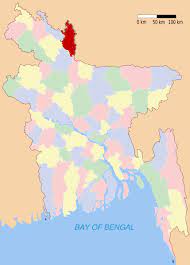
I’ve never been to Kurigram.

In the dead of night, sleeping Kurigram steadily detaches itself
From the world that we know.
Ignores gravity completely
Taking off with its tiny kingdom
To some far-off galaxy.

We keep looking then at the deep blue of the sky
While the tiny village becomes a speck up high.

For a long while Kurigram floats from one dome of heaven to another.
Till that star in the southern sky that pursued it so single-mindedly
Settles by its side and claims it as its own.
Then from this new luminary
A mild red vaporous smell wafts across the sky.

In that realm, in Kurigram,
The Kingfisher and the Pankouri bird are stepbrothers.
When all the rivers of Kurigram become calm
The two brothers make the river their home
Squabbling with each other like families bickering!

When the river calms down again
The womenfolk, once bound by scriptural edicts,
Throng to the riverbank.
Breaking all barriers,
They sparkle like large resplendent crystals.

Suddenly, a lonely babui bird, sans weaving skills,
Perched on a battered old mast, starts swinging,
Finally settling down on the translucent steel-foiled river water.
Kurigram, ah Kurigram!

Where Kurigram used to be
Is a dark and solitary space now.

Alas, I’ve never been to Kurigram
And I don’t think I ever will!

Kurigram—An innocuous town located in the northern region of Bangladesh
Paankouri—A species of bird, black in colour, found in marshes and rivers
Babui—A species of weaving bird
Masud Khan (b. 1959) is a Bengali poet and writer. He has, authored nine volumes of poetry and three volumes of prose and fiction. His poems and fictions (in translation) have appeared in journals including Asiatic, Contemporary Literary Horizon, Six Seasons Review, Kaurab, 3c World Fiction, Ragazine.cc, Nebo: A literary Journal, Last Bench, Urhalpul, Tower Journal, Muse Poetry, Word Machine, and anthologies including Language for a New Century: Contemporary Poetry from the Middle East, Asia, and Beyond (W.W. Norton & Co., NY/London); Contemporary Literary Horizon Anthology,Bucharest; Intercontinental Anthology of Poetry on Universal Peace (Global Fraternity of Poets); and Padma Meghna Jamuna: Modern Poetry from Bangladesh(Foundation of SAARC Writers and Literature, New Delhi). Two volumes of his poems have been published as translations, Poems of Masud Khan(English), Antivirus Publications, UK, and Carnival Time and Other Poems (English and Spanish), Bibliotheca Universalis, Romania. Born and brought up in Bangladesh, Masud Khan lives in Canada and teaches at a college in Toronto.






 Borderless