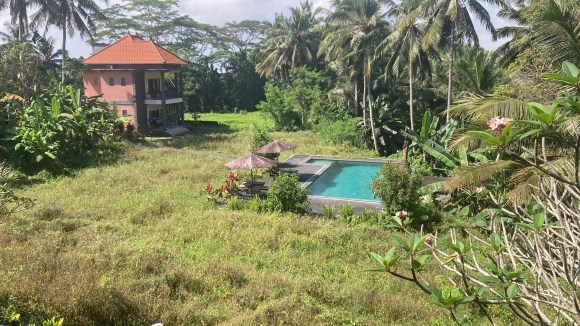
Ubud: Where Dean and Keith Stayed. Photo by Keith Lyons
So many questions remain about Dean. Many remain unanswered. Top of that list would have to be “Is Dean still alive?”, followed by “How and when did Dean die?”
But underlying all those questions about a gentleman I met in Indonesia in the late 2010s is the fact that I, along with many others who encountered him on the island of Bali, regard him as a ‘good man’ and miss his presence.
“Have you ever wondered if he is still alive but just can’t communicate?” suggested an associate; a possible scenario, given Dean was in his seventh decade on this Earth. “What would happen if he just turns up again? Wouldn’t that be funny?” another pondered.
I first met Dean a couple of years after I moved to the cultural heart of Bali, Ubud, a small town a couple of hundred metres above sea level, a place sometimes with its head in the clouds. When I moved into a room overlooking the rice paddies, just 10 minutes’ walk from the centre of town, I heard about Dean before I first met him in person. Staff mentioned the other ‘permanent’ residing in the neighbouring bungalow. Later that day, in the turquoise waters of the infinity pool that overlooked the gully cloaked in jungle, I saw a figure glide underwater from one end to the other, dive flippers giving the impression the creature was both extraordinarily tall and also well-suited to amphibious life.
Dean, as I was later to learn, was both frugal and generous. I never quite worked out if he was living off savings or a veteran’s benefit. Or if he served in the military or actively tried to avoid it. When I first met him on the pathway that connects our respective residences to the main path that straddles the accommodation and the rice fields, he told me how he would eat lunch at a local food stall, known as a warung, with it being as little as 10,000 rupiah — less than US$1 — for a simple rice-based meal.
He cared less for the plethora of cute Instagram cafes and foodie-recommended ‘must-try’ restaurants that catered to the tourists who thronged the central market and motorcycle-packed streets of Jalan Raya Ubud. Though, there was one exception. Every so often, sometimes to mark his arrival back from a visa-run to Malaysia (most foreigners living in Bali usually have to exit every three or six months depending on their visas), or at the end of his long stay, when he was about to travel elsewhere in south east Asia, as the end of year rainy season ramped up — then Dean displayed his munificence. He would treat the staff — and a few hangers on — to a calzone from a long-established pizza joint that prided itself on its secret sauce. Being a folded-over pizza, the fillings remain hot during its journey in the box on the back of a Honda Vario scooter.
I got invited to join in one of those calzone feasts. We sat under a long pagoda looking out across beyond the pool and jungle to the terraces and the ridge where silhouettes were just visible in the twilight. Dean was very much a global citizen, well-travelled, and scuba diving in almost as many countries as he had visited. He had worked as a dive instructor at schools and resorts. He still had with him equipment for aqua-living, along with other items stored in other places where he had lived and worked.
Just as scuba diving requires adherence to safe practices and procedures, Dean’s life on terra firma also followed routines and habits, which he hoped would ensure his longevity. One day he asked me to check an unusual skin condition with white patchiness on his upper arm, which he had convinced himself by Googling might be pre-cancerous. He was going to have it checked out, but on closer inspection, I thought it might just be a local fungal infection. Fortunately, it cleared up a week or so later, so he didn’t have to visit a clinic.
Because Dean seemed to live such an active life and appeared fitter and healthier than most of the visitors to Bali, it seemed like he was in a sweet spot: retired but active, living a simple life of contentment, sharing good vibes with all and sundry.
So, it was a surprise, after the COVID pandemic with its travel restrictions, that I didn’t hear from Dean, and later, concluded he must have left us. It was only a few months ago when I returned to Bali that the reality of his absence became more evident. When I visited, instead of my usual room at the end of the block overlooking the jungle, I was given the next upstairs bungalow, the one Dean usually stayed in.
Staff, as well as the former ‘manager’ and one of his closest friends, told me they hadn’t heard from him for more than a year. He’d moved to a coastal settlement, closer to the sea, and there were rumours he’d met someone. “Perhaps she was a gold-digger,” suggested his local friend, who I’ll call No. 4. “But I don’t think Dean had much gold for her to mine.”
As we sat under the gazebo, gazing out at the perfect postcard scene of harmony between humans and nature, No. 4 confided that if Dean had already died, he had a rather onerous duty. Dean had asked him to dispose of his body. I thought perhaps that the American might have requested a cremation ritual, common on the island, which has evolved a blend of Hinduism, animism, and Buddhism into a rich mix of ceremony and devotion. But no, instead, he had requested that No.4 deal with his bodily form in another way. “See those coconut trees,” No.4 pointed towards the tall palm trees in the gully, which rose high up to their crown canopy of green fronds sheltering its fruit orbs. “Dean wanted to be strung up in one of those.”
We talked about the practicality of somehow hauling his body up 25 metres or more, and then about what processes and creatures might consume his corpse. It was quite a natural way to go, we concluded, though we did wonder about the sight, smell and impact on other guests staying in the bungalows.
“Dean also had another option, he mentioned to me a few times,” said No. 4, who seemed troubled by the responsibility. Plan B involved Dean’s body being fed to the lions at Bali Zoo. Dean had obviously given this some thought, and it weighed heavily on No.4, not just his role as Dean’s body caretaker, but what the duty might entail.
The following evening, my last before heading back home, I invited No.4 and some of others who knew Dean to get together. Amid the chat and speculation, the cool drinks and spicy snacks, as the breeze picked up and swayed the coconut trees gently this way and that, we had an informal farewell to Dean. Another of his friends — let’s call him Guitar Man — nominated one coconut tree and reckoned with some rope it would be possible to string up a body. No one wanted to try calling Dean’s phone, so I did again, just to confirm it was true. The number was out of service.
Another who knew Dean, let’s call him TaxiMan, talked through what Plan B might involve: chopping up with a machete Dean’s corpse, putting it into bags, visiting the zoo during its 9am to 5pm opening hours, and either throwing the parts over into the lion’s enclosure, or joining the special ‘Lion Feeding’ session (US$5). “I can find out what times they feed the lions and tigers,” he said, having worked out the practicality of this option. No. 4 looked nervous. There was more risk attached with this option, not just from a lion’s fangs, but from the law. How would you explain bags of body parts?
Then, just in time, I heard the strain of the motor-scooter coming up the rise of the terrace towards our place. It was the pizza delivery guy bearing two boxes with calzones I’d ordered.
As for Dean, we still don’t know for sure if he has died. We don’t know the circumstances of his death, or what remains of his body. What we do know is that he is still cherished and remembered. And that there can be few better legacies than to have friends fondly recall a person with a blend of missing, gratitude, and humour.
.
Keith Lyons (keithlyons.net) is an award-winning writer and creative writing mentor originally from New Zealand who has spent a quarter of his existence living and working in Asia including southwest China, Myanmar and Bali. His Venn diagram of happiness features the aroma of freshly-roasted coffee, the negative ions of the natural world including moving water, and connecting with others in meaningful ways. A Contributing Editor on Borderless journal’s Editorial Board, his work has appeared in Borderless since its early days, and his writing featured in the anthology Monalisa No Longer Smiles.
.
PLEASE NOTE: ARTICLES CAN ONLY BE REPRODUCED IN OTHER SITES WITH DUE ACKNOWLEDGEMENT TO BORDERLESS JOURNAL.
Theodore Dreiser (1871-1945) reached apotheosis of his literary endeavour with his 1925 publication An American Tragedy. In the following twenty years, until completion of the The Bulwark in 1946, nothing he wrote remotely equaled the power of the tragedy. His opus plus Sister Carrie has become a classic—so too Jennie Gerhardt to a less heralded extent. Some of Dreiser’s short stories, such as “Nigger Jeff”, “St. Columba and the River”, and “The Lost Phoebe”, could stand on their own in any American or world anthology. Due to its narrative thrust and other attributes (powerful romance), The Financier was and is the best of Dreiser’s ‘Trilogy of Desire’ (including The Titan and The Stoic). The first three-quarters of the autobiography Dawn made for compelling reading, as did all of the essays in Twelve Men. The Bulwark was and is a minor classic, truncated but yanking at heart strings as adamantly if not for as long as any of Dreiser novels. Newspaper Days, the second volume of his autobiography is a baggy and verbose twin of the heavily, and unfortunately edited, A Traveler at Forty.
“The last great American writer of Melvillean dimensions,” Jerome Loving wrote of Dreiser. Dimensionality and similarity is each writer’s search to uncover and understand the phenomenon of existence. It’s a spiritual quest, though neither men have any sectarian belief (Melville nominally Unitarian). What is and to whom does the “oversoul” of Emersonian transcendentalism belong? To Dreiser, the grand protagonist life itself suggests a something else: God or gods perhaps, behind the display of natural phenomenon. Hs opus suggests that God or gods, or the “Creative Force,” used humankind for his, her, its own purpose; a purpose hidden from humankind’s limited understanding; also theorising possibilities of additional God or gods in the background making use of, let us say, “primary” God or gods, for a like inscrutable purpose.
In his last years Dreiser looked through a microscope for clues to the phenomenality of being—to unravel mysteries of life. Switching gears mid-career, he became an explorer of consciousness who preferred the company of scientists to that of literary brethren (to the detriment of his art, I must add).
In Dawn, Dreiser theorised that humankind was an invention—a schemed-out machine, useful to a larger something. This theory marked his turn from an early mechanistic belief in universal proceedings to consideration of an oversoul, or creative intelligence, behind or causative to universal phenomenon.
But what “soul”? What cause? What intelligence? Ahab[1] tried to tear the veil that covered the quondam source; tried to expose the phenomenon of so-called “reality,” but being only a man, and mortal, failed—dying in the process. What is the symbolism of the great whale’s whiteness but a concealing veil thrown over appearances? Melville’s scientifically, scrupulously dismantled his leviathan part by part, yielding naught as to mysteries of origins and unquantifiable organic processes, while Dreiser wandered over the same dry speculative desert (as Hawthorne noted) too honest to be or do otherwise.
Dreiser had his own mystic creed; refusing to conform to any formal doctrine—his views in later years influenced by Quakerism, Hinduism, and Christian Science (which his wife “Jug,” and his character Eugene Witla of The Genius came under spell of). In Newspaper Days, and in a sour mood, he wrote, “Religion! What a mockery! Why pray? Of whom to ask? The one who loaded the dice at the start?” Elsewhere in that same book—and in a better mood—he wrote, “There is a sower somewhere. Is it planet, gas, element, fire? It gardens and sows—what is its plan, and why?”
Like many ex-parochial students, Dreiser had a profound dislike of Catholicism and her rituals. A dislike engendered, in Dreiser’s case, by scorn of an ineffectual father, John Paul Dreiser. In Dawn, Dreiser wrote of Catholics with ossified brains who rejected natural emotion as sinful; who spent inordinate amounts of time on their knees praying to an immense and inscrutable something which cared not for their adoration or supplication.
He denied sectarian pretense to divine authority and wrote about how little there was to the Christ legend aside from artistic spectacle. Ritual and churchly dogma infuriated him—particularly angered by the priest who at first denied Dreiser’s mother burial in the sacred grove because she was a lapsed Catholic.
Dreiser despised religion in the form of Catholicism as much as he came to despise oligarchy—though early in his career celebrated the power of the oligarch in the character of Frank Cowperwood, of the ‘The Trilogy of Desire’, apotheosis of laissez faire capitalism run amuck.
Will Dreiser’s work survive the muddle of brave new world exigencies? I hope so. The slow relentless and inexorable pace of his stories, with their accumulation of details, are or seem anathema to the cyborg-screed of flash fiction sound bites in the blogosphere, but the stories he told—all having to do with vagaries of the human heart—though perhaps out of vogue, will never not be relevant to the human oh so human condition.
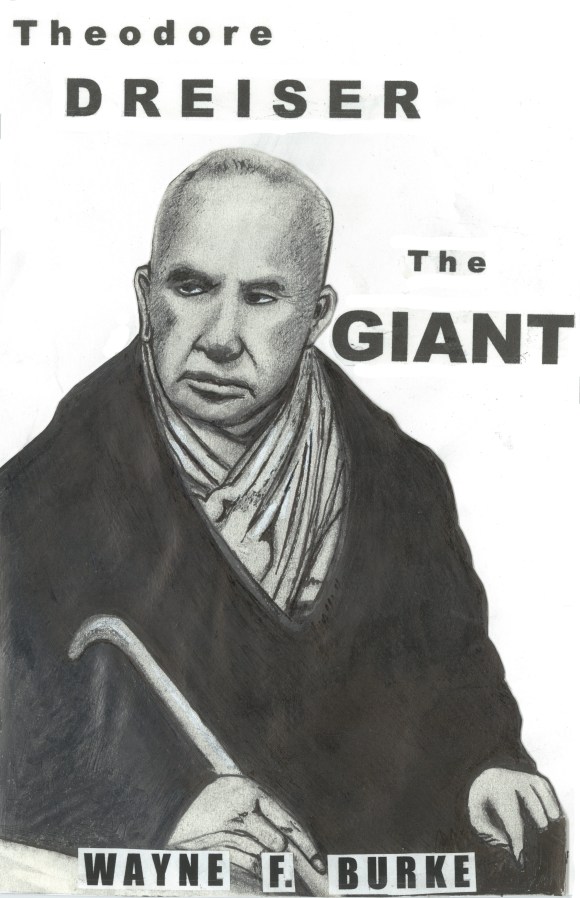
Theodore Dreiser – The Giant, is an explication, exegesis, of the fiction of Dreiser plus much of his nonfiction. Included are synopses of each title. Between considerations of the work is a biography of the writer. (Note: Dreiser could be, in his work, pedantic and humourless: this study is neither.)
About the Author:
Wayne F. Burke writes both poetry and prose. He is author of 12 published poetry collections–most recently Whatever Happened to Baby Wayne? Hog Press, 2025; two works of fiction–most recently No Tab For Sully, a novella, Alien Buddha Press, 2025; and six works of nonfiction–including Theodore Dreiser – The Giant, Cyberwit,net., publisher, 2025. He lives in Vermont (USA).
PLEASE NOTE: ARTICLES CAN ONLY BE REPRODUCED IN OTHER SITES WITH DUE ACKNOWLEDGEMENT TO BORDERLESS JOURNAL
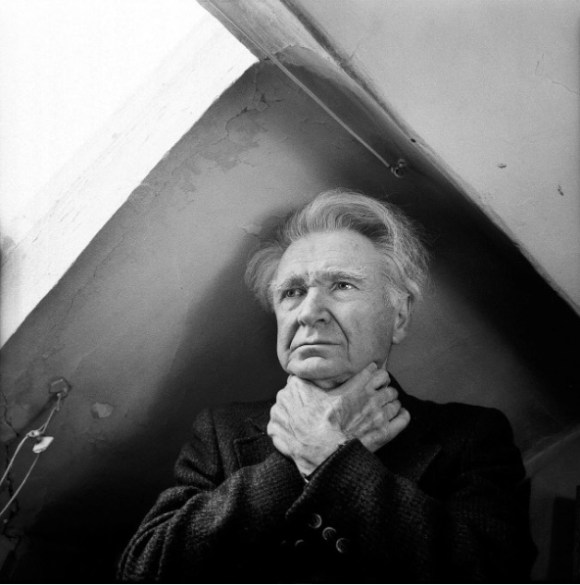
Emil Cioran (1911-1995). Photo provided by the author
It was the summer of 2019. The hostels were empty. Vacation had begun, and most students had already left for their hometowns. I was to leave the next day. While packing, I suddenly remembered The House of the Dead by Dostoevsky, which I had lent to a senior months ago.
I walked to his nearly abandoned hostel block and knocked on his half-open door. The room was dark—uncannily dark for the middle of the day. Thick curtains strangled the sunlight, casting the room into a premature night. There he lay on the bed, flat on his back, a laptop balanced on his belly. He handed me my book and resumed the video he had been watching—with monastic focus—from the fifty-sixth minute. It was footage of a man slowly cutting down a giant tree with an axe. He had been watching it, second by second, without skipping. He didn’t pause even when I left.
That was the man who introduced me to Emil Cioran.
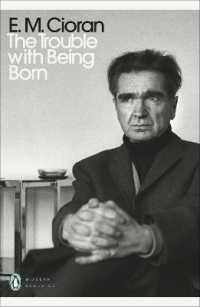
It was not until much later that I finally read him. The Trouble with Being Born opens at three o’clock in the morning with Cioran contemplating the futility of existence:
“Three in the morning. I realize this second, then this one, then the next: I draw up the balance sheet for each minute. And why all this? Because I was born. It is a special type of sleeplessness that produces the indictment of birth.”
The book proceeds as a collection of aphorisms circling around the nausea of existence and the idea of suicide as both temptation and reprieve.
Before I began to read his work, I tried to prepare myself by reading his biography and interviews. I wanted to understand the man behind the words, as if glimpsing his life might help me endure the weight of his thoughts. One such childhood story was telling. In an interview, Cioran confessed that when he was a child, one of his favourite pastimes was to play football with human skulls excavated by a gravedigger who was his friend. But little did he know at that time that what seemed like play was the seed of a lifelong fixation, depriving him of sleep, driving him to insomnia, in the hope of a long, never-ending slumber.
For Cioran, suicide was not a prescribed act but an ever-present possibility—a metaphysical escape hatch that bestowed dignity on existence. The mere awareness of this option granted him a strange form of freedom. The power of contemplating death, rather than executing it, was his way of wrestling with life’s meaninglessness. Suicide was philosophical, not prescriptive; a potential that loomed, yet never fully realised.
Yet one question persists: if Cioran saw life as an error and glorified suicide as the only coherent act, why did he never end his own life? His own words reveal the paradox:
“It is not worth the bother of killing yourself, since you always kill yourself too late.”
According to him, suicide comes too late to undo anything. The damage is already done. You’ve already suffered so much that ending it doesn’t fix anything—it merely ends an already exhausted life. By the time you do it, you’ve already endured the worst. You’ve already been broken, emptied, eroded by suffering. So, what’s the point? The act becomes redundant, even absurd.
At another moment, he offers a different angle, confessing his indecision:
“The energy and virulence of my taedium vitae continue to astound me. So much vigor in a disease so decrepit! To this paradox I owe my present incapacity to choose my final hour.”
Although Cioran ascribes his procrastination for suicide to his extreme weariness and boredom, yet, contrastingly, at another place, for him the power of ending one’s life is the greatest power.
“No autocrat wields a power comparable to that enjoyed by a poor devil planning to kill himself.”
This is the Cioranian condition: every insight undermined by its opposite, every aphorism shadowed by contradiction. He frames suicide as the ultimate sovereignty. The mere thought of being able to end one’s life surpasses the power of kings. And yet, he never exercised it. Instead, he transformed the possibility into philosophy, into aphorism, into art. His writing is not a system but an ongoing quarrel with himself. Instead of answering any particular question, his writings raise towers of new questions.
This tension, of circling but never arriving, defines his thought. He writes with precision, but his precision is not in building arguments―it is in dismantling them. Each aphorism is like a shard of glass: sharp, illuminating, but impossible to piece into a whole. Consider his reflection on sleeplessness:
“If there is so much discomfort and ambiguity in lucidity, it is because lucidity is the result of the poor use to which we have put our sleepless nights.”
Cioran knew the price of insomnia. To be awake at three in the morning is to be exiled from the world of the living, suspended in a state where thoughts spiral without conclusion. For him, insomnia was both torment and revelation. Perhaps, if Cioran had been able to sleep well, he might not have been trapped in this endless dialogue with futility. Instead, he lived in perpetual wakefulness, speaking to his own emptiness:
“No one has lived so close to his skeleton as I have lived to mine: from which results an endless dialogue and certain truths which I manage neither to accept nor to reject.”
“Once we appeal to our most intimate selves, once we begin to labor and to produce, we lay claim to gifts, we become unconscious of our own gaps. No one is in a position to admit that what comes out of his own depths might be worthless. ‘Self-knowledge’? A contradiction in terms.”
If, according to Cioran, true self-knowledge is not possible because we are too attached to our own depths and ego to judge ourselves truly, then there is no way he could have unearthed any truths about himself while living close to his emptiness (skeleton).
Cioran is, however, conscious of his contradictions. They were not accidents; they were his method. But are those contradictions a mirror of the thinkers he admired? In one of his aphorisms, he confesses:
“In the Orient, the oddest, the most idiosyncratic Western thinkers would never have been taken seriously, on account of their contradictions. This is precisely why we are interested in them. We prefer not a mind but the reversals, the biography of a mind, the incompatibilities and aberrations to be found there, in short those thinkers who, unable to conform to the rest of humanity and still less to themselves, cheat as much by whim as by fatality. Their distinctive sign? A touch of fakery in the tragic, a hint of dalliance even in the irremediable.”
Cioran points to that strange quality in writers like Nietzsche, Baudelaire or even himself-deeply tragic, but also stylistic, artful, and aware of the absurdities of their drama. For him, the appeal is not in the polished answers but in the drama of the doubt, in the visible struggle of a mind with itself.
Cioran is always in a perpetual state of perplexity. His thoughts are malleable. What is true for him today becomes obsolete tomorrow. And all this he has tried to betray through words. He knew his thoughts were mercurial, unstable. He confesses his extreme mental variability:
“I may change my opinion on the same subject, the same event, ten, twenty, thirty times in the course of a single day. And to think that each time, like the worst impostor, I dare utter the word “truth”!
Every time he pronounces a new opinion, he does so with the implicit suggestion that this one is right―that this is the truth. He accuses himself of a kind of fraud, i.e. knowing his judgments are volatile, yet he delivers them as if they were true.
Amidst all these contradictions and paradoxes, what, then, did Cioran truly long for? Because what he wishes for in one place, he rejects in the other. But there is one feeling, or a longing, that recurs throughout the book―a longing for a time before time, a time before creation. He speaks of it with yearning, as if for a paradise never lost yet never possessed.
“There was a time when time did not yet exist…. The rejection of birth is nothing but the nostalgia for this time before time.”
“O to have been born before man!”
This longing resonates the idea of what the Portuguese call saudade, a longing for something that never was or will never be attainable. Unlike nostalgia, which mourns a past that once existed, saudade is a longing for an unattainable ideal, a sense of melancholic absence that can only be evoked in poetry and art. This yearning captures the profound melancholy that saturates Cioran’s philosophy—a feeling that seeps like a grey mist into a distant blue sky. And yet he admits the impossibility of feeling it:
“It is impossible to feel that there was a time when we did not exist. Hence our attachment to the personage we were before being born.”
We cannot experience absence, so we cannot truly imagine our non-being before birth. In our memory and awareness, we’ve always been — we cannot step outside ourselves to picture a time when we were nothing. This is not a metaphysical claim, but a psychological one.
If Cioran were a simple nihilist, one who believed in nothing and cared for nothing, why would he write at all? Why invest thought and feeling into a world he found so painfully absurd? The answer lies in his profound sensitivity. Cioran was a nihilist who felt too much. He was wounded by life. Writing, for him, was both a compulsion and a failure. Cioran was a master of paradox. He despised life yet wrote nine books about it. He dismissed language as futile yet clung to words as his only tool. He longed for silence yet confessed:
“We write books because we are ashamed of not having been able to remain silent.”
Writing was a failure to keep still in the face of futility. Yet silence was a greater failure, an impossibility. Thus, he turned his torment into words. For him, each book was a kind of reprieve. Perhaps, his most telling aphorism is this:
“A book is postponed suicide.”
For him, writing a book symbolised a form of delayed self-destruction or self-sacrifice, where the author channels inner turmoil into the work and thus postpones an existential “death”.
On a similar note, he explains the need for language, the need for writing.
“The more injured you are by time, the more you seek to escape it. To write a faultless page, or only a sentence, raises you above becoming and its corruptions. You transcend death by the pursuit of the indestructible in speech, in the very symbol of nullity.”
Language itself, for Cioran, is paradoxical. It is both empty (words are mere signs, lacking substance) and the only tool we have to approach the eternal. So even while writing may seem futile or illusory, it’s also the only space where something indestructible can be momentarily glimpsed.
The Cioranian paradox yet again comes into the picture, where he proclaims:
“One must be mad or drunk,” the Abbe Sieyès said, to speak well in the known languages. One must be drunk or mad, I should add, to dare, still, to use words, anyword….”
In his earlier aphorisms, he advocates for the meaning or use of writing, but then in the following aphorisms, he expresses the futility of writing, or words, of language itself. To use language sincerely is itself madness. If words distort, then every attempt to write is a betrayal. And yet he could not stop writing. This was the paradox that sustained him.
In the book, Cioran traces this disposition back to his family:
“Every family has its own philosophy. One of my cousins, who died young, once wrote me: ‘It’s all the way it’s always been and probably always will be until there’s nothing left any more.’”
Whereas my mother ended the last note she ever sent me with this testamentary sentence: “Whatever people try to do, they’ll regret it sooner or later.
“Nor can I even boast of having acquired this vice of regret by my own setbacks. It precedes me, it participates in the patrimony of my tribe. What a legacy, such unfitness for illusion!”
Cioran interjects with irony: he can’t even take credit for being regret-prone as a result of his own failures. It’s not just personal experience that made him this way—regret runs deeper; it’s not biographical but ancestral.
Yet Cioran was not only drawn to grand despair. He had a peculiar love for the banal, the ordinary, and the infinitesimal things in our everyday life. Like Georges Perec’s concept of the “infraordinary”―the unnoticed texture of daily life―Cioran wrote:
“The intrinsic value of a book does not depend on the importance of its subject (else the theologians would prevail, and mightily), but on the manner of approaching the accidental and the insignificant, of mastering the infinitesimal. The essential has never required the least talent.”
“No true art without a strong dose of banality. The constant employment of the unaccustomed readily wearies us, nothing being more unendurable than the uniformity of the exceptional.”
For him, the ordinary was not a distraction from philosophy but its truest field.Emil Cioran was also deeply influenced by the Eastern philosophies of Hinduism and Buddhism. He often returned to the idea of renunciation and detachment:
“It is trifling to believe in what you do or in what others do. You should avoid simulacra and even ‘realities’; you should take up a position external to everything and everyone, drive off or grind down your appetites, live, according to a Hindu adage, with as few desires as a ‘solitary elephant’.”
“I am enraptured by Hindu philosophy, whose essential endeavor is to surmount the self; and everything I do, everything I think is only myself and the self’s humiliations.”
And yet, while he admired Buddha’s teachings on suffering, he could not detach himself from his own disappointments:
“My faculty for disappointment surpasses understanding. It is what lets me comprehend Buddha, but also what keeps me from following him.”
Cioran is the kind of person who is aware of his suffering, knows the cure, but won’t take the medicine because the illness has become who he is. For him, disappointment is instinctive, all-consuming and more intimate than thought itself. Since Buddha taught that life is marked with Dukha (suffering/disappointment), Cioran feels connected to Buddhist philosophy, but he cannot follow that path because to follow Buddha requires detachment, letting go of even disappointment, which Cioran cannot do.
Cioran also reflects on a peculiar way to cope with life’s anxieties. He says:
“In order to conquer panic or some tenacious anxiety, there is nothing like imagining your own burial. An effective method, readily available to all…”
This aphorism resonates directly with the Hindu practices, as especially embodied in Banaras (Varanasi), where the city itself is a living memento mori, where cremation fires at Manikarnika Ghat never extinguish, and death is not hidden away but displayed as part of life. In Varanasi, the pilgrims are encouraged to watch the burning pyres, not to indulge morbidity but to confront impermanence directly. But even here, he reminds us of the futility of origins:
“The emphasis on birth is no more than the craving for the insoluble carried to the point of insanity.”
He knows that obsessing over the question of birth, of life, is futile, insoluble and unanswerable. To take this obsession with origins, with life’s beginning, so seriously — to revere it, to found ideologies or hope on it — is, for Cioran, madness. It means you are so committed to wrestling with the unanswerable that you’ve abandoned sanity. It’s a form of spiritual masochism: continually turning to the one question — Why was I born? — that has no satisfying answer.
A man who spent all his life thinking about the tragedy of birth, the futility of life and the meaning of death confesses at one point in the book that he has known nothing new in all his later years that he knew when he was young. All his thinking, the sleepless nights, the anxiety and the dread have contributed nothing to further his knowledge. In his own words:
“What I know at sixty, I knew as well at twenty. Forty years of a long, superfluous, labour of verification.”
Despite all of Cioran’s nihilistic or dark thoughts, he granted failure a strange dignity:
“This is how we recognize the man who has tendencies toward an inner quest: he will set failure above any success, he will even seek it out, unconsciously of course. This is because failure, always essential, reveals us to ourselves, permits us to see ourselves as God sees us, whereas success distances us from what is most inward in ourselves and indeed in everything.”
“Failure, even repeated, always seems fresh; whereas success, multiplied, loses all interest, all attraction.”
In this sense, he inverts conventional wisdom: failure is not defeat but a revelation, a mirror of the self, stripped of illusion.
The Trouble with Being Born is not an easy read. The book is a constant rumination and meditation on the bliss of nonexistence, the deep nostalgia for a state before being, before consciousness, before identity. There is an uneasiness, an anxiety, a restlessness and an unknown dread that creeps in and grows with every sentence one reads. It has the potential to scratch the old wounds of one’s soul, which one has forgotten. Yet, if one reads and analyses the aphorisms from a distance with a particular perspective, it can also provoke laughter―the laughter of someone who has stared too long at the abyss and found it absurd.
Emil Cioran is like a chess master, and each of his aphorisms is a calculated move. For every aphorism that he mentions, he has already anticipated the reader’s move. He has anticipated every question, especially the most obvious one, why he did not kill himself and his reply is already there.
Reading Cioran is like walking into a fog. Every sentence brings a chill of recognition, but also a deeper uncertainty. He lived next to his emptiness, befriended it, argued with it, laughed at it—and wrote it down. He is frustrating. He contradicts himself. He writes aphorisms that sound like suicide notes, only to retract them with a smirk. But that is the trouble with Cioran. He lived. He wrote. He suffered. And somehow, he made it all sound beautiful.
And perhaps that’s the final paradox: the man most disillusioned with life gave us one of its most enduring voices.
After reading him, I’ve come to admire Cioran because, to me, he is like a mathematician devoted to solving the equation of life and death. Every variable, every permutation and combination, has passed through his mind; the possibilities now stand exposed on the blackboard, supporting and undermining one another in turn. The solution, if it exists, hovers just within sight—yet he chooses to work through it endlessly, not in pursuit of an answer, but in devotion to the act itself. He is a modern Sisyphus, who has not merely accepted his fate, but learned to love the rolling of the boulder, again and again, to the mountain’s top.
Satyarth Pandita is a PhD student at the National Institute of Mental Health and Neuro Sciences (NIMHANS), Bengaluru. He completed his dual degree, a Bachelor of Science and Master of Science in Biological Sciences (major) and Humanities and Social Sciences (minor), at the Indian Institute of Science Education and Research Bhopal (IISERB). His works have appeared in various newspapers and periodicals, including The Quint, OutlookIndia, The Wire, Madras Courier, Borderless, and Kitaab, among others.
Links to Satyarth’s published works, email address and social media handles can be found here.
.
PLEASE NOTE: ARTICLES CAN ONLY BE REPRODUCED IN OTHER SITES WITH DUE ACKNOWLEDGEMENT TO BORDERLESS JOURNAL
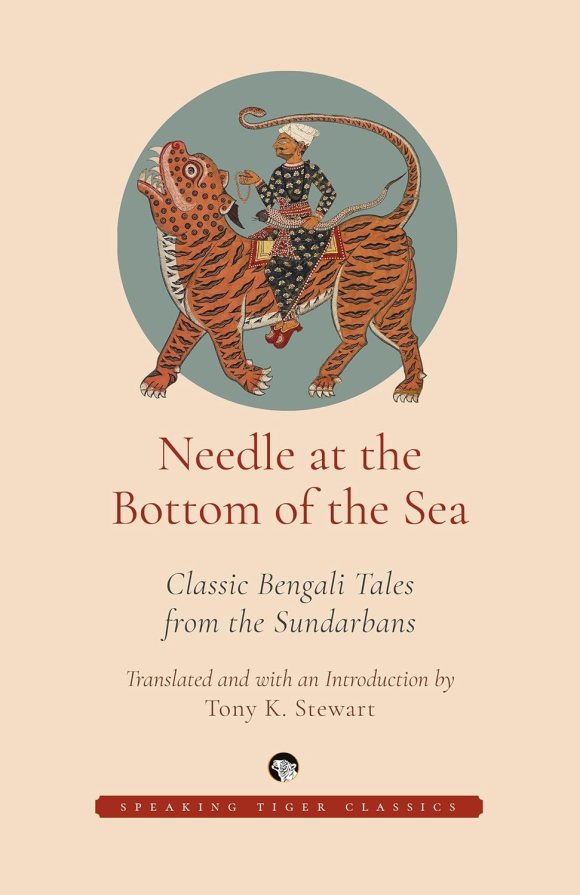
Title: Needle at the Bottom of the Sea: Classic Bengali Tales from the Sundarbans
Translator: Tony K. Stewart
Publisher: Speaking Tiger Books
What comes to mind when we think of the Sundarbans? Verdant mangroves, elusive Bengal tigers, and the mystique of the Bay of Bengal. But the late Tony K. Stewart’s Needle at the Bottom of the Sea reminds us of another legacy—its rich cultural heritage. Stewart, a Gertrude Conway Vanderbilt Chair who did pioneering work in Bengali narratives, passed on in October 2024. This vivid collection of five timeless kathas (stories), one co-translated with Ayesha A. Irani, a scholar from University of Massachusetts, starts with a compelling introduction to the diverse syncretic traditions of the region.
The anthology has five stories that are translated lyrically in the form of story poems filled with suspense and surprises. The opening verse from the first translated katha “The Auspicious Tale of the Lord of the Southern Regions — the Rāy Maṅgal of Kṛṣṇarām Dās” poetically sets the mood of the genre and gracefully takes the reader to familiar and unfamiliar grounds and it goes as follows —
With palms pressed together in respect,
I praise the lotus feet and magnificent girth of
the Lord Dakṣiṇ Rāy, Master of the Southern Regions, …
Against Baḍa Khān Gāji, the Great Sufi Warrior,
You waged war throughout the territory’s canals and channels,
but in the end you became close, fast friends.
The narrative depicts the incredible sophistication of the diversity in India with relatable characters and compelling themes, evoking emotions that we feel at different junctures of life, between life and death irrespective of religion, caste, culture or creed. Stewart uses vivid imagery and figurative enhanced with rhyme and rhythm to bring just enough for the reader in English without diluting the beauty of the language or history and culture of the original work. The beauty and quality of the literature is translation set in the beginning is maintained throughout the five sections. The rich mystical and spiritual spirit of the region is evoked in the coming together of the cultural elements in Hinduism and Sufism. As the introduction is named, the book is truly a unique flavour that brings “Bengali Tales from the Land of Eighteen Tides”
In these tales, the mythic meets the moral. Demigod Daksin Ray and Sufi warrior Bada Khan Gaji clash on the battlefield, commanding armies of tigers, until God intervenes as Satya Pir to mediate peace. They cross paths again when Gaji battles for his beloved Princess Campavati, and once more during Ray’s confrontation with Bonbibi, the forest’s matron-protector—each time with Gaji or Satya Pir stepping in to guide or save. Other stories follow Madansundar’s search for his lost brothers with Satya Pir’s help, while Khwaja Khizr aids Gaji in retrieving a needle from the sea, affirming his identity as a living saint, or “jinda pir”.
Stewart’s translation is a triumph of linguistic artistry. He brings alive a world of talking tigers, floating rocks, flying trees, giants, miracle-working saints, and more. These fantastical elements coexist with deeply human struggles, as the characters strive for honor and morality in a corrupt and chaotic world. The stories, drawn from 16th- and 17th-century oral traditions, are richly interwoven with both Hindu and Muslim worldviews, offering a textured portrayal of a pluralistic Bengali society.
The tales are full of romance and adventure—unlikely heroes and heroines, ocean-faring merchants, whimsical gods, revered prophets, and powerful zamindars. They reflect familiar events and cultural motifs of the Bangla-speaking world, infused with imaginative solutions and heroic feats. Stewart captures the emotional and linguistic nuance of the original Bangla, carefully preserving idioms and explaining cultural references to ensure resonance with an English-speaking audience.
The result is not just a literary collection, but a vital cultural document. It offers anglophone readers insight into the everyday lives, beliefs, and spiritual practices of the Sundarbans’ inhabitants, where Islam and Hinduism blend in creative harmony. These tales situate the Sundarbans within the broader currents of South Asian and Indian Ocean history, illustrating how Islamic narratives became integral to the Bengali literary imagination.
Needle at the Bottom of the Sea is a scholarly feat and a literary delight. Stewart’s careful and rich translations open a portal to a fantastical world grounded in real human values. These stories resonate across boundaries, blending chaos with compassion, conflict with harmony, and myth with morality. A remarkable contribution to Bengali literary studies and interreligious history, this book is essential reading for anyone interested in Translation Studies, South Asian literature, folklore, or cultural syncretism.
.
Gracy Samjetsabam is a freelance writer and copy editor. Her interest is in Indian English Writings, Comparative Literature, Gender Studies, Culture Studies, and World Literature.
.
PLEASE NOTE: ARTICLES CAN ONLY BE REPRODUCED IN OTHER SITES WITH DUE ACKNOWLEDGEMENT TO BORDERLESS JOURNAL
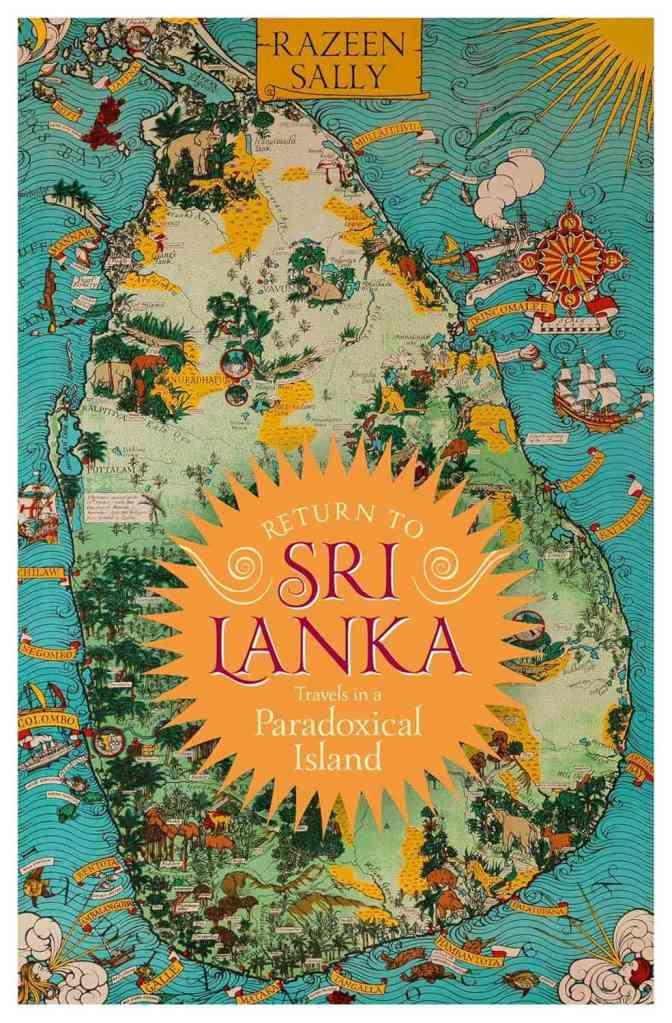
Title: Return to Sri Lanka: Travels in a Paradoxical Island
Author: Razeen Sally
Publisher: Simon & Schuster India
Sri Lanka’s culture is characterised by several paradoxical aspects that reflect its rich history, diverse population, and the complexities of contemporary society. Here are some notable contradictions: Home to various ethnic groups, including Sinhalese, Tamils, and Muslims, each has its distinct languages and traditions. However, there is a prevailing sentiment among some that prioritises Sinhalese culture over others, leading to tensions and conflicts regarding national identity and rights.
While Sri Lanka has a history of female activism and women hold significant positions in politics (e.g., former President Chandrika Kumaratunga), gender inequality persists in many sectors. Women often face societal pressures that limit their roles despite their contributions to the economy and community. The tiny country has made strides in economic development and infrastructure, yet significant poverty remains, particularly in war-affected regions like the North and East. This disparity highlights the uneven benefits of economic progress across different communities
The island is also known for its religious diversity, with Buddhism, Hinduism, Christianity, and Islam practiced by its citizens. However, this coexistence is often marred by sectarian violence and discrimination, particularly against minority groups during political upheavals.
As Sri Lanka embraces globalization and modern influences, there is a tension between adopting new lifestyles and preserving traditional customs. This cultural clash can lead to generational divides within families and communities.
Razeen Sally’s book, Return to Sri Lanka: Travels in a Paradoxical Island, explores these complexities and contradictions. The memoir combines personal narrative with historical and political analysis, offering readers an immersive journey through various regions of Sri Lanka—from the bustling capital of Colombo to the tranquil beaches and verdant hill country. Sally reflects on his childhood experiences while addressing the island’s tumultuous history, including its colonial past and the long-lasting effects of civil war.
Razeen Sally, the son of a Sri Lankan Muslim father and a Welsh mother, was raised in Colombo and educated in the UK. After teaching at the London School of Economics, he now teaches at the Lee Kuan Yew School of Public Policy in Singapore. In his early forties, he felt a strong urge to return to Sri Lanka for the first time since childhood and has spent the past ten years exploring the island.
Sally viewed Sri Lanka as a paradise during his childhood, but conflict soon disrupted their lives, fracturing his family’s connection to the island. Return to Sri Lanka tells the story of his journey towards reconciliation in the twenty-first century, as Sally, now an academic and political adviser, revisits his birthplace. This travel memoir addresses significant political issues and is rich in beauty and profound reflections, written by someone who feels like both a local and a visitor.
The words, “Paradoxical Island”, in the title encapsulates the duality of Sri Lanka, where hospitality coexists with high rates of violence and societal divisions. Despite interactions among ethnic groups like Tamils and Sinhalese, underlying tensions often surface, revealing deep-seated issues regarding rights and representation.
Sally provides insight into how historical events, such as the policies of successive governments and the impact of colonialism, have shaped contemporary Sri Lankan society. He discusses significant political figures and movements while critiquing policies that have led to economic challenges, including a brain drain among educated youth.
The book highlights Sri Lanka’s diverse cultural landscape, examining how various religions and ethnicities contribute to both its charm and its conflicts. Sally emphasises the importance of understanding these dynamics to appreciate the island’s true essence.
Return to Sri Lanka is not just a travelogue but a profound exploration of a nation grappling with its identity. Sally’s reflections offer hope for reconciliation and progress, urging readers to engage with Sri Lanka’s complexities while appreciating its inherent beauty. These paradoxes illustrate the complexities of Sri Lankan culture, where historical legacies continue to shape contemporary realities, creating a vibrant yet challenging social landscape.
Bhaskar Parichha is a journalist and author of Cyclones in Odisha: Landfall, Wreckage and Resilience, Unbiased, No Strings Attached: Writings on Odisha and Biju Patnaik – A Political Biography. He lives in Bhubaneswar and writes bilingually. Besides writing for newspapers, he also reviews books on various media platforms.
.
PLEASE NOTE: ARTICLES CAN ONLY BE REPRODUCED IN OTHER SITES WITH DUE ACKNOWLEDGEMENT TO BORDERLESS JOURNAL
My father seemed destined to be surrounded by women. At first there were four aunts, a sister and four female cousins. There was a mother too, but no father he could or would recall.
Seepersad Naipaul was born on 14th April 1906 in the settlement of Cunupia in rural Trinidad. On his birth certificate, his name is ‘Supersad’. The name and occupation of the ‘informant’ (normally the husband or father) is given as Nyepal. He is identified as a labourer. His mother’s name is Poolkareah, with no occupation cited for her. Most likely she was wife as well as mother – occupations daunting enough.
Nyepal, our Pa’s father, was not intended to be a labourer. An only child, he had come from India with his devoted mother, an indentured servant. In other words, she came under an agreement that would oblige her to work on the land, mainly in the sugar-cane fields. Why did she and so many others leave India in this way? Perhaps she had committed some indiscretion, or was running away from a bad marriage. After her term of indenture expired, she had the choice of going back to India or staying in Trinidad. She decided to stay, along with her son. Devoted to him, and a proud Brahmin, she sought to have him trained as a pundit. (In Hinduism, only Brahmins can perform the most sacred rites.) To that end, he travelled to Diego Martin, the large valley immediately west of our capital, Port of Spain, to sit at the feet of a venerable pundit. Being a pundit meant having knowledge and understanding of the sacred texts and rituals, and thus the ability to read and write Sanskrit and Hindi. Whether Nyepal ever practised as a pundit we never knew, but he apparently sold goods and supplies used in pujas, or sacred rites.
His mother also found him a wife. On the ship coming from India there were two brothers from Patna. They, too, were Brahmins. One of them had six daughters and one son. Pa’s mother chose one of the girls, Poolkareah, as her son’s bride. The wedding took place, and Nyepal and Poolkareah went on to have three children of their own: Prasad, Prabaran and Seepersad (or Supersad).
When Seepersad was two, his father Nyepal died. Did he drown? There is a vague story of a diver who drowned. Nyepal’s mother was distraught after the death of her one and only precious son, whom she had nurtured and cared for during those challenging and difficult years. Inconsolable, she drifted into her own world and became something of a recluse and an eccentric. She appears never to have remarried or formed a new alliance with another man. Curiously, my own mother Droapatie remembered this woman well. Tiny in size and very fair of complexion, she wore nothing but white clothing after her son’s death (white being the Hindu colour of mourning). She lived in or around Chaguanas, where young Droapatie would have seen her, and sometimes came into the town. Other children would sometimes jeer at her as she walked about waving a wand in front of her to protect her from unclean shadows, from people of lower caste. She spoke to no one, did her business, and then disappeared until her next visit. Droapatie would never have imagined that one day she would marry this strange woman’s grandson, Seepersad. But the caste was always right.
Death was not a subject my father liked to dwell on. Several years after his father’s passing, his mother died of an unspecified illness. Unlike his father’s death, Seepersad was evidently old enough to feel this second loss keenly. In the early nineteen-forties he wrote a five-page letter in an old ledger book to the doctor who had not saved his mother. The doctor was late in responding to their call for help, my father wrote in anger; he had not seemed to care about Poolkareah’s crisis; evidently, in his selfishness and arrogance, he was not suited to his profession. The gist of the letter was that his mother had died because she was a poor woman and therefore unimportant to the self-important Dr. Ramesar.
Perhaps the letter was never transcribed, never posted. The written word may have expiated Pa’s anger and supplanted his sense of primal loss. Could my grandmother have been saved? Her five sisters, his aunts, lived on and on despite their emphysema and other medical issues. They took a long time to ‘pop off’, he would say.
Soon after his father’s death, a half-brother was born. He was called Hari, or Hari Chacha to us children. Pa’s mother, Poolkareah, a widow with three children, would have been a burden on the closest relatives. Another liaison would have been encouraged. In my own family, all these details were rather vague. For example, it took us many years to learn that Hari Chacha was Pa’s half-brother.
The older Indian people were tight-lipped about the family’s history. They never spoke about my paternal grandfather, Nyepal, and Hari’s father never had a name. Hari’s son George carried the title or surname Persad. This seemed to fit, as Pa’s elder brother, Prasad, carried the surname Rampersad. Pa, however, eventually called himself Naipaul. He was the only one in his family who carried that name. Even the name Naipaul seems irregular. In its exact form, it does not appear to be previously used in India, or among Indians in Trinidad. In all of his early purchased books, he wrote his name as Naipal: Seepersad Naipal. The change to Naipaul took place, apparently, in the early forties, after he began work at the Trinidad Guardian, our leading newspaper. On Pa’s first driver’s licence, dated 22nd August 1928, his name is given as Bholah Supersad (not Seepersad), and his residence as Tunapuna. However, on its renewal on 24th January 1944, his name is Seepersad Naipaul (of Luis Street, Port of Spain).
About the Book
This is a moving story of a Trinidadian-Indian family’s beginnings, growth and its inevitable dispersal. Savi Naipaul Akal’s memoir pays tribute to extraordinary parents: Her father Seepersad Naipaul, virtual orphan in a dirtpoor rural Indian family, one generation away from indentured migration, who through self-education became a remarkable journalist and writer. And her mother Dropatie, who displayed remarkable diplomatic skills in sustaining a relationship with the large, prosperous and inward-looking Capildeo clan, of which she was the seventh daughter, whilst loyally supporting her husband’s insistence on independence and engagement with Trinidadian life. After Seepersad’s tragically early death, Dropatie held the family together, so that all seven children achieved university education.
It is an account of family loyalty, sacrifice, and sometimes tensions; pride in the writing achievements of her brothers Vidia and Shiva, and sorrow over estrangements and Shiva’s premature death. The memoir also gives a sharply observed picture of cultural change in Trinidad from colony to independent nation, of being Indian in a Creole society, and of the role of education in migrant families.
Elegant and lucid, written with a distinctively personal voice, the book is further enhanced by the generous quantity of family photographs that say so much about these people and the times they lived through.
About the Author
Savitri (Savi) Naipaul Akal, the fifth child of Seepersad and Dropatie Naipaul, sister of V.S. and Shiva Naipaul, was educated in Port of Spain, Trinidad and Edinburgh, Scotland. She was a school teacher, teaching geography and sociology, and retired as vice-principal in 1980. After retirement, she ran a boutique for several years. She lives with her husband in Trinidad.
PLEASE NOTE: ARTICLES CAN ONLY BE REPRODUCED IN OTHER SITES WITH DUE ACKNOWLEDGEMENT TO BORDERLESS JOURNAL
There is the import and export of desires in one of the oldest cities in the world, beside one of the most revered rivers, as Keith Lyons discovers in Varanasi.
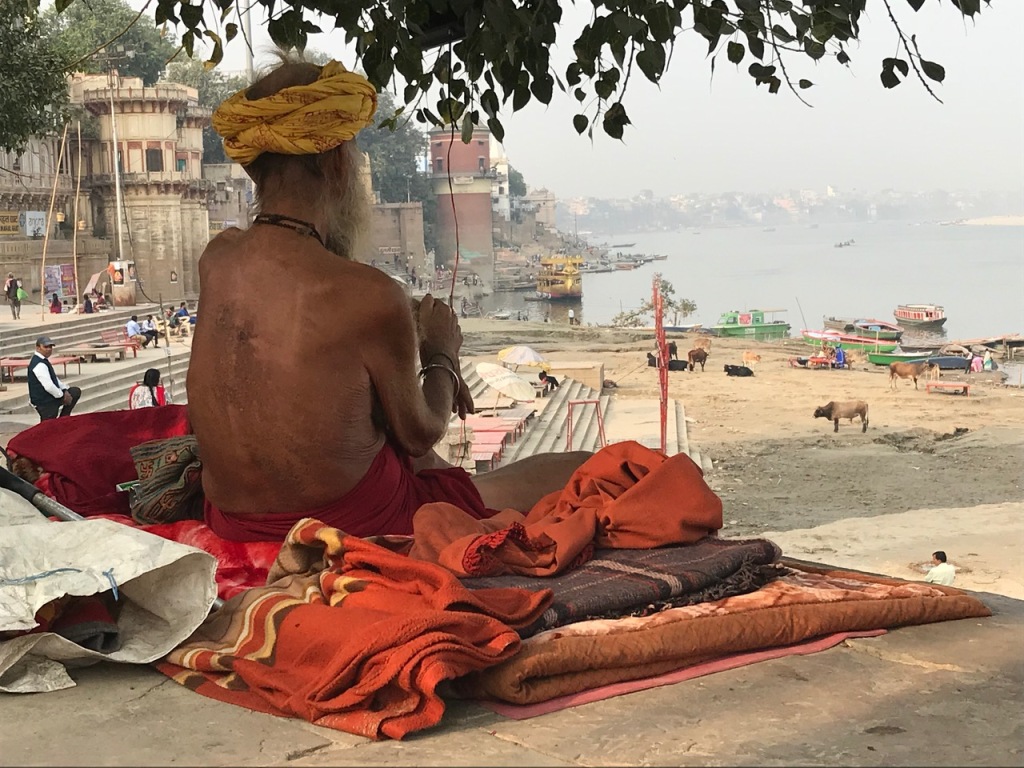
A sadhu watching over the early morning activity on the banks of the Ganges at Assi ghat. Photo Courtesy: Keith Lyons
Most who come to Varanasi, deep down, are seeking peace. The ancient city formerly known as Kashi and Benares is the holy site for three religions: Hinduism, Jainism, and Buddhism. For Hindus who flock to India’s spiritual capital from all over the country, bathing in the sacred Ganges is said to wash away all sins.
For me, as a non-religious outsider, I was also seeking inner peace, and perhaps a deeper understanding of the questions of life and death. But amid the surrealness of the labyrinthine old city, with its wandering bulls, revered shrines, marauding monkeys, and burning bodies, one thing I found was a place to satisfy my earthly material needs.
“It’s to die for,” exclaimed an American bohemian I’d met a few weeks earlier in Bodh Gaya, where the Buddha gained enlightenment. I ran into him strolling along the ghats — steps down to the Ganges that line the western bank of the curve in the wide river. Despite the 1256-page heavy Lonely Planet India, TripAdvisor and social media, there is nothing like word-of-mouth recommendations from fellow travellers. “So you are already at that party,” said Brad, impressed that I too had made it that far along the waterfront almost 2km from where I was staying. “Well, you can’t miss it, can you,” I replied. “It’s probably the only place of its kind right at the water’s edge, and if you don’t see it, you probably smell it.”
For many travellers who don’t want to be seen as sightseeing tourists but are in search of the authentic and the local, Varanasi seems to offer quite an array of experiences, some beyond the comfort level of leisure tourists who keep to the beaten path. Of the 88 ghats of Varanasi which are used for bathing, washing and ceremonial worship, there are two which are synonymous with the spiritual centre. Those two are exclusively used for cremations.
The same reason for bathing in the sacred waters to obtain forgiveness for transgressions applies, but for the recently deceased, it is believed that if their ashes are scattered into the purifying Ganga, their reincarnation cycle will end — and they will reach nirvana.
As the one of the ‘seven sacred cities’, the place supreme deity Shiva (known as ‘The Destroyer’) brought into being by meditation, Varanasi and its cremation ghats represent the ultimate ‘geographical cure’. There are rest homes and ashrams where the elderly and terminally ill wait to die, believing that if they die in the old city, they will be redeemed of all their sins by Lord Shiva on the cremation pyre.
Varanasi straddles the known world and the hidden, with the Ganges a crossing point between earth and heaven. For tens of thousands of foreigners who have Varanasi on their itinerary routes, it is fair to say many are seeking peace, but definitely not of the kind that involves the death of their current material existence. Instead, there is a curiosity about the openness of death and its rituals, and the chance to bear witness to the process which can be at the same time sad and soul-destroying yet also joyous and life-affirming.
For those that don’t share the faith that propels people to this city, perhaps any visit to Varanasi could be described as macabre or dark tourism, fueled by the antagonism between testimony and voyeurism. The epitome of this is the quest by foreigners to get as close as possible to take photos of burning bodies. As if normal travel isn’t stressful enough, the macabre tourist seeks out encounters that have the potential to be emotional and even traumatic.
I must admit, I did have a certain curiosity about witnessing wooden pyres where corpses were placed to be burned. And I did have a fear that I might identify a limb or hand being consumed by the fire, or even that somehow a writhing contorted face might emerge from the flames and snarl at me menacingly.
That didn’t happen. What did happen is that I passed the cremation grounds numerous times during my walks up and down the riverbanks, occasionally pausing to observe from a distance, but the sight didn’t stir me as much as the reflection that this was how a culture and a religion farewell their dead. Having been an altar boy in the Catholic Church, I’d seen my fair share of embalmed bodies in coffins at teary sad funerals, but there was quite a different feeling at Varanasi. Anyway, I didn’t want to intrude as a gawking foreigner.
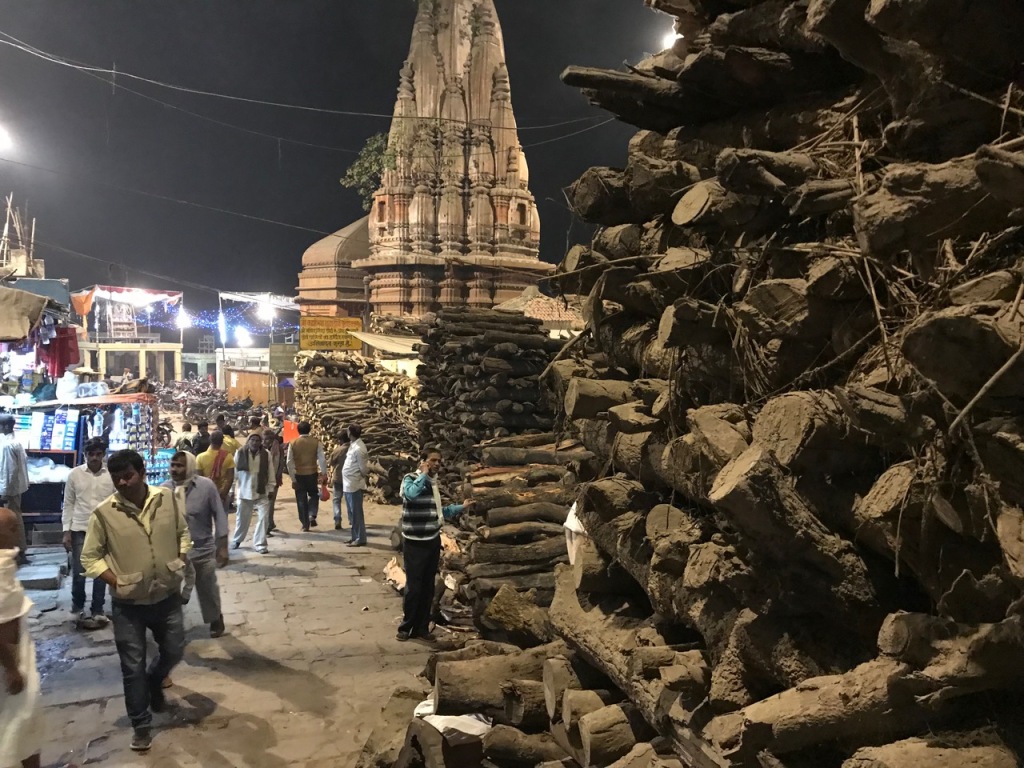
I was just as interested in the negotiations for firewood between relatives and the lower-caste Doms. The price for 400 kg of wood can be around Rs 4,000 (around US$52), a visiting insurance broker from Mumbai tells me, as we stand on the steps beside towers of split logs from the Himalayas. “The better wood is more expensive, but the government is trying to encourage using things like coconut shells and cow dung cakes instead of cutting down more trees,” he says, before the discussion turns to cricket, and a New Zealand cricketer I’d never heard of who played for his beloved Mumbai Indians. Later that evening, to make up for my lack of patriotic sporting knowledge, I impress some local boys playing cricket on the uneven surface of a terrace by catching a whizzing ball with one hand.
Wood merchant stack wood for cremations. Photo Courtesy: Keith Lyons
I noticed that after the initial shock of seeing dead bodies, and after a few days, the constant exposure to these late rites meant that I could be sitting in the open-fronted government-approved 70-year-old Blue Lassi Shop and I wouldn’t even look up when a procession march along bearing a body destined for the Manikarnika ghat. Everyday hundreds of bodies are burned on the riverbank, with the no-frills natural gas crematorium operated 24/7.
I had already taken on board — and possibly ignored through denial – the message of Varanasi: Death is unavoidable. One day, I will die. My body will be destroyed. Life on earth is finite. Make the most of it.
I reflected on this as I stood sipping my tea at Dada ki Chai, or as I sought out the best kachori sabzi[1], or the sweet and sour channa1, dahi vada[2]on the crooked and crowded streets.
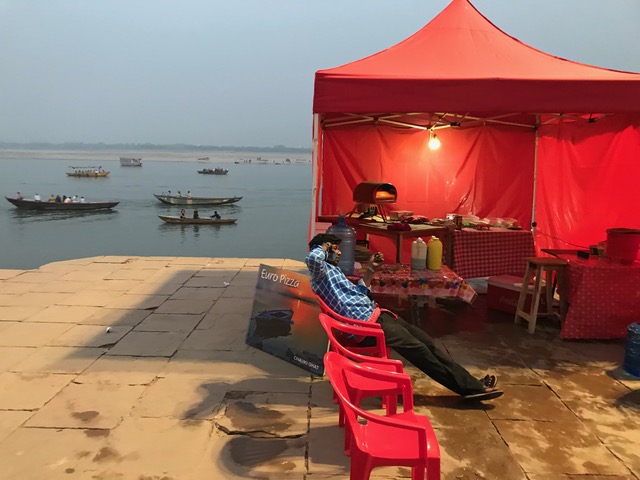
So what else did I discover among the maze of alleyways, the crumbling palaces and the riverbank steps down to the river? Don’t dismiss me as a lousy traveller who can’t be without the comforts of home, but I have to admit one of the finds of my waterside wanderings was a red tent erected on the wide path, where a family had recently set up a low-key pizza eatery.
Pizza? Yes, hand-made, wood-fired pizza. When I first visited, Sunil has only just started the venture. He was going to get some pizza boxes and a label for Euro Pizza and arrange a takeaway and delivery service. The only seating was a few plastic seats.
Diners waited patiently in the cool evening, not so intent on breaking the cycle of death and rebirths but wanting respite from the hot spicy food served up in train stations and roadside dhabas.[3]
In the distance, only a few minutes’ walk away, flames could be seen from the Maharaja Harishchandra ghat, Varanasi’s second, and smaller burning ground. Further along, sounds from the evening ceremony could be heard. But none of that mattered really. There was always a friendly grin from Sunil or a nod of recognition from his family members who cranked out the vegetarian pizzas. It was Rs.150 (US$2) for a ‘small’ pizza, but it was large enough to share. Which people did, with fellow travellers they’d just met, the whole of life made up of many triangle segments, their Varanasi stories to be told later about the burning corpses, the ashes scattered into the river, and the weirdest yet most wonderful thing: a pizzeria perched by a crematorium and a crossing to paradise.
Euro pizza’s humble red tent on the banks of the Ganges. Photo Courtesy: Keith Lyons
Keith Lyons (keithlyons.net) is an award-winning writer, author and creative writing mentor, who gave up learning to play bagpipes in a Scottish pipe band to focus on after-dark tabs of dark chocolate, early morning slow-lane swimming, and the perfect cup of masala chai tea. Find him@KeithLyonsNZor blogging at Wandering in the World (http://wanderingintheworld.com).
PLEASE NOTE: ARTICLES CAN ONLY BE REPRODUCED IN OTHER SITES WITH DUE ACKNOWLEDGEMENT TO BORDERLESS JOURNAL

 Borderless