The question is, why are we here? What are we doing, and what is expected of us? Is the purpose of our existence merely to continue the propagation of the species? Is there a higher calling to elevate our souls? Can we correct our karmic order to a better footing? Unfortunately, if only we knew where we went wrong last time, we could fix our past mistakes. Sadly, we do not. Is our presence on Earth to raise our species a level higher, whether intellectually or technologically, than a generation before? Is there a greater plan in the pipeline, to consume more and more, heading towards entropy? The less wise among us will be sure of their existence, convinced that this is a testing ground for more magnificent things to come.
Among the lower orders of species, it is a given that the biological reason for their existence is the perpetuation of DNA and the selection of the fittest. Most animals die shortly after laying eggs. Some, like praying mantises and black widow spiders, kill their mates after sex. Salmons lay eggs once in their lifetime, after enduring life-changing experiences to swim upstream, conserving all their energy for their one final trip to lay eggs and then die[1]. At this level, it seems that their raison d’être is to procreate. That is all.
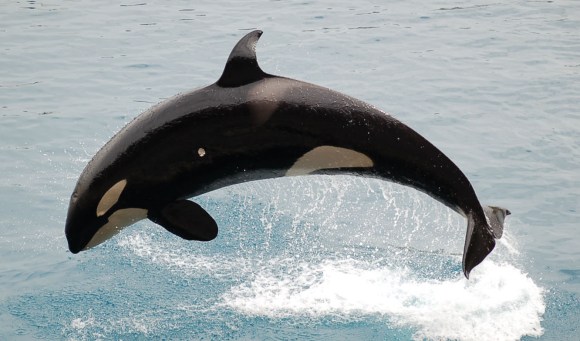
As we climb the pecking order, women evolve to live longer. Some even reach a phase of life way past the cessation of ovarian follicles, a period called menopause. Only in a few species do the females have the luxury of relieving themselves of childbirth and caring for the young towards the latter part of their lives. Formerly, it was thought that only humans go through menopause. Now, we know that besides humans, whales, orcas, and chimpanzees also spend a significant part of their lives in the postmenopausal period[2]. Thinking about it, if the main purpose of life is to pass on DNA and then move on, why do they stay so long without trying to improve or spread the gene pool? It seems like a waste of resources. If it were only for procreation, it would clash with the purpose of existence. They might have to compete for limited resources.
Behavioural scientists who have studied orcas and whales suggest that their pod structure is matrilineal[3]. The older members care for the ‘grandchildren’ to promote survival. Indirectly, they help ensure the continuation of the species. This is known as the ‘grandmother hypothesis’. Their presence leads to healthier and stronger calves for future generations. These older postmenopausal orcas possess a wealth of knowledge to guide the pod in making life-changing decisions such as where to hunt juicy salmon and where to relax in peace.
Elephants that live for a long time, up to around 80 years, can still reproduce quite late, even as late as a 65-year-old female. One may wonder whether inbreeding is a possibility since they live in communities. Fortunately, nature provides a solution for them. Bull elephants, after reaching adulthood, leave their community tribe — a practice called dispersal. They then join their bachelor friends and roam around sowing their seeds. Female elephants remain with their birth herd for their entire lives and do not go through menopause[4]. In the chimpanzee community, dispersal is carried out by the females. They leave their troop when their hormones surge to avoid inbreeding.
So, where does that leave us as humans? Are we evolutionarily programmed to spend a long time in the postmenopausal state? After all, our ancestors rarely reached menopause. Even as late as the 18th century, the life expectancy of a woman was between 35 to 40. Advances in medical care and safe childbirth have extended our lifespan beyond the expectations of our ancestors. It might be an evolutionary accident, but we have adapted to it. It also prevents intergenerational reproductive conflict, as we avoid competing with our daughters for limited resources and reproductive opportunities.[5]
If the continuity of a species is the primary goal of life, then postmenopausal women have fulfilled their mission early in life. Life in old age should be regarded as a bonus. Without a role in transmitting genetic material, they may indulge in pursuits that bring them happiness. They might be catching up on activities they could not pursue during the demanding years of motherhood. The vast wealth of life experiences and street-smart wisdom can be passed on to their children, if the young are willing to listen. They could also revisit their carefree teenage years, which were cut short by hormonal surges during youth and the burdens they carried.
Recently, it has been suggested that living in an extended family can help ease the burden of caring for children with neurodevelopmental conditions. While it does not prevent ADHD or autism, grandparents can be valuable for providing emotional support and practical assistance.[6] They can offer a listening ear to understand the child’s unique needs. Better outcomes have been observed when grandparents live with their grandchildren.[7]
On a philosophical and existential level, it is difficult to precisely define what life is all about. We can discuss endlessly, like a philosopher, until the cows come home and then go grazing again. From a biological perspective, there is no doubt that it is not merely about the propagation of chromosomes. There is also room for acquiring knowledge, disseminating it broadly, and offering a helping hand to make the world a better place.
An orcas: Sourced by Farouk Gulsara from Public Domain
Farouk Gulsara is a daytime healer and a writer by night. After developing his left side of his brain almost half his lifetime, this johnny-come-lately decided to stimulate the non-dominant part of his remaining half. An author of two non-fiction books, Inside the twisted mind of Rifle Range Boy and Real Lessons from Reel Life, he writes regularly in his blog, Rifle Range Boy.
PLEASE NOTE: ARTICLES CAN ONLY BE REPRODUCED IN OTHER SITES WITH DUE ACKNOWLEDGEMENT TO BORDERLESS JOURNAL
Life evolves. The new replaces the old, and fresh ideas overshadow previous ones. What was once an avant-garde style one day may appear unattractive the next. We sometimes feel embarrassed by the clothes we wear and the trends we embrace decades after models showcased them on the catwalk.
Trends come and go constantly. Species become extinct at a background rate of one species per million each year. Human activities, such as habitat destruction and chemical pollution, have accelerated this decline by hundreds or thousands of times.
At times, cataclysmic accidents of Nature expedite this decline, such as meteoritic impacts and the extinction of the dinosaurs 65 million years ago. Neanderthals lost the survival game to Homo sapiens because they did not adapt to environmental demands, though not without infusing their DNA into the latter. Should we consider this an inevitable consequence of our existence, or should we strive to rectify it with our current level of scientific advancement?
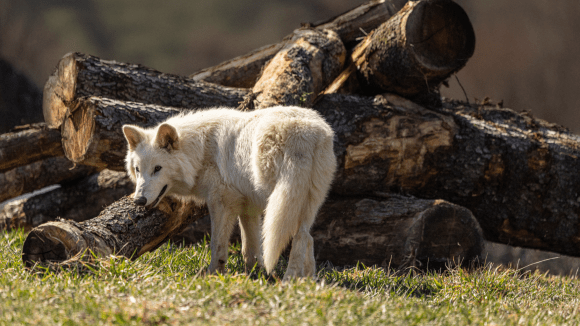
It was recently reported that a rare species of wolf, the dire wolf, last roamed the Earth 13,000 years ago. Three dire wolves have been recreated using CRISPR technology[1] and surrogacy, allowing them to roam the Earth once more. Part of their DNA was extracted from an ancient fossil and transplanted into an artificial grey wolf egg. The grey wolf differs genetically from the dire wolf and is related to the domesticated dog. Dire wolves were fierce apex predators that existed before humans, when the world was a much more hostile place.
The scientists who embarked on this experiment thought it was a necessary first step towards preventing further species extinction. Their next objectives include recreating the dodo bird, which humans hunted to extinction due to its ease of capture, and the Tasmanian tiger. Scientists are particularly fascinated by Tasmanian tigers because they belong to a rare group of marsupials mainly found in Australasia. Additionally, rats with woolly mammoth genes are also being developed in laboratories somewhere.
Are these all really necessary? On one hand, humans pose the greatest threat to all living beings. We not only kill each other but also other species to assert our dominance. Our mere existence on Earth leaves a significant carbon footprint, which could potentially destroy the planet before its expiration date. Logically, we are a greater threat to the species than Nature’s natural selection. We should not exist at all. We only expedite doomsday. Yet, we carry the notion that the burden of preserving the third rock from the Sun for eternity lies squarely upon our shoulders.
A real example of the danger of our manipulation of Nature’s order can be seen in our irritation with pathogenic insects. DDT[2] was introduced to control mosquitoes. We believed we were doing a great service by reducing arthropod-borne diseases, only to realise the crucial roles insects play in pollination and, by extension, our food chain. Rachel Carson’s [3]now-famous 1962 line, “the spring with no chirping birds”, serves as a grim reminder of Nature’s intricate web of interdependency and the detrimental effects of chemical pesticides. Every being has a specific role in the grand scheme of things.
Wolves regulate the overpopulation of large herbivores, such as elk and deer, which helps maintain plant health and diversity. Mosquitoes and many other insects may be pests, but they are also essential for plant pollination and are integral to the food chain that helps balance the ecosystem. Dodos and Tasmanian tigers may have had their significance at one time. Nature, the greater equaliser, must have its reasons for ending its existence. To act against Nature, to correct something we perceive as wrong, is foolhardy.
Hollywood offers a fictional reminder, as was seen in Jurassic Park, of what occurs when humanity meddles with Nature, regardless of how thoroughly we believe we have crossed the ‘t’s and dotted the ‘i’s. The seed of life possesses a mind of its own. Its innate drive to propagate may lead to the creation of dangerous hybrids, mutants, and chimaeras or even result in hermaphrodites within species to ensure continuity.
Even before the dire wolves’ secret whereabouts are made public, Elon Musk has already expressed his desire to have one as a pet. This shows that these freak products will just end up as rich men’s playthings. It is unlikely that this technology will significantly change the day-to-day life of the average person. The tech moguls may view these baby steps as precursors to transhumanism, a better version of humanity, where human capabilities are enhanced synthetically through technology, bypassing Nature’s selection.
Anyway, the last thing we want to see in our lifetimes is new breeds of vicious, ferocious dire wolves joining forces with woolly-toothed mice and bloodthirsty Tasmanian tigers in our streets, searching for us as food in a borderless world as far as these beasts can see.
From Public Domain
[1] CRISPR technology, or Clustered Regularly Interspaced Short Palindromic Repeats, is a gene-editing technique.
[2] Dichlorodiphenyltrichloroethane, is a synthetic chemical compound that was once widely used as an insecticide and a key component in malaria control efforts.
6. Transhumanism is a philosophical and scientific movement that advocates the use of current and emerging technologies, such as genetic engineering, cryonics, artificial intelligence (AI), and nanotechnology, to enhance human capabilities and improve the human condition.
.
Farouk Gulsara is a daytime healer and a writer by night. After developing his left side of his brain almost half his lifetime, this johnny-come-lately decided to stimulate the non-dominant part of his remaining half. An author of two non-fiction books, Inside the twisted mind of Rifle Range Boy and Real Lessons from Reel Life, he writes regularly in his blog, Rifle Range Boy.
.
PLEASE NOTE: ARTICLES CAN ONLY BE REPRODUCED IN OTHER SITES WITH DUE ACKNOWLEDGEMENT TO BORDERLESS JOURNAL
There is a large grey wave painted in the middle of the canvas. It is falling over a large group of people standing on the edge of a seashore. Many men wear skullcaps. The women have black burkas. The group has widened eyes and open mouths. Some have turned their backs to flee. Others have raised their arms and clenched their fists, as if they are about to break into a run.
At the bottom of the canvas, on the left, there is another group of people. They are also standing on another seashore, with windswept hair. There is a woman with a large sindoor in the middle parting of her hair. A young man, in jeans, has a necklace with a gold crucifix. A boy stands with a placard showing a dove with a leaf in its beak. The words, ‘Let’s all live in peace,’ are written in bold, red letters. Others raise placards with slogans like ‘Say No to communalism’, ‘Syncretism is in our DNA’, and ‘We are all brothers and sisters in this great nation’.
Painter Ashraf Mahmood steps back and stares at the image. A slight smile plays on his lips. He had woken up that morning and this image had come floating into his mental screen. Ashraf kept staring at it, eyes closed, lying on his back. His wife had got up and gone to the kitchen. Alia liked to make her tea using Tata Gold. He preferred Brooke Bond Red Label. So they made separate cups.
When he entered his studio on Mira Road, in Mumbai, at 9 am, he got down to work, using an easel and grey paint.
He worked steadily. It was silent inside. But Ashraf did register the outside sounds of a typical Mumbai street. The horns blowing. Tendrils of smoke from exhaust pipes floated in through the window. His nose twitched as he noticed a foul smell. It seemed as if somebody had thrown garbage on the street. Ashraf closed his nose with the tip of his fingers for a few seconds. “The crazy smells of Mumbai,” he thought.
He grew up near Mandvi Beach in Ratnagiri (343 kms from Mumbai). The air was fresh, and the wind blew constantly. The only sound was the roar of the waves and the beautiful sight of seagulls making circles as they flew above the sea. Ashraf’s father, Mohammed, was a government school teacher. His mother was a homemaker. He had two elder brothers and three sisters. Ashraf was the youngest. He displayed artistic talent from his school days.
Unlike most fathers, Mohammed encouraged his son. His father took him to an art teacher, who taught him how to draw and paint. Ashraf’s major breakthrough happened when he got admitted to the JJ School of Art in Mumbai. After that, there was no looking back…
It was evening when he finished the work. His soles ached. Ashraf had been standing for hours.
This image reflected all that he felt. The grey resembled the growing intolerance towards Muslims. This seemed to be overwhelming especially in places like Uttar Pradesh and Madhya Pradesh. There was the rise of majoritarianism. And the fracturing of relations between people of different communities. And yet, Ashraf felt that the DNA of the people over centuries was syncretic. A ready acceptance of people of all faiths.
It was only the hate campaigns, through speeches, social media, and songs, that had swayed the people. He was sure the fever would die one day. Syncretism would rise again. “After all,” he thought, “throughout human history, love always conquered hate. But it took time.”
Ashraf wanted to tell the viewers of his work not to lose hope. And hence the pigeon and the symbol of peace. For the title, he used a quote by the Greek philosopher, Aristotle, “Hope is the dream of a waking man.”
Ashraf rubbed his chin a few times and walked to a table on one side. A packet of fresh buns lay on the table. Ashraf opened a fridge. He took out a container which contained butter and a bottle of strawberry jam. He sliced the bun into half with a stainless steel knife, placed butter and jam in between, and began eating it. These were fresh buns from a nearby bakery. Ashraf had bought them when he had stepped out for lunch. He made tea on the gas stove. Then he sat on a stool near the table and sipped it.
This was his 35th year as a painter. Now, at 55, he could look back with reasonable pride. He took part in regular exhibitions and won a few awards and grants. Profiles of him appeared in the newspapers and on social media. His paintings sold, thanks to his realistic and simple style. An art sensibility was only gradually building up among the people. Ashraf knew that images drawn from his unconscious mind had a pulling power. Why this was so, he did not know. He remembered how one art critic described a David Hockney painting as having a ‘psychological charge’. Hockney was a renowned English painter. Ashraf realised that art needed to have a psychological charge if it had to have an impact.
But Alia had already made an impact on him. He met her when she came to view his exhibition one day at the Jehangir Art Gallery. She was slim and tall, with curves that were accentuated by the chiffon saree she wore. Like Ashraf, she came from a small town. Through grit and perseverance, she passed competitive exams and got a government job. They went for dates. Ashraf was smitten. Within a year, he proposed and they got married.
Alia was a superintendent in the sales tax department. She would earn a pension once her career got over. She had another ten years to go. Their two daughters had married and settled down in Aligarh and Delhi. Both had two children each, a boy and a girl.
Alia wanted Ashraf to earn more money. But he was not a hustler or a man who liked to build a network. If a buyer came and offered a decent price, he sold it. Most of the time, he remained isolated. Sometimes, he met other artists at exhibitions and art seminars. He would chat with them. But that was all.
He was not keen on extramarital flings or experimenting with drugs or drinking too much. Ashraf led a steady life. In many ways, he was happy with the way his life had turned out.
He washed the cup and the pans. Ashraf placed the cup on a hook which hung on a wall. He had yet to finish the bun.
He made his way back to the painting. It was 5.30 p.m. In half an hour, he would close his studio and walk back to his house, fifteen minutes away. The couple owned their apartment. Alia, with help from Ashraf, had cleared the bank loan over 15 years.
At this moment, he heard a murmur of voices from outside the door. Ashraf wondered what it was. The sound arose. “Was there an emergency?” he thought. “Is the building on fire?”
He came to the door. Ashraf saw that the lock was coming under strain. It seemed to be bulging backwards towards him. Somebody gave a violent kick and the door sprang open. Ashraf moved to one side.
A group of young men rushed in. Some wore red bandanas. Many were in T-shirts and trousers. Some had thick, muscular arms. They were shouting. It seemed like slogans. In his shocked state, Ashraf could not register the words. They rushed to the canvas on the easel. One man, using a long knife, sliced the canvas into two. He pushed the easel. It fell with a clattering sound to the floor.
There were a bunch of finished canvases placed on one side. Ashraf had been doing work to showcase in an upcoming solo exhibition. The group spotted it. They rushed there, pushed the canvases to the floor, and began ripping them one by one with their knives. Within a few minutes, the work of several months lay ripped out. Ashraf remained by the side of the door. He had not moved.
“Hey you Muslim kutta (dog),” one of them said. “We will come again if you carry on working. No art for Muslims. Clean the sewers. That’s the only job you are good at.”
Ashraf half-expected one of them to stab him. But they didn’t. They left as quickly as they came.
Ashraf felt as if a large, round ball had settled at the base of his throat. He could not swallow it nor could he spit it out.
He blinked many times. Ashraf wasn’t sure whether this event had actually happened. It took place so fast. But there was no doubt about the ripped canvases lying all over the floor.
He felt a pain in his heart. Ashraf rubbed the area. “I hope I am not having a heart attack,” he thought to himself, as he took in lungfuls of air to calm himself down. Employees from other offices on the same floor came to the door. They entered. Most had goggle-eyes.
“Sir, what happened?” one young man said.
Ashraf shook his head.
“I don’t know,” he said.
“Who were these people?” a woman said.
“No idea,” Ashraf said, as he surveyed the damage.
“Sir, you will have to call the police,” another man said.
“Yes, I will,” said Ashraf.
A couple of men shook his hand.
All of them surveyed the damage silently. Work was calling them. “All chained to their desks,” thought Ashraf. “At least, that way, I am free. No boss on top of me. No attendance marking every day. No targets to meet. No one shouting at me. But then, no steady income. And no camaraderie. Large amounts of time spent alone.”
Then he returned to the stool, returned to the present, and placed his head in his hands.
‘What’s happening to this country?’ he thought. ‘‘There seems to be a collective madness. Indians attacking Indians. And these young people were ruining their lives by working for political leaders. They will be used and discarded.”
He had not seen them before in the locality. They might have come from some other area. Was it a deliberate ploy to send a shock wave through him and the community? Who knew how they thought?
What should he do now?
Ashraf realised he had to think rationally. He stood up and went to the door. He realised immediately, he could not do anything immediately. A carpenter would have to be called tomorrow.
He called Alia and informed her about what had happened. She said she would come directly to the studio from the office. Ashraf called up his media contacts, both in the print and visual media. They said they would arrive with their photographers and cameramen. Ashraf took several photos and videos on his mobile phone, documenting the damage.
He would have to report the attack at the police station and file an FIR.
Ashraf realised his work had been ruined, but he would recreate it. He had photos of all the canvases.
To prove to himself, he had returned to normality, he went back to the table and finished the rest of the bun. He put the butter and the jam back into the fridge. He washed the plate and the knife.
Fifteen minutes later, Alia arrived.
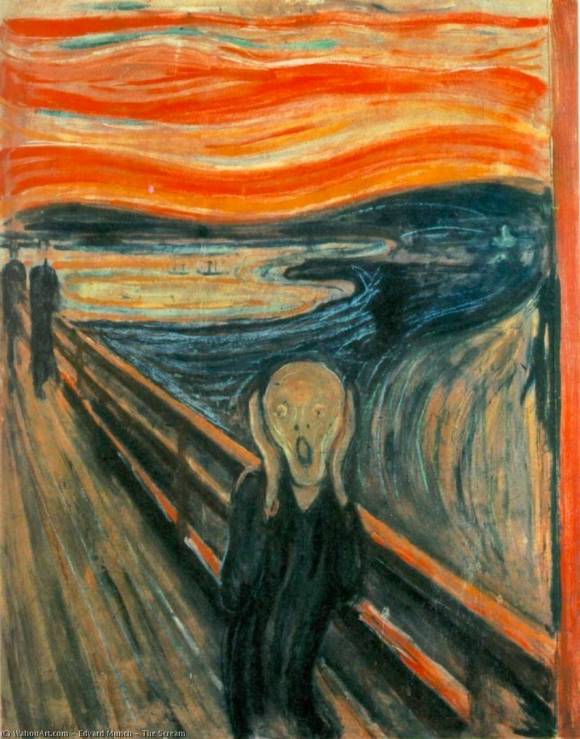
In silence, she stared at the canvases lying on the floor. Ashraf saw her press her hand against her open mouth. He realised it was a silent scream.
In the end, she came up to Ashraf and said, “They have tried to violate your dignity as an artist and a person.”
The couple hugged.
After a while they broke away.
“Don’t keep the canvases here anymore,” she said.
Ashraf rubbed his chin with his fingers.
Finally, he nodded.
“There was something strange about the attack,” he said. “They didn’t overturn the table or the fridge. And for some reason, they did not assault me. It seemed to me they had to leave in a hurry. So I got saved.”
Alia said, “They are keeping a watch on everybody.”
“Yes, I read online there is a pervasive deep state,” said Ashraf. “In every neighbourhood there are spies who report about all that is happening.”
“What is the next step?” she said.
“I am waiting for the media to come. After that, I will file the FIR,” he said.
At that moment, a few print and TV journalists arrived.
Ashraf spoke to the reporters. The photographers and cameramen began recording all that had happened.
They left after half an hour.
The couple then shut the door, as best as they could. But there was a small gap at one side. They went to the police station. The police allowed an FIR to be filed against ‘unknown persons’. He faced no hindrances because, as Ashraf surmised, the police were aware of his reputation as an artist.
The couple took an autorickshaw and returned to their apartment.
Alia changed into a nightgown. She washed her face, and informed their daughters about what had happened on her mobile phone.
Ashraf changed into a T-shirt and shorts. He made a glass of whisky mixed with water for himself. Every night he had one peg.
As he sat on the sofa, nursing his drink and staring at the TV screen, he felt the pain arise in him. It was an ache in the middle of the chest. To see his work treated in such a callous manner was a calamity. He wondered whether he would ever overcome this fear that had come into him. Work on a piece the whole day and in the evening, somebody could come in and rip it up.
Closed doors did not offer any protection. It was a time of lawlessness. People with criminal behaviour could operate with impunity. Leaders wanted to instil fear in people.
And would he be able to recreate these ripped-up paintings with the same intensity? He was not sure.
On the screen, some leader was having his say. His eyes enlarged, he made violent movements with his hand, and spoke with a loud voice. “Horrific,” thought Ashraf. “How do you create art in this environment?”
Yes, indeed, how do you?
But it did not take long for him to tell himself, “But we must, whatever be the cost. Art is the candle that brings light to the darkness.”
.
Shevlin Sebastian has worked for magazines like Sportsworld, belonging to the Ananda Bazar Patrika Group in Kolkata, The Week, belonging to the Malayala Manorama Group, in Kochi, the Hindustan Times in Mumbai, and the New Indian Express in Kochi. He has also briefly worked in DC Books at Kottayam. He has published about 4500 articles on subjects as varied as films, crime, humour, art, human interest, psychology, literature, politics, sports and personalities. Shevlin has also published four novels for children.
.
PLEASE NOTE: ARTICLES CAN ONLY BE REPRODUCED IN OTHER SITES WITH DUE ACKNOWLEDGEMENT TO BORDERLESS JOURNAL.
Evolutionary biology is a branch of biology that deals with the processes responsible for the evolution and diversity of life on earth. From the very first ancestor to all life on earth to the very first modern human ancestor, a lot of questions remain answered. The emergence of related fields like genetics and specialised tools like radiocarbon dating has enabled scientists and evolutionary biologists to put together a clearer picture of how life would have probably evolved.
Explaining Life Through Evolution by Prosanta Chakrabarty opens a window to four billion years of eight million species that we see on this planet. It not only adds to existing literature but also gives straight answers to straight questions on the evolution of life on earth. Indeed, it is an unputdownable book that explains life.
Chakrabarty is an evolutionary biologist at Louisiana State University where he is a professor and curator. A Senior Fellow at TED, a Fulbright Distinguished Chair, and a Fellow of the American Association for the Advancement of Science, this is his first and indeed a great work.
The schema of the book is clear: it does not simply narrate the story of evolution; it is more than about where we came from. It brings to light who we are. As humans, we logically focus more on identifying differences between us; no matter how small they are. Chakrabarty demystifies the notion to emphasise our similarities with each other than many of us are willing to believe.
As more and more people take ancestry tests, sending their DNA samples and money to genealogy testing centres, Chakrabarty says, we need to be educated on what the results actually mean, scientifically; and we all have to decide together what it means socially. We should be celebrating the fact that this diversity comes from the same little drops of water and sunlight, each just shining a little differently. Like all species, we are defined by our differences as much as by our similarities.
He begins the book by saying: “There is a beautiful Sanskrit word, ‘ayurveda’ that translates in English to the science of life. Although generally relating to human health or homeopathic medicine, I’d like to see the shift of the usage of ayurveda to its literal translation as perhaps an enlightened synonym of biology, élan vital or perhaps of evolution. It is a term that makes me think of how words and phrases can have different meanings for different people and how words too can evolve. Even the word evolution’ evolved in Charles Darwin’s time from a meaning closer to development (in the sense of a developing embryo) to its current definition, essentially the accumulation of heritable changes in organisms that can lead to the formation of new species from ancestral forms.”
He goes on: “Interestingly, Darwin and others instead used the now obsolete word transmutation, which then meant something closer to our current definition of ‘evolution. Over time, the meanings of words can change, but previous usages remain part of their history, just like species can retain the historical features of their ancestors. Except in biology, modifications often lead to entirely new species, so perhaps if we changed ‘ayurveda’ to ‘ayurvedology’ we’d have a better fit with the evolution analogy.”
Through this intelligent and aptly illustrated book, Chakrabarty encourages us to think of life which is always in the making. If we look at the eight million species with who we share this planet, we have to imagine them all as having evolved over four billion years. They’re all the product of that fruition. Visualise all as young leaves on this ancient and gigantic tree of life and we will appreciate that all of us are connected by invisible branches not just to each other, but to our extinct relatives and our evolutionary ancestors.
Divided into four parts (‘A Personal Prologue’, ‘The Evolution Revolution’, ‘Questions and Misconceptions’ and ‘Why Understanding Evolution Matters’), this book — all of the 230 pages– is a reader’s delight. Chakrabarty weaves his lived experiences into this poignant discussion on evolution, covering key concepts that are vital to the understanding of current conditions like change and natural selection.
If it is important for any book on evolutionary biology to discuss how the discipline has been misused to puff up socially constructed categories like gender, Chakrabarty does that with precision.
The glowing analysis sheds light on the problems with historical and present-day interpretations of evolution while enlightening us about those who work at the cutting edges of the field. Another important feature of the book is that it guides us through viral pandemics and social change, and provides the three R’s[1] to enable us to work together toward a thriving future.
Somewhere in the book Chakrabarty differentiates between science and religion. “Science is about observing and testing natural phenomena in order to give a reasoned, evidence-based explanation for those events. Religion, on the other hand, can provide answers to questions science doesn’t cover (e.g., what is the meaning of life?) but it can also provide answers that can’t always be tested. For instance, let’s say your answer to why apples drop to the ground when they fall out of a tree is ‘God made it happen’; that isn’t something I can prove false, because I can’t test it. There isn’t room for questioning things or scientific inquiry if you believe flatly that ‘God controls everything that happens’.”
He further points out the pitfalls of deep-seated religious conviction in the present-day world: “The other problem with teaching religion in a science class is that there are many religions with a variety of beliefs. Faith-based beliefs about creation differ by your religious persuasion. In one version of the Hindu creation myth, the Earth was part of the lotus flower that grew from the navel of Vishnu, and then the world was populated by Brahma and will be destroyed by Shiva. If l taught that version of creation as the truth in my science class, [I] wouldn’t last very long as a teacher. However, maybe this religious take would do well in the so-called ‘Indian Science Congress’, especially among participants pushing fringe Hindutva ideas that take some religious ideas literally (e.g. Brahma discovered dinosaurs).”
Chakrabarty presents one of the most accessible texts about evolution. It is a handy volume for an educator, scientist, or curious reader because the presentation of the theory of evolution provides a charmed balance between solid scientific research and hilarity that teaches, advises, and entertains.
Meaningful, wide-ranging and argumentative, this is a must-read book. It will propel us to imagine and reimagine life around us.
[1] Guiding principles like reading, writing Arithmetic
.
Bhaskar Parichha is a journalist and author of Unbiased, No Strings Attached: Writings on Odisha and Biju Patnaik – A Political Biography. He lives in Bhubaneswar and writes bilingually. Besides writing for newspapers, he also reviews books on various media platforms.
.
PLEASE NOTE: ARTICLES CAN ONLY BE REPRODUCED IN OTHER SITES WITH DUE ACKNOWLEDGEMENT TO BORDERLESS JOURNAL
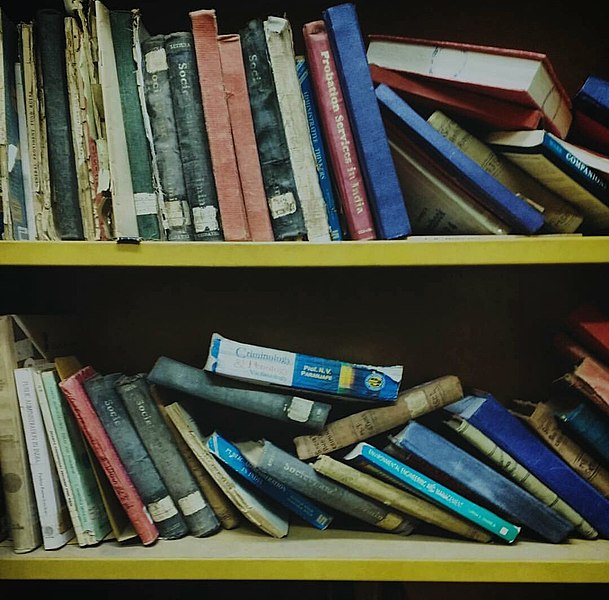
I have always wondered, when I am not at home, do the inhabitants of my bookshelf come alive like those children’s playthings in Toy Story? Apart from what their titles bind them to narrate, do my books have other stories to tell? Is my bookshelf some sort of a universe in itself with each compartment and the contents – an entity of its own? Are there dimensions to a bookshelf that we, humans, are not aware of – something that is beyond our realm?
For a while now (for me, a year since my last job as a journalist), Monday mornings do not come with blues attached. Moreover, since the lockdown, it hardly registers. However, this time I woke up to a message from a friend. She sent me a picture of her bookshelf. Pristine. Clean. I kept looking at the picture and zoomed in to see if I could read the titles of the books. The low-resolution nature of the photograph offered me a little chance to do so. Some I could read, some covers I was familiar with, and a lot many I could not figure out.
However, the shelf stood proud. The big brown square with sixteen shelves held its own against a lighter coloured background. The books despite not being arranged in perfect rows -‑ some standing, some lying flat — presented a scenic contrast and appeared orderly on the whole.
I shifted my gaze to my bookshelf and a quote, I had read a long time ago, came to my mind — “If you do not keep on sorting your books, your books unsort themselves”.
My bookshelf is chaotic. It’s like the city I live in — Mumbai. Each book jostling for space and complaining and, yet, wouldn’t want to be anywhere else.
But I like it the way it is. I have heard that people who keep pets end up looking like each other after a while, and behave similarly too. Many dog owners have told me this. I don’t know much about it but I have seen it happen with one of my friends. But that is not the point. Drawing an analogy, there is a thought germinating and it asks, after a while, does a bookshelf reflect the mind of its owner? I look at my bookshelf and I seem to know the answer. I am just not sure if I should put it out here.
Going back to that quote — do the books really want to “… unsort themselves?” I’m thinking of a counter narrative here.
What if my books want to be sorted. Will they secretly, when I am not home, rearrange themselves in an order that would make a librarian proud? Or, will they rise in rebellion against me to drive home the point?
Will a book ‘accidentally’ fall on my head and ensure that it drills some sense into me and goad me to impart some sanity to my bookshelf as well. I am relieved that I have kept all the heavy hard cover books on the lowest shelves. Of course, back then I had no inkling of any rebellion by the books. I had done that just to add solidity to the shelf. It is supposed to be a strong foundation.
If the books were to sort themselves, then they must be interacting. I hope they are. For all the disorder that my shelf displays, it aptly houses James Gleick’s Chaos. Does this book try to make sense and explain to others the lack of planning and logic in the way I have maintained the bookshelf?
Does Michio Kaku’s Hyperspace talk to others about why I am oblivious of their realm? Does Milan Kundera’s Joker still sit sulking in a corner because I have only read about seventy to eighty pages and have kept it back with a bookmark sticking out like the proverbial sore thumb? And does Charles Dickens’s Great Expectations complain, “Why on earth have I been placed next to Charles Bukowski’s ThePleasures Of The Damned and what on earth am I supposed to do here?”
I’m quite sure my PG Wodehouse’s Carry On Jeeves treats its neighbour Orhan Pamuk’s Museum of Innocence like its own butler and comments on its sartorial sense or rather the lack of it. Despite the crowding, there is, however, one hollow space that makes me well up. The emptiness of the space where I had kept my copy of One Hundred Years Of Solitude. I gave away Gabriel Garcia Marquez’s masterpiece to a friend — a young writer and a book lover himself. I hope to buy another copy soon. I will.
There is no thought behind the way the books are arranged on my bookshelf. Bill Bryson’s The Road To Little Dribbling is shoulder-to shoulder with Peter Carey’s True History of The Kelly Gang. My Kannada books are strewn all over with a couple of them holding their own against Howard Jacobson and John Steinbeck on either side.
There is Rushdie with Hemmingway, Coetzee and Murakami are neighbours filled with warmth. There is my collection of National Geographic Magazine somewhere deep down there and on top of this stack is a potpourri of books including my sketch book.
That’s not all. There are layers I cannot reach. And I don’t know when I will unravel them. Behind the proud frontline are rows of books I bought but never read. It makes me shudder to even guess what they must be thinking. Would they consult J Krishnamurthy’s TheAwakening Of Intelligence to understand and counsel themselves as to why they are the neglected children?
And then there is a book Hitchhiker’s Guide to The Galaxy. It knows it doesn’t belong here but has somehow been at home among my books for more than a decade. I had borrowed it from a colleague in 2008 and have not returned it so far. I promised him that I would, and I intend to keep that promise. So, this copy knows it is not permanent here. Must be a miserable feeling to be somewhere for that long and yet not belong.
I have often felt like that in between shifting residences in Mumbai. Most of my contracts have ended in eleven months and sometimes maybe twenty two months. But the current place has been my residence for six years now. Do I feel like this copy of Douglas Adams’s work here? Sometimes, I do.
It is a studio apartment. And it doesn’t offer me space for another bookshelf. In fact the top left square of my bookshelf is where I have kept all the photos of Gods and holy books, including Shrimad Bhagavad Gita. In the lower squares I have made space for my watches and bottles of cologne. And now in the lockdown, there are bottles of hand sanitisers too. The shelves are so stacked that there is no place for The Shadow Of The Wind, which interestingly (ironically?) is the part one of The Cemetery Of Forgotten Books series, and it finds itself on top of the bookshelf gupshupping with a straw hat.
It appears that my jostling for space in the apartment is a concurrent and a similar theme to the way my books are stacked. Whenever I am vexed with all this struggle, a walk by the sea rejuvenates me. But what about my books?
It maybe fantastical to think that whenever I step outside, they crib about me. But being privy to the way I live, it wouldn’t take too much imagination to believe that they do. There is an unread copy of Hilary Mantel’s A Place Of Greater Safety and a partially read The Second World War by Antony Beevor. And I wonder if these books would put the idea of a revolution and war in the minds of the other books. Maybe I should keep these books in good humour. A transparent polythene cover and proper dusting should do the trick.
I do not want to return to my flat one day and find my books in regimental rows and columns with their guns trained on me. It would break my heart to see my favourite A Farewell To Arms pick up a gun again.
Perhaps before the lockdown ends, I will dust all the books, the bookshelf and rearrange them in a way they might prefer. Perhaps Hemingway wants to be with Alistair McLean. Maybe all my Kannada books want to be together and even share some space with a few Hindi books. I should also make it a point to read all those books sulking behind the front rows.
All this was in my top five things-to-do-in-the-lockdown list and I haven’t come around to doing any of them so far. Despite my counter narrative to the quote, I believe in what Georges Perec wrote in his Thoughts Of Sorts.
Deep down at a subconscious level, I’m happy with the way my bookshelf is. I’m beginning to understand as I write this piece that the state of the bookshelf does indeed reflect my state of mind.
My bookshelf, along with its inhabitants, is a thriving ecosystem. A being of its own with its blood lines and nerve centres. Despite its constant state of ‘unsort’, I gravitate to it whenever I’m in need of a friend or solace. Sometimes I wonder if it owns me instead of the other way round. Perhaps in some dimension, of which I’m unaware, my bookshelf and I are a single entity. I sure do hope so.
.
K.R. Guruprasad has been associated with the sports pages of several newspapers over the last 16 years, as Sports Editor of DNA and previously the Indian Express and Hindustan Times. Guru has developed a finesse at zooming out of the myopic view of any sport, instead looking at sports as a coming together of the players’ lives and struggles, skills and technique and much more. His book ‘Going Places. India’s Small-Town Cricket Heroes’ by Penguin is a great testament to this approach. While his professional career has been focused on writing about sports, he is an avid reader and writer of varied subjects. An alumnus of Asian College of Journalism, was born in Bellary, Karnataka and later pursued his education in Mumbai.

 Borderless