Let's just forget that you and I exist!
Let's just assume that you're an echo in the vales
and I'm the sky.
The echo cannot touch me,
but it gently reaches me, soothing my barren soul,
and in return,
I reach you through water droplets,
stopping by your side,
kissing you,
gliding down the vales…

We shall meet again, my love;
when mellifluous notes echo in the vales on starry nights,
you will travel to reach me
through whistles
and melodies.
Mandavi Choudhary is a poet at heart and professor by choice. Teaching English at Satyawati College (Evening), DU, she brews coffee, collects jewels, and lives where poetry begins.
PLEASE NOTE: ARTICLES CAN ONLY BE REPRODUCED IN OTHER SITES WITH DUE ACKNOWLEDGEMENT TO BORDERLESS JOURNAL
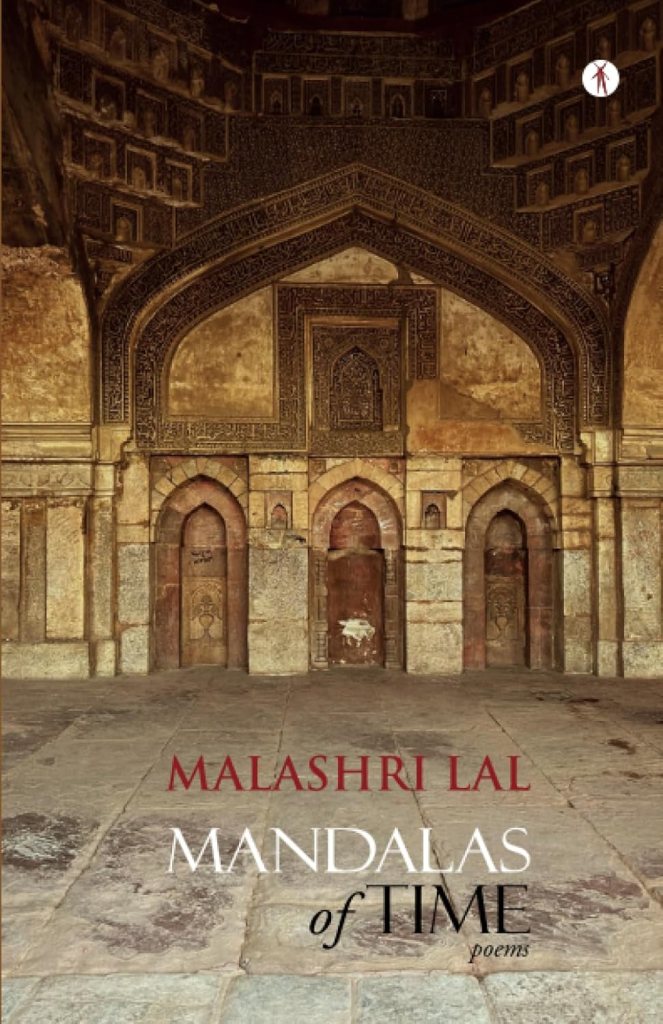
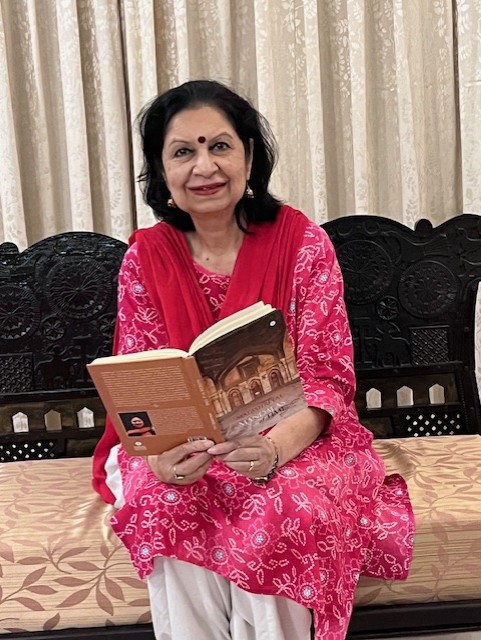
In Conversation with Malashri Lal, about her debut poetry collection, Mandalas of Time, Hawakal Publishers
Professor Malashree Lal
Time present and time past Are both perhaps present in time future, And time future contained in time past. If all time is eternally present All time is unredeemable.
‘Mandalas’ means circle in Sanskrit, the root, or at last the influencer, of most of the Indian languages in the subcontinent. Sanskrit belongs to the Indo-Germanic family, which homes Latin and Greek among other languages. Malashri Lal, a former professor in Delhi University, has called her poetry collection Mandalas of Time.
Her poetry reiterates the cyclical nature of the title, loaning from the past to blend the ideas with the present and stretching to assimilate the varied colours of cultures around the world.
Embracing an array of subjects from her heritage to her family — with beautiful touching poems for her grandchild — to migrants and subtle ones on climate change too, the words journey through a plethora of ideas. Nature plays an important role in concretising and conveying her thoughts. In one of the poems there is a fleeting reference to wars — entwined with the Pilkhan (fig) tree:
The Pilkhan tree thinks of its many years
Of shedding leaves, bearing inedible fruit, of losing limbs
But smiles at his troubles being far less
Than of unfortunate humans
Who kill each other in word and deed
But gather around the tree each Christmas
With fulsome gifts and vacant smiles
To bring in another New Year.

--Another New Year
Amaltas (Indian Laburnum) or Bougainvillea bind her love for nature to real world issues:
Only the Amaltas roots, meshed underground
Thrust their tendrils into the earth’s sinews below.
Sucking moisture from the granular sand, desperately.
The golden flowers pendent in the sun, mock the traveller
Plump, succulent, beacon-like, they tease with
The promise of water
Where there is none.

--Amaltas in Summer
And…
The Bougainvillea is a migrant tree, blossom and thorn
That took root in our land
And spread its deception
Of beauty.

--Bougainvillea
Her most impactful poems are women centric.
Words crushed into silence
Lips sealed against utterance
Eyes hooded guardedly
Body cringing into wrinkled tightness
Is this what elders called
‘Maidenly virtue?’

--Crushed
There is one about a homeless woman giving birth at Ratlam station during the pandemic chaos, based on a real-life incident:
Leave the slum or pay the rent
Who cares if she is pregnant,
Get out — go anywhere.
…
Ratlam station; steady hands lead her to the platform.
Screened by women surrounding her
A kind lady doctor takes control.
Pooja sees a puckered face squinting into the first light.
"This is home," she mutters wanly,
"Among strangers who cut the cord and feed my newborn,”

-- Ladies Special
In another, she writes of Shakuntala — a real-world migrant who gave birth during the covid exodus. She birthed a child and within the hour was on her way to her home again — walking. It reminds one of Pearl S Buck’s description of the peasant woman in Good Earth (1931) who pauses to give birth and then continues to labour in the field.
Most interesting is her use of mythology — especially Radha and Sita — two iconic characters out of Indian lore. In one poem, she finds a parallel to “Sita’s exile” in Italy, at Belisama’s shrine. In another, she finds the divine beloved Radha, who was older to Krishna and married to another, pining after the divinity when he leaves to pursue his life as an adult. And yet, she questions modern stances through poems on more historical women who self-immolated themselves when their husbands lost in battle!
Malashri Lal has turned her faculties post-retirement to literary pursuits. One of her co- authored books around the life of the poet Michael Madhusudan Dutt, received the Kalinga award for fiction. She currently serves on the English advisory board of Sahitya Akademi. In this conversation, Lal discusses her poetry, her journey and unique perceptions of two iconic mythological women who figure in her poetry.
When did you start writing poetry?
Possibly my earliest poetry was written when I was about twelve, struggling with the confusing emotions of an adolescent. I would send off my writing to The Illustrated Weekly which used to have pages for young people, and occasionally I got published. After that, I didn’t write poetry till I was almost in my middle age when the personal crisis of losing my parents together in a road accident brought me to the outpourings and healing that poetry allows.
What gets your muse going?
Emotional turmoil, either my own or what I observe within the paradigms of social change. With my interest in women’s issues, my attention is arrested immediately when I hear or read about injustice, violence, exploitation or negligence of women or girl children. It doesn’t have to be a dramatic or extreme event but even the simple occurrences of decision making by a husband without consulting his wife has me concerned about the dignity and agency of a woman. Some poems like “Escape”, hint at such inequality that society takes for granted. On the other hand, my poems about migrant women giving birth on the long march to a hypothetical village “home” during the pandemic, are vivid transferences from newspaper stories. “Ladies Special” is about Pooja Devi giving birth at Ratlam station; “The Woman Migrant Worker” is based on a report about Shakuntala who stopped by the roadside to give birth to a baby and a few hours later, joined the walking crowd again.
Why did you name your poetry book Mandalas of Time?
To me ‘Mandalas’ denote centres of energy. Each node, though distinct in itself, coheres with the others that are contiguous, thus resulting in a corporeal body of interrelatedness. My poems are short bursts of such energy, concentrated on a subject. They are indicative of a situation but not prescriptive in offering solutions. Hence the spiritual energy of ‘Mandalas’, a term used in many traditions, seemed best suited to my offering of poems written during periods of heightened consciousness and introspection. The poems are also multilayered, hence in constant flux, to be interpreted through the reader’s response. Many of them end in questions, as I do not have answers. The reader is implicitly invited to peruse the subject some more . It’s not about closure but openness. See for instance: “Crushed”, or “Shyamoli”.
Today, I rebel and tug at a
Divided loyalty —
The feudal heritage of my childhood
Fights off the reformist Bengali lineage,
My troubled feminism struggling
Between Poshak  and Purdah
White Thaan  and patriotism
Can one push these ghosts aside?

--Shyamoli
*Poshak: Rajasthani dress
*Thaan: White saree worn by the Bengali widow
You have written briefly of your mixed heritage, also reflected in your poem dedicated to Tagore, in whose verses it seems you find resolution. Can you tell us of this internal clash of cultures? What exactly evolved out of it?
My bloodline is purely Bengali but my parents nor I ever lived in Bengal. My father was in the IAS in the Rajasthan cadre and my mother, raised in Dehradun, did a lot of social work. In the 1950s and 1960s, Rajasthan was economically and socially confined to a feudal heritage and a strictly hierarchical structure. Rama Mehta’s novel Inside the Haveli (1979), describes this social construction with great sensitivity. Elite homes had separate areas for men and women, and, within that, a layout of rooms and courtyards that were defined for specific use by specified individuals according to their seniority or significance. Such hierarchies existed in Bengal too — the ‘antarmahal[1]’ references bear this out — but the multiple layers in Rajasthan seemed more restrictive.
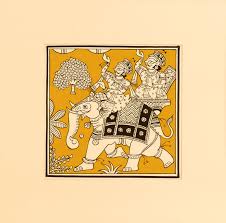
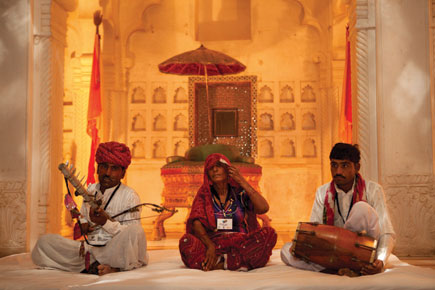
In my “mixed heritage” of being born of Bengali parents but raised in Rajasthan, I started noting the contrasts as well as the similarities. I recall that when my father went on tours by jeep into the interior villages along rutted roads, I would simply clamber on. At one time I lived in a tent, with my parents, during the entire camel fair at Pushkar. I would listen to the Bhopa singers of the Phad painting tradition late into the evening. So my understanding and experience of Rajasthan is deep into its roots.
Phad paintingBhopa singersFrom Public Domain
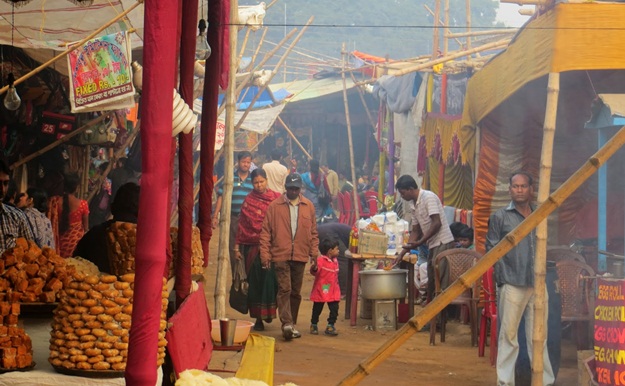
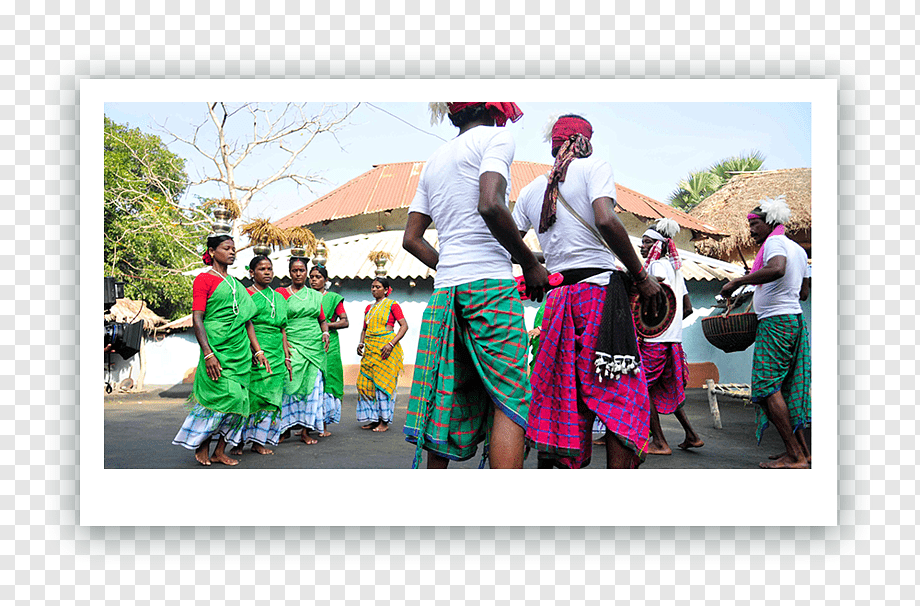
Bengal– that is only Calcutta and Santiniketan–I know through my visits to grandparents, aunts and uncles. My cousins and I continue to be very close. I saw a fairly elite side of Calcutta—the Clubs, the Race Course, the restaurants on Park Street, the shopping at New Market, and sarees displays at Rashbehari Avenue. Santiniketan though was different. I was drawn to the stories of the Santhal communities, visited their villages, attended the Poush Mela[2] regularly and knew several people in the university. After Delhi, the wide-open spaces, the ranga maati (red soil), the Mayurakhi River, and the tribal stories were fascinating. I am fluent in Bengali and because of my relatives in Calcutta as well as Santiniketan, I never felt an outsider. My father’s side of the family has been at Viswa Bharati since the time of Rabindranath Tagore. So, I felt comfortable in that environment. And through an NGO called Women’s Interlink Foundation, established by Mrs Aloka Mitra, I had easy access to Santhal villages such as Bonerpukur Danga.
Poush Mela, started by the Tagore Family in 1894Santhali Performance at Poush Mela
However, in summary, though I lived with both the strains of Bengal and Rajasthan, the daily interaction in Jaipur where I received all my education till PhD, was more deeply my world. The fragmented identity that some poems convey is a genuine expression of figuring out a cultural belonging. Poems such as “To Rabindranath Tagore” helped me to understand that one can have multiple exposures and affiliations and be enriched by it.
Do you feel — as I felt in your poetry — that there is a difference in the cultural heritage of Bengal and Rajasthan that leads you to be more perceptive of the treatment of women in the latter state? Please elaborate.
Indeed, you are right. Bengal has a reformist history, and my family are Brahmo Samaj followers. Education for women, choice in marriage partner, ability to take up a career were thought to be possible. My paternal grandmother, Jyotirmoyi Mukerji, was one of the early graduates from Calcutta University; she worked as an Inspectress of Schools, often travelling by bullock carts, and she married a school teacher who was a little younger than her. They together chose to live in Rangoon in undivided India, heading a school there. These were radical steps for women in the late 19th century. My father grew up in Rangoon and came to Rajasthan as a refugee during the Second World War. My grandmother, who lived with us, was a tremendous influence denoting women’s empowerment. But what we saw around us in Jaipur was the feudal system and purdah for women in Rajasthan.
Fortunately, Maharani Gayatri Devi had set up a school in 1943 in Jaipur to bring modern thinking in the women, and I was fortunate to study there till I went to university. Let’s recall that Maharani Gayatri Devi was from Coochbehar (Bengal) and had studied at Santiniketan. She brought Bengal’s progressive ideas to the privileged classes of Rajasthan. My classmates were mostly princesses. I visited their homes and families and delved deeply into their history of feudalism. Without being judgmental, I must say that Rajasthan’s heritage is very complex and one must understand the reasons behind many practices and not condemn them.
You have brought in very popular mythological characters in your poems — Sita and Radha — both seen from a perspective that is unusual. Can you explain the similarity between Sita’s exile and Belisama’s shrine (in Italy)? Also why did you choose to deal with Radha in a post-Krishna world?
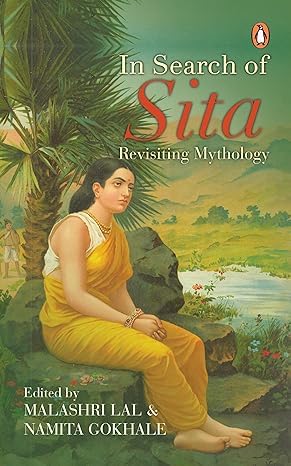
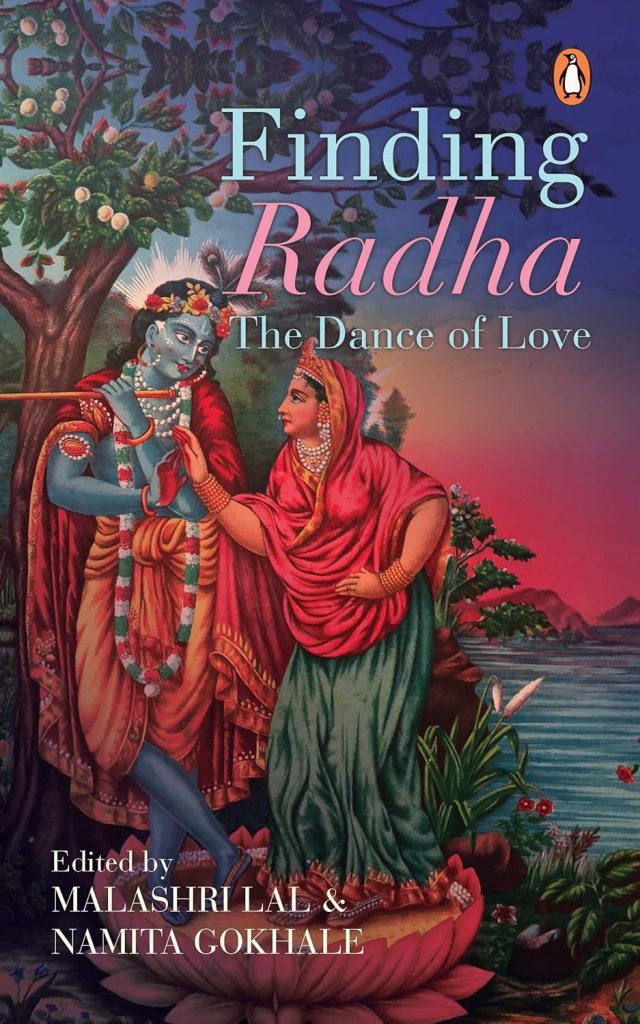
Namita Gokhale and I have completed what is popularly known as the “Goddess Trilogy”. After In Search of Sita and Finding Radha, the latest book, Treasures of Lakshmi: The Goddess Who Gives, was launched in February 2024 at the Jaipur Literature Festival, and the Delhi launch was on 8th October 2024 to invoke the festive season.
Version 1.0.0
In answering your question let me say that myth is storytelling, an indirect way of contending with issues that are beyond ordinary logic or understanding. Sita and Belisama coming together is an illustration of what I mean. The backstory is that Namita Gokhale and I had a joint residency at Villa Serbelloni in Bellagio (Italy) and we were revising the final manuscript of our book In Search of Sita. The thrust of that book is to recall the strength of Sita in decision making, in being supportive of other women, in emerging as an independent minded person. Our research had unearthed a lot of new material including oral history and folklore. In Bellagio, we started enquiring about local mythical stories and chanced upon Belisama,[3] a Celtic goddess known for her radiant fire and light, and in the village we chanced upon an old grotto like structure. Unlike in India, where we have a living mythology of commonly told and retold tales, in Italy the ancient legends were not remembered. The poem “Bellagio, Italy” took shape in my imagination bringing Sita and Belisama, two extraordinary women, together.
As to my poems on Radha, I cannot think of a “post-Krishna” world since Vrindavan and Mathura keep alive the practices that are ancient and continuous. Radha is the symbol of a seeker and Krishna is the elusive but ever watchful divine. They are body and soul, inseparable. The stories about “Radha’s Flute” or “Radha’s Dilemma” in poems by those names have an oral quality about them. The craft of writing is important, and for me, the theme decides the form.
Interesting, as both the poems you mention made me think of Radha after Krishna left her for Rukmini, for his role in an adult world. You have a poem on Padmini. Again, your stance is unusual. Can you explain what exactly you mean — can self-immolation be justified in any way?
This is a poem embedded in the larger query about comparative cultural studies. Rani Padmini’s story was written by Jayasi[4] in 1540, and it described a ‘heroic’ decision by Padmini that she and her handmaidens should commit Jauhar (mass self-immolation) rather than be taken prisoners and face humiliation and violent abuse by the men captors. You will note that my poem ends on a question mark: “I ask you if you can rewrite /values the past held strong?” Self-immolation has to be seen in the context of social practices at the time of Padmini (13-14th queen in Mewar, Rajasthan). The jauhar performed by Rani Padmini of Chittor is narrated even now through ballads and tales extolling the act if one goes into oral culture. But there is counter thinking too, as was evident in the controversy over Sanjay Leela Bhansali’s film Padmavat (2018) which stirred discussions on historicity, customary practice and oral traditions. Sati and Jauhar are now punishable offences under Indian law, but in recording oral history can one change the storyline? It’s not just self-immolation that comes under such a category of questioning the past — polygamy, polyandry, child marriage, prohibitions on widows and many other practices are to be critiqued in modern discourse, but one cannot rewrite what has already been inscribed in an old literary text.
This is a question that draws from what I felt your poems led to, especially, the one on Padmini. Do you think by changing text in books, history can be changed?
“History” is a matter of perspective combined with the factual record of events and episodes. Who writes the “history” and in what circumstances is necessary to ask. The narration or interpretation of history can be changed, and sometimes ought to be. To take an obvious case why is the “Sepoy Mutiny” of 1857 now referred to as the “First War of Independence”? In current discussions on Rana Pratap[5] in Rajasthan’s history, there are documents in local languages that reinterpret the Haldighati battle of 1576 not as the Rana’s defeat but his retreat into the forests and setting up his new kingdom in Chavand where he died in 1597. The colonial writers of history—at least in Rajasthan– were dependent on local informers and had little understanding of the vast oral repertoire of the state. Even Col. James Tod’s Annals and Antiquities of Rajasthan (1829) about the history, culture, and geography of some areas in Rajasthan, is often reproducing what he has heard from the bards and balladeers which are colourful and hyperbolic renderings as was the custom then. In Bengal, the impact of Tod is seen in Abanindranath Tagore’s[6]Rajkahini (1946), which is storytelling rather than verified facts. I feel history cannot be objective, it is author dependent.
Nature, especially certain trees and plants seem to evoke poetry in you. It was interesting to see you pick a fig tree for commenting on conflicts. Why a Pilkhan tree?
The Pilkhan is an enormous, bearded old fig tree that lives in our garden and is a witness to our periodic poetic gatherings. Mandalas of Time is dedicated to “The Poets under the Pilkhan Tree” because my book emerged from the camaraderie and the encouragement of this group. I see the tree as an observer and thinker about social change—it notes intergenerational conflict in “Another New Year”, it offers consolation against the terrors of the pandemic in the poem “Krishna’s Flute”. It’s my green oasis in an urban, concrete-dominated Delhi. In the evening the birds chirp so loudly that we cannot hear ourselves speak. Squirrels have built nests into the Pilkhan’s wide girth. It’s not a glamorous tree but ordinary and ample—just as life is. By now, my poet friends recognise the joy of sharing their work sitting in the shadow of this ancient giant. There are no hierarchies of age or reputation here. We are the chirping birds—equal and loquacious!
You have successfully dabbled in both poetry and fiction, what genre do you prefer and why?
Mandalas of Time is my first book of poems and it comprises of material written unselfconsciously over decades. During the pandemic years, I decided to put the manuscript together, urged by friends. Meanwhile my poems started appearing in several journals.
As to fiction, I’ve published a few short stories and I tend to write ghostly tales set in the mountains of Shimla. Its possibly the old and the new that collides there that holds my attention. I’ve been urged to write a few more and publish a book—but that may take a while.
Should we be expecting something new from your pen?
Mandalas of Time has met with an amazing response in terms of reviews, interviews, speaking assignments, and online presentations. The translation in Hindi by 13 well known poets is going into print very soon. Permission has been sought for a Punjabi translation. I’m overwhelmed by this wide empathy and it is making me consider putting together another book of poems.
There are good days, bad days, and then there are moderate days. What do we do on moderate days? These are days that don’t smell of cakes and candy, days that don’t bask in the glory of boisterous get-togethers, and that don’t have you running around in anxiety. They aren’t spent in hospital corridors and don’t promise hope and certainty.
Life, on most days, is a moderate one—rooted in mundanity and tied to the fabric of monotony. Routine allows us to remain distracted from issues that could consume us, provided we had the luxury of time. A great way to deal with the problems in our lives is to become so immersed in time that, when we finally come up for air, we are more concerned about breathing. Rough phases are accentuated by holidays. Your mind takes charge, playing Sisyphus, rolling up heavy boulders and then doing it all over again. There is no progress, no growth, no work happening, and yet you don’t feel relaxed because your mind is at work all the while—jumping from one thought to another, building bridges between past and future, thinking of what-ifs and what-cans, traversing distances within oneself.
We have been fed narratives on how to stay productive all our lives. Our social media platforms remind us of fancy vacations, celebrity-like dress-ups, mandatory postings on birthdays, festivals and events. So, we know the drill. We know that important days have to be documented, registered, laminated, and polished to make them even bigger. We learn how to hold ourselves together on rough days, and when we fail to do so on our own, we look around for company, securing ourselves in the den of familiarity. But what do we do about moderate days when life seems a humdrum affair, when the daily grind tastes dry and drab, when the clock ticks sound a tad bit slower, making us pine for ‘special days’?
On moderate days, we watch the world go by slowly. We sit with our cups of coffee or tea and let them brew a little longer. We indulge in small talk and greetings, building on past conversations. We catch trains, buses, and cabs as we gradually perfect the art of negotiating between the private and the public worlds. We wear our not-so-favourite clothes, which are dipped in comfort and familiarity, allowing us to blend into the larger crowd with nonchalance. We polish our to-do lists, letting them become maps to guide us in our future. We say our daily prayers and bless or curse people with equanimity. On moderate days, we let the world take us on a ride. On such days, we are mostly content with our lives. We are passive; we do not sit in the driver’s seat. Moderate days are forgettable, yet they are steeped in efforts, commitment, and drive. We do a lot, and yet nothing ‘significant’ happens.
Moderate days are for marinating—letting our lives soak in diverse hues, taking in flavour and texture, while we remain slightly detached from the end product. These are days when one would just sit laidback in chequered pajamas and unkempt hair mindlessly scrolling a social media page or sipping on the homely chai/coffee with some munchies. On days like these, we chat and gossip about anything under the sun and forget the conversations in the next instant. On moderate days, we blend, simmer, and evaporate, leaving behind traces of routine in the form of empty tea cups and several good morning greetings.
.
Priyanka Panwar is an Assistant Professor of English at Motilal Nehru College (Evening), Delhi University. When she isn’t reading or teaching, she likes to travel and observe. A movie buff and a voracious reader; on most days she dreams of coffee and mountains.
.
PLEASE NOTE: ARTICLES CAN ONLY BE REPRODUCED IN OTHER SITES WITH DUE ACKNOWLEDGEMENT TO BORDERLESS JOURNAL
Shailaja woke up reluctantly with the phone alarm at six in the morning and switched on the pump. The first day of the odd semester! She hadn’t got much sleep, but she was still looking forward to meeting the students. She had worked quite hard in the vacation: reading Gone with the Wind, word by word, and photocopying and collating secondary material. Preparing for the new course on popular fiction had given her an insight into romance; teaching it would be therapeutic, she told herself firmly.
The morning passed too quickly with the ever-voluble Rajni ki Ma[1]. She laid out Shailaja’s green chiffon sari on the bed. A gift from Ranjan in a previous life! Or had it been just last year?
‘Didi, wear this today,’ she commanded.
‘I have to go to college. This sari is thin and transparent. It is for the evening.’
Rajni ki Ma started off another tirade about single women dressing like widows and driving away men from their doorsteps.
‘One should not fight all the time. It can’t be his fault totally. Can one clap with one hand? After all, he came and gave the car, didn’t he? Who gives away something so expensive! You could have talked to him, offered him something to eat. There was enough food and I could have made more. As it is, you people eat so little…’ She went on. Shailaja thought she had a point but she still hung the sari back in the wardrobe and took out a yellow salwar and a grey kurta instead.
Rajni ki Ma made a face. ‘Uh, not even matching. Other madams have everything matching, even sandals. Buy some new clothes, no!’
Shailaja emerged from her new home. She felt young—about five years old. The poha[2]Rajni ki Ma had prepared for her—the Maharashtrian way, with peanuts, curry leaves and a dash of sugar—had been piquant with green chilies. She really enjoyed breakfast in spite of the heartache. Her class began at ten-thirty. It was a good forty-minute drive from Vasant Kunj to college. Shailaja shot out of the parking; it was ten already.
But then she had to brake rather precipitately. A huge water tanker was squatting right outside the parking in the middle of the narrow road to the colony gate. What was she to do? As usual, there were cars parked on both sides of the lane all the way till the gate. The parking areas inside the colony were woefully inadequate to contain the Indian automobile revolution that had resulted in two-three cars per flat. With the tanker standing where it was, it was a complete roadblock. In fact, the sides of the tanker were brushing the parked cars on both sides. Shailaja honked. A woman resplendent in a parrot-green dressing gown appeared from the thicket at the side of the road. ‘Two minutes, Madam,’ she said.
Shailaja noted that the huge pipe that emerged from the underbelly of the tanker and vanished into the hedgerow was vibrating. It was dispensing water into one of the monstrous black storage water tanks behind the hedgerow. The tanker was, no doubt, from the state water department and had been sent to pacify the irate residents. Water was supplied for only half an hour that morning.
Another woman in a frilly pink nightgown arrived on the scene and said to parrot-green, ‘I called the tanker. How is it that you are taking water before me?’
It was Mrs Gandhi underneath the pink frills. But she did not even look at Shailaja. She was busy holding her own with parrot-green.
‘If you keep sitting inside having tea, the whole world is not going to wait for you,’ parrot-green attacked.
‘I had called the tanker,’ repeated Mrs Gandhi.
‘So what, I had called him yesterday and the day before, and you took water before me both days.’
Shailaja stuck her head out of the window. ‘Nilima-ji, it’s me.’
‘There is not a drop in my home, and Mr Gandhi has to leave for work,’ she said turning to Shailaja at last.
Mr Gandhi? Husband… Wow! ‘So do I, Nilima-ji. I have work too. My class begins in twenty minutes,’ said Shailaja poking her head out further. ‘Please move the tanker and let me pass.’
Both the women looked askance. ‘Not a drop of water,’ repeated parrot-green.
‘This is emergency, Shailaja. One day the children can wait for five minutes,’ said the betraying Mrs Gandhi.
‘You know I teach in a college. And can’t the water wait five minutes?’ Shailaja persisted.
‘No, it can’t. Why should we ask the tanker to move? He got here first,’ replied parrot-green querulously.
‘I will lose my job,’ Shailaja pleaded.
‘Teachers in Delhi University are always late,’ said the treacherous Mrs Gandhi as her partner-in-crime nodded her agreement. ‘Nobody ever loses job. You only said!’
‘That’s not true. Like in every other job, there are some who are conscientious and others who aren’t,’ replied Shailaja, cursing herself for bitching about her colleagues to all and sundry.
‘It is a good job for women,’ conceded parrot-green. ‘You’re a woman. You must understand the kind of problems one can have without water,’ she continued in a sisterly way.
‘I’m not telling you to not take water; I’m only requesting you to let me pass. Where is the driver?’ said Shailaja, feeling a little desperate now.
‘How do I know? He must be around,’ replied parrot-green.
‘Don’t get so impatient, Shailaja. Try and see it from Mrs Malhotra’s point of view,’ said Mrs Gandhi brokering Buddhist peace. She had been nattering about her ‘new way of worship’ all through summer.
By then, there were three cars honking behind Shailaja. Somebody yelled, ‘Which so and so is blocking the road today?’
Mrs Gandhi and parrot-green looked at each other and, in unspoken agreement, disappeared behind the hedgerow like exotic birds startled by rude tourists in a bird sanctuary.
‘Nilima-ji, I will get very late,’ whined Shailaja but she was talking to thin air.
A man strode out of the car, ‘Inconveniencing everybody!’ he hollered. ‘Blocking traffic at ten in the morning! Driver!’ he called.
Nothing happened.
‘Whose tanker is this?’ The man demanded.
‘There were a couple of ladies here a minute ago,’ said Shailaja, trying to help.
The man gave her a scornful look. ‘Mrs Gandhi!’ he growled. ‘She seems to have a swimming pool in her flat. Water came for an hour in the morning; still this truck from Jal Board has to be called!’
‘I think the water came for just half an hour this side. There was also this other woman, Mrs Malhotra… In fact, she was taking water,’ the ever fair and loyal Shailaja tried to explain.
The man paid no attention to her. He walked to the tanker and turned off the water supply; the fat tube stopped vibrating. Shailaja wondered about him, obviously a man of consequence. His tummy protruded so confidently, like that of her college principal. A thin boy emerged from the thicket. He looked about fifteen.
‘Move the tanker, you…. Next time I’ll get you arrested,’ the man commanded.
The boy jumped into the driver’s seat and the tanker began to roll back.
Law of inertia: roadblocks in Vasant Kunj don’t move without the use of rude force.
I should have got out of the home earlier, rued Shailaja. She would be very late.
Law of inertia: Rajni ki Ma won’t stop unless there is an equal force against her.
She was trapped between the home and the world, powerless, helpless! Panic had her stomach in knots, the road seemed to rise to block her way, the trees on either side gesticulated menacingly. The big tanker was challenging her to pass from the narrow alley that it had created by rolling back just a couple of feet. The car behind her was honking. She breathed deeply, released the clutch and wove her way around the monster. The car nipping at her heels seemed to snort derisively at her lack of expertise.
She had learnt driving just a couple of years ago; Ranjan’s driver had taught her. They had bought a second-hand car for her commute to college. She hadn’t used her skill much because the driver was usually free to drop her to college in Ranjan’s brand new sedan. But at least she could drive and had a car, Shailaja told herself, in an unconscious echo of Mrs Gandhi’s Buddhism.
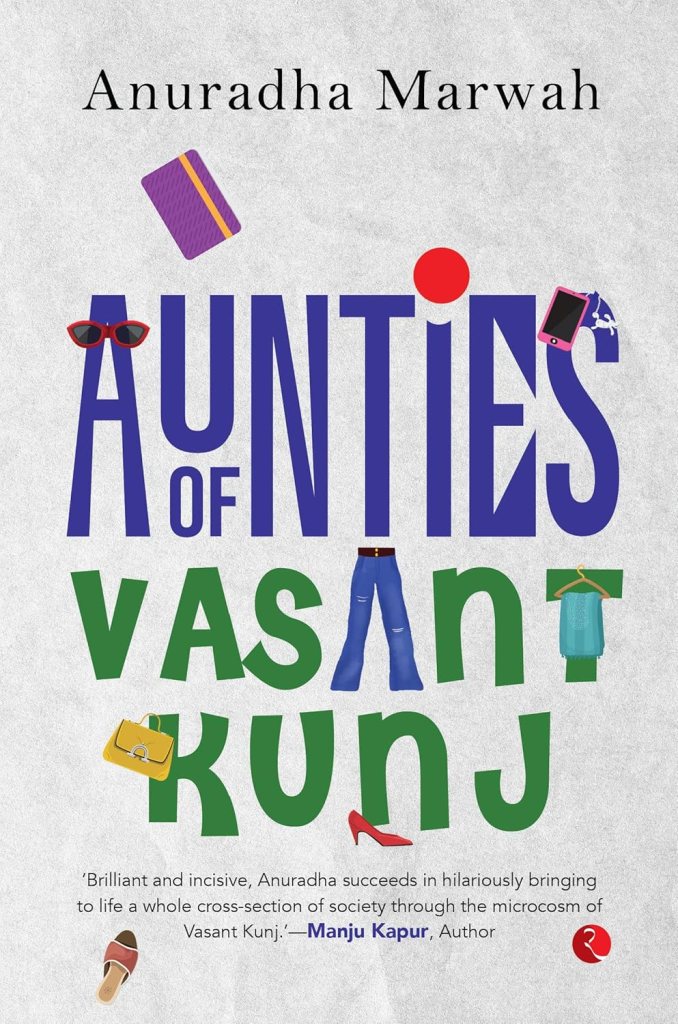
Three women try Buddhist chanting, activism, and fermented drinks of various kinds to make sense of their fast-changing worlds.
Shailaja, abandoned but lovelorn, wistfully teaching romance in a Delhi University college; Mrs Gandhi, plump and garrulous, dedicated to providing endless cups of tea and plates of biskut[3] to all and sundry; and firebrand Dini, ensconced in her idyllic female world, simply cannot see eye to eye.
But suddenly, their lives take unexpected turns. A lecherous boss, a cheating husband and a completely unsuitable but irresistible lover make them seek out each other. Will Vasant Kunj, with its tight shared spaces, encroached pathways and perennial water and electricity crises provide intersections for unlikely friendships? Or will they continue to collide at Aunty Point, where they’ve all been cast ashore?
Written mainly in the form of witty dialogue, the novel is like a play about warring world views. The three women act out Buddhism, feminist activism, and love and longing but in doing so they improvise their acts and their roles merge into a shared femaleness. Indian society is sometimes described in terms of conflict between the pre-modern and the post-modern. In this novel such confusion is located within individuals and the conflict is always psychosocial. So while it details the bizarre dailiness of middle class Vasant Kunj — the illegal water pumps and power breakdowns — the novel also touches lightly on universal dilemmas about identity and conflicting social roles that women face all over the world. It is an accessibly written book intended to make the reader chuckle and think.
About the Author
Anuradha Marwah is the author of four novels The Higher Education of Geetika Mehendiratta, Idol Love,Dirty Picture, and Aunties of Vasant Kunj and five plays. She has co-authored the textbooks for Creative Writing prescribed by Delhi University for undergraduate students and by the NCERT for class nine. She is recipient of the Charles Wallace Writer’s Residency (2001) to three universities in the UK and Fulbright-Nehru Academic and Professional Excellence (FNAPE) fellowship to the University of Minnesota-Twin Cities (2017). She is Professor of English at Zakir Husain Delhi College, Delhi University and lives in Vasant Kunj with her partner.
.
PLEASE NOTE: ARTICLES CAN ONLY BE REPRODUCED IN OTHER SITES WITH DUE ACKNOWLEDGEMENT TO BORDERLESS JOURNAL
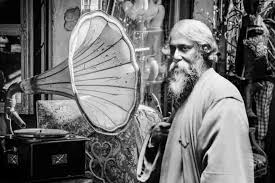
As the author of Jorasanko and Daughters of Jorasanko, which map the life of the greatest visionaries of the world, Aruna Chakravarti gives us a brief summation of the genius of Rabindranath Tagore.
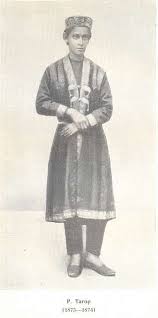
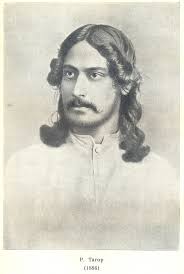
Young Tagore in 1870sTagore in 1886Photos from Public Domain
Rabindranath Tagore was born in 1861 in the throes of the Bengal Renaissance. A unique movement which took place during the latter half of the nineteenth century, it saw the germination and the slow stirring into life of a social and religious consciousness and the emergence of a middle class that idealised British rule and used its support to usher in considerable social change. The revolutionising of values and the social, political and literary awakening that followed gradually came to encompass the whole of India.
The Bengal Renaissance, like its European counterpart, swung precariously for a while, between two worlds. One old, decrepit and dying by degrees — the other struggling to be born. A host of great personalities emerged during this time; household names to this day.
All were protagonists engaged in battle. Some to keep alive and perpetuate the old; some to hasten its death and bring about the birth of the new. Needless to say, it was the latter who prevailed. Bengal saw an upsurge of activity, the like of which had never been seen before, in fields as diverse from each other as politics and religion to literature and the performing arts. In this, Bengal’s close contact with the British served as a catalyst.
Yet the same movement, in its latter years, saw the first stirrings of resentment against British domination. India’s acceptance of English education and her faith in the scientific discoveries of the West was countered by a new revivalism. An assertion of political independence and the growth of a nationalist consciousness. A need for introspection became the call of the hour. Rabindranath was among the first to articulate this need. In an essay, entitled Byadhi-o-pratikar[1]written in the early years of the twentieth century Rabindranath expressed his doubts regarding the changed Indian psyche wrought by the West. Reflecting on the French Revolution, the efforts to abolish slavery and the upsurge of literary activity in Europe he wrote: “Western civilisation seemed to proclaim an inclusiveness for all humanity irrespective of race and colour. We were spell bound by Europe. We contrasted the generosity of that civilisation with the narrow mindedness of our own and applauded the West.” He goes on to say, however, that the scales had fallen from the nation’s eyes. The supposedly Western ideal had failed Indians. European education and adoption of its values hadn’t helped them to achieve equality with the white race.
Thus, the movement came full circle. Rabindranath had not been part of it from its inception. Yet, if one were to look for and identify a single persona in whom the entire Bengal Renaissance may be said to be epitomised, it would, without doubt, be the persona of Rabindranath Tagore.
Poet, playwright, novelist, painter, composer, educationist, nationalist and internationalist, Rabindranath was not only a myriad minded genius but a Renaissance Man in the truest sense of the word. In fact, the dawn or awakening of Rabindranath’s creative inspiration is synonymous with the awakening of a whole nation.
The cultural identity of India and the place in it of religion, caste, class and gender which much of Rabindranath’s prose and poetry explores, continue to retain their relevance even today, a hundred years later, in a post-colonial time frame. His novels offer masterly insights and analyses of the complexities of Indian life with its teeming contradictions; its rootedness in tradition as well its ability to assimilate and accommodate change.
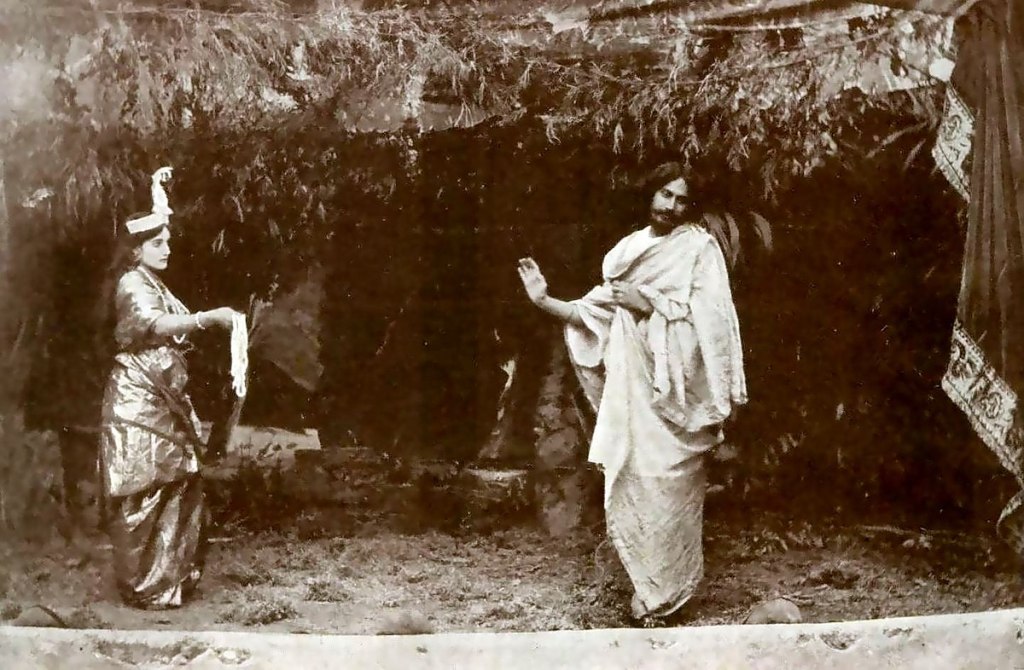
Rabindranath Tagore and Pratibha Devi (his neice) performing in his dance-drama, Valmiki-Pratibha (The Genius of Valmiki) 1881. Photo from Public Domain
Rabindranath, however, is best known as a poet. His poetry, drawn from ancient cultural memory as well as the immediate present, is in a class of its own. For there is a third dimension to it. He not only wrote of what he saw and remembered but what he saw only in his mind — a world that lay a vast space away from reality. ” There are two kinds of reality in the world,” Rabindranath said[2] of his paintings. “One of them is true; the other truer.” He could have said this of his poetry too. The real and surreal quality of his images in the vast span of his poems and lyrics; their indefinable nuances and evocative power are comparable to the works of the great Impressionists.
Interestingly, Rabindranath arrived at the canvas through his poetry. The calligraphic erasures and corrections with which he embellished many of his poems became sketches of a special kind. “I try to make my corrections dance,” he said[3] once, “connect them in a rhythmic relationship and transform accumulation into adornment.”
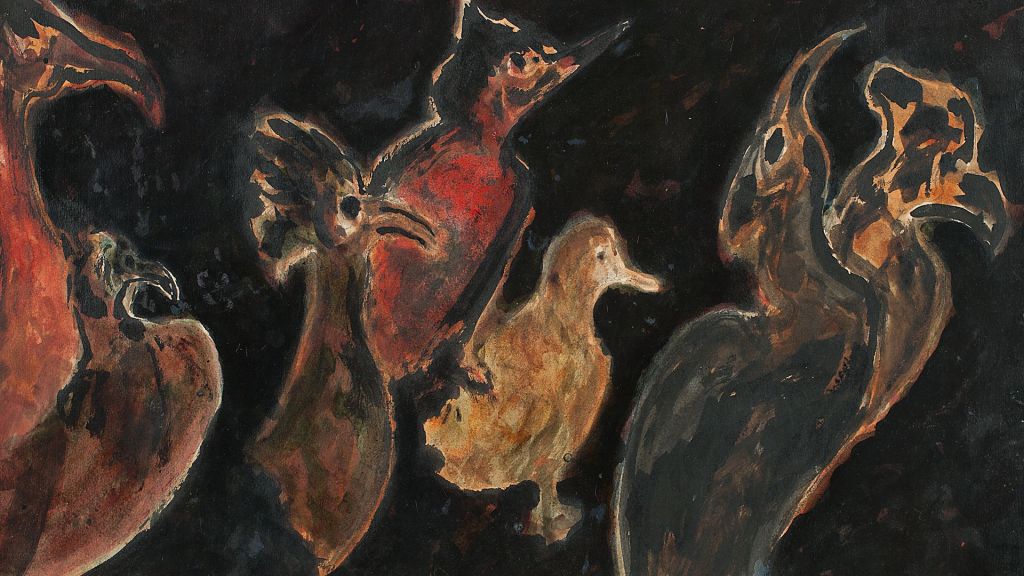
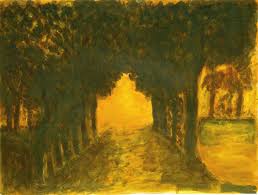
Later, in the last thirteen years of his life he threw himself into frenzied bouts of painting leaving behind more than two thousand and five hundred art works. Strange, haunting faces with eyes that look deep into one’s soul; surreal landscapes the like of which were never seen this side of the horizon; trees and flowers painted in violent colours that erupt from the artist’s palette in volcanic bursts — his paintings, as an artist once said, reflect “emotions recollected more in turmoil than in tranquillity.”
Art of Rabindranath Tagore. Photos from Public Domain
Yet, though famed the world over for his poetry and painting, it is as a music maker that Rabindranath has stayed entrenched in the hearts of his own people. His songs, loved and sung by generations of Bengalis, range in theme from celebrations of nature and yearning for freedom to love of God and Man. They convey the poet’s profound philosophy of life, his deep faith in humanity and his sensitive exploration of the Universe, often touching on the quest of the unattainable. Rabindranath once said that, though he could not predict how future generations would receive the rest of his work, he was confident that his songs would live. The increasing popularity of Rabindra Sangeet, both in India and abroad, bears ample testimony to the fact that his prophecy was based on a certainty born out of self-knowledge. Vast and varied though his genius was — music was its mainspring. He wrote of his songs: “I feel as if music wells up from within some unconscious depth of my mind; that is why it has a certain completeness.”
[2] Quoted from Tagore’s Galpa Salpa (Conversations) by Soumendranath Bandopadhyay in Expressionism and Rabindranath
[3] Quoted in An Artist in Life by Niharranjan Ray
Aruna Chakravartihas been the principal of a prestigious women’s college of Delhi University for ten years. She is also a well-known academic, creative writer and translator with fourteen published books on record. Her novels Jorasanko, Daughters of Jorasanko, The Inheritors, Suralakshmi Villa have sold widely and received rave reviews. The Mendicant Prince and her short story collection, Through a Looking Glass, are her most recent books. She has also received awards such as the Vaitalik Award, Sahitya Akademi Award and Sarat Puraskar for her translations.
.
PLEASE NOTE: ARTICLES CAN ONLY BE REPRODUCED IN OTHER SITES WITH DUE ACKNOWLEDGEMENT TO BORDERLESS JOURNAL
I have spread my dreams under your feet;
Tread softly because you tread on my dreams.*

So, you again want to walk
In these streets of powdered chalk,
Where nothing more than old trees
With ripened fruits lie in the winter freeze?

Do I know... Do I know
What lies here below the snow?

There is still time for the yellow walls,
The office shawls, and the colourful balls,
To close for the day and open tomorrow
When the lights come back from sorrow.

There are people on these tables
Beside the stables and mighty fables
Watching us through the crooked panes;
Let us walk away before they come again.

Do I know... Do I know
What lies here below the snow?

The legs, the hands, the mouth
The nose, the crimson rose,
The sound of lightning bows,
Everything's a dream, I suppose.
Perhaps I'd been better at home
Taking to my hair with that wooden comb.

I am done now... Sitting at the balcony
Watching the stars and people in myriad bars.
I'm not Diomedes or Odysseus,
Or Apollo stopping the charge of bows.
I'm Dolan, sitting on this table,
Amidst the foul winds, and living in a fable.

Do I know... Do I know
What lies here below the snow?

Perhaps I am better with this spoon
Whirling, Twirling, and Swirling the coffee
Till the last cube of life leaves me.

Do you still want to walk
In these streets of powdered chalk,
Where nothing more than old trees
With ripened fruits lie in the winter freeze?

Let us go then walking, talking
About Dolan, and not Odysseus,
About Hector, and not Achilles,
About me, and not you,
Before he comes by and kills us.

* ‘Aedh Wishes for the Cloths of Heaven’ by WB Yeats (1865 – 1939)
Padmanabha Reddy is a postgraduate student of English at Delhi University. He has a self-published novel, titled I Heard an Owl Scream. that has been felicitated by the Department of Language and Culture, Government of Telangana.
.
PLEASE NOTE: ARTICLES CAN ONLY BE REPRODUCED IN OTHER SITES WITH DUE ACKNOWLEDGEMENT TO BORDERLESS JOURNAL
Title: Greening the Earth: A Global Anthology of Poems
Editors: K. Satchidanandan & Nishi Chawla
Publisher: Penguin Random House
Preface
Humanity’s power to degrade the environment has become unprecedentedly dangerous. In fact, we have already changed the environment irreversibly, and suicidally so. What we call nature is no longer nature in its pristine glory. Human intervention has transformed it into something sub- rather than semi-human: a combination of climate, topography, the original environment and the effects of the long history of human intervention. If it was agriculture that had transformed the landscape once, it is now urbanization that has affected the broader areas of our environment. Managing the environment is becoming a practical rather than a theoretical problem. It is not enough that we create theme parks or conserve a select few areas. ‘Museumizing’ nature and landscape will not be enough. Several animals and birds are on the verge of extinction; the list is growing, and human beings can easily be next in the at-risk list. What we require today is not isolated action, but concerted action at the global level. Techno- fascism that leads to eco-fascism—both have their roots in human greed and aggression—is one of the inevitable fall-outs of blind and unsustainable patterns of development.
While a few poems in this anthology offer a perspective on how humans can respond to the reality of extinction, others give us an awareness of how we can struggle to keep what we still have. Some poems share earnest insights into our own evolution, and others offer grim warnings or raise voices against the imminent threat of extinction and the fate of our planet. Some poets spin interconnected incantations and weave healing nature through their blood, and others honor it by connecting the sustainable with their personal poetic bones. The environmental theme of most poems can inspire meditation as well as a commitment to apocalyptic action. The poets anthologized here offer landscapes of beauty and joy, of rustic retreat, of communion with our natural world, against the larger looming questions of human survival, of spurring towards conservation and preservation, of recognizing our ancestral knowledge, of a complicated pact and a complex impact. The anthology, in short, is our kind of shock tactic to the glaring lacunae within our urbanized, post-industrial society. What distinguishes us further, is that our anthology is a global chorus of poetic voices. We cannot stress enough the ‘sustainable’ route felt in the ‘sustainable’ poetic voices of our anthology. Along with our conscious eco warrior poets, Greening the Earth is our kind of responsible activism.
Extinction
Maren Bodenstein
here
on the prairie we measure
the years
by the extinction of insects
that visit our porch lamps
the brittle
longhorn is gone
for a while now the giant
stick insect no longer flares its scarlet wings even
the bluewhite chafers have succumbed
to the heat
by day we dwell in the creek
my sisters and I
one of us pregnant
but I keep forgetting
if it is me
look I am full term now
I tell them stroking my flat belly
on the horizon
a fire roars
through the grasses and over
the houses it marches
the last army of insects
into the bellies of storks
a confusion of vehicles
full of belongings flees
towards us
Ma in her car
with the poodle
comes rushing at us
get in she shouts
misses the bridge
plunges deep
we must rescue her
I tug at the metal
but my sisters
heavy with chatter
do not hear
Ma broken mermaid sneezes
opens her blue-eyes
happy
to see me
Beholden
Erin Holtz Braeckman
I come to you as Crow. But not before you first come to me. My bones are left like tinder in the dark ashes of my feathers when you find them. Crouching low in the crisp clutch of Spring the way the grandmothers once did, you speak words of ritual from the cave of folk memory you’ve walked right into without knowing. And you ask—before you hear my totem call from the pines high overhead; you ask before you slip one of my bones into your pocket. Because wrapped inside the song of that old teaching circle you stepped within was this telling: what you collect, you become the caretaker of. Not the thing itself, but its living story. Those crystals on your altar? You are the steward of their mountains. Those shells lining your windowsill? You are the custodian of their oceans. The pressed petals and dried acorns and vials of sand—the bones; in them there are entire fields and forests and feral ones of whom you are a curator. Which is why I come to you this time, a cackle-caw of shade-shifters stalking through your sister spruces. The others fly when you near, leaving me below in the corner fencing, the wing you took the bone from a tangle of black shadow throwing back the light. I feel the moment you are beholden, Crow-Keeper; how you fold the wild beating of my body into your hands, placing me like a stone on a cairn into the bracken beyond; how those grandmothers come to braid feathers into your hair.
(Excerpted from Greening the Earth: A global Anthology of Poetry, Penguin Random House)
About the Book:
Greening the Earthis a rare anthology that brings together global poetic responses to one of the major crises faced by humanity in our time: environmental degradation and the threat it poses to the very survival of the human species. Poets from across the world respond here in their diverse voices-of anger, despair, and empathy-to the present ecological damage prompted by human greed, pray for the re-greening of our little planet and celebrate a possible future where we live in harmony with every form of creation.
Editors:
K. Satchidanandan is a leading Indian poet He is also perhaps the most translated of contemporary Indian poets, having 32 collections of translation in 19 languages, including Arabic, Chinese, Japanese, English, Irish, French, German and Italian, besides all the major Indian languages. He has 24 collections of poetry, four books of travel, a full length play and a collection of one-act plays, two books for children and several collections of critical essays, including five books in English on Indian literature besides several collections of world poetry in translation. He has been a Professor of English, and also the chief executive of the Sahitya Akademi, the Director of the School of Translation Studies, Indira Gandhi Open University, Delhi and National Fellow, Indian Institute of Advanced Study, Shimla. He is a Fellow of the Kerala Sahitya Akademi and has won 52 literary awards from different states and countries, including the Sahitya Akademi award, India-Poland Friendship Medal from the Government of Poland, Knighthood from the Government of Italy and World Prize for Poetry for Peace from the Government of the UAE. His recent collections in English include While I Write, Misplaced Objects and Other Poems, The Missing Rib: Collected Poems, Not Only the Oceans, Questions from the Dead and The Whispering Tree: Poems of Love and Longing.
Nishi Chawla is an academician and a writer. She has six collections of poetry, nine plays, two screenplays and two novels to her credit. Nishi Chawla holds a Ph. D. in English from The George Washington University, Washington, D.C. USA. After teaching for nearly twenty years as a tenured Professor of English at Delhi University, India, she had migrated with her family to a suburb of Washington D.C. She has taught at the University of Maryland from 1999 until 2014. She is now on the faculty of Thomas Edison State University, New Jersey, USA. Nishi Chawla’s plays get staged both in the USA and in India.
PLEASE NOTE: ARTICLES CAN ONLY BE REPRODUCED IN OTHER SITES WITH DUE ACKNOWLEDGEMENT TO BORDERLESS JOURNAL
The twenty-fifth day of Baisakh dawned. A hot airless day when not a leaf stirred in the trees and the red earth burned like smouldering coals. Rabindranath was taken to the southern veranda in the morning as usual but he lay in his armchair so listless, so drained of energy, Nandita realized that something was wrong. ‘Let me take you back to bed, Dadamoshai,’ she said. ‘You had better rest the whole day and reserve your strength for the evening. The students have organized a programme for your birthday.’
‘I know.’ Rabindranath nodded. ‘I mustn’t disappoint the children. But I would like to give them something in return. Fetch a pen and paper. Closing his eyes, he sang slowly in an old man’s quavering voice. He nutan/dekha dek aar baar janmer pratham shubhokshan:
Oh ever new!
Let my eyes behold once more
the first blessed moment of birth.

Reveal yourself like the sun
melting the mists that shroud it.

Reveal yourself
tearing in two the arid empty breast.
Proclaim the victory of life.

Give voice to the voiceless that dwells within you;
the eternal wonder of the Infinite.

From emerging horizons conches blow;
resonating in my heart.
Oh callout to the ever new!
Twenty-fifth of Baisakh!
Rabindranath lay on his bed all day breathing heavily, the heat sapping his strength. He felt so exhausted that even to lift an arm or keep his eyes open was an effort. He could sense the activity that was going on around him. People were coming from far and near with gifts of flowers and fruit. They begged for a glimpse of him but he, who had never refused to meet anybody in his life, now lacked the energy to do so.
He felt a little better towards the evening when the heat of the day had dissipated and a cool breeze started to blow from the khowai. Then at dusk, Nandita came in. ‘Get up, Dadamoshai,’ she ‘ said brusquely. ‘You’ve rested long enough. Time to get dressed.’
Rabindranath sat up meekly and allowed her to put on him his birthday garments of silk dhuti and chador. He didn’t object even when she adorned his brow with sandal paste and hung a garland of fragrant juin flowers around his neck. But when Protima came in with a bowl of fruit he couldn’t stand the smell. ‘Not now, Bouma.’ He shook his head, ‘I’m not hungry.’
Protima wouldn’t go away. ‘You’ve hardly eaten anything today,’ she said firmly. Have a few pieces of mango. It’s your favourite himsagar. Prashanta brought a basketful.’
Lacking the strength to protest, he put a small piece in his mouth and shuddered with distaste. ‘The good days are gone, Bouma,’ he said sadly. ‘Else why does the king of fruits taste bitter in my mouth?’
‘But even last season you were eating five or six a day!’
‘I know.’ He smiled. ‘That is why I say the good days are gone.’
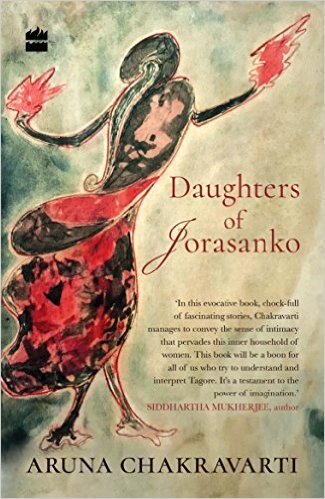
(Excerpted from Daughters of Jorasanko by Aruna Chakravarti, published by HarperCollins India)
About the Book:
The Tagore household is falling apart. Rabindranath cannot shake off the disquiet in his heart after the death of his wife Mrinalini. Happiness and well-being elude him. His daughters and daughter-in-law struggle hard to cope with incompatible marriages, ill health and the stigma of childlessness. The extended family of Jorasanko is steeped in debt and there is talk of mortgaging one of the houses. Even as Rabindranath deals with his own financial problems and strives hard to keep his dream of Santiniketan alive, news reaches him that he has been awarded the Nobel Prize for literature. Will this be a turning point for the man, his family and their much-celebrated home? Daughters of Jorasanko, sequel to the bestselling novel, Jorasanko, explores Rabindranath Tagore’s engagement with the freedom movement and his vision for holistic education, brings alive his latter-day muses Ranu Adhikari and Victoria Ocampo and maps the histories of the Tagore women, even as it describes the twilight years in the life of one of the greatest luminaries of our times and the end of an epoch in the history of Bengal.
About the author:
Aruna Chakravarti has been Principal of a prestigious Women’s College of Delhi University for ten years. She is also a well-known academic, creative writer and translator with seventeen published books on record. They comprise five novels, two books of short stories, two academic works and eight volumes of translation. Her first novel The Inheritors (published by Penguin Random House) was shortlisted for the Commonwealth Writers’ Prize and her second, Jorasanko (published by HarperCollins India)received critical acclaim and also became a best seller. Daughters of Jorasanko, a sequel to Jorasanko, (HarperCollins India) has sold widely and received rave reviews.Her novel Suralakshmi Villa, published by Pan Macmillan Ltd under the Picador imprint, has been adjudged “Novel of the year (India 2020)” by Indian Bibliography published in The Journal of Commonwealth Literature U.K. Her latest work, The Mendicant Prince, a semi-fictional account of the Bhawal legal case, was released by Pan Macmillan Ltd, in July this year to widespread media coverage and acclaim. Her second book of short stories Through a Looking Glass: Stories has just been released by Om International Ltd.
Her translated works include an anthology of songs from Rabindranath Tagore’s Gitabitaan, Sarat Chandra Chattopadhyay’s Srikanta and Sunil Gangopadhyay’s Those Days, First Light and Primal Woman: Stories. Among the various awards she has received are Vaitalik Award, Sahitya Akademi Award and Sarat Puraskar.
She is also a script writer and producer of seven multi- media presentations based on her novels. Comprising dramatised readings interspersed with songs and accompanied by a visual presentation by professional artists and singers, these programmes have been widely acclaimed and performed in many parts of India and abroad.
.
PLEASE NOTE: ARTICLES CAN ONLY BE REPRODUCED IN OTHER SITES WITH DUE ACKNOWLEDGEMENT TO BORDERLESS JOURNAL
early winter in delhi

marks a beautiful change.

the cruel sun of the summer
becomes kind.

so kind that the roads embrace happily - new footwear,
warm, woolen boots - knee high, suede, chelsea.

when the sun shines, full of April’s warmth
people share stories on the grass.

crowds in the metro provide respite from the harsh winds,
desserts become sweeter.

the atmosphere becomes soft too -
warm cashmeres, colourful pashmina, playful jumpers, everywhere.

early winter in delhi,
binds the city with a certain silence

when the hum and whirr of the fans cease,
people listen to each other.
Akshada Shrotryia, a graduate from Delhi University, harbours an intense passion for literature and writing. Her works have been published by The Punch Magazine, Setu Mag, Live Wire, Gulmohur Quarterly, Muse India, among others.
.
PLEASE NOTE: ARTICLES CAN ONLY BE REPRODUCED IN OTHER SITES WITH DUE ACKNOWLEDGEMENT TO BORDERLESS JOURNAL
FINDING THE SELF IN ROOTED ROUTES

When I cross any boundary of cartography
New cultures paint my traditional tales.
Why does hybridity then become a cultural conflict
And I the cultural ‘other’?
But with no fixed roots,
Trying to find meaning of the self,
I take different routes.

When cultures assimilate, diversity is born.
When integration takes place,
Identities change grounds.
When identities are in a flux
What becomes of our roots?
Are roots always to be found in a place called ‘home?’
And does home always refer to the ‘homeland'?

What about the ones who try to locate themselves
In rootless geographies,
Where do they belong?
In roots or routes?
For their home lies in ambiguity and diversity,
As it remains hidden in the personal history
Of many diasporic experiences that
History refused to notice.
Isha Sharma is a student of Delhi University. She is passionate about translating emotions into verses. Her writings have been published in Kitaab International, The Indian Periodical, The Indian Express, Indus Women Writing Newsletter, The Feminist Times and The Tribune (Student Edition).
PLEASE NOTE: ARTICLES CAN ONLY BE REPRODUCED IN OTHER SITES WITH DUE ACKNOWLEDGEMENT TO BORDERLESS JOURNAL




 Borderless