King Lear, Act I, Scene I (Cordelia’s Farewell) The Metropolitan Museum of Art. Pianting by Edwin Austin Abbey (1852-1911) From Public Domain.
DESPERATE LEAR
against all winds that blow and all the rains that pour, Old Lear still sought home as we all do sooner or later—
home is where the heart is— cardiac surgeons locate hearts but the homes seem elusive lost perhaps among the veins and the pulse beats which sound okay to all intents.
thus to be without home ported lustlessness; perhaps for some despair too close for comfort too close to acknowledge,
And so I roam without a home. return to the heart, the heart of all things, and I realise and learn, my heart is here with me. inside and pretty safe, despite some odd beats hardening who knows what,
home is where the heart returns after all the wandering finally settling all debts owed by the stomach in desperate circumstances,
Old Lear challenged the gods but the duel was one-sided no one wanted him as he wrestled Nature desperately needing Cordelia,
sometimes our Cordelias die before they’re properly born-
I know for my Cordelia died before she could be born--
she still struggles to learn knowing its totally futile.
after all only in rare miracles do we resurrect from the dead,
farewell, my sometime girl, perhaps we shall meet somewhere in our dreams and realise all was a nightmare!
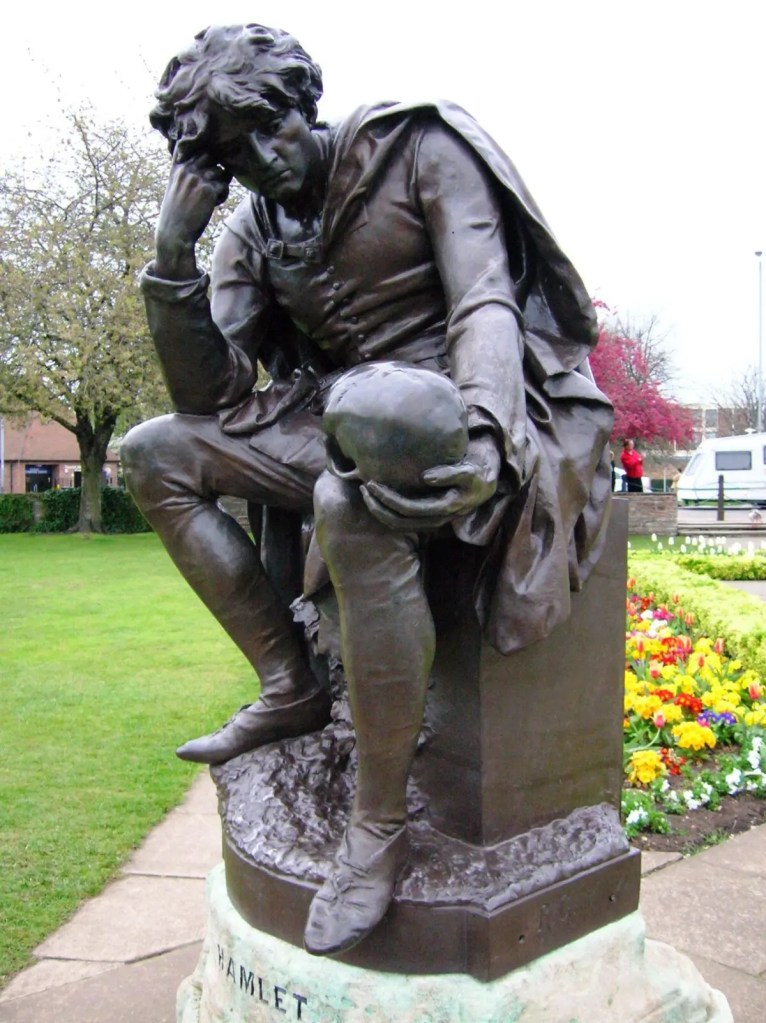
POOR HAMLET
Poor Hamlet forgot poor Cordelia in another realm also where deceit, cunning and corruption ruined innocence, purity and brought hell to bear.
these poor players whose destinies pry and fathom deep sores, some known only alone, challenge our premises, contentment, pride, joy and much else besides—
but who are we to probe and pry and wonder? think and cry and ponder when it's the same yonder and everywhere?
in my stillness, my friend you who smile all the time and beguile love will never know anguish nor the Joy of being humanly correspondent despite all hints and references, nor in the byways of escape and neither in the grasp of knowing and suffering will you understand, know and appreciate value and truncated joy.
in the end, nothing much matters more than smug satisfactions of owning even in this simple way,
forgiveness can be all!
Hamlet. From Public Domain.
Kirpal Singh is a poet and a literary critic from Singapore. An internationally recognised scholar, Singh has won research awards and grants from local and foreign universities. He was one of the founding members of the Centre for Research in New Literatures, Flinders University, Australia in 1977; the first Asian director for the Commonwealth Writers’ Prize in 1993 and 1994, and chairman of the Singapore Writers’ Festival in the 1990s. He retired the Director of the Wee Kim Wee Centre.
PLEASE NOTE: ARTICLES CAN ONLY BE REPRODUCED IN OTHER SITES WITH DUE ACKNOWLEDGEMENT TO BORDERLESS JOURNAL
Who would have thought it’s possible To undo centuries of traditions Trapped and shaped by norms galore?
On New Year Days, we wear black — Really — it’s the fashion these days! Even the Communists prefer black — Ditching the red to history’s dustbins!
Tough lessons History teaches, So we can make better judgments. Alas the mind resists and rejects Revisions which suggest undermining.
How weak our wills and our resolves!
I’M THE GOOD SHEPHERD
I bring you glory and a new life- History written in the Lamb’s blood And the Future assured in Love.
We hear and try to fathom meanings Written in blood — cold and hot, Alas, no revelations on the horizons And no blessings either in the making.
And so we toil and wait, Toil and wait for a new world, Where waiting will be no more And promises delivered on call—
Such, such shall be the Arrival Of a fresh understanding, Of what it means to be human, To know flesh and blood and the Soul’s search for a new heaven, And a new earth brimming, Sealing centuries of waiting, Fulfilling expectations of yore, Making past and present and future In a miracle beyond reckoning. This will come to pass as we sleep…
Kirpal Singh is a poet and a literary critic from Singapore. An internationally recognised scholar, Singh has won research awards and grants from local and foreign universities. He was one of the founding members of the Centre for Research in New Literatures, Flinders University, Australia in 1977; the first Asian director for the Commonwealth Writers’ Prize in 1993 and 1994, and chairman of the Singapore Writers’ Festival in the 1990s. He retired the Director of the Wee Kim Wee Centre.
PLEASE NOTE: ARTICLES CAN ONLY BE REPRODUCED IN OTHER SITES WITH DUE ACKNOWLEDGEMENT TO BORDERLESS JOURNAL
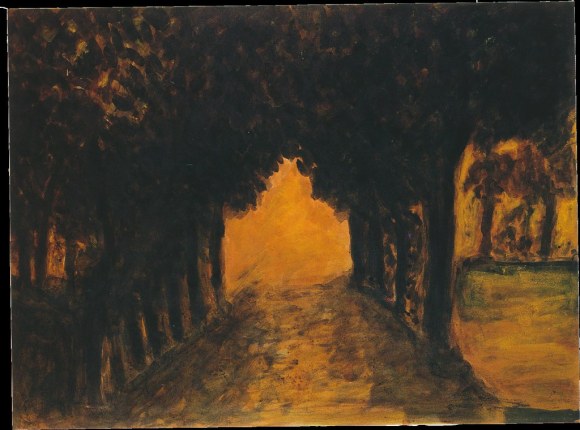
THESE DAYS
see me here and there—
many say I do nothing:
well they may be right.
what I do is hear and absorb —
both the natural fresh air
and the odour of foul chatter.
my people— sadly— live unaware
my presence taken for granted,
and my preemptions denied.
MEETING WITH A STRANGER
For some odd reason
I was halted in my tracts—
This strange man with nothing on
Wanted to know why I was dressed.
What could I say to him?
I smiled hoping he’d be satisfied.
But he persisted— “Why are you dressed?”
I smiled again and sheepishly said—
“Because being naked is a luxury,
One, I can’t afford, really.”
He smiled again, this time ruefully,
And said very confidently—
“Understand, good Sir, understand
The real meaning of the Fall.”
The Bard by Benjamin West (1738-1820)
Kirpal Singh is a poet and a literary critic from Singapore. An internationally recognised scholar, Singh has won research awards and grants from local and foreign universities. He was one of the founding members of the Centre for Research in New Literatures, Flinders University, Australia in 1977; the first Asian director for the Commonwealth Writers’ Prize in 1993 and 1994, and chairman of the Singapore Writers’ Festival in the 1990s. He retired the Director of the Wee Kim Wee Centre.
PLEASE NOTE: ARTICLES CAN ONLY BE REPRODUCED IN OTHER SITES WITH DUE ACKNOWLEDGEMENT TO BORDERLESS JOURNAL
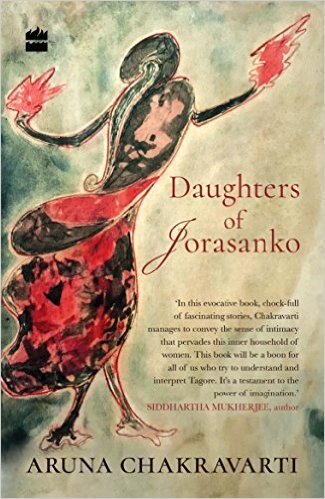
The twenty-fifth day of Baisakh dawned. A hot airless day when not a leaf stirred in the trees and the red earth burned like smouldering coals. Rabindranath was taken to the southern veranda in the morning as usual but he lay in his armchair so listless, so drained of energy, Nandita realized that something was wrong. ‘Let me take you back to bed, Dadamoshai,’ she said. ‘You had better rest the whole day and reserve your strength for the evening. The students have organized a programme for your birthday.’
‘I know.’ Rabindranath nodded. ‘I mustn’t disappoint the children. But I would like to give them something in return. Fetch a pen and paper. Closing his eyes, he sang slowly in an old man’s quavering voice. He nutan/dekha dek aar baar janmer pratham shubhokshan:
Oh ever new!
Let my eyes behold once more
the first blessed moment of birth.
Reveal yourself like the sun
melting the mists that shroud it.
Reveal yourself
tearing in two the arid empty breast.
Proclaim the victory of life.
Give voice to the voiceless that dwells within you;
the eternal wonder of the Infinite.
From emerging horizons conches blow;
resonating in my heart.
Oh callout to the ever new!
Twenty-fifth of Baisakh!
Rabindranath lay on his bed all day breathing heavily, the heat sapping his strength. He felt so exhausted that even to lift an arm or keep his eyes open was an effort. He could sense the activity that was going on around him. People were coming from far and near with gifts of flowers and fruit. They begged for a glimpse of him but he, who had never refused to meet anybody in his life, now lacked the energy to do so.
He felt a little better towards the evening when the heat of the day had dissipated and a cool breeze started to blow from the khowai. Then at dusk, Nandita came in. ‘Get up, Dadamoshai,’ she ‘ said brusquely. ‘You’ve rested long enough. Time to get dressed.’
Rabindranath sat up meekly and allowed her to put on him his birthday garments of silk dhuti and chador. He didn’t object even when she adorned his brow with sandal paste and hung a garland of fragrant juin flowers around his neck. But when Protima came in with a bowl of fruit he couldn’t stand the smell. ‘Not now, Bouma.’ He shook his head, ‘I’m not hungry.’
Protima wouldn’t go away. ‘You’ve hardly eaten anything today,’ she said firmly. Have a few pieces of mango. It’s your favourite himsagar. Prashanta brought a basketful.’
Lacking the strength to protest, he put a small piece in his mouth and shuddered with distaste. ‘The good days are gone, Bouma,’ he said sadly. ‘Else why does the king of fruits taste bitter in my mouth?’
‘But even last season you were eating five or six a day!’
‘I know.’ He smiled. ‘That is why I say the good days are gone.’
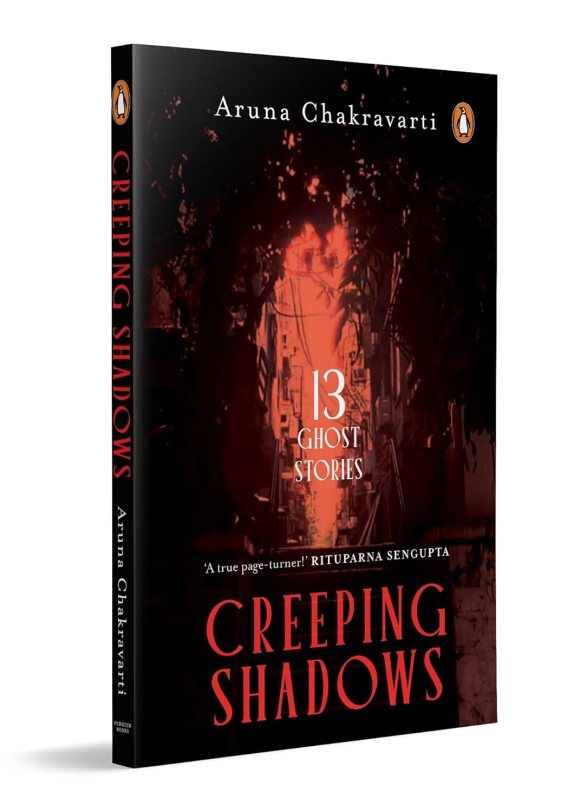
(Excerpted from Daughters of Jorasanko by Aruna Chakravarti, published by HarperCollins India)
About the Book:
The Tagore household is falling apart. Rabindranath cannot shake off the disquiet in his heart after the death of his wife Mrinalini. Happiness and well-being elude him. His daughters and daughter-in-law struggle hard to cope with incompatible marriages, ill health and the stigma of childlessness. The extended family of Jorasanko is steeped in debt and there is talk of mortgaging one of the houses. Even as Rabindranath deals with his own financial problems and strives hard to keep his dream of Santiniketan alive, news reaches him that he has been awarded the Nobel Prize for literature. Will this be a turning point for the man, his family and their much-celebrated home? Daughters of Jorasanko, sequel to the bestselling novel, Jorasanko, explores Rabindranath Tagore’s engagement with the freedom movement and his vision for holistic education, brings alive his latter-day muses Ranu Adhikari and Victoria Ocampo and maps the histories of the Tagore women, even as it describes the twilight years in the life of one of the greatest luminaries of our times and the end of an epoch in the history of Bengal.
About the author:
Aruna Chakravarti has been Principal of a prestigious Women’s College of Delhi University for ten years. She is also a well-known academic, creative writer and translator with seventeen published books on record. They comprise five novels, two books of short stories, two academic works and eight volumes of translation. Her first novel The Inheritors (published by Penguin Random House) was shortlisted for the Commonwealth Writers’ Prize and her second, Jorasanko (published by HarperCollins India)received critical acclaim and also became a best seller. Daughters of Jorasanko, a sequel to Jorasanko, (HarperCollins India) has sold widely and received rave reviews.Her novel Suralakshmi Villa, published by Pan Macmillan Ltd under the Picador imprint, has been adjudged “Novel of the year (India 2020)” by Indian Bibliography published in The Journal of Commonwealth Literature U.K. Her latest work, The Mendicant Prince, a semi-fictional account of the Bhawal legal case, was released by Pan Macmillan Ltd, in July this year to widespread media coverage and acclaim. Her second book of short stories Through a Looking Glass: Stories has just been released by Om International Ltd.
Her translated works include an anthology of songs from Rabindranath Tagore’s Gitabitaan, Sarat Chandra Chattopadhyay’s Srikanta and Sunil Gangopadhyay’s Those Days, First Light and Primal Woman: Stories. Among the various awards she has received are Vaitalik Award, Sahitya Akademi Award and Sarat Puraskar.
She is also a script writer and producer of seven multi- media presentations based on her novels. Comprising dramatised readings interspersed with songs and accompanied by a visual presentation by professional artists and singers, these programmes have been widely acclaimed and performed in many parts of India and abroad.
.
PLEASE NOTE: ARTICLES CAN ONLY BE REPRODUCED IN OTHER SITES WITH DUE ACKNOWLEDGEMENT TO BORDERLESS JOURNAL
Yes, electric is gone, now it’s plastic—
From sex to food to procreation
Plastic rules the day and rues our time
Making it all easy and oh so convenient!
All is plastic save, possibly, the brain;
This mass of nerves and neurons
Mirrors the bewilderment outside
Where people die and kill and cry
Where O where is the human
We crave for meaninglessly?
In the dust bins of our hearts
Mangled and confused, dying.
Save us O Lord, save us. Save.
Kirpal Singh is a poet and a literary critic from Singapore. An internationally recognised scholar, Singh has won research awards and grants from local and foreign universities. He was one of the founding members of the Centre for Research in New Literatures, Flinders University, Australia in 1977; the first Asian director for the Commonwealth Writers’ Prize in 1993 and 1994, and chairman of the Singapore Writers’ Festival in the 1990s. He retired the Director of the Wee Kim Wee Centre.
PLEASE NOTE: ARTICLES CAN ONLY BE REPRODUCED IN OTHER SITES WITH DUE ACKNOWLEDGEMENT TO BORDERLESS JOURNAL
COGITATIONS
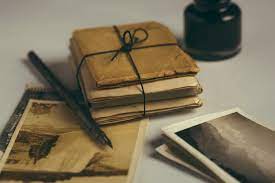
I read some of my old letters-
Friends and lovers and miscellaneous.
I wonder if I should keep any?
How does one preserve privacy
When one is told to donate
Private stuff to libraries?
Because- they flatter—
One is deemed to be special.
I struggle both for right words
And also right conduct!
In the end I’d probably succumb.
Do what my betters have done:
Donate but with time-limits
So the immediate won’t hurt.
What a privilege to have —
Choose between now or later!
Kirpal Singh is a poet and a literary critic from Singapore. An internationally recognised scholar, Singh has won research awards and grants from local and foreign universities. He was one of the founding members of the Centre for Research in New Literatures, Flinders University, Australia in 1977; the first Asian director for the Commonwealth Writers’ Prize in 1993 and 1994, and chairman of the Singapore Writers’ Festival in the 1990s. He retired the Director of the Wee Kim Wee Centre.
PLEASE NOTE: ARTICLES CAN ONLY BE REPRODUCED IN OTHER SITES WITH DUE ACKNOWLEDGEMENT TO BORDERLESS JOURNAL
THE TIMES, THE MORALS
(After Ee Tiang Hong)
Testy times
Tempers flake, bruise
Blood swells veins
As memories burn.
Times were
When reason prevailed
And men talked --
Eyes glittering.
Now it’s tit for tat
No relenting
Frayed nerves
Know no restraint.
We pray n plead
For sanity’s return
As pall bearers
Carry another dead.
Kirpal Singh is a poet and a literary critic from Singapore. An internationally recognised scholar, Singh has won research awards and grants from local and foreign universities. He was one of the founding members of the Centre for Research in New Literatures, Flinders University, Australia in 1977; the first Asian director for the Commonwealth Writers’ Prize in 1993 and 1994, and chairman of the Singapore Writers’ Festival in the 1990s. He retired the Director of the Wee Kim Wee Centre.
PLEASE NOTE: ARTICLES CAN ONLY BE REPRODUCED IN OTHER SITES WITH DUE ACKNOWLEDGEMENT TO BORDERLESS JOURNAL
we are known globally
as a nation of multi-cultures
but we are united as one people.
not an easy goal to realise
knowing how differences divide
and make unity problematic.
-- Reaching Out... Kirpal Singh, 2021
Kirpal Singh is a poet and a literary critic from Singapore. An internationally recognised scholar whose core research areas include post-colonial literature, Singapore and Southeast Asian, literature and technology, and creativity thinking, Singh has won research awards and grants from local and foreign universities. He was one of the founding members of the Centre for Research in New Literatures, Flinders University, Australia in 1977; the first Asian director for the Commonwealth Writers’ Prize in 1993 and 1994, and chairman of the Singapore Writers’ Festival in the 1990s. In 2004, he became the first Asian and non-American to be made a director on the American Creativity Association’s board. He retired dean of Singapore Management University.
Singh was born as a part of Malaya in 1949 to a father of Sikh descent and a Jewish-Scottish mother. He lived through three regimes in this part of the world: colonial, Malayan and Singaporean. His poetry is perhaps what best tells us about his faith in the little island state that came to its own in 1965. In this interview, he shares his life story with us, the last being a huge donation of books that he is making to the National Library of Singapore – a donation of 3,000 books collected over decades.
You are an academic, critic and writer who stretches out across SE Asia. When did your ancestors move to Singapore from India and why?
My paternal grandparents moved to Singapore from Punjab in 1901. They came to the then Federation of Malaya in search of a better life.
You have never lived in India but shuttled between Singapore and Malaysia. Probably at that time it was all part of Malaya. Can you recall Singapore/Malaya during your childhood?
Yes, though born in Singapore in March 1949, I was taken back to be with my dadiji (paternal grandma) in Malaya when I was two months old. However, I was brought back to Singapore when I was seven to begin school. My grandparents thought Singapore was a better place to receive an English education.
Your mother was Scottish and father, an Indian. What languages did you grow up speaking? What language is most comfortable for you to write in?
I grew up speaking bits of Punjabi, Malay and, of course, English. In my teenage years I also picked up some Chinese dialects. Though I did study Mandarin in school, I am not too good at it. I can only speak a smattering of it. I am most comfortable writing in English.
You have seen Singapore move from infancy to its current state. Can you tell us what this journey has been like?
It has been an astonishing journey. When I was young-preschool age — Singapore was a British colony. In 1963, Singapore joined Malaya to become part of a new entity then known as Malaysia. However due to basic differences, Singapore pulled out of Malaysia and became an independent, sovereign nation in August 1965.
You are an academic who retired dean of Singapore’s major management institute. And yet, you write poetry. Can you tell us a bit about your journey?
At the then newly established Singapore Management University which I was invited to join as Founding Faculty in 1999, I was told to introduce Creative Thinking as a new mandatory module for all undergraduates. I helmed this exciting and new programme for ten years. SMU was the first University in the world to make Creative Thinking a compulsory course for all undergraduates. Sadly in 2010 this was made optional.
You have a huge collection of books —25,000. How long has it taken you to collect these books?
It has taken me more than 50 years.
Tell us a bit about your book collection. What are your favourite books?
My collection is eclectic. Most of my books, however, belong to the humanities, and within this, most belong to the literary genre. I loved reading from a very young age (being alone at home, reading brought me solace and also knowledge). Among my favourite books, the tragedies of Shakespeare and Sophocles feature prominently. Some 20th century books (those of D H Lawrence and Aldous Huxley in particular), I value tremendously. I should also add that I have been very blessed to have met many of the more well-known/established writers of the 20th century and blessed to have been given signed copies by these wonderful authors: among them Doris Lessing, William Golding, Brian Aldiss, and numerous others.
Did your reading impact your writing?
Quite naturally, yes. I think it’s hard not to be affected by what one reads when it comes to one’s own writing. Even with writers who consciously try to ensure that no clear influences obtain, critics have frequently found far too many disguised references not to infer which authors influenced those writers.
Recently, you made an announcement that you will donate 3,000 books to promote love of reading in Singapore. Do you think donating these books will be enough to make book lovers of non-readers?
I doubt if the mere act of donating will create readers. However, I feel that having a few thousand additional books in a library will, hopefully, draw at least the attention of a few readers and maybe among these will be new readers.
Most people read bestsellers. What do you think will attract more to appreciate literature like EM Foster, DH Lawrence, and Coleridge?
Yes, in the age of commercialisation, classic writers may not obtain immediate readership– hence schools and colleges/universities play a vital (and necessary) role to ensure that our graduates are educated– at least minimally– in the works of writers who helped change and shape new sensibilities.
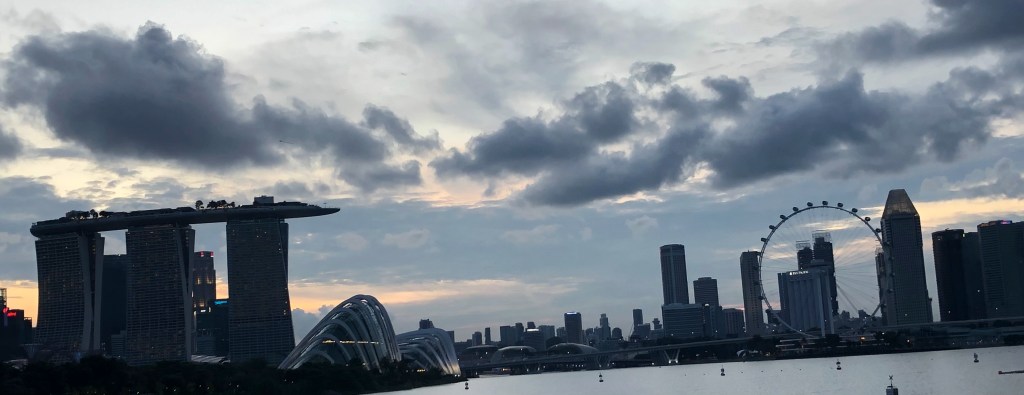
My Beloved Singapore
who would have thought
in 50 years you'd grow
from a village/town
to a city/metropolis?
and yet if I had been
attentive, the seeds were sown
and the fruits were expected.
little in my nation
grows spontaneously
there's careful planning,
planting of opportunities
obtaining rewards
for jobs well done.
so now, celebrating
our National Day
comes naturally-
and we rejoice knowing
many become one.
Reaching Out...
we are known globally
as a nation of multi-cultures
but we are united as one people.
not an easy goal to realise
knowing how differences divide
and make unity problematic.
despite the given difficulties
we have come through-
showing there is hope
when the desired ends
are commonly shared-
and understood.
Kirpal Singh is a poet and a literary critic from Singapore. An internationally recognised scholar, Singh has won research awards and grants from local and foreign universities. He was one of the founding members of the Centre for Research in New Literatures, Flinders University, Australia in 1977; the first Asian director for the Commonwealth Writers’ Prize in 1993 and 1994, and chairman of the Singapore Writers’ Festival in the 1990s. He retired the Director of the Wee Kim Wee Centre.
.
PLEASE NOTE: ARTICLES CAN ONLY BE REPRODUCED IN OTHER SITES WITH DUE ACKNOWLEDGEMENT TO BORDERLESS JOURNAL