Categories
Stories

Getting Old is like Climbing a Mountain

By Saranyan BV

Courtesy: Creative Commons
Getting old is like climbing a mountain, you get a little out of breath 
but the view is much better!
                                                                     - Ingrid Bergman, actress

He arrived in the morning. He was carrying a small bag but enough to contain things to stay for three to four days. His visit was unannounced. Although he was cordial, I didn’t inquire into the purpose of his visit. I invited him inside and showed him the spare room where he could rest a while. He was seventy-nine years and could do with some rest. His body language showed he was grateful, yet he didn’t offer a reason for his presence in the morning. I went inside the kitchen so that I could prepare a cup of coffee for him. I heard him move inside his room, the footsteps of an old man. I could hear him take things out from the bag and push some back. After a while, the sounds stopped. The house turned silent. It sounded silent and silence sounds like death. My eyes roved over the kitchen table to check on the things available to make a decent breakfast for uncle. He was in need. He looked famished.

I pushed open the door leading to the backyard, in the kitchen garden, the plants were unkempt. It was a messy area of about forty-four square feet. I plucked brinjals and tomatoes to make the sambar respectable and to add on to the coconut chutney which was already done. There was also coriander, not ready for plucking, but at times like this it could be useful. I heard the sound of the cistern flush, the water drained without giving inkling of anger. I handed him the cup, he took it and kept looking at the floor. He drew an arc with the toe of his right foot. I could not understand what the act meant except he was disturbed. There would be time later to get to know. For the time being I let him feel at home. He didn’t inquire about my husband’s whereabouts. My husband was his nephew. Uncle might have assumed Shyam has gone to office. Actually, Shyam has gone to handover his Renault Kwid for the first unpaid service. He would be late today. Shyam too would have to have his breakfast before starting for work. Maybe they could have it together. We all could.

I hoped uncle would spruce himself and be ready before Shyam returned. I was not going to rush him.

Shyam would be in a terrible hurry. He could catch up with his uncle while he is pushing the idlis[1] down his throat. I have to keep requesting Shyam time and again to eat slowly. Food is meant to be enjoyed and not be dealt with as if it is a task to be completed. Breakfast is the only meal Shyam has at the dining table. He took his lunch in the office canteen and the night meal was invariably at the bar he frequented. I had rehearsals for the coming play at Ranga Shankara in Jayanagar. Most evenings, I was out. I think he ate only fritters and no proper dinner. I never questioned him about his activities. He found that convenient.

I went past the room in which the uncle was lodged. I pretended to go out under some pretext. The garbage collector had entered the street. The garbage needed to be in cans outside the gate. I peered in. The door was open. Uncle was seated on the mattress leaning back on his hands. He was looking up at the ceiling fan, at his own reflection on the chromium plated hub-cap. He had not switched the fan on, the weather was fine. I collected the compost bag and kept tossing handfuls on the potted plants in the courtyard. That was my weekly routine. The plants responded to the manure but the moment the plants shoot buds, insects destroyed them. I tried to give uncle some privacy by remaining in the garden. He looked rather pulled down. If he wanted to make some calls in my absence, I’d rather facilitate it; but he didn’t.

Uncle lived in Hebagoddi with his only son, his house overlooking the wholesale fruit market. Whenever we visited, I found him standing on the open terrace upstairs and watching the trucks loading and unloading. Ajay resigned his job in Hosur and had left to take up new assignment in Abu Dhabi. He told us he wanted to move with his family to Abu Dhabi. I wondered if he could take his father as well. Maybe that was what made uncle preoccupied – the thought of being left alone without his son, who was also his caregiver.  Uncle had a handsome pension as a retired school master. He was not dependent monetarily, but he needed someone to assure him everything was going to be fine. An old man required assistance and supervision. My dad’s brother had dementia from being lonely they said.  since He had no one to talk to. He was a bachelor with lots of money but dementia doesn’t check the wallet before setting in.

I went back to the kitchen. The decoction had filtered down. I mixed the coffee and took it along with two Marie biscuits. He took it and placed it on the table. His hand shook. He said, “Thanks.” He wasn’t curious about Shyam’s absence. I was surprised he did not inquire.  He was Shyam’s uncle not mine.

I told him, “Shyam would be back shortly, I will serve breakfast when he comes.”

“That’s nice”, he said. “In that case I will have the coffee after breakfast. I took Pantacid just now. Let the medicine do the job.” He took the two biscuits, placed them on the paper napkin and returned the cup.

I said, “Fine.” I lifted my chin to scrutinize his face.

“Its difficult to live with Ajay’s wife,” he said. Uncle moved towards the window turning face away from me. The top two panes of the window were open. They overlooked the vegetable garden I was ambitious about curating. Beyond that was a small 30 feet road. I did not attempt to mollify him. I left the job to Shyam. He was Shyam’s his uncle.

Uncle said, “I can grow enough vegetables in my house in the terrace, I mean in Ajay’s house. People these days grow vegetables in plastic grow-bags you know. I can grow enough for the family or even more. She wouldn’t allow.” He meant Ajay’s wife. Growing vegetables is my passion. My conviction is one should try to grow food in lifetime instead of only consuming. It’s my desire to grow at least one kilo of rice with my bare hands at least once in my life, I told this to uncle in order to keep him cheerful until Shyam returned.

“We should find a place in our village and try doing growing the rice there. Being in city, you can’t”, he said and curbed his instinct say more. The conversation cheered him and I believed took his mind away from Ajay wanting to shift his family to Abu Dhabi. I was not sure if Ajay was planning to take his dad there. It may not have been a workable proposition.

I said, “Its good to try, to think on those lines. I guess Shyam would agree to the idea post his retirement. As of now I have this theatre group which pegs me here.”

A car entered the lane, the sound of its engine was echoing from the between the compound walls. The colony would have looked more impressive without the compound walls. The car stopped in front. The driver’s face seemed familiar but I could not place him. Shyam got down from the other side. He thanked the driver and entered. The car sped away, it was an old red-coloured Punto. The driver smiled on seeing I was trying to place him.

I was not sure if I should inform Shyam about the unannounced guest or leave him to find out for himself. Maybe he knew of the arrival and had forgotten to inform me.

Shyam said, “I must rush, Sundar has promised to pick me on the way. Can’t make Sundar wait.” He went straight into the washroom. He was the type who would expect his wife to keep his clothes ready when he came out of the bath. Before that, he would want the towel. I did that part of the chore, returned to the living room from where I could see uncle. He was not affronted by Shyam’s behavior. He seemed to understand. He smiled sympathetically upon seeing my distress.

“Let me set the table for breakfast,” I told him and went about doing so. I wanted to tell Shyam to eat slowly — to get up only when uncle finished. Uncle came out of the room for the first time. He sat quietly in front of the dining table where Shyam sat normally. He leaned using his elbows on the table. He saw me arranging the plates. He opened the lid where idli was stacked. He smiled again. There was plenty. I too sat pretending to remove the speck on my plate.

“I have to find an old age home,”he said nodding his head.

 “It would do you good. you can be all by yourself,” I said.

“You don’t understand the point Kamala,” he said. I could hear Shyam coming out of the bathroom. He started dressing. He dressed himself first before using the hair drier and combing his hair. I knew as soon as he finished, he would head for the dining table. I waited for the sound of the drier being switched off. I had not informed Shyam about uncle’s presence as yet. Waiting at the breakfast table, I was not sure I should make the effort. He obviously was not expecting to find uncle. I hoped he would be polite to his uncle.

Shyam came in. He had heard our voices, if not the subject of our conversation. He was pleased perceptibly to see his uncle, he went behind him, put his hand over uncle’s shoulders and gave him a hug from behind. He said, “What a surprise! How is Ajay doing? Is he really liking it out there, it is a dangerous country, not meant for one with his kind of temperament.” Shyam rushed with his words, he wanted to convey whatever he wanted quickly without giving scope for his uncle to respond. He looked at me and said, “I promised uncle that I would find him a comfortable old age home. Better that Ajay takes his family quickly to Abu Dhabi. He has the knack of getting into trouble if left alone.”

Uncle didn’t want to prolong the conversation about his son. He said, “Something that fits my pension, not a paise more, I don’t want to take help from Ajay though he may be earning in Dinars now.”

He craned his neck to see when I would start serving. Shyam pulled the chair away from the table to sit, the chair made a grating noise on the floor. I switched the fan on and started serving. The three of us ate quietly. Shyam kept stuffing idlies as was his habit. He choked a bit but managed to swallow without any issues. I had only one idli. I got up to prepare coffee. Sundaram could arrive any moment, though Shyam had not stated the time of his arrival. Shyam took his uncle to the verandah in front. I could hear them talking, though I could not make out what they discussed. It sounded like they wanted to keep me out.

Uncle left our house after three days. He never went back to Ajay’s house. He went straight to the old age home. I felt sad. Shyam had arranged accommodation where uncle could stay in relative comfort. That’s what Shyam told me the previous night.

Whatever the comfort and care the old age home offered, such homes for the aged could not offer hope. Inmates kept falling sick, became invalids and sunk to death slowly. Besides they all had their own tales of woe which each would share, deepening the shadows in others lives. A home could not offer hope.

Shyam said the three days stay with us had restored uncle’s faith in humanity. It was a tall statement, though I suspected it was true. We tend to seek our own space in the kingdom of self-righteousness, we feed on such feelings. During the afternoons we had watched movies together on Netflix or Prime Video. Uncle made the selection. He always chose a crime thriller or science fiction, avoided movies focused on family relationships.

He took me into confidence and confessed on the last day. Shyam was to drop him at an old-age home named after Mother Theresa the next day. Uncle told me almost in whispers after the movie, as if he didn’t believe what he said, “Ajay’s wife is very loving, I can’t say she was wanting in that faculty.” I wanted to believe uncle.

When uncle left, there were tears in his eyes. He didn’t try to mask his feelings. I could not figure if it was on account of a feeling of gratefulness or of grief. He sprayed the insecticide on the rose plants in the courtyard while Shyam was loading his things in the car. I had presented him warm blanket in case the home didn’t provide one. Shyam promised to visit him often, though he did not specify how often.

Ajay’s family had left. He sent uncle photos of their new home. I had half a mind to tell uncle to stay with us, though I didn’t. He was not a bother, was really not a bother. He would have helped with the kitchen and courtyard garden as well as the proposed one in the terrace upstairs. During his brief stay, he helped to water the plants, folded the laundry, cut vegetables for cooking, he cut such perfect cubes. He enjoyed peeling garlic pods. He loved it. One day when the daily maid absented herself, I even found him doing the dishes quietly without letting me know. I had closeted myself in our room to memorise lines and cues of a new play.  

Uncle could have stayed with us if it was not too long. Life looks interminable if we don’t know how long. We didn’t know how long all this would go on had he stayed. He looked healthy though he was seventy-nine. You never know. Love without willingness to take on the responsibility was an aborted child, that much I knew.

.

[1] Steamed, savoury rice cake

.

Saranyan BV is Bangalore based poet and short-story writer. His works are being published in Indian and Asian journals regularly. He came to the realm of English by mistake but loves being there. He is a big fan of Raymond Carver and Charles Bukowski. He thinks that the genre short story is going to rule literature in the days to come, if the writers are ready to take up the challenge.  

.

PLEASE NOTE: ARTICLES CAN ONLY BE REPRODUCED IN OTHER SITES WITH DUE ACKNOWLEDGEMENT TO BORDERLESS JOURNAL

Click here to access the Borderless anthology, Monalisa No Longer Smiles

Click here to access Monalisa No Longer Smiles on Kindle Amazon International
Categories
Essay

What Gandhi Teaches Me

By Candice Louisa Daquin

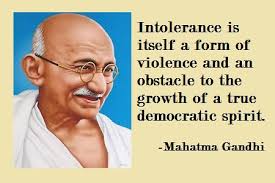
Generally, a Westerner shouldn’t try to dabble in writing about Indian great men because it’s that kind of appropriate-ism that caused so much misunderstanding and damage to begin with. The idea the West had all the answers, which clearly it does not. The idea someone whose country used to be a colonialist-force, had the right anymore to discuss countries that were colonized, can smack deeply of appropriate-ism or worse.  However, there are also ways we can appreciate what we know and transmit that without being patronizing or culturally insensitive.

I choose to consider Gandhi and his impact on the world, to remain in the middle ground. Neither applauding Gandhi without reservation, nor ignoring his incredible impact and influence on India and beyond. I don’t always do this, in the case of someone like Woody Allen or Charles Bukowski (hardly comparable) I cut them off immediately because despite being talented, their talent simply doesn’t measure against the harm they caused. With someone like Friedrich Nietzsche I would say, he has some brilliant perspectives, but his over-all views were too harmful for me to support him. Revisionist thinking is necessary, but sometimes like anything else, it can go too far and condemn significant people based on modern thinking that doesn’t take into account the mores of the time.

One of the hardest things in the world is when your heroes appear to fall. But in this case, there is so much positive about Gandhi I believe (and this is a personal belief), that his goodness encourages us to retain his relevance and enduring impact.

Firstly, Satyagraha – belief in using truth to resist evils with non-violence. Not the same as simply ‘truth’ or ‘verité’ as I would say in French. But more the ideal of believing in truth rather than being deceived or unable to believe. This is not just valuing truth, but believing in truth and thus, through that belief, knowing what is true (and reasonably, what is not).

I find this very interesting because whilst we all ‘think’ we know truth, obviously most of us do not. When does opinion and truth come together? Really holding an opinion has nothing to do with truth but with multiple versions of truth, how do we ever know which one is right? This is a discussion I have had many times in my life with friends of differing views. For a time, I wanted to be a Christian because I needed to believe in something and so many whom I knew were Christian would try to persuade me that was the ‘right’ (true) path. I was not convinced, despite my own attempts to be and it did not strike me as ‘truthful’ or ‘the truth.’ But the question is if people ‘doubt’ another’s truth then where does that end up?

I think of what Gandhi might have said; that truth is beyond conjecture, difference and trying to be ‘right’ the truth is there all along, it is immutable, transformative and fluid at the same time. And by truth he is not speaking purely of a particular faith, or a particular creed, but a universal truth. That is pretty esoteric for Westerners, I think overall Western thinking is prescribed, it feels comfortable having absolutes to follow and only demurs when it’s considered socially ‘trendy’ to disagree. While there may appear to be diverse thinking in the West, I would say it’s no more diverse than closed societies like China, the propaganda is just less obvious. After all, it’s not a societal dictate that has people unquestioning, it’s the mandate of the individual which links with the concept of  Swaraj – self-rule which ultimately led to home rule, the idea that led to an independent India.

If I think of his ideals today, how many of us believe in truth by considering how this lies within us and then without us. Isn’t it more common for us to be spoon fed a ‘truism’ from our respective societies, and even if we question that truth, we do so with groupthink, subscribing to a ‘truth’ without considering what believing in truth means in relation to ultimate truth? Thus, without individual self-policing (or by proxy, the questioning of something outside ourselves) and perhaps by being so busy, we take the easy road because to question everything can be an exhausting enterprise, and as Marx would say, we’re distracted by how busy we are in the machine of work. Leading to at times, mass delusion, or mass indifference, but definitely not an understanding or questioning of how to cultivate a belief in truth.

In fact, how important is truth to us? We bandy around the words, paying lip service to the idea, but without going further to consider the idea at a more personal and then social level. Truly believing in truth would be almost like letting go of everything and beginning over (as one could say Gandhi did) and as you rebuild, doing so with belief in truth in a pure sense of the word. I believe in truth and therefore reject attempts of subterfuge in favour of increasing my belief in the existence of truth. In many ways this is like believing in God without it becoming all about the details (scripture, deity, icons etc). It seems to have a lot in common with the pure heart of Buddhism too,

This leads to another principal of Gandhi’s — simplicity. Simplicity of an idea clears the clutter to reach at the truth. That simple. Practice simplicity and you will see more clearly. How many of us truly practice simplicity? I may try, but I fail, as most of us do, with this increasingly complicated pull and push of modern society, where I might rail against absurdities because I’ve been sucked into thinking they matter. Maybe some of us don’t have the luxury of opting out and going back to basics, maybe our lives are too interwoven with an unnecessarily complicated society that ‘demands’ we brush our hair, shine our shoes, iron our clothes, wipe our faces and face the world a certain way.

The perennial question has always been: is this the only way to live? And as we lose more and more of our simplicity, we may no longer care about other options, in favour of following the status quo. Furthermore, we may believe a complicated life with stress and demands, is the only way we can live, the only way things can work. I would think Gandhi could see, by giving things up, you gain more than by taking on more, and whilst his message may seem inapplicable to many, we can all learn something by doing less, wanting less, needing less.

After all, we cannot take what we accumulate with us, so the ideals of physical wealth seem less important than spiritual health. Many of us may brag about the car we drive, the house or neighborhood we live in, where our kids go to school or university, what they do for a living and so it goes on. Even in India, this is true, as the upper and middle classes seek to emulate what they have seen dominate the rest of the world and define themselves by those status markers that mean so much (and conversely, may mean so little). It is easy to get caught up in it.

I was never an acolyte of the materialistic world, but like most people, I had my insecurities and wanted to jump through  few hoops that I felt defined you as a success in society. When I became sick, it really showed me in a shocking way, how little those things mattered. I recall one day in hospital, my hair matted from throwing up, I just reached for my ponytail and cut half of it off. I had always been vain of my hair as it was thick and long and yet, it felt absurd to hold onto something for vanities sake when I was so sick and bereft of any normalcy. Likewise, when I went out into the common area of the hospital, I saw people sicker than me, and as we talked, I saw they were friendly irrespective of my not wearing make-up, or shoes (!) and in a gown with a green face. They saw ‘me’ and it felt like being a child again, liked for being ‘me’ instead of the ‘me’ I had become used to showing the world which was a counterfeit version. This principle then applies also to the notion of truth, and self-policing. Without an inflexible doctrine like religions, Gandhi’s philosophy was free to consider the whole rather than the individual steps toward being whole.

9/11 has just passed here in America my adopted country, and at its 20-year anniversary there has been much made of our withdrawal from Afghanistan, the country America invaded after 9/11 for sheltering the terrorists who were involved in the murder of so many people. Whether you are a Democrat, or Republican, many Americans believed someone had to pay for the atrocities committed on American soil. I recall at the time understanding both perspectives: the felt need for revenge or justice, and also, the need to lean towards understanding the how and the why of the incident to prevent it from recurring again.

When America withdrew from its longest and unsuccessful war against the Taliban, only to find the Taliban and Isis took over Afghanistan as if America had never been there, it did strike many as being a truly futile war (and we can argue, all wars are futile to some degree). How blatant was the takeover of a country America had wrongly thought was tamed from its former ‘enemies’.  Over time, it had just felt a lot like other wars (Vietnam etc.) where so much death, destruction and expense wrought no change, certainly not as Americans had visualised. Furthermore, did the taxpayer really want to leave behind US$ 2.26 trillion of their hard-earned money to equip Afghanistan? Yet that is exactly what happened along with the providing a free access to the very latest technology in the abandoned US embassy.

Why doesn’t America learn this lesson? That going to war doesn’t really change the ideology of an invaded country, that small bandit terror cells continue to thrive and even increase, because the promotion of American ideals isn’t always universal or accepted, and promoting them whilst invading a country, breeds as much resentment as it does thankfulness. By this I am not suggesting everything America did was negative, they truly tried to help the Afghani people, but at what cost? And did it work? I would say it did not. That’s perhaps because it is not the role of any one nation to police another or dictate to another.

But what do you do if you are a military person, and your country is attacked? It’s hard to imagine sitting there and debating how to have a non-violent discussion with the enemy. Yet that is exactly what Gandhi is most famous for. Satyagraha may seem a very outdated term, or it may appeal as a modern notion, either way it’s so laden with symbolism we hardly understand its core anymore. On the one hand, there is the Old-Testament idea of ‘an eye for an eye’ and then as Gandhi followed ‘An eye for an eye leaves the whole world blind’.

Personally, I find truth in both, maybe truth can have a duality or not be as black and white as we often want it to be, but either way, non-violence is erasing the option for any kind of vengeance or payback, not an easy thing to accomplish when your enemy is being deeply unfair, as was the case with Gandhi watching the treatment of Indians in South Africa and then again with the colonial invading forces of the British in India. Gandhi founded the Natal Indian Congress in 1894, where he campaigned for the rights of indentured labourers in South Africa and protested against the system of requiring passes for Indians. Gandhi went on to organise the local Indian community, of all income brackets, into a passive resistance against this inequality. With these early eye-openers, Gandhi began his first experiences of community building into protest, utilizing peaceful means, against entrenched inequality and racism.

But every situation is different and 9/11 did not happen out of the blue, it came about as a result of decades of fighting between Christian and Muslim extremists on both sides. It also came about because the West wanted the Muslim world to accept some things, they found unacceptable. When asked why he caused the 9/11 attacks, Osama Bin Laden said because Saudi Arabia, his homeland, was in bed with America in going after Saddam Husain and others in Iraq. Why did he find this so offensive? In part because he didn’t like American military in his country, especially women soldiers. His brand of extremist Islam did not believe women equal to men and found that an abomination.

What is ironic about this extremist thinking, which can be found in all faiths, is how hypocritical those who believe it seem to be. All the terrorists who came to America to attack on 9/11 visited brothels and took full advantage of the Western ‘evils’ they preached against. They would argue that they had no respect for those people because they were ‘evil’ – in essence justifying their behavior based on a greater sin. But who are we to dictate who is more ‘sinful’ than another, and surely, if we believe in truth, we don’t break it when tempted by the very thing we condemn? Going back to Gandhi’s ideal of belief in truth, one who does, would not be hypocritical.

Yet so many humans are. Some people who condemn homosexuals have secretly practiced homosexuality. People who condemn women might be profiting from their exploitation. Those kinds of hypocrites negate the truth of their original argument. If we simplify the argument, we have no legs to stand on. Oppression of others goes against all religions but is practiced by all religions. I think Gandhi saw this palpably and was trying to redirect us to see how absurd this was. And what greater way than to practice non-violence against a violent oppressor? It literally was an act of faith, and incorporated belief in truth, and political self-policing. Is this not the ultimate reality? ‘Ahimsa’ isn’t just ‘non-violence’ because no one principle exists in isolation from ‘other’ in this case, love. Without love there is no mercy, there is no wish for non-violence. It is the connection between the intension and the outcome that produces Gandhi’s ‘Ahimsa’ (non-violence).

If all life is one, then all violence perpetrated against self or other is experienced as a whole, the welfare of human beings at the core. The very opposite of the competitive consumerism of Capitalism, which America is known for. And with this, Gandhi predicted the future, a practical need to eat less meat, (vegetarianism) or to respect life (by not consuming animals or exposing animals to suffering) relating back to the idea all living things are connected. I recall as a child being deeply impressed with this concept and it was one reason I myself became a vegetarian at a very young age. To many in the West, vegetarianism is considered the purview of the privileged, and I now understand that, because if you live a very simple life, it’s often very hard to be vegetarian and consume enough calories. To an extent, being vegetarian is abstinence. Many people with eating disorders become vegetarian or vegan as a form of orthorexia. Many middle-class kids have the ‘fad’ of vegetarianism. But the core behind Gandhi’s form vegetarianism or veganism is more in line with Hindu/Buddhist perspectives of respecting living things and causing no suffering.

The hardest principle of Gandhism I have encountered is faith. For some, this is the easiest as they already possess faith, as Gandhi did. He said: “I must confess that the observance of the law of continence is impossible without a living faith in God, which is living Truth. It is the fashion nowadays to dismiss God altogether and insist on the possibility of reaching the highest kind of life without the necessity of a living faith in a living God. I must confess my inability to drive the truth of the law home to those who have no faith in and no need for a Power infinitely higher than themselves. My own experience has led me to the knowledge that fullest life is impossible without an immovable belief in a living law in obedience to which the whole universe moves.” But unlike the shaming faith separating gender and men and women, Gandhi didn’t impose those divisions: “It is not woman whose touch defiles man, but he is often himself too impure to touch her ……” As a woman who disliked the inferior status given women in most mainstream religions, I found Gandhi’s perspective on this, refreshing and egalitarian. I cannot speak on faith as I do not possess it adequately, but I can see its place in Gandhi’s principles and understand it didn’t come to him all at once, but through the experience in part of the other values he lived with. They built into on one another and are interconnected.

Gandhi’s belief included celibacy. “Brahmacharya … means control in thought, word and action, of all the senses at all times and in all places.” The conclusion in some ways to the fulfilment of all the other principles. Those who find ways to condemn Gandhi, point to the potential for scandal by Gandhi’s relationship with Sarla Devi Chaudharani, daughter of Rabindranath Tagore’s elder sister owing to materials where Gandhi called Sarla Devi his ‘spiritual wife’. Yet in Gandhi’s letters to his friends, Gandhi explained that he called Sarla Devi his ‘spiritual wife’ because theirs’ was a ‘wedding based on knowledge.’ Why this matters, is Brahmacharya is related to celibacy and people often question whether any man is capable of celibacy or whether it was just the outward appearance of.

Personally, I’m not sure it’s as important as others feel it is, to discern whether Gandhi remained celibate, because I do not place importance on celibacy, but I understand if you are literally reading Gandhi, you would hope he did what he said he did. I wonder why this matters so much and why sex with a woman (or man) would be such an issue for those who love Gandhi (or for that matter Jesus, because many thought, he had a wife and this idea alone, scandalized others). Perhaps when it doesn’t matter if a spiritual leader has sex or not, we’ll really be free of all shame attached to sexual relations. Although for Gandhi it was more about control over impulses that could sway him from his path. Gandhi wrote in a letter on the subject; “I have reached a definition of a spiritual marriage. It is the partnership between two people of the opposite sex where the physical is wholly absent. It is therefore possible between brother and sister, father and daughter. It is possible only between two brahmacharis in thought, word and deed.”

I understand for him, perhaps passion was an inflammation of sense and morality, and this would distract him. Gandhi was thought to have developed his perspectives on carnal passions by concluding a person cannot selflessly serve humanity without accepting poverty and chastity. This seems an enduring theme among many holy men and I’m not one to dispute it, although I think it’s different for a woman. When Gandhi said: “physical union for the sake of carnal satisfaction is reversion to animality,” he may have set himself up to be perceived as unrealistically idealist and unrealistically puritanical.

On the other hand, like anything, we have to take the influences of the time-period into account; what Gandhi was responding to, what he witnessed, what he saw occur, how those played into his striving for inner-strength. I see it like trying to translate what a great painter meant by their painting, hundreds of years later. Ultimately, we do, but that painter if alive today, may say; ‘oh no you got it all wrong.’ So, when people point to the strange things Gandhi did in his Brahmacharya experiments, they could be very right, or it could be one piece of a much larger puzzle. We are all twisted by our life experiences, but we expect Gandhi to be free of this, even as he said he wasn’t. Perhaps the shame of not being with his father during his last moments as he went to his bedroom to have sex with his wife, was among some of the reasons he embraced Brahmacharya, Gandhi was after-all, human.

Trying to understand the motives of someone born in another era involves taking into account their worldview as influenced by that era. Gandhi was from a middle-class family, and we know those born into higher classes are often received differently to those from other classes. This isn’t right, but it’s the way the world has operated and blaming the person born into that family is blaming the wrong person. It is the system that perpetuates this, just as now, most ‘notable’ people come from some degree of privilege than obscurity (with significant exceptions). Gandhi was a product of that privilege but that’s not quite the same as being privileged in thought. Likewise, it’s easy to say, he got married at 13 and had 4 kids, so it was relatively easy to become celibate, but without experiencing that personally, that’s an assumption based on reaction, not fact.

I can understand the unease of revisiting historically important figures, the desire to applaud them but also the need to criticize their failings. I think if Gandhi were alive today, he would say ‘have at it’ and be open to criticism, although possibly he would find today’s world untenable, for who really knows how a historical figure would greet the future? We become the future by evolving. Only 20 years ago, the idea of gay-marriage would be abhorrent to most, so much transforms with acceptance and shifting of ideas. Some of that actually comes from thinkers like Gandhi who perhaps paved the way in some form, for the future, even if that future is quick to criticize him. But just as we must respect our grandparents view things differently from us, often through no fault or hate on their part but their upbringing, we cannot always realistically expect people, however smart, to transform on par with our own insights; that’s just not realistic or how we work as humans.

Either way, whether you are successful in incorporating the principles of Gandhi-ism in your life, or not, value lies in taking a leaf out of some of his philosophies. I don’t agree with everything I have read of Gandhi’s beliefs, but he was the first one to say, we contradict ourselves, as we grow, and nothing we do is set in stone. He was continually questioning and evolving, and that to me seems far more realistic than to be a static deity demanding fealty without question.

I remember buying my Goddaughter the kids book; The Lion The Witch and The Wardrobe and worrying that her generation may not find it as bewitching as mine did. Some things don’t age well. Others endure. But on average, there are always parts that last the test of time. Instead of being precious about Gandhi, we should be open to questioning his perspectives without rancor, because he would have wanted us to. At the same time, dismissing him because he held some views that at the time were considered normal but are now unfashionable, is to dismiss the value he brought to the table when we discuss faith and philosophy. If we demand perfection, we’ll not find anyone to be inspired by, at the same time it is not wrong to want to redefine norms as we evolve as a society, just the way Gandhi hoped we would.

Candice Louisa Daquin is a Psychotherapist and Editor, having worked in Europe, Canada and the USA. Daquins own work is also published widely, she has written five books of poetry, the last published by Finishing Line Press called Pinch the Lock. Her website is www thefeatheredsleep.com

.

PLEASE NOTE: ARTICLES CAN ONLY BE REPRODUCED IN OTHER SITES WITH DUE ACKNOWLEDGEMENT TO BORDERLESS JOURNAL.