Categories
Essay

Metaphorical Maladies

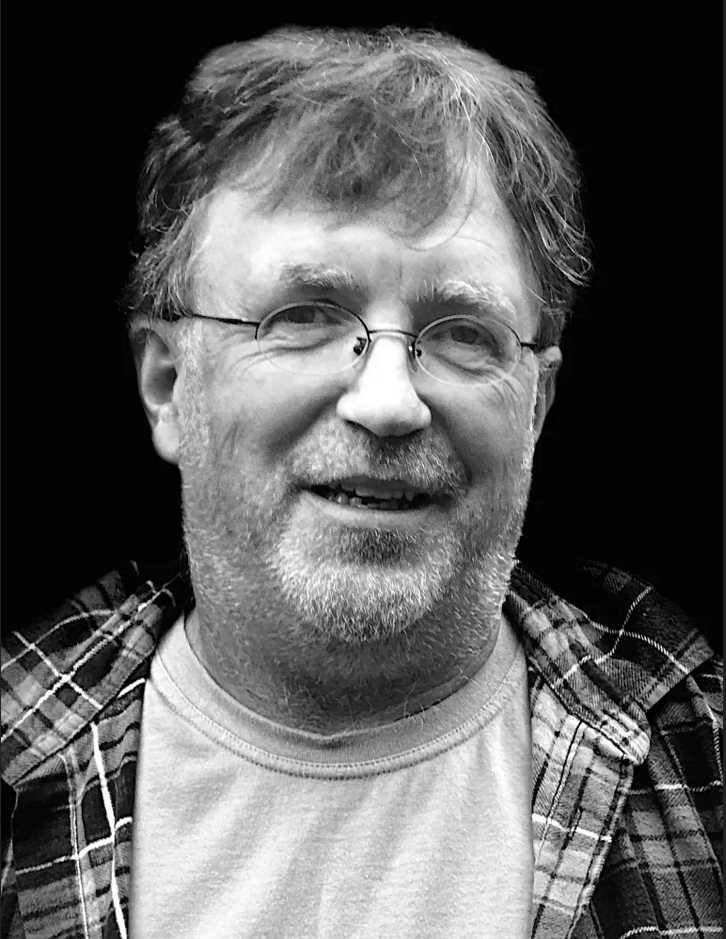
By Satyarth Pandita

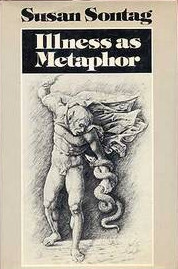
In her seminal work, Illness as Metaphor, Susan Sontag delves into the intricate realm of disease metaphors and presents evidence from the literary field that has employed metaphors for human illness, especially tuberculosis and cancer. Sontag draws on a rich literary history, referencing the works of Stendhal, Karl Menninger, Thomas Mann, Charles Dickens, Thomas Wolfe, Franz Kafka and others, to illustrate how metaphors for diseases have been ingrained in our cultural psyche. The two diseases, TB and cancer, discussed at length in the essay, are viewed from innumerable literary points of view. Fictional and real-life views of people surrounding these diseases have been put forward, which betray a cacophony of contrasting and similar ideas.

Sontag astutely dissects the contrasting metaphors associated with tuberculosis and cancer. Tuberculosis, she argues, has been romanticised and considered more socially acceptable and often viewed as a glamorous affliction. “Having TB was imagined to be an aphrodisiac and to confer extraordinary power of seduction. Cancer is considered to be de-sexualizing.” Sontag describes the tumour as “a foetus with its own will”. She further states that TB is a disease of poverty and deprivation, whereas cancer is a disease of middle-class life. She adds that cancer is associated with affluence, with excess. The metaphors associated with the diseases, she contends, not only affect the body but also shape societal perceptions and cultural narratives. The metaphorical attributions of TB and cancer in literature and society echo broader societal perceptions of class and status.

There is an aphorism by Heraclitus that men have devised gods in their own images, and as Sontag states, the nomenclature of ‘cancer’ is derived from the Greek- karkinos and the Latin- cancer, both of which mean crab. She clarifies by quoting Galen that since the external tumour’s swollen veins resembled a crab’s legs, that is how it got its name. This tendency to associate unfamiliar things with familiar ones is common; people often perceive shapes in clouds, drawing comparisons to known objects. Similarly, diseases are often viewed through familiar frameworks. Since diseases afflict and weaken us, they are often seen as adversaries. Thus, labelling the experience of battling cancer as a fight imbues individuals with a sense of hope, suggesting the possibility of victory amidst adversity.

Sontag, betraying the nature of cancer as a slowly progressing disease that suddenly manifests without any warning, presents the earliest evidence where it was first used metaphorically by Wyclif in 1382. “The word of hem crepith as a kankir”.She assembles the different metaphors associated with Cancer, which are as diverse as the number of human illnesses. For her, Cancer is a source for topological metaphors: “spreads”, “proliferates”, “diffused”, and “excised”.

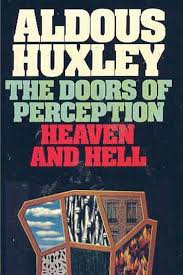
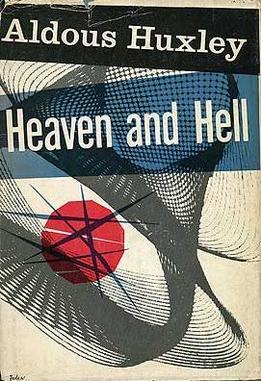
The essay examines the mythologies and superstitions associated with these diseases and how metaphors sometimes wear the cloak of superstition, too. But metaphors make the understanding of the disease more manageable. Metaphors are a means of understanding the meaning of things. That which cannot be explained as such can be explained by metaphors. In his books, The Doors of Perception and Heaven and Hell, Aldous Huxley states: “It is difficult, it is all but impossible, to speak of mental events except in similes drawn from the more familiar universe of material things. If I have made use of geographical and zoological metaphors, it is not wantonly out of a mere addiction to picturesque language. It is because such metaphors express very forcibly the essential otherness of the mind’s far continents, the complete autonomy and self-sufficiency of their inhabitants.” The metaphors will exist, and educating the masses is the only way to stop them from becoming a stigma or superstition against that disease.

Quite possibly, the doctors refraining from revealing the true nature of disease inherently to the patient might reflect the notion of fear of death. The diseased person might perhaps think that death will come to everyone but him. Revealing his cancer to him might imply the idea of the inevitable approaching death. Thus, employing the metaphor of ‘battling’ with cancer provides a sense of relief to the patient of emerging victorious in the battle. A diseased man on the bed is akin to a newborn baby, with the only difference being that in one, the river of life has begun to flow, whereas, in the other, it is on the verge of drying. An afflicted man is as helpless as a baby. He craves for care. In this vulnerable state, directly discussing the illness may be too distressing, necessitating the use of metaphors to convey the situation. The patient’s understanding is limited. The only truth he has made a pact with is the slipping of time and the approach of death.

Regardless of how one has lived, everyone desires a death with dignity. Yet, why is it that some illnesses seem to afford this dignity while others do not? What criteria determine whether an illness is seen as favourable? Is it pain or time? The dilemma is akin to choosing between jumping into a well or off a cliff―Death awaits at both ends. As Susan Sontag herself ‘battled’ breast cancer, one cannot help but wonder whether the book would have been different had her affliction been tuberculosis instead. The essay appears biased, elevating tuberculosis and its sufferers while diminishing the dignity of cancer patients. It only examines these diseases from a personal perspective. TB has been presented as a glorified disease, whereas cancer is something that rots the body. Only briefly does the essay touch on the societal perceptions that label tuberculosis as a disease of poverty and cancer as a disease of affluence.

It is not only cancer and TB that have attracted metaphors or have been known to be identified with them. In fact, every other disease and illness is accompanied by metaphors, like an object and its shadow. And it must be noted that some diseases, apart from being associated with metaphors, are linked with gods and deities.

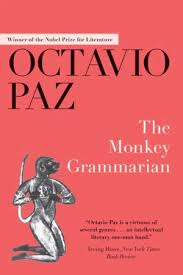
I recall a passage from the book The Monkey Grammarian in which the author, Octavio Paz, describes a scene inside the ‘Temple of Galta’ which is also known as ‘The Monkey Temple’ in Rajasthan: “The children leap about and point to the stone, shouting ‘Hanuman, Hanuman!’ On hearing them shouting, a beggar suddenly emerges from the rocks to show me his hands eaten away by leprosy. The next moment, another mendicant appears, and then another and another.”

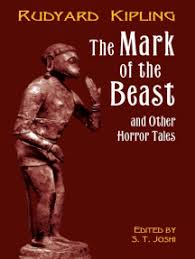
When I first read this passage, I was immediately reminded of the story ‘The Mark of The Beast’ by Rudyard Kipling and a paper that I had read related to the story titled ‘Recognizing the Leper: Hindu Myth, British Medicine, and the Crisis of Realism in Rudyard Kipling’s The Mark of the Beast’. The author of the paper had woven the interconnectedness and drawn parallels between the story, the leprosy affected character and Hanuman-lila. In ‘The Mark of The Beast’, an Englishman named Fleete, in the company of his two friends, desecrates a statue of Hanuman inside a temple with his cigar and declares it as ‘the mark of the beast’ but is soon embraced by a “mewing” leper who emerges from behind the statue following which, Fleete begins to develop skin discolourations and starts exhibiting animal-like behaviour. In the paper, the author establishes a connection between Hanuman and leprosy to justify why the Hindu monkey god is often called ‘sankat-mochan’ or ‘liberator from distress’. Drawing reference from the study of Hanuman lore by Philip Lutgendorf, the author argues how Kipling’s story resonates with a specific Hanuman-lila that relates his manifestation as a leper before the 16th-century saint Tulsidas.

“Instead, he [the tree ghost] told Tulsidas to seek the grace of Hanuman and revealed that the latter came every evening to a certain ghat in the form of an old leper to listen to the narration of Rama's story; he sat at the back of the crowd and was always the last to leave. That night, Tulsidas surreptitiously followed the leper, who led him deep into the forest before the poet finally fell at his feet, hailing him as the Son of the Wind. As the ghost had predicted, the leper "denied a thousand times" that he was anything other than a sick old man, but Tulsidas persisted in his entreaties. Eventually, Hanuman manifested his glorious form. Raising one hand over his shoulder to point southwest, he said, "Go to Chitrakut," and placing the other hand over his heart, added, "I promise you will see Rama.”

 Illness as Metaphor should not be considered a caution about metaphors in their relation to illness but rather a critique of their misapplication, where these metaphors can morph into stigmas that persist in people’s consciousness. “Illness is the night-side of life, a more onerous citizenship. Everyone who is born holds dual citizenship in the kingdom of the well and in the kingdom of the sick. Although we all prefer to use only the good passport, sooner or later, each of us is obliged, at least for a spell, to identify ourselves as citizens of that other place,” Sontag states in the opening lines of her book-length essay. But, unless one is born in the mythical Shangri-La, and as long as humanity exists, illnesses and their accompanying metaphors will persist, evolving with each new malady that emerges. Today, it is cancer, just as yesterday, it was tuberculosis and COVID-19. Tomorrow will inevitably bring new illnesses, accompanied by a fresh set of metaphors that shape our collective understanding of the ever-present shadow of illness in the human experience.

Satyarth Pandita is a Junior Research Fellow at the National Institute of Mental Health and Neurosciences, Bengaluru. He completed his dual degree of Bachelor of Science and Master of Science in Biological Sciences (major) and Humanities and Social Sciences (minor) from the Indian Institute of Science Education and Research Bhopal (IISERB).

Links to Satyarth’s published works, email address and social media handles can be found here.

.

PLEASE NOTE: ARTICLES CAN ONLY BE REPRODUCED IN OTHER SITES WITH DUE ACKNOWLEDGEMENT TO BORDERLESS JOURNAL

Click here to access the Borderless anthology, Monalisa No Longer Smiles

Click here to access Monalisa No Longer Smiles on Amazon International

Categories
The Observant Immigrant

Climate Change: Are You for Real? 

By Candice Louisa Daquin

In childhood I recall getting my coveted membership to Save Our Seas. I loved the sea and marine animals, and this seemed a meaningful way of helping from a child’s perspective. I recall reading Rachael Carsons famous books Silent Spring and The Sea Around Us at the same age and wondering how a book written in the sixties could be so prescient and why the subject was still under debate? If a ten-year-old can understand the message Carson had, of indiscriminate application of agricultural chemicals, pesticides, and other modern chemicals polluting waterways, damaging wildlife populations and causing health problems for humans, then why not adults?

It’s easy for a child’s mind to think those simple questions, not understanding the intricacies of what’s at play. Not least; politics, big business and money. These more than anything has dictated international policy, and it’s not science that sways policy, it’s influence. Vandana Shiva, an Indian environmentalist, is another such example of a prescient activist whose truth has been stifled in the march toward profit. Shiva, both physicist and social activist, founded the Research Foundation for Science, Technology, and Natural Resource Policy devoted to developing sustainable methods of agriculture. Shiva is contended; “Justice and sustainability both demand that we do not use more resources than we need. Uniformity is not nature’s way; diversity is nature’s way. We are either going to have a future where women lead the way to make peace with the Earth or we are not going to have a human future at all.”

Sadly, Shiva’s work is less known than companies like Monsanto  who are responsible for mass destruction due to putting profits before conscience in the selling of GMO[1] seeds that caused widespread bankruptcy, suicides and irreversible environmental damage. In 1995, the United States Environmental Protection Agency, EPA, listed Monsanto among the top 5 lethal corporations dumping toxic waste, as it was recorded dumping nearly 37 million tons of toxic waste, through air, water, and land. . It is unfathomable why such blatant atrocities should be permitted but our global history is littered with them.

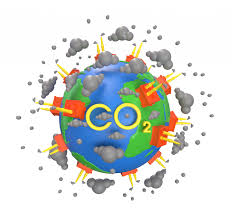
Scientists have warned since the 1800s, where experiments suggesting that human-produced carbon dioxide (CO2) and other gases were able to collect in the atmosphere and insulate Earth (or its reverse) were met with more curiosity than concern. By the late 1950s, CO2 readings would offer some of the first data to corroborate the global warming theory. That it’s not if, but when, climate change will alter the way humans experience life on this planet, let alone wildlife and nature.

At one extreme we have the eco warrior who has valiantly tried to campaign and actively fight against human encroachment; in the middle, we have the skeptic who points to fluctuating weather patterns going back millennia and at the other extreme, there are the climate deniers who despite having children seem not to be concerned about the earth those children will inherit. There is proof that “Dating back to the ancient Greeks, many people had proposed that humans could change temperatures and influence rainfall by chopping down trees, plowing fields or irrigating a desert.”

If I sound biased it is because it’s a generally accepted fact that the earth isn’t just heating up, it is changing. The only issue under debate now is who or what is responsible, if anyone is, and how long do we have before things get really bad. Twenty years ago, people still mulled over whether climate change was happening, many believing it was just cyclical and sometimes it was, but there have been enough giant seismic changes in the last 40 years to put that doubt to rest. “Scientists have pieced together a record of the earth’s climate by analysing a number of indirect measures of climate, such as ice cores, tree rings, glacier lengths, pollen remains, and ocean sediments, and by studying changes in the earth’s orbit around the sun. This record shows that the climate varies naturally over a wide range of time scales, but this variability does not explain the observed warming since the 1950s. Rather, it is extremely likely (> 95%) that human activities have been the dominant cause of that warming.”  

Now if you turn on the TV, the nightly news is as much about weather as it is other things. Weather dominates our lives more than ever. Perhaps it’s ironic that ancient man would live or die by weather and we are now doing the same. The heyday of calm weather may have been slightly exaggerated but most people over 50 can attest that things weren’t quite as dramatic all the time, every year, as they appear to be now.

The harbinger of our behaviour in terms of polluting the environment has speeded up, something that may have been inevitable but could possibly have been avoided. The hardest part being that ‘developed’ countries such as America and Europe asked ‘developing’ countries to reduce their carbon and other emissions without really reflecting that they were as if not more guilty, relatively speaking, before they ‘saw the light’. To ask developing countries to leapfrog ahead in their development for the sake of the environment is coming from a position of privilege, having already polluted the world themselves first.

On the other hand, developing countries may struggle to reduce emissions because they are gaining traction in terms of improving quality of life for most of their population but are not there yet in terms of having the luxury to reduce emissions. It takes a lot of money, effort, commitment and determination to do this and for a country that is trying to improve its lot for its citizens this isn’t always their first priority, not to mention the patronising tone of developed countries demanding this be done. It is important to see this relationally which means understanding the difference in countries development and that some of those countries were abused and depleted of resources and kept ‘poor’ by conquering overlords who reaped the benefits and left them poor as a result. Those counties will struggle to climb out of the post-colonial model and that should be considered when judging them.

But we don’t have time. Despite know this beforehand, we did not do enough. In the late 1800’s, Swedish chemist Svante Arrhenius [1859-1927] wondered if decreasing levels of CO2 in the atmosphere might cool Earth. To explain earth’s ice ages, he considered if decreased volcanic activity could lower CO2 levels globally. Those calculations evidenced that if CO2 levels were halved, global temperatures may decrease by about 9 degrees Fahrenheit. From this, Arrhenius investigated if the reverse were also true; investigating what would occur if CO2 levels doubled. His results suggested global temperatures would increase by the same amount.  

By the 1980s global temperatures were going rapidly higher. So, climate-based experts use 1988 as a critical turning point when events placed global warming in the spotlight with extreme weather and increased public interest. Scientists, the UN and many others warned we were heading to a point of no return.

Turn on the news today and we seem to be there.

Even if we did everything right as a planet from now on, it would still be too late to repair the biggest climate change consequences. That doesn’t mean we shouldn’t try but it’s alarming to imagine we’ve let it become too late, though not surprising when you consider the apathy of world leaders to come together and make this happen.

UN Secretary-General António Guterres’ remarks to the General Assembly in March 2022 illustrates this: “Just last week, the Intergovernmental Panel on Climate Change issued an alarming report that showed climate impacts are already devastating every region of the world, but particularly developing countries and small island States.  The session considered the irreversible impacts of the climate crisis, which could render some parts of the earth uninhabitable.”  What does it mean for us? For the future generations if there are to be any? It means things we took for granted will change. Just as more animals are going extinct than ever before we also must look to history to give us an idea of what we might face in the near future.

Look how many times there have been huge seismic shifts in the earth? One example in particular is quite interesting. The Storegga Slide happened in approximately (600-BCE) and was the largest Paleo tsunami to hit Europe in the (Paleo) era. It altered the geography of Europe massively, causing England to break off from continental Europe from where Scotland was attached to Scandinavia. This was lost beneath the sea as a huge part of Scandinavia broke off and caused giant waves that poured over this fertile land and swallowed it whole.  

Climate deniers use these types of stories to explain away climate change as being a natural phenomenon but that’s inaccurate. Whilst significant and damaging things have occurred throughout history and will continue to, as scientists warned, it’s the number of disasters and changes occurring that count, not that they happen but that they happen with such regularity and severity. It’s been this hot before, but has it been this hot consistently and throughout the world for as long before? I was born in a year where there was freak heatwave but that’s just it, it was a freak heatwave.

Such things are natural in nature but not if its progressive or things keep happening one after the other. People assume if there is a cold winter then climate change can’t be real but that’s the funny thing, it’s the extremes of weather as much as heat, that are indicative of climate change. For every extraordinarily hot summer and burning Hawaii, there are extreme weather events in winter too as the planet falls out of a healthy cycle and is slowly losing its ability to nurture life like it used to.  

Does it mean we will become extinct? Or just that life will become harder and less places habitable? And hasn’t that happened before? Well, it has, in so much as once Africa was a grassland without drought and Europe was covered in ice. But when a planet first forms it’s likely to have extreme weather. As long as humans have been churning out chemicals that pollute the seas and mining the earth for its ore, we’ve accelerated and exacerbated those disasters. And just as it is believed a meteor killed off the dinosaurs and a virus might have killed off the Neanderthals it’s possible our actions will hasten our demise and at very least make life more unbearable.  

How? Along with viruses being more omnipresent than previously and antibiotic resistance, UV exposure and higher radiation have increased. The average human has more chemicals and formaldehyde and plastics in their body than at any other point in history. It affects our health, our reproduction and our longevity. Cancers hit the young more than ever before. We’re either over medicated or not able to afford medication. If global temperatures rose by 11 or 12 degrees, more than half the world’s population, as distributed today, would die of direct heat. The disparity between the ‘haves’ and the ‘have nots’ have exaggerated like in the feudal past. The idea we’re all middle class is a myth borne on ownership for technology rather than quality of life, which for many working two or three jobs to sustain their lifestyle, is hardly enviable.

The world is heading for a collision, and we are propagating this by a lifestyle we don’t seem capable of changing. If we label those who care about the environment as eco terrorists and pay football players millions whilst leaving nurses and teachers underfunded? Our priorities must be reflected in these things to have a trickledown effect in the future. If we can’t educate our children to understand that saving the planet isn’t just a day every year or a whim but must be a full-time effort, then what hope does the future possess?

ActNow is the United Nations campaign to inspire people to act for the Sustainable Development Goals and many other organisations like it fight against misinformation and seek to actuate these goals, but they’re often drowned out by lobbyists for special interests, such as the car industry, gas industry, fossil fuel industry, nuclear industry etc.

Just like in the fight against cancer, we need science to lead the way, that science which is not the influenced by special interest groups, like in the case of cancer, big-pharma and big-business. We need to take profit out of research and make it objective rather than tied to business, so it can be unimpeded to do what’s necessary. With cancer research, profit has stymied progress and stalled any meaningful change, instead people believe cancer is being cured by pharmaceutical promises, whilst more people than ever are getting cancer. Contrast this to climate change and if we don’t do the research into sustainable alternatives and ways to live into the future, there may be no future worth living for.

All hope is not completely lost of course. We always find ways, maybe one of them will be to go off world whilst another would be to live in Antarctica when it melts, provided the sea doesn’t swallow it. But what of the towns and cities by the coasts? What will that look like in 50 years? Maybe less. I think in my life time it is predicted that many of these places will be unliveable, beneath water, and whilst this has happened before it hasn’t happened to this degree. Yes, Venice has always been sinking and maybe NYC wasn’t built on the best land but everywhere else? And what will the displaced do? And how is space travel possible without a healthy earth?  

Those old enough can attest that the world seems to be burning and statistically with more people than ever on an already burgeoning planet in terms of resources. We seem to be wasting more food, yet more people are hungry in certain pockets of the world. We are growing hotter in some parts, colder in others, heatwaves represent an increasing threat to cities in both the Northern and Southern hemispheres. And it’s shifting agricultural production. Heatwaves are affecting colder countries too. A study states: “As illustrated by the example of Quebec, rising temperatures and heatwaves are an increasing hazard in countries of comparably cold climate as well as in warmer climates. According to a report published by UN Climate Change, higher temperatures due to climate change cause heatwaves which affect human health. For example, in Germany alone, the heatwave of 2003 resulted in nearly 7,000 deaths and many heat-related illnesses due to heat stroke, dehydration, and cardiovascular disease.”

Realistically many places in the planet are harder to live in, firstly because prices are pushed artificially high by unrelenting inflation but slower wage increases, people are often underemployed or expected to work longer hours for less pay if you consider the cost of living 50 years ago to now and relate that to increase in wages. On another level, people’s standards of living seem to improve in some areas, but again this is hard to gauge when you consider the divide between the very wealthy elite and the rest.

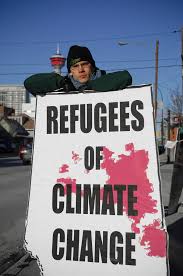
In America at least, displaced people’s flood through the borders and are hopefully given shelter and housing and opportunities but are they really better off than from the places they have fled? In some circumstances invariably, but for others, they may earn more but that money is swallowed by the higher cost of living; so, they’re not really better off. It’s an illusion to consider America as the land of the free or the American Dream, with so many living below the poverty line or just above it, which is negligible when you consider you may have slightly more money but you are thus not eligible for social assistance so you end up being as poor or poorer than those who do qualify for social assistance. This all relates to climate change because what incentive do people who are struggling to survive have, to help save the environment? Can you blame them? Shouldn’t we blame if we are to allocate blame, those who perpetuate poverty and turn a blind eye to its outcomes? Like former colonial countries who once having raped the land, decry its poverty, even as it’s the direct result of such pillage? Haiti being a great example of that.

Meanwhile the war machine grinds on and we pour money into that, to the detriment of climate change. Climate change is left for summits about but little changes. Countries make pledges but few are actuated and that’s without considering the lies that abound, or the cover ups of environmental disasters that are hushed up but have caused immeasurable harm. In 2017, the US Air Force used USD$4.9 billion worth of fuel; also, that year, the US military was responsible for 59 million tons of CO2 which is the same as total emissions of some industrialised countries like Switzerland or Sweden.

If we don’t even get the actual truth, how can we know the true extent of damage and our real part in it? Think of the nuclear disasters? That said, it’s understandable countries seeking to free themselves from fossil fuels would consider nuclear power, but how tenable is that when it depends upon people to function, what if those people were lost? Would the sites go critical and kill all survivors? Where do we safely store radioactive nuclear waste when it takes thousands of years to degrade even slightly? Just like those toxic super-dumping sites dotted throughout the planet, filling the seas with plastic and debris, we don’t think about the consequence of such dumping, only the immediacy of needing air conditioners.

Eventually fossil fuels will run out, but we haven’t found a tangible replacement. Electric car batteries don’t do well in heat, they also aren’t as durable in distance driving, cost a lot in using electricity which is still using resources, are prohibitively expensive and likewise with solar energy and wind energy. It seems there are downsides to all we’ve come up with so far, and whilst some progress is made with desalination of water to ensure clean drinking water and terraforming of previously uninhabitable land, is it enough to ward off the inevitable or does it mean those who already are rich, will be somewhat protected from the first consequences of planet earths deteriorating climate, whilst those without, will be the first to pay the price?

We’ve had so many canaries in the coal mine warnings from long before now, that none of this is news but people still en mass prefer not to think of it. When polled, voters in America usually do not put climate change in the top five concerns they have. The last few years this has changed, and that might signal a positive shift to taking climate change seriously, but it’s a bit late. Things can be done to shore up some of the fragile resources, but it will take a sustained commitment. How can that happen if majority of politicians’ are more focused on power and money than true change, renewable energy that works and a consensus that if we do nothing, we only have ourselves to blame? We have to change politics, policies and education if we hope to have a meaningful impact long term.

If we replace jobs with AI and technology as we are doing, how will people afford to improve their lives and make significant change? Everything is interconnected, it all matters, but we have to care, and being distracted by technology and super stars isn’t the answer. Why can’t an eco-warrior be a hero as much as a basketball player? We must keep trying. As Dr. Vandana Shiva is quoted as saying; “I do not allow myself to be overcome by hopelessness, no matter how tough the situation. I believe that if you just do your little bit without thinking of the bigness of what you stand against, if you turn to the enlargement of your own capacities, just that itself creates new potential.”

[1] Genetically Modified Organism

.

Candice Louisa Daquin is a Psychotherapist and Editor, having worked in Europe, Canada and the USA. Daquins own work is also published widely, she has written five books of poetry, the last published by Finishing Line Press called Pinch the Lock. Her website is www thefeatheredsleep.com

.

PLEASE NOTE: ARTICLES CAN ONLY BE REPRODUCED IN OTHER SITES WITH DUE ACKNOWLEDGEMENT TO BORDERLESS JOURNAL

Click here to access the Borderless anthology, Monalisa No Longer Smiles

Click here to access Monalisa No Longer Smiles on Kindle Amazon International
Categories
The Observant Immigrant

Can We Create a Better World by Just Wishing for it?

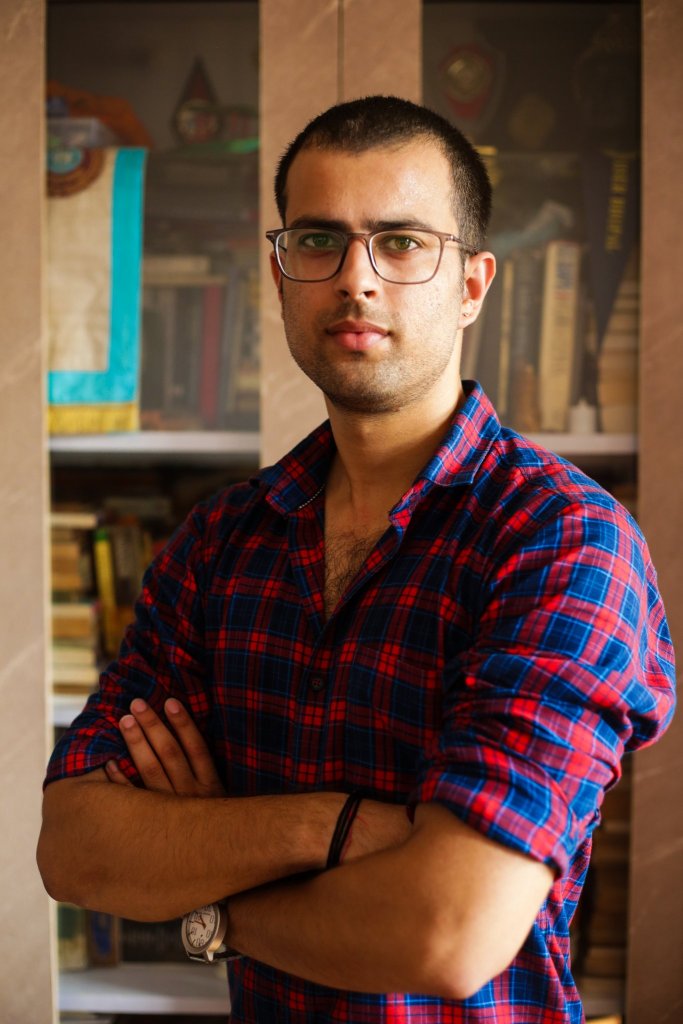
By Candice Louisa Daquin

The wish to laugh and shrug off differences that create unhappiness and wars is a universal one. The majority of us want to avoid unhappiness at any cost. There is however, a downside to trying to avoid unhappiness by being too open about unhappiness. When we begin to pathologize everything as a disorder, we may inadvertently neglect our ability to generate better mental health.

Before mental illness was discussed en mass, it was private and considered shameful. This had obvious detrimental effects on those suffering, but one could also argue there was a benefit to not making everything so extremely public. Like with any argument, there are pros and cons to how far we publicize mental health. The extreme of ignoring it, didn’t work. But does the extreme of talking about it to death, really help people as much as we think?

In the second half of the 20th century, owing in part to a neglect of, and a need for; improved mental health care, societies began to shift from encouraging suppression of emotion to a recognition of psychological distress and its impact. Institutes and then the de-institutionalisation movement, became ways of coping with people who struggled to function in society. But these people didn’t choose to be unhappy. Whilst it’s obvious this shift to publishing mental health instead of hiding it, has been highly beneficial in some regards; we should also consider its far reaching ramifications.

“(Historically) Many cultures have viewed mental illness as a form of religious punishment or demonic possession. In ancient Egyptian, Indian, Greek, and Roman writings, mental illness was categorised as a religious or personal problem. In the 5th century B.C., Hippocrates was a pioneer in treating mentally ill people with techniques not rooted in religion or superstition; instead, he focused on changing a mentally ill patient’s environment or occupation or administering certain substances as medications. During the Middle Ages, the mentally ill were believed to be possessed or in need of religion. Negative attitudes towards mental illness persisted into the 18th century in the United States, leading to stigmatisation of mental illness, and unhygienic (and often degrading) confinement of mentally ill individuals,” states an article on this issue.

By publicising everything, in reaction to the days when mental health was viewed with more stigma, we have not improved suicide statistics or mental illness numbers like we’d logically assume. When something is freed of stigma and shame, more people admit to suffering from mental illness than ever before, which will make it seem like more people have mental illness, when it could simply be that they are more willing to admit to having it. On the other hand, there is an observed phenomena of things becoming socially contagious.

How can we be sure we’re not increasing mental health numbers by making it so acceptable to be mentally ill? By over-emphasising it on social media? Publicising the struggle to avoid stigma, is positive, but the degree to which we discuss mental illness may be so open, as to increase numbers or over-diagnose people. For example, everyone gets sad sometimes, that doesn’t mean everyone suffers from clinical depression. Everyone gets anxious sometimes but that doesn’t mean everyone suffers from anxiety. The distinction is: Is it a disorder or a feeling? Do clinicians spend enough time considering this when they give patients a life-long diagnosis? And what is the effect of such a diagnosis?

When psychiatrists diagnose mass numbers of people, especially easily influenced teenagers, with serious life-changing mental illnesses, that immediately means the reported numbers swell. Who is to say they would be that large if diagnosis weren’t so open ended? Nebulous? Open to outside influence? Or even, the pressure of pharmaceutical companies and desperate doctors wanting quick fixes? What of parents who don’t know how to handle their rebellious teen? Is that mental illness or just life? If they demand treatment and the teen is labeled mentally ill, do they fulfil that prophecy? And if they hadn’t been diagnosed, would their reaction and outcome be different?

Our innate ability to laugh and shrug things off, comes from the challenges in life that were so terrible we had no choice if we wanted to go forward. If we remove those challenges, are we teaching our kids how to cope with hard things or wrapping them in cotton wool and medicating them? When a family of ten children ended up with eight routinely dying, how else could families cope with such tragedy but to have that coping mechanism of laughter and the ability to shrug off despair and horror? It did not mean anyone was less caring, or feeling, but that sensitivity had to be weighed against our ability to endure. We could argue we endure less pain now than ever before, as we are less likely to lose a great number of people we know, die due to disease and famine and other historical reasons for early death. Many will never even see the body of a dead relative, so how can they process that loss?

The modern world brings with it, its own attendant risks and stressors. People growing up in 1850 may not have had to worry in the same way, about looking young to keep a job, or trying to ‘do it all.’ On the other hand, they might have had to worry about not having a society that helped them if they lost a job, or how to stop their families from starving or their village from being raided. They had fewer social cushions in that sense and more of a risky day-to-day. This was starkly true when we compare the recent pandemic outbreak with say the plagues of earlier centuries. People died in the street and were left to rot, whereas now, even as we struggled and many died, we had a modicum of order. For all our terrors with Covid 19, it could have been far, far worse and has been. I say this from a position of privilege where I lived in a society that had access to medical care, and I’m fully aware many still do not, but nevertheless if we directly compare the experience of the Black Death with Covid-19, we can see tangible improvement in what those suffering, could access.

This means whether we believe it or not, appreciate it or not, we have over-all an improved quality of life than even 50 years ago. At the same time, we may have swapped some deficits for others. It may seem a minor consolation for the myriad of modern-day woes, but we are better off than our grandparents who were called ‘The Silent Generation’. They grew up learning to not speak of their struggles but cope with them silently. These days we have outlets. And in other ways, we are more alone, it is a strange mixture of progress and back-tracking. Some would argue our grandparents had a simpler, healthier life. But if average life expectancy is anything to go by, we are growing older because for the majority, our access to medical care and over-all nutrition, are improved. On the other hand, more grow old but sick-old, which is not perhaps, something to aspire to.

When we consider how badly many eat, and in truth, we do ourselves no favour when so many of us are obese and suffering from diseases of modern living such as lack of exercise, heavy drinking, lack of sleep and eating fast-food. It might be most accurate to say we have swapped some deficits such as dying due to curable diseases, and dying from malnutrition or lack of access to care and antibiotics, with modern deficits like increasing cancer rates and increasing auto immune disorders, all of which are increasing with the swell of the modern world and its life-style.

What it comes down to is this; through the wars of the past, people stood next to each other in trenches whilst their friends were blown to pieces or died in agony. They had PTSD[1] then, they suffered from depression and anxiety, but they also had no choice but to carry on. For some, the only way out was suicide or AWOL[2], while for many, they stuffed their feelings down and didn’t speak of it. Clinicians thought this way of coping caused illness and it led along with other reasons, to an improved mental health system.

But, now, in 2022, you might be forgiven for thinking EVERYTHING was a disease, and EVERYONE suffered from something, and you might find yourself wondering if some of this perceived increase was the direct result of going from one extreme to the other. Initially, nobody was mentally ill. Nowadays, who isn’t? Is this a better model?

Having worked with mentally ill people for years as a psychotherapist, I can attest that mental illness is a reality for many. I knew it was before I ever worked in the field, and it was one reason I chose that field. I wanted to help others because I saw viscerally what happened to those who did not receive help. Despite this I came to see the value of sometimes putting aside all the labels and diagnosis and medications and treatments and trying to just get on with the process of living. If we tell someone they are mentally ill and medicate them and coddle them and tell them they don’t need to try because they are so sick, then it doesn’t give them much motivation to see what else they can do.

True, for many, they are too sick to do anything but survive and that in of itself is a big achievement. So, when we talk about the need to motivate ourselves beyond labels, we’re talking about those who we’d call high functioning. People who may suffer from depression, or anxiety, but are very able to do a lot of things despite that. Does medication and therapy and labeling them, really help them make the most of their lives? Is putting them on disability for years without reviewing if things could or have changed, help? Can they learn something from our ancestors who had to just laugh and get on with it, no matter how tough things got?

It may seem a very old-fashioned approach to consider ‘toughing it out’ and having come to America and seen how much onus they put on toughing it out, I have mixed feelings about the value of doing so. The idea of being tough enough means there is always the reverse (not being tough enough) and that feels judgmental. Being judgmental, I think, has no place in recovery.

What does have a place in recovery, is doing the best you can and not letting labels define or defeat you. In this sense, I see a lot of commonalities with those struggling today and those who struggled 150 years ago. Maybe we can all learn from them and combine that with some modern prescriptivism that give us more chance to laugh and thrive, rather than fall under the yoke of a diagnosis and its self-fulfilling prophecy?

I have had many clients who felt their diagnosis disincentivized them from any other course of action than being a patient. The medication route alone is fraught with ignorance. For so long SSRIs[3] and other anti-depressants were heralded as lifesavers for depressed people, but what proof existed for this aside the hope a cure had been found? Years later studies showed only 30% of people seemed to respond to anti-depressants versus placebo.

Then second and third generation drugs were created, all the while charging exorbitant prices, and patients routinely took 2/3/4 medications for one ‘illness.’ Aside the expense and physical toll taking that much medication can do, there was a mental cost. Patients felt over-medicated, but not happier, not ‘better.’ By tputing their faith in drugs, they lost their faith in other ways of getting ‘better’ and some spiraled downward. The reality is we are all different and we process life differently. Some of us are more forward-focused, others, through imitation, genes or experience, may not be. It isn’t a deficit or illness, it’s a personality, that can change somewhat but should also be understood as the diversity of how humans cope.

Treatment Resistant Depression became the new diagnosis when modern medication failed, and new drugs were considered in tangent with current drugs, but this led to people taking more drugs, for longer periods of time, often with little improvement. How much of this is due to a negligent approach to treatment that only saw drugs as the answer? Meanwhile therapy was cut-back or became prohibitively expensive, cutting off other options for treatment. It’s logical that therapy can help avoid feeling isolated, but when the system prefers to medicate than provide therapy, there are so many taking medicines for years, that were only meant as stopgaps.

Should the media or your general physician, be the one telling you what drugs you should be taking, if at all? Preying on the desperation families  by the introduction of for-profit medication, muddies the waters further.  The disparity of information means no one source can be trusted, especially as information is ever-changing. More recently a study showed that anti-depressants may not work at all it was commonly held clinical depression was caused by a chemical imbalance and studies show correcting that imbalance does not improve depression as was once thought.

This shows us that psychiatry still has a long way to go, and when they claim things as facts, they rarely are. It contends we should not blindly trust what has become a profit led industry, where many of its practitioners see patients for a short time but somehow still diagnose them with serious mental disorders. Surely, we should consider equally, the importance of conservative diagnoses and recognise that normal variants are not necessarily disorders. In many cases, it may be that under diagnosing rather than over-diagnosing could work better.

For example, I know of many (too many) patients who told me they were diagnosed with bipolar disorder, before the age of 21 by a regular non-mental health doctor, or by a psychiatrist. Their subsequent mistrust of the system is understandable with that experience. How can someone tell you that you have bipolar disorder at 17 years of age, from a 20-minute conversation?

Even the diagnostic criteria for bipolar 1 or 2 in the DSM (Psychiatric Diagnostic and Statistical Manual), is flawed, because it’s too generalised and only highly trained professionals would be able to understand the nuance. Most are not that trained and therefore take at face value, when a diagnostic tool says someone has bipolar if they experience an episode of mania. But firstly, are they defining mania correctly? Is the patient describing mania correctly or being led? Were there mitigating factors?

If you diagnose a child with a serious mental disorder and medicate them, how can you be sure their brains aren’t affected by taking that strong medication before they have reached full development? How can you be sure they are not becoming what they are told they are? Too often, people spend years under the cloud of medication, only to emerge and realize that what was a discrete episode of depression, was medicated for decades, robbing them of the ability to recover? Doesn’t a label make it likely that some will feel helpless?

Moreover, how much power does a label have on our sub-conscious? If we are told, we are (will not be able to do something, why would we even try? If we believe we are depressed, are we less or more likely to fight against it? Isn’t some fighting a good thing? Likewise, diagnosing older people with a disease like Bipolar (a disease that occurs after puberty), shows the mistakes of the psychiatric world. How can a 70-year-old man ‘suddenly’ be Bipolar unless he has a brain-tumour or otherwise? Dementia is often misdiagnosed as Bipolar because badly trained doctors seek answers for aberrant behavior, without considering the whole story, such as how can someone of 70 develop a disease that affects those around the age of 18? Sure, some can slip through the gaps, but often, it’s the frustration of the family or doctor colouring the diagnosis. Such life-long labels should not be given lightly.

What if we treat mental illness depending upon its severity, in a different way? Consider the value of improving real-world ways of copying despite it, instead of relying on medications that were only ever meant as a stop gap and not developed to be taken for years on end? Nor over-medicating without due cause. Nor medicating young people based on very loose diagnostic expectations. Or assuming everyone who says they feel depressed or anxious, is clinically depressed or anxious, or that medication is their only solution?

Organisations that take vulnerable teens who often have co-morbid diagnosis of drug-or-alcohol abuse alongside mental illness, into the wilds, seem to be a real-world way of encouraging those young people to find coping mechanisms outside of addiction and reliance upon medication. Equally, when a young person (or anyone really) is productively employed in something they feel has meaning, this is one way anxiety and depression can improve.

We’ve seen this with Covid-19 and the necessary isolation of so many school children. Whilst it was unavoidable, the rates of depression spiked, in part because studies show people need interaction with each other. This is why online learning has a poorer outcome than classroom learning, this is why older people are less at risk of dementia if they socialise. We are social animals, we feed off each other and we empower each other. Finding your place in the world is always in relation to others to some extent.

We may never avoid war completely or our human tendency for strife, but we also have a powerful other side that urges people to do good, to help each other, to laugh and shrug off the differences that divide us. What good does’ division ever do? Unhappiness is unavoidable at times, but sometimes it’s a choice. We can choose to recognise something is hard and actively pursue ways of improving it. We can struggle through and feel good about the struggle and the effort we put in. if we take that all away and don’t encourage people to try, we give them no way out. Sometimes there is no way out of suffering or mental illness, but often we cannot know that unless we have tried.

Many years ago, people valued older people because they were considered wise and able to impart valuable life lessons to impetuous youth. Nowadays, the elderly are not respected and are often siphoned off into homes before their time, because people find them an inconvenience. There is a theory that humans became grandparents because grandparents were an intrinsic part of the family make-up. This explained why humans were among the only mammals to live long after menopause. Most animals die shortly after menopause, nature believing once your reproductive years are behind you, you have no value. But humans were distinct because they live long after menopause. The grandparent theory supports this by demonstrating the value of grandparents, and we can learn a lot from what nature already knows. It is never too late to have value, it is never too late to learn and grow, and it is never too late to laugh and come together, setting differences aside.

Those who achieve that, may well be happier and live healthier lives, as laughter is shown to be a great anti-ager as well as an improvement on our overall mental and physical health. Of course, what we can learn from the extremism found in the cult of positivity, illustrates there must be balance and we cannot expect to be happy all the time or unaffected by tragedy when it occurs. But staying there, and not attempting to move beyond it, to reclaim ourselves and our futures, seems to be a way to avoid going down that dark tunnel of no return.

Experience shows, we are what we think. We don’t have to be positive 24/7. To some extent any extreme sets us up for burnout and puts too much pressure on us to be ‘up’ all the time, when it’s natural to have down times. But striving for happiness, or contentment, or just finding ways to shrug off the smaller things and come together, those are things most of us wish for. So, it does no harm to direct our energies accordingly and prioritise our ability to cope. Perhaps our differences are less important sometimes, than what we have in common, and what we can do to make this world a more livable place.


[1] Post-traumatic Stress Disorder

[2] Absent without Official Leave

[3] Selective Serotonin Reuptake Inhibitors

Candice Louisa Daquin is a Psychotherapist and Editor, having worked in Europe, Canada and the USA. Daquins own work is also published widely, she has written five books of poetry, the last published by Finishing Line Press called Pinch the Lock. Her website is www thefeatheredsleep.com

.

PLEASE NOTE: ARTICLES CAN ONLY BE REPRODUCED IN OTHER SITES WITH DUE ACKNOWLEDGEMENT TO BORDERLESS JOURNAL.

Categories
Stories

The Man Who got Eaten. 

By Kieran Martin

When I tell people this story they wonder why I can pet a dog at all, much less act as if I like one. 

The truth is, dogs are just animals and their needs are beyond their own understanding. Some of them just get greedy. 

For about four years, between the ages of eight and twelve, I lived next to a kid whose dad was eaten alive. The weird thing was this: it started before we moved in to the street, and didn’t end till long after we moved out. 

If you’ve seen a one-armed man playing ball games with children, you may think you know what R’s front yard looked like on a weeknight. But you’d be wrong. Mr K never seemed to miss his chewed off hands and feet until he tried to use them. When he reached to catch a ball, and saw it sail slowly past the stumps of his arms, surprise was painted on his face. 

It didn’t happen all at once — that was the worst part. In fact, the dog spent the best part of four years chewing on the man. I was about to say ‘that poor man’ but stopped myself: we never talked about him that way. No one could stand the way he joked about it. He’d blame it on the weather, the wind had a bite, or the sun took a drink. Sometimes it was people he worked with — back biters and leeches. He smiled and joked about how he’d been offered to every parasite in god’s creation. 

He never mentioned the dog. 

I remember one summer evening when R and I sat at the train station, waiting to meet his dad from the train. Our mothers had decided to take dinner to the park and our job was to meet Mr K and lead him to the park. After the first two trains arrived and left without him, my Mum appeared at the station and told us both to give up and come play cricket before the light was all gone. R stayed till after dark: we picked him up on our way back home. 

Ahead of us, in the half-light, we saw the dog, looking huge, 

Mr K draped over him like a sack, hands and feet dragging along the path. Without saying a word, we all slowed our steps, giving the dog time to drag him on to the porch. By the time we arrived at the front door the dog was gone. “I got locked out,” he said, smiling weakly. “I’ve been waiting, but I don’t mind. Its a lovely night. Maybe I’ll poach a couple of eggs.” Mrs K was the only one to look at him. 

She banged the gate and lead their kids inside. 

Mr K wouldn’t shake your hand, like others kid’s dads. The only way to tell if fingers were missing was to concentrate very carefully as he patted you on the head. There was no easy way to count the size of the dog’s meal because Mr K would grow the limbs back. He ate huge meals and grew fat but seemed light like a sponge cake. 

I stayed over with R some nights and often heard him wandering the house alone, turning on the TV or fiddling with the computer. The house was as rickety as their cheap lawn furniture and used to shake from one end to the other when the washing machine came to its spin cycle. Yet, Mr K could walk from one end to another without making a sound. 

I heard cancer got him in the end. After all that he was eaten from the inside out. We’re all meals, he’d say, shrugging with a hopeful smile, as if he were waiting for someone to agree. 

No one ever did. At least, no one that I could see. Back then.

.

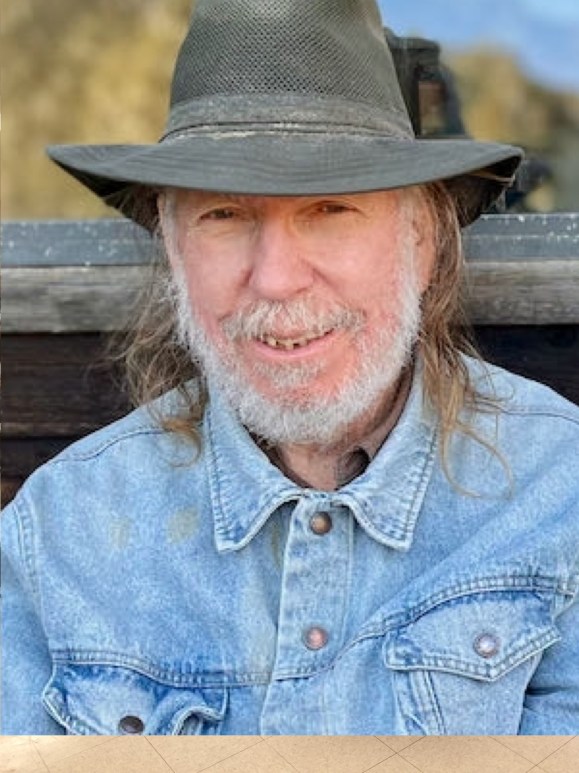
Kieran Martin wrote a couple of short pieces 14 years ago when living in a very small town. He also writes lyrics, essays and code. His sons taught him how to narrate; one of the many gifts they came to him with.

.

PLEASE NOTE: ARTICLES CAN ONLY BE REPRODUCED IN OTHER SITES WITH DUE ACKNOWLEDGEMENT TO BORDERLESS JOURNAL

Categories
Review

Finding Hope in Despair

Book review by Candice Louisa Daquin

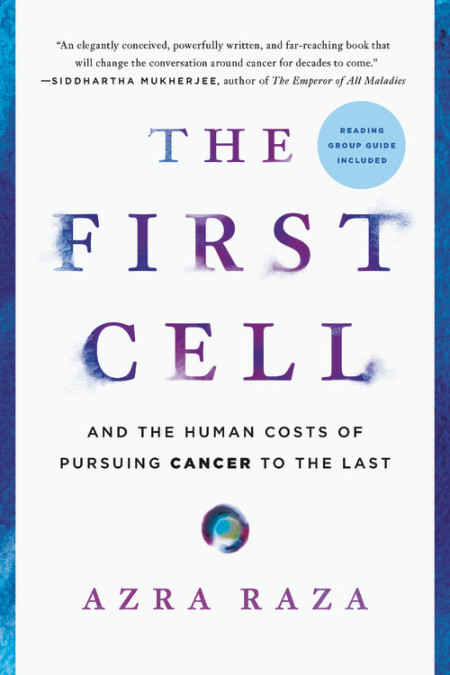
Title: The First Cell and the Human Costs of Pursuing Cancer to the last

Author: Azra Raza

Unless you are an oncologist, what would possess you to read a book on cancer?

Azra Raza’s unexpectedly well written book gives you the only reason you’ll need. Because it’s necessary.

Why? We go through life without thinking of death very much. Maybe this is a good thing. However, all of us shall die. And many of us shall develop or die of cancer. Whilst we may not wish to think about this during life, that she tells us is precisely why the progression of cancer treatment has been stymied. It’s not the only reason of course. There is more money in treatment than cures. But as long as we are all too busy to read on these subjects, we can be assured nothing will change and it really does need to change.

If you read the news, you’d be forgiven for believing cancer treatments have progressed and improved. After all we want to believe that don’t, we? But like any statistic, it can be inaccurate and miss the larger picture. Unfortunately, much as we want to be positive, we need to be realistic. The truth is cancer deaths have only lessened because of social change (less smoking, healthier lifestyles) and early detection (screening programs) and not because of the actual treatment.

The actual treatment (cut, poison, burn — surgery, chemotherapy, radiation) remains the most popular of choice for battling majority forms of cancer. We can all point to the notable exceptions but they make up a relatively small percentage. The vast percentage of cancer patients are given these options in varying forms.

Those cancers that do not necessarily kill, may not terminate lives. But it isn’t because of the treatment so much as the cutting out of, or sheer luck, that the cancer was caught in time. The treatment itself, if you are unlucky enough to have an advanced cancer, hasn’t changed much (with the exception of gene therapies that have been advancing but are not applicable for all cancers) since the 1950’s. Yes, that’s right, the 1950’s.

So, while doctors want to offer hope, they do so more out of a stubborn desire to ‘try anything’ rather than because the six months they may give a dying person, is really beneficial when you consider the sheer backbreaking cost (bankruptcy from medical costs being the number one reason) and very small gains (six months more of life and you have spent all your money on a treatment which only benefits Big Pharma). The unwillingness of doctors to give up, is admirable and very human (who wants to tell someone there is no hope?) but it brings with it, a false promise.

What’s the solution? Azra Raza’s solution is very simple but mostly overlooked. She believes from her own experience of watching her husband die of cancer despite her being an oncologist and researcher that we have to stop looking for the ‘magic pill’ and go back to basics. Let’s find out what causes cancer. Let’s intervene before cancer gets a foothold. Why are we only looking at how to treat the incurable? Why aren’t we looking at how to prevent it in the first place?

Raza points to a Westernized, masculinized perspectives in the medical world that makes true research very prohibitive, that research being done is drowned out by the lack of people who will be willing to take it to the next step, and a lack of funding. Without this, we cannot hope to change a decades old ‘tradition’ and yet, this tradition is causes enormous suffering. Every time Raza sees a new advertisement on TV for a ‘platinum-based treatment’ or something that offers ‘real hope’ to cancer survivors, she is acutely aware of the enormous price tag and literal months or weeks these treatments really offer patients. She asks; ‘Is throwing up every day in agony really worth spending your life savings on for a scant six weeks more of life?’

Of course, there are miracles. But Raza says, rather than looking at the outliers, we need to be honest about how many people with cancer have horrible odds and suffer hideously at the hands of an unchanging system that doesn’t really address the problem at its root.

“We have seen that the current cancer landscape is worse than it was in the 1970s. Even today 95 percent of experimental trials continue to fail…. By law the FDA can only take safety and efficacy data into account when reviewing a drug for approval, not its price-tag.”

So, if we were to do that, what would it look like? When someone is treated for cancer, doctors reverse engineer the tumour to see if the cancer is returning in the body, that way they can ‘detect’ returning cancer and treat it. What if we could do this before cancer exists in the body, by looking at biomarkers and other evidence that pre-dates the actual development of cancer, so that along with improved screening measures, we can stop cancer before it starts?

Once a cancer has metastasized, we are chasing our tails in many ways and while this can give a patient many years of life, just as often it does not. And rather than slashing and burning and causing more cancers, if traced prior to the onset, the ‘first cell’ can be a less invasive and less catastrophic method of treating or avoiding cancer where no ‘work-up’ costs a million dollars. The concept of ‘prolonging survival’ needs to be re-examined against the invariable suffering of those who are terminal.  

As Raza says: “The very terms meant to empower end up detracting from the profound human experience of an individual facing mortality head-on in all its chaotic savagery, the physical suffering, anxiety, the grief…. The terminology of positive thinking also stigmatizes by indirectly blaming the victim.”

Additionally, we test on the wrong thing, by testing on animals we cannot hope to reproduce the effect a medication has on a human body. “I’m not saying all scientific research on animal models should be abandoned. What I am saying is that animal models are misleading and harmful for cancer drug development, because the disease cannot be reproduced in such simplistic, artificial systems.”

Using poetry from India and the Middle East, interspersed with recounting of real lives affected by cancer, Raza makes the unpalatable subject, readable. I cannot say this is easy reading, or that it will be a book many lay people read, but I’d hope more than cancer sufferers pick this up, because there is a real answer here, and it’s written with such compassion and intelligence, it’s as evocative and vital as the very treatments it considers.

I was so impressed with the bright star that is Azra Raza and her courage, compassion and bright mind. If more were like Raza, maybe we’d already be further along the road in offering long lives to those with cancer. We may instinctively wish to turn away from this subject and thus, this book. But if we do one thing for ourselves, we should read The First Cell and consider, if not for ourselves, for someone we love, if we are mindlessly ignoring the problem and thus, letting it perpetuate. We need to have this conversation and we have needed to have had it since the 1950s. Let’s be brave enough now. As Raza says:

“There is no activism without despair, no despair without hope. Despair can be as powerful an engine for change as hope.”

.

Candice Louisa Daquin is a Sephardi immigrant from France who lives in the American Southwest. Formerly in publishing, Daquin is now a Psychotherapist and Editor, having worked in Europe, Canada and the USA. Daquins own work is also published widely, she has written five books of poetry, the last published by Finishing Line Press called Pinch the Lock. Her website is www thefeatheredsleep.com

.

PLEASE NOTE: ARTICLES CAN ONLY BE REPRODUCED IN OTHER SITES WITH DUE ACKNOWLEDGEMENT TO BORDERLESS JOURNAL