
Categories
Essay

Morning Walks by Fakrul Alam

Morning walks, or rather ambles, tiptoeing towards the rest of the day. One’s day gathers pace seemingly hour by hour after one wakes up, like a typical Bhairavi[1] performance in Indian classical music, starting slow and accelerating in tempo till the end. The world seems so tranquil in the morning; the Dhaka air smells so relatively fresh (how fresh depends of course on where you are!) at that time. I think indolently most days now (even before the alarm rings!), why not walk at an easy pace and even lazily at first, at least for a while, before picking up speed afterward?

It was not always thus with me; time was when I used to greet the morning impetuously. Like Donne in ‘The Sun Rising’[2], albeit sans a lover next to me, I would, once upon a time, feel like chiding the sun— “busy old fool, why disturb my sleep so? Why not light up some other world and break someone’s sleep in continents far, far away?” My mother, stirred by the call to prayer she always heard in her conscience (for those were days without alarms), would try to wake us up. Or she would scold and cajole us till my siblings and I would eventually arise, rubbing our eyes and getting up from bed for another schoolwork-filled day in practiced disbelief and simulated foot-dragging.

Mother would tell us of fabled early risers. “Take Rabi Thakur[3],” she would say, “never missed a sunrise!” Or formulaically, “Morning shows the day!” My father would do his bit: “Early to bed,” he would recite ritually, “and early to rise/ would make a man healthy, wealthy and wise!” But the man who made me take up morning walks seriously and regularly was my physician. Gravely, he said, while writing blood pressure pills for me when I was well past 50, “You must walk regularly too—half an hour every morning at least!” Setting out for my “prescribed” morning walks initially, I would think, “How boring! How slowly does the body warm up this way!” For someone who had played contact sports requiring a lot of running around/movement (basketball, football, cricket and tennis) for decades, walking was decidedly dull when I began to do the needful in my 50s. One missed the excitement and emotions generated when like-minded boys of all ages competed with each other intensely in games. But like everything else in life pursued regularly, walking soon became a habit for me. In no time it became an activity I began to like and even looked forward to. After all, morning walks, I soon found out, have their unique attractions.

Fuller Road Morning Walks

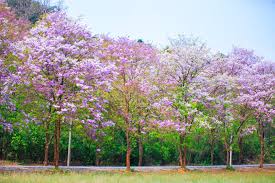
I was lucky that I first began to do my constitutionals on Fuller Road and the Mall part of the Dhaka University campus. The walks my doctor had prescribed soon began to feel pleasurable in the still lovely parts of the DU campus. How could I not like the early morning sights and sounds in that green and quiet world then? In spring and early summer flowering krishnachura, radhachura or jarul trees presented a visual feast even as mango blossoms and other flowers scented the air; the solitary cuckoo bird, at its most insistent in the early hours, too, was unforgettable. In the rainy season, everything looked lush green while the fragrance of kodom or kamini flowers suffused the air; in autumn, delicate sheuli blooms embellished mornings imperceptibly for us walkers.

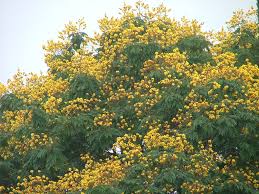
February morning walks were made colourful by “early bird” couples all dressed up for the occasion of Bashanta Utshob[4] or Valentine’s Day dates. Ekushey February[5] and December 14[6]— Martyred Intellectuals Day—mornings, in contrast, were mournful occasions when walkers appeared touched by the solemnity of events they were heading towards. Eid days saw only scanty early morning traffic, but soon after seven in the morning, kurta-clad people could be seen rushing to the central mosque of the campus. But most days, Fuller Road mornings seemed to us walkers in sync with a relaxed, unhurried mode of existence.

Other scenes caught my attention during morning walks for often unusual reasons. The wild dogs of night would disappear in full light, but one would occasionally come across pack members intimidating one another or chasing solitary, skinny squirrels or stray cats who would fight back in their own fierce or wily ways. A not uncommon and sobering scene was that of a rickshawallah parked on the street, precariously perched on his seat, attempting to steal some sleep anyhow before heading for his next back-breaking assignment. Certain times of the year, the neighbourhood madman would attract one’s attention with his manic display. And not infrequently and sickeningly, one would encounter a bedraggled drug addict every now and then. Looking doped and possessed, his eyes turned away from prying gazes, he was inclined to slink away.

I, for my part, got addicted quickly to my early morning campus walks. There was the heady feeling of the fresh air charging up my veins; it was pleasurable too to walk with people with whom I could share the twists and turns of university politics and vent my indignation at the way campus politicking was vitiating the atmosphere day by day. And after 45 minutes of brisk walking and a quick shower, I had a healthy appetite and a mind relaxed for the day’s work.

Dhanmondi Morning Walks

In 2017, I moved to Dhanmondi to begin life in the city outside the DU campus after 20 or so years in it. One reason this seemed a fit place for retired life was the walkways edging the lakes, built thoughtfully for walkers, traversing Dhanmondi and winding their way through parks and open spaces. I felt in my mind in choosing a new flat, that this would be an ideal place for morning walks for people like me so dependent on constitutionals. I was not really disappointed by what I experienced in my Dhanmondi morning walks initially. We were surrounded by greenery. The water in most parts of the lake was reasonably clean and quite greenish blue; scattered bits of reflected sunlight here and there made the water even more attractive during the morning hours. If I was able to get up really early, I could watch the glowing sun ascend above Kalabagan from the road 32 bridge. One lucky day, I was even able to capture the crimson-daubed rising sun reflected in the placid lake water.

Unlike the Fuller Road-Mall areas of DU, the Dhanmondi lake walkways and the park areas fill up in no time at all with morning walkers. It was good to see people doing calisthenics in groups daily, or playing badminton (in winter and early spring). Occasionally, I came across a man or a woman on the mobile, rapt in intimate conversation, no doubt with a significant other with whom talking is essential even that early. All alone in my walks now, I, on the other hand, found early morning walks a good time to think about things or think through things—solitude is sometimes the best company! Ideas for papers I was writing or projects I hoped to undertake seemed to become clearer by the bend in my walks. And soon I discovered Dhaka FM radios that performed from 6 to 7 am with little or no commercial or smart-talking DJs intervening for long stretches and with music that synced with my Bhairavi mood.

But there are aspects of Dhanmondi life that make morning walks here much less relaxing than the Fuller Road ones—despite the lakeside ambiance and the abundance of greenery. The park becomes so crowded within half an hour or so of sunrise that a common experience is people jostle one another on the walkways after a while. The lake water is quite polluted in places; a common sight is the garbage littered in the lakeside or plastic bags floating on tucked away parts of the lake or even near bridges. Almost immediately after seven, never-ending honking and noxious fumes emitted by cars swarming to the main and neighbourhood roads to drop children to the innumerable schools of Dhanmondi can mar morning moods easily. Irritating, too, can be professional beggars placed strategically on walkways and on intersections. For instance, shortly after I start my walk every day from road 27, I encounter the conscience-clouding gaze of a beggar woman clad in a black burqa, peering at the passer-by purposefully, reminding one of the figures playing death in western medieval morality plays. And then there are the vendors lined up to sell food or this or that inside as well as outside the park. Truly, Dhanmondi is now an area where the line between the residential and commercial is close to disappearing. In many ways, Dhanmondi morning walks are nowhere near the ones I would set out for on almost always serene Fuller Road.

And yet I find much to like in my morning walks even now. Dhaka still appears a nice place to live at that time of the day. The morning breeze, if and when flowing, revives me. One morning recently, when I was walking by the lakeside where the palash flowers blazed against the greenery and the greenish blue lake water, I heard on my mobile FM radio lyrics of a song that said it all for me then: “Emon manob jibon ki hobe/Eto shundor prithibe te ki ar asha hobe?” (Will there be another life like this one/ Will I come back to another world as beautiful as this one?”)

[1] Morning raga in Hindustani Classical

[2] A poem by John Donne (1572-1631)

[3] Rabindranath Tagore (1861-1941)

[4] Bengali Spring Festival

[5] Mother tongue day. On 21/2/1952, the Bangladeshi movement started against the imposition of Urdu

[6] December 14 was observed as a Martyrs’ Day to commemorate the large number of Bangladeshi intellectuals killed during the Bangladesh Liberation War.

(First Published in Daily Star in March 2019)

Fakrul Alam is an academic, translator and writer from Bangladesh. He has translated works of Jibonananda Das and Rabindranath Tagore into English and is the recipient of Bangla Academy Literary Award (2012) for translation and SAARC Literary Award (2012).

PLEASE NOTE: ARTICLES CAN ONLY BE REPRODUCED IN OTHER SITES WITH DUE ACKNOWLEDGEMENT TO BORDERLESS JOURNAL

Click here to access the Borderless anthology, Monalisa No Longer Smiles

Click here to access Monalisa No Longer Smiles on Amazon International

Categories
Essay

When ‘they’ Danced…

Ratnottama Sengupta is riveted by the phantasmagoric Bhooter Naach, the Ghost Dance, in Satyajit Ray’s legendary film — Goopy Gyne Bagha Byne — that has no precedence nor any sequel in cinema worldwide.

Some years ago, I was preparing for my talk on dance in Hindi Films, given to the Film Appreciation students at the Film and Television Institute of India in Pune. I noticed that every major director in the earlier years, from Uday Shankar (Kalpana, 1948), V Shantaram (Jhanak Jhanak Payal Baje, 1955), and K Asif (Mughal-e-Azam, 1960), to Guru Dutt (Saheb Bibi Aur Ghulam, 1962), K A Abbas (Pardesi, 1957) and Sohrab Modi (Mirza Ghalib, 1954) had started with Indian classical dance in its purest form – Kathak — and the leading ladies Vyjayanthimala, Waheeda Rahman and Padmini came equipped with the dance of the devadasis, Bharatanatyam. Subsequently however, most filmmakers diluted the purity of these dances, perhaps to suit the situation in their films. And in recent years that dilution has gone further to take the form of fusion dance, westernised dancing, and group dancing to add volume to the glamorous visual of female torsos in movement.

Suddenly it struck me that Satyajit Ray (1921-92) too had used Kathak in its purest form in Jalsaghar (1958) and then ‘diluted’ the purity of classical movements to design the rhythmic footwork of disembodied spirits. And it dawned on me what level of genius could create a dance that becomes a visual statement on the history of the land itself! Of course, I am talking about the ‘Dance of the Ghosts’ in Goopy Gyne Bagha Byne (1969). The towering presence had ‘choreographed’ this dance which has simply no parallel in the world of cinema. Yes, the director — who also penned the lyrics besides screenwriting his grandfather’s adventure story first published in Sandesh in 1915 – had diluted the classicism of Kathakali and Manipuri. But he had fused in so many more art forms like masks, paper cutouts, shadow art, pantomime, celluloid negatives and special effects that it emerged as a class in itself, giving even today’s viewers an experience nonpareil.

In this fantasy that ends as a fable with a timeless moral, Ray experimented with a psychedelic burst of dancing. The narrative pivots on a tone-deaf singer and a bumbling drummer. Essentially though Ray’s telling of the ‘fairytale’ was a garbed plea against war. The message he sent out loud and with laughter: “When people have palatable food to fill their belly and music to fill their soul, the world will bid goodbye to wars.”

But Ray’s recounting of the story was far from didactic. Indeed, he himself is known to have said, “I don’t know if you can truly demarcate fantasy and fable.” So, instead of categorising it as one other the other, he recommended that we see Goopy Gyne Bagha Byne (GGBB) only as the story of a duo of untalented musicians. Their playing earns ridicule from fellow villagers and contempt from their king but appeals to the upside-down aesthetics of ghosts. The charmed King of Ghosts appears with an eerie twinkling of stars and a disembodied voice to bless them with three boons. With an enjoined clap of their hands, they could feed to their heart’s content, they could travel where they want to in their charmed shoes, and their music could entrance their listeners.

Building upon this children’s story, Ray himself wrote the dialogue, designed the music, the costumes of the entire cast, and the choreography of the Ghost Dance that is redolent of Uday Shankar’s Kalpana. The dead come alive when Goopy-Bagha play and perform a surreal dance that briefly echoes the past of India — because bhoot kaal in Bengali means ‘past tense’.

The celluloid representation depicts in minute details the division of society into caste, class and creed since time turned ‘civilised’. Ghosts in the first group are the royals – from the age of Puranas through Buddha’s times to the rule of Kanishka Gupta. The shadowy, amorphous shapes in the second lot belonged perhaps to the lowest strata of those they ruled – peasants, artisans, Santhals, Bauls, Mussalmans. The third set of ghosts recall the story of colonisation by people who are suited-booted, wear hats, walk with a stick, indigo planters who drink whisky from bottles and strike awe with their body language. The fourth group comprises potbellied ghosts whom Ray identified as ‘Nani Gopals’. They wear costumes that remind us of city-dwelling zamindars, money lenders, padres who try to teach Bible and orthodox priests who run away from them. Their bulky forms contrast the skeletal shadows that precede them on the screen – perhaps because they thrived by exploiting the plebians?

All these ghosts are described later by Goopy and Bagha: they are Baba bhoot Chhana bhoot, Kancha bhoot Paka bhoot Soja bhoot Banka bhoot, Roga bhoot Mota bhoot. Thin or fat, short or tall, crooked or straight, simple or strange… between them, they are the world we inhabit across time and space!

Each group appears separately, in harmony; then they reappear to fight a war and kill one another. The pantomime is danced only to the clash of percussion instruments – and makes us wonder, when did homo-sapiens get so divided?

The allegorical dance in four segments is a phantasmagoria of styles and moods that mesmerises at every repeat viewing – as much by the visuals as by its conceptualisation. But what were the technical feats that shaped the fantastic performance? In an interview given to Karuna Shankar Roy for Kolkata, a magazine edited by Jyotirmoy Dutta, for its special edition on Ray (published on May 2, 1970), the master himself had guided viewers through the Bhooter Naach. Let me retrace part of the journey.

*

Ray had, since Teen Kanya (Three Daughters, 1961), scored the music for his films as the ustads he earlier collaborated with were too engrossed in their ragas to understand the needs of a film script. In GGBB, in addition to the theme music that has always borne his signature, the songs had to speak, act, develop the characters…

Let me elaborate. The original story simply said Goopy is a singer. But when Ray sat down to write the songs he had to draw upon words, and since words have meaning, the songs “say” something. When Goopy sings to arrest the march of the advancing soldiers, what could the words say? Clearly they couldn’t say, “Dekho re nayan mele jagater bahar! Open your eyes to the wondrous beauty of this earth” – that is the ditty Goopy sings right after being blessed by the King of Ghosts. Set in the calming morning raga Bhairavi, it would not be appropriate here. So he sings, “O re Halla Rajar sena, tora juddha korey korbi ki ta bol! Tell us, oh soldiers of King Halla, what will you achieve through war? You will only sacrifice your life at the altar of weapons!” At once the song becomes a diatribe against wars worldwide and through history.

So, the words are fed by the situation in which the song is being sung – and the movements were stylisation that sometimes leaned towards the Western classical form of Opera and sometimes towards Bengal’s very own Jatra[1]. GGBB is in that sense a complete musical. Yet, I notice that the songs here don’t carry the story forward – instead, they arrest movement. In that sense they can be said to owe their lineage to Jatra where the songs act like the Greek chorus, commenting on the action and acting as the conscience keeper.

Ray did not settle for the obvious, much heard folk songs of Bengal, be it Baul or Bhatiali, Bhawaiya or Gambhira, Kirtan or Shyama Sangeet, Agamani or Patuar Gaan. Nor did he entirely shun the robust classicism of ragas. He crafted his own folksy scheme that was close to the soil of the rustic protagonists yet uncomplicated enough to appeal to the strangers inhabiting the land where they find themselves amid scholastic vocalists. Here, in the distant land where Goopy-Bagha had travelled in their magical shoes, their music had to transcend the barrier of language. In Ray’s own words, “it had to be deshottar, kaalottar[2]”. And in being so, every one of their songs has become timeless. Be it Mora sei bhashatei kori gaan/ We sing the melody of that or any language, or Aay re aay manda mithai/ Rain down on us, sweets for every taste – today they are a part of Bengal’s cultural ethos.

Ray may have caricatured the learned ustads seasoned in ragas but, repeatedly and in various ways, he uses Carnatic music. When Goopy and Bagha are fleeing from the lock-up, the stylised flight parodies Bharatanatyam movement – “Goopy re Bagha re Pala re pala re! Run run run…” Contrast this with the forlorn music of “Dukkho kise hoy? What causes sadness?” The score uses merely two string instruments – a dotara, a two-stringed instrument, and a violin which is widely used in Carnatic music “but here it is played much like the sarinda that is popular in East Bengal,” Ray had explained in the 1970 interview reprinted in Sandesh.

However, I am most fascinated by the use of Carnatic musical instruments in the Ghost Dance at the outset. As in the rest of the film, this sequence too has heavy orchestration — but the movements are choreographed not to a song, only to a quartet of percussion instruments.

At the risk of repeating myself I underscore that Bhooter Naach has no precedent nor any sequel in any movie made in any country at any point of time. So, to understand the process of its creation, we can only listen to Ray. “The story simply said, ‘the ghosts came and danced’. But how could I realise that in visual terms? Bengal of course has a conventional description of ghosts: their ears are like winnows, their teeth stick out like radish, they are pitch-dark, with arched back. But this would not be artistic. Nor could this meagre description sustain me through an entire sequence that had to create an impact deep enough for the film to rest on. Besides, there is no convention about their dancing. That is why I started to think:  What if those who actually lived and died, were to come back? How would their bhoot look and behave?”

Here, let me add that for Satyajit Ray as for Upendra Kishore too, the term bhoot was not synonymous with the English ghost or spirit. Indeed, ghosts have been part of our folklore since our forefathers peopled Bengal, so much so that villagers still won’t utter the word after sunset, preferring to refer to them as “They”. In fact, the bhoot always had a different connotation in Bengal’s literary convention that has an entire genre thriving on bhoot-pret-jinn-petni-sakchunni-dainee-Brahmadaitti… Not only is the phantom celebrated in Sanskrit literature’s Betal Panchavimsati, Tagore, talking of his childhood, writes how he expected one of them to stretch out a long arm from the trees after nightfall. Ray’s ‘Lilu Pishi’ – Leela Majumdar – had authored Sab Bhuturey[3], a collection of ghost stories, while Ray himself gave us Baro Bhuter Galpo [4]a fun collection of 12 stories meant to exorcise fear! The tradition continues to live on, through the pen of Sirshendu Mukherjee, author of Nabiganjer Daitya[5], Gosain Baganer Bhoot[6], and Rashmonir Goynar Baksho[7]that was made into a film by Aparna Sen.

Now, to circle back to the Ghost Dance: Once Ray had transformed the ‘positive’ – read, live humans — into their ‘negative’, the dead, he realised that they could be kings and colonists as in history books, and they could be farmers and sepoys, Buddhists and Bauls, preachers and rioters too. After all, there were miles of burial ground in Birbhum — the location where Ray was shooting — that were the resting ground for Europeans who had breathed their last in Bengal. Thus, organically, came the thought of the four categories of ghosts distinctly identified through the visuals: A) the royals; B) the exploited class; C) the firangees or foreign imperialists; D) the bloated exploiters – baniyas or shopkeepers, capitalists, preachers.

The ghosts of imperialists

In the Kheror Khata, notebooks where he drafted every frame for GGBB, Ray actually names his ghosts. So, Warren Hastings, Robert Clive and Cornwallis are resurrected with their guns and their swords. This reminded me of the Terracotta Soldiers I have seen in Xian: the funerary sculptures depicting the army of Qin Shi Huang, the first emperor of China, were modelled on actual lived soldiers, I had learnt. Similarly, the thought of Chatur Varnashram[8]may have led to the four classification of ghosts – and the depiction of rows of simplified human figures on many of our temple walls – including Konark — could have inspired the vertical arrangement of the four groups, one on top of the other.

In execution, these ‘disembodied’ figures were given body by actual dancers. “We spent long hours together choreographing the sequence,” Ray said of Shambhunath Bhattacharya who had trained students in his dance school to take turn in dancing the classical footsteps. Their costumes and make up were, of course, designed by Ray and devised by art director Bansi Chandragupta, in keeping with their station in life. The exception was the Europeans: Ray used shadow puppets dancing 16 frames a second to evoke their mechanised manner. The action was in ‘five movements’: They come, they dance, they clash and war, they build up a frenzy that is resolved in harmony. The ghosts, after all, cannot die again!

Realising the movements was a challenge that the genius overcame technically. “If the four rows had to be physically shot, with four rows of dancers standing one over another, it would have needed a three-storey space. So, we arranged two rows at first, photographed them by masking top half of the film. Then we reversed the film and operated the camera to capture two more rows. The camera was on a crane and at the precise moments marked by music, we had to zoom back from the close up…”

The music for Bhooter Naach has its origin in the Carnatic taal vadya kacheri – an orchestra of percussion instruments that Ray first heard on radio, then witnessed at the inauguration of an International Film Festival of India (IFFI) in Delhi. He decided to use a unique quartet comprising of mridangam, ghatam, kanjira and morsing. For the uninitiated: mridangam is a double-sided drum (somewhat like Bengal’s terracotta drum, khol) with a body made from hollowed jackfruit wood and the two mouthpieces covered by stretched goatskin. Ghatam, known as ghara in Punjab and matka in Rajasthan, is a clay pot with a narrow mouth whose pitch varies with its size. Kanjira, belonging to the tambourine family, has a single pair of jingles on it. And morsing, a plucked instrument held in the mouth to make the ‘twang twang’ sound, is also found in Rajasthan and Sindh. Ray used mridangam for the royals “because it is classical,” and their dance movement is also purely classical. Kanjira, with its semi-folk sound, he used for the farmers, and ghatam with its somewhat rigid sound was right for the rather wooden, mechanical movement of the Europeans. And the croaking sound of the morsing? Yes, it was just what the comical bloated figures needed!

Bhooter Raja or the ghost king

Finally, we come to the most haunting part of the stellar performance: the Ghost King who grants Goopy Baagha the three boons that change their lives, the lives of the kingdoms of Shundi and Halla, and the definition of fantasy in cinema. Chumki, the decorative spangles predominantly used in zardozi, combined with a soft light that diffused the reflected shine of the beads to work ethereal magic. The radish-like teeth crafted from shola pith – the milky white Indian cork that is hallowed by its association with Puja in Bengal — stuck out of the pitch-black body that had eyebrows whitened with paint. Finally, a thick white ‘sacred thread’ across its chest completed the appearance of the gigantic holy demon, Brahma Daitya.

The matching intonation? We all know by now: It was The Master’s Voice. Sound engineer Babu Sarkar had recorded Ray’s baritone, then played at double speed, and rerecorded it…

Only a genius of Ray’s stature could visualise this!

This essay is part of the online website dedicated to the Kheror Khata Satyajit Ray maintained, detailing the making of Goopy Gyne Bagha Byne. This was launched to celebrate the Birth Centenary of the legend. Republished with permission from TCG Crest.


[1] Folk theatre from Bengal

[2] Beyond the bounds of countries or time

[3] All ghosts

[4] Big Ghost Stories

[5] Nabiganj’s Demon

[6] Gosain Garden’s Ghost

[7] Rashmoni’s Jewel Box

[8] Four categorisations

Ratnottama Sengupta, formerly Arts Editor of The Times of India, teaches mass communication and film appreciation, curates film festivals and art exhibitions, and translates and write books. She has been a member of CBFC, served on the National Film Awards jury and has herself won a National Award. 

.

PLEASE NOTE: ARTICLES CAN ONLY BE REPRODUCED IN OTHER SITES WITH DUE ACKNOWLEDGEMENT TO BORDERLESS JOURNAL

Click here to access the Borderless anthology, Monalisa No Longer Smiles