Categories
Essay

The Chickpea That Logged More Mileage Than You

By Ravi Varmman K Kanniappan
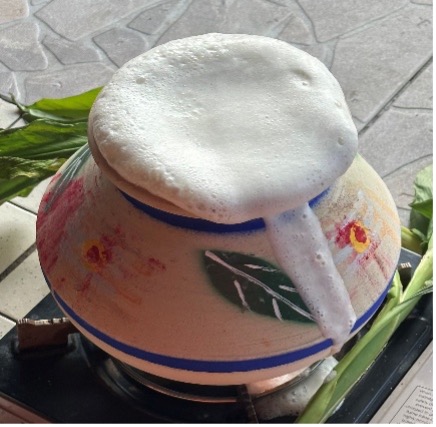
Pongal Pot. Photo Courtesy: Ravi Varmman K Kanniappan

On the 15th of January 2026, while much of the modern world was busy checking notifications, updating calendars, and worrying about quarterly outcomes, traditional Tamil households across the globe were doing something far more radical, watching milk boil. “Pongal”, the harvest festival, is one of those ancient cultural practices that stubbornly refuses to modernise. It does not arrive as an app update, cannot be streamed, and has no subscription model.

Milk is poured into a pot, heated patiently, and allowed, indeed encouraged, to overflow. This overflow is not considered inefficiency or waste, but it is the very point. It signifies abundance, wellbeing, and prosperity not merely for humans but for the entire ecosystem that made the meal possible, the sun, the rain, the soil, the cow, and the quiet, unseen labour of nature itself. Rice, lentils, jaggery, nuts, legumes, and raisins follow, and the resulting sweet dish is shared freely among family and friends, because prosperity that is not shared is considered incomplete.

This is an economy based not on accumulation but on circulation, not on profit but on participation. Something I believe is deeply unsettling to modern sensibilities.

Into this defiantly non-consumerist ritual wandered a chickpea with an extraordinarily well travelled past. This was no humble backyard legume, nor had it been picked up at the nearest market. It had sprouted in Mexico, been packed in Lebanon, purchased in Sierra Leone, and generously gifted by my wife Greeja’s friend, Saras, and her husband Pieter, a Belgian whose kindness, like the chickpea itself, clearly knows no borders. The chickpea’s journey to Malaysia, where, after crossing more continents than most humans manage in a lifetime, it finally fulfilled its destiny, being cooked into a traditional Tamil Pongal.

By then this chickpea had crossed more borders than most people ever will, navigated more currencies than a multinational executive, and yet arrived without a single stamp of self-importance. If globalization were ever to seek a spokesperson, it would do well to choose this chickpea, which achieved in silence what conferences and treaties have struggled to explain. The chickpea does not attend Davos, does not publish white papers, does not tweet about resilience or sustainability, and yet it embodies globalisation with a calm confidence that makes economists look unnecessarily stressed.

We often speak of globalisation as though it were invented sometime in the late twentieth century by economists with impressive haircuts and Power Point skills. But the chickpea, unimpressed by timelines, has been global for at least nine thousand years. Its origins lie in the “Fertile Crescent”, that much abused cradle of early civilisations covering modern day Turkey and Syria, where early cultivation was recorded between 7500 and 6800 BCE. The wild ancestor, “cicer reticulatum”, still grows in southeastern Turkey, quietly ignoring the fact that humans have spent millennia fighting over the land around it. From this region, chickpeas spread naturally to the Middle East, the Mediterranean basin, and India by around 3000 to 2000 BCE, becoming a staple across cultures, religions, and cuisines. This was globalisation without shipping containers, trade sanctions, or consultants, just humans carrying seeds because hunger is wonderfully non-ideological.

India, once it encountered the chickpea, embraced it with characteristic enthusiasm and then proceeded to dominate its production. Today, India accounts for more than 70 percent of global chickpea output, a statistic that has made the chickpea an unlikely participant in modern trade wars. Protectionist policies, tariffs, reciprocal duties, and import bans imposed by major players such as India, the United States, and Mexico have transformed this humble legume into a politically sensitive commodity. It turns out that even the simplest food becomes controversial once spreadsheets get involved.

Thiruvalluvar (an ancient philosopher), writing two thousand years ago, anticipated this uncomfortable truth with brutal clarity:

“Only those who live by agriculture truly live; all others merely follow and feed upon them.” - Kural 1033

The verse throws stylish shade at modern life, while we sip lattes under perfect air conditioning and call it “work”, farmers are out there negotiating with the sun, rain, and stubborn soil to keep humanity fed. Our sleek jobs, fancy titles, and glowing screens? Well, they are merely luxury addons. Strip away agriculture and civilisation collapses into a very well-dressed famine. Turns out, all our progress still runs on dirt, with attitude.

The chickpea’s journey to South America, especially Mexico, is a reminder that globalisation has often travelled under less noble banners. Portuguese and Spanish explorers introduced chickpeas to the New World in the sixteenth century, carrying them across oceans as reliable, non-perishable protein sources. From these initial points of contact, chickpeas spread across Central and South America, embedding themselves into local agriculture and diets. In modern times, Mexico has emerged as a significant exporter, specialising in the Kabuli variety prized for its size and quality, with major production zones in Sonora and Sinaloa. Argentina and Chile also joined the club. Thus, a crop born in ancient Anatolia, nurtured in India, and sanctified by ritual, found itself repackaged for global markets, complete with branding, logistics, and regulatory oversight. The chickpea, once again, remained silent.

Silence, however, does not mean insignificance. Homer knew this. In The Iliad (Book 13) he famously compares arrows ricocheting off Menelaus’s armour to chickpeas and dark-fleshed beans flying off a threshing floor in the wind. The metaphor works only because the audience knew exactly how dried chickpeas behave, hard, resilient, and oddly bouncy. By likening lethal weapons to pulses, Homer not only emphasises the strength of the armour but also performs a subtle act of cultural grounding. The epic world of gods and heroes is momentarily tethered to the everyday agricultural reality of farmers winnowing grain. War, Homer seems to say, may be glorious, but it is ultimately sustained by food. Chickpeas, by 800 BCE, were so deeply embedded in Greek life that their sound and movement were universally recognisable. Even epic poetry depended on legumes.

Indian tradition offers an equally revealing, if more logistical, narrative. In South Indian tale associated with the Mahabharata, an Udupi King is said to have managed catering for the massive armies at Kurukshetra. Legend holds that he could predict daily casualties by observing leftover food. In some versions, the king visits Krishna at night, who eats a handful of roasted chickpeas, the number consumed corresponding mysteriously to the thousands who would fall the next day. This allowed precise meal planning and zero waste on an industrial scale of destruction. These divine data analytics allowed the king to cook exactly the right amount of food, avoiding waste on a genocidal scale. It is perhaps the earliest example of just-in-time inventory management, achieved without software, powered entirely by chickpeas and divine omniscience.

If you have ever wondered why Udupi cuisine is famous for efficiency and planning, this story offers a clue. Here, chickpeas function not just as food but as instruments of cosmic accounting.

Interestingly, while early Vedic texts sometimes viewed certain pulses as unsuitable for sacrifice, the Mahabharata period saw chickpeas elevated into sraddha rites (funeral rituals) and daily offerings. They transitioned from questionable to sacred, a promotion many humans would envy.

Thiruvalluvar’s ethical framework accommodates this evolution effortlessly:

“Sharing food and caring for all life is the highest of virtues.”-- Kural 322

A noble idea, until chickpeas quietly steal the spotlight. Modest, beige, and absurdly cooperative, they divide endlessly without complaint and nourish everyone from monks to gym bros. While humans argue ethics in panels and podcasts, chickpeas get on with the job, feeding the masses without ego. In the moral economy of virtue, they don’t preach but they simply multiply and sustain, humbling us one hummus bowl at a time.

Across civilisations, chickpeas became the dependable fuel of endurance. Roman soldiers consumed them as part of their standard rations, boiling them into thick porridge known as “puls” when meat was scarce. Gladiators relied on pulses for strength, earning nicknames that emphasised grain and legume consumption rather than heroism. Spanish and Portuguese sailors trusted chickpeas on long sea voyages because they did not rot, sulk, or demand refrigeration. During World War II, Allied researchers turned again to pulses to address vitamin deficiencies among troops, while the modern Indian Army continues to include chickpea flour and whole chickpeas in field rations due to their high caloric density and reliability. Empires rise and fall, but soldiers keep eating chickpeas.

Modern science, arriving fashionably late as usual, now confirms what ancient armies, monks, and farmers already knew. Chickpeas are celebrated as “brain food,” dense with nutrients that support cognitive function, mood regulation, and neurological health. Nutritional psychiatry highlights their role in reducing inflammation and stabilising the gut brain axis, making them valuable in alleviating anxiety and depression. Unlike the sugar-fuelled spikes and crashes of contemporary diets, chickpeas offer slow-release energy, the kind required for sustained thought, emotional regulation, empathy, and decision making. In a world addicted to instant gratification, caffeine dependence, and burnout worn as a badge of honour, the chickpea is almost offensively patient. That patience makes it profoundly incompatible with modern lifestyles, and incompatibility, in our times, is the surest mark of subversion.

If this sounds like ancient wisdom romanticised through hindsight, it is worth noting that modern civilisation has recently spent billions of dollars rediscovering precisely the same conclusion, often during lunch breaks. Sometime in the post-Covid era, somewhere between a glass walled co-working space and an overbranded café serving ethically sourced air, a young startup founder sat staring at his laptop, attempting to optimise a problem modern life seems uniquely skilled at inventing, how to eat “mindfully” without actually having time to eat. His company was building an AI-driven wellness platform designed to “personalise nutrition using real time biometric feedback.” Investors liked it. The pitch deck had the correct fonts. The valuation was impressive for something that had not yet solved hunger, distraction, or exhaustion.

Lunch arrived in recyclable packaging engineered to survive a nuclear winter. Inside was a bowl labelled Ancient Protein Medley. It contained quinoa flown in from the Andes, kale grown in a vertical farm two kilometres away, avocado sourced from somewhere geopolitically awkward, and, almost as an afterthought, roasted chickpeas. The chickpeas were rebranded as “plant-based protein spheres,” presumably because “chickpea” did not sound sufficiently disruptive, scalable, or fundable.

As the founder ate mechanically between Slack notifications, his smartwatch vibrated with updates. Blood sugar stable. Cortisol marginally elevated. Cognitive focus acceptable. The AI recommended breathing exercises and fewer screens. The founder ignored both and continued eating. The irony was complete. A system powered by cloud computing, global capital, and predictive algorithms had concluded, after millions in funding, that roasted chickpeas were ideal for sustained energy and mental clarity.

This was not new knowledge. Roman soldiers had marched on it. Tamil farmers had lived on it. Sailors had crossed oceans with it. But now it had a dashboard, a graph, and a subscription model.

Later that evening, the same founder attended a panel discussion on sustainability. Someone in the audience asked about regenerative agriculture. The panellists responded confidently, invoking carbon credits, blockchain traceability, lab-grown proteins, and the future of food. No one mentioned legumes fixing nitrogen. No one mentioned soil. No one mentioned that the chickpeas quietly sitting in the founder’s lunch bowl had already done more for planetary health than the entire panel combined. The chickpeas, true to form, offered no comment, no keynote, and no thought leadership, only nourishment.

The chickpea’s journey eastward is no less intriguing. It reached China via the Silk Road, settling primarily in Xinjiang, where evidence of cultivation dates back around two thousand years. There, it became part of Uighur medicinal traditions, prescribed for ailments ranging from hypertension to itchy skin. During the Tang and Yuan dynasties, chickpeas gained prominence as a “cosmopolitan” food, sometimes referred to as the “Muslim bean”. Yet in central China, the chickpea struggled for a distinct identity, often conflated with the common pea even by Li Shizhen[1], the famed Ming dynasty herbalist. Not all travellers are recognised for who they are, some spend centuries being mistaken for someone else.

And yet, through all this travel, confusion, commodification, and conflict, the chickpea remained quietly regenerative. Unlike extractive crops, it forms a symbiotic relationship with Rhizobium bacteria in its roots, fixing nitrogen from the air and enriching the soil. It takes and gives simultaneously, leaving the land better than it found it. This is perhaps the most radical aspect of the chickpea’s philosophy, one that stands in stark contrast to modern economic models based on extraction and exhaustion.

Thiruvalluvar warns us gently but firmly:

“Harm done to others inevitably returns to oneself.” – Kural 319

A warning humans hear, nod at, and immediately ignore. The chickpea takes a cooler approach. It survives by being outrageously generous, throwing itself into curries, salads, and hummus without a trace of resentment. No revenge arc, no ego. Just pure edible goodwill. While we stress over karma and consequences, the chickpea lives its truth, give everything away, become indispensable, and achieve immortality in every lunch bowl.

Humanity today resembles the ancient chickpea, hard, resilient, perpetually defensive. We pride ourselves on toughness, bouncing off crises with admirable persistence, yet rarely ask what we leave behind. Climate change, trade wars, and political upheavals are the shrill winds of Homer’s winnowing floor, tossing us about. The question is not whether we survive the tossing, but whether we enrich the soil when we land. Progress, the chickpea suggests, is not about becoming larger, louder, or more profitable. It is about being regenerative, ordinary, and useful.

In an age obsessed with luxury, consumption, and curated lifestyles, the chickpea offers a quietly subversive model. It is not elite food, but it is the food of soldiers, monks, labourers, and families. It does not advertise, rebrand, or reinvent itself. It simply nourishes.

Thiruvalluvar captures this understated wisdom perfectly:

“From seeds come harvests, and from giving comes abundance.” -- Kural 1030

A line politicians quote solemnly before approving tax breaks for themselves. The chickpea, deeply unimpressed, just does the math. One seed becomes many, then redistributes itself aggressively into every cuisine on earth. No gatekeeping, no merit tests, no ‘personal responsibility’ lecture. While humans weaponise scarcity and call it policy, the chickpea runs a ruthless experiment in abundance and wins, by being cheap, shared, and impossible to cancel. The chickpea has lived this truth for millennia.

So perhaps the real lesson of globalisation does not lie in trade agreements or consumer choices but in a small legume that has travelled from ancient Turkey to modern Mexico, survived Roman marches and mythic wars, endured misnaming and trade barriers, and still ends up quietly nourishing someone’s meal.

Even now, after dashboards have glowed, algorithms have pontificated, and every opinion has been optimised into a performance, the answer remains stubbornly ancient, from Roman roads to Tamil fields. The chickpea does not care about your ideology, your portfolio, or your meticulously curated identity. It will grow, fix nitrogen, feed someone, and move on without a press release.

In a world addicted to spectacle, branding, and moral pontification, this calm, beige indifference feels almost obscene. Quiet competence and unfashionable, the chick pea, turns out to be the rarest, and most outrageously extravagant, luxury left.
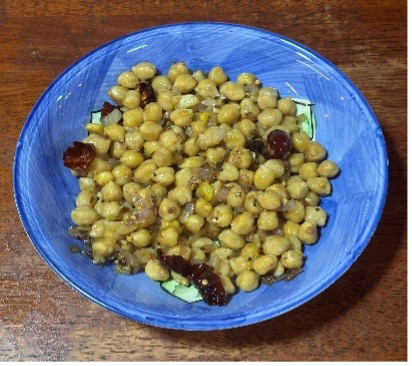
The travelled chickpea. Photo Courtesy: Ravi Varmman K Kanniappan

[1] Li Shizen(1518-1593), Ming acupuncturist, herbalist, naturalist, pharmacologist, physician.

Ravi Varmman explores leadership, culture, and self-inquiry through a philosophical lens, weaving management insight with human experience to illuminate resilience, ethical living, and reflective growth in an ever shifting world today.

PLEASE NOTE: ARTICLES CAN ONLY BE REPRODUCED IN OTHER SITES WITH DUE ACKNOWLEDGEMENT TO BORDERLESS JOURNAL

Bibliography

Pongal festival, milk boiling ritual, symbolism of abundance and ecology

Ramaswamy, N. (2004). Festivals of Tamil Nadu. New Delhi: Sterling Publishers.

Origins of chickpea domestication in the Fertile Crescent; dates (7500–6800 BCE); wild ancestor Cicer reticulatum

Zohary, D., Hopf, M., & Weiss, E. (2012). Domestication of Plants in the Old World (4th ed.). Oxford: Oxford University Press.

Spread of chickpeas to India by 3000–2000 BCE

Fuller, D. Q. (2006). Agricultural origins and frontiers in South Asia. Journal of World Prehistory, 20(1), 1–86.

India producing ~70% of global chickpeas; modern trade disputes

FAO. (2023). FAOSTAT Statistical Database: Pulses Production and Trade. Rome: Food and Agriculture Organization of the United Nations.

Thiruvalluvar quotations, dating (~2nd century BCE–2nd century CE), agrarian ethics

Pope, G. U. (1886). The Tirukkural. London: Oxford University Press.

Introduction of chickpeas to the Americas by Spanish and Portuguese explorers

Smith, B. D. (2011). General patterns of niche construction and the management of ‘wild’ plant and animal resources. Philosophical Transactions of the Royal Society B, 366(1566), 836–848.

Modern chickpea cultivation in Mexico (Sonora, Sinaloa), Kabuli variety exports

Gaur, P. M., et al. (2012). Chickpea breeding and production. Plant Breeding Reviews, 36, 1–87.

Homer’s Iliad Book 13 chickpea/threshing-floor simile

Homer. (c. 8th century BCE). The Iliad, Book XIII. Trans. E. V. Rieu. London: Penguin Classics.

Udupi King / Mahabharata legends involving chickpeas and casualty prediction

Hiltebeitel, A. (2001). Rethinking the Mahābhārata: A Reader’s Guide to the Education of the Dharma King. Chicago: University of Chicago Press.

Chickpeas in sraddha rites and post-Vedic ritual elevation

Olivelle, P. (1993). The Āśrama System: The History and Hermeneutics of a Religious Institution. Oxford: Oxford University Press.

Roman soldiers, gladiators, and chickpea-based diets (“puls”)

Garnsey, P. (1999). Food and Society in Classical Antiquity. Cambridge: Cambridge University Press.

Chickpeas in maritime rations and early modern naval diets

Braudel, F. (1981). The Structures of Everyday Life: Civilization and Capitalism, Vol. 1. New York: Harper & Row.

Use of pulses in World War II nutrition and modern military rations

Nestle, M. (2002). Food Politics: How the Food Industry Influences Nutrition and Health. Berkeley: University of California Press.

Nutritional psychiatry: chickpeas, gut–brain axis, slow-release energy

Jacka, F. N. et al. (2017). Nutritional psychiatry: The present state of the evidence. The Lancet Psychiatry, 4(3), 271–282.

Modern “wellness tech,” quantified nutrition, and startup food culture

Lupton, D. (2016). The Quantified Self. Cambridge: Polity Press.

Nitrogen fixation via Rhizobium in chickpeas; regenerative agriculture

Peoples, M. B., et al. (2009). The contributions of legumes to reducing the environmental risk of agricultural production. Agriculture, Ecosystems & Environment, 133(3–4), 223–234.

Chickpeas in China via Silk Road; Xinjiang cultivation; “Muslim bean”

Hansen, V. (2012). The Silk Road: A New History. Oxford: Oxford University Press.

Li Shizhen and historical misclassification of chickpeas

Unschuld, P. U. (1986). Medicine in China: A History of Ideas. Berkeley: University of California Press.

Click here to access the Borderless anthology, Monalisa No Longer Smiles

Click here to access Monalisa No Longer Smiles on Amazon International
Categories
Excerpt

The Cave of Echoes

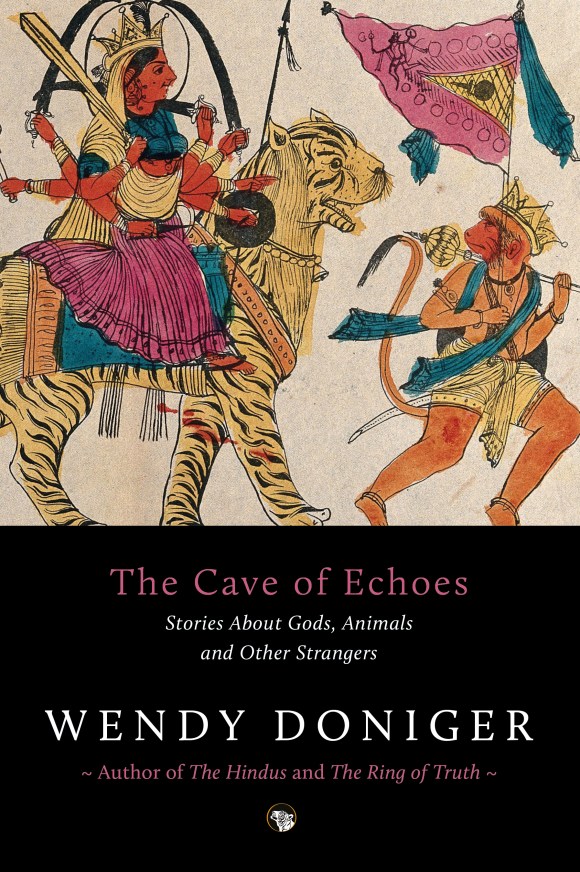
Title: The Cave of Echoes: Stories about Gods, Animals and Other Strangers

Author: Wendy Doniger

Publisher: Speaking Tiger Books

It is impossible to define a myth, but it is cowardly not to try. For me, the best way to not-define a myth is to look at it in action, which is what have tried to do throughout this book: to see what myth does, rather than what myth is. It seems to me that by the time you’ve defined your terms in an argument, you’ve lost interest in the problem. But at this point, as we begin to reexamine our own assumptions about myths, it might be useful to list some things that I think myths are not: myths are not lies, or false statements to be contrasted with truth or reality. 1bis usage is, perhaps, the most common meaning of myth in casual parlance today. Indeed, other cultures, too, call myths lies. The Malagasy end the recitation of any myth with a traditional tag-line: “It is not I that lie; this lie comes from olden times.” In our culture, in particular, myths are often given the shadowy status of what has been called an “inoperative truth,” when in fact they might better be characterized as operative fictions. Picasso called art a lie that tells the truth, and the same might be said of myths.

What a Myth Is and Is Not

The desecration of the word “myth” to mean “lie” began with Plato, who contrasted the fabricated myth with the true history. It is, I think, an irony that our word for myth in most European languages, together with our basic attitude to myths, comes from ancient Greece, one of the very few cultures in the world from which we have almost no example of real, live myths, of myths as a part of a vital tradition; by the time most of the Greek myths reach us, they have been so thoroughly reworked in artistic and philosophical forms that they are mythological zombies, the walking dead. Plato was, as Eliade pointed out long ago, the first great demythologizer; he “deconstructed” the myths of Homer and Hesiod. It was Plato who challenged, successfully, the status of the poetic myth-carvers and myth collectors and banished them from his Republic. We can see in Plato a spectrum of mythmakers: at one end are anonymous wet nurses, who transmit the old myths to helpless infants; at the other end are the poets, like Hesiod and Homer, the “mimetic clan” who cannot imitate the true forms since no one has ever seen the forms and the poets can only imitate what they have seen.

Plato warns us that we must not tell these poetic myths about the gods even if they are true; in this, I think, he affirms the power of myths to influence human life; for he fears that a bad myth will make a bad life. (We shall see, in chapter 6, other Greek arguments against the evil effects of the myths in Greek tragedies.) Moreover, it is hard to escape from this image of the bad life; the stories that we learn in childhood have a marvelous hold on our memory.

Yet it is necessary for people to believe in good myths, even if they are false; this is the argument that Plato advances for the “noble lie” (gennaion pseudos) in the Republic, the statement that distorts an outside surface in order to convey an inner truth. Some of these good myths come from the old days; Plato distrusts this sort of “mythologizing,” the stories about centaurs and Chimaeras and Pegasus and so forth, but he distrusts even more the people who analyze them away as metaphors for the North Wind and so forth ( anticipating Friedrich Max Miller by some twenty-four hundred years); such analyses are altogether too clever and waste an awful lot of time. 13 People do have to have myths, Plato concedes; if they don’t believe in the old ones, we must construct new ones for them, logically, and this is very difficult to do, for we must convince them, in the cold light of reason, of the truth of the myths in order to make them accept the laws that we wish to give them:

“How can one assert in cold blood that the gods exist? Because we must hate and find unbearable those who, today as in the past, due to having refused to allow themselves to be convinced by the myths related to them since earliest childhood by a mother or a nurse giving them the breast, have obliged us, and still do so, to develop the arguments which take up our time now.”

For this reason, despite his opposition to myths and mythmakers, Plato himself was also a great “remythologizer” who invented the drama of the philosophical soul and made it a new kind of myth, a reasonable, logical, “likely” myth, to challenge the old myths of centaurs and so forth. In this way, when it came to myth, Plato managed to hunt with the hounds and to run with the hare. As Marcel Detienne has put it: “Plato’s work marks the time when philosophy, while censuring tales of the ancients as scandalous fictions, sets about telling its own myths in a discourse on the soul, on the origin of the world, and on life in the hereafter.” It was Plato who transformed ancient mythic themes to make the myth of Er, the myth of Eros, and the myth of the creation of the universe. Though Plato’s “likely or resembling story” can be a myth in the sense of a narrative ( and in that sense is interchangeable with logos meaning “narrative”), it is not a myth in the negative sense of a bad copy, like the myths of Homer ( which are negatively contrasted with logos meaning “reason”).

Yet Plato does apply the word “myth” ( mutbos) to the story of the world that he creates in the Pbaedo, a myth that he says is “worth hearing,” though it is merely another “likely story”:

“Now, to assert vehemently that things like this are really so as I’ve narrated them, doesn’t befit any man of sense. But that this is so, or something pretty much like it, about our souls and their dwelling place, since it is clear that the soul is immortal-it is quite fitting that we say that. “

The likely story is not the truth; but it resembles the truth, and is as close as we can ever get to the truth about certain subjects. Plato confesses that he resorts to telling myths, despite the fact that such stories are not literally true, because there is no other way of using words to produce even the effect of truth.

Plato regards the myth that he constructs in the Pbaedo as an essential vehicle for salvation, a kind of religious or magic charm:

“It is well worth running the risk that these things are so for anybody who thinks them so. (For it’s a fair risk.) And he must recite these things over and over to himself like a magic charm, even as I at this moment and for a long time past have been drawing out this myth.”

Plato ends the Republic with his own myth, the myth of Er, which he certainly does not regard as a lie: “And so the myth was saved and was not lost, and it will save us, if we believe it, and we shall safely cross the river of Lethe and we will not sully the soul. “

For Plato admits that a myth says something that cannot be said in any other way, that cannot be translated into a logical or even a metaphysical statement. A myth says something that can only be said in a story.

Which brings me to what I think a myth is. Let me begin with a rather cumbersome and rather functional definition: A myth is a story that is sacred to and shared by a group of people who find their most important meanings in it; it is a story believed to have been composed in the past about an event in the past, or, more rarely, in the future, an event that continues to have meaning in the present because it is remembered; it is a story that is part of a larger group of stories.

The assertion that a myth is a story is basic to my argument; for I think that the myth is persuasive to us because the action itself is persuasive. Even when what happens in the myth is not physically possible in this world ( as when, for instance, a man turns into a fish), when the event is described in detail, as something that happened, we can see it happening, and so it enlarges our sense of what might be possible. Only a story can do this.

About the Book

The Cave of Echoes celebrates the universal art of storytelling, and the rich diversity of the stories—especially myths—that people live by. Drawing on Hindu and Greek mythology, Biblical parables, and the modern mythologies of Woody Allen and soap operas, Wendy Doniger—renowned scholar of the history of religions—encourages us to feel anew the force of myth and tradition in our lives, and in the lives of other cultures. She shows how the stories of mythology—whether of gods, sages, demons or humans—enable cultures to define themselves. She raises critical questions about how myths are interpreted and adapted, and the ways in which different cultures make use of central texts and traditions. Drawing connections across time and place, she proposes that myths are not static beliefs but evolving narratives, and that by entering into other cultures’ stories, we may unexpectedly rediscover our own.

Written with scholarly depth and characteristic wit, this is a landmark work in the comparative study of mythology. It’s essential reading for anyone interested in how we understand others—and ourselves—through the stories we tell.

About the Author

Wendy Doniger is the author of several acclaimed and bestselling works, among them, The Hindus: An Alternative History; Hindu Myths; The Ring of Truth; Women, Androgynes and Other Mythical Beasts; Dreams, Illusion and Other Realities; Winged Stallions and Wicked Mares; An American Girl in India; and translations of the Rig Veda and the Kamasutra (with Sudhir Kakar). She is Mircea Eliade Distinguished Service Professor Emerita of the History of Religions at theUniversity of Chicago, and has also taught at the School of Oriental and African Studies, University of London, and the University of California, Berkeley.

PLEASE NOTE: ARTICLES CAN ONLY BE REPRODUCED IN OTHER SITES WITH DUE ACKNOWLEDGEMENT TO BORDERLESS JOURNAL

Categories
Essay

Uehara by Kamaleswar Barua

A story based on the end of a world war II soldier by Kamaleswar Barua in Assamese, translated by Bikash K. Bhattacharya

Ei Ran Ei Jivan, a collection of wartime narratives penned and published in 1968 by the Assamese writer, Kamaleswar Barua who served as a military engineer in the British Indian Army during the Second World War. Photo: Bikash K. Bhattacharya

Introduction

This is a translation of the narrative “Uehara” from Kamaleswar Barua’s Ei Ran Ei Jivan [1], a collection of narratives published in Assamese in 1968 based on “true events and characters” the author had encountered while serving as a military engineer in the British Indian Army in the Second World War.

Kamaleswar Barua is a relatively lesser-known figure in Assamese literature. Having earned a bachelor’s degree in Civil Engineering from the University of Calcutta in 1932, Barua joined the British Indian Army as an engineer serving in the Naga hills, Manipur and Burma. Attached to engineering field companies, he saw combat in some of the fiercest battles fought in the region in the course of the Second World War. He rose to the rank of major. After the war, Barua earned a master’s degree in City Planning from the University of California, Berkley, in 1951.

Barua was an active member of Assamese literary clubs and reading groups like the Mukul Sangha, a club formed in January 1945 in Shillong, the then capital of Assam. It was in the weekly meetings of Mukul Sangha that Barua shared his personal accounts of the war before turning them into written narratives. Uehara’s story was also first told to a small audience of Assamese litterateurs who encouraged Barua to publish it [2]. However, the project took a backseat for a long time and Barua finally published an anthology of nine narratives, “based on characters he’d encountered during the war”, in 1968. Titled Ei Ran Ei Jivan—which translates as “This War, This Life” or as “Now War, Now Life”—the anthology’s fourth narrative is “Uehara”.

What makes the anthology interesting is the novelty of the genre. The author terms it “a collection of kahini (narratives) about a few wartime characters.” The standard word for short story in Assamese is galpa, while the word kahini doesn’t refer to a specific literary genre. A kahini could be fictional, but it could also be a true historical account. The generic instability notwithstanding, Barua declares in the preface to the anthology, “The names of the characters have been fictionalised unless they’re historically well-known people. I’ve strived to remain true to the characters as best as I could as I’d known and witnessed them.” The preface makes it amply clear that the kahinis Barua tells us are a specific type of wartime memoir narratives rather than autobiographical short stories.

While Barua’s “Uehara” remains a little-known, obscure work, the most prominent literary artefact in Assamese depicting the Japanese in the Second World War in northeast India is Birendra Kumar Bhattacharyya’s short story ‘Agyaat Japani Xainik’ (An Unknown Japanese Soldier) [3]. However, “Uehara” is probably the only work in Assamese that depicts an actual historical encounter between an Assamese native serving the Raj and an Imperial Japanese Army soldier. Barua’s narrative not only portrays an empathetic picture of the mortally wounded Japanese soldier, which is rare in the region’s Second World War literature, but also evokes Pan-Asianism [4].

The original text, by Barua, didn’t contain any notes in it. The endnotes, referenced to academic works for driving home the broader historical context, or for the purposes of clarification, have been added by the translator.

Translation

Uehara

July, 1944. It wouldn’t be an exaggeration to say that Imphal, the capital of the Kingdom of Manipur, was completely encircled by the Imperial Japanese Army. The only way out of Imphal was via air [5]. The city had been maintaining contact with the outside world through Koirengei airport. The plains of Imphal were surrounded on all sides by circular formations of Japanese troops. The city of Imphal and the Allied troops and war equipment it hosted, had been under siege for three months. During this period, there had been several fights between Allied soldiers and Japanese troops just outside the city centre of Imphal. The Japanese suffered huge losses. Many Japanese soldiers were captured and kept as prisoners of war (POW) by the Allied forces. Those who died were buried in temporary graves. The wounded Japanese soldiers were treated in Allied military hospitals and despatched to POW camps in Imphal. Starvation and sleeplessness had taken a toll on their war-weary, scarred bodies. The medical treatment they received was far from satisfactory. Shortage of doctors, nurses as well as medical supplies made it difficult to meet the requirements of the wounded Allied soldiers [6].In such a dire situation, it was only natural that the Allied forces fell short when it came to providing medical care to the wounded enemy soldiers, the Japanese POWs. As a result, the tally of dead soldiers increased by the day.

I had been undergoing treatment at a hospital in the besieged city of Imphal. I was gradually recovering from an intermediate risk surgery. Wounded soldiers from the frontline were arriving at the hospital all the time. By then, I’d been well acquainted with the horrors of war. The scenes were indescribable. It appeared as if lives and limbs of men had little value. I’d become accustomed to the sight of countless wounded soldiers, without limbs or a portion of the face, being brought to the hospital on stretchers. This war was necessary in order to establish peace and freedom, especially individual freedom, they said!

The ward next to the one I was staying at was reserved for the wounded enemy soldiers. Armed sentries guarded the ward all the time. This was where I met Uehara, an Imperial Japanese Army officer who’d sustained severe combat wounds in his chest. The angel of death appeared to be calling him. Uehara expressed his desire to share his last words with a fellow Asian.

Following the order of the commanding officer of the hospital, a British interpreter with knowledge of the Japanese language accompanied me to Uehara’s bed. I sat on a chair close to his bed and the interpreter sat beside me. As Uehara started to speak in Japanese, the interpreter translated his words into English for me.

Uehara was from a small village located on the outskirts of the city of Nagasaki. He was born to a family of farmers. He studied Japanese language, mathematics, geography and Japanese history in the village school. He started assisting his father in farm work since he was sixteen. They had a small plot of land. They cultivated paddy twice a year, and on a separate plot of land, they planted soy bean and vegetables. They had a cow, a few pigs and a flock of roosters and hens. And they had a small but neat wooden house where the four members of the family—Uehara, his parents and his sister—lived. They also had a small garden consisting of a few cherry trees and chrysanthemums. The blossoming of the cherry flowers in the month of May would bring a joy-filled atmosphere to the family. Although their garden was small, they had different colours of chrysanthemums that decorated the courtyard. Uehara’s sister would take care of the garden. The Ueharas would not earn much but they had a stable and happy life sustained by whatever income they would gain from their farm.

But destiny would not tolerate the peaceful life of the Ueharas. Things would take a sharp turn, and dark clouds of misfortune hung in the heavens.

December, 1941. Japan bombed Pearl Harbour, and the President of the United States of America declared war on the Empire of Japan. The young men of Japan either volunteered for, or drafted to, the Imperial Japanese forces. Uehara was one of them. Having undergone training in Tokyo, he was recruited to the Imperial Guards Division of the Japanese Army where he rose to the rank of officer. While serving in Tokyo, he met Yuzuki, a military nurse.

Yuzuki had a round face, a bright pair of eyes and beautiful black hair tied to the back of her head. Uehara was enamoured of her spritely and empathetic behaviour. They fell in love and got married. As the newlywed couple was nurturing dreams about their future, Uehara’s regiment was ordered to Burma [7]. With teary eyes, Uehara and Yuzuki took leave from each other at the Tokyo airport.

Uehara was hopeful. He had unwavering faith in the Mikado [8] and that Japan would emerge victorious in the war. And once the war was over, Uehara would settle down with Yuzuki somewhere in a quiet corner of Nagasaki or Tokyo in a small house with a courtyard and a garden of cherry trees that would offer a nice view of daybreak on the seashore. There they would raise a small family. This youthful determination kept Uehara and Yuzuki going even in separation.

In the jungles of Burma, Uehara’s regiment kept advancing—capturing town after town, Hakha, Falam, Tedim—on their way to Imphal in Manipur. Along with other Japanese troops, his regiment also took part in the siege of Imphal. One day, during the Battle of Imphal, artillery shells hit his chest, severely wounding him. Once he regained consciousness, Uehara found himself in the Allied military hospital. The days that followed were very painful for him. The doctors, despite their efforts, could not stop the bleeding from the wound. Although war essentially entails killing enemy troops, the rules of war also dictate that one is responsible for providing medical care to enemy soldiers wounded in combat. That said, many wounded soldiers are left in the battlefield to die.

When Uehara was narrating his story through the interpreter, I could not understand his language. But I could feel a sense of calm in his voice. I felt that he had a gentle heart that bore no hatred towards anyone. I tried to figure out what could have been the source of his power: Was it in his Japanese culture? Or, was it in his love for Yuzuki?

Uehara politely asked me to take custody of a few articles he’d with him: a blood-stained silk handkerchief in which both Uehara and Yuzuki’s names were inscribed in Japanese characters, a gift from Yuzuki, he said; an incomplete letter to Yuzuki; a flag of Japan with a blazing morning sun on it [9]; and a sword. He requested me as a fellow Asian to keep these items so that I could return them to his wife, Yuzuki if someday I got such an opportunity. He then handed me a note containing Yuzuki’s address in Japan. I took the items from Uehara and came back to my ward with a heavy heart tormented by sombre thoughts. Alas, this is human life! This is how all the dreams and desires come to an end. The next day, I was told, Uehara passed away.

After the end of the war, my peripatetic life once took me to Tokyo. Needless to mention that I took along with me the items Uehara had entrusted in my custody. With the help of the Indian embassy in Tokyo, I informed Yuzuki about my visit and one afternoon I knocked at her door. Yuzuki and her mother greeted me into their small wooden house. The house consisted of only one large room. There were two floor looms on one side of the room while the other side had a raised wooden sitting arrangement. On the wall was a scroll inscribed with Japanese characters. A framed photo of Uehara in military uniform was placed in the middle of the scroll.

The two women slept on the wooden floor. They cooked in the small kitchen in an extended corner of the room. Yuzuki and her mother received me very warmly. Following the Japanese custom, I’d taken off my shoes before entering the house. It was no exaggeration to say that at that time Japan was under the occupation of the United States of America. Items manufactured in Japan at that time were labelled with the phrase ‘made in Occupied Japan’. The Japanese people had learned to speak English. Yuzuki too could speak English. So I didn’t face any difficulty in communicating with her. The two women were happy to receive me. I gave Yuzuki the items Uehara had left with me. She held each of the items close to her bosom and then placed carefully on a cloth spread on a wooden table. Her face radiated with satisfaction. I saw on her face a sense of determination and self-conviction rather than signs of past trauma. The two women then brought tea and bowls of rice and boiled fish. We had dinner together. I felt like an emissary bringing greetings and news from Uehara. I spent several hours in their company. I took leave from them at about nine in the evening. On the way, I noticed the bright and tender moon in the sky. The cherry flowers were shining under the pale moonlight and I could see ripples on the waters of a nearby lake. The ripening apples on the apple trees that I passed by looked astonishingly fresh. The earth is so beautiful! The people are so good!

Translator’s Notes

[1] Kamaleswar Barua, Ei Ran Ei Jivan (Guwahati: Kamaleswar Barua, 1968), p. 23.

[2] Preface to Ei Ran Ei Jivan.

[3] The short story first appeared in the seventh volume of the Assamese literary magazine Jayanti in 1943-44.

[4] Pan-Asianism is an idea, movement, and ideology based on an assumed cultural and ethnic commonality of Asians. It assumes the existence of common political and economic interests and of a shared destiny which necessitate a union of Asian peoples or countries to realize common aims. For more on Pan-Asianism see Sven Saaler and Christopher W. A. Szpilman (Eds.), Pan-Asianism: A Documentary History, 1850-1920, Volume 1 (Maryland: Rowman & Littlefield Publishers, 2011).

[5] Although the author here states that Imphal remained cut off by the Imperial Japanese Army till July, 1944, the British Indian forces succeeded in opening the Imphal-Kohima road on 22 June, 1944, thus ending the three-month long siege of Imphal. See Raghu Karnad, The Farthest Field: An Indian Story of the Second World War (New Delhi: Fourth Estate, HarperCollins, 2015), p.209.

[6] General Sir George J. Giffard’s despatch submitted to the British Secretary of State for War on operations in Burma and Northeast India, 16 November 1943 to 22 June, 1944, mentioned the “decided shortage of medical officers, and a serious shortage of nurses and nursing personnel, though there has been no general shortage of hospital accommodation.” See John Grehan and Martin Mace, The Battle for Burma 1943-1954: From Kohima & Imphal through to Victory, (South Yorkshire: Pen & Sword, 2015), p.115.

[7] Imperial Guards Division of the Japanese Army didn’t take part in the siege of Imphal and they primarily fought in Malaya, Singapore and China. However, it was not impossible that certain officers from Imperial Guards Division were deployed to the Japanese Fifteenth Army that laid siege in Imphal. In fact, during the invasion of Burma, the Fifteenth Army was commanded by General Shojiro Iida, who had previously commanded the Imperial Guards Division in the China Theatre of the war. See Peter S. Crosthwaite A Bowl of Rice Too Far: The Burma Campaign of the Japanese Fifteenth Army (Fort Leavenworth, Kansas: School of Advanced Military Studies, United States Army Command and General Staff College monograph, 2016), p. 27.

[8] Mikado (御門) is a term commonly used in English and other foreign language writings to refer to the Emperor of Japan. However, the term originally meant not only the Sovereign, but also his palace, the court and even the State, and therefore is misleading when applied only for the Emperor. The native Japanese instead use the term Tennō (天皇) for their emperor. See Kanʼichi Asakawa, The Early Institutional Life of Japan: A Study in the Reform of 645 A.D. (Tokyo: Shueisha, 1903).

[9] Perhaps it was a yosegaki hinomaru, a “good luck” flag gifted to Japanese servicemen deployed into battle. For more on yosegaki hinomaru see Michael A. Bortner, Imperial Japanese Good Luck Flags and One-Thousand Stitch Belts (Schiffer Publishing Ltd., 2008).

.

Bikash K. Bhattacharya is a graduate student of anthropology at the University of Texas at Austin from fall 2023. He is a bilingual author writing in English and Assamese. His works have appeared in Journal of Global Indigeneity, The Indian Express and Border Criminologies among others.

PLEASE NOTE: ARTICLES CAN ONLY BE REPRODUCED IN OTHER SITES WITH DUE ACKNOWLEDGEMENT TO BORDERLESS JOURNAL

Click here to access the Borderless anthology, Monalisa No Longer Smiles