Categories
Poets, Poetry & Rhys Hughes

Infinite Tiffin

Because Indian food is the best in the world, as everyone knows, a scientist who worked for an educational institute on the outskirts of Bangalore once tried to devise a method of ensuring there was more of it. The more the better, was his motto. His attempts to construct a machine that would multiply chapatis, vadas, dosas, idlis and bowls of curry failed, for it turned out to be impossible to create new matter from nothing — thanks to the physical laws of the universe. But this scientist wasn’t a man to be so easily discouraged. Where there’s a will there’s a way, was his other motto. He had two mottos, just as he had two arms, two legs, two eyes and a pair of spectacles on his nose.

He thought of a way he could get around the particular law of physics that had sabotaged his first plan. Instead of multiplying the food in order to increase the amount available, why not shrink the eaters instead? A man or woman the size of a thumb would be confronted with chapatis that were like islands, vadas like boulders, bowls of curry like the craters of active volcanoes. Yes, that was the best solution. He got to work on it right away and he even stayed late in his makeshift laboratory at the institute and ignored all phone calls from his parents, who wanted to know when he was going to marry a nice girl, or failing that, any girl at all. He was wedded to his experiments.

At last, he chanced on a viable method of shrinking people to a specific size. He celebrated by going home and sleeping for three days. When he awoke, a wide smile on his face, he knew that finding volunteers would be fairly easy. He placed an advertisement in a local newspaper, and it wasn’t long before people began contacting him. He would pay them a small honorarium for taking part in the trial run and they would be allowed to eat as much food as they wanted. So many applicants contacted him that he was overwhelmed, and he had to declare that the offer was over. No more volunteers were required. He had two suitable candidates and wanted to use them immediately.

Pawan Kumar and Shruti Patil were both at loose ends, like pieces of string that knew knot what they had let themselves in for. That’s a pun, but neither one of them cared for wordplay. Pawan was an auto driver and Shruti worked as a maid in a gated community. Neither were gluttons but it must be admitted that they hadn’t had a notable feast for a long time. They jumped at the opportunity that the scientist offered. And in case you are wondering why this scientist has remained nameless so far, it’s because after what happened he preferred to stay anonymous for all time, and we must respect that.

Pawan had found a copy of the newspaper left by a passenger on the back seat of his auto, and Shruti had found one stuffed into the bin that she took out of the apartment she was cleaning. Both had paused for less than one minute in order to read the advertisement. This was a happy chance, if chance can ever be said to be truly happy and isn’t faking it, and then and there they had decided to plunge headlong into this new adventure. They were perfect volunteers, in other words, without a twinge of anxiety between them.

The scientist said, “Are you sure?”

They both nodded in agreement, bemused that he should seem more nervous than they were. All they were risking was their existence, but he was risking his entire career, and success in this unfortunate world is often held to be more important than life itself. He continued, “There might be complications, but I don’t think it is likely. I just want you to be aware.”

They were aware, fully so, and he ought to worry less.

“So be it,” he said dramatically.

It’s still a trade secret as to how he shrank them from ordinary sized people to miniature versions of themselves, so I am unable to describe the machine he used and the green rays it beamed on them from a series of crystal lenses all of which were carved into different shapes that were offset polyhedra, and even the copper coils and capacitors and diodes as big as cucumbers must be passed over in discreet silence, nor can I say how the whole contraption was powered by an array of solar cells on the institute’s roof.

Pawan and Shruti found themselves diminishing rapidly but that’s not how it seemed from their perspective. It appeared to them that the outside world was expanding, rushing to inflate itself, and the effect was so startling and alarming that they clung to each other for comfort, despite the fact they hardly knew each other, and their parents didn’t know each other either. This embrace also helped them to keep their balance as they rushed down the scale until they were almost exactly the size of the scientist’s thumbs.

The scientist spoke and his voice was so deafening that it boomed like the thunderclaps that sometimes echo from the crowded buildings of Bangalore and rumble down the streets before fading. They understood none of his words and it was a minute before they could gather their wits to act on their own initiative. He had simply said, “Please begin eating.”

He had picked them up and was lowering them on a long table that groaned with the amount of food it held. He was careful not to squeeze them too tightly. Then he released them, and they wandered in utter amazement among the plates, bowls, dishes and banana leaves, all heaped with delicious foodstuffs. The idea that they should devour this landscape seemed as absurd to them as any resident of Mysore supposing he can munch his way through the Amba Vilas Palace. It was too overwhelming, far too miraculous.

The scientist now clapped his hands impatiently. “Come, come, tuck in, I don’t have all day. Let’s see what happens!”

But his voice was still too low in pitch for their tiny ears to hear anything more than an incomprehensible booming. That was of no importance because the mission that had been assigned to them was plain. They had to eat as much as they liked in the time available to them.

It never occurred to Pawan or Shruti to ask whether the miniaturisation was permanent, and in fact even the scientist didn’t know if the effects would wear off naturally, or if he might find it necessary to try reversing the polarity of his machine in the hope it would restore them to their former size. But they had full faith in his competence and began nibbling at tasty objects that were in their vicinity. They were only a little cautious.

Soon they grew confident, then became joyous. They bounded between dishes and plates, climbed mounds of sweet and savoury foods, waded through curries, cavorted among the vegetables.

In the meantime, a reporter from the newspaper was on his way to the institute on the outskirts of Bangalore to find out why this scientist needed the volunteers he had asked for. The reporter smelled a story in the making. When he entered the building, after showing his press credentials, and approached the laboratory, he smelled something beyond a story. It was a banquet! He rapped on the door with his knuckles and cried: “Good afternoon, sir.”

To which the scientist replied, “Go away! You are disturbing the future of the human race. The door is locked.”

“I merely wish to interview your volunteers.”

“They are far too small to answer your questions. You must depart now. I will have you ejected from the premises if you refuse to leave of your own free will. The volunteers can’t understand your words, no matter what language you speak. They are cavorting on the table.”

“How so? You mean that they are monkeys?”

The scientist cursed at this.

The reporter struggled to see anything coherent through the frosted glass of the door. All he could make out was the shape of the banqueting table, which at this distance was like an operating table, and parallel rows of foodstuffs, which to him looked like an array of gadgets. The scientist stood with a spoon ready to serve rice onto plates and to the reporter it seemed he was clutching a surgical instrument that could probe brains.

“Is he brainwashing monkeys? Turning them into robots or assassins! I will write an article about this scandal.”

And he dashed out of the institute building as fast as he could run. During this rumpus, Pawan and Shruti had gained even more confidence. They started to eat with gusto and passed from dish to dish like explorers among the ruins of an ancient civilisation, taking morsels from every alluring display. Most of this food was from Karnataka but not all.

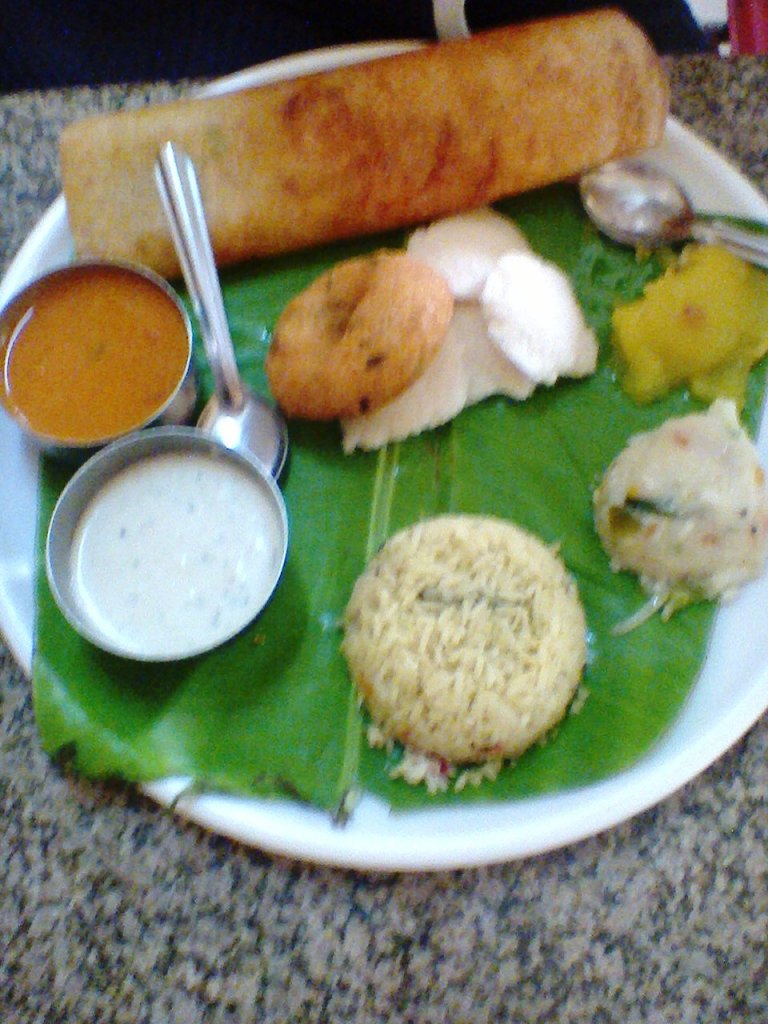
They chewed and swallowed bisi bele bhath, maddur vada, Dharwad peda, akki roti, saagu, upma, ladoos, three variants of idli, namely thatte idli, rava idli and Muday idli, churumuri and many other typical foods. They were soon full, but they continued eating, more on aesthetic grounds than from physical need. It was like a chain reaction. They would keep going until something exploded and that something would be their bellies.

But now something strange happened, and the simple adventure became a much more complex and tricky exploit. Pawan found a paper dosa, a very long and crispy example, and it had been rolled into a tunnel and he peered into the mouth of the tunnel and he was baffled.

“The landscape on the other side of the tunnel looks different,” he said to Shruti with a frown. “Come and see.”

She did so and she was no less astonished.

“There’s a garden there.”

“Yes, there is, and it makes no sense.”

A dosa with a tunnel. Courtesy: Creative Commons

They exchanged meaningful glances, but the exact meaning was unclear to both of them. Nonetheless they tingled with anticipation and Pawan gave into temptation and suggested they walk together through the dosa tunnel in order to see what the far side might actually be like.

Have you ever walked through a dosa yourself? It is surely an odd feeling. They stumbled on the batter, which yielded too readily to their feet, cracking a piece off here and there, but soon enough they emerged from the exit. And what they saw was remarkable. They were no longer on a table in a laboratory in an institute on the outskirts of Bangalore.

Pawan and Shruti were unworldly people and had never heard of the myth of the Garden of Eden, but that’s what they found on the other side of the magic dosa. There are some special points in our world that are portals to other worlds and if you step through them, you will end up in that new dimension. They saw that the garden was full of trees, but the trees had gulab jamuns hanging from the branches instead of fruits. Gulab jamun trees! Was that even possible? Clearly, yes it was, here in this incredible place.
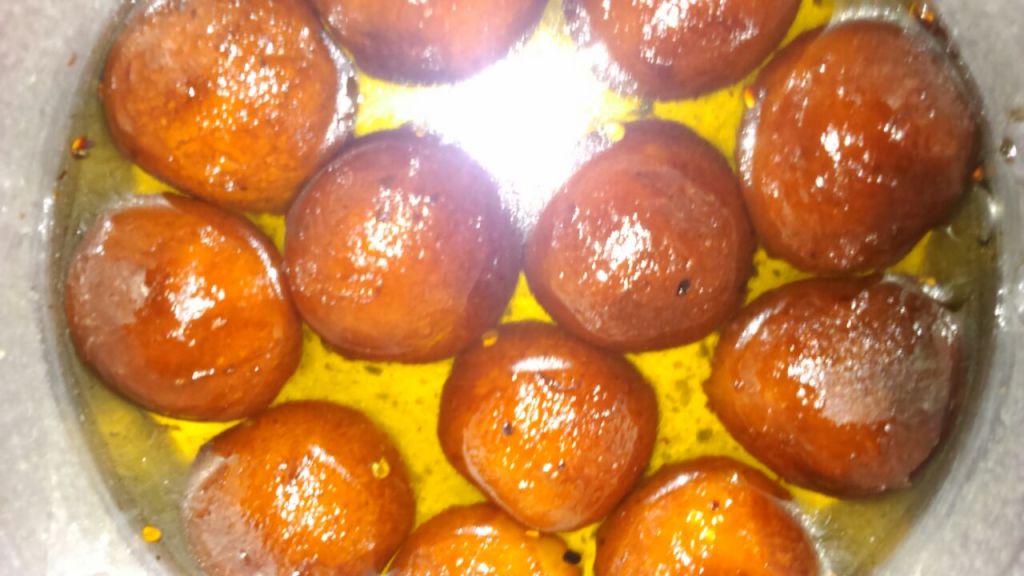
Gulab Jamuns. Courtesy: Creative Commons

As they strolled deeper into the garden, enchanted by the sights, they took slightly diverging paths and ended up alone. Shruti stopped by a tree and despite the fact she was full, she reached up to pluck a gulab jamun that glistened most invitingly just above her head. And that’s when the snake appeared. It slithered down from the top of the tree and said:

“You are allowed to eat the sweets from any tree in the garden with the one exception of this tree, which is the tree of knowledge. But I think you should be a rebel and eat it anyway. Why not?”

The snake had the voice and face of the scientist.

Shruti pouted at him.

“Because that would be greedy,” she said.

“Don’t be so timid!”

“Knowledge is overrated. You have plenty of knowledge and what has it done for you? Turned you into a snake.”

“Don’t say that. I am an intellectual benefactor.”

“You eat it then.”

And she held out the gulab jamun for him.

He hissed and swayed in annoyance, his forked tongue flicking, but at that very moment Pawan came over to see what the fuss was about, and he shook his fist at the snake and warned him: “I am an auto driver. I often have passengers like you. I will throw you out of the garden if you don’t behave.”

The snake continued hissing angrily but it slid away and they still don’t know where it went because they have never seen it again. Meanwhile, the scientist mysteriously disappeared from the laboratory and the only theory that explained his vanishing was that he had turned the rays of his own machine on himself and shrunk down to a dot and then to an atom.

But why would he do that? Nothing made sense any longer. Pawan and his wife, Shruti, still live in the garden beyond the dosa, and because all the food in the laboratory has been taken away, there is no way for them to return to the real world. They don’t care about that. They are satisfied where they are. They keep the gulab jamun of knowledge safe and maybe one day they will take bites from it. But they are in no rush to do so.

The reporter wrote his story about monkey robots and assassins, but it was never published because his editor thought he had gone mad. He was told to take a week off work and go on holiday. He went but never returned. Searching for him proved futile but rumours persisted of a monkey on the coast who liked to read the newspaper as if he understood the words. Probably some sort of coincidence. The world is stuffed full of them.

.

Rhys Hughes has lived in many countries. He graduated as an engineer but currently works as a tutor of mathematics. Since his first book was published in 1995 he has had fifty other books published and his work has been translated into ten languages.

.

PLEASE NOTE: ARTICLES CAN ONLY BE REPRODUCED IN OTHER SITES WITH DUE ACKNOWLEDGEMENT TO BORDERLESS JOURNAL

Categories
Poetry

Entwined Places

By S Srinivasan

Artwork by Gita Viswanath
ENTWINED PLACES

Standing on the Juhu beach,
I heard, more than a decade ago, 
The winds from the Marina, 
In a smattering of Marathi and Tamil,
Accompanying birdsongs.

Blame that on a bout of homesickness
But what about last year, when

The Sealdah station, its turf
Pounded by the waves of human feet,
Seemed to me to reverberate 
With the weighty steps of the rush hour, 
Also felt in Mylapore and Nariman Point?

Perhaps, the crowds stirred me then
But that cannot be all, for

Often on cool Hyderabadi afternoons,
I have worn, in silence, the unease
Of Bangalore's woolen evenings;
And sensed in Delhi's nippy nights
The cold grip of other Indian winters...

Extremes sometimes addle the brain
And lull the heart, but…

Even when I take a leisurely stroll
On a summer dusk, around the lake
That girdles my neck of the woods,
I am greeted by the lush sights, of
The long winding ways yonder...

To Darjeeling and Kodaikkanal,
To Yercaud and Dehradun,
To Kashmir and Kanyakumari,
And to all that lies beyond.      

Srinivas S teaches English at the Rishi Valley School, India. He spends his free time taking long walks, watching cricket and writing poetry in short-form (mostly haiku).

.

PLEASE NOTE: ARTICLES CAN ONLY BE REPRODUCED IN OTHER SITES WITH DUE ACKNOWLEDGEMENT TO BORDERLESS JOURNAL
Categories
Poets, Poetry & Rhys Hughes

Tall or Short Tales

Are these stories or prose poems or the unique ravings of Rhys Hughes?

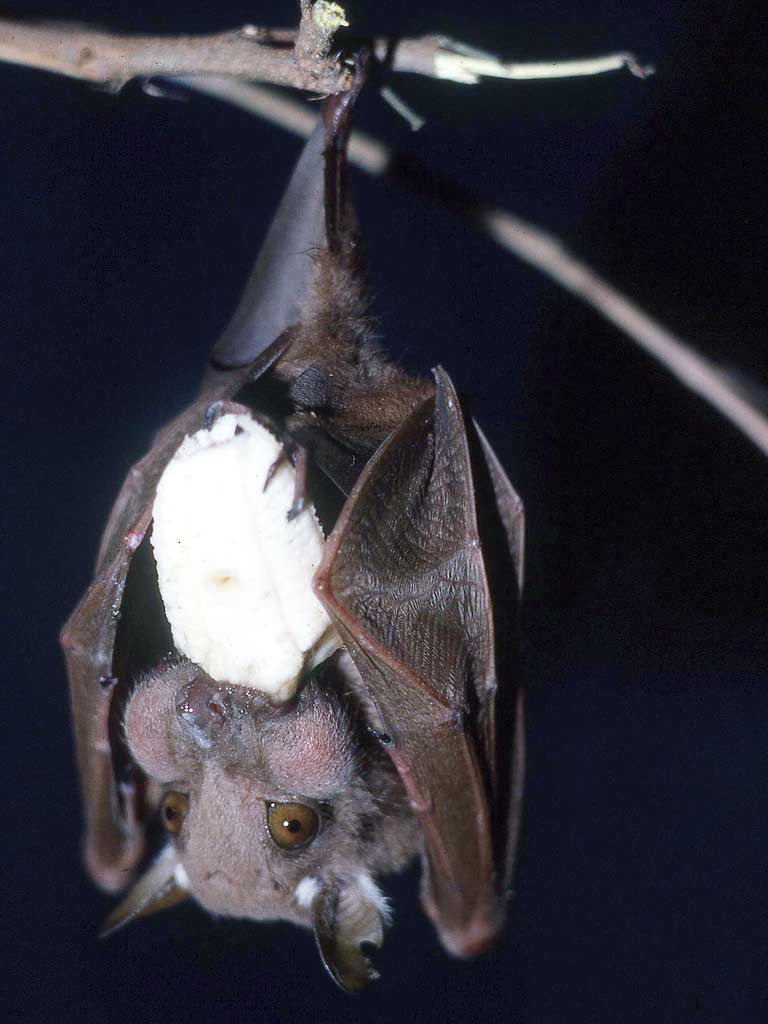
An Unusual Bat
Courtesy: Creative Commons

He left the pavilion and strode onto the pitch holding a gigantic banana. We were surprised and frowned as he took his place before the wickets. Most of the spectators fell silent but one of us who had travelled the world muttered that this banana was a totem of the monkey god, Zumboo, and that he hadn’t seen such a thing since exploring Borneo. I wondered what was left to explore on an island that had been inhabited for tens of thousands of years. The very densest jungle, was the unspoken answer. The bowler remained calm, took a slow run up, let loose a ball with a wildly erratic spin, but the banana connected with an audible squelch and the ball flew over the pavilion for a score of six runs. We settled back in our seats confident of a very entertaining innings but before the bowler could launch a second ball, the banana suddenly grew wings and flew out of the batsman’s grasp. We gasped. The umpire insisted that the match be abandoned immediately. We all went home. I am no cricket historian, nor an explorer. I am not even a zoologist. But I knew I had just seen a very unusual thing that fateful afternoon. The rarest species of fruit bat.

The Target
Courtesy: Creative Commons

There was a king who feared invasion of his lands and defeat but he feared assassination even more. To guard himself from these dangers he moved his throne to the centre of an island in the middle of a large lake. But this lake lay at the centre of a larger island that reared from the waters of a bigger lake. Needless to say, this bigger lake was located at the centre of an island that was the size of a small country and this island could be found in the middle of a lake that was like a small sea. The king believed he had chosen the most secure place in the world and he relaxed just a little but he never slumped on his throne. He remained rigid, peering with his keen eyes in every direction, knowing that any invader or assassin would have to cross many bodies of water alternating with rough terrain in order to reach him, giving him plenty of time to prepare his defences. He had a rifle with an extremely long barrel and a tripod to rest it on and he was able to cover any approach with deadly fire. This is how he passed his days. But at night the moon rose slowly over the horizon and standing on the surface of that celestial object was the true enemy, a giant archer who lurked in the shelter of a crater and drew back his bowstring. The heavy arrow was nocked and he was carefully aiming at his obvious but oblivious target, the king who never looked up but who, sitting there, was a perfect bullseye at the dead centre of a series of concentric circles.

The Milk Truck

Travelling in a taxi from our small apartment in Bangalore to the airport, we hurtled along the highway, our driver weaving through the traffic with skill. We passed a stationary vehicle and at first I thought it had broken down on the side of the road. It was a large lorry, a cylindrical container on wheels. The words Milk Truck were written on the side in blue letters and then I saw an old woman on a stool near the rear of it. She was leaning forward, her gnarled hands reaching for the underside of the huge machine. It was just a glimpse, the merest flash, but I had the impression she was milking the truck’s udders into a bucket. How ludicrous! Sitting in the back of that taxi, I exchanged glances with my partner and I saw in her eyes that she shared my thoughts. We had both seen it. Metallic udders! I turned my head to look back but the truck already was out of sight, obscured by other vehicles. Our driver continued and it was impossible for us to know if he had noticed it too, or whether he would care even if he had. This is all the story, nothing else happened. We reached the airport early and had coffee while we waited but it was black coffee, which is both safer and saner.

Courtesy: Creative Commons

Rhys Hughes has lived in many countries. He graduated as an engineer but currently works as a tutor of mathematics. Since his first book was published in 1995 he has had fifty other books published and his work has been translated into ten languages.

.

PLEASE NOTE: ARTICLES CAN ONLY BE REPRODUCED IN OTHER SITES WITH DUE ACKNOWLEDGEMENT TO BORDERLESS JOURNAL

Categories
Stories

Sofiemol

By Sharika Nair

The old man hurriedly sliced the few stragglers left from the bunch of cowpea beans. It was nearly eleven, time for Sofiemol to pass by. Picking up the bowl with the neatly diced beans, he walked into the kitchen. His wife was sprinkling masala powders into the sambar, and the kitchen was filled with the heady aroma of the simmering lentils. She was absorbed in her kitchen witchcraft, the mixing and the churning and the frying, in which she was so proficient that with a mere bowl of lentils, a few vegetables and a pinch of spices in her arsenal, she could transform any lowly dish into a treat for the palate. He quietly left the bowl on the kitchen platform and walked back to the dining room, before she could notice him. Taking the cutting board and the knife to the work area, he rinsed them in the sink. Placing them carefully on the sideboard to dry, he heaved a sigh of relief. His chores for the morning were done.

Though living the retired life, the old couple woke up at 6 am to the alarm. Water for their bath was still heated on the soot-blackened aduppu; the gas stove being reserved for cooking. Once morning ablutions were completed, the old woman lighted the brass lamp while chanting her prayers, and left it near the door. The old man helped her with breakfast preparations by grating coconut or chopping onions. After breakfast, the couple conducted the cleaning and moved on to the cutting and dicing for lunch with the stoic flourish of an orchestra, thanks to the assurance gained from years of repetitive chores, working in tandem and mostly in silence. Occasionally the old woman remarked on the quality of the vegetables or passed on some news from the neighbourhood. The old man grunted in acknowledgment. 

Clothes were washed and starched every alternate day. The old man drew water from the well, heaving up the ancient aluminium bucket strung on the creaky pulley. The old woman scrubbed the clothes on the washing stone that glistened in the sun like black onyx. 

The old man did not always wait for Sofiemol’s arrival with the anticipation of an ardent devotee, awaiting the opening of the sanctum for deeparadhana. The first few days that she passed by, more than two decades ago, she was a source of much excitement in the locality, and everyone would come outside their homes to gawk and wave at her. Sofiemol was the bus that first connected the sleepy village of Karipoothira to the country’s intricate bus network. Initially, it was just a coincidence that when the old man stepped out of the house, to stand leisurely near the gate and watch the ebbs and flows of his neighbourhood, the Sofiemol passed by. Over the years, he had started timing his routine to the crossing of the red and yellow bus during her mid-morning trip from Pulikkuttusseri to Kottayam town. On the way back, the blaring horn of the bus would wake him from his afternoon siesta and remind him it was time for tea and banana chips. 

As he stood outside the gate, the old man could see the dust in the distance that signalled that Sofiemol was on her way. Across the road, Manikuttan of the Wadakke house was hurrying towards the bus stop with his wife, Hemalatha. Manikuttan called out to him, “Valliacho, we are going to the town to Anumol’s house. It’s her baby’s choroonu. All fine with you?” The old man smiled and nodded. It seemed just a little while back that Manikuttan’s daughter Anumol had come to pick up fallen mangoes from the garden wearing a bright yellow frock, her hair oiled, washed and tied in neat plaits. 

Soon, Sofiemol passed by and halted at the bus stop further down the road. He stood watching as people got down and Manikuttan and his wife and a few others boarded the bus.

The old couple had moved back to Karipoothira in 1970, after the old man retired from his job at the Ordnance factory board headquarters in Calcutta. Their daughter had been married off to a suitable Malayali boy in Calcutta while their son had acquired the highly sought after ‘Government Job’ with a public sector company and moved to Bombay.

The first few months were spent on the renovation of the ancestral tharavadu. The sitting room had been extended, gleaming mosaic tiles had been laid on top of the red oxide floor, the bathroom had been redone and house was spruced up for the new returnees. 

After that, life appeared to have come to a standstill.

In Calcutta, the days had been disciplined and fast paced. In the mornings, the children would get ready for school and in the later years for college and leave. The old man, who was a much younger man then, would glance through the newspaper, and set off to work. 

He had been much appreciated for the impeccable maintenance of accounts at his office. His first boss, Mr Jenkins would often exclaim, “Mr Pillai what would I do without you?!” while thumping him heartily on his back, deeply embarrassing the mild-mannered accountant. After Independence, Stephen Jenkins had gone back to the empire where the sun had begun to set, and a much younger Indian gentleman had taken over in his place. Debasish Sengupta had quickly recognised his faultless work as well and had become reliant on him on all matters financial.

Evenings in Calcutta had spun by like the pages of a suspense novel, flipped hungrily while barrelling towards the climax, with the children’s homework, trips to the grocery store, the songs on the radio and the occasional socialising with friends all bundled together; several minutes, hours, years of a cluttered life; bits and pieces captured and caged inside the albums in the bedroom cupboard, tiny black and white squares featuring stiff shoulders and dour faces.

Ever since he moved back to Karipoothira, his life back in Calcutta seemed to be from another lifetime. The tram rides to work, the sounds of raucous card games from the neighbour’s house, the bustle of his Gariahat neighbourhood was a different universe compared to the sluggish Kerala village, where the neighbour’s cow giving birth was big news. 

When Sofiemol started shuttling down the road in front of his house, she became a tiny whirlwind, shaking up the stillness of his new world. He had become a tree, rooted to a spot, watching the world go by, but seeing the bus, filled with people, moving with manic energy gave him a reflected sense of purpose. 

Sofiemol had embarked on her maiden journey in 1972. By the following year, Sreelakshmi was running on the same route early in the morning, with a return trip during lunch time. By 1980, Baijumon and Minimol had been added to the fleet. But Sofiemol remained the old man’s favourite, a favoured first-born of sorts; just seeing her go by filled him with a vague sense of pride.

The old man was called valliachan or perappan by his Hindu neighbours and pillaachan or appachan by the Christian ones. His age had made his name redundant but the wiping out of his identity had been both secular and universal. It seemed almost poetic that he had lost his first name first. During his working years, he had been Mr Pillai.

Every alternate summer vacation his children, their spouses and grandchildren arrive for their cherished holiday, a break from the chaos of their cities. Suitcases would pile in the bedrooms and chatter would fill the house. The old woman would go into a frenzy of cooking, overwhelmed with the sudden need for larger quantities of food. She would also never fail to declare once or twice, loudly, lest he fail to hear, “Finally some noise in the house! Otherwise, it is deathly quiet here. You know how achan is. Difficult to get a word out of him.” 

Towards the end of their stay, the old man would neatly pack several packets and bottles filled with jackfruit and banana chips, lime pickles and coconut chutney powder, into cardboard cartons along with raw mangoes and coconuts, for the visitors to take back home. When they left, baggage stuffed into the trunk of the taxi, the children screaming out their goodbyes, excited about their train journey back home he would invariably find himself choked, holding back tears. His parting words would remain lodged in his throat. Dinner that night would be unbearably sombre but the next morning would bring with it a palpable sense of relief at the return of calm and peace.

Four years ago, the old man had taken Sofiemol to go to the bank in Kottayam. Suresh, a distant relative, was the bus conductor then. The old man was seated near the door, and Suresh, standing precariously on the footboard with the effortless nonchalance that all private bus conductors seemed to possess, had enquired about his health, “Perappa sukham alle?” Making small talk, the old man had said, “This bus is in such good condition. Hardly ever breaks down.” Suresh had laughed, “Perappa, this is not the original bus. Do you think a bus will last for over fifteen years on these roads? The old Sofiemol was condemned a year back after the owner bought this new one. It was given the same name for good luck. It’s the owner’s daughter’s name, after all.” The old man had sat in stunned silence for the rest of the journey.

For the past year or so, the old man was waking up earlier than usual. As pale tendrils of sunlight stealthily crept in through gaps in the curtains, the chirping of sparrows on the mango tree just outside the bedroom window would awaken him. As he lay in bed waiting for the alarm to ring, he often found himself remembering a time long gone by, relics preserved well despite the passage of time; his mother’s voice scolding him for climbing trees, the sound of marbles getting knocked together by expert knuckles, the panicked voice of a friend shouting, “Gopala… headmaster is coming…run!”

Last week, the old man had gone to the dispensary for his niggling cold and the nurse had called out his name twice, “Gopalan Pillai”. He hadn’t realised she was calling him, till she tapped him on the shoulder and gently said, “appacha, you can go in now.”

As it is time for lunch, the old woman comes to the door to ask him to cut banana leaves from the backyard. Usually, banana leaves were cut for special occasions. Today, though, for some reason known only to her, the old woman has decided they would eat from the leaves. Maybe she has made a sweet dish, jaggery payasam perhaps, the old man muses hopefully. He hums a cheery tune as he dips his feet in the rivulet behind the house. For all her complaints about his laconic tendencies, the old woman would get irritated if he were to sing inside the house.

He mixes the rice, sambar, cabbage thoran and beans mazhikkuparatti together, making little balls of the mixture and eats them with relish. The old woman reminds him to buy candles from the grocery store in the evening. “The power cut is scheduled at seven this week,” she mutters. Half way through the meal, the old man clears his throat and says, “It’s long since you made chakka ada.” The old woman frowns. Since there is leftover dosa batter, she had been planning to make dosas later in the evening. The ada is a lot of work but the old man rarely makes any demands. So, after lunch, instead of taking a siesta, she goes to the backyard to pluck vazhana ila, bay leaves that grow wild in most yards, for the ada. She makes a dough of jackfruit jam and rice flour, and steams the dumplings after stuffing them in the bay leaves.

Once the jackfruit dumplings are cooked, the old woman pours tea into steel glasses and peeps into the dining room. The grandfather clock has struck four and Sofiemol still has not passed by. No wonder the old man has not woken up yet. Her arthritis has slowed her movements considerably. She trudges slowly to the bedroom and finds the old man on the floor clutching at his chest.  She rushes out to call the neighbours.

Within half an hour, the doctor arrives, examines the old man and officially declares what the group of relatives and neighbours gathered in the house already know. The old woman’s wails ring through the house. “He said he wants to eat chakka ada.. he did not even eat them,” she cries as the other women try to console her.

One of the assembled mourners whispers to his neighbour, a bit self-consciously given the atmosphere of bereavement in the house, “What happened to Sofiemol? The bus is late today.” The other man whispers back, “I heard one of its tyres got punctured. I saw Mechanic Joseph going with the new tyre a while ago.”

Just a few metres away, on the road in front of the house, oblivious to the human drama inside, Sofiemol speeds by on the afternoon trip from Kottayam back to Pulikkuttusseri, setting off a dust storm, that soon settles into the silence of a thousand afternoon siestas, broken only by the occasional wailing from the house.

Glossary

Sambar – spicy lentil and vegetable curry

Aduppu – traditional firewood stove

Deeparadhana – ritualistic waving of lamps in temples

Valliachan – uncle

Mol – endearment for a girl child

Choroonu – baby’s first rice intake ceremony

Tharavadu – family house

Perappan – uncle

Pillachan – a title for elderly man from Kerala’s Nair community

Appachan – term used for father, grandfather or an elderly person by Kerala’s Christian community

Achan – father

Perappa sukham alle? – uncle are you well?

Jaggery payasam – sweet dish

Thoran – vegetable and grated coconut stir fry

Mazhikkuparatti- fried vegetable dish

Chakka ada – jackfruit pudding

Dosa – rice crepe

Vazhana ila – bay leaf

Sharika Nair wrote feature stories on entrepreneurs and women achievers during her stint with YourStory. Her story ‘The Silver Anklet’ won a prize in Deccan Herald’s short story competition in 2018. Sharika recently authored a children’s book titled Tara and the quest for the Cursed Prince. Her short stories have been part of anthologies titled The Other Side, Ether Ore and A Lie on Her Lips. Sharika lives in Bangalore with her family.

PLEASE NOTE: ARTICLES CAN ONLY BE REPRODUCED IN OTHER SITES WITH DUE ACKNOWLEDGEMENT TO BORDERLESS JOURNAL

Categories
Poetry

Drunken Cockroach in my Wine Glass

By Saranyan Bv

Drunken cockroach in my wine glass

Dear Panchami,
Today I woke with a new angle to look at the way
The world revolves.
Panchami, don’t get hassled about my drinking,
Things could have been worse like for the cockroach
I met this morning
After I got off the bed.
By the way Panchami, how are you?
How sound was your sleep? Let me know.
The lone cockroach, Americana Periplaneta,
Suffering loneliness like I do
Had fallen last night
In my empty cup of wine.
Oh Panchami, my soul,
As you always complain
I had forgotten to clear the table.
There was this residue of that purple vintage
That stayed in the cup through the warm night,
Upon which, the roach floated
On its dorsal, looking up,
Beating its six legs, two antennas
Like old women in old days
When someone old died.
Dear Panchami,
I didn’t want to play God,
Didn’t upturn the fellow, I let him remain
In that unfussy state of combat with air.
Panchami, my soul which stands apart,
I didn’t want to play the devil either,
Didn’t want to reclaim him
From his stuporous state of inebriation
Where the universe seems faultless.
Dear Panchami,
After all he chose to drink,
Partake a sip of the Bacchus without encroaching into mine.
What if I didn’t clear the table
Put away the empty glass, wash, dry
And stack it where you always did.
Dear Panchami,
We are not here in this infinitesimal life
To play God or Devil, judge and judge not.
I am sure you are angry, but please.….
I don’t even ask your forgiveness
Dear Panchami.
For I don’t want to let you suffer the burden of
Judging and being entangled 
In matters of judgement knots.
Roaches are survivors Panchami! So am I.

Saranyan BV is poet and short-story writer, now based out of Bangalore. He came into the realm of literature by mistake, but he loves being there. His works have been published in many Indian and Asian journals. He loves the works of Raymond Carver.

Categories
Poetry

The Lonely Path

By Rachel Jayan

I see a little girl amongst the millions
With dreams in her eyes and wild curls in her hair,
Her unbreakable spirit to survive and her passion for life.
She moves forward in life playing by the rules one day at a time, 
until she asks herself, 'Why am I here in this rat race?'
 
Some say to bring new life.
Some say to live for others.
Some say to be creative and to appreciate creation. 
Some say to love. 
Some say by God's will.
Some say for money and to build empires. 
Some say just to live, and
Some say, just about make it each day.
 
She bravely treads each path to see
Where would she find peace?
What could be her final destination?
 
She chooses each path
And looks for footprints to follow 
Till she finds a lonely untrod road.
She makes that one her own.
 
She finds she has no need to 'fit in' anymore. 
 
She fought her fears and won her wars. 
She lived for others and found true love.
At last, she found her way, her peace.
She had finally found her heart, her God!

Rachel Jayan has been a passionate educator for 24 years and is currently the Primary Years Coordinator at Indus International School, Bangalore. This is her maiden attempt at writing.

.

PLEASE NOTE: ARTICLES CAN ONLY BE REPRODUCED IN OTHER SITES WITH DUE ACKNOWLEDGEMENT TO BORDERLESS JOURNAL

Categories
Poetry

Pigeons, Us & Gods

By RJ Kaimal

Pigeons, Us & God

In the hall
pigeons
stare down at
us as we
chant and sing
devotional songs.

Are they
wondering
if it is really
necessary to be so
loud to be
devoted?

Isn’t God just
around the next
corner of our
hearts?

That Day

That day there was
much to be
said.

Not a word was
spoken.

Eyes Looked at
each other and
much love was
exchanged.


Exploration

I sent a part of
myself very far away
to explore and chart
unknown territories of
my mind.


RJ Kaimal has more than 2000 poems on the AllPoetry.com site. His writings are featured by The Classical Poets of New York, Storyhouse.org, & Poetrysoup. He lives in Bangalore, India. 

.

PLEASE NOTE: ARTICLES CAN ONLY BE REPRODUCED IN OTHER SITES WITH DUE ACKNOWLEDGEMENT TO BORDERLESS JOURNAL. 

Categories
Musings

Rumination : Lockdown is a long flight.

By Sapna Agarwal

I haven’t travelled much recently but I remember when I was in the middle of a ‘hi-flying’ job (literally here) and had to travel internationally twice a month, the only good sleep I had was in-flight. This was unusual because most people I know cannot sleep well — especially in economy class.

The reasons I could sleep so well were many – the ordinary ones were that I was generally fatigued after my fourteen-hour job; I was not interested in the alcohol on board; I am 5ft nothing and could be comfortable in the economy class seat ( much to the envy of the Germans in Lufthansa flights ); the microwaved  food didn’t excite me so I didn’t need food breaks and hence loo breaks.

But the real reasons (and that is why I am linking it to the lockdown) was that I was mentally at peace since once on board there was nothing under my control.

I was blissfully devoid of FOMO – fear of missing out on the chance of utilising my time better. There was nothing I could do high up there – no clearing long pending tasks like visiting the bank, replacing my torn handbag,  arranging for a birthday party,  getting my car serviced — in general all the tasks that I postponed with guilt while on land. In air, I was at peace that for the next 22 hours everything could wait. Once I had mental peace, I could just roll up and go to sleep. It was magic. There were times when the air hostess ( Quantas and Thai in particular) would wake me up and insist I eat something instead of sleeping for 15 hours straight.

The other thing that made in-flight sleep so peaceful was that there was little my accident-phobic self could do to save myself in case of a disaster. I do not have the same peace of mind while travelling by taxi, bus or train. In a taxi or bus, I always keep an eye on the driver willing him to avert any head-on crash. In a train where I cannot see the driver, I am normally evaluating my chances of escape in case of a collision. But in a flight, it is binary – in the unlikely event of a crash there is nothing a hapless passenger can do. So, I could sleep in peace.

Now after many years the lockdown is giving me the same feeling — a calm, soothing feeling that there is not much I can do except wash my hands.

One — There is no urgent task I can complete because everything is closed and legitimately so.

Two — In case of a disaster, that is the deadly virus takes over the entire world, there is very little I can do.

So I’d rather say my little prayer, roll up and catch up on my sleep – peacefully.

Sapna Agarwal is a management professional and has worked in the corporate and education sectors for long years. She writes short poems and articles  mostly on current issues. She is a keen observer of human nature and how they react in good times and bad. She lives in Bangalore with her eleven-year-old daughter. 

Categories
Poetry

The Tiniest Man on Earth and more…

By Aditya Shankar

The Tiniest Man on Earth

Was so tiny

he did not belong among humans.

Too big for microbes and fungus to befriend.

Too small for mushrooms

to feel the entitlement of a rain shelter.

Eliot’s practical cats were too practical

to respond to his queries.

Orwell’s Old Major

was busy inspiring a rebellion.

With none to acknowledge,

his happiness bore no relation to happiness.

His grief bore no relation to grief.

He watched the communion of men from afar—

their greets, hugs, smiling eyes.

He was happy.

But with none to share it,

his happiness hurt worse than grief.

He watched the war of men from afar—

their slit throats, longing, silence.

This hurt him.

But with none to relate with,

his grief grew light and comical.

He roamed the lonely world,

depressed and happy at once,

a microcosm of the humanosphere.

On his epitaph, he wrote:

Emotion seeks a watching eye

and lay in his grave.

But death never came for him.

It did not want to devour a breath

that wouldn’t distill into a potion of loss.

Notes:

Old Possum’s Book of Practical Cats by TS Eliot.

Old Major, a character from Animal Farm by George Orwell.

Annapurna// A History of Food

Mouth opens like the door of a shrine.

God, hungry and veiled by gloom is within.

She clutches her children tight.

Sets her men and women to work on barren lands,

pickaxes in their hand.

They plant crops, harvest the yield.

Chases away pigeons and crows.

War, they charge at rats in the granary.

Time is but the rushes of a never ending film on food—

the land our ancestors moved/ oxen ploughed,

earthworm that wiggled/ lizard fish that splashed,

cranes and parakeets that flew.

Not to forget the much more ancient recordings.

Spears that we darted/ meat that we roasted,

forests that thronged the fields once/

hills that we scaled.

No love story, without an episode of meal.

No battlefield, without a thirsty dying throat.

No captivity, as unbreachable as hunger.

Grounded by roots that we assume are severed,

an indoor sapling channels light.

A hand fed parrot pecks from our digital nest.

Concise and edible in its beak,

the epic of Annapurna, my mother’s fond deity.

Note: Annapurna is the Hindu goddess of food and nourishment

Aditya Shankar is an Indian poet, flash fiction author and translator. A Best of the Net and two-time Pushcart Prize nominee, Aditya has his poetry translated into Malayalam and Arabic. His poems have appeared or is forthcoming in The Little Magazine, Chandrabhaga, Asiawrites, Indian Literature, Poetica Review, Columba, Periwinkle Literary Magazine, Reality Break Press, Brasilia Review and so on. Books: After Seeing (2006), Party Poopers (2014), and XXL (Dhauli Books, 2018). He lives in Bangalore, India.