Raghav dreamed of a python again. He had never dreamed of a snake till he was thirty. But ever since he married seven months ago, the python had recurred several times in his dreams. Mirudhula was to blame.
She was fond of pythons. When she admired one, her eyes would widen as if she were swishing her tongue at a delicious gulab jamun. In confusion, he used to wonder: “What kind of woman is she?”
In the city zoo, there was a cage with an artificial tree containing a twelve-foot python. They did not know where they got it; it was the first thing they went to see as newlyweds.
“Ragav, look at its eyes. They flash with a secret. Its texture, the style of its coils, the small movements, all of it are amazing. I like it; I want to hold it in my lap,” said Mirudhula.
Ragav hid his fear and asked, “Should we go?”
“We just arrived. Why are you rushing?” she said, standing near the barrier, watching it with interest.
He could not understand what interested her.
“You know it is non-poisonous. Even at school, I got a prize for drawing a python,” said Mirudhula.
“It is still a snake,” said Ragav. She was snapping pictures with her mobile. A boy who came there hid behind his mother with closed eyes. His mother was pulling him forward, urging him to look.
Ragav left her alone and went to see the white tiger. When he returned, she was still admiring the python. He felt irritated to see her slowly licking an ice cream cone and watching the motionless python.
Young newlyweds go to the movies only. Mirudhula was not interested in the movies; in all of her 26 years, she had seen only less than ten.
“I fall asleep at the cinema,” she said. He could never fall asleep in a movie theater.
In his college days, he would watch all three new releases for Diwali and Pongal non-stop. The three movie theatres in his town changed movies twice a week. In a week he saw six movies, mostly second shows. If it was too late to go home, he would sleep on friend’s open terrace and in the morning, go to the college from straight from there.
Why did he marry a girl who disliked movies – he wondered.
Mirudhula was a salesperson for a multinational company. She was the single daughter of a dentist. She graduated from Manipal University after attending an Ooty convent. Having worked in Italy for two years, she was fluent in four or five languages. She made 1.5 lakhs per month.
They connected on a matrimonial site. When they first met in Amethyst’s coffee shop, her perfume intoxicated him. He couldn’t take his eyes off of her black and yellow salwar-kameez.
She spoke fluently and naturally with a fake smile on her face, as if speaking to a customer. She ordered an orange ice-tea, which Ragav had never tasted.
Twice, she repeated the same question: “Are you the only offspring?”
“Yes. My father is a college professor and my mom a schoolteacher,” he replied.
“Thank God you aren’t a teacher too,” she said. He didn’t get what was funny about it but laughed politely. Her charming beauty seduced him, as one might desire decorated pineapple pieces in a five-star hotel.
She seemed to be purposefully using a seductive voice.
“May I know how much you weigh?” she asked.
No girl has ever asked him that. Feeling shy, he said, “Sixty-eight”.
“You must lose 5kg, ” she said, smiling.
While opposite her, he felt as if it was drizzling on his face.
She winked, “Do you have any other questions?”
“You are very beautiful,” said Ragav.
“I am aware of it.”
“I am lucky,” he laughed lightly.
“I’m still deciding – have to think more. I rush nothing.” Mirudhula said, “I am different and difficult to understand.”
“Different how?”
“I don’t want to scare you off yet, but I am like that only.”
She licked her small lips as she spoke. Her lips were sexy; the upper one was slightly smaller.
‘I think I am an inch taller than you,” she said.
“Is that so?” he exclaimed. “It is not a problem.”
“It would be a problem for me. You should wear platform shoes,” she said.
“Sure. I can do that.”
“Do you drive?” she asked.
“No, I only ride a bike.”
“I got a car as soon as I got the job and drive to work daily. I love driving.”
“That is really cool. We don’t have to use ola then,” he said.
She disliked that comment. Slowly combing her distressed hair, she munched on the orange wedge.
“Aren’t you curious about my car?”
“Sorry. I know nothing about cars.”
She teased him, “Do you walk on the road with your eyes closed?”
“I wear a helmet. I hardly notice anything else.”
While she ate a sugar cube, she regarded him quietly. Her eyes seemed to seek something in him. What was she looking for? He could not stand her scrutiny.
She smiled. “We will meet again.”
Her perfume lingered long after she left. Ragav picked up and tasted a sugar cube just like her.
It was the first of their three dates. After that, their families got together and arranged the wedding. Unlike traditional marriage hall weddings, theirs was a lavish affair at a beach resort. Mirudhula’s father spared no expense. They honeymooned in Hawaii. She enjoyed varied foods, including fish. Raghav craved rice.
Even when she was kissing him in bed, Mirudhula was slow and deliberate. Her kiss was emphatic. Her embrace was slow and long. Their lovemaking was urgent and refreshing, like eating ice cream in the summer.
They temporarily stayed at Mirudhula’s apartment upon returning to Chennai. Mirudhula was serious about renting a new home. She rented a flat on the top floor of a newly built apartment building with 34 floors.
Ragav said, “A first-floor flat would have been nice.”
“One must live in the highest location possible. It is nice to see the city beneath my feet,” she said.
He felt uncomfortable living so far up. What if the lift failed? What if the balcony glass barrier cracked? Why was there so much glare in the morning? His mind bubbled with doubts, questions, and fears. But her morning routine was to stand on the balcony with the morning brew in the hand and admire the sprawling city below. The fast wind blew her hair in waves. He disliked standing on the balcony.
Mirudhula was a great cook, but she only cooked when she liked it. The other times, they catered from the hotel only. She was never late for work. Even at home, she never seemed to rest and kept moving. Ragav, however, liked to relax on the sofa after work. On Sundays, he slept until noon. Not her. She exercised every morning. She took great care of her figure and health.
Leaving together by car, she dropped him off at the metro station and proceeded to her workplace. She never drove him to work. She often got home by 9 p.m., whereas he was back by 6 p.m.
While waiting for her, he watched television. Occasionally, he cooked for himself. All his dreams of married life were dashed in a few weeks. He felt that his life was like a book read and finished in a hurry.
One day Mirudhula fought, saying he lacked toilet etiquette. He yelled at her another day for storing Chinese food in the fridge that smelled foul. Despite the petty fights, she often surprised him with gifts. He too took her shopping every week without fail. To appease her, he ate in some restaurants that he disliked. Her poise was evident in her every action.
She had the habit of buying strange things online. She bought wall mounted blue lights for the bedroom. The rotating blue light made the room look like a pool. When she moved around in the room, it was as if in a dream.
Another time, he was busy at work when she sent him a video and texted him to watch it right away. It was a revolting scene that showed a python swallowing a baby monkey.
Angrily, he called her and demanded to know why she sent him that video.
“Did you see? The python swallows the monkey and turns, looking eerily silent…something strange…”
“Isn’t the baby monkey unfortunate?”
“Snakes eat when they’re hungry–anything wrong in that?”
“Don’t send such videos anymore. Why would I look at them?”
“I liked the video so much I watched it 30 times today. You are my better half, so I shared it with you.”
He cut the call with “Stupid”
It was two days before they spoke again. He became more enraged when she ignored his anger.
That Sunday, she made many of his favorite dishes. She deliberately wore a silk sari. Showered him with kisses; his anger melted away.
A few days later, she told him while leaving for work, “I’ll get a package; accept it but don’t open it. I’ll open it.”
“What package?” he asked.
“Surprise” she laughed.
A guy delivered a big box, just as she said. It came from Taiwan.
Despite being curious, he did not open it, not wanting to anger her.
Unusually, she called before coming home that day: “Did the package arrive?””
“They delivered it in the afternoon itself,” he said.
“Can I get you something from McDonalds?” she asked.
Knowing she wasn’t planning to cook, he replied, “Pick it up yourself.”
She asked, “What sweet would you like?”.
“I’ve given up sweets,” he said flatly.
She cut the line by saying, “Well, we’re eating today.”
Mirudhula came home carrying two bags. One package contained food and the other sweets. Was it her birthday today? He wondered. Then he remembered her birthday was on May 8th. He could not figure out what was special about that day.
The package she carefully unwrapped contained a rubber python folded six times. She caressed it lovingly.
“Touch it and see how soft it is”
“What is this for, Mirudhula?” he asked.
“They have included a hand pump to inflate it; please help me,” she said
He took the hand pump and inflated the rubber python through a port. He watched it slowly expand. The snake unraveled to over ten feet of smooth coils. She wore it on her shoulders and smiled.
“Come close… let us wear it together,” she said.
As he grudgingly consented, she wrapped the inflated python around his shoulder as well.
“How is it? Can you feel the silky touch?” she asked.
“It feels strangely slimy, “he said as he tried shaking it off.
“I searched online and ordered it from Taiwan for 300 dollars,” she said.
“It’s not worth it. What made you buy it? I don’t like it,” said Ragav.
“I will spend my money as I wish. You like nothing.” She said, reclining on the sofa, hugging the python. He was a bit scared to look at her. As she stroked the python’s head, she stroked it with her cheek; only its tail was dangling outside the sofa.
“Ragav, I am thrilled today. Let us celebrate.”
“What is there to celebrate?”
“You won’t understand. Even before we were married, I said I was different. You even nodded your head.”
“That doesn’t mean you should have a Python at home… who would do that?”
“This is not a true snake, just a toy.”
“Why do you need a toy?”
“Then why do you have a fish tank? You like watching fish, right? Did I question it?”
“It is not the same.”
“It is all the same. Look Ragav. Whether you like it or not — us living together means compromising on some things I like.”
“There is no such rule.”
“No problem. I don’t need your permission, anyway.” She laughed and sat down on the couch to watch an Italian channel. When she was angry, she would speak in a foreign language and watch foreign language channels.
Ragav locked himself in his room. His anger took a long time to subside. She might even bring the rubber python to the bedroom, he thought. Luckily, she left it on the sofa. She ate alone and came to bed as if nothing had happened.
She took the python to the bathroom the next day. She rubbed soap suds on it as she played with it in the shower. The wet python dried on the balcony.
He suppressed his rage and left for the office.
In the car, Mirudhula said, “You are overreacting, it’s just a toy.” This is like you playing video games; try to understand.”
He did not reply. That day, she drove him to his office on purpose. He came home to find the dried python in the hall, left there by the maid. He was furious.
When he touched its body, it felt like a snake but with motionless eyes. The plastic tongue twitched when he pressed its head. In the mirror, his visage looked strange as he wore the snake, like she did. It was such an expensive costume. What would someone from his hometown think? What is so special about this python?
He deflated the python. Folding the rubber shell, he cast it in the kitchen corner. It was the first thing she looked for when Mirudhula got home at 9.30 pm. Not finding it, she shouted, “What did you do with the python?”
“It is in the kitchen”
“You would have deflated it, I know.” She said, walking to the kitchen.
“Yes. It is disgusting to look at.”
“The problem is yours. What you did is inevitable; you’re a pervert.”
“I’m not perverted. Does anyone else keep a python at home?”
“I don’t care if others keep it or not. I’m not like others.”
“You are adamant.”
“Yes. I am like that only.” She said, deliberately inflating the python with the hand pump. It grew much larger than its usual size. She walked to the bedroom, lovingly hugging the python. Loud music blared. Maybe she was dancing with the python.
Ragav slept on the sofa that night. The python accompanied her to work in the morning. In the lift, an old man asked her, “Is that a rubber toy? Where do they sell it?”
“Taiwan” she said, laughing.
“I’ve seen a python in the Assamese forests,” said the old man.
She put the python in the back seat. She did not drive him to work that day. He rode to work on his bike. He could not concentrate at work. When he spoke to his mother, he told her what had transpired. His mother asked incredulously, “A rubber snake? Why did she buy it?”
“Who knows? She is a strange type.”
His mother was shocked. “Thank goodness she did not buy a live snake”
“She might even do that. I don’t know what to do.”
He heard his mother cursing in anger. Perhaps she spoke to Mirudhula’s father. Mirudhula’s mom called her the next day.
“Why did you talk to others about our problems?” Mirudhula demanded.
“I told my mother only.”
“Are you a schoolboy to run to your mother? What do you have in your mind? Am I crazy?”
“Yes.”
“I can’t live up to your expectations, Ragav.”
“I understood it very well long ago.”
“Then you better close your eyes and ears. If you complain again like this to my folks, I do not know what I will do.”
“Why do you torture me? You can leave if you don’t like to live with me.”
“Why should I leave? I will stay here.”
“Well, I will leave then.”
Walking to the balcony with the python, she said, “It’s your choice.”. Leaning on the barrier, she held the snake up, and it wave in the air. To express his anger, he left for work early in the morning.
He arrived home late that night. The home was empty. He didn’t bother to look for her. She did not return the next day as well. He rang her father, but his father did not pick up the phone. After three days, Mirudhula called him one afternoon. “I have decided Ragav. I am leaving”
“It is your choice.”
“The house cost me over two lakhs. You must return it. I have informed the owner that I will vacate the home, since I have paid for the advance. You better find a new place. Our marriage was a bad dream. That is all I can say.” She hung up.
Ragav thought she’d return after her anger subsided. He couldn’t stand her stubborn behavior. He wanted to call her back and give a piece of his mind. When he called again, she did not pick up the phone.
Upon returning home that night, he discovered she had emptied the house of her clothes and belongings. But she had left behind the rubber python, which lay alone in the middle of the hall.
Why did she leave it behind? It was the root of all their problems. What was she seeking? Her wants were so weird.
He kicked the rubber snake with his foot, but even then, his rage did not fade.
To vent his anger, he trampled the snake with his feet. After deflating it, he took it to the balcony and cast it into the wind.
Flying in the air, the snake looked beautiful indeed.
Glossary
Gulab jamun: Indian sweets
Diwali, Pongal: Festivals
S. Ramakrishnan is an eminent Tamil writer who has won the Sahitya Akademi Award in the Tamil Language category in 2018. He has published 10 novels, 20 collections of short stories, 75 collections of essays, 15 books for children, 3 books of translation and 9 plays. He also has a collection of interviews to his credit. His short stories are noted for their modern story-telling style in Tamil and have been translated and published in English, Malayalam, Hindi, Bengali, Telugu, Kannada and French.
Dr.Chandramouli is a retired physician.. He is fluent in English and Tamil. He has done several English to Tamil, and Tami to English. He has published some of them.
.
PLEASE NOTE: ARTICLES CAN ONLY BE REPRODUCED IN OTHER SITES WITH DUE ACKNOWLEDGEMENT TO BORDERLESS JOURNAL
The word echoed like shotgun fire through Trafalgar Square.
Pigeons scattered. Most quietened back to the ground, some flew to the domed roof of the National Gallery or away into the low and oystery clouds that folded in the morning sky.
The old man stood at the foot of the Gallery’s steps, a frayed square of cardboard and scratchy blanket at his feet a dog may have lain on before, though he stood alone and crooked, his lucid eyes betraying his wilted frame.
He clenched his fists by his side, closed his eyes and bellowed again.
GUILTY!
I was sat at the eastern fountain, soothed by the sound of sluicing water and the pulsing rumble of traffic from The Strand, but the word pealed through the square like a sudden toll of a faulty clock. I’m unsure how long I sat on the fountain wall watching him. He ignored me as if it was all part of street act, and perhaps I convinced myself it was to justify my voyeurism. We were invisible to each other and ourselves.
The square was quiet save litter pickers and the occasional businessperson crossing the square toward the office buildings, oblivious as the old man gradually lifted his arm in the air as if raising a starting pistol and roared the word once more.
GUILTY!
A smartly dressed woman walking alone toward Pall Mall vaulted like a frightened horse at the noise.
Guilty! He hissed behind her canter.
After she turned a corner, he stood to as upright a posture he could like an abandoned soldier, taking a moment to uncoil his wiry beard with his yellowed fingers, straighten his mariner cap and wipe his eyes.
Still, he didn’t look at me.
I began walking in the early mornings half a year ago. Four mornings after London came together to celebrate hosting the 2012 Olympics, three mornings after it was torn apart by bombs under and over ground. After days of self-confinement, my flat no longer felt like sanctuary. The view from my window of rows of shops and diners that often disappeared behind the type of bus that exploded in two filled me with dread. The bus would wait at the stop outside the drug store. And wait.
After a vivid dream of being chased by a bus and waking up at the pneumatic hiss of the first number 32 pulling in, I got out of bed, got dressed and left my flat to walk with no particular destination in mind. I walked all the way to Hackney Marshes and sat on the banks of the River Lea with a bottle of wine and a plastic cup. Usually, families would paddle in the water, but nobody swam that day.
The walks would last most of the day. I would circle Cricklewood to start, then walk through Maida Vale and Hyde or Regent’s Park and sometimes past the Thames toward Battersea. Every walk was navigated only by my awareness of London’s streets. I began stopping at pubs but felt too anxious to settle, even after drinking my fill.
A week later, my strolls brought me to Trafalgar Square. Small cuts of paper streamers floated on the paving and bobbed on the fountain’s water. The party was over before it began. The smoke and the ashes had dispersed, and the streets were cleansed of the mechanical — and other — remains, but something still hung in the air, like anger and fear had evaporated into an electrostatic force. It tasted blood-coppery and drifted consciously like lost ghosts.
The wound still gaped and would continue to as London silently endured.
Together, said the news, but London was shattered into grains that refused to rebind.
GUILTY!
But of what, precisely? Pride? Greed? Complacency? I took my battered tobacco tin from my pocket and picked out a pre-rolled cigarette. The bite of the first morning cigarette lingered and faded. I found myself drifting into the fountain’s chant and closed my eyes, my mind empty of all thought and memory. I remained in this mesmerised state until my cigarette burned down to my knuckle. When I reopened my eyes, the man had gone.
I checked my watch. Eight twenty-four. More people were passing through the square. Soon, groups would gather and loiter. I had no intention of being among them, so I rolled the remaining paper and tobacco between my fingers and scattered the dust on the ground, stepped off the fountain wall and headed east to the river.
Walking down Duncannon Street reminded me why I preferred the openness of the square. Cars passed closer, and the narrow pavement guided people to cross in tighter herds. While before I would walk with my head down, I now mark in every face I meet the city’s burdens. Though today, fewer people walked toward me. From the offices and the bistros, people exited and headed instead for the river until we were all like knots in the same rope being pulled toward the turbid waters.
Around Embankment Station, the line dispersed. People headed to the footbridge or the pier to get a closer look at the river. I headed to an elevated walkway that granted a view down the river all the way to the Vauxhall curve.
“There, I see it!” Cried out a man on the bridge, pointing down the river.
The morning sunlight burned on the water’s surface.
“Where”? asked a clipper, dashing on the sloping bank.
The gasps and cries could be heard over the traffic and the wind that groaned through the bridge girders.
I saw it. First a ripple on the surface and then the emergence, grey and colossal.
“There!”
“A whale! Look mum!” cried a child beside me, clutching his mother’s skirt. The mother held her hand to her mouth.
Throughout the morning and into the afternoon, crowds gathered on the banks and bridges to catch a glimpse of the whale that had come to visit. Though it had submerged soon after peering above the surface, we cooed over any disturbance in the water and cheered for the rescue service that zipped along the river on small engine boats toward any unconfirmed sighting.
I watched the river carefully. The water heaved with all the activity, exciting the crowds, who’s faces stole my attention. Many smiled and waved, as if welcoming family back from a long journey at sea. Many clapped and cheered. Some were holding back tears while others openly cried. Some prayed, in different styles and languages. It was a harmony of loving chaos. We were all, with our scars and religions, willing the whale to survive. We were thankful for its visit and the well wishes, but mentally guided it back to the vast ocean. We wouldn’t admit to ourselves that it was lost and afraid, that it had made some navigational error and swam into the shallow, fetid waters of our notorious tributary by mistake. A river once so polluted it was declared biologically dead. A river once a whaling port, where the stranded were hacked up for their oil and bone. A river that regularly surrenders corpses. We willed it back to safety with all our collective strength.
I stayed leaning on the walkway railings until the sun set and the winter chill had seeped through to my bones. I gazed on to the now calmer waters. Fewer rescue boats patrolled the river and most of the families had left. Workers crossed the footbridges with their heads down. I thought about the old man on the square. I still didn’t know what he was accusing us of, but really, I don’t think he did either. We all have our secrets, faults and regrets and we all have our rules and devotions. We have our histories that shape our futures, and for now the ever-occupied present. The old man stood there as a mirror to all that dared to look into it, and if they did, they would confront their guilt — just as we did when we stared into the soul of our river — and scream until all that is left is blind hope.
For the first time since the bombs, I wanted to go home.
.
Luke Draper is from Portsmouth, UK and lives in Japan. He studied Creative Writing at the University of Chichester. His literary influences include Leonard Cohen and Ryūnosuke Akutagawa.
.
.
PLEASE NOTE: ARTICLES CAN ONLY BE REPRODUCED IN OTHER SITES WITH DUE ACKNOWLEDGEMENT TO BORDERLESS JOURNAL.
Mr Ghosh sat up startled. His colleagues were staring at him. He glanced at them and returned to his boss standing arms akimbo in front of the cubicle. “Do I pay you to sleep on the job?” he bellowed, his nostrils flaring.
“I’m sorry,” Mr Ghosh mewed, wiping the streak of saliva that had dribbled from the corner of his mouth onto the desk.
“Disgusting!”
A pink ball on the dark computer screen bounced about, and Mr Ghosh waited for his boss to march off. He then stretched in his chair, yawned, and rose. Caught sleeping twice in the very first week, not bad, huh? he thought, letting out a silly chuckle as the coffee machine sputtered out a cup.
All of a sudden, the odds of surviving this job appeared far better than the last company he worked for. There, he had been fired after a month-long sleeping streak. Following a miraculous stint of three years and thirty-three days in that miserable dump, his luck finally ran out, and matters snowballed when a colleague posted a video of him on Facebook. The caption read: The Art of Sleeping. The post spread through the office like wildfire. In the video, Mr Ghosh was seen with his head cupped in his hands, elbows on the desk, eyes shut, an innocent smile on his lips. It was hard to discern if he was dozing as the computer screen reflected on his glasses. But in the two-minute-long video, many of his colleagues made necessary appearances; some dancing, doing the pelvic thrust near his face, others miming and gesticulating obscenity. Eventually, the video made it to his supervisor, who laughed his head off, falling off the chair and rolling on the floor. He decided to not summon Mr Ghosh and instead ordered the CCTV cameras to be focused such that he could keep a watch.
On payday, Mr Ghosh was the only employee to not receive his salary, and he went to his supervisor to enquire. His supervisor ushered him into the conference room, where a couple of board members were present. They commended him for his hard work and dedication to the company, enthusing that he deserved a promotion or a hefty bonus at the very least. This continued for a while as Mr Ghosh spent dreaming of the car he fancied. At the end of it all, his supervisor slipped a DVD into the video player. In the footage, Mr Ghosh was seen in his cubicle sound asleep. The dates at the corner of the screen changed through the month, fast-forwarded, only to be slowed down in stretches when his supervisor gleefully appeared to wave his hand between the computer screen and Mr Ghosh to let the viewers know that Mr Ghosh was indeed asleep.
The room convulsed in the laughter of those men; old, haggard and disgusting, so much so that Mr Ghosh felt sick deep in his gut. He dashed out of the room and didn’t bother to collect his belongings. He ran to the street and caught a taxi home, to his bed, to hide under the blanket and cry, sleep, cry—repeat.
His wife, pregnant at the time, was so alarmed to see him in this state that she urged him to visit a doctor. When he wouldn’t, she grabbed him by his arm and dragged him to the neighbourhood physician. The doctor examined Mr Ghosh and dispatched him home with pills to boost his vitality. However, Mr Ghosh did not show any improvement whatsoever, and one could argue that his condition deteriorated for the worse. He neither ate nor uttered a word and simply stayed put in his bed, awake like an owl all night and repeating the cycle; cry-sleep-cry, during the day.
Terrified, his wife hauled him to a psychiatrist next. Alone in his chamber, Mr Ghosh burst into tears. He trembled, recounting the brutal, inhuman act, choking between sobs and gulping through a jug of water.
The doctor adjusted his spectacles and asked. “Do you doze off almost anywhere?”
Mr Ghosh nodded, blowing his nose in a handkerchief.
“Is the urge to sleep irresistible, almost uncontrollable?”
“Yes.”
“Do you dream during these episodes? Do they seem real, life-like?”
Mr Ghosh straightened up in excitement. “Yes, yes!”
The doctor rose and circumambulated his desk three times. He then came to a stop beside Mr Ghosh and asked, “Would you describe your night-time sleep as disturbed, incomplete?”
Mr Ghosh almost leapt out of his chair, but the doctor patted him down in place. He made a grave face and informed Mr Ghosh that he seemed to suffer from a rare neurological disorder—narcolepsy. It was quite a mouthful for Mr Ghosh, and the doctor had to break it down into syllables.
Mr Ghosh’s shoulders drooped, and the doctor paced about the room, explaining the complexity of it. “Narcolepsy affects just two in ten thousand people. You see, it’s quite rare. Presently, there’s no cure available, and we can only work towards mitigating the symptoms… Orexin is a hormone that helps us stay awake; it is produced in the brain, and in patients with narcolepsy, the cells in that region are irreversibly damaged. The culprit is none other than the patient’s own immune system. Isn’t that fascinating?”
Mr Ghosh tried his best to follow, but the doctor seemed elusive, not only in his movement but also in his explanation. “In general, we progress through multiple sleep cycles every night, each composed of four stages.” His body and arms swayed gracefully in tune with the rhythmic drone of medical jargon he expressed in his silky voice. It was as if he was singing a lullaby and not describing a disease. “…a normal person would enter the fourth stage, thedreaming phase, only after ninety minutes. But a patient with narcolepsy would go into it within minutes of falling asleep…”
A vortex of images tumbled inside Mr Ghosh’s brain, and he found it impossible to keep his head upright. The doctor’s chamber turned misty; it began receding from his vision. The doctor’s voice, now garbled, trailed off into silence.
Mr Ghosh heard a faint tinkling of an anklet approaching, and he looked up to see his mother bear down upon him with a sweaty face and wild flowing hair. She screamed, and a gust of wind blasted across his face. A chill ran up his spine, and he cowered into a ball, shivering. He shut his eyes, and he was at his desk, studying. The room was dark except for the light from the table lamp. His pen kept slipping from his fingers, and his head kept drooping. From the corner of his eyes, he noticed a hand creep towards him as if not to disturb him, yet with a fearful intention. It picked up speed, and whack, it struck him on the back of his head. His heart leapt to his throat, and he swivelled to see his father’s face emerge out of the shadow, large angry eyes, bared gritted teeth. He could smell his breath.
In the calm after the storm,
She walked away.
Drenched in love,
I scaled the peaks, but alas…
Ms D’Souza turned from the blackboard, and the boys drooled at her sight—her curly hair and dreamy eyes. Mr Ghosh grinned, standing on a bench, holding his ears. The scent of bél flowers in her hair sent his senses into a tizzy as she walked past, reciting the poem. He closed his eyes…only to be violently roused by a thunderous cheer of a football match. He stood leaning against the goalpost, his hair ruffled by the summer breeze that carried the smell of fresh-cut grass. The scores were tied with only a minute to go, and his team fought on. He could hear the crowd applause; scream with frantic passion but could only figure out Ms D’Souza, standing amidst them, beckoning him. She looked beautiful in a simple white gown, a yellow lily behind her ear. He grinned coyly and stretched out his arms, but… whoosh, the ball whizzed past, barely missing his face. He opened his eyes to discover that the ball lay tangled inside the net as the opponent team huddled in jubilation. He had dozed off yet again, leaning against the goalpost…
“…Someone with your condition can carry on with day-to-day activities in half-asleep states, and, and…they often experience sleep paralysis while awake, conscious… Mr Ghosh? Mr Ghosh!”
Mr Ghosh sprang up in his seat.
“Was it another of your episodes?” the doctor asked.
“Um, I don’t know. It might have been.”
Outside, his wife was reading a film magazine. She looked at him quizzically, but he said nothing. He simply smiled and helped her onto her feet as she struggled with her skewed centre of gravity. Then as they returned home in a taxi, holding hands, Mr Ghosh, gazing at the passing vehicles, shops and buildings, lamented about their future. He predicted it. “I don’t know how present I’d be when you’d give birth to our child. I’d probably miss her subsequent birthdays too, his—if it’s a boy, doze off in a corner and wake up when they sing the birthday song. I’d miss the precious moments in life, like when our kiddo takes her first step or calls me papa. I’d be fired from jobs, only to keep moving from one company to another. I might not even be there for you when you need me, and you may find me snoozing on the couch as you recount your day or grouse about your friends. I’d someday purchase a car but never get to drive it, take you on a long, romantic drive. I’d create awkward and embarrassing situations, both in private and public, be a burden, and multiply your troubles as I grow old. For all that, I am sorry. I understand that those incidents would leave you helpless, angry, frustrated or even disgusted at times. But in the end, I’m certain you’d always awaken me with a smile, not with a hoot or a slap. You wouldn’t mock my imperfections or take me as lazy, clumsy or socially awkward. And for that, I’d forever be grateful…”
Atreyo Chowdhury was trained to be a mechanical engineer and has a postgraduate degree from IIT Guwahati. Besides writing, he shares an equal passion for music and travelling. He can be found at https://atreyochowdhury.wordpress.com/
.
PLEASE NOTE: ARTICLES CAN ONLY BE REPRODUCED IN OTHER SITES WITH DUE ACKNOWLEDGEMENT TO BORDERLESS JOURNAL.
Sardar Dayal Singh had lived all his life in a predominantly Punjabi neighbourhood. The cluster of Sikh families provided a feeling of warmth, making him feel safe even when the threat to life and property assumed horrific proportions. In 1984, the entire colony was converted into an impenetrable fortress, with the men and boys ready with a stockpile of soda bottles and swords, prepared to put up a brave fight against the pillaging mob. Fortunately, the area remained safe from any such orchestrated communal attack. Despite the presence of over a hundred Sikh families, it was a mystery why Kishanganj was not looted when the entire city witnessed sporadic incidents of violence against the minority community in those three days. The most plausible reason that surfaced was its distant location on the outskirts of the city.
The Sikhs of Kishanganj gave asylum to persecuted Sardars who fled from other localities and stayed with them for several weeks before returning to their burnt homes to salvage what remained, to collect the debris, and make a fresh beginning. For Sardar Dayal Singh, it was mentally less agonising as he realised how being together with people of the same community ensured safety when the entire city was up in communal flames.
Three decades later, after retirement from his job, Sardar Dayal Singh was not the same man who basked in the warmth of his community. A series of incidents had shaken him. All he wanted was to sell the ancestral house in Kishanganj and move into a gated community, a mixed society where he would feel safe. With the young generation relocating to foreign countries in search of a better future, those left behind in Kishanganj were small traders and pensioners.
With rising intolerance against the minorities, the high-rise complex was the safest place for Sardar Dayal Singh who did not want to flaunt his nameplate on the door. The flat number was a safe identity on the letterbox or the initials of his name on the main door of his apartment. The upper floor apartment in a high-rise building would keep him closer to God all the time and also provide him with safety from an irate mob. He did not expect any frenzied outsider, armed with a weapon, to climb the fifteenth floor to reach his flat and hack him into pieces.
Sardar Dayal Singh and his spouse, Charan Kaur moved into a spacious luxury apartment, equipped with Jacuzzi and Spa, with an extra-wide balcony to enjoy the sunset and a glass of whiskey. His Canada-based son was glad to hear that he had sold his ancestral house and bought a three-bedroom flat where the old couple would now get trained to accept a cosmopolitan daughter-in-law.
Charan Kaur, fondly called Charno by her friends and relatives, did not find the new life exciting. She missed her Punjabi friends in Kishanganj. Within a few months of moving to the apartment, Charno started feeling lonely — as if she was living in a foreign country. She had to mingle with neighbours who spoke other languages she was not fluent in. While Sardar Dayal Singh was happy to adapt, Charno often complained that the gurudwara was located far away from the residential complex. She had not found a single Sardar family in the entire building with who she could interact. This was the place where she felt she was living in a minority environment but in Kishanganj, with scores of Punjabi families around, she never felt she belonged to a minority community.
To stay connected to her roots, Charan Kaur began to listen to Punjabi music and watched Punjabi channels. Even if others spoke in Hindi or English, she replied in Punjabi, as if it was her duty to keep the language alive and in circulation inside the residential complex. When she spoke to the housemaid, the liftman, or the security guard, she used Punjabi all the time without bothering to know if they understood it or not.
Sardar Dayal Singh noted the emergence of a communal streak in his wife. He hoped the people would not take the old lady seriously. His advice to become liberal and speak in other languages was ignored by her. She started organising a small together every weekend and invited her Punjabi friends from Kishanganj, to make her new neighbours understand that she had a robust social network of Punjabi women who would rally behind her if the situation demanded. Charan Kaur was happy to spend time with them and sometimes she went to Kishanganj to revive old memories.
During her last visit, Charan Kaur stood in front of their ancestral house that was demolished. A new building was yet to come up, but the old mango tree stood tall in the vacant land. She told her close friends she was not happy with the decision to sell such a big house and live in a flat. She blamed Sardar Dayal Singh for the reckless decision and wiped her tears.
On the eve of their fiftieth marriage anniversary, she invited the entire Sardar community from Kishanganj to her flat. Sardar Dayal Singh used this opportunity to influence some other retirees to move into this residential complex by selling their properties in Kishanganj, but Charan Kaur fiercely opposed his suggestion, “Never sell your house. Guru would protect all in Kishanganj even if the younger generation is away.” Turning to Sardar Dayal Singh, she asked, “Is there a place or an address where death does not come, Sardarji?” He could not reply to her in front of the guests who supported Charan Kaur on this issue.
Gathering the courage to explain his point of view in the hope that he would not be misunderstood by his people, Sardar Dayal Singh said, “Cluster living was dangerous for a small community these days. We did not have the option of apartments then, but now with so many complexes coming up we should mix and spread everywhere, to avoid detection based on religion. Mobs do not come looking for one or two heads – they need hundreds to loot and plunder and a Sikh locality is a prime target.”
His views were diametrically opposite now and there were no supporters. His old-time friend, Sardar Jasbir Singh finally spoke his mind, “Dayal, only the fear of death does not keep us together. We are together in Kishanganj because we love to be together, for culture and bonding. It is good for mental wellbeing and mutual help. You live in a flat now, but I am sure you miss the manji (charpoy) sessions in the courtyard where we sat together and drank and discussed everything under the sun.”
The core point Sardar Dayal Singh was making was that the safety of Sikhs was high in residential complexes. He defended his stance: “Nobody knows a Sardar family is living here. I am safe from mad mobs, but you are still facing the same threat we survived in 1984. When you have a chance now, why not spread here and there? We can still keep meeting wherever we want and keep our social connections strong.”
Sardar Jasbir Singh responded with greater conviction, “One crazy man is enough to kill a dozen. Such mad people are there in these residential complexes as well. If something untoward happens, if Sikhs hog the headlines for the wrong reasons anywhere in the world, imagine the possibility of the liftman stabbing you in the elevator to seek revenge. Have you given this a thought?”
Sardar Dayal Singh was hit hard, and he could deny this possibility. There were many such incidents of men going berserk and opening fire, those racial attacks of stabbing and firing at point black range.
The next morning, Sardar Dayal Singh was wary of the liftman who glared at him. There was a case of sacrilege in Punjab and a youth had been lynched. The liftman charged him while he was coming out of the lift. “Sardarji, do you think what happened in Amritsar yesterday was right? All Sikhs come together and beat a young man to death. Is this Sikh justice?”
When the security guard also joined the liftman, Sardar Dayal Singh tendered an apology and condemned the incident. The tobacco-chewing security guard sought updates from the liftman who checked his smartphone for the latest feed on this issue.
Sardar Dayal Singh came home from the market and sought a candid opinion from his wife, “How likely is that the liftman goes mad and stabs me in the lift?”
Charan Kaur gauged something was not right but maintained her calm demeanour. Handing him a glass of water, she replied, “It is very much possible. You are wrong to think the people inside this complex will not turn into a crazy mob and attack us if the situation worsens. If a riot breaks out in the city, maybe a big mob does not get in here but two crazy people like the liftman or the gardener can open fire at us. Even if they do not kill us, they can threaten us, abuse us, make barbed comments, or torture us. Such repeated attacks will hurt sentiments and disturb our mental peace.”
Sardar Dayal Singh kept observing their behaviour in the coming days. He found nothing worth complaining to the committee. But there were undercurrents he could feel. Such behaviour or reaction based on stray incidents in a far-off place was really strange and he was not supposed to answer anything. He thought if he complained and the liftman lost his job, he could become violent and seek revenge.
Sardar Dayal Singh reduced his daily trips downstairs. He tried to placate the liftman with smiles whenever he met him. He followed the same strategy with the security guard who made a weird statement one evening: “We thought Sardarjis are good.” Sardar Dayal singh avoided answering it but his reticence seemed to annoy the guard who waited for a reply while he stepped out of the main gate.
Sardar Dayal Singh spoke about the simmering discontent with his son on the telephone and he advised him to keep some emergency helpline numbers ready.
When the farmer protests started, Sardar Dayal Singh sensed a fresh series of verbal attacks. He desperately wanted Sikhs to remain out of the headlines. Just keep the culture beat alive with Bhangra and Balle-Balle and keep making sacrifices at the border to keep the nation convinced of patriotic fervour.
Whenever the Khalistan issue was raised abroad, the domestic atmosphere got vitiated. What happened on Republic Day was indeed shameful and he felt the Sikhs were inviting trouble for no reason. Those extremist-minded groups wanted to destabilise the state by demanding a separate homeland. He felt ashamed and wrote fiery letters to the editors. He felt it was important to assert his national identity to stay safe.
Charan Kaur wanted to visit Kartarpur in Pakistan, but Sardar Dayal could not decide. On the one side, he also wanted to visit the place where Guru Nanak lived for so many years and on the other side, he was fearful of the consequences of visiting that country.
“If you don’t dare to go, I will go there with my friends from Kishanganj,” Charan Kaur clarified. Finding her determined, Sardar Dayal Singh agreed to join her and Kishanganj friends on this pilgrimage trip.
After returning from Kartarpur, Sardar Dayal Singh warned his wife to keep it a secret. He urged her not to reveal where they had been to, not to any neighbour or even the housemaid. But within a couple of days, he was surprised to hear the liftman say with a grin, “Pakistan settle ka plan, Sardarji?”
Sardar Dayal Singh was numbed to hear that. He found almost the entire complex had come to know of their visit to Pakistan. So, there was no point denying and creating further discord. To be called a spy at this age would be really humiliating for the elderly couple.
Sardar Dayal Singh remembered that the small reaction he gave to a national TV channel reporter at the border was a blunder. Neighbours started to isolate themselves and their gnawing silence was felt by Sardar Dayal Singh and his wife. There was nothing to explain but they thought he was a Pakistan sympathiser at heart. He had just gone to pay respects to Guru Nanak. Was this modern nation not going to allow him that?
His car parked in the covered parking zone was likely to be attacked. IK Onkar sticker on the windshield was immediately removed to avoid identification. But the security guard knew it was Sardarji’s car. Sardar Dayal Singh was reminded to be careful by the liftman whenever he met him. He felt the old couple could get killed in the flat by crazy people any day.
Charan Kaur decided to move to Kishanganj, and Sardarji supported her decision. He rented his flat to a company instead of an individual and went to stay in a rented house in Kishanganj. Although Sardar Dayal Singh faced no direct threat, he lived under the gaze of threat all the time. A lot had changed in one year. The farm laws were repealed, and the farmers returned home after several incidents of violence.
In Kishanganj, some TV reporters came to report the reaction of the Sikhs. They were bursting crackers to celebrate victory when the reporters arrived with guns in a black SUV emblazoned with a press sticker. “You Sardars still depend on Kirpan, have some AK-47, and stay secure.”
Sardar Dayal Singh stood in front and urged them to go back with their guns. The local Sikhs chased them away and gathered their swords and soda bottles. They did not want to launch an attack but were prepared to defend themselves. The video of Sardars with swords on the rooftops went viral and they were projected as bloodthirsty goons. While no offensive was launched, it was a clever move to lure them with guns and get their reaction. The identity of those reporters who came with guns remained unknown. It was certainly an act of mischief, and the Sikhs were trapped.
As Republic Day was approaching, Sardar Dayal Singh wanted the community to hoist the national flag, shoot a video and post it online. They wanted Kishanganj Sikhs to be seen as patriotic and nation lovers.
While addressing the mixed crowd of Sikhs spanning three generations, Sardar Dayal Singh thundered: “Sikhs have to stop talking of past sacrifices. They have to make new sacrifices and avoid taking credit for what their earlier generations did. With new sacrifices, we become known as real patriots and assert our love for the country…We should be the first to hoist the flag early in the morning and conduct celebratory events the whole day. The blood donation camp is the best event planned for Republic Day tomorrow. Sikhs must give their blood to save the nation and save human lives. If health permits, all Sikhs must donate blood. Instead of spilling it on the roads due to mob attack, we should donate blood.”
Sardar Jasbir Singh raised a query at this point: “Should we call it Sikh Blood Donation Camp? Or Blood Donation Camp?”
1984: Riots between Hindus & Sikhs after the assassination of PM Indira Gandhi.
‘Pakistan settle ka plan’ — You plan to settle in Pakistan, Sardarji?
.
Devraj Singh Kalsiworks as a senior copywriter in Kolkata. His short stories and essays have been published in Deccan Herald, Tehelka, Kitaab, Earthen Lamp Journal, Assam Tribune, and The Statesman. Pal Motors is his first novel.
PLEASE NOTE: ARTICLES CAN ONLY BE REPRODUCED IN OTHER SITES WITH DUE ACKNOWLEDGEMENT TO BORDERLESS JOURNAL.
Translated by Ratnottama Sengupta from Bengali, Nabendu Ghosh’s short story brings out the absolute deprivation of basic needs of the common people during the Bengal Famine of 1943.
Courtesy: Creative Commons
Old man Ekkori was closing in on sixty. For two years his sight has been halved by cataract – in fact he’s as good as sightless. By doing this the Preserver of People’s Dignity had protected Harimati from the indignity of standing in the nude before her father-in-law – even her husband Teenkori admitted this.
Nude? Yes, what else but nude? The two saris that Harimati had been alternating on a daily basis had become so threadbare that, forget outings, it would be tough to maintain decorum even indoors if her father-in-law still had his power of vision. And this, even though they’re not gentlefolks, they’re mere peasants.
Harimati didn’t step out of the house until sundown. Fetching water, doing the dishes, washing the clothes – everything had to wait until darkness sets in. Yes, they’re from the lower strata but her sense of decorum and shame was not a mite less than that of a refined woman belonging to genteel society. It could actually be a bit more since Harimati had always been proud of one thing: Her father had studied till the Minor (primary) school examination – something beyond her husband Teenkori and his father Ekkori.
Still, she was managing. She was determined not to be bothered by embarrassment or chagrin. But things came to a head when an uninvited guest showed up with the claim of an uncalled for kinship. There was a time when a guest was worshipped as God but those times were long past. Time had taken that culture too with it. Now if things came to pass, a father disowned his son, a husband abandoned his wife, a mother sold her offspring. Even that could be excused – they may not have had any other option.
In a peasant’s family, even dire poverty did not deprive them of a coarse variety of rice and some greens that grew in their own courtyard. The bottle gourd climbing up their fence was about to blossom, the other end of the narrow stretch fenced off had a drumstick tree that caught attention with its healthy growth.
A distant cousin from Nandangachhi had showed up unannounced. Teenkori’s maternal aunt’s paternal cousin’s son Nandalal. Some work had drawn him to their town – he would go back the same evening. He was accompanied by a helping hand – belonging to the Tili community, a notch lower than them in social standing.
That wouldn’t be a problem. They’re guests for half a day – they could and would be taken care of. They would even be served a bowl of milk – borrowed from Tarini Mondal’s family who lived next door. But trouble arose when it came to serving them lunch.
It had been decided that Teenkori’s eleven-year-old sister Protima – the motherless Pooti – would serve the meal. But when it was time to seat the guest on the floor mats, she left on the pretext of fetching water from the nearby pond. Fact was, she too felt shy. A tense Harimati had called out to her two or three times but the girl didn’t look back. Consequently Harimati couldn’t avoid the task she was planning to all this while: she had to take upon herself the onus of serving food to the guests.
Teenkori started fidgeting halfway through the meal. A glance at his wife, and the food stuck in his throat. An old old sari soiled with time, torn in places and patch-worked at spots – she was trying to cover her body with the rag. Teenkori hasn’t forgotten the pedigree of the sari. Before the War broke out, before his stillborn son came into the world, when Harimati was given a shower in the seventh month, he had purchased a pair for two rupees and one anna. One of the duo had gone months ago, this one was worn occasionally and so had lasted a while longer. Since the last year, she was reduced to wearing it every single day, and now it was threadbare. Harimati had carefully draped it over her body, yet you could clearly make out the contours of her body. Her arms, her shoulder, fleshy bulge near her chest — they refused to be subdued by the rag. Had she the cover of a chemise, she would not feel so discomfited. But in a family where procuring a coarse sari barely five yards long was itself a feat, a chemise was a luxury they did not waste time thinking about.
Teenkori’s fidgeting could be traced to one more reason. All the men seated to lunch were focused on the meal, but the eyes of the boy accompanying Nandalal were restless, untamed. Even as he was gulping the mouthfuls, his oblique stare was devouring every part of Harimati’s body. She may not have been an eyeful, nor was she repulsive. Her youthful healthy body had an innate appeal. Earlier, she was even more healthy, even more sprightly. But the efforts to evade the decimation of the horrendous famine had taken a toll. She has withered, shrunk.
There was another reason. The famine that spared not a grain of rice, no food, not even greens that could sustain them, took with it the cynosure of her eyes, her two-year-old Khokon. But if Death is an inevitable truth, so is Life. Hence Harimati lived on. And at twenty-two she is not old enough to think of Death. So, youthful vigour was still overflowing her body. Naturally Nandalal’s helping hand would eye her every now and then. The effort to hide her nudity seemed to add to her appeal for the boy.
Harimati also realised that. That is why when she came in with the repeats, she took care to drape her father-in-law’s worn out gamchha over her chest. Teenkori looked at her, it seemed to him that tears had welled up in her eyes.
*
Precisely so.
Harimati did not touch her food. She was waiting for Teenkori. The minute Nandalal left with his help, and old man Ekkori surrendered to his siesta, Teenkori went indoors. Harimati came out of the kitchen and stood before him. The tears that she had so far kept within the guard of her eyelids now flowed over.
Teenkori took Harimati’s hand in his own. Trying to stem the hot spring of unhappiness with the palm of his right hand he asked, “What’s the matter bou?”
Harimati bit her lip so as not to break the silence.
Teenkori suddenly felt irritated. It was the monsoon month of Sravan halfway through the English month of July. There was so much left to do in the fields. It was just that there were guests at home, else he would have spent the whole day in tending to the fields. They held the key, the hope and happiness for the rest of the year. Rest, the unhappiness of the womenfolk, the need to love and be loved – now was not the time for all this. His debt was mounting at he moneylender’s who could now claim every hair on his head. With barely two rupees left to pull along till Diwali in November, he would have to borrow some more. Was this the time to cry?
“Why don’t you spit it out, woman?”
“Don’t you know what’s the matter? Can’t you see with your eyes?” – Harimati hissed at him like an angry serpent. She found it difficult to keep a hold on herself since their son died. At such times, the usually quiet woman terrified Teenkori.
“What? What’s the matter? How will I know if you don’t tell me, am I omniscient?”
“Your cousin’s help was gobbling me with his indecent eyes – didn’t you see that?”
“I did,” Teenkori hung his head low.
“Then do something about it. It’s better to go around nude than to be covered in revealing clothes!”
“What can I do about it?” Teenkori didn’t want to understand. And what could he actually do even if he did understand?
“Sari! Sari!!” Harimati impatiently stretched out her arms to her husband, “give me a piece of cloth, a sari… It’s so long since I asked you for one, don’t you remember? It is more than a year since you gave me one, for the pujas – can it last an entire lifetime? So many times I brought up the subject, you kept postponing it, ‘Not tomorrow, day after surely!’ ‘It’s very costly, prices have gone up, once the prices come down I’ll get you on…’ Words, words, words to fill in for inaction. You’ve caused me to go around semi-naked. Now? Now it’s impossible to go around. You get me a sari at any cost.”
The force of her words made Teenkori lose track of his thoughts. An indescribable impatience made him angry. So he spurned logic and picked on a phrase of Harimati, to vent his bitterness. With reddened eyes he glared at Harimati, “I’ve caused you to go around semi-naked?” he roared.
“You, you, you have. You’re the man of the house, can’t you get me a sari?”
“Where will I bring it from if there’s none in the market?” he demanded..
“I don’t care where you’ll get it from – just get it. I MUST HAVE IT. Issh! What an able husband, mine! Don’t they say…”
Tthaash!
Before she could say another word, Teenkori slapped Harimati hard on her cheek – he simply couldn’t take it any more.
“Hit me..! You hit me?!” Harimati’s fury fizzled out like water poured over a stove. Only tears streamed down her cheeks.
“Yes I hit you.” Teenkori grit his teeth and sat down to rummage through their trunk.
Old man Ekkori’s voice floated in, “What’s on with you guys, hunh?!”
“Nothing – go to sleep.” Teenkori shouted back at him.
“If you say so, son!” The old man’s voice echoed the dejection of the Blind King Dhritarashtra of the Mahabharat.
Teenkori extracted a few coins wrapped in a piece of rag kept safely in one corner of the trunk. They added up to some seven rupees, he counted before stashing them away in his waist. Then without a word he stepped out of the house.
*
But soon as he stepped out, he caused another uproar.
Pooti had just returned with a pitcherful of water poised on her hip. She was draped in an old gamchha around her waist, covering only the lower half of her body. That was all.
The sight of her stoked his asperity. Where was the need for the lass to go fetch water? Always evading work, always looking for fun.
“Pooti!”
“Yes?”
“Come here.”
Pooti put down the pitcher on the kitchen veranda and walked up to him. She could not fathom the reason for the summon in a grave voice.
The minute she stood by him, Teenkori traced the outline of all his five fingers on her cheek. “Where did you disappear, you brat? Didn’t your boudi tell you not to go, hunh? Went to fetch water!! Why did you go, hunh? WHY??”
The unexpected slap stunned Pooti. Pain and hurt choked her voice. She could not say a word in reply, only tears welled up in the large eyes like a dumb animal.
The reply came from Harimati. She was trembling with rage.
“So what if she had gone, why are you bossing?”
“Why should I not?”
“No, you cannot. You don’t have the right to. If you can, cast a glance on her chest.”
Teenkori cast a glance. It made Pooti swiftly retire into the kitchen. But that momentary glance was enough for Teenkori to ralise something that made him shut up.
He’d forgotten that Pooti has completed eleven. He’d forgotten that, in Bengali homes, this age spelt a lot of metamorphosis in a female anatomy. He only remembered that Pooti was his younger sister, much younger to him, even now.
But Teenkori does not know that there are glances other than a brother’s – glances that pierce through layers of clothings, so what to say of bare bodies. These glances do not make any concession for the innocence of a pre-teen girl.
Harimati chewed out every vowel, “She’s no longer a lass, she’s on her way to becoming a maiden. At this green age she’s more shy than I. Don’t you realise that?”
“Ayn?!”
Teenkori scurried out at the speed of an arrow released from the bow.
*
Teenkori walked some way at a very fast pace. Why, which way, he’d not stopped to think. He was still fuming in his mind. If his head were made of clay, then it might have let out steam into the air. Fortunately for all, his head was not made like an earthen pot.
Nibaran Dutta’s son Manish was walking down the mudpath. A young man of about twenty-six or –seven, he’d been incarcerated for five years for his involvement in the Nationalist movement. On his release three years ago he’d returned to the village. He still engaged in Nationalist activities. Dressed in a pleated Khadi dhoti, a half-shirt and a leather sandal on his feet, he had a cross-chested bag dangling by his side. It always held an assortment of books and papers. Every now and then he summons them, discusses various things about their well being, about the country’s well being. During the recent Famine and the epidemic he worked so hard – amazing! This was something to remember him by forever.
They – Manish and his partymen – were also agitating about the rationing of cloth, Teenkori was aware. At that moment he was like light at the end of a tunnel for Teenkori.
“O Manish Babu!”
“What’s new, brother?” – Manish smiled at him.
“I need something,” Teenkori’s vice bubbled with agitation.
“Tell me. But before that, come under the shade of that tree. I’ve been walking a long way you know, all the way from … Nimdanga.”
They walked under the banyan.
“Tell me what you want.”
“It’s become impossible to do without a sari.”
“That, I do know,” he smiled feebly. “That is exactly why I am going in every direction. Tomorrow we will take out a procession. All the boys and girls from poverty stricken families in the neighbouring villages will walk to the city to file an application. You must also join us without fail.”
Teenkori could not wait to communicate his own woes, he broke in, “Yes yes, I will but I must have one right away Manish Babu.”
Manish looked at Teenkori without speaking a word.
“You’re doing so much for the nation, and you can’t do this much?” – Teenkori’s voice lost its bite and sounded pathetic.
“Nation?” Manish smiled. “Yes, I am striving for the nation but Teenkori, it is still not swadesh, my country.”
“It might be so but you have to do this favour to me Manish Babu. You simply HAVE TO. If you don’t believe me, just go and take a peep at Pooti and her boudi.”
“No need,” Manish protested. “I don’t wish to add to your woes and humiliation. But what is the matter – haven’t you been to Fakir Miya’s yet?’
Fakir Miya was the president of the Union Board and secretary of the Food Committee. He’s the one who gives out the permit for clothes.
“Yes I’ve been to him. Several times. My shoes have worn out, so many visits I’ve made. But I haven’t got the permit.”
“Really? Come with me, let me see what can be done.”
*
At every step Teenkori thought to himself, “Something will surely materialise now.” Because, like everyone else in the village, Fakir Miya also had a lot of respect for Manish.
But nothing worked out.
Fakir Miya shook his head and said, “There’s no way to give a permit, because there is NO CLOTH.”
“Nothing at all can be done?” Manish asked with gentle smile.
Fakir Miya took a deep puff of his hookah and said, “How can it be? You’ll understand once you hear me out. There are 813 families in the village and the total of dhotis and saris we have received is 65. Now you tell me, who do I give and who do I deprive?”
“Whom have you given?”
“Those who came first.”
“And those who have references, and influences, isn’t it so?” Manish softly added with a grin.
A reddish tint played on Fakir Miya’s visage for an instant. He gave a gentle twist to his mehdi-tinted goatee, then said, “See Manish, I really hold you in deep regard, that is why I am not taking any offence at what you just said. But you have indeed spoken the truth. That is why I have decided that I will distribute the next lot only among the destitute and the needy. I will care for the poor first. This time I can’t help you – you really have no idea how helpless I feel.”
Manish smiled again. “I do understand, everything. I hope you will actually carry out what you are planning to do next time. Never mind: for the time being, do give me a permit, whether you have the stock or not. I have promised it to Teenkori, let me at least keep my word to him. Besides, his family is really finding it difficult to continue in society.”
Fakir Miya glanced at Manish, then at Teenkori who was waiting pale-faced and in all humility. Fakir Miya said, “I’ll honour your word Manish. I’ll write a permit.”
Manish went homeward. And, with the permit in his hand, Teenkori raced towards Chhaganlal’s shop, his heart beating fast, now with hope and now out of fear.
*
Chhaganlal Marwari has come to this village all the way from the deserts of Rajputana. From that distant corner of the land too he had learnt about the shortage of clothes in this unmapped village of Bengal – and in answer to that he had come via Kolkata with one lota and a bundle of clothings. In the weekly fairs that dot this and so many outlying villages, he personally carried such bundles of saris and dhotis for four full years. Then gradually, with the blessings of the Elephant-Faced God with a Big Belly he earned the benevolence of Goddess Lakshmi and prospered enough to own a double-storey building at the very front of the market – just like the Englishmen who came to trade with one ship full of goods and eventually built Fort William at the mouth of the Bay of Bengal.
This very Chhaganlal was reclining on a bolster post-lunch. Having loosened the knot of his dhoti around his tummy, he was glancing through the previous day’s accounts.
“Sethji!” – Teenkori called out softly.
Sethji looked up, “Yes? What is it?”
Teenkori brought up the permit, with the deference of a devotee offering flowers at the feet of a deity.
“What d’you want?” Sethji demanded again.
“Cloth – I mean a sari.”
“There’s none.”
“Here’s the permit. Fakir Miya himself gave it.”
Extremely irritated, Chhaganlal stood up. “So what if Miya has given a permit? If there is no sari in the stock where can I materialise it from? Leave now – come back next month.”
“I can’t go without one Sethji, please give me one.”
“Have you gone out of you mind, ayn? None – there is not a single sari, don’t you see all the almirahs are absolutely empty?”
“Yes I see that. Still, do give me one – it will be a big favour.”
“D’you want me to take off what I’m clad in and go naked?”
Teenkori could say nothing. He could think of nothing to say, he only looked around him vacantly.
His eyes fell on the colourful saris displayed from the hook at the shop window.
“Those – those are handloom saris?”
“Yes.”
“Price?”
“The lowest priced one costs twelve rupees and four annas.”
“Can’t you give for less than that?”
Chhaganlal lost his cool. “Go, leave now, go home right now… This isn’t a vegetable mandi, just go.”
Teenkori couldn’t buy a sari.
*
He walked some way, then sat down under a semul tree. The sun was strong. His temper was mounting too. Sitting there, under the semul tree, he tore up the permit into tiny pieces. In the depth of sorrow he felt like laughing. It wouldn’t be wrong on his part to laugh aloud – all the others who were passing that way were probably laughing at him! The difference was that Teenkori’s laughter was a distorted version of crying.
The village priest Mahesh Bhattacharjji was coming his way. He proudly displayed the twisted, unwashed sacred thread around his neck, his pigtail too was bobbing happily to declare his unadulterated Brahminhood. But he was clad in a lungi. Quite an example of how dearth helps people break tradition and adapt to new ways!
“Bhatt’charjji Sir, regards – pranam!” Teenkori strode up to him.
“May you prosper son! What news Teenu, all well?”
“How can things be well Sir?? But what’s this – Bhatt’charjji Mashai in a lungi!”
Bhattacharjji shook his head and smiled, a wan smile born of pain. His voice shook with emotion. He wanted to drape his wife’s sari but she warned him, “This is dearer than gold and gems now, it’s not for you to even touch.” Naturally he had to resort to this way of preserving his dignity – “can’t go out without a stitch on you, can you? And is this inexpensive? I had to kowtow to Manik Miya, go on pleading ‘Big Brother – you’re like my father!’ Only then I got it for four and half rupees. But I am not ashamed Teenu – the God who makes a lame climb mountains and a mute speak reams, is the same almighty who’s making a Brahmin dress like a Mullah!”
“Why, don’t you get offerings of sari and dhoti when you conduct pujas?”
“Ashes! Bananas!” Mahesh Bhattacharjji waved his right thumb in the air. “How many people organise pujas at that scale where you offer saris and dhotis? And even if they do, they just pay eight annas or a rupee saying, ‘Please buy yourself a cloth Sir!’”
Teenkori, though in deep anguish, couldn’t help but laugh.
They kept walking side by side. One of the village elders, Kalimuddin Sarkar was coming their way with something wrapped in a gamchha held under his armpit.
“How d’you do Morol {headman}? Where are you coming from?” Bhattacharjji hailed him.
“From the bazaar,” Kalimuddin grinned.
“You are laughing because I am in a lungi, aren’t you? Well, go on, laugh. But what’s that in your armpit, eh? So carefully you are clutching it – what’s it?” Bhattacharjji narrowed his sharp eyes.
Kalimuddin hesitated a bit before replying, “You won’t tell anyone, will you?”
“No dear, no –“
“Just bought a pair of dhoti from the Marwari.”
“Let’s see – let’s see –“ Bhattacharjji and Teenkori both said at once.
A pair of ordinary mill-produced dhotis.
“Did you get a permit?” Bhattacharjji enquired.
“Hunh!” – Kalimuddin pulled a face. “The permit is still in my pocket. This I bought in the black market. That too because he is known to me. These days you don’t get these even if you have the money.”
“How much did he charge?”
“Fifteen for the pair. He’d asked for twenty rupees.”
“Bastard! Thief!!” Bhattacharjji’s face went pale.
“And d’you know the price of saris? The mill-made ones are for 25, 30… the handloom ones are no less…”
Teenkori let out a sigh. If one had the money to pay for it, one could buy everything even when the situation was to the contrary. One who did not save money had to go without food and clothing – this is what Lord Almighty had ordained. At least in today’s world!
He would organise some money.
But money wasn’t for the asking!
The moneylender Ramkanta shook his head. “Ten rupees you want – but what else do you have to mortgage? Have you kept track of the balance still due to me? When will you clear that?”
“I remember – five rupees six annas. Apart from the interest.”
Teenkori went to many other people. Everyone shook his head just like Ramkanta. “No.”
Experiences and realisations build up the philosophy of our lives. Hence Teenkori had no hope, only hopelessness; no happiness, only unhappiness. Hence his life view was tragic, wrapped in a cover of ink-smeared darkness.
Manish turned grave on hearing the full account. He kept silent for quite a while, then said, “This is why we will take out the procession tomorrow. Be patient for some more days brother – there has to be some resolution.”
Teenkori spent the rest of the day going hither and thither. The whole day was wasted. There was work to be done in the fields – all had been undone. The next day also he would not be able to attend to the work, he had to join the procession. The nationalists were right: neither Teenkori by himself nor others like him – alone they could gain nothing. The strength of the poor and the deprived lies in their union, their coming together.
The procession would not draw immediate result; joining a party or raising slogans would not get Teenkori a sari for his wife. Still, would it all be wasted effort? Everyone would hear, everyone would know that nudity was forcing them to shed tears day and night.
*
Teenkori felt small going home. After darkness, he returned like a thief, stealthily. He felt relieved. Nandalal and his page had left in the evening.
Harimati entered the room after a while. Teenkori did not have the will to lift his head. Harimati fixed him with her gaze, then laughed a satirical smile and said, “Didn’t get it, did you? If you simply can’t, then this rag will have to be carefully donned – for a year, what d’you say?”
Slowly she walked out of the room.
Teenkori’s humiliation and remorse went up manifold at night. Harimati shut the door to their room, turned down the lamp and said, “Turn your face the other way.”
“Why?”
“There’s a reason…”
In the darkness she peeled off the torn yardage clinging to her body. With great care she folded it up and carefully she hung it on the clothes rack. She covered herself with the discarded gamchha of her father-in-law and came to bed.
The moment his hand touched Harimati he exclaimed, “What’s this?”
In a grave voice Harimati replied, “Can’t you imagine what will happen to the rag if I sleep in it?
Teenkori started sweating in the depth of the night.
*
At daybreak Teenkori showed up in the school playground. That’s where everyone was to assemble.
Manish was already there, and another 150 villagers. A few elderly women and a handful of girls too were in the crowd. People from the lowly communities of Bagdi, Jele (fisherfolk), Tili, poor peasants from both Hindu and Muslim communities were present. The dearth of clothes and of food did not differentiate on religious grounds.
Before setting out Manish and another young man gave them placards – slogans mounted on bamboo sticks. In English and Bengali, they said more or less the same thing: ‘We want clothes’ ‘Down with hoarders!’ ‘End the Shame of Nudity’ ‘Down with Black Market’ ‘Perish, Profiteers!’
Minutes later they started the march.
Intermittently they bellowed – “We want Saris! We want Dhotis!”
One voice shouted out: “Hoarders!” All others refrained: “Perish! Perish!”
“Down With…”
“Hoarders! Profiteers!”
While crossing the market Teenkori looked at Chhaganlal’s shop. It had yet to open, but along with others who sought to be entertained, Chhaganlal too was crowding the balcony. A sly smile of disdain hung from the corner of his lips. The bright beams of the baby sun shone brightly on the gold chain around his neck, casting an aura around him.
As they kept progressing, four or five other groups from two-three surrounding villages joined them. Their numbers now totalled at five hundred. It took about an hour to reach the city. It was almost eight by then.
Manish with all his men arrived at the bungalow of the District Magistrate. A policeman had joined forces with the watchman at the gate.
“Raise your voices brothers!” Manish urged. Before anyone else could respond Teenkori screamed, “We want cloth!” Everyone else joined in, “We want Cloth! We want Cloth!”
“Profiteers must perish!”
“Stop the black market!”
“Magistrate Sahib, give us justice!”
“We want clothing! Give us cloth!”
The policeman and the durwan barked something in unison. But, just as a river’s song would drown in the roar of the ocean, so too was their command drowned by the “We want clothing!” demand of the crowd.
At that moment District Magistrate Carter was discussing international politics with his wife and daughter. The slogans reached him like the sound of waves breaking on a distant shore.
“What’s that dear? Let me check,” Mrs Carter said.
“The same old story of naked men – they want clothing,” Carter replied.
Mrs Carter parted the green raw silk curtains and peeped outside. Their daughter Joanna came and stood behind her. Beyond the green lawn fenced by rose bushes, beyond the iron gate, a crowd of uncouth, underclad men were clamouring loudly. What were they crying out for? Mrs Carter and her daughter could not comprehend. But the numbers and the loud expression of their want filled them with panic.
“How pitiable!” Mother and daughter both agreed.
Durwan Ram Singh came in and saluted them.
“What is it Ram Singh?” Carter enquired.
“They’re asking for clothes Huzoor!”
“Why here?” Mrs Carter flared up. “Is this a shop for clothes?”
“Father is not a Marwari cloth merchant!” Joanna commented. “Ask them to go to the shop.”
Carter stood up. “Let’s go,” he said, lighting up his pipe.
Mrs Carter stopped him. Her blue blue eyes gleamed from fright. The August of 1942 was still fresh in her mind. “Carry your pistol darling,” she pleaded.
“Yes daddy,” Joanna echoed her, “do take that.”
“Nonsense!” Carter laughed. “People who don’t lift a finger even when they die of hunger, surely will not kill me for clothings!” He went off laughing.
Mrs Carter wasn’t pleased. These days you can’t trust Indians any more – the’ll go to any limit. What ought she to do? The sound of slogans was gradually rising outside.
“Mom – Mamma!”
“Yes?”
“Call the police please!”
“Right dear. I was also thinking of doing that.”
The sound of the phone being picked up filled the room.
Mr Carter stoutly stood at the gate. His pipe was ceaselessly blowing out the strong smell of tobacco while his other hand was twisting a white kerchief. On either side, stood a policeman and his personal guard, Ram Singh.
The assembly burst out like thunder, “Give us clothings!”
“Chup raho, silence!” Mr Carter roared at them. “Tell me peacefully what you want.”
“Clothings – that’s all we want,” they bellowed again. “Just organise that…”
“What?” Carter scanned the faces. “Aye you – come here, HERE…”
Teenkori was at the forefront, he was shouting his lungs out. Carter summoned him. With a high jump Teenkori tried to lose himself among the crowd at the back. Gora Sahib! Englishman!! Magistrate!!! Oh God!
Manish strode forward in his place. Carter scanned him from head to toe and asked, “Are you the leader?”
“I am not a leader, but I will tell you what they are here to tell you.”
“Then say – tell me.” Carter put the pipe back in his mouth.
No good came out of the effort. Meaningless assurance was all Carter could give them – they had to go back with the vague assurance that something would be done. But when? What? No word on that.
Teenkori wasn’t pleased. Walking the distance, shouting at the top of his voice – what result did that yield? They ambled through the city’s thoroughfares for another hour and then dispersed. It was almost 10 by this time.
Teenkori thought to himself, “I should try the city shops, may be I’ll get something within my means.”
But that wasn’t to be either. The black market crafted by profiteers and cheats had created a stock that was not available to anyone who did not have a certificate stating “My Candidate”. And what was available to those privileged was beyond his pocket.
Teenkori returned home empty handed.
*
Pooti was down with fever in the evening. Malaria. She was lying in a delirium, wrapped in a torn quilt.
After lunch, Teenkori went off to the fields with his bullocks. The sight of them brought tears to his eyes – both shrivelled, their ribs showing through their hide, they were unlikely to survive too long. What will be their fate then? Perhaps the Master of their Destiny too has no idea.
Harimati was in a jam. The dishes needed to be washed, there was no water at home, and Pooti was in the clutches of fever. No option but for her to go out.
But draping a piece of cloth doesn’t cover everything. The bulge of the breasts stands out, and the abdomen? That too remains visible.
Of course the pond wasn’t too far. Harimati didn’t go to the one frequented by most of her neighbours. Shame! She chose the one less frequented so that she could be away from human gaze. It had rained plenty in October, the ponds were still overflowing. She only had to reach out.
She’d almost finished washing when someone wolf-whistled right behind her. Startled, Harimati turned around. The good-for-nothing village loafer Avinash was oggling the exposed parts of her body with wolfish eyes.
Harimati tugged at one end of her sari to cover herself but the old wornout fabric gave way.
“Ahaha!” Avinash cackled, “you just tore your sari out of shame!”
“I’ll beat you lame, you monkey! Let Pooti’s brother come home from the fields…” Harimati retaliated.
Avinash cackled some more. “Damn all he can do. Why? What wrong have I done? I’ve not embraced you, not said anything indecent to you. I’m only gazing. God has given me eyes, and you have given things to gape at – so I’m looking. What’s wrong?”
Harimati swiftly gathered the vessels, filled up the bucket and took to her way.
Avinash called after her, “You need a sari, and I can get you one. Will you take it? Hear me!”
Harimati broke into a run, “God! Oh God!” she kept repeating.
The entity thus addressed did not reply.
Harimati started howling.
*
Teenkori’s veins were about to burst. “Quiet!” he said, not a word more! Just be quiet.”
Harimati’s wailing gave way to yelling. “Quiet?! What d’you mean, ‘Quiet’? I won’t shut up until you get me a sari.”
“How can I get one? Steal?”
“Do that.”
”All right, that’s what I’ll do.”
Teenkori stomped out of his house. It wasn’t too late at night, in fact they had not had their dinner yet. Only old man Ekkori had finished his dinner and gone to bed after dusk.
He actually went off?!
Harimati wiped off her tears, then went and stood outside. “Where are you?” she called out. “Where have you gone? I beg of you, come back and have your dinner.”
*
Teenkori did not ever come back to dinner.
In the middle of the night he was caught trying to steal a sari in Chhaganlal’s house.
Chhaganlal raised a huge hue and cry and gathered a large crowd. What a lynching Teenkori got! Slaps and kicks and boxing – it left him almost lifeless. The villagers who had gathered felt ashamed and sheepishly went back to their homes. In their heart they could not support Chhaganlal but openly they couldn’t let off Teenkori. All said and done, he had turned into a thief!
At daybreak Chhaganlal’s men took Teenkori all tied up to the police station. In that state he was left in their custody. His misery and despair had dried up his tears. His dejection and gloom made him only want to tear his hair.
*
The news reached Manish around 9 in the morning. “The docile, peaceable Teenkori could not keep a hold of himself!”
A few of the villagers pleaded with him to do something in the matter. Manish felt sorry for Teenkori. He felt it was his duty to do something, he hurried out.
When a man keeps asking for something basic and does not get it, what else can he do? Millions and zillion years of civilisation has taught him otherwise — today, how can he forget all that and accept nudity as normal? And, in terms of law too, how has Teenkori ‘erred’? How can age-old norms hold sway over changed circumstances and dire needs?
Manish went directly to Chhaganlal. He heard him out but refused to acquiesce. “That is not to be Manish Babu. He’s a thief, he ought to be jailed.”
Manish stood up, his eyes raining fire. “Don’t try to give a lesson in right and wrong. For the last time I’m pleading, with folded hands Chhaganlalji. Poor man, the lynching he has suffered has been punishment enough, please don’t send him to jail. If you destroy a family it will not bide well for you. Besides, I can prove that you are responsible for all this.”
Chhaganlal heard Manish speak and pondered over it. He has also been following the political trend, perhaps from afar, out of sheer curiosity, but yes, he has been following the trend. All of a sudden he felt that if the circle of time brings changes in history, when the present rule is over, perhaps he would find himself standing before these very people with folded hands. On that future date, it would not help to have these men as his opponents.
Chhaganlal also stood up. “Okay Manish Babu, I will do as you say, and let go of him. Come.”
Together the two went to the police station.
Not there. Half an hour before they got there, Teenkori had been transferred to the court.
Manish implored and took Chhaganlal with him to the court.
*
On hearing the news old man Ekkori had beseeched his neighbour Tarini and gone to the thana. The infirm, near-blind man had leaned on his walking stick and walked behind Tarini all the way to the police station and faced the policeman. He even met Teenkori. The son did not utter a word, only shed silent tears.
The station officer said, “How can I let him go, tell me? There’s a case filed against him. You better go to Chhaganlal.”
Oldman walked to Chhaganlal’s shop. Chhaganlal had just gone out.
Old man went back home, flopped on the floor and wailed, “I couldn’t, dear girl, I couldn’t bring him home!”
Harimati sat still like a corpse.
Ailing Pooti called out to her from inside, “Boudi I am starving. Give me a handful of puffed rice.”
Harimati made no reply. She went to the kitchen and tried to light a fire. She couldn’t, she just gave up. No fumes rising from the clay oven but her eyes were hurting, flooding with tears.
Harimati could almost see with her eyes that Teenkori had been sentenced to a long imprisonment. In the family that was already in dire straits, there was no one to bring home anything by way of livelihood. An emaciated father-in-law, a baby sister-in-law, she herself with no capability. She had no mother or father, no brother, no one to fall back on. She had only her husband, now he was gone. Even if she mortgaged all she could, it would not sustain them for long. The nudity would have to come into the open. The hyena eyes would feast on her, the indecent proposals would go up manifold. One man’s adversity emboldens the beast in other men: this is an eternal truth as the history of mankind shows. Many will offer her a bellyful of meal and a cloth to wrap her body in but in lieu she’ll have to lose her all — dignity, home, fidelity.
What good would be such a life?
*
Manish returned at sundown with Teenkori. Yes, he had succeeded in freeing him.
As soon as they drew near Teenkori’s house, they could hear wailing and commotion.
The minute they stepped into the courtyard, they could see Harimati’s semi clad body lying on the floor. Her dead eyes were wide open. She was surrounded by two-three elderly women, some men and a few children. Pooti and Ekkori were on the veranda.
Tarini was also present. He spoke, “She hung herself in the backyard of the Mukharjees. I found her an hour ago, on my way back with the cattle from the fields. Madhu has been dispatched to inform the police.”
Manish was speechless.
Teenkori was swaying.
Blind King Dhritarashtra had cried for a hundred sons – Ekkori was crying more than him for his only daughter-in-law. His weather-beaten face was swamped in tears.
Manish was immersed in thought. Are men and women governed by colonial rulers any better than dogs and wolves? So weak, so helpless, so pitiably helpless! Such tragedy befell them for the want of a piece of rag?! He turned his face away. The wailing, the howling, the half-naked body of Harimati – they were all taunting him, ridiculing his leadership, mocking his manhood.
A savage look had set in Teenkori’s eyes, the sort that descends in the eyes of soldiers when they confront their enemies. Many countless invisible enemies seemed to have aligned against him. His muscles swelled up. A desire to tear those enemies tingled at the tip of his fingers…
No, Teenkori would not cry.
Glossary
Anna — Currency. 1/16 of a rupee.
Gamchha — Coarse cotton cloth used like a towel.
Bou — Wife
Puja — Durga Puja
Boudi — Elder sister-in-law
Mandi — Market
Durwan — Security guard
Nabendu Ghosh’s (1917-2007) oeuvre of work includes thirty novels and fifteen collections of short stories. He was a renowned scriptwriter and director. He penned cinematic classics such as Devdas, Bandini, Sujata, Parineeta, Majhli Didi and Abhimaan. And, as part of a team of iconic film directors and actors, he was instrumental in shaping an entire age of Indian cinema. He was the recipient of numerous literary and film awards, including the Bankim Puraskar, the Bibhuti Bhushan Sahitya Arghya, the Filmfare Best Screenplay Award and the National Film Award for Best First Film of a Director.
Ratnottama Sengupta, formerly Arts Editor of The Times of India, teaches mass communication and film appreciation, curates film festivals and art exhibitions, and translates and write books. She has been a member of CBFC, served on the National Film Awards jury and has herself won a National Award. Ratnottama Sengupta has the rights to translate her father, Nabendu Ghosh.
.
PLEASE NOTE: ARTICLES CAN ONLY BE REPRODUCED IN OTHER SITES WITH DUE ACKNOWLEDGEMENT TO BORDERLESS JOURNAL
“Come and see the American wonder.” That was the one-liner the band of energetic kids sang. It was the song of an old city magician who had once come to fret coins out of villagers with old card tricks and die games. But the New Yorker thought the song would be useful for what he had to say at the drinking hut, so he had made the excited kids remember the song. This was a raggedy bunch of kwashiorkor-colonized kids, mostly naked from the top up. They clapped, danced and repeated the line as though it were the sweetest song in the world. Ahead of them, and not far away, was the New Yorker. He too was clapping with all the might in his palms as though he held two cymbals in his large hands, his New Yorker T-shirt sticky with soft sweats of the early morning, moving his thin frame as though the wind would cast him far away from land.
The on-lookers had no idea what the American wonder was, but most were eager to know what the astonishing thing was about America. So, the New Yorker led this gyrating group of kids through rutted village paths, headed for the village square and a drinking shack, where he would exhibit the bare American wonder. Some in the crowd thought he was the one and only American wonder the village had. They felt no urgent need to join the swelling throng of admirers of the circus.
Yet, they were those who felt the man wanted to lay bare some exciting features of America. Two sets of people flowed into the mix: those who assumed the wonder was a man and those who believed the wonder was a thing that had not been sighted in the village of Nkang before. Everyone who heard the shrieking kids was willing to tail them. Anything American was like a commercial hit in the village at any time of the day.
This area of the village was known as the wine groove and some villagers thought the village’s best speaker of high sounding words had perhaps consumed too much fresh wine at the root of a friend’s tree. He wasn’t a known tapster of wine and could only have intoxicated himself through the generosity of other benign villagers. This was the thread of thought held by most villagers, except Pa Okeke. The hut owner had seen the New Yorker before he monkeyed up a palm tree and the New Yorker had told him he wasn’t going to taste any other wine except his at the shack. “Your wine sets my tongue dancing like no other,” he had confessed to the amused old man.
“My palm wine must have a conga drum then,” Pa Okeke returned, forcing the New Yorker to wave him off with a laugh seated in his stomach, as he scanned the groove for the tree to bore a wine hole in.
Up above, at the neck of a tall palm tree, he hung as though a thing woven out of spider webs. He too couldn’t nail what this latest act of the New Yorker was about. If it were magic the man wanted to perform at his shack, he would fail with honors. He wasn’t turbaned like most Indian magicians. He wasn’t dressed in the long tail coats of television magicians, and didn’t bear any resemblance to the famed professor Pellar of Lagos. He hadn’t been to India to learn from the gods of magic. His abracadabra would yield no awesome tricks tonight. That was the tapster’s conclusion. Having drained the tree of its latest intoxicating content, he descended the lanky black and well-juiced palm tree. He would take a shorter route to his shack and lay out his drinking horns for the New Yorker and his crowd of enthusiasts. The day held the fat promise of drama and laughter at the village’s favorite haunt. It would be the night of American wonder by the African New Yorker.
The New Yorker had trimmed his caravan of kids as he went on his way to Pa Okeke’s drinking place. It was too early in the day for kids to wander away from their mothers. He had finished exploiting them and they weren’t allowed to sit in the shack, in any case. He had said to some, “You, off you must go to your expectant mother,” he sprayed them with intense looks of reprimand. “Some of you have not fetched water from the stream yet.” He shooed the kids on their backsides as if they were chickens who had failed to return to their coops on time.
With the kids out of the way, the New Yorker crowded his mind with the wonders he was going to unleash on the swelling crowd at Pa Okeke’s place. The kids had done a terrific job of advertising his presence to the whole village. Though, he was a well-known village lay-about, the New Yorker had needed the kids for a reason.
He needed a fix of wine and the more the crowd at the shack, the greater his chances of free wine. The children had been his talking drum. And they had indeed talked well to guarantee him endless jugs of palm wine from the whole village. The more the wine, the sweeter the tale, the New Yorker believed that; and the greater the intensity of listenership. His captivated audience would be the one to make his tongue set sail on its voyage of storytelling.
The New Yorker sat down at Pa Okeke’s hut. It was on this day and at this time, thinly populated. Well, he had the company of fat green flies buzzing around wine-stained benches and tables and used cups and drinking horns. This wasn’t the sort of company he had dreamt up and desired. He was disappointed.
“The Americans have decided to build a wall through their border with Mexico.” That was what the New Yorker revealed to his crowd of enchanted listeners. He was seated on a deep green hard bamboo bench, flanked in by drunken men on either side in Pa Okeke’s palm wine-perfumed drinking hut. The long wooden table in front of the gathering was dotted with plastic jugs of dirty frothy white-shy palm wine, and colorful plastic cups and rust-color calabashes circled with giddy giant green flies. Several of the insects were drunk and dead while others had just begun their round of alcoholic somersaults. In a little while, the men in the haunt would be like the insects, each one a mess of retched up gut contents and drunken odour. They would perhaps go home washed down in their own mess since the sky had darkened with impending rain.
The tale spinner had spoken and there was a collective gasp of bewilderment from the house which was by now crowded with onlookers and drunken bunch of villagers. Some kids who had strayed away from their parents had traced the New Yorker to his cherished hut. They stuck their bulging eyes and eager faces in the tiny spaces created between men at the windows, desperate to see some real American wonders. But all they heard was: “Wall! A wall? A big wall?”
Those were the words that flew around the gathering. The kids were as confused as those who had palm wine floating in their senses. Those villagers who had cell phones with them had begun to call out to absent regulars of Pa Okeke’s place. The gist in town was about the presence of the village’s best story weaver in Pa Okeke’s house. They believed his newest tale was yet another fabrication from his deep well of stories. This can’t be possibly true, many held. Those who had left the village in past journeys to townships had never seen walls between borders of two towns or between Nigeria and her neighbor, Cameroun. The only embankment many knew of was in the Bible, the walls of Jericho that they had heard about in Sunday schools and catechism classes.
“The Americans can’t do such a senseless thing!” That was the assertion that rose like the sudden burst of water from a pressurized pipe, from somewhere in the crowd. It was from a man with a bloated stomach and face, who also wore the several litres of wine he had being drinking in his eyes. The words had come off his lips with some difficulty as they seemed to have mixed with the wine in his mouth.
“What is it with these Americans? America, the wonderful!” That was his deep-rooted summary. He shook his misshapen ageing head from side to side, laced his fat lips with a derisive laughter and swallowed a slug of sour wine. “America, America,” he laughed, after the horn of palm wine had freed itself from the claws of his salivary mouth. He spewed a jet of wine between his legs. “Useless things,” he had chewed on a dead fly. He stamped on the already dead thing with all the might in his spindly legs.
There were some ripples of laughter shooting through Pa Okeke’s hut of revelers. The wine was working its way slowly through veins. This moved the old man to action as he dug into his hidden drums of wine for the best fermented drink for the house. He went behind and re-emerged in the gathering with a dull black aged gallon of palm wine. It was crusted with overflowing dirty white wine. Its embankment of security was made of fat green toilet flies that had found a permanent home in the drinking hut. They made sure no wine was wasted and knew which cup of wine intoxicated the most. They were the dutiful keepers of the shack and were rarely killed by the regulars. The people saw them as a congenital part of drinking in village huts.
“‘Americans are funny’, I once told us that.” The New Yorker reminded his audience and everyone nodded. Voices rose here and there. There were murmurs that the New Yorker couldn’t discern. Those who had been there when he made his revelation agreed that he was on point while those that hadn’t been there wanted to be told about the comic nature of all Americans, because they held the view that the Chinese were perhaps more comical than the Americans. The overwhelming view was that Jackie Chan was the most humorous and famous Chinese in the world. While Bruce Lee was another popular Chinese, he was seen as too consumed in his fights to want to grant the viewer some moments of humor. Many had seen clips of the makings of some of Jackie’s movies, where he would fail several times at different acts, to his own amusements.
“Americans can afford the liberty to be funny,” That was Pa Okeke. His voice was aged with wine and his breath perfumed with sugar. “They have the life that we don’t have.” He had something for the gathering of drunken men and puzzled kids.
Pa Okeke deposited the gallon on a dying and Chesnutt-coloured bench in the middle of the room. “This is on me,” he declared with that authority of one who truly owned the house. He rubbed his flabby chest down. Many shifted on their seats with itchy throats, anticipating the flow of fresh palm wine that was to come from the owner of the hut. This was going to be a night like no other for many. And Pa Okeke was dead certain many of his customers would crawl on their bellies to their various homes when night time fell. Those who wouldn’t be able to claw their paths home would sleep on their vomits, then wake to curse themselves and his wine. He knew they would still return when the clouds of drunkenness cleared from their eyes, because the villagers had once tagged his hut the “home of happiness.” He had believed the tag and had scrawled that in misshapen letters above the door of the hut.
“You want to get us all drunk?” The New Yorker asked without really meaning every word he had spoken. “Isn’t this one much for a gift?” He shot his empty cup towards the table. He rose and reached for the fresh wine which was dotted with dead bees and tiny raffia palms and flies. He shoved the undesired baggage aside with the bottom of his cup. He dug into the liquid with the force of one who hadn’t had a life-saving drink in days. There was a smirk around his lips.
“I want us all to be happy.” Pa Okeke left the scene. But he would return with more palm wine from his seemingly endless drums at the back of the hut.
The New Yorker wanted to be inebriated. He had come to the hut to get himself some drink and reveal the newest brand of wonder to the house. Many had thought he wanted to perform some sleight of hand tricks of some old penniless magician. But this man was from another world from most of his contemporaries. He wasn’t a magician and he just revealed that to his listeners. He was a moving cinema and a radio whose power never went down and out. And not few had been impressed in great measures. While he was a known village comic, he still had some ears for workings of the wider world. “America wants to cage itself in. Not cage the rest of us out. She will build a circular wall round all of her borders with her neighbors.” That was the summation of the wonder, the meaty part of his story.
Voices rose anew in the gathering. There were those who thought that was outlandish. America was a land of the wild and the free, a place where every dream came to life. That was a popular view in the hut. Why would free people want to fence themselves in? Would America erect a wall with her maritime neighbours? That was a question that was thrown the New Yorker’s way from a man who hadn’t been drinking much. “A wall inside an ocean?” That was his question. And before the New Yorker would say a word, the man bolted up and screamed: “Impossible!” He repeated himself. He drank what was a long draught of wine. He smacked his thin lips and waited for the tale bearer to bear down the fleshy parts of his tale on the house. And talk the garrulous New Yorker did!
“The Americans will build a wall taller than the Berlin wall and longer than the walls of Jericho.” That was how the New Yorker further shocked his crowd of enchanted listeners. “Some other cities will mount individual city gates.”
There was a collective breath of wonderment from the house. Not even the quarrelsome Koreans had erected a wall between each other. Was America at war with all of her neighbours? A question jutted out from somewhere in the crowd. It was from a man who sat with his jaws in his palms, stupefied by what he was hearing. “What is it with these Americans? America the wonderful!” That was his deep-rooted conclusion. “They are crazy! Today it’s a border wall. Tomorrow, they will yank us off the visa lottery list. Has anyone offended these people? I don’t get it!”
There were more ripples of laughter shooting through Pa Okeke’s hut of drunken men. This ignited a move in the old wine tapper. He went behind and reemerged in the gathering with a dull black aged gallon of palm wine. It was crusted with overflowing dirty white wine. The neck of the galloon was laced with fat green toilet flies that had attacked from all directions.
“‘Americans are funny,’ I keep telling people everywhere I go.” The New Yorker reminded his audience and everyone nodded. Some voices concurred while others demurred. There were grumbles that the New Yorker couldn’t understand. “And crazy too like someone has just told us, but Americans are not the only crazy people.” He drank some wine. “They will know what it means to be crazy when they finish that wall. Because some people will chisel that wall until it can let their bodies through. They will claw at it night and day. Sometimes it is better to die in a prosperous land than live in a wretched place.” Some heads nodded, while others drank up.
Pa Okeke deposited the gallon on a bench in the middle of the room. “There is more to come,” he declared. There was a certain audacity to the way he stood, as though he meant to dare someone in the house to a drinking contest. Many experienced drinkers saw danger ahead. He had much of the stale wine in his drums that he wanted to get rid of.
Voices rose again in the gathering. There were those who thought that Pa Okeke wanted them to swim home in alcohol and have their wives lock them out.
Would America stop receiving visitors? That was a question that was thrown the New Yorker’s way from a man who had being processing this latest revelation from the story teller. He even asked the New Yorker the source of his latest news.
“How many of you have a radio?” The New Yorker began. There was no response to his question. People just drank wine and adjusted on their seats. He interpreted that in many ways. “These homo-sapiens called Americans are capable of the impossible,” the New Yorker fired at him. “They killed a president that they voted for. They put a man on the moon when others were sending monkeys and tomatoes to the clouds.”
Now, there was a blanket of shock that descended on the house. Many in the gathering didn’t know about that. The New Yorker nodded his head after having drunk some wine. He told them that brutal act of killing a president was akin to children killing their own father. He told them the word for that was patricide!
“Wetin be dat?” Pa Okeke asked. “your grammar don dey too much: homo…wetin, partri…wetin. Abeg small grammar. No be all of us go America like you.”
The New Yorker found that gratifying and funny. Then he explained what the words meant as the hut owner had just reemerged in the scene and leaned on the door frame, his eyes glassy with wine just as his stomach carried more weight than before. He rubbed it down and guffawed. “Now, I get you.” He rubbed his chin. “But how will you enter America if you want to go back there?”
Most people in the hut found that an interesting question. They adjusted on their seats. Some took their cups and drank some more palm wine in anticipation of the response the New Yorker would give. “You don’t belong here with us. You are the only Americana we know.”
The New Yorker was deadpan. He told his listeners that the walls of Berlin and Jericho had since fallen. And he believed the American wall would collapse should it ever be erected. Some in the house didn’t believe his prophecy. Many felt the New Yorker had been drunk all along. Someone even said that to his wine-soaked face. The New Yorker needed to convince the house that he had his memory in place. So he told them to see Joshua 6: 1-16. But no one had the virtue of holding a Bible in the house.
“You have not answered my question?” That was Pa Okeke. He wanted the New Yorker to respond to his question, since he had often boasted that he would return to America any time he desired.
“I will do like the children of Israel did.” The New Yorker shot back, fuming. “I will join with other people and sing and dance and blow horns round the wall.”
Now, Pa Okeke was convinced the story teller had lost it. There was a general wild laugh in the house. “Will you be the priest?” Pa Okeke asked. “There were priests in the Bible.” He shook his head in disbelief. He returned to his large drums of overnight palm-wine behind his hut.
A man who had been sitting with his jaws imprisoned under his palms, emptied his cup, and began drumming on it, singing:
The walls of Jericho fell down flat
When the children of God
were praising the lord
The walls of Jericho fell down flat!
He was now standing and doing a jig. Some other drunken men picked up the lyrics of the popular church song and sang along, the wooden tables serving as superb percussion instruments. A circle was quickly formed in the hut. The gyration was infectious and had a shocking fraternal spirit, but the New Yorker didn’t join in the song. He just sat swallowing up all the happenings, the scene wavy and distorted in his eyes. He blinked rapidly and washed his face with his left palm. He dug into his trouser pocket for a crescent of kola nut which he popped in his mouth.
The sky had foreshadowed rain all day. Now it began to drizzle and those customers who were outside the hut hurried in and found spaces for themselves. The kids had since left the scene when they realised no magic doves were going to fly off the palms of the New Yorker. The story of the wall around some unknown borders sounded more confusing than a simple equation at school. With more people in the hut, the New Yorker thought this was the break he needed to break out from the hut. He had gulped enough free wine for one day. He felt some wine didn’t want to go down his throat again. The veins in his eyes had bulged.
“I don’t want this rain to meet me here.” That was the New Yorker. “I left some clothes out on the hanging line.” He meant those words to no one in particular as he was already on his way out by the time he uttered the last word. “Make way, please.” He forced himself through cracks between people.
He had given the whole place a life of its own and many customers were disappointed to watch him go. Nonetheless, different words of farewell escorted him out. Pa Okeke emerged on the scene with two jugs of fermented palm wine in both hands. He said he had brought them for his favorite customer. He too was saddened to learn that the New Yorker had vacated the scene. He left the wine for the house, wondering why the New Yorker had fled his place without informing him.
As the New Yorker staggered home, the lyrics of the song at the hut returned to him. He didn’t sing it the way he had heard it. He made up his own version instead. He began by whistling and clapping his large palms, hopping from one side of the street to the other; then he sang about how the great American wall collapsed when immigrants from all corners of the world gathered round it singing and clawing at it with hammers and crowbars. Those who passed him by suspected Pa Okeke to be the man who brought out the singing talent in Akpan Okom. Many passersby laughed at the man, and went on to tell stories to others that Pa Okeke’s wine had turned the storyteller into an international music maker. Some villagers even embellished what they had seen, adding that the New Yorker had gone mad and was hopping to the market square.
Two weeks passed without the New Yorker at Pa Okeke’s hut. This was a strange thing. Many regulars believed he had gone to America, to the wall at the border. Some who believed the tale about the inchoate madness felt he had indeed made it to the market square. They feared for him because it was a well-held belief among the villagers that any mad person who entered a market would never be healed. Other people felt his absence was because he had drunk too much wine weeks earlier, and had gotten home, vomited and fallen sick.
But several regulars still frequented Pa Okeke’s hut hoping to see the New Yorker and hear about the great border wall. They hoped they wouldn’t have to wait for long before the story teller draped them with the latest tale about the great American border wall.
Steve Ogah is a fellow of the British Council/Lancaster University Crossing Borders online writing program and the Voicesnet USA Poet of the Month (Feb.2002).
.
PLEASE NOTE: ARTICLES CAN ONLY BE REPRODUCED IN OTHER SITES WITH DUE ACKNOWLEDGEMENT TO BORDERLESS JOURNAL
Old Mr. Bubble sat in his armchair and observed the passers-by. The city rose in the morning when the clock struck five. The silence gave way to morning sounds.
Women walked and talked on the footpaths about educating their daughters and little sons. They believed every lesson should not be taught more than forty-five minutes. The leader’s inability to rule the country became a conscience of some new job holders. The morning walk seemed to be all about venting such problems.
The road ran across the suburban sight. No cargo trucks were parked in the morning although, the day ran on wheels. The path was spacious, and the children played without being deterred. The road carried buses, vans, students cycling to school amidst flocks of sheep that strayed into the road as they grazed along the greenery that often lined the edges or some abandoned patch of grass under the supervision of shepherds.
The city felt like it had to be observed more closely and that is where characters like Mr. Bubble stepped in. Mr. Bubble was a high school teacher. He lost his son during the civil war period in the army. His son’s memories haunted him and every day he washed the memories with a heavy heart. Every evening Mr. Bubble took a walk on the highway. He had lost spaces in his life. Now he seemed to be filling merely a vacuum. The lack of action in his life made him realise the pauses. Fishes do not think of dying when they are safe inside the water. Mr. Bubble was in his bubble and he was still safe until things started getting out of his hands like the time when his son died. He couldn’t stop his son from dying and that did him no good.
One evening while he was on his regular jaunt, he discovered a grassland beside the highway. There was a small pond which did not look dry although, the water was slightly muddy. The trees seemed to bear fruit and some looked burnt. The grass seemed to be smeared with chemicals so that they could not grow. If the place was meant to be abandoned why bother spreading chemicals on the grass so that they would not grow? Mr. Bubble was already inside that grassland and away from the road.
The evening sun was on its way to the dark land somewhere behind the moon. It was about to hide itself and let one part of the world be steeped in darkness. The sun knew when to get hot or when to get cold. Mr. Bubble thought that the world was a fabulous discovery till it was over-used by all.
One thing that Mr. Bubble’s pondered was why houses seemed deserted in the grassland? Perhaps nature took matter into its own hands when things were not cared for by humans, this was a fact and not fiction. Fiction, after all, had been manmade although it could contain natural ingredients. How we perceive every other reality can contain details like clockwork as even things have their hours, minutes and seconds that keep ticking. A beating heart has always been a clockwork before it could be forgotten for good.
Mr. Bubble was really alone after losing his son. When the closest people walk away or disappear, we really cannot make friends with inanimate things. There can always be a reality which engulfs the truth which is stranger than fiction.
A lonely house and again a vast grassland where wind blew alone without a purpose, the sight of an old man and somewhere far, how tides hit the beaches lining the ocean went unnoticed.
Mr. Bubble just waited for another day and another lonely walk away from people’s sight, but he wasn’t running away from himself. Old age was a thing that one could not run away from because death came slowly — speed was only for the escapists. Those who have the time to wait do not worry about the passage of hours, minutes and days…
Sushant Thapa is an M.A. in English Literature from Jawaharlal Nehru University in New Delhi, India, who lives in Nepal. His poems, essays, short stories and flash fictions are published in numerous journals and books.
.
PLEASE NOTE: ARTICLES CAN ONLY BE REPRODUCED IN OTHER SITES WITH DUE ACKNOWLEDGEMENT TO BORDERLESS JOURNAL.
Usually, it was a time for introspection and loneliness.
Her ex-boyfriend from years ago would write across the static wires enquiring after her in a solicitous way, which bespoke of his own alienation more than his feelings for her. He was always an empty cup; her friends would remind her. Chipped and cold.
Thank the Gods, she’d left him, just as she left her homeland and flung herself out there into the universe to be made anew. She didn’t want to take ghosts with her, she wanted to leave them in their glass cases to gather dust and be forgotten.
Wherever you go, there you are.
Every New Year she thought of the past. The ghosts of who we were hovered. She wasn’t part of then and she wasn’t part of now. Somewhere in between. Something recreated and lost. She didn’t have a sure footing.
A New Year exposed all her uneven seams. The light got through but so did the dark. She thought of swapping them. Darkness would be her friend. Light, her anathema. But that didn’t work either. We need light to grow.
Maybe she needed darkness just as much. Maybe like the weed on the side of the street where people walked by unnoticing, every single day, maybe that weed thrived as much when the lights went out as it did in the hot sun.
Boy! Did she know about the hot sun? Moving to the desert, she watched the arroyo against the orange setting of the sun — life held its breath until light blurred behind the mountain top. She learned from that. Learned to walk on scalding sand without shoes and to survive without needing to drink … even as she was made of water.
Her boyfriend and her child, they were petrographs on red walls lost to dust storms. He moved on as he stayed still. She moved on as she was lost in a blur of motion. Even as she slept, her legs fidgeted with the longing to run on wet highways until the tarmac was replaced by dust. Her feet were bigger than the rest of her, as if they were just waiting for her to catch up.
The child didn’t even know about her. Maybe that’s why New Years were hard. Another year, another year without… not a death but a life. Somewhere in the world a part of her. Would her son prefer the sun or the dark like her? Would his eyes be coloured like hers or his father’s? Would he speak French or Arabic or …? Would he say nothing at all? And watch the clouds turn black and heavy with rain that never ever came.
He was a mirage to her, something seen in her peripheral. She worked all day like an ant, climbing, climbing, climbing and all the while it didn’t drown a bit of her need out of her. Just a swollen rag inside her chest replacing her charred heart, containing all the water she no longer needed. For she was made of water and she was without ancestors.
Her lovers were ochre and onyx, they held her as if she were made of pins and stars, they turned her when she grew lethargic, they tried to feed her but she remained starving, staring at the sky and its great reach of emptiness. Sometimes it felt as if that emptiness had been poured inside of her like a Long Island tea and turned to tannin and bitter root, not refreshing at all.
She dreamed of the sea. In her dream, the sea was land and land was water and she walked on hot air through the rising waves until she spied him and he ran to her, impossibly, impossibly, yet he did.
Every New Year she recalled his birth, the way he split her open like a song and they tied her back together with strings of sorrow. She played them with a crooked bow and lied about her age, because she wasn’t so old as to have forgotten, she wasn’t too old to have lost the smell of him. She just said those things so they would not ask anything else. Not one more word.
She was younger and she was covered with scars as silver as the night sky crossed with waves and his eyes were always watching in January because that was when he cried for the first time and she heard his howl across the silence and it broken everything in her that had been fractured but not yet crushed. His sound was her release. She played it over and over again until she didn’t know what she was listening to anymore.
The room was quiet, she sat alone on the expensive sofa and stared at the garden, fruiting with abundance despite the month. There is no frost except in my heart. She tasted salt on her lips and her hands clenched into fists beneath her skirts. Her stomach ached like it always did, seeking, seeking, seeking.
The doorbell rang. It might have been a food delivery. It could be flowers from a lover. A carol singer, although they don’t come around in this part of the world. She opened her mouth to say thank you but no thank you, and her mouth forms a perfect ‘O’ as the door let in the light and his silhouette.
How did she know? How did she know?
Their embrace began before they moved, each rooted to the spot in awkwardness, the stretch of years and unsaid things lying like drying guts in the sun. Her rows of flowers, bloomed to be reflected in his dark eyes. Her son.
When she looked down at her hands, there were rings on every finger, no marriage, no need. When she tucked her dry breasts into her brassiere, she felt the pinch of wanting to feed the grasping mouth of an infant. When she felt herself growing roots that defied time and place, she wanted to reach back into his crib, his making, his calcium.
A year later, they walked hand in hand. She was young enough — people weren’t sure. Was she, his mother? His lover? A pretty aunt? His back is straight like a determined waterfall. He’s inherited her thick hair and light gait. They are black swans on water, that mirrors the glitter of their glide as they reach the center of the lotus.
She has a puce birthmark on her breast. He holds her to him and water envelopes them both. She is shouting now, out loud, people are running, machines are bleeping, the crimson bed is losing focus.
She wondered what kind of voice he would have and how he would eat his dinner? With one hand gracefully holding a fork or would he become salt and shift like dancers’ feet through time?
New Year had always been hard but this year she would gather her skirts and bring together her ankles, still nimble and untouched by tears, and whirling around like a firefly raptured by light, find the pockets of heat still playing on the floor before night fall, where he would wait for her, a favourite solace.
Usually, it was a time for introspection and loneliness.
Now they remark at the young woman with prematurely grey hair, stretching down her back like a feral cry, and the bloom of her flowering skirts, edging her effort to be the first winter bird to turn homeward, where familiar things lay, like cast baubles in snow, to be dusted off and hung, beautiful and glittering.
.
Candice Louisa Daquin is a Psychotherapist and Editor, having worked in Europe, Canada and the USA. Daquins own work is also published widely, she has written five books of poetry, the last published by Finishing Line Press called Pinch the Lock. Her website is www thefeatheredsleep.com
.
PLEASE NOTE: ARTICLES CAN ONLY BE REPRODUCED IN OTHER SITES WITH DUE ACKNOWLEDGEMENT TO BORDERLESS JOURNAL.
Aronee closed the door behind her. Softly, very softly. She was always soft. “Soft”, “polite”, “quiet” were the epithets her friends and relatives used to describe her. As a child, a teenager, a young woman, she was always the good one, the sacrificing one. Now as a mature woman of forty-two, she is still considered a caring wife, a loving mother and a concerned daughter. As a teacher, she is excellent and well-loved.
She looked at the mirror in her bathroom. Her hair was still raven black. A slight frown etched her smooth forehead. But it’s her eyes that signalled that something was very, very wrong. Her eyes that are usually calm and reassuring were dark and stormy. Aronee could not remember that she ever felt so furious and mad in her entire life. She closed her eyes and counted up to 10 and opened her eyes again. It did not help.
She turned the tap and let the water run. She looked at the running water and tried to think straight. How did it come to this? When? How? What did she do wrong? She thought of herself as a toddler. She was the doll of her family. They always told her so. Sweet-tempered, Aronee never had a tantrum like her other siblings or cousins. She just stared at Ashik, her elder brother, who yelled at the slightest discomfort, or Alena, her younger sister who screamed incessantly when her whims were not fulfilled. As she grew older, she learned to be patient, accepting things rejected by Ashik or Alena. Sometimes, she did try to complain, but her mother told her reproachfully, “Aren’t you a good girl, Ronee?” Being a good girl sucked, she often thought, when Alena got away with the best things, and she had to do with the leftovers. But Aronee was beautiful. Whatever she wore, however she dressed, she appeared elegant, composed and lovely. And Alena was forever jealous of her elder sister.
Her only comfort was when she heard her mother say to others, “She is such a doll, my Aronee. She never complains.”
Her grandmother said, “Be patient, my girl. Allah will be good to you.”
What was the definition of good, and what was bad? Wondered Aronee unmindfully, trying to catch the running water in her fingers. But the water slipped away as did time.
*
“Ronee, Ronee,” the whimpering voice of her sister carried over from the past. She refused to call her “apa” as she was only 15 months younger. Aronee raised her eyes from the book she was reading to see a pouting Alena. “I can’t find my white petticoat. Can I borrow yours?”
“No,” replied Aronee swiftly.
“Why not? And you know Ammu will tell you to give it to me, if I tell her,” said Alena half-laughing. “She hates it when I screech and yell.”
Aronee looked at her sister witheringly. “The last time you took my blue jamdani, you tore it at the bottom. Aren’t you ashamed?”
Alena went quiet. And then she looked up at her elder sister smiling, “You are so good, Aronee. And you preserve your things so well. I just looked at the white starched petticoat of yours and felt that mine looks crumpled and dirty.” She changed her tone and wheedled, “Please, Ronee, can I have your white petticoat? Pleease?”
Aronee sighed. “Okay, go ahead. Just be careful, okay?” Alena jumped up and kissed her sister and ran off gaily, “You’re a doll, Ronee.” Aronee shook her head and concentrated on the mystery novel she was reading.
*
Ashik had gotten into the most horrendous possible mess. He got his cousin Shabanm pregnant while being engaged to his girl-friend Myra. He was not even particularly perturbed by it—putting the entire fault at Myra’s door. “Well, she said she would not sleep with me before marriage,” he had shrugged. “And Shabnam was available; more than willing actually.”
Then there was pandemonium.
Myra cut off from him, and for the first time in his life Ashik was forced into giving in. His father went livid, and Aronee heard him yell at his wife, “It’s all your fault. You never reprimanded him for anything. Now look what has come to your darling boy. If he doesn’t marry Shabnam, I will throw him out of the house without a penny. And I mean every syllable.”
Aronee’s mother tried to speak up, “Shabnam is not an innocent. She seems to have no …” she could not finish as her husband said ominously, “Don’t. Whatever you’re about to say, don’t.” He paused and added, “She is MY sister’s daughter. You wouldn’t have acted this way if she was YOUR niece. Just make sure that he marries her. If he does not, you too can move out of the house.” He stormed out of the room.
Aronee was listening to the hubbub and wondered at Ashik’s audacity. She had to agree with their father. It was always like this — he could get away with murder with his mother as his staunch supporter.
When Aronee approached her mother, she was in tears, “How can Shabnam be my son’s wife? And she got pregnant out of wedlock too! Oh, Allah, my poor son! How would I know that it is his even?” Then she turned to Aronee, “Ronee, tell your father that Shabnam has another relationship. He will believe you.”
Aronee stared at her wailing mother and realised how pathetic and unscrupulous she was. Would she have been able to say the same things if it was Alena, or her? Aronee felt ashamed. She said quietly, “Bhaiya has already admitted to his part in the matter. And even if he did not, I would not say such a blatant lie. Amma, how can you? What if it was me, or Alena?”
Aronee’s mother sprang up. “My daughters would never bring such shame on the family. I have raised them differently,” she said proudly. “It’s all Rahela’s fault. Like mother, like daughter.”
“And yet,” thought Aronee sadly, “Your son did it? How did you bring him up?”
But then he was a son, the only son of her parents.
*
On her wedding day Alena winked from under her bridal veil, “Aren’t you happy now? I won’t be bothering you anymore.”
So, Alena was getting married before Aronee, at the age of twenty-one—to the man of her dreams. No, to the man of their dreams. Aronee had loved him in silence for years, but Alena was vocal, and she claimed him. Aronee did not know back then that Swaron also loved her, and not the sister he was getting married to. But since Aronee kept silent knowing about Alena’s infatuation with him, he did not know what to think. Meanwhile, Alena went on pestering him, and he gave in.
Aronee looked at her sister critically, “The make-up is a bit too much. They have virtually white-washed you!”
“Let it be. Let me be fair for one day,” Alena rolled her eyes. And then sighed, “You will always be the more beautiful one, Ronee.”
Aronee tsked, “You are getting married to the man you love. What more do you want?”
Suddenly Alena whirled around, “You,” she whispered. “I’ve always been so jealous of you, Ronee. Everybody loves you more. Even our good for nothing big bro thinks you’re an angel. Can you teach me how to be like you?”
Aronee sighed, “There you go again! You’ve been blabbering like this for the last three weeks. What’s got into you?”
Alena threw her arms around her elder sister and started bawling. “I’m so sorry Ronee. I know I’m a terrible sister! Please, forgive me. Oh, please.” It took a while for Aronee to calm Alena down. “Hey, you’re my li’l sister, remember? Annie, what’s wrong? We all love you so much… look at me. Your make up will be ruined in no time now.”
Finally, Alena calmed down and allowed Aronee to fix her make-up.
But the perky, lively girl that got married one summer evening lost her spirit soon. Everybody noticed the change. Whenever she came to visit her parents and, she seemed down and pale. No, Swaron was attentive. Never mistreated her or said anything nasty. But nor did he look at Alena the way he looked at her sister. His countenance lit up whenever Aronee was in the room. He gave Aronee the due respect of an elder sister-in-law. But Alena knew. She had always known. Only she thought that like everything else she could make Swaron love her. She failed miserably.
If Swaron was abusive and complaining, she could have said something. But he did everything correct. He paid her attention, took her to shopping, dinner. They had gone on honeymoon. And all the time, she felt that his heart was in an impenetrable glass box. She could see it but could not touch it. Once, she had pleaded with him, “Swaron, you married me. Not Aronee.”
Swaron looked at her, his eyes like glass, “Yes?”
“Can’t you love me a little?”
“I told you long ago that I love your sister, not you. Still, you persisted — you threatened to tell your family that I had compromised you. I warned you that I would never love you. Why are you complaining now?”
Alena looked at him helplessly. Yes, he had told her, but she thought time would change things. They change in movies. Now over a year into the marriage, nothing changed.
Yes, Alena confessed all these to her sister, finally, bitterly. By that time, she, too, like her brother had caused a huge uproar. Out of anger and frustration, she had run away with a neighbour, who had been trying to catch her attention for some time. Their father had a heart attack and became an invalid. It was Aronee who was strong during those days, who took control of the household. Her brother’s marriage also did not work out; after two years of stormy conjugal life, Ashik and Shabnam parted ways. And stupid Alena had said, “You can marry Swaron, if you want.”
Aronee shook her head, “Are you insane, Alena? Or do you pretend to be dumb?”
“Why not?” sniffed Alena. “You too love him.”
“Love is not the most important thing in the world,” retorted Aronee. “Can you imagine what will happen to our family? How people will talk?”
Alena just stared at her. Aronee had said simply, “The paths of heart and duty are not always the same.”
She never thought otherwise, until today. She looked at the woman in the mirror. “What did I do wrong, can you tell me?” she whispered.
*
Aronee married, of course, but according to her parents’ choice. Her husband Taufique was an engineer from a respectable family. They were not in love when they married, but they came to a good understanding. They even came to care for each other, had a good partnership—something most marriages lack. They had two children, Abeer and Trina.
Now, after 14 years of steady marriage life Aronee just realised that all she stood for had been a sham. Wasn’t there anything called stability and truth in life?
*
Aronee waited. She sat in the veranda and looked calmly through the bright orchids she had planted and the ivy that ran down the red brick wall. The place she had called home for over a decade was not her home after all. The course of her life was crystal clear.
*
When Taufique came home late at night, the apartment was seemingly empty. There was no sound of Abeer and Trina, or even Aronee. He had informed that he would return after a business dinner. So, the lights in the dining room were turned off. Nothing unusual. But for some reason he felt something different. He stood at the door of the bedroom that he and Aronee shared. Yes, she was there as she always was. Suddenly, he felt guilty. He has been feeling uneasy for some time now. He realised that he needed to talk about Shuvra except that what could he say? That Shuvra made him feel like a man? That he felt like taking care of her? Or that Aronee was so strong and capable that she made him feel less than he was? The woman who sat in the middle of the room, looked up and Taufique’s heart gave a little leap. Her coffee brown eyes were calm, but there was a tremendous sadness in them.
Taufique walked in, faltered, and stopped. Didn’t he tell Shuvra that Aronee would be devastated if she knew? Instead, why did he feel so weak? And helpless?
Aronee looked at him steadily and he realized that no confession was necessary. He felt like a little boy caught at stealing jam.
“Why?” whispered Aronee. When he did not answer, she simply said, “Abeer and Trina are visiting their nanubari. I guess, it will become temporarily permanent.” She paused and said, “I stayed on to tell you that I am leaving. I will file a case for divorce. You can contend if you like. But considering everything I hope you won’t.”
“You’re taking Abeer and Trina? Just like that?” Taufique’s voice was a hoarse whisper.
Aronee was calm. “You want them with your future wife?”
“They are my children,” he choked, feeling completely unmanned. Aronee may not like Shuvra, but Shuvra was raising her two younger siblings by the hand. She knew all about children. But Taufique suddenly realised that the sentence he had been rehearsing for many months was pretty dumb.
“They are mine too,” responded Aronee. “I certainly won’t allow my son and daughter to be raised by a whore.” The emphasis on the last word shattered Taufique. Why didn’t he ever think that Aronee would object to him having the children? Or maybe because he was so absorbed in Shuvra, he never examined his stance about them. Now he knew that Aronee would not budge from her position. Good girls like Aronee acquiesced most of the time. But when they finally take on a standing, they do not give away an inch.
“You can’t leave. Not like this,” he almost whimpered.
Aronee turned away from him and picked up her large brown bag. She was wearing a deep blue striped handloom saree. Her face betrayed no emotion.
“You can contact me at my mother’s house number. Just don’t try to call me on my cell phone. I don’t want any alimony. But Abeer and Trina still will need you. I hope you will act accordingly.”
The door closed softly. But to Taufique it seemed like a bang.
The doll was finally awakened.
Who exactly was Shuvra?
Taufique felt like a dead man.
*
Sohana Manzoor is Associate Professor, Department of English and Humanities, ULAB. She is also the Literary Editor of The Daily Star. This story was previously published in Six Seasons Review.
I suddenly woke up in the wee hours, hearing footsteps. Was it a thief? I held my breath and tried to listen for the footfalls again. Someone was walking outside the house. I slowly got off the bed and picked up the iron rod from the corner of the room. I kept an iron rod and a small Nepali kukri near my bed at night whenever I moved to a new place. I had a transferable job. I had come to this small village on the north coast of Assam a month ago to work at a school as a teacher. The village was on the bank of the Brahmaputra River.
I held the iron rod tight and folded my checked lungi up to my knees. The iron rod was very cold. I opened the window slightly. A cold stream of air hit my face. I couldn’t see anyone. I couldn’t hear the footfall again.
I silently opened the door and sneaked out of the room. I looked up at the gibbous moon and tiptoed over to the bamboo fence and, to my surprise, saw a small boy examining my plants in the kitchen garden and then stoop-walking over the stick on which an earthen pot had been set up to ward off the evil eye. He gently shook the stick with his left hand and looked up at the pot, his right hand on his head. He wore a red sweater and covered his face with a scarf. He was unmindful of my presence. I hunkered down so he couldn’t see me. He stood in the middle of the garden and looked around. He plucked a handful of coriander and squeezed himself out through the passage on the opposite bamboo fence. Who was he? I went into the garden. I went up to where the passage was. I made sure the only intruder was the boy.
*
On the third day, he came to the garden again. It was 4:31 A.M. Determined to watch him, I hunkered down at the same place. He wore the same sweater. He plucked some tomatoes and brinjals and put them in his plastic bag. He seemed to be in a hurry. Then he escaped like before. I immediately ran to the lane intersecting the main road. The village was covered in a blanket of thick fog. I couldn’t trace him after some time as he vanished into the fog. He must have been somewhere nearby. In such a short time, it was not possible for him to go far. He certainly lived in one of the houses in the neighbourhood. To catch him red-handed wasn’t my priority. My priority was to find the house he lived in. I felt a sensation in my throat because of the chill winds that blew into my nostrils. I wanted to find his house.
*
It was 9:45 P.M. I wore my woolly hat and grey shawl. I had a torch in my hand. I wrapped my face with the shawl so that nobody would recognise me. I had already become known in the village because of my sociable nature. I stepped into the road and felt the sharp jagged gravel under the soles of my thin flip flops.
The road was almost empty except one or two passers-by on their bicycles. I took the turn to go to the cluster of huts where the hard-working unprivileged lived. My colleagues had told me that illegal immigrants lived there and had warned me against them. Most of them earned their living either by selling vegetables or worked at construction sites in nearby towns. My colleagues had also told me that these people would steal things whenever they found a chance. I’d guessed the little boy belonged to them. It took me around twenty minutes to reach the place. I didn’t see anyone outside the huts.
I felt a spark of excitement in my body as an idea struck me. Unable to stop myself, I tiptoed into the compound of the hut where I’d first seen light. I found a cranny in the wooden window. I saw a young couple lying together. I slipped into the next compound. I found a small gap in the mud-plastered thatched-bamboo wall. I peered in. An old hurricane lamp, set on a squat wooden stool in the middle of the room, was burning.
A boy sat beside his mother, and his father was making the bed. I realised the mother was pregnant when she stood up to lift the lamp to help her husband with the light. She passed the lamp to her son, and I clearly saw his face. Was he that boy who had plucked brinjals and tomatoes at my garden? How could I conclude when I hadn’t seen his face before? And I wasn’t inclined to trust my assumption either.
“Today I couldn’t sell a single betel nut,” the man said.
“Deuta, I’ll help you tomorrow,” the boy said.
I pressed my ear against the wall. The cold mud-plastered wall touched my clean-shaven cheek. The surface of the wall was rough.
“No, Appu. You’ll stay home. You need to look after your mother. She needs help. And she shouldn’t be left alone at this stage,” the man said.
“I can stay alone. I know my time. The cow dung cakes are ready. It’ll be better if Appu goes to market with cow dung cakes tomorrow. If he can sell them, some money will come. At this stage, we need money most,” the mother said.
The man nodded and lay down.
“Aai’s place is occupied,” Appu said.
“Go to market early tomorrow,” the man said.
“We’re thankful to the new schoolteacher. He gives our Appu vegetables from his garden,” the woman said to her husband.
She thought the thefts to be gifts! I momentarily forgot to breathe.
“People say good about him,” the man said and turned right.
“If our Appu had gone to school, he would’ve learned a lot from him,” the woman said, looking at Appu.
Appu was silent.
You’ve heard what you never expected to hear. Now go back home.
I listened to my inner voice.
*
The next day, just after school, I went to the village market to buy Appu’s cow dung cakes which I knew I’d be able to grind into manure. The sellers were sitting on either side of the dirt road. Some were shouting to attract customers. Smells of fried pakoras wafted through the air. Fine dust particles, raised by people’s movement, were on the air. My eyes were scanning the sellers like a policeman. I found Appu. He was shabbily dressed. His shorts were darned. His half-sleeved shirt was torn near his left elbow. He arranged the cow dung cakes in piles on the ground. They were round and small. He was looking around to find customers. He gave me an uneasy look as I suddenly stood in front of him. Fear crept into his eyes. His lips were trembling. He then burst into tears.
“I want to buy the cow dung cakes,” I said gently and sat on my heels, not caring about the tears he tried to wipe with the his small hands.
Aman, seemingly in his sixties, came up and said, “Appu, he’s the new schoolteacher. Why are you afraid of him?”
Appu stared at my face through the remnants of his tears.
“I’ll buy the cow dung cakes, Appu. I’ll buy the entire cow dung. How much do you want to get for them? I won’t bargain. Just tell me the price you charge.”
Appu didn’t speak.
“Will you sell them for two hundred rupees?”
Wiping the remnants of tears off his eyes, he nodded.
“Will you carry the bags to my home?”
He nodded.
“I will buy it for two hundred rupees. Okay?”
He looked astonished.
I put a one-hundred-rupee note in his hand and said, “I’ll give the remaining money when you bring it to my home this evening. Now you go home”
He examined the note, fondled it, then touched it to his forehead before stashing it the inside pocket of his shorts.
We started walking. He was heaving the heavy bag on the way to his home, which fell between my home and the market.
“Do you go to school, Appu?”
He didn’t answer.
“If you’re interested in learning, you may come to my home every Saturday and Sunday. You’ll have new friends at my place.”
He didn’t speak.
*
In the evening when I woke up, I was shivering with fever. I dragged myself to the kitchen and warmed a glass of water. The doorbell rang. I opened the door.
It was Appu. He had the bag with him.
“Leave that bag outside and come in.”
He came in.
“Take the money from the center table,” I said and, with my chin, pointed at the hundred-rupee note.
He picked it up, cast a look at me, and said, “Sir, you’re shivering. Are you ill or something?”
“I’m ill with fever,” I responded.
He immediately ran out of the room and vanished. I shut the door. I returned to my bed and wrapped myself in the blanket and fell asleep. I would’ve perhaps continued sleeping but I woke up because Appu was banging wildly on the door while calling out to me. I stumbled out of bed, angry and annoyed. I answered the door and found Appu standing on the veranda, a plastic bag in his hand.
“Why are you again here at night, Appu?” I asked, my voice shivering with cold.
He came in and put the bag on the center table.
“What’s this?”
“I told Aai about your being ill with fever. She’s given me food for you, sir.”
My eyes fixed on his face, I kept standing, unable to speak.
Glossary:
Deuta: Father.
Aai: Mother.
Neilay Khasnabish is a fiction writer from India. His writings were published in Evocations, Finding the Birds, The New North, The Assam Tribune and The Sentinel.
.
PLEASE NOTE: ARTICLES CAN ONLY BE REPRODUCED IN OTHER SITES WITH DUE ACKNOWLEDGEMENT TO BORDERLESS JOURNAL
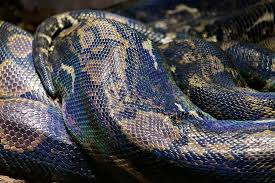

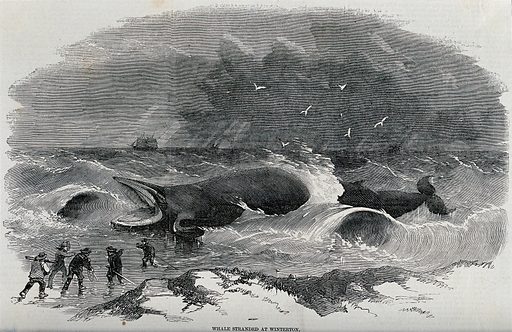


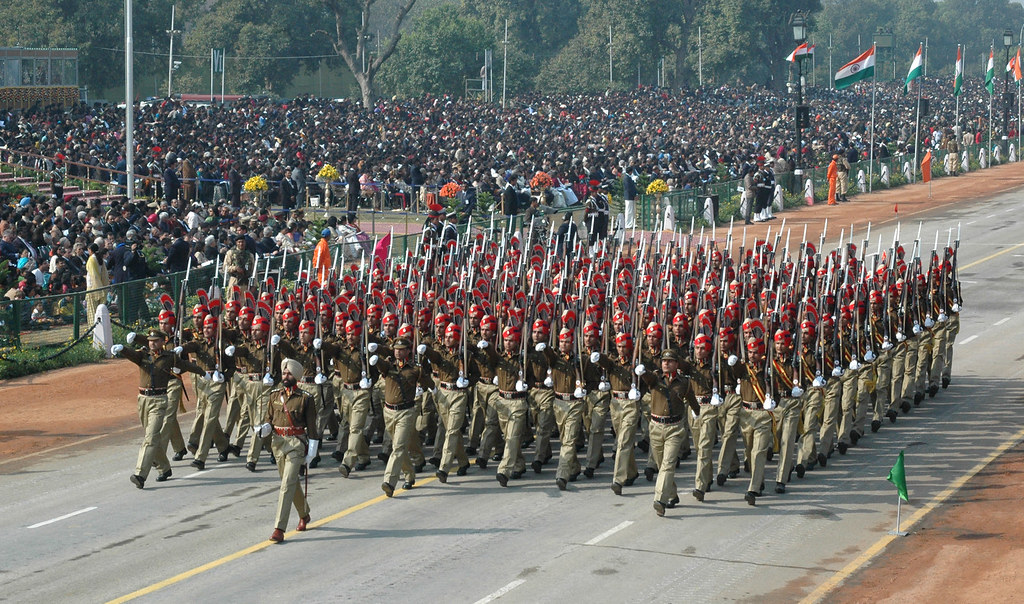
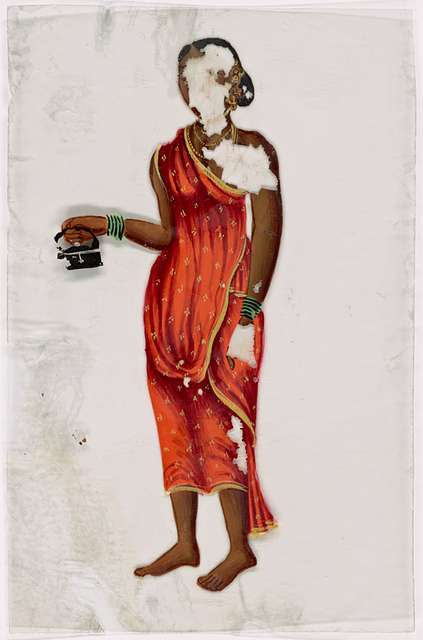
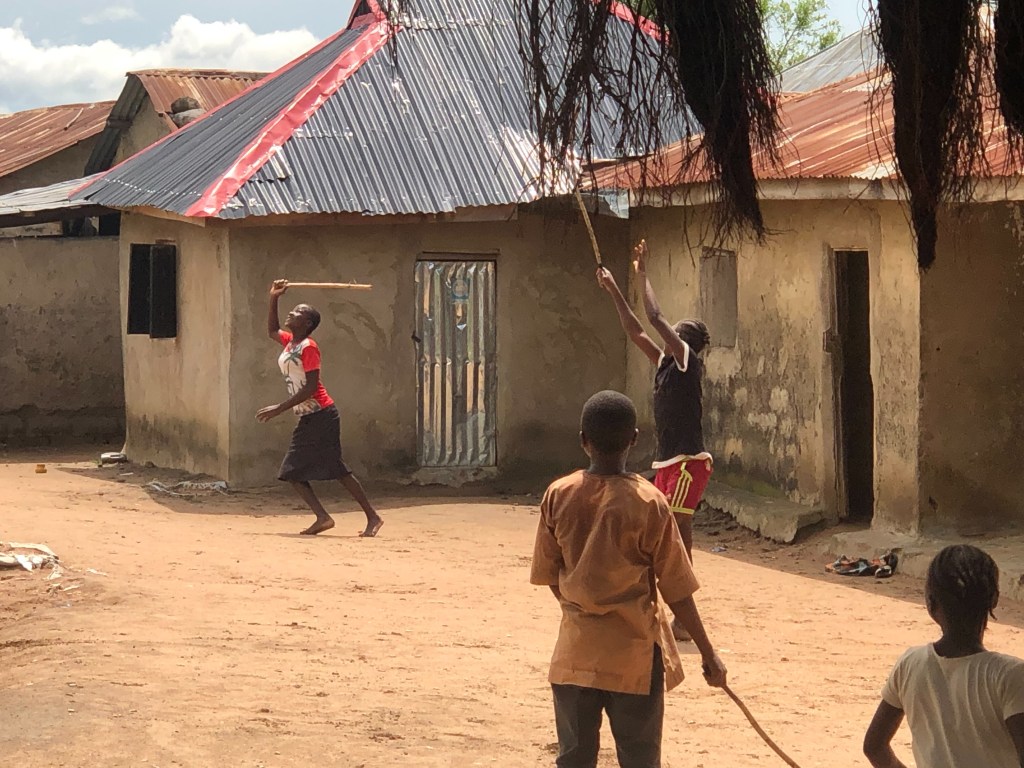


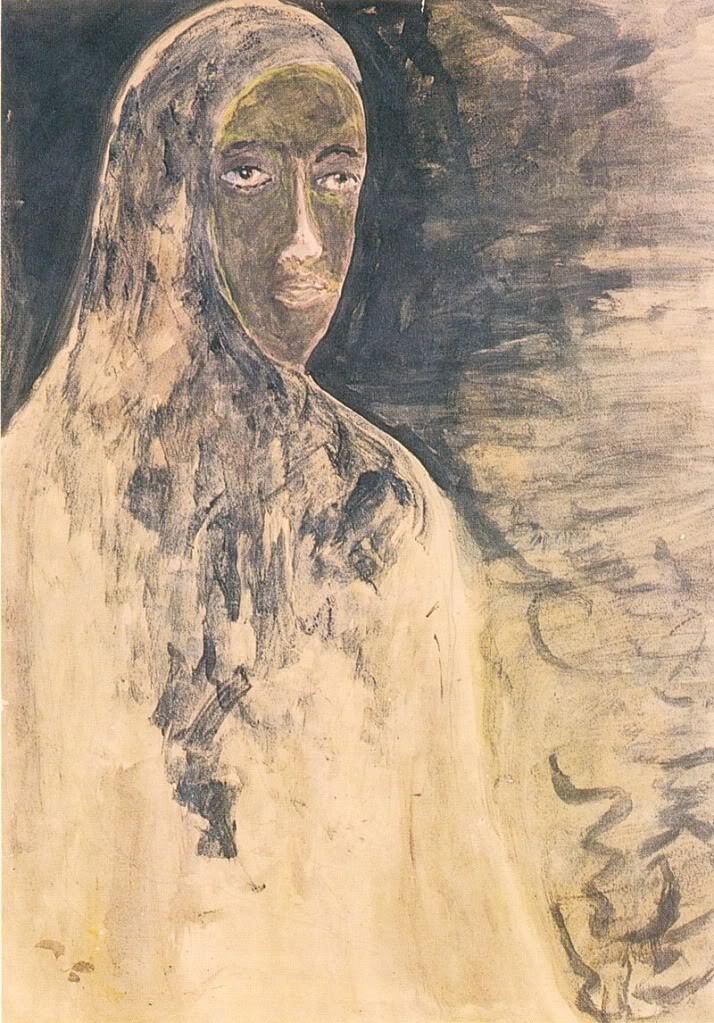
 Borderless