The Spider Web

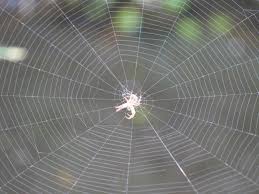
Two wind chimes hang in the balcony.

Between them, a spider's web,
a delicate existence of gossamer spun sugar
glistening in the sunlight

Yesterday, it survived a storm.
being thrown this way and that, violently swinging
yet
refusing to fall completely apart

Imagine, trusting in such unstable things

And thinking of

making a

Home!
Vijayalakshmi Harish is a writer, poet, and the author of Strangely Familiar Tales, a self-published collection of short stories. Her work has previously been published in various online journals.
PLEASE NOTE: ARTICLES CAN ONLY BE REPRODUCED IN OTHER SITES WITH DUE ACKNOWLEDGEMENT TO BORDERLESS JOURNAL.
Time

Time is a strange entity, you can't see it,
But it shows you a lot, you can't sense it,
But it teaches you a lot.
Time heals many wounds,
Frustrates some beyond healing.
The best time to act is now,
For yesterday is writing on water,
Tomorrow written on clouds,
Only today is written on solid walls.
Ashok Manikoth was born in 1956 in the coastal city of Visakhapatnam in Andhra Pradesh, India.Ashok is now residing with his family in Dubai, UAE.
.
PLEASE NOTE: ARTICLES CAN ONLY BE REPRODUCED IN OTHER SITES WITH DUE ACKNOWLEDGEMENT TO BORDERLESS JOURNAL
A caged bird sings

All the birds thronged
To hear the songs of this bird
Which inspired
Them because these songs were
Intertwined with oppressed peoples' lives.
The caged bird sang of freedom and liberty
Nature and its beauty,
Various forms of struggles
In Jharkhand hilly and forest areas.
Some vultures were nervous,
Implicated this bird with false charges
Imprisoned in a cage, tortured,
Questioned and assaulted
Till it lost its physical strength to fight
But had the mental strength and 'might'
To face the situation till its last breath!
The bird succumbed one day
And became vultures' prey
Leaving its admirers in sorrow
Who dreamt of a 'better tomorrow'!
Its songs still reverberate in the distant areas
And the sharp voice stings
Its detractors but all its friends and lovers
Hum the tunes of this 'bard' with wet eyes
Courageously march forward
Without looking ' backward!

(For Fr. Stan Swamy and Jiten Marandi, folk singer of Jharkhand, who was a member of Committee for release of political prisoners. Source: article published in Telugu monthly 'Vasanthamegham'  Oct  1, 2021)
.
K Sheshu Babu is a writer from everywhere, heavily influenced by Assamese poet Bhupen Hazarika’s ‘ Ami Ek Jajabor’ (I am a wanderer). Some of his publications, including poems, have appeared in Countercurrents.org, Virasam, counterview.org, counterview.net, Leaves of Ink, Tuck magazine, Scarlet Leaf Review, poemhunter.com, Dissident Voice and Sabrangindia.
.
PLEASE NOTE: ARTICLES CAN ONLY BE REPRODUCED IN OTHER SITES WITH DUE ACKNOWLEDGEMENT TO BORDERLESS JOURNAL.
Old Guitarist (1903-04) by Pablo Picasso (1881-1973) Courtesy: Creative Commons
Deep in my Couch


Deep in my couch
of magnetic dust,
I am a bearded old man.
I pull out my last bundle
of memories beneath
my pillow for review.
What is left, old man,
cry solo in the dark.
Here is a small treasure chest
of crude diamonds, a glimpse
of white gold, charcoal,
fingers dipped in black tar.
I am a temple of worship with trinket dreams,
a tea kettle whistling ex-lovers boiling inside.
At dawn, shove them under, let me work.
We are all passengers traveling
on that train of the past—
senses, sins, errors, or omissions
deep in that couch.
Michael Lee Johnson lived ten years in Canada during the Vietnam era and is a dual citizen of the United States and Canada. Today he is a poet, freelance writer, amateur photographer, and small business owner in Itasca, DuPage County, Illinois. Mr. Johnson is published in more than 2033 new publications. His poems have appeared in 42 countries; he edits and publishes ten poetry sites.
.
PLEASE NOTE: ARTICLES CAN ONLY BE REPRODUCED IN OTHER SITES WITH DUE ACKNOWLEDGEMENT TO BORDERLESS JOURNAL
THE NIGHT MUSIC
(After Liu Yong)

My clock ticks like
an incessant toothache.
Clouds soft as pillows
smother the moon,
as I sit beside the river.
All night I hear waves
beat the shore, as if
it were a door
they can’t open.
A bird shrieks from
joy or from fear.
Life is often unclear.
I’m nearing sixty.
I still have no idea
who I am, or why
I’m even here.
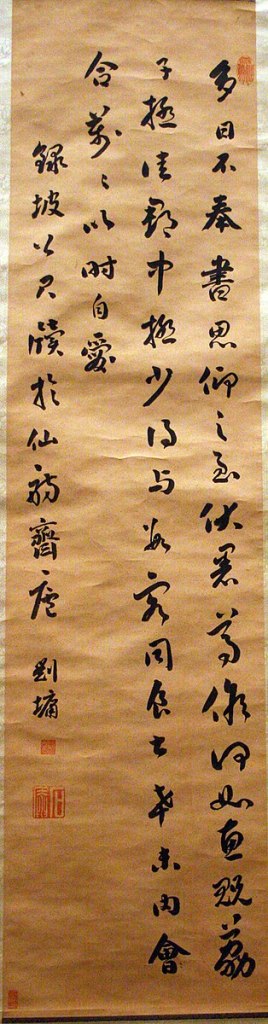
Liu Yong (1719-1805)
Script written by Liu Yong in the Shandong Museum
Liu Yong was a minister in the Qing Dynasty and was regarded as a most influential calligrapher. Courtesy: Creative Commons.
George Freek’s poetry has recently appeared in The Ottawa Arts Review, Acumen, The Lake, The Whimsical Poet, Triggerfish and Torrid Literature.
.
PLEASE NOTE: ARTICLES CAN ONLY BE REPRODUCED IN OTHER SITES WITH DUE ACKNOWLEDGEMENT TO BORDERLESS JOURNAL
Rebranding


Once in a certain village there lived a young man.

He was so poor that he stole a sheep.

The villagers branded ST -- sheep thief – on his forehead.


The nickname of sheep thief followed the young man.

He was despised and treated coldly.

But he did his best and did his own work in silence.

He also threw himself into hard work in the village.

He was always honest and faithful, regretful of his past faults.


The villagers' attitudes began to change gradually.


With the passage of time, his black hair changed to white.

The villagers began to give him their sincere respect.

The ST on his forehead was no more the initials of a sheep thief.


Every villager regarded the letters as the initials of a Saint.

The young man condemned as a sheep thief

became a grand old man revered as a saint by the villagers.
Ihlwha Choi is a South Korean poet. He has published multiple poetry collections, such as Until the Time, When Our Love will Flourish, The Color of Time, His Song and The Last Rehearsal.
.
PLEASE NOTE: ARTICLES CAN ONLY BE REPRODUCED IN OTHER SITES WITH DUE ACKNOWLEDGEMENT TO BORDERLESS JOURNAL
Virginia

Last night, I watched Virginia agonize
over writing and not writing,
over feeling empty [having given her all
to a manuscript],
over not knowing what to write next,
over watching herself succumb to love
and then having to live through betrayal.

I watched, intently, her perennially welled-up eyes,
as if in anticipation of the next tragedy.

I watched her speak of death
as if one was the artist and the other muse,
though I cannot say which was which.

I meditated over the words that left her mouth
and those that didn’t.

As she stood on the river’s
edge, contemplating its depth,
I stood by her side and wondered
what it would be like to simply disappear.

I listened, mesmerised, as she
disrobed a love so beautiful and utterly complete
just so the truth underneath could come up for air.

I marvelled at her effortlessness with words
and the effort it took her to speak them.

And as she disappeared —
yet again — into the solitary
depths of her mind,
I wondered what it would be like
to have a room of one’s own.
An Illusion

The sky was as hushed as the breath of a bee
and the world was bathed in shades of palest gold
when I awoke.

She came to me with the sound of falling leaves
and the scent of new-mown grass;
I held out my arms to her and she passed

into oblivion ...


Leaf Fall

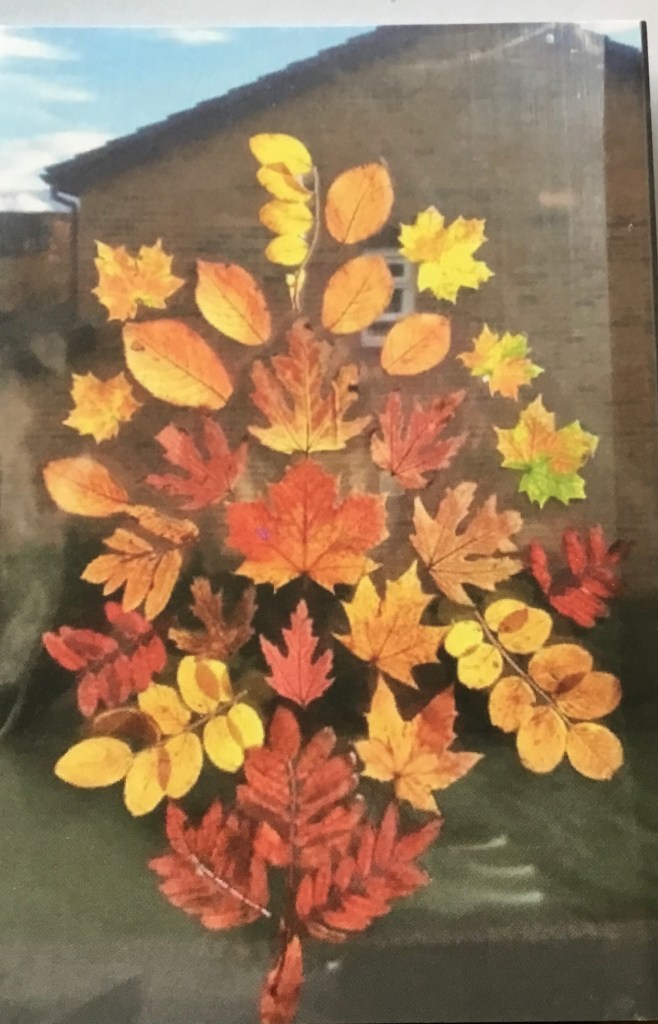
Whatever winds encountered soon resolved
to swirling fragments, till chaotic heaps
of leaves lay pulsing by the backyard wall.
In lieu of rakes, our fingers sorted each
dry leaf into its place and built a high,
soft bastion against earth’s gravitron—
a patchwork quilt, a trampoline, a bright
impediment to fling ourselves upon.

And nothing in our laughter as we fell
into those leaves was like the autumn’s cry
of also falling. Nothing meant to die
could be so bright as we, so colourful—
clad in our plaids, oblivious to pain
we’d feel today, should we leaf-fall again.


Childhood's End

How well I remember
those fiery Septembers:
dry leaves, dying embers of summers aflame
lay trampled before me
and fluttered, imploring
the bright, dancing rain to descend once again.

Now often I’ve thought on
the meaning of autumn,
how pale moons eerie mornings enchanted dark clouds
while robins repeated
gay songs sagely heeded
so wisely when winters before they’d flown south ...

And still, in remembrance,
I’ve conjured a semblance
of childhood and how the world seemed to me then;
but early this morning,
when, rising and yawning,
I found a grey hair ... it was all beyond my ken.


A Vain Word

Oleanders at dawn preen extravagant whorls
as I read in leaves’ Sanskrit brief moments remaining
till sunset implodes, till the moon strands grey pearls
under moss-stubbled oaks, full of whispers, complaining
to the darkening autumn, how swiftly life goes—
as I fled before love ...
                                     Now, through leaves trodden black,
shivering, I wander as winter’s first throes
of cool listless snow drench my cheeks, back and neck.

I discerned in one season all eternities of grief,
the spectre of death sprawled out under the rose,
the last consequence of faith in the flight of one leaf,
the incontinence of age, as life’s bright torrent slows.

O, where are you now?—I was timid, absurd.
I would find comfort again in a vain word.
Michael R. Burchhas over 6,000 publications, including poems that have gone viral. His poems have been translated into fourteen languages and set to music by eleven composers. He also edits The HyperTexts (online at www.thehypertexts.com).
.
PLEASE NOTE: ARTICLES CAN ONLY BE REPRODUCED IN OTHER SITES WITH DUE ACKNOWLEDGEMENT TO BORDERLESS JOURNAL.
30 October 2008


there were

only black clouds

around ganeshguri


a sound

of high frequency

distorted the crowd


they were

running in madness

all around


the motors

were burning

black


so were

the tiny pieces

of flesh scattered


minutes after

the bomb blasted

the city stopped


people were

glued to the televisions

and the radio


now after years

we have moved on

or have we?
This poem centres around 30th October, 2008, where a series of bomb blasts killed many in the Indian state of Assam.
Sutputra Radheye is a young poet from India. He has published two poetry collections — Worshipping Bodies(Notion Press) and Inqalaab on the Walls (Delhi Poetry Slam). His works are reflective of the society he lives in and tries to capture the marginalized side of the story.
.
PLEASE NOTE: ARTICLES CAN ONLY BE REPRODUCED IN OTHER SITES WITH DUE ACKNOWLEDGEMENT TO BORDERLESS JOURNAL.
Poetry of Munir Momin, translated from Balochi by Fazal Baloch
Munir Momin is a contemporary Balochi poet widely cherished for his sublime art of poetry. Meticulously crafted images, linguistic finesse and profound aesthetic sense have earned him a distinguished place in Balochi literature. His poetry speaks through images, more than words. Momin’s poetry flows far beyond the reach of any ideology or socio-political movement. Nevertheless, he is not ignorant of the stark realities of life. The immenseness of his imagination and his mastery over the language rescues his poetry from becoming the part of any mundane narrative. So far Munir has published seven collections of his poetry and an anthology of short stories. His poetry has been translated into Urdu, English and Persian. He also edits a literary journal called Gidár.
The Beloved City

Bemoan not the silence.
You are still a new arrival here,
Your colour' still brighter than this city’s trees
No one will talk to you yet.
Once the city’s poison
Seeps into your veins and fades away,
A relationship will blossom
And then the city will converse with you.

Look at me,
I’ve travelled all my life
Still my questions remain thirsty for an answer
And dry are the eyes of these stagnant clouds.
If you seek life here,
Look for a few graves on the city’s outskirts
Which are not ruined yet.
On these graves,
Some flowers have blossomed
They often whisper to each other
And there are a couple of pigeons
Whose eyes well up at times, otherwise,

The inhabitants of this city are the kind of people
Who right at the time of their death
Drifted off to sleep.
When they woke up,
The battler was over
And the caravan’s dust had settled.
Fazal Baloch is a Balochi writer and translator. He has translated many Balochi poems and short stories into English. His translations have been featured in Pakistani Literature published by Pakistan Academy of Letters and in the form of books and anthologies.
.
PLEASE NOTE: ARTICLES CAN ONLY BE REPRODUCED IN OTHER SITES WITH DUE ACKNOWLEDGEMENT TO BORDERLESS JOURNAL








 Borderless