Categories
Poetry

Walking Gretchums

By Saptarshi Bhattacharya

WALKING GRETCHUMS

Ever seen a walking gretchum?
'The Scourge of a Good Night's Sleep' they are called.
Exactly when you are tired of the day's din and bustle,
Of trying to crawl up the ladders of your world,
And all you want to do is lie down and start the new day afresh,
Or when you are full and getting ready for your afternoon nap,
They will climb your bed and whisper into your ears,
All that which would have been better if you had not heard.
 
To semi-suicidal teens, they sing songs to overcome acrophobia.
To nine-to-five workers, they sing hymns of living the high life.
To the eligible jobless, they play the clarion call to defiantly create their own worlds.
To the old and wise, they sigh about counter culture blues,
Saying, there's still time to be obscene if you haven't tried that in your youth.
 
Whether they are good or bad is still up for debate though.
However, that is mostly because they sealed the mouths of opposers with craft glue.
Maybe that's why people call them crafty.

Finally, a word of advice for all those who sleep with their ears open,
If you see little horned creatures, with a little microphone and speaker in hand, trying to get inside your mosquito net, don't ignore them.
The worst thing you can do is to leave them
For they feed on human ignorance.
The best thing to do is to call someone else to stare,
Because the walking gretchums have one glaring weakness,
They set themselves on fire when more than one pair of eyes simultaneously look at them.

Saptarshi Bhattacharya is a student at St. Xavier’s College, Kolkata, India. He is an amateur writer and a die-hard Bob Dylan fan.

.

PLEASE NOTE: ARTICLES CAN ONLY BE REPRODUCED IN OTHER SITES WITH DUE ACKNOWLEDGEMENT TO BORDERLESS JOURNAL

Categories
Poetry

Retirement

By Ashok Suri

RETIREMENT

Happier times descend,
Hectic ones come to an end.
Time to be with your family,
Relax like leaves on tree.
Time to pursue nobler passions,
Extend yourself to your fellow men.
Time to see how the sun rises, how it sets,
How the stars wander, how they rest,
How the moon sails and comes out of clouds,
Like a young prince moving out of crowds.
And times to know
Who is behind this eternal show?
Lord brings you the best,
A sky to fly and a warm nest to rest.

Ashok Suri is a retiree and is settled with his family in Mumbai. He tries to convey in simple words what he wants to say.

.

PLEASE NOTE: ARTICLES CAN ONLY BE REPRODUCED IN OTHER SITES WITH DUE ACKNOWLEDGEMENT TO BORDERLESS JOURNAL

Categories
Poetry

Braids & Birds

Poetry by Emalisa Rose

Emalisa Rose
BONDING BY BRAIDS

Braiding your hair,
thinking back to those
days when my mom
braided mine, as she spoke
of her mom, braiding hers.

You had your first child
last week. I hope that my
fingers, somewhat arthritic,
can revive and make braids
for my grandson.

BIRDFUL OF BRANCHES 

A mural of cards, gifts
and photos, paper the
walls, in the room where
she respites, for the past
several months.

Once barren trees, now bloom
back with berries, as she’s
looking ahead, to the days
life had promised her.

Leaves on, or leaves off, five
sparrows sing to the sycamore,
as rain plays redemption, where
Jane once lived life, by the window.

WHAT SHE WENT BACK FOR 

Knowing the storm was forth
coming, seeking the lowlands
Jane does a run back to collect
those few things she holds dear -

her best reading glasses, her
pouty pink lipstick, the poems
she’d be working on

and the half pack of Parliaments
she’d been hiding, knowing this
won’t be the time, to divest of
bad habits.

When not writing poetry, Emalisa Rose enjoys crafting and birding. She volunteers in animal rescue.  Her latest collection is On the whims of the crosscurrents, published by Red Wolf Editions..

.

PLEASE NOTE: ARTICLES CAN ONLY BE REPRODUCED IN OTHER SITES WITH DUE ACKNOWLEDGEMENT TO BORDERLESS JOURNAL

Categories
Poetry

Who Said You Could Die…

By A Jessie Michael

Woman on her Deathbed,1777, Abraham Delfos. Courtesy: Creative Commons
Who said you could die Ma,
Just because you are old?
The Ganges is called mother.
Like her you have flowed long,
Tributaries and distributaries webbing 
wide around the world.

You have lived so long in this world,
How will we breathe Ma if you die?
Your blood in our veins is our webbing.
A river dos not dry up because it is old
So who said you could die mother
Just because you have lived so long?

We are mothers with a mother,
Living in another world.
We have missed so long
your laden table, dishes to die
for, and curry rice balls of old.
The stories of your history is our webbing.

We still do not know the webbing  
Of the food of the mother --
Land, recipes of old,
Food of the gods from another world.
Our taste buds will die
Not having tasted them so long.

We have loved you so long,
How will we mend the webbing
Of the delta when you die mother?
You are the Ganges of our world.
You are eternal, not old.

We have also grown old
and our shadows are long.
What will we do in this wide world
but cling desperately to tattered webbing
Please stay. Breathe mother
Who said you could die?

A. Jessie Michael is a retired Associate Professor of English from Malaysia. She has written short stories for online journals, local magazines and newspapers. She has published an anthology of short stories Snapshots, with two other writers and most recently her own anthology The Madman and Other Stories (2016).

PLEASE NOTE: ARTICLES CAN ONLY BE REPRODUCED IN OTHER SITES WITH DUE ACKNOWLEDGEMENT TO BORDERLESS JOURNAL

Categories
Poetry

The Death of Time

By Ananya Sarkar

THE DEATH OF TIME

You mark the death of everything
Love, anger, fear,
Suffering in its throes…
Yet when you die
How will we know?
For neither the summer breeze
Nor the starlit sky
Will give way to the fact that you are no more...
So when you die
How will we know?

Ananya Sarkar is a creative writer from Kolkata. Her work has been published in various ezines. She loves to go on long walks, cloud gaze and ponder upon miracles.

.

PLEASE NOTE: ARTICLES CAN ONLY BE REPRODUCED IN OTHER SITES WITH DUE ACKNOWLEDGEMENT TO BORDERLESS JOURNAL

Categories
Poetry

Mahnu by Atta Shad

Balochi Poem by Atta Shad, translated by Fazal Baloch

Atta Shad: Photo provided by Fazal Baloch

Atta Shad (1939-1997) is the most revered and cherished modern Balochi poet. He instilled a new spirit in the moribund body of modern Balochi poetry in the early 1950s when the latter was drastically paralysed by the influence of Persian and Urdu poetry. Atta Shad gave a new orientation to modern Balochi poetry by giving a formidable ground to the free verse, which also brought in its wake a chain of new themes and mode of expression hitherto untouched by Balochi poets. Apart from the popular motifs of love and romance, subjugation and suffering, freedom and liberty, life and its absurdities are a few recurrent themes which appear in Shad’s poetry. What sets Shad apart from the rest of Balochi poets is his subtle, metaphoric and symbolic approach while versifying socio-political themes. He seemed more concerned about the aesthetic sense of art than anything else.

Shad’s poetry anthologies include Roch Ger and Shap Sahaar Andem, which were later collected in a single anthology under the title Gulzameen, posthumously published by the Balochi Academy Quetta in 2015. The translated poem is from Gulzameen.

Mahnu, you envy of the moon,
I am a wretched of the earth.
My existence is like a dry and barren field.
Lightning scorched it to ashes.
Facing the wrath of the frigid winters,
Forever thirst-stricken,
Eyes seek the sea of fragrant clouds
At the far and unbeknownst threshold of hope.
May the rain of sublime hailstones set the dry field afire.
May there remain no cluster of marrying clouds 
at the far end of the horizons. Nor any desire 
in the hearts of waiting maidens.

Mahnu, envy of the moon,
You're oppressed by the night.
I'm a wretched of the earth.
Like you,
I too am lost in the fathomless expanse of loneliness.
Milky-way illuminates your path,
And mine is dark without a star.
Moonlight is the ecstasy of your beauty's wine,
I'm nothing but a sigh.
Like melody everywhere echo the words of your command,
I've shrunk like a suppressed call.
A world yearns for you.
A fake hope is all my life hinges upon.
You soar high like a lover's imagination.
I'm humble like wisdom.

Mahnu, envy of the moon,
Granted you are light, 
I'm ash and dust.
Yet, if I survive not these fathomless days and nights
Woes and torments of life,
Then, think awhile,
Who in the world 
Will write the songs extolling you?

Mahnu, you envy of the moon,
I am a wretched of the earth.

Fazal Baloch is a Balochi writer and translator. He has translated many Balochi poems and short stories into English. His translations have been featured in Pakistani Literature published by Pakistan Academy of Letters and in the form of books and anthologies. Fazal Baloch has the translation rights of Atta Shad from the publisher.

PLEASE NOTE: ARTICLES CAN ONLY BE REPRODUCED IN OTHER SITES WITH DUE ACKNOWLEDGEMENT TO BORDERLESS JOURNAL

Categories
Poetry

Short Poems

By John Grey

NIGHTFALL IN THE ROCKIES

Bedded down in darkness,
mountains, forests,
turn their back on me.
The scenery
has had enough
of my love.


REGARDING THE TICKET TAKER

He's paid minimum wage
to tear tickets in two,
drop one half in a bucket,
hand the other half back
to the customer.

A superhero movie
awaits you.
This guy's your last known
point of contact
with the real.


BRIGHT MIDNIGHT

June in Alaska

midnight sun

it's been a year
since today
last saw tomorrow


FIRST HIGH SCHOOL ROMANCE 

your hand in mine
is a far cry
from the school lab
where together
we watched
sulphuric acid
eat away a beetle 


THE HUMMINGBIRDS AT THE FEEDER

80 wing-beats a second
just to hover in place --

I’m at the window
watching –

I can’t even remember
the last time
I flapped my arms.

John Grey is an Australian poet, US resident, recently published in Sheepshead Review, Stand, Poetry Salzburg Review and Hollins Critic. His latest books, Leaves On Pages, Memory Outside The Head and Guest Of Myself are available through Amazon. Work upcoming in Ellipsis, Blueline and International Poetry Review.

.

PLEASE NOTE: ARTICLES CAN ONLY BE REPRODUCED IN OTHER SITES WITH DUE ACKNOWLEDGEMENT TO BORDERLESS JOURNAL
Categories
Poetry

An Instant

By Mike Smith

AN INSTANT

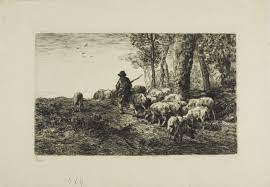
Suddenly we stop, the sheep and I,
Even the squirrel on the wall.
I’m carrying sticks. They’re in the field.

I heard nothing at all
But suddenly we stop, the sheep and I,
As if there were a distant call,
Even the squirrel on the wall,
Suddenly motionless eyes peeled.
I’m carrying sticks. They’re in the field.

Maybe there’s some message on the breeze.
I heard nothing at all.
Perhaps they’re more finely tuned than me,
But suddenly we stop, the sheep and I,
As if some deity had drawn us to a halt,
As if there were a distant call
From one who had authority over us all,
Even the squirrel on the wall.
For a moment we’re like a photograph,
Suddenly motionless eyes peeled,
As if something amazing had been revealed.
I’m carrying sticks. They’re in the field.

And the best of it is,
Maybe there’s some message on the breeze
That I can read too.
I heard nothing at all,
But we all know there are other senses.
Perhaps they’re more finely tuned than me,
Or can see more clearly,
But suddenly we stop, the sheep and I
And I’m included with them all,
As if some deity had drawn us to a halt,
Not with a command but
As if there were a distant call
Addressed to someone out of sight
From one who had authority over us all,
That we just overheard,
Even the squirrel on the wall,
That made us stop and realise.
For a moment we’re like a photograph,
Wondering if perhaps there is some deep intent,
Suddenly motionless eyes peeled,
Hiding behind this pure invention,
As if something amazing had been revealed,
Going about our proper business.
I was carrying sticks. They were in the field.

Mike Smith lives on the edge of England where he writes occasional plays, poetry, and essays, usually on the short story form in which he writes as Brindley Hallam Dennis. His writing has been published and performed. He blogs at www.Bhdandme.wordpress.com 

.

PLEASE NOTE: ARTICLES CAN ONLY BE REPRODUCED IN OTHER SITES WITH DUE ACKNOWLEDGEMENT TO BORDERLESS JOURNAL

Categories
Poetry

Lake Poets & Ryan

Poetry by Ryan Quinn Flanagann

A view of the Lake District which nurtured poets like Wordsworth, Coleridge & Southey and writers like the controversial Charles and Mary Lamb. Courtesy: Creative Commons
In the Kawarthas Thinking of the Lake Poets Strung Out on Opium, Words and the View

Sure, Coleridge was a Wordsworth fanboy, but I always thought him the better scribe.  
Taking that albatross of opium dreams as far as bad teeth were willing to chatter.  And Southey sliding into third although Bryon claimed him thrown out by establishment leanings.  Both Lambs lead to slaughter and De Quincey’s Confessions of an English Opium Eater which must have made Samuel Taylor want to race Kubla Khan straight to the bottom of the laudanum bottle.  Addiction in popular literature and not just for it.  And here I am beside wifey’s warm jam jams.  In the Kawarthas, thinking of the Lake Poets strung out on opium, words and the view.  How the Edinburgh Review coined the term trying to slander a little drummer boy out of his only percussion.  But the name stuck, as such things often do and who remembers anything about the critic now?  That’s what I adore about this guttural bullfrog of a cosmos.  How the hodge of the podge never clamps down on salty bitters.  Beside this fire reinvented, on the water and off the clock.  Heavy gangplank eyes uncorking another bottle.  Leaning back in twin Adirondacks wishing the loon out of every asylum.  The howl of distant wolves across this long unanswered wilderness.

Ryan Quinn Flanagan is a Canadian-born author residing in Elliot Lake, Ontario, Canada with his wife and many bears that rifle through his garbage.  His work can be found both in print and online in such places as: Evergreen Review, The New York Quarterly, Borderless Journal, GloMag, Red Fez, and The Oklahoma Review

.

PLEASE NOTE: ARTICLES CAN ONLY BE REPRODUCED IN OTHER SITES WITH DUE ACKNOWLEDGEMENT TO BORDERLESS JOURNAL

Categories
Poetry

The Dispute with Simon Magus

Poetry by William Miller

Disputation with Simon Magus, Filippino Lippi (1457-1504). Courtesy: Creative Commons
THE DISPUTE WITH SIMON MAGUS
  (after Filippino Lippi)

The apostles walk in lock step, red-capped 
and wearing long Florentine robes, their eyes 
steady with purpose. But he looks between them:
cropped black hair, long aquiline nose, almond eyes
that probe for more than wisdom in a leather-bound missal.

One in three, the third member of the trinity—man’s soul
curious beyond silver clouds, the harps of heaven,
doesn’t believe in a bended knee or simple names 
for an ancient mystery: “Jesus,” “Jehovah,” “I AM.”
Simon Magus carried in his black heart the beat

of God’s favourite angel, all the secrets he knew
 inside locked iron gates. From his grave grew a tree
of unforbidden fruit, the pulpy juice sticky and sweet
as poison that does everything but kill. Clerics walk
in lock step and never purchase with a bag of gold florins

the miracle of healing a withered hand, the secret
of daily resurrection. Simon’s dark eyes look
into ours asking only that we seek and find, knock
and open the door that leads to a downward staircase,
treasures the king hordes only for himself.

FULL IMMERSION

The first in my Sunday school class to walk down,
answer the altar call by myself, I was only twelve.
Only twelve but growing into a gray, confused age.
My father drank vodka from a flask in the church
parking lot; my mother was a perfumed ghost
with blood-red nails, there and not there.

I didn’t believe in Jesus or the grim preacher,
the pious rednecks in folding chairs who ate
saltine crackers and sipped warm grape juice from
shot glasses once a month. I hated hymns, 
never wanted to join the faithful on a “Beautiful 
Shore” or stand like a cheated fool at the foot

of the “Old Rugged Cross.”  But I liked 
the water rite, hoped to drown and come up 
someone else reborn with wings to fly away from
the new brick church with modern stained glass.
My only ticket out was dying in a tank behind
the altar, chlorine water in my nose and lungs

after being dunked three times. And on that day,
two Sundays later, I wore a choir robe and rubber 
boots, took three steps down into the blue-green
lukewarm water. The preacher pinched my nose
and held me deeper when he called down
the Holy Spirit. It didn’t work, not then

or now, not death enough but something different
for a few drowned seconds, heart pumping hard
from lack of air. My robe was soaked, my hair 
wet and pasted to my forehead. The organ
cranked out “Amazing Grace” as if I were saved,
a child sinner come home.


MY NEIGHBOUR IS A DEMONOLOGIST

He once told fortunes on the square but made no money.
Our super, he wears a black wifebeater t-shirt 
with a white upside-down cross and the angry words
across his chest: “Hail Satan!”

Never, unless it was a third-time request to fix a broken
smoke alarm or leaky pipe, did he speak to anyone,
his face hidden behind long dirty-blonde hair.
Kittens in his window looked out all day with sad eyes—
                                             
my next-door neighbor, a drunken bartender, swore
he sacrificed them, one by one, to the Devil.
Not until the hurricane that blew our lights and AC out
for eight days and three hours,

the temperature over 100 degrees, did his sallow skin
start to crack. He told me at midnight in the courtyard
that he wanted to go home to Indiana, buy a farm 
and live with cats he didn’t raise to sell to the best owners

he could find. He loved their mystery, their silence.
New Orleans had chewed him up. The mosquitos alone 
made us all victims, the water we had to boil 
for thirty minutes before we drank it, took a bath

or washed our hands. He was robbed for his shoes
and belt, stepped on a dirty needle walking home.
He wanted to see the seasons change, watch the leaves
tumble down and die a slow, lovely death.

Twenty miles from the nearest church, he’d live alone,
and never care if the moon meant anything more 
than light between the trees or on the grass—
twenty miles from any cross, upside down or not.

William Miller’s eighth collection of poetry, Lee Circle, was published by Shanti Arts Press in 2019.  His poems have appeared in many journals, including, The Penn Review, The Southern Review, Shenandoah, Prairie Schooner and West Branch.  He lives and writes in the French Quarter of New Orleans.

.

PLEASE NOTE: ARTICLES CAN ONLY BE REPRODUCED IN OTHER SITES WITH DUE ACKNOWLEDGEMENT TO BORDERLESS JOURNAL