Categories
Poetry

A Scene with an Aged Queen

Poetry and translation from Korean by Ihlwha Choi

From Public Domain
Leaning on her cane, limping along,
An old woman steps out to bask in the spring sun,
And though February’s chill lingers,
The alleyway feels warm.

She tends her garden alone,
Feeds the fire in the hearth…
And so, in the countryside home,
Swallows still build their nests.

Though the mulberry fields have turned to sea,
She lets pumpkin vines climb the fence.
And all summer long,
Balsam flowers bloom in the yard.

With pumpkin vines and swallows,
A garden and balsam flowers under her care,
She is an aged queen,
Ruling over an ancient land.

Ihlwha Choi is a South Korean poet. He has published multiple poetry collections, such as Until the Time When Our Love will Flourish, The Color of Time, His Song and The Last Rehearsal.

.

PLEASE NOTE: ARTICLES CAN ONLY BE REPRODUCED IN OTHER SITES WITH DUE ACKNOWLEDGEMENT TO BORDERLESS JOURNAL. 

Click here to access the Borderless anthology, Monalisa No Longer Smiles

Click here to access Monalisa No Longer Smiles on Kindle Amazon International

Categories
Poetry

Poetry by Arshi Mortuza

Arshi Mortuza
PETRICHOR

“When it rains, it pours”, they say.
I think of the droplets on the blades –
Rainwater on grass I mean.

You were not rain, per se.
In my skies, the faintest gray.
Shall I open that floodgate?

I prepared for your arrival
Like one would before a hurricane
But you were a drizzle, at best.

Lucky for you, I was dry earth –
A distorted sense of self-worth.
Soaking up beads of bare minimum.

I guess only a few can make it pour when they rain.
You were just a fleeting cloud -- a phantom pain
Is what I’ll call your lingering scent.

A projected petrichor.
But in my heart, I’ll always know
That it was my storm, not yours.

Arshi Mortuza, author of One Minute Past Midnight (2022), is currently plotting her next book and her next adventure. On a mission to visit every country, she believes travel and poetry are the best ways to get lost and find herself. She can be found on Instagram as @poetessarshi

.

PLEASE NOTE: ARTICLES CAN ONLY BE REPRODUCED IN OTHER SITES WITH DUE ACKNOWLEDGEMENT TO BORDERLESS JOURNAL

Click here to access the Borderless anthology, Monalisa No Longer Smiles

Click here to access Monalisa No Longer Smiles on Kindle Amazon International

Categories
Poetry

Memories of Home

Poetry by Rakhi Dalal

Painting by Amrita Shergil (1913-1941)
THE MEMORIES

Old -- almost historical bricks
of the house built before Partition,
decaying wooden chaukath, deewal*,
light on blue home walls,
iron rod terrace,
and steep stairs to the roof --
Few memories my eyes gather from old pictures
like a camel collects water in its hump.
My five-year-old self sitting on Papa’s lap next to Amma* and Ma,
old black and white TV playing in the background.
Papa’s white kurta, Amma’s pastel and Ma’s brown floral saree
and my red and white checkered dress.
And smiles --
as if that was how we were all to live.
Together forever.

*chaukhat – door step; deewal: walls
*Amma -- the poet calls her grandmother Amma.

A KEEPSAKE

It is neatly folded, tucked to the farthest
stack of clothes in my almirah.
Your white chiffon saree --
black and white flowers speckled all over it.
I haven’t yet worn it, not even once and
I have it for nearly twenty years.

I remember the day
you opened your trunk,
the only worldly possession you had
and said --
have something for yourself.

Did you somehow know Amma,
it was to be our last meeting?
With hesitation I fumbled
through your things till I saw
this saree I had always liked.

When you put it on,
your tenderness would seep
into the texture of the fabric.
Its sheerness akin to the spark
I noticed at times,
in your seldom happy eyes.

Now sometimes I take it out,
touch the fabric,
rub it against my skin,
and put it back inside.
Afraid to wear this keepsake,
lest it wither away with time.

Rakhi Dalal writes from a small city in Haryana, India. Her work has appeared in Kitaab, Scroll, Borderless Journal, Nether Quarterly, Aainanagar, Hakara Journal, Bound, Parcham and Usawa Literary Review

.

PLEASE NOTE: ARTICLES CAN ONLY BE REPRODUCED IN OTHER SITES WITH DUE ACKNOWLEDGEMENT TO BORDERLESS JOURNAL

Click here to access the Borderless anthology, Monalisa No Longer Smiles

Click here to access Monalisa No Longer Smiles on Kindle Amazon International

Categories
Poetry

  Johnny Died a Soldier

By Stuart McFarlane

                  I
Johnny died a soldier
on a strange and foreign shore.
He'll ne'er be any older,
but twenty forevermore.

He loved his country, it was true,
he would defend his native land;
did not question what he must do,
but still he did not understand.

He knew there always must be war,
that a soldier's duty is to die;
yet yearned to know a little more,
could not really help but wonder why.

A piece of shrapnel pierced his brain;
they buried him there, or thereabouts;
buried him in the mud and rain,
along with all his fears and doubts.

II

'We are sorry to inform,' the telegram ran.
He was now a part of official losses;
no longer to be remembered as a man
but as a cross among ten thousand crosses.

Or as a name engraved on a monument
in some rural village square,
commemorating those in the regiment
who fought and died 'over there'.

'Fell this day in a just cause,
his life was cruelly slain.'
And so, through time, in all wars
the words remain the same.

Yes, still the words remain the same,
perpetuate the same, old story.
Too soon do we forget the pain;
a soldier's death is wreathed in glory.

III

This is the lot of a soldier --
better he has no name or face,
kitbag thrown across his shoulder,
consigned to some faraway place.

A soldier marches many a mile;
yet when he finally dies,
who can recall the warmth of his smile
or the colour of his eyes?

Those will there be who cherish his name,
who will remember him every day…
Till only a photo in a frame,
as, one by one, they each pass away.

Yes, Johnny died a soldier
on a strange and foreign shore.
He'll ne'er be any older,
But twenty forevermore.
From Public Domain

Stuart McFarlane is now semi-retired. He taught English for many years to asylum seekers in London. He has had poems published in a few online journals.                                                                                                                    

.

PLEASE NOTE: ARTICLES CAN ONLY BE REPRODUCED IN OTHER SITES WITH DUE ACKNOWLEDGEMENT TO BORDERLESS JOURNAL

Click here to access the Borderless anthology, Monalisa No Longer Smiles

Click here to access Monalisa No Longer Smiles on Kindle Amazon International
Categories
Poetry

When I write a Poem About You

By Ahmad Al-Khatat

From Public Domain
When I write a poem about you,
I imagine us together—
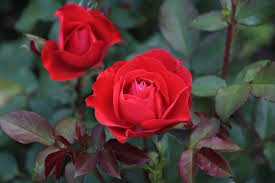
Two roses with green leaves,
You, a spark, an eternal inspiration.

My heart dissolves rapidly
On the papers of my homeland.
You are the pain I recognise,
The ink for my pens, the colour of my pencils.

Lovers erase their agonies with ease,
But my imagination is no fleeting illusion.
You are the brightness on every canvas,
My poem, the brush; my homeland, the water.

Small clouds of cigarette smoke rise above.
I respond to the locked doors of Montreal.
Baghdad throws me a bouquet of wildflowers,
As my pen trembles with nervous hands.

You are the day that will always smile upon me—
A laugh from you, a kiss from your lips, a privilege.
I admire you in the moment you ask me to pause,
To stop running into the night, swallowing poison.

Ahmad Al-Khatat is an Iraqi Canadian writer. His work was nominated for a Pushcart Prize in 2024 by Mad Swirl and Best of the Net 2019. His poetry has been translated into other languages and his work has been published in print and online magazines. He resides in Montreal, Canada, with his spouse.

.

PLEASE NOTE: ARTICLES CAN ONLY BE REPRODUCED IN OTHER SITES WITH DUE ACKNOWLEDGEMENT TO BORDERLESS JOURNAL

Click here to access the Borderless anthology, Monalisa No Longer Smiles

Click here to access Monalisa No Longer Smiles on Kindle Amazon International
Categories
Poetry

The Door I Never Opened

By Snehaprava Das

THE DOOR I NEVER OPENED                   

A nonchalant mist settles calmly
Over the pensive trees.
Dull and scarred leaves spread below in thick scatters
Like languishing memories…

A decaying door at an obscure bend
From the ruins of Time
Raises its grey, obstinate head.
What lay behind that discreet door
Did I ever want to know?
A wonderland of many rainbows
Or a sick valley of snow?
Had I cared to see if there lay behind that door
A terrain of spring delight
Or a tunnel of an endless night,
To see if the warm moment of love
Was gained or lost?
I clung instead to a world
Full of winter and frost.

The door, desiccated in time
Stands locked there still
May be if I had tried but a little
And stepped beyond,
I might have entered a rose garden
But I was never that discreet.

Dr.Snehaprava Das, is a noted writer and a translator from Bhubaneswar, Odisha. She has five books of poems, three of stories and thirteen collections of translated texts (from Odia to English), to her credit.

PLEASE NOTE: ARTICLES CAN ONLY BE REPRODUCED IN OTHER SITES WITH DUE ACKNOWLEDGEMENT TO BORDERLESS JOURNAL

Click here to access the Borderless anthology, Monalisa No Longer Smiles

Click here to access Monalisa No Longer Smiles on Kindle Amazon International

Categories
Poetry

Short Poems by Kiriti Sengupta

From Public Domain
‘I AM SORRY’ 

Figures of speech can appear lifeless.
Words matter while submitting to the tone.
They resonate when time allows them to be companions.

CHRIST CONCIOUSNESS

My friend,
you stand erect
beyond the edge
of life and death.
— Rabindranath Tagore

A friend asked,
“Who would you talk to
among the deceased?”

I had to be quick.
Several names
crammed my crown,
Dad’s included.

I answered, “God.”


IN A FOOL’S PARADISE

When legends depart, admirers claim,
“They will come together in heaven,
share everlasting bliss.”

Is there life after death?
Did these idols commend one another
when they were alive?
From Public Domain

Kiriti Sengupta has had his poetry featured in various publications, including The Common, The Florida Review Online, Headway Quarterly, The Lake, Amethyst Review, Dreich, Otoliths, Outlook, andMadras Courier. He has authored fourteen books of poetry and prose, published two translation volumes, and edited nine anthologies. Sengupta serves as the chief editor of Ethos Literary Journal and leads the English division at Hawakal Publishers Private Limited, one of the top independent presses established by Bitan Chakraborty. He resides in New Delhi. Further information available at http://www.kiritisengupta.com.

.

PLEASE NOTE: ARTICLES CAN ONLY BE REPRODUCED IN OTHER SITES WITH DUE ACKNOWLEDGEMENT TO BORDERLESS JOURNAL

Click here to access the Borderless anthology, Monalisa No Longer Smiles

Click here to access Monalisa No Longer Smiles on Kindle Amazon International

Categories
Poetry

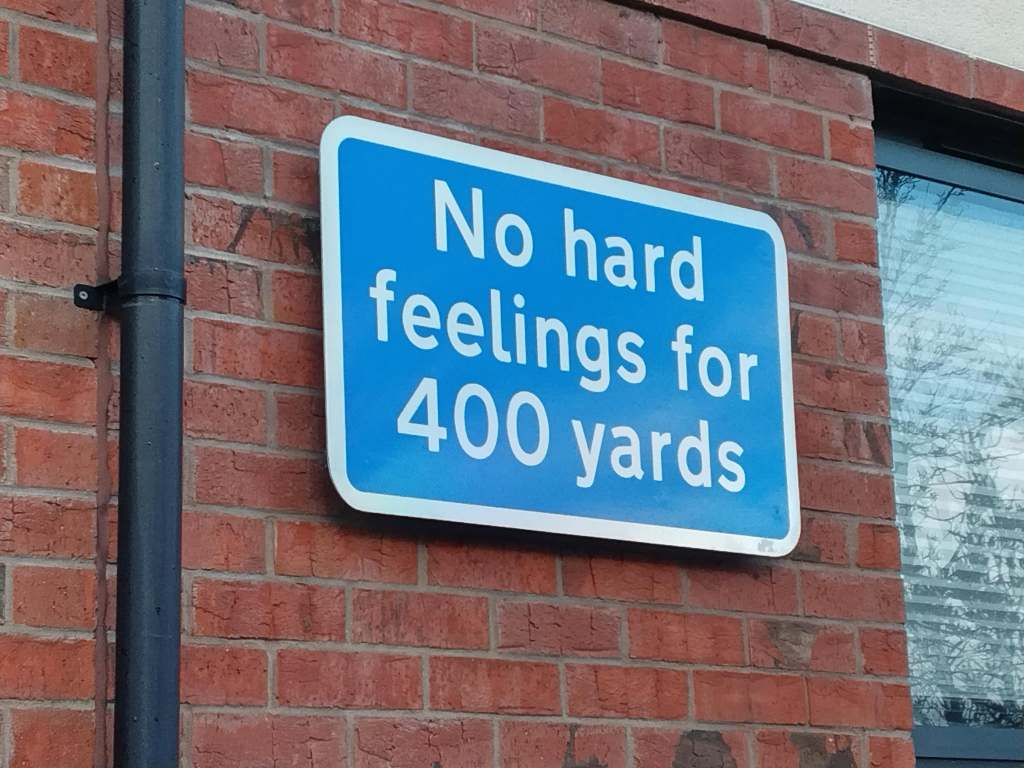
No Hard Feelings by Rhys Hughes

Photograph by Rhys Hughes
No hard feelings
for 400 yards
but beyond that distance
you can unleash
all the fury in existence
and even turn
like a firm worm
into an arrow of disaster
shot from a bow
by a vengeful archer.

Or if you prefer
you can transform yourself
into a doom-laden monster
running faster
than any athlete could
and sniffing prey out when
it hides in a wood
with the assistance of a nose
so persistent
that nothing in existence
can resist it.

No hard feelings
means only soft thoughts
are permissible
in the same way that only
easy tunes are
whistleable to lips
more familiar with quoting
comfy quips
than rugged ruminations.

Yes, whistleable
is a real word, I checked it
in a dictionary
while I was cartwheeling
up a garden path,
something I tend to do just
for the laugh
it generally affords me later.

I once knew a waiter
who jumped in alarm
when I somersaulted across
his restaurant floor
after entering the front door
on my way to my favourite
table: he wasn’t able
to control his nerves
and the meal he was bearing
ended up on the ceiling
with people staring
as it started to drip down.

No hard feelings!
That’s the issue, the nose in
the tissue, the reeling
peeling squealing teasing of
the kneeling devotee
of long-gone Don Quixote,
concealing his mirth
to prove his ultimate worth
while remaining
appealing, freewheeling,
even self-healing,
and mercifully large of girth.

Now come and join me
in the hard dance of softness
and we will prance
and caper like two wafers
stuck in an ice-cream cone
during a hurricane.
At least we won’t be alone!

My acrobatic days
are mostly over but every
400 yards or so
I twist and turn as the hard
feelings, hot from friction,
burn my soul.

Meanwhile, Don Quixote’s
dreamy head is
spinning slowly
like those festive windmill
sails on sale
at the end of
the short Cervantes season.

Rhys Hughes has lived in many countries. He graduated as an engineer but currently works as a tutor of mathematics. Since his first book was published in 1995 he has had fifty other books published and his work has been translated into ten languages.

.

PLEASE NOTE: ARTICLES CAN ONLY BE REPRODUCED IN OTHER SITES WITH DUE ACKNOWLEDGEMENT TO BORDERLESS JOURNAL

Click here to access the Borderless anthology, Monalisa No Longer Smiles

Click here to access Monalisa No Longer Smiles on Kindle Amazon International
Categories
Poetry

Of Lesser Gods & Pickle Boats

By Cal Freeman

From Public Domain
EPIGRAPH FOR GERRY RUSHLOW

Horses in springtime of a memory. We ride
through vernal pools where mares plash like paddlewheels,

their coats glassed with rain.
All winter it was catacombs and dust

and slow gates ceding will to idiots
in us, jogging and loping ourselves dumb.

The four-beat spring’s in gallop as the crows
ascend, discussing plights of lesser gods.


ONE FOR THE PICKLE BOAT


In the harbour, they’ve blessed the blessed boats
for their sprints to Mackinac.

We take our place along the inscrutable shore
to watch the race. A greenbottle fly is perched

in the right margin, it will drown
in the kitchen sink tomorrow. OC86,

the former Windquest, will make it to the island
in just over 17 hours. I picture the crew

in foul weather gear as they cut inside
Cove Island, squinting blind through

the spray off the hull, switching out sails
like homonyms, gaining speed in a boat

whose name they have forgotten.
We make passing comments about

each passing boat and bird, the isosceles triangle
of a taut mainsail against a blue horizon,

how the word “again” deflates experience.
Our trundles reefed to boom, lost again,

finding ourselves again, this summer again.
How the morning gets so early for that final craft.
From Public Domain

Cal Freeman is the author of the books Fight Songs, Poolside at the Dearborn Inn, and The Weather of Our Names (forthcoming from Cornerstone Press in 2025). He lives in Dearborn, MI and teaches at Oakland University.

.

PLEASE NOTE: ARTICLES CAN ONLY BE REPRODUCED IN OTHER SITES WITH DUE ACKNOWLEDGEMENT TO BORDERLESS JOURNAL

Click here to access the Borderless anthology, Monalisa No Longer Smiles

Click here to access Monalisa No Longer Smiles on Kindle Amazon International
Categories
Poetry

Wildfires in Uttarakhand

By Gazala Khan

The Uttarakhandi bemuse over the beauty of the forests:
the primordial mitochondria of nature
with forty five per cent forest cover.
Prometheus, hailed as a hero,
gifted fire: the primordial flames to mankind,
seen as a blessing.

A blessing! Alas!
Promethean wildfires engulf the forests.
The serpentine red flowers
hiss and haunt millions of lives:
animals, birds and humans horrifically embraced.

The annual rituals of firestorms begin.
Spring and summer frown and tremble.
The lush green blanket of the forest
turns to a lifeless grey terrace.
With tense expressions and hearts at low,
we move our lips and pray.
The Bonbibi of Uttarakhand
is left powerless.

Binsar in Almora leapt into a wildfire.
Five were burnt alive.
An old reaper from Thapli was
engulfed in the forest flames
with more.

O Promethean Wildfire! The annihilator
fleetingly swept lives as embers from the mountaineering terrain
set ablaze the land till it was ashen-grey, dead and helpless.


*Uttakhandi: People of the state of Uttarakhand
*Bonbibi: Venerated deity of forests
*Binsar Wild Life Sanctuary (Uttarakhand) fire (2024)
*Thapli (Uttarakhand) fire (2024)

Gazala Khan teaches in the Department of English, School of Languages at Doon University, Dehradun, India. She has also been working on creative and literary projects.