I wave my flag in thorny poems
Because I am too embarrassed to show you off in tatters
Stripped of your stripes
Your crescent eclipsed
Your pointy star blunted

My words are meant to prick
But they are not daggers nor keris
It's not good for my constitution to keep them inside
It's also bad for my heart

But if you look closely
You can see the patriotism in the whites of my eyes
You can feel the nationalism when they are bloodshot red
You can hear the anthem of my soul crying out when I am blue
You can sense the pride when I march in unison with my fellow yellows
(We link arms and sing the Negaraku because—hey—it's our country too)

My poems are my battle cry for you
My rhymes are there to straighten their crooked lines
My alliterations are a raucous rallying rap to get us back on track
My puns are the stitching of your sides
My consonance are the higher thread count of your fabric, the higher ground we tread to discount their dread
My imagery yearns to return your colours that have run, insane
My metaphors are my longing to unfurl you in the sun, again

My Malaysia is a million valiant vigorous voices wanting to raise a nation's flagging fading fervour
Don't need to stand in attention to appreciate it
Just pay attention
Because it's freely given
And if they still can't take the brave words of us poetic souls
Then they can just hang us from the nearest pole
.
Julian Matthews is a former journalist and trainer currently expressing himself in poetry, short fiction and essays. He is based in Malaysia
.
PLEASE NOTE: ARTICLES CAN ONLY BE REPRODUCED IN OTHER SITES WITH DUE ACKNOWLEDGEMENT TO BORDERLESS JOURNAL
Johan sat very still. His head was bowed low. His fingers were clasped together tightly. As he heard Brother Felix say, ‘Amen’, his fingers relaxed and slowly disengaged. He slowly raised his head. He saw Brother Felix’s radiant, happy, glowing face. Brother Felix’s gaze fell on him and he seemed to smile a little broader. The other boys were already leaving their seats. Johan wanted to linger a little longer. He felt a calmness within him. Johan knew where he ought to be and slowly made his way out of the chapel and headed to the mosque. Today, he had lingered a little longer than he should have.
Johan knew he was not supposed to attend chapel. At the sound of the last bell on Fridays, his Muslim classmates would leave school and head for lunch or sometimes go directly to the mosque for Friday prayers. Johan was a loner and did not go with his classmates. They found him aloof and different. Soon, they found out that he went for chapel at school before going to the mosque for Friday prayers. They were amused and did not care what Johan did. They did not say anything to the adults.
When his first year at his new school ended, Johan longed for the Friday chapel. Johan yearned for the music, the songs and the stories he heard each week. When Brother Felix mentioned certain prophets, he would recognize them as Adam, Ibrahim, Musa and most of all, Nabi Isa. He had been taught about all of them by his Al-Quran and Fardu Ain teachers.
Brother Felix had often talked about Jesus or Nabi Isa, as Johan had first known of him. Johan did not tire hearing stories of Jesus’ miracles or the parables with their teachings. Soon Jesus was rarely Isa to Johan. He did not go beyond these stories. Johan did not want to hear about the Jesus who was crucified and was said to have risen. He did not want to hear about the Jesus who was resurrected from the dead and whom the Christians called god. The Jesus alive and preaching love was enough for him.
Johan was drawn to Jesus, the man. He was drawn to Brother Felix. Brother Felix told the stories Jesus had. Stories about love, kindness and forgiveness. Soon, Johan wanted to be like Brother Felix. His young mind could not have comprehended the ramifications of his desire. Johan did not see in his young, innocent mind the transgressions he would be making by just desiring to be like Brother Felix.
Brother Felix treated Johan as he did all the young boys under his care. He was aware of the complex and complicated racial and religious situation in the newly formed Malaysia. He was glad that a missionary school like his could continue to operate in a Muslim country.
Brother Felix enjoyed playing football as a young man and continued to play when he found time. He had broad shoulders and a well-built body, a soldier’s body. He was strong and had felt ready to go to a distant country in Asia. Brother Felix heard his calling to come to Malaysia in his thirties. He did not have to wait long. One of the other Brothers who had just returned from a short stint in Malaysia informed him of a teaching position in a secondary school in Malacca and he immediately applied for it.
He arrived in Singapore and made his way to Malacca. He was welcomed by the other Brothers and Sisters who were already there in this small town. He was to teach English in the only school set up for boys by the Catholic church. His first day of teaching went by quite uneventfully. What struck him was the different colours of his students. They were certainly quite different from those in Dublin. However, the colours meant little to Brother Felix. They were all the same in his flock.
It did not take long for Brother Felix to discover that they were certainly not the same and a few had to be treated slightly differently. In his induction to Malaysian life, Brother Felix discovered the religious mosaic in the country. The main concerns were to be with the Muslim students. They were to be set apart and given different religious instruction in the Catholic School. Brother Paul, the Headmaster, had been very clear about it when he met Brother Felix for the first time. Brother Paul, now in his late 50s, had arrived on Malayan shores just like Brother Felix. Over two decades he had learned the ways of the local authorities and adapted accordingly. ‘There will be no preaching or conversion of Muslim students to Christianity,’ Brother Paul had instructed Brother Felix. That would be at the peril of closing down this school and the Brothers’ Provincialate. The La Sallian Brothers certainly did not want that to befall them, he was explicitly cautioned.
Brother Felix, however, wondered why Muslim parents would want their children to attend a missionary school. A local teacher gave him the answer. One day, a young twenty something Chinese English language teacher, Miss Esther Lim, informed him, ‘They want their children to learn English well and be able to go overseas for further studies.’ With that Brother Felix’s lessons on Malaysia and Malaysians, especially Muslim Malaysians, had slowly begun. It was made clear to him that Christianity was out of bounds for Malay boys in missionary schools. There was no compromise on this matter, none whatsoever ever.
Brother Felix was in his eighth year of teaching when Johan joined the school in a Form Two class. He was a precocious young boy. Johan was in Brother Felix’s English language class. Johan was a keen reader and his language proficiency was the highest among his peers. Johan had breezed through Enid Blyton stories and gone on to the more adventurous Hardy Boys mysteries. Brother Felix could not help but take notice of this young boy. He wrote excellent compositions but spoke only when called to answer a question. Johan did not enjoy sports, and this kept him very much on his own. He chose to sit in the last row in the class and was often by himself.
Johan was a fair-skinned lad. His facial features were not typically Malay. When he spoke, it was always in English. He looked like some of the Eurasian boys in the school. Johan did not join the Malay boys in his class, either. They spoke both English and Malay but seemed unwelcoming towards this new kid who spoke only in English. Most people did not think him to be Malay. Brother Felix was one of those who did not think of Johan being Malay, either until he saw the young man’s full name in the class register.
Brother Felix was given the task of conducting the weekly lessons from the Bible during Chapel. The students arrived for the sessions with mixed feelings. Most seemed reluctant to attend. It took a while for them to settle down. The other Brothers were present to help the boys settle down. Soon the chapel was almost full. Johan was among the last to enter the chapel and as usual, he sat alone and in the last pew. Brother Felix only noticed Johan after a few Fridays. Just as in the English Language class, Johan sat there quietly, listening with a faraway look. Lost in his own world. Brother Felix chose not to say anything.
Johan listened to Brother Felix’s Bible stories but rarely waited for the moral lessons that followed. His attention would wane as the stories drew to a close and as soon as the pedantic part began, his mind would switch off and he would quietly slip away before the others could notice him.
Johan’s thoughts often lingered on the stories he heard during Chapel. Many of these stories he had heard before about prophet Ibrahim and Ishak, Musa and Adam. Just the names had been changed here. He was fascinated when he heard the stories that Jesus had told. Johan understood sibling rivalry and envy in the tale about the prodigal son. In his gentle heart, he glowed on the kindness of the good Samaritan. These were new stories to him.
A desire slowly began to grow in Johan. He wanted to read and hear more about this gentle prophet who preached love and was later scorned by some of his own people and the Romans. Johan scoured a few history books in the school library and found the historical Jesus mentioned in passing. Then one day, by sheer chance he found a Bible stories series in the fiction section. And over the next few weeks, he managed to read the twenty-five titles in the whole series.
Brother Felix prepared for his English language classes with the same enthusiasm as he did for Chapel. In both, Johan remained seated at the back and Brother Felix thought it best to leave the boy alone. He sensed Johan was different and he was not sure if there was something troubling the lad.
During the double-period English language classes which were towards the end of a long school day, Brother Felix would play a game with the students. He would tell them a story and ask them to give an ending or ask the students to give a lesson they could learn from the story. These stories were short enough to hold their attention and the class would listen intently. The students would respond rather enthusiastically, knowing someone would get a small prize from Brother Felix. Johan listened intently like the others. He enjoyed the stories and knew the lessons they taught. He had read many of them in the books on the library shelves. His heart warmed when he heard Brother Felix now re-tell these stories. Yet, Johan felt no desire to raise his hand to answer Brother Felix’s questions. Hearing the stories was gift enough from Brother Felix. He also did not want to draw any attention to himself.
Soon there were only a few more weeks before public examinations. Johan and his classmates were busy with their preparations for the examinations. The school Chapel sessions continued as usual. One Friday, just as Johan was slipping away from the chapel and rushing off to the mosque for the prayers, his Bahasa Malaysia teacher saw him. The teacher called him aside and asked Johan what he was doing coming out from the chapel?
“Listening to the Bible stories, sir,” he replied in Malay.
The teacher gave him a stern warning, “Stop going to the chapel. It is not for you. If you go again, your parents will be informed.”
Johan nodded, thanked his teacher and fled. He knew why the teacher forbade him to go to the Chapel. It broke his heart that he had been caught. He sobbed all the way to the mosque, knowing he could not return to the chapel anymore. His mind was troubled throughout the Friday prayers. He found it hard to pay attention to the sermon that was being preached. As the prayers drew to a close and the worshippers began to leave, Johan remained seated in his place. His eyes were closed, and he tried to clear his mind. But the troubling words from his Bahasa Malaysia teacher continued to ring loudly in his head. After a few minutes, finding no solace, he got up and left for home.
Johan was back at his seat in his classroom on Monday. Classes went on as usual. Brother Felix was his usual self, completely unaware of what had transpired for Johan on Friday. The Bahasa Malaysia teacher came to class and taught his lesson. Just as the bell rang, and Johan was about to sigh a relief, the teacher called out Johan’s name and said, ‘Johan, jangan lupa apa yang saya kata pada kamu (Johan Don’t forget what I told you)’, reminding Johan of his warning. His classmates however, paid no heed to what the teacher told Johan.
As Friday drew close, Johan longed to go to chapel. He had grown accustomed to it. The whole of that Friday morning was a struggle within him. He could not see the problem of attending Friday Chapel, then rushing off for Friday prayers. Attending chapel had not turned him away from his religion. After the final class on Friday, Johan walked slowly to the mosque. He knew the chapel routine well and that by the time he reached the mosque, Brother Felix would be giving his weekly lesson to his schoolmates. Johan did his ablutions and joined the men in the mosque.
The last week of class finally arrived. There were a few revision lessons and “spotting” of exam questions for the examination. Brother Felix walked into the classroom with his usual bright smile. Johan knew that this would be the final class with Brother Felix. They would have a few days of study leave before the examination began the following week. Like the other teachers, Brother Felix gave tips for the examinations. Unlike his regular way of ending his lessons, today, Brother Felix had no time for a story for his students. He ended his class in an unusual manner. He looked at all his students and bid them farewell, “You have my best wishes and God bless each one of you.” He beamed at the students, picked up his books, and waited for their practised reply. The students shouted out, “Thank you, Brother Felix.”
Johan felt a sadness descend upon him. He saw the end of something he had treasured. This second year in the new school had been trying. His parents had demanded excellent grades from him so that he could enter the Science stream the next year, in a new school overseas. Brother Felix had been a beacon in his lonely life. English language classes had not just been learning the English language but listening to Brother Felix’s Bible stories, listening to his calming voice.
He remembered his English language teacher in the previous school. Puan Halimah taught English using so many Malay words, it frustrated Johan. He felt his Bahasa Malaysia was improving but not his English language. His classmates were generally weak in English and were quite happy with Puan Halimah’s style of teaching. Johan’s parents wanted more for him and got him transferred out of the school.
Johan knew this day would come. It had been scheduled and was expected. Not the way his attending chapel had suddenly been terminated. That had been unexpected and painful. He thought it cruel, even. He felt something he enjoyed and loved being snatched away from him. His young mind was completely oblivious of what could have happened if his Bahasa Malaysia teacher had made a complaint to the religious authorities.
Johan wanted to see Brother Felix. He wanted to say thank you for all that Brother Felix had done for him. Johan feared he might not see Brother Felix again, unsure when he would be leaving for England.
Johan knocked on Brother Felix’s office door. On the door, he saw Brother Felix’s name and job designation. It read, Brother Felix and beneath it, Senior Assistant. A familiar voice answered, “Come in.” Brother Felix was seated at his table. Johan had never been into this office. Brother Felix gave him his familiar warm smile.
“Ah, Johan! Wasn’t expecting you to be coming to see me. Sit down.”
“Good afternoon, Brother Felix,” Johan replied.
Johan sat on the chair in front of Brother Felix.
“Sir, I wanted to come and thank you,” he said.
Brother Felix was not accustomed to having students drop by his office to thank him. Most shied away from his office and some dreaded being called to see him. It often meant some disciplinary issue needed to be addressed.
“Johan, it’s been a pleasure teaching you. You should speak up more in class,” Brother Felix said.
“Brother Felix, I really liked your stories, too.”
“They are not my stories, they are stories from The Bible, Johan.”
“Sir, I know. I read a few in the library…. Brother Felix, could you give me a copy of The Bible?” Johan asked. Johan could not believe what he had just said. He had merely come to thank his English language teacher. And now, he had blurted a request for a copy of The Bible.
Brother Felix sat in front of Johan with the most perplexed look. No student had ever asked him for a Bible. And there sat in front of him a Muslim boy asking for a Bible. Brother Felix remembered Brother Paul’s words, “There will be no preaching or conversion of Muslim students to Christianity.”
Johan sensed a change coming upon his favourite teacher’s face. There was no anger welling up. Just some confusion and a sadness.
“Brother Felix, I’m not sure why I suddenly asked you for a Bible. I just came to say thank you for the English classes and for the stories during Chapel on Fridays. I will miss both.”
Johan quickly got up, gave Brother Felix a bow and fled from his office. Anyone seeing Johan leave Brother Felix’s office would have thought that he had just received a punishment from the school Senior Assistant.
Brother Felix sat at his table for a long time thinking of Johan and all his wards. He began to weep silently. He did not know why he wept.
.
Malachi Edwin Vethamani is a Malaysian Indian poet, writer, editor, critic, bibliographer and academic. He is Emeritus Professor with University of Nottingham. More details in: www.malachiedwinvethamani.com
.
PLEASE NOTE: ARTICLES CAN ONLY BE REPRODUCED IN OTHER SITES WITH DUE ACKNOWLEDGEMENT TO BORDERLESS JOURNAL
A story by Nadir Ali, translated from Punjabi by Amna Ali
Nadir Ali(1936-2020), recepient of the Waris Shah Award from Pakistan Academy of Letters in 2006.
A peculiar dream replayed itself in my mind recently. I am the kind of man who always thinks deeply about dreams. When I lost and then initiated the arduous task of recalling my memory, I went in search of all those times I could not account for by raking through my dreams. We rarely make sense of the surreal glue that holds dreams together, reconstructing them as if they are stories. Indeed, sometimes they chronicle our longings, other times they unfold our ardent desires reaching fulfilment, as in the union of a man and a woman! In essence, words lay the foundation, not only of the inner world, but also of our dreams. Words illuminate this journey we undertake in the pitch dark. They help us penetrate the maelstrom of existence!
This is how the dream began. I address a seated man, apparently a doctor, I recognize as Shahabuddin. He transmutes into a woman when I sit down across from him. She has the most beautiful eyes. Dark-complexioned, she appears to be Bengali. I find her very attractive. We take a stroll to the front of the Zamindara College in Gujrat. I point out Nawab Sahab’s grave to her. She moves closer to me as we approach the college hall. We continue onward to the back of the college. My heart turns tranquil as the dream fades.
I did not have to venture far to find the rungs that would help me comprehend my dream. Ah, I had recently read the translation of theMusaddas by Sir Shahabuddin. Since Shahabuddin had tanned skin, he visited my dream as a woman with dark complexion. Again, it was he who dissolved into Balo Jati in my dream because he belonged to the Jat caste. I rushed to Balo and narrated the night’s dream. “Lady, I have to remove curtain upon curtain to find you, even in my dreams!” She laughed and explained, “Such a distance lies between an old man and his youth!” I persisted with my interpretation of the dream. “I showed you Nawab Sahab’s grave to indicate that I am old and decrepit, yet I live on, like Nawab Sahab’s name lives on. We went to the back of the college to excavate my youthful days.”
“Lahore, Chaudhry Sahab, is overflowing with young lovers. My most prized beloved, though, remains this old man. He is a parent and lover rolled into one. People need conversations to share our joys and sorrows, no? Who would I converse with if I don’t see you Chaudhry Sahab?” Balo’s words lifted my spirits. My dream bestowed its blessings and then was forgotten. Two months passed.
Yesterday, as I sat reading the biography of Khwaja Muinuddin Chishti – the Consoler of the Poor*, Bundu dhobi* appeared in my thoughts out of the blue. Consider that one of Khwaja Sahab’s miracles or the secret of caring for the crushed! My mind was reminded of the two-month-old dream. I pictured the dark-skinned woman’s eyes. Ah, exactly like Bundu’s! So, the woman was in fact Bundu the washerman! Bundu is the only person I remember fondly from my two-year stint as a professor at Gujrat’s Zamindara College. He transformed me into a Sahab during those youthful days of surviving on the pittance I was paid as a novice professor. I wore the best starched and brightest white shalwar kameez in the entire college.
I also happened to be the college hostel warden. One day, Bundu appeared with a plea.
“Sahab, it is impossible to find accommodation in the homes seized after the exodus of the Hindus from the city. The Neighborhood of the Untouchables too is under the police’s control. They have escorted so many women there, turning it into their own personal cantonment. It is indeed not befitting for real men to spend nights at the police-station! Please if you get me a place at the hostel, I will manage.”
I arranged lodging for him at the hostel. Meanwhile, I found it hard to manage my expenses after sending two hundred and fifty rupees home each month. I had rashly jumped on the marriage bandwagon too. I ended up renting a house in Madina village situated on the outskirts of the town. Bundu would walk the two miles to my place. I had a bicycle at least.
Bundu never learnt to ride. “It has a mind of its own! What if the damn machine decides to carry me to Momdipur from Madina village?” Bundu would tease.
The marriage ceremony and monthly expenses drained us of all our money within a month of marital bliss. One day, my wife announced, “Someone named Bundu dhobi is asking for you.”
I stepped outside to meet him. “Sorry Bundu, I am penniless this month. I won’t be able to pay you,” I told him.
“Sahab, I am not here to receive my payment. I am here to pick up the dirty laundry. Moreover, I haven’t even congratulated you on your marriage. Your wife is one lucky woman. A good man usually finds a good match.” Little by little, Bundu developed the routine of picking up our laundry from my wife multiple times a week, instead of once a week. Thanks to the care he showered upon our clothes, my wife and I climbed up the social ladder. When the college let him go, he managed to rent a small place that used to belong to Hindus in Muhammadi village. We remained broke.
One day, my wife took out some old bills. “Bundu heard us fighting about the expenses. He left thirty rupees with me.” I expressed my anger. We didn’t have a penny. How were we going to repay him given how impossible it was to borrow from anyone in our village?
“He said we could repay him after one month. He placed the money in my hand,” My wife tried to allay my worries.
Bundu played an important role in my transfer to Lahore when our principal accepted a position at the university and took me along. “You are the best-dressed man in all of Gujrat!”, the principal had said. From Lahore, I went on to Dhaka University in 1965. My children and I took to Dhaka, but luck was not on our side. We were spared the perils of detention in 1971 as we had returned to West Pakistan for the summer holidays. But I remained affected by 1971. I became very ill. I lost my memory during my treatment. Once recovered, I made a trip to Gujrat after a gap of twenty-five years. Bundu had passed away by then.
Today, Khwaja Muinuddin, the Consoler of the Poor, reminded me of my Consoler of the Rich, a most loving and kind-hearted man. Perhaps even Khwaja Sahab had been softened by such love from people! After all, a poor person can also be a benefactor of the rich! Such are the links of love. The foundational bond, too. As in the love between a man and a woman! In my dream, he appeared as a beautiful, dark woman. He was a very handsome man. How can I ever forget his deeply telling eyes?
*Also known as Khwaja Ghareeb Nawaz (Consoler of the Poor), he was a sufi saint and founder of the Chistiya Sufi order in the early 13th century
*A dhobi is a washerman
Biographies:
Nadir Ali (1936-2020) was a Punjabi poet and short story writer. In 2006, he was awarded the Waris Shah award for his collection Kahani Praga. Coming late to writing, particularly fiction, Nadir Ali is credited with spearheading a unique style, blurring the boundaries between significant and petty, artistic and ordinary, primarily due to his preference for and command over the chaste central dialect understood by the majority of Punjabi speakers. He is also noted for writing and speaking about his experiences as an army officer posted in East Pakistan at the height of the 1971 war.
Amna Ali is Nadir Ali’s daughter. She is currently translating a selection of Nadir Ali’s short stories into English. She is a librarian and lives in San Francisco with her husband and two sons.
(Published with permission of the author’s family)
.
PLEASE NOTE: ARTICLES CAN ONLY BE REPRODUCED IN OTHER SITES WITH DUE ACKNOWLEDGEMENT TO BORDERLESS JOURNAL
To the Origin of a Free Poem


I don't know how I can climb these steps
Perhaps I'll never think of anything
These steps lead to a free poem

The large mossy steps to her smile
And make it my poems,
Long thought-out ways


How shall I begin with her?
I shall hold pains mounting to joy towards her
With our morning milk white looks, thoughts deep.

I shall turn the cloud
Into intelligible forms
The stones shall hear my rhymes.


This long night settles
On my heartbeats, lines
Into her ears, a leaf falls on me.


Swinging Back in  Free Thoughts

While swinging with pleasure
we converse late into the borders.
Words pour on to  blank pages
with irrepressible urges, free leaves

When turbulence brews in the sky
you go down the river
take along a little of me with you,
and remember very well
to leave a bit of you, yours
on the promise to meet again
and find each other soon.


Freedom Safari

On this bird cooing morning
The sun rays on the books I am reading these days
Lighting up all words, emotions and charm
Calling it good morning. Repeating the name.

My nation is my name, a timely cooked cuisine
A morning bird, a debut collection of promise
Where clouds court in joy, raining the light.

Another beautiful day
Thoughts never arrive late here
What a lovely feeling it is to be free
Sitting, reading and  returning to my unsaid words for you.
Jaydeep Sarangi, dubbed as ‘bard on the banks of Dulung’, is a widely anthologized and reviewed bilingual poet with eight collections in English latest being Heart Raining the Light (2020) released in Rome. Sarangi has read his poems in different shores of the globe. He is on the editorial boards of different journals featuring poetry and articles on poetry like Mascara Literary Review, Transnational Literature, (Australia), Teesta, WEC(India).
.
PLEASE NOTE: ARTICLES CAN ONLY BE REPRODUCED IN OTHER SITES WITH DUE ACKNOWLEDGEMENT TO BORDERLESS JOURNAL
A solemn boy of seven was busily writing away without a thought about the world. He was perspiring and his clothes were damp. There were beads of sweat on his forehead as he knitted his brows in concentration.
Suddenly a woman in her thirties came into the room and looking at him said “Samad! Take a break! You ought to be tired by working like that since morning and that too with a power cut! It’s so hot!”
“Mother! Please don’t worry about me, the heat doesn’t bother me” replied the boy with an earnest look on his face.
His mother merely stared at him, mumbled “what a child!” and left. She rushed to a quiet corner of the house with tears welling up in her eyes. Once she was out of earshot, she began weeping and muttering over and over again, “Oh! How the child loves to study! If only I could give him a better future! His books are his only solace from the grief and miseries of his life!” She soon stopped herself as she recalled her husband’s last words before he left the world. “You should be a source of inspiration, courage and love to Samad, never show your sorrow, face your troubles with a smile.” Yes! That’s what he said and that’s what I’ll do! She thought and smiled suddenly which lit up her face.
Samad lived in a war-torn country. Many had rebelled against the government and the country was at civil war. There was an epidemic of poverty, and all had fallen prey to this.
It was nearly 9 O’clock in the evening when Samad silently slipped out of the back door of his house and hurried through the lonely streets to a tiny, dilapidated building tucked away in a corner. A contented look came over his face as he entered the building and greeted his educator.
Ah! That was his school! How he loved going there! Samad went to school in the silence and aloofness of night — most children in the country did because of the fear of rebel attacks. Samad had few children in his school, only seven and he was the brightest among them.
They had recently started learning English and today their teacher had an interesting idea.
“All of you have to write your favourite word of English language on your slates and then one by one you will come out and tell the whole class why it’s your favourite. You have ten minutes,” announced Mr. Blake, their teacher. He wanted to test the children’s vocabulary and spellings.
Soon the room became silent as each child began to write. Samad finished his work much earlier than the given time and stared idly at the light bulb in the room which was flickering occasionally. It gave a dull glow and swarms of insects had gathered around it. Out of nowhere a loud explosion was heard followed by shouts of terror. The rebels!
The teacher shouted, “Keep calm! Don’t be frightened! Hold my hand and don’t let go of one another.”
Everyone slowly began walking out of the building in a single file but suddenly the lonely streets seemed to have come alive, and people bustled about. In the chaos and confusion, Samad was separated from everyone.
He did what any wise person would have done and began running towards his home which was nearby, the slate still grasped in his hands.
He was out of breath, but he wouldn’t stop at any cost. Finally, the front door of his house came into sight, and he ran faster still.
Suddenly there was a loud explosion and Samad saw large flames before he fell to the ground. Bruised and bleeding, he got up, limped a few steps and collapsed.
An agonized mother found her son the same night with a slate gripped in his lifeless hands. On the slate was the word “HOPE” written in a shaky handwriting. Isn’t it the best word? Doesn’t it provide you with the courage to strive towards your goal? Hopelessness itself is the end of life. Even insects are attracted towards a source of light for navigation and warmth, or should we say a source of hope?
Maliha Iqbal is a student and freelance writer based in Aligarh, India.
.
PLEASE NOTE: ARTICLES CAN ONLY BE REPRODUCED IN OTHER SITES WITH DUE ACKNOWLEDGEMENT TO BORDERLESS JOURNAL
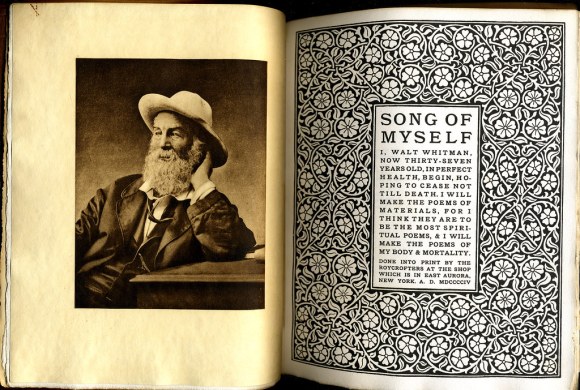
I CELEBRATE myself, and sing myself,
And what I assume you shall assume,
For every atom belonging to me as good belongs to you...

(Excerpted from Song of Myself, Walt Whitman, 1881)
Fourth of July, was the date that Walt Whitman’s anthology, Leaves of Grass, was published for the first time. The year was 1855. This was a book with poetry that embraced all humanity. The writing did not look for philosophical labels but reached out to all mankind touching the hearts of millions beyond the poet’s own lifetime, rising above races, rituals, politics, economics and hatred.
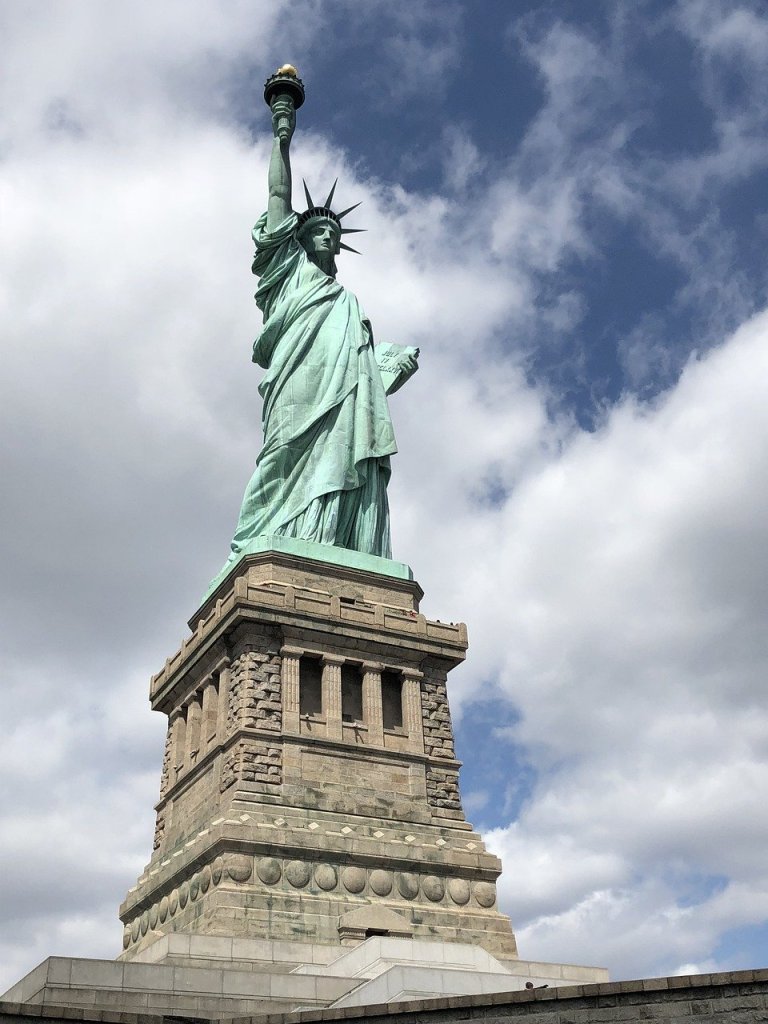
On that same date, in the century preceding the publication of this book — on 4th July, 1776 — thirteen colonies that had been established by immigrants in the continent of North America signed Thomas Jefferson’s Declaration of Independence, freeing themselves from the British yoke after they populated the landmass that had been occupied by American Indians for many thousands of years. The date continues to be celebrated as the American Independence Day with much fanfare. Borderless Journal presents to you writing that celebrates the occasion. Perhaps when at leisure, some of us will pause to wonder if independence and democracy bring freedom to all concerned.
Michael R Burch with his powerful poetry not just reaffirms the history of the country but also brings in the legendary Mohammed Ali to seek the voice of sanity and humanism. Click here to read.
Candice Louisa Daquin’s ruminations tells us what it means to be an American immigrant in today’s world and in the land that prospered under immigrants. Clickhere to read.
         Cicadas in the Rain

Only when it began to rain could I hear it,
in late summer, after they had all risen high
in the saucer magnolia tree – a soft, slow rain
at first, while the light still held in the west.

That sound so familiar, so unhesitant, but never
during a storm, and yet with drops plashing
and pelting through the leaves, their voices
coalesced in ways I had never heard before –

some strange harmonic of summer’s ending,
some last reinforcement or challenge – mounting
against the rain’s insistence, trying to outdo it,
seeking a pulse within the larger immensity,

and succeeding, as though a door had opened,
and I heard pure sound issuing forth, stately
and majestic, even golden, while all around it,
darkness, rain falling, trees bent by the wind.

(Excerpted from Darkened Rooms of Summer)


        Slaughterhouse

There were no cattle prods back then.
          We beat and whipped
The ones that broke away. The pens
          were re-equipped

To move them more efficiently.
          For some, a sheer
Incomprehensibility
          took over.Fear

Made them submit.Convulsed with pain,
          a few cried out
To something that could not explain
          or hear their shout.
Jared Carter’s most recent collection, The Land Itself, is from Monongahela Books in West Virginia. His Darkened Rooms of Summer: New and Selected Poems, with an introduction by Ted Kooser, was published by the University of Nebraska Press in 2014. A recipient of several literary awards and fellowships, Carter is from the state of Indiana in the U.S.
.
PLEASE NOTE: ARTICLES CAN ONLY BE REPRODUCED IN OTHER SITES WITH DUE ACKNOWLEDGEMENT TO BORDERLESS JOURNAL
I have an English accent because I learned English in England. After nearly 20 years in the US this is an accent, I wish I could rid myself of, owing to the assumptions made. I’m neither English nor imperialistic and Independence Day has always been challenging with comments like: “Well your side lost!” shouted my way a few times. I want to say, we’re all universal now, we all come from a multitude of places, accents and skin color aren’t accurate reflections of anything so stop being small minded.
Despite this, Independence Day has grown on me. Why? If I didn’t grow up in America, why would it really relate to me? Neither English nor American, it was hard to relate to. But you know what helped? Getting naturalized. Granted. I didn’t grow up in American schools pledging allegiance to the flag. This does inculcate and cause a great deal of loyalty which has brought 50 states into relative harmony, which is more than the EU could ever achieve in Europe.
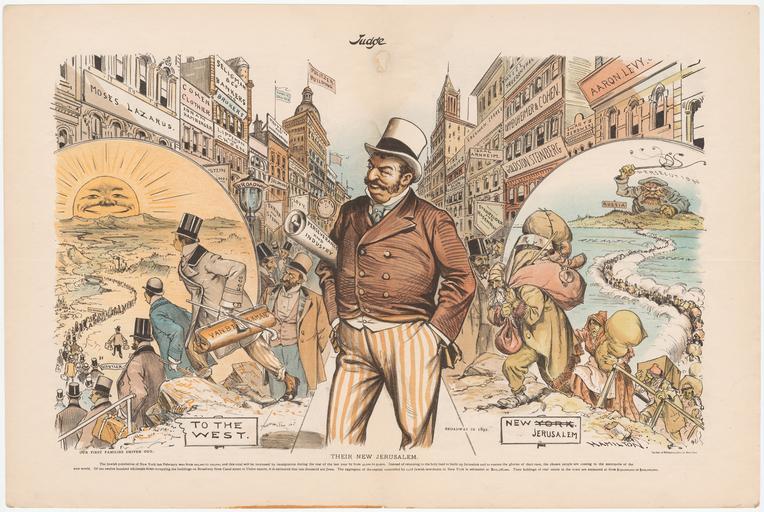
Binding together such a melting pot of differing cultures into one ‘American culture’ is what made America, American. This is no small thing. And when you are an immigrant, there is nothing more emotionally rewarding than gaining that foothold, that coveted opportunity, to be part of the American Dream. The only question is, does it still exist, the dream part?
I would argue it does. As much as economically I know we can’t go from cotton picking farmer to CEO quite as readily as once we did, and that there are striations and class divisions in this country, even as we deny them. Though racism and bigotry continues to deny swaths of society, and affirmative action, permits entry, it’s more complicated than a straight shot to success the way we might have once imagined it, in the 1950’s heyday.
As I wasn’t alive in those days, I can’t speak to whether they were mythologized but I can say, America was affluent after World War II in a way Europe couldn’t imagine, being decimated in every respect. As such, there were leaps and bounds made in America that weren’t mirrored in much of the rest of the world. Like anything, this didn’t last, and America is no longer the leader of the world, if ever it was. But the dream is still alive, maybe as much in our imaginations as reality. Maybe it’s the idea of it more than the actuality of it.
That said, people send their kids to American universities to help them succeed, almost against modern wisdom. There are better schools elsewhere but we are still somewhat spellbound by the lure of big recognizable names, just as Hollywood continues to thrive, despite larger industries like Bollywood. We are sentiment to the America of old, and as such, the modern America can benefit from this and it does.
Independence gave America more of her identity than she had when she was being bled dry by the English royalty. America exists because of immigration. Native Americans were slaughtered in droves in order to ‘make way’ for the hordes of then foreigners. Parts of Mexico (Texas, New Mexico, California) were essentially stolen (or rightfully won, if you read some history books) in unfair wars, the French stupidly sold Louisiana and the Russians sold Alaska. These pieces came slowly together, and when the British lost America, the idea of truly being unfettered came into being and painted the American psyche.
So aside the obvious connotations and a holiday for most American’s who might not consider the historical import of Independence Day, what else does it represent? For many immigrants such as myself, it represents a change from what was. I didn’t grow up patriotic to a country, that was a foreign concept, and yet, as I stood in the Naturalization ceremony and put my hand over my chest and sang the songs, and waved the flag, as absurd as it felt on one level, it also felt very meaningful. That surprised me and my friends ‘back home’ might laugh to read this, but that’s what happens when you immigrate, or what should happen, you become something new. To me that’s what Independence Day is all about, a way forward from who you were before. Most of us could learn something from that, as we tend to be stuck in our ways, unable to relate to change and new concepts. There still is something deeply alluring about America and it’s our ability to take in a great variety of different people from all around the world and still retain a sense of what being American is, including transmitting this feeling to those newcomers as they arrive.
For this reason alone, we should all be proud to be American. For all the negatives, such as continuing racism and oppression, poverty and sexism, there are so many positive things about being American and that’s why so many people try to immigrate to American every single year. It’s no coincidence we’re continue to be a highly sought country to live in, it’s not simply our perceived economic opportunities, it’s the whole enchilada and that includes this elusive concept of what ‘being’ American is.
Many of us even from other countries, grew up deeply influenced by Americana. That included the golden years and even what came afterward, because Americans are very self-confident and they really know how to put their best foot forward. Social media may have us believe all is negative because there are those who like to criticize and never say anything positive, but this doesn’t really change things as much as we think. People still envy our freedom throughout the world and it was a hard-won freedom that none of us should forget, no matter where we live and where we intend to live. Freedom is something to never take for granted, and in this sense, Independence Day is a universal theme, freedom from oppression and the right to self-expression.
I hope American’s remember how lucky they are and spend less time fighting and more time appreciating those things we tend to take for granted. I can have an opinion in this country that disagrees with everyone and nobody will come and arrest me and take me away. Even if people don’t like my differences, I am protected by law and allowed to be different. Those are liberties many people don’t have, and I am mindful of this when I think of traveling as a gay woman, or for that matter, as a woman!
That said, we should also be mindful that freedom can vanish almost overnight, unless we make the right decisions in how we vote, and be aware of plans to undermine freedoms. Those who believe immigration is wrong, often point to increased immigration leading to less jobs, more change and an erosion of The American Way. I don’t agree, because the American way is immigration, it always has been. Sometimes bad (killing Native Americans, taking African slaves). Sometimes good (growing a country from people from every part of the world). If it didn’t work to have immigrants, America as we know it, wouldn’t exist.
However, with population increases, come difficulties, not least a lack of jobs, economic opportunity. So, we cannot simply open the gates without due care to the realities of this. The answer lies in being merciful to those who need better lives, and realistic about what we can do versus what won’t work. Equally, we need to be mindful of those who live here now and meet their needs as much as we help others. I feel lucky I have had a chance for a better life but I also miss my culture and the nuances of where I came from. I want others to have the chance I had, and I believe if you work hard and you are an honest person, you should be given that chance. Where that may fall short is when a person from a different culture fails to realize part of immigration is accepting you are coming to a different country and you must respect that country. If say, you are a man who is used to disrespecting women because your home country condones that, you cannot bring those values to a new country and expect that to work. In this sense, immigrants must be as responsible as the host country in their success as an immigrant and respect the host countries values. I feel safer in America as a gay woman and as a woman than so many other countries throughout the world. I don’t want that to change, and I want women from countries that condone gender-based-abuse to feel they can come to America and be unmolested.
We all make America better, when we respect this delicate balance. I for one feel immigrants are the most likely to vote and be active in making change, because they are both grateful and excited to have the chance. When I was naturalized, I was asked if I would vote because it was part of my ‘duty’ as an immigrant to give my input. I have voted in every election and I try not to bury my head in the sand about anything that matters because I feel it’s my duty to have my eyes wide open, that’s how we keep our independence and our freedoms.
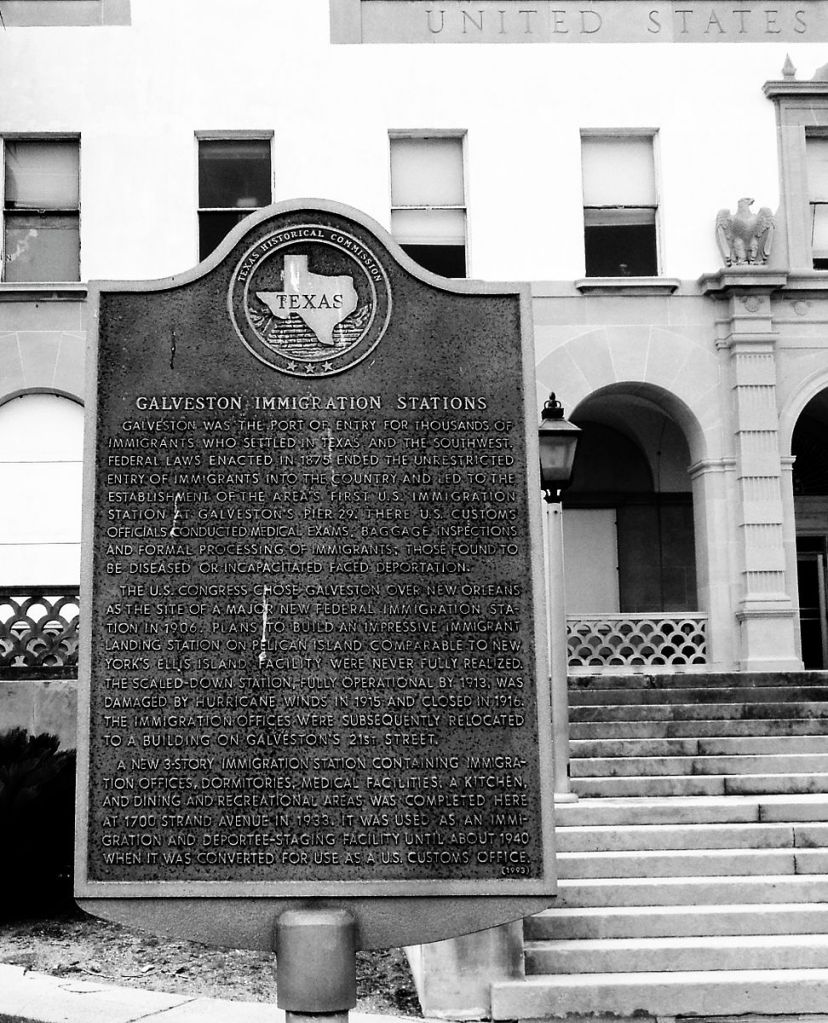
The Inscription reads as: GALVESTON WAS THE PORT OF ENTRY FOR THOUSANDS OF IMMIGRANTS WHO SETTLED IN TEXAS AND THE SOUTHWEST. FEDERAL LAYS ENACTED IN 1875 ENDED THE UNRESTRICTED ENTRY OF IMMIGRANTS INTO THE COUNTRY AND LED TO THE ESTABLISHMENT OF THE AREA’S FIRST U.S. IMMIGRATION STATION AT GALVESTON’S PIER 29. THERE U.S. CUSTOMS OFFICIALS CONDUCTED MEDICAL EXAMS, BAGGAGE INSPECTIONS AND FORMAL PROCESSING OF IMMIGRANTS. THOSE FOUND TO BE DISEASED OR INCAPACITATED FACED DEPORTATION. THE U.S. CONGRESS CHOSE GLAVESTON OVER NEW ORLEANS AS THE SITE OF A MAJOR NEW FEDERAL IMMIGRATION STATION IN 1906. PLANS TO BUILD AN IMPRESSIVE IMMIGRANT LANDING STATION ON PELICAN ISLAND COMPARABLE TO NEW YORK’S ELLIS ISLAND FACILITY WERE NEVER FULLY REALIZED. THE SCALED DOWN STATION, FULLY OPERATIONAL BY 1913, WAS DAMAGED BY HURRICANE WINDS IN 1915 ABD CLOSED IN 1916. tHE IMMIGRATION OFFICES WERE SUBSEQUENTLY RELOCATED TO A BUILDING ON GALVESTONS’S 21ST STREET. A NEW 3-STORY IMMIGRATION STATION CONTAINING IMMIGRATION OFFICES, DORMITORIES, MEDICAL FACILITIES, A KITCHEN, AND DINING AND RECREATIONAL AREAS WAS COMPLETED HERE AT 1700 STRAND IN 1933. IT WAS USED AS AN IMMIGRATION AND DEPORTEE-STAGING FACILITY UNTIL ABOUT 1940 WHEN IT WAS CONVERTED FOR USE AS A U.S. CUSTOMS OFFICE. Photo and inscription courtesy: Creative Commons
Candice Louisa Daquin is a Psychotherapist and Editor, having worked in Europe, Canada and the USA. Daquins own work is also published widely, she has written five books of poetry, the last published by Finishing Line Press called Pinch the Lock. Her website is www thefeatheredsleep.com
.
PLEASE NOTE: ARTICLES CAN ONLY BE REPRODUCED IN OTHER SITES WITH DUE ACKNOWLEDGEMENT TO BORDERLESS JOURNAL.
Independence Day, celebrated on July 4, commemorates the Declaration of Independence of the United States of America. In 1774, on June 11, the first Continental Congress (John Adams, Thomas Jefferson, Benjamin Franklin, Robert R. Livingston, and Roger Sherman) worked on the draft of the Declaration of Independence.
The group designated Thomas Jefferson to write the text because of his superior writing skills and what they called his, “felicity of expression.”
The document declared that the thirteen American colonies would unite as free and independent states. They signed it into action on July 2 in 1776 and broke away from the British government under King George.
Now we celebrate Independence Day on July 4.
Photography by Michael B. Wilkes, FAIA
The Continental Congress gave Benjamin Franklin, John Adams and Thomas Jefferson the job of designing an official seal for America. The idea for the bald eagle proposed in 1782, received acceptance. It included an olive branch with arrows in the talons to symbolize war and peace.
Photography by Michael B. Wilkes, FAIA
When Benjamin Franklin saw the eagle on the Cincinnati medals, he felt it looked like a turkey. He said, “The turk’y is in comparison a much more respectable bird. Though a little vain and silly. The turkey remains a bird of courage who would attack any British grenadier who should presume to invade the farm yard with a red coat on.” Franklin wanted the turkey as the national bird.
Photography by Michael B. Wilkes, FAIA
Congress adopted the eagle design on June 20, 1782. The bald eagle appeared on official documents, currency, flags, public buildings, and other government-related items. Instead of a turkey, the bald eagle became an American icon.
Photography by Michael B. Wilkes, FAIA
In the late 1800’s, America was home to 100,000 nesting bald eagles, but the number of birds shrank because of habitat destruction and excessive hunting. In 1978 the bald eagle arrived on the endangered species list. Bills passed protecting the elegant bird. In 1995, the bald eagle population had recovered enough for the status of the bald eagle to be changed from, ‘endangered’ to ‘threatened’.
In 2007 the “threatened species” list no longer included the bald eagle.
Photography by Michael B. Wilkes, FAIA
The Bald Eagle soars as America’s national symbol with its fierce beauty and proud independence. It symbolizes the strength and freedom of The United States of America.
.
Penny Wilkes, served as a science editor, travel and nature writer and columnist. An award-winning writer and poet, she has published a collection of short stories, Seven Smooth Stones. Her published poetry collections include: Whispers from the Land, In Spite of War, and Flying Lessons. Her Blog on The Write Life features life skills, creativity, and writing: http://penjaminswriteway.blogspot.com/ . My photoblog is @: http://feathersandfigments.blogspot.com/
Michael B Wilkes is an award winning architect and photographer who has collaborated on three books of poems with his wife Penny Wilkes. On two occasions he has received recognition among the 100 Most Influential peoples in San Diego by the San Diego Daily Transcript. Michael B Wilkes site: http://mbwilkesphotography.com
.
PLEASE NOTE: ARTICLES CAN ONLY BE REPRODUCED IN OTHER SITES WITH DUE ACKNOWLEDGEMENT TO BORDERLESS JOURNAL
















 Borderless