Categories
Excerpt

What Will People Say?

Title: What Will People Say?

Author: Mitra Phukan

Publisher: Speaking Tiger Books

PROLOGUE

Tinigaon

There were many Tinigaons within the city of this name. ‘Three Villages’ was the meaning in the local language. A small city in the folds of a valley in the middle of Assam. There was the Tinigaon that was still a small town, not in terms of size, but in the attitudes of the people. It was not just the middle-aged and older people who clung to tradition. Quite a few younger people did, too. And it was not always bad, this conservatism. Indeed, sometimes this unshakeable belief in the sanctity of the past was beautiful and illuminating. It was this conservatism that preserved the precious heritage of the past and kept it alive, preventing it from passing into oblivion.

But at other times, when conservatism became rigid, and sought to impose its beliefs on those who had a different mindset, dictating how they should behave, dress, what relationships they could or could not have, it could become a prison that prevented any kind of progress from taking place. As with much conservatism, the greatest restrictions were placed on women. There were strict codes of conduct for women and girls, codes that varied from age group to age group, but were authoritarian, nevertheless. Individual freedoms were always secondary to the ‘expected’ modes of conduct. ‘It’s always been like this,’ was a refrain often heard to justify the many rules which had lost all relevance in a swiftly changing world. If, indeed, they had ever been relevant at all.

The rules for girls and young women, though unyielding, at least took into account the rebelliousness of youth. ‘You are young, that’s why you think like this,’ was a sentence that was spoken grudgingly by parents or uncles and aunts, to people who were, in their eyes, guilty of ‘errant’ behaviour. But young people went outside the city, outside the state, to study, to work, and who knew what their lifestyles were there? Preferring to turn a blind eye to many rumoured ‘goings-on’ in the metro cities, goings-on in which their children were willing, even enthusiastic participants, they were for the most part relieved that at least when they came home, they behaved in ways ‘expected’ of them.

And so, even though they spoke viciously of that girl, WhatWasHerName, who was now living in with some boyfriend in Delhi, they preferred to keep silent about their own daughter who was doing the same. Grateful for small mercies, they pretended not to know anything when they visited her in the flat she rented in Gurgaon. They kept a deadpan face when they came across a shirt in size 42 hanging, forgotten in the cupboard in the second bedroom. They tried not to notice the other telltale signs that their daughter had been ‘cohabiting’ with a male, and refrained from asking where he had gone, now that they were here for three weeks. They did not ask about the long phone conversations that stretched to well past midnight and were only grateful that their daughter had been ‘considerate’ enough to spare them the trauma of meeting some unknown boy with whom she had been sleeping for the past so many months. They even pushed into a dark recess that worry of pregnancy, and the even greater worry of ‘WhatWillPeopleSay?’

Yes, in these changing times, people were learning, slowly, to ‘adjust’ to the fact that the younger people now were prone to living their lives in ways that were different from what was deemed to be ‘allowed’. But when it came to older people, things still remained as rigid as they had been for centuries. Especially for women. And especially, very especially, for widows.

True, Hindu widows were no longer expected to live a life that was, virtually, a death sentence. Younger widows, especially, ate non-vegetarian food, though their mothers, after the deaths of their husbands, still did not. They wore coloured clothes, though again, their mothers wore pale, traditional clothes, even though during the lifetimes of their husbands they had worn the most vibrant colours under the sun.

But there were, still, many restrictions on single women, widows, even divorcees or never-marrieds, in Tinigaon. They could go out in mixed groups, but never in a twosome with a man not closely related. They could not ‘date’ a man, and go out with him, even if it was as innocent as an outing to a theatre, or a music concert, or having a meal at a restaurant. There were always prying and peering eyes around who would ‘see’ what was happening, magnify it many times, load it with all kinds of intent, and then broadcast it with relish to salivating friends at the next kitty party that took place.

Mihika remembered the time a recently divorced forty-something mother of two had accepted a lift, two days running, from her superior, a married, fifty-plus man. Without a car at that time just after her divorce, she had been waiting on the pavement, in pouring rain, for a bus or auto or ricksha to take her home. As time passed and no vehicle stopped for her, she was growing increasingly desperate. The nanny who looked after the children would be leaving at six-thirty, and it was almost six already. She was greatly relieved, therefore, when her boss’s boss, whom she knew only slightly, stopped and asked her if he could drop her anywhere. It turned out her apartment was on the way to his house and she had gladly accepted the offer of the lift.

(Extracted from What Will People Say? A Novel by Mitra Phukan. Published by Speaking Tiger Books, 2023)

About the Book

When Mihika, 56 and a widow, gets drawn into a relationship with Zuhayr, a 60-year-old divorcee who was her late husband Aditya’s friend, it doesn’t seem to her like an event that should cause more than a raised eyebrow or two. Not in the twenty-first century, and not when their grown-up children are happy that their parents have found a second chance at happiness. But inTinigaon—a small town in Assam—it is just not done for a woman of Mihika’s age to have a romantic relationship—that, too, with a man from the Other Religion: a Muslim.Tinigaon’s Old Guard is scandalized as Mihika and Zuhayr are seen together in restaurants and cinema halls,‘flaunting’ their affair. And a nosy neighbour, Ranjana, keeps the moral brigade busy with juicy details of Zuhayr’s late-night comings and goings from Mihika’s house. Mihika decides to ignore the gossipmongering and slander and remain true to her relationship with Zuhayr, who has filled a void in her life after Aditya’s death five years ago.As long as her four closest friends,Tara,Triveni, Shagufta and Pallavi, stand by her, she doesn’t care if others turn away. But when the gossip turns into something more sinister that could threaten her daughterVeda’s happiness, Mihika is forced to take a call—should she give up the man she loves for her daughter’s sake, or is there an alternative that could give them both what they want? Writing with great sensitivity and gentle humour, Mitra Phukan proves once again that she is an extraordinary chronicler of the human heart. Rooted, like all her fiction, in the culture and sensibilities of Assam, What Will People Say? speaks to all of us, wherever we are, whoever we are.

About the Author

Mitra Phukan is an Assamese author, translator and columnist who writes in English. Her published works, fourteen so far, include children’s books, biographies, two novels, The Collector’s Wife and A Monsoon of Music, several volumes of translations from Assamese to English and a collection of her columns, Guwahati Gaze. Her most recent works are a volume of her own short stories, A Full Night’s Thievery, and a translation of a volume of short stories, by Sahitya Akademi Award-winning author, Harekrishna Deka, Guilt and Other Stories, both published by SpeakingTiger.

Categories
Excerpt

The Wistful Wanderings of Perceval Pitthelm

Title: The Wistful Wanderings of Perceval Pitthelm

Author: Rhys Hughes

Publisher: Telos Publishing

There is a shop somewhere in this town that sells bittersweet longing and I decided to seek it out and buy enough for the afternoon and perhaps the evening too. I wandered the streets of Figueira da Foz and if I happened to meet a stranger I asked them for directions, but no one knew where it was, though most had heard of it.

My yearning to find and enter that shop grew steadily more intense, and it now occurred to me that I already had what I wanted, a bittersweet longing for the building and the product sold by its keeper to his clients. But this simply wasn’t sufficient.

Perceval Pitthelm is my name and I’m sure you already knew this and I am English and a writer of adventure novels. I came to Portugal because I had been told it was a more tranquil land than my own in which to write a new book. This turned out not to be quite true. Nonetheless I was fairly satisfied with my circumstances.

I was a little lonely, indeed, but my health had improved. Originally, I planned to stay three months, but I now felt I would be here until the day of my death. Of course, that day might come with any particular sunrise. It could even be today. Fate likes to take us by surprise and teach us useless lessons. Who can say why this is?

At last, purely by chance, I found the shop at the far end of a dark and narrow alley that went nowhere else. The low doorway was covered by a curtain that I realised was a ragged flag and it tickled the nape of my neck as I stooped to pass under. I emerged in shadows and it required a minute for my eyes to adjust to the gloom.

Then I saw I wasn’t alone and that a man was sitting on a chair behind a long counter on which stood rows of oddly shaped jars and bottles. His teeth shone faintly behind a wide but unjustified smile. Most illumination came from the vessels in front of him, an eerie phosphorescence of many shifting colours. I took a step closer.

‘There is bittersweet longing in the glass containers?’

He nodded slowly. ‘Correct.’

‘I didn’t realise it came in liquid form.’

‘You can freeze it if you wish, then it will turn solid. You may heat it over a flame and inhale the vapour. But at room temperature it is a liquid that emits the glow of its own sad craving.’

‘Shall I drink it neat?’

‘Not if you are unaccustomed to it.’

‘I am English, you see.’

‘Of course you are. Drink it mixed with tea. ‘Saudade’ in its raw form is too potent for you. The effects are dramatic. All day and night you will stand on the shore waiting for something you may not even recognise if it arrives. Your hair will grow long in hours and float in the wind, whipping your face and urging it to gallop off your head, even if there is no wind at the time. So many tears will stream from your eyes that your cheeks must go mad from the excess of salt.’

‘I’ve never had mad cheeks! My features are sane.’

‘Keep it that way, Senhor.’

‘Yet I wish to taste bittersweet longing …’

He sighed deeply and said:

‘I understand and I won’t try to discourage you, but imbibe it slowly, a few drops only. This stuff is lethal. Mad cheeks have been responsible for much mischief in the past.’

I was intrigued and asked him to cite examples.

‘Well,’ he continued, ‘there was once a man named Dom Daniel and he drank against my advice half a bottle of distilled saudade and went off to stand on the beach, to weep, wait and gaze at sea, and his cheeks went mad and began swelling with delusions of grandeur and they became too big for his face and gravity tore them off. The tide dragged them far out and he assumed they were lost forever. Back home he walked, ashamed to own a face without cheeks and dreading the anger of his wife when she found out, but those lost cheeks of his didn’t drown or sink to the bottom. They kept riding the currents.’

‘And were washed up on a remote island?’

‘Indeed, Senhor! How did you guess? On an island off the coast of far distant Brazil they reached a new shore and they took root in the sand and grew into cheek trees, extremely tall and festooned with cheeks for leaves and those cheeks blushed deeply like overripe fruits and they were visible to the crews of passing caravels.’

‘Do they still sail caravels in Brazil?’ I asked.

He shrugged. ‘Why not?’

‘We are living in the modern era, that’s why.’

‘Oh no, Senhor! Oh no!’

‘What did I say wrong? What is my blunder?’

‘Saudade doesn’t permit one to remain in the present. It takes us back, my friend, to a time that perhaps never was real but has been lodged in our hearts since we were children, to a time and to places from that time. The magical lands that filled our daydreams, those visions of wonder and marvels, those gentle golden easy places, when we knew that travel was a miracle that would take us there one day, always one day, one day, yes, but never now, never soon. We just had to wait to grow up and the power would be ours. But we did grow up and nothing was as simple or fine as it should have been. The lands were gone, we couldn’t locate them on any map, for we had forgotten to look into our hearts, where they really were, slumbering and fading all the while.’

‘But what happened to those giant cheek trees?’

‘Nothing at all, Senhor.’

‘Didn’t anyone climb them?’

‘To pluck unripe cheeks, you mean? No! The cheeks blushed and the blushes were visible for many leagues across the ocean. Burning blushes that pulsed in the night like lighthouse beams. How do you think it made sailors feel? Sure, they could navigate using the blushes, but cheeks will respond to other cheeks like brothers.’

‘And also like lovers?’

‘Exactly that way! You are no fool, my friend. I knew it before and I know it again. The cheeks of the cheek trees blushed and the cheeks of the sailors blushed in sympathy. How embarrassing for grown men! How humiliating that must be in front of their comrades, all together with their scarlet cheeks pulsing and burning!’

‘And they began to avoid that island, to sail far around it, to take long detours out on the open ocean?’

‘You are perceptive. And saudade was to blame.’

‘The tale is intriguing.’

‘This really happened,’ he told me, and he sighed again, ‘so take care if you sip saudade, even if you dilute it with tea. This isn’t fake stuff, the bittersweet longing of actors in films.’

‘I listen. I have no desire to lose my cheeks.’

‘Oh Senhor! This stuff is intoxicating and throbs your soul as well as your heart. It must be swallowed only in drops. As for cheeks, they are perilous and weird, but let me tell you something. Knees are worse, much worse. Knees! Bear this in mind.’

I said farewell to Old Rogerio, for I already knew his name and in fact had spoken to him at length before. But saudade cares not for precision. It prefers the vagueness that frames a longing. One must never be quite sure what exactly one is yearning for…

About the Book:

Writer, explorer, inventor, fantastist … join Perceval Pitthelm as he takes you on a journey in the township of Kionga, self-propelled on a pair of massive, mechanical kangaroo legs. His stories may be wild, but his adventures are even wilder. In a riot of imagination and literary sleight of hand, Rhys Hughes presents an old-style adventure set in East Africa, Brazil and the Sahara Desert in this novel. We’re talking Philip José Farmer crossed with H Bedford-Jones meeting James Hilton by way of Karel Čapek (in his War with the Newts phase). And with hefty chunks of Flann O’Brien and Boris Vian thrown in for good measure!

About the Author

Rhys Hughes has been writing fiction from an early age. His first book was published in 1995 and since that time he has published fifty other books, nine hundred short stories and many articles and poems, and his work has been translated into ten languages. He graduated as an engineer but currently works as a tutor of mathematics. Having lived in Britain, Spain and Kenya, he is now planning to move to India. His poetry tends to be humorous light verse and offbeat lyrical fantasy, influenced mainly by Don MarquisOgden NashEdward Lear, Richard Brautigan, Ivor Cutler and Spike Milligan.

PLEASE NOTE: ARTICLES CAN ONLY BE REPRODUCED IN OTHER SITES WITH DUE ACKNOWLEDGEMENT TO BORDERLESS JOURNAL

Click here to access the Borderless anthology, Monalisa No Longer Smiles

Click here to access Monalisa No Longer Smiles on Kindle Amazon International

Categories
Excerpt

Poetry by Robin S. Ngangom

Title: My Invented Land: New and Selected Poems

Author: Robin S Ngangom

Publisher: Speaking Tiger Books

Poem for Joseph

It is never too late to come home.
But I must first find a homeland
where I can find myself,
just a map or even a tree or a stone
to mark a spot I could return to
like an animal lifting his leg
even when there’s nothing to return for.

Although it’s true
that in my native land
children had crawled out of burrows
they had gouged under their hard beds,
long after the grownups had fled
and roofs came apart
like charred heads.

You said you didn’t regret
how ethnic cleansers had palmed
your newly-built home off on a people
well on their trail back to unique blood,
you didn’t mind leaving behind
objects of desire
you had collected over twenty-five years,
or, how you came to live in a rented room
with your wife and children
in dog-eat-dog Imphal,
among the callous tribe
I call my own. 

Only the photographs you mourned,
the beloved sepia of a family tree,
since you’re the reason why your fathers lived;
but who’ll believe now
that you lived at all? 


After ‘Jashn-e-Azadi’
(a film on Kashmir by Sanjay Kak)

The kite transforming into smoke lacing
the chinars is not a symbol.
The rose has migrated from the garden of paradise.
Freedom will never come
poured into goblets waiting to be raised,
Martyrdom is a handout from the hagiographer.
Only poetry of ruins is real.
The incoherent rose still blooms
from some beloved breast torn open.


The First Rain

The first rain like the first letter of May
brings news to the hills.
Perched like the houses on the edge of a cliff
I’ve lived more days in exile
than years of my poor childhood.
As a fumbling fifteen-year-old
I abandoned my forward-looking native people
who entrusted terror, drugs and
a civilized plague to children.

Is it better to rejoice and forget
or to remember and be sad?
Only a foolish boy cannot wait to be a man,
adores winter, and leaves home to write poetry.

After the holocaust became a touchstone
we can indict an erring people
and make culture and carnage co-exist.
If I told you how babies have been shot down
from their mothers’ breasts
you would put it down to a poet’s overworked heart
but we like to believe in leaders who flock to the capital

An animal threatened with extinction
needs a lair for his mate and his young,
I’m not different.
I need the morning for its bright blood
and I need to seize the night.

There was not a day that changed my days.
When I listen to hills
I hear the voices of my faded life.
Whisky and Mehdi Hassan and Billie Holiday
make for strange fruit on nondescript evenings.

They can stop us but not our thoughts
from coming out into the streets,
they can shoot us but cannot kill the air
which carries our voices.

O my love, you are still asleep
when the rain carries the night till dawn.
After lying down with dreams of you
I awake in another day of bread and newspapers.

I’m banished to the last outpost of a dying empire
whose keepsakes have become the artefacts of the natives:
necklaces, pianos, lace and tombstones.
I’ve pursued horoscopes and
only promises and maledictions pursue me.
One day Venus was mine, joy and honey,
another day Saturn would not be propitiated.
I found a moment’s peace
in my little daughter’s face.

Before I met you
my dreams were limited by ignorance.
Sometimes at night
I put two drops of our past in my eyes
but they refused to close.

Can poetry be smuggled like guns or drugs?
We’ve drawn our borders with blood.
Even to write in our mother tongue
we cut open veins and our tongues
lick parchments with blood.

I read my smuggled Neruda
and sometimes listen to the fading fiddles
and the mourning voices of my land.

I’m the anguish of slashed roots,
the fear of the homeless,
and the desperation of former kisses.
How much land does my enemy need?

O my love, why did you fade
into the obscurity of my life
and leave me to look long at the mountain?

I’m the pain of slashed roots
and the last rain is already here.
I’ll leave the cracked fields of my land
and its weeping pastures of daybreak.
Let wolves tear our beloved hills.

I’ll leave the bamboo flowering
in the groves of my childhood.
Let rats gnaw at the supine map
of what was once my native land.

Native Land

First came the scream of the dying
in a bad dream, then the radio report,
and a newspaper: six shot dead, twenty-five
houses razed, sixteen beheaded with hands tied
behind their backs inside a church…
As the days crumbled, and the victors
and their victims grew in number,
I hardened inside my thickening hide,
until I lost my tenuous humanity.

I ceased thinking
of abandoned children inside blazing huts
still waiting for their parents.
If they remembered their grandmother’s tales
of many winter hearths at the hour
of sleeping death, I didn’t want to know,
if they ever learnt the magic of letters.
And the women heavy with seed,
their soft bodies mowed down
like grain stalk during their lyric harvests;
if they wore wildflowers in their hair
while they waited for their men,
I didn’t care anymore.

Extracted from My Invented Land: New and Selected Poems by Robin S. Ngangom. Published by Speaking Tiger Books, 2023.

About the Book

Robin S. Ngangom’s poetry is the poetry of feeling, which draws the reader deep into the poet’s world. The poems in My Invented Land showcase Ngangom’s remarkable range—tracing his poetic arc from the deeply personal to the political, from chronicles of private joys, sorrows and everyday epiphanies to the poetry of witness that gazes unflinchingly at the realities that haunt the Northeast, his native land.

About the Author

Born in 1959 in Imphal, Manipur, Robin S. Ngangom is a bilingual poet and translator who writes in English and Manipuri. After completing his high school in Imphal he studied English literature at Shillong’s St Edmund’s College and the North-Eastern Hill University where he currently teaches. His first collection, Words and the Silence, was published in 1988 and since then, he has published two more volumes of poetry and a book of translations.  He was invited to the UK Year of Literature and Writing in 1995, has read his poems at literary events in India and abroad, and his poems have appeared in several prestigious anthologies and magazines. He has also co-edited two significant anthologies of poetry from Northeast India.

Click here to read the review

PLEASE NOTE: ARTICLES CAN ONLY BE REPRODUCED IN OTHER SITES WITH DUE ACKNOWLEDGEMENT TO BORDERLESS JOURNAL. 

Categories
Excerpt

My Name is Cinnamon

Title: My Name is Cinnamon

Author: Vikas Prakash Joshi 

Publisher: Hay House

Krishna and Karna

It is Newton’s Fifth Law that when a teacher steps out of a primary school class for more than a decent period of time, somebody starts singing.

The 5th standard class at Diamond International School, Koregaon Park, was no exception to this eternal rule.

Cinnamon clutched the long stainless steel ruler like a mike in front of the class. The other twenty students noisily and tunelessly joined in as he belted out Lakdi ki kathi [1]at the top of his voice. It was a welcome break from the Environmental Science Class. Pallavi joined him as the female lead.

Just as the horse was bolting, EVS Ma’am, Mrs. Arora, came back into the classroom.

“Settle down, horses! Roshan and Palli, take your seats,” she said. The class went back to the lesson.

When the class ended, students started filing out noisily.

“Roshan.”

“Yes Ma’am?”

“Where do you stay?”

“Koregaon Park, Ma’am.”

“Wah. You like singing?”

“Ummm…love singing.”

“I am sure even Gulzar in Mumbai would have heard you singing his lyrics.”

“Really, Ma’am?”

Haanji[2].”

He blushed and looked down at the ground. It was the first time someone had paid him such a big compliment. He didn’t quite know how to react.

“Thank you, Ma’am.”

“How did you get the nickname, Cinnamon? Everyone calls you that.”

“My parents love to add cinnamon to everything. In tea, cakes, pastries and rolls…in everything. I couldn’t pronounce the word Cinnamon… so I called it Cimmanum or Cinnamum or even Cimmamom. So, they dubbed me ‘Cinnamon’.” He frowned. “I don’t like my nickname anymore. I want to change it.”

“Do they like music?”

“No ma’am. They don’t like music…uh…I mean they do like it. But not…er…this kind.” He tried to show with hand gestures what kind he meant.

She gave a knowing smile.  

 “It’s only me. I don’t know, Ma’am. Maybe my tummy-mummy liked this kind of music.”

“Your tummy mummy?”

“Yes. I am adopted.”

Mrs. Arora fiddled with her dangling silver earrings. After smiling a little too long, she said,

“Ok, wonderful, Roshan. Keep it up. You can go now.”

Baba and Maa had never hid from Cinnamon, or anyone else, that he was adopted. It was as much an accepted part of his life as his alert brown eyes and long, muscular legs.

When he was about two years old, Maa sat him down and told him a beautiful story. She read to him from a slim Bengali book. Cinnamon sat in front of her, curled up on the bed. Baba sat next to her. She told him about the ancient city of Mathura, near Delhi, where Vasudev and Devaki had eight children. 

Reading out the story with dramatic voice variations and hand movements, Maa said, “The eighth child was Krishna. When Krishna was born, there was heavy rain. Vasudev took the baby in a wicker basket to the house of Nanda. He placed him with Nanda, a cowherd, for his protection. Lord Krishna grew up with his adoptive parents.”

Baba then told a story in Marathi, in a silky smooth voice. In the story, a charioteer finds a baby in a basket floating in a river. The charioteer and his wife, Adirath and Radha, do not have children of their own. “Little did they know that the boy was the son of princess Kunti and Surya Dev. They named him Karna. He grew up to be a brave and fearless warrior.”

“So, you see, Cinnamon, some children come home in some ways and others in other ways, but every one of them is equally special,” Maa concluded.

Baba said, “When we went to the adoption agency, they said that the boy looks different from you. But that didn’t matter to us.”

When he was four, Baba and Maa took him to the hospital he was born in, in the congested and heaving Kusalkar Road area of Pune. They also took him to the adoption centre, near one of Pune’s biggest hospitals, when he was five, and again when he was six.

Baba told him the story of the day they adopted him. “Cinnamon, the day we went to bring you home, was the most memorable day of my life. It was not only your Maa and me who went to the adoption centre. Ajji, Ajoba, Dada Moshay and Didi Maa also came along. I finally understood what it was like to be the captain of the Indian cricket team. We had only the Maruti Zen at that time, so we arranged two auto rickshaws additionally to take everyone.”

He continued, eyes twinkling. “It rained the previous night and early that morning as well and we felt it to be a good omen. Later, we organised a get-together at a small mangal karyalaya[3] for all the people, on your homecoming day. So many people came home, that we had to finally shift it to a much bigger hall nearby.”

 Cinnamon asked to hear this several times, and each time Baba added extra details. It was like one of those stories that you never got tired of hearing.

As he grew older, he sometimes stared into the mirror in the bathroom, trying to imagine what his father and mother must have looked like. Did his swarthy skin, impressive height and sharp nose and cheekbones come from his father? Did he get his loud laughter and voice from his mother? Where did they live and what did they do?  When he travelled anywhere, he looked around at people, wondering whether any one of them was his father or mother.

Baba and Maa always supported him and let everyone know that he was adopted, so he had no sense of shame or embarrassment. He saw it as a very natural part of his identity.

On one occasion, when he was about six years old, he asked Baba, “Baba, if my birth mother were to come and ask to take me back, what would you do?”

“We don’t know where she is and she doesn’t know where we are either. So that can’t happen. Moreover, we love you and we won’t let you go ever.”

Later, when he was around seven, he had more questions.

He asked his parents, “What did my birth father and mother look like? Are they tall like me?”

“We don’t know, Cinnamon,” they said patiently.

 “How come?”

“We have never met them.”

“Why did they leave me? How could they do that?” He cried out.

Baba and Maa hugged him tightly and kissed him. “Was there something wrong with me?” he persisted.

“They didn’t give you up. There was, and is, nothing wrong with you. Your birth parents must have had some very good reasons, that is why they had to take the decision they did.”

But somewhere it remained in his mind. “Why did they let him go…,” Cinnamon wondered?

On the first floor of their building lived Nivedita Tai and Yatin Dada. They were regulars at the jogging track with Baba. They often came back home together, drenched in sweat, with Yatin and Nivedita always laughing, and Baba recounting some story or the other.

One day, at the breakfast table, Maa told Baba with a smile, “You know, Nivedita is expecting.”

Baba chuckled. “Well, that was quick,” he said.

Cinnamon didn’t know what Nivedita was expecting but he did see Nivedita Tai’s otherwise flat stomach grow and grow with no end in sight. It troubled him but nobody was bothered about it. On the contrary, they all seemed very happy. They even patted her on the stomach. 

He asked Maa, “Maa, what’s happening to Nivedita Tai? Why doesn’t she do something? She will burst open!”

“Khoka, she will do something soon.”

Then, one day, Nivedita Tai suddenly disappeared and so did Yatin Dada. Their flat was locked.

After a week, the doorbell rang. It was Yatin with a box of golden kesari pedhas[4] in his hands. He was beaming as if he had won on Kaun Banega Crorepati[5]or become the Prime Minister of India.

Maa came up to the door. “Oho! Congratulations!” exclaimed Maa, and hugged him. Baba reached out and hugged him too.

“What is her name?”

“Anvee.”

“Beautiful name. Welcome to the club, sir. Congratulations,” Baba said in Marathi.

Cinnamon didn’t completely understand why Baba was congratulating Yatinif Anvee had come out of Nivedita Tai’s tummy. “What did he have to do with it?” Cinnamon wondered.

On many Sunday evenings, his mother invariably gave a head massage to Cinnamon, with mustard oil. Baba had tried to get her to switch to coconut oil, but to no avail. Though Cinnamon hated the smell, he always loved the warm and fuzzy sensation it left when she finished her massage.  

He sat on a newspaper on the floor, while she vigorously pummelled and pounded his head.

“Head massage is good for blood flow and intelligence, you know,” she declared. “Your Dadu and Didima gave us regular head massages and castor oil, when we were growing up. That’s why we turned out so well, I say. It’s a must actually, for all children.”

Cinnamon knew where this conversation was going, so he decided to divert it.

“Maa, I have a question,” he asked.

“Yes.”

“Anvee came out of Nivedita Tai’s tummy?”

“Of course, baby.”

“So you and Baba also came out of Didima and Ajji’s tummies? And others too?”

“Yes, even we did,” she reassured.  

“But I didn’t come out of here?” He turned to touch Maa’s tummy. “I wasn’t in here?”

 “Not from my tummy. You were in my mind,” she said in Bengali, quoting Tagore.

“Whose stomach did I come from?”                   

“Your birth mother’s.”

He looked at his own tummy and imagined a baby inside. He imagined himself inside a tummy, arms and legs and all. What an ugly sight it must have been.

“Maa, it must be so painful,” Cinnamon cried out.

“Yes, it is painful at that time but then once the baby is born, the pain goes.”

“Don’t you think that shows how nice I am? I came without causing you any trouble.”  Maa cupped his chin and laughed.

Then she carried on with the head massage, humming to herself.

[1] A popular hindi film song

[2] Yes.

[3] Wedding

[4] Sweets

[5] A game show that translates to ‘Who will be a Millionaire’

About the book:

Both a captivating chronicle and an endeavour of remarkable depth and ambition, My Name Is Cinnamon provides a richly textured narrative of a boy trying to find his roots and place in the world. On each part of his journey, he encounters new people, new cuisines, and new adventures as he learns a lot about himself and the world around him.

While being a light-hearted and heart-warming read, the book also covers some difficult themes that are rarely explored in ­children’s and young adult literature. It is a deeply moving testament to the unceasing desire to know oneself, the unrelenting pull of familial bonds, and the power of hope, sacrifice, and love.

With his perceptive observations, vivid descriptions, and an authentic voice, the author, Vikas Prakash Joshi, weaves an immersive plot with fully realised environments and characters that are sure to stay with you for a long time. Above all, My Name Is Cinnamon is about finding your own people and accepting who you are.

About the Author:

Vikas Prakash Joshi is a writer by nature and nurture and not by compulsion, ambition, or conscious choice. His writing career started at the early age of eleven and since then, he has won numerous awards and achieved notable distinctions. He has written for leading Indian publications like The Caravan, Hindustan Times, The Wire, The Hindu, DNA, Sakal Times. His essays, articles, and short stories have been translated and published in 31 languages, both Indian and foreign, and in publications in 25 countries. His first book My Name is Cinnamon,was recently awarded the A3 Foundation literary prize 2023 by India-based A3 Foundation.

PLEASE NOTE: ARTICLES CAN ONLY BE REPRODUCED IN OTHER SITES WITH DUE ACKNOWLEDGEMENT TO BORDERLESS JOURNAL. 

Click here to access the Borderless anthology, Monalisa No Longer Smiles

Categories
Excerpt

August in Kabul

Title: August in Kabul: America’s Last Days in Afghanistan and the Return of the Taliban

Author: Andrew Quilty

Publisher: Speaking Tiger Books

I had been thinking about a book set in Afghanistan since late 2020. The Doha Agreement, signed that February, was already working to the Taliban’s advantage. Thousands of their prisoners had been released, and battlefield commanders were capitalising on the ‘active defence’ posture the Americans had pushed Kabul into adopting while being careful not to overextend and cause the Americans to stall their withdrawal. I saw the Doha Agreement as a death knell for the Afghan Government, but I never anticipated it would come so quickly.

The book I wanted to write would follow the theme I’d been following for several years. I would chart how the United States’ refusal to reconcile with the ousted Taliban regime, and the ensuing occupation, ignited the insurgency, just as it had in Iraq.

I would follow the lives of rural Afghans whose experience of the war, unlike those in Kabul who, while also encountering horrific violence, were given an array of new opportunities, was one of deprivation and disaffection—a story less often told.

Admittedly, the fascination with those living behind Taliban lines was amplified because their lives were virtually off-limits to journalists.

An unspoken race for access among writers, photographers and filmmakers began, intensifying in recent years as the prospect of a Taliban return to power became increasingly likely.

After the signing of the Doha Agreement, with US air support curtailed and the Taliban enjoying a wave of international recognition, some commanders began to open the doors to their districts. I had already been reporting on the ruthless exploits of the CIA’s Afghan proxies from the 01 National Strike Unit in Maidan Wardak—albeit from the relative safety of Kabul and the provincial capital, Maidan Shahr—when opportunities to visit the villages where they occurred began to arise from the middle of that year.

Those trips, which, for security reasons, lasted one night at most, were indeed as fascinating as I had expected. They also vindicated the hypothesis that the punitive neglect of the rural class— particularly those in predominantly Pashtun districts—and the violent ordeals they’d endured living among—and, often in cahoots with—the Taliban, were creating an increasingly unbridgeable gap between rural Afghanistan and the central government. The lack of accountability for their suffering was self-defeating for the aggressors, and, for journalists, I believed, the war’s essential theme.

It must be said that the Taliban’s military victory would never have come without the ineptitude and malfeasance of successive administrations in Kabul and their armed forces, and the hubris of the American-led international military coalition. The Taliban’s readiness to seize the advantage after the signing of the Doha Agreement did, however, expedite the eventual collapse that the agreement ensured. The realisation that the Americans were leaving, along with the military support and air power that had given Kabul a lifeline since 2015, was the final straw.

Aside from the almost daily guerrilla-style attacks by the Taliban and other anti-government groups in Kabul—‘The years long fears of the vehicle in front of you blowing up or the guy on the motorbike opening fire,’ as a friend who read an early version of this book reminded me—the war in Afghanistan had been fought largely in remote districts since the early 2000s. As I wrote in the prologue to this book, once the momentum swung decisively in the Taliban’s favour in the spring of 2020, and areas under government control started shrinking to virtual islands accessible only by air, many rural battlegrounds fell silent. The lives of those who had gained the most since the Taliban’s fall in 2001—lives that had overcome hardship and flourished, which I’d rarely been compelled to write about—were all of a sudden under threat. While their physical safety may not necessarily have been at risk, their personal liberty, the simple freedom to choose the trajectory of one’s own life, certainly was. For them, life without choice was no life at all.

If the threat of such loss had instigated a change in what I felt was pertinent to write about, 15 August completed the about-face.

With the Taliban’s victory came a level of scrutiny and critique that no insurgency warrants, no matter the wrongs of the government it was trying to overthrow nor the infringements on human rights it would institute once in power.

Amid the chaos of that day, I hugged farewell a tearful Aziz Tassal, a journalist with whom I’d worked for years and grown to love for his gentle company and care for his wife, three cheeky young daughters and everyone with whom he’d worked. I’d spent a week sharing a room with him in Uruzgan earlier in the year, reporting for an article published by The Monthly where we traded stories about our mutual friend Aliyas Dayee, a journalist from Helmand who had been assassinated three months earlier (the article won the 2021 Walkley Award for long-form feature writing). He’d calmly taken control when the car he was travelling in with Nanna Muus Steffensen, a journalist and my housemate, came under fire during a Taliban ambush in Maidan Wardak some months before. But on 15 August, he was inconsolable. ‘They betrayed us,’ he sobbed, before undertaking his own harrowing journey to the United States with his family.

The next day I photographed Noorullah Shirzada, a photographer with Agence France-Presse, carrying his baby into the French Embassy. The photo was published the day after by the French newspaper Le monde. Farshad Usyan, a friend who I also consider Afghanistan’s best photojournalist, was also there. His passport was inside the embassy awaiting a visa, but the Taliban weren’t allowing him in. Phone calls were made and eventually someone called his name. He disappeared behind the gate before we got a chance to say goodbye.

That day, 16 August, was also when BBC correspondent Kate Clark was flown out of Kabul.

Extracted from August in Kabul: America’s Last Days in Afghanistan and the Return of the Taliban by Andrew Quilty. Published by Speaking Tiger Books, 2022.

About the Book

As night fell on 15 August 2021, the Taliban swept into Kabul, capital of Afghanistan. After a twenty-year conflict with the United States, its Western allies and a proxy Afghan government, the Islamic militant group once aligned with al Qaeda was about to bury yet another foreign foe in the graveyard of empires. And for the US, the superpower, this was yet another foreign disaster. As cities and towns fell to the Taliban in rapid succession, Western troops and embassy staff scrambled to flee a country of which its government had lost control. To the world, Kabul in 2021 looked like Saigon in 1975.

August in Kabul is the story of how America’s longest mission came to an abrupt and chaotic end, told through the eyes of Afghans whose lives were turned upside down: a young woman who dreams of a university education but whose family now want to give her up to the Taliban in exchange for security; a presidential staffer who works desperately to hold things together as the government collapses around him; a prisoner in the notorious Bagram Prison who suddenly finds himself free when prison guards abandon their post. Andrew Quilty was one of a handful of foreign journalists who stayed in Kabul as the city fell. This remarkable book is his first-hand account of those dramatic final days.

About the Author

Andrew Quilty is the recipient of nine Walkley Awards, including the Gold Walkley, for his work on Afghanistan, where he has been based since 2013. He has also received the George Polk Award, the World Press Photo Award and the Overseas Press Club of America award for his investigation into massacres committed by a CIA-backed Afghan militia. August in Kabul is his first book.

Click here to read the interview and the review

PLEASE NOTE: ARTICLES CAN ONLY BE REPRODUCED IN OTHER SITES WITH DUE ACKNOWLEDGEMENT TO BORDERLESS JOURNAL. 

Categories
Excerpt

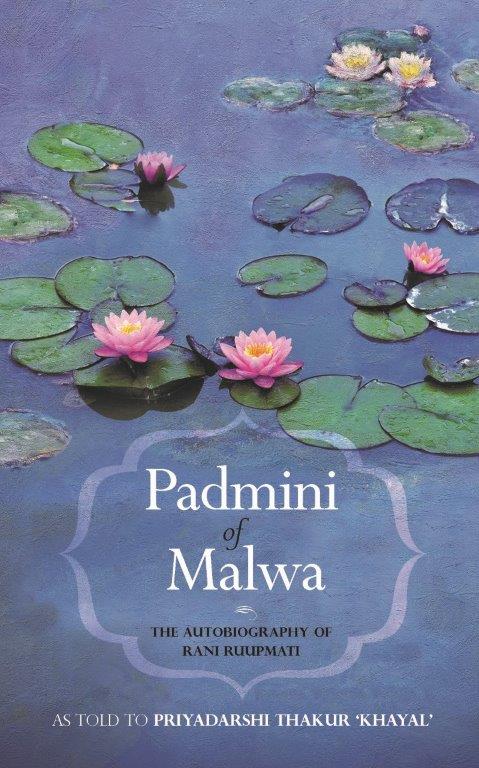
Padmini of Malwa: The Autobiography of a Medieval Princess

Book Review by Meenakshi Malhotra

Title: Padmini of Malwa: The Autobiography of Rani Ruupmati

 Author: Priyadarshini Thakur ‘Khayal

Publisher: Speaking Tiger Books

Padmini of Malwa :The Autobiography of Rani Ruupmati is a delightful piece of historical fiction cast in the form of autofiction or autobiographical fiction. It narrates, in the first person, the tale of Rani Ruupmati, who is kidnapped and brought up by Rao, tutored by Panditji or Pandijju, Ketki and Tara. Claiming to cover everything that history books leave out, this story employs a clever narrative ploy which is introduced in the ‘Scribe’s Note’. The scribe is Priyadarshini Thakur ‘Khayal’, author of eight volumes of poetry in Hindi and Urdu and ghazals sung by Jagjit Singh, the Hussain brothers and others. His poetic imagination seeps into the retelling of the story as he brings the medieval princess to life. ‘Khayal’ tells us in the note: “Believe it or not, this is truly Rani Ruupmati’s autobiography. I merely put on paper what she told me.” The royal subject  appears to him in all her resplendent beauty, the legendary queen over whom battles were fought, ready to tell her own story. In wresting this initiative, the story acquires a unique colour and assumes a life of its own, even as it compellingly propels the reader to dive into this narrative.

The narrative employs a dream vision to communicate events and episodes which are hardly remembered by the lost little girl, referred to as kunwarini, and various terms in the narrative. Emphatic in her desire to set the record straight about Baz Bahadur and his bravery and courage, she represents a voice which might have fallen through the cracks of historical narratives. The novel, retrieving fragments from shards of memory, is given to the reader in the form of visions.

The first vision is based in the mansion by the  maulshri tree, the second in a “seedy little fortress” by Garh Dharmpuri. Barely remembering the details of her natal home, she is told by her companions that she is the daughter of Reva Maiya. Thus she narrates to the scribe: “At times life seems like an elaborate play; a play full of heroes, villains and countless other characters of various shades—my life in Garh Dharmapuri, located on a river-isle of the Reva was the very opposite of what it had been in the deserted mansion…the kidnapping and the fall into the Reva that turned my life upside down, left me stunned and I remained mute for a long time.” In this fortress Ruup, as she is called, blossoms into womanhood in relative oblivion. And it is only through the eyes of others that she becomes aware of her burgeoning beauty. Steeped in her music and music lessons, she remains somewhat insulated from the ways of the world or her position in it. Hints are there a-plenty, but the text maintains its rhythm and builds up its momentum in this coming-of-age story.

A special annual occasion for Ruup is the festival of Navaraatra when she is the recipient of the ceremonial offering made to young pre-pubertal Hindu girls. On reaching puberty, Ruup is able to trace the shift or change since male guardian figures like Rao who Ruup calls ‘Baba’ start maintaining a distance. “My childhood seemed to be slipping away farther and my previous life in the maulshri mansion turned hazier by the day.” Tremulously poised on the brink of womanhood, she is hardly aware that her life is to be transformed.

Emboldened by a couple of forays into the forest by the magical lake “Ardhapadma” or half-moon lake, Ruup decides to venture out on her own. It is here that she meets Baz Bahadur, who eventually becomes the Sultan of Malwa. Their legendary meeting has been the source of many narratives, the theme of many ballads  and songs. Meanwhile Ruup comes to know about her and her family’s past and its chequered histories. She learns of her antecedents, but also comes to know that her guardian at the ‘garh’(fortress) is actually her father and the story unfolds in all its splendour and romance tinged in darker tones.

The novel weaves a fascinating tale as it narrates the dramatic rescue of Ruupmati by Baz Bahadur and his forces. The love story of the two is in a sense, doomed. Located in the rocky terrain of 16th century Malwa (Madhya Pradesh), the story captures the violence and deceit of internecine warfare, where danger lurks everywhere. Set   in a world of treachery, violence and intrigue, the novel does not romanticise the medieval world or sugar-coat it, instead it shows a world where every step is fraught with danger and threatened by violence. Even though the outcome of this tragic love story is foretold, the writer  in giving a voice to a historical– or herstorical subject, recuperates  that subject to give voice and agency to the beautiful queen of Malwa.

It is a beautifully retold narrative to be read and mulled in its poignant grandeur.

.

Dr Meenakshi Malhotra is Associate Professor of English Literature at Hansraj College, University of Delhi, and has been involved in teaching and curriculum development in several universities. She has edited two books on Women and Lifewriting, Representing the Self and Claiming the I, in addition  to numerous published articles on gender, literature and feminist theory.       

.

PLEASE NOTE: ARTICLES CAN ONLY BE REPRODUCED IN OTHER SITES WITH DUE ACKNOWLEDGEMENT TO BORDERLESS JOURNAL

Click here to access the Borderless anthology, Monalisa No Longer Smiles

Categories
Excerpt

Anthill by Vinoy Thomas 

Title: Anthill

Author: Vinoy Thomas

Translator: Nandakumar K

Publisher: Penguin India

Diverse Marriages

The sight of his brother-in-law and his own son toiling in the teashop warmed the cockles of Prasannan’s heart. Whenever Ranjit handed over a cup of tea to anyone, they would say, ‘Oh, Prasannan’s tea was far better.’

He was gladdened not because his son caused people to compare him favourably but because the level of tea and sugar in the containers remained undiminished and one bottle of milk delivered over forty to forty-five cups of tea. Since Perumpadi was devoid of other shops at that time, the public decided to accept— with the same stoicism they accepted fate—the son’s atrocities as he followed in his father’s footsteps.

Suni excelled in tossing parottas and thinning them like cloth; wet grinding the batter to such a fine froth that dosas became gossamers; slicing the bananas paper-thin to make fritters; pouring wheat flour, baking soda and sugar mixtures from such heights that undakkaya made out of it had more air bubbles than substance. His only fault was that he had to watch at least two movies a week. That was taken care of by the complimentary pass he received for pasting the movie poster on the shop wall.

The day after the vehicle of black magic was delivered, work was started on a kuzhikalari* in a plot that belonged to Chandrappura Mani to the west of Prasannan’s land. Whirlwind Manoharan was the kalari gurukkal. There were two versions on the provenance of this nickname—some said that it was because from the time he was a child, at the least provocation he would swirl like a typhoon and hit people; others said it was because he was epileptic. Epilepsy and whirlwind share the same homonym in the vernacular.

Whirlwind Manoharan had a trait of becoming an instant admirer of practitioners of traditional skills and arts—especially the ones he could not master—and then trailing those practitioners to learn from them. Although an ardent admirer, when he started to learn the skill or art, he would pick fights with his gurus. He, therefore, ended up not mastering any of the skills.

Although he tried to learn many such skills, he gave literacy a wide berth. In his view, this world needed nothing that required one to be literate. Before he started the kuzhikalari, he was attached as a helper to a stonemason.

At the house at Koothuparamba where he was working, a kalari asan had come to do therapeutic massage for the karanavar of the house. The way he carried himself and his physique turned Manoharan into a devotee. He started to believe that whatever the asan did was superhuman. One day, after the massage, when the asan was leaving, it started to rain heavily.

‘Asan, how can you leave without an umbrella?’

‘Why do I need an umbrella? I will twirl this stick and walk,’ asan bragged for a lark.

After he said that, when he stepped into the rain, asan did open the umbrella in his hand. However, Manoharan’s mind was not willing to process that sight. All he saw was asan walking under a stick spinning overhead, without a single droplet hitting his body. The apprenticeship with the stonemason ended on the same day.

Manoharan was unable to follow the vocal syllables used by the guru for guiding his disciples’ steps and movements. Though Manoharan had suggested that he slow down the recitation, asans have their own pace of doing such things. Even the small children were stepping up to that tempo. Eventually, asan separated Manoharan from other disciples and let him set his own pace. After about six months, Manoharan made an announcement that shocked asan—he was going to start his own kalari in Perumpadi. Asan asked him, ‘Eda, do you know all the movements?’

‘Oh yeah, I learnt before joining here.’

‘Let’s hear a couple of vocal syllables of the move sequences.’ ‘Eyy, gurukkal, what do you need all these vocal syllables for?

Feet forward, feet back, bend, twist, turn   isn’t it enough to say

these? I know enough.’

‘You little prick, upon all the gods of kalari, I shall not allow you to start the kalari.’ The gurukkal was adamant.

‘Gurukkal, for Perumpadi even I am too good. Shouldn’t they all learn kalari? Shouldn’t I earn my livelihood?’

Considering that any further conversation would be possible only if he lowered his own station as a gurukkal, he said nothing further.

Since Whirlwind was the owner, there was no cutting corners. The ground was excavated and sunk by four feet; the kalari training arena was laid out as per the traditional dimensions of forty-two feet by twenty-one feet; one-and-a-half-feet high mud walls bordering the kalari were built and on that, using bamboos and coconut thatches, the superstructure six-feet high; and in the south-west corner, a seven-level poothara, a platform for the kalari deities.

A few knives, swords, ottas,* and canes were procured and placed on the poothara. These arrangements left Whirlwind’s detractors in awe, and in spite of themselves they started to call him gurukkal. The kalari normally starts during the monsoon season. However, the location being Perumpadi and the gurukkal being Manoharan, it started in April. He managed to enrol about fifteen children as disciples.

With the opening of the kalari, Prasannan started to stock gingelly oil—until then it had no demand—in large quantities. He started to offer ready credit to Manoharan gurukkal. Receiving unwonted respect, gurukkal became a regular at Prasannan’s shop.

Two months after the inauguration of the kalari, a man came to Prasannan’s shop claiming he could stick together anything that was splintered. He was carrying a glue in a spiral, wound up like aluminium wire.

When Prasannan dismissed him with ‘Sticking, my ass, as if there is nothing else to do, scram,’ Manoharan, seated on the plank drinking tea, was immediately interested in the new gimmick and said, ‘Don’t go without showing how you stick things together,’ and made the glue-man sit beside him.

That made Prasannan recall the broken cooking pot lying behind the shop. Happy that at least one loss could be redeemed, he offered, ‘I’ll give a pot to be glued.’ He went to the rear of the shop and lifted the pot. The sight of something wrapped in the torn pall shocked him. Without showing any alarm, he took the bundle, shoved it between the banana plant stem and leaf stalk, and handed over the pot to the glue-man. By that time, using charcoal, the glue man had started an ersatz furnace in a small biscuit tin.

He ground the broken edges and made them smooth and even. Using the rod heated in the ersatz furnace, he applied the aluminium coloured glue on the broken edges and stuck them together. After that, he poured water into the pot; there were no leaks, not even seepage. The man instructed them that the pot should be used on the stove only after three hours. Prasannan paid Rs 25 for a sliver of the glue—the size of a matchstick—planning to use it in future.

After five hours, Radhamani boiled water in that pot to make fish curry. As she added Malabar tamarind and stirred the pot, it started to leak like an incontinent elder onto the stove.

When the fire in the stove was extinguished, Prasannan suddenly recalled the bundle he had found under the pot. He felt no animus towards the glue-man; nor did he believe he had been duped. All he could think was that the black magic was so malevolent that not even a breach in his pot could be repaired.

The next day, Radhamani got a low-grade fever. Before taking Radhamani to the doctor, Prasannan chose to go to a karmi* in Manathana. As he struggled to undo the knots, the karmi said, ‘This is no tyro, it’s done by an expert.’

When he opened and read the palmyra leaves, he understood it was a horoscope. However, the text added by Pittankanishan foxed him. Nevertheless, in order to vindicate his previous opinion, he said, ‘It’s a malefic thing done by including a rakshass’s† horoscope in it. Remedying it will not be easy. But we are lucky that it is not impossible.’

‘Are you able to divine who did it?’

‘They don’t belong to your place. Your enemies are from outside.’

‘Could be true. I don’t have many enemies in our place.

Whatever it maybe, please get rid of the jinx.’

On the prescribed date, for hours after midnight, all the rituals and poojas were conducted. Gritting his teeth, Prasannan had loosened his purse strings.

‘You have nothing to fear any more. Not only have I nullified it, I have built a fence of protection that none can breach,’ the karmi said with overweening self-confidence.

The next day, Prasannan observed all his customers closely; apparently, the tale of the midnight exorcism rituals had not reached them. If it had, there would have been searching questions. However, after he had swept the teashop, he was stunned by a question asked and statement made by Whirlwind, who had come in for a morning tea, ‘Prasanetta, has Radhamani chechi’s fever subsided? Be careful, she could have AIDS. We don’t know what diseases people bring into the shop. She interacts with them closely, doesn’t she?’

Whirlwind had no idea what AIDS was. He thought that it spread like common cold. However, since everyone else present there knew what it was and how it was transmitted, they laughed.

‘Your mother has AIDS.’

Prasannan had regained his confidence from the knowledge that the jinx had been neutralized. That courage made him unleash a roundhouse slap on Manoharan’s face, forgetting for the nonce that he was a kalari gurukkal. Mortified, Manoharan turned and ran into the kalari.

Getting into the lotus position with much difficulty, he sat in front of the poothura for a while, pondering which weapon to use on Prasannan. Finally, he decided that it had to be the otta—not because he was an expert user, but because none of the Perumpadi residents had seen it used before. In order to give them a taste of this weapon shaped like an elephant tusk, he took it up in his hand.

As Prasannan watched Whirlwind run towards him twirling the otta overhead furiously, he felt scared. To temper his fear, he stepped out of the shop and took up a large stone. That sight scared Manoharan too.

Manoharan thought it prudent to remind him the rules of engagement, ‘Prasannetta, you should not fling stones at someone wielding the otta. You may take up an otta yourself.’ However, since Prasannan had not been trained in kalari, he was not bound by such rules.

‘Run, …, I will break your single tusk with this stone,’ said Prasannan, and aimed the stone at Manoharan’s knees. Although Manoharan tried to stop it with the otta, it did hit his leg. Manoharan did not pause for further reflection; he flung the otta towards Prasannan’s head. It hit his right leg, instead.

With the words ‘Prasannetta, didn’t I warn you not to fling stones at an otta-expert?’ Manoharan walked back to the kalari.

Prasannan, whose femur had a complete, transverse fracture, was taken to the hospital by the people who had gathered there by then. After putting the leg in the cast, the doctor informed him that he would not be able to walk for three months.

‘President, he slapped me and also flung a stone at me. Yet I did nothing. However, as a weapon with integrity, the otta did find its target. Hadn’t I warned him enough not to tangle with the otta?’ At Reformation House, standing in front of Jeremias, Manoharan mounted a spirited defence.

Nevertheless, Jeremias decreed that since Manoharan had ignited the fight by slandering Prasannan’s wife and Prasannan’s hospital expenses had stacked up to a princely sum, he should pay Prasannan some compensation. Prasannan not only rejected Manoharan’s appeal for a remission in the compensation—in consideration of his readiness to massage Prasannan’s leg, after the cast was removed, with the kalari’s traditional liniment for such injuries—but also demanded that the outstanding dues, towards teas consumed by him, be settled forthwith.

Normally, when he saw that both parties were digging in their heels or that circumstances could not be ameliorated through dialogues, Jeremias quickly wound up the mediation talks.

The Manoharan-Prasannan dispute was one such. When he was trying to think of a way to end it, Puliyelil Clara reached Reformation House. Jeremias named a figure as compensation that was mutually acceptable to the parties, asked Prasannan to give Manoharan sufficient time to pay him, and brought down the curtain on the issue.

After drinking the tea and eating the jackfruit fries that Kathrina had served, Clara presented her problem.

‘You are aware, President, that my son Robin was working in a gold jewellery shop in Kannur.’

‘Oh yeah, you said that he was paid well and all that.’

‘True, he was paid well. They cared for him too; he was well regarded. He was managing everything in the shop. They are some kind of brahmins, yet, he was invited to every function at their home. I too have been to their house a couple of times. His boss has two daughters. He has fallen in love with the older one, a college student. I swear upon the Holy Mother, I had no inkling of this. I wouldn’t allow him to marry from another religion. What to say, president, last Saturday night he turned up with that girl in tow. I asked him what kind of idiotic act he had done and scolded him harshly.

‘The girl then started to cry saying she can’t live without him. To be honest, when I saw her cry like that, I too felt bad. So, I decided to let them stay with me that night. Robin said they would sleep together. I put my foot down. After she had been baptised and they were married they could sleep together or wake up together or whatever. President, shouldn’t we abide by the Church’s dictates? The same night, I went up the valley and made the girl stay in my sister’s home there.

‘The next morning, I found her father and relatives standing in my front yard. I started to tremble with fear. My son was also nervous. However, her father only asked him where his daughter was, and nothing else. I went and fetched the girl. The moment she saw her father, she started to weep. After asking her not to cry, her father spoke to us. Everyone already knew she had eloped. She was not going to find another alliance. They were agreeable to them getting married. I said, it’s true that we are surviving because of his salary. However, that doesn’t mean I am going to let him marry out of religion. She has to accept all our sacraments and get married in the church. He said all conditions were acceptable. It’s the first wedding in the family, he said, and that they wanted it conducted with pomp in a wedding hall. And the mangalasutra ceremony could be in some nearby church. I agreed to all that.

‘Then they said, there should be some assurance from our side. At least rings should be exchanged, then and there. We had no stock of rings at home, I said. They said that was of no matter, they’d brought the rings, and that could be deducted from the dowry. A solid ring, at least one-and-a-half sovereigns, she slipped onto Robin’s finger. He slipped another one on to her finger too. After fixing a tentative date for the wedding, they went away, taking her with them. Yesterday, Monday, when Robin went for work, the manager said he should meet the owner first. He says when he met the owner, he was not the same person he was on Sunday. The man abused him roundly and threatened that if showed up again, he would file a complaint that he had stolen the ring. He’s back home and in tears. What should I do, president?’

Jeremias kept looking at Clara as he turned things over in his mind. He then spoke, while pondering over the loss Robin had suffered.

‘Clara, every man is fated to get a particular woman. That’s whom he’ll get. Now you think about it. If this marriage had happened, what would have been your state? Would she have been a help to you? Do you think she would have stayed in this place, especially in your home? Whatever you might say, whether you consider our faith, economic status, domestic circumstances, place, or culture, only alliances that are suitable for us will sustain. If you can get Robin to meet me, I shall try to talk to him. Money, prestige, nothing matters; compatibility is the foundation of family life. We shall find such a girl for him.’

As he was ending his words, Jeremias’s mind was filled with another thought. Robin and his son Arun were of the same age. Now he too was of marriageable age; Jeremias had not been thinking of it only because Arun was away. Kathrina was concerned; she used to voice it occasionally.

‘Son, you should take care. You care for the people here; but no one will be there for you. Ours is a truncated family. A cursed family, as your father used to say. It’s been said that it will affect seven generations. We can only pray that nothing of that sort happens. However, you need to take care of Arun. He is living alone, far away from all of us, in an alien land. He has not seen a settled, happy family life. All my prayers to God are for him to have a happy family life.’

Only when his mother used to say such things would Jeremias think of his son. Was there really the curse that his father used to talk about? If indeed it were there, would prayers alone nullify it? Living as a family unit has to be learnt from doing so. Arun never had the opportunity. He should not have been sent away for his studies. Nevertheless, Jeremias could not have insisted that Arun should spend his life in this accursed Perumpadi like his previous generations. Jeremias was aware that he himself did not have an ideal family life to exemplify for Arun’s benefit. There was no point in agonizing over it. If it was in his fate to be married, he would find a bride too, as any other young man.

While returning after discussing the case of Charapadam Monichan’s daughter, Jeremias told Velu what had occurred to him, ‘Velu, kalyanam, that is wedding, means good or happy times. But, is it really that way? What have we seen in the majority of the houses in Perumpadi—complaints, disunity, tears, laments and suffering, right? If we search for the root cause, in most cases, we end up at incompatible marriages. Did Monichanchettan really have to get his mentally disturbed daughter married?’

Mental illness ran in the Charapadam family. It made finding her a suitable alliance difficult. Monichan tried his best to get her into a convent. However, the nuns in charge rejected her candidacy when they came to know of her mental illness. At that time, a proposal came from a family in Edathotty who had recently migrated to Malabar. No one knew of their provenance. Not that the Charapadam family were keen to find out about their roots.

The wedding did go through. On the first night, the girl bit off the groom’s ear. The issue eventually reached Jeremias. During the compromise talks, Jeremias said, ‘Return the gold and the almirah that you had received as dowry and drop her back home. And file a divorce petition.’

This statement put the boy’s parish priest’s back up. ‘How can that be? Whom God has joined, let no man put asunder. You should let the girl live with you. We can send her for some divine retreat. We have now retreat centres that cure things worse than this.’

After she returned from the retreat, the next organ that she chose to chew up was dearer and more useful to the husband than his ear. When the boy’s party reached Monichan’s house, Monichan told Jeremias, ‘I shall handle this now, president. You had given him a way out, hadn’t you?’

Jeremias remained silent. Taking his silence for acquiescence, Monichan filed a case against the boy, his sister and his father, alleging sexual assault. The complaint stated that the boy had affairs with other women and had attempted to murder Monichan’s daughter so that he could marry another woman. The police arrested the whole family and bundled them into the lock-up.

On that occasion, the vicar said, ‘That is not God’s law; it’s the land’s law. Render to Caesar the things that are Caesar’s, and to God the things that are God’s.’

As soon as the boy’s family was released from the jail, at the first opportunity, they sold their property in Edathotty and left for some unknown destination.

‘We call that most disastrous event of that boy’s life also kalyanam. God’s laws and man’s laws are together screwing our lives.’ Jeremias concluded the topic he had opened with Velu.

Months later, an example substantiating Jeremias’s view that marriages happen unplanned did show up in Perumpadi. Following Prasannan’s leg fracture, Suni had assumed part control of the teashop. That pleased Ranjit too. Prasannan had said he would maintain the cashbox. However, insisting that his brother-in-law should take complete rest, Suni arranged all amenities for him in the bedroom behind the teashop. Every evening he showed him the account books too.

‘He’s smart. He’ll manage everything well.’ Radhamani gave her testimonial on behalf of her brother. Suni started the practice of closing the shop on Sunday afternoons. Every Sunday, as soon as they closed the shop, Ranjit and Suni headed for the movie theatre. They would return late in the night. One Sunday, they left for the movies and were not back even the next morning. Radhamani had to open the shop and serve tea. Prasannan let out a string of invectives and, aided by a stick, limped his way to the table that served as the cash counter. In the afternoon, Suni and Ranjit arrived in a taxi. A girl was with them.

‘Aiyyo, isn’t this Appam Mary’s daughter?’ The words of a customer seated inside the shop could be heard outside.

‘Yes, it is, sonny, do you have any doubts?’ the girl turned on him.

‘A slight one. That’s now removed.’ He retreated.

‘What’s all this shouting in front of the shop?’ Leaning on the stick, as soon as Prasannan stood up with these words, the girl bowed down towards his broken leg saying, ‘Acha, bless me.’

‘You misbegotten…, what is all this?’ Prasannan directed his query at his son.

‘Father, I was suckered.’

Those few words from an overwrought Ranjit were the précis of the story that spread through Perumpadi thereafter. After the advent of Suni at the shop, uncle and son used to sleep on the same mat, and uncle used to narrate titillating stories to his nephew to put him to sleep.

Stories such as squeezing lemon juice over a woman’s private parts to check if she had sexually transmitted disease when she was his and his friends’ co-passenger on a truck on their hitchhiking trip to Bangalore; gifting a piece of jaggery to suck on and a children’s magazine to read to seduce young girls in the slums; during visits to a relative’s house in the Wayanad hills, since the neighbourhood’s only wet-grinding stone was in that home, how he took the friendly neighbourhood women who were using the grinding stone from behind, and with his rhythmic thrusts helped them grind everything to a fine paste. Inspired by those stories, Ranjit requested for an opportunity to be the character in such a story so that he could gloat among his friends. Suni said that if there was money such stories wrote themselves.

All Ranjit had to do was dip his sticky fingers in the shop’s cash-box. The rest—finding the girl, vehicle, place, everything— fell on Suni. Every Sunday their purported visits to the cinema were to create stories for Ranjit to narrate in his old age.

Suni was late in realizing that Appam Mary’s daughter, Preetha, had started earning independently. In Suni’s opinion, it was all for the good, for in the initial days her rates would be sky-high. That Sunday with her in the car, they had used the Periya Pass to enter Wayanad. At the twenty-eighth milestone, they were stopped for a police check.

‘They’re my nephew and niece. We are going to Thirunelli temple to worship.’

Preetha, seated in the rear of the car with Ranjit, did some quick thinking. She had started to hate her present life. She thought of her mother, who with no one to help her, was forced to push her too into the profession. Why should she not have a family life? To have that one needs to marry a loaded guy. In her present circumstances, that was a distant dream. This was a do-or- die situation, where the right decision could make her life.

‘Sir, that’s not true. Ranjitettan took me from my home promising to marry me. I came because he assured me this uncle seated in front too was aware of it. We are Christians, sir. I won’t be allowed into my home now.’

‘Aiyyo, I never promised to marry her, sir,’ Ranjit blurted out. ‘Then what did you promise to do, man?’ the policeman pulled open the door and demanded.

The police accompanied them to Thirunelli. The brilliant idea that there was no need to inform his folks and that later they could get rid of her by offering her some money was that of Suni. With his uncle as witness, Ranjit signed an undertaking in the police station that he would marry Preetha and take care of her. The police, on their part, gave their word to Preetha that if it did not happen, they would file charges against Ranjit for sexual harassment.

After mouthing a volley of the choicest abuses at his daughter- in-law prostrated now at his feet, Prasannan hobbled into his house. When he pondered over it at leisure, he realized no one among them was to be blamed for all that had happened. It was the black magic at its malevolent best. Who is a more powerful shaman than the one in Manathana? Or perhaps, what was happening in his family was beyond the powers of any shaman.

The next morning, Prasannan woke up at 3 a.m., as was his wont. Everyone else was asleep. Leaning on the stick, he walked around the shop that his father had started and he himself had nurtured without rest for four decades.

From an open sack, rice grains were on the verge of falling down. He rolled up the hem of the sack and turned it into a ridge to hedge in the grains. He picked up a potato that had rolled off another sack and put it back. He selected chillies that had started to rot and threw them into the bin meant for cattle feed. He closed firmly the sliding door of the almirah in which savouries were kept. He looked towards the room in which his son and his bride were sleeping. He then went out and started to walk as fast as his broken leg could carry him to a destination he himself did not know.

About the Book

Anthill centres around the people of Perumpadi, a remote village that has hidden itself from the world. Bounded by dense Kodagu forests on the south and west, and rivers on the north and east, and situated at the border between Kerala and Karnataka, Perumpadi’s very isolation attracted varied settlers from south Kerala over the years. The first settler on this land, Kunjuvarkey, was fleeing the opprobrium of getting his own daughter pregnant. Those who followed had similar shameful secrets. In a land of sinners, where no one pried into the other’s past, they were able to live and build a community without being tied down by society’s interdictions. Anthill, the exquisite translation of the Kerala Sahitya Akademi-winning novel Puttu, tells the story of a people who have tried to shed the shackles of family, religion and other restraining institutions, but eventually also struggle to conform to the needs of a cultured society. .

About the Author and Translator

Vinoy Thomas hails from Nellikkampoyil, Iritty, in north Kerala. A school teacher by profession, he is one of the most promising young writers in Malayalam. His short story collections include Ramachi, Mullaranjanam and Adiyormisiha Enna Novel. His maiden novel, Karikkottakkary (English translation soon to be published by Penguin Random House), was selected as one of the best five novels in the DC Books competition. His second novel, Puttu (Anthill), won the Kerala Sahitya Akademi award for the Best Malayalam Novel of 2021. In 2019, Ramachi had won the same award for short stories. Vinoy has also authored a children’s book, Anatham Piriyatham. His short stories have been made into movies. He is also a gifted scriptwriter and has to his credit a few acclaimed movies.

Nandakumar K is a Dubai based translator.His co-translation of M. Mukundan’s  Delhi Ghadaka(Delhi: A Soliloquy) won the 2021 JCB Prize for literature. His other translations include A Thousand Cuts, the autobiography of T.J. Joseph, which won the Kerala Sahitya Akademi Award; The Lesbian Cow and other Stories by Indu Menon; and In the Name of the Lord, the autobiography of  Sr Lucy Kalapura. Nandakumar is the grandson of Mahakavi Vallathol Narayana Menon.

* Where kalaripayattu, Kerala’s martial arts, is taught in the traditional manner.

* A thick, curved truncheon made of wood used in kalaripayattu.

* Shaman.

† A rakshass (short for Brahmarakshass) is an evil spirit that is born when a brahmin is murdered.

PLEASE NOTE: ARTICLES CAN ONLY BE REPRODUCED IN OTHER SITES WITH DUE ACKNOWLEDGEMENT TO BORDERLESS JOURNAL. 

Click here to access the Borderless anthology, Monalisa No Longer Smiles

Categories
Excerpt

Poetry of Love & Longing by Abhay K

Title: Monsoon: A Poem of Love and Longing

Author: Abhay K

Publisher: Sahitya Akademi

1

I wake up with your thoughts

your fragrance reaching me                           1

all the way from the Himalayas

to the island of Madagascar

.

brought by monsoon

from the blessed Himalayan valley                 2

to the hills of Antananarivo[1]

on its return journey

.

I dream of you every night, the shimmering dawn

snatches my dreams but the morning breeze comes  3

whispering your name, permeating my being

with your thoughts, only your thoughts, my love

.

I’m far away in this Indian Ocean island

yearning for your touch, gazing at the Moon,         4

Venus and myriad star constellations,

hoping you’re gazing at them too

.

I wait for the monsoon to be born[2]

to send you sights, sounds and aroma                   5

of this island, redolent of vanilla, cloves,     

Ylang-ylang[3] and herbs of various kinds

.

O’ Monsoon, wave-like mass of air,

the primeval traveller from the sea                    6

to the land in summer, go to my love

in the paradisiacal Himalayan valley

.

for eons you’ve ferried traders across the Indian Ocean,

guided the legendary Sinbad and Vasco da Gama    7

and brought wealth and joy to millions,

your absence, alas, brings famine and death

.

the bounty of Indra[4] offered through rains

at times just a spell of scattered showers,       8

at times unceasing torrents for days at a stretch

whetting passion of lovers with your thunder-drums

.

lovesick and far away from my beloved,

I beseech you to take my message to her                9

along with amorous squeals of Vasa parrots[5],

reverberating songs of Indri Indri[6]

.

the sound of sea waves crashing on coral beaches

mating calls of the Golden Mantellas[7]              10

mellifluous chirps of the Red fody

sonorous songs of the Malagasy Coucal

.

the sight of ayes-ayes[8] conjoined blissfully

at midnight in Masoala rainforests             11

fierce fossas[9] mating boisterously at Kirindy

colourful turtles frolicking in the Emerald Sea

.

yellow comet moths swarming Ranomafana[10]

Radiated tortoises carrying galactic maps        12

Soumanga sunbirds sipping nectar

white Sifakas[11] dancing in herd

.

ring-tailed lemurs feasting on Baobab[12] flowers

Vasa parrots courting their mates                  13

painted butterflies fluttering over fresh blossoms

blooming jacarandas painting the sky purple

.

Traveller’s palms[13] stretching their arms in prayer

Baobabs meditating like ascetics turned upside down  14

Giraffe-necked red weevils[14]  necking their mates

fragrant Champa flowers—galaxies on the earth

.

colourful Mahafaly tombs[15] dotting the countryside

erotic Sakalava sculptures[16] arousing longings in mind,   15

innumerable sculpted rock-temples at Isalo[17]

each one a homage to Lord Pashupatinath[18]

.

the rich dialect of the old Gujarati

still spoken here with great zeal,             16

O’ Monsoon, I urge you to carry these

to my love in the pristine Himalayan valley

.

as you glide over the Indian Ocean gently

caressing her curvaceous body,              17

the humpback whales will amuse you

with their mating songs

About the Book

Monsoon is a poem of love and longing that follows the path of monsoon which originates near Madagascar and traverses the Indian Ocean to reach the Himalavas and back to Madagascar. As monsoon travels, the rich sights and sounds, languages and traditions, costumes and cuisine, flora and fauna, festivals and monuments, and the beauty and splendour of the Indian Ocean islands and the Western Ghats, East and North India, Bhutan, Nepal and Tibet are invoked. The poem weaves the Indian Ocean Islands and the Indian Subcontinent into one poetic thread connected by monsoon, offering an umparalleled sensuous experience through strikingly fresh verses which have the immense power to transport the readers to a magical world.

About the Author

Abhay K is the author of nine postry colfections including The Magic of Madagascar (1’Harmattan Paris, 202 I), The Alphabets of Latin America (Bloomsbury India, 2020), and the editor of The Book of Bihari Literature (Harper Collins, 2022), The Bloomsbury Anthology of Great Indian Poems, CAPITALS, New Brazilian Rems and The Bloomsbury Book of Great Indian Love Poems. His poems have appeared in over 100 literary journals. His “Earth Anthem” has been translated into over 150 languages. He received SAARC Literary Award 2013 and was invited to record his poems at the Library of Congress, Washington, D.C. in 2018. His translations of Kalidasa’s Meghaduta (Bloomsbury India, 2021) and Ritusamhara (Bloomsbury India, 2021) from Sanskrit have won KLF Poetry Book of the Year Award 2020-21.


[1] Antananarivo is the capital of Madagascar

[2] Monsoon is born in the Mascarene High near Madagascar.

[3] Ylang-ylang is a tropical tree valued for perfume extracted from its

flowers

[4] Indra is the rain god in Hindu mythology.

[5] Vasa parrots are grey-black parrots endemic to Madagascar notable for

their peculiar appearance and highly evolved mating life.

[6] Indri Indri is the largest species of surviving lemur. It is critically

endangered.

[7] Mantellas are Madagascar’s golden or multi-coloured poison frogs.

[8] Aye-aye is a long-fingered species of lemur active at night.

[9] Fossas are the largest predators endemic to Madagascar.

[10] Ranomafana is a rainforest located to the southeast of Antananarivo in

Madagascar.

[11] Sifaka is a critically endangered species of lemurs also known as the

dancing lemurs.

[12] Baobab is a deciduous tree that grows in the arid regions of Madagascar.

Out of eight species of Baobab, six are endemic to Madagascar. They live

for thousands of years and are also known as the tree of life.

[13] Native to Madagascar, the Traveller’s Palm has enormous leaves which are

fan shaped.

[14] Giraffe-necked red weevil is a bright-red-winged, long-necked rainforest

beetle that uses its extended neck to battle for a mate.

[15] The Mahafaly people of Madagascar honour their dead by creating

imposing tombs.

[16] Sakalava sculptures, usually wooden nude female and male figures, adorn

the tombs of Sakalava Chiefs.

[17] Isalo is a national park in south Madagascar known for its natural rock

massif.

[18] Pashupatinath is another name of Lord Shiva.

Click here to read Abhay K’s interview

PLEASE NOTE: ARTICLES CAN ONLY BE REPRODUCED IN OTHER SITES WITH DUE ACKNOWLEDGEMENT TO BORDERLESS JOURNAL. 

Click here to access the Borderless anthology, Monalisa No Longer Smiles
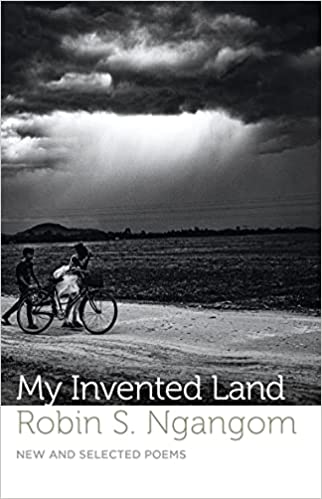
Categories
Excerpt

Is Theatre a Sport?

Title: Performing, Teaching and Writing Theatre: Exploring Play

Author: Sanjay Kumar

Publisher: Cambridge Scholar’s Publishing

A SUMMING UP / AN OPENING OUT

The ludic journey has taken us playing through performing, studying, researching, teaching, and writing theatre. It is a specific, experience-based journey, but it has a vastness and a depth that is just about beginning to reveal itself. The one thing that is clear is that creating theatre is an exercise in seeking an alternate way of life, constantly activist and constantly developmental.

Challenging the hegemonic crust, showing it to be the veneer that it is, theatre is the voice of all the diversity that lies beneath. Inimical to the state, in its purer, stronger, manifestations it questions all forms of authority, and beyond that, exposes the fallacies that constitute the very framing of authority. It is the reply to authoritarianism, and at best, often the only means to express the perspective of the unheard. It leads from the front against oppression and repression and becomes a vehicle for the two rudimentary rights of all thinking beings, the right to say ‘no’ and the right to question ‘why’. Hated by religious bigots, theatre is against the orthodox and the patriarchal, and also against the ossification of the radical, showing progress to be a verb in progress rather than an arrived noun. It is a performance that constantly seeks to outperform the deals dealt out to it.

A form existing as text, theory, and praxis from times immemorial, theatre integrally ties in with the histories of its times. Wallowing in many such oxymorons, theatre is historical in being located in its specific history and has a trans-historical dimension in being the perennial naysayer. And as the world sinks to newer levels of fascist authoritarianism, and detentions, arrests and persecutions abound, theatre reverts to metonymies, fantasies, dystopias and historical allegories to keep the fight going. All kinds of decadence are its target, from the toxic masculine to the religious bigot to capitalist power, theatre can, and does, oppose them all. Its biggest enemy remains the fascist, authoritarian, capitalist state in all its avatars, and it is possibly the best weapon against it.

The provisional aspect of its outcomes makes it capable of dealing with the ossified layers of its world and seeking alternate questions and meanings, continuing to show that the meanings that are rooted in hegemonic formations erode in time. An incomplete and malleable form, its multilayerity gives it the flexibility to explore diverse facets of the same reality.

The capitalist and the fascist seek to keep us entrapped in cocoons. Theatre, however, links people, it is a reaching out, and its transboundary aspect makes it possible for it to acquire an international dimension and combat the internationalism of the market. The history of theatre evidences its relative insularity to the forces of capitalism. After a capitalist takeover of our world, clearly since the 19th century in the west, and then in India, all over the world there exist traditions of theatre that prioritize working in the margins, and acquire a razor edge in showing the political through the prism of the peripheral. Critiquing the money-oriented world is where realism began, and the kind of distancing that left-wing theatre creates from this orientation takes the critique much further.

In our world, proscenium theatre can serve as a point of intersection between dominant processes and dominant policy making on the one hand, and the needs of the margins on the other. The pandies’ experience shows this across the class and gender divides, and in undermining notions of dominance and supremacism. Its strength lies in creating mutually performative playful zones where the audience goes along with the performing unit and sees through its own blindness to realize how easy it is to pass a lie as truth and vice versa. The creation of a developmental zone of shared ideology between the unit and the audience is the key to successful proscenium theatre. The challenge of theatre becomes to outperform and reach out to the class and power other. In its taking on of hegemony, it has the potential to be confrontationist. The challenge to regression can be outright or with subterfuge, as seen in the use of Manto by pandies’. Negotiating with those in power, the proscenium is also the space to impact the young privileged, to impact enough to use better, more inclusive paths, enabling us to make better decisions for the future. It is the perfect site for advocacy — social, medical, and even legislative. Its effectivity gains manifold if the performing unit makes a conscious effort to overcome, or at least mitigate, the class barrier, to get underprivileged voices in. This enables the margins to better penetrate hegemonic structures and provide leads to better courses of development.

With workshop-based theatre, we move into a zone that is probably most conducive to alternate formulations of amelioration and development. It opens the doors between the mainstream and its margins and enables those stories to come in, and it’s no longer a diseased margin that needs cure but a vital, throbbing entity with its own claims to be heard and developed on its own terms. This is the real site of out-performing, setting the problems and getting possible processes for solutions. The age-old problem is reframed in bold frieze – can those sitting in positions of power redress the problems of the disempowered? Can they even identify the problems holistically? On the margins, it gives the space to voice its position about its problems and judge back the power structures that profile it. One needs to give in to alterity, to at least a feeling that some of our fundamentally held beliefs can be wrong, or at the very least not pertaining to those away from the mainstream.

When we look at the workshops with the youth in Nithari, and with the platform boys, the certitudes of dominant classes get irrevocably displaced. The participants perform in all senses of the verb. And via proscenium theatre, these voices penetrate the mainstream. They raise new questions and review old problems. Co-ordinates of family, religion, and a good life do not hold any certitude for those in the margins. It stands bare that the system’s ameliorative processes are for the dominant only, and those in the margins continue to be used and exploited. And there is the special relationship between the facilitator and the participants that forms the core of understanding needs and moving towards possible methodologies of development.

Theatre assumes penetrative insights as one creates with communities in zones of conflict and war. Its potential in zones of war, not simply of usual peace processes but of understanding the conflict and seeking solutions from the engaged parties together is still untapped, as shown by the Kashmir experiences. The pioneer process showed possibilities in theatre, at par with workshopping at Nithari and with platform children. In zones of war, its characteristics become stronger and more capable, the defiance of an authoritative perspective, of not taking of one discourse as the final statement, the fluidity of negotiating binaries becomes a mode of understanding and bringing opposite positions closer. Again, voices that are totally removed in times of war, those of women and children, come to the fore and add perspectives to what is felt, and what is required. The process of theatre repeatedly showed that beneath the veneer of hegemonic dominant voices the suppressed voices wanted a cessation, of war, of conflict, of misery, of one and all. The incompleteness of theatre matches the incompleteness of the process, the bumps, the changes, the veering possibilities. Penetrating the chest-thumping veneer, it seeks out the vulnerability and takes us often, as elsewhere, into desire and imagination, the two sources capable of taking on most conflicts. Suspicion and hatred slowly give way to older traditions of love and togetherness. And there is potential for turning any, even loose, agenda on its head, as the workshop with the Sopore pelters showed. There is a kind of immediacy to the process. The form dips so much into the participants’ collective thought process and depends so much on what emerges from there, that it is this collectivity that at that moment forms the narrative.

All political formations seek to prescribe or proscribe theatre, and theatre exists in subversion, subterfuge, and open rebellion. Closer to our understanding of historical processes, theatre’s role has been more caustic as nations veer towards a right-swinging, fascist combination of patriarchy, religion, and capitalism, theatre has had to bite in hard. The proscenium theatre has played, and continues to play, its vital role, but it’s really theatre that emanates from various communities and underserved social formations that the more disturbing and relevant modes of theatre emerge. Arousing our critical faculties theatre goes places. The whole holistic mythos of the bourgeois success narrative from school to profession; the bigotry of all religions; legal, medical and social interventions — all are under its purview. And creating unique developmental zones in our societies it nudges to outperform ourselves, look beyond the decadent ideological frames of the worlds we inhabit, and seek out, or rather make, newer, better worlds.

About the Book:

Drawing on the writer’s experience of three and a half decades of performing, teaching and writing theatre, this book explores the performance practice of a theatre group (pandies’ theatre, Delhi) by placing this practice in a frame of international activist theatre movements. The teaching aspect provides a historical backdrop and the writing of plays adds depth and sharpens the political position. It identifies theatre as a force for changing society across the centuries and beyond national borders. The book examines a large variety of theatrical experiences, including well-known forms of proscenium, workshop and street theatre.

About the Author:

Sanjay Kumar has been part of the International Residency Programme at the Rockefeller Centre, Bellagio, Italy and an alum of the prestigious, US Government’s IVLP (International Visitors Leadership Program) and is the recipient of Delhi University’s (Vice Chancellor’s) Distinguished Teacher Award in 2009.

PLEASE NOTE: ARTICLES CAN ONLY BE REPRODUCED IN OTHER SITES WITH DUE ACKNOWLEDGEMENT TO BORDERLESS JOURNAL. 

Click here to access the Borderless anthology, Monalisa No Longer Smiles
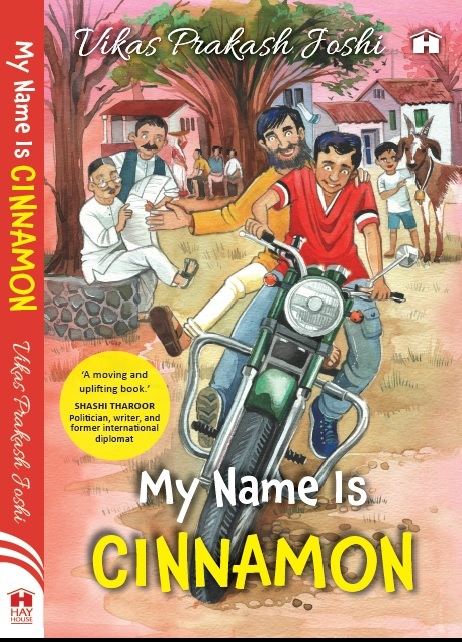
Categories
Excerpt

Farewell Song

Title: Farewell Song

Author: Rabindranath Tagore

Translator: Radha Chakravarty

Publisher: Penguin, Hesperus Press

‘I may go away from Shillong, but the month of Agrahayan can’t suddenly slip away from the almanac! Do you know what I shall do in Calcutta?’

‘What will you do?’

‘While Mashima makes arrangements for the wedding, I must prepare for the days that are to follow. People forget that conjugal life is an art, to be created anew each day. Do you remember, Banya, how King Aja had described Indumati in Raghuvamsha?’

‘‘‘My favourite pupil has artistry in her blood,’ quoted Labanya.

‘Such artistry of the blood belongs to conjugal life,’ declared Amit. ‘Barbarians generally imagine the wedding ceremony to be the real moment of union, which is why the idea of union is often so utterly neglected afterwards.’

‘Please explain the art of union as you imagine it in your heart. If you want me to be your disciple, then let today be the first lesson.’

‘Very well, then, listen. The poet creates rhythm out of deliberately placed obstructions. Union, too, should be rendered beautiful by means of deliberately placed obstacles. To cheapen a precious thing so that it is to be had for the asking is to cheat your own self. For the pleasure of paying a high price is by no means negligible.’

‘Let’s hear how the price is to be calculated.’

‘Wait! Let me describe what my heart has visualized. Beside the Ganga, there will be a garden-estate on the other side of Diamond Harbour. A small steam-launch would take us to Calcutta and back, within a couple of hours.’

‘But why the need to travel to Calcutta?’

‘Now there is no need to, please be assured. I do visit the bar- library, not to engage in trade but to play chess.The attorneys have realized that I have no need for work and, therefore, no interest in it. When a case comes up, concerning some mutual dispute, they hand me the brief but nothing more than that. But right after marriage, I’ll show you what it means to set to work, not in search of a livelihood but in search of life. At the heart of the mango lies the seed, neither sweet, nor soft, nor edible; yet the entire mango depends on it, takes shape from it. You understand, don’t you, why the stony seed of Calcutta is necessary? To keep something hard at the core of all the sweetness of our love.’

‘I understand. In that case, I need it, too. I must also visit Calcutta, from ten to five.’

‘What’s wrong with that? But it should be for work, and not in order to explore the neighbourhood.’

‘What work can I take up, tell me? Without any wages?’

‘No, no, a job without wages is neither work nor play: it’s mostly all about shirking. If you wish, you can easily become a professor in a women’s college.’

‘Very well, that shall be my wish.What then?’

‘I can visualize it clearly: the shore of the Ganga. From the lowest level of the paved bathing area rises an ancient banyan tree, laden with aerial roots. While cruising down the Ganga to Ceylon, Dhanpati may have tethered his boat to this same banyan tree and cooked his dinner under its shade. To the south is the moss-encrusted paved bathing ghat, the stone cracked in many places, eroded in patches. At that ghat is tethered our slim, elegant boat, painted green and white. On its blue flag, inscribed in white lettering, is the name of the boat. Please tell me what the name should be.’

‘Should I? Let it be named Mitali, for friendship.’

‘Just the right name: Mitali. I had thought of Sagari, in fact I was rather proud of having thought up such a name. But you have defeated me, I must admit.Through the garden flows a narrow channel, bearing the pulsebeat of the Ganga. You live on one side of the channel, and I live just across, on the other side.’

‘Would you swim across every evening, and must I await you at my window, with a lighted lamp?’

‘I’ll swim across in my imagination, crossing a narrow wooden footbridge. Your house is named Manasi, the desired one; and you must give a name to my house.’

‘Deepak—the lamp.’

‘Just the right name. Atop my house, I shall place a lamp to suit the name. A red light will burn there on the evenings when we meet, and a blue one on nights of separation. When I return from Calcutta, I shall daily expect a letter from you. It should sometimes reach me, sometimes not. If I don’t receive it by eight in the evening, I shall curse my ill-fortune and try to read Bertrand Russell’s textbook on logic. It will be our rule, that I must never visit you uninvited.’

‘And can I visit you?’

‘Ideally, both of us should follow the same rule, but if you occasionally break it, I shall not find it intolerable.’

‘If the rule is not to be observed in the breaking, what would be the condition of your house! Perhaps I should visit you in a burkha.’

‘That’s all very well, but I want my letter of invitation. The letter need contain nothing but a few lines of verse, taken from some poem.’

‘And will there be no invitations for me?Am I to be discriminated against?’

‘You are invited once a month, on the night when the moon is at its full, after fourteen days of fragmented existence.’

‘Now offer your favourite pupil an example of the kind of letter to be written.’

‘Very well.’ He produced a notebook from his pocket and wrote, first in English, then in Bengali:

Blow gently over my garden 
Wind of the southern sea
In the hour my love cometh 
And calleth me

Labanya did not return the piece of paper to him.

‘Now for an example of the kind of letter you would write. Let’s see how much you have gained from your lessons.’

Labanya was about to write on a piece of paper. ‘No,’ insistedAmit, ‘you must write in this notebook of mine.’

Labanya wrote, in Sanskrit, and then in English:

Mita, twamasi mama jivanam, twamasi mama bhushanam, 
Twamasi mama bhavajaladhiratnam.
Mita, you are my life, my adornment, 
The jewel in the ocean of my world.

‘The amazing thing is, I have written the words of a woman, and you the words of a man,’ remarked Amit, putting the notebook in his pocket. ‘There is nothing incongruous about it. Whether the wood comes from a red silk cotton tree or from a bakul tree, when set alight, the fire looks the same.’

About the Book

Rabindranath Tagore reinvented the Bengali novel with Farewell Song, blurring the lines between prose and poetry and creating an effervescent blend of romance and satire. Through Amit and Labanya and a brilliantly etched social milieu, the novel addresses contemporary debates about ‘good’ and ‘bad’ writing, the nature of love and conjugality and the influence of Western culture on Bengali society. Set against the idyllic backdrop of Shillong and the mannered world of elite Calcutta society, this sparkling novel expresses the complex vision and the mastery of style that characterised Tagore’s later works.

About the Author

Rabindranath Tagore (1861-1941), the Renaissance man, reshaped Bengal’s literature and music, and became the first non-European to win the Nobel Prize in Literature in 1913. He introduced new prose and verse forms and the use of colloquial language into Bengali literature, thereby freeing it from traditional models based on classical Sanskrit. He was highly influential in introducing the best of Indian culture to the West and vice versa, and was a living institution for India, especially for Bengal.

About the Translator:

Radha Chakravarty is a writer, critic and translator based in New Delhi, India. She has co-edited The Essential Tagore and translated Rabindranath Tagore’s major works including Chokher Bali, Gora, Farewell Song, Four Chapters, The Land of Cards: Stories, Poems and Plays for Children and Boyhood Days. She has also translated other Bengali writers from India and Bangladesh, such as Bankimchandra Chatterjee, Kazi Nazrul Islam, Sunil Gangopadhyay, Nabaneeta Dev Sen, Mahasweta Devi, Anita Agnihotri, Selina Hossain, Hasan Azizul Haq and Syed Shamsul Huq. She is the author of Feminism and Contemporary Women Writers and Novelist Tagore. Her latest books in translation are Our Santiniketan by Mahasweta Devi and Four Chapters by Tagore. Nominated for the Crossword Translation Award, she also is also a widely published poet. She taught Comparative Literature & Translation at Dr B R Ambedkar University Delhi.