Categories
Poetry

Stonehenge by Michael R Burch

STONEHENGE

Here where the wind imbues life within stone,
    I once stood
and watched as the tempest made monuments groan:
    as if blood
boiled within them.
 
Here where the Druids stood charting the stars
    I can tell
they longed for the heavens ... perhaps because
    hell
boiled beneath them?

Michael R. Burch’s poems have been published by hundreds of literary journals, taught in high schools and colleges, translated into fourteen languages, incorporated into three plays and two operas, and set to music by seventeen composers.

.

PLEASE NOTE: ARTICLES CAN ONLY BE REPRODUCED IN OTHER SITES WITH DUE ACKNOWLEDGEMENT TO BORDERLESS JOURNAL

Categories
Musings

Grune Point and an Inkling of Eternity

By Mike Smith

Grune Point. Photo Courtesy: Mike Smith

It’s almost monochrome, the seascape, like a bleak Lowry: a single eye-scarring line across the off-white canvas. But there are other lines too, not quite level, drawn on the sky in soft pencil, Prussian blues among the clouds’ grey, not quite horizontal. And the horizon is not true. Dull green-grey hillsides, the heather not yet in flower, slide to the sea’s edge a mile or two across the inlet.

And the foreground mud’s sprinkled with rocks like chocolate chips scattered on an over-baked cake. Up close, grey-white pebbles, streaked and scored, when you get your eye in, with all the colours of the rainbow; shingle banked up to the low dunes, the sand too coarse and grainy for making castles however well you wet it.

A whimbrel. Courtesy: Creative Commons

Sea-wrack at the tiered tide lines, grey-brown, softens it, and strung out banks of what might make good compost that has been washed out from beneath the grass further up, where the fields fray. Seagulls and oyster catchers, and a solitary whimbrel — its long, curved beak thin as the thin stick legs, give it movement. The sea is too far out for waves to show and islands of mud, tinged green, are settled in pewter grey.

To the west, the peninsulas of Southern Scotland, to the south, where imagination and sight mingle on the true horizon, the Isle of Man is a possibility among clouds. Some days it’s so clear and bright and seeming near, you think you might wade out to it, or even throw a stone. Ancients, they say, believed it moved: drifted, floated, came and went at its own will or that of Gods. Some think of it as Avalon, wither Arthur went after his sword –drawn from stone by the iron-master’s Art perhaps – thrown into the lake, had been caught and drawn to deep water.

Writers of local history – and J.R.R.Tolkien, no less – have seen the name as a link to the Arthurian tale of Sir Gawaine and the Green Knight, but others, no less authoritatively have asserted that Grune is a corruption not of green but of groyne[1], signifying a sea-defence. Certainly, if you walk the coastal path along the stepped concrete from Silloth through Skinburness you will pass many groynes, the northern ones with their asymmetric piles of shingle and stone facing the south, four foot of rotting timber showing on the north side. From Skinburness it’s rock armour; stacked boulders the size of armchairs to break the force of the waves, but these are far more recent, by a millennium or more, than the naming of the place.

Look out from your seat on the dunes, a cut log or a fully rooted tree, washed down by the rivers and cast up on the beach, smoothed and softened by the rub of sand and water and weather, heavy as rock when wet, light as papyrus when dry, your collar turned up against the steady breeze up from the south, the gorse behind you too prickly to shelter in just yet, and the emptiness before you is palpable. There is the sense that you could sit here for a week, a decade, a century, a thousand years and nothing would come to pass that would not pass and become the same, but slow forces are at work already that time will not reverse, and this place among those will see those changes first.

Turn around. Face north and see the curving sweep of Scotland’s shore. Look eastwards across the spit. Beyond the billiard-table Solway plain the tips of mountains Hadrian[2] knew and of Northumberland. To the south the lumpy, soft peaked Lakeland fells flanking Skiddaw.

Closer, just off the point, the course of rivers running in and out to sea: Eden, Wampool, Waver, sticky with black dots of foraging birds, slick and sticky with mud in the ten foot channels where water’s only inches deep, but where the mud would grasp you by the ankles and hold you fast as the fast tide, faster than you can walk or even run, rises.

People love or loathe this place. It lies beyond the sounds of traffic. Even on a summer’s day, when it bakes under an unshaded sun, you may have it on your own, perhaps a couple leaving as you arrive, a couple arriving as you depart, a solitary figure, half a mile away across the gravel bank, silhouetted against the sky. Even on a summer’s day when the sky’s so high and wide you think you might fall in, it may have you on your own.

Once, on a midsummer’s eve, the sun touching Criffel, we sat and watched a lone canoeist, soundlessly, the slow paddle barely breaking the water surface, come in, riding the rising tide, a hundred or so yards offshore, the sea carrying them on, perhaps from Skinburness or Silloth, or who knows where? And, reaching the point, where storms gouge and notch the gravel tip, to what rendezvous, we wondered, were they being carried?

Criffel is a hill in south-west Scotland. Courtesy: Creative Commons

You can be alone here, barely a mile from the nearest house nestled in the gorse, from the last of farmland hedges, from the bungalows lined up behind the slight embankment of the coast road, only those with garret windows in the roof catching a glimpse of the water that one day, undoubtedly and perhaps soon, will wash them clean, and this gravel tongue itself, away.

Then it will fade in memory. Eerie. Peaceful. Silent save for bird song and the keen call of the wind. Bleak and beautiful. Magnificent and mysterious. A place where you might be confronted with the awesome sky, and the mountains far and near, and the almost monochrome seascape, or with yourself and nothing else but an inkling of eternity.   


  1. [1] A barrier built out into the sea from a beach to check erosion and drifting.

[2] Hadrian was a Roman who ruled from 117 to 138. He built the Hadrian Wall to define his extent of rule in Britain.

Mike Smith lives on the edge of England where he writes occasional plays, poetry, and essays, usually on the short story form in which he writes as Brindley Hallam Dennis. His writing has been published and performed. He blogs at www.Bhdandme.wordpress.com 

.

PLEASE NOTE: ARTICLES CAN ONLY BE REPRODUCED IN OTHER SITES WITH DUE ACKNOWLEDGEMENT TO BORDERLESS JOURNAL

Categories
Poetry

Hats, Cats, Foxes & Rhymes…

Poetry by Rhys Hughes

THE DOERS OF THAT


We very rarely do this
for we are the doers of that,
we are almost impossible to kiss
and we wear incredible hats.

Yes, we are the doers of that,
we tease whoever we please,
we hiss at bees high in the trees
and wheeze at inedible cats.

To be a good doer of that
it helps to swap fleas with things
or flit and flap like a cricket bat
that has suddenly sprouted wings.

Our bicycles are truly organic
with bold noses mostly titanic,
mighty big sneezes plus sea breezes
will trundle us along in a panic.

But rather diffuse are our ears,
they operate best in low gears,
when listening uphill they thrill
to the trill of squirrels drunk on beers.

Soft are the beds we lie on,
their shapes based on dandelions,
slick are the knees that we freeze
in cold teas and biscuity their caps.

For we are the doers of that
and inordinately proud of the fact.
Yes, we are the doers of that,
expressionless and very abstract.


TWO DETECTIVE INSPECTORS


The fox said to the owl
“When it came to
choosing a career
most of my options were defective.
I wanted something proactive
so I was very selective
and decided to become a detective
because murder most fowl
sounded very attractive.”

“I too joined the police
for gustatory reasons,” replied the bird,
“and now I do battle against
gangs who shoot, stab and smother.
To be perfectly candid
I am always enthralled
when we catch them red-handed
and the perpetrators rat on each other.”


THE RHYME AND THE MIME


The rhyme and the mime were friends
but drove each other
round the bend, taking it in turns.
They never learned!

And in the hay one day
one rolled around until he was far away
and the other was irate:
too late to berate the fate of his mate!

Which was the unfortunate explorer?
Was it the quiet mime
or was it the rhyme with perfect time
twanging in a corner?

Obviously it was the mime, otherwise
logic is endangered
and strangers who range on the plain
will dissolve in rain.

The rhyme and the mime are laughing
with their little faces,
eyes of the mime, sequins bright: those
of the rhyme, lower case.

Rhys Hughes has lived in many countries. He graduated as an engineer but currently works as a tutor of mathematics. Since his first book was published in 1995 he has had fifty other books published and his work has been translated into ten languages.

PLEASE NOTE: ARTICLES CAN ONLY BE REPRODUCED IN OTHER SITES WITH DUE ACKNOWLEDGEMENT TO BORDERLESS JOURNAL

Categories
Stories

Bus Stop

By   Rinu Antony                        

It was not the sound that bothered her but what it meant. Everyone would reach their destination except for her. She remained seated at one end of the bus stop bench. The screeching and rattling sound of the engine continued and then the tyres seemed to screech. She could hear the sigh of relief from some of the passengers in the window seats.

Marjorie avoided looking at a particular window where a little boy had been staring at her for quite a while as if wondering why she sat alone outside while others were inside the bus. Marjorie’s stomach churned with not only the odour of fumes but also with the idea that the boy could see through her. 

She felt he could see that she wasn’t eager to return to her home.

To Marjorie’s relief and disappointment, the bus had started and moved towards its destinations. But no sooner was the bus gone that Marjorie regretted not getting in. 

Maybe, I should have been on that bus. Maybe…

The night sky was aglow with bright city lights. Marjorie looked across the petrol pump on the other side of the road. Long queue of vehicles, both two wheelers and four wheelers, were seen stretching for several metres at the petrol pump. Her eyes lingered on a woman who drove by on her scooter. Marjorie had wanted to buy a scooter for herself for a year now. But she couldn’t save enough money to buy a scooter. 

So lost she was with the activities at the petrol pump and the regrets of her life, that she didn’t notice a person occupying the middle of the seat. A sound made her look to her right. A chubby woman clad in saree was rummaging through her shopping bag. With her hand buried inside her bag, the woman looked up and met Marjorie’s eyes. Marjorie looked away. 

A tongue clicking sound drew Marjorie’s attention towards the stranger.

The woman tossed some roasted peanuts into her hand from a paper roll and offered them to Marjorie. Marjorie looked at the outstretched hand and at the woman. She was disgusted with the idea that the woman offered her peanuts with her unwashed hand and with that hand she was going to eat the peanuts herself. 

Marjorie shook her head and forced a smile, “No thanks.”

The woman shrugged her shoulder which irritated Marjorie. It reminded her of a school friend of hers who’d shrug her shoulder too often for no reason. It was also this friend who introduced Marjorie to cigarettes and cuss words and broke her friendship when Marjorie told her how her father caught her smoking a cigarette. 

Bad influences can ruin your life. Her father used to say. It reminded her of her sister now. She lifted her wrist to check the time on her wrist watch and wondered what her sister might be doing now. Worrying about her child? 

“Where are you heading?”

Home.

Once again, Marjorie turned to face the woman but didn’t respond. Only when the woman’s eyebrows shot up and the corners of her lips rose imperceptibly did Marjorie respond.

“Actually, I needed to go to a medical shop. Wanted to buy some medicine for my niece. She’s sick. I should have bought it while coming from work but I forgot. I was on my way home when the bus broke down here. All the passengers got down. Suddenly I felt sick. By the time the bus started again, I felt too dizzy even to stand up. So I decided to sit here till I felt okay,” said Marjorie.

God! Why did I have to say all that? Wondered Marjorie.

The woman smiled and shook her head. Does she know I’m lying? No, that’s not possible! Or is it easy to read me?

Marjorie knew she should have asked the woman in return where she was headed but she didn’t have the energy in getting involved in chit chat. So she remained quiet. 

“How old is your niece?” The woman asked.

Instead of answering, Marjorie dug out her phone from her purse, opened it and showed her the picture of her sister and niece. 

“She’s your sister?”

Marjorie replaced the mobile into her purse. 

“Yes.”

“Younger sister?”

“Yes.”

How does she know?

The ominous sound of the siren of an ambulance drew their attention towards it. 

“I don’t like to see ambulances,” said the woman and looked away.

Neither did Marjorie. She wondered if there was any soul on Earth who looked at ambulances with awe and interest as one looked at BMW.

Both the women remained quiet till the sound of the siren faded into the distance. Marjorie cupped her nose when dozens of vehicles stopped at the traffic signal. It wasn’t as Marjorie wasn’t used to the odour of exhaust fumes from vehicles. Maybe, it was the familiarity that bothered her. When she was a pre-schooler, every morning, Marjorie would accompany her father as he’d begin his work as an autorickshaw driver. She enjoyed those moments with her father — away from her bickering mother. Then, as the years rolled by, Marjorie got busy with her school and friends. But Marjorie was never a bright student and her father often expressed his disappointment in her. Few times, Marjorie tried but failed to take her studies seriously. Her father also never approved of her friends and blamed them for her poor performance in school. He firmly believed that Marjorie would never succeed in life. So, he shifted his attention from Marjorie to his younger daughter. Unlike her, Marjorie’s sister was quiet, obedient, respectful and studious. Her father had high hopes for her. Marjorie and her father’s relationship became strained over a period of time.

Marjorie was glad her father was dead, else he’d be heartbroken.

“What is your sister’s name?” 

Once again, Marjorie looked at the woman. The woman’s face seemed to glisten under the artificial lights. 

Why? You didn’t ask my name. Why do you want to know my sister’s name?

It was as if the woman read her mind.

“What’s your name?”

Marjorie couldn’t help but smile. “Marjorie. My sister’s name is Tara and her daughter’s, Urja.”

“I’m Mehak. Mehak, a unhappily married woman with no interest in life.”

A city bus stopped in front of them. Neither woman got in. 

Despite herself, Marjorie was suddenly curious to know about the woman’s life. 

Probably her husband has affair with another woman, thought Marjorie. 

Again, it seemed the woman heard her thoughts. 

“He’s like any other normal, common husband. I don’t have any complaints with him,” Mehak paused and turned her attention to the petrol station. “But I lost my mother and brother in an accident a few months after our marriage. They were accompanying me to my in-laws house when the accident occurred. They died on the spot. After recuperating in the hospital for three months, I walked out of the hospital like a normal person. But nothing felt normal afterwards. Nothing. It strained my relationship with my husband. But he doesn’t care nor do I.”

Strained relationships are difficult to mend, thought Marjorie. Her own relationship with her father had never mended. Their relationship was coloured with their occasional fights, her father’s disapproval of her friends, clothes, bad grades, dabble with smoking, impudent behaviour. The list went on. But it was his comparison between her and her sister that hurt her the most. He never stopped doing that till his last breath. Her mother was a silent spectator whose only concern was providing meal to her family at the right time and occasionally complaining about her husband’s low income.

“What does your sister do for a living?”

Why don’t you ask about me? 

My sister does nothing! 

“She has to care for her baby so —

For some unknown reason, the woman laughed drawing Marjorie’s attention towards her. 

The woman met her eyes with the remnant of the laugh in the form of a smile now. 

“She doesn’t work, does she? Perhaps, her husband does.”

The way she said it rattled Marjorie and she decided not to respond to the woman. There was something wrong with the woman. Maybe after losing her mother and brother, she had become bitter inside, thought Marjorie.

“What about you? What do you do?”

“I’m a web developer,” said Marjorie quickly before she realised her mistake. I shouldn’t have answered her. 

The woman was silent. Maybe she doesn’t know what web developers did. Should I explain it to her?

“I’m an alcoholic,” said the woman in a rasping voice.

Marjorie was looking at the woman now. She wasn’t sure if she heard her right.

“Huh?”

The woman looked serious, “You heard me.”

“Are you drunk now?”

A humourless laugh sliced through the air. 

“I had only one glass of whiskey before leaving house. Would that make me drunk? I’m childless and trapped in loveless marriage. My husband is also an alcoholic so I give him company now and then. Though we don’t love each other, we share our love for alcohol and that’s how we continue to live with each other.”

Marjorie checked the time on her phone thought of leaving. Instead, she remained seated. She was surprised that her sister hadn’t called her already. Then she realised she had turned on airplane mode. Another bus stopped in front of them and four passengers got out. Two crossed the road and two sat on the seat with them. 

The woman scooted near Marjorie and leaning towards her, said, “Your name? ”

Marjorie could detect the alcohol in the woman’s breath now. “I already told you. Marjorie.”

“Nice name.”

“My father named me.”

“Fathers are good. Mine lost his sanity after the death of my mother and brother.”

Marjorie thought about her niece’s father. She didn’t know who he was. Despite asking her numerous times, her sister hadn’t revealed any details about her child’s father. Marjorie hated her for that. Hated her sister for keeping a secret from her who was taking care of her and her child. Hated her for being their father’s favourite daughter. 

Not only Marjorie had to care for her sister and niece but also had to send cash to her mother who lived in their old house alone. 

Marjorie’s life was like a monsoon sky with a grey veil of clouds. 

“Is your sister nice to you?” 

Marjorie turned and examined the woman’s face. Her eyes moved towards the other two people who were busy with their phones.

“Of course, she is nice to me. We’re siblings!” Marjorie didn’t hide her irritation.

“Not true. Some siblings are sworn enemies and some cannot stand each other.”

No, there was no sibling rivalry when they were young nor now. In fact, when she thought of her sister no emotion got hold of her. No hatred. No envy. No love.

She felt nothing for her sister. She knew her sister felt the same about her. 

While growing up, Marjorie spent most of her time with her friends and socialising while her sister studied. Her sister was always the smarter one between them. 

Where did you go wrong, Tara? How could you conceive a child out of wedlock?

Marjorie remembered that night vividly. It was past 10pm, and having done with her usual two cigarettes and halfway through a movie, Marjorie’s droopy eyes snapped wide open with the ringing of the doorbell. Her heart hammered in her chest as she peered out of the peephole. She couldn’t believe her eyes! Tara stood on the other side of the door. For a brief moment, Marjorie didn’t believe her eyes. Why was her sister here? She was supposed to be in her college hostel in Delhi. 

Marjorie unlocked the latch and yanked the door open. Another surprise! Her sister who had always been lean had put on considerable weight. Her chubby cheeks glistened with sweat and her belly fat showed in her shirt. 

“It’s getting hotter day by day,” Tara had said and smiled.

The next day Tara revealed her condition to Marjorie. Marjorie remembered her reactions. First she didn’t believe her sister, then she was shocked and then she was furious.

Tara didn’t complete her third year but could no longer stay in the hostel as her baby bump began to show. To add to Marjorie’s fury, Tara wanted to keep her unborn child. They didn’t tell their mother or anyone known to them. 

You cannot guess how the future would unfold, daddy. I’m glad you’re dead or Tara’s condition would have killed you of broken heart.

Three years ago, her father had been diagnosed with tuberculosis. The costs of treatment were too high and he had succumbed to the disease. However, before he breathed his last, he called Tara to himself.  Clasping her hand, he had wished her a successful life. He had also asked her to make their family proud. Then, he was gone. 

Marjorie’s reverie broke as she noticed a bus in the distance. It was time for her to get back home. She turned to Mehak and met her eyes. The corner of Mehak’s lips rose but her eyes were a different story. Her eyes were soulless and distant, yet directed at Marjorie. Suddenly, Marjorie felt pity for the woman. Then, her eyes went to the other two seated on the bench and she wondered what their stories were. 

The bus stopped before them and the conductor, standing near the bus door, shouted out the names of the stop and the destination at origin stops. One was Marjorie’s location. Marjorie stood up and moved towards the bus. As some passengers were getting down, Marjorie turned. For some unknown reason her heart ached as she smiled at Mehak. She felt as if she was leaving someone close to her. Mehak grinned back at her and Marjorie boarded the bus. 

.

Rinu Antony is a graduate of Nagpur University where she earned her masters in English literature. She works as a freelance writer and lives in a small town, Chimur. 

.

PLEASE NOTE: ARTICLES CAN ONLY BE REPRODUCED IN OTHER SITES WITH DUE ACKNOWLEDGEMENT TO BORDERLESS JOURNAL

Categories
Poetry

Clouds & Rain

Poetry by David Francis

Courtesy: Creative Commons

THE SOUND OF RAIN


The way it makes everything
inside seem dry
and yet vulnerable.

Lovers love the rain.
But to the lonely it hurts,
like withheld tears.

Strange, the present
and cyclical passage
of time: this rain now.

It dies. For an instant
aware you say, “It’s stopped.”
Cautiously, as if a hazard.

Listening to the rain
in pajamas,
eyeballs tired from reading,

Outlasts the sleeper
who wakes, wonders,
“Has it rained?”


SYLLABLES

She only sings four syllables
but that doesn’t irritate me. Because
I say the same words
over and over: “We’re together.”


CIRCLE OF CLOUDS

Clouds are circling fast
come in from the coast
and the blue makes
the cold less cold
but you went away
in the middle of the night
rolled away on a bus
all day inland
you’ve been gone longer than you said
a man without sleep
is like a man dead
I see everything gray
though the clouds have been pushed
by some invisible oar
I won’t feel it
till you come through that door

David Francis has produced seven music albums, Always/Far: a chapbook of lyrics and drawings, and Poems from Argentina (Kelsay Books).  He has written and directed the films, Village Folksinger
(2013) and Memory Journey (2018).  He lives in New York City. 

.

PLEASE NOTE: ARTICLES CAN ONLY BE REPRODUCED IN OTHER SITES WITH DUE ACKNOWLEDGEMENT TO BORDERLESS JOURNAL

Categories
Essay

A Modern-day Animal Fable with Twists

Dan Meloche visits a contemporary Canadian novel written as an animal fable to draw an unexpected inference

Apologues, or animal fables, deepen our understanding of aspects of the human experience. In both Richard Adams’s Watership Down and George Orwell’s Animal Farm, the authors’ anthropomorphised rabbits and farm animals struggle with class division, malevolent leadership, and violence. Mirroring current or historical political realities, these books remain popular as cautionary tales. Similarly cautionary, Andre Alexis’s award-winning novel,  Fifteen Dogs: An Apologue (2015), provides a twist to the typical apologue genre. Alexis’s animals are not attributed human qualities but become human-like when transformed with human consciousness. Less politically and more philosophical, Alexis’s apologue highlights each dog’s response to the dubious gift of human consciousness and intelligence:

“‘I’ll wager a year’s servitude,’ said Apollo, ‘that animals – any animal you choose – would be even more unhappy than humans are, if they had human intelligence.

An earth year? I’ll take that bet, said Hermes, but on condition that if at the end of its life, even one of the creatures is happy, I win.’”

Only three dogs embrace the gift of human consciousness that leads to a “new language flowered within them”. This new language is most significantly embraced by Prince, the only dog that is happy at the end of his life. Throughout the novel, Alexis traces Prince’s journey and the path that leads to his happiness. His path begins with exile after defying pack leadership by refusing to curb his desire for language expansion and poetic expression. Also separated from the pack are two other human consciousness embracers, Benjy and Majnoun. When Benjy and Majnoun die, Prince becomes the lamplighter of their endangered language. Until his death, Prince carries with him Hermes warning: “if you die, your way of speaking dies with you.” By passing on his poetry, Prince abides the warning, saves the language, and ensures his happiness in his darkest hour.

At the outset, Prince revels in his expanded consciousness in the face of threatening forces. Following their escape from the veterinarian clinic, the dogs gather in a coppice to begin the sorting out of dogs wishing to stay “dog” and dogs willing to explore their new expanded consciousness., Atticus, the “crumpled-face” and “natural hunter of small animals,” assumes pack leadership and encourages his fellow canines to stay “dog” and deny the gift of human consciousness. For Atticus and his sycophants, denying human consciousness means denying language development and other ‘non-dog’ behaviour. According to Atticus, dogs already have a language of barks and growls sufficient to communicate basic need and social standing. To Prince, who “entirely embraced the change in consciousness,” language expansion is necessary to express the “new way of seeing, an angle that made all that he had known strange and wonderful.”

Overwhelmed by the wonder of his heightened consciousness, Prince moves beyond his old ‘dogness’ to declare his expanded awareness and express himself in verse:

“The grass is wet on the hill.

The sky has no end.

For the dog who waits for his mistress,

Madge, noon comes again.”

In the last line, Prince plays on the name of his friend Majnoun, a similarly awoken dog. This connection with Majnoun affirms Prince’s poetic spirit and establishes fidelity to the new language. However, Atticus’s henchmen Max, Frick, and Frack are more interested in affirming pack order and want to tear Prince to pieces. Oblivious to Frack and Frick’s menacing postures, Prince, encouraged by from Athena, Bella, and Majnoun, indulges his small audience with more verse:

“Beyond the hills, a master is

who knows our secret names.

With bell and bones, he’ll call us home,

winter, fall, or spring.”

With his cryptic suggestion of a new order of things, Prince’s words are enlightening to some and enraging to others. This second poem entrenches the pack’s two camps: those wanting more poetry, thereby embracing the gift of consciousness, and those unsettled by the “strange talk.” Threatened by Prince’s poetry, the latter camp acts to secure pack order.

After a murderous pack cleansing, Prince escapes into exile to revel in his expanded consciousness. With that comes more poetry, more language. Yet, what good is a language in solitude? Rambling through Toronto’s urban expanse, Prince craves reunion with his pack mates: “But what am I without those who understand me?” Also exiled, Majnoun and Benjy remain psychically connected to Prince. Inspired by Prince and his artful musings on his expanded consciousness, Majnoun tries his hand at poetic expression. Despite its curious subject, Majnoun’s verse is presented as love poetry to his master Nira:   

“In China, where wild dogs are eaten,

I am dismayed to be in season.

I curse men who think of me as food

and dream of rickshaws, and lacquered wood.”

Also inspired by the poet dog, Benjy draws on Prince’s courage to ponder what is seen through their new human lens. Looking across the limitless expanse of Lake Ontario, Benjy wonders: “Why should this bluish, non-land be? And how far did it extend?” Benjy’s philosophical rumination then causes the poet dog, Prince, to magically appear.

Overcome with joy and “tongue lolling out,” Prince revels in his delight in seeing Benjy. Mostly, Prince is happy to affirm that their pack language lives on in at least one other dog. With hope renewed, Prince circles the embarrassed Benjy: “It was as if he were chasing the delight that animated him.” His animation is quickly deflated when Benjy tells Prince of the pack’s obliteration in the Garden of Death. For Prince, the dwindling pack size threatens preservation of the pack’s language: “And his cries were such an unfettered expression of grief that even the humans in the distance stopped to listen.” To affirm the language’s vibrancy, Prince offers a poem as balm:     

“With one paw, trying

the edges of the winter pond,

finding it waters solid,

he advances, nails sliding,

still far from home.”

Nonplussed, Benjy shows no interest in Prince’s description of a dog’s tenuous existence: “He knew no word for boredom, but the feeling was accompanied by a nearly palpable desire to have Prince stop talking.” Less interested in the pack language, Benjy is more interested in reciting Vanity Fair to his master. For Benjy, this party trick secures home and comfort better than a dying language. When Benjy brings Prince home with him, the English speaking, literature quoting Benjy receives an enthusiastic reception while Prince is shown the curb: “In this way, as suddenly as he’d regained a pack mate, Prince lost the dog he believed was the last to share his language.” As the three remaining dogs approach death, the fate of their pack language moves closer to extinction.

While Prince dies happy, his consciousness embracing counterparts, Benjy and Majoun, share crueler fates. After killing off most of the pack (Atticus, Rosie, Frick and Frack) by leading them to a “garden of death,” Benjy invokes a retributive Zeus. Fulfilling Atticus’s final wish, Zeus punishes Benjy with a horrific death: “as if a fire were moving deliberately through the den of his body”. In his moment of death, Benjy “conjures hope” for a place where a just world establishes “balance, order, right and pleasure”. Although Hermes pleads his case that hope is a manifestation of happiness, Apollo dismisses hope as “a dimension of the mortal, nothing more.”

After a five-year vigil pining for his missing master, Majnoun approaches death heavy with the ravages of unreciprocated love. Tormented with more than just a broken heart, Majnoun struggles with unresolvable questions: “What, he wondered, did it mean to be human?” As Hermes tried to explain to Majnoun, a dog will never understand love the same way as a human. Unable to square his canine-human experience, Majoun rests uneasily “adrift between species.” Bearing witness to Majnoun’s philosophical torments, Zeus strong arms the Fates to mercifully cut short the thread of the lovestruck dog’s life.  Heart-broken, philosophically perplexed and, consequently, unhappy, Majnoun makes his transition.

How, then, is Prince’s response to consciousness different from the experiences of his awoken confederates? Benjy’s final appeal for a just world can only be followed with the unhappiness that results from recognising that such a thing is impossible. Also given to unreasonable expectations, Majnoun cannot find happiness as he’s unable to neither bridge the canine-human divide, nor mend his broken heart. While Benjy and Majnoun base their happiness on things over which they have no control (the entire world and Nira’s love), Prince’s goal is to preserve the pack language: “There was at least one thing he loved, one thing that would be with him always; his pack’s language.”

By saving the pack language, Prince saves himself from misery. In his death throes, Prince loses his sight. Fearing the same fate for his language, “in a heroic effort to preserve his language, Prince began to speak his poems to the woman.” When Prince hears his human guardian repeat his poetry, happiness comes: “Somewhere, within some other being, his beautiful language existed as a possibility, perhaps as a seed.”

For Hermes and Apollo, that seed represents access to the eternal. As they both agree to the indisputability of Prince’s happiness prior to death, the sons of Zeus acknowledge the notion claimed by all immortals that “all true poetry existed in an eternal present, eternally new, its language undying.” By preserving the language and passing on his poetry, Prince gains access to the eternal. As his poetry exists eternally, so will he, thus overcoming the greatest fear of those governed by human consciousness. In a uniquely human way, Prince’s happiness comes from realising that the surest antidote to the fear of death is the most transcendent and eternal of emotions: “In his final moment on earth, Prince loved and knew that he was loved in return.”

Dan Meloche is a full-time professor at Algonquin College in Ottawa. When he isn’t teaching English and economics, he reads widely and writes literary criticism, reviews, poetry, and personal account essays.

.

PLEASE NOTE: ARTICLES CAN ONLY BE REPRODUCED IN OTHER SITES WITH DUE ACKNOWLEDGEMENT TO BORDERLESS JOURNAL

Categories
The Observant Immigrant

Is It Okay to be Ordinary?

By Candice Louisa Daquin

Courtesy: Creative Commons

I had a client who struggled with her self-identification as ‘ordinary.’ A Millennial, she’d grown up with social media and the perpetuated confrontation of perfectionism that it can sometimes embody. Growing up middle-class she’d felt the pressures of reaching certain goals, even if they were not her own goals. We talked about how this has been true well before the advent of social media. Society has long held ideas of what individuals ‘should’ accomplish, depending upon your background and parenting. Many children were given no incentive and left to rot on the shelf, whilst others were hounded by external pressures; relatives, academic institutions, peers, or those they admired.

For girls this ‘pressure’ is more recent, as historically girls were not expected to achieve in the same way boys were. In the last 100 years this has begun to shift, with women gaining traction in the career stakes. However, as with any advance, there are pitfalls and some women now, are putting ever increasing pressure on themselves to ‘become everything.’

By ‘become everything’ I mean; mother, provider, educated, career success, care giver, slim, healthy and attractive. And for some, this is attainable. I know many women who function well with huge responsibilities, not least, thriving careers, multiple children, and sufficient energy to stay fit, eat well and not indulge in vices like smoking.

But for every woman who is able to juggle all of the above, there are many who find it too much. Unfortunately, if one person is able to juggle everything, society can be unkind and denigrate those who are not able to, as if this is somehow a failing. In large populations the survival of the fittest is most acute and social media shines a light on success, leaving many feeling ‘less than’. Let’s examine if not being able to ‘do it all’ is indeed, a failing.

Firstly: Everyone is different. But that is no consolation for those who perceive they are not favourably compared to others. What comfort is it to know you are different, when that translates as ‘not being able to do what others can’? Especially in a competitive world where failure isn’t really tolerated. Moreover, how do we feel good about ourselves when we’re confronted with many examples of success and are constantly under scrutiny, by ourselves and others?

In the past – before social media – it was harder to compare yourself against a large swath of people. We weren’t as in touch with each other and what each other was doing. Imagine the famous Bronte sisters, living in a remote moor, having to send letters to far-flung friends, rarely seeing anyone. In some ways this was unbearable. In other ways it avoided direct scrutiny. In the past, we may have not had the rapidity of expectation we have today, given we did less, because the opportunities to do more were harder to obtain. Class divide was more stringent. If you were born the son of a labourer, chances were that’s what you’d been. The ability to climb the social ladder was prohibitive. Today if a young woman lives in a city, she has access to the potential avenues of education, finding a partner, having children, having a career, buying a home, working out in a gym, making friends, etc. We are no longer stuck in houses on the moors or in far-off villages in the same numbers. Even so, class divide exists even if we don’t want to admit it does. If your parents have the funds to send you to the best school, then your outcome is likely to be more fortunate than someone who has no means.

But realistically and statistically how many young women today can bank on having it all? Even if they are capable of working extreme long days – in a job, holding down children and a marriage successfully, finding time for socialising and working out and more, even if they can somehow juggle those stressors and are glad to be emancipated from previous restrictions. How many can keep this level of pressure up and at what cost? For every woman who can, there are doubtless, those who can’t. And it’s not always about choice, it can be due to ill health, mental health issues, stamina, different aspirations, or simply a lack of interest in competing. Perhaps we should get away from the idea that having it all is indeed the only legitimate form of ‘success.’

Case-in-point, just the other day a client boasted of working 16-hour days because for her, this was a point of pride. What wasn’t said, was that shortly after ten years of 16-hour days, she got seriously ill and had to quit work. What wasn’t said is her eldest daughter ran away from home because she spent many days unsupervised by workaholic parents. When the client stopped working 16-hour days, she saw that the façade of ‘having it all’ was just that. She spent more time with her kids, without feeling she was failing to do so. Her marriage, which was hanging on by a thread, was healed. She had to de-program the idea that she was ‘failing’ by not doing it all – part of that was realising a 16-hour work day isn’t very balanced. Some do it, but there is an invariable sacrifice, and the question should always be; how much is too much and why do we as a society tolerate this?

Just as we should tell our daughters (and sons) that your self-worth shouldn’t be tied to shallow modes of success, it’s worthwhile admitting that many can and do ‘have it all.’ It very much depends upon what we seek in life. If our goal is to be a workaholic then we should consider whether we realistically have time for other things, and not attempt to have it all, so much as aim for what we want. Society however tells us that we’re lacking if we’re not able to do it all – even if that’s not what we want to do. Why does society put this pressure on people? Perhaps because it’s the nature of competition; If one person can do it, then you have to try harder to match them. Soon, even people who didn’t want what you wanted, are striving for it. The alternative might be obscurity.

As populations grow, you see this in countries with the largest population masses. In order to get what was once relatively attainable, people are having to work harder and harder because the relative competition is greater. This leads to a bottle-neck pressure, where top universities don’t have the space for all the qualified applicants. Cheating, subterfuge, paying off professors and other methods are employed to ensure a child gets that coveted placement. Equally, more-and-more unpaid internships are expected of young people, leading to only those who can afford to work without pay, succeeding. The price being paid for what was once attainable through regular hard work, is now exaggerated.

I recall as a young person I envied and admired young women who seemed capable of getting up at 5am to work out, send their child off to school with a packed lunch, keep their husband engaged in their marriage, find time to stock the fridge and clean the house, whilst working gruelling hours in a high demanding career. Young women who seemed to have boundless energy and ambition, always seemed to have clear skin and glossy hair and wear flattering clothes, and genuinely seemed happy. I felt there must be something wrong with me because I couldn’t cope with such a ‘full dance card’. I’m sympathetic then for those young women two decades later, who talk to me of similar feelings of inadequacy.

What do you say to someone who feels inadequate when you know there are many who can have it all?

Those young women who had it all – interestingly sometimes also sought counselling. And whilst you may secretly wish they came to a counsellor and revealed they could never cope, they were hanging by a thread. That was often not the case. Instead, these young women would express something none of us might anticipate.

Feelings of failure and incompleteness.

What?

Surely if you ‘have it all’ you couldn’t possibly feel empty, or have feelings of failure? After all – you have it all!

But that’s the funny thing about ‘having it all’ it’s as much an illusion as believing you have nothing. These are two extremes. And many high achievers are never truly content because it is the feeling of not doing enough that drives them.

Have you ever met someone who clearly didn’t ‘have it all’ but they seem so happy? Yes. It is a little-known fact that people with less, are often more content. The old adage, money won’t buy you happiness isn’t far wrong. Of course, most of us want to be in a position so that we do not have to worry about finances. If you don’t have enough to live without those fears, you don’t have the luxury of being content with less. However, if you are in that lower middle band, where you may not have a lot or have achieved what you believe describes success, but you have enough to not worry about putting food on your plate or fixing your roof if there is a bad storm, then you may know contentment. Perhaps this is why people in socialist friendly countries like Norway and Sweden tend to rate highest on the world happiness scale? Because those basic needs are taken care of such as maternity leave, child credits and health care whether you work or not, and that leaves them to consider the actual process of being content.

Being content looks different to different people.

So, for an over-achiever who lives and dies by their measure of success which is often, almost verging on being unrealistic, they may not be as content as someone who isn’t as much of a high achiever. This is why there are two types of people who most commonly drop out of university: the extreme under-achiever (no surprise) and the extreme over-achiever. [MC1] The latter is a surprise to many and the reason is equally shocking. Over-achievers are more likely to implode, self-sabotage and leave university for what many of us would consider absurd reasons. Case in point: When I was a teacher, I often saw straight A students drop out because they made a A-. On that basis alone. Their grade was the kind of grade most would kill for, but to them, a 95 instead of 100 was the equivalent of abject failure. Many times, I met super-intelligent people who would be working ‘regular’ jobs because they couldn’t finish university and get the job they wanted to get, for this reason.

These discrepancies in how we perceive high achievers teaches us that just looking at someone doesn’t tell us who they are. Our perception of others is often wholly wrong. Any doubts about that and consider a family of ten. Two parents, eight kids. Invariably each child holds a different perspective of their childhood and experience. They do not grow up to be the same even if they’re identical twins. Why? Because our individualism comes from our perspective and no two people hold the same perspective. Perspective is more than what religion you are, what gender, what life experiences you have. It is about the culmination of everything and then the actual vantage point from which your perspective is formed.

Imagine a room with those ten people in it. Something significant happens, ten people walk away with ten slightly different perspectives and experiences. Just by being individuals. It is why bystander testimony is so unreliable, human beings are too subjective and bound by their own perspectives to be objective.

Consider then the over achiever, whilst you may envy them their success, they may be tormented. Equally they may be happy, but still feel they have not succeeded by their standards. Someone who is ‘ordinary’ if any such definition can be made (the argument being, we’re all extraordinary in our own way) may be more content without having achieved as much. In this case, it is more than okay to be ‘just ordinary.’ Modern society possesses many examples of exacerbating stressors such as the pressure to gain a certain grade to get into a coveted school. Despite being an over-achiever, it may not be enough and then even the over-achievers ‘fail.’ By not having those pressures in the first place, you avoid the potential success but also the downfall. It’s not easy being under the spotlight with everyone expecting you to perform. The advantage some over-achievers have, is they may excel under pressure, or be galvanised by it. But what of those who don’t find pressure helps them?

Back to my client. She was not content to be ordinary because she’d grown up with the competing pressures of a high achieving brother who ‘could do no wrong’ and her own feeling of inadequacy. But how much of that was hard truth versus her perspective? In reality it was all her perspective and because of that – it was also possible to shift that perspective to give her a chance at being less judgmental of herself.

How do you change the way you perceive things? How do you stop judging yourself for not measuring up if you are bombarded by subliminal messages that you’re not ‘enough?’

What constitutes ‘enough’ when we’ve got disparate views on what enough means? If we have low-self-esteem we’re more likely to judge ourselves harshly on not being enough, than if we are content or somewhat satisfied. If we’re too satisfied or narcissistic, we may believe we’re far ‘better’ than we in truth are. The delusion is at both ends of the extreme, telling us being an extreme usually doesn’t work out. There’s a big difference between being ambitious and letting ambition determine your self-worth. Literally, speaking there is no such thing as not being enough. There is no such thing as someone being better than someone else. Those ideas of inequity begin and end with our faulty perceptions. If we see everyone as potentially equal and follow the path we want to be on, we’re more likely to reach contentment than striving to please others, or follow someone else’s agenda for us.

Likewise, if someone is more beautiful, so what? If your boyfriend leaves you for someone more beautiful, it’s going to hurt but you’re better off without him. If someone more beautiful is also more talented than good for them. If someone more beautiful and more talented gets a job over you, good for them. You don’t have to take it personally because it’s not personal. There will always be someone who is (more talented, more beautiful, richer, more ‘successful’ in the eyes of the world). Once you realise that, you are free. Free to be yourself. Unapologetically. In many ways it comes down to freeing yourself of what others think. This is not something we can usually do until we reach a degree of maturity. If you’ve ever noticed that older people don’t seem to give a hoot about what people think of them, this might be why!

Perception is a funny thing. Whilst you may be lamenting your failure and ineptitude, or hating your failures, someone else may dream of being exactly where you are at. Someone may admire you for exactly who you are. That’s because our internal notions of what is unquestionable truth, are slanted by our inability to be objective about ourselves. How many times have you admired a person who seemingly feels they can do no right? Artists who think their work is awful, when so many love it? Dancers who leave their careers thinking they’re never going to be good enough, when they enraptured entire audiences? Models who believe they are ugly? Novelists who never write a second novel because they thought the first inferior? The perceptions we hold can be faulty and sabotage our creations. When that straight-A student thinks she’s mediocre, someone else might be dying to be just like her. Conversely, the student who doesn’t put as much onus on being the best, may be less tortured.

Navigating the world is often challenging. Ensuring you have enough self-respect but not too much or too little, is a life-long balancing act. It helps if you can read the cues of others, instead of assuming everything is a personal attack. An interesting book about different people you work with, taught me early on that not only are no two people alike, but we must consider how people come to the table, what forms their differences, if we want to stand a chance at communicating with them. In today’s world where neuro-diversity is more common place, and many people have complicated communication and diametric differences, it’s more important than ever to learn how to communicate with people you may struggle to understand.

If you consider the world had approximately half the population it has in 2022 – only sixty years ago – competition is fiercer than ever. Being ‘ordinary’ could make it harder to secure certain jobs. But ironically, employers gravitate to ‘ordinary’ because they want reliable, efficient but are often put off by high achievers (and of course, low achievers) as being too extreme. The competition at the top isn’t an enviable place when you consider the varied pressures it entails without any guarantee of the level of attainment striven for.

On the other hand, I appreciate my Millennial client’s perspective. Deluged with Instagram photos of seemingly perfect people in all senses of the word. Everywhere people want to be something more than they are. The few who reach contentment realise the wasted years focusing on ‘more’ – which doesn’t mean ambition is bad, or desiring to achieve is wrong, but like everything in life, it’s about balance. I told my client that sometimes imagining how she will feel in ten- or twenty-years’ time is a valuable exercise. Why? Because we don’t do that. We think of what we want in the future (financial security, good health etc.) but not what we will FEEL in the future. Sometimes imagining what you’ll feel in ten- or twenty-years’ time is a way to gauge what you really need (and don’t need).

Ultimately there will come a time in many of ours lives where we look back and say ‘that wasn’t important why did I spend so much time focused on it?’ The old adage, when you’re on your death bed will you wish to have spent more time in the office? At the same time there are those who live for work and there is nothing wrong with that. It’s about finding what we want, rather than what we think we should be. Avoid the ‘if only’ and consider what you really want now, and in the future, and aim for that. Be realistic. And in so doing, you may come to see that being ‘ordinary’ is a privilege not afforded everyone and something to cherish. Nobody is perfect. Nobody has to be perfect. Perfection is recognising that who you are is enough. For some of us, being ‘ordinary’ is the nirvana we hope to attain.

.

Candice Louisa Daquin is a Psychotherapist and Editor, having worked in Europe, Canada and the USA. Daquins own work is also published widely, she has written five books of poetry, the last published by Finishing Line Press called Pinch the Lock. Her website is www thefeatheredsleep.com

.

PLEASE NOTE: ARTICLES CAN ONLY BE REPRODUCED IN OTHER SITES WITH DUE ACKNOWLEDGEMENT TO BORDERLESS JOURNAL.

Categories
Poetry

Coloured Roofs

By Sutputra Radheye

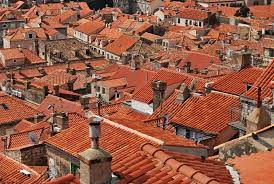
COLOURED ROOFS

a storm visited the area yesterday


all the houses were roofless

as the tins were blown away

to the fields 


the people

hid under anything they could find

in their moment of desperation


the next day, the officials came

for inspection of the area


they marked the houses

by the colour of the roof

saffron-- fifty nine

green-- forty


one month later

all the saffron roofed houses

got a message on their phones


“Your bank account xxyyzzzz have been credited 

with 50,000 only”


whereas the green roofs

just imagined what it would be like

to live in a saffron roofed house.

Sutputra Radheye is a young poet from India. He has published two poetry collections — Worshipping Bodies (Notion Press) and Inqalaab on the Walls (Delhi Poetry Slam)His works are reflective of the society he lives in and tries to capture the marginalised side of the story.

.

PLEASE NOTE: ARTICLES CAN ONLY BE REPRODUCED IN OTHER SITES WITH DUE ACKNOWLEDGEMENT TO BORDERLESS JOURNAL. 

Categories
Poetry

A Concert on the Bay

By Ron Pickett

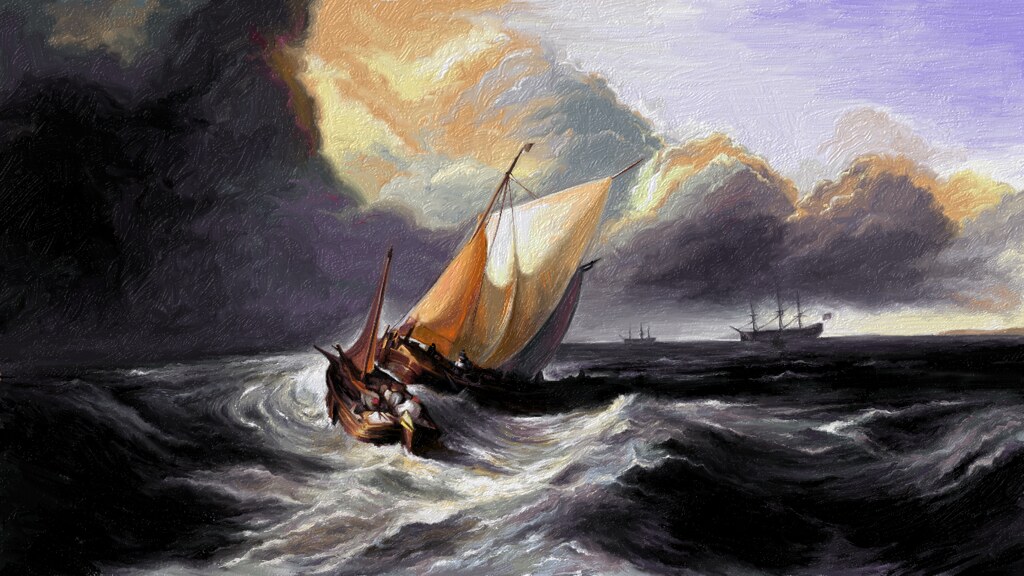
Painting by JMWTurner (1775-1851)
A CONCERT ON THE BAY 

Debussy’s Dialogue of Wind and Sea
Flows from the shell.
The water in the bay reflects the setting sun.
A lone seagull soars smoothly above the crowd.
The dialogue is muted, the wind a gentle breeze.
The low rumble of the engine on an outgoing fishing boat blends with the timpani.
We are transported from the realities of the world.
The music and the bay have achieved their raison d’état.
There are two harps, Two!
Everyone watches the big screens.
The conductor becomes physically involved – emotionally.
His hair flows with the excitement of the music.
The air is chilled, moist, flowing across the audience.
A Sea-doo race ends; there is a clear winner.
The music, the magic ends with an explosion of applause.
We leave changed slightly, better.
The dialogue encompasses much more than the wind and sea.
Dialogue between Wind and Sea by Debussy (1862-1918)

Ron Pickett is a retired naval aviator with over 250 combat missions and 500 carrier landings. His 90-plus articles have appeared in numerous publications. He enjoys writing fiction and has published five books: Perfect Crimes – I Got Away with It, Discovering Roots, Getting Published, EMPATHS, and Sixty Odd Short Stories.

.

PLEASE NOTE: ARTICLES CAN ONLY BE REPRODUCED IN OTHER SITES WITH DUE ACKNOWLEDGEMENT TO BORDERLESS JOURNAL

Categories
Notes from Japan

A Visit to the Isamu Noguchi Garden Museum

Visiting a museum is serious business in Japan. Suzanne Kamata visits a Museum dedicated to an American Japanese artist

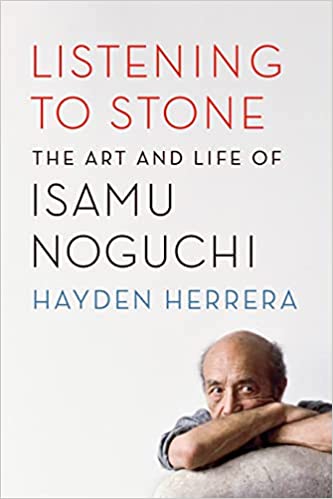
The famous American sculptor Isamu Noguchi (1904-1988) lived in the town of Mure, just fifty minutes by car from my house. Now it’s the site of an outdoor museum featuring his work. Although I was interested in seeing his stone sculptures, I had never been to the museum. I’d had just read Listening to Stone, Hayden Herrera’s fabulous new biography of the artist, which had reignited my interest in his life and his work. I knew that his mother, Leonie Gilmour, was American. His father, the poet Yone Noguchi, was Japanese.

I learned that he had once posed as the Confederate General Sherman for the sculptor originally commissioned to create the Civil War monument on Stone Mountain in Georgia. Also, I read that Noguchi volunteered to teach Japanese Americans interned during World War II. He was so handsome and charming that married women in the camp fought over him. I read about how he created his famous paper lanterns. I read of his tribute to Benjamin Franklin. I also learned of his affinity for the blue stones of Shikoku.

I decided that it was finally time to go to the museum. I invited my friend Wendy to go with me. She’s a college professor and a writer. Like me, she’s from the Midwest. She has also lived in Shikoku for over twenty years. Like me, she’s married to a Japanese man and has Japanese/American children. We often get together to discuss our writing, her pet goats, and other things. Wendy grew up in the town of Rolling Prairie, Indiana, which has a population of about 500 people. Coincidentally, when Isamu Noguchi was a boy, his mother sent him to an experimental boarding school in that very town. Wendy is also a fan of Noguchi. She had been to the Museum a few times before.

“I’ll ask Cathy to go with us,” she said.

Cathy is a Canadian translator who sometimes does work for the museum. She had translated a best-selling Japanese book about tidying up. This book was always popping up in my Facebook feed. The sight of this title always makes me feel as if I should be cleaning my house instead of writing books or reading Facebook updates. Housework is not my favorite thing. I had never met Cathy, but I’d heard of her. I worried that Cathy might be an extremely tidy person. She might not approve of me.

“That sounds great,” I said. “I’d love to meet Cathy.”

It takes some planning to visit the Isamu Noguchi Garden Museum Japan. For one thing, the village of Mure is not exactly a well-trodden spot. For another, the museum is only open three days a week — Tuesday, Thursday, and Saturday. Tours are held three times a day by appointment only. In order to make an appointment, potential visitors must write their preferred dates and times on a postcard and mail it. Email is not allowed, at least not for those living in Japan. Finally, the admission fee for adults is 2,160 yen (about $25), which is a bit pricey, as museums go. The barriers are intentional. They are meant to weed out people who are not serious about Noguchi’s art.

We made a reservation to visit on a Thursday at one p.m. Cathy suggested that we go out for udon[1] beforehand. The area is famous for its fat, doughy noodles served in broth. Cathy knew of a restaurant on a mountainside that we could reach by ropeway. I imagined slurping noodles while watching wild monkeys in the trees. We would have a leisurely lunch. Afterwards, we would admire the sculptures in the garden museum. How lovely!

The morning of our outing, a light rain was falling. I entered my destination in my cell phone’s navigation app and started the car’s engine.

“Turn right,” a woman’s calm voice said.

“Okay,” I replied, turning right.

The voice directed me onto the highway.

I drove and drove. I went past pine-covered mountains. I passed small villages nestled in valleys. The rain pattered against my windshield. A sign warned me to beware of wild boar which sometimes wandered onto the road. Off to the left, I glimpsed the Inland Sea, the tiny islands that seemed to be floating just offshore.

Although I knew that the village of Mure was only fifty minutes from my house, the voice on my app convinced me to keep going. When I was in the middle of a tunnel, far from any city, the woman’s voice said, “You have arrived at your destination.” Clearly, I was now lost.

I tried to send Wendy a message. She didn’t reply. After backtracking and driving around for another hour, I pulled over. I checked my phone. Foolishly, I had not given Cathy my phone number. Even so, she had managed to call me and gave me directions.

Time was ticking by. We wouldn’t be able to have lunch on the mountainside restaurant. We might even miss our long-awaited appointment at the museum. Why hadn’t I taken the bus? I scolded myself. Why hadn’t I studied a map? Why had I relied upon my stupid cell phone?

I got back on the road. As it turned out I was going in the wrong direction again. After another phone call, I turned around. I paid the man in the toll booth again, and drove on, finally arriving at our meeting place, a convenience store parking lot.

Wendy motioned me over to Cathy’s car. “Hurry.” She wasn’t smiling. Her voice was stern. “We are quite late.”

I climbed in the car, apologising profusely. Wendy seemed a bit angry. Who could blame her? She had arranged for me to meet the famous translator, who was probably an excellent housekeeper. Cathy had made a reservation at the exclusive museum. I was making a terrible impression.

“We’re just glad you made it,” Cathy said kindly. 

“We bought these for you,” Wendy said. She tossed a couple of rice balls and a sandwich into the back seat. They had already eaten lunch while waiting in the car. Once again, I regretted missing out on our ladies’ lunch in the restaurant on the side of the mountain.

Cathy called the museum and asked if it was okay to join the tour a bit late. She was on the board of the museum. She had even interpreted at the memorial service for Noguchi when he died in 1988. If she hadn’t been with us, I’m sure I would have been denied entrance.

“I’m so sorry,” I said again.

We pulled up in front of the building which housed the reception desk and gift shop. The rain had abated. Cathy parked the car. She went to buy our tickets. Our scheduled tour had already begun. We hurried to join the others who had made a reservation in the garden. As I followed Cathy, I noticed that there were piles of rocks everywhere. Somehow the grey sky and the wet stones made the scene all the more poignantly beautiful. 

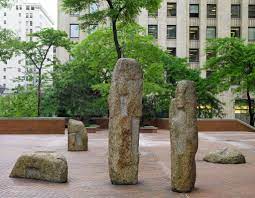
First, we entered the Stone Circle sculpture space. There were many stone sculptures. Some were finished at the time of Noguchi’s death and signed with his initials, some were not. Although the sculptures had been named, they were not labeled.

We asked the guide about some of them. She told us that one tall sleek stack of blocks was made partly of stones imported from Brazil. The area has a history as a quarry. Noguchi sometimes used stones from the nearby island Shodoshima. He also sourced his materials in Italy and other far-off places. Imagine the shipping costs!

We peeked into his workspace, housed in a weathered wooden shed.

“He was very particular about his tools,” I said. I had read that in the book. Yes, here were his carving tools, carefully aligned. They were just as they had been when Noguchi was alive.

“Yes, he was,” Cathy agreed, raising her eyebrow.

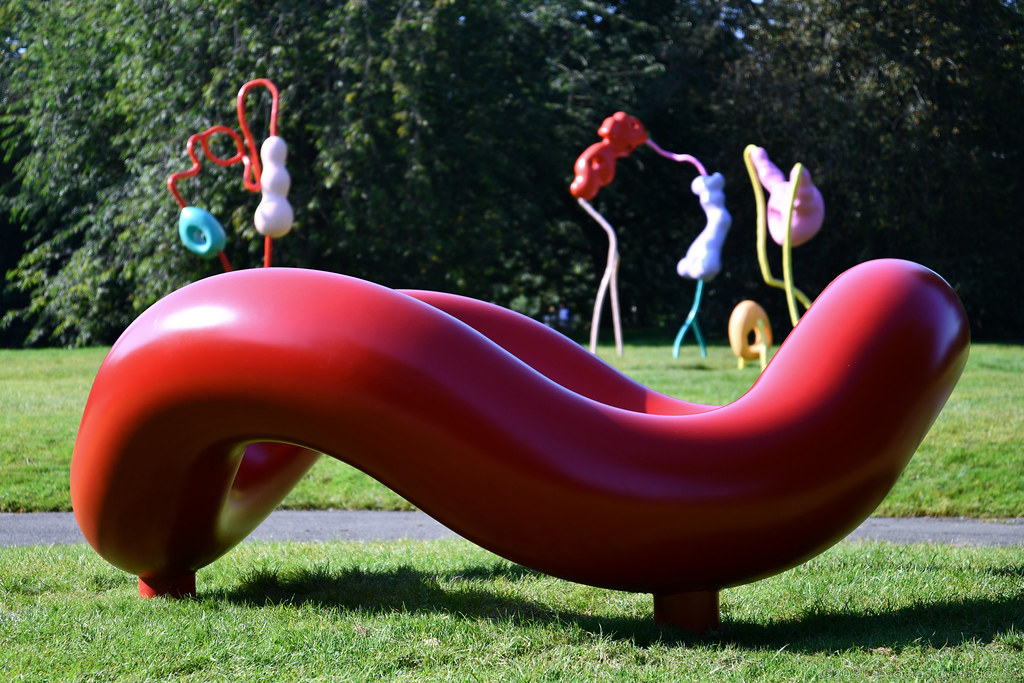
Red painted tubular-steel by Noguchi. At the 2021 Frieze Sculpture exhibition in Regent’s Park. London. Courtesy: Creative Commons
 

“Oh, and here is the model for his slide!” I recognised an image from the book I had just read. It was a white spiral, resembling a seashell. Noguchi believed that art should be part of daily life. He thought that art was for everyone, including children. He designed several playgrounds. Not all were constructed. This slide had been exhibited at the Whitney Biennial, one of the most prestigious art shows in the world.

We took a meditative stroll among the arranged rocks. Next, we climbed stone slab steps to a sculpted garden enclosed by a grove of bamboo trees. The space featured small grassy hills and a moon-viewing platform.

“I read that his ashes are in one of the stones here,” I said.

“Yes,” Cathy said, surprised at my font of Noguchi knowledge. “Up at the top of the hill. Shall we go pay our respects?”

As we climbed, Cathy explained how this space had been sculpted. Stones had been arranged to mimic the islands visible in the distance. Noguchi had been furious when someone had built a house higher up the mountain. Although it wasn’t on Noguchi’s property, it spoiled the view. Thus, it spoiled the work of art which was the garden. Traditional Japanese gardens often make use of “borrowed scenery.” Eventually, the house was bought by the museum’s caretaker and destroyed. Now, the view is as Noguchi intended it to be.

We paused for a moment before the giant egg-shaped rock at the top of the hill which had been cut in half. After Noguchi was cremated, some of his ashes were encased in the stone, and the stone was reassembled.

Next, we had a look at the house where he lived in the last years of his life. Inside, a paper lantern which resembled a jellyfish hung from the ceiling. The floors were made of straw mats. I knew from reading his biography that he had lived here with a Japanese woman who was married to a friend of his. Noguchi couldn’t speak much Japanese, and the woman couldn’t speak English. Even so, they were lovers. I imagined them sitting on the verandah, gazing out at the sculptures. Maybe they sat there sipping tea in silence. I thought of mentioning the lover to my companions, but I decided that it was too gossipy. I didn’t want them to think that I wasn’t serious about his art.

Afterwards, we decided to go to a café near Cathy’s house. We drank coffee and ate mango cheesecake. It occurred to me that my frustration from earlier that morning had disappeared. Wendy no longer seemed stressed and angry with me. Being in that beautiful, natural garden had made us all feel calm.

I was sure that I would be able to find my way back home.

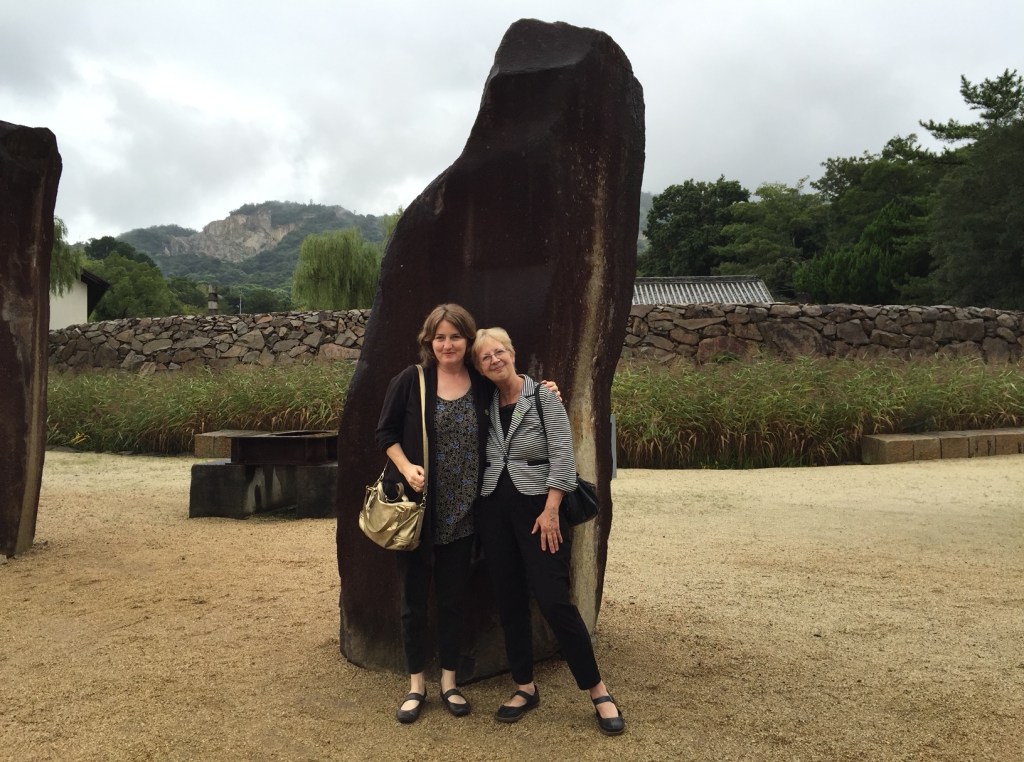
Suzanne Kamata with her friend, Wendy, outside the museum in Mure, Japan. Photo Courtesy: Suzanne Kamata

[1] Thick noodle made of wheat, Japanese Cuisine.

Suzanne Kamata was born and raised in Grand Haven, Michigan. She now lives in Japan with her husband and two children. Her short stories, essays, articles and book reviews have appeared in over 100 publications. Her work has been nominated for the Pushcart Prize five times, and received a Special Mention in 2006. She is also a two-time winner of the All Nippon Airways/Wingspan Fiction Contest, winner of the Paris Book Festival, and winner of a SCBWI Magazine Merit Award.

PLEASE NOTE: ARTICLES CAN ONLY BE REPRODUCED IN OTHER SITES WITH DUE ACKNOWLEDGEMENT TO BORDERLESS JOURNAL