POEM WRITTEN IN DECEMBER
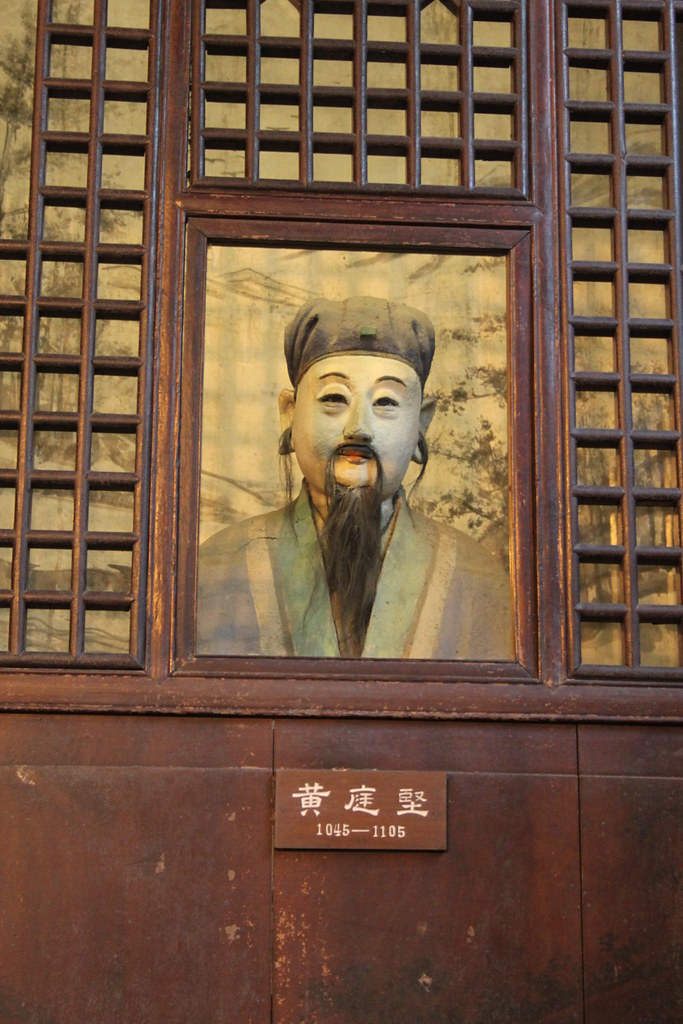
(Inspired by Du Fu, Tang Dynasty Poet)

I part my curtains and stare
at a blood red moon.
Beyond the moon
stars are dying.
The sky is a lonely grave.

Clouds huddle together.
Do they speak of bad weather?
The blue grass at the
river’s edge is no more.
It will soon snow.

I have almost reached sixty.
What can be said about
an old man, looking
out his window,
simply watching for snow?
George Freek‘s poetry has recently appeared in The Ottawa Arts Review, Acumen, The Lake, The Whimsical Poet, Triggerfish and Torrid Literature.
.
PLEASE NOTE: ARTICLES CAN ONLY BE REPRODUCED IN OTHER SITES WITH DUE ACKNOWLEDGEMENT TO BORDERLESS JOURNAL
‘All along the path of least resistance’


All along the path of least resistance
suppurate crab apples mirror various imprecisions,
oft-movement brought to staggering halt,
indolent loafers, a patchwork of mismatched cobbles,
the fustiness of well-furrowed brow,
neglected outgrowth sprung from tweezer absentia,
retired overturned tub stop in a murphy-bed of moss –
about that letter you promised to send last month,
nothing yet, but I must admit an infrequent search,
fits of distraction, a surreptitious lack of mettle bordering
on dereliction; what can be lost in due course beyond present
purview when dockyard slat meets slapping barnacled hull:
something shared not knowledge, something roof-stuck
to salty chattering roundabout mouths.
Ryan Quinn Flanagan is a Canadian-born author residing in Elliot Lake, Ontario, Canada with his wife and many bears that rifle through his garbage. His work can be found both in print and online in such places as: Evergreen Review, The New York Quarterly, Setu, GloMag, Red Fez, and The Oklahoma Review.
.
PLEASE NOTE: ARTICLES CAN ONLY BE REPRODUCED IN OTHER SITES WITH DUE ACKNOWLEDGEMENT TO BORDERLESS JOURNAL
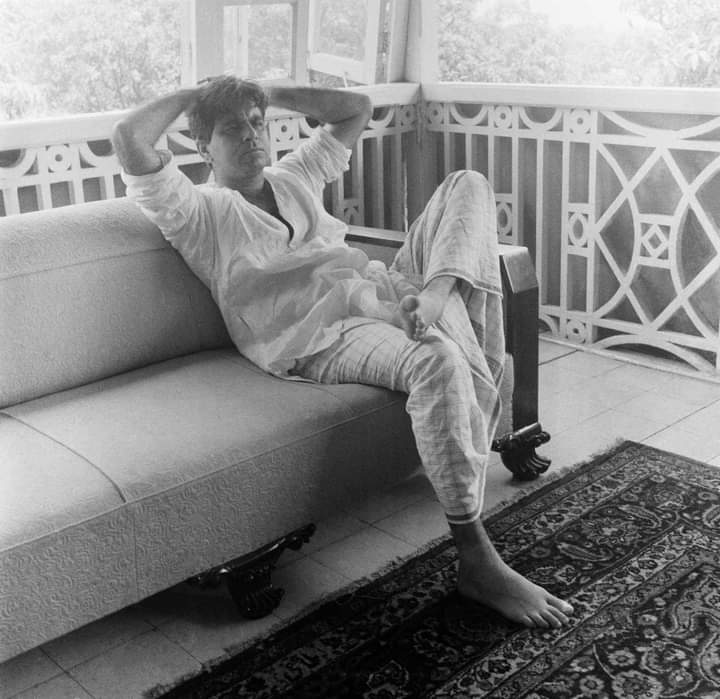
In a tribute to Bollywood legend Dileep Kumar or Yusuf Khan in real life, Ratnottama Sengupta, one of India’s most iconic arts journalist, time-travels to the days when the ‘Fankar-e-Azam’ – the great actor – sprinted about on the sets of Bombay’s studios …spiced up with fragments from the autobiography of Sengupta’s father, famed screenwriter and litterateur, Nabendu Ghosh
The different faces of Dileep Kumar. Photographs provided by Ratnottama Sengupta
“Actually the quality of a performer is also measured by the contrast that he can handle. To do something different, to be humorous, and intimidating, and also to make them feel sorry for you… that is the way people like you.” – Dilip Kumar
On 7thJuly, 2021, I was at a loss — in trying to think of an epithet for the thespian who had just passed away. So am I now, in deciding where I should start my recollections of the deathless legend. For, Dilip Kumar was already B-I-G when I started understanding the word ‘Cinema’.
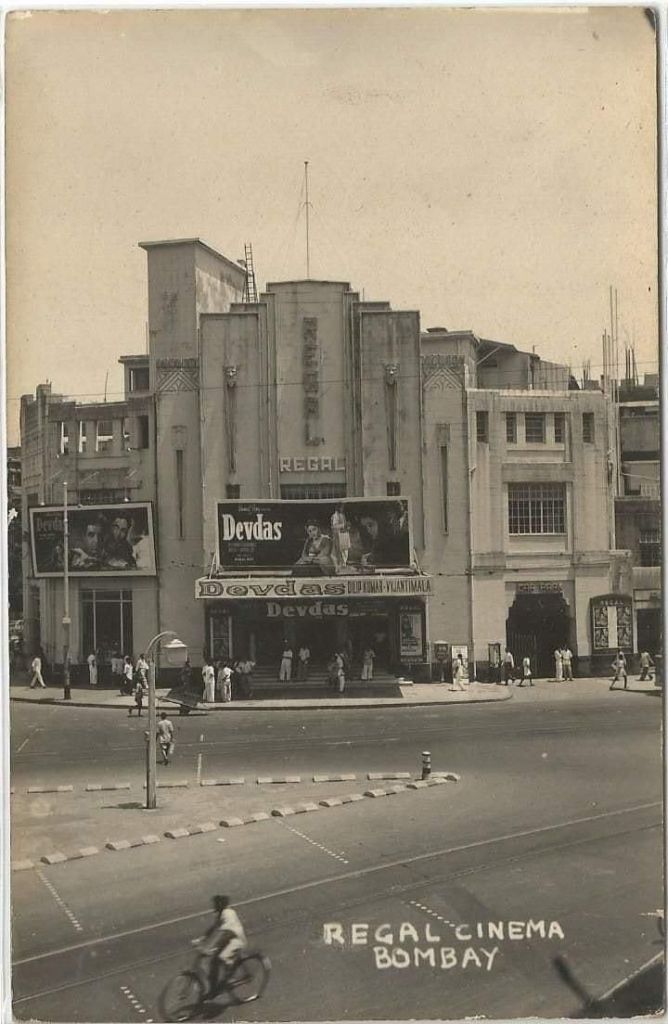
I was born in 1955 — the year of Satyajit Ray’s Pather Panchali in Bengal, Bimal Roy’s Devdas in Hindi films, and also of Azad. Years would go before I learnt that Apu-Durga’s Song of the Road had placed India on the celluloid map of the world. Before I understood that my father, Nabendu Ghosh, had a hand in immortalizing Devdas by writing its screenplay – often dubbed ‘direction on paper.’ And before I observed this curious coincidence: Azad had released the same year as Devdas, the ode to undying, self-destructive love. Curious, because it brought the Monarch of Tragedy with Tragedienne, Meena Kumari, in order to create a comedy! A fun outing where a rich man, Azad, rescues Shobha from bandits; and when she decides to marry him, her family discovers Azad is the bandit.
1955 First release of Devdas . Photo provided by Ratnottama Sengupta
I became aware of this film only recently, while working on the song Apalam Chapalam – danced by Sayee and Subbulaxmi – for my underproduction documentary on Dance in Hindi Films. That number is a lesson for anyone studying dance. But aeon before I came to it, I would start dancing every time the Murphy radio in our Malad bungalow played Radha na boley na boley na boley re (Radha shan’t speak to Krishna). I would pick up the hairband lying in front of our mirror, put it on and start swaying in a circular motion. I must have been about two-and-half. There was no television, no silver screen, no Meena Kumari in my life, only a radio. And it cast a spell with this song from Azad, one of the few comedies of Dilip Kumar, with Kohinoor and Ram Aur Shyam.
Years down the star actor had talked about distributors objecting to his playing a comic role. “’But people are used to seeing you in tragic roles… so you will die in the end, right?’ they would insist. ‘But I wanted to alter the image. I did not want to be stuck in one groove. There is a risk in breaking a familiar mould, but if people can anticipate you, that is the end of your mystery! So you must do something different each time, a departure from your familiar personality. You must work a little harder and change the chemistry of the personality’.” This could be the Bible for any actor if he plans to defy time.
Dilip Kumar captivated me with a dance which – like Meena Kumari’s in Azad – was no classical number, only robust, folksy Nain lar jai hey toh manwa ma kasak hoibey kari (When our eyes meet, I feel a pang in my heart). This was in Gunga Jumna (1960), produced by Dilip Kumar and directed by his mentor Nitin Bose. The star gustily dancing with a bunch of guys in dhoti – he was so spontaneous, so natural! This at a time when women danced but men dancing was seen as effeminate. Yes, the traditional dance gurus were male, but the movie idol had to be macho, so no dancing! Dance gurus were revered in life but on screen they were lampooned as in Padosan (The Next-door Neighbour, 1968). But he was so confident, suave you cannot but be infected by his joi de vivre.
The other thing about Gunga Jumna was its dialect. The tongue he speaks — an admixture of Brajbhasha, Khaiboli, Awadhi, Bhojpuri — connects all our people in northern India. That may be why, when Amjad Khan was preparing to play Gabbar Singh, his lines garnished his dhobi’s (washerman’s) dialect with Gunga’s. Again, Lagaan (2001) returns to this tongue which Aamir Khan once more picks up as PK (2014), the alien who knows no earthly language of communication, from a street walker in a psychic manner, by simply holding her hand.
Dilip Kumar’s dialogue delivery was distinctly different from his other contemporaries, Raj Kapoor or Dev Anand. One had cultivated a generous dose of Charlie Chaplin in his mannerism; the other had to thank Gregory Peck for his angular tilt of head. Dilip Kumar’s controlled delivery, low and clear, probably stemmed from his admiration for Paul Muni. He whispered for the benefit of his lady love alone – how romantic! A person standing at an arm’s distance, and being addressed almost with reverence, at a time when so many of contemporaries had yet to cast off the theatrical manner of vociferous enunciation: this intensity charmed my mother’s generation of men and women and spilled over to actors of my preteen years – unabashedly they subscribed to the adage, ‘Imitation is the foremost form of adulation’.
When Joy, the worthy son of Bimal Roy, made his centenary tribute to his father, he had started by interviewing Nabendu Ghosh. In it, while talking about Devdas, the screenwriter says: “On the first day of shooting I saw Dilip Kumar loitering by himself, aloof, remote. So I asked him, ‘What’s the matter Yusuf Bhai? Every day you sit with us, talk to us, join us in our banter. Why are you so preoccupied today?’ He replied, ‘Woh teenon mere kandhe par baithey hain Nabendu Babu (those three are weighing me down like a burden on my shoulder).’ ‘Kaun teen (which three)?’ – I asked him. He replied, ‘Barua Saab, Saigal Saab, and Sarat Chandra.’” The first two legends had played Devdas (1935), Pramathesh Barua in Bengali and K L Saigal in Hindi, in New Theatre’s bilingual production, and Sarat Chandra Chatterjee (the author of Devdas) of course is the most translated author in India: Devdas alone has seen a dozen versions in as many languages if not more. Nabendu continued: “So I asked him, ‘What do you think of Sarat Chandra as a writer?’ And he replied, ‘He had divinity in his pen.’”
What a pithy appreciation of a literary master. Hardly surprising that Dilip Kumar was a major presence on the stage when the Sarat Centenary Celebrations were held in Bombay. Others present included Nitin Bose and Biraj Bahu Kamini Kaushal along with Sunil Gangopadhyay, then a young Turk who pooh-poohed the literary giant. Baba, having scripted Parineeta(1953), Devdas, Biraj Bahu(1954), Majhli Didi(Middle Sister, 1968) and Swami (later filmed by Basu Chatterjee), as much as due to his standing in Bengali literature, had chaired the unforgettable celebration.
When Nabendu Ghosh was wondering about Yusuf Saab’s eloquent reticence, clearly the actor was in the process of pouring himself into the soul of the persona — or was he giving Devdas the stamp of Dilip Kumar? It was this total absorption that saw him transcend every known interpretation of the character and make his Devdas the abiding face of an indecisive, love-torn soul. In an interview Dilip Kumar had said, “If I have to be convincing as a 30-year-old, I must familiarize myself with what he has gone through in the preceding 29 years.”
However in another interview — this one, to renowned film critic, screenwriter and director, Khalid Mohamed — he had debunked method acting saying, “Yeh kis chidiya ka naam hai? What is this thing you call Method Acting?” Okay, so he did not learn – or unlearn – the acting technique of the Russian master Stanislavsky but he certainly believed in the ‘art of experiencing.’ He must have drawn on personal experiences or their memories to inform his characterization, the truth behind the persona who lived and loved in another space and time. This I can say from my visit to the sets of Sungharsh (Clash,1968) directed by H S Rawail.
I can’t remember why I had gone there but I remember visiting with my father. The crew was busy preparing lights for the shot. This was the last film where Dilip Kumar was seen with Vyjayantimala: their first was Devdas, and included Gunga Jumna, Madhumati, Naya Daur, Paigham. I noticed him running round the sets, dressed in a dhoti with a gamchha tied round his waist. “Why is the hero working himself out of breath?” I’d wondered to myself. I got the answer when they started the takes: the scene required him to run up, axe in hand, and breathlessly deliver a message. The film based on Mahasweta Devi’s novel, Layli Aasmaner Aina (The Mirror of Layli Aasman), revolved around a courtesan and a thugee, and almost half a century later Baba wrote Sei Sab Kritantera (Those Gods of Death) which won him the Bankim Puraskar, about the cult of bandits. But circling back to Dilip Kumar, I find it astounding that a quarter century after his screen debut, the legend was preparing for the shot by physically running around!
No wonder he was so natural. Yet this perceptive actor did not skyrocket into fame with Jwar Bhata (Ebb and Flow, 1944), directed by Amiya Chakravarty, nor did Pratima, directed by Jairaj with music by Arun Mukherjee, do any good to his career. It was with Nitin Bose’s Milan (The Union), based on Tagore’s Naukadubi (The Wreck) and released on a Friday preceding 15tH August 1947, that his listless performance gained sparkle. Along with Jugnu (Fireflies), which was the highest grosser of the year, Milan laid the ground for the long innings of the resolved player. Small wonder, when he produced Gunga Jumna, he singled out his mentor to be the director.
All the three films, Jwar Bhata. Pratima and Milan were produced by Bombay Talkies, then being run by Devika Rani and Ashok Kumar. The popular pair of Achhut Kanya (The Untouchable Girl, 1936) was responsible for most decisions in the milestone production company that gave breaks to other majors of Indian cinema like Dev Anand, Gyan Mukherjee, B R Chopra, Sadat Hasan Manto. Ashok Kumar and Devika Rani had given Mohamed Yusuf Khan, the son of a Pathan dry fruits trader from Peshawar, his screen name. “Why did Yusuf Khan become Dilip Kumar?” is a much asked question. To Khalid Mohamed the thespian had revealed, “The choice was between Jehangir and Dilip Kumar. The second seemed a better option because it sits easy on every tongue.” Many others have seen a different reason behind the change.
Ashok Kumar Ganguly was directed to lop off his family name at the instance of Franz Osten, the Bavarian director who partnered Himanshu Rai in the early years of Bombay Talkies, to make him more ‘Indian’ rather than a Bengali or a Brahmin. ‘Kumar’ – meaning, young prince – was, since then, included in their name by most actors — Uttam Kumar too. When Dilip Kumar debuted in mid-1940s, the national movement to free India from colonial harness was coming to a head — as was the crescendo for a separate political identity for the Muslim populace. In this scenario, many in the profession that depended on the support of maximum number of viewers, were opting for names that did not underscore their Islamic roots. Thus Mahjabeen Bano became Meena Kumari, Mumtaz Jehan Dehlavi became Madhubala, Nawab Bano was renamed Nimmi by Raj Kapoor, Nargis had started as Baby Rani, Hamid Ali Khan had assumed the name of Ajit. However, Dilip Kumar spawned many other clones. Thus, commenced the age of Pradeep Kumar, Rajendra Kumar, Manoj Kumar, Sanjeev Kumar, Akshay Kumar. And many tried to clone his histrionic abilities too!
*
The year 1947 proved a turning point in the life of Dilip Kumar in so many ways. Mehboob Khan’s Andaz (Gesture,1949), his Aan (Pride) and Nitin Bose’s Deedar (A Glance), both released in1951, Amiya Chakravarty’s Daag (The Stain,1952), Bimal Roy’s Devdas, Yahudi (Jew), Madhumati, K.Asif’s Mughal-e-Azam (1960) — all the films thereafter proved super hits. They also carried a message for the masses, be it against alcoholism, or war; in favour of fidelity in marriage, or unadulterated friendship. They turned the brooding hero into a popular idol. At a time, the country was rapidly industrializing, Naya Daur (New Age) focused on the conflict between modernity and tradition through a race between a tonga and a bus. Yahudi, through the love between the Jewess and the Roman prince, sent out a message of communal bonding.
Dilip Kumar, it is evident, kept pace with the transformation coming in the nation’s life. His own performance, his selection of roles all reflected this. That could be why Gunga Jumna by the family production house of Citizen Films, became a precursor in so many ways. I have already spoken about its dialect. Projecting dacoits in the central roles was another. Later decades saw dacoits being replaced by smugglers as villain, drag racketeers as the evil guys, terrorists as the despicable ones. But the dacoit theme kept recurring through Mujhe Jeene Do (Let Me Live, 1963), Mera Gaon Mera Desh (My Village My Land, 1971), Sholay (Flames, 1975), Pratiggya(The Oath, 1975(, Ganga Ki Saugandh ( Swear by the Ganga, 1978), Bandit Queen (1994), Pan Singh Tomar (2010). More so, the keynote of two brothers on either side of law was to see many reincarnations – most remarkably in Deewar (The Wall), which turned Amitabh Bachchan into the legend he is. Years later Dilip Kumar teamed with Amitabh Bachchan to play father and son aligned on opposing sides of law – again, with amazing success.
Sangharsh
Ganga Jamuna
Film posters from different films Dileep Kumar starred in. Photograph Courtesy: Ratnottama Sengupta
The legend teaming with a younger icon was not something new for Dilip Kumar, nor would it be the last. Keeping pace with his growing years he had shared screen space with Anil Kapoor in Mashal (The Torch, 1980s), and with Naseeruddin Shah in Karma. Prior to Deewar he had appeared in Paari (1970s), a Bengali film, where the then rising star Dharmendra played the lead. This film was remade as Anokha Milan with the same cast. Likewise, Tapan Sinha’s Sagina Mahato (Bengali) was remade as Sagina (Hindi) with his wife Saira Banu opposite him. This remains one of Dilip Kumar’s most significant performances — perhaps also his most ‘political’ incarnation on screen. Here he is a factory worker who becomes the first to stand up to the tyranny of the British bosses in the tea gardens on the Himalayan reaches of North Bengal. Once more he surprised us, his younger viewers, to whom he was nothing but a man named Sagina Mahato whose naivety was being cleverly exploited. I had seen both the Bengali and Hindi versions but I have no answer as to why the remake did not work a magic nationally. Dilip Kumar was, after all, a master of delivery in Hindi and Urdu, although his English too was flawless.
Dilip Kumar seems to have had a special equation with Bengal, which could have grown out of the fact that so many directors from Bengal dominated the Indian screen through 1940s, 1950s, 1960s, 1970s… in other words, the screen idol’s active years. I was won over by the charisma of the star in Madhumati, incarnated from a story by Ritwik Ghatak. He had penned the first draft of the immortal classic that continues to mesmerise viewers to this day, then he was summoned back to Kolkata to direct two of his own films, Bari Theke Paaliye (The Runaway) and Ajantrik( 1957). The final script was prepared by Bimal Roy, as was his practice, in conference with his team. As a part of this Nabendu Ghosh had worked on detailing the reincarnation film as Dilip Kumar himself revealed in the interview to Khalid Mohamed. I was simply enchanted by the actor’s screen presence. Here I was, growing up in the age of Rajesh Khanna and Amitabh Bachchan, remember? Yet I was compelled to surrender to the charm of this actor! The only other ‘Kumar’ who superseded his charm for me was Uttam Kumar – and both had started their screen journeys in 1940s – long before I was born! Madhumati itself was ‘born again’ – most successfully as Farah Khan’s Om Shanti Om (2007) but the enduring charm of Dilip Kumar as an engineer arriving the upper reaches of Kumaon Hills and losing himself amidst tribals remains matchless.
Baba (Nabendu Ghosh) also scripted Yahudi where Bimal Roy directed Dilip Kumar and Meena Kumari as the Roman prince and the Jewess who fall in love – endangering lives. In the Nehruvian era, it resonated with the values of secularism that the super actor himself enshrined. In his personal life, this saw Dilip Kumar align with the Congress. He donned the hat of the Sherif of Bombay (1980) and raised funds for causes, including for the physically challenged, through exhibition cricket matches. His commitment to the country’s constitutional framework saw him campaign in support of V P Singh — and later Manmohan Singh — as Prime Minister. Nominated to Rajya Sabha — the Upper House of Parliament — from 2000 to 2006, he served in Standing Committees that brought in amendments to Indian Medical Council Act 2006. He used his MP funds to restore Bandra Fort and improve the Bandra Promenade. These kept earning him laurels in India and beyond. The Dadasaheb Phalke Award winner was decorated as Padma Bhushan in (1991), Padma Vibhushan by the present Modi government in 2015, and — befittingly — accorded state honour at his funeral.
My most significant interaction with Dilip Kumar happened four decades after Yahudi – in 1999. Atal Behari Vajpayee was then the Prime Minister, and the Pakistan government was to confer their highest civilian award – Nishan-e-Imtiaz on the actor. In the wake of the Kargill infiltration and the ensuing war this was red rag to the right wingers. Shiv Sena had laid siege outside the thespian’s Pali Hill mansion, objecting to his receiving the award of merit as a betrayal of his own country. At that point Dilip Kumar, who continues to have a massive following across the subcontinent and beyond, had come to meet the Prime Minister. And I, then the Arts Editor of The Times of India, was given a special audience – perhaps also because I was the daughter of ‘Nobendu Babu’.
I clearly recall his words: “I was born in Peshawar, which by a twist of events is now in another land. A boundary line has turned it into a foreign country but I continue to be a produce of that land. I cannot deny that nor do I wish to. And I am not breaking any law of this land by accepting this Order of Excellence. If my country benefits in any way by my refusing this award, then I am willing to do so. If instead it strengthens bonding with a (warring) nation, why should I decline it?”
This is what he said to the Prime Minister too, resulting in Vajpayee ji issuing a statement to the effect that Dilip Kumar does not need to prove his patriotism to anybody. He will do just as his heart dictates. Whether he should accept the Nishan or decline it will be decided by his inner self. No one needs to tell him that.
In later years I have thought to myself: Suchitra Sen, another abiding icon who was paired with Dilip Kumar in Devdas, has been honoured by the Bangladesh government because she was born in Pabna, and we felt happy. Soumitra Chatterjee has been honoured by the French Legion de Honor – as was his mentor Satyajit Ray before him – and we felt honoured. The Government of India conferred the Padma on Sir Richard Attenborough for his directorial essay on Gandhi (1983) and we rejoiced. If all of these gladdened our hearts, why should we take exception to Nishan-e-Imtiaz? Why must we carry scars of the past in our mind and heart? Would it not be better to apply balm on wounds and reinforce peace?
Before I wrap up, I must time-travel back to 1991. That was the year the Film and Television Institute of India (FTII) conferred an Honoris Causa on Nabendu Ghosh whose 25 year association (1966-1991) had seen the emergence of such famous alumni as Kumar Shahani, Jaya Bachchan, Subhash Ghai, Girish Kasaravalli, Aruna Raje, Syed Mirza, Ketan Mehta, Kundan Shah. “By honouring his association with FTII we are also honouring the milestones the screen writer has gifted to the world of cinephile,” Dilip Kumar had said as the Guest of Honour handing over the honorary doctorate. And in his address to the students, who had caused waves of unrest in FTII, he had said: “You have come here to learn the art of filmmaking. Instead, do you wish to teach your teachers? In our times we did not have any institute, we learnt from our directors. Bimal Roy himself was an institution. Nitin Bose, Bimal Roy, Mehboob Khan – they have moulded masters who come to teach you here. You stand to gain if you learn from them. Never forget to benefit from those who have learnt by experience…”
The words stay with me, as do the performances of the timeless actor who stopped short of scoring a century.
.
Ratnottama Sengupta, formerly Arts Editor of The Times of India, teaches mass communication and film appreciation, curates film festivals and art exhibitions, and translates and write books. She has been a member of CBFC, served on the National Film Awards jury and has herself won a National Award.
.
PLEASE NOTE: ARTICLES CAN ONLY BE REPRODUCED IN OTHER SITES WITH DUE ACKNOWLEDGEMENT TO BORDERLESS JOURNAL
A policeman wearing a ‘corona’ helmet in India to educate civilians on the pandemic
With the onslaught of the massive pandemic worldwide, state and central police forces’ activities increased significantly in India. From the street corner to the deep alleys, the police became one of the frontline forces having close proximity with the suspected victims and also with communities. While describing the exercise of power by the state apparatus on public, Foucault, the French historian and philosopher asserts, “We should not forget that in the eighteenth century the police force was not invented only for maintaining law and order, nor for assisting governments in their struggle against their enemies, but for assuring urban supplies, hygiene, health, and standards considered necessary for handicrafts and commerce” (The subject and power, p784).
Pondering upon the huge impact of the first wave and the ongoing second wave, we can see a close resonance of Foucault’s words in our present condition: the pandemic, nationwide lockdown, stay-at-home orders, curfew, and the overcrowded vaccination centers. This new avatar of police forces started to be seen, initially, with the awareness campaign during the first wave of the corona. Several creative re-creations of popular songs and dance numbers were performed by the police at the street corners, residential areas, markets, and other public spaces. Kolkata police gave a twist to Anjan Dutt’s iconic song ‘Bela Bose’ and cheered up the citizens staying inside the home during the national lockdown. The initiative taken by the Gariahat police station was acclaimed worldwide and shared by the Kolkata Police Twitter handle. Similarly, the celebrated song from Satyajit Ray’s Goopy Gyne Bagha Byne (1969) ‘O re sahar basi (Oh, the city dwellers)’ was deftly modified by the Rabindra Sarobar Police Station to reinstall patience and faith in the citizens.
Policemen in Kolkata performing Satyajit Ray’s famed film song adapted to create COVID awareness
Madhya Pradesh and Maharashtra police also adapted the popular Bollywood number ‘Zindagi maut na ban jaye Yaaro’(Friends beware, life should not become death)’ from the 1999 Amir Khan action-drama Sarfarosh and made it a corona awareness song.
Madhya Pradesh police performing corona awareness song, an adaptation from Bollywood movie Sarfarosh
Few more popular reincarnations of songs like, ‘Ae Mere Humsafar’ from the film Qayamat Se Qayamat Tak (1988) to “Ae mere deshbaisyo, ghar me hi tum raho. Bahar coronavirus hain, bahar na niklo (O my countrymen! you stay at home. Coronavirus is out there, do not come out)” by the MP Police; ‘Mera mulk, mera desh, mera ye watan (My country, my homeland)’ from the film Diljale (1996) by the Andaman Nicobar Police; and many more were modified and sung by Indian policemen to spread awareness as well as to keep people positive during the new-normal.
The Kerala police went a step ahead in this new creative exploration came up with a unique dance number, and the official uploaded video became an instant hit. Following a similar line, police from Chhattisgarh, Pune, Delhi and other states and cities, also made us experience a new creative side of them: an experience like roadside concert even in the lockdown. Not only in India but also the Spanish policemen were seen singing on the empty street of Majorca during their nationwide lockdown.
Police officers adapting popular song to educate on the pandemic
Holding placards, wearing coronavirus-inspired helmets, donning the attire of the Yamraj ( the god of death in Hindu lore), and the pop-cultural renderings of singing and dancing are the innovative side of the police, directing us towards a new orientation and new conception of the word ‘police’. Owing its origin to the Medieval Latin ‘politia’ meaning citizenship or government, it has changed its significance a lot with time. In the past few decades with growing urban violence, Maoist upsurge in several parts of India, student protest in the premier institutions, and communal combats around events and organisations, the term police and its social significance tend towards a more limited understanding of law, order, and control.
The ongoing pandemic presents before us a new image of police who sing songs, deliver food, campaign for health awareness, assist the migrants with food, water, and shelter; quite a close rendering of the words of Foucault, showing a new compassionate side of them. While we are disturbed, both physically and mentally, watching the viral videos of lathi-charge following the Tablighi Jamaat, huge mass gathering at Bandra (Mumbai) or Anand Vihar, or the farmers’ protest at Delhi, we should also look at the other side of the coin: a new public role that Indian police have been assigned.
Lokmani, a low-income wage-earning woman in Andhra Pradesh, giving cold drinks to the on-duty policeman with affection, was a warm acceptance of this new role: a mutual exchange of respect and care. The Indian police, which is often criticized for rudeness, bribery, and high-handedness, has to be seen from a more humane angle during this ongoing pandemic. A report prepared collectively by Hanns Seidel Foundation and Janaagraha Trust in Bangalore suggests that ninety percent of the surveyed citizens are accepting the police from a new positive perspective. A similar narrative prevails almost throughout the globe.
But what is the new lesson to be learned? It is something that demands mutual consents from both the government and the citizens. What corona taught us is a new image of the police and thus refers to a reformed legal sensibility that we all should bring into existence and carry forward. Our popular Bollywood films have often presented the hero figure or the ‘saviour’ image of police in the hits like Singham, Mardaani, Simba to Article 15, and many others. But when it comes to the real scenario of the police-public relationship, the narrative is quite different.
They are seen as the ‘privileged alien forces’ who are an obstacle to the smooth life conduct of general citizens. Similarly, the police station is also perceived as a place of fear and terror. The different spectacle of ‘policing’ by the police and other contextual brutalities created a fear-figure of them, very authentically. In our childhood, policemen were used to instill fear in us. This was probably the start of imbibing the ‘fearful-figure’ syndrome into our minds. But it is essential to bridge the gulf between reel life and real life, and the corona crisis provides us an idiom for that. This new attentiveness of the police towards the public, their different methods of spreading awareness, helping families in cremation, and other pandemic related help have made them a new emblem of hope and courage. As the Commissioner of Delhi Police, SN Shrivastava tweeted recently, “Policemen are living upto the motto of ‘Service’, even though it entails risk to their own safety. Despite many of them falling sick, it has not dented their morale and desire to help citizens gasping for breath. They are the ultimate saviour.”
On our part, we need to transform our concept of tyranny associated with policemen to a more humane identification of these men as our local guardians or local legal representatives. The government, on their part, should ensure the same by giving a permissible space where the local police and administration can frolic at ease. The police, because of its proximity to the public, can become a significant tool for public health, risk management, and other inclusive public services. The legal system could re-animate its view of law and police, from as an over-autonomous power which is separate and self-contained, to a kinder configuration where they are more constructive, interpretative, and contextual: rooted in the local life, local necessities. It is like giving the police more power: power to become more humane.
However, though this will not change mindsets overnight, it widens the possibility of making the police and the citizens work for each other in the future. Hopefully, corona will respond one day by becoming endemic or disappearing, to either the ‘Go Corona, Corona Go’ chanting at the Gateway of India, or to the vaccination drive (the sooner, the better), but the new affinity that is building up between the police and the civilian should be retained for a better future. As the corona crisis continues to hover, it has proven that we could learn to build a reciprocal sensibility between police and public for the benefit of both.
Go Corona chanting in Mumbai
Whenever the necessity comes, we should again be together with a safe distance and sing with the Chhattisgarh cop, “Ek pyar ka nagma hai, hum sabne ye thana hain, milke ab humko corona ko harana hain (This is a song of love, we have all decided in unison, together we need to defeat corona).”
.
Subhankar Dutta is a Research Scholar and Teaching Assistant at Humanities and Social Sciences Department, IIT Bombay. For more details, please visit the link. https://subhankarduttas.wordpress.com/
.
PLEASE NOTE: ARTICLES CAN ONLY BE REPRODUCED IN OTHER SITES WITH DUE ACKNOWLEDGEMENT TO BORDERLESS JOURNAL
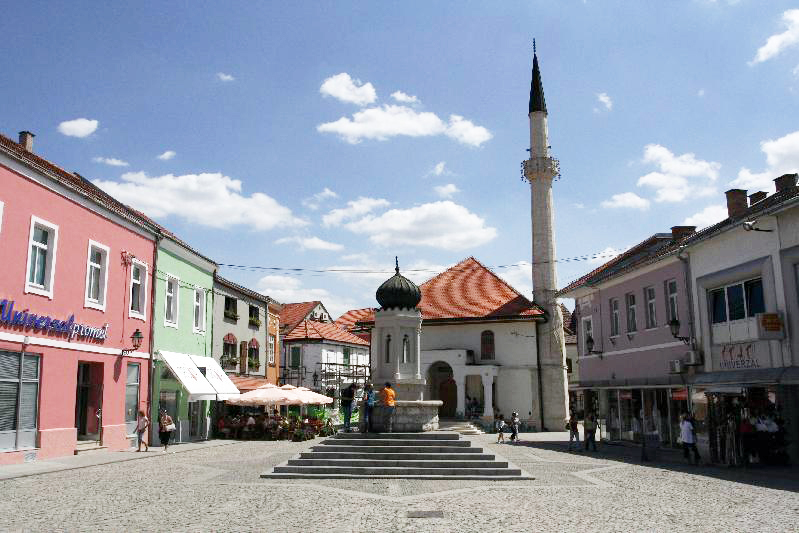
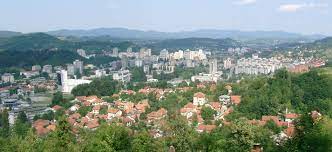
Written in Bosnian & translated to English by Maid Corbic
THE RIGHT TO SPEAK

To be independent means to be free.
Look at the whole world of vibrant colours.
Even when others are wrong,
Being free is your choice.

Independence is given by clarity in speech.
The path to success is difficult.
Because with good people, anything is possible.
The right to speak is the right to freedom.

Each flower tells a story for itself.
People need to share knowledge with others
Because that's how they can create a more beautiful world,
Prosperous for your future.

Be just what you are,
Even if they call you crazy.
What do you care -- you are free --
Independent of other people's problems!
Maid Corbic is from Bosnia and Herzegovina. He lives in Tuzla and spends most of his free time writing. He is a global poet.
attempt at departure

winter night
and a full moon sky
the family asleep
in feckless snores
wander roam leave
no step unstrayed
from their curlicued centre.

fellows of forgetful sharpness
limbed with directionless dozing
I have questions: do I choose
or believe am chosen
do I increase as I’m moved
through face slapping wind
instrument to farther rains and how
do I sustain this distrust
of the centre?

a woman is lying near
a fire enkindled from gathered
trash and sticks and paper
and leaves and we
don’t speak a glance
suffices.
Shubham Raj is a student of foreign languages at JNU, New Delhi, India. His poems can be found in the Third Lane Magazine.
.
PLEASE NOTE: ARTICLES CAN ONLY BE REPRODUCED IN OTHER SITES WITH DUE ACKNOWLEDGEMENT TO BORDERLESS JOURNAL
The massive impact of a minuscule virus has been felt around the world, but what has it done to our sense of freedom and independence, asks Keith Lyons
Study of Sea and Sky, Isle of Wight by Turner (1775-1851) Courtesy: Creative Commons
The Covid-19 pandemic, which continues to ravage the world, has been like a mass experiment. The shared experience of apprehension, despair, and hope has highlighted the inter-connectedness of everybody and everything.
Paradoxically, to combat the virus, we’ve had to give up something of our own selfishness and desire for the status quo, to unite and work together with trust that others will do the same. And we’ve had to keep our physical distance, while at the same time forging deeper bonds and more honest communication. It has been both an outer journey through these times — or more of a non-journey in being locked-down – as well as something of an inner journey as we reflect, discover what’s really important, and re-orient our lives.
The mass experiment has revealed so many different approaches and coping mechanisms, and the reality that there is no escape, for the way out is through. Even the milestone of being personally vaccinated is no longer the endpoint, as the broader consideration is that we human beings are only as strong as the weakest link, and until everyone has trained their immune system to combat the Covid virus, its continued existence threatens us all.
One lesson from the mass experiment on 7.674 billion people is that things will never be the same again, and that we won’t get back to the normality of pre-2020. The deeper learning from the event is that life means change. And everything is in a state of flux. As the world churns, we must find ourselves again, and realise that amidst disruptions we can still find our centre.
There is much talk about resilience: the ability to adapt well to any challenges faced. Resilience isn’t just a personal outlook or habit. And it isn’t about being tough, having endurance, going it alone or taking on the mantra ‘think positive’. It is said those who are ‘resilient’ aren’t so despite pain, struggle and failure, but because of it.
As we move out of stay-at-home lockdowns and into vaccination clinic queues, and then into the new world post-pandemic, towards the politicians’ goal of ‘business as usual’ and the announcement of ‘Freedom Days ’ at long last, perhaps the truth will eventually dawn on us: that we were always free.
American writer William Faulkner, who lived through the influenza pandemic of 1918, noted in one of his letters, ‘It’s queer how the people one thinks would live forever are the first to go’.
The novelist wrote, ‘We must be free not because we claim freedom, but because we practice it’.
Keith Lyons (keithlyons.net) is an award-winning writer, author and creative writing mentor, who gave up learning to play bagpipes in a Scottish pipe band to focus on after-dark tabs of dark chocolate, early morning slow-lane swimming, and the perfect cup of masala chai tea. Find him@KeithLyonsNZor blogging at Wandering in the World (http://wanderingintheworld.com).
.
PLEASE NOTE: ARTICLES CAN ONLY BE REPRODUCED IN OTHER SITES WITH DUE ACKNOWLEDGEMENT TO BORDERLESS JOURNAL
Local weatherman Aiden Hargett certainly wasn’t the best weatherman we’d seen through the years, but he looked professional, except he wore the same blue suit with shortened pant legs (we’d seen him in the grocery store). He also seemed to have a nervous energy that may have been an attempt to mask his lack of knowledge of meteorology. On television, he darted from one screen to another, which looked fancier from a living room recliner, but if one visited the studio (I’d gone there on a senior’s tour), one became aware of old cameras on rollers, a movable fake wall that held big screen televisions, and cheap office furniture that was out of range of the camera. If the camera had done a close-up, viewers would have noted makeup covering teenage craters, sweat beds on the brows waiting to drop like the first signs of a rainstorm, and teeth that needed the invisible braces advertised on the commercial right after his weather report.
When Aiden said storms from the West were closing in, temperatures were dropping, or the “S” word might be a possibility, people emptied shelves of dark and light kidney beans for chili, every loaf of bread, except seeded rye, and all sizes of milk jugs in the cooler. In fact, we had come to suspect the grocery store chain might be paying for ads in exchange for mentioning snow in the forecast; typical business quid pro quo was alive in towns as much as it was in Washington. Insurance companies also bought ads since wrecks increased in anticipation of bad weather. We’d noticed community members defined their lives by weather: “Mama broke her hip back in 94 during that tornado” or “We were shut in so long in that ice storm back in ’06 that might have got wife pregnant even while taking birth control”. The best one we overheard was one woman tell another by the dog food: “My first wreck was on the bypass in the snow of ’86 when I closed my eyes, let Jesus take the wheel, and skidded half a mile into a ditch.” My wife had told me later once we were in the frozen section that “Jesus probably did take the wheel and kept her alive because he didn’t want her.”
When Aiden played down the National Weather Service’s predictions of an impending ice storm on his report and talked about a little sleet mixed with snow, the grocery stores were emptied of stale stock and insurance claims rose, but when the temperature dropped rapidly below freezing, and the thunder and lightening came, we could hear the ice hitting the roof, the sidewalk, and patio furniture. We read the signs of an ice storm, so we filled the tubs with water, made sure we moved firewood into the garage, and brought out extra blankets from cedar chests. Though our neighborhood was in the suburbs and had underground utilities, we could lose power if the lines outside the neighborhood came down.
The next morning, we could see our breath in our house, cooked a pot of coffee on my Coleman propane stove, and listened to limbs encased in ice break. A blanket of white covered everything, and it was Rockwell beautiful until a golf cart slipped and slid into a mailbox and a SUV in four-wheel drive jumped a curve and hit a fence. We stayed in and made do for three days until the temperature rose above freezing, the electricity came back on, and we could call our grown children and let them know we were fine. They insisted on life alert buttons and a Tracfone, but we’d survived COVID and an ice storm, were too old to get pregnant, weren’t stupid enough to get out and drive, and were in relatively good health. Of course, we knew our luck would one day run out.
We can always tell people we had the best cup of coffee in the ice storm of 2021, but when we watched the weather again on the nightly news, Aiden Hargett was gone. We heard there had been so many complaints about his having played down the ice storm that he’d been fired. A month later, we saw him selling cars when we had the Prius serviced. He was wearing the same blue suit, his pants just above his shoes, what we used to call floods back in school, and I thought that was fitting since he’d been a weatherman.
.
Niles Reddick is the author of a novel, two collections, and a novella. His work has been featured in nineteen anthologies, across twenty-one countries, and in over four hundred publications including The Saturday Evening Post, PIF, BlazeVox, New Reader Magazine, Citron Review, and The Boston Literary Magazine. Website: http://nilesreddick.com/
.
PLEASE NOTE: ARTICLES CAN ONLY BE REPRODUCED IN OTHER SITES WITH DUE ACKNOWLEDGEMENT TO BORDERLESS JOURNAL
Ektara: A single stringed instrument that originated in Bengal and was used as musical instruments by singing minstrels called bauls who moved from place to place singing. Courtesy: Creative Commons
Little Things

I like a crisp apple,

The way the sunlight hits my bed sheet
in the morning in a perfect square.

I like the movement of the wind in the leaves,

The way the circumference of a circle
is always equal to pi times the diameter,
no matter what numbers you put in.

I like the first sip of coffee in the morning,

The vision of birds flying in the sky,
towards the big egg-yolk sun
like a pointed triangular arrow.

I like to walk in the rain,

The twinkling gazes of a baby
that resembles a thousand stars of happiness,
enough to cure the pain within.

I like the smell of jasmines,

The way the ocean’s waves
meet each other like two separated souls,
and become one.

I like the music of the ektara,

A peaceful good night's sleep after a long day.
Shahriyer Hossain Shetu is a student in the Department of English & Humanities, ULAB, Bangladesh.
.
PLEASE NOTE: ARTICLES CAN ONLY BE REPRODUCED IN OTHER SITES WITH DUE ACKNOWLEDGEMENT TO BORDERLESS JOURNAL
A Sense of Time is a collection of short stories by Anuradha Kumar that stretch across different periods of time, hurtling through the past into the future. A two-time Commonwealth award winner, Kumar has authored thirty-one books, written for Economic and Political Weekly among many other journals and newspapers, woven stories for children under a pseudonym and has released two books almost together in 2021, the other being The Hottest Summer in Years amidst excellent reviews.
Reading Kumar’s A Sense of Time is akin to going on an unplanned journey which takes you to places most unexpected, the roads twisting and turning as you march on with bated breath, wondering where or what it might lead you to. You have to remain alert at all times lest you might miss something crucial to a story. The narrative style in each story is crisp, never faltering once. And the most striking thing is Kumar’s ability to conjure vivid imagery in the mind of the reader. The spaces that her pen creates might either be real or illusive, the enticement is decidedly palpable.
The story, ‘Entomologist at Trial’, is a about a small town lawyer trying to make it big at High Court. He fails each time he bases his decisions on idealism. It is essentially a satire on the society which derides integrity and where being successful is far more important than being right. ‘Pandemic 2121’is a love story based in an imagined future where the protagonist is separated from her lover, from a different planet, because of the policies of her planet’s government. Here the author addresses the innate human longing for things simpler and basic to human nature for sustenance amidst a pandemic like situation similar to that witnessed in 2020.
In some stories, Kumar explores the world of women from distinct backgrounds. Rekha from ‘Rekha Crosses the Line’ is a bored middle class housewife looking for ways to distract herself from her mundane existence and from the anxieties forced upon her by the familial expectations. It also explores the murky world of Godmans thriving in a society where people flock in the hope to find answers or to while away their time deliberately, knowing exactly what they are entering. ‘All the Way to the Twelfth Floor’ follows the events of a day in the life of Gauri who works as a house help for different apartments in a society. Kumar focuses upon the perilous circumstances women engage in this work sometimes confront, their apprehensions and the acts they feel obliged to do to for the sake of their livelihoods. It is also a peek into the apathy with which the society treats women working as domestic helps and employers’ lack of concern to the vulnerabilities they might be exposed to.
‘Dorothy Cries in the Bus‘ is the story of a journey taken by two women of different nationalities brought together by circumstances and their effort to connect with each other. It essentially focuses on their similarities as women dealing with their marriages and discovering a kinship in unusual circumstances. ‘Missing’ takes us to the world of a woman married to an army soldier and her efforts to keep the household functioning in the absence of her husband who rarely gets a leave from his posting. The story, however, also turns our attention to the meagre salaries the army soldiers earn and the psychological stress they endure which is seldom focused upon. The heroic welcome that Gudiya’s husband receives in the village upon his return on a vacation stands in stark contrast to the reality of his everyday life marred by difficulties to procure even nutritious food for his ailing father.
Some stories are also biting satires on the ways a society acquires and becomes accustomed to. ‘The Man Who Played Gandhi’ is a story of a man who gets invited to play Mahatma at various events. Das takes great pain to look like Gandhi, wear similar clothes, practice the same kind of gait and the way of spinning the charkha. He also memorizes Bapu’s speeches which he delivers to sometimes a rapt audience. As the years after independence progress, he realises people don’t really care about the Mahatma or his ways anymore. At one event, he is invited to appear only to be made to disappear again — as a magician’s prop. Through the course of this narrative, Kumar highlights the growing indifference of the citizens towards the ideals or edifice upon which India was constructed after a long struggle faced by the independence movement.
‘Big Fish’takes us to the world of a refugee family living on the brim of society, its fears and vulnerabilities. It also showcases the apathy of a government towards such people whose sole existence could hang on the whims of officers given charge to identify them.
The titular story, ‘A Sense of Time’,has elements of supernatural where time gives the impression, of drifting and sometimes advancing, but traps the reader into a delusion with such alacrity so as to leave her mystified by the experience. The disorientation which Kumar manages to entice a reader into is at once intriguing and spell-binding.
Kumar’s writing clearly comes out as bold, experimental and confident. The pace with which she commences a story never loses its hold on the reader. Though there are a couple of stories where the ending may leave a reader wondering or wanting for a closure but author’s choice to keep them open ended emulates life as sometimes experienced in reality. Instances where you may come across people only passingly and may never come to know everything about them. But then this is how life is. This is the beauty of it, our ability to keep some experiences in memories and identify our own existence as transient, only fleeting for those we unexpectedly meet on our journey.
.
Rakhi Dalal is an educator by profession. When not working, she can usually be found reading books or writing about reading them. She writes at https://rakhidalal.blogspot.com/ .
.
PLEASE NOTE: ARTICLES CAN ONLY BE REPRODUCED IN OTHER SITES WITH DUE ACKNOWLEDGEMENT TO BORDERLESS JOURNAL.











 Borderless