The Inward Journey

With a hymn I bring
My wandering mind to a halt.
As I close my eyes,
Peep and delve deep,
I am surprised to see a sage-like being
Seated in my heart.

O, it’s the effulgent soul,
Brimming with peace --
My happiness knows no end,
My anxieties cease.
It seems as if I have put down
The burden of centuries.

Calm and quiet,
Like the starry skies,
I see the walls built by my ego fall.
A wave of fresh energy rises.
I never thought
This inward journey would show me
Where true bliss lies…
Ashok Suri is a retiree and is settled with his family in Mumbai. He tries to convey in simple words what he wants to say.
.
PLEASE NOTE: ARTICLES CAN ONLY BE REPRODUCED IN OTHER SITES WITH DUE ACKNOWLEDGEMENT TO BORDERLESS JOURNAL
Have you ever heard that happiness is much like a drug? This can be seen as a positive (euphoria) or a negative (addiction to) and like with most things, there are differing ways to consider the concept of happiness, which I will examine here, ultimately concluding, the value lies in reframing the concept of happiness, rather than abandoning it or over-emphasizing it.
The myth of happiness is simple. Our society pressures us to be happy all the time. Anything less is failure. Obviously if someone we love dies, we are ‘allowed’ a period of mourning and then we’re supposed to move on. We pay lip service to mental health and familial dysfunction and abuse and rape and other factors that can cause/worsen depression, but we mostly minimize them. The approach is — get on with it, be strong, anything less is weak.
This only builds up inside of us, a feeling of shame, and failure, even before we’re out of our teen years. Like a felt fulfilling prophecy, we lunge toward extremes as a way of coping when we cannot cope, and often this is why vulnerable at-risk teens get into risky behavior that leaves indelible scars. Again, many do not receive counseling or help, but are stigmatized as ‘bad kids’ and most of what has caused this behavior is ignored.
The dysfunction if it goes on, can wreck futures. Kids can grow up to be filled with shame and self-loathing, the health consequences are obvious, but the mental health consequences usually considered a ‘choice’ instead of being seen as the result of years of shaming and judging. What do we do with these then adults who cannot function in our society? We blame them for not being happy!
For the first five years of my life, I grew up with two parents. One happy. One deeply unhappy. My father had a brain injury from a road accident as a child that gave him a degree of brain damage that caused many life-long troubles. My mother grew up with trauma in her life but decided to be a positive person who would not let anything stop her and truly she lived up to that. As an only child I watched them closely and was deeply influenced by them. Perhaps because they were so busy with work I over compensated and had more vested interest in them than is normal.
I tried to take my cue from my mother. To be excellent at everything I did, to be unfailingly happy and sociable and forward thinking. I was afraid of inheriting depression. I thought childishly I was doing relatively well but looking back I can see how being an only child without siblings or extended family and at the age of six, living with a single parent (my father) I spent too much time alone and had too much time to go inside myself. Whilst I was outwardly happy, I think those years of isolation were internalized and not healthy. Also seeing my father’s depression whilst I was the perennial ‘fixer’ was hard.
In my teen years I developed depression, which is typically when it hits, if it’s going to. I began to have catastrophizing thinking and felt lost. This is when therapy would have been helpful, but nobody knew I was experiencing this, not even myself. You can hide things you are deeply ashamed of for years and people don’t know. Instead, I chose non prescribed means of coping, which weren’t of course, the best choices, but were instinctively a way to cope with what I wasn’t yet sharing with anyone. Only my closest friends knew I struggled, and many of them struggled too, in secret.
I was fortunate that the level of depression I had allowed me to continue functioning. This gave me the financial stability and confidence to keep trying to find ways to improve my life. In some ways, being less mentally ill than say, someone with Schizophrenia or Bipolar, I was able to function with depression and continue to keep it secret. Eventually though everything catches up with you and intermittently I struggled severely with it. I had no one to turn to, because I had kept it secret, but I explored therapy and found it did help me. More than medication, which only works on around 35 percent of people and doesn’t consider the causes of depression just how to change your brain chemicals. Along the way I saw a few of my friends commit suicide and end up as drug addicts or worse, because of undiagnosed or untreated mental illness. I became after that, an advocate for mental illness.
My mother believed not being happy was a weakness of character, a choice. My father opted out of life to a large extent and shut down and retreated. The levels of dysfunction in my small family were staggering and yet, after years of practicing as a psychotherapist I cannot say my story is unusual in any way, but really quite typical. Not only that, but we must also separate the idea that those who are not happy are always mentally ill. Sometimes they’re just unable to easily be happy. Equally, of my two parents, my father was the most compassionate and loving, because happiness does not guarantee someone will be kind and loving just as not being happy doesn’t mean someone is uncaring. Often those who suffer the most are the kindest. From this, I learned the value of compassion and to this day believe those who are kind, benefit this world more than the most popular happy person can.
I’m no success story, I have been held back by whatever it is that doesn’t work in my brain. I try to cope by helping others, as that gives my life a meaning I would not otherwise find. But happiness? Frequent happiness has been very elusive. I cannot say I have been happy very much in my life. At times I feel a massive ingrate because comparatively speaking I am fortunate. I may have had a bad childhood, and have no family to turn to, but I live in a Western country, I have a home, I can earn a wage, I can eat and clothe myself, I feel that I have a lot to be thankful for.
This may shock some, who subsist in relatively regular happy states, but studies show it’s not as uncommon as we think. Maybe admitting it just too hard. After all, who wants to admit they are not happy or that they do not live in a happy state? Most of us want to be happy and most of us do not want the vulnerability of admitting we are not. But maybe, just maybe, we put too much pressure on those of us who are not able to be easily happy, instead of shaming us for our inability to appreciate life and be as happy as is prescribed, we should revisit the notion of happiness.
For some happiness is simple. They find happiness in their gardens, their children’s faces, looking after their ageing parents, eating their favorite meals. But for others, happiness just isn’t a daily or even weekly occurrence. Is this a linguistic misinterpretation, a cultural one? Or just differences in people? I think the answer is multi-facetted, we’re all different, so our reason(s) vary.
Take Jane* a former client of mine. She is unhappy most of the time. Her parents died of dementia a decade ago. She lost her brother in her teens. Her grandparents are dead. She feels her life is empty of people, she tries to make friends but with her experiences, making deep friendships in adulthood is no easy task. Jane doesn’t have children because her husband divorced her and went off with another woman. Jane has a great job, she earns a lot of money, she works long hours, she has a great house and three dogs. But Jane is by her own account, rarely happy. She often questions ‘what’s the point?’ and chides herself for putting all her meaning into work and status, when she has no friends or family and feels very lonely and unfulfilled.
Take Luis* another former client, who lost his young wife to breast cancer, and cannot bear to re-marry. He felt she was ‘the one’ and doesn’t want to tarnish that faith in ‘one love’ by being with anyone else. He is only in his early 40s. He has a large family but does not feel he can relate to them. He describes them as ‘family focused and positive’ whilst he feels depressed most of the time. He was diagnosed with Major Depressive Disorder and has been on medication and in counseling for five years. He says he doesn’t feel he will be happy again.
These two examples illustrate why some people do not experience regular happiness. The shame felt by such persons, is obvious in all clients I work with who struggle with unfulfillment. They feel guilty, ashamed, embarrassed, ungrateful. Most of all they feel they are the only people in the world who feel this way. Being in group therapy can be useful for this, as it shows individuals that they are not alone, that their suffering is not unique, which can take the focus off them and help them see many people experience this.
But our society here in America doesn’t really help with that. Our society shames and belittles those who don’t feel happy ‘enough’ and there is definitely a happiness cult, which might be a great idea, where it not for the statistics that show America is one of the least happy countries on earth. So, we have the dichotomy of a happiness cult, and drive to be happy, set against the outcomes, which speak for themselves, American’s are over worked, under paid, underappreciated (at work) in debt, without savings, without access to (affordable) reliable health care, and generally less happy than they are ‘told’ to be.
Despite this, or because of this, American’s perpetuate the myth that happiness will ‘cure everything’ and anything less than happiness is failure. It’s clear why things aren’t working but not so clear what can be done about it. Coming from Europe originally, I didn’t feel as much pressure in Europe to be ‘happy all the time’. In fact, you could say, the Europeans, on the whole, have a more realistic idea of life. They strive for happiness but do not expect it all the time. They don’t reject people who are unable to be happy as readily. In fact, if you watch European TV, it’s almost ‘a thing’ (the grumpy detective, the dysfunctional police officer, the maudlin mother, the mad scientist genres etc.).
This is changing, as social media homogenises the world, Europe has within a very short time, embraced so many of the American ideals that it’s hardly recognisable from when I lived there. Now England has ‘Prom’ which was exclusively an American ideal, and you see far more women getting plastic surgery than ever before. There are of course, good things about cross pollination, but it can be argued that changing a culture loses more than it gains. When we emulate someone who is different to us, and invariably don’t succeed because we are different, instead of accepting that difference, we can feel inferior or worthless, without understanding difference is normal and we’re not all going to respond the same way to the same thing. Hence the Prom Queen and the Emo.
In this case the cult of happiness has swept the world. For some, it works, being positive, focusing only on the good, ignoring any negativity etc. For others, it’s a way of being stifled, obviated, alienated. After all, mental illness isn’t going to go away. Neither are the other reasons for not feeling happy. For some, tragedy and abuse can inspire and cultivate a positive attitude despite everything, and they are considered ‘the winners’ whilst for others, those same things cause a loss of happiness that doesn’t come back easily. Are they really less than those who find ways seemingly easier? Or just different?
For those like myself who find happiness relatively illusive, therapists may have explanations, but not answers. Those with very difficult childhoods, often with abuse, can struggle to find happiness as adults. They often try harder than you can believe, but onlookers wouldn’t know it, and only comment on their apparent failure to be (happy). Psychiatrists believe an extreme lack of happiness, (known as Anhedonia, from the Greek, ‘Without Pleasure’) is actually quite complicated. It can be the result of a deficiency of brain chemicals or misfiring in the pre-frontal cortex of the brain, which can sometimes be corrected, but often not) it can be inherited (a trait, a learned behavior or just DNA) or it can be learned through epigenetic experiences. It’s not always persistent depressive disorder (or Dysthymia) but can often be a trait within an individual that doesn’t meet a mental health diagnosis. After all, why pathologize everything? In addition, Psychiatrists think some people are just unable to find joy in life, even if they try twice as hard as ‘normal’ people, or as some suggest, stop trying and try to embrace it. Even the labeling of ‘abnormal’ versus ‘normal’ has a shaming effect.
We don’t have exact figures on how many people don’t experience joy or happiness, and of course, like with anyone who has a chronic illness, there will be days of apparent normalcy or feelings of happiness, whether real or faked, giving the impression to others, that there are no such things as a lack of happiness. The degree to which you feel a lack of happiness is one measure of whether you fit a mental health criterion or not. This can be useful in knowing whether treatment is necessary. The average person does experience happiness and doesn’t have to endure a total absence of happiness, but they may still feel a pressure to be happy more than is realistic. After all, happiness is a modern term, it’s something you could almost say was privileged, if you consider how life was in the past, where happiness was less common, tragedy more common and survival and endurance, the norm.
Perhaps, herein we find the real answer. Let us sometimes strive less for total happiness and more for peace of mind, or contentment or being ‘okay’ and not feel that we have to be on cloud nine to be all right. Being all right is quieter than happiness, it’s less dramatic, and maybe by striving to be happy 24/7 the pressure we put on ourselves, causes us to feel it less, and feel more that we miss our target. By changing our target to being all right, we have a better chance of being content, which may not sound very sexy, but it’s a heck of an improvement on feeling you failed to be happy.
This is what I have learnt in my time on this planet thus far. I realise that I am capable of happiness but not usually if I seek it. I seek instead, contentment, peace, and to be all right. Being all right is actually very understated! As you get older and you have health concerns, and losses in your life, you realise that being all right is sometimes really hard because of all the pressures and unexpected things that can occur, and when you are all right it’s such a sense of relief!
For me, I have grown to accept my limitations, that’s not very American of me I know, because it sounds defeatist. However, it’s been anything but that. I am more realistic, less aspirant, which wasn’t working for me, and less focused on proving myself as being true to myself. Maybe I won’t win a prize for this relatively non-competitive approach to life, but I may find peace of mind and for me that’s invaluable. This is why I think happiness is more a myth than a daily occurrence and for some of us, the attainment of ‘all right’ status, is what gives us the energy to keep going, even when the going gets tough. And for what it’s worth I do feel happy, sometimes, and when I do it’s all the more a miracle, because it’s not the norm and this to me, seems a good balance.
In other words, happiness can be found, when we stop prescribing what it is, and allow ourselves to feel it in less obvious, socially constructed ways, by putting pressure on ourselves to be a certain way that’s inauthentic to us. Your happiness may not be like your neighbors or even seem like happiness, but maybe in its illusiveness, there is a whole new idea of what happiness actually means and how to locate it within our lived experience. Let’s shrug the label and the social pressure to conform to a narrow ideal and embrace authenticity and diversity of experience, whilst retaining what really matters most, compassion for others and ourselves.
(*names and pertinent details changed to protect anonymity and abide by the confidential client/patient agreement).
.
Candice Louisa Daquin is a Psychotherapist and Editor, having worked in Europe, Canada and the USA. Daquins own work is also published widely, she has written five books of poetry, the last published by Finishing Line Press called Pinch the Lock. Her website is www thefeatheredsleep.com
.
PLEASE NOTE: ARTICLES CAN ONLY BE REPRODUCED IN OTHER SITES WITH DUE ACKNOWLEDGEMENT TO BORDERLESS JOURNAL.
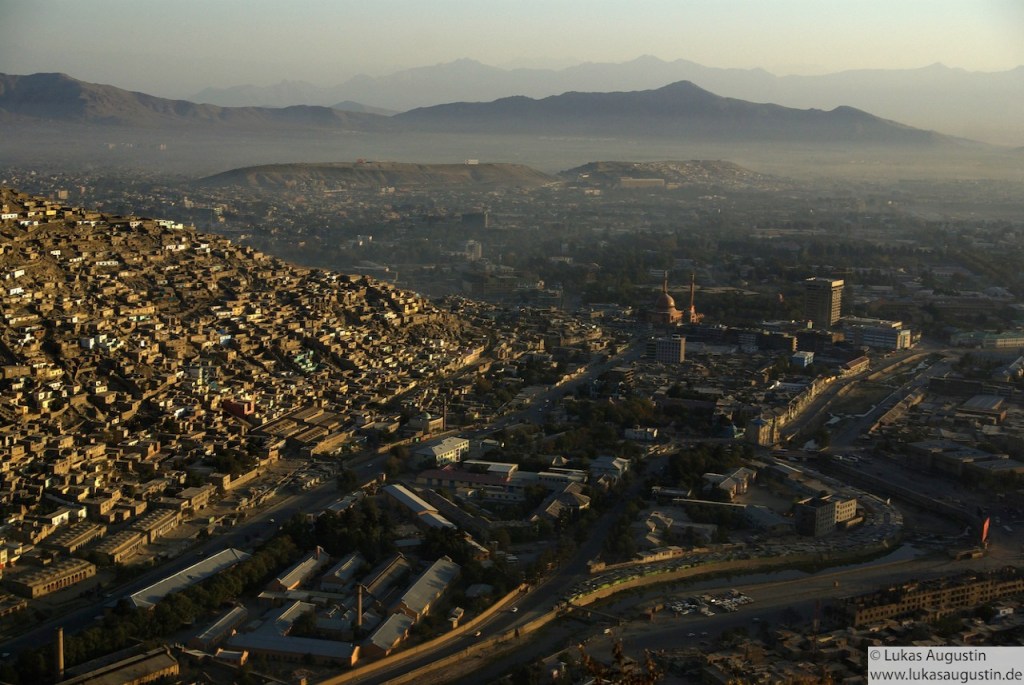
Kabul is falling

Kabul is falling,
while the rest of us are watching
with knitted brows and furrowed foreheads
as many as hundreds

of thousands lie dead
and the Kabul River runs red
with slaughtered dreams of the Afghans
and trampled actions of the Americans.

Rock by rock, the hilly country crumbles
at the hands of the bearded rebels.
Into a heap of stones collapse the long-fatigued walls
and streets turn blue as district-by-district falls.

Gunshots sound like warning bells--
Death knells
for the men in pakol hats, who confounded stare
unaware

of what is to become of them
amidst the bloody mayhem.
Wide-eyed their rosy-cheeked children
build castles in the dirt; and their women

in chadarees --
can no longer mask their worries
as the turbaned vultures --
circle the city, waiting, to tear open uncured sutures

 'Kabul must fend for itself,' the men in uniform say,
 and turn their backs and walk away.
 Promises made by the top brass bite the dust
 on the rugged tarmac of hopes; ‘Ah! The Pashtuns are cursed.’

 Onlookers say, ‘Those men-- tall, broad shouldered and strong,
 And women-- creamy white, chiselled; what did they do wrong?’
 Their children’s faces
 in coveted places--

 on magazine covers, win the best photograph of the year
 for their glassy-grey eyes that glare with fear
 which we call, ‘grit’
 as on the couch we sit

 flipping the glossy pages,
 ignoring their pain and rage.
 Let’s not bother.
 Let’s all look hither

 and nod our heads
 and look on with furrowed foreheads
 and express regret for the misfortune
 Of those born in a land where mulberries and apricots are grown.

 Let’s thank our stars
 for our nation free of wars
 while the children of Hades turn the ‘graveyard of empires’ red --
 A deep red like the juice of the ‘fruit of the dead’

 planted around the sands
 on which the Shrine of Hazrat Ali stands
 and let’s watch it happen--
 Kabul falling-- Falling, fallen.


Pakol: Soft, round-topped hat made of wool
Chadarees: A shawl
Smitha Vishwanath is a banker turned writer. A management professional, she embarked on the writing journey in 2016, with her blog, https://lifeateacher.wordpress.com.Her poems and articles have been published in various anthologies. In July 2018, she co-authored a book of poetry: Roads – A Journey with Verses.
.
PLEASE NOTE: ARTICLES CAN ONLY BE REPRODUCED IN OTHER SITES WITH DUE ACKNOWLEDGEMENT TO BORDERLESS JOURNAL.
The bubbly lyrics of Bobby McFerrin’s song ‘Don’t worry be happy’ filled the room. Andi was awakened from his slumber and slowly opened his eyes. He glanced at the clock by the bedside. Five a.m. Still dark outside. He had a virtual clinical exam later that morning. Early to bed and early to rise in the good old armed forces tradition was always mentioned by his mentor. Though with the heavy course workload and multiple assignments on most days he did not hit the bed before 11 pm.
His artificial intelligence (AI) mentor carefully monitored his academic progress. He was a straight A student and had done very well through the duration of the course, which was partially done. He was doing an accelerated curriculum and was expected to graduate in about two years. After his morning ablutions, his home robot came with a steaming hot cup of coffee. Dark and strong just the way he liked it. The robot checked his physical parameters. There were several sensors implanted in his body monitoring in real-time his physical parameters. Everything seemed normal and there was no cause for alarm.
He was one of the twenty students who had joined the undergraduate medical program at the Armed Forces medical school a year ago. He was inducted at the rank of Captain. Now the army and other organisations did not require many doctors. AI systems did most of the work of diagnosing and treating patients. AI was ubiquitous and omnipresent. Systems drove trucks, public transportation, private transportation, flew planes, did all menial jobs, carried out all secretarial and clerical jobs and took care of and educated human children. He had a special interest in human history and recalled the history lessons he had taken at school. During the mid-twenty-first century AI began to dominate life and most humans had slowly but steadily lost their jobs. Some were able to retrain and readapt and started helping in building and educating AI systems. The wars and the heating of the planet had reduced the liveable land. Human population steadily decreased for the first time in several centuries.
Frequent pandemics had become a regular part of life. Or rather was it the same pandemic which never really went away? A certain degree of control and protection was afforded by vaccines, but the virus had become endemic. Humans were resilient and had adapted to the new normal. New strains were isolated regularly, and these required a new set of vaccines to be developed and another round of vaccination. Luckily vaccines were edible these days and incorporated in tasty fruits like bananas.
Maya was his classmate. A perky and slender dark-haired girl, she never failed to cheer him up. He would be meeting her in about an hour. He read through his notes and prepared for the day ahead. He had a special interest in cyborgs and in enhancement of human function. Medicine had developed so much since the Middle Ages. He would be having a class on the ethics of incorporating AI systems in medicine in the morning by Prof Kim. He enjoyed Prof Kim’s sessions. All sessions these days were virtual except the ones on clinical skills. Most patients interacted with their doctors virtually. The sensors implanted on each human meant changes could be identified early and diseases addressed at the incipient stage. He and his fellow students and the teacher interacted virtually using a mix of extended reality and holographic images. The world had shifted online.
The world was a huge web. The internet of things. Devices and persons communicated constantly. Life was good, was it not? Why did he get the creepy feeling that he was being monitored all the time? Was he ever really alone? His father had made a fortune building sea walls and protecting coastal cities from the rising seas. The sea level had risen by over two feet and sea walls were a necessity. The Dutch were the masters and had made a huge fortune keeping the world from drowning. Human germ cell DNA editing was routine — both to eliminate deadly genetic diseases and to enhance human capabilities.
Nearly everyone had some sort of enhancements done to their body to improve their hearing, vision, physical endurance, and immunity among other things. Surviving in the hostile world without an enhanced immune system was impossible. Occasionally he got together physically with his batchmates in the informal learning spaces the college provided. They were an even split. Ten humans with enhancements and ten living AI machines. Life had taken on a whole new meaning with the advent of machine life.
Machine life had several advantages. They were stronger, had almost superhuman powers and were immune to the viruses and other microbes in the air. Occasionally some parts needed to be replaced or some enhancements carried out. They did not need to sleep, and neither were they ever bored and unfocused. In medicine the machines had anthropomorphic features. They looked like humans and from their external appearance only it had become difficult to know if someone was a machine or a human.
Humankind was pursuing immortality. Most lived nearly three hundred years. Rich individuals could download their memories into AI systems and become immortal. The memories could be slowly downloaded at intervals into a developing human and a person could live life both in the virtual and the real worlds. Dr Cerson was a famous surgeon of the twentieth century, and his memories were being slowly downloaded into Captain Andi. Cerson’s ‘soul’ had passed through several human bodies during the ensuing centuries learning and adapting to the brave new world in the process. Surgery today was fully robotic and used an army of micro and nano-bots to carry out the procedure precisely and with nearly no tissue damage.
Maya was a humanoid — machine life. He recalled the day she had told him about herself in the college cafeteria. She knew he was developing tender feelings for her. Machines were built to detect and respond to human emotions. Human-machine intimate relationships were not expressly forbidden but neither were they encouraged by the government. There were a host of problems though the machines were built to be empathetic and kind to humans. The machines did not require sleep, no babies resulted from the relationship and one of the partners was immortal. He had given a lot of thought to these issues but eventually decided to go ahead with his relationship with Maya. He would be moving into her house in a week so that they could sync forces and optimise performance. He started humming the opening lyrics of the classic love song sung by George Benson ‘Nothing’s gonna change my love for you’ as he got dressed for his trip to the college cafeteria and coffee with Maya.
.
Dr. P Ravi Shankar is a faculty member at the IMU Centre for Education (ICE), International Medical University, Kuala Lumpur, Malaysia. He enjoys traveling and is a creative writer and photographer.
.
PLEASE NOTE: ARTICLES CAN ONLY BE REPRODUCED IN OTHER SITES WITH DUE ACKNOWLEDGEMENT TO BORDERLESS JOURNAL
Like every city or village, every road too has a character of its own. The road which has spread out its clumsy, uncouth body here, aiming to touch some distant point in the south of town, has no character to speak of. It is ugly and chaotic. It has let its coarse surface to be abused daily by scores of vehicles, bicycles, pedestrians, rallies, wedding processions, hearses and more. Humans and their automobiles mingle with stray cattle and dogs in a sad spectacle of urban confusion. Pedestrians have surrendered their right of walking to assorted vendors whose unauthorised shops have blocked the footpath. Anybody bold enough to walk on the remaining part of road is under constant threat of being hit by vehicles zooming past in both directions.
Our protagonist here is not the road but a person walking alone on the road. His name is Narottam Chowdhury. His destination and intent are both extremely unusual. Tragic and extreme too. He is on his way to commit suicide by jumping before a moving train. He is aware that the road on which he is walking doesn’t touch the train line, so he has planned to leave this road and enter into a narrow lane on the right side after about half a mile. The lane ends at a shrubbery which has the look and feel of a small jungle. He will find his way through the bushes to the open expanse where he will find two silvery lines of steel on which the trains pass. He has no idea where these two parallel train lines originate and where they end. Narottam will throw himself in front of a passing train today, which he has planned meticulously. This is going to be his last walk on this road. This same road may be used to bring his mangled, lifeless body from the railway track, possibly in an ambulance, after an hour or two.
He has been contemplating suicide for a long time. Once he had accidentally blurted it out before a few friends, but couldn’t come up to the stage of actual implementation. Although almost five long years had lapsed since that date, he was still hanging on to his meaningless life shamelessly. But he was determined to accomplish the task today. His life was becoming unbearable with every passing day. He was not so immature as to die just to honour his word. He had to die because he was unable to live the life available to him.
He gently touched his chest while walking, but not to check his heartbeat, which is steady. He wanted to ensure that his cell phone was intact in his chest pocket. He was not in favour of carrying this device up to the point of death, but realised afterwards that it was an essential accessory for anyone dying outside home or hospital. A phone in the pocket of a fresh corpse would quicken the intimations to his kin. The body would get identified fast. He had also placed a neatly folded note in his pocket which contains just the basic information about himself, including relevant phone numbers. It would come in handy for the finders of his body. He wasn’t too sure if either the cell phone or the paper can be salvaged from the mangled corpse, but it would always be better to carry both in order to improve chances. He also carried some money in his pocket. His spectacles were in place on his nose. His old wrist watch stayed at its rightful place, his left wrist. These were the only earthly possessions he was carrying with him, apart from the modest clothes he was wearing. The noisy erratic traffic on the road did not bother him. He did not mind being hit today by a passing vehicle on the road, although he will be terribly disappointed if the accident left him maimed but not dead. It would be very difficult to plan a decent suicide again if he wer maimed.
Did he hear something? Some vague distant voice seemed to reach him in spite of the din and bustle of the busy road. He would have dismissed it as a disturbance in his own mind, but it actually sounded like some announcement through a microphone. Had he been caught? His secret exposed? A public announcement asking people to capture Narottam before he did something foolish? He chuckled at his own silly thought.
How could anyone even guess what he was up to? He had been extremely careful; knowing well that even the slightest slip from his side could abort the mission. True, he had once blurted it out before four friends; but that was five years ago. He had let his intent slip in a moment of carelessness, purely by accident. He was neither hungry for sympathy nor did he want to deliver a shock. His announcement had not jolted anybody. Nor had anyone asked him to desist from such misadventure. They just asked him not to blabber like a mad man and veered away from the topic which, in their judgement, didn’t merit any further attention. Narottam wonders whether any of those friends still recalled his intent. Or perhaps, they were silently waiting to see whether Narottam really meant what he had said.
He was satisfied that during the half hour since he left home, not for a moment did he waver or vacillate in his resolve. Sometime back, he had stopped briefly at a stall selling hot snacks on the pavement. A sweaty man with a balding forehead was passing on hot samosas on round paper plates while collecting cash with remarkable speed and efficiency. Narottam stood and watched silently as balls of yellowish brown dough, with fillings of cooked potato, were moulded into tiny pyramids and dipped in a cauldron of boiling oil perched on a huge hissing stove. The samosas were allowed to sizzle and dance in oil a few minutes before a large slotted spoon would fish them out and heap in a basket, for onward transmission to the paper plates. The entire process, right from making of dough to eventual annihilation of the end products in hungry mouths, presided over by the balding man, was taking place in full public view. Narottam saw life pulsating at every segment of this activity, but scampered away from the spot, afraid that such open display of life might weaken his resolve to die. He wouldn’t allow some silly distraction to interfere with his tryst with death.
Narottam could vaguely hear the public announcement which had become a bit louder by then. Slightly louder but still indistinct. He strained his ears but could not make out what it was about. He would have been happy to hear every news, gossip, message circulating in his world during his lifetime, but what was the point now? Even if the government was announcing a ban on use of this road for walking towards train tracks, it wouldn’t affect him. He would have gone before the dictum was enforced.
An assessment of his age and health had convinced him that number of years he could reasonably expect to live was by no means small. He could not wait so long for a natural death with his unbearable life, with every passing day renewing a blow to his desire to live, which was already at its lowest point.
He had even weighed all alternate modes of suicide to choose the method most suitable to his condition and temperament, with zero risk of failure. Swallowing some strong insecticide, or any other dependable poison, in solid or liquid form, would have been easier but with uncertain results. He had heard of people surviving such attempts with severely damaged organs. Jumping from the terrace of a high-rise had never appealed to him, for fear of hitting some innocent person or dog or car on the ground. He preferred his corpse to be delivered undamaged at his home; but he had to abandon that preference when his secret attempt to hang himself failed by a wide margin of error. That was almost a year back. He had rolled his wife’s sari into a coil, secured one end around stem of a ceiling fan just above the blades; but the art of making a proper knot eluded him. The sari was retrieved with a thick film of dust collected from the ceiling fan. Cleaning it secretly, folding neatly and placing it back in his wife’s wardrobe was no mean job.
Slicing a wrist to allow his blood to drain out was an option, but his research showed that the success rate was only about forty percent. Even swallowing handfuls of powerful sedatives, with its fifty one percent success rate, didn’t meet the rigorous, zero-error standards he had set before himself. Finally he was left with only the train line, widely followed and highly popular among the suicide aspirants. Easy availability of open train tracks in his town came as an additional incentive.
Not far from the rail lines stood the small temple of Shiva on right side of the road. Narottam suddenly decided to have a last glimpse of the deity. It was not a part of his plan, but why not? Like all Hindu temples, this too expected devotees to remove their footwear outside. But Narottam didn’t go in. Gaining an unhindered view of the deity from the road itself, he folded his hands, closed his eyes and muttered a brief prayer: “I haven’t come to seek anything, Oh God. I am leaving. This is our last meeting! Goodbye.”
As he descended back to the road, he halted briefly, training his ears to listen to the announcement which was now audible clearly. A rickety van came slowly , with a large funnel shaped amplifier repeating one sentence ad nauseam : “Please be informed that electricity will be cut off tomorrow from seven o’ clock in the morning to five o’clock in the evening , on account of urgent maintenance work.”
How did that matter to a person who would not be around tomorrow?
But no, he made a quick reality check. What would happen if the news didn’t reach his home that day? The next morning there would be no water in the overhead tank, no electricity for any work whatsoever, not even for charging a mobile phone – and all this while a mutilated body would be awaiting cremation, not to speak of the fast arriving crowd of friends and relatives. This piece of news had reach his home immediately. His hand reached his pocket for the mobile phone, but he stopped again. Could he call at this point just to pass on this information? He would surely subject himself to the obvious question: why couldn’t he wait till he returned home. Could he say he had no plans to return home? He surmised that a public announcement as loud as this must have reached his home too. So his cell phone went back to the pocket.
In fact he didn’t have to feel guilty about leaving such a petty problem as a temporary power outage outside of his life span unresolved. He had listed and attended to every single issue that a man of the world is expected to. All financial and legal issues relating to his home, money, mortgage, insurance etc. were taken care of. Keys, IDs, passwords, codes, ATM pins were all kept neatly and could be easily located. He had also kept an index of all documents clearly mentioning where they could be found. Content with the knowledge that his absence would not cause any material problem to his family, Narottam continued his death walk.
His preparation had been thorough even about action points during his final moments. His mind and body both were well prepared, strong and unwavering. He had planned out where exactly he would stand before his final leap. He had to hide behind the thick foliage nearby waiting for a train to arrive. The wait would not be long because this line, extremely busy in the evenings, had a train passing almost every five minutes.
Last week, he had seen three trains passing in about twenty minutes, two carrying passengers and the third one some cargo in containers. The second train was passing slowly; so he could see a bunch of giggling kids waving their hands through the open window, hollering something he could not hear. He had wanted to ask them why they were so happy while in a moving train.
Today it would not matter what or who were in the train. He would jump not more than five seconds before the train reached the spot, not allowing enough time for the driver to apply brakes. In those few precious moments, his tormented soul would have been released to heaven. Or hell ; it did not really matter.
It was entirely up to him on which of the passing trains he would bestow the honour of crushing him. He might let the first train pass, perhaps the second one too; but not beyond the third, lest his resolve lose steam. His day without a tomorrow would be drawing to a close even as the townsfolks would be preparing for next day’s power outage. The announcement, still audible to him even from a distance, irritated him. He had two questions for the announcer in the van. Had it been announced distinctly near his home? Was the man sitting in the van using pre-recorded audio or parroting the sentence in real time?
Nearing his destination, he made a quick calculation in his mind and realised that in fifteen minutes he would be at point zero. Within an hour he would be dead and within the next one hour, his body would have been located, identified and taken to morgue.
He felt a vibration near his chest and stooped to locate its source. The cell phone. It released a gentle alert, shook a bit and fell silent. A message for sure. Should he read? Let the message also die unseen, unread. He hadn’t brought the offending device with him to receive messages today. He decided not to touch the mobile at all, but could not approve the propriety of dying before reading a message specifically meant for him. He would remain in dark about its content for ever, even though ‘for ever’ for him means just an hour. His curiosity overpowered him. He fished out the phone from his breast pocket and stared at the screen.
Gosh! This? Of all matters on heaven and earth?
It was a shame that such careless, offending words would claim his attention at a sensitive and delicate moment of his life. He would have thrown the cell phone and crushed it in sheer disgust, but he didn’t. It went back to his pocket. Cursing himself for having read the message, he decided to ignore the message and walk on towards his tryst.
But he could not. A sudden feeling of helplessness overpowered him. The moment he read the single sentence, he had understood that he had lost. He could not ignore it and proceed on his own. Not today.
He walked back and entered a market he had left behind. He took out his phone, read the message again and felt like kicking himself for his surrender. ‘Bring flour, sugar and some vegetables on your way back.’ Just ten words.
What does ‘on your way back’ mean? He had no plan to turn back today. Silly. Humiliating. But that was that. His zero-error plan, carefully chartered strategy lay assaulted and shattered by rude, untimely interruption of these shameless words.
While trudging homeward on the same road, clutching a bag of grocery, Narottam resolved to wait and plan for another day. The setback was temporary, not strong enough to break him.
A glance at his watch convinced him that nothing would be out of place. This was the normal time for his homeward trek every day. He would reach home at the usual time and nobody would be any wiser.
Satya Misra writes short stories in Odiya , a regional language of India. Some of his stories have been translated into other Indian languages. This was first published in Odiya magazine, Katha, and subsequently included in his collection, Miccha Raastara Sata.
.
PLEASE NOTE: ARTICLES CAN ONLY BE REPRODUCED IN OTHER SITES WITH DUE ACKNOWLEDGEMENT TO BORDERLESS JOURNAL
BROWN GIRL IN A WHITE DRESS

Every other morning,

I would wonder why I even woke up.

Living in a dream is so much easier-

Full of fairies, angels and white.


But my reality is dark,

Confined to my brown body.

So, I would always wear a white dress-

I was a brown girl in a white dress.


Before seeing the mirror,

I would hurry and put the dress on.

It covered me from head to toe --

That gave me confidence.


But soon, that wasn’t enough,

I still didn’t feel pure.

So, I admitted myself for a surgery --

To change my colour completely.


While I waited for my turn,

I saw a brown girl in a brown dress walk out of the clinic,

My heart skipped a beat for I knew her.

She used to be a white girl in a white dress.


And then it hit me:

Nobody is born to satisfy society standards.

True beauty lies locked in the heart --

But I couldn’t discover mine as I tried to unlock with another’s key.


While I had this epiphany,

The surgeon had been calling out my name repeatedly.

I ignored his calls and dashed back home--

For I had something I needed to do.


I tore my white dress and ripped it to shreds,

I then shoved it into the fireplace.

Watching it burn gave me a solace I hadn’t ever known--

I wasn’t a colour anymore, I was me.
Nitika Desai loves writing poetry especially because she can express herself and her thoughts best through this creative medium. Her source of inspiration is Maya Angelou. She aspires to use poetry to spread positivity, awareness and tackle various global issues through a different lens.
.
PLEASE NOTE: ARTICLES CAN ONLY BE REPRODUCED IN OTHER SITES WITH DUE ACKNOWLEDGEMENT TO BORDERLESS JOURNAL
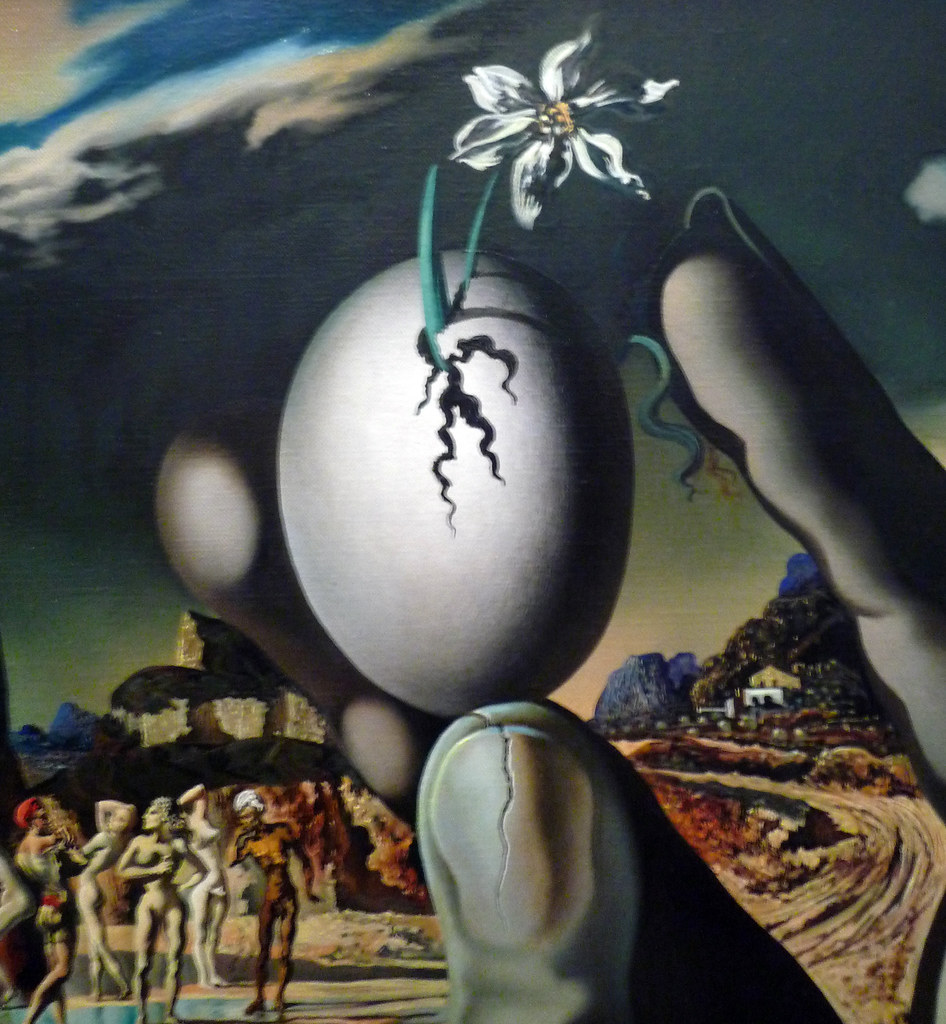
Salvador Dalí, Metamorphosis of Narcissus, 1937. Courtesy: Creative Commons
About Time

The flowers bloom and wither only to make people cry.
Tadpoles grow up to be frogs.
Just as robbers rob an old king's grave, a drunk catches frogs for a side dish.
Time does not take you like a river flowing with fallen petals,
but across the fixity of time,
seasons become spring, autumn and spring again.
The moving thing is not time but the sparrows,
the morning glories and the crescent moon.
Time does not bring you to the tomb step by step,
but it stays still without any facial expression,
while not only do the flowers bloom and the birds sing,
but also, you swim across the river of time towards a profound future.
You don't have to wait for the time when it takes you for a ride
but you must swim like a webfoot or with a fin
to build your own house on a housing lot of time like a silk carp, honeybee or kingfisher.
You must row on the milky way in the blue sky
with your own hands and feet like a pole,
your heart and brain like a mast.
Like a planet swimming in the universe,
you must fly across time like a kestrel.
The cornelian cherry and golden bells started to burst from yesterday.
Brilliant flowers bloom with their wings to build their own houses.
It is not that time brings you to the grand residence by taking you on the cloud train
but you are to walk struttingly through time to be a flower or a butterfly.
Ihlwha Choi is a South Korean poet. He has published multiple poetry collections, such as Until the Time, When Our Love will Flourish, The Color of Time, His Song and The Last Rehearsal.
.
PLEASE NOTE: ARTICLES CAN ONLY BE REPRODUCED IN OTHER SITES WITH DUE ACKNOWLEDGEMENT TO BORDERLESS JOURNAL
It is scary to witness a cabal of professors locked up in the staff room by agitating students who want to harass, heckle, punish, manhandle, slap their chubby cheeks, dislodge the spectacles, and look menacingly and maniacally powerful jabbing a middle finger. Holed up in a stuffy room under a slowly whirring ceiling fan, professors keep praying for the quick intervention of the Vice-Chancellor and his meek acceptance of the charter of demands so that the irate students release them from captivity.
Getting roughed up by students with a political agenda or by those with personal grudges is a nightmarish experience for any professor. But it is a professional hazard that most professors are now aware of and prepared to face during their teaching days. Such bitter experiences are included in the annual package. As a precautionary move, they empty their bladders every two hours because ‘being gheraoed’ includes not getting permission from students to answer nature’s call. They keep instant energy drink tetra packs in their bags for emergency use in case of dehydration and some toffees in the handbags in case of sugar level dip. You never know when students decide to strike!
Though we never had the opportunity to hold our professors hostage during our university days, there were reports of similar incidents happening elsewhere. Imagine the plight of professors who were castigated for no fault of theirs. The impact of such scenes was long-lasting on me. I realised this when I began to explore the option of becoming a professor. The fear of getting slapped and caught in crossfire made me rethink the pursuit of academics as a career after completing my journalism course – the horror of being dragged through the corridors, down the stairs, and punched by promising students.
My record was clean: did not rough up any academician in my life so the question of Karma catching up with me was not applicable. But if you are destined to get abused by students, it will happen even if you choose not to become an educator. During an early phase of my career, I did mentor some students to improve their language and test my communication skills. The horrendous experience made me realise teaching is indeed a dangerous territory. Some strong abusive words were hurled at me like crude bombs and it included vile threats of a bloody encounter in the local area. With guns and other weapons being so easily available in the market just like toys, it is better to take such threats seriously. My hyper-imaginative mind began to visualise getting lynched by vandals brandishing sticks and knives. I avoided venturing out after dark for almost a year.
It would have been so shameful to return to the classroom and address the same crowd of students that dispatched the poor academician (me) to the hospital. While it is true that the entire student community was involved in the fracas, some nastier ones would vitiate the atmosphere. Earlier, films depicted how professors were ill-treated. But the real world surpasses the fictional world. The mauled professors are rushed to the hospital and their families are busy praying for their speedy recovery.
When most of the students began to prepare for eligibility tests to qualify as lecturers, I sensed I had no proper knowledge in any subject. It was important to have a proper grounding or specialisation in a particular subject before teaching that subject. My knowledge always seemed insufficient to teach a classroom. It was also like a case of stage fright, facing a crowd of students who could raise a question, compelling me to consult the book for an answer. Imagining myself in such a predicament made me feel jittery. I could not convince myself to face the crowd with my half-baked knowledge though many others were confident of doing the same with a poorer knowledge base.
All they wanted was a safe job, with zero passion for the subject and they went ahead to build a career in academics. Most of them did not have a scholarly mindset but they were hard-working to scale up and make the cut because it was a question of qualifying in an entrance test and they had to scrape through.
The scope of remaining in the company of young babes and the possibility of appealing to them would be a bonus reward. After seeing films based on students falling in love with professors, it was going to be good. Imagine a besotted girl madly in love with the professor coming up with gifts, just to have a chat. If she happened to be beautiful, then males would be stabbed with jealousy. The tendency to imagine extremes egged me to think of attacks with weapons inside the campus. With newspaper headlines screaming the next morning: professor stabbed, jealous student lover accused.
This rise to fame was notorious so I dropped the idea of becoming a professor with the motive of falling in love with a girl student. Possibly, the madly-in-love girl slapped charges or went to town pressing me-too charges against me. A risky proposition was cancelled but it was tough to resist this because the perks of being a professor include falling in love with a student. On the downside, I imagined an obsessed student jumping off the parapet unable to bear rejection in love. All sorts of possibilities and fatal outcomes of being a professor came to the forefront, a whirlpool that dissolved everything related to academics.
Another incentive to explore this career was the prospect of holidays that would give them the freedom to write and find readers in the classroom. With a secured job and limited working hours, there was ample time to read and write and find publishers who went ahead because professors command a big circle of student readers who buy the books driven by the fear of scoring poor marks. Imagine a professor asking a student whether he has read his new novel, and he promises to read it as soon as possible. This makes it easier to sell more books even if there is a conflict of interest. Besides, other professors and writers also write kind stuff in their reviews – in the fond hope of a similarly favourable review when they publish their titles.
Unfortunately, the desire to become a professor waned as creative work in the field of advertising became more exciting. When the pressure of corporate writing left me with less time to write for myself, then I realised I should have become a professor to get a whale of a time to write instead of working under the pressure of deadlines. Now well past the age of being a professor even in an unapproved college, it is better not to think of it.
The joy of being a writer who has not pursued a full-time job is boundless. The madness of writing under stress and anxiety creates better writing and this would not be possible when you wrote in a calm state of mind. This is one merit of not becoming a professor – of writing with a free mind, without the burden of erudition that damages the free, natural flow.
Whenever a professor reads or comments on a piece of mine, I become a devoted student ready to be mentored because writing without a literature background makes you susceptible to frequent attacks so it is better to surrender and admit your ignorance in front of literature professors who will grab the chance to correct you or bombard you with heavy literary quotes. Instead of becoming a silly fool with limited knowledge and nodding yes-yes after every sentence, it is better to stake no claims of scholarship and call it a hobby, to dabble in writing without knowing what writing is all about. The forever-learner tag is easier to wear when you remain a student for life.
.
Devraj Singh Kalsiworks as a senior copywriter in Kolkata. His short stories and essays have been published in Deccan Herald, Tehelka, Kitaab, Earthen Lamp Journal, Assam Tribune, and The Statesman. Pal Motors is his first novel.
PLEASE NOTE: ARTICLES CAN ONLY BE REPRODUCED IN OTHER SITES WITH DUE ACKNOWLEDGEMENT TO BORDERLESS JOURNAL.
Proper Attire


On a balmy June’s afternoon,
my bride of seven years
asks me if my tank top
will be the shirt of choice
as we set to eat at Little Angelo’s,
a place not too fancy
but enough for a button-up.

My as a matter of fact reply;
These tattoos cost more
than any cloth
I could possibly find.

I’m good.
Tim Heerdink is the author of Somniloquy & Trauma in the Knottseau Well, The Human Remains, and six chapbooks. He’s also President of the Midwest Writers Guild of Evansville, Indiana.
.
PLEASE NOTE: ARTICLES CAN ONLY BE REPRODUCED IN OTHER SITES WITH DUE ACKNOWLEDGEMENT TO BORDERLESS JOURNAL
Title: Winged Stallions and Wicked Mares; Horses in Indian Myth and History
Author: Wendy Doniger
Publisher: Speaking Tiger Books, 2021
Horses have a captivating and curious existence in India. Stallions have been graciously carved into the Indian landscape in a variety of ways. To view the subcontinent’s past through the prism of the horse is to be swept back in its power and propriety. Horses have a galactic connection to Indian history, mythology, art, literature, folklore and also popular belief.
The political symbolism of the horse, its vital function in social life, religion, sport and war, its role in shaping economies and forging crucial human bonds is too obvious to point out.
Emergence of local breeds such as the Kathiawari and the Marwari, the Zanskari and the Manipuri is an interesting tale of gallantry. In India’s modern history, there were fabulous horsewomen too, Chand Bibi, Maratha princesses and women polo players among them. Horses have an intimate connection to grooms, blacksmiths, breeders, traders and bandits.
Rana Pratap’s legendary Chetak, Ranjit Singh’s much-contested Laili, Pabuji’s cherished black mare and those horses captured in paintings and equestrian portraits are riveting. This glorious age of the horse met its painful decline with the onset of colonial rule and automation.
Winged Stallions and Wicked Mares; Horses in Indian Myth and History by Wendy Doniger is an engrossing book not only for the subject but also the research. In this inspiring and scholarly book, Doniger — who has been called the greatest living mythologist — examines the horse’s significance throughout Indian history, from the arrival of the Indo-Europeans, followed by the Greeks, the Turks and Mongols (who imported Arabian horses) and the British (who imported Thoroughbreds and Walers).
Along the way, she delves deep into the rituals of horse sacrifice in the Vedic age. She rummages through the stories of warring horses and snakes in the Mahabharata. She digs into tensions between Hindu stallion and Arab mare traditions; imposing European standards on Indian breeds; the reasons many Indian men ride mares to weddings; the motivations for murdering Dalits who ride horses; and the enduring myth of foreign horses who emerge from the ocean to fertilise native mares.
Doniger combines erudition with storytelling and gives the reader a persuasive account on the horse in Indian culture just as she does it in her other books on Indian mythology.
Quoting from the book: “The horse is not indigenous to India, except in a few small pockets. Even after it was brought to the subcontinent sometime between 2000 BCE and 1500 BCE by the Indo-Europeans. It played almost no part in the lives of ordinary Indian villagers, being too expensive for all but the most privileged people to own. In India’s folklore, epics and popular culture horse stories abound and there are some brilliant images of the animal.”
Doniger’s ride through four millennia of Indian legend and folklore is full of sacrificial horses, horse-headed gods, transformations and couplings. Like Doniger’s other works on Indian mythology and history, this book is astonishingly accomplished with the threads of mythical narratives woven into a meaningful depiction of the Indian imagination.
Author of classic works like The Hindus: An Alternative History and Hindu Myths, Wendy Doniger has two doctorates, in Sanskrit and Indian studies, from the universities of Harvard and Oxford. She has taught at the School of Oriental and African Studies, University of London and the University of California, Berkeley, and is currently the Mircea Eliade Distinguished Service Professor of the History of Religions at the University of Chicago. Her other books include Siva: The Erotic Ascetic; Dreams, Illusion and Other Realities; The Mare’s Trap: Nature and Culture in the Kamasutra.
The Vedic ritual of the sacrifice of a stallion is balanced by the myth of a goddess who takes the form of a mare named Saranyu (Fleet). Doniger retells the story thus:
“The blacksmith of the gods gave his daughter, Saranyu, in marriage to the Sun, and she gave birth to twins, Yama and Yami. Then the gods concealed the immortal woman from mortals; they put in her place a female of-the-same-kind (Savarna) and gave that look-alike to the Sun. Saranyu took the form of a mare; the Sun took the form of a stallion, followed her, and coupled with her. From that were born the twin equine gods called the Ashvins. She abandoned them, too.”
Doniger takes us on the trail of the horse into and within India. What follows is a surprising and exhilarating journey, covering caravan-trade routes originating in Central Asia and Tibet, sea routes from the Middle East, and the dominions of different sultans and Mughal emperors, the south Indian kingdoms as well as the Rajput horse-warrior states.
Doniger professes her earliest exposure to India and the horses was in 1963 when she was twenty-two years old. Her meeting with Penelope Betjeman — daughter of Field Marshal Sir Philip Walhouse Chetwode who was the head commander of the British forces in India from 1928 to 1935 — gave her an introduction to these creatures. Doniger has dedicated the book to Penelope who died accidentally in 1986 in the Kulu Hills.
Winged Stallions and Wicked Mares has about a dozen chapters — most of which have a throwback to the Vedic and Puranic times. It is only in the last two chapters where she writes the horse saga of modern India. With a slew of illustrations and profound research, the book makes for a gripping read.
.
Bhaskar Parichha is a journalist and author of No Strings Attached: Writings on Odisha and Biju Patnaik – A Political Biography. He lives in Bhubaneswar and writes bilingually. Besides writing for newspapers, he also reviews books on various media platforms.
.
PLEASE NOTE: ARTICLES CAN ONLY BE REPRODUCED IN OTHER SITES WITH DUE ACKNOWLEDGEMENT TO BORDERLESS JOURNAL






 Borderless