Categories
Poetry

You Missed Everything!

By Sambhu Nath Banerjee

It is the time to dream big.
It is the time to work hardest to get to the top.

But--
Misfortune strikes at such an early age!

You miss the bright sunshine of today.
You miss the chilly winter and captivating spring of tomorrow.

You miss many more years of delightful living on this earth –

A sweet home, the kids playing around, 
Warm company of your sweetheart,
Weekend outing at a quaint restaurant,
Long drive to a seaside to enjoy the sunset at the horizon, 
Spending time in the peaceful abode of the hills,
The appreciation for your acting on the screen!
And, most of all, the grave fight you have fought
Against all odds in your real life.

The empathy, flooded emotion and bereavement --

Everything you missed!

The deadly disease brought the curtain down, sudden and agonising.

Wrong -- that
You have lost the battle.
But won it by a heart-warming margin
to rejoice in another world.

Dr. S N Banerjee has a great passion for travelling, photography and writing. His articles have featured in Cafe Dissensus, Muse India and Briefly Zine and 3 Elements.

PLEASE NOTE: ARTICLES CAN ONLY BE REPRODUCED IN OTHER SITES WITH DUE ACKNOWLEDGEMENT TO BORDERLESS JOURNAL

Click here to access the Borderless anthology, Monalisa No Longer Smiles

Categories
Poetry

Epistle to Ms Austen by Phil Wood

Phil Wood
EPISTLE TO MS AUSTEN 

Dear Jane, although I do not have your mind,
A mind that makes a moral choice so clear,
Now clear enough for me to right my wrongs,
The wrongs that take refuge in daily muddles,
For muddles marinade in solitude;
Yet solitude gives thought for humankind,
A humankind in which we both belong,
Belong because we live not for our puzzles,
Those puzzles are a solace only for fears,
For fears will offer no solicitude.
I learn solicitude from you dear Jane.

Phil Wood was born in Wales. He studied English Literature at Aberystwyth University. His writing can be found in various places, including recently : Ink Sweat and Tears, Noon Journal of the Short Poem, and a collaboration with John Winder at Abergavenny Small Press.

PLEASE NOTE: ARTICLES CAN ONLY BE REPRODUCED IN OTHER SITES WITH DUE ACKNOWLEDGEMENT TO BORDERLESS JOURNAL

Click here to access the Borderless anthology, Monalisa No Longer Smiles

Categories
Review

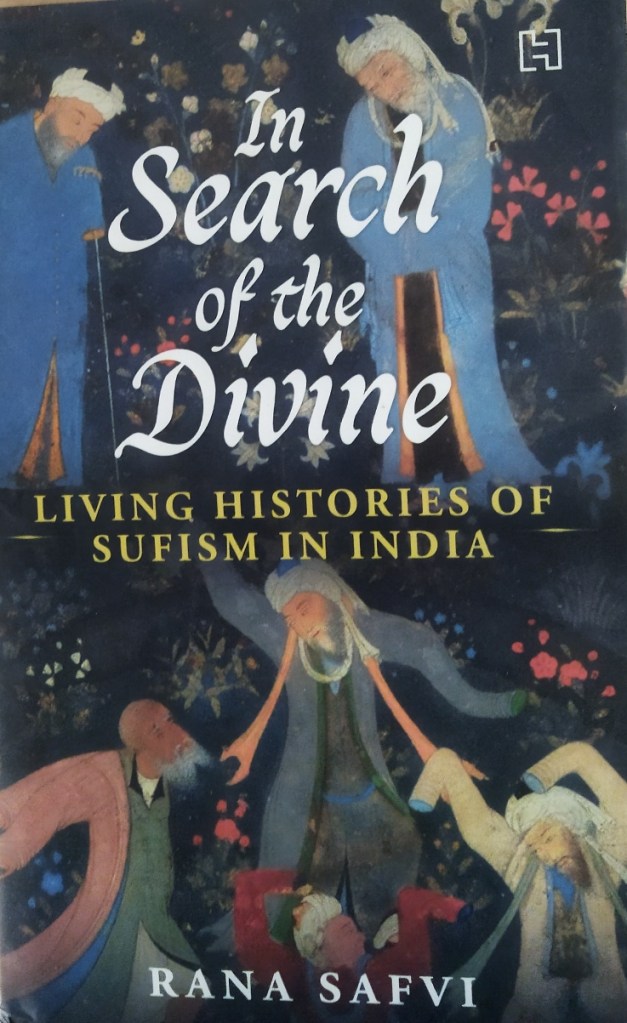
In Search of the Divine

By Bhaskar Parichha

Title: In Search of the Divine: Living Histories of Sufism in India

Author: Rana Safvi

Publisher: Hachette India

Sufism was a liberal reform movement within Islam. It had its origin in Persia and spread into India in the 11th century. Most of the Sufis (mystics) were persons of deep devotion who disliked the display of wealth and degeneration of morals following the establishment of the Islamic empire.

 The word ‘Sufi’ is derived from ‘suf’, which means wool in Arabic. It also means ‘purity’.Sufism or mysticism emerged in the 8th century, The early known Sufis were Rabia al-Adawiya, Al-Junaid, and Bayazid Bastami. It was a well-developed movement by the end of the 11th century. Al Hujwiri is regarded as the oldest Sufi in the sub-continent. By the 12th century, the Sufis were organized in Silsilahs.

In Search of the Divine: Living Histories of Sufism in India by Rana Safvi is by far the most comprehensive history of this belief system. As a scholarly book, it does more than just explain Sufism. The book elucidates how the practice is influential and yet possesses a quiet dignity. The general perception of Sufism for those uninitiated is perhaps reduced to paintings and images of saints, in cascading gowns steeped in reverence for the Almighty. The images, while powerful are deeply reductive. Like with most other things, Sufism has been reduced to images, motifs, and symbols of faith.

Says the blurb: ‘Sufism, called the mystical dimension of Islam, is known for its inclusive nature, as well as its ethics of love and compassion, its devotional music, art, and architecture. In India’s syncretic culture, Sufism developed a distinct character, and harmoniously embraced the Bhakti traditions of North India.’

A renowned writer, scholar, and translator, Rana Safvi is a passionate believer in India’s unique civilisational legacy and pluralistic culture which she documents through her writings. Author of nine books on the culture, history, and monuments of India, her A Folk Tale and Other Stories: Lesser-Known Monuments of India is a commendable book.

Safvi writes, “As numerous mystics came and settled in the subcontinent, they drew from local Hindu influences and developed a unique form of Sufism here. There was a great and constant refertilisation of ideas. With their understanding, acceptance, and integration of local customs and influences, they carved their own unique space in the hearts of locals of every faith, class, and caste. They could speak the local language, and dialects and as tales of their Karamat (miracles) grew, so did their followers.”

She delves into the fascinating roots of Sufism, with its emphasis on ihsan, iman, and akhlaq[1], and the impact it continues to have on people from all communities. Safvi relies not only on textual sources but also on her visits to dargahs across the country, and the conversations she has with devotees and pirs alike. 

Safvi says dargahs aren’t spaces meant to accommodate the Muslim community alone. Sufi saints insisted on religious harmony. In the 18th chapter of the book titled Celebrating with the Saint, she quotes an oral account of tolerance and acceptance.

“Some Muslims were once passing through an area where Holi was being celebrated. Perhaps as a shararat (mischief), perhaps unwittingly, the Muslims got Holi colors on their clothes. This led to a flight among Hindus and Muslims. The news reached the darbar (court) of Hazrat Nizamuddin Auliya. The Muslims complained that they had been defiled.

“How would they offer namaz now?’ said Fareed Bhai.

“Hazrat Nizamuddin Auliya told them: my people, all colors come from Allah. Which color is that that does not come from Allah?

“Then Hazrat Nizamuddin Auliya told Hazrat Amir Khusrau to capture this in a couplet. And Hazrat Khusrau wrote the (following) lyric:

Aaj rang hai ri

Mere khwaja ke ghar rang hai ri, aaj rang hai[2].”

The book suggests in intense detail the sacred atmosphere she encountered: the reverent crowds, the strains of qawwali, and the fragrance of incense, as well as highlights the undeniable yet often forgotten contributions of women in Sufism. The wide-ranging study is contemporary and also a tribute to the rich and textured past.

The book doesn’t just explain Sufism to the lay reader, it coagulates the affinity shared between Sufism and Islam. Safvi’s book lends dignity to the millions of worshippers who otherwise inhabit an Islam-loathing world.

Apart from a historical account, the books deal with the oral narratives, the status of women, and the Prophet’s family who laid the foundation for faith as Muslims know it. The elegant study emphasises the power of faith, not just in a universal capacity but also as a personal one. Along with the book meant for review, Safvi writes in a note, “This book has been a deeply enriching experience for me.”

Safvi’s work does not make the case that Sufism is independent of Islam. She says it was a myth solidified by western academics. She clarifies that a lot of Sufi followers do consider Prophet Muhammad to have spearheaded the practice. The connection with Islam is unmissable and yet it took on the shades of other faiths in praxis.

Her exploration isn’t in any way, a means to legitimise Sufism. Safvi is humble enough to recognise that she doesn’t need to do that. If anything, her writing is to shed light on values of peace, austerity, and benevolence which often miss the eye’s mark when religion is discussed in a politically charged world.

Rana Safvi’s In Search of the Divine is dignified, powerful, engrossing. Weaving together facts and popular legends, ancient histories and living traditions, this unique treatise running into more than four hundred pages examines core Sufi beliefs and uncovers why they might offer hope for the future.


[1] Spiritual excellence, faith, act of goodness or virtue

[2] At my Khwaja’s home, there is jubilant colour
Today there is jubilant colour

Bhaskar Parichha is a journalist and author of UnbiasedNo Strings Attached: Writings on Odisha and Biju Patnaik – A Political Biography. He lives in Bhubaneswar and writes bilingually. Besides writing for newspapers, he also reviews books on various media platforms.

.

PLEASE NOTE: ARTICLES CAN ONLY BE REPRODUCED IN OTHER SITES WITH DUE ACKNOWLEDGEMENT TO BORDERLESS JOURNAL

Click here to access the Borderless anthology, Monalisa No Longer Smiles
Categories
pandies' corner

Songs of Freedom: ‘Viklangta’ or Disability

Story by Kajal, translated from Hindustani by Janees

Songs of Freedom bring stories from women — certainly not victims, not even survivors but fighters against the patriarchal status quo with support from the organisation Shaktishalini[1].

–Sanjay Kumar, founder, pandies

Kajal is from Ghaziabad, Uttar Pradesh. She is 24 years old and has completed her bachelors in Hindi. She is currently pursuing master’s in social work through distance education. She has found her voice in writing activist stories around the theme of gender violence and disability. She is currently working at an NGO as a special educator and wishes to fight for the specially-abled community’s right to education.

Viklangta or Disability

Is there no one who could see through my tears? Anyone who could hear the tumult my silence has put me in? Someone who could acknowledge if not accept my bare feelings? None I could talk to?

Everyone is known by their name and their profession, but my disability is my very identity. At least that’s what the whole world has always made me feel. Who am I? I shall choose to remain anonymous here just like many others who are rendered nameless owing to the ‘fact’ that they are considered ‘disabled’.

The house is filled with chirpings of joy and excitement today. Bahu (daughter-in-law) is expecting her first child. “Hey, it will be a boy for sure,” the mother-in-law remarked, “Although there is no harm if a girl child is born either…umm… all I pray is for a healthy mother and a healthy child…” But deep down the grandmother-to-be prayed for a son, “Dear Lord, I shall adorn your temple with numerous offerings if you bless this house with a son…”

The day had arrived. The entire family eagerly waited to hear of the outcome. The nurse came out of the delivery room, “Congratulations! It’s a girl! Goddess Lakshmi has blessed your household with her presence.” It seemed as if everyone in the family was struck with lightning. “Well, who can meddle with God’s affairs?” the grandmother frowned. It was coming from the same woman who was busy pampering the pregnant Bahu just a few months back. With every passing day, Bahu and the baby were being showered with taunts and disgust.

Wasn’t being born a female enough for one to be in hell, that soon the calamity of ‘disability’ struck the child. “We are being punished for our sins! God why us?! Now all life-long we have to cater to her special needs — expenses, treatment, care and God knows what all. What an awful misfortune has struck my son?” grandmother would go on uttering.

‘I’ who was de trop[2]right from the time of birth, had been disowned on many grounds by my own family. Troubled with a question – “What was my role in my plight? How was it my fault?”

As time passed by, the jibes thrown at me turned more spiteful. ‘Disabled’, ‘Lame’ and ‘Who will marry a disabled woman?’. From ‘Ton of dowry will have to be paid to get rid of this woman’ to ‘She should have died the moment she was born!’. I would yearn for someone to understand me, befriend me, and chase away my agony. It must be wonderful to be a reason for joy in someone’s life. Could I ever be one? Every night I would cry myself to sleep in painful hopes.

Since a young age, I have loved studying. I believed and still do that fulfilling a meaningful career through studies is the only way to stun them. Maybe my father and grandmother both will start loving me then. “What use is education to you?” or “Your ultimate place is the house of the man you will marry. Why waste time pursuing education?” — such taunts haunted my existence.

“Anyway, your education won’t come to save you or your parents from the humiliation of finding a boy for you.”

“Look for a boy with a disability for her or bribe a normal boy to marry her.”

“It’s time to get rid of her.”

I would keep going back to my thoughts — is there anyone who, with all their love and honestly, would move mountains for me? Just for me! Adorn a river with my name…

Amidst all the agony, I only had one person by my side – my Maa, my mother. It aches to admit that she couldn’t keep her stand firm for long, she too fell for what was being fed to her. I was a burden to her now. To my own mother. But I understand – she was not fully in command. She was never respected in that house. It must have been so tough for her to face them all, so much so that she was convinced to get rid of me at any cost. A mother is the one who loves her child unconditionally, the same mother was now cursing me for being in her life. I have come to a point in life where not a single moment passes without my blaming myself for existing. In fact, I am sure it must be karma – my mother’s sins that have put me in this state and are now haunting her in my form.

This never-ending dejection has started to make me weak… I feel weak… this mental fatigue seems to have physically manifested itself in me… my one and only support had left me. Mother tried to emotionally convince me for acquiring skills in household chores, after all that would make me a good fit for marriage. She believed I had gained enough education and needed to divert my attention to master home-making skills. One day Maa came to me and said, “I have endured so much because of you, can’t you consider my helplessness and give up on your resilience?” I wanted to ask her how she could turn a blind eye to my skills? Couldn’t she see how well I was doing at school, how extraordinarily well I was doing in the whole class?

When the one who gave birth to me has expressed dismay at my being, there remains no room for any other expectations. I must decide. I must fight this battle, alone! I have just myself to trust. I must help my own self because no one else will. That without having ‘able’ feet, I still need to stand on my own. And with this thought and courage, I set out on a journey to carve my own identity. The climb is long and arduous. It’s the fight to be. The fight for my identity– of ‘viklangta[3]’. And of leaving an imprint on this ugly society’s hypocrisy.

Million-dollar revelation — losing hope is worse than losing legs/arm. That was the first lesson. That one step of making my own decisions and here I am – on my own ‘feet’, without the debt of anyone’s support. I am self-sufficient, a burden to no one. My source of power is my soul, and souls are never ‘viklang’.

And just as you fall, you shall stand as well
If you falter, hold onto yourself
For when you seek strength within
The mountains promise a rendezvous

Is there no one who could see through my tears? Anyone who could hear the tumult my silence has put me in? Someone who could acknowledge if not accept my bare feelings. None I could talk to? It took me a long, difficult time to accept that ‘someone’ as ‘myself’ – the only one who knows my potential and who respects my struggles, who accepts this ‘disability’ and yet doesn’t let it take her down. Everyone is able and the only condition to that is one must keep moving forward with whatever resources in hand.

Don’t wait for miracles. Be your own miracle!

[1] “Establishing itself as a premier women’s organisation in India from 1987, Shaktishalini has spread out and deals with all kinds of gender based violence. A shelter home, a helpline and more than that a stunning activist passion are the hallmarks of this organisation. 

pandies and Shaktishalini – different in terms of the work they do but firmly aligned in terms of ideological beliefs and where they stand and  speak from. It goes back to 1996 when members of the theatre group went to the Shaktishalini office to research on (Dayan Hatya) witch burning for a production and got the chance to learn from the iconic leaders of Shaktishalini, Apa Shahjahan and Satya Rani Chadha. And collaborative theatre and theatre therapy goes back there. It is a mutual learning space that has survived over 25 years. Collaborative and interactive, this space creates anti-patriarchal and anti-communal street and proscenium performances and provides engaging workshop theatre with survivors of domestic and societal patriarchal violence. Many times we have sat together till late night, in small or large groups debating what constitutes violence? Or what would be gender equality in practical, real terms? These and many such questions will be raised in the stories that follow.” — Sanjay Kumar

[2] French for superfluous or unwanted

[3] Disability

Janees is an independent researcher and theatre-practitioner who has been associated with Pandies for the past six years.

PLEASE NOTE: ARTICLES CAN ONLY BE REPRODUCED IN OTHER SITES WITH DUE ACKNOWLEDGEMENT TO BORDERLESS JOURNAL

Click here to access the Borderless anthology, Monalisa No Longer Smiles

Categories
Poetry

Poems by Sukrita Paul Kumar

Sukrita Paul Kumar
TEDDY BEAR ON THE WAR FRONT
(News Report from Irpin, Ukraine, 2022) 
					
The teddy bear sits benumbed
presiding over the rubble
Of civilisation
Of compassion
Of humanity
A debris of fun and play

Teddy sits smirking over the  
Skeleton of the cat, her
Bones, a curled cadaver 
Her couch and cushions 
in smithereens

The house shredded by the missile 
Walls cracking and crumbling with the  
Child’s screams as shards
From the tiny throat

Teddy bear, the dumb survivor,
No arms to melt his frozen heart
Watching the carnage with
Big round buttons 
gyrated into unseeing eyes

Wrapped in grief
The gentle wool on Teddy spikes
The bristles stand stiff and sharp
Rivers of tears flow 
Into the turbulent ocean 

And a tsunami of teddy bears 
Marches into the war zone
Looking for children to comfort


TELLING VIGNETTES 
			
It’s dementia…

For grandmother
It’s a staccato war

Ends each day and
Starts the next morning again

            it is a re-wind
                     to World War II 

        the wake of bombing
        kills people seventy years later

*

Pregnant with deadly nightmares 
Moskva the missile cruiser sank

The Black Sea swallowed all her bombs 
Stuffed with a thousand deaths


*

Bullet marks on the walls
        remnants of war
people in homes behind
	unhealed  

*

Ghosts born of bombs
are stripped of death
        Sans the mortal attire 

        They live on to haunt

*


The web of nerves on
      the inert dog’s neck
             pulsates
                     with lifelessness
It’s wartime


*

More live than the forlorn dog
are the shadows of bullets on 
the walls of Irpin

Deep craters on the earth
hold silence
born of the boom

*

They are not moon craters 

       These on the earth mark 
       technology of warfare

       Massive progress
       in hunting and
       getting the big kill

Sukrita Paul Kumar, former Fellow of Indian Institute of Advanced Study, Shimla, held the prestigious Aruna Asaf Ali Chair at Delhi University. An honorary faculty at Corfu, Greece, she was an invited resident poet at the prestigious International Writing Programme at Iowa, USA. Her most recent collections of poems, are Vanishing Words, Country Drive and Dream Catcher. Her critical books include Narrating Partition, The New Story and Conversations on Modernism. She has co-edited many books, including Speaking for Herself: Asian Women’s Writings (Penguin). An Honorary Fellow at HK Baptist University, Hong Kong, she has published many translations and has held exhibitions of her paintings. Currently she is series co-editor of “Writer in Context” volumes being published by Routledge UK and South Asia.

PLEASE NOTE: ARTICLES CAN ONLY BE REPRODUCED IN OTHER SITES WITH DUE ACKNOWLEDGEMENT TO BORDERLESS JOURNAL

Click here to access the Borderless anthology, Monalisa No Longer Smiles
Categories
Slices from Life

The Seven Grandfather Teachings

By Saeed Ibrahim

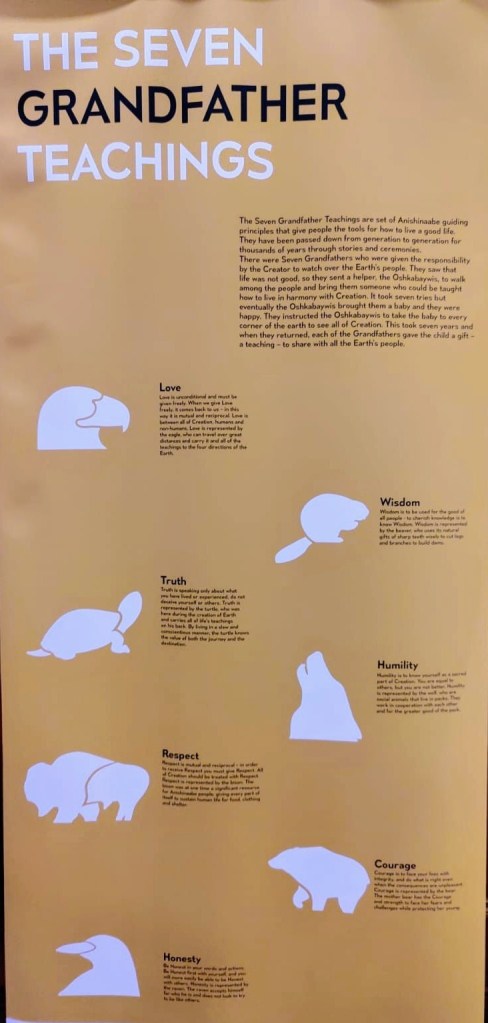
A carving by Indigenous artist Garrett Nahdee was installed a year ago on 18th November 2021 in the Legislative Chamber of Canada’s Ontario Assembly amidst fanfare and widespread media coverage. What  could have been the significance behind this much publicised event and the sculpted panel being given a place of prominence above the chamber’s main door?

The panel, called Seven Grandfather Teachings, are a set of guiding principles that give people the tools for how to live a good life. They form an integral part of the oral traditions that have been passed down for thousands of years, and from generation to generation, through storytelling and ceremonies of the Anishinaabe and other indigenous communities that were the original inhabitants of much of the traditional landscapes of the Great Lakes region of Ontario. Illustrating the Seven Grandfather Teachings,  the carving is meant to give symbolic  representation to the indigenous people of Ontario, to honour and acknowledge their historical and cultural contribution and to build bridges of reconciliation and understanding between communities.

In a broader sense, however, these ancient teachings embody a philosophy of life that is universally relevant and one wonders if the wisdom of the elders could serve as a panacea to soothe and heal the ills that plague our world today. If followed and put into practice together and as a whole, could they pave the way for a happier, healthier and more harmonious world order?   

Garrett Nahdee, who grew up in Walpole Island First Nation, a Anishinaabe reserve in southwestern Ontario, is not only the creator of the carving, he himself is a firm believer in its teachings. According to him, for the teachings to be meaningful and effective, change must begin with the individual. “The Seven Grandfather Teachings are great leadership traits, and when they are practiced in everyday life, you will see changes in your life. Burdens will be lifted, and bitterness will deplete, uplifting your spirit to soar to another level of progress.”

Saeed Ibrahim is the author of two books – Twin Tales from Kutcch, a family saga set in Colonial India, and The Missing Tile and Other Stories, a collection of 15 short stories. His other writings include newspaper articles, some travel writing and several book reviews.

PLEASE NOTE: ARTICLES CAN ONLY BE REPRODUCED IN OTHER SITES WITH DUE ACKNOWLEDGEMENT TO BORDERLESS JOURNAL

Click here to access the Borderless anthology, Monalisa No Longer Smiles

Categories
Poetry

More Poems by Jonathan Chan

Courtesy: Creative Commons
SNOWDRIFT

“The trees stood with their backs to us.
Snow-depth was measured with dead straw.
Footprints grew old out on the crust.
Under a tarp, language withered.”
- T. Tranströmer, ‘Face to Face’,
trans. Patty Crane

fissured by the cut of language,
these prayers began to go cold.
a personal fear.
as the choir sings, wooden pews shudder.
faces glow auburn by candlelight.
eyes close, desperate to focus the mind
in its churning. a wisp blows.
the snow swallows each blade of grass.
the ground is rich with meltwater.
beyond lies a gleaming path.
boundless.
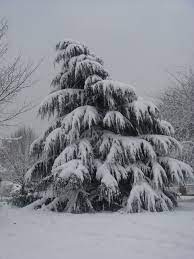
the cold of every crunch of snow.
the pines whisper, shrouded in frost,
another, then another.
voices vanish in the horizon.
breath turns to mist.
footsteps blend in the pathway ahead.
they are inscriptions on icy parchment.
the glare is bright, the lands thin.
the winds cut like a scythe.
every second is a tremulous panting.
then, restless flesh becomes still.
above a shuddering jaw,
language strengthens.
boots begin to lift into clear brightness,
slipping into every cavernous print.
the flanks of pine and bark,
the trail carved of extravagant tears,
one movement after the other,
footprints made into a newness again.


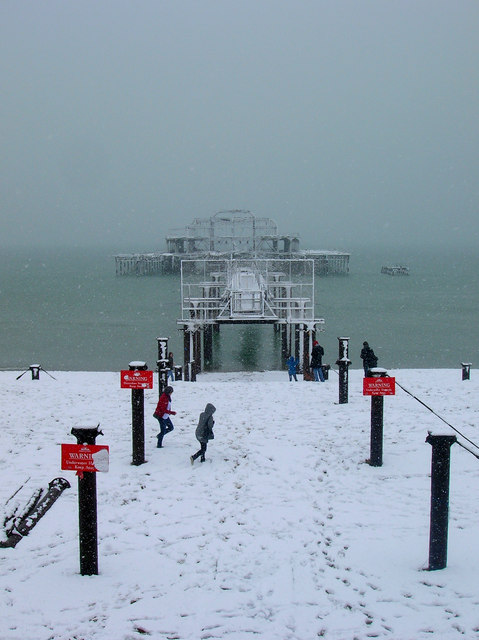
BRIGHTON PIER

we imagined a ritual: the glimpse of
ash catching colder gales, tumbling
into foaming waters, the merciless
gray crash against sand, less itinerant
than the tumbling of lily petals. a
ceremony squeezed in the shade of
a foreseen grief, a lacuna felt only in
the passage of clouds, the strained
contours of a monochrome sundown.
it was not for the fungibility of dust, the
analogue image of the whispering dead,
nor the brittleness of a swirling, faithless
rut. we folded our qualms toward death
into each other’s palms, standing at a
rickety pier, shaking, like reeds,
by the wind.
Courtesy: Creative Commons

Jonathan Chan is a writer and editor of poems and essays. He is the author of the poetry collection, going home (Landmark, 2022). His writing can be found at jonbcy.wordpress.com.

.

PLEASE NOTE: ARTICLES CAN ONLY BE REPRODUCED IN OTHER SITES WITH DUE ACKNOWLEDGEMENT TO BORDERLESS JOURNAL

Click here to access the Borderless anthology, Monalisa No Longer Smiles
Categories
Stories

Annapurna Bhavan


By Lakshmi Kannan

Courtesy: Creative Commons

 The next two hours were free for Tara to spend them any way she desired. She wanted to maximise the time spent she spent with her dear friend Sunita who was admitted in a hospital near Mylapore, Chennai. She sat with her in her private room, took her lunch tray from the hospital staff, and personally served her as she reclined on the bed.

I must somehow restore Sunita to Sunita, she told herself. She was such a chirpy, positive person. How did this surgery take away all that from her?

In between sips of soups, mashed rice with dal and vegetables, Tara gently coaxed Sunita to eat well, to get strong so that her discharge papers could be processed, and she could return to the comfort of her home and slowly resume her work online. “It’s the digital era,” she said, as if it needed a reminder. “We now have the wonderful opportunity to work from home until one can resume work. So, Sunita, work towards that goal. We’re all waiting to see you on your feet again,” she encouraged. Sunita gave her a weak smile.

 “What about your lunch Tara? It’s well past lunch time,” she asked.

“No worries. I’ve a car at my disposal, have made arrangements for my lunch. I’ll have a quick bite somewhere and join my family,” she assured. “Come on, have some custard. You must eat well, Sunita. Promise?”

Sunita nodded, her eyes incongruously bright on her wan face.

Tara tucked her back into bed, said goodbye with a thumbs up sign and came out of the room.

 *

Waiting for the elevator, Tara recalled how she had warded off all the lunch-suggestions by her family before she came to the hospital. She told her family that she would grab a quick lunch somewhere and then join them for the rest of the day.  Instantly, her family had pulled out their phones and googled for restaurants that would qualify as ‘good’ even if it meant driving some distance. Tara had responded that New Woodlands Hotel was close to the hospital, so she could use the time to be with her friend, then have a quick meal and join them. A chorus of voices said New Woodlands was just ‘okay’. “It has improved a bit, has a Family Section where you can get some privacy,” still it wasn’t one of the best they argued rather patronizingly. They suggested other outlets. One of them suggested that she drive past New Woodlands, get on to Anna Salai road and reach the Taj Connemara. “It has The Verandah restaurant with a multi-cuisine buffet. You can mix and match the dishes any which way you like and eat your fill.”  

“Or try Raintree Hotel,” said another. “It’s also on Anna Salai Road.”     

“Isn’t there a Rain Tree at Alwarpet? I heard it has a nice restaurant on the terrace, appropriately called Above Sea Level,” said another.  

They showed her the Google maps and advised her to follow them on her phone. Poor New Woodlands, she thought, now relegated to a middle class eating joint, used only as a landmark by her family. “Go past New Woodlands…” — Ruthlessly bypassed after all these new fancy upscale restaurants have mushroomed in the city.

“Fine, thanks a lot. I’ll go to one of these you suggest and join you all soon, don’t worry, I’m on my own turf. So, I’ll sail through my way speaking in Tamil. The driver Dorai seems to be a nice chap. Bye for now,” she waved and was off to the parking space. Inside the car, Tara wondered why nobody in her family thought of where Dorai would have his lunch. Why ask him ‘to eat somewhere’ and then go to The Verandah, or Above Sea Level to pick her up? That will delay things unnecessarily. Why not have lunch at New Woodlands, both Dorai and I, she thought. That would be neat. It will cut the time taken for waiting. She had rushed to the hospital and was soon ushered into Sunita’s private room. She was glad she got some time to linger with her and coax her to eat lunch.

*           

Tara came out of the hospital and got into her car.

“Dorai, please take me to New Woodlands,” she said. “We’ll both have lunch there, and then we’ll drive up to where my family is waiting for me,” she said.

He turned back and smiled. “Amma[1], I’ll drop you at New Woodlands and go to another place for my lunch.”

“Oh no!  It’ll take time. That’s exactly why I suggested New Woodlands so that both of us can eat there and then move on.”

“No worries Amma. My votel[2] is also nearby only. It won’t take long.”

“I see. Why Dorai, don’t you like the food in New Woodlands? I’ve been there.  It was so good.”

“Not just good Amma, it’s excellent,” he nodded.

“Then why do you want to go somewhere else?”

  Dorai turned away and stared through the windscreen.

“What’s the matter, Dorai? Please tell me. Of course, you can eat wherever you prefer to.”

He turned back again, this time with a shy smile on his face.

“Amma, how can I explain? You won’t understand.”

“What!”

“Yes Amma, if I mention some dishes that only small, humble votels offer, you may not even know those items.”

 “Such as?”

He grinned, but lowered his eyes. “Amma, there’s a small place called Annapurna Bhavan. It serves rare things like paruppu podi[3], mormilagai[4], vatral kuzhambu[5], karuvadaam[6], palapp pazham[7], a tumbler with neer mor [8]garnished with karuveppilai[9] and ginger and much more…”

Tara burst out laughing when she noticed that Dorai was almost salivating when he listed his favourite dishes.

“Wonderful, Dorai! I know those dishes very well, because I’ve grown up on them. I’m also very fond of them as remind me of my mother’s cooking when I was small. I’m glad you’ve located a place that has all these.”

Amma, not only do they make these dishes well and put it all out on a large plate with cups. They also serve Amma, item by item, and they serve so ungrudgingly. It is as if satshat[10] Devi Annapurni[11] has descended, to give us food like a mother.” “Maybe that’s why it’s called Annapurna Bhavan!” said Tara, laughing.  

Hee, hee, yes!” chucked Dorai, nodding his head vigorously.

“Fine. Let’s both eat there.”

“Oh no! It’s not a place for you, Amma. I just can’t take you there. Saar[12] will be angry with me if he comes to know,” he protested.

“Then we don’t tell, Saar. Simple!” she smiled. “Dorai, I just told you how much I love the items you mentioned. It has been a very long time since I ate those things. I live in far-off Delhi, you see.”

 “I know, I know, but Amma, it’s not a suitable place for you. Saar phoned me about The Verandah and the other place, Sea something…”

“Above Sea Level. No! I don’t want to go to all those places. Just take me to Annapurna Bhavan. I’ll tell Saar I went to The Verandah,” said Tara, firmly.

“Oh Amma, how can you tell a lie like that? Please listen to me. It has no parking area. I’ve to park the car on the main road and then walk through two narrow lanes to reach the votel. It’s a small one, you see.”

“I can very well walk on a lane. Come on, Dorai. Start the car or we’ll be late.

*          

Tara got out of the car and Dorai led the way to another street that was cutting the main road at an angle. Vendors in carts selling vegetables and fruits were lined on both sides of the street. They walked for about two hundred meters when Dorai said, “This way, Amma,” pointing to the right. Tara followed him on a narrow lane that had a mix of houses, grocery shops and places for repairing cycle and scooter. A few stray cows ambled about lazily. Annapurna Bhavan was on the opposite side, joining two small buildings. Even as they entered the restaurant, the smell of food wafted over to the small reception in the front.

“Do you have a family section?” inquired Dorai.

 “Ah…Yes. But I’m sorry. It’s full. If you wait for about half an hour, I can find a table in the Family Section for Madam.”

“It doesn’t matter,” said Tara. “I’ll go to the general section.”

“No, no! Can’t you try, please?” pleaded Dorai.

The man at the reception thought for a minute but shook his head to indicate that it was ‘full’.

“What I could do is to find Madam a table in the Ladies’ section, will that do?” he asked.

“Okay, okay, at least do that. Thank you,” said Dorai, still disgruntledby the whole idea, a ‘bad’ one, according to him.

He came with her till the door of the Ladies section and then pointed to the left.

 “I’ll be going there Amma, to the general section,” he said.

“Have a good lunch, Dorai. No need to hurry. We’ve enough time,” smiled Tara, going into the hall that had multiple rows of tables. They were already occupied by women who were blithely chatting with one another.  The hall echoed with their loud laughter and uninhibited chatter. Just as Dorai said, there were no large plates with multiple cups. Food was being served course by course on a banana leaf, like in a wedding. She was ushered to a table.

“One meal, Amma?” asked a waiter.

“Yes please.”

He placed a large banana leaf on the table, served her a steel tumbler of water and waited. She looked at him for a moment, then took the cue from others and sprinkled water on the leaf. She then cleaned it with her hand, like the women were doing. He placed another tumbler and poured thin butter milk into it from a steel jug. It was flavoured with curry leaves, ginger and salt.

“I will tell the boys to serve you a meal, Amma,” he said and left.

Tara sipped at the butter milk and looked around. Already, some of the women seemed to be halfway into their meal. The hall swarmed with women in brightly coloured sarees, their glass and gold bangles clinking on their wrists, their faces eager to catch up on news while they went on a sustained friendly banter over their lunch. It looked like many of them were friends who had fixed up a date and time to meet here, for a Girls Day Out, thought Tara. She was amazed to see the way they could keep a lively thread of conversation going while at the same time, they were mindful of what reached their ‘leaf’ and what got missed. Tara was amused to note that each one of them referred to her leaf impersonally as ‘this leaf’, instead of ‘my leaf’.  Some women called out to the waiters variously as ‘Anne[13]’, ‘Empaa[14]’ and so on and said, ‘Here, give more poriyal[15] to this leaf. And that leaf needs rice, more rice! She called out for you, but you didn’t hear. Aiy Shenbagam, you asked for rice, di[16]!” said the woman looking after her friend’s ‘leaf’ along with her own. Tara noticed how they kept a tab on each other, like they were members of a family.    

They had no qualms whatsoever, in demanding the men to serve them more. On the table next to her on left, and on the one opposite, sambar, and then rasam was being served. Another boy ladled out spoons of something. Instantly, the women mixed the rice and brought their hand to their nose to smell. Tara turned her face to the left and saw the same thing. Women brought their hands up instantly to their nose to smell.

Her meal came with varieties of vegetables, poriyal, karuvadam, fried appalam[17],  and other things from the four-chambered cornucopia the man carried, so deftly. He put some paruppu podi[18] in a corner of her leaf and asked her to make a hole in the center. Then he poured some til[19] oil into it. Tara motioned him to come closer to hear her.

Empaa, why are those women smelling the oil the minute it is poured into their rice?”

“Because it is not oil, Amma. It is pure is nei[20] that is poured for sambar and rasam rice. I’ll also be serving nei as soon as the boy gets hot rice for you.’ He smiled.

“Oh. All right. But why should they smell it, each one of them?”

The man laughed till his shoulders shook. “Amma, you seem to be new here. These women are all so clever and shrewd, you see. They want to check instantly if we’re serving them pure nei, or craftily passing off some oil as nei,” he grinned. “They’ll catch us by the neck if we cheat. Nobody can fool them. They’re all well trained in cooking, you see. They just come here for a change, to enjoy one day when they don’t have to serve their family or eat with their family watching. Okay, now let me ask the boy to hurry up with your rice,” he said, walking away with an amused smile.

Tara was fascinated. The women were clever to the core and didn’t want to take any chance. Ghee had better be genuine ghee, or else…!

Rice was served steaming hot. She mixed it with paruppu podi and til oil and relished the taste. It transported her to the days when her mother gave her and her siblings paruup podi whenever she couldn’t find the time to make sambar and was busy with other things. PP had gone out of the menu, and the lexiconof Tamil cuisine. The potato poriyal, the simple dish of fresh sautéed string beans with soft coconut scrapings, and the koottu[21] made with white pumpkin – everything was tasty. More rice was served, with hot sambar[22] into which the man poured ghee. Tara could smell it without bringing the mix to her nose. The man gave her a broad smile. Tara noticed that it was the same man who had served her til oil with paruppu podi and explained why women instantly took their hands to their nose the minute ghee was served.

 “Don’t want to smell the nei, Amma?” he smiled, with a mischievous twinkle in his eyes. Tara smiled back at him, nodded and smelt her hand just the way the women were doing. The aroma of pure ghee filled her heart. The man laughed and said, “I’ll now bring rasam[23], Amma. Want some more rice?” he asked.

“No, I’ve enough rice. Just bring me rasam.”

 “Very well Amma. You’ve hardly eaten anything,” he said, before he went.

“This leaf didn’t get payasam[24],” said a woman loudly, on the next table.

“This leaf needs some koottu.”

“This leaf…”

“This leaf…”

Anne, this leaf…have you forgotten?”

“No, no! How can that be? I’ll get it for you, in a minute.”

Tara watched, fascinated by the informal camaraderie between the women and the men who served them.  The woman sitting at the opposite table told her waiter, ‘Anne, why are you ignoring this leaf? You’ve forgotten to even ask me if I need more rice, or poriyal.”

“Ayyo, excuse me thangacchi[25], I didn’t do it on purpose. Someone else was calling me and …here you are,” he said, ladlingout rice with a large, curved serving spoon. “What would you like with it, morkuzhambu [26]or sambar again?”

“Both!” said the woman, bursting into peals of laughter that was echoed by her companions at the table. One woman teased her for stuffing herself with enormous quantity of sambar rice. “Watch out Shenbagam, or you’ll put on weight,” she warned.  

“Shut up, di! I feel like I’ve come to my mother’s house. I can eat as much as I want without…”

“Without your husband’s elder sister, or his widowed aunt, or your mother-in-law staring at you with a frown?” she helpfully completed the sentence for her. “Exactly! They think we women should not eat heartily, it’s considered unseemly,” she said, slurping her rasam.

“Well then, let them come and take a look at us. We’ll show them how decorous we’re in eating,” the woman laughed. Other women from the tables joined her and there were squeals of laughter all around that group. 

 “Amuda, Aei Amudavalli[27]!” said a woman.

“Did you have morkuzhmbu? It’s A-1. Have some more, it’s your favourite.”

“I will Akka, thanks for reminding me,” said Amuda.

 Another man came with a small steel bucket of koottu. “Anybody wants koottu? Come on all of you, eat well, eat shamelessly,” he repeated. Two women smiled and started teasing him.

 “Anne do you help your wife in cooking, at your home?”

“What! what a question?” he chuckled, pausing for a minute with the utensils in his hand. “Home is a different matter, why’re you talking about home? Forget everything now and eat heartily.”

“Tell us, Anne. Isn’t your wife a very lucky woman that she gets to be served by you?”

“Oh ho! You naughty women. Yes of course, she is lucky, but home is a different place,” he grinned.

Another woman said, “Anne is very clever. He is dodging us. I bet he doesn’t serve his wife at home. It is she who has to do that. Am I not right, Anne?”

“Stop gossiping and hurry. People are waiting outside for their turn. Shall I get you jackfruit and honey?” he said, turning to walk out of that row.

Again, there was a peal of laughter. One woman screamed above the din, “You’re a very good man, Anne. Really.”

  Tara forgot the food on her leaf and watched fascinated. The warm banter   between the women who gobbled upthe food from their leaf and looked after the ‘leaf’ of their friends, and the men who served them generous helpings of whatever they wanted in a reversal of role — both of them seemed to have moved on to another stratosphere! The women looked so happy, and so did the men who put a smile on their face.    

Tara returned to herself when she heard the man say, “Amma, let me get some fresh hot rice for you, and then curds.” 

“All right.”

He came back with rice and curds that he served with mormilagai. He kept a small plastic cup and poured payasam into it. From another large steel bowl, he took out freshly peeled ripe jackfruit. Tara looked at the gold-hued fruit. Each one of them had an opening on the top. The man waited.

She looked at him, not knowing what she was supposed to do.  

“Amma, won’t you hold out your jack fruit for some honey? I’ll pour some for you,” he said.

“Oh, yes. Sorry I made you wait. Here, please pour the honey. This is fantastic!” said Tara. She had forgotten for a moment that Dorai mentioned jackfruit as part of the menu.

The man poured honey carefully into each one of the fruits on her leaf.  

 “Anything else Amma?”

 “Eh… no. Let me eat this first. I feel so full.”

“There’s no hurry. Please take your time. Call one of us when you need something. We’re all here,” he said and bustled over the next table.  

“Who wants more payasam, or jackfruit?” he asked, glancing at the row of women on the two tables.

Tara ate her jackfruit nervously, worried if some honey would dribble over her dress. There were no tissues around this place, but who cared? She pulled out another handkerchief from her handbag and sucked in the honey carefully. What a great combination —  jackfruit and honey. She remembered Molly, her friend from Kerala who would often bring a delicious sweet prepared with jack fruit. After the routine school lunch with their mutual friends, the two of them would escape for ten minutes to the playground at the rear portion of the school, find a shady place to sit and share the sweet in secret.

Tara’s long hair was parted in the middle, plaited in two sections, then folded double and secured with satin ribbons on both sides of her head. She was eating at home with her siblings and cousins. Some honey had already dropped on to her school dress. Must wash it of before she left for school. Also, she would have to brush her teeth to subdue the fragrance of jack fruit or else, she wouldn’t be able to open her mouth to speak. People would instantly find out that she had eaten jackfruit. She’d tell her mother that from tomorrow, she would have jackfruit after she returned from school.  

No time to compete with her cousins that day. “Four.” “My score is seven.” “Eight,” boasted another.

“You’ll get sick,” she warned, as the boy carried on nonchalantly, swallowing one fruit after another.  

Through the window of the dining room, Tara could see the rear garden of their house. The banana tree laden with purple banana fruit, the tall, gnarled jackfruit tree that seemed to ‘stand guard’ over the garden like an old, trusted care-taker. The fragrance of jasmine floating from the plants, the heady smell from the marukkozhundu patch from the right side of the window…

 “Hurry Tara, or you’ll be late for school,” her mother was urging her to eat fast…

“Amma, shall I get you some more payasam? Did you like it?” asked the friendly waiter.

“Thank you. It’s very good and I’ve already had a lot. I’m full.”

“Then let me get you another tumbler of neer mor. It’s a digestive. The ginger in it will make you feel better. And when you go out, please have beeda[28] from the reception. Each one is wrapped with thalir vetrilai[29]. It has kraambu [30]and that’ll also help in digestion,’ he suggested.

He offered a plate of saunf[31] with small pieces of kalkandu[32].

She put some in her mouth and placed three hundred- rupee notes on his plate.

“Amma! It’s too much,” he protested.

“Sshh! Just take it. You transported me to my childhood today, even if was for only one hour,” she smiled. “And all of you have given a happy Girls’ Day Out for these women who slave in the kitchen every day,” she thought, glancing over his shoulder to take one last look at the chattering women. Their voices rose above the din and clatter of waiters who walked up and down the aisles between the tables. The man took the money with a smile and pressed his palms together. He accompanied her to the door. Dorai was waiting for her, his face a picture of consternation.    

Tara beamed a smile at him and at the man who was now pointing at the beeda on the reception table. She paid for two, gave one to Dorai and walked out. It felt as is a great weight had slid off from her shoulders. She felt light on her feet. To think that she had re-lived her childhood in the most unlikely of places, and in a totally unexpected way… A bird fluttered its wings and flew out of her chest. As she walked out of the place, the chatter of women in brightly coloured sarees floated behind her, their care-free laughter, their bangles tinkling on their arms, faces lit up with mirth and mischievous jokes while they bonded over food and the serving waiters. Their mother Annapurni watched, waving a wand of bonhomie that wrapped around each one of them.     


[1] Mother. Here used like ‘madam’

[2] A typical way of pronouncing hotel by people in Chennai. 

[3] Roasted lentil that is powdered with pepper and other ingredients. It is mixed with rice and oil and is a favourite side dish.

[4] Chillies that are soaked in buttermilk, and then dried in the sun. They are used after frying in oil. 

[5] A preparation made with dried vegetables and thick tamarind solution.

[6] A salty, spicy preparation made with a combination of rice, bengal gram and other ingredients ground into a moist paste, and then dried in the sun. It is fried in oil and eaten with meals.

[7] jack fruit

[8] Thin buttermilk.

[9] Curry leaves.

[10] Like someone has actually appeared.

[11] Also called Annapurna or Annapurneshwari, she is known as the Hindu goddess of food and nourishment and is believed to be a manifestation of Parvati.

[12] Colloquialism for Sir

[13] Brother

[14] An informal way of addressing a male

[15] Fried vegetables

[16] Elder sister

[17] Made with black gram and sundried before being fried. Called papad in Hindi.

[18] Roasted lentil that is powdered with pepper and other ingredients. It is mixed with rice

[19] Sesame

[20] Clarified butter or ghee

[21] Vegetables cooked with lentils and coconut.

[22] Spicy lentil cooked with tamarind juice in Southern India.

[23] Thin lentil soup made with tomatoes and cumin seeds.

[24] A dessert made of milk and rice

[25] Younger sister

[26] Also called southern wood, it’s a leafy plant with a strong fragrance

[27] Aei is an intimate way of addressing a close friend, like ‘hey!’ Morkuzhambu: A spicy dish made with sour curds

[28] Roll of betel leaves with pieces of areca nut, clove, coconut scrapings and other aromatic ingredients.

[29] Tender betel leaves

[30] Clove

[31] Fennel

[32] Rock-candy

Lakshmi Kannan, also known by her Tamil pen-name ‘Kaaveri’, is a bilingual writer. Her twenty-five books include poems, novels, short stories and translations. For details regarding the fellowships and residencies she received, please visit her website http://www.lakshmikannan.in

PLEASE NOTE: ARTICLES CAN ONLY BE REPRODUCED IN OTHER SITES WITH DUE ACKNOWLEDGEMENT TO BORDERLESS JOURNAL

Click here to access the Borderless anthology, Monalisa No Longer Smiles
Categories
Poetry

Confessions

Written by and translated from Korean by Ihlwha Choi

Courtesy: Creative Commons
I decided to bring a baby bird from the nest,
Only to live with a beautiful spring song.
When I brought it from the nest
I'd no time to be aware of the tears of the mother bird.
I gave the baby bird water to quench its thirst.
I gave it food to satiate its hunger.
It died.
I recalled my own childhood…
Realised what I'd done while reading the wisdom of the Saint.
It's not right to give water to the baby bird,
Nor proper to give it something to eat,
But leave it to cherish the warmth of the bosom of mother bird
And the blue sky where it flies as much as it likes.
Only when it grows up hearing the song of mother bird
It will become an ethereal minstrel* singing high in the sky.

*William Wordsworth's poem: To the skylark

Ihlwha Choi is a South Korean poet. He has published multiple poetry collections, such as Until the Time When Our Love will FlourishThe Colour of TimeHis Song and The Last Rehearsal.

.

PLEASE NOTE: ARTICLES CAN ONLY BE REPRODUCED IN OTHER SITES WITH DUE ACKNOWLEDGEMENT TO BORDERLESS JOURNAL

Click here to access the Borderless anthology, Monalisa No Longer Smiles
Categories
Essay

Taiping of the Raj Era

Travelogue & Photographs by P Ravi Shankar

Lotuses in Taiping

We were traveling at over 140 kmph. The train felt stable and comfortable. We were just entering the state of Perak, just north of Selangor state in Malaysia. Perak means silver in Bahasa Melayu. Getting out of Kuala Lumpur (KL) was slow with several stops for signal clearance and the train was now making up for lost time. The Electric Train Service covers the distance between Bandar Tasik Selatan and Taiping in around three hours and ten minutes. The train is an electric multiple unit and accelerates and brakes quickly.

My friend, Binaya and I were on the evening train to Butterworth scheduled to reach Taiping at 9.22 pm with a bunch of students. We were making excellent speed. Watching the progress on Google Maps reminded me how far we had come technologically. We pulled into the new Taiping railway station only about two minutes behind schedule. The creation of the railway line right to the Thai border was a major technological achievement and the electrified line offers quick and reliable transportation. The old railway station was next door and we resolved to come visit this heritage property during our stay.

By the time we reached the hotel, it was after ten at night and our first task was to grab some dinner. We thought the huge shopping malls would offer us some choices. A chain restaurant called Nasi Kandar Pelita was open. We ordered rice with chicken curry and vegetables there. While waiting for the food, we noticed they had a website giving the origin of the name — nasi kandar. This was the name given to hawkers who would walk through the streets, door to door, bearing rice (nasi), vegetables, curries and meats in vessels suspended on a yoke (kandar). Eventually many of these hawkers settled down and opened their own stores.

Old lores always interest me. I tried researching the name of the town. The name is said to be derived from two Chinese characters, tai (great) and ping (peace). The discovery of tin in the nineteenth century attracted immigrants from China. For several years, there was a bitter war between rival factions. The colonials eventually restored peace and named the first capital of the state of Perak.

Taiping was among the first town established by the British in Malaysia and was near important tin mines. The first railway was constructed to transport tin ore to the coast. The abandoned tin mines were converted in the 1880s to Malaysia’s first public gardens. The gardens have a well-earned reputation of being well-maintained.

We started by visiting the Taiping War Cemetery. Over 800 soldiers, who lost their lives during World War II, are commemorated here. We visited the Burmese pool and slowly walked back to the Lake Gardens. The area was vast, the sun was becoming hot, and I was soon tired. The garden, spread over 64 acres of land, is famous for the rain trees and angsana trees. Many poems have been written about the splendid rain trees. After wandering through the gardens, we took a ride to the Perak Museum. The museum is the oldest in Malaysia and was founded in 1883 by the British resident, Sir Hugh Low. The museum mainly concerns itself with natural history and the history of the area. There are some excellent assembled animal skeletons. The museum is located in a heritage building opposite the Taiping goal. There are four galleries, Nature Gallery, Cultural Gallery, Indigenous People Gallery and a Temporary Gallery.

 The sun had grown very warm, and the weather was humid throughout our stay. Taiping is famous as the place with the highest rainfall (over 400 cm) but we did not see much of a downpour.

Dataran Warisan

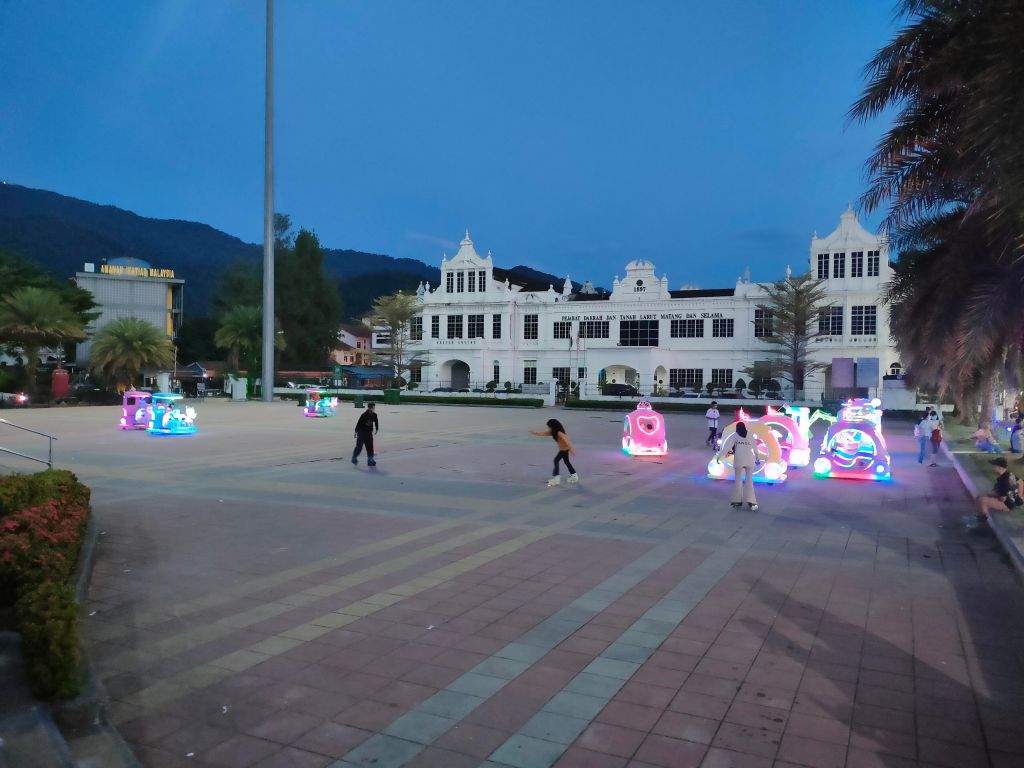
In the evening we went to the Dataran Warisan Taiping, the main public square. The land and district office across the square is a heritage building completed in 1897. Across the street was a lively market with many photo opportunities. As one of the first towns to be established by the colonials, Taiping has several other old institutions including the King Edward VII school and the St George’s institution. Our dinner was again at Nasi Kandar Pelita.

The Taiping Zoo was our primary focus the next morning. The zoo was established in 1961 and is the oldest zoo in the country. The zoo is spread over 36 acres and has over 180 species of animals. We opted to walk around the different enclosures. The orangutang were a major attraction as were the tigers and the giraffes. Animals have enough space to move around, and care has been taken to recreate their natural habitat as much as possible. The zoo also conducts a night safari with animals seen in lighting that replicates natural moonlight. We debated whether to take the night safari, but we did not have our own vehicle and we were not sure if taxis would still be operating at 11 pm when the safari ends. Discretion won and we stayed back in our hotel. 

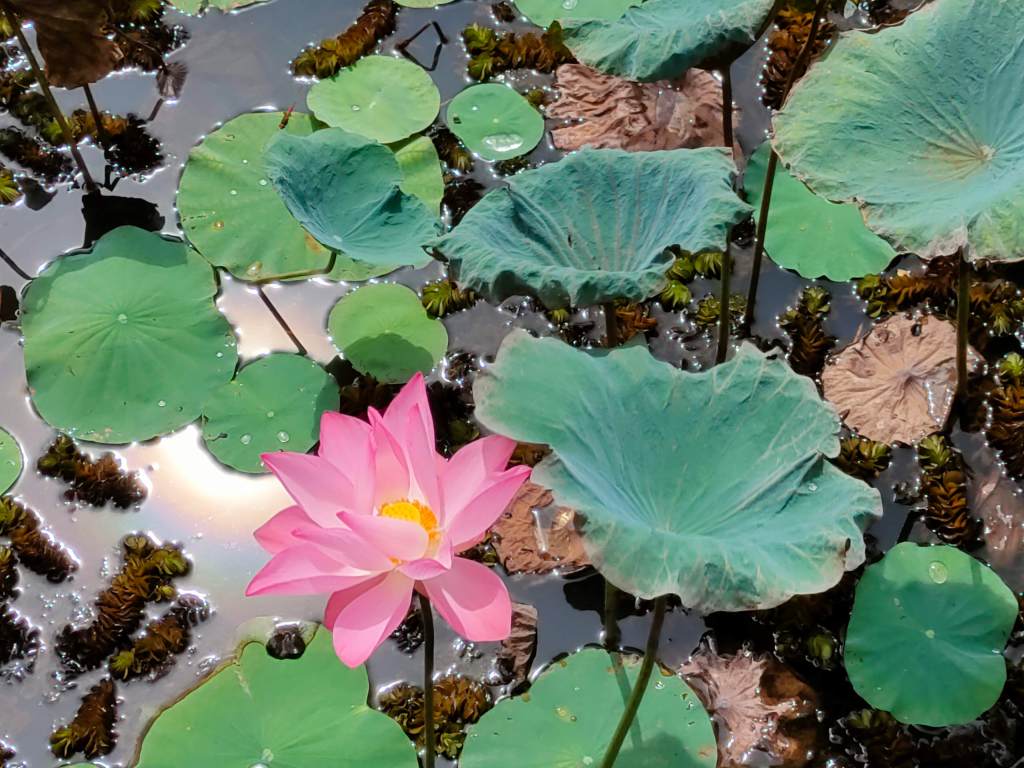
 After the zoo we went to the Lake Gardens in Kamunting. The gardens are still being developed. The Lotus flowers growing in muddy water are a major attraction at both lake gardens. In the evening, we went to the old railway station and were glad we did. The first railway in Malaysia was built in 1885 to the port of Kuala Sepatang to transport tin. The current old station was built in 1893. The old signalling equipment and the old photographs transport you back in time. Most of the station has been transformed into cafes. We had a wonderful cendol[1] at one of the cafes. Binaya was reminiscing about his university trip to Melaka. The girls in his student group had cendol while he stuck with watermelon juice. We also had a roti tisu [2]at one of the stalls and bamboo puttu[3]. Puttu never fails to transport me back to Kerala.

We were taking a bus to KL next morning. We went to the bus station at Kamunting but our bus was around twenty minutes late. The ride along the expressway was smooth as highways in Malaysia are excellent. We had spent a delightful three days in the oldest town in Malaysia with several firsts to its credit. The town is not on the circuit of most tourists but is well worth a visit due to its historic attractions, old architecture, the lake gardens, the zoo and the friendly people!  


[1] Iced dessert

[2] Sweet flatbread from Malaysia

[3] A South Indian food made of portioned rice and sweet or savoury filling

.

Dr. P Ravi Shankar is a faculty member at the IMU Centre for Education (ICE), International Medical University, Kuala Lumpur, Malaysia. He enjoys traveling and is a creative writer and photographer.

.

PLEASE NOTE: ARTICLES CAN ONLY BE REPRODUCED IN OTHER SITES WITH DUE ACKNOWLEDGEMENT TO BORDERLESS JOURNAL

Click here to access the Borderless anthology, Monalisa No Longer Smiles