Grief was something I thought I could run away from. If I created as much physical distance as I could from my place of loss, surely I could find healing. I had just lost my beautiful sister Stephanie after more than five decades of sisterhood and hoped that I could find healing in travelling to distant climes. There couldn’t be anywhere more distant than the Sierra Nevada Mountains in California. The time zone is sixteen hours behind Adelaide, and the season is contrasting. Surely by distancing myself in time and space I could recover from my grief.
My partner Alex’s chief pleasures are planting trees, sailing, and hiking. In the Sierra Nevada, he could indulge his passion for hiking. We arrived in the Sierra in early June and stayed in a cedar house surrounded by ponderosa pines, Douglas firs and junipers, yawning into the sky. Every day we planned a hike along the numerous trails winding through the mountains. Even in June, it was pleasantly cool. Alex lit a fire in the fireplace every evening, and I donned a thick jumper. On our third day, our chosen hike followed a trail alongside the northern shoreline of Shaver Lake.
“If a bear approaches, the worst thing you can do is run away. Hold your ground and shout at them. Otherwise, they will think you are prey,” warned Alex.
Till then, I had been enjoying my stroll through the mountains at an elevation of almost 1800 metres, and it never occurred to me that we could cross paths with a bear. In Australia we often crossed paths with kangaroos, who would hold our gaze for a few seconds before gracefully hopping away. I had never considered that wild animals could be predators. Then, on second thoughts, I thought it would be nice to see a bear, and with Alex alongside me, felt less vulnerable.
“You have encountered wild bears before in California, haven’t you?” I quizzed Alex.
“Oh yes, several times,” he confirmed.
“Wasn’t there one time when you were alarmed?”
“Yes. That was when I was hiking alone in Montana. They couldn’t hear me. If a bear can hear you, they are more likely to stay out of your way. Some people use whistles.”
I started scanning the hillside for signs of large moving creatures, but instead my attention was drawn to the abundant wildflowers that I had never seen in Australia. I noticed bright red flowers protruding beneath the huge pine trees, known as Snow plants.
Snow plant (Sarcodes sanguinea)
I kept longing to spot a bear, but instead continued to notice wildflowers. The most common wildflowers were sensed by smell before I sighted them, small creamy flowers with a heady fragrance of rich honey. I wished I could photograph the smell.
Buck brush (Ceanothus cuneatus)
The nearby town of Shaver Lake had been saved by the firefighters in the 2020 wildfire known as the Creek Fire, the largest fire in California’s history. You could see the line where the fire had been stopped. On one side were scarred mountains which had lost their vegetation, and on the other remained majestic pine and fir trees.
Fire Devastation
On the side that had been spared, some pink flowers, known as mountain pride, asserted themselves through a crack in a boulder.
Mountain pride (Penstemon newberry)
I had been looking for bears, but instead found myself in the midst of a North American spring. Splashes of colour of ever more exotic wildflowers emerged along the roadsides and the trails.
Path through the forest
My hope to overcome grief through travel to a distant land had been in vain. Moving from a southern hemispheric autumn to a northern spring, and moving back sixteen hours in time to yesterday, was not enough to relieve me of my mourning. I missed phone calls and text messages from my sister Stephanie, and especially the opportunity to recount the tales of my travels when I returned home. Stephanie was my most avid listener, and never expressed any envy when I regaled my travel tales. Her concentration propelled me to provide ever more details of my travels. Now, I honour her memory by continuing to pursue the kinds of activities that she took delight in and writing the kinds of stories that she enjoyed.
In Loving Memory of Stephanie, Entrusted to God’s Care
Meredith Stephens is an applied linguist from South Australia. Her work has appeared in Transnational Literature, The Muse, The Font – A Literary Journal for Language Teachers, The Journal of Literature in Language Teaching, The Writers’ and Readers’ Magazine, Reading in a Foreign Language, and in chapters in anthologies published by Demeter Press, Canada.
PLEASE NOTE: ARTICLES CAN ONLY BE REPRODUCED IN OTHER SITES WITH DUE ACKNOWLEDGEMENT TO BORDERLESS JOURNAL
the colour of love

an astrophysicist friend once told me
that in his field, red is cold and blue is hot
-- that a red giant in much colder
than a blue ring nebula --
that’s when I realised
why your roses never impressed me
Priya Narayanan’s poems and stories have found home in various anthologies and literary journals. In a parallel universe, she is an interior architect straddling the professional and academic worlds of design with equal passion.
.
PLEASE NOTE: ARTICLES CAN ONLY BE REPRODUCED IN OTHER SITES WITH DUE ACKNOWLEDGEMENT TO BORDERLESS JOURNAL
With its four-storey outlet in GK-2, Ajay Jain has made Kunzum the new happening place for book lovers in Delhi-NCR. He converses with Shantanu Ray Chaudhuri about his journey and about making brick and mortar stores viable in the era of Amazon as the writer browses through the different sections of the bookstore.
Book event with actor, Kabir BediBook event with Booker winner, Geetanjali ShreeIn Kunzum Bookstore. Photos provided by Shantanu Ray Chaudhuri
It is a bookstore unlike any I have been to, and that’s saying a lot. I visited it first sometime in December 2022, when it was still a work in progress, and even then it was stunning enough for me to get my aged parents, who need walking sticks, and my wife, who at the time was nursing a broken ankle, to visit this as a new year outing on 1 January 2023. Since then Kunzum at M Block Market, Greater Kailash 2, New Delhi, has grown to four floors spread over 10,000 square feet. The first floor is the regular bookstore, the second the Penguin bookstore. The third the ‘Theatre Kunzum’ – a 125-seater events hall – and the fourth an eighty-seater theatre, with plans for a café. There are other Kunzum bookstores which are a more modest 2500 square feet each. The original Kunzum Travel Café is approximately 500 square feet.
I enter it and am transported to a book lover’s paradise. Its very affable owner, Ajay Jain, and brilliant curator, Subir Dey – who generates in me a huge complex with his awareness of books and a hole in my pocket with his recommendations for the same – have time and again asked me to work out of the store. Which I would have gladly done, but for the fact that, one, it is impossible to get any work done once you enter its precincts (the only work it allows is browsing its shelves), and, two, I fear that I will end up spending all my salary at the store.
What makes it remarkable is that Ajay can visualise a store chain like this in this day and age where we hear a constant refrain of brick and mortar stores closing down. Of how difficult it is to sustain one in the age of Amazon. Most of the major bookstores across the country have devoted a large part of the space to stationery and toys. Ajay is determined not to do that. As far as he is concerned, a bookstore is a bookstore. And there will be no dilution of the space. As Ajay says, “I was very clear from day one. We will not sell teddy bears, stationary, croissants (chuckles). It might be a slightly steeper learning curve, but we want to learn how to sell more books. If I’m not selling enough books, why am I in this business? I could have invested this money somewhere else. For me, it’s a social mission to push more people to read. If everyone, every human being on this planet, reads books, it would be a much better place to live in. When we read books, we also challenge rampant consumerism – we are taking the money away from buying other stuff to buy books.”
Given the quite extraordinary range of books, including rare and collectors’ editions – I picked myself a mind-blowing one on iconic book covers, The Look of the Book, by Peter Mendelsund and David Alworth – Subir Dey, the curator, is the backroom star of the show. A quiet, self-effacing book lover, Subir says, “I have been doing this for myself, at home, before Ajay started the bookshops. One day, I just picked up the phone and asked him, how can I help? Then, there is the community angle. I talk to fellow bibliophiles both online and offline who point out all the amazing editions of great books. The curation team at Kunzum is indispensable. Everyone has their favourite genre and we all diligently keep track. The classics and graphic novels are an easy target because of their popularity. Then there are collected works and anniversary/commemorative editions that we try to keep track of. Publishers help us with that too. For example, the Dune series picked up when the new movie came out. There are so many beautiful editions of the book that it is hard to choose. There are graphic adaptations of long-form novels like 1984, Animal Farm, The Kite Runner that we tracked down and have in stock. These are great books for someone who is intimidated by the traditional long-form novel format. This could be their gateway drug into reading and Kunzum would love to get them addicted. Special editions are a brilliant gifting idea. Books are the best gift you can give to people. Most of us have friends who are avid readers. These special editions are a very thoughtful gift. We tell our customers to bring a book to a party full of people who are bringing bottles of wine. We all used to give and receive books as gifts, growing up. Those books shaped our worldview. We are rolling out ads on social media to highlight the special editions available with us and pretty soon you will see more of these titles highlighted not just online but in our stores too. There is a demand for it, we have seen an uptick in the interest among buyers who are looking for specific edition of their favourite books and our team is happy to track them down.”
The Beginnings
Ajay Jain: I have a background in engineering and management, so I worked in the IT industry for five years. Then I got into sports management, and did that for five years. At the age of 31, I dropped everything and moved to the UK to study journalism. I did my master’s in journalism there. I came back in 2002, worked for the Express group, started a youth newspaper, got into blogging and freelance writing – mostly business and tech writing – which I did till about 2006–07. I was one of the earliest professional bloggers in the world. As a journalist/blogger/ influencer (the word wasn’t there at the time), and as somebody who wanted to write books, I figured I wanted to do something where I could create more of a legacy.
Early Reading
Ajay Jain: Growing up, I read the usual staple. You had your Enid Blyton, Nancy Drew, Hardy Boys, Famous Five. Unlike my classmates, I never read Agatha Christie or PG Wodehouse, but I had read all of James Hadley Chase by the time I was in Class 8. My headmaster used to ask me why I was borrowing these books from the library. I did so because they were there! I read a whole mixed bag of books in middle school and high school, even in college. I read Sidney Sheldon, Jeffrey Archer, Ayn Rand – a mixed bag. Anything that caught my fancy.
Travel Writing
Ajay Jain: Around 2007, at a personal and professional crossroads and unable to relocate from Delhi, I said to myself, ‘Okay, let me do the next best thing,’ and I became a travel writer. I’d done a few short road trips around India, and I was really enjoying travelling. Since I’d also learnt photography, I was doing a lot of that. I thought, why not make it a profession? So I hit the road.
I didn’t want to write a Lonely Planet kind of book, and I also didn’t want it to be a literary piece. I was thinking of my own format. The first trip I actually went on was to this place called Spiti in Himachal. I spent a night in Manali, and then headed for Spiti. I crossed the Rohtang Pass. Till then, it was fine because there were other people. I’d never done that kind of terrain ever. I drove for hours in a high-altitude desert area with no road signs, no mobile signals, nothing! Just a track where you followed earlier track marks. After a while I realised I was lost!
The Defining Moment – the Birth of Kunzum
Ajay Jain: I just kept driving, not coming across another human being for hours. Imagine not seeing another human being for hours in a country like India. Suddenly I came upon a plateau, upon a sign that said ‘Kaza’, which was where I was headed! That spot, where I stood, was the most astounding place. As I looked around, the only thing I saw was snow peaks, Buddhist flags flying, complete silence. It was breath-taking. I thought to myself, if this is what the planet is, if this is what India is, I want to be a travel writer. In that moment, not only did I find my direction to Kaza, I found my direction in life as well. The spot where I stood was Kunzum-La.
After I returned, I called my blog Kunzum.com. A little accident in technology worked in my favour. I had reserved the domain called traveltattoo.com as my travel blog. For some reason, the registrar didn’t inform me that my domain was up for renewal. It got taken by someone else. In losing traveltattoo.com, I got Kunzum.com. That’s how the name Kunzum came up.
Kunzum Gallery, Hauz Khas Village
Ajay Jain: I did a few shows for my photography at places like Habitat Centre and got a decent response. I was encouraged to open a place of my own and came across a place in Hauz Khas Village. I picked it up in 2009 and opened up a gallery there. On the first day I sold a print, and then for the next year or so I didn’t sell a single thing! So, I was just sitting there with some friends, mulling over what to do, and we realised that all the people who bought my prints in Habitat just happened to be passing by. They saw the prints, they liked it, and bought it on the spot because the prints weren’t very expensive. I decided to do something there (in the gallery in Hauz Khas) that would get people in. That’s when we decided to offer seating in the gallery- let people come in, enjoy free WiFi, etc.
We set up a small library so that people could borrow books, and decided to serve up tea, coffee and cookies. We thought we could pay for all of this. When we looked at the numbers (and crunched them), we realised that if we pay for everything and a certain number of people come, and nobody pays, we will be out of pocket by so much, but will have acquired some customers for that price of coffee and cookies and all.
Funding the Enterprise
Ajay Jain: I was still freelancing, and had been investing over the years with whatever I’d saved from my various ventures. I was just getting by. We decided to rebrand the place in Hauz Khas from Kunzum Gallery to Kunzum Travel Café. The place took a life of its own. A few days after we opened, someone came in asking if we could do a poetry reading, to which I agreed. Before we knew it, we had over 200 events happening in the café every year. There were all sorts of events – book launches, film screenings, poetry events, talks, etc.
We were clear about the financials. If you benefited commercially from it, you pay us. If there was nothing commercial, if you didn’t have the budget, okay, you could use the space anyway (if the event was suitable). We kept it flexible. My main motivation was to get people in, to see my photography and my books, which were sold at the café.
Bookstore Chain in the Time of Amazon
Ajay Jain: During the pandemic, I was reassessing a lot of things. I have always believed that just because we are doing something well, we should not be doing it all our lives. With the pandemic, I had to shut Kunzum Café for over two years, making do with a skeletal staff throughout. I wrote my first novel. I kept wondering: how do I find an audience for my books? No matter how big your publishers are, or how big you are as an author, you still need to find your own readership. Then I thought, why don’t I set up a book club? A national book club, something that would have many people. The response came in quickly as well. I enrolled a couple of thousand members.
That’s when I thought, why don’t I turn Kunzum Travel Café into a chain of reading rooms? Build a model where we create reading rooms across the country, where people come and sit and read. The numbers didn’t add up though. There was no model that would make this sustainable for me. Enough people wouldn’t pay enough money to make this a library-type of model. It wouldn’t work in this climate, especially when real-estate had become so expensive. I had learnt how to build a community, how to bring people together through Kunzum Travel Café, but I didn’t know how to monetise it.
People had asked me, will there be more Kunzum Travel Cafes? Will there be a Kunzum Travel Café franchise? For me, Kunzum Travel Café was more of an exercise in personal branding. For the external investor, there would be no ROI since the only one benefiting from Kunzum Café was one Ajay Jain. In the process, I started making money doing brand endorsements through Kunzum Travel Café. It was more like a PR agency, so the only guy benefiting would have been me.
That is when I realised I should open a chain of bookshops! The model would be Kunzum Travel Café, but with a bookshop added to it. I did some back-of-the-envelope market research. There were people buying books, publishers doing business. In absolute numbers, there were more books being sold than ever before. I went to the bookshops which had good business – like Bahrisons, Faqir Chand, Midlands, etc. They had a huge legacy and were located in prime locations. I figured that I’d learnt how to make Kunzum Café in Hauz Khas a destination, and that I’d make this new venture a destination also. I didn’t really feel too daunted by this, I knew we’d figure things out as we went along. If I started asking too many questions, I would have been dissuaded immediately, so I thought that I’d figure it out on the road.
We have five locations. The GK one has four floors, so you can consider them either four stores or just one. At the core, the business model is simple – sell books, and sell enough books to make a profit. It’s still early days for us, we are on the way as we speak. I know that trends are right, and within this year we will be operationally profitable, so I’m not too worried about that.
I did a bit of reading, given that stores were closing all over the world, and the rise of Amazon. If Amazon did not exist, or if Amazon did not offer such discounts, many more bookshops would be open today. People would still prefer to walk into a bookstore for the experience of buying a book over buying it online. Because Amazon offers such discounts, most people think books are easier to buy online. I blame publishers squarely for this, not Amazon.
The Irony of Publishers Killing Bookstores
Ajay Jain: If books and readership are being challenged by other forms of entertainment, and readers are distracted, one needs to look at this as something cultural. That’s why experiences become important. Experiences are connected to physical spaces. That’s how you expand readership. Unfortunately, when I started interacting with publishers, I noticed that they show little intent to expand readership in society. They are making enough money not to think about expanding readership. It’s not enough for publishers to tell me, “Hey, I love what you’re doing at Kunzum Café.” They need to plug the discounting at Amazon, and the piracy of books. More than piracy, I think the discounting is a problem, which publishers can solve partly through lobbying, and partly through curtailing supply, if they want to. They own the product, and if they say no, that can change things.
The publishers’ argument is that they give the books to distributors to be sold, and these distributors are not within their control. The fact is, everyone is traceable. Publishers know who is selling their books, and can plug supply. If a reseller picked up a book on Amazon to resell, the publisher could tell Amazon to stop them. It could get into a cat-and-mouse game but eventually, it would dissuade them so much that the incentive to play this game would go down.
France Shows the Way
Ajay Jain: Look at what happened in France. The government in France forbade Amazon from offering discounts of more than 5 per cent on books. The French government realised bookshops were a national cultural asset. Because of this, bookshops that were struggling are now flourishing, and new bookshops are opening. This change came through legislation.
In India, if publishers want, they can move the Competition Commission, and say that discounting on Amazon is an unfair trade practice. In a country like India, where you have the MRP [Maximum Retail Price], if you can’t sell above MRP, how can you sell below MRP? Especially because all governments in India have the same stated position on FDI [Foreign Direct Investment] in retail, which is to ‘protect the small trader’. So, Competition Commission could look at how these discounting practices are putting businesses in such a precarious situation. If the publishers make enough of a song-and-dance about it, if they lobbied, if they took legal recourse, I think this issue can be resolved. We have a precedent in France now.
Financial Viability
Ajay Jain: When I was doing research, I wasn’t researching into whether I could open bookshops or not. I was researching how to make it viable. I had already decided I was going to commit to this venture. I’d started acquiring the real estate for it. I read someplace, “Bookshops don’t fail. Bookshops run by lazy booksellers fail.” In today’s day and age, not just books, you have to sell every commodity as an experience. You could be selling shirts, shoes, books, anything, because everything you want is available online. But if you want people to come to the stores, shopping malls, markets, you need to create that experience for people.
The Four Cs of Bookshop Design and Marketing
Ajay Jain: I have formulated what I call ‘The Four Cs of Bookshop Design and Marketing’. First is Configuration, which is basically the way you design the stores. If you look around, we’ve designed them in a way that the shelves don’t overwhelm you. There is enough space to move around, to sit down, to go through the books. You have browsing space and you can maintain a distance between yourself and the shelves. Not only is the vibe inviting, the design also allows you to discover books which you may not have discovered in an overstocked bookstore. The whole mood of being inside a bookstore is extremely important.
The second C is Curation. The kind of titles we select, the way we display them, and the way we help customers discover new material. Finding books customers were not looking for makes for a delightful experience. That is what will bring them back. These customers will say, “Hey, you know what? I went to Kunzum and found this great book! I loved it. It was money well-spent and time well-spent.” This is where Subir and his team come in.
The third C is Community, which we were doing at Kunzum Travel Café. We wanted to build a community of not just readers, but creators – writers, artists, designers, editors, everyone involved in creating books. Again, like Kunzum Travel Café, look at it like a larger cultural thing. So, bring in musicians, film-makers, puppeteers! We wanted to bring these people together to create a community.
The fourth C, Convene, aims to bring these people together for events. Ever since we’ve been fully operational, we’ve already hosted over 500 authors. We’re adding many more events, more programming, more partnerships, so that people can come and use our spaces. We make sure that there is enough space for people at our events, and that people don’t have to push bookshelves in order to be able to participate. We have dedicated spaces for events.
Since many people in my team come from the book retail industry, when the first store opened, the first question they asked was, “Sir, haven’t you wasted a lot of space?” The event space is going to be your brand ambassadors, your marketing agents. People will want to come for these events. We built the whole model on these four Cs. The signs are positive. People will come and talk about you, and be here, and will want to buy books from you. It’s just a matter of time before enough people will buy these books.
The Penguin Floor and Other Initiatives
The Penguin floor
Ajay Jain: In GK 2 we had just one floor, the first floor, a general bookstore, to begin with. Then an opportunity came to acquire the rest of the building above. Because the terms were attractive, I agreed. Then I thought, why not have thematic floors? One thought was that half of the second floor could be a graphic comic and art store, and the other half would be for children’s books, with the rest of the spaces above being dedicated to events. I was in the Penguin office having a general talk about multiple things. I really loved their office, so I said, “Look, it’s like a bookstore in itself.” I proposed that we should have an exclusive Penguin store. Penguin is one publisher with such range and distribution in books, no other publisher has ever come close. Their international collection is only increasing, and they have so much to offer. I don’t think the exclusive floor in our bookshop would have worked with any other publisher, just because no other publisher can offer the range Penguin has. They have graphic novels and comics – an important genre for us.
Then we got an offer from the top management, and I got excited. Like everything else in life, I ran with the idea, and decided to work out the viability later. The idea is that our bookshop showcases the best Penguin has to offer, incentivising Penguin to bring in their best in terms of their programming, their authors, and their events. It technically becomes a Penguin showcase. For us, it’s an opportunity to work closer with the world’s biggest publishing house. A few weeks ago, the UK Penguin team confirmed to me that this (the floor of the bookshop) was the only exclusive Penguin store in the world.
As part of a community, we’ve actually taken a lot of initiatives. One of them is called Book Bees, which is a book club for children, for kids up to twelve. Our children’s book section is called Kunzum Book Bees now. We also have a general book club called the Kunzum Book Club. Anyone can become a member for free. If you become a member, you get priority invites to events, we will give you first access to signed editions, which are always in limited supply; we will give you a little discount on our books, stuff like that. That’s part of the community-building exercise.
We launched the Kunzum CEO Book Club, where we’re getting corporates to come on board to encourage the culture of reading. The proposition being that all leaders are readers. If you want to nurture leadership within your organisation, you need to promote readership. We’re reaching out to them, asking them to buy books on a structured basis to distribute them amongst their employees, and maybe go even beyond that, by distributing them amongst their vendors, their customers, to spread the culture of reading.
We launched this programme called ‘Kunzum Key’ which is open to everyone, but primarily for creators of all kinds. You could be an actor, a dancer, a film-maker, a producer, an event-manager, a musician, anything! We give a free membership card that allows them to create at Kunzum – keep their own sort-of-office as long as they follow a fair-use policy. These creators can come, sit here, do their work, hold meetings, have interactions, brainstorm, showcase their work in some way. They will be offered free WiFi, which we don’t offer our regular customers. Every time these creators come they will be given a no-questions-asked complimentary cup of coffee or tea, and the bookstore will give them a very hefty 20 per cent discount on all the books they buy at the store.
Then there are the lit-fests. We are reaching out to every possible event where there are likely to be people who will buy books. We are asking them to make us their official bookstore partner.
Reaching Out to the Underprivileged
There’s a limitation to how many bookstores we can set up and how much we can do in each store. We don’t want to expand our physical spaces indiscriminately because we want to stay true to the culture we are trying to create. If we expand too much, or thin ourselves out, even if we get funding, which comes with its own pressures, we don’t want to lose our essence.
Our idea of expansion is to take Kunzum to potential readers. The corporate sector is a very obvious one. We’ve started doing small book fairs and events at different localities to promote the culture of books and reading at your doorstep. Schools and colleges are important to us. The intent is there. We’ve already reached out to a few schools, some of the DAV schools, where we did some events. There’s around a thousand schools there. Each school in the DAV chain cuts across all segments of society. We’ve also been approached by a few universities and colleges. We have a limitation of manpower. We want to make sure our manpower can pay for itself. We want to reach out to schools to, again, promote this culture of reading. If schools start buying at an institutional level from us, they can make books available for students who are not able to afford books. That’s where, again, we go back to the whole ethos of ‘Curation’ we are trying to create. Don’t just buy books that you think everyone is reading for the sake of being like everyone else. We’ll help you select books that you may not have thought of. I have been thinking of a programme where enthusiastic readers who are unable to afford books can be matched with someone who could fund their books. Of course, we will have to do it in a slightly more structured way. When I meet anyone from above a certain economic stratum, I see how privileged they are because they can afford to buy books but they are not reading books. There are people out there who want to read books…
At an LGTBQIA event that we had done, a guest who loves books said she couldn’t read anymore because of an eyesight problem. There was another young person there who wanted to read books but could not afford to buy. They just got chatting, they’d never met each other, and the former bought the book for the latter. She said, “I can’t read, but you can, so here’s the book for you.” How do we kind of institutionalise this programme? We’ll have to figure it out.
Regional Language Library
There are a couple of issues here. We will have a space constraint – where do we store it? Number two, how would we curate it? Because every language would require a different curator. In a city like Delhi, there would be enough Telugu readers, Bengali readers. But then, Bengali readers may want something other than the popular titles we might store. They might be looking for a larger collection. A lot of vernacular readers invest a lot in their respective languages. We might not be able to build depth to cater to that audience, so that’s a challenging situation to be in.
Going Ahead
We want to be present in every community – corporates, residential neighbourhoods, schools and colleges, etc. In a small way, we are sending books to rural areas too. For that to pick up pace, we need to look at it slightly differently. For now, we’re doing it in our small capacity. The whole idea is, irrespective of how many stores we have, we just want to go out there and get more people to read. Whether they borrow books and read, or buy books from Kunzum or not, let that be secondary. It falls upon every book lover to spread the good word, and encourage other people to read. Once you overcome that inertia and start reading, you stay with it.
Ajay Jain in Kunzum Bookstore
(Published in multiple sites)
Shantanu Ray Chaudhuriis a film buff, editor, publisher, film critic and writer. Books commissioned and edited by him have won the National Award for Best Book on Cinema twice and the inaugural MAMI (Mumbai Academy of Moving Images) Award for Best Writing on Cinema. In 2017, he was named Editor of the Year by the apex publishing body, Publishing Next. He has contributed to a number of magazines and websites like The Daily Eye, Cinemaazi, Film Companion, The Wire, Outlook, The Taj, and others. He is the author of two books: Whims – A Book of Poems(published by Writers Workshop) and Icons from Bollywood (published by Penguin/Puffin).
Tell me what to feel!
Please tell me what I should feel!
I read an obit this morning,
I need help!
I knew this person,
Worked for him,
Was a buffer for him.
Tried to keep his craziness from becoming an infection.
I should forgive him.
It is supposed to be a good thing to do.
For me, I don’t understand forgiveness,
Besides, I’m not the one his example killed,
I’m not the surviving family, only a surrogate.
The social environment protected him – but not the rest of us.
Now I know. Now I’m smarter. Now I know it was fuelled by alcohol.
I should have been smarter then, stronger.
I should have always been smarter.
I should be smarter today –
It’s been fifty years now, so
Tell me what should I feel!
Ron Pickett is a retired naval aviator with over 250 combat missions and 500 carrier landings. His 90-plus articles have appeared in numerous publications. He enjoys writing fiction and has published five books: Perfect Crimes – I Got Away with It, Discovering Roots, Getting Published, EMPATHS, and Sixty Odd Short Stories.
.
PLEASE NOTE: ARTICLES CAN ONLY BE REPRODUCED IN OTHER SITES WITH DUE ACKNOWLEDGEMENT TO BORDERLESS JOURNAL
Not being a fan of spices and sourness, the only pickle I liked while growing up was my maternal grandmother’s oil-free lemon pickle. It used to be a staple at her house. I took special pleasure in fishing out entire globes of fleshy, marinated lemons out of the glass jar. Others would use the steel spoon to cut out smaller pieces, while I struggled to bite into the whole lemons, fearing such an attempt would ruin the appeal of the perfectly pickled, fading yellow lemon globules. One could have it with any meal. It would liven up the simplest dal-bhaat[1]as easily as it would ensure the swift return of lost appetite. The jar would sit on my grandparents’ dining table by the window, from which the afternoon sun would regularly macerate the tangy mix. It was probably the most faithful witness to all our conversations. Looking back, I feel the pickle jar was never not full. Did didun[2] stash away secret batches to quickly replace the empty jars?
It was not until I was in university, having gone back to my grandparents’ house in my hometown to do fieldwork for my master’s dissertation, that I fully acknowledged the existence of the pickle that I so loved and had come to associate with my grandmother, as something that required making! This visit was my only solo stay with my grandparents and I felt the need to ask my grandmother for the pickle recipe. I had little experience with cooking back then, but even so the recipe sounded fairly easy.
She asked me to pick out blemish-free lemons, preferably thin-skinned ones, and make an x incision from the crown to the bottom, but not all the way. A bit of skin and flesh would hold the sliced-open lemon together. The gashes needed to be stuffed with salt. Then, the lemons had to be crammed into a dry glass jar – however many together as tightly as possible. Then one needed to sprinkle more salt on top and generously shower the lemons with lemon juice till they would be fully immersed in the solution. Then the jar needed to be placed in a sunny spot for a week or so, by which time the lemon rind should have taken on a paler, translucent complexion. The salt would have dissolved entirely, leaving a sticky, viscous marinade in its place. You could keep this for years, my grandmother told me. And that made sense; no wonder she always had some at home. I promised myself that I would make it as soon as I got back home.
I didn’t make the pickle for years. Didun passed away only three months later. Life took over and I forgot about the pickle. When I visited my grandfather after didun‘s passing, he still had the pickle jar sitting on the dining table. It was oddly shocking to see this. I felt like I had transgressed into an unspoken private understanding that my grandfather shared with his late wife. In retaining a jar of pickles prepared by her, he had in a small way kept a part of her with him. She would have had sterilised this very jar with scalding water, wiped it with a dry cloth and kept it in the sun to dry it completely. She must have picked out the lemons that would make for the perfect pickle – thin-skinned or else it could become bitter. Before stuffing them into the jar, she would have pushed back her gold bangles further into her arms, and held her breathe to keep any moisture from getting into the ingredients. Once done with the stuffing and juicing, she would have wiped the outside of the jar and placed it on the choicest spot meant to get the most sun. That afternoon when dadubhai and I sat for lunch, he gestured me to take out some pickle for him. It felt wrong to ingest something that had been prepared by someone who didn’t exist anymore. And so, I came to associate the pickle with loss, not of my grandmother but loss in general – of childhood mates, cousins I couldn’t speak to anymore, relatives that had passed on, and worst of all, the knowledge of impending, eventual, inevitable loss.
The years went on and I didn’t find myself wanting to taste the pickle. The jar, too, had disappeared from its usual place of prominence on the dining table. It was replaced by my ailing grandfather’s many medical supplements. Then he too passed on and the difficult task of sifting through his belongings fell on my mother and me. As we tackled one room after another, we found many curious items: books from her childhood which had clearly been the cause of fights between her and her elder sister; an old camera with which I had clicked photos of my new-born brother; animal hide from a time when it wasn’t illegal to possess one. Then came the most sparsely stocked room of all, the puja room, which had come to be used as a small larder of sorts, apart from its designated purpose of worship. I found sitting on a shelf here, a pickle jar, still containing some bit of the pickle prepared by didun. The mixture had turned a dark brown colour and was probably inedible. At least ten years had passed since it had been made. Maa pointed out that it was indeed the same jar, I nodded in acknowledgement. I didn’t know what to make of any of it. As if it wasn’t difficult enough to rifle through the mundane intimacy that is a couple’s possessions – shongshar[3], a universe unto itself – and deciding on what to retain for sentimental value, what to give away, and what to deem apt for the municipal garbage bin. Now this! I knew what I had to do with a jar of spoilt pickle. There was no point in pondering when we had each taken a designated number of days off from our jobs to be here to declutter the house.
For the rest of the stay our emotions plateaued and peaked, but we went ahead with what had to be done. Dadubhai had been gone for one year at this point and I could feel the final severing of my ties with what felt like the first act of my life.
I returned back to Delhi. The rhythm of my routine took over for good. A month later, while completely immersed in writing up chapters for my research project, I found myself on a hunt for the perfect glass jar to make pickles in. Unlike what I had imagined, it was no great coming to when I decided to make my grandmother’s famous lemon pickle at what it now my temporary home away from every person that feels like home. I couldn’t manage to find a jar I liked. The lemons I had ordered online had already been delivered and was sitting in my refrigerator. Sensing I was going to pass on the plan yet again, I started going through my cupboard in search of a suitable substitute. I had a small glass jar with a red plastic lid, which had been the receptacle of some delicious chutney from my husband’s colleague at work. I decided that would have to do. The lemons that were delivered to me were neither thin-skinned, nor uniformly sized, and worst of all they weren’t even chosen by me! But they would have to do. I processed the lemons, filled the gashes with salt, stuffed them into the small container, and filled it to the brim with salt and lemon juice.
It’s been a week since I made the mix and I tasted it with a bit of simple khichdi[4]and aloo bhaja[5]. The rinds were a bit bitter and not quite translucent yet, but this would have to do. Next month, when I meet my mother in my hometown for the housewarming of our new home, I want her to taste it. Does it make her remember things she could have sworn she had forgotten?
ECLIPSE

Sometimes I pencil an octave across
the sky, when it grows blue, I sense
the sea burn and blisters on my skin.
When I was younger, I used to wonder
why seagulls in certain oceans had to

sound like falcons toward the onset
of autumn. I belong to that ocean where
Odysseus returned to Ithaca slaying
the lotophagi. Borne of thought,
in the cast of Pallas, we could persuade

Neptune without a disguise or Ravan
without burning the island. Yet a woman
has to grow into a blood moon sometimes,
grow an arc to leap across the tides.
At one point she would cross the boundaries

of Earth and eclipse the shadows lurking
around the horizon. On the last day
of spring,  hyacinths grow by the lagoon of
rancour in the promise of redemption. I wonder
how the female dragonfly deals with the times

she feels the need to rise beyond the lake
and go right into the moon’s cold breath.
Frozen in her words, I wonder how the female
centipede meets with an earthquake,
in deep meditation inside the hollow of the oak tree.
Smitha Sehgal is a legal professional in Govt of India CPSE and a bilingual poet who writes in English and Malayalam. Her poems have been featured in contemporary literary publications such as Usawa Literary Journal, EKL Review, Madras Courier, Ink Sweat & Tears and elsewhere.
PLEASE NOTE: ARTICLES CAN ONLY BE REPRODUCED IN OTHER SITES WITH DUE ACKNOWLEDGEMENT TO BORDERLESS JOURNAL
Art installation inspired by Métis artist Jaime Black at Seaforth Peace Park, Vancouver, on the National Day (May 5th) in Canada for Vigils for Missing and Murdered Indigenous Women. Courtesy: Creative Commons
There doesn’t seem to be a sudden red announcement
of anything, this single red shirt hung from a pine tree
on one of my many walks that could end up anywhere
this side of warring night goggle asymmetry
and sliming my strapped way back down to Axmith Drive
I christen distressed jean slugs come out of shell,
reverse Dante out of Hell
from those many paved drives back up on Richardson
that would rather see the world fold in on itself
like amateur origami before whale blubber lipstick
from the tube ever dries to the side of a
face worth kissing.
Ryan Quinn Flanagan is a Canadian-born author residing in Elliot Lake, Ontario, Canada with his wife and many bears that rifle through his garbage. His work can be found both in print and online in such places as: Evergreen Review, The New York Quarterly, Borderless Journal, GloMag, Red Fez, and Lothlorien Poetry Journal.
.
PLEASE NOTE: ARTICLES CAN ONLY BE REPRODUCED IN OTHER SITES WITH DUE ACKNOWLEDGEMENT TO BORDERLESS JOURNAL
Title: Behind Latticed Marble: Inner Worlds of Women
Author: Jyotirmoyee Devi Sen, translated from Bengali by Apala G. Egan
New Delhi: Niyogi Books
The very mention of the name of Jyotirmoyee Devi (1894 – 1988) brings to our mind the strong feminist Bengali writer, author of the famous Partition novel, Epar Ganga Opar Ganga (The River Churning), mainly depicted the lives of the women in Bengal who bore the burden of this communal divide, their bodies being inflicted with sexual violence, rape, and social exclusion as a consequence to the former two. Owing to the dearth in the literature that records such gruesome atrocities that were inflicted upon women, till date her work is extremely important. This present anthology however focuses on a totally different perspective of the writer where she tells us interesting stories about the life of the women and little girls of Rajasthan, and the discriminatory gender and caste norms that policed and defined their existence.
Jyotirmoyee Devi was born in Jaipur in an upper-caste and economically well-off family. Her grandfather, who had emigrated there from Bengal during the British Raj, rose to occupy a high administrative position as the dewan or prime minister to the Maharaja of Jaipur. Thus, Rajasthan had a profound impact on her writings in the later years. Not being given an opportunity for formal education, her sole means to establish a relationship with reading became her grandfather’s library where she, along with her sister, were assigned to arrange newly arrived books and magazines. Therefore, even though she was a little girl, she attempted to make use of her multiple privileges that could help her access books and writing material. Married at the age of ten and widowed at twenty-five, she returned to her parents’ home along with her children and became a prolific writer during her long period of widowhood.
The ten fictional narratives in this anthology are all set in Rajasthan, and they create an elegant tapestry amidst the backdrop of Rajput grandeur and chivalry. Based on an eyewitness account of life in royal harems, these stories describe the very human interaction between men and women in this milieu. They highlight power play, disinheritance, and the threat of assault, which are perennial concerns for women. These include fascinating narration about the machinations that went on inside the royal households, as well as stories which tells us the plight of the veiled women in different strata of society. For instance, in “Beneath the Aravalli Hills,” a young village girl Dhapi disappears in the city where her father sold her for two hundred rupees. She is kept in a harem and punished for entering the festive hall without permission, she ends her life in prison. In “Frame Up” when the king dies, there is a heavy pall of suspicion in the kingdom that the queen had murdered him. Two decades later, when she is on her deathbed, she calls her son to tell him that the harem housekeeper and the chief eunuch had hatched a plot to kill his father but the young king walks away without acknowledging his mother’s innocence. In “The Child Bride” we read about the plight of a young widow Kesar whose jewellery is unlawfully snatched from her by the in-laws and she spends the rest of her life in poverty by serving like other destitute widows in the Govindji temple at Vrindavan.
Women-centric issues also recur in a story called “The Queen and the Concubine” where despite having plenty of riches befitting the Rajput royals, the ladies muse secret sorrows since their husbands, seldom, if ever, visited them. They spent their time in their sumptuous villas by holding pageants, dance dramas, and musical soirees. It tells the story of how the protagonist Kesar moved to the king’s harem upon his desire, metamorphosed from a mere maid to a courtesan, till she was burnt to death in the end. As per the rules of the state, sons of courtesans and concubines also lived luxurious and leisure lives, but somehow there always existed a fine dividing line between these men and the real heir to the throne. “The Taint” tells us of the king’s youngest son Samudra, who after receiving college education decides to take up a simple job in the British Indian army while his father arranges for his marriage with plenty of dowry albeit without his consent.
The human side of man is beautifully expressed in “Ungendered” where the royal eunuch decides not to have an heir and lets two young boys live a normal man’s life. Several other stories reiterate tragic tales of women in purdah and how many of them reach unfortunate ends when they try to escape from the strict socially imposed patriarchal norms that keep them totally voiceless. “The Princess Baby” (Beti ka Baap or Father of a daughter) calls for attention towards the evil of female infanticide by feeding them with an overdose of opium and focus on the limited social interactions allowed to young women. Though sometimes repetitive, the stories overall try and tell us about the miserable plight of women in Rajasthan, whether they were commoners or part of the royalty.
Before concluding, a few words about the translation. This anthology contains ten stories, each of which had been translated and published in different journals abroad (nine in different American journals and one in Turkey) before collating them into this present volume. The translator, residing in the USA, obviously had the western reader in mind and sometimes several complicated and difficult words and phrases are used probably to remain politically correct to the original text. But what this reviewer finds problematic is the introduction by the author. Who are the targeted readers? In her introduction, she mentions at random women’s issues from around the world and in different ages one wonders why the context of the stories translated here is not provided at all — except for giving us a bio-note of Jyotirmoyee Devi which is briefly included in the back flap cover. Also, the page-long bibliography provided at the end of the rather out-of-context introduction seems totally redundant. Apart from this lacuna of course, the volume will interest those readers who marvel at the eyewitness accounts of life of women and men, common and royal alike, in Rajasthan in the first few decades of the twentieth century.
Somdatta Mandal, author, academic and translator, is former Professor of English at Visva-Bharati, Santiniketan, India.
.
PLEASE NOTE: ARTICLES CAN ONLY BE REPRODUCED IN OTHER SITES WITH DUE ACKNOWLEDGEMENT TO BORDERLESS JOURNAL.
OF ONE

Deep within the turquoise sea,
       they will find you and me swimming with shimmering metallic wings

        Dreaming of reaching
our hands into the edge of the horizon,
        the sliver of a new moon smiling down upon us, a curious cloud traipsing across a
        sunset-soaked sky

Imagine how high we may go,
        when we practice comfort and love
for the far below

There is no limit to where we may go
Though you may not know, we already exist
Everywhere

It is the unseen who sings ever so quietly, deeply connected
to the dancing leaves in the trees, it shall be:

         I am you. You are me. We are we.

Beloved and blessed beyond means.
Evangeline Zarpas is a nomadic poet and artist originally from Virginia. She explores the ephemeral quality of existence, the divinity which lives within all, and the transformations of self.
PLEASE NOTE: ARTICLES CAN ONLY BE REPRODUCED IN OTHER SITES WITH DUE ACKNOWLEDGEMENT TO BORDERLESS JOURNAL
Shantanu Ray Chaudhuri introduces #Shout, a documentary by Vinta Nanda that documents the position of women in Indian society against the backdrop of the #MeToo movement and centuries of oppression and injustice and converses with Vinta about the film.
The team that created Shout with Vinta Nanda in the centre, next to the woman in the yellow. Photo Courtesy: Vinta Nanda
Women are not asking for protection of their vaginas – they are asking for the freedom to live their lives as equal citizens.
The landlord’s son making out with a Dalit girl is a coming-of-age ritual.
These are just two of the many views that stun you in Vinta Nanda’s thought-provoking and disquieting documentary, #Shout. In a little over 90 minutes, the film covers a huge ground, taking into its ambit not just the #MeToo movement, from which it originated, but also the deep-rooted patriarchy and misogyny that has been written into the DNA of our nation. As a respondent in the film, a transgender, says: “We are not good enough to be regular citizens purely because a sexual harassment case filed by a woman could lead to a punishment of seven years whereas a transgender getting raped gets only six months.” The matter-of-fact nature in which the interviewee puts this across only serves to highlight the agony that permeates every word. And the hopelessness of the situation.
You realize – yes, women have an uneven playing field, but the issues the film underlines are not circumscribed by that. And that there are nuances to the debate that we do not even think of. As Tara Kaushal, author of Why Women Rape, says, the discussion on rape has to account for the fact that there’s a whole different dynamic at play when we talk of it in the context of a marriage or when a sex worker is involved. How do you address the fact that ‘stalking’ is seen as a courting ritual than as an offence or as trespassing?
There’s also something intrinsically wrong with a society where a labourer is made to pay with both his arms and a leg for daring to speak up against the rape of his minor daughter in the way Bant Singh of Mansa was. One of the most harrowing and at the same time inspirational passages of the film tells his story – and that brings another dynamic into the dismal picture: that of caste. If there’s one thing as unfortunate as being a woman in this country, it’s being poor and a Dalit.
Bant Singh. Photo Courtesy: Vinta Nanda
One of the striking aspects is the range of respondents that the director has interviewed. There are academics and writers like Urvashi Butalia and Nirupama Dutt, who bring their experience of the feminist movement in India to bear upon the narrative. There is journalist Namita Bhandare who argues cogently how the conversation in #MeToo tended to become a case of ‘he said /she said’ – the woman’s word against the man’s. There’s Sabita Lahkar from Assam, a journalist who alleged sexual harassment at the hands of a leading journalist and Sahitya Akademi award winner way back in 2003, before ‘me too’ became part of our discourse. And there is Bhanwari Devi, whose ordeal led to the landmark Vishakha guidelines in 1997 and The Sexual Harassment of Women at Workplace (Prevention, Prohibition and Redressal) Act 2013. It is with a sense of awe that you listen to Bhanwari Devi narrate not only the ignominy she was subjected to – imagine the accused in the case being acquitted on the ground that her husband couldn’t have passively watched his wife being gang-raped – but also the vast reserves of fortitude that comes through in her responses on camera.
What’s also commendable about the film is that it does not become an exercise in agitprop. It would be easy to approach the subject with anger. And much of what Vinta documents does leave you seething. However, the anger here is leavened by an intrinsic understanding of the fact that haranguing against or blaming any one section of society serves no purpose. And that there are no overnight solutions in a country that lives in many centuries at the same time. That lends the film an elegiac tone that’s impossible not to be moved by. What also adds to the film’s ‘objective’ take is Vinta’s own history – she was one of the prominent voices in India’s #MeToo story and as such aware of much of the discourse in the film. Against that background, her decision to leave herself out of the narrative is a brave one, and one that gives the film a rare distance too. It must have been tough to condense such a vast spectrum of narratives – the filmmakers had to restrict the number of respondents to 55 – in the span of 90 minutes, and you wonder if the film runs the risk of paying lip service to the issues. The narrative does get somewhat diffused in the last quarter of an hour, when the background score, otherwise well-modulated, tends to sound a trifle at odds with the tone in the rest of the narrative. However, as Vinta argues, none of these issues can be seen in isolation, and each aspect flows into and is born of the others.
To Vinta’s credit, the film does not lose sight of the little details even when being aware of the larger picture. Justice Sujata Manohar, who was part of the three-member bench which formulated the Vishakha guidelines, has two of the film’s rare amusing moments – which ironically tell a lot about the way we continue to think of women in the workspace. Reminiscing on one of the first cases involving a women barrister in Indian jurisprudence, she narrates how the woman was handed a case that she could not possibly lose. When the lady expressed her surprise at being given the responsibility, something that the male lawyer could easily do, she was told that her client wanted her to take it up only to inflict on his adversary the humiliation of being defeated by a woman! Not much had changed decades later when Justice Manohar was asked if she was in the profession looking for a husband.
These off-the-cuff insights give the film its potency, coexisting with the fiery poetry of Amy Singh or the debate on how a woman’s body becomes a playground for scoring political and religious points. Nowhere better illustrated than the heart-breaking testimony of Deepika Rajawat, advocate of the Jammu and Kashmir High Court, vis-à-vis the Kathua rape case, where the inhuman killing of an eight-year-old snowballed into a Hindu-Muslim debate. Or in the way Chinmayi Sripaada highlights how her testimony in the #MeToo movement was given a political twist. While it was alleged that she was acting at the behest of a powerful political party, Priya Ramani’s equally damaging claims against one of India’s celebrated journalists and a minister at the Centre were sought to be dismissed as a smear campaign against the same party.
This is an important work. And a bleak one. Watching this brought to light the fact that beyond the cases that make the headlines, there’s a whole world that we are simply not aware of or concerned about. And that in the era of social media everything comes with a fifteen-day sell-by date. Not a single region of the country emerges unscathed from the filmmaker’s scalpel. If there’s Asifa Bano in Kashmir, there’s the rape victim in Unnao, Uttar Pradesh, whose father died in judicial custody under suspicious circumstances. If Bhanwari Devi and Roop Kanwar are the shame of Rajasthan, Manorama Devi of Manipur remains a blot on our collective conscience. From Dr Sister Jesme of Kerala (recounting her abuse at the hands of a priest) to Bilkis Bano of Gujarat – the malaise runs deep and wide.
Banwari Devi. Photo Courtesy: Vinta Nanda
After all, what do you say about a country where a former Chief Justice of India addresses allegations of sexual harassment against him by offering his ‘modest’ bank balance as proof of his integrity. Or where almost all the perpetrators of the most heinous crimes of sexual predation have been rehabilitated in major literary, cultural and political circles. This is a film puts the whole country in the dock.
***
Directed by: Vinta Nanda
Produced by: Gayatri Gill, Siddharth Kumar Tewary and Rahul Kumar Tewary
Cinematography: Shanti Bhushan Roy
Editing: Puloma Pal
Sound Supervision: Bishwadeep Dipak Chatterjee
Sound Design: Mohandas
.
Tell us something about the genesis of Shout.
It came to me from out of the blue. I got a call from Siddharth Kumar Tewary, one of three producers with Gayatri Gill and Rahul Kumar Tewary, that Gayatri was toying with the idea of making a documentary on the #MeToo movement. This was in 2019, when the movement was still smouldering. Gayatri and Siddharth were understanding about where I stood, personally, on the issue. The first draft of the write-up I gave to them was a clincher and we were ready to sail.
It covers a whole gamut. Were you daunted that it could become unwieldy with each individual aspect not getting enough space?
Manisha Mashaal, a Dalit leader and women’s rights activist in Kurukshetra, Haryana, says, “We don’t know when the media will have a #MeToo movement for us. We are invisible to the world?” In my understanding of things, she is a feminist. But did she participate in the #MeToo movement? Was she even a voice? Obviously not!
While the #MeToo movement did several things to empower women in general, it also didn’t do other things that it could’ve done. I was clear in my mind about what I felt about the movement. My approach was to put the #MeToo movement in perspective to the attitudes and behaviours of Indian men and women towards women’s rights and also in context of the many other movements that have dotted the gender landscape over the last fifty years or so. Without understanding patriarchy, without applying the context of feminism to the #MeToo movement and without discussing rape, there could only be a voyeuristic offering, and that meant we would be feeding the monster.
I never felt daunted or ever thought it would be unwieldy to deal with the many things because rape, patriarchy and feminism are discussions that belong to the same discourse. The support of the media during the #MeToo movement gave women the confidence to publicly name the men who had abused them, men who were brazen because collective misogyny had provided them a cover.
For something this vast – was there a definite plan to the way the actual shooting was structured. Can you give us a snapshot of the logistics of putting together the documentary?
(Retd) Justice Sujata Manohar says, succinctly, in the film, “We live in several centuries at the same time.” This was also our primary challenge when we started working on the film. How do we make a film which will resonate with people from all walks of life, urban, rural, young, senior, everybody?
We started working on the film in mid-2019. We headed straight to research. Bani Gill, Paroma Sadhana and Shiv Bhalla formed the research team and they came back to us with a vast ocean of knowledge. We were a small but formidable team. Gayatri and I were at the centre, flanked by our creative consultants Priti Chandriani and Veena Bakshi, and then we had Siddharth at the outer ring to present to and who would respond objectively. For about three months we worked every day and dived deep into the way the gender discourse has played itself out in India over many years before the #MeToo movement happened.
While research was under way, we started connecting with the people that our findings were throwing up. We had a huge list but had to put a stop at fifty-five. We divided them by the geographies they belonged to, and planned our travels accordingly. We had worked on the questions but I was also aware that we were meeting women and men of great significance. So each interview I canned is over 40 minutes long because there was so much more to talk about with each of them, which was way beyond what the film could contain. We are working on a website that will carry some of the material, also a YouTube channel. We are also working on a book we plan to publish later this year.
My DOP[Director of Photography], Shanti Bhushan Roy, and I were aligned perfectly. We were travelling to so many places and we decided to capture the beauty of every place that our subjects inhabited – we wanted to capture the sound, the music. Most importantly, we wanted to capture the stillness, too, in India, which was in correspondence with the emptiness we felt.
We were fortunate to finish the shooting before the pandemic was declared, before the first lockdown. I remember we returned to Mumbai from Imphal on 15 March 2020 and the lockdown was declared on 22 March. We were in a good place to start editing.
The editing process was a long one but Puloma Pal, the editor of the film, did a brilliant job. With the first cut, Siddharth, Gayatri and I knew that the soul and the scale we had imagined was there. Then, Puloma divided the film into parts, a process which gave the film its form and rhythm.
Our real struggle started when we handed over our final cut to the sound supervisor, Bishwadeep Dipak Chatterjee. After he saw the cut, he called for a meeting with us where shared his thoughts about the possibilities he could see us achieve with the soundtrack. His conviction was compelling and we decided to revisit the final cut. Puloma and I took a break for a few weeks. I told Puloma that we should give ourselves four weeks, and if we had a Eureka moment we would regroup and re-edit the film. If not, we would go with what we had.
About three weeks later, Puloma called me. She had an epiphany and narrated what she had in mind. She had caught Bishwadeep’s pulse and was ready to give him what he needed to build the soundtrack. After three more rounds of editing we were done. The experience was magical. Then we went to Kolkata to record the song with Usha Uthup, which was composed by Raja and written by Amy Singh. Mohandas started working on the sound design.
One remarkable feature is the variety of experiences you have gathered. Can you give us an insight into how you went about choosing the people you have spoken to.
The research brought up many names. The four people who showed us the light along the way were Namita Bhandare, Preeti Gill, Nirupama Dutt and Mitra Phukan. It was Namita who guided us to (Retd) Justice Sujata Manohar, Nikita Saxena, Vandana Grover and others. Preeti led us to Nirupama Dutt, Urvashi Butalia, Bibi Kiranjot Kaur and Amy Singh. Subsequently, Nirupama took us to Bant Singh, Mitra connected us to Bijoy Kumar Tayenjam. It was through Bijoy we met Pradip Phanjubaum and Ratan Thiyam and so on…
Social media helped to trace Sabita Lahkar, some others too. We went on this forty-day journey by road and air to meet survivors, families of victims, feminists, authors, legal experts, activists, poets, religious leaders, actors – all those who had a deep connection with the issue as well as the politics surrounding it.
The most astonishing aspect of the documentary is how all-pervasive the malaise is. We seem to be country united only by the way we mistreat our women.
It is true that if there’s one factor ubiquitous it is the way women are treated in our country. It is no secret that women are second-class citizens wherever they are and whichever profession and hierarchy they belong to. They work as hard as men, often more, but they are not called breadwinners. It is one of the problems. Moreover, as some of the speakers in the film have said, rape is about power and about how power is expressed in our world. It is political, it is feudal and it is the harshest face of the deep patriarchy that defines our culture, our society.
Irrespective of the progress we make, irrespective of the several revolutions of the past centuries, industrial, information-communication or technology, the system remains feudal. The culture that drives behaviours and practices, across economic and social divides, is inflexible. It is intimidated by women and designed to keep them in control, guide the course of their lives.
The system is neither fair to women nor to the men. Why should men be forced to bear the burden of women’s safety on their shoulders? When a system can deliver vaccines to 2 billion people, why can’t it deliver a message, a powerful idea, to every corner of the earth? Obviously there’s a lack of intention and political will. And, moreover, the world still cannot see the advantages, dividends and profit in doing that!
It’s only in recent times that women are beginning to find a voice, and the credit for it goes to the feminist movements that have taken place in India and the rest of the world over the last 50 years at least, at the grassroot level as well as in metropolises. We were sure that we didn’t want to leave the efforts of the past out from our narration. After all, the #MeToo movement would find no ground to keep its feet on if it wasn’t for several battles fought by women for their rights as equal citizens.
As someone who became an important driver of the #MeToo campaign – would you like to share your personal experience of that and how that shaped this film?
I broke my silence during the movement in October 2018 and, overnight, I was speaking to the national media about myself and what had happened to me. Barely a couple of months later it was business as usual for everyone. When left alone, I felt a hollowness and it was then that I, for the first time, introspected and explored the situation. I realised that in India, we had just about touched the surface. And now, we were already waiting for something ‘else’ to happen that would resolve the issue. The introspection decimated my fears and gave me the courage to move forward.
The emptiness I felt, then, was for many reasons. Primary among them was the fact that #MeToo was a media movement and an urban phenomenon. And that it belonged to the upper crust, whereas the most disempowered, excluded and disadvantaged among the women of India are nowhere close to having the access that we have. Neither did the statistics reveal that the #MeToo movement has had an impact. The number of women molested, abused and raped in India kept on rising consistently thereafter. It was the same after Bhanwari, Nirbhaya, Asifa, after Unnao. The anger, the outrage, the vigils, they peter out and an oppressive system knows that well.
Also, I would not have made this film if I wasn’t able to draw from the well of my personal experiences. When I said yes to directing the film, the one condition I put was that I would not be a part of it. I wanted to remain objective in my approach – as far as it was possible. Another advantage of my having been a part of the movement was that all the survivors I interviewed, especially Bhanwari Devi, Asifa’s parents, Sabita Lahkar, Simran Kaur Suri, Saloni Chopra, and Mandana Karimi, felt comfortable and unhesitant. In fact, Bhanwari Devi took me to task for having taken 20 years to talk about what had happened to me. She reprimanded me and scolded me, saying that she had not waited a single day – she was at the police station the next morning.
We wrongly believe that we, who have access, are greatly empowered, because the courage of a Bhanwari and a Bant is way beyond what we can ever imagine to have! All the other interviewees, too, I could sense while making the film, wanted that #SHOUT be made – they were encouraging and stepped out of their way to help us.
Bollywood cops a lot of blame for the way we treat women. Do you agree that our films are to blame? Or is Bollywood a favourite whipping boy.
Bollywood is to blame to some extent. Yet, the question will be a conundrum because it is more complex than what can be taken at face value. In our film, Tara Kaushal, author of Why Men Rape, asks a pertinent question. “Stalking is akin to love for some men, whereas for women who are stalked, it is harassment. So, how will the two paradigms meet?” Do we blame Bollywood for making stalking an expression of love, or do we blame society for Bollywood adopting stalking from it. We can blame films for all the evil in society, but where does that take us? It’s nothing more or less than a mother saying that her son is a paragon of virtue and it’s his friends who have spoiled him, or it is the movies, social media, or whatever else he is under the influence of. Fact is that it is important for women to feel safe at home and in public spaces, irrespective of what they wear. Their ownership of their bodies is non-negotiable.
I don’t believe it is the item number, so to say, which is wrong. Our classical culture and folklore is full of provocative expression through art, dance, theatre and music, and all of us enjoy the performances as viewers and as actors. It is every man and woman’s right to dress the way he and she wants to, and feel beautiful, be admired and appreciated. It is the angle of the camera and the lens through which the item number is presented to audiences, the positioning, in the most unesthetic and distorted ways, that must change.
Here, I’d like to add that the executive producer of #SHOUT, Sandra de Castro Buffington, is also the co-producer of Nina Menke’s film Brainwashed – another film from Hollywood that is a must-watch, because it shows, historically, how the camera has objectified women and thereby created a perception, over several decades of the existence of cinema, which is not at all justifiable.
Having said all of the above, I would add that Bollywood does need to be careful of what it promotes as acceptable and appropriate behaviour. All the creative folk in the industry need to be sensitised to the impact they have on lives and livelihoods – also the damage they can do consciously and unconsciously. But who is studying behavioural science here, and who cares to impart the knowledge? Everyone is too busy making money to be bothered about how the decisions taken are harming the world, and that’s where the debate rests for now, unfortunately.
One startling statistic that is referred to in the film pertains to the #MeToo campaign – that only 159 cases actually came up despite all the uproar. Would you say that the movement failed? Or was it good enough to bring attention to something that was not spoken of?
We can’t say that the movement didn’t make a difference, in the sense that the implementation of POSH [Prevention of Sexual Harassment] was made mandatory at all places of work, and committees were constituted, but that is where it also ended. The #MeToo movement brought attention to something that was difficult to speak about. Unfortunately, it lasted for too short a while. Ironically, the silence has grown ever since instead of the other way around. Before the movement could go further from urban to rural India, it was over.
I shudder to think what the girls who were abused by Sajid Khan, and had dared to speak out against him during the movement, go through when they watch him on national television. But then, we have to ask the following questions: Who took the decision to make him a participant in the popular show? Did it not cross their mind that what they are doing is ill intended, that a wrong precedent is being set, that it is immoral, sexist and misogynistic?
The answer to all the questions is also clear: of course they knew it. And, that is exactly why they did it. They wanted to be sensational, controversial. They wanted the feminist’s and activist’s outrage to flood social media. They could have made Sajid Khan apologise before he was brought to the house, but they didn’t do it because that would have made neither the viewer, nor for that matter Bollywood happy.
The symbiotic relationship between the content creator and the viewer (especially the male) demanded that Sajid Khan be repositioned strategically in the most crude and brazen manner so that it would result in the outrage required to capture eyeballs. How will women find the courage to speak out against injustice in the future when the whitewashing of Sajid Khan and the feting of the many predators, the editors and writers, at lit fests is the overarching reality they face?
Watching Shout, I could not help wondering if women themselves failed the #MeToo campaign. And that it was also misused to settle personal scores.
I was alert to the reactions of those around me during the movement. One among the many significant things that happened was that all my male friends disappeared – almost immediately. Except for Mahesh Bhatt, who called me and spoke on my behalf right away, Amit Khanna, who reached out, Suryaveer Singh Bhullar, along with his wife Aroona Bhat, Salim Asgarally, my nephew Shiv Bhalla and Kishore Velankar, all the other ‘men’ I knew became incommunicado. Some did make their wives and girlfriends call me to offer their support, which was amusing because the conversations were inquisitorial to my inner space. But by and large everyone else went silent on me.
Among my girlfriends, Ritu Bajaj, in Mumbai, and Ginger, who flew down from Punjab to be with me, and my niece Devki, were my rocks. But there were other girlfriends who said things like, ‘Oh, so this is a nice way to make a comeback to the scene.’ Another girlfriend, an ex-colleague who met me at a coffee shop where I was with some friends, said, ‘By the way, the joke in the industry going around is that the men are now greeting each other with, “#YouToo!” when they meet each other.’ And then, she burst into peals of laughter. These experiences made me realise how far we were from the goalpost. How much longer the struggle was going to take.
To answer your question about women using it as a tool to get after men for personal vendetta, well, there are instances and I, for one, would not deny it. Men face abuse too. The battle we are fighting is against patriarchy and feudalism, against discrimination and exclusion, which hurt both men and women.
Another aspect that comes across tellingly is how women’s bodies become playgrounds for scoring political and religious points. Even as you were putting the final cut together, there was the shameful Bilkis Bano episode playing out.
The perpetrators were released to appease a section of voters prior to the elections in Gujarat. Deal with it! It tells us clearly where we are in the discourse. Bilkis Bano, a woman who belongs to the minority community, fears for her life after the release of the men. The perpetrators roam free. They are celebrated as heroes by a section of one community, which harbours hate for another because our politics has polarised and divided the people of India to this extent – we have become inhuman, barbaric and medieval. That explains it all.
More than a couple of interviewees mention that in the new generation of women we have hope of the tide turning. That every generation builds on the battles the previous generation fought.
Yes, that’s right. As I enter the sixtieth year of my life in 2023, I realise that many of the battles fought by us have given courage to the new generations of women. I also understand that many of the battles fought by our mothers is why we, as a generation of women, could leap ahead from where we were stationed previously. But we must not ignore the roadblocks that the new generation of women will also face as so did we.
The economic, religious and caste inequalities, disadvantages and the exclusion of many of our fellow women will make progress much harder for those of us who are at the frontlines of this battle if there isn’t a dramatic change that takes place immediately. Women of the present generation have to become a part of politics, of administration, of policy and decision making – they must enter the boardrooms and take positions of power in greater numbers to bring about the desired change.
If there is one takeaway from making the film that you were asked to pinpoint, what would that be?
The one takeaway would be that we need to invest in our allies as we go forward. There are so many men who supported and encouraged us during the making of this film. In our immediate circumference, two among the three producers are men, Siddharth and Rahul, the DOP Shanti Bhushan Roy, Sound Supervisor Bishwadeep Dipak Chatterjee, Sound Designer Mohandas VP, and several other members of the crew, who have stood by us are men. I don’t think Gayatri, Puloma and I, the women in the team, could’ve asked for anything more.
Gayatri with the sound director. Photo Courtesy: Vinta Nanda
We have had arguments, discussions, even disagreements with the men, which even led to long spells of cold wars between us, but not for once did anyone impose his will upon us. They understood that this was a film about us, about something we felt more deeply about, and were as often surprised by what they learnt along the way as we were.
My own experience during the #MeToo movement makes me aware that against every detractor, I have at least ten allies in both men and women who I can name. While making the film, the experience was the same. There are more men who wish for change to take place than there are those who don’t. And it is now time for us to tap into this resource.
.
PLEASE NOTE: ARTICLES CAN ONLY BE REPRODUCED IN OTHER SITES WITH DUE ACKNOWLEDGEMENT TO BORDERLESS JOURNAL


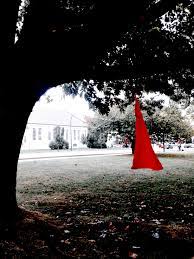


 Borderless