Categories
Essay

Schumpeter, the Luddites, and the Post-COVID Workforce

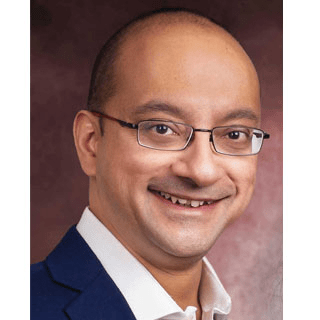
By Avik Chanda

This is not a commercial.

But if you happen to find yourself in Abu Dhabi at this moment, and are planning to take a flight back home to Delhi, you might be advised to try Etihad Airways, especially in these pandemic times. To check in via their ‘Fit to Fly’ application, just stand in front of the monitor, remove your mask, and the system will scan your health particulars within seconds. The application will then quiz you on your activities over the past fortnight, to each of which you reply with a simple ‘yes’ or ‘no’. An algorithm at the back-end analyses the information, issues an all-clear, prints out your boarding pass, and you drop your bags off at the counter. You’ve not met a single person among the airlines staff, let alone be within contamination distance. From the moment you entered the airport, your experience thus far has been as risk-free as possible. The application has replaced check-in executives, most of whom may never be coming back – but it’s a relatively small price to pay, for saving lives.

And as your journey becomes a montage, from the white-heat glare of an Arabian sun outside the window, through a somewhat claustrophobic, masked-on slumber, to the thick drapes of nimbus covering the sky at your destination, imagine that the same risk-free application that checked you in, has been implemented in all airports and airlines across India. This thought-experiment has just added to the toll of the estimated 2.9 million jobs already affected in the immediate term, across Indian aviation and allied sectors, as a direct result of the ongoing pandemic.

While it’s hoped that a significant number are expected to regain employment, in the wake of a vaccine, herd immunity and economic recovery, those employees that are displaced by superior, robust, cost-effective technology, will have no cause to be recalled to their counters. And once you reach home and begin to adjust into your self-quarantine regime, consider that if you’re working in real estate, retail, hospitality, travel, tourism or for that matter, even information technology, the odds are in one in six you may not have a job to go back to.

The effect of innovation and improvement in industrial processes on employment and jobs is both well-researched and documented. Conceived in the intellectual shadow of Marxian constructs, the Austrian-born economist, Joseph Schumpeter, writing in 1942, introduced and developed the concept of ‘the gale of creative destruction’, in his book, Capitalism, Socialism and Democracy. According to him, creative destruction was an integral part of the way that capitalism functioned in the modern world. A fait accompli, it was “the process of industrial mutation that continuously revolutionizes the economic structure from within, incessantly destroying the old one, incessantly creating a new one”. Over the subsequent decades, theoretical models of growth, as well as empirical studies evidence and models have very largely converged to the conclusion that the process of creative destruction is an inevitable concomitant of economic growth and fluctuations.

In his book, Schumpeter argued that the unending cycle of creative-destructive forces in a capitalist system would eventually lead to its demise. History, to date, has however not borne out his prognosis, and in fact his term, creative destruction, has been enthusiastically adopted by generations of business gurus and industry magnates, to justify downsizing in the workplace, in favour of efficiency and innovation.

As a concept, its intellectual successor, ‘disruption’, has carried the argument to its logical and inalienable conclusion. The march of ground-breaking, innovation cannot be arrested. The giddy rate of technological advancement witnessed in a remarkably short span seems to support this view, hurtling an essentially analogous world into one where machines, algorithms and automated processes vie with, and increasingly, surpass their human counterparts at a range of tasks. The ramifications on employment are massive for labour-intensive economies such as India, where an estimated 30 to 40% of the current workforce cannot be readily re-skilled.

Alarm bells about the effects of automation started to ring early in 2017, when a report by the consulting firm McKinsey & Company, was made public. The report indicated that 600,000 people working in Information Technology (IT) services firms across the country might lose their jobs over the coming three years. This amounted to 200,000 jobs lost on average, per year – to automation. McKinsey urged IT service providers to explore new models of man-and-machine working in conjunction, and re-skilling employees with emerging technologies. Corroborating this view, a report by US-based research firm HFS Research, stated that around 700,000 ‘low skilled’ professionals in IT and Business Process Outsourcing (BPO) industries in India could lose their jobs to automation and artificial intelligence, by 2022. For those reading between the lines, it’s apparent that while the initial brunt of automation would be borne by IT and BPO, sooner or later, other sectors would also be affected. As with most things in economics, there’s a tradeoff – the benefits in costs and efficiency of jobless growth, powered by technology that replaces labour, versus the social and moral responsibility of mass-scale retrenchment.

The COVID-19 pandemic has thrown all projections out with dishwater, and disrupted the prevalent ecosystem irrevocably, in two significant ways. First, faced with the outlook of forced social distancing sustained over an indefinite period of time, industries would scramble to replace current methods of running the business with means that are capital and technology intensive, at the exclusion of labour. Second, and even more telling, the whole moral argument of retrenchment has been turned on its head. Employers are safer when not in contagious distance within each other, even if it means there are significantly fewer of them left on the rolls. And customers would understandably like to shop in an environment where the prospect of any tactile interaction with salespersons is minimal to zero. The same organisations that would have held back on cutting jobs for its debilitating effect on lives may now be compelled to introduce technologically advanced processes of production, storage, distribution and sales, to reduce manpower across the board, from the workshops to warehouses and retail outlets.

The 2018 World Economic Forum report on the Future of Work indicates that two distinct streams of skills and attributes are coming into greater demand, as technological innovation, powered by artificial intelligence and automation, deepens across industries. First, there are those skills that involve a high degree of mathematical and technical ability, catering to the niche requirements of the AI industry. Such jobs will be limited in number, compared to programmers and testers in the previous scenario. Also, the ability of professionals to upskill themselves suitably to the required level will be limited. At the same time, there’s a growing need for a range of skills along the human dimension, including creativity, imagination, innovation, design thinking, and increasingly – empathy. Expertise in these attributes greatly increases the chances of sustained work for individuals, even in a largely automated workplace.

The ongoing pandemic has only increased the urgency of reskilling the existing workforce along the emergent technologies and also more evolved behavioural attributes and competencies. At some point in the future, the world may well gravitate to a new equilibrium where goods and services are more readily available and general living standards are higher than before. But the road will be rocky and painful. In the meantime, the sweep of the resultant unemployment will be as endemic as the virus that has caused it, from migrant wage labourers who represent the poorest section of society, to college-educated, middle-class professionals aspiring to become corporate managers and startup entrepreneurs. When savings run dry and children can’t be fed, the collective bewilderment of the dispossessed often turns to rancour.

From the earliest days when it began centred around the textile mills in Nottingham, the Luddite movement has come to epitomise all form of concerted protest against technological advancements and machinery that threaten to rob workers of their livelihoods. The movement came into being as a series of protests by traditional textile weavers, who feared, not without cause, that the newly introduced machines in the mills would replace them. The protests swiftly degenerated into arson and destruction of property, as groups of armed men stormed factories and destroyed the looms and machinery at hand. The Luddite rebellion ended in 1816, but the legacy of their revolt has sustained as a symbol of opposition to hyper-industrialisation and automation, that leave masses of people unemployed. If the dispossessed of the present times turn into Luddites, how are their protests likely to be met?

The answer, entailing the exact same method deployed to quell the original revolt, is to be found in Eric Hobsbawm’s 1952 essay, The Machine Breakers. By means of the state. At the height of the Luddite movement, 12,000 soldiers of the British Army were deployed against the so-called ‘machine-breakers’, a considerably greater number than what the intrepid Duke of Wellington had managed to muster in 1808, to give battle to Napoleon’s forces in the Iberian Peninsula. Fast forward to the grunting shuffle and press of 1st November 2019, when 80,000 police officers in France were deployed under “Act 9”, to counter the swell of the nation-wide Giles Jaunes protesters. And now, finally, imagine for a moment that all the 21st century Luddites across the world, displaced by the vagaries of the pandemic, and the automated, smarter-than-thou technologies that have emerged as a response to it, have come out onto the streets, in protest.

What will it take this time?

.

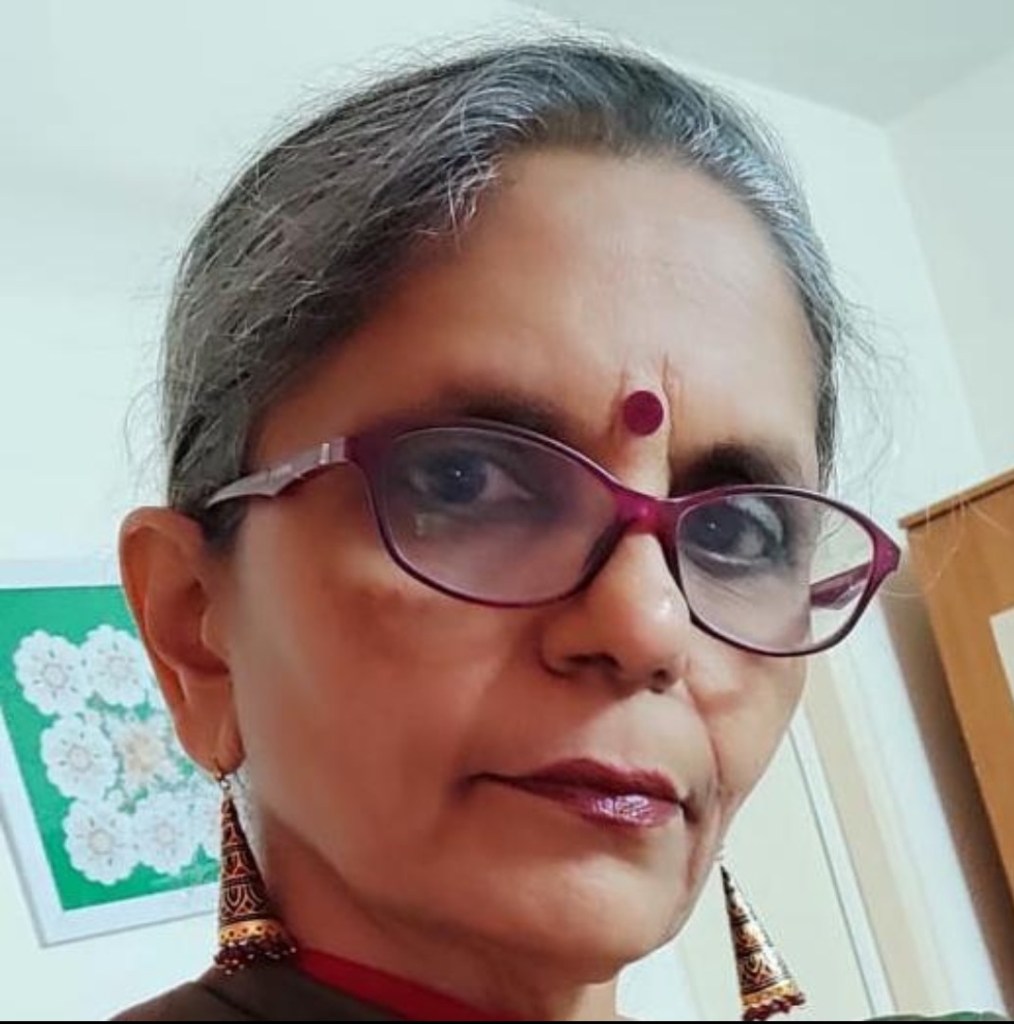
Avik Chanda is a bestselling author, columnist, business advisor, entrepreneur and educator. His book, From Command To Empathy: Using EQ in the Age of Disruption (HarperCollins, 2017), was selected for Amazon India’s Best Reads, under the category, ‘Business, Strategy and Management’ . His latest book, Dara Shukoh: The Man Who Would Be King(HarperCollins, 2019), garnered rave reviews from academics, authors, the national press, and general readers. It was in the Top 10 Non-Fiction Bestsellers List, for 10 consecutive weeks, post its publication, and has recently been released as an audiobook, by Audible.

.

PLEASE NOTE: ARTICLES CAN ONLY BE REPRODUCED IN OTHER SITES WITH DUE ACKNOWLEDGEMENT TO BORDERLESS JOURNAL.
Categories
Poetry

Kargil

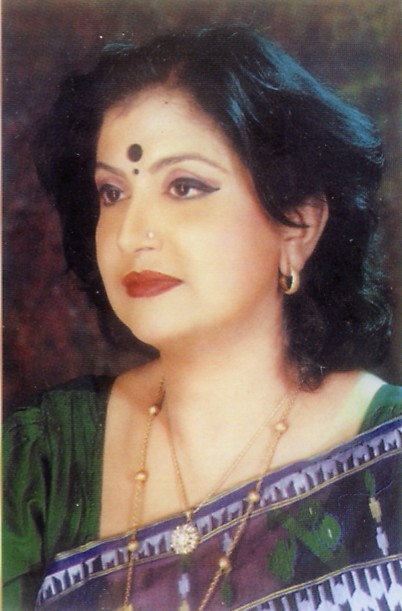
By Prof Dr Laksmisree Banerjee

KARGIL
by
Laksmisree Banerjee


Our tears have washed the Tricolour, intensified the ruddy blaze
Of rocks, rivers and streaming veins
                        With our white now gone stained and colourless
Our green has crossed mountains of flinty black pathos ------:
Vijay-Divas, our conquering day with no souls conquered,
Flags off or does it, to a better day perhaps!
.
The hills of Kargil touch the skies with tired hands,
With fingers gnarled, stony and eternally skeletal,
The summits weep with entrenched virulence in their wombs,
The azure mirrors the red fierce, gushing bruised wounds.
Cannons piercing the fluttering silenced throttled blue 
With the darkness of bloodstains gone dry, acidic.
.
Kargil and the martyrs, who sleep endlessly
On its forsaken beds of history waning into nothingness,
Our weeping songs praise their heights and heroism
With the blank stupor of choked voices, 
Damp hearts, with cascades of flowing tears and hues, 
In frail dreams of re-births, of possibilities or no hope.
.
We hear and speak the lessons of life in languor,
Of terror and trauma recycled forever,
                        With a soulful yearning for peace, that moment of the flower
Yet drowned deep in the ceaseless waves of love 
Perhaps, just perhaps, in the centuries to come,
We may return with the flying doves, to hold hands once more.

*********************************

This poem was first published in Peahen Passions (Author’s Press) in 2013

Prof. Dr. Laksmisree Banerjee, a Poet-Professor, a Scholar-Vocalist, has been widely published and anthologised across continents. She is a Sr. Fulbright (USA) and Commonwealth Scholar (UK) and a National Scholar and Gold Medalist of the University of Calcutta. An Ex-Vice Chancellor and University Professor of English and Culture Studies, she has Five Books of Poetry with One Hundred Twenty Research Publications, two Academic Books on Romantic and World Women Poetry, her focal areas of specialization. A Rotarian & Multiple Paul Harris Fellow, she is the Indian Rashtrapati’s Nominee on Boards of Central Universities. She has lectured and recited her Indian-English Poetry and Vocal Indian Music in premier Universities, Literary Festivals and Conferences across the globe.

.

PLEASE NOTE: ARTICLES CAN ONLY BE REPRODUCED IN OTHER SITES WITH DUE ACKNOWLEDGEMENT TO BORDERLESS JOURNAL.

Categories
Review

Dara Shukoh: Where would we be if he were King

Book Review by Meenakshi Malhotra of a historical narrative that continued in the Top 10 Bestsellers List for 10 Consecutive weeks, on publication. Recently, Audible has released an audiobook version of this book.

Title: Dara Shukoh: The Man who would be King

Author: Avik Chanda

Publisher: Harper Collins, 2019

Scanning the list of books already written on Dara Shukoh, I wondered why the author had chosen to write yet another book about Dara Shukoh, but that was before I came across Avik Chanda’s impressive work. A magnificent tome, it is richly palimpsestic and multi-layered and articulates the many complex layers of its protagonist’s personality and the forces that he had to grapple with. The book also displays an impressive array of materials and archives that were sourced by the author in putting together this fascinating chronicle.

In adding to a genre of what is known as popular history, the author has left no stone unturned. In doing so, he neither puts Dara on a pedestal, nor does he vilify him. Instead, he shows his protagonist’s limitations in his military campaigns, his aloofness and withdrawal from much of court politics, his intellectual leanings and his impatience with the petty nitty gritty of everyday politics on the ground, which often came across as arrogance to the people surrounding him.     

Avik Chanda’s prodigious research helps him write what seems like the definitive version on the tragic prince.. About Dara Shukoh, he writes:

The emperor’s Shah Jahan’s favourite son, heir-apparent to the Mughal throne prior to his defeat by Aurangzeb, Dara has sometimes been portrayed as an effete prince, utterly incompetent in all military and administrative matters. But his tolerance towards other faiths, the legacy of his philosophy and the myriad myths surrounding him, have far outlived him and continue to fuel the popular imagination. In truth, the Crown Prince was a highly complex person: a visionary thinker, a talented poet and prolific writer, a scholar and theologian of unusual merit, a calligraphist and connoisseur of the fine arts, and a dutiful son and warm –hearted family man.

He also goes on to add:

…he was also cold and arrogant to the mass of courtiers and commanders, whom he felt were inferior to him, intensely superstitious by nature, easily swayed by mystery and magic, an indifferent army general and shockingly naïve in his judgement of character.

Chanda thus sets the record straight; there are no heroes and villains in his version. Instead, we are presented with a complex, multi-faceted scholarly man whose aesthetic taste and judgement were impeccable and one who could participate in scholarly debate and disputation with the best scholars  of his time. A man of eclectic tastes, entrenched in his faith, deeply spiritual and almost other-worldly, Dara Shukoh did not like the strict asceticism of the mendicants. Instead, he believed in a faith full of love and compassion, and experienced nothing but supreme disdain at the Machiavellian machinations of the nobles and courtiers surrounding the king. Interested in mysticism, he was also open in his pursuit of religious knowledge, heterodox rather than orthodox.

Biographies can be of many types, hagiographical, celebratory, laudatory and critical. The best biographies are the ones which show not only fidelity to fact, but also stop short of creating two-dimensional cardboard cut-outs of its protagonists as heroes. Instead, the author undertakes a prodigious amount of research  and steers clear of the epistemic trap of producing historical stereotypes. Rather than depicting heroes and villains, who are judged based on present standards of morality, we have historically dense, nuanced characters whose impulses and motives are subjected to psychological scrutiny. Thus Dara writes of his encounter with Mullah Shah, an experience so profoundly moving that he felt it had to be recorded:

The doors of divine bounty and mercy were opened upon my heart and he(Mullah Shah) gave me whatever I asked.   Now even though I belong to the people of the world…..I am not one of them, for  I have known their ignorance and affliction. Even though I am far from a dervish, spiritually I belong with them.

Dara Shukoh goes on to add:

In the discipline of the school to which I belong, there is  contrary to the practices laid down in other schools, no pain or difficulty. There is no asceticism in it, everything is easy, gracious and a free gift. Everything here is love and affection, pleasure and ease.

Dara is an avid notetaker, and wonders, whether like his grandfather, Jahangir, he too, should keep a detailed journal. We remember also the richly woven narrative and sensuous details of the Baburnama (written originally in Persian by Abdul Rahim, 1589-90, and translated later from the nineteenth century onwards), which has come in for a fair amount of appreciation and critical work.

 It is in these moments that we see the panoramic sweep of monumentalist history and historiography interspersed with jewels like these, little vignettes which record the still, small voice of history. This massing of small but telling details, like  Dara’s relationship with his wife, and his sister, Jahanara  Begum, shows a man to whom humanity is of paramount value, a man who seemed to have an understanding of the bedrock of our common humanity. While Dara’s understanding of the nuances of his  faith, especially Sufism, is truly remarkable, with its notions of tawhid and dhikr/zikr, fana (love and devotion), ideas that are similar to many ideas within the contours of Bhakti devotion. We are in danger of losing sight of this substratum of a common devotional and cultural imagination in the present climate of intolerance that seems to sweep across the world.

Even as he extols Dara Shukoh’s understandings of these nuances, Avik Chanda also mentions, in almost the same breath, that his immersion in the biography of Sufi saints, Nafahat-al-Uns, results in his neglect of state affairs and administration of the empire. His ignoring the call of duty is overlooked by his doting father but noticed by the courtiers.

Historical agency and history’s inevitability are both in evidence here. Further, it is noteworthy to see the intelligence and capabilities of Dara’s sister, Jahanara Begum. Apart from remarkable women like Mehr-Un-Nisa or Nur Jahan, there were many notable women in the Mughal court. It is interesting to speculate if there could be a ‘her story’ (or her stories) that we could wrest from the margins of  this historical and biographical discourses. There are more stories here, not only the tragedy of Dara but of his handsome, noble , dignified son, Suleman Shukoh, which leaves a lasting impression on Zebunissa, Auranzib/ Alam’s daughter who had been betrothed to her cousin and then turns rebellious, penning verses that reek of apostasy, as if to avenge his execution. Aurangzeb may have won the throne, but that victory certainly comes at a cost.

The book ends on a note where there are no absolute winners or losers. As Aurangzib/Alamgir realises, with hardly and inheritors who are both competent and trustworthy, his earthly achievements fade before Dara Shukoh’s reputation, which seems to grow in posterity/ posthumously. In a sense, all historical events are but wrinkles in time, as viewed from the perspective of eternity.               

Reading through Avik Chanda’s account, it is worthwhile to pause for a moment and think about the purpose and function of history, both in narrativising as well as studying it. History is not just a compendium of facts about the past, but a revisiting of the past in the light of the present. Further, there is no one overarching historical truth, but a series of facts which are woven into narratives with different and varying interpretative twists, from varying ideological perspectives and vantage points.

To that extent, the history and biography of a man who stood for a confluence of Indo-Islamic tradition and culture, went beyond its doctrinaire aspect, and embraced mystical traditions which embodied the richest motifs of Sufism, so remarkably similar to that of the  Bhakti movement calls for varied interpretations. It is interesting — and at times tempting — to speculate, in a counterfactual way, whether history would have been any different if Dara Shukoh, and not his brother, Aurangzeb, had ascended the Mughal throne. Perhaps not, since history is the great leveller, devouring good and bad alike as it races and hurtles through time and space.  

  .

Dr Meenakshi Malhotra is Associate Professor in English at Hansraj College, University of Delhi. She  has edited two books on Women and Lifewriting, Representing the Self and Claiming the I, in addition  to numerous published articles on gender and/in literature and feminist theory. Some of her recent publications include articles on lifewriting as an archive for GWSS, Women and Gender Studies in  India: Crossings (Routledge,2019),on ‘’The Engendering of Hurt’’  in The State of Hurt, (Sage,2016) ,on Kali in Unveiling Desire,(Rutgers University Press,2018) and ‘Ecofeminism and its Discontents’ (Primus,2018). She has been a part of the curriculum framing team for masters programme in Women and gender Studies at Indira Gandhi National Open University(IGNOU) and in Ambedkar University, Delhi and has also been an editorial consultant for ICSE textbooks (Grades1-8) with Pearson publishers. She has recently taught a course as a visiting fellow in Grinnell College, Iowa. She has bylines in Kitaab and Book review.

.

PLEASE NOTE: ARTICLES CAN ONLY BE REPRODUCED IN OTHER SITES WITH DUE ACKNOWLEDGEMENT TO BORDERLESS JOURNAL.             

Categories
Humour

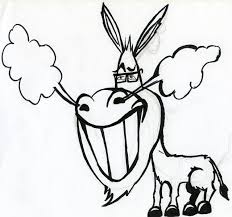
Limericks: Of Donkeys & Corona

This section is dedicated to the memory of the Edward Lear (I812-1888) who laughed away life’s trials with nonsense verse and limericks.

The great erstwhile litterateur Edward Lear,

Popularised laughter and not a single tear.

He wrote fun rhymes

And drew out his times.

His verses gave joy and brought good cheer.

— MC

There was a donkey who loved to bray. 

When they asked him why do you bray, pray ?

The mule obstinate 

His teeth did grate 

And with a vengeance started to bray.

—SB

This donkey one day fell in love.

He fell and he fell and how ! 

The besotted one 

Now wanted to run 

From this vicious virus of love.

—SB

I am Jennet said the dame.

My love for you I will loudly proclaim 

from the rooftops. 

To hell with the cops ! 

Said Jennet, eyes with love aflame !

—SB

There was a superstitious man from Surrey,

Who was extremely prone to worry.

When he heard a donkey bray,

It rather spoilt his day 

And made him quite swallow his fish curry.

— MM

There was a donkey who loved Ovid.

His songs warded off the Covid.

Each time he brayed,

The virus prayed —

Stop that noise or I’ll die atrophied. 

–MC

The donkeys danced on the road braying.

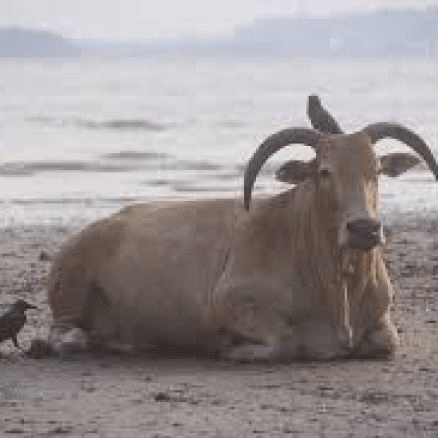
The cows sat chewing, meditating, praying.

The traffic jammed.

The horns rammed.

Corona from the confusion fled fraying.

—MC

Index of names:

SB: Santosh Bakaya

MM: Meenakshi Malhotra

MC: Mitali Chakravarty

.

PLEASE NOTE: ARTICLES CAN ONLY BE REPRODUCED IN OTHER SITES WITH DUE ACKNOWLEDGEMENT TO BORDERLESS JOURNAL.

Categories
Humour Slices from Life

Bugs of Life

By Sohana Manzoor

I could begin in the style of Daphne du Maurier’s Rebecca, “Last night, I dreamed I went to Carbondale again.” It would surely seem literary and romantic. I owe this write-up, however, to a former colleague who is currently a graduate student in the US.  As we were chatting on a video call, I noticed some shining pots and pans on the wall behind her. It might seem strange to our Bengali sentiments, but I was immediately taken back to my graduate student days in Southern Illinois. I recalled the studio apartments at Southern Hills where the kitchen was not a separate establishment but just a counter in the room. And pots and pans needed to be scrubbed clean and shiny if I wanted to hang them on the wall. If they turned too black, I would hide them in the cupboard.

Looking back after more than ten years, I now can see that I probably landed there in quite a dramatic way. Carbondale is a very small town at the southernmost point of Illinois. There was a small community of Bangladeshi students and faculty members associated with the Southern Illinois University Carbondale. And it would have been only natural to contact some Bangladeshi there and stay with somebody for the first few days. But the overly independent dunderhead that I was, I contacted the English Department instead to figure out a way to get directly to the grad student apartment I had rented on campus.

I often wonder now how I could dare to go alone to an unknown country, virtually knowing nobody. And when the student worker from the International Student Office dropped me off at my apartment after collecting the keys from the office, apart from my luggage, I had only a burger, some fries and a tall glass of coke from McDonalds. I had no phone, no computer, no internet connection, and no immediate way of letting my family know of my whereabouts. And yet, I just tucked my stuff inside the closet and lay down on the couch of the furnished apartment for a long, peaceful sleep. I doubt I can ever do that again.

It did not take too long for me to get acquainted with the Bangladeshi community there. I will always remember Beena Apa, the kind and ever helpful big sister who virtually rescued me the next day from my apartment in Southern Hills. I had never met her before, did not know anything about her either. But when she arrived at my door-step introducing herself, just one look on her beaming face told me that I could trust her. She took me to her apartment in Evergreen Terrace, another grad student housing complex, and I came to meet the vibrant Bangladeshi community there. 

Evergreen Terrace was for grad students with families, and it was surely brighter and more cheerful than Southern Hills, where I had taken my abode. Mine was a rather run-down place, and that is where the bachelor and “half-bachelor” graduate students lived. “Half-bachelor” is a term I invented for the men who were married but had left their wives and children back home. I met one family who had come to live in Southern Hills first and shifted to the family housing within a few weeks. I don’t remember their names anymore even though I can recall their story.

“Babu Bhai helped us to get there, you know. And he warned, ‘Shabdhane thaiko. Bagh tagh ase. Dorja khola raikho na (Be careful. There are tigers around. Don’t keep your doors open.)'” The man with a merry twinkle in his eyes said, “I thought he must be joking, but when we saw the place, especially after dark, we were convinced of the tigers.”

“But there are no tigers!” I replied, thoroughly confused.

He howled with laughter. “Only bugs (bagh). That’s what he had meant.”

No. there were no tigers in Southern Hills. Nor did I come across any of the ghosts or supernatural beings people claimed to have seen there. But yes, the place was almost wild, running amok with creepers and moss.  Some would find it eerie, as my PhD supervisor had, “It seems so desolate, Sohana. Are you sure you’re safe there?”

The apartment buildings stood apart, separated by tall trees, bushes and thickets. I had seen rabbits, deer and even skunks many times in the vicinity. One evening, as I was coming back from a walk and I thought I spotted a cat running down the stairs. I called out but it ran faster. Two days later, to my chagrin, I realized that the damn thing was not a cat at all, but a raccoon.

Friends advised me to move away to Evergreen Terrace. But somehow, by that time, I had fallen in love with Southern Hills. I remember surprising a deer family when a friend dropped me off late at night; the moonlight had caught the antlers of the male deer and he stood still trying to assess if I was a danger to his babies. The scene is etched in my memory as something magical. I watched the snow falling and draping the ground and the trees with white coverlets and curtains. The large magnolia tree with its wax-like flowers emitted a balmy fragrance that seemed very soothing. Squirrels ran up and down the trees and there was something very peaceful around that place. Every evening, when I returned from school, I looked forward to a quiet dinner with a book. I had no television and honestly, I had grown to detest them. I still do.

But living by oneself has its negative points too. I once discovered a large black crawling insect inside my laundry basket. I hate creepy-crawly things and rainy days in Carbondale were problematic for me because footlong earthworms used to take over the streets. Many of my friends had reported seeing me striding in boots through the rain water and cursing at the top of my lungs. Hence the moment I saw the crawling monster, I yelped and jumped on to my bed. But there was no Prince Charming to the rescue and I had to get it out myself. I surely was not going to sleep in the same room with that wriggly bug. Gritting my teeth, I put on gloves and got a pair of tongs from the kitchen cupboard and pulled it out from the basket. I dumped the thing in the commode and flushed it down, and then threw the tongs out too. To this date I am not sure what that horrendous creature was.

After two years at Southern Hills life there ended kind of abruptly. There were talks of demolishing the place as many of the buildings were old, leaky and not very comfortable. I could clearly see a decline in the population too. I also saw that rather than regular graduate students, there were strange looking people moving in.

A crazy pair took up the apartment next to mine and they were quite rowdy. Then one resident on the ground floor of another building was evicted because he was smoking pot inside his apartment and causing trouble for his two neighbours. I felt that safety might become an issue soon. At the same time, I could not help thinking that it was not the wild beasts, nor the supernatural beings, but the human bugs that were chasing me out of my heaven. Marie, a close friend of mine, asked if I wanted to take up a studio in her building. It was very close to the university, smaller in size than the place I had, and somewhat sparsely furnished. But it was way cheaper. So, finally, after two years, I gave up my blissful abode in Southern Hills and moved to the down town area.

Sohana Manzoor is an Associate Professor of English at the University of Liberal Arts Bangladesh.

PLEASE NOTE: ARTICLES CAN ONLY BE REPRODUCED IN OTHER SITES WITH DUE ACKNOWLEDGEMENT TO BORDERLESS JOURNAL.
Categories
Humour Poetry

Nonsense Verses

By Vatsala Radhakeesoon

Birthday Party


Daf the centaur
and his friend Wi-Wi the pink lizard
share the same birth-day
Each mid-October
they unwrap a newly-designed
scales-shaped sofa
bounce on it
drum their Pringles cans
then relax sipping
strong Cappuccino coffee
reading the Libra horoscope
through their bluish specs
on Witty Sapphire website.

My Friend from Wales


I have a friend
who lives in Wales
He often says
he has a boat-whale
I remind him
“but it’s only a whale”
He emphasizes
“Indeed it’s a boat
that can perfectly sail.”

The Lady from Hectic City

There was a lady
who left Hectic City
and went to live in Forest-Greeny
But when she felt nostalgic,
she called Grizzly, the energetic
They both tap-danced till midnight
and metamorphosed the crescent moon
into a starry kite
Thus she won over nostalgia,
This lady from Hectic City.

Vatsala Radhakeesoon was born in Mauritius in 1977. She is the author of 8 poetry books  including When Solitude Speaks (Ministry of Arts and Culture Mauritius, 2013), Unconditional Thread ( Alien Buddha Press, USA,2019), and Tropical Temporariness(Transcendent Zero Press, USA, 2019). She is one of the representatives of Immagine and Poesia, an Italy based literary movement uniting artists and poets’ works. She has been selected as one of the poets for Guido Gozzano Poetry contest from 2016 to 2019.  Vatsala currently lives at Rose-Hill and is a    literary translator, interviewer and artist.

.

PLEASE NOTE: ARTICLES CAN ONLY BE REPRODUCED IN OTHER SITES WITH DUE ACKNOWLEDGEMENT TO BORDERLESS JOURNAL. 


Categories
Humour Stories

The Return of the Dead

By Gita Viswanath

For the first time in the history of the universe, God and the devil were on the same page. Their domains were getting filled up with an influx of souls tarnished by a virus. To maintain social distance, they decided it was time to throw all inhabitants back on earth. God had it easier. Gravity helped him in ejecting his inmates. The devil had to shoot them upwards and that was tough on him.

“What’s your worry? We are dead now; we can no longer spread disease.” The souls chorused in a last-ditch attempt to stay back.

God in his wisdom said, “This virus has flummoxed me. It’s a never-before situation. So, let me play safe. My ministers and I can’t take a risk.”

“You can’t risk us, can you? Won’t we fall ill? Haven’t we had our fair share of pain and suffering? Won’t we overcrowd the planet and create chaos? We were always taught God is a kind and benevolent being. Trust in him.” 

The infallible God had no answer. He was forced to think. God condescended to consult with the devil and both decided that only those who had died in the past twenty-five years would be ejected. The rest had attained salvation; so, they were not a threat. Ultimately, being the almighty, he had his way with his herd. The devil in his turn entertained no questions. He simply kicked them out or rather up.

The souls of the animal Heaven were tickled at the sight of the exodus. “Our time has come! Down below, our compatriots have been restored to their spaces; they roam like emperors of all they survey, and our enemies are finally locked up. And here, we rest in peace,” the animal souls sang delightedly. 

The day arrived. Hundreds of souls were released. As per the decrees of God and the devil (they seem to work in tandem for once), they landed in the places from where they had last departed. As a result, those who died in road accidents were found loitering on the streets of places as far apart as New York and Nagpur or Los Angeles and Latur.

They were promptly arrested by the police and kept in custody for not maintaining social distance and on top of it, not wearing masks. When they were questioned, they honestly replied that they were thrown out of heaven or hell as was the case.

The situation at Versova police station in Mumbai turned bizarre. The poor cast-outs were laughed at and branded as pagal – mad. At the same time, most were so lucid that the police were totally confused. They gave their home addresses and phone numbers without any hesitation. The ones who died several decades ago gave their landline numbers which were now defunct. Some of them said they were homeless but were able to name the localities where they used to sleep on footpaths. One even tried to appease the police by saying, “Call my family immediately. They can give you chai paani and even samosa* right away.” He had, after all, died while over speeding in his BMW, no less. At this, the homeless ones got enraged and lunged at him.

“Hey, we’ll handcuff you,” yelled the police while trying to prevent a bloodbath.

“Sir, he’s the one who drove over us,” two of the homeless defended themselves.

At this, the inspector on duty called his senior and requested him to come over as soon as possible. Or else, there were bright chances that he would need to be rushed to a psychiatric ward. 

Hospitals, which were as it is bursting at the seams, suddenly saw new patients arguing with the existing ones that it was their bed. One patient suffered a heart attack as soon as he saw a woman appear out of nowhere in front of his bed. She was trying to pull out the intravenous drip and insert it into her arm. At that point, the patient passed out. Hearing the thud of a human body on the floor, a nurse rushed in only to pass out herself on seeing a stranger fitting the drip on her own. The dead woman calmly completed her task and lay on the bed wondering why the staff looked like figures from outer space. When the nurse did not return to her bay for some time, a doctor walked in to see her collapsed on top of the patient on the floor and an unknown woman resting on the bed. She rushed out screaming as if bitten by a rabid dog. 

Mammaaa, Papaaa, bhaiyya ka bhoot*,” Aastha began crying. The family was barely recovering from the suicide of their son, a sixteen-year-old teenager who hanged himself a week ago in his room because his father scolded him for spending too much time on his cell phone. The father, still fuming with rage, rushed out of his bedroom on hearing Aastha and stood there as though struck by lightning. “Oye, what’s happening?” he stammered.

The mother, who followed, began shouting in joy, “My son is back, my son is back.”

The father went out to get a broomstick saying, “Bhoots go away when beaten with a jhaadu*.” Finally, the dead teenager, a little amused, a little embarrassed, spoke: “I’m back. Even God didn’t want me. Where else could I think of going?”

Aastha and her parents fainted one after the other and the dead-living living-dead boy got into his bed and fell into a deep sleep; not before posting a picture of himself on Facebook and Instagram, with the caption, ‘Thrown out by God’.

In Vadodara, in Gujarat, an electrician landed on a light pole and was sent back to God immediately. God was stunned and looked at him furiously.

“What can I do? When you sent us, you said we would land at the spot where we died. That damn pole is still unrepaired and I died instantly.”

Some ministers burst out laughing. “Hmm …” God scratched his head while thinking deeply about a condition such as this. For the first time, he doubted his efficiency.

“Fine, this is no excuse for you to return. You will now land at the spot you were last seen before you climbed that goddamn (oops!) pole.”

As God finished his sentence, the electrician felt himself going down in a free fall like a skydiver. He landed on his Hero bicycle which he had parked next to a tea stall on the road before climbing the pole. The stall was closed. There was an eerie silence. Not a vehicle, not a human anywhere in sight.

Seeing him appear out of the blue, a frightened dog came up towards him. The dog looked so weak with ribs poking out that he could barely bark, let alone bite. Thanking God for providing him with transport to reach his home, he mounted his cycle and pedalled his way feeling elated to be back.

He kept thinking about how happy his family would be to have him in their midst. After all, he had died so tragically just a month before his second baby was to be born and his first child, a girl, was just three years old. He wondered if the second was a boy. He wished it was. At least his mother would stop taunting his poor wife. Whistling his favourite song, he kept cycling, finding the way a little confusing. He was returning after eleven years.

An old woman who could barely walk struggled to find her way. So much had changed in the twenty-five years since she left; she could hardly recognise a single house. Suddenly, she heard a whirring sound up in the sky and as she looked up, a shower of red rose petals fell from the skies. Rows of men with little children on their shoulders and women with bundles of belongings on their heads were the only denizens of the streets. They all had masks on their mouths like Jain munis*, the old woman thought. They rushed to gather the petals, tried to squeeze some juice into their dry throats, and made the children nibble the petals. The old woman joined these masked men and women. When she told them, she had come back from the land of the dead, they thought they were hallucinating. Since she didn’t look threatening, they let her walk along with them. After walking for eternity, they found some people distributing poori bhaaji* and pouches of water. They let the old woman join the queue.

The news broke out on television. Excited reporters screeched into their microphones. Some enterprising ones even managed to reach the dead and interview them. Some went a step further and visited the homes of ones who were receiving their dead, some happily, others not so. Amid a pandemic, the reporters created a virtual pandemonium.

Anup Gohain, who headed the channel that could get an award for the most hysterical of them all, chose his flavour of the day — conspiracy. The dead couldn’t return; he shrieked, this is nothing but a conspiracy of our enemies from within and without. Pakistan, China, the opposition, leftists, pseudo-secularists, the tit-bit gang, Anup Gohain enumerated in rising intonation. And then for dramatic effect, he lowered his voice to a whisper. Tell me, all you so-called scientific people, what else is this if not a conspiracy? They have been sent out to contaminate millions of Indians and destroy this glorious land of ours. All this and more in Debate Number One, once again he screamed. During the debate, he yelled out to the participants on the other side of the fence, “the nation wants to know. Today, you have to give them an answer.”

The police inspector rushed to the station after receiving his constable’s call. He had heard the news. He took charge of the situation that was turning chaotic by the second. Calmly, he ordered that all addresses and telephone numbers be noted down. Then, he personally oversaw the despatch of all those held in the lockup to their homes. The homeless were dropped off at the pavements which were deserted now. They slept peacefully. No hafta* to the police, not even to the local don.

The screams of the doctor echoed down the corridors of the hospital just as the day duty staff was handing over charge to the night duty staff. The television was on in the recreation room of the medical staff and they were staring at it open-mouthed. Of course, they had heard of ghosts and unusual movements in mortuaries but beyond laughing, had never given it a thought.  Could they now dismiss something that was happening on a global scale?

All channels — Indian and foreign — were reporting bizarre episodes of the return of the dead. The screaming doctor barged into the room, huffing and puffing, “Come with me, look at what I just saw.” When they reached the ICU, they revived the nurse first and then questioned the woman who had displaced the patient. She was able to even recall the names of doctors who had attended on her. So eloquent was she, she even told them that she was admitted for a hysterectomy. “Such a routine procedure for women my age – why did you have to kill me?” She asked them indignantly.

The truth was a rookie anaesthesiologist had given her an overdose; resulting in the tragic and untimely death of an otherwise healthy woman. She went on to plead with the doctors to set right their mistake and send her back home to her loved ones who were surely missing her. In response, the two doctors and the nurse passed out! The dead woman pressed her hand to her mouth trying hard to suppress a laugh.

When Aastha and her parents came to in the wee hours of the morning, they found the sixteen-year-old in deep sleep. Still reeling under shock, they stepped forward gingerly to check if he was for real. “Bhaiyya, Bhaiyya,” Aastha called out gently. No response. The mother, who was convinced about the return of her son, sat beside him on the bed, stroking his head, pushing back the lock of hair from the forehead. Standing by the bed, the father wondered aloud, “Yeh kaisa ho sakta hai – how can this happen?” The boy stirred. The mother shushed the father and pretended that the cremation and the besna* never happened. They all shouted excitedly, “Welcome back!” With no one entering their home and they not going out, the return of their dead son needed no explanation. They all lived happily ever after until …

The electrician reached his home. He left the cycle leaning on the wall and entered through the tiny gate which was the same after eleven years except for a louder creak. His wife was swabbing the room. She looked through the half-open door, left the pail and the duster on the floor, stood up, smiled, and said, “Ahh, it’s been a long time.” The electrician was stunned. Here he was, returning from the land of the dead after eleven years and this woman, his wife and the mother of his children was inhumanly calm. On the wall, he noticed his framed photo with a plastic garland with dust in the folds of the petals.

“Salma, aren’t you shocked to see me?” he asked her.

“Why should I be? You were always with me. You think you could go away so easily?”

“But you used to not see me, hear me, you couldn’t touch me, see, see,” he grabbed her hand saying, “You are not dreaming, Salma, I am really here in front of you.”

“Who said so? I used to see you, hear you, feel you, all the time.”

The electrician was flabbergasted. What could he say to her?

“Where are our children?”

“Sleeping. Come inside, see …”

The electrician was surprised to see four. Disturbed by the sounds, they woke up. The youngest of them, four years old, was the first to speak, “He looks like Abba.”  When the electrician died on the pole, his parents got the widow married off to his younger brother, Ahmed. In a short while, Ahmed returned with a basket of vegetables, took off his mask, and stood rooted to the ground on seeing his brother.

Bhai, have I lost my senses?”

“No, you haven’t, take a bath and come. I’ll explain,” said Salma in a soothing voice.

Ahmed went in never to return (he exited through the back door) and the electrician was restored to his home and family. Salma laid out all the vegetables next to the sink and began washing them with soap.

“What are you doing?” asked the stupefied electrician.

Han, that’s how it is now.”

Shrugging his shoulders and shaking his head from right to left, left to right, the electrician replied, “Chalo, kuch tho badla — okay, something has changed at least.”

The old woman found it extremely hard to find her way home. She walked endlessly in the scorching sun with one group of workers only to realise she was on the wrong route. Then she turned at a fork to join another group. After three days of repeatedly joining different groups, she finally reached what she remembered as her home. Alas! The people who now lived there were not her family. They wouldn’t let her in. Once again, she was stranded. Totally exhausted and unable to walk anymore, she settled down under a neem tree, cursing God for harassing her, and set up her home with a snake and a monkey as her neighbours.

For almost a year, the dead and the living blended seamlessly. They lived, loved, fought, cast out, oppressed, forgave, made up like humans always did. In the meanwhile, the invisible virus continued having a field day in the world, upsetting many apple carts. God and the devil began missing their flock. They realised the stupidity of their thoughts and actions. By dying and returning to them, the souls had completed a journey. Why then were they made to resume their earthly voyages?

God addressed his ministers in a cloud meeting, “My creations respect death and the dead. Never speak ill of the dead, they say. They keep them forever in their memories. They equate the dead with me. They offer flowers and incense to them the way they do to me. They tell children that the dead go to God.” The ministers nodded gravely in agreement. “Then, why have I betrayed their trust in me?” God asked shamefacedly. “Who am I without my flock? How can I erase the ultimate truth of life, that is death?”

God and the devil summoned back their herd. As suddenly as the dead had appeared, they disappeared.

*chai paani… samosa — tea, water… savoury snack

*Bhaiyya ka bhoot — Brother’s ghost.

*Bhoot — ghost

*munis — sages

*Poori Bhajji — food.

Gita Viswanath is a Baroda-based writer. Her novel, Twice it Happened, was published last year by Vishwakarma Publications, Pune. She is also the author of a children’s book, Chidiya. Her poems have been published in Kavyabharati No 28 and Coldnoon. Her short story, Paper Gods, was published in the May 2020 issue of Muse India.

.

PLEASE NOTE: ARTICLES CAN ONLY BE REPRODUCED IN OTHER SITES WITH DUE ACKNOWLEDGEMENT TO BORDERLESS JOURNAL.

Categories
Humour Poetry

Anti-Ode to Poems that Begin with O

By Aditya Shankar

If you do not know poetry beyond high school, all poems are odes. They go O…! Haven’t read any contemporary poetry? Haven’t seen poetry recitals except on primetime tv? All poems still go O…! Do not share your new poem in a circle of school friends or relatives. Even if you do, hear their comment ‘Wow! Awesome! Lovely!’ as ‘grow up to an ode that goes O…’. The retired revolutionary poet glances through your poem and says: not even worth the Z-division league of O Germany, Pale Mother. Not even a shadow of O, We are the Outcasts, reminds the senior postmodern poet. Poems titled Orange, Omelette, Oxygen aren’t quite the O poems, declares the lyric poet who reads O Blush Not So! twice daily. A tired and old O Do Not Love Too Long and his pal O Western Wind confess to a friendly new prose poem: we long to idle in our graves. But alas! Here they are, in ill-fitting attire of teleported primitives, holding centre stage in a bandwagon that fades around the corner. As good as a failed interworking attempt between H.323 and SIP or a brand-new showroom of CRT televisions. A retro hackathon in Fortran, an MMO Pacman event or the B side of an old VHS tape. The street is a river, a carnival of clichés and bygones.

Note:

O Germany, Pale Mother by Bertolt Brecht/O, We are the Outcasts by Charles Bukowski/O Blush Not So! by John Keats/O Do Not Love Too Long by W.B. Yeats/O Captain! My Captain! by Walt Whitman

.

Aditya Shankar is a Pushcart and Best of the Net nominated Indian poet, flash fiction author, and translator. His work has appeared in international journals and anthologies of repute and translated into Malayalam and Arabic. Books: After Seeing (2006), Party Poopers (2014), and XXL (Dhauli Books, 2018). He lives in Bangalore, India.

.

PLEASE NOTE: ARTICLES CAN ONLY BE REPRODUCED IN OTHER SITES WITH DUE ACKNOWLEDGEMENT TO BORDERLESS JOURNAL. 

Categories
Humour Slices from Life

Of Toilet Seats and the Seat of Power

By Santosh Bakaya

 “Pick up the phone, can you not hear it?” The Principal had the habit of not picking any landline call, as most of the landline calls were from the Directorate of Higher Education, and the Principal whose superannuation was just a couple of months away, was wary of attending to the calls,  afraid of some calamity falling on his head, delaying the financial benefits accruing post- retirement.   

So it was the personal assistant(PA) who picked it up on the extension in his room, while the Principal’s ears pricked up as he craned his neck in the direction of the room from where the PA dashed towards him, forehead creased.

“Sir, sir, the call was from the Directorate, the Chief Minister is coming here with his entourage.”

 “What on… earth… for?” The Principal stuttered, springing up from his chair, almost lurching — a ship in a storm-tossed ocean. A crushing sense of misery gripped him as he felt the riotous waves crashing against him with ominous messages. Then he gave vent to a series of curses that embraced the whole directorate, politicians, bureaucrats, clerks, peons, students and even the dogs and cats loitering outside his chamber.

“Next week, they will be headquartered here for a couple of days and will have the jansunvai [Public hearing] here”. The PA remarked in somber tones, as if bent on rubbing salt on the Principal’s already lacerating wounds.

 “The college building is a mess, what will they do here? The toilets are so pathetic. Even if they stay here for a couple of hours, we need to dismantle and renovate the toilets. The Indian style toilets will have to be replaced by western style toilets, there will be many bureaucrats and the PA of the chief minister is very suave and sophisticated — he was my friend once. I am done for.” He banged his head, almost on the verge of pulling out his hair, but sheepishly realized that it was a wig that he was wearing and wisely dropped the idea — and of course the hand from his head.  

“So, what if he is suave and sophist…icat…ed?” The PA asked, almost stumbling on the word, sophisticated, one eyebrow raised strategically.   

“Damn it! How foolish can one be! How will they use these Indian style toilets, tell me?” The Principal smirked.  

“Are they not Indians?” The PA asked, this time raising the other eyebrow.

A couple of boys had entered the office, holding on to two pieces of paper, when pieces of this conversation fell into their ears. They dashed out with this information, and blurted it out to the students, embellishing it with some tidbits of their own.

“You know, the Chief Minister is coming here with an army of people and the college authorities are going all out to make them comfortable.” One of them informed them in breathless excitement. This was followed by a collective gasp of indignation from the students and clucking of tongues and voicing of raucous dissent.  

 “Imagine the cheek of these college authorities! They are not able to solve the water-crisis in the college, but are conveniently thinking of jaguar toilet fittings for the VIPs!”

They are installing air-conditioners in the toilets. We are done for!”  

 “Our throats are getting parched, and they are being provided with mineral water.”

Inside the chamber, the Principal was moving around like a scalded cat; not mewing like a cat but barking incomprehensible orders, suddenly sitting on the chair, and then springing up as though pricked, pacing the room, looking at the ceiling, perhaps for some divine intervention, and then bursting out in perspiration. The impeccably dressed Principal now looked disheveled, shouting and cursing, making grotesque gestures and flailing his arms. He leapt and skipped and then absolutely tired and snuffed out, hop-scotched towards his chair, flung himself on it and soon fell asleep, absolutely wilted.

“How will we manage in a week? He whelped, leaping up suddenly, holding his stentorian snores in abeyance while the dog outside his cabin, which had been at the receiving end of his invectives, rolled up on a coil of rope, and forgiving the perpetrator of indignities, added his snores to those of the perpetrator, in a symbolic gesture of a truce.

“Toilets kaisey banengey (how will the toilets be made)?” The Principal barked anew, between two roof-shaking snores.


 For one week, the Corridor of Learning buzzed with the topic of renovation, while the Principal’s chamber also buzzed on and on. There was buzzing in the washroom, there was buzzing in the student circles, and there was buzzing in the Principal’s ears. 
The washroom was getting a facelift, while the faces of the students fell.

“You know, they are using the students’ funds for renovating the washrooms.”

“How dare they? This is unfair.”

“Very, Very unfair.”

“We will go on a strike.”

 “Yes we will. Taanashahi Nahi chalegi (Down with dictatorship)!”

 The seat of power was threatened by a toilet seat, things had come crashing down from the almost-ridiculous to the utter ridiculous.

 But the tragic irony of this entire fracas was that the caravan did come, but alas, none of the ‘sophisticated and suave’ men used the newly renovated and highly sophisticated washrooms that had been designed especially for them. All the money spent on the refurbishing and renovation of the toilets went down the drain.  What did not go down the drain, but down the delegates’ gullets and into their stomachs, was the absolutely lavish feast laid out for them so magnanimously by the college authorities.
The students strongly suspected that this money was also purloined from the Students Union Fund.


Dr. Santosh Bakaya is an academician, poet, essayist, novelist, biographer, Ted Speaker and creative writing mentor. She has been critically acclaimed for her poetic biography of Mahatma Gandhi [Ballad of Bapu]. Her Ted Talk on the myth of Writers’ Block is very popular in creative writing Circles . She has more than ten books to her credit , her latest books are a biography of Martin Luther King Jr. (Only in Darkness can you see the Stars) and Songs of Belligerence (poetry). She runs a very popular column Morning meanderings in Learning And Creativity.com.

.

PLEASE NOTE: ARTICLES CAN ONLY BE REPRODUCED IN OTHER SITES WITH DUE ACKNOWLEDGEMENT TO BORDERLESS JOURNAL

Categories
Humour Poetry

20,000 Leagues under the Sea

By Rhys Hughes

I assumed that the leagues

were vertical

and that the Nautilus dived

precisely that number

down, and not

knowing what a league was

I remained without

concerns, but

then I happened to look up

the word in a

dictionary and my brow

wrinkled in a

frown as profound as the

boundless ocean.

.

A league is approximately

three miles long,

the distance that an average

man can walk in

one hour (he is walking

to see the flowers

of a distant garden?) Pardon

my confusion but

when I worked it out, it was

clearly impossible

for any sealed vessel to drop

20,000 leagues

through the waters of the sea

and put itself to

bed on the slimy abyssal plain.

The deepest trench

is only two and a quarter

leagues down.

.

The Nautilus would pass right

through the Earth

and emerge from the other side

and continue out

into space. The crew would see

only stars through

the porthole windows. No! This

simply couldn’t be

the case. In my haste I must have

misinformed myself.

.

I did the calculations again but to

my dismay they came

out the same way and I now began

to grow angry with

Jules Verne. What a cad! To play

with distance this

way would drive me mad. And so

I turned away from

his books. I learned to cook as an

alternative pursuit

and burned myself once or twice

on bubbling sauce

to be eaten with rice. But this has

nothing to do with

Captain Nemo. It wasn’t his fault.

.

The years swam past

like fish and I forgot my confusion

amid the tides and

surges of everyday life. It was a day

like any other when

the truth erupted inside me, boiling

my mind, bubbling

and bursting: a submerged volcano.

.

20,000 leagues under the sea, yes!

but horizontally! That

was the meaning. And I stopped to

stare dreaming at the

blue sky, another sea above me, the

clouds for ships and

people the fish in the depths, squids

and urchins, whales

of a time and quarrel reefs. Why did

it never occur to me

before? Jules Verne you are forgiven.

Am I forgiven too?

.

(And the walking man finally reaches

the sunken garden

where the anemones bloom)

.

Rhys Hughes has lived in many countries. He graduated as an engineer but currently works as a tutor of mathematics. Since his first book was published in 1995 he has had fifty other books published and his work has been translated into ten languages.

.

PLEASE NOTE: ARTICLES CAN ONLY BE REPRODUCED IN OTHER SITES WITH DUE ACKNOWLEDGEMENT TO BORDERLESS JOURNAL.