Categories
Stories

   The Kabbadi Player by Nadir Ali

Translated from Punjabi by Amna Ali

Painting by Amna Ali

Since I struggled with poor health most of my life, I imagined those who enjoyed good health must be happier too. As the saying goes, “Be fit and healthy and the world is yours!” The strong ones can till and plow the land, but that doesn’t win them the world, as far as I can tell. When I was younger, I naively believed that only the athletes at our college were truly vibrant and alive. The entire college and district worshiped Ahsanullah. Kabbadi[1] was a popular sport back then, and Ahsanullah a peacock strutting in the kabbadi arena. He would tag the opponent and remain standing. “Dare to tackle me big guy!” he seemed to say, before slipping away. Clapping his hands, he would be off and running and onlookers would marvel – “There he goes!”

We witnessed a new race of men when the team from Jullundhar’s Khalsa College arrived. The players — tall, big and heavy– were built like wrestlers. Unlike us, they didn’t tackle opponents with moves like the scissor or the squeeze or run with lightning speed. They would simply grab a man by the arm and immobilise him with sheer force. When they were the ones caught, a few vigorous shoves were enough to help them escape. But they failed against Ahsanullah. They couldn’t even touch him. He slapped the opponent, grabbed him in a tight embrace as if a vine had wrapped itself around the Sardar. Then he spun him to make him lose his balance. A carefully applied tug followed, enough to send him crashing to the ground. The Sardars realised that Ahsanullah’s slight frame was misleading. He was strong as iron. In the end, his opponents always lay defeated at his feet. Thanks to Ahsan and Shareefa, Zamindara College came first in all of Punjab. Khalsa College Jullundhar came in second. But gone are the days of college and kabbadi. Zamindara College was never the same and hockey and kabbadi met their demise. What a strange race everyone joined once the sports grounds disappeared.

I remained friends with all the kabbadi players. Shareefa became the head of a police-station and even played for the police. Ahsanullah would be invited to the village or the college for informal matches. Once he got married, worries seemed to swallow him up. Glasses appeared on his studious face. Kabbadi proved useless for all the players, except Shareefa who put it to good use, tackling and hustling even at his prison job. Thana, Bala, Qooma, Abdullah Raja, all my companions, simply disappeared from my life. The game of life is all about money and power. Some of them were even so-called leaders, honoured with titles like Chaudhry of the village, but being a Chaudhry is meaningless without also being a crook. Despite my ill health, I managed some thuggishness now and then. But those farmers didn’t manage too well. Some thirty years passed.

I left my job and moved to the US, but college days remained etched in my memory. Gujrat had turned into a graveyard where my youth lay buried. Lahore swallowed up everyone. And from Lahore I made my way to the US. The United States – a place filled with endless worry and anxiety, in which everyone seemed to be in a rush to get somewhere. The bright lights and women added some colour, but there was no time to look up.

One day, in the midst of all this, a man caught my eye. A partner in misery, he was staring at the ground. He was wearing glasses and sat slightly hunched, but I recognised that jawline of chiseled iron and the long nose sticking out. “Ahsan Sahab!” I called out. He looked up but his face showed no emotion. “I am Nadir Ali, from Dharekan!” I said.

“What fix have you gotten yourself into?” he asked. No greeting, no salam. What sort of a question was this? He shook my hand without enthusiasm and patted my back. “Managed to find any work?” he asked. I had addressed him as Sahab out of respect for my kabbadi hero. But this man was bent on remaining distant.

“Yes, I did, by the grace of Allah,” I replied mechanically.

“The grace of God does not make it to distant places like New York. It has yet to reach me,” he went on.

“What’s the matter Ahsan Sahab? Is everything alright? Are you well?” I asked.

“The night refuses to end!” he said. “Earlier, I worked a night shift. Now I work at a store at the bottom of a skyscraper. By the time sunlight makes it to the ground, it is evening.” His eyes, full of sadness, seemed to be longing for the sun just then.

“We are in a foreign land, Ahsan Sahab!” I said, acting all mature suddenly.

“Well, it is not like Pakistan is our father’s estate either!” he replied. He got off at the 34th Street station in midtown. I was free and decided to accompany him. He was carrying some stuff for the store, and I gave him a hand. It was not a long walk.

We both stood outside the store. The owner hadn’t yet arrived. Ahsan took out a hash-filled cigarette and lit it. “You didn’t smoke back then!” I commented, trying to put him at ease.

“It’s not like I play kabbadi anymore!” he said and smiled sweetly at last. He didn’t seem to be doing too well. He didn’t ask about Gujrat, and I didn’t bring it up. “I get off at six in the evening. Stop by if you are free,” he said, extending some warmth for the first time.

I returned at a little before six that evening and noticed that he smiled again. It was faint, yet for me that smile was worth a million. “Like the road to my village, like the path that leads me home”– words from one of my poems came to mind. He took me to a bar. “Two whiskeys!” he called out and presented cash at the bar as was New York’s custom. He sat silent. He had always been on the quiet side. But we were both comfortable in our silence.

A few drinks later, I noticed a slight sparkle in his eyes that hadn’t been there before. I felt intoxicated. “Brother, I should stop now,” I said, “I have exceeded my quota.” Once we were outside, I blurted out, “Ahsan Sahab, I write poetry.” What a thing to say! I noticed the moon was visible in the sky. “I have never been able to see the moon in New York before! How did it manage to survive the rough and tumble and make it up there tonight? Good lord, the memories!”

Ahsan Sahab benevolently prodded me — “What are you remembering?”

 “You are the moon, Ahsan Sahab! Somehow, God made you appear tonight.”

“But this is the waning moon, Chaudhry!” he replied, sighing deeply.

Two weeks later, he was dead. Someone at the mosque mentioned that they were raising funds to return the dead body to Pakistan. Words tumbled out of my mouth as I helped lift the coffin for the journey. “He was worth his weight in gold!”

.

[1] Traditional contact sport of Punjab. Players “raid” the opponent’s territory and tag or touch opponents and then attempt to make it back. The defending team tries to stop the player from returning.

.

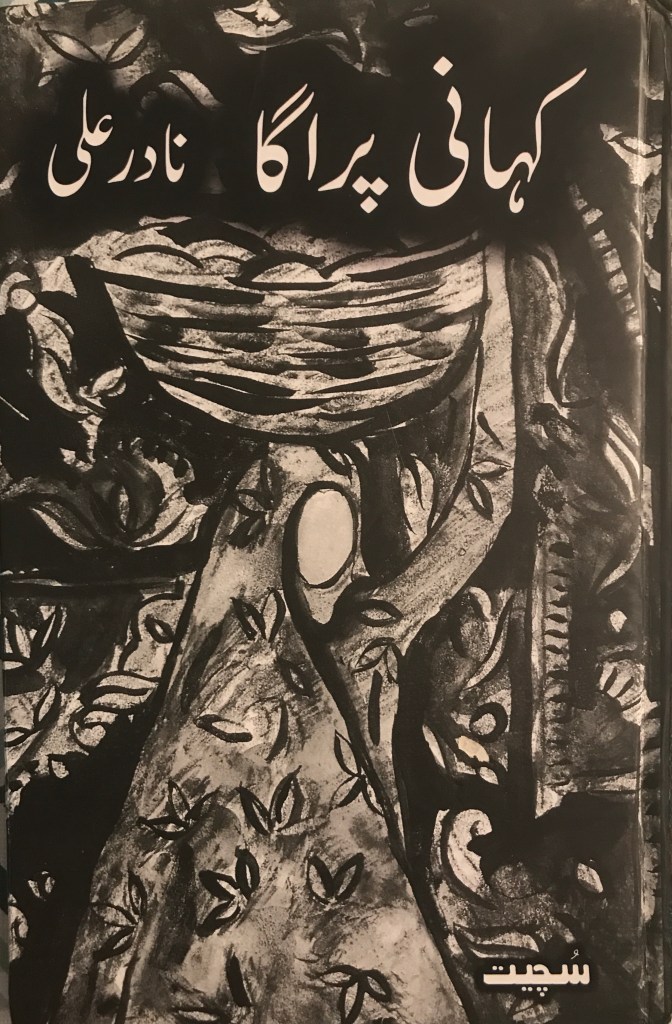
This story is a translation of Nadir Ali’s short story, first published in a collection titled Kahani Paraga , published by Suchet Kitab Ghar in 2004 in Lahore.

Nadir Ali (1936-2020) was a Punjabi poet and short story writer. In 2006, he was awarded the Waris Shah Award for his collection Kahani Praga. Coming late to writing, particularly fiction, Nadir Ali is credited with spearheading a unique style, blurring the boundaries between significant and petty, artistic and ordinary, primarily due to his preference for and command over the chaste central dialect understood by the majority of Punjabi speakers. He is also noted for writing and speaking about his experiences as an army officer posted in East Pakistan at the height of the 1971 war.

Amna Ali is Nadir Ali’s daughter.  She translated a selection of Nadir Ali’s short stories into English in collaboration with Moazzam Sheikh. The translations were published by Weavers Press in USA in a book titled Hero and Other Stories in 2022. She is a librarian and lives in San Francisco with her husband and two sons.

PLEASE NOTE: ARTICLES CAN ONLY BE REPRODUCED IN OTHER SITES WITH DUE ACKNOWLEDGEMENT TO BORDERLESS JOURNAL

Click here to access the Borderless anthology, Monalisa No Longer Smiles

Click here to access Monalisa No Longer Smiles on Kindle Amazon International
Categories
Stories

Khaira, the Blind by Nadir Ali

Translated from Punjabi by Amna Ali

Why did I resent Khaira? Rivalry among equals makes sense, but he was just a poor, blind beggar. The first thing that got under my skin was his cry. “Seeing ones! Vision is indeed a blessing! Show sympathy for a blind man’s daughters! In the name of your eyes! In the name of your daughters! O seeing ones!” My wife glances at her purse and then the cash she needs to pay the school fees of our sons, daughters and granddaughters. She always keeps ten rupees for Khaira separately. Ten rupees is a decent amount, even in these days of sky-rocketing costs. And god forbid if one of our children is unwell! Fortune smiles on beggars then.

Our daughter’s daughter was unwell, and we were both worried. “Khair Din, listen carefully!” my wife entreated him.  She handed him a five hundred rupee note with an appeal: “You have to pray for my grand-daughter Khaireya,” as if Khaira were a specialist.

“Lady! God will shower you with blessings as vast as your generous heart!” he exclaimed.

I couldn’t stay quiet. “For heaven’s sake, stop bribing god!”

My wife reacted angrily to my words. “None of that now! The poor have a right to a portion of our earnings.”

“Sweetheart, I didn’t mean it that way. How about a kind glance my way too once in a while!” I said to appease her.

Truth be told, a wall of pious rituals grows between a husband and wife as they get older. Often things end in divorce. It matters little whether the man genuinely loves her or only pretends to do so. Once he is old, the woman makes sure he gets the treatment he deserves. But we were discussing Khaira. Since he irritated the hell out of me, I managed to discover his secret.

I followed his every move as if he were my enemy.

“I have a feeling he is not blind,” I said one day.

“Have some fear of God! He’s been frequenting this neighbourhood for five years,” my wife replied.

“Well, I have a suspicion,” I continued.

“Let’s see you trek through two neighbourhoods in the punishing afternoon heat,” she retorted. “His little girl is the one who suffers in the heat. He is built like a wrestler. Two of me could hide inside him!” I said.

As they say, great discoveries are often right around the corner. I spotted Khaira hopping over a drainage ditch during the rainy season. I announced my findings once I was home. “The scoundrel has been exposed! He is not blind!”

“It must be time to get your eyes tested! You are already hard of hearing. If you could tell the difference between a blind and a sighted person, Rahma would not be our son-in-law today.”

Once again, my wife changed the direction of the conversation. But I remained on the lookout for the enemy. The next day I dragged him inside. As soon as I produced a dagger, Khaira begged for mercy. “Forgive this miserable person. It is his livelihood. I don’t know how to drive or cook for a living. I would have become a servant at a young age if I did. No one takes to begging because he wants to.”

He attempted various explanations. I threatened to turn him in to the police at first, but then decided to present him at my wife’s court. “Appear before the Chaudhrani and confess,” I ordered. I felt vindicated.

But my wife left his fate to Allah. “He will answer to Allah for his deeds. And we will answer for ours,” she declared.

The story did not end here. Khaira left our neighbourhood only to take up begging in the streets of Garden Town. I entertained the thought of stopping the car one day and saying hello. Instead, I ended up forgiving him like my wife had.

*

An unplanned, ramshackle neighbourhood lay along the back of ours. It boasted a tiny market. Late one night, I went to buy cigarettes and Khaira emerged from one of the doorways, all smiles. He seemed like another person. His clothes were spic and span and he held a cigarette between his lips.

“Do you know that man?” I asked Hayata, the cigarette vendor, as I gestured towards the figure walking away from us.

“That is Khaira, the gambler, Chaudhry Saheb,” he replied.

“Gambler?” That persona of his was completely new to me.

“Why else would he hang out with Chabba Butt? To say his prayers?” Hayata asked with a laugh.

My wife would consider what happened next beneath us, but the story took a strange new turn. I didn’t know Chabba Butt personally, but he was a known goon of the area. I went up to him early one morning and asked, “Do you know someone named Khair Din?”

He mistook me for a police officer given how well-dressed I was. “Why the investigation, officer?” he asked.

“Butt Saheb, I am no police officer, just an oppressed citizen. He tricked me out of a large sum of money over the years,” I replied.

“Sir, he is not a behrupiya[1],” Butt went on, “but he is a wonderful actor. He can act deaf, blind, just about anything, it is none of our business. When it comes to gambling, he often loses.”

“Butt Saheb, I too play poker,” I shared. “If I happen to pay you a visit, you won’t have me thrown out would you?”

He tried to dissuade me. “Sir, you belong with your kind at the clubs. Only kanjars and dregs visit this place.”

“Tell me, is this Khaira from the kanjar caste?” I asked.

“No sir, he is a Rajput. He does visit the brothels often though.”

“Ah, he belongs to my fraternity then . . . I didn’t ask out of any enmity . . .  it’s just that he is an interesting fellow. He is a virtuoso, as if he were a behrupiya. Looking at him now, who would guess that he roams the next neighbourhood dressed as a beggar?”

My introduction to Chabba came about thanks to my quest for Khaira. Chabba seemed to be a goon from the bygone days, not the current brand connected with the land mafia or arms smugglers. He was a gambler and gamblers need their den. I was not one of them, but who doesn’t enjoy some wagering and betting now and then. Add the lure of money and the habit can turn deadly. I avoided the club scene. Old age seemed to usher in a kind of boredom. Upscale neighbourhoods like Gulberg and Cantonment reminded me of a graveyard. What is an old man like me supposed to do if he is forbidden alcohol and a second marriage. The tiny market reminded me of the old city. Poverty bothers those who lack spirit, otherwise, the company of the poor is superior to that of the rich. It offers a refuge for those who have endured a beating, a helping hand when one is in a fix. I visited a couple of times and overcame my self-consciousness. The gamblers also shed their discomfort. “Come, respected elder! What do you make of the situation? Will Nawaz Sharif win the election?” What other news was there to mull over . . .The short rounds of poker, rummy and blackjack, with small bets would continue till evening. I would get up and head home once the gambling really gathered steam.

In that company, Khaira was no blind man. He was a loud and loquacious character. Still, he showed some diffidence around me. In any case, he had the strange habit of avoiding eye-contact. Instead of looking at one directly, he would focus on the ground or high above one’s head. His gaze left me feeling strangely uneasy.

Then came the calamity that can finish off an old man. My wife caught me red-handed with Kulsoom. Luckily, I survived. Nothing happened. My class status shielded me. I remained deeply affected. Khaira somehow sensed it. I opened up to him. “I have been exposed. I am very worried!”

“Choose a different neighbourhood!” he suggested mirthfully. “That is a man’s basic nature. He is a deceitful being. There is no choice but to be a blind behrupiya. Now ask yourself: Is Khaira the blind one or me?”

.

“Khaira, the Blind” is a translation of the Punjabi story Khaira Annha. It is from Nadir Ali’s short story collection titled Kahani Paraga , published by Suchet Kitab Ghar in 2004 in Lahore. Photo provided by Amna Ali.

[1] A professional pretender who earns money by entertaining people, especially at weddings. Once widespread in South Asia, this profession is now in decline.

.

Nadir Ali (1936-2020) was a Punjabi poet and short story writer. In 2006, he was awarded the Waris Shah Award for his collection Kahani Praga. Coming late to writing, particularly fiction, Nadir Ali is credited with spearheading a unique style, blurring the boundaries between significant and petty, artistic and ordinary, primarily due to his preference for and command over the chaste central dialect understood by the majority of Punjabi speakers. He is also noted for writing and speaking about his experiences as an army officer posted in East Pakistan at the height of the 1971 war.

Amna Ali is Nadir Ali’s daughter.  She translated a selection of Nadir Ali’s short stories into English in collaboration with Moazzam Sheikh. The translations were published by Weavers Press in USA in a book titled Hero and Other Stories in 2022. She is a librarian and lives in San Francisco with her husband and two sons.

PLEASE NOTE: ARTICLES CAN ONLY BE REPRODUCED IN OTHER SITES WITH DUE ACKNOWLEDGEMENT TO BORDERLESS JOURNAL

Click here to access the Borderless anthology, Monalisa No Longer Smiles

Click here to access Monalisa No Longer Smiles on Kindle Amazon International

Categories
Independence Day Stories

Bundu, Consoler of the Rich

A story by Nadir Ali, translated from Punjabi by Amna Ali

Nadir Ali(1936-2020), recepient of the Waris Shah Award from Pakistan Academy of Letters in 2006.

A peculiar dream replayed itself in my mind recently. I am the kind of man who always thinks deeply about dreams. When I lost and then initiated the arduous task of recalling my memory, I went in search of all those times I could not account for by raking through my dreams. We rarely make sense of the surreal glue that holds dreams together, reconstructing them as if they are stories.  Indeed, sometimes they chronicle our longings, other times they unfold our ardent desires reaching fulfilment, as in the union of a man and a woman! In essence, words lay the foundation, not only of the inner world, but also of our dreams. Words illuminate this journey we undertake in the pitch dark. They help us penetrate the maelstrom of existence!

This is how the dream began. I address a seated man, apparently a doctor, I recognize as Shahabuddin. He transmutes into a woman when I sit down across from him. She has the most beautiful eyes. Dark-complexioned, she appears to be Bengali. I find her very attractive. We take a stroll to the front of the Zamindara College in Gujrat. I point out Nawab Sahab’s grave to her. She moves closer to me as we approach the college hall. We continue onward to the back of the college. My heart turns tranquil as the dream fades. 

I did not have to venture far to find the rungs that would help me comprehend my dream. Ah, I had recently read the translation of the Musaddas by Sir Shahabuddin. Since Shahabuddin had tanned skin, he visited my dream as a woman with dark complexion. Again, it was he who dissolved into Balo Jati in my dream because he belonged to the Jat caste. I rushed to Balo and narrated the night’s dream. “Lady, I have to remove curtain upon curtain to find you, even in my dreams!” She laughed and explained, “Such a distance lies between an old man and his youth!” I persisted with my interpretation of the dream. “I showed you Nawab Sahab’s grave to indicate that I am old and decrepit, yet I live on, like Nawab Sahab’s name lives on.  We went to the back of the college to excavate my youthful days.”

“Lahore, Chaudhry Sahab, is overflowing with young lovers. My most prized beloved, though, remains this old man. He is a parent and lover rolled into one. People need conversations to share our joys and sorrows, no? Who would I converse with if I don’t see you Chaudhry Sahab?”  Balo’s words lifted my spirits. My dream bestowed its blessings and then was forgotten. Two months passed.

Yesterday, as I sat reading the biography of Khwaja Muinuddin Chishti – the Consoler of the Poor*, Bundu dhobi* appeared in my thoughts out of the blue.  Consider that one of Khwaja Sahab’s miracles or the secret of caring for the crushed! My mind was reminded of the two-month-old dream. I pictured the dark-skinned woman’s eyes. Ah, exactly like Bundu’s! So, the woman was in fact Bundu the washerman!  Bundu is the only person I remember fondly from my two-year stint as a professor at Gujrat’s Zamindara College.  He transformed me into a Sahab during those youthful days of surviving on the pittance I was paid as a novice professor. I wore the best starched and brightest white shalwar kameez in the entire college. 

I also happened to be the college hostel warden. One day, Bundu appeared with a plea. 

“Sahab, it is impossible to find accommodation in the homes seized after the exodus of the Hindus from the city. The Neighborhood of the Untouchables too is under the police’s control. They have escorted so many women there, turning it into their own personal cantonment. It is indeed not befitting for real men to spend nights at the police-station! Please if you get me a place at the hostel, I will manage.”

I arranged lodging for him at the hostel. Meanwhile, I found it hard to manage my expenses after sending two hundred and fifty rupees home each month. I had rashly jumped on the marriage bandwagon too. I ended up renting a house in Madina village situated on the outskirts of the town. Bundu would walk the two miles to my place. I had a bicycle at least.

Bundu never learnt to ride. “It has a mind of its own!  What if the damn machine decides to carry me to Momdipur from Madina village?” Bundu would tease.

The marriage ceremony and monthly expenses drained us of all our money within a month of marital bliss. One day, my wife announced, “Someone named Bundu dhobi is asking for you.”

I stepped outside to meet him. “Sorry Bundu, I am penniless this month. I won’t be able to pay you,” I told him.

“Sahab, I am not here to receive my payment. I am here to pick up the dirty laundry. Moreover, I haven’t even congratulated you on your marriage. Your wife is one lucky woman. A good man usually finds a good match.” Little by little, Bundu developed the routine of picking up our laundry from my wife multiple times a week, instead of once a week. Thanks to the care he showered upon our clothes, my wife and I climbed up the social ladder. When the college let him go, he managed to rent a small place that used to belong to Hindus in Muhammadi village. We remained broke.

One day, my wife took out some old bills. “Bundu heard us fighting about the expenses. He left thirty rupees with me.” I expressed my anger. We didn’t have a penny. How were we going to repay him given how impossible it was to borrow from anyone in our village?

“He said we could repay him after one month. He placed the money in my hand,” My wife tried to allay my worries.

Bundu played an important role in my transfer to Lahore when our principal accepted a position at the university and took me along. “You are the best-dressed man in all of Gujrat!”, the principal had said. From Lahore, I went on to Dhaka University in 1965.  My children and I took to Dhaka, but luck was not on our side.  We were spared the perils of detention in 1971 as we had returned to West Pakistan for the summer holidays. But I remained affected by 1971. I became very ill. I lost my memory during my treatment.  Once recovered, I made a trip to Gujrat after a gap of twenty-five years. Bundu had passed away by then.

Today, Khwaja Muinuddin, the Consoler of the Poor, reminded me of my Consoler of the Rich, a most loving and kind-hearted man. Perhaps even Khwaja Sahab had been softened by such love from people! After all, a poor person can also be a benefactor of the rich!  Such are the links of love. The foundational bond, too. As in the love between a man and a woman!  In my dream, he appeared as a beautiful, dark woman. He was a very handsome man. How can I ever forget his deeply telling eyes?

*Also known as Khwaja Ghareeb Nawaz (Consoler of the Poor), he was a sufi saint and founder of the Chistiya Sufi order in the early 13th century

*A dhobi is a washerman

Biographies:

Nadir Ali (1936-2020) was a Punjabi poet and short story writer. In 2006, he was awarded the Waris Shah award for his collection Kahani Praga. Coming late to writing, particularly fiction, Nadir Ali is credited with spearheading a unique style, blurring the boundaries between significant and petty, artistic and ordinary, primarily due to his preference for and command over the chaste central dialect understood by the majority of Punjabi speakers. He is also noted for writing and speaking about his experiences as an army officer posted in East Pakistan at the height of the 1971 war.

Amna Ali is Nadir Ali’s daughter.  She is currently translating a selection of Nadir Ali’s short stories into English. She is a librarian and lives in San Francisco with her husband and two sons.

(Published with permission of the author’s family)

.

PLEASE NOTE: ARTICLES CAN ONLY BE REPRODUCED IN OTHER SITES WITH DUE ACKNOWLEDGEMENT TO BORDERLESS JOURNAL