By Sohana Manzoor
Ishrat looked at the girl staring at her from the computer screen. Smooth and silky dark hair framed a face with wide eyes and lips that curved into a tender smile. According to her bio-data, Raihana Mimi finished her Bachelor’s from Stony Brook three years earlier. Then she did a Master’s in Social Work from UMASS Boston before going back to Bangladesh. Ishrat wondered why the girl liked Asif. At first glance, Asif seemed like an ordinary young man, even if pursuing a PhD in Computer Science. He was not handsome and he carried himself like a bear with a perpetual frown on his forehead. So why this lovely girl took a liking to Asif seemed a mystery to Ishrat. She hoped it wouldn’t end like the affair two years ago. It had broken Asif’s heart, and until very recently he would not hear of marriage.
“She’s very pretty,” Ishrat finally said. “But marriage is a life-long commitment, Asif. Do not marry for the wrong reasons. Do you love her?”
Asif looked at the somber face gazing upon him and smiled sadly. “Love? I thought I was in love the last time I went home. You know the rest.” Both of them went silent reminiscing about the unprecedented series of events that occurred about two years ago when Asif had gone back to Bangladesh to marry the girl he had been planning to wed for years. He came back alone a month later as the girl’s family had refused to allow their youngest daughter to marry him, and his sweetheart accepted the decision made by her family without protest.
Ishrat still remembered the bleak look on Asif’s face when he had asked her after returning from home, “What’s wrong with being fatherless, Apa[1]? And is an American passport essential for marriage? Tania’s uncle told me to get a US passport and then ask for their daughter’s hand in marriage.”
Ishrat couldn’t tell him that the marriage mart in Dhaka was a fish market. Most people with assets in the capital city would turn up their noses at someone like Asif whose father had died leaving his children still struggling to make a place for themselves. Instead, she had said, “It’s better that this match didn’t work out, Asif. Obviously, the girl didn’t care enough to stand up for you. I’m sure that you have a better person waiting for you in the future.”
“I told you Apa, she got married last year, didn’t I?” asked Asif.
“Who? Tania? Yes, you did. But Asif, I hope you are not planning to get married just because you want to show off that you’ve got a better wife,” said Ishrat with a frown. “Raihana is surely prettier than Tania and more accomplished. But just that would be a wrong reason for getting married.”
Asif shook his head. “That’s not why I want to marry Mimi. I’ve been talking to her for a few months now. She seems. . . how to put it. . . very mature, level-headed and practical. Has a lot of good sense,” he paused and then added, “something Tania never had.”
Ishrat asked again, “So, how does your family take it? I thought your mother had somebody in mind?
“That was years ago,” Asif said. To him, Kakon was just a next-door girl, the daughter of her mother’s best friend. It was a plan hatched by the mothers. He and Kakon never discussed this. There was never an occasion. “My sisters have already paid Mimi’s family a visit. And Mimi’s eldest brother and one of her sisters went to my elder sister’s house to meet my mother. Anju Apa is complaining even though Laiju is quite taken in.”
Ishrat nodded, “What does Laiju say?” Laiju was Asif’s younger sister, and not sentimental like Anjuman.
Asif smiled. “She says that Mimi seems friendly and sensible. Even though Anju Apa pulled a long face in front of everybody, she didn’t take offense. When Laiju apologised on her behalf to Mimi she said that she didn’t mind. People say a lot of things during such negotiations. It’s not wise to hold on to them.”
Ishrat nodded approvingly. “That sounds like uncommonly good sense to me. Marriage is a complex business though. Since you two like each other, you must keep a level head.”
*
Hamida Khatun looked helpless as her eldest daughter ranted about her brother’s marriage. “You’ll see that it will come to no good. That girl’s family is way better off than ours. Two of her sisters are settled in the US. And you still want him to marry her?”
“And how do you propose that I stop it, Anju?” asked Hamida. “You heard him. He is determined to have her.”
“I still don’t understand what was wrong with Kakon,” grumbled Anjuman. Kakon was their neighbour from their hometown in Khulna. They had known her since childhood. Kakon’s mother, Nahar, and Hamida once made plans to get their children married. But Asif was always busy with other things and once he went off to Dhak to study at BUET[2], he changed altogether. He fell in love with a girl named Tania who practically abandoned him at the altar. After that Hamida had tried to incline him toward Kakon once more. But Asif did not budge. At one point he told his mother, “If you nag like this, I will marry an American girl and never return home.” That sealed her mouth as Asif knew it would.
Hamida heaved a sigh and said, “Look, daughter, I don’t have a choice in this. If he can’t marry this girl, I’m afraid he will marry an American Christian girl. Do you want that?” Anju looked up at her mother, horrified. “You must be mad! What will our relatives say? American! And Christian too!”
“What do I care about our relatives?” asked an irritated Hamida. “Their tongues have been wagging since your father died. I just want my son to marry well and be happy.”
Anjuman grimaced. She was sure that this rich girl will only bring trouble for their family.
At this point, Laiju entered the room with a bundle of shopping bags in hand. She was buoyed up by the upcoming wedding of her only brother. Many of their close relatives had already arrived in Dhaka. She and her mother were staying in Rampura where Anjuman lived with her husband and two children.
Laiju looked at her elder sister keenly and said, “I don’t understand why you’re making such a big deal. I like Mimi Bhabi already. She is not like those typically snobbish rich girls. On the contrary, she seems very nice and sensible.” She paused and then added, “The kind of scene you made at their house! ‘I know our brother will be taken away from us after his marriage’—That was poor taste, Apa. I would have been mad if I was in her place.”
Anju shuffled uneasily and Hamida nodded gravely. “Yes, that was really bad.”
Laiju was about to say something more when they heard a commotion outside. Several voices were shouting, and one gruff voice most of all.
“I need to talk to Bhabi[3]. Where is she? This is insufferable and totally unacceptable. . .”
“Oh no, that’s Chhoto Chacha[4]!” groaned Laiju. As soon as she uttered the name, a dark burly man entered the room.
Without preamble he said, “Did you buy a saree for my wife? The eldest son of our family is getting married—where is the saree for his Chhoto Chachi?”
“We got sarees for everyone,” said Laiju. “And of course, Chhoto Chachi has got one too.”
“You call that a saree?” sneered their uncle. “That’s a gamchha[5]! If my brother was alive…”
“Unfortunately, he is not,” Laiju interrupted. “And his son is still a student. If you don’t like the saree we got for your wife, go and buy one yourself. Do you ever get anything for her?”
“You have such a foul mouth! No respect for elders at all!” growled Chhoto Chacha. He turned to his sister-in-law and bellowed, “I won’t come to the wedding, Bhabi. And I won’t allow my family to attend either.” He stormed out of the room. They heard him slam the front door shut.
Hamida Khatun heaved another sigh. “When will Asif come? I can’t take all this any longer. My poor boy! Nobody to give him peace of mind.”
Anjuman dried her eyes and said, “I won’t give you any more trouble. I, too, will keep away from the ceremony. . .” she stopped as her mother’s eyes started gleaming ominously. Laiju said, “For once, Apa, please act your age. How long will you behave like a 15-year-old?”
“What did I say?” asked a nervous Anjuman.
“You will act like a proper, respectable elder sister,” said Hamida quietly. “If I hear you babbling like a fool, I will leave your house. Just because we’re staying in your flat, don’t assume that you can do and say whatever you want. If necessary, I will rent a place and conduct the marriage ceremony from there. Understood?”
Anjuman eyed her mother with a newly found apprehension. Laiju gaped at her mother too. Then recovering herself she said half-laughing, “O dear! I didn’t know you could talk like that! You should take on that tone more often, Amma[6]. Chhoto Chacha will never dare to say anything again.”
*
“I still don’t understand why she has chosen that guy,” Gulshan Ara grumbled. “He looks more like an ape than a human being.”
Her fourth daughter Moni shook her head. “Ma, you’ve said that at least ten times.”
“So?” asked Gulshan Ara. “Your headstrong little sister doesn’t pay heed to anything I say. She has her heart set on that ape.” She stopped and lowered her voice. “You and I are the only two with good sense. Even Muhib and Moin are taken in.”
“I’m more worried about his family,” said Moni. “Remember how the elder sister spoke?”
“I can’t understand why you’re so worried about the family,” said a third voice. Moin had entered the room silently like a cat. “Mimi will be living abroad with her husband. She may have to visit Khulna only once or twice in her lifetime. Honestly, how much trouble can her in-laws cause?”
In the next room of the plush apartment in Dhanmondi, the subject of their conversation was busy wrapping up the gifts for her wedding. She had already brought several sarees for herself. She meant to save at least some money for Asif. She understood that he was still a graduate student and could not be expected to spend a fortune on his bride. He also had nobody to support him with expenses. She insisted that there should be only one ceremony and the expenses should be borne by her family. She used to be indifferent when her family members rejected one suitor after another. But something about Asif made her stand up for him and maneuver her siblings, especially her brothers and eldest sister, into accepting him as a prospective candidate. Asif also went out of his way and visited her two elder sisters in New York. Whatever initial reservations they had about his appearance vanished after meeting him face to face. Both spoke approvingly of him, and Mimi’s parents also gave in reluctantly.
When her sister Moni had asked her what she liked so much about Asif, Mimi avoided a direct answer and asked, “What’s wrong with him? He is a good guy, pursuing higher studies. That’s what you wanted too.” She paused, then added, “Okay, so he is not very handsome. But Mishu Apu’s husband was. Did that help?” Mishu was her second sister who had died a few years ago. Her husband was the most handsome and obnoxious man imaginable. Mishu’s untimely death had cast a perpetual gloom on their family.
Moni wrung her hands, “No, but…”
“If you people continue like this, I may never get married, you know,” Mimi had said, half-teasingly. “I’ll be thirty in November.”
Mimi counted the boxes and eyed the suitcase carefully. These were mostly things for her in-laws. They still had not got anything for Asif who was arriving in Dhaka that very afternoon. The two of them had planned to do the shopping for their wedding clothes themselves. Asif’s mother already had the jewelry. Apparently, she had them made three years ago, which proved to be an excellent decision.
Asif’s elder sister Anjuman and Mimi’s mother had been raising a hue and cry over every little thing. Anjuman took it to her head that her brother’s wife should have her nose pierced, and Asif should give her a diamond studded nose-pin. Mimi let Asif handle that. Both of them had discussed the situation and decided to largely ignore their comments and avoid unreasonable suggestions without being directly offensive. Asif seemed to rely a lot on her judgment, which Mimi appreciated.
She remembered when her eldest brother’s wife had shown her Asif’s Facebook page. “He’s so funny, Mimi. Just take a look! Says he has all A’s in everything except in his love life. There he has an F!” Mimi had smiled, but somehow it didn’t appear funny to her. She still thought Asif shouldn’t have put such personal information on Facebook, but it pulled a string at her heart. She knew exactly how it felt to get an F in love. She wondered where Dipak was, and if he was still looking for a pretty face with a ton of money. Mimi’s family was very affluent and that turned out to be his main reason for pursuing her. Dipak was gone from her life forever, and Mimi had no intention of bringing him back.
Once upon a time she held Dipak dear, but now she shuddered to think what might have happened if they had been married. He was making advances on three girls at the same time, and Mimi was one of them. The incident taught Mimi a number of things. She promised herself that she would only marry someone she could trust and would look beyond physical appearance. She may never have love, but she would also never feel humiliated or pitied.
*
When Asif and Mimi finally met in person, it was the most unromantic situation possible. His flight was delayed, and he arrived three hours late. After assuring his nervous mother, a pouting elder sister, and an over-enthusiastic younger one, he reached his future in-laws’ house around 9 p.m. along with two uncles and a cousin. He looked tired and harassed, in a crumpled purple shirt and khaki pants. Mimi’s parents were a bit awkward, but her brothers were very cordial as they had heard glowing reports about Asif from their sisters in New York.
While the others were talking, Mimi observed her intended husband surreptitiously. She almost smiled at his attire—he was so unpretentious. Obviously, he was more worried about keeping his engagement than his appearance. She noticed that he also looked at her once in a while, and realized with a jolt that he wished, just as she did, to talk to her, to be away from this crowd, just to be by themselves. Mimi was surprised at her own reaction—she had known this man for only a few months, and yet she longed to be with him. She tried to concentrate on the conversation and heard that they were discussing her Kabin. Asif was saying, “Whatever you decide is fine with me. I won’t be able to pay it right away, though, as I am still pursuing higher studies.”
Her eldest brother Muhib said, “Of course, we understand as much. Will 10 lakhs be too much for you?”
At this point, her mother spoke up. “I won’t allow my daughter’s Kabin[7] to be less than fifteen.”
“Fifteen!” someone in Asif’s party gasped. “Fifteen lakhs is too much! Even ten is a lot.”
Everyone in the room shifted uncomfortably while Gulshan Ara sat straight and glared at Asif with animosity. Mimi was about to pinch her brother Moin when Asif said in a quiet voice, “Whatever you say, I will accept. It’s your daughter we are discussing, after all.”
Even Mimi gaped at Asif. As everybody in the room started talking once again, Mimi realised that Asif’s move was the best possible strategy. Gulshan Ara would not complain any more. And Asif was not in serious trouble because he did not have to pay the amount right away. She didn’t know how Asif’s family would take it, though. She promised herself that she would always try to make things easier for him. He didn’t have any idea how rich her family was. He wanted to marry her.
*
The wedding reception was held at a posh restaurant in Dhanmondi. Asif sat on the stage and watched his bride smile and greet the guests who approached them. She was as beautiful as a fairy, thought Asif. Wise and kind too.
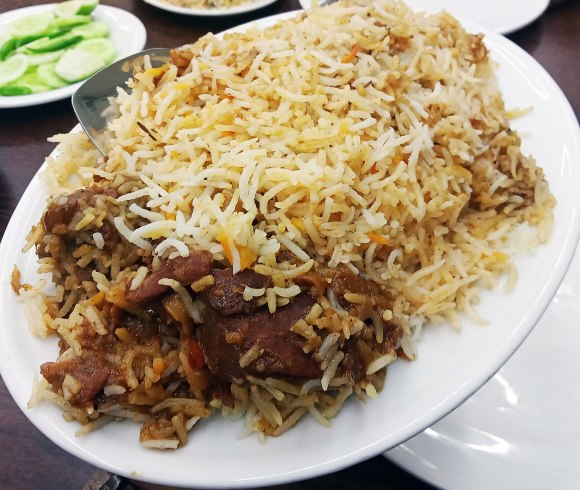
Then Asif saw his Chhoto Chacha approaching the stage and he said a swift prayer so that nothing disastrous happened. His uncle addressed Mimi, “The others are saying that the food is good. But I felt it was aida.” He looked triumphantly at Asif, as if saying, “You can’t fool me!” Mimi also looked at Asif, not knowing what aida meant. Asif hastily said, “That was kachchi biriyani, Chacha. It is the standard food for weddings in Dhaka. But we will have a reception in Khulna too. You can have your menu there with your favourite fish.” Chhoto Chacha nodded, looking pleased. “You have a pretty wife,” he said approvingly, “much prettier than your mother ever was.” He walked away. Asif heaved a sigh of relief.
Mimi whispered, “What’s aida?”
“I’ll explain later,” mumbled an embarrassed Asif. How could he say that aida meant food that has been half-eaten by somebody else? Basically, it suggested that the guests had not been properly treated.
Then came Asif’s friends. They were all laughing and joking. Asif was quite popular among his friends, and they seemed happy about Asif’s marriage and his choice of bride. Mimi had very few friends present—understandable, since she did her bachelor’s in the US. Someone mentioned that they had attended Tania’s wedding the previous year whose husband was a bald man in his forties and held an American passport.
A heavily bejeweled, fat lady appeared before them, and Mimi introduced her to Asif. “This is my Chhoto Mami. Mama[8] couldn’t come as he is in Singapore right now.”
Asif smiled and greeted her. “I’ve heard a lot about you,” the lady said with a broad smile like a crocodile. “You are not very handsome, are you? But then, Rahat was very handsome, and it didn’t help us at all.” She sighed, then added, “Hopefully, you’ll take good care of Mimi.”
Mimi made a face as she walked away. “Sorry about that.”
“Who is Rahat?” asked a puzzled Asif.
“My ex-brother-in-law,” replied Mimi briefly. “I’ll tell you later.”
“You and I both seem to have a fine lot of relatives,” observed Asif. Mimi smiled. “It seems so, doesn’t it?” They smiled at each other, and Asif knew that they would be working as a team. Their relatives wouldn’t be able to make a rift like they did in his parents’ case. He thoughts turned to Tania probably for one last time, and he wished he had never met her. Then he realised that it did not really matter. She was already a distant memory. Asif started to comprehend what Ishrat had meant by marriage being a life-long commitment.
Mimi sat contentedly. She liked her husband, she thought. Fair enough. He was sometimes a little rash, but good-natured. He had also shown himself to be sensitive to her needs. She remembered the scuffle over her wedding saree. They got it from Mansha. It was quite expensive and Mimi did not want to buy it even though she liked it very much. Asif, however, insisted that at least the main wedding saree should be costly, so that everybody was content.
*
Anjuman sat in one corner, still resentful at the turn of events. She looked at her children on stage with their uncle, nodding and smiling at their new aunt. Anjuman wondered how nobody could see what she saw—her only brother slowly moving away from them. She remembered what Laiju had said a few days ago: “He is not the same guy who left Bangladesh 4 years ago. He has changed. He has been leading a different life, his friends and peers are of a different sort. His world has changed, Apa. He couldn’t be happy with someone like Kakon. Don’t you see?”
No, Anjuman did not see. All she saw was a rich and beautiful girl taking her only brother away from them. Her resentment rose higher. She had tried to derail her own husband—to move him away from the influence of his nagging mother. But she had failed. The old woman had died only recently, and her husband still cried like a baby over the loss. And here was this girl, a mere chit of a girl, accomplishing what she could not in nine years. “If only it was Kakon!” thought Anjuman wistfully, their brother would have always been theirs. She did not see why he would be unhappy. What was the duty of a wife? To cook, bear children and maintain the house. Their mother did all this, she herself was doing the same; what more could Asif want? And in spite of all her good looks, what could Mimi give him that Kakon could not? Did he have to sell himself to money?
Somewhere at the back of her mind, Anjuman felt cheated. She felt that her brother got something she never even dreamt of. She saw the light of a different life on Laiju’s face, or even on their mother’s, a light she could not share. She thought of the flat in Rampura where she had so far lived with her husband and children. The 1200 square feet she had been so proud of owning suddenly seemed to have diminished into nothing. Owning a flat in Dhaka did not seem so great anymore as she wondered what kind of a house Asif and his wife would have in the US.
Hamida Khatun noticed the tear-stained face of her elder daughter from a distance and heaved a sigh of relief. “Thank God she realises that they are happy, and she is praying for them,” she thought, and smiled with misty eyes. Her thoughts then flew to the future where she saw herself surrounded by grandchildren. She did not see even the flicker of any dark shadow on the bright stage where her son gazed lovingly at his bride.
[1] Elder sister
[2] Bangladesh University of Engineering and Technology
[3] Sister-in-law
[4] Younger uncle
[5] Thin, coarse, absorbent cotton towel
[6] Mother
[7] Marriage registration fees determined by the dowry
[8] Mami is wife to mother’s brother referred to as Mama
.
Sohana Manzoor is a writer and academic from Bangladesh, with a PhD in English from Southern Illinois University Carbondale. Her works have appeared in Bellingham Review, Eclectica, Litro, Singapore Unbound, Borderless Journal, and elsewhere. She was the Literary Editor of The Daily Star from 2018- 22. Currently, she is pursuing an MFA in Creative Writing at UBC, Vancouver.
.
PLEASE NOTE: ARTICLES CAN ONLY BE REPRODUCED IN OTHER SITES WITH DUE ACKNOWLEDGEMENT TO BORDERLESS JOURNAL.
Click here to access the Borderless anthology, Monalisa No Longer Smiles
Click here to access Monalisa No Longer Smiles on Kindle Amazon International





 Borderless