Categories
Nostalgia

A Doctor’s Diary: Life in the High Ranges

By Ravi Shankar

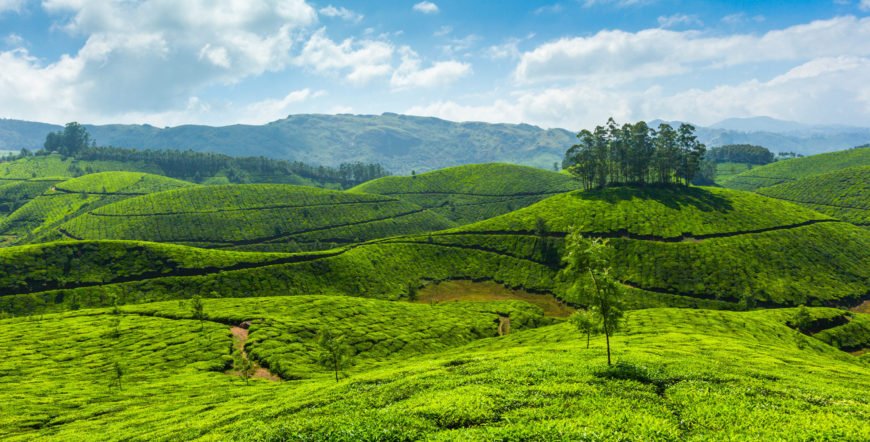
Munnar Hills. From Public Domain

The van suddenly went quiet. Night had fallen and our driver was negotiating the bends and turns in the road carefully. The yellow fog lights cut through the mists lighting up the dense forests on both sides. We were in Idukki district in the western ghats of the southern Indian state of Kerala. This region is called the high ranges. Areas above 600 m in height from the mean sea level in the central Travancore region of Kerala have rich biodiversity and a cooler climate. The weather was beginning to get colder.

We were ill prepared for the cold as we were students from Thrissur in the plains, where it was always hot and sticky. The road continued over the top of a dam. The security officer wanted to talk to us in person before letting us through. We boldly rushed out in our slippers and lungis[1] only to return at double the speed to the warmth of the van. It was freezing outside. The short but intense exposure to the cold may have frozen many vital organs. During winter, the temperatures here can dip to around 4 degrees Celsius once the sun goes down.

We were on a college trip to Idukki while studying for our undergraduate medical (MBBS) course. We had visited Thekkady and Peeramede and planned to spend the night in the hill station of Munnar. The trip was long and tiring as we drove through the mist along winding roads. The night in the hotel was freezing but we managed with the clothes we had, and the blankets provided by the hotel. The steaming tea with cardamom was the highlight of the morning. We hungrily gulped down several cups to chase away the cold.   

I eventually completed my MBBS and got an offer to work at a hospital in the high ranges. The place was Ellakkal at a height of about 1100 to 1200 m. The road diverted from the main highway to Munnar at a place called Pallivasal, the site of one of the earliest hydropower stations in Kerala. The village is also known as the gateway to Munnar. The area had a mix of Malyali and Tamil culture. Many poor families from Travancore had migrated to Idukki in search of land and better prospects. Tamil families had migrated too. The nearest village to Ellakkal was Kunchithanny (little water in Tamil). I had seen a similar system of naming places after water in Nepal. There was Kalopani (black water), Ratopani (red water), Ghorepani (where horses are watered) and Tadapani (far water) among others.

St Xavier’s hospital where I was working was situated up an incline from the main road. The location was spectacular. The hospital was established in the 1960s and was once the only source of medical care for a large region but now several clinics and hospitals had been established in towns and villages. The view across the valley was breathtaking. In the evening the mist slowly moved down the valley eventually reaching the river far below. The thickly forested green hills draped in thick white mist that slowly cleared as the Sun gained in strength was the highlight of my mornings! The hospital was run by the Medical Sisters of St Joseph and owned several acres of land on the hill. They grew coffee and cardamom and other spices. My quarters were a newly constructed annexe to an old house situated halfway up the hill. The view from the veranda was spectacular. I used to spend my afternoons and evenings drinking in the magnificent views and reading my books and magazines. The hospital still exists and provides affordable health care to the people.  

Dr Rodney Sebastian, the other doctor at the hospital had graduated from Kottayam Medical College. He was from the high ranges and a devout Christian. Many evenings there were prayer meetings at the hospital and people from the neighbourhood participated. The convent for the nuns was nearby. There was an old nun who was fond of gardening. Flowers grew well in the rich soil and the cool, moist climate. Multi-coloured roses were the highlight of the garden. There was a priest (Father) who lived on the other side of the hill next to the church. The deep phut-phut of his Enfield Bullet as he rode to the hospital was distinct. This heavy motorbike has a solid presence and is stable to drive on rough roads and undulating terrain. My cousin brother used to also ride one.

In the mid-1990s there was no internet and no mobile phones. The hospital had a landline. We lived more in the moment. Letters were still an important means of communication. My mother used to say that the arrival of a letter was as good as the arrival of a person. I have not posted a letter for a long time now choosing to go with email, voice chat, Skype and WhatsApp. During those days these were, however, all in the future. I never imagined the changes that would happen during the next two decades when I began working at Ellakkal.
We mostly had outpatients though we did admit people. Most of the admissions were for fever. Leptospirosis[2] was common. We also had X-ray facilities, and we sutured many wounds mostly caused by farm injuries. We did not handle surgeries and deliveries. We did not have any intensive care units and our lab investigations were basic.

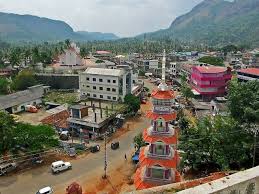
We used to occasionally drop in to meet a doctor couple, Dr Verghese at Kunchithanny. His clinic was named John’s clinic, and he was called Dr Johnson by the locals. We knew some quacks, that is unqualified self-styled doctors, also practised in this area. The nearest big town was Adimali Adimali had a movie theatre, and a huge rock dominated the town. There were tribal settlements on top of the rock. The tribals were a deprived community. Long distance buses as local transport was something peculiar to the high ranges. The buses started from the town of Ernakulam over a hundred kilometres away and reached the high ranges through Kothamangalam. The buses had glass windows and were comfortable. Ellakkal was on the route to Rajakkad (literally the King’s Forest). There were many places named after rocks (para in Malayalam). Poopara (Flower rock), Santhanpara, Chaturangapara viewpoint were the most prominent.

Munnar was famous for heavy, dense white fogs that were almost opaque. The place was covered by a heavy mist most afternoons and evenings. The mist began a few kilometres from the town. Drinking cups of cardamom flavoured tea in the cold mist was a highlight of my visits to the place. The restaurant also served crisp dosas. We went on a trip to the Eravikulam National Park which took a lot of planning as both of us (Rodney and I) would be away from the hospital for over eight hours. Some of our local friends accompanied us. The route was through rolling Kanan Devan hills and expansive tea gardens.
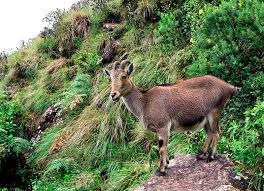
Nilgiri Tahr. From Public Domain

The hills are owned by Tata Tea, and they grow the famous Kanan Devan brand of tea. I used to remember their advertisements starring the megastar, Mohan Lal. The park is famous for the Nilgiri Tahr. I remember it also for the leeches. We were badly set upon by them and the bites bled for over twelve hours. Once I also took a bus ride with my cousin to Maraiyur near the Tamil Nadu border. The route was through spawling tea estates. Maraiyur was an end of the Road Town those days. The place was famous for sandalwood. The security checks were strict to ensure people did not decamp with a few thousands of rupees worth of sandalwood in their pockets.

I visited Ellakkal once more after I left toward the end of the last century. The ensuing three decades must have brought about a lot of change to this spice garden. Tourism has boomed and Idukki district is a prime tourist destination. Internet has made steady advances and cable TV is now common. Several resorts have opened, and the roads have improved. They have opened a hospital called Morningstar. The pace of life has quickened with all the city folks coming to escape from their hectic city lives. Someone once said about Munnar and I quote, “In Munnar, time slows down, allowing us to savour every moment, appreciate the present, and find joy in

[1] A sarong is called a lungi in South Asia

[2] A blood infection caused by contaminated water and soil

.

Dr. P Ravi Shankar is a faculty member at the IMU Centre for Education (ICE), International Medical University, Kuala Lumpur, Malaysia. He enjoys traveling and is a creative writer and photographer.

.

PLEASE NOTE: ARTICLES CAN ONLY BE REPRODUCED IN OTHER SITES WITH DUE ACKNOWLEDGEMENT TO BORDERLESS JOURNAL

Click here to access the Borderless anthology, Monalisa No Longer Smiles

Click here to access Monalisa No Longer Smiles on Kindle Amazon International

Categories
Essay

My Love Affair with (Printed) Books

By Ravi Shankar

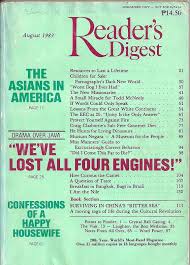
The last two years have been especially sad ones for printed books and magazines. Toward the end of 2023, the iconic magazine, National Geographic stopped selling its print issues. And in April 2024, Reader’s Digest stopped publishing. Many other print magazines have also downed their shutters though the online version continues.

I grew up with the Reader’s Digest. My father subscribed to the magazine and each month a copy wrapped in a brown envelope arrived at our door. The envelope partially covered the magazine inside, and you could see the top and bottom of the magazine. The size was small, and this made for easy handling. Reader’s Digest was a magazine you could read comfortably in bed. During the festival of Diwali, there was a special wrapping for the magazine. We had several magazines in our house when I was growing up. My mother used to read many magazines in Malayalam (our mother tongue).

Reader’s Digest provided shortened versions of stories and articles that had been published elsewhere. Their skill was in condensing the material while still retaining the interest. There was a rich collection of reading material. There were also advertisements for other books published by Reader’s Digest. Unfortunately, these were beyond our family budget. I wanted to purchase these when I grew up and became financially stronger. My neighbour who was a scientist had some of these books that I occasionally borrowed.

Another favourite of mine was the National Geographic. My father was a faculty member at a banker’s training college in Mumbai and their library subscribed to National Geographic. He often brought the magazine home. I was mesmerised by the articles and the photos in the magazine. The artistic quality of the photos was superb. The magazine had only three or four articles in an issue but addressed these at great depth. I travelled to faraway places, to the bottom of the ocean, to within the human body and to outer space with the magazine. Later, National Geographic started a television channel, and I would watch the documentaries in the nineties.

We also subscribed to the Illustrated Weekly of India. This was in a large format and again had very good photographs. I still remember the column by the journalist Khushwant Singh titled ‘With malice towards one and all’. I was also a fan of the comics section of the magazine. I had a huge collection of comics and my father purchased both Amar Chitra Katha and Indrajal Comics. Amar Chitra Katha introduced me to the rich history of India. Indrajal comics had superheroes like Phantom, Mandrake, and Flash Gordon. I used to eagerly await new issues. Most of my comics were lost when we shifted houses.   

When the news magazine, India today, made an appearance, we subscribed to it and to Outlook and The week (Indian news magazines). During my school days in May, I used to eagerly await the new textbooks and notebooks for the next class following the results. I used to go with my mother to purchase these from a stationery store near the railway station. The smell of the new paper and the fresh ink was mesmerising. I loved to read some of the easier chapters in these books. Covering the notebooks with brown paper was another major activity. Our school year started with the rains in June.  

My good friend, Sanjay Mhatre had a good library and loved to collect books. I loved to borrow from his vast collection. His collection on physics and cosmology were extensive. In those days, the erstwhile Soviet Union used to have cheap books of high quality for Indian readers. I remember the publishers Mir and Progress and I had several of their collections on science. The Soviet publishers used to hold exhibitions in our college. For twenty or thirty rupees, you could purchase high quality hard bound books. My introduction to quantum mechanics and to chemistry was through one such book.

At Thrissur in Kerala most of our medical textbooks were western and predominantly from the United Kingdom. There used to be an English Language Book Society (ELBS) that published cheaper versions of textbooks for developing countries. With our limited resources purchasing textbooks was a challenge. The two major textbooks published from the United States were those of Anatomy and Pathology. Those days we did not have online textbooks and online sources and were limited to the printed word.   

I used to write for our medical college magazine and eagerly waited for the annual issue to be published. During my residency days at PGI, Chandigarh I was the literary secretary and was very involved in bringing out the annual magazine, The Resident. We also introduced a newsletter, ARDent Voice, with ARD standing for the Association of Resident Doctors.

At Pokhara, Nepal the college library had a good collection of general books and novels in addition to medical books. I used to read a lot of novels and the author, Frederick Forsyth was one of my favourites. His meticulous research blurred the lines between fact and fiction. Sidney Sheldon was another bestselling author. Novels enabled me to travel vicariously to different places and through varied situations.

Today reading has become less common among the younger generation. Reading strengthens creativity and the imagination as you must imagine in your mind’s eye the situation the author is creating. Is it not magical that the author can communicate with you, the reader through squiggles on a page across the boundaries of space and time?

I started writing during my MBBS days. I still remember the versification competition I took part in and won the first prize. I used to participate in different literary events at my college. In Nepal, I combined my triple loves of writing, photography and hiking with articles for the newly started newspaper, The Himalayan Times. I met my writing guru, Don through the magazine, ECS Nepal. Don was the editor of the magazine and a powerful writer with a deep knowledge of Nepal. I learned a lot from his comments and suggestions and the workshops he conducted. I also used to write a medical column for ECS Nepal. ECS Nepal was a beautifully produced magazine with great photographs. Unfortunately, it stopped publishing around the beginning of the pandemic.

Other travel and lifestyle magazines were also published from Nepal but could not sustain themselves. In the Caribbean Island of Aruba, I used to write off and on for a daily newspaper published in English. Again, the newspaper ceased publishing. During the last two decades several print magazines have ceased to exist. I feel it is a great loss.

I do not read much on paper these days. Most of my reading is done online on computers, laptops and tablets. I also have a Kindle reader. Kindle screen mimics the appearance of paper closely, but it is not the same as reading a printed page. You can no longer feel the smoothness of glazed paper, the smell of fresh ink and the vivid colours of photographs. With the closure of the print version of Reader’s Digest, an era in print publishing has ended. The demise was sadly expected. Without printed books, our (my) world may never be the same again!

.

Dr. P Ravi Shankar is a faculty member at the IMU Centre for Education (ICE), International Medical University, Kuala Lumpur, Malaysia. He enjoys traveling and is a creative writer and photographer.

.

PLEASE NOTE: ARTICLES CAN ONLY BE REPRODUCED IN OTHER SITES WITH DUE ACKNOWLEDGEMENT TO BORDERLESS JOURNAL

Click here to access the Borderless anthology, Monalisa No Longer Smiles

Click here to access Monalisa No Longer Smiles on Kindle Amazon International
Categories
Slices from Life

Hooked for Life and Beyond…

By Ravi Shankar

I was hooked! It was my first exposure to a computer though I had read about these in the newspapers and seen them on television. I think it was a Spectrum personal computer popular in the 1980s. My friend, Sanjay and I did a few simple tasks and played a few games on the computer. The games of the 80’s were slow and clunky by today’s standards. In those days however they were interesting and enticing. BASIC was the most popular computer language then. We also had COBOL and a few others. My good friend, Sanjay Mhatre was a bibliophile and a free thinker, and I often used to visit his place and borrow from his vast book collection. However, even in the 1980s there was uneasiness and opposition to computers and the fear that it would replace people and lead to mass unemployment was often mentioned.

The rise of information technology (IT) and the important role to be played by Indian companies was still in the future. I expect artificial intelligence (AI) will also open new jobs in the future. At my medical college in Thrissur, Kerala, India computers were still rare. Communist Kerala had a love-hate relationship with computers and technology. Maharashtra (a western Indian state) was an early adopter of computers, and my tenth- and twelfth-mark sheets were computerised while my MBBS ones were handwritten. During my postgraduation at Chandigarh, computers gained prominence in our conversations. Our head of the department was gracious enough to offer the services of his secretary for typing our research manuscripts when she was free. The only other option was to pay for the service from outside providers. In those days WordStar and WordPerfect dominated word processing. 

Creating slides for presentations was a challenge. LCD projectors were not available, and we had to create physical slides with cardboard mounting. The slides were created on early versions of PowerPoint and photographed using a camera to create the physical ones. My co-guide, Dr Anil Grover (then a cardiologist) at Postgraduate Institute (PGI), Chandigarh mentioned how computers will become increasingly common and encouraged me to learn the Microsoft package of Word, PowerPoint, and Excel. PGI also started offering email facility on a limited basis. You had to write down the details of your email and take it to the IT section who will send your message. We had modems then, which took a while to connect and made a series of sounds with flashing lights while connecting to the internet.

In Pokhara, Nepal at the beginning of the twenty-first century, internet was still a luxury. Manipal College of Medical Sciences used to charge 10 Nepalese rupees to send a message. Faculty could type their message in Outlook and twice a day, the IT person would send and receive messages. In those days, a floppy disk was the most common external storage device, and I soon had a large and colourful collection of floppies. Floppies were not always reliable and sometimes the data on them could not be read. CD-ROMs were another storage device, but CD writers never became commonplace. At Mahendra Pul in the heart of Pokhara, a new cybercafé came up in the early 2000s offering internet browsing at 150 Nepalese rupees per hour. Compared to what we were previously paying, this was a steal!

The college also had an LCD projector though it was not commonly used by faculty members for teaching-learning. This was a large and clunky device. Earlier versions often had compatibility issues. You create your slides and hope for the best. These may or may not open on the laptop and may or may not be projected. One had to have a backup of the lecture on overhead projector (OHP) transparencies, just in case. We did not yet have easy access to computers or laptops. This came only later when the United States Pharmacopeia (USP) set up a drug information and pharmacovigilance centre at the teaching hospital. We got two excellent Dell computers, and the hospital provided us with internet.

The early computers were slow with a big, bulky, and heavy cathode ray screen. They had a blinking cursor and words appeared slowly after typing. The Hollywood movie, You’ve Got Mail (1998), follows the romance between Meg Ryan and Tom Hanks developed through email. The movie is a good introduction to the early days of the internet.  

We had purchased a home desktop computer in 2001 or 2002. This purchase was a financial disaster. The computer required frequent repairs and drained our finances. Google launched its beta version of email, Gmail in 2004, and I was one of the early adapters. I became a fan of Gmail right from the start. It offered significant advantages over the then dominant Hotmail, Yahoo mail and Rediff mail. The storage was larger and there was no need to delete your old emails. Kist Medical College in Lalitpur, Nepal had purchased Dell desktop computers, and these were among the best ones I had used. Fast and responsive with good memory and speed. These had LCD monitors and looked sleek and modern.  

Computer technology has made significant advances. I read that if cars had made similar advances to computers we could drive to the moon and back on a litre of gasoline. Chips started getting smaller and more powerful and are today fought over by the global technology superpowers. A variety of online applications started making their appearance with the spread of the internet. Some of these eventually became the internet giants of today. In India, internet became widely available, and the costs dropped significantly. Mobile technology also made dramatic advances. In India most people access the internet and carry out online tasks using their mobile phones. For around 12000 Indian rupees today you can get a decent mid-range phone. Today mobiles in the palm of your hands have greater processing power than the giants of the 1950s and 1960s. I remember reading a comic strip where a visitor from the future time travels to the present. He laughs on seeing the supercomputer, the most powerful one on earth. When asked why he shows a small ball and introduces it as a computer from his time with much greater processing power than the humungous supercomputer.

One of the major advances has been cloud computing and cloud services. We have Chromebooks that work on web-based applications and needs the internet to do things. Both Google and Microsoft offer a range of services including storage, meetings, messaging, and applications for text, presentations, and calculations. AI is now an integral part of applications. PowerPoint offers the designer option for slides and creates stunning backgrounds. I recently attended a workshop on Copilot, the AI support software from Microsoft that is fully integrated into all their applications. I like the transcribing option for interviews and focus groups offered by Teams and later by Zoom and this makes my life as a researcher easier.

Star Trek, Futuristic computing

When I was growing up, I had no clue about what would soon become commonplace. The world wide web, the ability to browse libraries and art collections, video conferencing, online work processes, applying for government and other services online, online fund transfer and remittance are now at our fingertips. The COVID pandemic shifted a lot of learning and even assessment online. Presently we mainly interact with computers using a keyboard. I am a fan of the sci-fi series, Star Trek, where people interact with computers mainly using their voice. Voice commands are already available and  steadily improving.

I was slow getting into social media. Their judicious use is to be recommended. Facebook keeps me updated on what my friends, acquaintances and former students are doing. LinkedIn is the professional face I present to the world, Twitter (now X) is a concise way to stay connected and YouTube is a major source of entertainment. Computers have changed our life for ever. At a basic level these are based on the flow of electrons through circuits and on the pioneering work in atomic physics done at the start of the twentieth century.

The last three decades have seen developments and changes at unimaginable speed. Who knows what the next three will bring? Will progress continue at an ever-accelerating pace or will we eventually hit a roadblock? We may have to wait for Father Time to provide the answers!

Dr. P Ravi Shankar is a faculty member at the IMU Centre for Education (ICE), International Medical University, Kuala Lumpur, Malaysia. He enjoys traveling and is a creative writer and photographer.

.

PLEASE NOTE: ARTICLES CAN ONLY BE REPRODUCED IN OTHER SITES WITH DUE ACKNOWLEDGEMENT TO BORDERLESS JOURNAL

Click here to access the Borderless anthology, Monalisa No Longer Smiles

Click here to access Monalisa No Longer Smiles on Kindle Amazon International

Categories
Slices from Life

No Film? No Problem

By Ravi Shankar

The studio room was ill ventilated. The bright lights were making things hotter! We were at a photo studio in Bhandup, Mumbai, trying to take a family photograph. The photographer was trying his best to arrange us in a pleasing and photogenic composition. The process was however, taking longer than expected and my youngest brother was getting scared. He was beginning to cry and soon was bawling his head off. My mother has a knack of soothing and calming crying children, but this time even her efforts were not successful.

I was reminiscing on this episode recently and was thinking on how easy it has now become to capture photographs and video. For a long time, you had to use film to capture photographs. Photography was an expensive proposition then. Initially, you only had black and white films. Later colour films became widely available. The cost of films, of processing and printing photographs all added up.

Films were also only invented in only 1889, but they were highly flammable. ‘Safety films’ were introduces only in the last century in 1908. Before 1889, photographers had to lug around heavy glass photographic plates. The process of capturing images on film also took a long time. When taking portraits people had to stay still for minutes at a time. The older generation of cameras were bulky and heavy and difficult to carry around. Photography was a significant advance in human history. Before 1802, we had to depend on painters and portraitures to depict everyday scenes and special occasions.

The Eastman Kodak company invented flexible film to capture photographs and for several decades the company was a world leader in photography. Unfortunately, they were not able to fully adapt to the change to a digital format and after filing for bankruptcy the company is now back with commercial printing, film stills and movie production. The Japanese were the world leaders in cameras for several decades. Yashica, Minolta, Nikon, Canon, Pentax, Olympus are legendary names. For a long time during my student days and early medical career photography was an expensive hobby to indulge in. My first purchase was an Olympus. A small and compact camera that captured great images. The camera came with a remote and a timer. Olympus made great cameras and usually the lens was integrated into the body and could not be removed and changed.

My good friend, Sanjay Mhatre in Mumbai, is an architect with wide-ranging interests. He was the one who informed me about large format cameras and the Hasselblad series. Large format is especially important in architecture. Another major German brand was Leica. These were very expensive. Dr Unnikrishnan PS was my batch mate and hostel mate during the MBBS course. He had a keen interest in painting and has now switched to photography. Recently he has opened a museum dedicated to photography, Photomuse (https://photomuse.in/) in Thrissur district in Kerala. This is India’s first museum dedicated to photography.

My first single lens reflex (SLR) camera was a Pentax. I had purchased this from New Road in Kathmandu in 2000. A SLR is a camera that has a mirror in front of the film and when the shutter is clicked the mirror moves up and the film is exposed. The mirror otherwise helps photographers see what they are about to click through the view finder. The view finder was very important as you did not have screens that showed you what you were about to click. These came much later. With the advent of screens showing the scene in front of you, view finders began becoming less common.  

Himalayas — shot using the Pentax, Photo courtesy: Ravi Shankar

Kathmandu is a very photogenic city with ancient monuments and temples, and I tested out my new buy under a variety of conditions. I had to wait to get the film developed before I could see how my photos turned out. One had to be creative and resourceful as immediate feedback was lacking. I also invested in a polarizing filter, and this was very useful in highlighting the contrast between the snow-clad mountains and the deep blue sky.   

The camera was heavy and weighed around 1.2 kg but came with its own bag making it easier to carry. The camera accompanied me on most of my treks in Nepal. I was able to capture great images of the spectacular country. While hiking the hills, you had to stop, take the camera out of the bag, focus it, adjust the polarizer, compose the scene, and then click. Someone said that photography provided the sahibs with an excuse to rest and catch their breath during steep hikes. Karna Shakya is a famous Nepalese traveller and photographer who later he founded the Kathmandu Guest House in Thamel, Kathmandu. He has written about photography during his treks (in his books and articles) and the difficulty he faced while looking for colour films and developing the same in the 1970s in Kathmandu.

The cameras on mobile phones started becoming better from 2010 onwards. I had a Samsung mobile phone with me in Aruba that took good pictures. Aruba is a picturesque place with nice beaches and turquoise blue waters.

Aruba Coastline — shot using a Samsung Mobile. Photo courtesy: Ravi Shankar

I eventually graduated to an Oppo smart phone with a better camera. This smart phone accompanied me on my travels in Peru. In late 2019, Realme introduced a new smart phone with a 64 Megapixel sensor.  

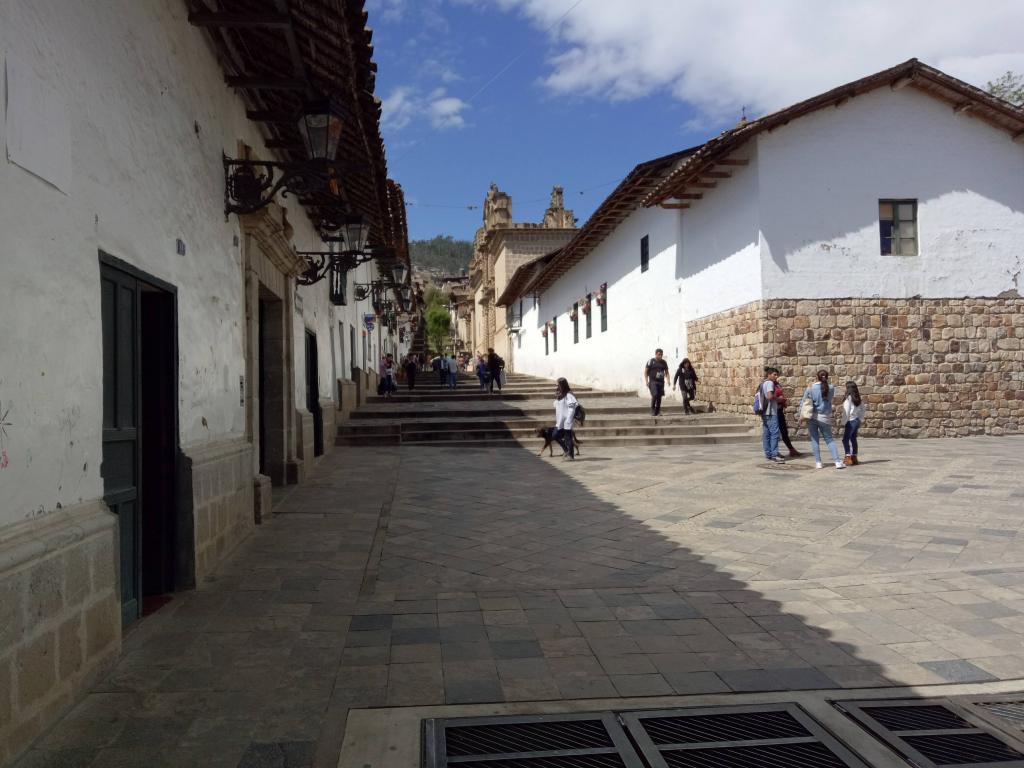
Cusco Peru – Shot using an Oppo. Photo courtesy: Ravi Shankar

Mobile phone manufacturers are constantly upgrading their cameras. The mobile camera war is hotting up. The image sensors started getting larger and cheaper. Samsung and Sony started investing in sensor research and development. Some mobile manufacturers collaborated with camera makers like Hasselblad and Leica to bring these cameras to mobiles. Around late 2023, I was looking to upgrade my smart phone and wanted a more powerful camera. There was a wide choice available. 200 MP sensors were available on some phones while others had 120 and 100 MP cameras. I did some research and found that most phones only shoot images of around 32 MP at the maximum. Usual photos are taken at a much lower resolution.

I eventually purchased an Honor phone with a 100 MP camera. I have used this widely during my travels and gives excellent results especially in good lighting conditions. Mobile phones are lighter and less obtrusive compared to a SLR. Most SLRs have also now shifted to digital sensors rather than film. With a mobile phone it may be easier to capture people in their natural situations. The trend today is to have one device that can do it all. Play videos, check emails, make online bookings, call, chat, capture images and video.

Capturing video has also become easier and many phones have image stabilisation and allow you to shoot in HD and 4K formats. There are a variety of software that integrate images from different sources and can edit and polish a video. Taking a photograph is no longer regarded as something special. Taking a video and posting it on social media is also very common. Many people earn their livelihoods through creating and posting videos on platforms like YouTube and TikTok. We have come a long way from dressing up in our best formals and going to a studio to get our photographs taken to capturing images, selfies and videos using our mobile phones. Only a very brave person can predict what the next hundred years will bring!

Dr. P Ravi Shankar is a faculty member at the IMU Centre for Education (ICE), International Medical University, Kuala Lumpur, Malaysia. He enjoys traveling and is a creative writer and photographer.

.

PLEASE NOTE: ARTICLES CAN ONLY BE REPRODUCED IN OTHER SITES WITH DUE ACKNOWLEDGEMENT TO BORDERLESS JOURNAL

Click here to access the Borderless anthology, Monalisa No Longer Smiles

Click here to access Monalisa No Longer Smiles on Kindle Amazon International

Categories
Nostalgia

My Hostel Days

By Ravi Shankar

The air was getting colder. There was an early morning chill. I wrapped my cotton blanket more tightly around me. January is one of the colder months of the year in Thrissur, Kerala, India. During winter and summer, I had taken to sleeping on the terrace of the men’s hostel. More peaceful and soothing. You can watch the twinkling stars and the clouds. A few other kindred souls did the same. Though it did rain on occasions and then we had to beat a hasty retreat with our bed rolls. The terrace also attracted students who studied using their table lamps till the small hours of the morning.

I stayed at the same hostel room throughout my undergraduate medical (MBBS) course and the first month of my internship. I still remember my entry into the men’s hostel. I had a big suitcase, a bedding roll, a table lamp, a plastic bucket, a mug, and a few daily necessities. We were allotted the first floor of the C Block called the C’ block. We were the sixth batch of the institution and the last one to enjoy the privilege of being allotted rooms together in a single block. Of the twelve rooms in C’ all except three were allotted to our batch.

Ragging was still going strong though strong anti-ragging efforts were also ongoing. We had security guards posted at the entrance to our block and our seniors screaming abuse at us. Gradually after the first few weeks, things quietened down. Reminiscing about those days, I am struck by the simplicity of our lives. Each room had two windows, a ceiling fan, three wooden tables with three wooden chairs, three wooden cots, three metallic cloth hangers, and concrete wall shelves. There was also a ventilator opening into the corridor. Each room was shared by three students. The older medical college hostels had high roofs and did not always have a ceiling fan.

The men’s hostel was located at the edge of the vast campus of the Medical College, Thrissur. There were three blocks (A, B and C) with each block spread over two floors. There was a big portico in front with a phone room and a phone boy. There were bigger rooms (with attached baths) for the tutors and a TV room on the first floor. We had an improvised gym on the ground floor. A room for indoor games was on the first floor next to the TV room and the hostel mess was on the ground floor. In those days there were no cell phones and subscriber trunk dialling (STD) was not yet available. Trunk calls had to be booked manually. The newspaper and magazines room were right at the hostel entrance.  

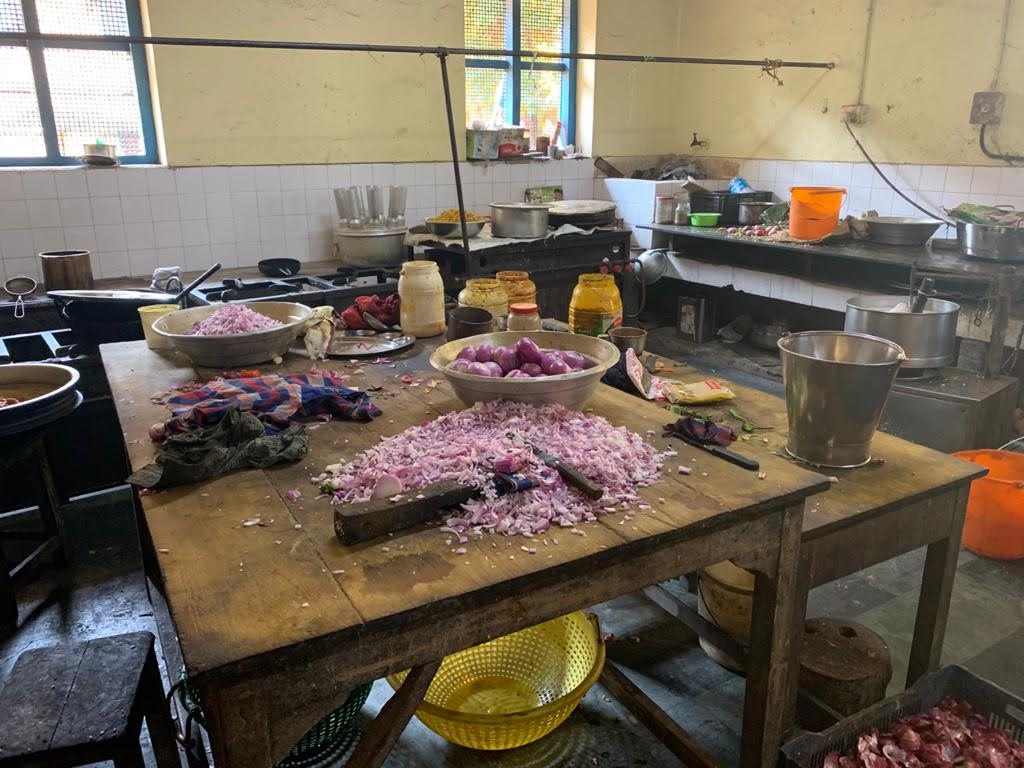
The mess was a simple affair with eight wooden tables and wooden stools and chairs. The chairs had to be strong enough to withstand frequent abuse from the students. There was a serving window, and the main kitchen was inside. Mornings were busy as the clinical students had to board the college buses to reach the hospitals in the town. We had a varied menu for breakfast. This could be masala dosa (a flat bread of rice and lentil flours stuffed with vegetables) puttu (steamed cylinders of ground rice, layered with coconut shavings and fillings), idli (a savoury rice cake), upma (a thick porridge made from rice flour or semolina), noolputtu (called string hoppers in Sri Lanka), bread with jam and butter and something that we called the fractional test meal (FTM). FTM consisted of a glass of warm milk, two boiled plantains and two hard boiled eggs. Quite nutritious and filling. Lunch was usually a hurried affair except on Sundays. Afternoon tea or coffee was one of my favourite repasts. Kerala has a rich and varied selection ranging from different types of vadas (savoury fried snacks), adas (fresh coconut and jaggery wrapped in a dough made of rice) steamed in banana leaf, cutlets, pazhampori (fried banana fritters) and something we called the grenade. The grenade was shaped like one, was mildly sweet and required some effort eating. Neither the mess tea nor coffee were remarkable.   

Hostel mess. Photo courtesy: Ravi Shankar

The quality of dinner varied greatly. On the menu could be chappati (unleavened flat bread), Kerala parotta (layered bread), biryani, plain rice among others. People from the central parts of the state were fond of kanji (a rice gruel). Each month we selected three mess secretaries to oversee the mess. Later we started having a dinner feast toward the end of the month with a grand menu. I still fondly remember the biryani and the lime juice. Lime juice is a specialty of the area with a beautiful blend of sourness and sweetness. We had the Indian Coffee House (ICH) run the college canteen off and on. They closed and reopened a number of times. The crowd we had was not enough for their operation? They served masala dosas with a stuffing of beetroot and potatoes, cutlets, and strong rich coffee. Economics restricted this outing to may be once a week. I survived on a monthly money order from my family.

We also had a local tea shop run by an old people a five-minute walk from the hostel. We used to drop in there during the evening for tea, coffee, and snacks. They also occasionally served lunch. The lunch was served on banana leaves and consisted of papadam, injipulli (dark brown sweet-sour and spicy curry made of ginger, tamarind, green chillies and jaggery), vegetables, sambar (a lentil-based vegetable stew), rasam (a spicy South Indian soup-like dish) and fish curry and fish fry as an extra. The fish was mackerel coated in a spicy rich coconut coating and deep fried in coconut oil. During the early days the mess had frequent financial difficulties resulting in closure and we had to hunt for food outside. Luckily there were a few local tea shops around the campus though this often required a long walk. This was challenging especially at night. Eventually the situation stabilized, and closures, luckily became rare. We also had water problems before we were connected to the main water supply. We were dependent on a small pond, which used to dry up during the summer. The mess had a huge water storage container placed near the wash basins in case the taps run dry.    

The medical college campus was the old TB sanatorium. The sanatorium was established several decades ago far away from human habitations. The campus was vast, and the soil rocky. There were a lot of cashew trees on the sprawling campus. Soon campus roads were constructed, and we could walk move about more easily amidst nature. The basketball and the badminton courts were closed to the hostel and were packed during the evenings. Summers were hot though the temperature was usually below 40 Celsius. Now summer temperatures are routinely over 40 degrees throughout much of Kerala. The state is facing the full brunt of global warming.

We organised a hostel day only once during the time I was at the college. That was a grand affair with music and dancing and several courses of food. The ground in front of the hostel was converted into a fairyland with twinkling lights and decorations. We had a system of ‘late mess’ where dinner was stored for us till 10 pm. We often used this service when we went to watch movies in Thrissur town. The bus fare then was below two rupees and now it is around twenty rupees.

We used to enjoy long walks in the sprawling campus and through the by lanes of surrounding villages. Life was very stressful with assignments, submissions, and frequent examinations. We had to find creative means to relax and recharge. I still remember my last week at the hostel. I was doing my posting in the hospital at Thrissur town and decided to shift to a lodge at the town outskirts. I had accumulated several medical textbooks during my study years, and these were heavy and had to be transported safely. Carrying these around required brute physical effort. You had to be physically strong to be a doctor. I developed close links with my room mates and my floor mates during my stay at the Men’s Hostel (MH). These are nurtured and maintained through our batch WhatsApp group. At my alma mater each batch is named after a famous personality in medicine. As I read more about Osler and his stellar contributions to medicine I felt justly proud that our batch carry his illustrious name. MH, Medical College, Trichur you have left an indelible mark on me and my fellow hostelers. MH tujhe salam[1]!    

[1] Salute to you.

Dr. P Ravi Shankar is a faculty member at the IMU Centre for Education (ICE), International Medical University, Kuala Lumpur, Malaysia. He enjoys traveling and is a creative writer and photographer.

.

PLEASE NOTE: ARTICLES CAN ONLY BE REPRODUCED IN OTHER SITES WITH DUE ACKNOWLEDGEMENT TO BORDERLESS JOURNAL

Click here to access the Borderless anthology, Monalisa No Longer Smiles

Click here to access Monalisa No Longer Smiles on Kindle Amazon International

Categories
Essay

In Search of the Perfect Dosa

Ravi Shankar trots around the globe in quest of the perfect dosa

Dosa is a speciality of South Indian cuisine. Courtesy: Creative Commons

I was intrigued by the filling of the masala dosa. I had never come across a beetroot-based filling before. The dosas of my childhood used potatoes coloured yellow with large doses of turmeric as the filling. The dosa (a thin pancake made from a batter of fermented lentils and rice) was nice and the strong coffee enhanced the flavour. Indian Coffee House (ICH) is an institution in the Southern Indian state of Kerala though they have a few branches outside. The coffee workers’ cooperative operates over 400 outlets in India. The dosa is good and the chain serves decent food and has an old-fashioned vibe with turbaned servers and solid wooden furniture. There are several restaurants run by ICH in the town of Thrissur (Kerala’s cultural capital). There has been one operating for several years at the Government Medical College campus and two at the Swaraj Round in Thrissur.

Bharat is today a very popular hotel in Thrissur, Kerala, and is packed from morning till evening. People crowd all around you as you eat, waiting for you to finish and vacate your table so that they can enjoy their repast. I find this very disturbing and am unable to enjoy my food when someone is waiting in the wings. Bharat had introduced a triangular dosa in the nineties and they offered a good selection of chutneys and powders to accompany the dosa. The huge crowds mean that the server may not always be able to bring your dosa to the table at the optimum temperature.

Dosa should be served at the perfect temperature. Within a minute or two it should be on your plate from the griddle. Too long a wait and the dish become cold and soggy. Not all establishments are able to commit to this tight time frame. Serving a dosa at large gatherings may be challenging as people have to wait patiently for fresh dosas. Creating a perfect dosa requires expertise, commitment, patience, talented people, and maybe a little bit of magic.

In my opinion, there are two main varieties. The restaurant one is crisp, thinner, and larger while the home-made variety is thicker, smaller, and less crisp. There can be a variety of batters ranging from white rice, a combination of different varieties of rice and pulses and millets among others. Making dosas can be a tough task in hot climates. The kitchen is hot, the griddle is sizzling and the flame a glimpse of the fires of hell. Hot weather is needed for fermenting of the batter. Chefs in cold climes face challenges in this regard.

I have always preferred dosas right from childhood. My mother used to make one from a batter consisting of different types of rice and pulses and the thick dosa went well with spicy chutneys.

A dosa uses the nutritionally sound combination of cereals and pulses used by humans throughout the planet since ancient times. The oil required to roll out the dosa from the pan could be a worry for some. But with non-stick pans, the amount of oil required can be very much reduced.  

Our hostel mess at Thrissur used to make good dosas though we often had to rush into the kitchen to get it piping hot. We also visited a local tea stall where we had the more homely variety with onion chutney and coconut chutney. Pathans, an old restaurant and hotel in Thrissur serves great dosas as do several other hotels.  

Neer dosa with chicken curry. Courtesy: Creative Commons

During my residency in Chandigarh, I was introduced to more unconventional fillings. In sector 11 next to the Postgraduate Institute there was a restaurant that served a chicken dosa with a spicy filling. Punjabis love their chickens. For a brief period, the hospital canteen at Manipal, Pokhara, Nepal was run by a group from Mengaluru, India. I got to taste the neer[1]dosa that goes well with spicy chicken curry. Neer dosa uses water, true to its name. In Nepal, Marwaris carry on the Indian food tradition but their dosas usually are not up to my standards. I used to visit Coimbatore in Tamil Nadu, India as a FAIMER[2] fellow and faculty and this city has a rich tradition of dosa making. The PSG[3] Guest House has a famous dosa maker whose skills and reputation are legendary

The island nation of Aruba in the Caribbean may not be in your mind when you think of dosas. However, the Taj Mahal Indian restaurant in the capital, Oranjestad, would serve dosas every alternate Tuesday. The masala dosas were quite good and filling. I visited with my colleagues from the University. In Saint Lucia in the West Indies, the college canteen made good dosas and these were available in the mornings and afternoons.

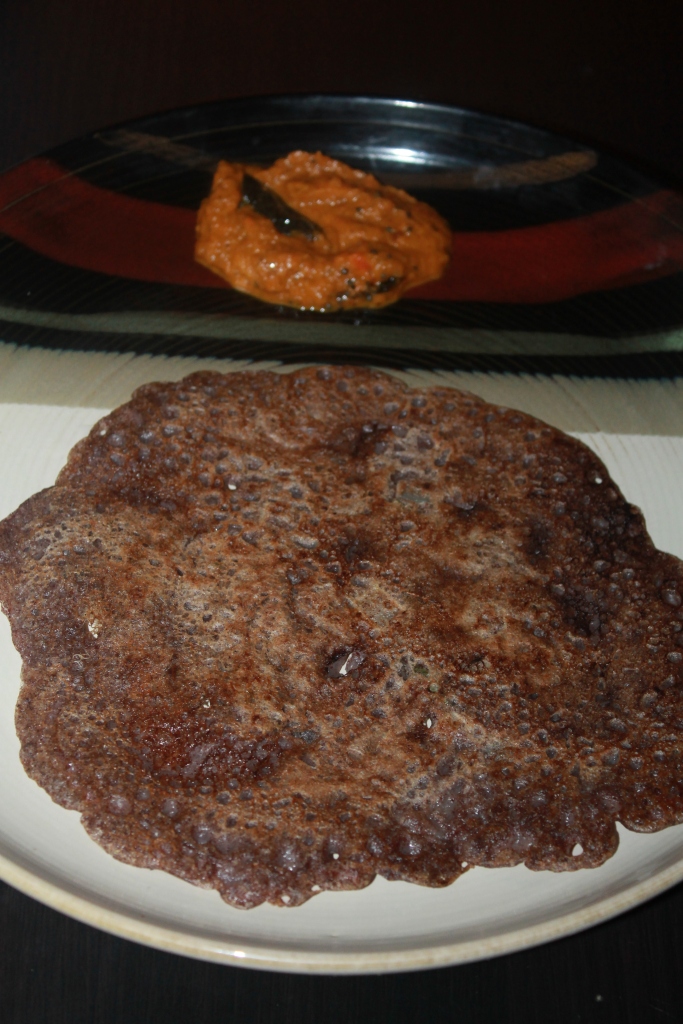
Ragi dosas Courtesy: Creative Commons

I was introduced to the ragi dosa in the town of Kolar in Karnataka, India. Ragi and millet have gained a formidable reputation as miracle foods. The ragi dosa is darker in color than its rice cousin, thicker, and may be more filling. I really enjoy ragi dosas. These days I occasionally go to MTR[4] in downtown Kuala Lumpur to enjoy this treat. The MTR ragi dosa plate has two delectable pieces with a small dollop of clarified butter and two chutneys and sambar. Filling and nutritious!In KL, I usually ate dosas for breakfast at the Sai Canteen in the International Medical University. The dosas are crisp and go well with the freshly ground chutney. The Indian restaurants in Brickfields in downtown KL serve very good dosas. Saravana Bhavan, Adyar Ananda Bhavan, and Sangeeta are a few examples. There may be a shortage of servers and the dosas may not always reach you piping hot and ready to eat. Making and serving dosas is labour intensive.

In Mumbai, the Udupi restaurants usually serve good quality dosas and these restaurants have become synonymous with South Indian food. I recently had a Mysore dosa at the Ram Ashraya restaurant in Matunga Mumbai. The Mysore dosa has a spicy lining on the inside and is a delightful concept. The waiting lines were long, and the restaurant was old-fashioned. I felt distinctly uncomfortable. The dosa however was delicious.

Pesarattu is a dosa mainly from Andhra and Telugu-speaking areas of south India made of green gram, ginger, cumin, and chillies. I was first introduced to this delight during lunch at PSGFAIMER, Coimbatore. Each afternoon there were specialties from a particular South Indian state. In KL, I can taste pesarattu at the Green Chillies restaurant near my apartment.

The accompaniments play a huge role in enhancing the taste of the dosa. A perfect sambar with drumstick and other vegetables, different types of chutneys, chamandi (a thick condiment made from chillies, coconut, ginger and a variety of other ingredients) and idli powder (termed gun powder). Chutneys can be made from red chilies, green chillies, and mint. There is also a gunpowder dosa, where a paste of gunpowder is smeared on the inner side of the dosa like a Mysore dosa.  

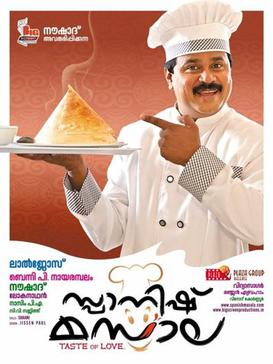
Spanish Masala movie poster

I remember watching the dosa-making skills of the actor, Dileep, in the Malayalam film Spanish Masala. Dileep was an illegal immigrant in Spain and invents a new filling for the dosa and names the dosa Spanish Masala. With a dosa batter, a hot griddle, cooking oil, clarified butter and passion you can create magic in the form of a rich, thin, crackling dosa. In many ways, the dosa is as adaptable as a pizza. Various fillings and batter can be used, and the dish can be adapted for various tastes. However, maintaining a dosa piping hot may be more challenging, which may account for its lesser popularity as a takeout item. I may have tasted perfection in a dosa only around twenty times in my life. Often, the dosa was not crisp enough, was not served at the optimum temperature, the accompaniments were not of good quality, or the place was too crowded. I often dream of the perfect dosa, thin, crisp, dark brown, and piping hot, just waiting to melt in the mouth!    

.

[1] Tulu word for water

[2] Foundation for Advancement of International Medical Education and Research

[3] PS Govindswamy

[4] Mavalli Tiffin Rooms, a restaurant chain started in 1942

Dr. P Ravi Shankar is a faculty member at the IMU Centre for Education (ICE), International Medical University, Kuala Lumpur, Malaysia. He enjoys traveling and is a creative writer and photographer.

.

PLEASE NOTE: ARTICLES CAN ONLY BE REPRODUCED IN OTHER SITES WITH DUE ACKNOWLEDGEMENT TO BORDERLESS JOURNAL

Click here to access the Borderless anthology, Monalisa No Longer Smiles

Click here to access Monalisa No Longer Smiles on Kindle Amazon International