Categories
Musings

Nobody Knows…

By Farouk Gulsara

It was a moment reminiscent of Eleanor Rigby[1].

A lady who had spent over half her life serving at the temple passed away unexpectedly. She had remained unmarried, having lost her family quite early on. In search of solace, she dedicated all her spare time to various activities to ensure the temple ran smoothly. She ensured that even the most minor details were attended to. 

One day, she passed away in her sleep. Nobody realised. The daily operations continued as usual. Nobody missed her. There wasn’t even a mention of her death in any of the temple communications. Only the local gossipy housewives had something to discuss during their daily tête-à-tête. They believed she was in a better place and held a higher status in the karmic cycle. But nobody knows…

During one of my weekly cycling routines, I chanced upon a lady who had pulled over her SUV by the road. She gave a gentle honk. As if responding to some intergalactic mothership, I noticed a pack of stray dogs and a troop of wild monkeys hurrying towards the SUV. They gathered around the vehicle patiently as the lady began rummaging through the backseat and distributing food. 

I believed this to be the finest form of non-verbal interspecies communication I have ever witnessed. The cynic within me proposed that her actions were not in the best interest of the natural order. Wild animals are meant to hunt for their daily sustenance. By feeding them, they become overweight and less agile, ultimately diminishing their mobility. What will occur when the gravy train halts? Will they resort to attacking passersby for free meals? Nobody knows…

Here I am, cycling and running, hoping it will help me live longer or make me less of a bother to those around me in my twilight years. On the other hand, could exposure to the elements and the dangers associated with the outdoors be the actual cause of my malady? Nobody knows…

The individuals gathered in Prayagraj, India, for the Kumbh Mela share a common belief. The alignment of the Sun, Moon, and Jupiter in a straight line is thought to hold cosmic significance. The Kumbh occurs every 12 years in four locations across India—Prayagraj, Nashik, Haridwar, and Ujjain. This year, in 2025, a rare celestial alignment that occurs once every 144 years[2], offers a unique spiritual renewal and liberation opportunity. 

Can a lifetime of wrongdoing and accumulated karma debts be washed away in a single dip at Triveni Sangam[3]? Can one attain moksha so easily? Yet, nobody knows… none who have been there and returned to provide a field report.

The take-home message is that just because no reproducible and tangible proof can be provided does not mean it does not exist. To each their own. Rather than attempting to undermine their beliefs or corner them into adopting our views, we should simply leave them be. Let everyone believe they are making a difference in the world they inhabit during their lifetime.
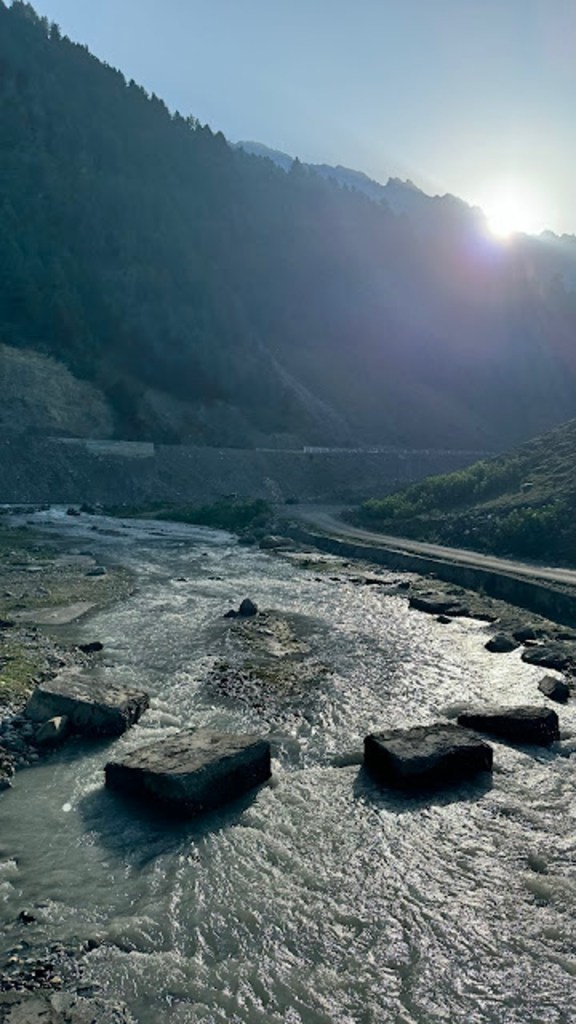
Photo Courtesy: Farouk Gulsara

[1] Eleanor Rigby is a Beatles song from 1966 about a lonely woman who found solace in the church.

[2] https://www.moneycontrol.com/religion/maha-kumbh-mela-2025/maha-kumbh-mela-2025-astrological-significance-and-zodiac-impact-of-this-once-in-144-years-event-article-12918706.html

[3] The Triveni Sangam in Prayagraj (formerly known as Allahabad) is the confluence of three rivers: Ganga, Yamuna, and the displaced Saraswati.

Farouk Gulsara is a daytime healer and a writer by night. After developing his left side of his brain almost half his lifetime, this johnny-come-lately decided to stimulate the non-dominant part of his remaining half. An author of two non-fiction books, Inside the twisted mind of Rifle Range Boy and Real Lessons from Reel Life, he writes regularly in his blog, Rifle Range Boy.

.

PLEASE NOTE: ARTICLES CAN ONLY BE REPRODUCED IN OTHER SITES WITH DUE ACKNOWLEDGEMENT TO BORDERLESS JOURNAL

Click here to access the Borderless anthology, Monalisa No Longer Smiles

Click here to access Monalisa No Longer Smiles on Kindle Amazon International

Categories
Poetry

In Another Galaxy

Poetry by Masud Khan, translated from Bengali by Fakrul Alam

Sun by Edvard Munch  (1863–1944) Courtesy: Creative Commons
The Sun’s old. Deadly rays leak out of its decrepit body,   
Lashing planets, satellites and asteroids. 
Fleeing for dear life, humans and animals run helter-skelter.
 
Unable to endure the sun’s excruciating heat, 
Men and women prepare to move with the Earth forever—
Moving with the planet they love more than any other,  
They will seek sanctuary in some distant young galaxy,
Just as bewildered people, uprooted by some raging riot somewhere,
Flee far away to some distant land, lives in their hands,
Forsaking their country, destined to be refugees forever. 
 
One morning, at sunrise,
Planets, satellites and asteroids will stare in astonishment.
At a nine-planet orbital village, a stellar union council of nine wards, 
Looking immense, elliptical, though everything else will be the same! 
Other planets will be in their orbits as always!
Only cunning, conniving and naughty earth will elude their gaze!
 
The Sun, that incarnate ball of fire, will be so fiery and indignant then 
That it will dart out its mile-after-mile long murky tongue
Spewing furious fumes of loud hitherto unheard curses, 
Gurgling lava spilling out from some swollen uvula forever...
It will pursue Earth as long as it can, chastising it all the time
It will flicker its fiery, thundering, curses-spewing tongue incessantly! 
 
As it flees, casting furtive backward glances, 
Will Earth ponder for even a moment and exclaim:
“Alas, what’s going to happen to those ill-fated planets—
To Mercury, Venus and Mars?”   

Masud Khan (b. 1959) is a Bengali poet and writer. He has, authored nine volumes of poetry and three volumes of prose and fiction. His poems and fictions (in translation) have appeared in journals including Asiatic, Contemporary Literary Horizon, Six Seasons Review, Kaurab, 3c World Fiction, Ragazine.cc, Nebo: A literary Journal, Last Bench, Urhalpul, Tower Journal, Muse Poetry, Word Machine, and anthologies including Language for a New Century: Contemporary Poetry from the Middle East, Asia, and Beyond (W.W. Norton & Co., NY/London); Contemporary Literary Horizon Anthology,Bucharest; Intercontinental Anthology of Poetry on Universal Peace (Global Fraternity of Poets); and Padma Meghna Jamuna: Modern Poetry from Bangladesh (Foundation of SAARC Writers and Literature, New Delhi). Two volumes of his poems have been published as translations, Poems of Masud Khan(English), Antivirus Publications, UK, and Carnival Time and Other Poems (English and Spanish), Bibliotheca Universalis, Romania.  Born and brought up in Bangladesh, Masud Khan lives in Canada and teaches at a college in Toronto.

Fakrul Alam is an academic, translator and writer from Bangladesh. He has translated works of Jibonananda Das and Rabindranath Tagore into English and is the recipient of Bangla Academy Literary Award (2012) for translation and SAARC Literary Award (2012).

PLEASE NOTE: ARTICLES CAN ONLY BE REPRODUCED IN OTHER SITES WITH DUE ACKNOWLEDGEMENT TO BORDERLESS JOURNAL

Click here to access the Borderless anthology, Monalisa No Longer Smiles

Click here to access Monalisa No Longer Smiles on Kindle Amazon International

Categories
Musings

Wanderlust or Congealed Stardust?

By Aditi Yadav

We are but stardust, swirling and travelling eternally across the universe. The interweaving of matter and energy in the cosmic space-time tapestry has always struck us with wonder and curiosity. As the Japanese poet Basho resonates in his Narrow Road to the deep north, “The months and days are passing wayfarers through endless ages, and travelers too the years that come and go. Those who float their life away on boats or meet old age plodding before a horse- they spend their days in journeying and call the journey home.”  Humans have marched on, often quite literally so, in the journey of life’s evolution.

To evolve one needs to survive despite all odds. It is an enterprise in desperation, driven by the basic instinct for survival. For several millennia, wandering to forage for food, moving on for a safe shelter and fleeing away from inclement weather or wild animals was the only way of life — on one’s toes, on the run, hanging on to dear life. Braving through raw and ruthless nature — the scorching sun, blistering winds, numbing snow, bone-chilling blizzards, tempests on seas, ravenous typhoons– what an extraordinarily heroic travelogue has been the journey of homo sapiens!

When the ‘wanderer-hunter’, settled as a farmer, the new sense of settlement brought in the novel element of ‘belongingness’ to a certain place, and the consciousness of possession or ownership. A brand-new idea of life bloomed. A settled and relaxed idea of ‘home’ now formed a part of new civilization. As a consequence, resource ownership in itself gave rise to trade, conflicts and wars. All of this entailed travel.  The merchants traveled distances to barter and earn. Many religious leaders travelled around to propagate and preach faith and worship – perhaps, as service to humanity, or maybe, as an attempt to know human consciousness. In another dimension, the ambition to rule over land and capture resources drove people in leaps and bounds on land, and establish colonies across oceans. What was once a globe of free vagabonds turned into a battlefield of fragmented land, air and water masses with contest for boundaries.  Most of it were accompanied by bloodshed and colossal loss of human life and bio-spheric devastation.

But there was a class of travellers of the other kind — the ones who travelled for the joy of travel, excitement of discovery, to pen a new story, or write a new song. Freebirds like Alberuni, Fa-Hsein, Hyecho, and their ilk left behind valuable records and are documented in history. I often wonder about the history of female travellers. Who was the first female who ventured forth all by herself? What became of her? Did she disguise herself as a male? There is no way of knowing. Maybe she could not document it due the lack of knowledge of the written word, or perhaps, she did not want to be discovered at all. Although in my heart, I do pray she had a safe and happy journey.

The eternal flame to travel has propelled us to reach escape velocity and launch travel into space. The space programs, the Mars rover, the moon missions are our most fascinating travel adventures. Sun light or star light that we bask in at any given time is a light from the past travelling toward us. The future light may be travelling too, waiting for us to reach out perhaps.

Even with such incredible progress, there is so much that suffocates us. What is home, when the soul does not feel at ease? The Vedic sages taught that for those with open hearts, the world is but one country — everywhere one goes is home. The earth we know, owes its existence to migrating populations. It’s ironic how immigrants are discriminated against in the modern times. May be the suffocation we often feel is only the pettiness that has crept in.

Travel to free yourself of these shackles, dear heart! Despite the constraints of finances, opportunities, fetters of the 9-5 schedule, travel – what are you living for, if not for the liberation of the self? My thoughts don’t wait for spring. They forever bloom and fall off like the petals of cherry blossoms. Yet, there is joy in visualizing how they blow with the wind, rest on someone’s shoulders or gently settle on the surface of river, drifting along without a thought about the destination. They die somewhere, without even knowing. To have blossomed and traveled is fulfilling enough.

The instinct to wander and travel, is as old as life itself — for that’s how life has propagated. The roots of life find nourishment through the peripatetics of body and mind. It is a malady that humans are born with; a melody in sync with one’s heartbeat. “Travel inside out and outside in. That’s the fate humans are born with”, sings the systole-diastole of the heart, resonating the cosmic big bang-big crunch. A whole world lies outside your window, and several worlds live inside you. Traverse the infiniteness of yourself, measure the earth in your stride while Keats sings on, “Let the winged Fancy roam, Pleasure never is at home.”

.

Aditi Yadav is a public servant from India. As and when time permits she engages in creative pursuits and catches up her never-ending to-read list. Her works appear in Rain Taxi Review of books, EKL review, Usawa Literary Review, Gulmohur Quarterly, Narrow Road Journal and the Remnant Archive.

PLEASE NOTE: ARTICLES CAN ONLY BE REPRODUCED IN OTHER SITES WITH DUE ACKNOWLEDGEMENT TO BORDERLESS JOURNAL

Click here to access the Borderless anthology, Monalisa No Longer Smiles