Nazrul’s lyrics of Mor Priya Hobe Eso Rani (My Sweetheart, Be My Queen) has been translated from Bengali by Professor Fakrul Alam
From Public Domain
MY SWEETHEART, BE MY QUEEN

My sweetheart, be my queen!
Let me make a garland of stars for your chignon.
Dear girl, your ears I’ll adorn
With the spring moon’s third visitation.
Your throat, dear girl, I’ll deck with a pair of dangling swans.
I’ll make a ribbon too to tie your cloud-coloured disheveled hair
Out of the lightening in the spring moon’s third visitation!
A paste blended from moonlight and sandalwood
Will be your body’s balm. The red of the rainbow
Will be the lac-dye used to color your feet
The seven notes of my song will compose
Your bridal chamber’s decor
While my muse’s bulbul bird will sing a song for you—
in full-throated ease!
Born in united Bengal, long before the Partition, Kazi Nazrul Islam(1899-1976) was known as the Bidrohi Kobi, or “rebel poet”. Nazrul is now regarded as the national poet of Bangladesh though he continues a revered name in the Indian subcontinent. In addition to his prose and poetry, Nazrul wrote about 4000 songs.
Tumi Kon Kanoner Phul ( From whose garden could you be) by Tagore was published in the collection called Kori O Komal (Sharp and Flat) in 1886.
From whose garden could you be
And in which sky were you a star?
Where could I have seen you before
And in what dream did you last appear?
When was it that you had last sung,
And when did you last look at my eyes?
I’ve forgotten it all!
All that I can remember now
Is that you were my eyes’ star!
Hush—don’t say anything now—
Just take a look and go your way
In this moonlight just smile and melt away!
Overcome with sleep, I look at the moon
With an enraptured heart
Like your eyes, let the twin stars in the sky
Keep streaming their rays.
Renderred by well-known contemporary singer, Srikanto Acharya
Anjali Loho Mor (Take my Offerings) was written and composed by Nazrul (1899-1976)
Take my offerings melodically, musically
Like a flaming lamp, my soul flickers
Captivated by you, O lovely one;
What feeling of bliss is this, making the body sway
And dance before you melodically, musically?
In ecstasy unfolds love’s petals,
Full of beauty, fragrance and love
Looking at your face, I’d like to say to you:
“Fall down like petals of flower will do
And colour your feet’s soles, melodically, musically”
Renderred by the legendary Feroza Begum (1930-2014)
Tagore’s Nobobarsha (or ‘New Showers’) celebrates the onset of rains. The poem was written in 1900 and brought out that year itself as part of Kshanika (Momentary). It can also be found in Sanchayita (An Anthology of Selected Works), his poetry collection brought out by Visva Bharati, in 1931.
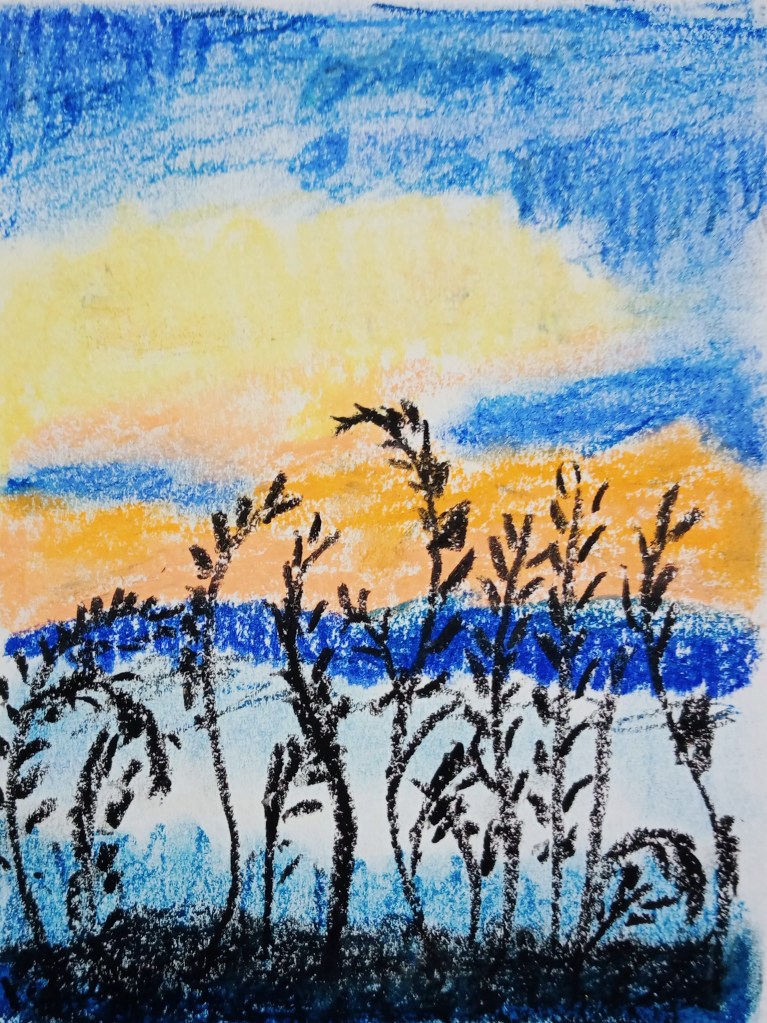
Clouds . Art by Sohana Manzoor
New Rains

My heart dances today — dances like a peacock.
Like the shimmer of its plumes,
My heart glistens with rapturous colours.
When I see the sky, my longing loses itself in euphoria.
My heart dances today — dances like a peacock.

The clouds rumble, rumble high up in the heavens.
The rain rushes in.
The new stalks of rice quiver.
Doves shiver silently in their nests, frogs croak in flooded fields,
The clouds rumble, rumble in the heavens.

I see the clouds’ tear-filled eyes lined, lined with blue kohl.
Ecstasy innervates
The grass and deep shady woods.
The floral bowers bloom with a new zest.
I see the clouds’ tear-filled eyes are lined with blue kohl.

Oh, who has untied her hair in gay abandon, in abandon on the palace's roof?
Who has covered her bosom
In blue, who has come
Back to play with slivers of lightning?
Oh, who has untied her hair in abandon on the palace's roof?

Oh, by the riverbank lined with grass, who sits in dark raiment dripping purity?
The young malati flowers wonder distractedly
As they gaze at the distant skies, where
Does the vessel float as it leaves the ghats?
Oh, by the riverbank lined with grass, who sits in dark raiment?

Oh, who swings today on the lonely swaying bakul branch, swings and sways?
The bakul flutters and falls.
An aanchal* soars to the the sky with yearning,
A lock of hair flies to cover the eyes, the karabi flower drops.
Oh, who swings today on the lonely swaying bakul branch?

In this chaos, who has moored his boat, his new boat by the riverside?
Clumps of cotton-like moss
Fill the watery banks.
The clouds sing soulful songs with tear-filled eyes.
In this chaos, who has moored his new boat by the riverside?

My heart dances today —
Dances like a peacock.
A heavy downpour falls on the new leaves,
The garden quivers with the chirrup of crickets.
The river has crossed the bank and approaches the village.
My heart dances today — dances like a peacock.

*Loose end of a Saree

(This poem has been translated by Mitali Chakravarty)
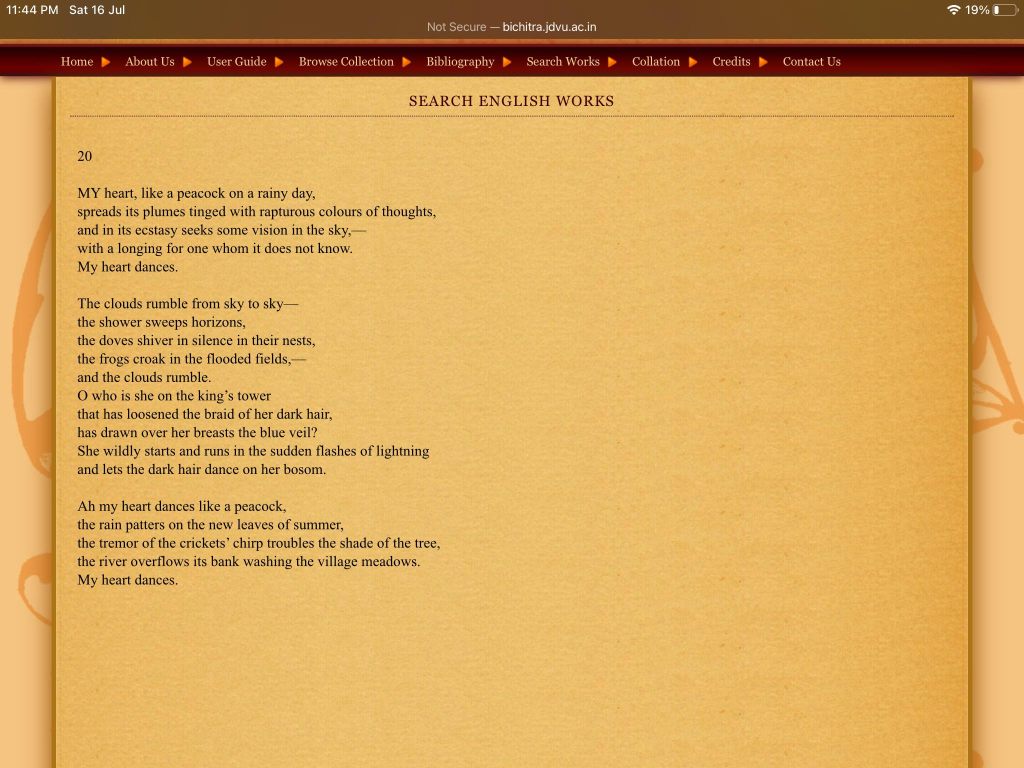
There is also an English translation [1]of the poem by Tagore. The translation is shorter and of twenty lines only as opposed to the 41 lines of the full-length poem. The poet’s translation is a part of Tagore’s Poems edited by Krishna Kripalani, Amiya Chakravarty, Nirmalchandra Chattopadhyay and Pulinbehari Sen ( Calcutta: Visva Bharati, 1942).
Screenshot of Tagore’s own translation from Bichitra Varorium by Anasuya Bhar
The poet’s own translation is sung in the original language it was written in, Bengali. Here we present the song sung by a reputed singer, Srikanto Acharya.
Thanks to Bichitra Varorium, to Anasuya Bhar for her research and editorial advise, Sohana Manzoor for her art and editorial comments. Tagore’s short translation has also been used as a resource for improving the translation of the full-length poem. The translation is by Mitali Chakravarty.
We salute Rabindranath Tagore (1861-1941) for his inspirational writing and ideology. Here, we have attempted to translate/transcreate his songs while retaining the essence of the spirit and flavour of his lyrics.
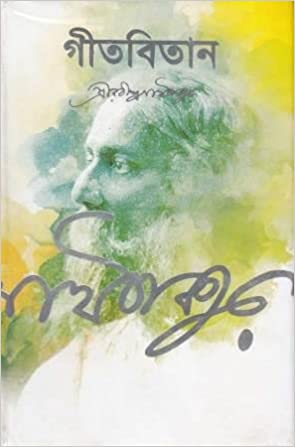
Gitabitan, houses 2232 songs by Tagore. Some of the songs on this page are a part of this collection.
Kothao Amar Hariye Jawa Nei Mana or Losing Myself invokes for us the joy of losing oneself in an imaginary world that the poet revels in… the result of the creative stillness he experiences in his mind…
Losing myself...(A translation/transcreation of Kothao Amar Hariye Jawa Nei Mana, 1939)
There is no bar to losing myself in an imaginary world.
I can soar high on the wings of a song in my mind.
Weaving fantasies into vast tracts of lands and unexplored oceans,
I lose my path in the distant shore of quietude —
I get acquainted with the champak blooms in the parul woods.
When the sun sets, I gather flowers in the sky amidst the clouds.
Mingling with the foam of the seven seas,
I reach the shores of faraway lands —
I knock at the closed doors of fairyland in my mind.
This song has been rendered in Bengali by Indranil Sen, a modern contemporary artiste
The poet as a visionary perceives the world in a different way, breaking class and caste barriers — he embraces humanity of all strata with affection. Here is a song about a young girl called Krishnokoli, who worked in fields and lived among cows, unable to follow the traditions of oborodh or purdah like genteel women because she had to work.
Krishnokoli(A translation/transcreation of Krishnokoli, 1900)
I call her Krishnokoli* though villagers call her dark.
On an overcast day, I saw in a field, a dark girl with dark deer eyes.
Her head was bare, her braid swung down her back.
Dark? However dark she is, I have seen her dark deer eyes.
The clouds closed in as two ebony cows lowed,
The dusky girl came out of the hut with hurried, uneasy steps.
She looked up with arched brows at the sky, heard the clouds rumble.
Suddenly, a gust from the East gambolled a wave through the rice crops.
Alone, I stood between the fields, there was no one else in the expanse.
Did our glances meet? That remains a secret between her and me.
Dark? However dark she is, I have seen her dark deer eyes.
They remind me of the kohl-clouds that collect in the North-east each summer,
Of the soft dark shadows that descend on the tamal grove when the rains start,
Of the happiness that unexpectedly fills my being on a monsoon night.
I call her Krishnokoli even if others call her by a different name.
I had seen her in Moynapara meadows, a dark girl with dark deer eyes.
She left her head uncovered as she had no leisure to be shy.
Dark? However dark she is, I have seen her dark deer eyes.
*Krishnokoli: An indigenous name of a flower in Bengal, also can be seen as associated with Krishna, the dark God. Koli in Bengali means bud.
This song has been rendered in Bengali by the legendary Suchitra Mitra (1924-2011)
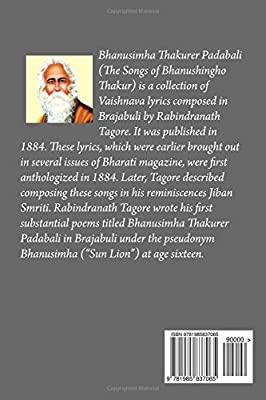
Tagore, the multi-faceted, experimented with languages. Here is the transcreation of a song written originally in Brajabuli, a dialect based on Maithali that was popularised for poetry by the medieval poet Vidyapati. Composed in 1877. it became a part of Bhanusingher Padabali in 1884. This song draws from the lore of Radha and Krishna.
Against the Monsoon Skies…
(from Shaongaganeghorghanaghata, 1884)


Against the monsoon skies, heavy clouds wrack the deep of night.
How will a helpless girl go through the thick groves, O friend?
Crazed winds sweep by the Yamuna as clouds thunder loud.
Lightning strikes: the trees have fallen, the body trembles
In the heavy rain, the clouds shower a downpour.
Under the shaal, piyale, taal, tamal trees, the grove is lonely and quiet at night.
Where, friend, is he hiding in this treacherous grove
And enticing us with his wonderful flute calling out to Radha?
Put on a garland of pearls, a shithi* in my parting,
My odni* is flying as is my hair; tie a champak garland.

Don’t go in the deep of the night to the youth, O young girl.
You are scared of the loud clapping thunder, says Bhanu your humble server.

*shithi: Ornament worn in the parting of the hair.
*odni: A long stole or scarf
Song by Sourendro-Soumyojit, Dance by Priyanka
The creative stillness, or quietude, experienced by the maestro, takes him further into a perception of the world where he empathises with nature and feels the tides rush through his veins.
The sky is replete with sun and stars, the Earth, brimming with life -- In the midst of this universe, I have found my abode. Spellbound by the plenitude, songs awaken in my being.
The infinite, eternal waves that create planetary tides Resonate through the blood coursing in my veins.
As I walk to the woods, I step on the grass. Heady perfumes of flowers startle me into a rhapsody. Benefactions of joy anoint the universe.
I have listened, I have watched, I have poured my life into the Earth. Through knowing, I have sought the unknown. Spellbound by the plenitude, songs awaken in my being.
This song has been rendered by Srikanto Acharya, a modern day legend.
Tagore wrote intense and non-intense songs, though his rhapsodic connection with nature even tinge the lighter songs with a unique lyrical beauty. Here is a song that is often used to depict joie de vivre and plays beautifully on a piano as the tune borrows from the Scottish tune of ‘Ye Banks And Braes’. It is a part of a what is popularly known as a dance-drama, called Kal Mrigaya by the maestro himself. The story was based on an event from the Indian epic, Ramayana.
The Swaying Flowers
( from Phoole Phoole Dhole Dhole,1882)

The flowers sway in the soft breeze.
The river waves and gurgles as it flows.
The birds in bowers trill a tune
I cannot fathom the yearning that fills my being.
This song has been rendered by Sahana Bajpaie, a well-known singer and Tagore scholar
Rabindranath Tagore (1861 to 1941) was a brilliant poet, writer, musician, artist, educator – a polymath. He was the first Nobel Laureate from Asia. His writing spanned across genres, across global issues and across the world. His works remains relevant to this day.
(Most of the songs have been translated/transcreated solely on behalf of Borderless Journal by Mitali Chakravarty with feedback from Sohana Manzoor, Meenakshi Malhotra and Vatsala Radhakeesoon. Krishnokoli was improved further with advise from Aruna Chakravarti. Only ‘Against the Monsoon Skies…’ was first translated by Mitali Chakravarty and published in SETU).
.
PLEASE NOTE: ARTICLES CAN ONLY BE REPRODUCED IN OTHER SITES WITH DUE ACKNOWLEDGEMENT TO BORDERLESS JOURNAL

 Borderless