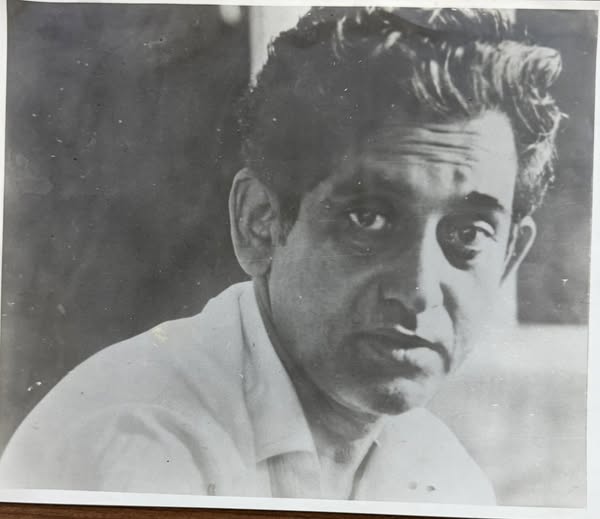
The death of Ramakanta Rath, a provocative figure in contemporary Odia poetry, has left a considerable gap in the literary landscape. Born on December 13, 1934, in Cuttack, Ramakanta was a prominent modernist poet in Odia literature. He obtained his Master’s degree in English Literature from Ravenshaw College and joined the Indian Administrative Services (IAS) in 1957.
His work was significantly shaped by the influences of poets such as T.S. Eliot and Ezra Pound, often delving into themes of mysticism, mortality, and human isolation. Ramakanta Rath’s contributions have profoundly impacted modern Odia literature in various ways. He brought modernist themes and styles to Odia poetry, drawing significant inspiration from Western poets such as T.S. Eliot and Ezra Pound. His examination of topics like the search for the mystical, the concepts of life and death, and the experience of inner solitude facilitated a transition in Odia poetry towards more contemporary and universal themes.
Rath’s poetry is marked by symbolic references to spiritual and metaphysical dimensions of existence, which enhanced the intellectual richness of Odia literature. This methodology enabled readers to engage with intricate philosophical concepts through the medium of poetry. Rath’s poetry is noted for its somber tone and symbolic references to the spiritual and metaphysical dimensions of existence.
His significant literary contributions include Kete Dinara (Of Bygone Days, 1962), Aneka Kothari (Many Rooms, 1967), Sandigdha Mrigaya (Suspicious Hunting, 1971), Saptama Ritu (The Seven Seasons, 1977), Sachitra Andhara (Picturesque Darkness, 1982), Sri Radha (1984), and Sri Palataka (Mr Escapist, 1997). Rath was honoured with the Sahitya Akademi Award in 1977, the Saraswati Samman in 1992 for Sri Radha, the Bishuva Samman in 1990, and the Padma Bhushan in 2006. He also received the Sahitya Akademi Fellowship in 2009 before which he was the vice-president of the Akademi.
Rath is particularly celebrated for his lengthy poem, Sri Radha, in which he reimagines Radha, freeing her from theological limitations and depicting her as a remarkable character who embodies deep emotions, love, defiance, and resilience. This poem uniquely intertwines themes of erotic love with existential introspection. This notable work initiated a new trend in Odia poetry that echoed the confessional styles of poets like Sylvia Plath, infusing a personal and introspective quality into Odia literature.
He skillfully combined traditional Odia poetic meters and techniques with contemporary free verse, creating a unique hallmark of his artistic expression. Odia poetry is characterised by its extensive use of classical meters and forms, such as chhanda, chautisa and champu which serve to articulate intricate emotions and themes in a structured and rhythmic manner. By incorporating these traditional elements, Rath infused his poetry with cultural richness and musicality, thereby amplifying its emotional resonance and thematic depth.
Ramakanta Rath’s integration of traditional Odia meter enriched his themes in multiple ways. By using these familiar poetic forms, his work connects more profoundly with readers who recognise them. This cultural connection amplifies the emotional resonance of his themes, making them easier for his audience to relate to. Additionally, traditional Odia meters often hold symbolic significance, which Rath skilfully utilises to deepen his modernist themes.
The combination of symbolic annotations and modernist concepts enhances Rath’s poetry, adding depth and encouraging reflection. By contrasting traditional forms with modernist ideas, his work creates a dynamic tension. This tension amplifies the emotional resonance of his poetry, prompting readers to navigate the clash between traditional values and contemporary realities, which adds layers to his themes. Rath’s incorporation of traditional meters with modern free verse invites readers to think critically about his poetry.
This fusion of styles encourages a deeper exploration of his themes, leading to a more profound appreciation of his work. While the traditional Odia meters offer a cultural base, Rath’s modernist themes keep his poetry relevant on a global scale. This interplay between tradition and modernity enables his work to reach beyond local confines, attracting a wider audience interested in existential and philosophical questions.
Rath’s poetry stands out for its masterful incorporation of irony and wit, elements that add depth and complexity to his body of work. Critics note that his use of irony can often be challenging to interpret, reflecting the nuanced and multifaceted nature of his poetic viewpoint. This unique approach, combined with his thematic explorations, has sparked a resurgence among a new generation of Odia poets, playing a crucial role in the advancement of modern Odia literature.
Ramakanta Rath’s impact has been instrumental in shaping the landscape of contemporary Odia poetry, solidifying his reputation as a monumental figure in the realm of Indian literature today. His passing signifies the conclusion of a significant era in the narrative of Odia literature, leaving behind a legacy that will continue to inspire future writers and poets.
Bhaskar Parichha is a journalist and author of Cyclones in Odisha: Landfall, Wreckage and Resilience, Unbiased, No Strings Attached: Writings on Odisha and Biju Patnaik – A Political Biography. He lives in Bhubaneswar and writes bilingually. Besides writing for newspapers, he also reviews books on various media platforms.
.
PLEASE NOTE: ARTICLES CAN ONLY BE REPRODUCED IN OTHER SITES WITH DUE ACKNOWLEDGEMENT TO BORDERLESS JOURNAL
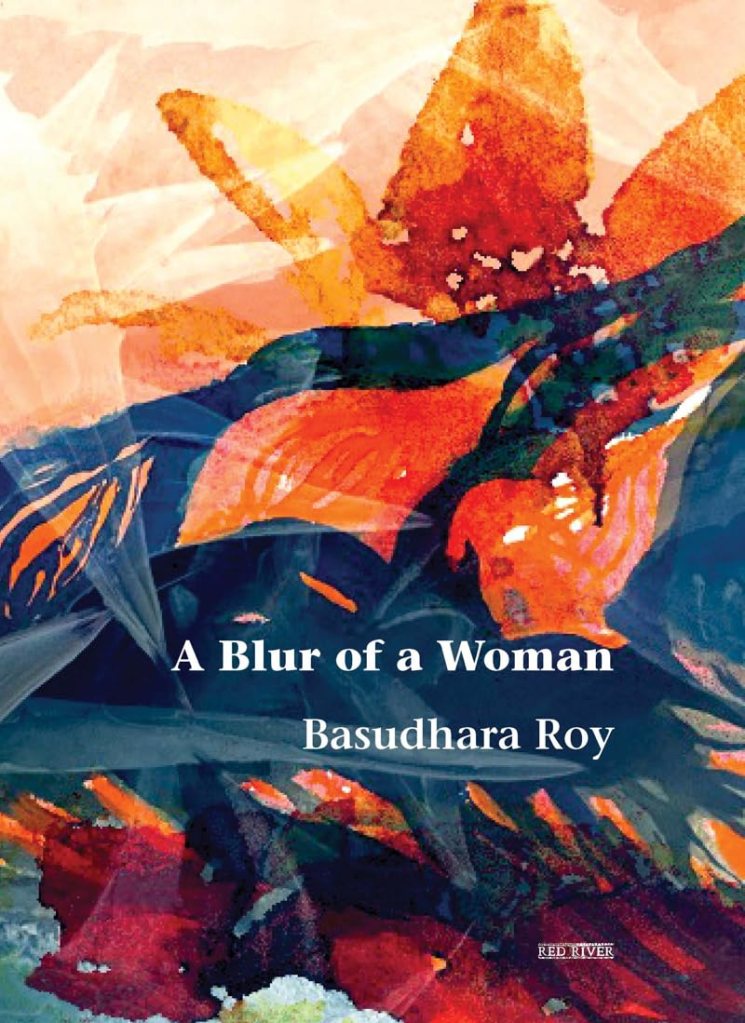
The feminine mystique has defied every attempt to capture its attributes. If clusters of stories surround a goddess, dilemmas are embedded in them. If the pavement-dwelling mother with children clinging to her skirt images economic deprivation, there are stories hidden in her grey-flecked eyes. Basudhara Roy recognises this amorphous, protean aspect of the feminine and titles her collection A Blur of a Woman, poetically declaring; “she owns the place/and the little magic she has earned…she will use it someday to unbuild herself/disappear dissolve/ become a blur”.
This collection is a subtle attack on patriarchy as it encompasses the history and socio-cultural conditions that have moulded women into being mercurial yet tangible, pliant as well as resistive, buoyant but also vulnerable. As the poems flow in a drumroll of many contexts, vignettes of the journey are captured, symbolically strong and offering a plethora of layered meanings. The lines encourage a dialogic exchange whether with the poet, or with one’s own half-acknowledged self that is suddenly confronted by Medusa’s mirror.
The first two sections begin with poems titled ‘Duhkha’ and ‘Soka’[1], directing us towards the Buddhist principle of inevitable mutability and the need for acceptance.
I have seen hearts shut and bolt doors
from within, their windows walled while
on love the mold of ingratitude thrives
With such adaptations, the contemporary takes precedence over the philosophical teachings, and the identification with thwarted expectations, social discord, betrayal and helpless sorrow is almost immediate. If solace is to be found it is now individual—and, in this instance, by turning to the gnarled trunks of trees where tears have watered the serrated bark. Speaking of the imagistic density of Roy’s phrases, this kind of interlinking through poetic shorthand is perceived in much of her narrativisation. The ‘betrayal’ that causes sorrow and also the maturity of recovery is a process resonant through the history of women’s writing. ‘Soka: A Triptych’ strings this further through contemplating the elegiac notes of death and mourning—yet birth and death are twins: “If life alone can be seen/all this emptiness must surely be death.”
A sizeable section of the book charts a trajectory of feminist fables, gleaning references from Rabindranath Tagore, Jayadev’s Geet Govinda, Philomela’s story, Virgo’s distress, and others. In Roy’s hands, irony becomes a viable and effective tool of social critique as in the poem
‘In Which Bimala Agrees to an Interview for a Special Issue of Post-Text Feminism’. Tagore’s popular novel Ghare Baire/ The Home and the World presents Bimala as the conventional woman who is persuaded to discover the turmoil of the world outside the threshold. Basudhara devises an imaginary conversation, some of which is quoted:
Where, then, would you locate yourself?
Here. Now.
Come on! I am hardly lost
and need no GPS of theory to find myself!
Such a startling reinvention of a canonical text subverts many assumptions with sharp, clear strokes: the jargon of literary theory, the leap into digital alignments, the confidence of the liberated woman, and the time travel that feminism has enabled.
My other favourite piece is about ‘Lalita’, a sakhi or friend of the beauteous Radha who is always the heroine in the traditional tale. In Lalita’s version of the mysterious raas leela where Krishna is perceived by each woman as her partner, she is jubilant about her societal escape and physical abandon;
limbs supple like vines we danced,
thrilled to be
where love was recklessly returned.
This may be the right time to refer to the Author’s Note which is titled ‘I Write from the Body’ and seems to carry forward the feminist discourse of theorists such as Hélène Cixous who invented the term écriture feminine, or Julia Kristevawho perceived the chora as a specially maternal zone. According to Roy, “In the earth-bed of this woman’s life that I live, poetry runs as a river, its plenitude being both a lesson and an antidote to the prosaic borders of my world.” In which case, “Blur” is the right metaphor for attempting to break the boundaries through word-play and subversive themes expanded in poems such ‘Aid to Forgetting’, ‘Praise for the Subaltern’, ‘Dis/enfranchised’—and several other poems are expressions of resistance to the bastions of control. Philomela’s severed tongue has again learned to speak– but it’s a new language of assertion and intertextuality.
The semiotic breakthrough in Roy’s poems is accompanied by stylist experiments too, the Ghazal section being one such. The transcreated use of the Urdu structure allows for couplets on a variety of subjects—for example, the seasons in the manner of the Baramasa (songs of the twelve months) with a twist that the woman is no longer the bereft, perpetually waiting figure uttering her woes to the firmament. She says confidently now:
You etch every constellation on your  palm
Yet secrets line the arcane of the body
In all, A Blur of a Woman, offers poems for the intellect and the heart which are indivisible aspects of a woman’s existence. That she is mercurial and evasive is once again a reminder of a fascinating mystery that has prevailed over time — and perhaps its more exciting to keep it that way.
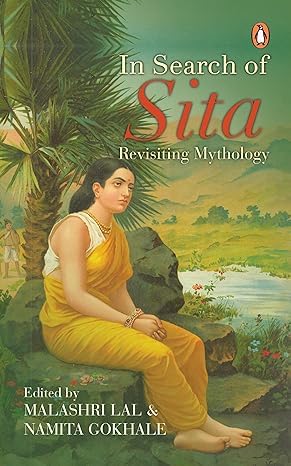
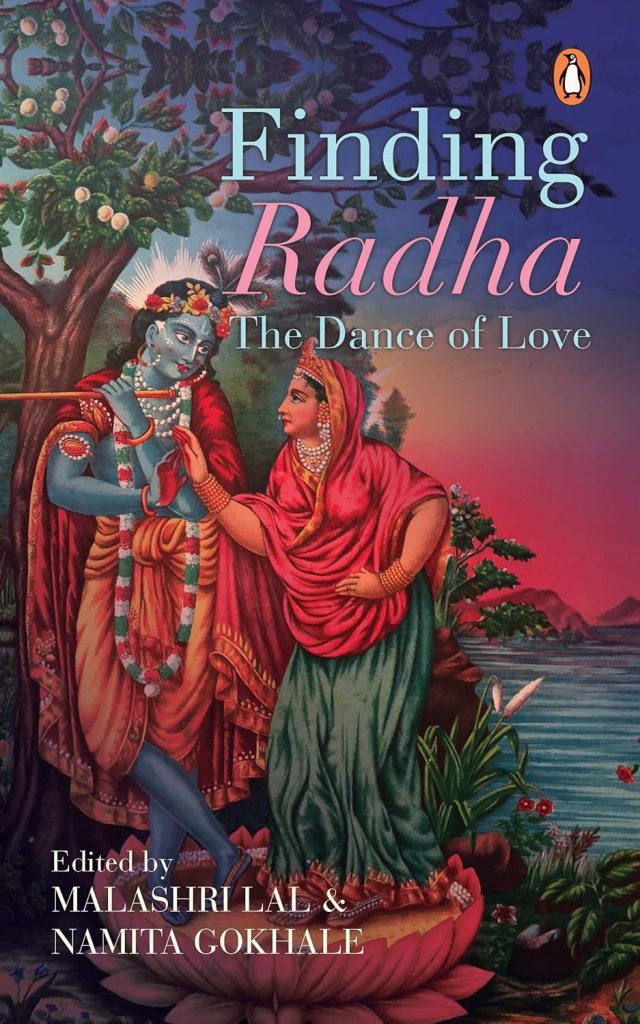
Malashri Lal, writer and academic, with twenty one books, retired as Professor, English Department, University of Delhi. Publications include Tagore and the Feminine, and the ‘goddess trilogy’ (co-edited with Namita Gokhale) In Search of Sita, Finding Radha, and Treasures of Lakshmi. Betrayed by Hope: A Play on the Life of Michael Madhusudan Dutt received the Kalinga Fiction Award. Lal’s poems Mandalas of Time has recently been translated into Hindi as Mandal Dhwani. She is currently Convener, English Advisory Board of the Sahitya Akademi.
.
PLEASE NOTE: ARTICLES CAN ONLY BE REPRODUCED IN OTHER SITES WITH DUE ACKNOWLEDGEMENT TO BORDERLESS JOURNAL
In Conversation with Malashri Lal, about her debut poetry collection, Mandalas of Time, Hawakal Publishers
Professor Malashree Lal
Time present and time past Are both perhaps present in time future, And time future contained in time past. If all time is eternally present All time is unredeemable.
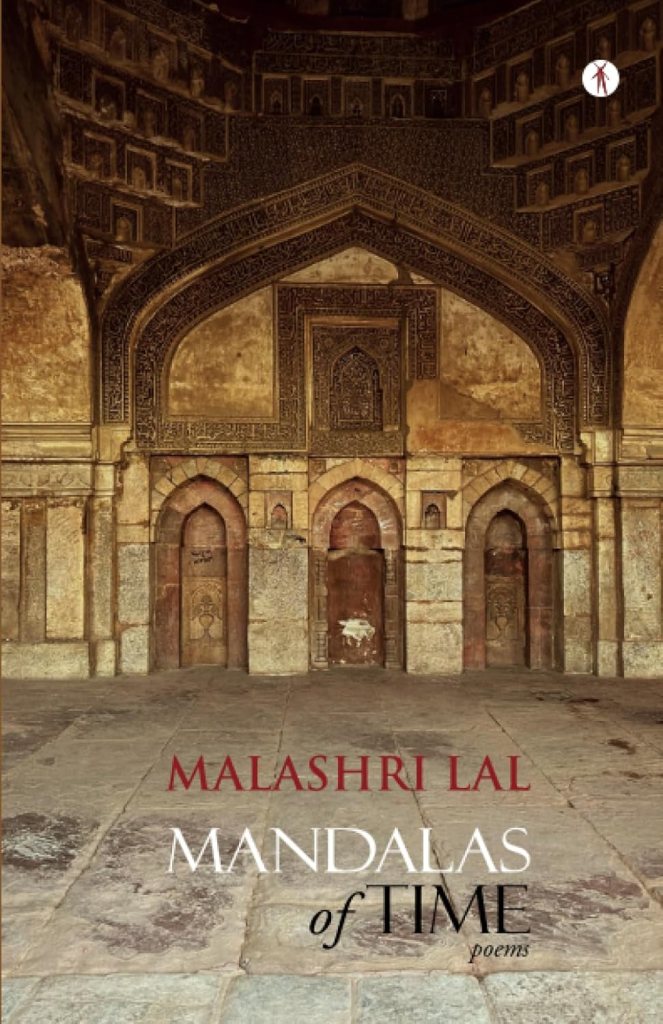
‘Mandalas’ means circle in Sanskrit, the root, or at last the influencer, of most of the Indian languages in the subcontinent. Sanskrit belongs to the Indo-Germanic family, which homes Latin and Greek among other languages. Malashri Lal, a former professor in Delhi University, has called her poetry collection Mandalas of Time.
Her poetry reiterates the cyclical nature of the title, loaning from the past to blend the ideas with the present and stretching to assimilate the varied colours of cultures around the world.
Embracing an array of subjects from her heritage to her family — with beautiful touching poems for her grandchild — to migrants and subtle ones on climate change too, the words journey through a plethora of ideas. Nature plays an important role in concretising and conveying her thoughts. In one of the poems there is a fleeting reference to wars — entwined with the Pilkhan (fig) tree:
The Pilkhan tree thinks of its many years
Of shedding leaves, bearing inedible fruit, of losing limbs
But smiles at his troubles being far less
Than of unfortunate humans
Who kill each other in word and deed
But gather around the tree each Christmas
With fulsome gifts and vacant smiles
To bring in another New Year.

--Another New Year
Amaltas (Indian Laburnum) or Bougainvillea bind her love for nature to real world issues:
Only the Amaltas roots, meshed underground
Thrust their tendrils into the earth’s sinews below.
Sucking moisture from the granular sand, desperately.
The golden flowers pendent in the sun, mock the traveller
Plump, succulent, beacon-like, they tease with
The promise of water
Where there is none.

--Amaltas in Summer
And…
The Bougainvillea is a migrant tree, blossom and thorn
That took root in our land
And spread its deception
Of beauty.

--Bougainvillea
Her most impactful poems are women centric.
Words crushed into silence
Lips sealed against utterance
Eyes hooded guardedly
Body cringing into wrinkled tightness
Is this what elders called
‘Maidenly virtue?’

--Crushed
There is one about a homeless woman giving birth at Ratlam station during the pandemic chaos, based on a real-life incident:
Leave the slum or pay the rent
Who cares if she is pregnant,
Get out — go anywhere.
…
Ratlam station; steady hands lead her to the platform.
Screened by women surrounding her
A kind lady doctor takes control.
Pooja sees a puckered face squinting into the first light.
"This is home," she mutters wanly,
"Among strangers who cut the cord and feed my newborn,”

-- Ladies Special
In another, she writes of Shakuntala — a real-world migrant who gave birth during the covid exodus. She birthed a child and within the hour was on her way to her home again — walking. It reminds one of Pearl S Buck’s description of the peasant woman in Good Earth (1931) who pauses to give birth and then continues to labour in the field.
Most interesting is her use of mythology — especially Radha and Sita — two iconic characters out of Indian lore. In one poem, she finds a parallel to “Sita’s exile” in Italy, at Belisama’s shrine. In another, she finds the divine beloved Radha, who was older to Krishna and married to another, pining after the divinity when he leaves to pursue his life as an adult. And yet, she questions modern stances through poems on more historical women who self-immolated themselves when their husbands lost in battle!
Malashri Lal has turned her faculties post-retirement to literary pursuits. One of her co- authored books around the life of the poet Michael Madhusudan Dutt, received the Kalinga award for fiction. She currently serves on the English advisory board of Sahitya Akademi. In this conversation, Lal discusses her poetry, her journey and unique perceptions of two iconic mythological women who figure in her poetry.
When did you start writing poetry?
Possibly my earliest poetry was written when I was about twelve, struggling with the confusing emotions of an adolescent. I would send off my writing to The Illustrated Weekly which used to have pages for young people, and occasionally I got published. After that, I didn’t write poetry till I was almost in my middle age when the personal crisis of losing my parents together in a road accident brought me to the outpourings and healing that poetry allows.
What gets your muse going?
Emotional turmoil, either my own or what I observe within the paradigms of social change. With my interest in women’s issues, my attention is arrested immediately when I hear or read about injustice, violence, exploitation or negligence of women or girl children. It doesn’t have to be a dramatic or extreme event but even the simple occurrences of decision making by a husband without consulting his wife has me concerned about the dignity and agency of a woman. Some poems like “Escape”, hint at such inequality that society takes for granted. On the other hand, my poems about migrant women giving birth on the long march to a hypothetical village “home” during the pandemic, are vivid transferences from newspaper stories. “Ladies Special” is about Pooja Devi giving birth at Ratlam station; “The Woman Migrant Worker” is based on a report about Shakuntala who stopped by the roadside to give birth to a baby and a few hours later, joined the walking crowd again.
Why did you name your poetry book Mandalas of Time?
To me ‘Mandalas’ denote centres of energy. Each node, though distinct in itself, coheres with the others that are contiguous, thus resulting in a corporeal body of interrelatedness. My poems are short bursts of such energy, concentrated on a subject. They are indicative of a situation but not prescriptive in offering solutions. Hence the spiritual energy of ‘Mandalas’, a term used in many traditions, seemed best suited to my offering of poems written during periods of heightened consciousness and introspection. The poems are also multilayered, hence in constant flux, to be interpreted through the reader’s response. Many of them end in questions, as I do not have answers. The reader is implicitly invited to peruse the subject some more . It’s not about closure but openness. See for instance: “Crushed”, or “Shyamoli”.
Today, I rebel and tug at a
Divided loyalty —
The feudal heritage of my childhood
Fights off the reformist Bengali lineage,
My troubled feminism struggling
Between Poshak  and Purdah
White Thaan  and patriotism
Can one push these ghosts aside?

--Shyamoli
*Poshak: Rajasthani dress
*Thaan: White saree worn by the Bengali widow
You have written briefly of your mixed heritage, also reflected in your poem dedicated to Tagore, in whose verses it seems you find resolution. Can you tell us of this internal clash of cultures? What exactly evolved out of it?
My bloodline is purely Bengali but my parents nor I ever lived in Bengal. My father was in the IAS in the Rajasthan cadre and my mother, raised in Dehradun, did a lot of social work. In the 1950s and 1960s, Rajasthan was economically and socially confined to a feudal heritage and a strictly hierarchical structure. Rama Mehta’s novel Inside the Haveli (1979), describes this social construction with great sensitivity. Elite homes had separate areas for men and women, and, within that, a layout of rooms and courtyards that were defined for specific use by specified individuals according to their seniority or significance. Such hierarchies existed in Bengal too — the ‘antarmahal[1]’ references bear this out — but the multiple layers in Rajasthan seemed more restrictive.
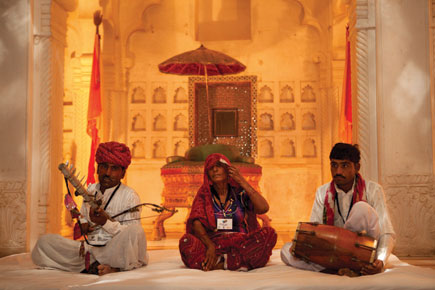
In my “mixed heritage” of being born of Bengali parents but raised in Rajasthan, I started noting the contrasts as well as the similarities. I recall that when my father went on tours by jeep into the interior villages along rutted roads, I would simply clamber on. At one time I lived in a tent, with my parents, during the entire camel fair at Pushkar. I would listen to the Bhopa singers of the Phad painting tradition late into the evening. So my understanding and experience of Rajasthan is deep into its roots.
Phad paintingBhopa singersFrom Public Domain
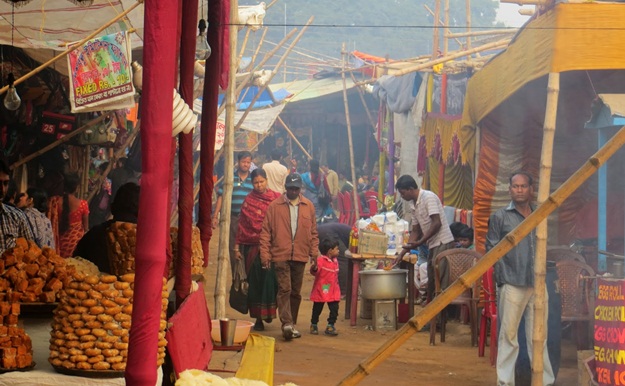
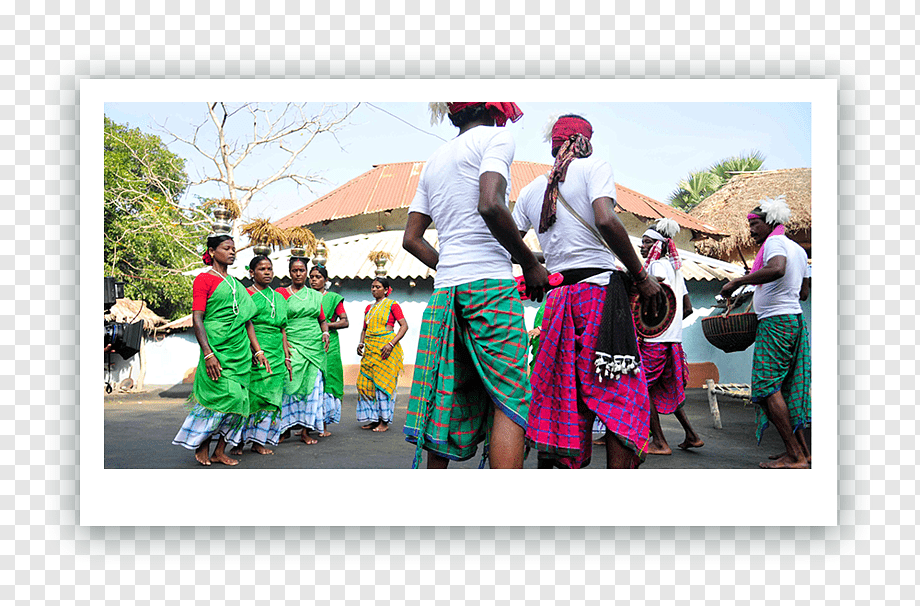
Bengal– that is only Calcutta and Santiniketan–I know through my visits to grandparents, aunts and uncles. My cousins and I continue to be very close. I saw a fairly elite side of Calcutta—the Clubs, the Race Course, the restaurants on Park Street, the shopping at New Market, and sarees displays at Rashbehari Avenue. Santiniketan though was different. I was drawn to the stories of the Santhal communities, visited their villages, attended the Poush Mela[2] regularly and knew several people in the university. After Delhi, the wide-open spaces, the ranga maati (red soil), the Mayurakhi River, and the tribal stories were fascinating. I am fluent in Bengali and because of my relatives in Calcutta as well as Santiniketan, I never felt an outsider. My father’s side of the family has been at Viswa Bharati since the time of Rabindranath Tagore. So, I felt comfortable in that environment. And through an NGO called Women’s Interlink Foundation, established by Mrs Aloka Mitra, I had easy access to Santhal villages such as Bonerpukur Danga.
Poush Mela, started by the Tagore Family in 1894Santhali Performance at Poush Mela
However, in summary, though I lived with both the strains of Bengal and Rajasthan, the daily interaction in Jaipur where I received all my education till PhD, was more deeply my world. The fragmented identity that some poems convey is a genuine expression of figuring out a cultural belonging. Poems such as “To Rabindranath Tagore” helped me to understand that one can have multiple exposures and affiliations and be enriched by it.
Do you feel — as I felt in your poetry — that there is a difference in the cultural heritage of Bengal and Rajasthan that leads you to be more perceptive of the treatment of women in the latter state? Please elaborate.
Indeed, you are right. Bengal has a reformist history, and my family are Brahmo Samaj followers. Education for women, choice in marriage partner, ability to take up a career were thought to be possible. My paternal grandmother, Jyotirmoyi Mukerji, was one of the early graduates from Calcutta University; she worked as an Inspectress of Schools, often travelling by bullock carts, and she married a school teacher who was a little younger than her. They together chose to live in Rangoon in undivided India, heading a school there. These were radical steps for women in the late 19th century. My father grew up in Rangoon and came to Rajasthan as a refugee during the Second World War. My grandmother, who lived with us, was a tremendous influence denoting women’s empowerment. But what we saw around us in Jaipur was the feudal system and purdah for women in Rajasthan.
Fortunately, Maharani Gayatri Devi had set up a school in 1943 in Jaipur to bring modern thinking in the women, and I was fortunate to study there till I went to university. Let’s recall that Maharani Gayatri Devi was from Coochbehar (Bengal) and had studied at Santiniketan. She brought Bengal’s progressive ideas to the privileged classes of Rajasthan. My classmates were mostly princesses. I visited their homes and families and delved deeply into their history of feudalism. Without being judgmental, I must say that Rajasthan’s heritage is very complex and one must understand the reasons behind many practices and not condemn them.
You have brought in very popular mythological characters in your poems — Sita and Radha — both seen from a perspective that is unusual. Can you explain the similarity between Sita’s exile and Belisama’s shrine (in Italy)? Also why did you choose to deal with Radha in a post-Krishna world?
Namita Gokhale and I have completed what is popularly known as the “Goddess Trilogy”. After In Search of Sita and Finding Radha, the latest book, Treasures of Lakshmi: The Goddess Who Gives, was launched in February 2024 at the Jaipur Literature Festival, and the Delhi launch was on 8th October 2024 to invoke the festive season.
Version 1.0.0
In answering your question let me say that myth is storytelling, an indirect way of contending with issues that are beyond ordinary logic or understanding. Sita and Belisama coming together is an illustration of what I mean. The backstory is that Namita Gokhale and I had a joint residency at Villa Serbelloni in Bellagio (Italy) and we were revising the final manuscript of our book In Search of Sita. The thrust of that book is to recall the strength of Sita in decision making, in being supportive of other women, in emerging as an independent minded person. Our research had unearthed a lot of new material including oral history and folklore. In Bellagio, we started enquiring about local mythical stories and chanced upon Belisama,[3] a Celtic goddess known for her radiant fire and light, and in the village we chanced upon an old grotto like structure. Unlike in India, where we have a living mythology of commonly told and retold tales, in Italy the ancient legends were not remembered. The poem “Bellagio, Italy” took shape in my imagination bringing Sita and Belisama, two extraordinary women, together.
As to my poems on Radha, I cannot think of a “post-Krishna” world since Vrindavan and Mathura keep alive the practices that are ancient and continuous. Radha is the symbol of a seeker and Krishna is the elusive but ever watchful divine. They are body and soul, inseparable. The stories about “Radha’s Flute” or “Radha’s Dilemma” in poems by those names have an oral quality about them. The craft of writing is important, and for me, the theme decides the form.
Interesting, as both the poems you mention made me think of Radha after Krishna left her for Rukmini, for his role in an adult world. You have a poem on Padmini. Again, your stance is unusual. Can you explain what exactly you mean — can self-immolation be justified in any way?
This is a poem embedded in the larger query about comparative cultural studies. Rani Padmini’s story was written by Jayasi[4] in 1540, and it described a ‘heroic’ decision by Padmini that she and her handmaidens should commit Jauhar (mass self-immolation) rather than be taken prisoners and face humiliation and violent abuse by the men captors. You will note that my poem ends on a question mark: “I ask you if you can rewrite /values the past held strong?” Self-immolation has to be seen in the context of social practices at the time of Padmini (13-14th queen in Mewar, Rajasthan). The jauhar performed by Rani Padmini of Chittor is narrated even now through ballads and tales extolling the act if one goes into oral culture. But there is counter thinking too, as was evident in the controversy over Sanjay Leela Bhansali’s film Padmavat (2018) which stirred discussions on historicity, customary practice and oral traditions. Sati and Jauhar are now punishable offences under Indian law, but in recording oral history can one change the storyline? It’s not just self-immolation that comes under such a category of questioning the past — polygamy, polyandry, child marriage, prohibitions on widows and many other practices are to be critiqued in modern discourse, but one cannot rewrite what has already been inscribed in an old literary text.
This is a question that draws from what I felt your poems led to, especially, the one on Padmini. Do you think by changing text in books, history can be changed?
“History” is a matter of perspective combined with the factual record of events and episodes. Who writes the “history” and in what circumstances is necessary to ask. The narration or interpretation of history can be changed, and sometimes ought to be. To take an obvious case why is the “Sepoy Mutiny” of 1857 now referred to as the “First War of Independence”? In current discussions on Rana Pratap[5] in Rajasthan’s history, there are documents in local languages that reinterpret the Haldighati battle of 1576 not as the Rana’s defeat but his retreat into the forests and setting up his new kingdom in Chavand where he died in 1597. The colonial writers of history—at least in Rajasthan– were dependent on local informers and had little understanding of the vast oral repertoire of the state. Even Col. James Tod’s Annals and Antiquities of Rajasthan (1829) about the history, culture, and geography of some areas in Rajasthan, is often reproducing what he has heard from the bards and balladeers which are colourful and hyperbolic renderings as was the custom then. In Bengal, the impact of Tod is seen in Abanindranath Tagore’s[6]Rajkahini (1946), which is storytelling rather than verified facts. I feel history cannot be objective, it is author dependent.
Nature, especially certain trees and plants seem to evoke poetry in you. It was interesting to see you pick a fig tree for commenting on conflicts. Why a Pilkhan tree?
The Pilkhan is an enormous, bearded old fig tree that lives in our garden and is a witness to our periodic poetic gatherings. Mandalas of Time is dedicated to “The Poets under the Pilkhan Tree” because my book emerged from the camaraderie and the encouragement of this group. I see the tree as an observer and thinker about social change—it notes intergenerational conflict in “Another New Year”, it offers consolation against the terrors of the pandemic in the poem “Krishna’s Flute”. It’s my green oasis in an urban, concrete-dominated Delhi. In the evening the birds chirp so loudly that we cannot hear ourselves speak. Squirrels have built nests into the Pilkhan’s wide girth. It’s not a glamorous tree but ordinary and ample—just as life is. By now, my poet friends recognise the joy of sharing their work sitting in the shadow of this ancient giant. There are no hierarchies of age or reputation here. We are the chirping birds—equal and loquacious!
You have successfully dabbled in both poetry and fiction, what genre do you prefer and why?
Mandalas of Time is my first book of poems and it comprises of material written unselfconsciously over decades. During the pandemic years, I decided to put the manuscript together, urged by friends. Meanwhile my poems started appearing in several journals.
As to fiction, I’ve published a few short stories and I tend to write ghostly tales set in the mountains of Shimla. Its possibly the old and the new that collides there that holds my attention. I’ve been urged to write a few more and publish a book—but that may take a while.
Should we be expecting something new from your pen?
Mandalas of Time has met with an amazing response in terms of reviews, interviews, speaking assignments, and online presentations. The translation in Hindi by 13 well known poets is going into print very soon. Permission has been sought for a Punjabi translation. I’m overwhelmed by this wide empathy and it is making me consider putting together another book of poems.
Twenty-one months later, Rai[1] arrives in Paris. It is spring and she is here on a pilgrimage of memory. It is not her first time in this city, she has visited it before through the eyes of another: a city bathed in the mellow yellow of an exceptional limestone, chestnut trees abloom beside the Seine, a river green as malachite, the white sleek pleasure boats and the chuffing barges passing under the grave arches of thirty-seven bridges, each distinct from the last, a differently shaped shadow rippling below, connecting over and again the opposites of what divides the city, a people who know the art of touch all too well. Yes, the sights, the smells, all familiar. The spring air smells of her beloved; an enormous peace descends upon her.
Ever since she stepped on the train from the suburbs where she has taken her rooms, she finds herself scanning every face in the metropolitan crowd, every face looking elsewhere, somewhere, lost outside the present of their almost mechanical movements, perhaps like her, seeking another face. Strangely, this feels like home, like the city she left behind many months ago, ostensibly to travel. For all it takes from its inhabitants, a great city gifts them an anonymity that is sacred to the human heart. Therein remains its primary seduction for diversity. Your face becomes a mask of itself. You live, unapologetic, learning to make room for yourself where none exists. Every great city has this air of elsewhere, she concludes. I can already see Rai could live here; it is reminiscent of where she grew up. Yet, today, more than ever before, she is homesick, for the soil, the faces, the lives she tore herself away from.
You wonder how I glance into her heart with such ease. Let me lead you to the answer.
She has your address, half-a name, a few photos. What does it matter? One cannot create what one did not destroy first. She is obeying the laws of physics you joked about nineteen months ago, the laws that would inevitably bring you nearer and nearer. Here she is, touching you almost, a ghost walking beside her, pointing out every other piece of beauty in this city which does not lack of them. You stood here once, your feet touched this pavement, oh god, you stood here! This is where you clicked the photograph you sent her saying, “Remember me.” But she isn’t speaking to you, not yet.
Insecure, naïve, scared, stuck she had been, but mostly scared…terrified… of losing you, the last thread of sanity in a world collapsing around her, screaming into her ears with a deathly consistency, inevitability. You had been her escape, god, how she had escaped… Looking back, she thinks… no, there is no looking back. I almost lost my mind when you left, she would like to say, but… almost, that word… I was living with monsters tearing each other apart. To you, I showed only what I hid from others, and hid from you all that offal the monsters would leave behind at the end of each meal. They knew how to devour a girl of nineteen. The result is her face, at twenty-one, that of an old woman.
But that is an advantage, especially in big cities.
Her poet knows she remembers every place you promised to show her. It is the city of forgotten promises. She has read every book you ever recommended, watched every movie you spoke of, revisited two languages for you, painted you, cursed you, pleaded with you, desired you, hated you, shattered the boundaries of her known world for you; for the rest of her life, she will celebrate the nineteenth of July as the birthday of her heart; and yet, you are only a ghost who she cannot talk to. But she will, now that she has reached your city. Tomorrow she will talk to you. Tonight, she will write for the first time in twenty-one months. Through the dim lights of the small window of the suburban apartment, you will see her typing away. She will write again.
The painting earlier this morning made her think of God. This is not unusual, merely the first impact of a Monet painting on one who has only seen photographs all her life. Remember the poems she would translate for you? She reads them sometimes now, searching for mistakes. Her innocence makes me laugh, her capacity for love is adorable. It is what she will write about.
Why did you introduce all those new words in her mind? That was a mistake. Didn’t you know words are a writer’s biggest fear? Well, you can see the result for yourself, aren’t you happy? That she forgot how to write, that she mixes up alphabets of three different scripts every time she picks up the pen, trying to find a language that will make you answer. But you tricksters play on…
This city is a mausoleum of your memory. This is the first line she writes. The rest of the night is spent weeping between fits of sleep. You watch on, right outside the window. I watch you watch.
It is still very dark when Rai finds herself irretrievably awake. A faint fragrance of some spring blossom is wafting in through the half-open window. It is light by the time she reaches the small station; the air is crisp as the ticket in her hand, the cold from the river making her button up her coat. Today she will walk beside the Seine.
Many have said that the soul of Paris flows in the green waters of the Seine. Obviously, those fools know nothing about souls. Souls do not flow away, they haunt.
The yellow aura of the buildings is enhanced in the pale morning light, the river dappled in the golden, the empty promenade inviting. Later in the day the tourists and hawkers will crowd this part of the city, but it is yet hers, all hers. A few joggers and some sleepless ones as her claim the early hours.
She starts walking from the tower towards Musée d’Orsay along the river. You walk behind her, slightly unsure. On this morning you realise this city entwined itself in her personal history long before you arrived. It wounds your pride, shakes your confidence in her fidelity. The artworks hanging in that building yonder have been the pursuit of her fascination for almost a decade now. You knew it, if fact, that is where you met, in a shared longing of elsewhere, of nostalgia for a world you were never a part of.
In senior school math, they taught that for an equation to have real solutions, one must apply constraints. But within the parentheses of those limits exist an infinity of choice. Remembrance is a choice. Her math tutor from school, the old man with the twinkling eyes, would insist mathematics is the purest form of poetry. How long has it been since she remembered him? What is the pollen in this air that brings back the past so lovingly?
The path Rai traces, to a viewer like me, appears most comical. But I’ve been around here long enough to know lunacy is the mother of imagination, it afflicts the seekers more often than you would think. Sometimes she walks beside the river, sometimes climb the stairs to cross a bridge that fancies her, then strolls again along the other bank, as if her wandering steps cannot have enough of the novelty of a river joined with such frequency, such care. In her culture, the poets have sung for centuries of the two banks of a river as lovers separated in togetherness, together in separation. This far from home, the metaphor revisits her.
My memory is again in the way of your history2. A city with a history of over two millennia, glorious in this spring, what does it care of your unrequited love, foolish girl? Yet she would repeat under her breath these lines from her favourite poet. He spoke of war, of a heritage blown to bits overnight, over years, preserved in the memory of its refugees; how interchangeable is it with the torn love she carries with such grace? Foolish as she is, I think I am getting quite fond of her stubbornness.
And you! I almost forgot your apparition there, caught in watching her too. What are you sulking about? Quick, she is walking towards the Pont des Arts. Wicked rogue, won’t you play her once on the love lock bridge of clichés? She is standing at the centre now, spread before her the split halves of tremendous urban life, speeding fast in the midday heat; on either side, decades of forgotten promises caught in iron, rusted, locked away. She bends to inspect the locks. Even as you rush ahead to play your game, you turn back and shout at me, “You are wrong, it is a cliché only if you win in love.” Through the strong breeze on the bridge, I try to make myself heard: “So much for your words, go close enough if you dare and she will speak to you.” I think you heard me. The plan works. On one of these locks, Rai discovers her own name, a single name, a word, perhaps echoed in rust from decades of a solitary namesake on the same bridge, but that staunch heart knows what it wants to believe. Who will save her? You are close enough to touch her now, and she senses you. When you have spied on people’s secret lives for as long as I have, you tend to expect melodrama. But Rai, travelled across twenty-one months of quiet longing, is not surprised. You have appeared before her on fretful nights, sweat-stained afternoons, rainy mornings, in songs, in tears, in sudden joy, in sunshine, in broken shadows of grief, in the citadel she has built for you, how can she not expect you? She is narrating a story now, the story of what her name, written on that lock, means.
It was the one of the first fables of love ever fabricated in her part of the world. Centuries old. The story of a woman who falls in love to the music of a cowboy she has never laid her eyes on. Their illicit love-making becomes the whisper of the land. With the passing years, the musician in the boy slowly succumbs to the warrior in the man, who eventually gets crowned in a country far away. Rai is left waiting; music is not so easily forgotten. Like all classics, this too is of unrequited love.
The lazy warmth of the afternoon has brought out many on the promenade. Sunning away, relaxing with beers, some sitting alone, some in picnics; in the little island of Île de la Cité, a band of young jazz enthusiasts blow into their trumpets; the flowers compliment the myriad soft colours on all dresses: the Seine is the frame of happiness. I watch the two of you stroll, a happy couple, woman and ghost, breathing in the Spring you promised her not so long ago. Grief is the kindest of opiates, it dissolves in its own fantasia. Tonight, with all the walking, she will need some wine. The cheap wine of this tired evening will put her to sleep. You do not have to sing lullabies, but pray, lie down beside her. Let her hold in her palm the ghost of your erect manhood, rest her head against the illusion of your chest. In you, she desires sleep so in her sleep she may desire you, consummate a mirage. Do not stay outside.
It is night yet when she leaves. “The Frog & British Library” glows in its ironic neon, the streetlights halo in the clear blue hour. The Pont de Tolbiac stoops groggily over the ultramarine blue of the water pregnant with shimmering reflections: the illumined buildings, the barges anchored at the edge, the symmetrical reflections from the arch of the next bridge, perhaps (she fancies), the last of the stars too. The beauty of this night stings her eyes with an almost physical pain. She is thinking of you, of what remains of what you were.
I’m everything you lost. You won’t forgive me.
My memory keeps getting in the way of your history.
There is nothing to forgive. You won’t forgive me.2
Her poet is speaking again. Yes, she is here to ask for your forgiveness. She has left everything behind, for nothing ahead, in this long, long solitary journey only to ask for your forgiveness. Forgiveness for naïveté, for insensitivity, for distance, for loving with more sincerity than a heart bears without protest. The little crystal she wears around her neck on a string, she believes it has a beauty she does not deserve, like you, who loved her more for the magnanimous reflection in your kindness than her own small artless self. Your absence fills the air above the deep blue Seine like a forgotten god of this city that is yours. The semi-circle of these lanterns shiver beneath her like a pantheon of answers. Hope costs nothing, you told her once, and that is how she dared. To cross an ocean for you. The boatmen of this world speak of riches on the opposite bank, her voyage was merely to free the emptiness of her claustrophobic heart, restless, restless, oh, ever so restless. Perhaps, and I speak only as the outsider who inhabits you both, you should forgive her now.
Years ago, on summer nights, her grandmother would tell her the story of the boy who dived into the bottomless pond in the middle of the desert to salvage the pink pearl. The next morning, the villagers found a banyan tree at the centre of the pond, its roots vanishing into the fathomless. Legend says every full moon night, the heart of the boy cries for the pearl, and in the morning, a new column is added to the mass of hanging roots, a stream of condensed tears feeding the pond. Thus grew the desert city of Ehsaan around an oasis of endless fertility.
The blue is beginning to fade, a turquoise haze envelopes the bridge, the barge, the lamps, her; from the horizon, a faint blush rises, spreading softly over the sky. It is still night, the crescent moon still in bloom, but the last scattered stars are evasive now.
Suddenly, the streetlights go off. In this instant, dawn has arrived. The sky transits less hastily. The city of her beloved is waking up. A bus awaits to take her where she came from, through fields of uniformly shaven colour- yellow, green, brown, waves of symmetry upon a calm earth. A piece of this calm resides in her now, the river has doused the fire scourging her insides. Something has healed.
She will return. I, the Seine, rushing past a million lives, over a hundred thousand springs heartbreakingly beautiful, have promised to save the pink pearl in my bosom until then.
[1] Another name of Radha, the beloved of the divine cowherd Krishna
TWO BIRDS

In a coop of gold, lived Cage Bird,
In the forest dwelt Free Bird --
How did the twain meet on a dawn?
What had Fate ordained?

"Dear One in cage," Free Bird called out,
"Come, let's fly into the wood."
"You come inside," chirped Cage Bird,
"The enclosure can be our home!"
"No!" Free Bird cried, "the chains are not for me!"
"Alas!" Cage Bird sighed,
"How can I live in the holt!"

Free Bird sat outside and sang
All the forest songs he loved.
Cage Bird parroted all
The tricks it had been taught -
'Twas as if they spoke two tongues!
Free Bird pleaded, "Dear one!
For me sing one Forest song!""
Cage Bird said, "You better rote
Songs of the cage, loved one!"
"No!" Free Bird wailed,
"I do not parrot cliches!"
"Alas," sobbed Cage Bird,
"How do I sing what I've never heard!"

The Free Bird chimed, "Deep is the blue
Of the sky above,
There's no bar in its expanse!"
"See!" Cage Bird twittered,
"How well-netted is the aviary
on all its four sides!"
"Let go of yourself!" Free Bird whistled,
"In the clouds above, just once!"
"This cosy corner is so very tranquil!"
Cage Bird chirped, "Why not
Submit to its peace?"
"No! Where will I then fly?"
"Alas! Where in the clouds
Will I find a perch?"

Thus the two birds loved each other
But could not unite.
Through the gaps their beaks would kiss
Their eyes bespoke their longing
But neither could understand
Nor express to the other
Their biding constraints.
They flapped their wings
They stretched their arms
"Come to me dear, let me
Hold you to my heart!"
"No!" the Free Bird feared,
"The door might snap shut!"
"Alas!" lamented the Caged Bird
"I have no might to fly!"
Birds in a large cage in Saratchandra’s home. Photo Courtesy: Ratnottama Sengupta
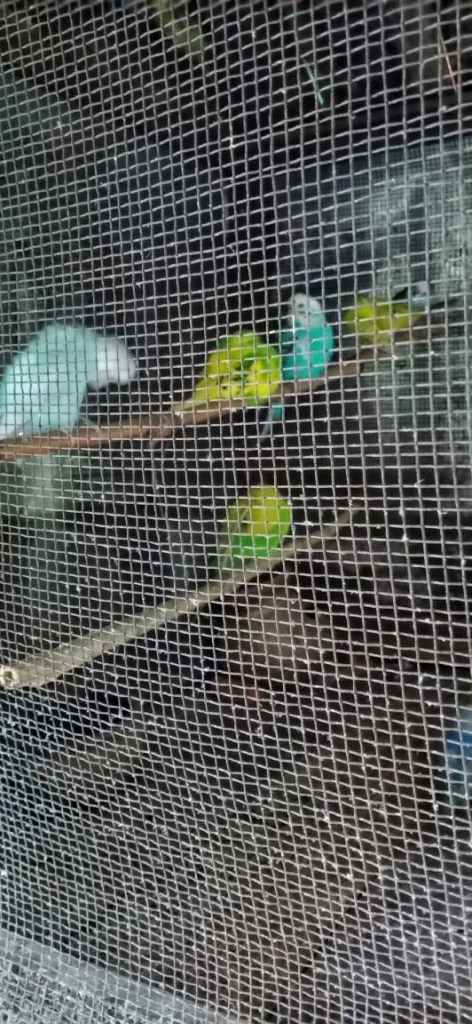
Growing up in a Vaishnav family where kirtan was a part of daily life, I had always loved this song Rabindranath Tagore composed in the kirtan style. In my later years I thought the Universal Poet had penned the Natya Geeti — song drama — in the context of the Freedom Struggle. No, I learnt in an essay by the poet: it was penned in 1892 to put into words a more universal philosophy — the duality that is part of every human existence. Difficult to comprehend? Perhaps not, once we obliterate the sameness of the two birds and attribute gender markers to them. Tagore himself thought of the caged bird as the woman in every man, and the free bird as the man in every woman. Perhaps that is why it is structured along the lines of the traditional Shuk Shari samvad — a conversational song between between two birds (parrots perhaps?) — wherein Shuk is a follower of the masculine, Purushottam Krishna, and Shari of Radha, the essence of femininity. However, I was prompted to look up the poem recently when I saw a large birdcage in a corner of Saratchandra Chatterjee’s house in Deulti some 60 km from Kolkata. It was pretty routine, apparently, for households then to have aviaries ‘domesticating’ finches, canaries, parakeets, cockatiels, lovebirds and other feathered pets — much like today’s people with pet dogs and cats. But I was struck by a different thought: Did the two birds represent the two stalwarts of Bengali Literature who lived at the same time? Did one look inside homes and scan woes besetting the happiness of their human relationships? And did the other take off from his perch on a branch of the tree rooted in terra firma, to swim in the boundless ocean above? Even today, one draws you out into the vast expanse while the other pulls you homeward. Together? They give us a universe…
Notes:
Kirtan is devotional music.
Tagore (1861 to 1941) and Saratchandra (1876-1938) were contemporaries. While Saratchandra wrote stories based on real life to expose and reform social ills, Tagore’s work was more philosophically inclined, though he has written of such societal issues too.
In 1894, Rabindranath wrote in Aadhunik Saahitya while commenting on the works of the poet Biharilal Chakraborty –
“… There is an independently moving masculine entity within our nature, which is intolerant to bondage alongside a feminine one which preffers to be enclosed and secured within the walls of the home. Both of them remain united in an inseparable fashion. One is eager to develop significantly his undying strength in a diverse way by savouring ever-new tastes of life, exploring ever-new realms and manifestations and the other remains encircled within innumerable prejudices and traditional practices, enthralled with her habitual deliberations. One takes you out into the vast expanse and the other seems to pull towards home. One is a forest bird (or the free bird of the translation by Ratnottama Sengupta) and the other is a caged bird. This forest bird is the one that sings much. Although, its song expresses with its diverse melodies the whimper and its craving for unrestricted freedom.”
Rabindranath Tagore was a brilliant poet, writer, musician, artist, educator – a polymath. He was the first Nobel Laureate from Asia. His writing spanned across genres, across global issues and across the world. His works remains relevant to this day.
Ratnottama Sengupta, formerly Arts Editor of The Times of India, teaches mass communication and film appreciation, curates film festivals and art exhibitions, and translates and write books. She has been a member of CBFC, served on the National Film Awards jury and has herself won a National Award.
.
PLEASE NOTE: ARTICLES CAN ONLY BE REPRODUCED IN OTHER SITES WITH DUE ACKNOWLEDGEMENT TO BORDERLESS JOURNAL
Philosophers and theologians warn us about the danger of becoming distracted and misled by images. In the age of the selfies, with photography being used to sell us so many things we do not want or need and convincing us that smiling celebrities are gods and goddesses, we have reason to take their warning seriously.
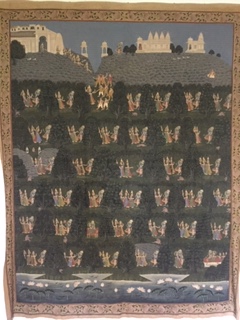
But what of images that warn us of the same danger, even while they enchant us? I ask this question while looking at a beautiful wall-hanging of the gopis seeking out Krishna in the forest of Brindaban.
The wall-hanging is composed of 38 episodes, each framed by a woodland glade, laid out in six horizontal lines of 7,6,5,7,7 and 6 frames. At the top, Radha and seven other gopis leave the city, pots of curds on their heads, and wave farewell to their husbands as they enter the forest of Brindaban. After their many encounters with Krishna, the story concludes with Radha and Krishna haloed and seated together in a pandal beside a lotus-filled River Yamuna.
The trouble is, when you try to follow the story of their search for love’s fulfilment line by line, top-to-bottom on the wall-hanging, the frames don’t follow one another in any recognizable sequence. Almost all the frames show three gopis confronting Krishna, apparently arguing with him and either turning away or being turned away but in no particular order.
The gopis emerge from the city in the third frame of the top line. Amid scenes otherwise always sylvan, the towers and rocks of the city are seen in the first frame of the third line and the rocks alone in the fourth frame of the final line. This phased departure from the city suggests these may be the first three frames of the story. Yet the gopis, who accompany the protagonists in each are in different-coloured saris and, apart from this glimpse, don’t appear again. We are left without a clue as to what might be the fourth frame in the sequence.
It seems it might be easier working backwards. The last frame of the last line is so obviously the culminating frame and the one before it has Krishna and Radha, both haloed, walking through the forest. But then the only other frame with the pair haloed is fully a line before this and they are seated on a rather different pandal decorated as if for a wedding and with a more ornate base. Something is not quite in order.
The colour of the saris is one obvious determinant. Most prominently, there’s Radha in her green-and-red sari and her friend Lalita (let’s call her that) in green-and-yellow, often with a third gopi in blue-and-red behind. But sometimes there are suddenly gopis in brown-and-yellow and black-and-yellow instead and once or twice gopis in blue-and-yellow and black-and-red. Sometimes the figures obscure one another and we have a glimpse of just one colour of a sari and this may belong to the eighth (otherwise missing) gopi. And why, if the colour of the saris is indicative, does Radha once appear twice in the same frame? And why, when the gopis emerge from the city, are seven of the eight figures wearing Radha’s colours?
These concerns may appear rather silly: after all, the painter’s palette may account for such occasional discrepancies. However, the larger picture may suggest we are being deliberately misled by an artistic representation of the magic of the Ras lila. We try to make sense of what is going on in the pursuit of love’s goal and we simply get lost in the forest?
It is not totally baffling. There is some downward and, less obviously, left-to-right movement in the development of the story. Right in the very centre of the wall-hanging there is a frame where Radha steps out to engage with Krishna. This is in the third frame of the five-frame third line and given that the story culminates in the sixth frame of the sixth line, it is tempting to construct a diagonal across the matrix: Radha in the first frame of the first line engaged in a conflicting hand-to-hand pull-and-push with Krishna; in the second of the second, Lalita approaching Krishna, hand on curd pot, whether as confidante of Radha or as rival – or both – is unclear; in the fourth of the fourth, three gopis, two in Radha’s colours, turn away from Krishna; and, in the fifth of the fifth, Radha, now potless, submits herself to Krishna. This diagonal might serve as a plot for the whole story, however jumbled the frames all around.
Radha and her two main friends figure most prominently in the frames of the first line but there is no easily discernible order to the frames. The first four frames of the second line foreground different gopis and it may be that the particular story of each in turn is to be tracked, however tentatively, zig-zag down the wall-hanging before we return to the next frame as a starting-point?
The last two lines of the wall-hanging are distinct from those before in that all their frames (bar those of Radha-Krishna haloed) show a gopi approaching Krishna with a pot no longer on her head. The fifth line starts with a frame where Krishna is himself removing the pot from (if not replacing the pot on) Radha’s head (presumably as a token of his choice); in the next frame he is fanning a potless Lalita; and in the others receiving gopis who have discarded their pots. Should we take this to be an act of collective submission following Krishna’s choice of Radha or are they the final frames of individual stories that have threaded their way down through the thickets further up the wall-hanging?
Images from nature are also tricky. Initially monkeys, one springing in from the left and another from the right, promise to show us a sequence: in the end they at best indicate only mood. This may also be true, given their place in Indian iconography, of trees and flowers. Perhaps like the ever-shifting designs on the saris, changing from dots to dashes to crosses to ovals, they too are decorative, deceptive only in a suggestiveness that ultimately reveals nothing?
We do not know whether or not the painter is following the poet he has placed seated on the rocks in the top right-hand corner of the painting, he has wrought cunningly. Looking to piece together individual stories of the search for love, we have been baffled by their erratic course. But, however erratic, the course is perhaps common to all the gopis, however much or little we can see of each. The advantage of a closer look, however bewildering, reminds us that, instead of being distracted by a surface that leads us to a merry dance, we should discover the common pattern that underlies all and is concentrated in the composite figure of Radha, one that is ultimately subsumed in that of Radhakrishna.
We may then tell ourselves that, even though we cannot say how we got here, we are no longer lost in the forest.


 Borderless