Categories
Excerpt

Letters from a Daughter to Her Father

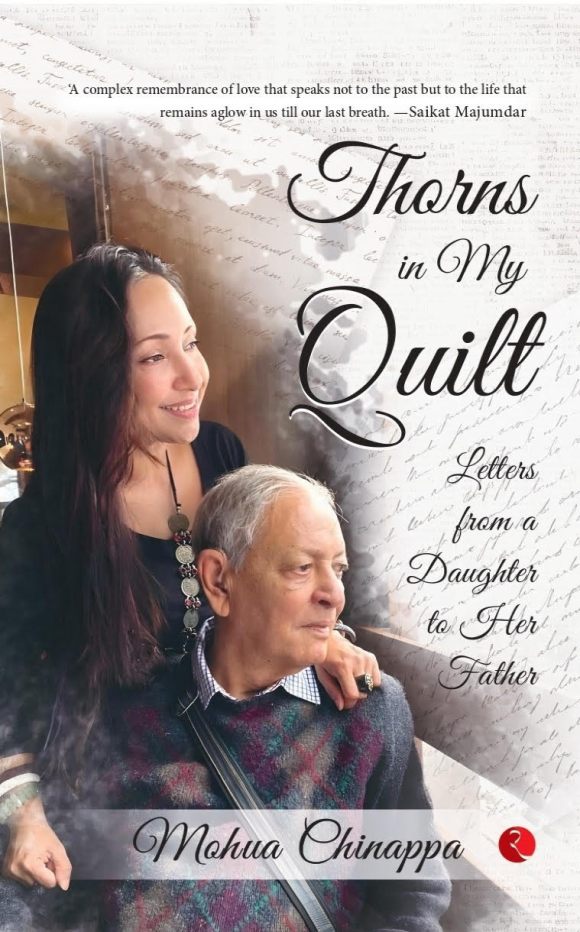
Title: Thorns in My Quilt: Letters from a Daughter to Her Father

Author: Mohua Chinappa

Publisher: Rupa Publications India

LOSS

4 August 2022

Living Room, Bengaluru

Dear Baba, Today is your shraddho, the puja for your departed soul. Referring to you as a soul seems so distant. Calling you anything but ‘Baba’ seems like two strangers speaking to one another. The purohit is here to do the rituals. The atmosphere is sedate. The room is lit and the flowers in the vases are in full bloom. I am glad we have cousins in the city; otherwise, it would be very lonely for Ma and me. We know very few people who would make the effort to attend a staid function like a shraddho. How does one end a tie so deep with a mere ritual? One can’t. It does feel surreal to watch your photograph with a jasmine garland around the lifeless frame. The sandalwood phonta or tika on your forehead makes you look different. The living room has been cleared. The large antique box has been covered with a white cloth, and your photograph is placed on it in such a way that you are facing the direction that will lead you to the other world. The shraddho among Bengali Hindus is a ceremony that is performed to ensure a passage for the recently deceased to the other world. The rite is both social and religious and is meant to be conducted by the son. But you have no male heir. So I defy tradition and lead the puja.  I follow the rites dutifully and chant the mantras, which don’t mean much to me. You are gone. There is no mantra that can soothe my heart. On the floor is a bed, laid out with a pillow and an umbrella for your onward journey to God-knows-where. I follow the purohit. Neel joins me in the ceremony. I feel so anchored, having him next to me. What a loving child he is. He makes life so much simpler for me. After the puja, we put out a plate of your favourite food so that a crow can come and eat it. Leaving the food in the corner of a lane seems ridiculous, but I have decided not to question any of the rituals, for I don’t want Ma to feel that I didn’t do my best. I leave the plate on the ground. There are bottles strewn around, and the ground is not very clean. I don’t turn back for another look. Your photo has now been removed and stands on my marble corner table. I put out the burning incense sticks and remove the flower garlands. It is still sinking in that I won’t be able to hear your voice ever again, calling out to me, asking me for something or the other. As we sit down to eat, Neel reminds me how you discussed Left politics and he argued with you on capitalism, just to rile you up in jest. You had such a wonderful bond with my child. I smile as I hear Neel mimic you and your quintessential Bengali ways of reacting to situations. Those debates between you both. I loved the way you both called each other Dadu. Baba would say, ‘Dadu, you must read about the world and its magnificent history. The great idea of how civilizations emerged, and how revolutions took place in protest against tyranny and oppression. As you read, you will learn that the world is a beautiful study of humanity and historical events.’ And Neel would say, ‘Na, Dadu, I will only read books that emphasize the profit and loss of capitalist businesses. Whoever cares about art and philosophy?’ Neel knew how you would go red in the face. And you would say, ‘No businessman ever built a nation; it is the thinkers and the dreamers who created a world of equal opportunities.’ This camaraderie you both shared remains the most beautifully preserved and poignantly pure memory of you with your grandson. I remember those days when you constantly waited to hear from Neel, and how the Sundays were marked aside to have your long-awaited conversations with him. You truly were a wonderful grandfather to my son. I feel empty as the furniture in the living room is rearranged to how it was before. Like nothing has happened, and no one is now gone forever. It looks as if you will come back in a minute, ask for a cup of tea and brood with your arms crossed over your chest. I think just being there to watch me do everyday things made you feel calmer. I don’t know. But I hope someday, I will understand the silence between us. Comfortable spells of silence, and some very terrifying ones. Like your death.

Love

Manu

*

5 August 2022

Bengaluru

Dear Baba, The vermilion has been removed now. The parting is stark white the hair oiled tied into a braid of acceptance. The grey mixed with the leftover black strands falling carelessly on her shoulder. I had seen her one lonely noon take a pair of scissors cut off her locks Like Samson and Delilah. She was at war A war with her own existence Her identity has been shaken Her oar is cracking open along with her broken sail. She sets to the seas but the land is far away on the horizon shining like the crystals found on a crown lost in a war lying forlorn for the head of the right king but now Samson is dead the Philistines have left too the palace has been torn down but parts are intact. Her locks sheared from guilt for being alive. Will she find her shore with her broken boat and tattered sail hoping the seas take her in or the fire of her breath is gutted before it becomes wild like a forest fire burning the little birds coloured kites stuck between branches and her capsizing boat too lost in the new world!

Love,

Manu

About the book:

Thorns in My Quilt: Letters from a Daughter to Her Father is a series of letters written by a daughter to her father after he passed away. Unspoken thoughts, unshared memories and unsaid words combine in this searing and poignant account of a relationship filled with joy, but with equal moments of sorrow.

Mohua Chinappa (Manu) loved her Baba, who was as kind as he was cruel, as well-read as he was unworldly, as loved as he was unloved. His dearest Manu recollects her childhood in Shillong, infused with the aroma of vanilla essence that went into the butter cookies he baked. She reminisces about her father holding her little hand while helping her through the undulating, rain-drenched roads. Mohua returns to Delhi, where she spent a part of her growing-up years, and revels in the memory of a government house with a harsingar tree. She writes to him about her broken marriage, recalls how her parents left her side, and how she reinvented herself. The letters are often selfish yet strangely cathartic.

Her father’s kidney failure prompted a daughter to confront the demons within—the loss, the doubts, the emptiness, the guilt of saying things, and the angst of not saying things.

About the author:

Mohua Chinappa is an author, a columnist, a renowned podcaster in India, a TEDx speaker, a former journalist and a corporate communications specialist.

The Mohua Show, a podcast she started in 2020, has close to 2 million downloads. She contributes regularly to various national dailies and magazines, including The Telegraph, Deccan Herald and Outlook. She is regularly invited as a speaker on TEDx and Josh Talks.

Mohua’s other initiative—NARI: The Homemakers Community—provides a platform for homemakers to voice their everyday challenges.

Her book—Nautanki Saala and Other Stories—was awarded the PVLF Best Debut Non-Fiction (in English) Award 2023. She also has two poetry collections to her credit—If Only It Were Spring Every day and Dragonflies of My Dreams.

PLEASE NOTE: ARTICLES CAN ONLY BE REPRODUCED IN OTHER SITES WITH DUE ACKNOWLEDGEMENT TO BORDERLESS JOURNAL
Categories
Review

“…in order to hear the Earth, we must first learn to love it…”: Amitav Ghosh

Book Review by Somdatta Mandal

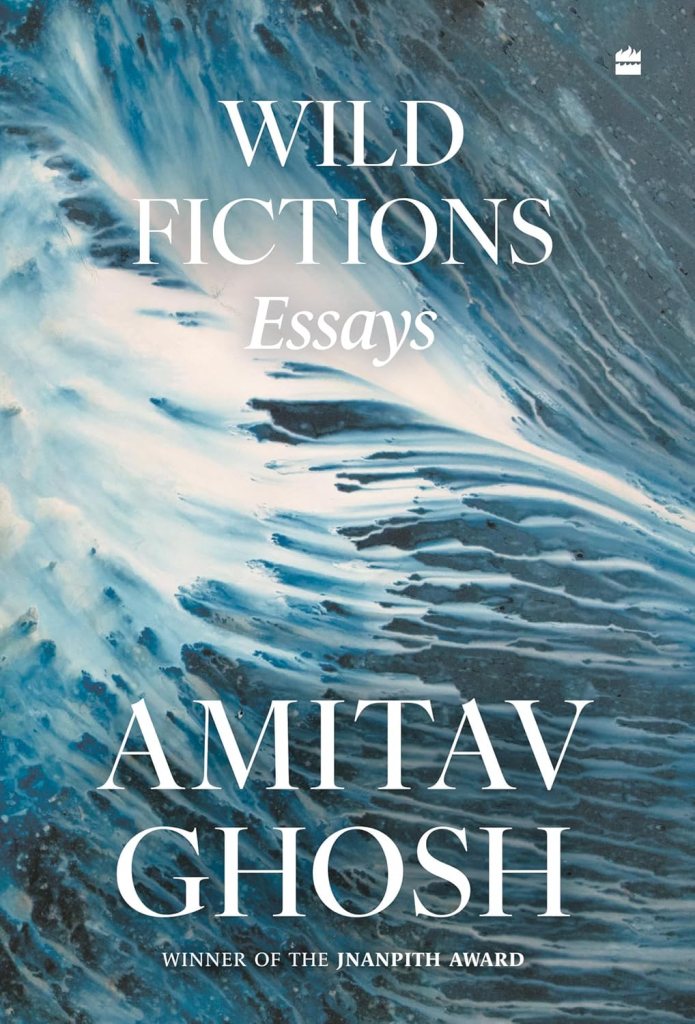
Title: Wild Fictions: Essays

Author: Amitav Ghosh

Publisher: HarperCollins (Fourth Estate)

How can a 470-page long book turn into a page-turner when it is neither a historical novel nor a whodunit thriller that compels the reader to go on reading as quickly as he/she can? That too when it is a motley collection of twenty-six essays written on different occasions and on different topics for the last twenty-five years. The answer is of course Amitav Ghosh who can literally mesmerise his readers with his multi-faceted interests and subjects ranging from literature and language, climate change and the environment, human lives, travels, and discoveries. Divided into six broad sections, Ghosh clearly mentions in the Introduction that the pieces in this collection are about a wide variety of subjects, yet there is one thread that runs through most of them: of bearing witness to a rupture in time, of chronicling the passing of an era that began 300 years ago, in the eighteenth century. It was a time when the West tightened its grip over most of the world, culminating ultimately in the emergence of the US as the planet’s sole superpower and the profound shocks that began in 2001.

A subject very close to his heart and that is reflected in all the books that he has been writing over the last decade or more, the six essays of the first section are on “Climate Change and Environment.” Ghosh writes about different aspects of migration (both in the sub-continent and in Europe), about the storm in the Bay of Bengal, cyclones, the tsunami affecting the Andaman and Nicobar Islands, and about Ternate, the spice island in Indonesia. According to him, by knowing about anthropogenic greenhouse emissions and their role in intensifying climate disasters, it is no longer possible to cling to the fiction of there being a strict division between the natural and the political. Climate change and migration are, in fact, two cognate aspects of the same thing, in that both are effects of the ever-increasing growth and acceleration of processes of production, consumption and circulation.

According to Ghosh, each of the six essays in the second section entitled “Witnesses” grew out of the research he undertook for his four historical novels, The Glass Palace, and the Ibis Trilogy. All the essays in it “are attempts to account, in one way or another, for the recurrent absences and silences that are so marked a feature of India’s colonial history”. While looking for accounts written by Indian military personnel during the First World War, Ghosh came across two truly amazing books, both written in Bengali, on which three pieces in this section are based. The first of these books is Mokshada Devi’s Kalyan-Pradeep (‘Kalyan’s Lamp’; 1928), an extended commentary on the letters of her grandson, Captain Kalyan Mukherji, who was a doctor in the Indian Medical Service. The second, Abhi Le Baghdad (‘On to Baghdad’), is by Sisir Sarbadhikari, who was a member of the Bengal Ambulance Corps, and is based on his wartime journal. Both Mukherji and Sarbadhikari served in the Mesopotamian campaign of 1915-16; they were both taken captive when the British forces surrendered to the Turkish Army in 1916 after enduring a five-month siege in the town of Kut-al-Amara – the greatest battlefield defeat suffered by the British empire in more than a century. He also writes about how these two prisoners of war witnessed the Armenian genocide.

Regarding the exodus from Burma, Ghosh narrates the plight of one Bengali doctor, Dr. Shanti Brata Ghosh from whose diary (written in English) we are given incidents of events that are a striking contrast to British accounts of the Long March. What the doctor remembered most clearly were his conflicts with his white colleagues and his diary represents a personal assertion of the freedom that his nation’s hard-won independence had bestowed upon him.

Section Four entitled “Narratives” consists of three essays. Speaking about the etymology of the word ‘banyan’, and a short personal anecdote about 11 September 2001, we come to the essay from which the title of this collection – Wild Fictions – is taken. It shows us how the policies and administrative actions have divided landscapes between the ‘natural’ and the ‘social.’ Discussing several environmental issues related to the manner in which over many decades there has been a kind of ethnic cleansing of India’s forests and how the costs of protecting nature have been thrust upon some of the poorest people in the country, while the rewards have been reaped by certain segments of the urban middle class, Ghosh warns us why the exclusivist approach to conservation must be rethought. Before environmental catastrophe happens, we have to find some middle way, one in which the people of the forest are regarded not as enemies but as partners. The idea of an ‘untouched’ forest is none other than a wild fiction.

As mentioned in the beginning, Ghosh’s intellectual curiosity ranges from exploring themes of history, culture, colonialism, climate change and the interconnectedness of human and natural worlds and the readers will get a sample of these different topics in this rich collection. Over the years, we had read some of the essays in journals like Outlook, The New Yorker, The New York Times, The Hindu, The Economic and Political Weekly, The Massachusetts Review, Conde Nast Traveller and so on, and some of the articles have been the product of his detailed research before he commenced writing a novel. The five essays in the penultimate section titled “Conversations” begins with a long correspondence that Ghosh had with Dipesh Chakraborty via email after Provincilaizing Europe was published in 2000. The two never met personally as Chakraborty was in Australia at that time, but the exchanges between these two scholars on such wide-ranging issues is surely a reader’s delight. The pieces on Shashi Tharoor’s An Era of Darkness and Priya Satia’s Time’s Monster which were written as reviews also form parts of ongoing dialogue. As Ghosh states, Sattia’s work “has given me new ways of understanding the role that ideas like ‘progress’ have played in the gestation of this time of monsters”. In ‘Storytelling and the Spectrum of the Past’, we are told about the historians versus the novelists view of seeing and documenting themes.

The final and sixth section comprises of three pieces that were originally conceived as blogposts or presentations, accompanied by a succession of images – “the texts that accompany my presentations are scripts for performances rather than essays as such”. In the first one, Ghosh gives us new insights from his diary notes (the Geniza documents) about how he chose to study social anthropology and how In an Antique Land was made—about the Muslim predominance in the Arab village where he stayed and how he evaded the attempt at conversion. In a lecture he delivered at Indian Institute of Technology, Kharagpur, Ghosh asks us to think back for a moment to the intellectual and historical context that led to the foundation of such institutions as the IITs, the IIMs and the outstanding medical institutions of contemporary India. He tells us how we cannot depend on machines alone to provide the solution to our social problems and talks about mercenaries, prisons, the hegemony of the Anglo-American power and how the empires kept close control over rights to knowledge. One of the great regrets of Ghosh’s life was that he never met A.K.Ramanujan and in the concluding essay of this section, he tells us how he considered Ramanujan to be “one of the foremost writers and intellectuals of the twentieth century and how one of the most important aspects of his work is the context from which it emerged.

In the introduction to this collection Ghosh wrote that we were now in a time between the ending of one epoch and the birth of another – ‘a time of monsters’, in the words of Antonio Gramsci. In the Afterword he mentions how the strange thing about this interstitial era is that it could also be described as a ‘time of benedictions’ in that it has suddenly become possible to contemplate, and even embrace, potentialities that were denied or rejected during the age of high modernity. He reiterates that it is the elevation of humans above all other species, indeed above the Earth itself, that is largely responsible for our current planetary crisis. “The discrediting of modernity’s anthropocentricism is itself a part of the ongoing collapse that we are now witnessing.” The only domains of human culture where doubt is held in suspension are poetry and fiction. Though it is not possible to discuss all other aspects that Ghosh deals with in this anthology as the purview of the review is rather limited, I would like to conclude it by quoting the last couple of sentences written by Ghosh himself when he categorically states: “High modernity taught us that the Earth was inert and existed to be exploited by human beings for their own purposes. In this time of angels, we are slowly beginning to understand that in order to hear the Earth, we must first learn to love it.”

.

Somdatta Mandal is a critic and translator and a former Professor of English at Visva-Bharati, Santiniketan, India.

.

PLEASE NOTE: ARTICLES CAN ONLY BE REPRODUCED IN OTHER SITES WITH DUE ACKNOWLEDGEMENT TO BORDERLESS JOURNAL. 

Click here to access the Borderless anthology, Monalisa No Longer Smiles

Click here to access Monalisa No Longer Smiles on Kindle Amazon International

Categories
Essay

My Love Affair with (Printed) Books

By Ravi Shankar

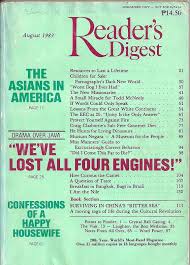
The last two years have been especially sad ones for printed books and magazines. Toward the end of 2023, the iconic magazine, National Geographic stopped selling its print issues. And in April 2024, Reader’s Digest stopped publishing. Many other print magazines have also downed their shutters though the online version continues.

I grew up with the Reader’s Digest. My father subscribed to the magazine and each month a copy wrapped in a brown envelope arrived at our door. The envelope partially covered the magazine inside, and you could see the top and bottom of the magazine. The size was small, and this made for easy handling. Reader’s Digest was a magazine you could read comfortably in bed. During the festival of Diwali, there was a special wrapping for the magazine. We had several magazines in our house when I was growing up. My mother used to read many magazines in Malayalam (our mother tongue).

Reader’s Digest provided shortened versions of stories and articles that had been published elsewhere. Their skill was in condensing the material while still retaining the interest. There was a rich collection of reading material. There were also advertisements for other books published by Reader’s Digest. Unfortunately, these were beyond our family budget. I wanted to purchase these when I grew up and became financially stronger. My neighbour who was a scientist had some of these books that I occasionally borrowed.

Another favourite of mine was the National Geographic. My father was a faculty member at a banker’s training college in Mumbai and their library subscribed to National Geographic. He often brought the magazine home. I was mesmerised by the articles and the photos in the magazine. The artistic quality of the photos was superb. The magazine had only three or four articles in an issue but addressed these at great depth. I travelled to faraway places, to the bottom of the ocean, to within the human body and to outer space with the magazine. Later, National Geographic started a television channel, and I would watch the documentaries in the nineties.

We also subscribed to the Illustrated Weekly of India. This was in a large format and again had very good photographs. I still remember the column by the journalist Khushwant Singh titled ‘With malice towards one and all’. I was also a fan of the comics section of the magazine. I had a huge collection of comics and my father purchased both Amar Chitra Katha and Indrajal Comics. Amar Chitra Katha introduced me to the rich history of India. Indrajal comics had superheroes like Phantom, Mandrake, and Flash Gordon. I used to eagerly await new issues. Most of my comics were lost when we shifted houses.   

When the news magazine, India today, made an appearance, we subscribed to it and to Outlook and The week (Indian news magazines). During my school days in May, I used to eagerly await the new textbooks and notebooks for the next class following the results. I used to go with my mother to purchase these from a stationery store near the railway station. The smell of the new paper and the fresh ink was mesmerising. I loved to read some of the easier chapters in these books. Covering the notebooks with brown paper was another major activity. Our school year started with the rains in June.  

My good friend, Sanjay Mhatre had a good library and loved to collect books. I loved to borrow from his vast collection. His collection on physics and cosmology were extensive. In those days, the erstwhile Soviet Union used to have cheap books of high quality for Indian readers. I remember the publishers Mir and Progress and I had several of their collections on science. The Soviet publishers used to hold exhibitions in our college. For twenty or thirty rupees, you could purchase high quality hard bound books. My introduction to quantum mechanics and to chemistry was through one such book.

At Thrissur in Kerala most of our medical textbooks were western and predominantly from the United Kingdom. There used to be an English Language Book Society (ELBS) that published cheaper versions of textbooks for developing countries. With our limited resources purchasing textbooks was a challenge. The two major textbooks published from the United States were those of Anatomy and Pathology. Those days we did not have online textbooks and online sources and were limited to the printed word.   

I used to write for our medical college magazine and eagerly waited for the annual issue to be published. During my residency days at PGI, Chandigarh I was the literary secretary and was very involved in bringing out the annual magazine, The Resident. We also introduced a newsletter, ARDent Voice, with ARD standing for the Association of Resident Doctors.

At Pokhara, Nepal the college library had a good collection of general books and novels in addition to medical books. I used to read a lot of novels and the author, Frederick Forsyth was one of my favourites. His meticulous research blurred the lines between fact and fiction. Sidney Sheldon was another bestselling author. Novels enabled me to travel vicariously to different places and through varied situations.

Today reading has become less common among the younger generation. Reading strengthens creativity and the imagination as you must imagine in your mind’s eye the situation the author is creating. Is it not magical that the author can communicate with you, the reader through squiggles on a page across the boundaries of space and time?

I started writing during my MBBS days. I still remember the versification competition I took part in and won the first prize. I used to participate in different literary events at my college. In Nepal, I combined my triple loves of writing, photography and hiking with articles for the newly started newspaper, The Himalayan Times. I met my writing guru, Don through the magazine, ECS Nepal. Don was the editor of the magazine and a powerful writer with a deep knowledge of Nepal. I learned a lot from his comments and suggestions and the workshops he conducted. I also used to write a medical column for ECS Nepal. ECS Nepal was a beautifully produced magazine with great photographs. Unfortunately, it stopped publishing around the beginning of the pandemic.

Other travel and lifestyle magazines were also published from Nepal but could not sustain themselves. In the Caribbean Island of Aruba, I used to write off and on for a daily newspaper published in English. Again, the newspaper ceased publishing. During the last two decades several print magazines have ceased to exist. I feel it is a great loss.

I do not read much on paper these days. Most of my reading is done online on computers, laptops and tablets. I also have a Kindle reader. Kindle screen mimics the appearance of paper closely, but it is not the same as reading a printed page. You can no longer feel the smoothness of glazed paper, the smell of fresh ink and the vivid colours of photographs. With the closure of the print version of Reader’s Digest, an era in print publishing has ended. The demise was sadly expected. Without printed books, our (my) world may never be the same again!

.

Dr. P Ravi Shankar is a faculty member at the IMU Centre for Education (ICE), International Medical University, Kuala Lumpur, Malaysia. He enjoys traveling and is a creative writer and photographer.

.

PLEASE NOTE: ARTICLES CAN ONLY BE REPRODUCED IN OTHER SITES WITH DUE ACKNOWLEDGEMENT TO BORDERLESS JOURNAL

Click here to access the Borderless anthology, Monalisa No Longer Smiles

Click here to access Monalisa No Longer Smiles on Kindle Amazon International