Categories
Essay

‘Rajnigandha’: A Celebration of the Middle-of-the-Road

By Tamara Raza

Tuberose, a perennial species of the asparagus family and a native of Mexico has somehow found a home in India too. It blooms at night, which makes sense as in Hindi, it’s a compound of two words – ‘Rajni’ means night, and ‘gandh’ is the smell. It exudes the intense smell of the night, and the long, slender stems supporting the white waxy flowers at the top reinforces its nocturnal beauty. In the world of perfumery, tuberose is a prime source of scent production.

shaam kī ḳhāmosh rah par
vo koī asrār pahne chal rahī hai
rajnī-gandhā kī mahak bikhrī huī hai
duur peḌoñ meñ chhupī dargāh tak


(In the silence of the evening
She is wearing a mystery
The aroma of rajnigandha is scattered
As far as the hidden shrine among the distant trees)


-- Dhoop Ka Libaas (The Robes of the Sun) by Yameen( 1286-1368)

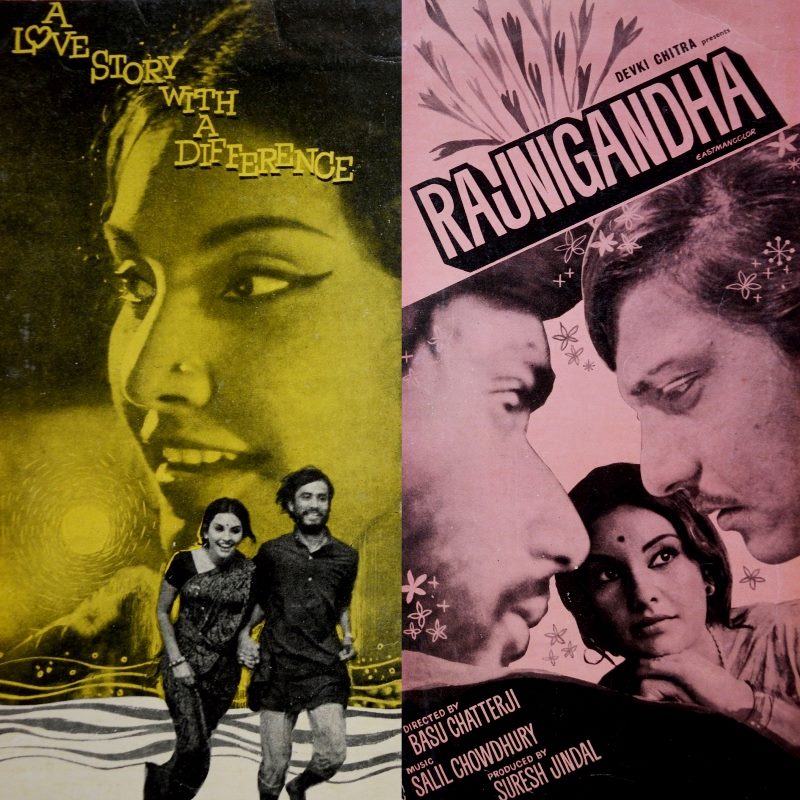
Like the aforementioned nazm, the perfume of tuberoses seem emanate from Basu Chatterji[2]’s 1974 film Rajnigandha too, a movie based on Mannu Bhandari’s story Yahi Sach Hai (This is the Truth). Deepa, played by Vidya Sinha, is the protagonist of the film who struts across the road, waits at a bus stop, with her saree pallu[3] resting on her right shoulder, and is annoyed at Sanjay’s constant tardiness. Sanjay, portrayed by Amol Palekar, is a freewheeling man with a chronic urge to converse excessively and forgets almost everything he was supposed to do. But when she looks at the bunch of Rajnigandha he brings for her, she forgets all her qualms about him. Rajnigandha phool tumhare yunhi mahke jeevan mein (May the fragrance of your tuberose keep blossoming in life), the verse from the film’s song, likewise, is Deepa’s prayer for life.

Deepa, a headstrong woman living in the Delhi of the 1970s, is in the final stages of writing her PhD thesis and is on a job hunt. Sanjay, on the other hand is a more laid back fellow with “just a BA” working in a firm, and fortunately does not suffer from a fragile male ego which feels threatened by a more qualified female partner. A job interview entails Deepa traveling to Mumbai where she meets her former flame, Navin (played by Dinesh Thakur). Seeing him again rekindles her feelings for him. Navin is a go-getter living the fast life of Mumbai, whose advertising job made his way into the party life of the city. Navin’s personality symbolises thrill and adventure, whereas Sanjay on the other hand perhaps defines stability, if not standstill, in life. Deepa is thrown into the dilemma of who should she choose, Navin or Sanjay, much like the film’s song, Kai Baar Yunhi Dekha Hai (Often, I have Seen), which essentially is the musical expression of Deepa’s situation, that says “Kisko Preet Banau? Kiski Preet Bhulau?” (‘whose love shall I accept, whose love shall I forget?’). While Navin does notice Deepa’s appearance, manages to be on time, he is also the one who broke her heart in college. Sanjay, on the other hand, who is hardly on time, forgets the film tickets he was supposed to bring, fails to notice what saree Deepa was wearing, and annoys her to the core, would probably never go as far as breaking her heart.
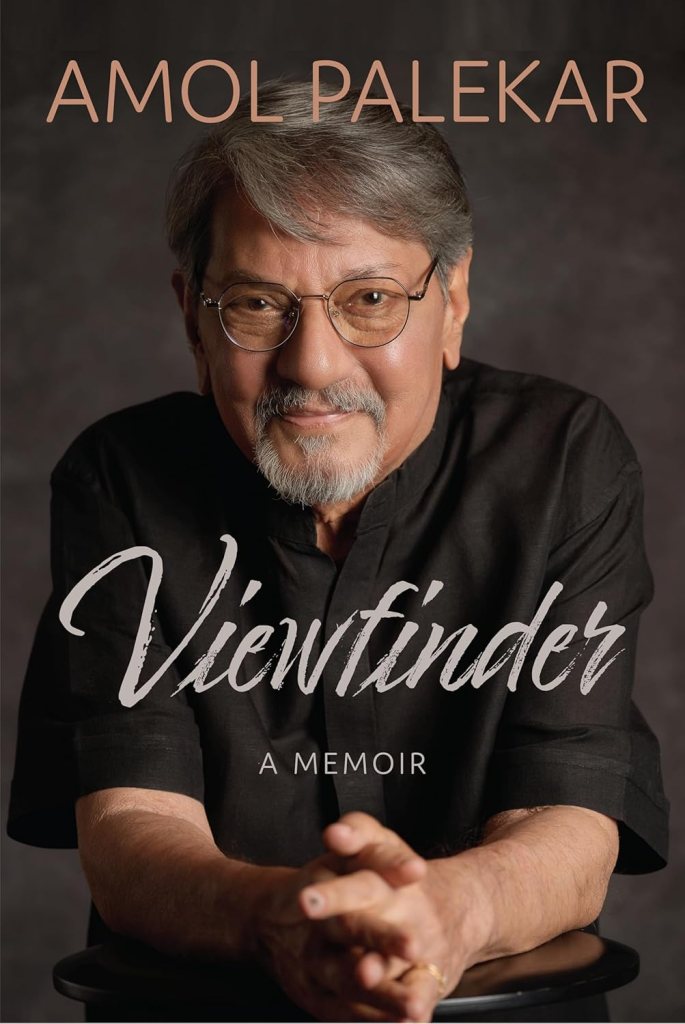
“Crafting Sanjay—a loquacious character who never explicitly expresses love but conveys it through his eyes—without making him seem selfish, was a challenge,” writes Amol Palekar in his memoir, Viewfinder. Both men however, had one similarity – the zeal for protesting, for unionising against injustice in their respective positions, a virtue that presumably was not surprising for the people belonging to the first generation of young independent Indians. The Deepa that Mannu Bhandari writes about appears firmer and bolder in her stances than the one Basu Chatterji crafted on screen, who is more shy, more reticent and even more confused.

While India did get its first and only woman Prime Minister by the 1970s, in Bollywood, it was the era of the ‘Angry Young Men’ that defined the careers of actors like Dharmendra, Amitabh Bachchan, and Rajesh Khanna, who embodied the larger-than-life character of the ‘hero’ in Hindi cinema and received a cult following as well. On a parallel but divergent plane, there emerged a different kind of male protagonist: he was the guy next door, a middle-class, urban, white collar office goer, who travelled in public transport and spoke no flashy dialogues. A point to be noted here is, that the said definition of the character also included that they were primarily English-educated and from a comparatively well-off background — compounding to the ‘middle-class’ phenomenon in urban India. This was the characterisation that Amol Palekar adopted with films like Rajnigandha, Chhoti Si Baat (A small Matter, 1975) and Baaton Baaton Mein (Between Conversations, 1979). Basu Chatterji’s films underscored this portrayal of the ordinary, urban middle class milieu which was often absent from the mainstream commercial Bollywood films from that time.

With no surprises, the men in these films, like Sanjay in Rajnigandha, are not perfect feminist characters. From a snapshot in the film, Sanjay tells Deepa to keep her money to herself after marriage because the household shall be run with “his” money. Ideally, in an equal household, if both partners have a source of income, the expenses should be shared by both of them, which defines the ‘partnership’ in a relationship in the most literal sense of the term. Considering the time and space of when the film was made, it appears that while Chatterji, consciously or not, did try to incorporate modern ideas of women’s financial independence, he also at the same time, could not completely erase how a conventional ‘man’ from a patriarchal ethos would react — by still upholding the status quo of hierarchy between the two sexes.

Despite these few shortcomings in the film, Deepa’s character contains a multitude of complexities, unlike many films of the seventies where female characters are often reduced to archetypes as that of the demure, submissive wife, the sacrificing mother or the unattainable love interest. She is not an overtly assertive individual but is also neither a passive receiver of love nor a woman who blindly conforms to patriarchal conventions; rather, she is someone who constantly engages with her emotions, doubts, and desires. Her emotional conflict—to choose between thrill and stability, novelty and convention—reflects the larger question of female autonomy in a culture where women were often expected to follow predetermined roles. Although Deepa’s predicament is not a radical departure from typical romance plots, her internal journey is far more introspective and self-aware than the majority of female characters in the films belonging to that era. She is not a mere object of male desire or a meek heroine waiting to be ‘saved’ by a male hero. She is an individual in her own right, capable of making difficult choices that reflect the evolving understanding of herself.

Deepa’s decision-making isn’t straightforward or even particularly idealistic, but not once does she lose her individual agency to feel for herself and the emotional depth in her character offers a fresh perspective on the representation of women in Hindi cinema, portraying them as individuals with competing needs and aspirations, rather than as mere props for male narratives. Maeve Wiley, the protagonist from the Netflix show, Sex Education, calls “complex female characters” her “thing.” Well, this author’s proposition would be to include Rajnigandha’s Deepa as well into this list.

In its subtle critique of the pressure on women to conform to the traditional idea of womanhood, this film however does not provide any revolutionary discourse to the existing social and cultural norms surrounding women’s roles. It still runs on the same old conventional path that expects a woman’s happiness and worth to be defined by her relationship with a man. But it nevertheless has been able to depict a self-reliant woman whose existence itself is an act of revolution in male dominating spaces such as that of earning a doctorate in the 1970s.

Basu Chatterji, known for his ‘middle-of-the-road’ cinema was part of the Film Society Movement. According to historian Rochona Majumdar, the Film Society activists grappled with the definition of a “good” film. Was it’s primary goal to improve the lives of the Indian people, a goal that mainstream (profit-driven) “commercial” cinema had failed to accomplish? Or was it just to “mirror the aspirations of common people” through cinema, as one early film society activist put it? In line with the same thought, this film with no dramatic plot twist or a visible antagonist per se, stands out as a celebration of the ordinary, an ordinary man, an ordinary woman, travelling in public transport, with ordinary aspirations. Not to mention, this ‘ordinariness’ had a certain class and religious position as well.

The tuberoses could also perhaps be taken as an allegory of the ordinary. While conventionally, a rose is sought to be the flower connoted with love and romance, with countless romantic poems mentioning it, the tuberose in comparison appears to mundane. When one buys a bouquet, two-three tuberose stems are often seen given the geographical and seasonal context, but just as a supplement to the more prominent flowers wrapped in it. So, does this flower in the film symbolise a sense of yearning or through it, is it an attempt to tell an ‘ordinary’ love story?

The film’s title Rajnigandha does not just symbolise love or longing but aptly reflects the emotional tone of the film. Just as the flower blooms at night, Deepa’s journey towards self-realisation and emotional clarity unfolds in the quiet, introspective passages in the story, rather than in conspicuous expressions of passion or drama. Her feelings and relations are complex, layered, and occasionally challenging to describe, much like the flower’s euphoric yet elusive nature.

It won the Filmfare Critics Award for Best Movie, with two songs penned by the Hindi lyricist Yogesh, bagging Mukesh[4] the National Award for Best Male Playback Singer, and no distributor willing to buy the film initially, Rajnigandha also passes the Bechdel Test which examines how women are represented in films with distinction. This to me is its greatest triumph. Its delicate yet profound meditation on love, choices, and identity, is a masterwork of Indian cinema that contemplates on the silent, unpronounced qualms of daily life by fusing realism with emotional profundity. An honest depiction of human emotions, tastefully rendered in a small, intimate canvas, is what all works of Basu Chatterji (not just the film in question) deliver as a welcome diversion in an age of exaggerated melodrama and action. And Rajnigandha is a film that reminds people to value the nuances of human relationships and the elegance of slow, quiet cinema, making it a timeless classic.

[1] Perfume

[2] Basu Chatterjee, film director and screen writer (1927-2020)

[3] Loose end of a saree

[4] Mukesh Chand Mathur (1923-1976), playback singer in films

Bibliography:

  • MAJUMDAR, ROCHONA. “Debating Radical Cinema: A History of the Film Society Movement in India.” Modern Asian Studies 46, no. 3 (2012): 731–67. http://www.jstor.org/stable/41478328.
  • Read full Nazm by Yameen, Rekhta.
  • Sansad TV, Guftagoo with Amol Palekar, YouTube, 2015, October 21.

Tamara Raza is an undergraduate student at Indraprastha College for Women, University of Delhi.

.

PLEASE NOTE: ARTICLES CAN ONLY BE REPRODUCED IN OTHER SITES WITH DUE ACKNOWLEDGEMENT TO BORDERLESS JOURNAL

Click here to access the Borderless anthology, Monalisa No Longer Smiles

Click here to access Monalisa No Longer Smiles on Amazon International

Categories
Musings

In Favour of a Genre …

By Saeed Ibrahim

According to Australian author Frank Moorhouse, a short story is like a beautiful handmade toy — a specialised craft requiring talent, originality, creativity and skill. Not surprisingly, many of today’s  successful writers have used this medium to launch their professional careers. And for good reason. Short stories have helped them hone their writing skills, develop the writing habit and inculcate a sense of discipline in their writing schedules.

Contrary to what some editors and publishers believe, there is a growing market for the short story. Modern technology has  offered a tremendous boost to the short story genre. The short story today can be made accessible to readers in a much quicker time frame and at a much lower cost. With so many online magazines, it’s now cheaper to produce and distribute more short fiction than ever before. This flexibility makes it possible to download a short story on a website, on a mobile phone or on a tablet; and a short story can be read and enjoyed anywhere and anytime – during a lunch break, in a doctor’s waiting room, on a short journey or a commute, or even whilst waiting in a queue!

From the reader’s point of view there are several other advantages to a short story. One of the major strengths of the short story lies in its brevity and compactness, providing a punch that is so different from a novel. The theme of the story, the setting, the plot, the characters, the conflict, the turning point and the resolution are all contained in a short space. And it is precisely this compactness that makes this form of writing so appealing. A short story provides a quick and easy read from start to finish in a short period of time, and often in a single sitting. In the words of Neil Gaiman, “Short stories are journeys you can make to the far side of the universe and still be back in time for dinner.”

Apart from that, because of the media overload in today’s world, our attention spans are shrinking. This is why it is important to condense the message in a short and concise form that catches the attention of the reader and stimulates his curiosity. They could be a way towards inculcating the reading habit. They are great for reluctant readers, slow readers or anyone intimidated by books.

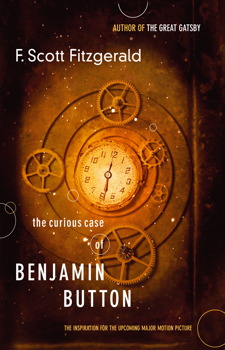
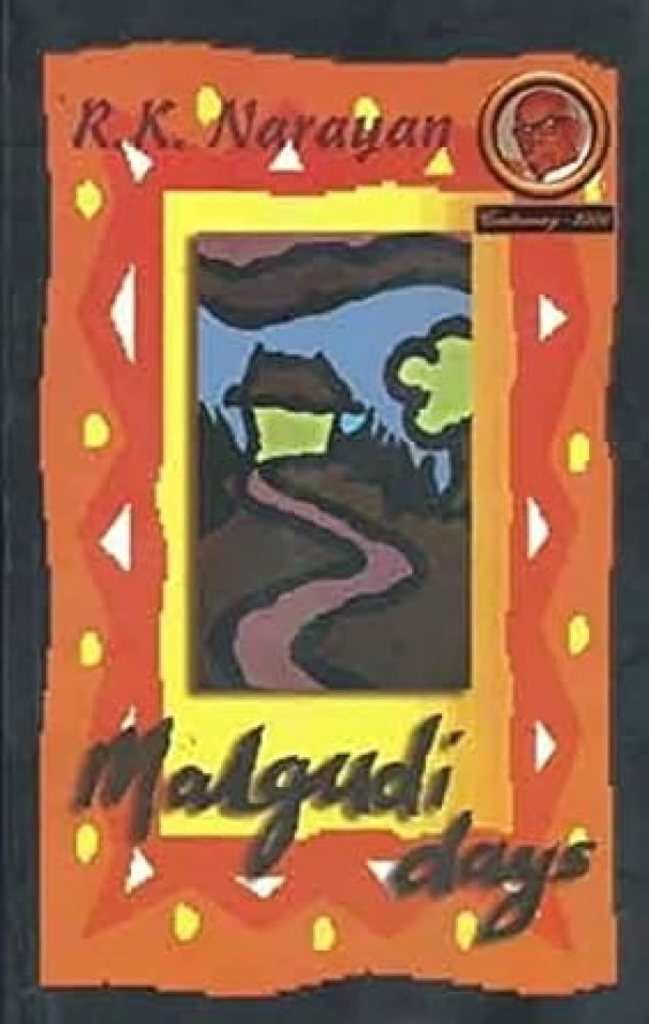
The lasting power of the short story is so well illustrated in the fact that many famous and successful films and television series were based on  short stories. The Curious Case of Benjamin Button, for instance, was an award-winning film inspired by F Scott Fitzgerald  short story of 1922 and released 86 years after the original story was written. Malgudi Days was made into a television serial of 54 episodes and four seasons and had become a household name in India. It was inspired by a series of 32 short stories written in 1943 by celebrated author, RK Narayan.

So if you are an aspiring young writer, the short story would be a good means of kick starting your writing career. We all have a story inside us waiting to be told. And who knows, that yet to be written masterpiece may well find its way to a block buster series on Netflix!

Saeed Ibrahim’s family saga, Twin Tales from Kutcch, and his book of short stories, The Missing Tile and Other Stories, have had successful  runs both in India and overseas. He continues to write newspaper articles, travel essays and book reviews for various Indian and international publications.

.

PLEASE NOTE: ARTICLES CAN ONLY BE REPRODUCED IN OTHER SITES WITH DUE ACKNOWLEDGEMENT TO BORDERLESS JOURNAL

Click here to access the Borderless anthology, Monalisa No Longer Smiles

Click here to access Monalisa No Longer Smiles on Kindle Amazon International

Categories
Poetry

Poems by Caroline Am Bergris

Portrait of an Old Man by Johannes Vermeer(1632-1635)
YOU AND YOU 


I know exactly how to touch you,
how to slide my finger
down your forehead and moist nose,
then tickle you under your chin
with four of my fingers;
I glide down your back
navigating the abacus of your spine
as you turn over
and lie back in unabridged bliss, woofing.
I tickle your nipples
and softly caress your furry belly.

I know exactly how to touch you,
how to shelter your clawed hands in mine,
I dab concealer onto your eyebags
with my second finger
then, using my whole hand like a spider,
massage your grey scalp
until you murmur wordlessly.
I slap my hand on your back
during one of your coughing fits
and give you my arm to hold on
as I become your walking stick.

TRANSGRESSION                                                                                 

It wasn't the shock of him saying it.
It was the shock of my reaction - 
" I just do it to kill time."
KILL TIME?
AT OUR AGE?

Killing time is for twentysomethings
with long hair and journals
and daisychain dreams,
or for the terminally ill,
drinking regret on the rocks.

I felt an electric numbness --
he had taken time in vain.
When the hourglass sand
begins to look bottom-heavy,
then a year begins to feel like a month.
Like a crack addict,
all you want is more.

I wanted to shake him,
screech some sense into him,
but it was his time to lose,
not mine.

GIOVANNI

I can’t write a poem about you. It would be like flashing an emotional boob. We sit every week, talking, and I look at the curls in your beard dashed with grey. They seem to be a different formation every time, a different highlight, a different sign. It’s like interacting with a dynamic ancient Greek statue. The Vermeer light haloes in through the window to your right even when there is no sun, and the pink-brown skin of your face shimmers with optimism and comfort. Our conversation is sprinkled with ancient languages, modern dilemmas, and each other’s violent Netflix recommendations. We could have a timeless friendship except I signed a contract that we can’t be friends. It is so easy to read too much into cultural commonalities and humorous asides. So I do. We are both very Latin and very English at the same time, with veins of sarcasm pulsating at the temples. Maybe we are modern day explorers destined to meet like Livingstone and Stanley in Africa. I don’t love you. I don’t think you’re perfect. You leak grumpiness as you listen. Your feminism is mild. But. And we haven’t even met.

Caroline Am Bergris is a half-Colombian, half-Pakistani poet living in London. Her poems have been published, online and in print, in Europe and America. 

PLEASE NOTE: ARTICLES CAN ONLY BE REPRODUCED IN OTHER SITES WITH DUE ACKNOWLEDGEMENT TO BORDERLESS JOURNAL. 

Click here to access the Borderless anthology, Monalisa No Longer Smiles

Click here to access Monalisa No Longer Smiles on Amazon International
Categories
Slices from Life

The Toughness of Kangaroo Island  

By Vela Noble

A lone house juts out of the cliffs on Kangaroo Island, like a villain’s lair in a James Bond movie. Its floor-to-ceiling windows are marred only by salt spray and swallow poo. The receding orange cliffs set against a fierce ocean makes for a view even the stonemason called, ‘the best on the island’. I slink down into the backseat of our car and admire the azure downhill view of Cape Jervis, where the ferry departs. Today my dad, his partner and I are driving to our holiday house for a short trip planting trees. On the North Cape of Kangaroo Island, the fields of matted grass pocked with weeds make for a melancholic landscape. Having been ravaged by decades of farming, helping revegetate is the least we can do.

My bedroom on the island has large eastern-facing windows. This gives me a view of Boxing Bay, a beach only visited by tourists willing to brave the potholed dirt road. Bleached book spines featuring nautical adventures or “101 Guide to Prepping” line the bookshelf. Dusty DVDs, mostly starring Ben Stiller, have also been faded by the elements. A box reveals an arsenal of art supplies my mum ordered online. I unearth my mum’s fancy French Sennelier watercolours. They come in a navy carry bag with crisp brushes begging to caress a canvas. Staring at these items hits a nerve, but I tenderly place it in my backpack.

That same afternoon we plant some trees. We have around sixty to get through this trip, mostly bristly casuarinas and muntrie berry bushes. I gently pat around each seedling and send a prayer into the earth. After I have done the bare minimum, I do what I usually do every trip; I wander off. I decided to make the trek from Boxing Bay up the hill to the solitary lighthouse. Passing a droopily arching tree, I tentatively open my sketchbook and bring pen to paper. The earth and sky don’t like me much. Juicy fat ants keep biting me and my pale arms are getting fried. The drawing comes out horribly, so I shove the sketchbook away. Life isn’t just tough for me, but for everything out here. We once caught a monitor lizard so thirsty that it was licking a leak in our hot tub. We offered it a drink, from which it drank like a dog from a bowl. On the North Cape, you can often glimpse the grand wingspan of a sea eagle surveying the hills in search of prey, such as mice. Echidnas are a bit rarer to spot. They must have it tough too, for they could get mistaken for a chubby mouse. Everywhere I look, there’s subject matter pleading to be painted. It’s in the flattened fields where settlers heaved limestone into neat little rows, or in the sheep skull perched on the wire fence. Around halfway to the lighthouse, I see some abandoned machinery in the corner of a field. I attempt to sketch. Yet again, something isn’t quite right. So, I tear an angry gash with the pen instead. The overcast weather rolling in urges me to slouch on home.

A storm hits tonight. The windows in my room shiver under every gale. The little sprouts we had just planted are getting a brutal welcome to their new home, but at least the earth gets a drink. Below the house on the cliffside, a grove of wizened casuarinas grow sideways as a result of with this abusive weather. Somehow, they still grow. I teeter to the toilet in the middle of the night.

My mum took charge of designing this home and her dedication is apparent even in the bathroom, where a nifty hidden wooden panel pops out to reveal storage for toothbrushes and toilet paper. She passed away in 2020 and didn’t get to enjoy that hidden toilet paper compartment. Both here and at home, there is no escaping the memory of my mum. In the morning, the sun beams straight into my slumbering retinas. I had hardly slept. Dad cranking up the coffee machine doesn’t help.

“What are you going to do today?”

“More terrible art, probably.”

“Go for a walk. Look for some sea eagles. There’s so much to do out here.”

I walk down to the grove of gnarly casuarinas. A solitary sheep that strayed from the feral herd appears in front of me. It startles, the dags on its butt dangling with every leap. I follow it and reach a sandy spot on the clifftop. These trees survived last night’s storm, why can’t I survive this?

I rummage through my bag and realise I have my mum’s watercolours. I admire the glossy hues snuggled in their metal tins. It’s as if her dreams are laid to rest in this little plastic case. After my mum passed away, I suffered a psychotic break which impaired my ability to do art. Art had been my passion. Professionals tell me it’s not damaged and I’ll get better but, I have yet to see any proof of that. Seeing the dirty sheep posing right in front of me, I can’t help but have hope. This time I don’t draw, I paint. I pop open the water filled jam jar and bring the brush to the ultramarine. The blue spills onto my page. Next is the sky that’s freckling my skin. I am not just painting, I am soaring on wings and scurrying through the undergrowth on tiny paws. Like the almighty creator, I lay down the stoic earth. Before I know it, I have a picture. Hey, it turned out alright! Above all else, I was happy making it. That evening I showed the picture to my dad.

“That’s fantastic Vela! Why do you keep saying you’ve lost your art?”

He puts it on the stonemason crafted mantelpiece, next to a bowl of seashells and under the happy gaze of my mum’s self-portrait.

It’s a pale purple dawn when we depart. The white drop cloths draped over the furniture to protect them from the sun makes the living room appear full of ghosts. We putter down the crushed limestone road, the rumbling white dust proclaiming our departure to all the thirsty lizards and echidnas shuffling in the bush. I take a final look at the wind-bent casuarinas on the cliffside. I too, feel beaten down by life, by relentless winds trying to rip me out by the roots. The trees get tougher and tougher, clinging into that poor soil. It may not be the best conditions, but when I think about the harshness of life on Kangaroo Island, I realise there’s something I can learn from it. Something in me can thrive too. The North Cape has made me just that little bit tougher.

.

.Vela Noble is a South Australian artist who is currently developing her own indie games. She has many years of experience working in animation for Netflix and Dreamworks. 

.

.

PLEASE NOTE: ARTICLES CAN ONLY BE REPRODUCED IN OTHER SITES WITH DUE ACKNOWLEDGEMENT TO BORDERLESS JOURNAL

Click here to access the Borderless anthology, Monalisa No Longer Smiles

Click here to access Monalisa No Longer Smiles on Kindle Amazon International

Categories
Essay

A Different Persuasion: On Jane Austen’s Novels & their Adaptations

By Deepa Onkar

Recently, a realisation dawned – it has been over a year since I have watched an adaptation of a Jane Austen novel as a film or television series. My earliest memories of watching them go back to 1995, when the BBC’s version of Pride and Prejudice was released – I would watch the DVDs, or episodes on YouTube, with some enthusiasm. Over the years, I didn’t lose a chance to watch others: Sense and Sensibility, (film), Emma (BBC television series) Pride and Prejudice (film) and so many others. Looking at the comments on YouTube, it was evident that the Jane Austen adaptation fandom was large, and on a global scale. The seamless way in which the adaptations were consumed in so many Indian homes, including mine, puzzled me. I was familiar with the novels, as I had been a student of English literature in postcolonial departments in India, but that could not be true of so many others.

I fretted about the fact that my literary moorings were not so much in my own mother-tongues, but in English. Middle-class India was forgetting its own languages. English has crept in slowly, unnoticed. We could of course, think like Chinua Achebe, the Nigerian novelist, for whom writing about our own cultural contexts, our histories, landscapes, and memories in English, changes the texture of that language, and diminishes its colonizing weight. It is also the attitude, conscious or unconscious, of so many Indian writers in English. Curiously not many Indian producers have picked up on the idea of serializing the novels of these writers – either in English or in an Indian translation – which should be easy to do. It was the BBC that first produced an Indian novel – Vikram Seth’s novel, A Suitable Boy as a television series (for a global audience).  

The Kenyan writer Ngugi wa Thiong’o has a much more radical perspective than Achebe – that it is not enough for people in previously colonised cultures to write in English, nor to claim it as their own. The very process by which English was acquired was violent and repressive. “(So) wherever you look at modern colonialism, the acquisition of the language of the coloniser was based on the death of the languages of the colonised. So it is a war zone.” Unless previously colonised cultures begin to train to think in their mother tongues again, he says, we will never really be able to shake off the mantle of colonisation.

This is a compelling, if daunting prospect – the work of decolonizing our minds perhaps begins within the education system which, in India, shows little inclination to change – it continues to lie in the shadows of the Anglo-American system, as it has for centuries. I draw comfort from Achebe’s attitude to English, which is the reality of many Indians. I don’t have to give up on Austen. But how do we rescue ourselves, and Austen? A critical and self-aware engagement with Austen – both the novels and the adaptations – seems to be a good place to begin. Reading Austen is arduous for those not born into English: I could hear my mother tongues tiptoe away as I read her. Reading is a solitary activity that connects us with the worlds of others, through the imagination. Watching an adaptation, on the other hand, can be solitary, or not. The visual text communicates through the senses rather than the imagination, although it does not mean it is not involved here.

It was not difficult to identify signs of England’s colonial links in either Austen’s novels, or the adaptations. Distant colonies such as the Caribbean and India were mentioned not infrequently in the novels: much of the income of the vast estates owned by the gentry was obtained from the colonies. Watching BBC’s Pride and Prejudice – and not for the first time – I spotted the tea, drunk in fine cups, the cigars that the men smoked, the cotton print dresses that women wore. I mentioned to a friend that some of the fabrics looked like the double-shaded handloom weaves from Andhra Pradesh, or Tamil Nadu. She agreed. Sometimes, the dresses also had paisley designs – these hugely popular prints were adaptations of Mughal mango motifs on textile. We, the global audience, need to train our gaze to the material roots of the English imagination, and be critical of it, rather than unreflectively consume its creations. Scenes of opulent country manors would appear repeatedly in many of the adaptations, and it was hard not to notice a kind of nostalgia for the glories of Empire. So much of the popularity of the adaptations seemed to be the result of clever packaging of Regency era settings and countryside.

Even as the lavish settings seemed to engulf Austen’s ingenious stories at times, a great deal of effort went into modernizing them. When Colin Firth came striding out of the lake in dripping wet shirt in 1995, the scene seemed to set the tone for other serials and films to become more inventive – as long as it created a stir. Almost every adaptation slipped in new scenes to suit their own narrative. They brought about a kind of visual cohesiveness to the series or films. Informal and relaxed body language, and facial expressions, and the manner in which emotions were expressed were adopted – rather than the stiff, stylized ways of the past. What we watched on screen was a hybrid text. I had no problem with this, unlike many die-hard Jane-ites the world over, who are perhaps purists at heart. Modern informality is, after all, a sign that the boundaries of class have become less rigid.  

When Austen’s world in the novel became too distant, and removed from my own, I would turn to the adaptations. They became relatable on screen. Besides, the adaptations were open to emotional expressiveness, where in the novels, emotions are sub-textual: I have lost count of the number of times I watched Elizabeth Bennett’s (Jennifer Ehle) fiery rejection of Darcy (Colin Firth) in Pride and Prejudice (1995, mini-series) or Elinor Dashwood (Emma Thomson) fall in love with Edward Ferras (Hugh Grant) in Sense and Sensibility (1995, film).

One of the main features of modernisation is the highlighting of the romantic plot. Love, is of course, central to Austen’s concerns, but on screen, it is difficult to see the larger moral order of which it was a part. Often, the biggest obstacle on the individual’s path to win over the object of their love is a moral flaw within themselves. Instead of Austen’s ironic, witty voice showing us the complexities of the individual, and of their interactions with society, we have to rely a lot on dialogue, and the point of view of the main character. Rather than the multiple layers of narrative in a novel, we have a linear effect in an adaptation. Everything is propelled towards a rather sentimental ‘happily ever after,’ which is not necessarily the point of a Jane Austen novel.

We do not – perhaps cannot – get to know the thoughts of Elizabeth Bennett or Elinor Dashwood on screen, independently of others. If emotions were more readily expressed on screen, we also had to contend with the loss of inner worlds, which a reader has access to. Action is all-important in an adaptation. The expression of physicality was thought to be enough to drive it, making up for our inability to know anything else. This seems to be the view of Andrew Davies, one of the most prolific adapters of Austen to the television screen. According to him, sexuality was already a major driver of the novels – his only task was to flesh it out. “Don’t be afraid (to represent) physicality… these are young people full of hormones and they are bursting with energy,” he says, when asked for pointers on adaptation.

In the novels, we also see how a character is separated from, or unable to communicate with the object of their love, until a morally satisfying solution is found. In Pride and Prejudice, Mr. Wickham’s true character had to be exposed, and Elizabeth could overcome her pride, and could accept that Mr. Darcy was right. In Emma, the eponymous heroine had much to learn in order to fully grow up: to be more self-aware and free from vanity, and realize she loved Mr. Knightley. Austen’s dislike of melodrama and writing that was overly invested in emotion is well-known. And so, it seems logical to think that she would not have liked mere ‘feel-good’ romanticism in the productions of her writings.

Morality as a force was more vivid on the page rather than the screen. It was arguably, an imaginatively constructed entity that was contemporaneous with the white man’s burden of colonization. Austen’s depictions of the world she lived in make her a ‘quintessentially English’ writer that is difficult for others to understand. But over the years, I learnt to understand her from my vantage point in post coloniality – the world is constituted of multiple identities and historical contexts, and being curious and open about others is a reasonable way of engaging with my own existential and sociological identities. 

Austen was an insider to her world – she deferred to the fact that women were very dependent on male approval and protection in order to survive. Most of the women in her novels were teenagers when they began their rounds of courtship, and often subjected to severe scrutiny by the world at large. But her women also used wit and rationality to make themselves seen and heard. Elizabeth Bennett (Pride and Prejudice) and Emma Woodhouse, (Emma) for example, challenged the existing model of the ‘superior,’ rational man.

Within the psychological worlds of men and women, Austen sought to describe the play of feeling, will and reason. Post-feminist critiques of Austen have been critical of her acceptance of these opposites and their implied gendered roles. Many adaptations exist, such as Lost in Austen, Pride and Prejudice Zombies, that satirize and parody Austen to a degree that ‘faithful’ adaptations do not aspire to. The comparisons and defenses could go on.

After years of reading Austen, my sympathies have recently begun to shift, imperceptibly – from the ‘wild and rational’ women of Austen’s novels, as Mary Wollestonecraft might have described them, to the quiet and introspective ones – more precisely, to Anne of Persuasion. Austen’s final novel seems to have achieved an introspective appeal that the other novels lacked. Anne’s deeply reflective and melancholic acceptance of her situation – a single woman stranded amidst a family that often exploited her situation – is the culmination of all of Austen’s literary prowess, and she herself seems to be on new ground as she explored Anne’s silences. A little into the novel, when she meets Captain Wentworth after eight years, there is some halting dialogue, as Anne comes to terms with her lost love, perhaps for the millionth time. Through these silences and halting dialogues, Austen seems to be testing the waters of what it means to be deeply self-aware. I’ve also read the dialogues to be a way in which words could be used to establish equality between them. It is through friendship that an egalitarianism of sorts is reached, that grows only gradually in strength.

The 2007 film adaptation of Persuasion portrayed the silences and the hesitant relationship between Anne and Wentworth admirably. It is difficult to portray interior worlds effectively on screen, and Sally Hawkins played the brooding, inconsolable Anne sensitively, particularly in the early scenes. Rupert Penry-Jones was striking as the embittered Captain Wentworth, seeking love elsewhere. The tension in their silences was palpably thick.

The letter Wentworth writes to Anne — “I am half-agony, half hope” — is a study in vulnerability: he is the flawed man who has to let go of his own stubborn refusal to acknowledge his feelings. The letter also indicates the difficulty of speech between them; writing is his only recourse. Men’s points of view are rarely presented in the novels. The adaptations turned this around – nearly all of the men have moments of vulnerability. This is a major breakthrough in modernization. Women all over the globe suddenly came upon visible evidence formen’s struggles with their feelings. This single factor alone, may be the reason for the huge popularity of the adaptations – men suddenly, were human and relatable.

When I learnt in 2022 of Netflix’s release of a new version of Persuasion, I began to watch it excitedly. But only a few moments in, I was sorely disappointed. The character of Anne (played by Dakota Johnson) was nothing like Austen’s – she was talkative and answered back. The key shortcoming of the film was the loss of Anne’s interior world.  When Anne and Wentworth (played by Cosmo Jarvis) meet, in the film, they engage in banter, from their very first meeting. Nothing much is left unsaid.  The absence of speech between Anne and Wentworth, which gives rise to one of the main tensions of the novel, and the earlier adaptation, is completely missing. They have finished saying a lot to each other in the very beginning. We cannot help wishing they hadn’t. Many of the characters were changed beyond recognition, and the sense of many scenes changed.

We know, early on, what the end is going to be. Austen plays words out in the final letter not coldly, but without a trace of extra emotion — that Wentworth’s maudlin show of tears were not for her. Perhaps, that was the final straw that drove me away from the film. I have not gone back to watching a film or adaptation after that. Something within me had died.

References

Language is a ‘war zone’: Conversation with Ngugi wa Thiong’o, The Nation, Rohit Inani, March 9, 2018

Adapting Emma for the 21st century:  An Emma no one will like; Laurie Kaplan, Jane Austen Society of North America (JASNA) V.30, no.1, (Winter 2009)

How to adapt Jane Austen to the screen, with Andrew Davies: Guardian Culture, YouTube, 2018

.

Deepa Onkar has degrees in English Literature from the Universities of Madras and Hyderabad, India. She was a teacher at Krishnamurti schools in Bangalore and Chennai, India, and a journalist at The Hindu. Her articles and poems have appeared in The Hindu, Punch magazine, The Bombay Literary Magazine, and The Lake, among others. 

.

PLEASE NOTE: ARTICLES CAN ONLY BE REPRODUCED IN OTHER SITES WITH DUE ACKNOWLEDGEMENT TO BORDERLESS JOURNAL

Click here to access the Borderless anthology, Monalisa No Longer Smiles

Click here to access Monalisa No Longer Smiles on Kindle Amazon International