By Mohul Bhowmick
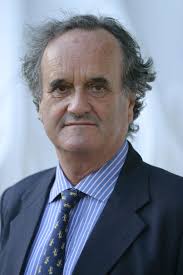
There were very few things that Sir Mark Tully touched which did not turn to gold. In his later years, disenchanted by journalism, he resorted to making documentaries on steam trains. Accompanied solely by a production crew and armed with the knowledge that comes with instinct, Sir Mark established that the locomotives pulling these trains — running on steam — did exist in India, even if he had to crisscross his way to the western peripheries of Kutch to make his point. By then, the BBC, whose outstanding representative he had become, and whose torch he held aloft in times of crises, had become enamoured by the crony capitalism of the centre-right, which we would go on to see in later years.
Born in the southern suburb of Tolluygunge in Calcutta to parents who were Indian in all but name, Sir Mark was sent to study in England at the age of nine before joining the organisation which would, for better or worse, be the making of him. Known essentially for his factual reporting, albeit with the possession of a nuanced eye that made his stories seem humane, Sir Mark’s passion for conversation with his subjects made him highly esteemed in the eyes of his peers. The added benefit of reporting on events that shaped modern India — the Bhopal gas tragedy, Operation Blue Star, Rajiv Gandhi’s assassination, the Babri Masjid demolition, et al — was the ream of concepts he had up his sleeve, and of which he made good use when he started writing books.
Amritsar: Mrs Gandhi’s Last Battle was Sir Mark’s first book, but it was No Full Stops In India that embellished him as a legend who could comfortably balance storytelling with a subtle hint of refinement, and who had the repertoire of knowing his subjects inside. Despite being born in the country, he was only given the privilege of being an Overseas Citizen of India (OCI), but this did not deter Sir Mark from his goal — to tell the stories of real Indians and real India to those who did not know where to look. All his life, he rallied behind the cause of religious pluralism and batted for the inclusion of marginalised communities and minorities into the mainstream, but died a man broken by the scars of battle.
Much like the Ashokan rock edicts that were unknown to the ordinary Indian till James Prinsep deciphered the Brahmi script in the early 19th century, Sir Mark’s work went largely unnoticed in the country until he left the BBC. Harassed and harangued by the Indira Gandhi government, he had also been forced to leave the country when the Emergency was imposed. However, return he did, to his country of birth, and stayed loyal — to its people and to the truth — and continued challenging those in power with constant, if gratifying, attacks.
Telling stories with a precision that most remain unaware of despite the possession of all-seeing eyes, Sir Mark’s work remained a terrifying but ambitious challenge for any aspiring journalist to recreate. He left just the way he had wanted to leave, in the country of his birth, known as an Indian who had struck roots in its soil, blossomed in its spring and withered at its dusk. A man ahead of his times by several generations, Sir Mark Tully was an Indian we did not deserve.
Mohul Bhowmick is a national-level cricketer, sports journalist, poet, essayist and travel writer from Hyderabad, India. He has published five collections of poems and one travelogue so far. His latest book, The Past Is Another Country, came out in 2025. More of his work can be discovered on his website: www.mohulbhowmick.com.
.
PLEASE NOTE: ARTICLES CAN ONLY BE REPRODUCED IN OTHER SITES WITH DUE ACKNOWLEDGEMENT TO BORDERLESS JOURNAL
Click here to access the Borderless anthology, Monalisa No Longer Smiles
Click here to access Monalisa No Longer Smiles on Kindle Amazon International

 Borderless