Categories
Review

Contemporary Everest Industry as seen by an Explorer

Book review by Bhaskar Parichha

Title: Everest, Inc.The Renegades and Rogues who Built an Industry at the Top of the World 

Author: Will Cockrell

Publisher: Gallery Books/ Simon & Schuster India

This book delves into a unique topic with a unique approach. Will Cockrell’s Everest Inc. The Renegades and Rogues who Built an Industry at the Top of the World explores the intersection of democratisation and commercialisation in the realm of high adventure. Through meticulous research, Cockrell presents a dynamic narrative of the evolution of guided climbing on Mount Everest. The narrative captures the shift of the mountain from a challenging climb to a lucrative business venture. From the pioneering expedition of Hillary and Norgay in 1953, Cockrell traces the journey of various individuals who played a role in making the summit more accessible and profitable.

Cockrell, an award-winning writer and journalist, skillfully delves into the captivating world of mountain climbing. With meticulous research and interviews with guides, sherpas, amateur climbers, and even Hollywood figures, he unveils the fascinating story that led to the rise of this industry. These entrepreneurial adventurers, who once catered to affluent clients, have now become an indispensable part of the lucrative adventure economy, revolutionising our perception of mountain climbing and the majestic peaks themselves. Despite the unfortunate tragedies and the excessive commercialisation that have plagued the mountain in recent years, Cockrell’s narrative remains an inspiring and uplifting tale.

This comprehensive adventure history delves into the world of guided climbing on Mount Everest, featuring exclusive interviews with renowned mountain guides and climbers such as Jimmy Chin and Conrad Anker. It serves as a cautionary tale about the risks of overexposure while also celebrating the enduring allure of this ultimate terrestrial adventure.

Says the blurb: “Anyone who has read Jon Krakauer’s Into Thin Air or has seen a recent photo of climbers standing in line to get to the top of Everest may think they have the mountain pretty well figured out. It’s an extreme landscape where bad weather and incredible altitude can occasionally kill, but more so an overcrowded, trashed-out recreation destination where rich clients pad their egos—and social media feeds—while exploiting local Sherpas.”

“There’s some truth to these clichés, but they’re a sliver of the story. Unlike any book to date, Everest, Inc. gets to the heart of the mountain through the definitive story of its greatest invention: the Himalayan guiding industry. It all began in the 1980s with a few boot-strapping entrepreneurs who paired raw courage and naked ambition with a new style of expedition planning. Many of them are still living and climbing today, and as a result of their astonishing success, ninety percent of the people now on Everest are clients or employees of guided expeditions.”

The book glances at the lives of early guides, victories and setbacks experienced during the industry’s growth, and diverse opinions on the evolution of the guiding industry on Everest. Cockrell interviews prominent figures in the Everest guiding community — ranging from Conrad Anker to the late David Breashears, as well as climbing legends like filmmaker, Jimmy Chin, and outdoor industry leader, Yvonne Chouinard.

Filled with firsthand accounts from over a hundred western and sherpas, clients, writers, filmmakers, and even a Hollywood actor, Everest, Inc. places emphasis on the perspectives of those who have shaped the mountain’s current state. While it delves into the gripping tales of triumph and tragedy spanning the past four decades, it goes beyond clichés and presents an inspiring alternate narrative about the dedicated individuals who have fulfilled the aspirations of others, as well as the Nepalis who are propelling the industry forward.

Despite the constant media exposure on Mount Everest, there has been a lack of comprehensive documentation regarding its recent turbulent existence. Will Cockrell discusses this gap exhaustively with research and interviews to by present a multifaceted perspective that pays tribute to various viewpoints, particularly those of the sherpas who consider the Himalayas their homeland.

Everest, Inc. is essential read for anyone considering attempting the world’s highest peak or for those interested in understanding the intricate workings of the contemporary Everest industry.

.

Bhaskar Parichha is a journalist and author of UnbiasedNo Strings Attached: Writings on Odisha and Biju Patnaik – A Political Biography. He lives in Bhubaneswar and writes bilingually. Besides writing for newspapers, he also reviews books on various media platforms.

.

PLEASE NOTE: ARTICLES CAN ONLY BE REPRODUCED IN OTHER SITES WITH DUE ACKNOWLEDGEMENT TO BORDERLESS JOURNAL

Click here to access the Borderless anthology, Monalisa No Longer Smiles

Click here to access Monalisa No Longer Smiles on Amazon International

Categories
Poets, Poetry & Rhys Hughes

Ghee-Wizz

By Rhys Hughes

Ghee-laden, sugar-loaded, deep-fried, I have been warned that Indian sweets are naughty, even dangerous, and that I shouldn’t eat them at all, or if I do insist on eating them, then they must only be sampled in moderation, and even when I eat them in moderation I ought to visit a reliable doctor every week for a full health check, and even if I do that, I must bear in mind that men of my age die of heart attacks even when they don’t eat sweets of this nature. Indian sweets might look harmless on the plate but they are like cluster bombs, detonating inside the body and speeding a man into the next world.

But I climb mountains and mountaineering has been a huge part of my life, and when we climbed mountains back in Britain we took with us large amounts of a substance called Kendal Mint Cake. I need to talk about this food before I am able to make the point that I intend to make about Indian sweets. If you bear with me, I won’t be too long. Kendal Mint Cake is a sugar-based confection and is flavoured with peppermint oil. In fact, sugar, water and peppermint oil are the only ingredients, but they are prepared in a special way which remains a secret. I don’t think there’s much that’s very secretive about blending sugar, water and peppermint oil, but who am I to say that?

The ingredients are mixed together and boiled in copper pans while being continually stirred. If this stirring stops, the mixture becomes translucent and it will be ruined, because opacity is the desired feature of Kendal Mint Cake. How can a translucent sugar-rush product be taken seriously? We see the light after a lifetime of contemplation. We see a solid lump of minty sugar when we plan to ascend to the summit of some peak or other.

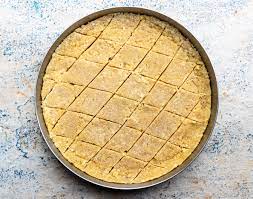
Kendal Mint Cake. Courtesy: Creative Commons

Kendal Mint Cake has a formidable and perhaps peerless reputation as the energy-providing snack of choice for the intrepid explorer. It played an essential role in the Trans-Antarctic Expedition of 1914–1917, led by Ernest Shackleton, one of the fittest and toughest men who ever lived. It aided Hillary and Tenzing in the first successful attempt on Everest in 1953 and other members of the team wrote, “It was easily the most popular item on our high altitude ration” and “our only criticism was that we did not have enough of it”. High praise indeed, with an emphasis on the high. Bonington also climbed Everest in 1975 using Kendal Mint Cake, as well as ropes and crampons.

I think we can safely declare that Kendal Mint Cake is heroic. Therefore, it seems to be that Indian sweets can also be regarded as mighty, valiant, doughty, gallant, fearless and daring. And when we consider that India has mountains far higher than those in Britain, shouldn’t we tend to the conclusion that the sweets of India are themselves a bracing landscape when seen on the counter of a shop that sells them? We hear a lot of talk about sugar highs and lows, but viewed as a backdrop, rather than as the progress of a graph line through time, highs and lows form mountain ranges. Indian sweets recreate on the inside the geography of the northern icy reaches of the country.

It is high time (more wordplay) that mountaineers and other explorers start carrying Indian sweets on their expeditions. Kendal Mint Cake has proved itself in the lonely heights, and now gulab jamuns and ladoos, and boxes of sandesh, modak, barfi and bowls of payasam should be given a fair chance, to say nothing of kulfi, halwa, gujiya, and my favourite, Mysore pak. Need I list them all? It is not just a question of providing energy to the adventurer, energy that can be expended a very short time after eating the sweets, as opposed to eating healthy foods which provide energy slowly and in trickles. No, there are many other good reasons for adding a broad selection of sweets to the supplies that are to be taken up slopes of staggering steepness into the very clouds.

First of all, sweets are light. They are lighter than so-called healthy foods. I pity the mountaineer who hefts sacks of cabbages and carrots to the top of harsh and fearsome Annapurna or Dhaulagiri. Sweets are considerably more compact than vegetables, especially the unpleasant-tasting vegetables. Sweets can remain fresh for longer and that’s another advantage. You don’t have to eat them all in the foothills but can save some for the ascent.

Sweets are rewards too. The fellow who promises himself a ladoo or two when he finally attains a certain tricky ledge is more likely to be motivated to strive for that ledge than the man who tempts himself with a turnip or beetroot. Who would want to munch on a root vegetable during a blizzard? Not me. The taking of sweets on expeditions also provides work for sweet-makers. It is both economically wise and aesthetically sensible to carry sweets together with ropes and pitons and carabiners and all the other accoutrements of a sober climb if one happens to be a serious climber. Hunger pangs are one thing at sea level, but at altitude they tend to be much worse.

There is another consideration that hasn’t yet been touched on. There is the perennial risk for the mountaineer who attempts the Himalayas that he will meet and be abducted by Yetis. I won’t overstate the risk. Most of the climbers of that range have returned without being abducted. But is it really responsible to poke one’s nose into the eternal snows without something to mollify the beast? There is the question of simply organic respect. The explorer who suddenly encounters a Yeti and emits a shriek has insulted his potential host. The explorer who opens a box of sweets and offers one, or several, or many, to the hairy brute will surely make a good impression. I can almost see them now, in my mind’s eye, man and monster sitting on a crag, sharing gulab jamuns.

Rhys Hughes has lived in many countries. He graduated as an engineer but currently works as a tutor of mathematics. Since his first book was published in 1995 he has had fifty other books published and his work has been translated into ten languages.

.

PLEASE NOTE: ARTICLES CAN ONLY BE REPRODUCED IN OTHER SITES WITH DUE ACKNOWLEDGEMENT TO BORDERLESS JOURNAL

Click here to access the Borderless anthology, Monalisa No Longer Smiles

Click here to access Monalisa No Longer Smiles on Kindle Amazon International