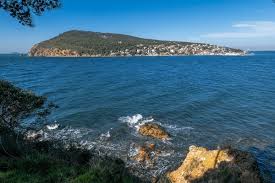
Categories
Stories

Nico Finds His Dream

By Paul Mirabile

From Public Domain

Vasiliki and Nico boarded the passenger steamer for Burgaz Island at Sirkeçi pier at Istanbul. As the steamer moved out slowly from the crowded port, Nico gazed at the dreamy silhouette of this storiedcity where for four days they had woven in and out of lanes and alleys, gardens and markets, prayed in the Greek churches.

They had left Hydra six days ago by boat and bus, arriving in Istanbul after a night spent in Thessaloniki. Now they were off to Vasiliki’s island of birth. He had never been back since his departure at the age of twelve, and the thought of returning excited him. “Look grandpa at the setting sun over Topkapı Palace,” shouted an elated Nico. And indeed Nico’s elation was not feigned.

The cypress trees and domes of the mosques and minarets were outlined against a sky alive with streaks of reddish flames whose reflections could be discerned in the unruffled waters of the Marmara Sea. The crenelated walls of Topkapı Palace undulated eerily in the ruddy, pastel twilight as did the silhouettes of the many domed mosques that embossed the mighty palace with a pinkish tinge. Nico stood hypnotized at the stern imagining himself as part of one of the yarns of A Thousand and One Nights. A sensation of estrangement, of magical transport had arrested his movements. Suddenly a flock of seagulls descended screaming into the wake of the steamer, snatched as many fish as possible and flew off towards Galata Tower, which they circled and circled until vanishing in the evening shadows beyond the hilly banks of the Bosphorus Strait, the yalıs[1], Dolmabahçe[2] and Berlerbeyi Palace.

“A fairytale city, Nico.” Vasiliki said, interrupting his grandson’s spellbound state.

“Yes, grandpa. It looks like one of the coloured pages of my A Thousand and One Nights.

 Vasiliki chuckled. “Perhaps it is, my boy.” And they both contemplated that marvellous city until it, too, disappeared under the orb of the sea …

They disembarked two hours later …

“Burgaz ,” sighed Vasiliki, stepping foot on to the soil of his birth. He took Nico’s hand and hurried him from the throngs of the port into the quiet of the main plaza where the statue of Saït Faïk greeted them. “There he is, Nico, one of the finest poets and short-story writers of the Turkish language.” Nico moved closer :

“He looks very thoughtful, grandpa. What do you think he’s thinking about?”

“That’s a good question. But for now we have to get a horse-drawn carriage to Zorba’s home before nightfall.”

For some unknown reason Nico’s thoughts roamed back to his Nefteli. “Do you think the Nefteli lay anchor at this island on her voyage to China, grandpa?” Vasiliki knitted his brows.

“I’m not so sure. She would have taken a more westerly route.” Nico nodded, unable, however, to imagine his beautiful Nefteli never having moored at this beautiful island with such a famous poet standing so thoughtful in the middle of the plaza. Whilst the boy ruminated these thoughts, Vasiliki hailed a horse-drawn carriage, and in broken Turkish directed the driver to take them to Soknar Sokak [3]located on the western side of the island.

“You speak good Turkish, grandpa,” Nico commented.

“My parents spoke it at home, but when we left Burgaz to settle in Greece, they chose to speak more Greek than Turkish. The Greeks never took a liking to us Greeks who lived in Turkey.”

“Why?”

“Oh, that’s a long and sad story. I’m too happy to be here on Burgaz to tell you now.” So Nico was left unsatisfied. “My brother’s friend’s name is Zorba,” Vasiliki continued. “He’s in the textile business in Istanbul. He comes to Greece often. His wife died two years ago and now lives alone in a big villa on a hillside overlooking the sea. He’s very wealthy and in his spare time writes poetry.”

“Like Saït Faïk?” Vasiliki puckered his lips.

“No one can write poetry like someone else, Nico. If that happens, it’s like imitating a poet’s poems and you shouldn’t do that. Anyway, you’ll soon meet him. And you’ll also meet my father’s friend Abi Din Bey, a Turkish Alevite who lives down on the beach. He knew Saït very well. He writes poetry, too. I remember one of his verses: ‘I wished to smell a rose./It feigned reluctance./No, it said, bring my scent …’ Oh, I forgot the rest.”

“But why did the rose not want to be smelt?” asked Nico curiously.

“I have no idea, my boy. It’s only poetry. Besides, I’m a fisherman, I haven’t had much instruction on those things.” And on that unscented note, Nico espied a flock of seagulls chasing the early evening cloudlets galloping far off towards the East.

They arrived. Vasiliki paid the driver and up they climbed a long flight of wooden stairs through a well-kept garden of intoxicating scents. Above them loomed a massive sun-bleached white, wooden pillared portico, above which rose three-balconed stories, surmounted by two towering turrets in the middle of which spiralled even higher a fretted gable. Nico stood awestruck as if he had come upon one of Zeus’s palaces. A minute later a huge, flabby-faced, moustachioed man burst through the front portico door to greet them in broken Greek.

“Welcome! Welcome! Come into my humble home, please,” Zorba gesticulated theatrically, dragging both guests into his home, which in the eyes of his two guests was far from humble …

Dragged I say through the lofty portico whose colonnade must have counted over twenty Doric-like pillars, then into a vestibule at the end of which a floating double staircase wound breezily above a bubbling marble fountain then on to a cambered, U-shaped landing bedecked with azaleas, wisteria and dwarfish palm plants. Hanging on the walls of the vestibule and the cambered landing were landscape paintings and several stately portraits. Zorba immediately escorted them into a brightly lit drawing-room whose frescoed ceiling teemed with Greek heroes and from which a shone a gigantic chandelier. Deep velvet-red draperies afforded a nineteenth century posh atmosphere, an atmosphere of opulent repose. They were seated on a plush, baize-covered ottoman. Refreshments were hurried into the room by a maid, set delicately on a superb pearl-inlaid coffee-table.

“Welcome to Burgaz, Vasiliki and Nico,” Zorba beamed, delicately seeping a large glass of mango juice. “Where will be your first visit if I may ask?” Vasiliki set his mango juice down, licking his lips.

“To Abi Din Bey’s beach home,” replied Vasiliki.

Zorba frowned. “Rather a shabby place his cabin on the beach,” he retorted gruffly.

“Perhaps, but I must see him. You know, he was a very good friend to my father.”

“Yes … yes, of course,” grumbled Zorba, ostensibly displeased at the mention of the beach comber. “Whatever ! You are my guests here and may stay as long as you please.” He looked at Nico affectionately: “What a wonderful adventure for your grandson. To relive his grandfather’s and father’s past …”

“And who knows, Zorba … perhaps his future …”

Zorba, a bit puzzled by that remark, smiled a gold-toothed smile, nevertheless. The smile seemed to set his well-fed, pasty face aquiver.

“Excellent, Vasiliki. But now we must dine.” Zorba ushered his guests into the tapestry-hung adjoining dining room where a long table had been set with all the delicacies that Burgaz Island could offer : sumptuous mezes[4]: stuffed vine leaves, eggplant caviar, marinated red peppers, homus[5], followed by lentil soup, fish and köfte[6]. This gargantuan meal terminated with strawberry sorbet and künefe[7].Two hours laterVasiliki and Nico sat back in their red upholstered chairs utterly exhausted.

Refusing any liquor, Zorba showed his guests their enormous room on the first floor whose bay-window overlooked a dark stretch of forest which gradually merged with the slow-moving lights of the steamers and cargoes on the Marmara Sea. Vasiliki and Nico, after unpacking, fell asleep as soon as their heads touched the pillows.

They awoke at nine o’clock, washed and rushed down the elegant, floating staircase for a quick breakfast. They ate alone, Zorba having breakfasted very early in order to meet customers in Istanbul, so said the maid. They set out for Abi Din Bey’s beach home, a half-hour’s walk down a winding path through the wooded hillside.

The sound and smell of the sea below, the laughing seagulls above thrilled Nico with an unequivocal joy. He felt drawn into an adventure. Once on the beach, they veered to the right and in two or three minutes stood at the Alevite’s welcoming gate, open to all and sundry. Charging out of the front door of a flat-roofed, one-storey little house, a handsome, stalwart, balding man greeted them with so many handshakes and kisses on the cheeks. He led them inside his three-room home, built under an arching rock shelf, overhung with a thick network of running vines and bougainvillaea which dangled over the front walls of the house.

Nico was astonished at all the books strewn on the rug-covered floor or lying open on the arms of a worn-out sofa. A low, wooden table, where a tea-pot and glasses had been set, comprised the rest of Abi Din’s ‘drawing-room’ furniture. The walls lay bare of pictures and the two front pane less windows bore no curtains. One naked lightbulb hung limply from a rafter. Nico, seated on the sofa, stared at the bareness of Abi Din’s abode. He could not decide whether the poet lived in poverty or simplicity.

As if reading his thoughts, Abi Din Bey, who had since served them black tea, said in his deep, authoritative voice: “Simplicity remains the poet’s true companion. All he needs is the whistling of the wind, the lapping of the waves, the rustling of the leaves. The true poet touches reality with his or her ears more than the eyes before voicing that reality, poetically. But I will acknowledge that the poet opens his or her senses to the moon at night and to the horizon-filled fishermen tossing their nets at the edge of the briny sea in the day.”

“You have been afflicted with Saït Faïk’s poetic madness,” laughed Vasiliki, translating his friend’s words for Nico.

“Anyone who came into contact with Saït became a poet … good or bad I am not to judge ! Who else listened to the talking seaweed or the weeping mussels?” Vasiliki agreed with a nod then translated for his grandson.

“Grandpa, how can seaweed talk and mussels weep?”

“Well, poets can hear things that we cannot, Nico.”

After tea, Abi Din Bey led them out to his front garden where the fragrances of oleander and honeysuckle muddled Nico’s imagination, already running amok due to  all this talk of weeping mussels and talking seaweed. Out beyond the wooden fence the glint of Marmara glowed turquoise.  

Vasiliki and Abi Din Bey spoke of Vasiliki’s father and grandfather, of a time when Burgaz bathed in a mellow light of unruffled peace and perfumed tranquillity. “And now look — Istanbul’s ‘hippies’ camp on weekends in the forests and on the beaches littering, smoking and drinking. Tourists swarm the island as if it were la Côte d’Azure. If Saïk or your father were alive … “ Abi Din Bey would repeat … but would never finish …

Towards late afternoon after a pleasant nap in their host’s hammocks, Vasiliki and Nico left Abi Din Bey to his domestic chores to stroll along the beach, avoiding the vast wracks of seaweed. “Let’s walk up to the Monastery of the Transfiguration on Bayrak Tepe,” Vasiliki suggested. “It’s the highest spot on the island. The monastery was built in the XIXth century and has never changed, so my father told me. We can talk to the Pope and his wife, they’re Greek … well, Turkish Greek.”

“You said there’s a difference, grandpa.”

“You see, the Greeks who came from Turkey to settle in Greece were never really liked by the Greeks because of their way of speaking Greek and their Turkish customs.”

“Why?” the boy insisted. But at that moment they halted in their tracks. A shirtless and shoeless man was busy erecting little pyramidal piles of stones here and there on the beach. Before Nico could enquire about this curious occupation the man turned towards the sea, opened his muscular arms wide, and in an eerie, sing-song voice chanted:

 “Women light the lamps of spirit with a blue light as they warm up coffee.

During the nights, in the darkness, on the peak of a mountain

a miller, his eyes closed,

sleeps, face down.

Villagers would come

To sell their copperware at the market,

To sell yogurt.

A naked child, begging in the street, was knee-deep in snow.

At the head of a bridge in the Big City

I would throw myself over,

Suspended above the waters.

I would hear the waters that I would cleave,

 Would see

The waters as I fell,

The waters that spurt up at the bridge.”[8]

The man turned his back to the sea and resumed his Sisyphean labour …

“What did the man chant, grandpa?”

“A poem by Saït, I think. A sad poem. You know, the life of a fisherman is not easy, but the life of a poet is not to be romanticised. Outwardly life may seem merry and bright. But deep inside, Nico, a poet’s lot is not to be envied. Saït’s short stories and poetry are filled with solemnity. Zorba thinks he understands this solemnity. Abi Din Bey is less pretentious; he leads a simple, lonely life and reads Saït for comfort. This solemnity has offered him a gratifying livelihood. He liked Saït so much and sought his companionship. But Saïk chose alcohol for a companion. Abi Din is a religious man, he doesn’t drink alcohol. Alcohol should never be a poet’s companion.”

Nico said nothing as they trudged up Bayrak Tepe to the Greek monastery, where after tea and honey cakes with the pope and his wife, they hurriedly trekked down the opposite side of the island, keeping the sea to the right. Two hours later they reached Zorba’s hillside home before nightfall. The sky blazed a crimson red as the sun set under the waveless Marmara.

Dinner having finished, Zorba and Vasiliki were served wine in the drawing-room and Nico a glass of lemonade. Zorba, exceptionally cheerful after a fruitful day in Istanbul, stood, poured himself another glass of wine and recited a few verses of his poetry :

“Honey is certainly a special nourishment;

Is truly medicinal.

He who eats honey thinks soundly;

He who does not, thinks ignorantly.”

Zorba sat down absorbed in the silence of his guests. “How I try to imitate Saïk,” he sighed at length.

“Can anyone imitate Saïk?” queried Vasiliki distractedly.

Zorba placed a pudgy hand to his heart: “Poets live to write and not write to live.”

Vasiliki agreed, heard the grandfather clock strike midnight, yawned and sleepily suggested that they be off to bed. Zorba acquiesced, promising a few more strophes the following night. A weary Vasiliki smiled perfunctorily …

Waking up with the larks, Vasiliki and Nico were served breakfast. Zorba had again left for Istanbul very early. The two tourists walked to the centre of town to visit Saint John the Baptist’s[9] church, then Saïk Faïk’s house-musuem and gardens. Saït’s former two-storey, balconeyed home rose into the blue island sky, the gable rising even higher than the palm trees that served as sentinels. The gardens were similar to Zorba’s — exceptionally well-kept. Inside, Nico was taken aback by the refined taste of the poet’s family: the exquisite, velvet cushioned chairs and sofas, the poet’s private library where many bookshelves contained poetry magazines, dictionaries and novels in Turkish, French and Greek. Nico surmised that the poet was a studious man.

“A very well-educated man,” whispered Vasiliki. “He translated too. His knowledge of languages inspired his short story and poetry writing.”

“Do you speak French, grandpa?”

“I’m afraid I don’t, my boy. You know, I’ve had little instruction. But you, Nico, look at those leather-bound volumes ; you may become a boat-building poet someday if you work hard at school.”

Nico’s little round eyes glowed a brilliant glow. How he loved to read, to touch the crispy pages of a book, to smell the print and paper. Spellbound by all this literature, he suddenly heard a fey voice :

“A table,

Flowerless.

Newspaper for cloth

Wine for love

 And for fancies …” [10]

The mysterious voice trailed off. Nico searched the room frantically for his grandfather. There he stood in front of a hanging portrait of Saït Faïk.

“Grandpa.”

“Yes, my boy.”

“I would like to be a poet.,” Nico asserted.

“A boat-building poet?”

“Yes, write poems and short stories like that man hanging on the wall. He has such a handsome face … a kind, smiling face. He must have been a gentleman.”

Vasiliki nodded. “I’ve no doubt he was. Those eyes speak the tremors of his soul, a soul filled with the love of life, all life : mineral, animal, vegetable, human.”

Nico screwed up his eyes which met those of Saït’s, a deep blue like the sea. Laughing eyes, like the seagulls’ … Five minutes later they stepped into the blazing Burgaz sun, white white …

The rest of the morning and afternoon was spent in Abi Din’s front garden, drinking tea, chatting about Burgaz fishermen. They ate grilled-cheese sandwiches and sardines for lunch.

The loquacious Abe Din turned to Nico: “A poet’s life has its highs and lows. It’s best to keep to the middle, no jealous rivals to spread scandal, no avaricious publishers to milk you like a cow. Thieves, all of them ! Just write poems, Nico. Don’t waste your energy on market reception, critic’s reviews or what publishers expect from you. Your poems speak for themselves. And do you know why ?”

Nico did not know why for two reasons: he couldn’t understand Turkish and he never wrote a poem. The animated man continued, nevertheless: “Because you organise the movement of the poem with your own voice, a poem is an activity not a product. Poems make poetry; poetry does not make poems. A poet has no regards for schools of poetry, for modes of poetry, for signs-of-the-time poetry. Writers of poetry express the signs of their times; writers of poems suggest images of untimely inspiration. Writers of poetry idolize poetic forms ; writers of poems organise their poems subjectively, free from poetic occult pedantry and cryptic complexity. Listen ! Listen to those outer and inner inspirations.”

Vasiliki translated his friend’s fiery tirade as best he could and when Nico had understood the ‘Listen! Listen!’ The obedient boy listened even harder. Abi Din Bey’s voice rose higher: “A poem is first heard in the heart then expressed by word of mouth or on paper. Open your ears wide, Nico, open them wide!” When those last words of wisdom were translated, Nico attempted to open his ears as wide as he could. It was not an easy task, much harder than opening his eyes wide …

When the sun began to set Vasiliki and Nico bid farewell to the poet, promising to return the following year. Little did they know that the solitary poet would pass from this world in the near future …

They spent four more nights as Zorba’s guests eating like kings, listening to their host’s business conquests and after-dinner poetry over a glass of wine or lemonade. They left Zorba on the long flight of steps, he waving good-bye with a pudgy hand as the horse-drawn carriage bounced his guests up and down towards Burgaz pier.

“Grandpa, I’m going to work hard at school and read Saït Faïk’s short-stories and poems.”

“We’ll find translations of them, Nico. I told you that Burgaz Island plays strange things on people who come here. Her soil inspires us. Her energy rises from the core of the earth into our hearts and spirits. Burgaz possesses a mystery that no one has ever solved.”

“Not even Saït Faïk, grandpa?” Vasiliki scratched his white beard.

“I have no answer to that one, my boy. Maybe he did solve it. Poems and stories were his livelihood, like my fishing, a daily labour of love and effort. Perhaps someday you’ll solve the mystery of Burgaz.”

“By boat-building and writing poems?” Vasiliki gazed up at the circling seagulls.

Nico was not sure. Meanwhile, ahead lay the pier and the steamer now steaming into port, smoke bellowing from her stack. Ropes had been thrown down to moor her as passengers straggled off and on. Grandfather and grandson rushed into the vortex of that rolling movement and disappeared within the bustling throngs …  

[1]        Wooden mansions or villas along the Bosphoros Strait.

[2]        Atatürk’s presidential palace.

[3]        ‘Street’ in Turkish.

[4]        ‘Appetizers or hors-d’oeuvres’.

[5]        ‘Mashed chick peas’.

[6]        ‘Meat rissole’.

[7]        A sweet dessert made of angel hair, (kadaif), cheese, butter and topped off with honey sirop and crushed pistachios.

[8]        Losely translated from ‘Bir Zamanlar’ ‘One Time’.

[9]      Iohannas Prodromos in Greek. It was built in 1899.

[10]      From Sait Faik’s poem ‘Masa’ ‘Table’, partially translated.

Paul Mirabile is a retired professor of philology now living in France. He has published mostly academic works centred on philology, history, pedagogy and religion. He has also published stories of his travels throughout Asia, where he spent thirty years.

.

PLEASE NOTE: ARTICLES CAN ONLY BE REPRODUCED IN OTHER SITES WITH DUE ACKNOWLEDGEMENT TO BORDERLESS JOURNAL

Click here to access the Borderless anthology, Monalisa No Longer Smiles

Click here to access Monalisa No Longer Smiles on Kindle Amazon International

Categories
Stories

Roberto Mendoza’s Memoirs of Admiral Don Christopher Columbus

A fiction by Paul Mirabile

I, Roberto Mendoza, in this year 1550, ship’s boy on Christopher Columbus’ first and second voyages to the West Indies before my promotion to sailor on his third and fourth voyages, testify to the veracity of the eye witness events that I record for posterity. And in spite of their devastating raw truth, it is my troubled conscious that has conducted my hand, goaded my intelligence to write down these sorrowful facts. For facts they are, regardless of the prestige and boons that Columbus received from his protectors and admirers.

Where shall I begin? How do I burrow through the layers of unquestionable fame that has marked that name to reverberate with the clanking of the slave chains, the death rattles in the gold and silver mines, the gnashing of teeth, the hangings and dismemberments … the insensible apathy of the subjugation or submission of the Indian masses?

It has always appeared to my young eyes that Columbus’ achievements were enveloped in an aura of mystery or incomprehension. I may even add an aura of fantastic falsifications, mainly initiated and authorised by Columbus himself and his unquestioning gallants.

I knew him well, too well to be duped by those seductive charms of his, that subtle cunning, a mask donned whenever a fruitful occasion arose, yet under which lay a brutal, tyrannical individual bent on attaining his greatest ambition: wealth and glory, and this at any price. What was the little ditty that some fool invented for innocent children and naive adults to recite: “In fourteen ninety-two Columbus sailed the ocean blue?” A ridiculous rime to recall that wretched year. Yes, I say that wretched year for it celebrated the Genoan hero’s glorious voyage.

During that fatal year of 1492, two other major events occurred in Spain which I believe to be in relation to Columbus’ conniving his way into Isabella’s confidence: the expulsion of the Jews to North Africa, Italy and Constantinople, and the capitulation of Granada, the last stronghold of the Muslims in Spain, to the Christian kings. Henceforth, Spain rid herself of those ‘impure’, centuries-laden ‘foreign’ plunderers. Did not Columbus write in his logbook (if we are to believe Bartolomé de Las Casas’s transcribed copy of it) that he was overjoyed by those two events: ”thus you (the Monarchs) have turned out all the Jews from your kingdoms and lordships”, and ”the royal banners have been placed on the towers of Alhambra”[1].

This being said, because of the expulsion and the reconquest, Columbus’ true birthplace had to be concealed, for any negotiation with Isabella or Ferdinand. This hero was not born in the city of spaghetti and banks, Genova, as commonly known. The darling of the Spanish monarchy was born in the land of the corsairs, in Calvi, a lovely port town in Northern Corsica, indeed conquered by the Genovans and governed by them during five centuries, but none the less born and bred far from the banks of Italy. Corsica, where for centuries Vandals, Ostrogoths, Greeks and Lombards, and ill-bred Aragonese and Genovans vied for domination, intermingling, integrating and assimilating.

Why would Columbus lie about his place of birth? Was it out of fear of a possible ‘corsair descent’? One that connoted piratry, pillage and other misdeeds [2]? Be that as it may, the rogue managed to cajole Queen Isabella into giving him enough maravedis[3] to undertake a voyage that would heighten the glory of the conquering Spanish Monarchy and the new-founded kingdom.

And that was how Admiral Don Christopher Columbus frayed his way to fame and fortune!

With the Queen’s glittering maravedis he commissioned three caravels : the Nina, the Pinta and the Santa Maria, the third of which he navigated himself, the other two by the Pinzón brothers. How I happened to be aboard the Santa Maria is a long story with which I shall not bore my readers.

So there he stood at the prow, mantled in a vaporous circle of pride and arrogance whilst we, his sea-faring companions, sweated away on deck or in the hold, were fed rotten food, furled and unfurled the sails without respite, hunted out the innumerable rats that ran amok below, withered under the insufferable heat of September. I myself almost fainted under the long, long hours of tedious work, boredom and especially fear; fear that we and our tiny caravel, surrounded by thousands of leagues of far from blue waters, would be food for the horrible undersea monsters that had swallowed many a brave crew and their vessels with yawning jaws and leathery tentacles. All of us were terrified, and the five weeks we spent crossing a swelling ocean towards the East, or so we all thought, triggered a feeling of panic, alienness and remorse. The admiral described the ocean like a river; I myself felt like a cork in a rainswept pond, jostled and jolted, no land in sight, our water and meat, taken aboard at the Canary Islands, foul-tasting, half-eaten by the enormous black rats.

Did the great Admiral not consult the stars? Eastward? There was nothing — only rolls and rolls of higher and higher walls of water battering the fragile sides of our vessels. And I, so young, asked myself time and time again, how did an incompetent sea-faring fellow like Columbus ever win the confidence of Isabella and Ferdinand ? Oh how I recall his bulky figure at the prow, oftentimes behind the helm, screaming orders or simply staring out into the watery vastitude, dreaming no doubt of gold … gold … and more gold … He had written the word ‘gold’ seventy-five times in his logbook during the first two weeks of our crossing!

How many of our poor sailors had been beaten for insubordination, had suffered the excruciating trial of keelhauling[4], one or two even hanged for attempting mutiny, so fearful were they of being devoured by sea monsters, dying of thirst or hunger or being bitten by the furry rats that thrived below in our beds of straw?

At long last I heard the cry “Land ahoy!” coming from the crow’s nest. Yes, we finally reached a cluster of islands that would be named Guanahani[5], Cuba, Haiti and the Dominican Republic on the maps of future cartographers. It was on these islands that my first glimpses of a barbaric and despotic Columbus would not only be corroborated, but magnified to the heights of psychopathic insanity. For it became more and more evident to me that the Admiral, whom I considered in my youthful age as a hero, had no intentions of treating the indigenous peoples of these islands either as equals or with a soupçon of humane sympathy. He indeed judged them somewhat higher than animals, yet whose only human value was how much they would bring him as slaves sold in Spain, or how much gold and silver they would extract for him from the mines and rivers. All he saw in these peaceful peoples was the glitter of gold fastened to their noses and the rings of equal glitter hanging off their ears and arms. He saw gold everywhere, even gold stones shining in the rivers! He wrote in his logbook that gold grew in clusters and could be plucked off trees like fruit!

The way in which he ferreted information out of the Indians about gold deposits turned my stomach. His obsession with gold drove him into periodical frenzies during which time he would beat, even torture the poor indigenous man or woman who failed to locate the deposits. He spent his sweltering nights tossing and turning in bed, totally possessed by this maniacal craving.

But his brutality was not limited in this direction: The Spaniards or other Europeans who disobeyed  him or sought to outmanoeuvre him in the pursuit of power or riches were tracked down and hanged, accused of criminal acts. His barbarity knew no bounds, nor his slave-selling which began to enrich him immensely.

On our second and third voyages, which led us to the islands of Granada and Tobago, the abundance of gold extracted was tantamount to the number of Indians he enslaved for his own ‘household’ purposes, and those he sold into a slavery which by then had become a thriving, lucrative business. We navigated from island to island sowing the seeds of destruction as the stoic Admiral described their beauty, the exotic animals and birds, and especially the immense, awaiting riches buried under that beauty. How many of the indigenous he had killed when several tribes revolted against him, and how many committed suicide cannot be accurately tallied. I would learn much later that Las Casas put that tally at 1,500 Taion Arawaks.

Indeed, as time went by Columbus’ wrath found merciless outlets against Indians and Europeans alike as the settlements grew in economic and political importance. Indians who failed to extract enough gold from the mines had one of their arms cut off[6]. On many occasions he had rebellious Spaniards dismembered in public much to the outrage of the governors appointed to the settlements by the Spanish Monarchy.

The governors of these settlements began sending reports to the King and Queen relating the horrendous behaviour of Columbus, his obsession for power and riches, his masquerading as a ruling god-like figure over the ignorant natives. Testimonies piled higher and higher on the Queen’s pearl-inlaid writing-table, relating cases of rape, murder and mutilation.

On his return trip to Spain she immediately had him seized, chained and thrown into prison. She also expropriated all his extorted possessions, be they gold or land. There he rotted away for six weeks, so enraged was the Queen, betrayed by this ‘foreigner’. However, his brother Bartholomew, on his knees, pleaded tearfully in favour of his brother’s heart of gold, his innocence in all matters of governance, having been slandered by the governors and their lackeys who wrote defamatory reports to wreak vengeance upon a man whose glory and greatness surpassed theirs. The Queen hesitated. It was King Ferdinand who decided to have him released.

His release from prison had puffed up his ego, unlocked his megalomania.

Columbus’ fourth and last voyage, between 1502 and 1504 with four caravels, took us to Martinique, Honduras, Jamaica, Costa Rica and Nicaragua. I had been appointed a full-fledged sailor by then and relished the idea of accompanying the Admiral, jotting down all his actions, prudently of course, so that I would not to be arrested for bearing witness to his ruthlessness, perhaps even hanged as a traitor. The ‘civilising’ process undertaken by him included plundering, murdering, enslaving and mutilation. Amidst the unbridled violence and sadism, he posed as an evangelist, a disinterested zealot deeply desirous to convert the ‘savages’ into God-fearing Christians, into ‘civilised’ beings like himself.

Columbus returned to Spain a hero of piety, magnanimity, sanctity. The impostor even wrote two books : the Book of Privileges[7] in 1502, an indecent mass of statistics which enumerate all his accumulated rewards wrested from the Crown under which lay the beaten and mutilated bodies of the indigenous, and the Book of Prophecies[8] in 1505, a shameful scream of smut comprising hundreds of citations from the Bible, all of which spell out in his vapid style his Christian ‘mission’ in the New World, ever so charitable and lenient towards the ignorant, child-like ‘natives’ ; a mission, indeed, pure in spirit, rightful in act.

With Columbus’ death the unwarrantable fervour that he had kindled slowly shrivelled into ashes. I retired from sea-life and found work in the Custom’s Bureau, a most comfortable employment. Besides, I was disgusted by all the tales told about him by the sailors, especially their bawdy narratives about the native women in the New World. I wished to leave my sea-legs behind and tread more earthy paths. Furthermore, my new tasks gave me ample time to read the posthumous reports about Columbus[9], many of which belied the benignant deeds and bountiful achievements of the monarchial and New World idol. It was after these important readings that I decided to begin my memoirs …

The rogue’s Book of Prophecies created quite a stir amongst the aristocratic castes : Columbus’ fantasies of promoting Isabella and Ferdinand as heads of a new crusade to the Holy Lands to defeat the Muslims, and there spread Christianity kindled many a nostalgic and gun-ho heart. The monarchs, wary of the old Admiral’s apocalyptic inaccuracies and religious bigotry, never took him seriously. I wonder if they had even read his book …

None the less, Columbus certainly provided an excellent example for other freebooters to follow in the wake of his doughty adventures. The slave trade between the Old and the New World thrived as well as the gold and silver that flooded the Spanish markets. It is no mere metaphor that this period in Spain was called as El Siglo de Oro (The Golden Century).

.

[1]          Bartolome de Las Casas (1484-1566) a Dominicain priest who spent forty years in Hispaniola (Haiti and the Domican Republic) transcribed an abstract of Columbus’ lost logbook. How accurate or truthful is this copy is difficult to assess. Journal of the First Voyage of Christopher Columbus (1492-1493), translated by Clements R. Markhma : London, Hakluyt Society, 1893, pp. 15-93

[2]          Corsica : Columbus’ Isle, Joseph Chiari, edition Barrie and Rockcliff, 1960.

[3]          Gold coins used in mediaeval Spain during the 11th and 14th centuries.

[4]          A maritime punishment by which the sailor is ‘hauled’ under the ‘keel’ of the ship with ropes.

[5]          As called by the Indians. Columbus called this island San Salvador. Today it is called Watling.

[6]          On this point see Howard Zinn, Christopher Columbus and Western Civilization, Open Magazine Pamphlet Series, 1992.

[7]          El Libro de Privilegios. The English edition : Book of Privileges, The Claiming of the New World, John W. Hessler, 2014.

[8]          El Libro de Profesías. The English edition : Book of Prophecies, Repertorium Columbianum, Blair Sullivan, 2004.

[9]         Columbus and Las Casas : Two Readings on the Legacy of Columbus (1542 (The Devastation of the Indians. A brief Account) and 1550 (In Defense of the Indians).

Paul Mirabile is a retired professor of philology now living in France. He has published mostly academic works centred on philology, history, pedagogy and religion. He has also published stories of his travels throughout Asia, where he spent thirty years.

PLEASE NOTE: ARTICLES CAN ONLY BE REPRODUCED IN OTHER SITES WITH DUE ACKNOWLEDGEMENT TO BORDERLESS JOURNAL

Click here to access the Borderless anthology, Monalisa No Longer Smiles

Click here to access Monalisa No Longer Smiles on Amazon International

Categories
Interview

A Voice from Kharkiv : A Refugee in her Own Country

Lesya Bakun, a poet and writer, tells her story of escape from war-torn Ukraine. Her narrative maps the past and the present.

“I woke up around 4 am with the sound of a loud explosion. And I heard all around me people running. They were leaving as they knew it (war) had started,” said Lesya Bakun, an applied linguist who worked as a youth worker and Non-Formal Education trainer in Kharkiv, Ukraine. This was on 24th February 2022. The offensive that is devastating a huge country with a population of 43,273,062 had started.

Lesya faced bombs as she tried to get food to her mother from her home as supermarkets were not functioning. She went live on Facebook while the shelling continued, using the footage as a defence mechanism. She elucidates: “I have documented my trip to bring my mother some food. It was scary because I heard explosions all the time. I was partly doing that as a security measure so that if anything happened to me it would be caught live on video. I had told my friends, if anything happened to me, they had my permission to disclose it. I had been sharing the overall story of the war. Many followed me on FB live from different countries because I was involved in European Commission’s Erasmus Programme for nine years and I knew people from pretty much all around Europe. I had connections also because I was a moderator for Virtual Poetry Readings. I had friends from every continent. People were following my story. It is one thing to watch the events in news but another to watch someone live through it. Eventually, people started recommending me to journalists in other countries. I gave five interviews to Canada, USA, Lithuania, Georgia and Italy. I became a bit famous. Weird though, not on the basis of who I am but on the basis of where I was and what I experienced. Like I am doing right now.”

Born five years before the USSR was dissolved, Lesya lived the first part of her life in the city that has been ground to pulp with the bombing, Mariupol. She moved to Kharkiv when she was twelve. She has memories of her past growing up in a Ukranian-speaking home, she was exposed to Russian and English together at kindergarten.  

She unfolds the story of the current aggression bit by bit. The war this time was anticipated, she tells us. “This (attack) was anticipated because pretty much the whole world warned us that this would happen. And I had been warned by my friends from Lithuania and Latvia. My friend from Lithuania warned me three days before the attack and my friend from Latvia, three weeks before the attack. Russia and Belarus had prepared troops nearby, but a lot of people did not believe it would happen as they believed the Russian propaganda for dozens of years. I could have left earlier but my mum was really ill. She had COVID and pneumonia in January. She was in hospital. Then we brought her home with the oxygen machine.”

She had been going through family crises when the war started. She tells us: “Even though I was warned, I had not packed at all. In December, my grandmother died of a long illness. Then in January, my mum got ill with COVID. I had formalities of the funeral and all that. I was definitely not mentally prepared for war. How can you ever be prepared? I think even Putin was not prepared though he knew Russia’s plan. But he definitely did not understand how the Ukranians would meet him and his troops. Because for some reason, he was sure Ukranians would be happy to meet them. But Ukranians were not happy at all. He anticipated welcome like in Crimea (2014) where people did not fight. Unfortunately, eight years ago, lot of Ukranian troops and Crimea just gave up and changed the flag just like that. So, they have broken their promise to the Ukranian nation.”

She spells out clearly that Ukranians want their identity respected and not annihilated. “It is not a clash of ideologies. It is a fight for our country and nation to exist.”

The sense of resentment runs strong. The feeling of being let down is evident. She talks of the Budapest Memorandum signed in 1994, which led to the denuclearisation of Ukraine, here as she did in her poem. “Budapest Memorandum is an agreement between Russia, USA and UK. It says these three countries will protect us if we are attacked. When Russia took away Crimea eight years ago, no one came to protect us. There was a war with people dying in the East of Ukraine. Now as Russia attacks us, will Russia protect us? The United States and United Kingdom did not protect us from Russia. Thank you for all the help, help to refugees, for weapons. But the world would not need to face millions of refugees if they had respected the Budapest Memorandum eight years ago.”

Lesya gives a backgrounder to elucidate the need to withstand the Russian forces: “Ukraine is a multi-ethnic country, we have ethnic Greeks, Germans, Hungarians, Belarusians, Poles, Jews, Tartars, many others — not only Ukrainians and Russians, so it was never about ‘evil Ukrainians want to forbid Russian language and oppress Russian-speakers’ as they said in propaganda for years. Ukrainian Constitution protects the right for every nation and language to exist — but for Russia, just the existence of the Ukrainian language is an insult and a ‘threat to their existence’ (that they apparently need to protect by bombing Russian-speaking cities among others).

“For centuries, massive anti-Ukraine politics have been lead, targeted to wipe out Ukrainian language, culture, and identity, in the Tsarist Russia, in the USSR, and even after the Ukrainian independence. People have been brainwashed, and even our own TV shows often made fun of Ukrainians. A lot of common people (in some regions, up to 50%) believed the Russian propaganda. Films and media were still in Russian despite our breaking away, for years, which made me — a Ukrainian speaker — feel like an unwanted element in my own country. Only Yushchenko — our third President – introduced the law that all movies had to be dubbed in Ukrainian. Poroshenko — our fifth President — introduced Ukrainian-speaking quotas on the Radio — and a lot of business owners opposed that, and from that point, rumours of ‘Ukrainians suppressing Russians’ intensified. Russia wanted Russian to be the sole ‘inhabiter’ of our narrative and media, and the mere existence of Ukrainian media in Ukraine was perceived aggressively as ‘Ukrainian Nazism’ and ‘Ukrainians hating Russians’, ‘oppression of Russian-speakers’ and ‘Russian language needing protection in Ukraine’ (by destroying kindergartens and maternity hospitals, apparently).”

She gives an example of a woman who believed the ‘Russian narrative’ just before the war started. Lesya had gone for a lung check up to the hospital as she was coughing. This is what she says she encountered. “Two days before (the war started), I went to the hospital. I went for a fluoroscopy of my lungs. Then I could not take my results because the war began. But I still went to see the doctor before the war. A patient waiting with me asked, ‘If you do not have the results of the flouroscopy, why are you waiting to see the doctor?’ And I told her, ‘What if tomorrow the war starts?’ And this woman was too scared to believe.”

Lesya comes from a family of academics and intellectuals. She tells us about her mother, who despite the shelling continues to live in Kharkiv. A university lecturer, a Slavist and a dialectologist, her mother researched on language policies. Lesya explains:  “My mother researched the Habsburg dynasty language policy in Wien and saw the originals of documents and laws. The laws of the Austro-Hungarian Empire were issued in local languages — among them, Ukrainian, Polish, Czech. There were magazines and books published in Ukrainian — while in the part of Ukraine under Tsarist Russia it was impossible. The existence of Ukrainian press, theatre, education, independent thought was forbidden. While in the Tsarist Russia, there had been a sets of laws that gradually forbade the use of Ukrainian in all wakes of life. Under the Soviet occupation, the situation did not improve. While on paper you could use Ukrainian, but in reality, all ‘other-thinkers’ were executed, sent to Siberia or suppressed and mentally broken until they started writing only ‘Social realism’ and praise of the Soviet regime and Stalin.”

Lesya draws from the past to explain how long Ukranians have faced oppression and why they felt the need to stand up to Russia. “You could not tell the story of Ukranian oppression in USSR because then you would be killed. Both my grandparents’ families have lived through the genocide of Holdomor genocide of 1932-33. Food was taken from the children and sold to the West, creating an artificial famine. Millions of Ukranians died of hunger. My grandfather’s family survived that, but his aunts died of hunger. And my grandmother’s family went through that. Their whole life, they were together, but they only started speaking to each other about the Holodomor genocide and their families’ experiences after Ukraine got its independence in 1991. Speaking about all this was forbidden so that even within the family people were scared to discuss it.”

To explain the current crises, Lesya drew upon the past. “We wanted to exist. Ukranian history, culture and language had been destroyed for centuries. We wanted to exist as a nation. The weak and faulty Soviet economy was another reason why not just Ukraine, but most of the Soviet republics, wanted independence. That was very noticeable even to common citizens despite all the anti-West propaganda and the Iron Curtain. I only have faint memories of it as I was five when the USSR collapsed, but I heard and read a lot of stories, and saw photos of empty shells of Soviet shops — there was this huge deficit of even the most needed things. The ‘planned economy’ was a ‘disaster’. Like if you wanted to buy milk, you needed to wake up at 4 am and stand in queue for two hours. There was the Iron Curtain — citizens of Soviet Union were forbidden to go abroad, or Western products brought in. Only if you were thoroughly screened by the KGB, you would be allowed to go abroad, and that would mainly be to the ‘Socialist block’ countries, on a preliminary very thoroughly planned visit. The KGB would continue to follow each of your steps while you were on a visit abroad. Only several dozen people were allowed to leave USSR for a short period of time, on a route agreed by the KGB — mostly diplomats or huge cultural actors (like ballet dancers). No such thing as ‘travel’ outside of Soviet Union could even happen.

“Of course, we had notion of international friendships, India, African countries, Cuba. We were curious. One of my closest friends is Ukranian-speaking half-Cuban — one parent is Cuban and the other Ukranian. They fell in love when as a student, one of them came from Cuba to study in Ukraine. We have had international friendships but only with socialist countries.”

Lesya tells us more about the suffering within her family in the Soviet Union. “Individual businesses were forbidden in USSR. My grandmother’s uncle was executed for owning a windmill. Being an entrepreneur was impossible. In my family, we have lots of such stories. My grandfather from my father’s side (who I did not know because he died before my parents married) believed in the Soviet propaganda, and he crossed over from Poland across the border with Belarus on foot. My grandfather eventually got married and had a daughter. But he was convicted on false allegations that he was a Polish spy and sent for ten years to Siberia. When he returned, his family had forsaken him in order not to live under the black mark of a ‘family of an enemy of the state’.

“With time, my grandfather managed to create another family and have my father — I am carrying this grandfather’s surname. My father, despite being born in Belarus from a Polish person, was documented as a ‘Russian’ in order to save him from a similar fate. Now imagine how many people in the Soviet Union were written as ‘Russian’ despite not being such? When he met my mother and he told her the truth, but my mum was okay because she said her father was also ‘an enemy of the state’.”

Lesya’s pride in her heritage is strong. She talks of her city and grandfather, mingling it with the present. “My city of Mariupol is being ruined by the Orcs (as we call the Russians) so much so that now the city almost does not exist. The city is an important cultural, naval (port), technological and industrial centre. It is a city in which my grandfather, Nil Andriyovych Karnaushenko, was a professor of metallurgy. And he has 32 patents that have been used in the local metallurgical works.

You have heard about the tragedy of civilians and the military — sheltered and simultaneously trapped in the metallurgical factory Azovstal. One of them is my cousin, who has been captured by the Russians*. The metallurgical works of Illicha and Azovstal were working non-stop even during the WW2 and the four years it’s been fought on Ukrainian territory – my grandfather said if the blast furnace gets stopped, it takes a lot of efforts and days to start it again, with a risk you could not start it at all. So the furnaces were working even during the four years of war.

“And now – two months of war with Russia – the metallurgical works that used my grandfather’s 32 inventions, all of his life’s work – are being destroyed. The university in which he lectured until his last breath – has lost half if its personnel. The city almost ceased to exist. And this is a primarily Russian-speaking city (despite being created by Greeks and being surrounded by ethnic Greek villages).

“It is not just Mariupol, but multiple cities, towns, villages near the Azov and Black seas, were built by Greeks. We have many ethnic Greeks living in and around Mariupol, we have lot of villages that are mostly populated by ethnic Greeks — that are now either wiped out or seized (after being wiped out) by Russians. We used to have a Greek consulate in Mariupol. It was as important cultural city, and hopefully will be again — after we win and rebuild it. And each of the 24 regions and the temporarily occupied Republic of Crimea in Ukraine have their own centuries of history and their own distinct story to tell — which is not Russian at all.

“They came to ‘liberate the people of Donbas’. Apparently, by creating multiple mass graves, burning thousands of civilians in moving crematoriums and deporting tens of thousands to Siberia without documents and means of communication.”

She draws from the past and tells us, “I am not a historian but a linguist. But the stories that my family have lived through and passed to me are a work in history. The story of Ukraine has not started by breaking away from Russia in 1991. It has started much earlier than Keivan Rus’ (882-1240). Ukranian history began more than one million years ago when the first Ukranian settlers began to inhabit the terrain of Ukraine. Long ago, the first horse was domesticated in Ukraine along with wheels. The first metal was developed in Ukraine.”

Lesya explains from a linguist’s perspective. “We have many ethnoses living in Ukraine for centuries. Our Constitution has been protecting all of them since Independence. We have local minorities of Romanians, Hungarians, Greeks, Poles, Germans, Karaims. We have a local minority of Crimean tartars (an ethnos native to Crimea). They had been deported by Stalin to Siberia — thousands of people dying in trains travelling to this cold place. Some survived and continued to live in Siberia. Imagine, for example, all people from Spain being sent to Greenland, with barely any clothes or food. Stalin banned the return of Crimean Tartars to their native, warm Crimea from Siberia — and only when Ukraine got its independence, we allowed them to come back. People returned home, after generations to see their homes taken by the Russian military or people exported from all over Soviet Union into their empty homes. This tragedy has been depicted in Jamala’s Eurovision-winning song “1944”. Ukraine had given Crimean Tartars the status of ‘nation local to Crimea’. While the Soviet Union and Russia as its heir had expelled them from their homes and deported them, without the right to return home, for three generations. This is why Crimean Tartars are so loyal to Ukraine as a country, and vocal in support of Ukraine after Crimea was forcefully taken. And this is one of the reasons why the tale ‘Crimea has always been Russian’ is a blatant lie.

Jamala’s song — the 2016 Eurovision winner

“We have many Jews. Belorussians. So, there are many more languages spoken in Ukraine other than Ukranian, Russian and English. Some people in Transcarpathia speak a mix of languages, you can see traces of Hungarian and sometimes Romanian — not pure Ukrainian. Ukraine is a huge country, geographically the biggest in Europe. Historically, unfortunately, our territory has been often split between different countries, each with their own policy about ethnic minority nations and languages. Russia had been very efficient trying to exterminate the Ukranian language, history and culture for centuries. And downgrading our sense of self-worth and installing in us a feeling we are not anything. Also installing a myth that Ukranian language and nation does not exist. In my part of Ukraine, Russian has been spoken widely just because they have a policy of destroying other languages. Also, sometimes people who speak Ukranian switch to Russian because they want to ‘fit in’ and be perceived as ‘higher rank’ or better educated — all because of centuries of conditioning that if a person speaks Ukrainian, they are an uneducated villager, and Russian is ‘high profile’ and overall better.

“When the Soviets came to the western part of Ukraine, they were very repressive. People were executed just for speaking Ukranian, or simply having the blue-and yellow (Ukrainian) flag. The place in which thousands of people were tortured and executed by the Soviets, is now Lonsky Prison National Memorial Museum (the National Museum-Memorial of Victims of Occupation Regimes) in Lviv. And that is why people in the West of Ukraine fought against the Soviets during the  World War II and till 1956 when the Ukranian Rebel Army was totally destroyed — the rebels called ‘Nazists’ by the Soviet propaganda in Ukraine for the fact they were fighting against Soviet oppressors — a lie that had lived on for dozens of years and manifested in war now.”

Some of this may sound unreal or perhaps surreal to the world that continues entrenched in their everyday existence where the pandemic protocols continue a major concern along with having enough money to sustain oneself. Perhaps, the majority of people are most hit by the rise in oil and food prices, a threat of widespread hunger and stocks going awry. But for Lesya, it is her very existence as she recounts how she got out of Ukraine to the safety of Lithuania. Her choice was made because a friend from Lithuania warned her about the upcoming war and offered her a place to stay three days before the bombing. She adds: “Also, Lithuania has had a lot in common with Ukraine historically — the countries being together in the Grand Duchy of Lithuania (1236-1795), old Ukrainian being one of the official languages there. Lithuania had also suffered under the Soviet occupation. When I finally reached Lithuania, I found that the country was very supportive of Ukrainians. Many Lithuanians were volunteering, gathering humanitarian help. There were lots of Ukrainian flags and messages of support everywhere.”

Her escape to Lithuania was an adventure that lasted for eight days. When asked if she could relate her experience, this is what she had to say: “I can disclose part of the escape — not all because it will put others at risk for no reason… Actually, for the first five days I was trying to convince my mum to leave, to pack. But it was almost impossible. One of the reasons is she is still connected to the Oxygen machine. She can stay only for some time without the machine, but a long time would not be a good idea. And then she could not find her documents. And she was definitely not in a psychological condition to pack and go somewhere. Neither was I — but she was in a worse condition than me. I had been trying to convince her for five days, but she did not budge.

“My mother was the first one who saw smoke really close to her home and she called her friends and acquaintances to find out if they knew anything about the source. That did not convince her to leave. But it convinced me. It was the day after the Kharkiv administrative building had been bombed. The next day the neighbourhood in which we lived, in the centre of the city, was bombed. That is when I started to blog and do Face Book live — something that I almost had never done before – to document my trip to carry some food to my mother from my home.”

She continued her narrative explaining how she got help to leave the country from a voluntary group formed by citizens to take people to safety out of Ukraine: “There are several organisations. In Kharkiv, I know of two. Probably there are more. They are helping people get out of Kharkiv. One organisation was taking people to Poland or wherever the person wants to go but it would have to be outside the city. There is also a group of volunteers who help people reach the train station to leave by the evacuation train because it is hard to reach the train station without public transportation. Public transport is no longer functioning. And the taxi drivers were asking for absurd prices — like a month’s salary where earlier it was a hundred now, they wanted 5000 or 7000 hryvnias. I did not know what to do, for it would take me about three hours to walk to the train station under normal circumstances. Now with my backpack and belongings under constant shelling, it seemed pretty much impossible.

“At that juncture, I got to know there is an organisation which I will not name till the war stops, that helps people out and I registered with them in a google form writing where I wanted to go. In the form, they asked us to fill the number of people who needed evacuation, the number of children, pets. Their priority was to get whole families out. I was just one person — that was one of the reasons why it took me so long to get to the border as families were a priority.

“One of the people affiliated to this organisation is a friend of mine. She is also a writer who used to document war crimes in the Donetsk region for eight years. So, that day she called me at 7 am and asked me if I could be ready in fifteen minutes, I said I could not be ready in fifteen minutes as I was at my mum’s. Then I rushed home and packed whatever I could. There was a chance that the cars with the fleeing residents would be bombed. The most important things needed to be in the backpack — money and documents and in my case, the laptop. Because even though I do not use it much, you can work anywhere if you have your laptop. I had thirty minutes to pack to leave.”

“One or two days before that, the electricity got cut for the evening. I was afraid the meat would be ruined. I did not know when the electricity would be back. So, I boiled all the meat from the fridge. Before leaving, I gave the two bowls of boiled meat to my neighbour who at that point had not planned to leave. I also gave her my massage cover that I had bought in December. In our tradition, leaving something behind is a sign you will return.

“At that point my neighbour did not want to leave as she had family near Kharkiv. But now, she is in Germany. When the war started, she was wondering when it would all end. I was looking at her and thinking how our grandparents faced war for four years during the Second World War. I bet they did not ask when will it all end! I knew that it will not be quick, that is not how wars are fought. At that point, it was the third day of full-scale war, and it was weird that she constantly asked, ‘When it will all end?’ and was eagerly waiting for the result of peace talks between our diplomats. I knew no peace talks were really possible: they would demand half of Ukrainian territory, we would not agree, end of discussion, the war continues. What peace talks? On the basis of what? Us surrendering? ‘Demilitarisation’? Why would we do that? There was no common ground for discussion. We want to be left alone, to continue being an independent country with a path towards NATO (North Atlantic Treaty Organisation) and the EU (European Union), and we want Crimea and the occupied territories of Donetsk and Luhansk regions back. They want Ukraine to cease existing (what they call ‘demilitarisation’), Ukrainians as a nation assimilated (what they call ‘de-Nazification’). These are their demands. There is no ground for discussion here.

“I took the dry food which would not go bad during the trip. I did not know how long the trip would take and what I would face. I took only the food that did not need to be cooked.

“I packed what I could and then I found my friend calling me. I had not heard the phone ring. I am really thankful she did not leave without me because people really need to leave the city very early as the bombing would start early, maybe at 9am, and then it repeats with pauses — every two hours, about five times a day. You hide in a self-created bomb shelter while the shelling continues. When it stops, you sit there for some time, trembling and unsure; and by the time you get your guts together to go buy some food or supplies (in my case, medicine or pulse oximeter batteries for mom), the shelling begins again, and you cannot leave. You just sit at home, frozen, in the constant state of crippling fear.

“My trip to Lithuania was nothing special. But I have never been not able to travel as I want. Also, I never had to travel with bombs and outside of curfews. I live fifteen minutes by bus from the airport. But the biggest airports of Ukraine were closed the night before the war started. That is why it took so long. Each city, each neighbourhood have their own curfews. You cannot be outside the curfew. 

“I started my journey as, first, an internally displaced person, and then, a refugee, on the sixth day of war. My friend picked me up. I got in the bus and put my luggage aside. All you needed was your money, documents and your smart phone.

“I thanked my friend for taking me, but she said, ‘My dear how would I leave you?’ And I whispered under my breath, ‘I love you.’ I felt relieved. We started driving. Within five minutes, I saw several bombed buildings. I saw with my own eyes how real it all was.

“After that we went to the house of my friend’s parents, outside Kharkiv. That had been converted to a refugee shelter. It was a point where you waited for the next part of the transport. More people were waiting there.

“We made plans for our trip. My friend also arrived. She apologised that she could not take me as the next two buses were loaded with families and they do not part families. So, I stopped there with her family. I waited two days for the next transfer. It was nerve racking as it was close to Kharkiv and we heard warplanes flying. The bombs were exploding in our part of the town.

“You made connections with the people in the house because you do not know how long you would have to wait. You do not know if the bus would be bombed, if the bus driver will be alive. You do not know. You are in the complete dark. I managed to make friends with the people there. I slept on the sofa in the same room. My friend’s mother cooked for us free of charge. The people in the village had to stand in a queue for one and a half hours to buy food. The good thing was that at least there was food in the shops.

“There were no sirens because we were not in the city. The city defence system did not actually cover us. And the city air raid warning system also did not cover us. If you hear the planes and the explosions, you know it is time to go inside as the bombs can hit your house. Sometimes, you take shelter in the cellars which is used to store vegetables. One of the children in the shelter was a special needs kid and therefore restless and would scream. My coat was ripped but I did not have the inner strength to sew it. I had two foreign passports. I used the part that was ripped to hide documents and money, in case I’d need to run with no luggage. It is legal in Ukraine to have two foreign passports. I had some money there which, unfortunately, I could not exchange after the war started.

“Finally, we left early in two buses. In Ukraine you travel between curfews. On the road, we had two stops in local kindergartens or schools on the borders of the region at night for the curfew. The bus driver had to monitor to navigate us safely — watching all the while where the road was destroyed, where the bridge was destroyed.

“We would start around six seven in the morning every day and then stop for shelter at 2 pm or 3 pm or 4 pm so as not to move outside the curfew. We were welcomed in kindergartens or schools. Sometimes we slept on the floor. We were not the first and we will not be the last. Lots of families with children waited. And we were brought to a refugee centre in the centre of Ukraine which is the office of the organisation that was helping us. In the city, I will not name till the end of the war and probably later, we stayed in a very old Soviet hotel with running water but no hot water. We had to hide in the bomb shelters three times a day just in case. It was a hotel full of people from Kharkiv. I have been in Lithuania now for almost a month. And this organisation is still helping people.

“We stayed in the centre of Ukraine. It was not modern, but it was a shelter, and they gave us food on a voluntary basis. So, some people decided this would be their final destination. Some refugees are now volunteering for arranging transportation, giving information, fund raising. They are trying to arrange buses but sometimes, there are buses but no driver, sometimes drivers but no buses, sometimes no petrol — it is war. So, we waited there two or three days. I cannot recall the number of days exactly. We waited for buses to take us to Warsaw as this organisation has an agreement with Poland. There is a hotel in which we could stay in Warsaw.

“They gave us food three times a day and we did not have to pay anything. I spoke to two young women, mother and a teenage daughter. Their home was destroyed near the Constitution Square and they were living in the hotel. They had bombed the Constitution Square and the Independence Square… Those two women have been left without a home and stay in the hotel. I had given interviews to Canada, Romania by then and I went around asking people if they would like to give interviews, but people did not want to. So, in that sense, I am unique.

“Every person deals with stress in different ways. They were not ready to talk of their trauma.  But for me it is natural to talk. So, this woman refused to talk about it. Their experience is their home did not exist anymore. The mother had to be dug out of the rubble when there was an explosion. The daughter was like the Terminator. The cupboard fell on her and she got up and put everything back to order and dug her mother out of the rubble in the bathroom. Her mother stayed in the hospital emergency care for one day as her face was covered with broken glass. Then the next day, their relatives came, helped dig out two suitcases and, mind you, it was February, and they had only two suitcases left. If you live in the centre of Kharkiv, it means your life is good. They lost everything.

“My friend from Lithuania was wondering if I were ready to go. When I told him I would probably have to go to Warsaw, he started searching for ways for me to get to Lithuania from Warsaw. Apparently, there are volunteers who are taking people from the border of Poland to Lithuania but not from Warsaw. So, he told me to go to the border of Poland and find this person and say that I need help.

“We arrived by bus to the border town of Lviv. My friend from Lithuania had a relative there whose wife worked in the school, which was used to house us. This relative’s wife helped me buy some cough medicine, as I was coughing, and a power bank…  We spend the night in the village and started our trip. It was a green corridor bus so I thought it would go faster. They would not check the documents so thoroughly. But there was a huge crowd of buses and people. We had to wait at the border for eight hours.  It was 1 am when we crossed the border. To get from the border to Lithuania was not easy. No one knew how long one has to wait at the border. Some people had been waiting two days at the border. Eight hours later, I got out and I felt my adventure had ended. But actually, it was just starting.”

Lesya Bakun at the Polish border

A special message from Lesya Bakun:

“If you want to help Ukraine in its hour of need, I urge you to donate to Ukrainian military — because if Ukraine loses, there will no longer be need for humanitarian help. You can support local humanitarian actions — things that are really needed in these specific locations in this specific time. You can donate to the fund “Come back alive/Povernys’ Zhyvym“. Please click here to donate. And you can help Ukrainian families, children, and pets get to safety by donating to the volunteers who bring people like me and all the people I met en route.

“I also urge you to support Ukraine by buying Ukrainian books, inviting Ukrainian artists to poetry, musical, and visual arts events – or offering residencies and shelter to Ukrainians fleeing from war, and learning more about the reach Ukrainian culture and the history of its fight for freedom.

“Together, we will win!” — Lesya Bakun

*Updated on 9th May, 2022, from an email message by sent by Lesya Bakun: “My cousin, the defender of Mariupol, has been captured by Russians.”

(This article is based on an online interview conducted by Mitali Chakravarty from voice messages and written texts on the social media platform of Telegram.)

Lesya Bakun has given a list of some places where donations can be made.

BENEFICIARY

RJABKO VASILIJ 64703, Ukraine,region Kharkivska,city Kharkiv,street Akhsarova,building 15a,flat 27

IBAN:
UA273052990262046400929572634

ACCOUNT

5169 3600 1722 8341

BANK OF BENEFICIARY
Банк отримувача
JSC CB PRIVATBANK, 1D HRUSHEVSKOHO STR., KYIV, 01001, UKRAINE
SWIFT CODE/BIC: PBANUA2X

CORRESPONDENT ACCOUNT

0011000080

INTERMEDIARY BANK

JP MORGAN CHASE BANK
SWIFT CODE/BIC: CHASUS33

Card currency:
USD

BENEFICIARY
Отримувач (П. І. Б. отримувача рахунку латиницею)
RJABKO VASILIJ 64703, Ukraine,region Kharkivska,city Kharkiv,street Akhsarova,building 15a,flat 27

IBAN:
UA513052990262016400929572635

ACCOUNT
Рахунок в банку одержувача (номер пластикової карти або поточний рахунок в Приватбанку)
5169 3600 1722 8358

BANK OF BENEFICIARY
Банк отримувача
JSC CB PRIVATBANK, 1D HRUSHEVSKOHO STR., KYIV, 01001, UKRAINE
SWIFT CODE/BIC: PBANUA2X

CORRESPONDENT ACCOUNT
Рахунок банку одержувача в банку-кореспонденті
623-160-5145

INTERMEDIARY BANK
Банк-корреспондент
J.P.MORGAN AG, FRANKFURT AM MAIN, GERMANY
SWIFT CODE/BIC: CHASDEFX

Валюта карти:
EUR

Riabko Vasyl 095 555 06 58
papakarlowas@gmail.com
For Western Union or PayPal

PLEASE NOTE: ARTICLES CAN ONLY BE REPRODUCED IN OTHER SITES WITH DUE ACKNOWLEDGEMENT TO BORDERLESS JOURNAL. 

Disclaimer: The opinions expressed in this interview are solely that of the interviewee and not of Borderless Journal.