Categories
Excerpt

New Novel by Upamanyu Chatterjee

Title: Lorenzo Searches for the Meaning of Life

Author: Upamanyu Chatterjee

Publisher: Speaking Tiger Books

It is the 20th of December 1980, a Saturday, and at dinner, Lorenzo Senesi, who will turn twenty-two in a little over a month, tells his mother, ‘Mamma, I think I just might go down to Padua with Roberto and Francesca for Christmas and the New Year. Should be back by the 3rd or 4th of January.’

Elda glances at her son but says nothing. Amedeo the father grunts once to acknowledge that the information has reached his ears. Paola, Lorenzo’s sister, older by fourteen months, asks in a tone that suggests that it wouldn’t matter if he doesn’t respond, ‘With those two? But I thought you were bored to death of them.’

The next morning, Lorenzo packs some essential things, including his copy of Carlo Carretto’s The Desert in the City, in an overnight bag, places the bag on the rear seat of his Renault 5, goes to the kennel in the corner of the garden to hug and nuzzle Vega the dog (a handsome golden-brown beast, half German Shepherd, a quarter Retriever, and in her reflective moments, there is something about her eyes that recalls the young Sylvester Stallone) and is off. Francesca and Roberto are nowhere to be seen. From Aquilinia, the dot on the outskirts of Trieste where they stay (a workers’ village, really, an adjunct to the Aquila oil refinery is how it was conceived and inaugurated in 1938, with habitual pomp, by Mussolini), he takes La Strada Costiera, the scenic coast road, down to the plains.

It is late in the morning, and bright and sunny. On his right lie the hummocks, ridges and undulations of karst, their eroded limestone continually sneaking a peek between the trees of lime and pine at the brilliant blue, on his left, of the bay of Trieste. The landscape tumbles down in leaps and bounds to the radiant sea that stretches like blue polythene till the haze of the horizon. On some curves, he can spot the white sails of boats, as still as life, on the aquamarine lapping at the feet of Miramare Castle.

The Renault, three years old, is an acquisition that dates from his road accident and the insurance money that he reaped as one of its consequences. It moves well; he makes good time to Sistiana and thence to Monfalcone where, having left the Adriatic and reached the bland plains, he takes the A 4 west-south-west towards Milan. He is undecided—but only for a moment—between the radio and the cassette player. Radio Punto Zero on FM wins; with his arms fully stretched to grip the steering wheel, he leans back in the seat to enjoy Adriano Celentano crooning ‘Il Tempo Se Ne Va.

A hundred and fifty kilometres, more or less, to Padua, an uncluttered highway through the ploughed cornfields and plantations of poplar of the region of Gorizia; Celentano on the radio is succeeded by Franco Battiato, Giuni Russo, Antonello Venditti and Claudio Baglioni. Friuli-Venezia-Giulia gives way to the Veneto a while before Lorenzo switches off the radio to enjoy, in peace, the noon silence. At Padua, though, it not being his final destination, he still has a further fifteen kilometres to go to reach Praglia at the foot of the Euganean Hills.

He parks the Renault as far as he can from a bus disgorging a contingent of British tourists alongside the church wall of the Chiesa Abbaziale di Santa Maria Assunta and carrying his overnight bag, walks across to the arched recess in which is inset an iron door. It is the principal entrance to Praglia Abbey of which the church forms an integral part. He rings the bell and waits.

He glances back at his car. Behind the wall, the church rises solid and grey, monolithic like a fortress, almost forbidding. Hearing the clang and whine of the iron door being opened, he turns back.

The monk whom he sees, Father Anselmo, sombre in his black robe, is tiny. He smiles and nods at Lorenzo and ushers him in. ‘Oh, have you come by car? Then I’ll open the main gates for you so that you can park inside.’ Without ceasing to nod and smile, he ushers him out.

Father Anselmo, being the porter of the abbey, is a statutory requirement of the institution. Let there be stationed at the monastery gate, says Chapter 66 of the Rule of Saint Benedict, a wise and elderly monk who knows how to receive an answer and to give one and whose ripeness of years does not suffer him to wander about. This porter ought to have his cell close to the gate so that those who come may always find someone there from whom they can get an answer. So when the Father does not reply, it may be presumed that the question was not worth a response. For they do not speak much, the Benedictines.

The Renault having found its parking berth in a spacious, paved, open corridor that runs right around a large, rectangular garden, Lorenzo returns to the reception room where Father Anselmo, at his place behind a plain, unadorned desk, waits for him.

‘Good afternoon,’ he starts again formally. ‘I would like to meet the maestro dei novizi. I have an appointment. My name is Lorenzo Bonifacio.’

A cue, as it were, for Father Anselmo to nod and smile again, and without getting up, lean sideways in his chair and press, six times in a measured, definite code, a red plastic button affixed to the wall. One push of the bell, a long pause, two pushes, a short pause, two more pushes, a long pause, one last push. Immediately, from the great bell tower of the church, clearly audible in each nook and cranny of the abbey, begins to ring, in the same code and with the same pauses, one of the lesser bells. Father Anselmo then gestures to Lorenzo to sit down in one of the chairs ranged along the wall. No conversation ensues.

(Extracted from Lorenzo Searches for the Meaning of Life by Upamanyu Chatterjee. Published by Speaking Tiger Books, 2024)

About the Book

One summer morning in 1977, nineteen-year-old Lorenzo Senesi of Aquilina, Italy, drives his Vespa motor-scooter into a speeding Fiat and breaks his forearm. It keeps him in bed for a month, and his boggled mind thinks of unfamiliar things: Where has he come from? Where is he going? And how to find out more about where he ought to go?
When he recovers, he enrols for a course in physiotherapy. He also joins a prayer group, and visits Praglia Abbey, a Benedictine monastery in the foothills outside Padua.

The monastery will become his home for ten years, its isolation and discipline the anchors of his life, and then send him to a Benedictine ashram in faraway Bangladesh—a village in Khulna district, where monsoon clouds as black as night descend right down to river and earth. He will spend many years here. He will pray seven times a day, learn to speak Bengali and wash his clothes in the river, paint a small chapel, start a physiotherapy clinic to ease bodies out of pain, and fall, unexpectedly, in love. And he will find that a life of service to God is enough, but that it is also not enough.

A study of the extraordinary experiences of an ordinary man, a study of both the majesty and the banality of the spiritual path, Upamanyu Chatterjee’s new novel is a quiet triumph. It marks a new phase in the literary journey of one of India’s finest and most consistently original writers.

About the Author

Upamanyu Chatterjee is the author of English August: An Indian Story (1988), The Last Burden (1993), The Mammaries of the Welfare State (2000), Weight Loss (2006), Way to Go (2011), Fairy Tales at Fifty (2014), and Villainy (2022)—all novels; The Revenge of the Non-vegetarian (2018), a novella; and The Assassination of Indira Gandhi (2019), a collection of long stories. 

In 2000, he won the Sahitya Akademi Award, and in 2008, he was awarded the Order of Officier des Arts et des Lettres by the French Government for his contribution to literature.

.

PLEASE NOTE: ARTICLES CAN ONLY BE REPRODUCED IN OTHER SITES WITH DUE ACKNOWLEDGEMENT TO BORDERLESS JOURNAL
Categories
Excerpt

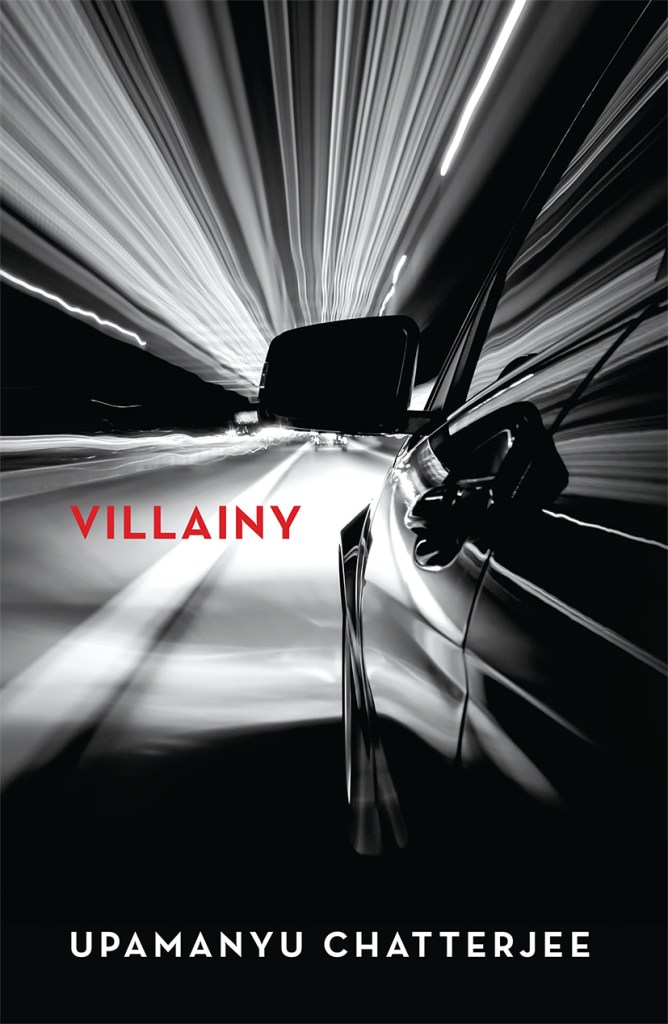
Villainy by Upamanyu Chatterjee

Title: Villainy

Author: Upamanyu Chatterjee

Publisher: Speaking Tiger Books

Death of late having been much on her mind, it did not seem surprising to Dr Mujumdar that she should, at seven-forty of a December morning, during her constitutional in the neighbourhood park, be the first to come upon the corpse or rather, to recognise it to be a dead body. Of course, they were all concentrating on striding along on the jogging track – rolling their hips, pausing discreetly on occasion, only for a micro-second, to break wind – and all moving clockwise as per the rules set down and put up by the Residents’ Welfare Association on the signboard at the entrance, and if they had eyes for anything, it was for the odd, protruding pebble in their paths and every now and then, a Johnny-come-lately in his new car outside the gates, prowling in search of a parking slot. But beneath the hibiscus bushes just before the Children’s Corner, they so stared her in the face, leapt out at her to shout out their presence that she marvelled that no one else appeared to have noticed them – a pair of off-white Bata tennis sneakers, stark against the dark, damp loam, blue socks in a heap at the ankles, khaki trousers that had ridden up to reveal scrawny calves, with the rest of the travesty mercifully hidden by the foliage and a mound of compost awaiting distribution. For travesty she knew it would be and she did not want to see it; for since when has death not been a travesty of all that holds meaning?

       ‘Something tells me that that is not a drunk Colony guard or municipal gardener sleeping it off,’ said she, aloud, to herself, glanced at her watch even though she knew what time it was, and continued silently, But could I still do my half-a-dozen rounds as though nothing has happened, or at least as many as I can before someone else notices something amiss? Or would that be callous and unfeeling of me? She lengthened her stride and began doggedly to pump her elbows in an effort to get away quickly. Her heart though was really not in it that morning. ‘It does seem shameful for someone who’s almost a medical doctor,’ she carried on her conversation with herself, ‘to run away from a corpse. Waddle away, more accurately. But people must never know. And all this – ’ She looked up and about her for a moment, blinked ‘ – is going to have to stop pretty soon, isn’t it?’ She exchanged a ‘Morning’ for a ‘Hello, dear’ as she overtook portly Mrs Gulati. ‘I mean, no one can possibly jog or skip rope or stretch or do his yoga and breathe through his anus or laugh his therapeutic Santa Claus belly laugh in the presence of a dead body, can he?’ And then, aloud, ‘Morning, Sanjeev-ji. You are early today?!’

      Dr Mujumdar took more than her usual eleven minutes to cross the Children’s Corner, pass the Water-Harvesting Area and loop around the Nano Golf Course. By the time she turned into the straight stretch along the C-Block side of the park, a knot of the regulars, forced to abandon their burpees and their Hanuman pushups, had formed around the hibiscus bushes. Automatically, Dr Mujumdar slowed down, even wondered for a second whether she could about-turn and, disobeying the commandment of the RWA, clump away anti-clockwise.

       ‘Don’t touch anything! Just call the police.’

      ‘Could it be someone we know? Even a member of the Health Club?’

      ‘Doesn’t look as though his membership did him any good. Somebody had better telephone the police, I say.’

      ‘I can’t. My phone needs to be charged.’

      ‘I can’t either, unfortunately. I always leave my phone behind at home when I step out for my exercise.’

      ‘Why don’t you call them? They will respond immediately to your commanding personality.’

      ‘It is the RWA that should phone the police. After all, the dead body has been found in a public place. Just call Tutreja at the Association.’

      ‘I can’t, I just told you. My phone needs to be charged.’

      ‘Why are you carrying around a phone that doesn’t work?’

      ‘To time my rounds, if you must know. The clock works. And how damn nosey you are, if I might add.’

      ‘Is something the matter? I’m a doctor. A pharmacist, more accurately. Perhaps I might be of help.’

      The knot of exercisers, three-deep by then, stirred and parted like porridge to make way for Dr Mujumdar and then congealed around her even before she could look down once more upon the Bata shoes and the scrawny calves, the khaki trousers. The press of bodies made concentration all the more difficult.

      ‘We’ll have to pull him out and turn him over. Any volunteers?’ The doctor looked about her at the knot, watched it stir and thin. ‘Backache,’ murmured a man with a white moustache, his hand ready to clutch his hip.

      With a grunt of annoyance, portly Mrs Gulati planted herself in the hibiscus bed, pushed aside the vegetation and bent to grab an ankle. The shadow of a momentary queasiness crossed her features at the touch of that cold, alien flesh. She was suddenly surrounded by several fellow-residents whom she had abashed. Freely directing and admonishing one another, they lifted the body up and sideways and laid it down, face up, on the jogging track. The group emitted a sort of collective moan, part sigh, part gasp, on first seeing the face. With difficulty, Dr Mujumdar got down on her knees beside the body. The onlookers, four deep now, gathered about them as though caught in an eddy.

      He was dead, there was no doubt about that. The dead do not look like the living. She felt for his pulse. The wrist was cold and stiff. She extracted a large handkerchief from the pocket of her tracksuit and gently dusted the loam and grit off the face. A murmur, a commentary on the vanity of all that is not death, rustled through the group like the hint of a breeze.

Excerpted from Villainy by Upamanyu Chatterjee. Published by Speaking Tiger Books, 2022.

ABOUT THE BOOK

 Walkers in a Delhi neighbourhood park come upon a body on a mid-winter morning—an unidentified body, unremarkable but for an extraordinary scar right between the eyes.

A delinquent teenager—who prefers, to the rest of living, an Ecstasy pill with a beer, and the interior of an expensive car with a gun in his pocket—leaves home one evening for a joyride in his father’s Mercedes.

In the nineteen years separating these episodes, five killings take place—and one near-fatal battery—none of which would have happened if a school bus hadn’t been in the wrong lane. Deals are struck between masters and servants, money changes hands, assurances are given and broken. The wheels of justice turn, forward, backwards and sideways, pause and turn again. Old alliances are tested and new ones are formed in prison cells, mortuaries and court rooms. And every life is a gamble, for no one is entirely innocent.

A meticulously crafted literary thriller, Upamanyu Chatterjee’s seventh novel is a riveting story of crime and retribution, and a meditation on the randomness of evil, death and redemption. It will keep you spellbound till the end.

ABOUT THE AUTHOR

 Upamanyu Chatterjee is the celebrated author of English, August: An Indian Story (1988), The Last Burden (1993), The Mammaries of the Welfare State (2000), Weight Loss (2006), Way to Go (2011), and Fairy Tales at Fifty (2014)—all novels; The Revenge of the Non-vegetarian (2018), a novella; and The Assassination of Indira Gandhi (2019), a collection of long stories. He won the Sahitya Akademi Award in 2000, and in 2008, he was awarded the Order of Officier des Arts et des Lettres by the French Government for his contribution to literature.

Click here to read the review

PLEASE NOTE: ARTICLES CAN ONLY BE REPRODUCED IN OTHER SITES WITH DUE ACKNOWLEDGEMENT TO BORDERLESS JOURNAL
Categories
Review

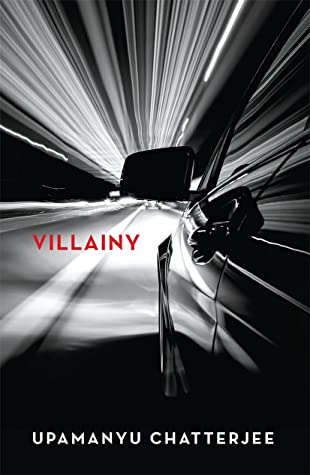
  Is Villainy by Upamanyu Chatterjee a ‘Commercial Thriller’?

Book review by Indrasish Banerjee

Title: Villainy

Author: Upamanyu Chatterjee

Publisher: Speaking Tiger Books


Delhi has many sides to it. It’s the city of Islamic dynasties, transformative history, cultural finesse, power politics. However, some of the celebrated books in last the decade or so on Delhi — The White Tiger (Arvind Agida), The Capital (Rana Dasgupta) — have mostly highlighted its cynical side: the shallowness of its rich, the constant oppression of the poor, the misuse of wealth and power, the ubiquity of corruption, moral decadence and a casual acceptance of everything wrong. I spent a few formative years in Delhi in the 80s. Even back then the common view about Delhi was it wasn’t a place for the straightforward.  But people also felt the city had some redeeming qualities.

In last two and half decades or so, the Manu Sharma case(1999) where the murderer shot a bartender for refusing to serve him; the sordid  tandoor murder (1995) where a suspicious husband killed his wife and several other outrageous occurrences which wreaked havoc in the city exposing its underbelly  and shaped its reputation as a place where nothing is right. This is the timeframe of Upamanyu Chatterjee’s latest book Villainy.

Upamanyu Chatterjee shot to fame with English August in 1988. The Last Burden (1993), Mammaries of the Welfare State (2000) and many more critically acclaimed novels followed. He also wrote a novella, The Revenge of Non-vegetarians (2018) and a collection of long stories, and The Assassination of Indira Gandhi (2019). He won the Sahitya Academy Award for the Mammaries of the Welfare State in 2000 and, in 2008, was awarded the Order of Officer des Arts et des Letters by the French Government for his contribution to literature.

Villainy is structural delight. It starts in 2016 and then takes the reader to the late 90s, into a completely different narrative setting without any obvious linkage to the former strand. In 2016 a dead body of an anonymous person is discovered in a park one early morning when the residents of the area are starting their day. It remains anonymous even after the police leaves no stone unturned for establishing its identity. The other strain is set in 1997, a boy, a spoilt brat, high on Ecstasy pill, out with his father’s Mercedes Benz, murdered two people and a dog.

Loosely based on the high profile Manu Sharma murder case where a rich man’s son killed a woman and justice was meted out only seven years later, the novel would have been every bit a commercial thriller but for the literary style of Upamanyu Chatterjee. If you subtract the style, however, Villainy reads like a novel waiting to be adopted for a pacy web series. The narrative is speedy; the chapters are long, without becoming tiresome, and episodic; the scenes have a visual quality, and they transition swiftly.

There is another thing that reminds you that Villainy is a work of a literary writer: ideological hangover. When a literary writer writes a thriller, characters’ actions mostly conform to their ideological stereotypes. Nemichand, a rich jeweller, is (or has to be) an amoral man. His attitude towards social or economic inferiors is always driven by a bristling class consciousness. He is boorish and uses expletives whenever aroused but when his benefactors do the same, he feels they are acting above station. Atmaram, Nemichand’s driver, on the other hand, is no paragon of virtues – he has accepted money to have his son, Parmatma, falsely admit to committing the murders – but Atmaram is largely a victim of circumstances, which, being the making of the rich, morally exempt the poor man.

But whatever may be its biases, Villainy works at different levels. As a thriller it doesn’t give you too many boring moments. As a literary fiction it gives some moments to reflect on – you should read Chatterjee’s take on villainy in general. Chatterjee has been able to create a sense of time for both the periods (2016 and the late 90s) the plot operates in. His efforts are sometimes cliched like invoking the most talked about events of those times but sometimes they are subtler and less obvious giving you a feeling of reliving those days.

With declining sales of literary fiction and burgeoning popularity of web series, former literary fiction writers are taking to thrillers discarding their subtler muses. Villainy is quite a journey from English August.  But that the likes of Chatterjee are taking to popular genres is actually good news.  Villainy projects a picture of a society with all its flaws and failings — responsibly and deftly.

Click here to read an excerpt

Indrasish Banerjee has been writing and publishing his works for quite some time. He has published in Indian dailies like Hindustan Times and Pioneer, and Café Dissensus, a literary magazine. Indrasish is also a book reviewer with Readsy Discovery. Indrasish stays and works in Bangalore, India. 

.

PLEASE NOTE: ARTICLES CAN ONLY BE REPRODUCED IN OTHER SITES WITH DUE ACKNOWLEDGEMENT TO BORDERLESS JOURNAL