Categories
Essay

The Trouble with Cioran

By Satyarth Pandita

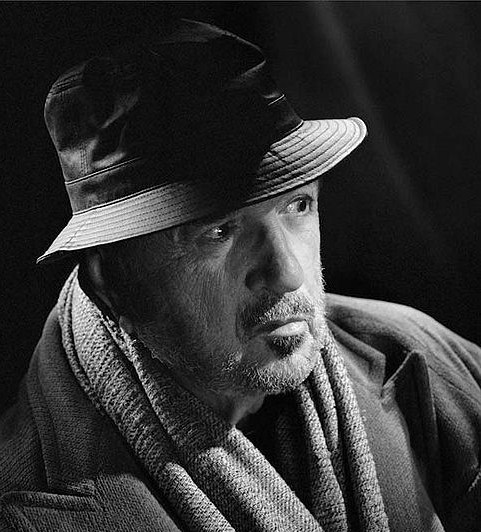
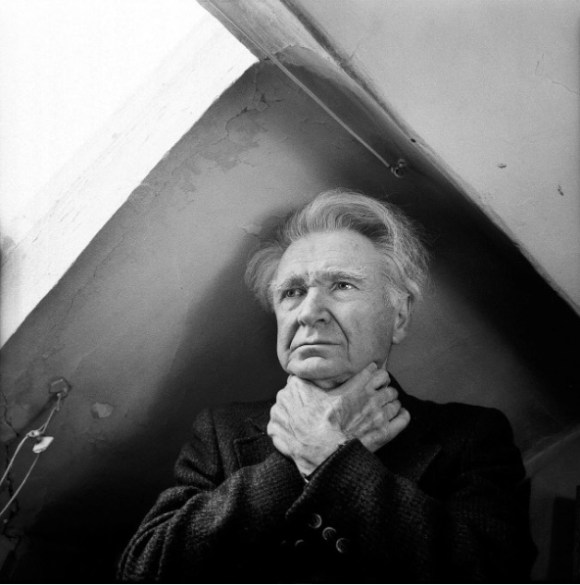
Emil Cioran (1911-1995). Photo provided by the author

It was the summer of 2019. The hostels were empty. Vacation had begun, and most students had already left for their hometowns. I was to leave the next day. While packing, I suddenly remembered The House of the Dead by Dostoevsky, which I had lent to a senior months ago.

I walked to his nearly abandoned hostel block and knocked on his half-open door. The room was dark—uncannily dark for the middle of the day. Thick curtains strangled the sunlight, casting the room into a premature night. There he lay on the bed, flat on his back, a laptop balanced on his belly. He handed me my book and resumed the video he had been watching—with monastic focus—from the fifty-sixth minute. It was footage of a man slowly cutting down a giant tree with an axe. He had been watching it, second by second, without skipping. He didn’t pause even when I left.

That was the man who introduced me to Emil Cioran.
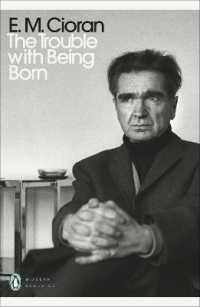
It was not until much later that I finally read him. The Trouble with Being Born opens at three o’clock in the morning with Cioran contemplating the futility of existence:

“Three in the morning. I realize this second, then this one, then the next: I draw up the balance sheet for each minute. And why all this? Because I was born. It is a special type of sleeplessness that produces the indictment of birth.”

The book proceeds as a collection of aphorisms circling around the nausea of existence and the idea of suicide as both temptation and reprieve.

Before I began to read his work, I tried to prepare myself by reading his biography and interviews. I wanted to understand the man behind the words, as if glimpsing his life might help me endure the weight of his thoughts.  One such childhood story was telling. In an interview, Cioran confessed that when he was a child, one of his favourite pastimes was to play football with human skulls excavated by a gravedigger who was his friend. But little did he know at that time that what seemed like play was the seed of a lifelong fixation, depriving him of sleep, driving him to insomnia, in the hope of a long, never-ending slumber.

For Cioran, suicide was not a prescribed act but an ever-present possibility—a metaphysical escape hatch that bestowed dignity on existence. The mere awareness of this option granted him a strange form of freedom. The power of contemplating death, rather than executing it, was his way of wrestling with life’s meaninglessness. Suicide was philosophical, not prescriptive; a potential that loomed, yet never fully realised.

Yet one question persists: if Cioran saw life as an error and glorified suicide as the only coherent act, why did he never end his own life? His own words reveal the paradox:

“It is not worth the bother of killing yourself, since you always kill yourself too late.”

According to him, suicide comes too late to undo anything. The damage is already done. You’ve already suffered so much that ending it doesn’t fix anything—it merely ends an already exhausted life. By the time you do it, you’ve already endured the worst. You’ve already been broken, emptied, eroded by suffering. So, what’s the point? The act becomes redundant, even absurd.

At another moment, he offers a different angle, confessing his indecision:

“The energy and virulence of my taedium vitae continue to astound me. So much vigor in a disease so decrepit! To this paradox I owe my present incapacity to choose my final hour.”

Although Cioran ascribes his procrastination for suicide to his extreme weariness and boredom, yet, contrastingly, at another place, for him the power of ending one’s life is the greatest power.

“No autocrat wields a power comparable to that enjoyed by a poor devil planning to kill himself.”

This is the Cioranian condition: every insight undermined by its opposite, every aphorism shadowed by contradiction. He frames suicide as the ultimate sovereignty. The mere thought of being able to end one’s life surpasses the power of kings. And yet, he never exercised it. Instead, he transformed the possibility into philosophy, into aphorism, into art. His writing is not a system but an ongoing quarrel with himself. Instead of answering any particular question, his writings raise towers of new questions.

This tension, of circling but never arriving, defines his thought. He writes with precision, but his precision is not in building arguments―it is in dismantling them. Each aphorism is like a shard of glass: sharp, illuminating, but impossible to piece into a whole. Consider his reflection on sleeplessness:

“If there is so much discomfort and ambiguity in lucidity, it is because lucidity is the result of the poor use to which we have put our sleepless nights.”

Cioran knew the price of insomnia. To be awake at three in the morning is to be exiled from the world of the living, suspended in a state where thoughts spiral without conclusion. For him, insomnia was both torment and revelation. Perhaps, if Cioran had been able to sleep well, he might not have been trapped in this endless dialogue with futility. Instead, he lived in perpetual wakefulness, speaking to his own emptiness:

“No one has lived so close to his skeleton as I have lived to mine: from which results an endless dialogue and certain truths which I manage neither to accept nor to reject.”

“Once we appeal to our most intimate selves, once we begin to labor and to produce, we lay claim to gifts, we become unconscious of our own gaps. No one is in a position to admit that what comes out of his own depths might be worthless. ‘Self-knowledge’? A contradiction in terms.”

If, according to Cioran, true self-knowledge is not possible because we are too attached to our own depths and ego to judge ourselves truly, then there is no way he could have unearthed any truths about himself while living close to his emptiness (skeleton).

Cioran is, however, conscious of his contradictions. They were not accidents; they were his method. But are those contradictions a mirror of the thinkers he admired? In one of his aphorisms, he confesses:

“In the Orient, the oddest, the most idiosyncratic Western thinkers would never have been taken seriously, on account of their contradictions. This is precisely why we are interested in them. We prefer not a mind but the reversals, the biography of a mind, the incompatibilities and aberrations to be found there, in short those thinkers who, unable to conform to the rest of humanity and still less to themselves, cheat as much by whim as by fatality. Their distinctive sign? A touch of fakery in the tragic, a hint of dalliance even in the irremediable.”

Cioran points to that strange quality in writers like Nietzsche, Baudelaire or even himself-deeply tragic, but also stylistic, artful, and aware of the absurdities of their drama. For him, the appeal is not in the polished answers but in the drama of the doubt, in the visible struggle of a mind with itself.

Cioran is always in a perpetual state of perplexity. His thoughts are malleable. What is true for him today becomes obsolete tomorrow. And all this he has tried to betray through words. He knew his thoughts were mercurial, unstable. He confesses his extreme mental variability:

“I may change my opinion on the same subject, the same event, ten, twenty, thirty times in the course of a single day. And to think that each time, like the worst impostor, I dare utter the word “truth”!

Every time he pronounces a new opinion, he does so with the implicit suggestion that this one is right―that this is the truth. He accuses himself of a kind of fraud, i.e. knowing his judgments are volatile, yet he delivers them as if they were true.

Amidst all these contradictions and paradoxes, what, then, did Cioran truly long for? Because what he wishes for in one place, he rejects in the other. But there is one feeling, or a longing, that recurs throughout the book―a longing for a time before time, a time before creation. He speaks of it with yearning, as if for a paradise never lost yet never possessed.

“There was a time when time did not yet exist…. The rejection of birth is nothing but the nostalgia for this time before time.”

“O to have been born before man!”

This longing resonates the idea of what the Portuguese call saudade, a longing for something that never was or will never be attainable. Unlike nostalgia, which mourns a past that once existed, saudade is a longing for an unattainable ideal, a sense of melancholic absence that can only be evoked in poetry and art. This yearning captures the profound melancholy that saturates Cioran’s philosophy—a feeling that seeps like a grey mist into a distant blue sky. And yet he admits the impossibility of feeling it:

“It is impossible to feel that there was a time when we did not exist. Hence our attachment to the personage we were before being born.”

We cannot experience absence, so we cannot truly imagine our non-being before birth. In our memory and awareness, we’ve always been — we cannot step outside ourselves to picture a time when we were nothing. This is not a metaphysical claim, but a psychological one.

If Cioran were a simple nihilist, one who believed in nothing and cared for nothing, why would he write at all? Why invest thought and feeling into a world he found so painfully absurd? The answer lies in his profound sensitivity. Cioran was a nihilist who felt too much. He was wounded by life. Writing, for him, was both a compulsion and a failure. Cioran was a master of paradox. He despised life yet wrote nine books about it. He dismissed language as futile yet clung to words as his only tool. He longed for silence yet confessed:

“We write books because we are ashamed of not having been able to remain silent.”

Writing was a failure to keep still in the face of futility. Yet silence was a greater failure, an impossibility. Thus, he turned his torment into words. For him, each book was a kind of reprieve. Perhaps, his most telling aphorism is this:

“A book is postponed suicide.”

For him, writing a book symbolised a form of delayed self-destruction or self-sacrifice, where the author channels inner turmoil into the work and thus postpones an existential “death”.

On a similar note, he explains the need for language, the need for writing.

“The more injured you are by time, the more you seek to escape it. To write a faultless page, or only a sentence, raises you above becoming and its corruptions. You transcend death by the pursuit of the indestructible in speech, in the very symbol of nullity.”

Language itself, for Cioran, is paradoxical. It is both empty (words are mere signs, lacking substance) and the only tool we have to approach the eternal. So even while writing may seem futile or illusory, it’s also the only space where something indestructible can be momentarily glimpsed.

The Cioranian paradox yet again comes into the picture, where he proclaims:

“One must be mad or drunk,” the Abbe Sieyès said, to speak well in the known languages. One must be drunk or mad, I should add, to dare, still, to use words, anyword….”

In his earlier aphorisms, he advocates for the meaning or use of writing, but then in the following aphorisms, he expresses the futility of writing, or words, of language itself. To use language sincerely is itself madness. If words distort, then every attempt to write is a betrayal. And yet he could not stop writing. This was the paradox that sustained him.

In the book, Cioran traces this disposition back to his family:

“Every family has its own philosophy. One of my cousins, who died young, once wrote me: ‘It’s all the way it’s always been and probably always will be until there’s nothing left any more.’”

Whereas my mother ended the last note she ever sent me with this testamentary sentence: “Whatever people try to do, they’ll regret it sooner or later.

“Nor can I even boast of having acquired this vice of regret by my own setbacks. It precedes me, it participates in the patrimony of my tribe. What a legacy, such unfitness for illusion!”

Cioran interjects with irony: he can’t even take credit for being regret-prone as a result of his own failures. It’s not just personal experience that made him this way—regret runs deeper; it’s not biographical but ancestral.

Yet Cioran was not only drawn to grand despair. He had a peculiar love for the banal, the ordinary, and the infinitesimal things in our everyday life. Like Georges Perec’s concept of the “infraordinary”―the unnoticed texture of daily life―Cioran wrote:

“The intrinsic value of a book does not depend on the importance of its subject (else the theologians would prevail, and mightily), but on the manner of approaching the accidental and the insignificant, of mastering the infinitesimal. The essential has never required the least talent.”

“No true art without a strong dose of banality. The constant employment of the unaccustomed readily wearies us, nothing being more unendurable than the uniformity of the exceptional.”

For him, the ordinary was not a distraction from philosophy but its truest field.Emil Cioran was also deeply influenced by the Eastern philosophies of Hinduism and Buddhism. He often returned to the idea of renunciation and detachment:

“It is trifling to believe in what you do or in what others do. You should avoid simulacra and even ‘realities’; you should take up a position external to everything and everyone, drive off or grind down your appetites, live, according to a Hindu adage, with as few desires as a ‘solitary elephant’.”

“I am enraptured by Hindu philosophy, whose essential endeavor is to surmount the self; and everything I do, everything I think is only myself and the self’s humiliations.”

And yet, while he admired Buddha’s teachings on suffering, he could not detach himself from his own disappointments:

“My faculty for disappointment surpasses understanding. It is what lets me comprehend Buddha, but also what keeps me from following him.”

Cioran is the kind of person who is aware of his suffering, knows the cure, but won’t take the medicine because the illness has become who he is. For him, disappointment is instinctive, all-consuming and more intimate than thought itself. Since Buddha taught that life is marked with Dukha (suffering/disappointment), Cioran feels connected to Buddhist philosophy, but he cannot follow that path because to follow Buddha requires detachment, letting go of even disappointment, which Cioran cannot do.

Cioran also reflects on a peculiar way to cope with life’s anxieties. He says:

“In order to conquer panic or some tenacious anxiety, there is nothing like imagining your own burial. An effective method, readily available to all…”

This aphorism resonates directly with the Hindu practices, as especially embodied in Banaras (Varanasi), where the city itself is a living memento mori, where cremation fires at Manikarnika Ghat never extinguish, and death is not hidden away but displayed as part of life. In Varanasi, the pilgrims are encouraged to watch the burning pyres, not to indulge morbidity but to confront impermanence directly. But even here, he reminds us of the futility of origins:

“The emphasis on birth is no more than the craving for the insoluble carried to the point of insanity.”

He knows that obsessing over the question of birth, of life, is futile, insoluble and unanswerable. To take this obsession with origins, with life’s beginning, so seriously — to revere it, to found ideologies or hope on it — is, for Cioran, madness. It means you are so committed to wrestling with the unanswerable that you’ve abandoned sanity. It’s a form of spiritual masochism: continually turning to the one question — Why was I born? — that has no satisfying answer.

A man who spent all his life thinking about the tragedy of birth, the futility of life and the meaning of death confesses at one point in the book that he has known nothing new in all his later years that he knew when he was young. All his thinking, the sleepless nights, the anxiety and the dread have contributed nothing to further his knowledge. In his own words:

“What I know at sixty, I knew as well at twenty. Forty years of a long, superfluous, labour of verification.”

Despite all of Cioran’s nihilistic or dark thoughts, he granted failure a strange dignity:

“This is how we recognize the man who has tendencies toward an inner quest: he will set failure above any success, he will even seek it out, unconsciously of course. This is because failure, always essential, reveals us to ourselves, permits us to see ourselves as God sees us, whereas success distances us from what is most inward in ourselves and indeed in everything.”

“Failure, even repeated, always seems fresh; whereas success, multiplied, loses all interest, all attraction.”

In this sense, he inverts conventional wisdom: failure is not defeat but a revelation, a mirror of the self, stripped of illusion.

The Trouble with Being Born is not an easy read. The book is a constant rumination and meditation on the bliss of nonexistence, the deep nostalgia for a state before being, before consciousness, before identity. There is an uneasiness, an anxiety, a restlessness and an unknown dread that creeps in and grows with every sentence one reads. It has the potential to scratch the old wounds of one’s soul, which one has forgotten. Yet, if one reads and analyses the aphorisms from a distance with a particular perspective, it can also provoke laughter―the laughter of someone who has stared too long at the abyss and found it absurd.

Emil Cioran is like a chess master, and each of his aphorisms is a calculated move. For every aphorism that he mentions, he has already anticipated the reader’s move. He has anticipated every question, especially the most obvious one, why he did not kill himself and his reply is already there.

Reading Cioran is like walking into a fog. Every sentence brings a chill of recognition, but also a deeper uncertainty. He lived next to his emptiness, befriended it, argued with it, laughed at it—and wrote it down. He is frustrating. He contradicts himself. He writes aphorisms that sound like suicide notes, only to retract them with a smirk. But that is the trouble with Cioran. He lived. He wrote. He suffered. And somehow, he made it all sound beautiful.

And perhaps that’s the final paradox: the man most disillusioned with life gave us one of its most enduring voices.

After reading him, I’ve come to admire Cioran because, to me, he is like a mathematician devoted to solving the equation of life and death. Every variable, every permutation and combination, has passed through his mind; the possibilities now stand exposed on the blackboard, supporting and undermining one another in turn. The solution, if it exists, hovers just within sight—yet he chooses to work through it endlessly, not in pursuit of an answer, but in devotion to the act itself. He is a modern Sisyphus, who has not merely accepted his fate, but learned to love the rolling of the boulder, again and again, to the mountain’s top.

Satyarth Pandita is a PhD student at the National Institute of Mental Health and Neuro Sciences (NIMHANS), Bengaluru.  He completed his dual degree, a Bachelor of Science and Master of Science in Biological Sciences (major) and Humanities and Social Sciences (minor), at the Indian Institute of Science Education and Research Bhopal (IISERB). His works have appeared in various newspapers and periodicals, including The QuintOutlook IndiaThe WireMadras CourierBorderless, and Kitaab, among others.

Links to Satyarth’s published works, email address and social media handles can be found here.

.

PLEASE NOTE: ARTICLES CAN ONLY BE REPRODUCED IN OTHER SITES WITH DUE ACKNOWLEDGEMENT TO BORDERLESS JOURNAL

Click here to access the Borderless anthology, Monalisa No Longer Smiles

Click here to access Monalisa No Longer Smiles on Amazon International
Categories
Stories

The Last Hyderabadi

By Mohul Bhowmick

When the last Hyderabadi man walked into the last Hyderabadi Cafe in the last Hyderabadi part of the city, he winced in disapproval at what lay in front of his eyes. 

The metro rail — almost always championed as a resort of the poor but as heavy on the pocket as a plate of haleem[1] from Pista House — seemed to have overtaken the remnants of what was once the Garden Cafe. The construction workers were often seen munching on luqmi[2] before starting work in the bright sunshine of the day.

***

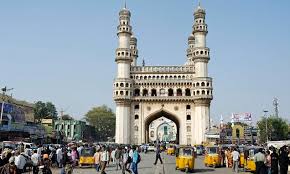
Had Garden survived, the last Hyderabadi would have survived too. He would have dipped his roti into the banal bowl of keema that had largely seen the innards of whatever chopping machine they used in the kitchen and digressed considerably to criticise the commercial fervour that Paradise Cafe (the World’s Finest Biryani — as it advertised itself these days), less than a mile away to the southeast, had embraced. 

Yet, the way that Paradise had fallen on its face would not have seemed agreeable to him — the pride of the city intact in this wounded yet uninjured man — and he would have argued with the horde of loafers roaming in anticipation of a few pennies near the bottom of the Clock Tower, or booed with derision at the well-dressed middle-class diners approaching Baseraa for a meal they had envisioned a month ago.

Deccan Chronicle, about a hundred metres to the east from Baseraa, would have stood in silent vigil for what it had noticed, and in muted rebuke for what it had let flow from its murky torrents. Long having divested himself of the habit of reading a newspaper, the last Hyderabadi would have turned north in search of something a bit more appetising than the statistics of bribes taken and favours disbursed. 

Wasn’t it George Bernard Shaw who said that politics was the last resort of the scoundrel? The last Hyderabadi remembered having read something of the sort during his time at the Nizam College; surrounded by biryani by the bucketful at the Grand and mutton seekh by the skewer at Cafe Bahar, his wakeful remembrances were engulfed by a sordid affair at the Public Gardens which he would much rather not recall. 

***

Much given to lewdness in his youth, which included moments of sheer discomfort riding pillion behind a pillion on a two-wheeler — effectively three on the Honda that grunted in distress. Time — often seen as slipping past him like the silky outflow of the Irani chai at Blue Sea — was the great deterrent that forced him to fight for the movement that once engulfed, and now corrupted those who had vowed to not get enamoured by the corridors of power.

The last Hyderabadi now watched the last cricket match on the last pitch at the Parade Ground and grunted in discontent while crossing the road to the Gymkhana and witnessing one of the finest cover drives ever seen on its now-remodelled track; for all his impartiality, in his eyes, the Gymkhana remained the home of cricket — the home of Indian cricket at the very least. 

***

When peppered with bouts of time — of which he had plentiful — he often dreamt of the ideal that had consumed his passions and ignited the fires that have long been dormant now. Inexcusably, he had juggled three jobs at a time when his friends were struggling to make ends meet.

The opaque waters of the Hussain Sagar at the bend around Sanjeevaiah Park had seemed inviting enough on nights when he had not had time to read the freckled Dostoyevsky acquired that Sunday from Koti. It was the timely remembrance of an embrace from a friend who ran his father’s steel bearings business in Ranigunj that finally restored the last Hyderabadi to sanity and greater aspirations than what The Idiot had suggested. Strangely enough, he had dreamt of Alexander Pushkin that night; the duel upon the Black River seemed to be disapproving of what he had evaded in life.

The last Hyderabadi was often given to understand that those of his kind were an extinct race now, those who still studied the scores on Monday morning and despaired when their Bajaj ran out of fuel in the right lane in the thoroughfare he had called ‘Kingsway’ all his life.

Rather pitifully, the memories of his childhood visited upon him infrequently, withering that which he had left behind and flowering that which he did not want to remember. Oftentimes, these recollections included little apart from the moments tiptoed from the dispensation that ruled with an iron fist and earmarked itself to the cause — perhaps too vehemently for its liking — that he believed in. 

The dilkhush[3] scarred him on more than a few occasions when he hung around the Armaan Bakery in Ferozguda. His friends had called upon him to administer the immaterial wealth he had gathered over the years and embark on the search that had bruised his ego and slighted his soul for long; it seemed to be of a lifetime ago now. The sun had set that evening beyond the railway tracks as it did today, and yet his memories conveniently lied when put on the spot.

***

Those friends to whom he had clung for stability through those years of intransigence, with whom he had set back innumerable cups of tea and luqmi at the Rio, with whom he had shared remembrances by the plentiful at the Bawarchi — they had all disappeared without a trace in a world where public memory lives long enough for the good to be remembered and the bad to be dismembered. Bawarchi had been overtaken by Shah Ghouse, and Abids by Gachibowli, the empty streets of Jubilee Hills notwithstanding.

The last Hyderabadi had known this long before they started constructing the statue of the prominent lawyer who had been responsible for drafting that which held the people of this nation liable for their values and the politicians who ruled over them accountable for the promises they made. These now loomed larger than that of the ascetic whose refuge he had sought towards the end of his life. 

Neither the ascetic nor the lawyer mattered much in the minds of the newly-minted, power-hungry class who turned their noses away from him; the ideals the former propagated had been flung into the much-insulted Osman Sagar with grandeur, with the latter swallowing them without a hint of disgust. 

The last Hyderabadi meditated upon this as he turned back from where Bade Miyan used to exist. The patthar ka gosht[4] lingered long on the tip of his tongue, but with his pockets empty and resources nullified, ice cream from one of the myriad Bihari push-cart vendors on Tank Bund would have to make do for dinner, washed down by a bottle of lemon soda made from water rarefied by the Hussain Sagar[5]‘s numerous cousins.

***

Had he taken the bus from Patny southwest to Mehdipatnam on a lazy Saturday afternoon, the last Hyderabadi would have noticed the hawker who still believed in the incorruptibility of man, who sold ball-point pens at the traffic signal without haranguing his clientele too much, or the stout hijra[6] in Rasoolpoora whose self-respect had given way to hunger, or the blind beggar in Masab Tank, who died with Hyderabad in his eyes.

Had he been flogged that day by the marching crowd demanding employment for the destitute who neither knew nor chose to care about the latest matinee flick at the Tivoli, the last Hyderabadi would have known the extent to which his boundaries lay. 

The aggrieved mob screamed in righteous indignation and discontent as he sat beside the conductor, who counted the day’s earnings with just about enough interest to murmur,

“Haibat me ye logaan kahan-kahan toh bhi fir lete rehte, kya-kya toh bhi kar lete rehte – apan khaali ye puron ku dekh lena fir gumm bol leke palat lena. Shukraan apne ku koi dam nai karte!

(With great resentment these people move about in protest, but nothing comes of it. All we have to do is look the other way when they come here. Thankfully, nobody bothers us!)”

The last Hyderabadi had cried that night.

*** 

Spring seemed to be around the corner, but the last Hyderabadi had little by way of hope, further less by way of reflection. For what he remembered seemed to hark back to the days when he could still think of himself as a man in a city that bore him, that gleefully harboured him. 

Those of his ilk had disappeared long ago, men among whose shadows he had multiplied himself and sat in the peace of knowing that there were at least some who were like him, who understood him and who, perhaps, even loved him.

.

[1] Stew originating in the Middle East and South Asia

[2] A Hyderabadi variation of the samosa with mince meat

[3] A sweet stuffed bread of coconut and tutti-fruiti

[4] A hyderabadi lamb dish

[5] A lake in Hyderabad https://tourism.telangana.gov.in/nature-discovery/HussainSagarLake

[6] A transgender from birth

Mohul Bhowmick is a national-level cricketer, poet, sports journalist, essayist and travel writer from Hyderabad, India. He has published four collections of poems and one travelogue so far. More of his work can be discovered on his website: www.mohulbhowmick.com.

PLEASE NOTE: ARTICLES CAN ONLY BE REPRODUCED IN OTHER SITES WITH DUE ACKNOWLEDGEMENT TO BORDERLESS JOURNAL. 

Click here to access the Borderless anthology, Monalisa No Longer Smiles

Click here to access Monalisa No Longer Smiles on Kindle Amazon International

Categories
A Special Tribute

Jean Claude Carriere: A writer for all directors

Ratnottama Sengupta pays a homage during the 27th Kolkata Film Festival to Jean Claude Carriere, the legendary screenwriter of Peter Brook’s Mahabharata, first performed on stage in 1985 and then released as a film

Jean Claude Carriere (1931-2021). Courtesy: Creative Commons

A Lifetime Achievement Award from the Academy of Motion Picture Arts and Sciences for someone decorated with a Padmashri? One easily understands the Oscar when you spell out that the awardee had written the screenplay of a hundred and more films for the Who’s Who of World Cinema – starting with Luis Bunuel, and going on to Volker Schloendorff, Milos Forman, Pierre Etaix, Jacques Tati, Andrzej Wajda, Nagisa Oshima, Louis Malle, Abbas Kiarostami, Philip Kaufman, Jean Paul Rappaneu, Jacques Deray… not necessarily in that order. The Padmashri also falls in place the minute you hear it was for the writer of Peter Brook’s Mahabharata. Indeed, how many names have bridged the inner core of two extreme cultures of the East and the West, so smoothly as Jean Claude Carriere?

This French writer-actor’s equation with the land of Kauravas and Pandavas was way beyond that of any tourist who may’ve visited India twenty-five times.  For, this was the man theatre legend Peter Brook had zeroed in on to play his Ganesha. Meaning, act in the play? No, he was to write the nine-hour magnum opus that would ensue after sunset and end at sunrise at the theatre annual that identifies Avignon in France. Who could’ve imagined his interpretation that the five sons sired by different deities — Yama, Vayu, Indra, the Ashvins — could be cast as men from different races, leading to Yudhistira being blonde and Bhima an African? This, remember, was three years before Doordarshan started airing the B R Chopra epic that continues to enthral.

A scene from Peter Brook’s Mahabharata. Courtesy: Creative Commons

But why am I comparing Carriere – whom I had the good fortune to meet on one of his visits to Delhi – to Ganesha? Simple: Siddhi Vinayak, the God of Fulfilment, was the ‘scribe’ Vyasa approached to pen down his magnum opus – and he laid the condition that Vyasa should not pause in his narration of the events even once. Vyasa agreed on the condition that Ganesha would not pen down the words without comprehending their depth, their emotion, their implication… Carriere had done just that for Peter Brook.  And the mythology had stayed within the writer. Hence, three decades later, he wrote a lyrical text for Sujata Bajaj when the Paris-based Indian artist from Kolkata exhibited her iridescent body of work titled Ganapati.

At least eight years of reading and researching had gone into Mahabharata, 1974 onwards, before Carriere’s forays to India started in 1982. And four years later, it mesmerised viewers in the desolate quarry outside Avignon. For the two following years, the play was performed in French and English, it toured the world for four years, it was adapted for television as a six-hour series, it was shortened to a three-half hour film screened in India, Carriere wrote Battlefield based on it, and published a book sketching his India tours… The 25 actors seen in Avignon 1987 came from 16 countries – and the only Indian was Mallika Sarabhai who played Draupadi!

“I compare India to Draupadi in the dice game – she keeps unfolding,” Carriere famously said later. Elsewhere he said he felt that India was a mansion where one room leads to another, that to yet another, and that to some more rooms… In India, Carriere observed a unique continuity since the antiquity now lost in time — one he did not find in either Greece or Egypt. That is distilled in the book, In Search of the Mahabharata that chronicles the three initial years of his journeys in diary-like jottings and numerous sketches. “They have more immediacy, more intimacy, greater feeling than camera,” he told the book’s Delhi-based translator, Aruna Vasudev.

Carriere of course was a seasoned hand at adaptation. Long before the curtain fell on his 91 years, he had adapted the German novelist Gunter Grass (The Tin Drum, 1979) and French Marcel Proust (Swann in Love, 1984) for Volker Shloendorf; the Russian Dostoevsky for the Polish Andrzej Wajda (The Possessed, 1988), the French journalist Joseph Kessel (Belle de Jour, 1967) and French poet Pierre Louys (That Obscure Object of Desire, 1977) for the Spanish Bunuel, French dramatist Edmond Rostand (Cyrano de Bergerac, 1990) for Jean-Paul Rappaneu, Czech Milan Kundera (The Unbearable Lightness of Being, 1988) for the American Philip Kaufman… And what was the key to this success? It lay in Carriere’s belief that “a scenario is created when you and the director establish a near telepathic communication. This requires on both sides a receptiveness and a trust which can never be taken for granted. The writer must submerge his ego since, ultimately, it is the director’s film and you are there only to facilitate him.”

My first experience of this ‘facilitating’ was Happy Anniversary (1962) that won director Pierre Etaix – who co-produced it with writer Carriere – the Oscar for Best Short. Half-a-century after its viewing the 15-minute short remains vividly etched in memory. A woman is preparing a romantic dinner to celebrate their wedding anniversary while the husband is running around and making stops to pick up gifts for his wife. But the Paris traffic is against him, and by the time he reaches home the flowers for his wife have wilted, and his drunken wife has finished dinner and fallen asleep. What a captivating comment on urban realities!

Carriere’s most abiding partnership — his 20-year-tie with Buñuel – had started in 1963 when the Spanish director was looking for a French co-writer to adapt The Diary of a Chambermaid by Octave Mirbeau. The maid who exposes the sexual, religious and social repressions of the middle class provincial French families set the keynote – social satire – that Buñuel would repeat in Belle de Jour. Its erotic narrative with subversive wit exposed bourgeoise hypocrisy through a respectable doctor’s wife who enjoys her afternoons as an inmate of a high-class brothel. Buñuel’s absurdist humour not only alerts viewers to the failings of the French bourgeoisie, but it also sets the tone for his constant anti-establishment ire. In The Milky Way (1968), two tramps set off from Paris to make a pilgrimage to a Spanish shrine and on the way meet characters who expound on the six central ‘mysteries’ of Catholic dogma. Another amusing anti-clergy film, it reveals Buñuel’s target shifts from the church to the military, to the state — that is, only within the different faces of establishment. This influenced Carriere to later state, “In art a certain anti-conformism is necessary.”

Jean Claude Carriere was a remarkable storyteller, it is clear, just as it is that he had no dogma. Effortlessly he could move from one world to another. One of ideals and spirituality, to that of warfare and political spoils. As one reviewer noted, “he had the knack of entering the dream world not on the wings of some abstract imagination but on the legs of reality – with absolute groundedness.”

Carrier knew what he wrote was not for publishing, it was written not to be read but to be transformed into a film. He is known to have said: “If you want fame, and a beautiful statue made of yourself, don’t be a screenwriter. The writer disappears. He works in the shade.” It was absolutely essential to be forgotten. His art exemplified this, though not the writer who also acted in some films. He knew, if not forgotten, very often screenwriters are ignored. That is why, in his Honorary Oscar acceptance speech in 2014, he expressed his happiness that such an award was given to a screenwriter. For, “they are like shadows passing through the history of cinema. Their names do not appear in reviews, but still they are filmmakers,” he asserted sharing his Oscar with screen writers around the world.

Ratnottama Sengupta, formerly Arts Editor of The Times of India, teaches mass communication and film appreciation, curates film festivals and art exhibitions, and translates and write books. She has been a member of CBFC, served on the National Film Awards jury and has herself won a National Award. Ratnottama Sengupta has the rights to translate her father, Nabendu Ghosh.

.

PLEASE NOTE: ARTICLES CAN ONLY BE REPRODUCED IN OTHER SITES WITH DUE ACKNOWLEDGEMENT TO BORDERLESS JOURNAL

Categories
Interview

 When a Hobo in a Fedora Hat Breathes Tolkien…

In Conversation with Strider Marcus Jones

Strider Marcus Jones
i'm come home again
in your Lothlorien

Strider Marcus Jones wrote these lines about an idyllic utopia that was named Lothlorien by JRR Tolkien in Lord of the Rings. Jones writes beautiful poetry that touches the heart with its music and lyricality and recreates a world that hums with peace, beauty, acceptance and tolerance – values that have become more precious than gems in the current world of war, strife and distress. He has created his own Lothlorien in the form of a journal which he has named after the elfin utopia of Tolkien. An avid reader and connoisseur of arts, for him all his appreciation congeals in the form of poetry which draws from music, art and he says, perhaps even his legal training! Let us stride into his poetic universe to uncover more about a man who seems to be reclusive and shy about facing fame and says he learns from not just greats but every poet he publishes.

What started you out as a writer? What got your muse going and when?

In my childhood, I sought ways to escape the poverty of the slums in Salford. My escape, while gathering floorboards from condemned houses every winter and carrying them through back entries in crunching snow to our flat, above two shops for my dad to chop up and burn on the fire was to live in my imagination. I was an explorer and archaeologist discovering lost civilisations and portals to new dimensions our mind’s had lost the ability to see and travel between since the time of the druids. Indoors I devoured books on ancient history, artists, and poetry from the library. I was fascinated by the works of Picasso, Gauguin, Bruegel and many others and sketched some of their paintings. Then one day, my pencil stopped sketching and started to compose words into lines that became “raw” poems.  My first mentor was Anne Ryan, who taught me English Literature at High School when I was fourteen. Before this, I had never told anyone I was writing poetry. My parents, siblings and friends only found out when I was in my twenties and comfortable in myself with being a ranger, a maverick in reality and imagination.

When I read your poetry, I am left wondering… Do you see yourself in the tradition of a gypsy/mendicant singing verses or more as a courtly troubadour or something else?

I don’t have the legs to be a courtly troubadour in tights and my voice sounds like a blacksmith pounding a lump of metal on his anvil.

I feel and relate to being gypsy and am proud of my Celtic roots passed down to me from my Irish Gypsy grandmother on my Father’s side who read the tea leaves, keys, rings, and other items telling people’s fortunes for years with scary accuracy. I seem to have inherited some of her seer abilities for premonition.

Like my evening single malt whiskey, age has matured the idealism of my youth and hardened my resolve to give something back to the world and society for giving me this longevity in it. The knocks from the rough and tumble of life have hardened my edges, but my inner core still glows like Aragorn’s calm courage and determination in the quest to bring about a more just and fairer world that protects its innocent people and polluted environment. Since Woody Guthrie, Tom Waits and Bukowski are influences I identify with deeply, I suppose I am a mendicant in some of my poetry but a romantic and revolutionary too, influenced by Neruda, Rumi, Byron, and Shelley shielded by The Tree of Life in Tolkien’s Lothlorien:

THE HEAD IN HIS FEDORA HAT

a lonely man,
cigarette,
rain
and music
in a strange wind blowing

moving,
not knowing,
a gypsy caravan
whose journey doesn't expect
to go back
and explain
why everyone's ruts have the same
blood and vein.

the head in his fedora hat
bows to no one's grip
brim tilted inwards
concealing his vineyards
of lyrical prose
in a chaos composed
to be exposed,
go, git
awed
and jawed
perfect and flawed,
songs from the borderless
plain
where no one has domain
and his outlaw wit
must confess
to remain

a storyteller
that hobo fella

a listening barfly
for a while,
the word-winged butterfly
whose style
they can't close the shutters on
or stop talking about
when he walks out
and is gone.

whiskey and tequila
with a woman who can feel ya
inside her, and know she's not Ophelia
as ya move as one,
to a closer and simplistic,
unmaterialistic
tribal Babylon,

becomes so,
when she stands, spread
all arms and legs
in her Eskimo
Galadriel glow,
sharing mithril breath,
no more suburban settlements
and tortured tenements
of death,
just a fenceless forest
and mountain quests
with a place to rest
on her suckled breasts,
hanging high, swinging slow.

war clouds HARP
through stripped leaves and bark,
where bodies sleeping in houseboat bones
reflect and creak in cobbled stones:
smokey sparks from smoked cigars
drop like meteorites from streetlight stars,
as cordons crush civil rights
under Faust's fascist Fahrenheit’s.
 
one more whiskey for the road.
another story lived and told

under that
fedora hat
inhaling smoke
as he sang and spoke
stranger fella
storyteller.

You seem to have a fascination for JRR Tolkien. You have a poem and a journal by the name of Lothlorien. Why this fascination? Do you think that JRR Tolkien is relevant in the current context? We are after all, reverting to a situation similar to a hundred years ago.

Yes, on all counts. Tolkien and his Lord of The Rings trilogy have been part of my life since I first read one summer when I was twelve years old.  My young mind, starved of adventure and elevenses in Salford’s slums, willingly absorbed the myths and magic, lore’s and legends beguiling me to enter the ‘Age of Man’. This living in a time of relative peace alongside other, more ancient races with musical-poetic languages reflected part of my own reality in living through the Cold War decades under the impending doom of nuclear annihilation where daily life often felt the shadows cast by the Cuban Missile Crisis, war in Vietnam, Pol Pot’s Cambodia, and famine in Biafra.

Sauron’s evil eye and invading armies echo an outgoing President Eisenhower’s ominous warning to curtail the influence and corruption of the banking-military-industrial-complex. Instead, Martin Luther King and President John F Kennedy were assassinated and a surveillance state and gilded slavery ideology is being imposed globally using artificial intelligence. Ancient civilisations in Iraq and Libya have been destroyed for control of oil and to maintain global Petro dollar power. Tolkien and The Lord of the Rings is just as relevant today in Ukraine, Yemen, and Syria and as it was through the slaughters of Verdun, the Somme and Flanders Fields. It is a warning that good must prevail over evil and this burden is borne by those with courage and conviction who cannot be corrupted.  

What is your Lothlorien? What does poetry mean to you and your existence?

My Lothlorien is a more peaceful world, with more tolerance of other individuals and cultures. Not perfect by any stretch but a place where people laugh, have their neighbours back and work with each other. A place of social justice and equality, music, poetry and art. It is no place for racism, sexism, ageism, corruption, or war. A kind of homestead with birdsong, forest, mountains and rivers, preferably in the French Pyrenees or Alaskan Bush. A place of words composed into poems and stories read and spoken, passed down and added to by each inspired generation in the Native American tradition. Poetry is all about communication and community in my existence. We are caretakers of our words and the world.

You have used Orwell, Gaugin and many more references in your poetry. Which are the writers and artists that influence you the most? What do you find fascinating about them?

Individuality of expression through fiction, poetry, art and music fascinates me. Now, at 62 years of age so many have influenced my poetry with or without me knowing or realising it. These include:

From the past – Chaucer, Tennyson, Shelley, Keats, Blake, W.B. Yeats, Auden, Langston Hughes, Hart Crane, Sexton, Plath, Kerouac, Heaney, Lorca, Orwell, Dickens, Dylan Thomas, Tolkien, Steinbeck, Heller, Donaldson, P.D. James, Ian Rankin, Vonnegut, Dostoyevsky, Rilke, Rumi, E.E.Cummings, Neruda, Leadbelly, Robert Johnson, Miles Davis, Thelonious  Monk, John Coltrane, Dylan, Tom Waits. So many.

From now – They know who they are. I have published their work in Lothlorien Poetry Journal.

You play instruments — saxophone and clarinet? Does that impact your poetry?

Saying I play instruments is a huge stretch of the imagination. I get strange notes out of my saxophone and clarinet that must sound like a hurricane blowing in anyone’s ears. My black Labrador, Mysty, covers her ears with her paws but I enjoy trying to play. I love jazz music, anything from the 1920s to early 70s, but Miles Davis, Monk, Coltrane, Mingus, and Ornette Coleman took jazz music to a level that transcends mortality.

Jazz music continues to be a profound influence in my poetry. I will explain how.     

Does any kind of music impact your writing?

In some way, unbeknown to me, jazz music, particularly that of Davis, Monk and Coltrane runs parallel to and interweaves with the rhythms of how I think when I write poetry. It closes my mind to the distractions of the outside world. The sound of those perfect and imperfect notes opens a door in my mind, I close my eyes, float into this dark room and my senses fill with images and words, which hover in the air like musical notes where I conduct them into rhythms and phrases bonded to a theme. Some become poems, others disintegrate into specks of dust, the moment gone. Sometimes, the idea and train of thought sleeps in my subconscious for years. This happened with my poems “Visigoth Rover” and “Life is Flamenco” which come from   my sojourns randomly wandering through Spain but were born years later listening to Paco playing Spanish guitar and Flamenco music which is another key influence in my poetry.

VISIGOTH ROVER

i went on the bus to Cordoba,
and tried to find the Moor's
left over
in their excavated floors
and mosaic courtyards,
with hanging flowers brightly chameleon
against whitewashed walls
carrying calls
behind gated iron bars-
but they were gone
leaving mosque arches
and carved stories
to God's doors.

in those ancient streets
where everybody meets-
i saw the old successful men
with their younger women again,
sat in chrome slat chairs,
drinking coffee to cover
their vain love affairs-
and every breast,
was like the crest
of a soft ridge
as i peeped over
the castle wall and Roman bridge
like a Visigoth rover.

soft hand tapping on shoulder,
heavy hair
and beauty older,
the gypsy lady gave her clover
to borrowed breath, 
embroidering it for death,
adding more to less
like the colours fading in her dress.
time and tune are too planned
to understand
her Trevi fountain of prediction,
or the dirty Bernini hand
shaping its description.

LIFE IS FLAMENCO

why can't i walk as far
and smoke more tobacco,
or play my Spanish guitar
like Paco,
putting rhythms and feelings
without old ceilings
you've never heard
before in a word.

life is flamenco,
to come and go
high and low
fast and slow-

she loves him,
he loves her
and their shades within
caress and spur
in a ride and dance
of tempestuous romance.

outback, in Andalucian ease,
i embrace you, like melted breeze
amongst ripe olive trees-
dark and different,
all manly scent
and mind unkempt.

like i do,
Picasso knew
everything about you
when he drew
your elongated arms and legs
around me, in this perpetual bed
of emotion
and motion
for these soft geometric angles
in my finger strokes
and exhaled smokes 
of rhythmic bangles
to circle colour your Celtic skin
with primitive phthalo blue
pigment in wiccan tattoo
before entering
vibrating wings
through thrumming strings
of wild lucid moments
in eternal components.

i can walk as far
and smoke more tobacco,
and play my Spanish guitar
like Paco.

Tell us about how music and language weaves into your poetry — “i’m come home again” — there is no effort at punctuation — and yet the poem is clear and lyrical. I really love this poem – Lothlorien. Can you tell me how you handle the basic tool of words and grammar in your poetry?

In my mind, music is poetry through sound instead of words. Like words, the combinations of notes and pauses have intricate rhythms and phrases. In many of my poems like “Lothlorien” and those above, I weave the rhythms and phrases of jazz music or Spanish guitar and words together with run on lines so there is no need for punctuation. This gives these poems, and many others a spontaneity and energy which feels more natural and real and has a potent, more immediate impact on the senses and emotions when combined with images and happenings. This whole process feels natural to me. It began in my early twenties, when I was listening to old Blues and the likes of Leadbelly and Robert Johnson alongside Dylan, Led Zeppelin, Tom Waits and Neil Young. These are the raw underbelly notes of my pain and anger at the world. Jazz is the mellow top notes. I hope this makes sense. It is hard to explain something that is natural to and part of who I am, so forgive any lack of clarity.

Sometimes, I just like to add a moment of mischievous fun to a serious poem as in these two:

REJECTING OVID

the fabulous beauty of your face-
so esoteric,
not always in this place-
beguiles me.

it's late, mesmeric
smile is but a base,
a film to interface
with the movements of the mind behind it.

my smile, me-
like Thomas O'Malley
the alley
cat reclining on a tin bin lid
with fishy whiskers-

turns the ink in the valley
of your quills
into script,
while i sit
and sip

your syllables
with fresh red sepals of hibiscus,
rejecting Ovid
and his Amores
for your stories.


OLD CAFE

a rest, from swinging bar
and animals in the abattoir-
to smoke in mental thinks
spoken holding cooling drinks.

counting out old coppers to be fed
in the set squares of blue and red
plastic tablecloth-
just enough to break up bread in thick barley broth.

Jesus is late
after saying he was coming
back to share the wealth and real estate
of capitalist cunning.

maybe. just maybe.
put another song on the jukebox baby:
no more heroes anymore.
what are we fighting for --

he's hiding in hymns and chants,
in those Monty Python underpants,
from this coalition of new McCarthy's
and it's institutions of Moriarty's.

some shepherds’ sheep will do this dance
in hypothermic trance,
for one pound an hour
like a shamed flower,

watched by sinister sentinels-
while scratched tubular bells,
summon all to Sunday service
where invisible myths exist-

to a shamed flower
with supernatural power
come the hour.  

How do you compose a poem? Is it spontaneous or is it something you do? Do you hear the lines or voices or is it in some other way?

Most poems come from life’s experiences and observations of people, places, nature, and events. These can be from the past, or present and sometimes premonitions of the future which often overlap depending on the theme/s and where I want it to go.

When it comes to composing a poem, I am not robotic, and neither is my Muse. I have no set time and never write for the sake of writing something each day which I find disrupts my subconscious process. A poem can begin at any time of day or night, but my preferred time to think and write is mid-evening going through to witching hour and beyond. I put some music on low, pour myself a slow whiskey and sit down in my favourite chair with pen and folded paper. I never try to force a poem. The urge to write just occurs. I don’t know how, or why. It just happens. My subconscious finds the thread, thinks it through and the poem begins to unravel on the page. I care about the poems since they care about the world and the people in it. So, I often agonise for days and in some cases years, over lines and words and structure, crossing out words and whole lines until they feel right. Editing, and redrafting is a crucial part of the writing process and requires courage and discipline. Butchering your own work feels barbaric in the moment but enhances your poetic voice and strengthens the impact of a poem on the reader.

You are a lawyer and in the Civil Service in UK. How does law blend with poetry?

I am a law graduate and retired legal adviser to the magistrates’ courts/civil servant who retired early. I have never practiced as a lawyer.

I never think about law when I write, but I am sure the discipline brings organisation to the orderly chaos of Spinoza’s universe that resembles the space inside my head.

Tell us about your journal. When and how did you start it?

I started Lothlorien Poetry Journal in January 2021. I publish the online rolling blog of poetry and fiction and printed book volumes — currently standing at eight issues featuring established and emerging poets and fiction writers published on the LPJ blog.

We are a friendly literary journal featuring free verse/rhyming/experimental poetry, short stories, flash fiction, and occasional interviews with poets.

We love poems about enchantment, fantasy, fairy tale, folklore, dreams, dystopian, flora and fauna, magical realism, romance, and anything hiding deep in-between the cracks.

I publish Lothlorien Poetry Journal periodically, 4-6 issues every year. Contributors to each issue (selected from the best work published on the Journal’s Blog) are notified prior to publication and receive a free PDF copy of the issue that features their work.

We nominate for the Pushcart Prize and Best of the Net.

 What do you look for in a poet as a publisher?

I look for a poet or writer’s distinct voice, that spark of originality in their theme/s, the rhythm and musicality in their language and phrasing.  I have no boundaries as to style, form, or subject – prose, rhyming, free verse, sonnets, haiku, experimental or mavericks who break the rules and write about the darker underbelly of society – if it is good and not offensive, racist or sexist Lothlorien Poetry Journal could be the natural home for your work. The best way to find out is to come to Lothlorien, have a read, and decide to submit.

LOTHLORIEN

i'm come home again
in your Lothlorien
to marinate my mind
in your words,
and stand behind
good tribes grown blind,
trapped in old absurd
regressive reasons
and selfish treasons.

in this cast of strife
the Tree of Life
embraces innocent ghosts,
slain by Sauron's hosts-
and their falling cries
make us wise
enough to rise
up in a fellowship of friends
to oppose Mordor's ends
and smote this evil stronger
and longer
for each one of us that dies.

i'm come home again
in your Lothlorien,
persuading
yellow snapdragons
to take wing
and un-fang serpent krakens-
while i bring
all the races
to resume
their bloom
as equals in equal spaces
by removing
and muting
the chorus of crickets
who cheat them from chambered thickets,
hiding corruptions older than long grass
that still fag for favours asked.

i'm come home again
in your Lothlorien
where corporate warfare
and workfare
on health
and welfare
infests our tribal bodies
and separate self
in political lobbies
so conscience can't care
or share
worth and wealth-

to rally drones
of walking bones,
too tired
and uninspired
to think things through
and the powerless who see it true.
red unites, blue divides,
which one are you
and what will you do
when reason decides.


IN THE TALK OF MY TOBACCO SMOKE

i have disconnected self
from the wire of the world
retreated to this unmade croft
of wild grass and savage stone
moored mountains
set in sea
blue black green grey
dyed all the colours of my mood
and liquid language-
to climb rocks
instead of rungs
living with them
moving around their settlements
of revolutionary random place
for simple solitary glory.
i am reduced again
to elements and matter
that barter her body for food
teasing and turning
her flesh to take words and plough.
rapid rain
slaps the skin
on honest hands
strongly gentle
while sowing seeds
the way i touch my lover
in the talk of my tobacco smoke:
now she knows
she tastes
like all the drops
of my dreams
falling on the forest
of our Lothlorien.

Thanks for your lovely poetry and time.

(This is an online interview conducted by Mitali Chakravarty.)

PLEASE NOTE: ARTICLES CAN ONLY BE REPRODUCED IN OTHER SITES WITH DUE ACKNOWLEDGEMENT TO BORDERLESS JOURNAL