By Devraj Singh Kalsi
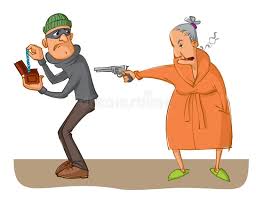
Those were not the days to honour bravery on the domestic front. But if an award gets constituted to recognise such acts of valour, my grandmother would emerge as a strong posthumous contender. What she did remains remarkable, audacious, and inspirational to several generations of our family and relatives who idolise her for this singular outstanding quality that pushed her into the realm of greatness.
From the balcony of the second floor of the house in the village my grandmother was dumped – and assumed dead – by the band of veteran dacoits that had entered the mansion with the ulterior motive of robbery after a tip-off from some reliable sources that all the male members had gone to the city to place bulk orders for the upcoming festive season. Her agility to oppose the intruders and block their path was a source of irritation as they suspected their flawless plan would flounder in its execution if such resistance garnered support from the other families. Before conducting their operation in peace, they chose to get rid of the disturbing element. But they forgot to get the keys of the locker almirah from her.
Unfortunately, what they felt was designed to succeed had ended in disappointment as the old lady landed on a mound of haystack, suffering injuries that threatened to break her back but not her spirit. When one of their acolytes rushed down to search for the keys, she pretended to be dead by holding her breath. They could not find the key. The truth was that she had buried the bunch of keys in the haystack as soon as she crashed on the ground.
After the dacoit left her, she composed herself, swallowed her pain, and screamed louder than before, ensuring that the lamps in the neighbourhood lit up bright out of curiosity as the word daku[1] rend the air. Soon there were flames marching ahead to attack and overpower the intruders who thought it was better to retreat instead of facing the irate mob. With village folks arriving in droves to rescue her, the dacoits fled the scene without the booty, carrying with them only the jars of mango pickle lifted from the attic.
When she heard so many voices around her, including some familiar ones, she slowly opened her eyes but could not manage to get up on her own. She was carried inside the house and the medical examination revealed a fracture of the hip. After her sons and their families returned home to discover her in this state, they regretted their decision to leave her behind. But she said it was God’s plan to save the family fortunes. Within a few months, she regained the ability to walk slowly and she narrated dramatised tales of her big fight with dacoits. It was a fine blend of reality and her imagination. She became a feted character with immense popularity in the surrounding villages on account of her encounter and survival skills.
The trail of destruction that the intruders had left behind was in the form of overturned tables and dislodged beds, with sharp tools lying scattered in their hurry to escape the mob that her shout had garnered. Her narrative went through additions and alterations, making some infer what she reminisced was tweaked due to memory loss although it was her clever ploy to retain fresh appeal. Many people suspected she would never manage to regain her full strength and firmness, but her speedy recovery confirmed her bones had suffered minimal damage.
She basked in the glory of her valour and thanked God for giving her the opportunity to showcase this side of her personality that would never have emerged if this incident had not occurred. She averred she did not worry about personal safety for a single moment and acted the way her husband would have done. Such disclosures signified she was making a gender statement of equality, that she was no less courageous than her male counterpart who had settled well into his heavenly abode some years earlier. Now it was posing a challenge for her sons and daughters to set a higher benchmark though none of them looked capable of surpassing her next level of courage.
My grandmother herself was not sure how she gathered the intrepidity to stand in front of armed goons. Like flashes of brilliance, bravery also came in sudden spurts. Standing in the courtyard of the house, the sons assured boldly that if any dacoits made another daring attempt in their presence, they would chop their heads off with swords. Their stentorian voices did not carry an iota of conviction but they tried to convince their mother that they were equally brave and prepared to face life-threatening situations without any fear.
During their entire lifetime, the next generation did not suffer any violent attack or external aggression though they themselves were engaged in petty fights and quarrels that did not make them eligible for any honour. My grandmother lived a long life and always gave the family some reason to feel inferior. Without going to the battlefield, she had fought and survived a dangerous attack. As this story was still in circulation during our childhood, we grew up hearing it repeated with great interest from none other than our grandmother. She was corrected by other members of our family for introducing changes in the narrative she had shared earlier.
Mythological tales did not catch our imagination as much as her own story. We loved to hear it retold in her voice. The element of suspense retained freshness in her narrative and we were hooked to her storytelling. Although dacoits became a rarity by the time we were growing up, and their attacks were seen only in Hindi masala films, there was a recurring dream of facing a similar crisis where a band of dacoits would hold us hostage, but we would somehow manage to escape unhurt from their clutches.
Contemporary dacoits have become multi-tasking experts with a diverse set of skills as their earlier focus on the few wealthy families in rural areas has now shifted to other profitable, prepaid criminal gigs like contract killing and shoot-outs. They prefer to work from remote locations on a freelance basis just like writers and copywriters. The middle-class families now face burglary from thieves armed with daggers wafting in their apartments like evil spirits.
Travelling by train to visit central India, crossing the Chambal Valley known as the hub of dacoits, I was expecting dacoits on horseback, galloping ahead along the railway track, to catch up with the superfast train, to latch on to the door and enter the air-conditioned coach and hold the passengers on board captive at gun-point. This would be an ideal opportunity as I would –at the right time — emerge from the toilet and catch the ‘Gabbar’ [2] of their gang from behind, snatch his weapon and point it at his tilak[3]-smeared forehead, ordering his team mates to jump off the train before I finished counting fifty. This would be the best outdo the family record of heroism. Saving the lives of fellow passengers would make me eligible for the highest bravery award for civilians.
As I sat brooding over this possibility, the train crossed the Chambal region safely and the passengers heaved a sigh of relief. That the fear of such attacks still resides in many hearts was evident as the curtains of the windows were pulled apart only after the train had crossed the danger zone. My window seat had the emergency exit and I am sure if the attack had taken place, I would have been the first one to jump out to save my life and wait for better heroic opportunities.
Dacoits have appeared as positive characters with a sad story of exploitation that compelled them to pursue this profession. They have been glorified in our films for carrying a heart of gold, not just pots of gold. As some of them became political leaders after winning elections, one is forced to take a relook and believe in the forgiving nature of the masses who elect them and give them the chance to rule and become an integral part of the mainstream. Though I must admit I have no idea of how many dacoits turned politicians have helped the nation grow as their personal rivalries and internal fights culminated in their untimely end. However, the sobering impact of such narratives makes one reflect on the entire concept of who loots and plunders at an individual level and how the colonisers looted and robbed in an organised and official manner. It should not come as a surprise if their tales of violence and exploitation get compared with those who plundered cities and states though they were entrusted with the task of protecting them.
Returning to my earlier tale, my grandmother’s framed and garlanded portrait on the wall urged me to seek her blessings. Even though it was not exactly a case of getting thrown off by pillaging dacoits, my late grandmother blessed me one day with a chance to survive a similar attack. Getting pushed down the staircase by a nefarious businessman but landing safely without sustaining head injuries due to my proven skills of tackling motion while disembarking from moving local trains as they entered the platform, I was able to retain my balance and save myself, which made me think of the miraculous escape and how I got the privilege to emerge as a hero for the current generation. Perhaps the spirit of my grandmother stood firmly behind me and saved my head from cracking up like a coconut.
This scary episode made me feel closer to my grandmother. I have contributed to the glory of the family, preserving the rich legacy by making worthy additions to it. Those who were eagerly expecting to crush my skull were surprised to see me unhurt. Full credit goes to my grandmother for supporting me invisibly – though she is not around to see me replicate her distinction. Now we share a special bond and a common fate of surviving a deadly attack and telling the tale, rising in stature and esteem after the heroic fall.
[1] Dacoit
[2] An allusion to a Bollywood hit dacoit leader called Gabbar Singh from the film Sholay (1975)
[3] A mark in the centre of the forehead with vermilion or ash to show devotion to a deity.
Devraj Singh Kalsi works as a senior copywriter in Kolkata. His short stories and essays have been published in Deccan Herald, Tehelka, Kitaab, Earthen Lamp Journal, Assam Tribune, and The Statesman. Pal Motors is his first novel.
PLEASE NOTE: ARTICLES CAN ONLY BE REPRODUCED IN OTHER SITES WITH DUE ACKNOWLEDGEMENT TO BORDERLESS JOURNAL
Click here to access the Borderless anthology, Monalisa No Longer Smiles
Click here to access Monalisa No Longer Smiles on Kindle Amazon International

 Borderless