Moko Jumbies (or stilt walkers in colourful costumes) evolved from an old West African tradition, dating back to 13th-14th century. The tradition became part of American lore two hundred years ago as the plantation owners would import workers from Africa.
ANTICIPATION

I watch out my condo window
this winter, packing up and leaving for spring.
I structure myself in a dream as
Moko Jumbie, masquerader
on stilts. I lean out my balcony
window in anticipation.
Dead branches, snow paper-thin,
brown spots, shared spaces.
A slug of Skol vodka,
a glass of cheap sweet
Carlo Rossi rose red wine.
I wait these last few days out.
That first robin,
The beginning of brilliance—
crack, emerald dark, these colours.
Michael Lee Johnson is a poet in the greater Chicagoland area, IL. He is an internationally published poet in 46 countries, a song lyricist, has several published poetry books. He is editor-in-chief of 3 poetry anthologies, all available on Amazon, and has several poetry books.
.
PLEASE NOTE: ARTICLES CAN ONLY BE REPRODUCED IN OTHER SITES WITH DUE ACKNOWLEDGEMENT TO BORDERLESS JOURNAL
It was two hours before I returned home to load up the rest of my stuff into the back of the van.
It was three days before I showed up for a home-cooked dinner.
It was a week before I struggled through that familiar front door with my laundry.
And three months before, the big lie – “My landlord promised my apartment to his son and new daughter-in-law” when the truth was, I couldn’t hack it on my own.
It was two years before, I really did leave home.
It was the first but not the last time, I said “Finally.”
BATTLE LINES
Your house abuts your neighbors’. And they brawl incessantly, in words and sometimes in deed. Hands over ears don’t help. Their hardness, their selfishness, their cruelty towards each other, penetrates everything in their way.
The husband beats his wife. She thrashes the boy. The boy screams at his sister. The sister smashes things against her bedroom wall.
You live alone in loneliness. Their closeness chafes into rage. They can't merely sob like you. They all have to take life out on somebody.
The violence quietens down eventually. Explosions retreat into shame. You even hear some sighs of regret, a hug here and there.
You don’t pity them. You’re too busy pitying yourself. You can’t remember the last time you had someone to make up to.
LISTEN UP
We, always the lesser of the two in a relationship, need a more explicit way to establish our equality
than a limp stance or an emaciated smile. We, who live in a constant state of ambush,
or underfoot, or mostly outside looking in, must find, within ourselves, louder voices,
stronger cuss words, eyes that bulge with anger rather than the kind that retreat deep in their sockets.
I recommend doing this in front of a full-length mirror. You’d be surprised how much you can terrify yourself.
AN OLD MAN’S LAST HIKE
How far I’ve come, the road beyond won’t tell me. Up ahead, it’s more of a trail but, thankfully, it winds its way through forests, to rivers and the wide, clear lake they drain into.
It doesn’t even matter if I make it to the waters, anyplace now, from the field of wildflowers to the sturdy trunks of ancient trees, is a place of comfort for old bodies.
My blood can spur on the new shoots, my flesh, grow moss and mushrooms, my bones, replenish the limestone hills, my darkness, free the light.
MY PARENTS’ GRAVES
He’s buried in a small country graveyard, his rough slab also interred but in long grass not earth.
Her ashes lie beneath a smooth slab of granite. in a field that surrounds a city crematorium.
His coffin, her remains. are a hundred miles apart.
She was fifty years a widow in life and is still a widow in death.
John Grey is an Australian poet, US resident, recently published in New World Writing, North Dakota Quarterly and Lost Pilots. His latest books, Between Two Fires, Covert and Memory Outside The Head are available through Amazon. He has writing upcoming in California Quarterly, Seventh Quarry, La Presa and Doubly Mad.
PLEASE NOTE: ARTICLES CAN ONLY BE REPRODUCED IN OTHER SITES WITH DUE ACKNOWLEDGEMENT TO BORDERLESS JOURNAL
Groundhog. Groundhog Day is celebrated on February 2nd. If the groundhogs leave the den where they hibernated, the weather is supposed to move towards spring. This observance has its roots in ancient Celtic culture.
GROUNDHOG DAY

It’s Groundhog Day.
The groundhog is somewhere
burrowed deep in the ground.
Either the groundhog
doesn’t know what day it is
or he doesn’t care.
But, then again,
Christ doesn’t show up
on Christmas either.
Just your father
and his new wife
with some toys.
It’s the one time of the year,
you see his shadow.


TWILIGHT

day flies off
like cardinals
and gold-finches

night
settles
on the branches
like crows

mice
scamper nervously
across the forest floor

all the birds
are owls


WORKING MY WAY THROUGH THE DICTIONARY,
	I AM NOW AT Q

Some words
have tens,
if not hundreds,
of synonyms.
Others,
hardly any at all.
That is why I’ve never
written a poem about a quark.
That word,
for want of an alternative,
would appear on every second line.
Even this poem
has to repeat the word quark
just to get its point across.
So let this be my quark poem
and leave it at that.
John Grey is an Australian poet, US resident, recently published in New World Writing, Santa Fe Literary Review, and Lost Pilots. His latest books, Between Two Fires, Covert and Memory Outside The Head are available through Amazon. He has upcoming poetry in the Seventh Quarry, La Presa and CaliforniaQuarterly.
.
.
PLEASE NOTE: ARTICLES CAN ONLY BE REPRODUCED IN OTHER SITES WITH DUE ACKNOWLEDGEMENT TO BORDERLESS JOURNAL
These skeleton keys hail from Portugal,
states the hand-drawn phrase on gray

cardboard, which provenance unlocks
my thinking as to what is so special

about these thin fingers of old iron and brass
that to my lay-eyes do not appear any different

from the domestic variety that might sell
for far less, especially as used item and even

worse lacking the complementary locks,
necessary for utility securing some equally lost

door or chest, but in which some expert
in Iberian antiques might find money

and historical value. I cannot rid

      thus, my doubt of the sign’s worth

and the wares, better left to the keener sight
and mind that can unlock the mystery

safe, pendant and plain before a blind view.
John Zedolik has published hundreds of poems in many journals around the world. Earlier this year, he published Mother Mourning (Wipf & Stock), his third collection, which is available on Amazon.
PLEASE NOTE: ARTICLES CAN ONLY BE REPRODUCED IN OTHER SITES WITH DUE ACKNOWLEDGEMENT TO BORDERLESS JOURNAL
I saw her again. She was wearing dark slacks and a loose top she was blowing leaves off her lawn and into a corner with a blower. I had been seeing her daily for almost six months now, mostly in her front yard or her porch, or sometimes slowly driving to or from her house. She also seemed to be of Indian descent, as I could make out from her features, and as was confirmed when once her Amazon package that was wrongly delivered to our house. When I had gone to return it, she had been pleasantly surprised, telling me that it was an expensive coffee maker she had ordered, and not everyone would have sought out the rightful owner.
That’s how we got talking. After that, I would always wave to her — when I saw her doing her yard work, on my evening walks or when either of us drove by, on our way to get groceries. In the spring she would plant colourful flower beds, and could often be seen cleaning and watering them. On sunny days, she would be mowing her lawn or talking to the college kids who sometimes came to do her yard work. In autumn, I saw her raking out leaves, putting the garden waste into large brown disposal bags and decorating her porch with colourful wreaths of maple leaves and berries. Winter saw her blowing fresh snow off her porch and lawn and clearing and salting her driveway, so that the garage pathway would be clear for her to take out her car. She would often be seen driving to and from the local grocery stores, where I met her at times. Gradually, as we got friendlier, she invited me over for tea and then later for potluck lunches and sometimes just for sharing something special she had made that day, or a new recipe she had tried.
I had a hectic schedule, with frequent out of town work trips. She would often tell me, “Tara, you eat very less! You should take care of yourself; you should put on a little weight.” and more along the same lines. My usual replies were, “Mrs. Sen, I can’t cook yummy food like yours!” or “I don’t usually have time to cook!” accompanied by an indulgent smile. Of course, these reasons were true, but there was also the fact that I really did not enjoy cooking. I would much rather spend my time reading a good book or indulging my leisure time activity of writing poetry, than slaving over a hot oven or cooktop! She, on the other hand, was an excellent cook and baker, having picked up various tips and tricks for making the most mouth-watering dishes out of almost the most basic ingredients. She shared these with her book club members in their weekly meetups as well as with some lucky neighbours, me being one of them.
One day, as we sat talking on her porch, surrounded by the sweet smells of the lush lavender growing in one of a flower beds, she shared, “I came to Canada with my husband, after my marriage in 1988. Two years later, my brother and my uncle shifted here to, along with their families. Those early years were beautiful. Although we didn’t have much back then, we were happy, happy to have each other in a new land. Many of us were not fluent in English, coming from rural Indian backgrounds. We practised with each other, to gain confidence in social interactions as gradually we enlarged our social circles. Once everyone started on their respective jobs, they also shifted to other places. One of my sons is now in California, the older one. The younger one is in Vancouver.”
We were interrupted by the barking of her tiny wire-haired terrier who was fiercely protective of her. Mostly, he was almost like a therapy dog, sitting on her lap, or somewhere near her, where she could reach out and pet him often. Right now, he had seen a delivery guy approaching the house. She took a parcel from him, offered it to Mickey, her tiny self-appointed protector, to sniff and judge okay, for that was her practice, which she said made him feel included in all her day-to-day activities and interactions.
Placing it aside, she thanked the delivery guy with a smile. Sitting down on one of the two cherry red Adirondack chairs on her porch, she told me, “Nowadays I prefer having as much delivered as I can: it’s easier, particularly for the stuff not readily available at Costco or Home Depot.” I could only imagine how difficult it must be for a lady of advanced years living by herself.
“I go to Toronto almost once a week and also to one of the farmer’s markets nearby. If you want, you could come along if you have some work or want to buy something from there. I could even bring it for you if you so wish.”
Although it was not my intention to cause her any kind of pain, what I had said had seemingly touched her, for as she looked up at me, she had tears shining in her eyes. “Thank you, my dear, I can’t tell you how much it means to me. It has been more than five years that I have been by myself now. Usually it’s okay, but some days are just harder. When Sudhakar passed away I lost my best and oldest friend. He used to tell me – Maya, you should make more friends; you should have your own life too.”
I do have friends here, my book club people too, plus some relatives living in Toronto and some other nearby places, but it’s not the same.”
“I understand”, I could only pat her hand helplessly, wishing I could do more. Going with the change of mood, we picked up the tea things as the breeze turned colder and went inside. It was nearly autumn again and the October evenings were getting quite chilly. The red, orange and yellow autumn foliage had its own grace and beauty, but I would miss the long summer evenings, when I could just sit out on the patio or enjoy working in the backyard garden or water the front lawn barefoot. Not to mention, the beautiful flowers summer brought. Mrs. Sen, or rather, Maya, as she had instructed me to call her, had beautiful gardens, both at the front and back of her house. These she tended meticulously, taking care of her perennials through the change of seasons and making sure to plant various varieties of seasonal flowers and shrubs. She had two gorgeous Japanese maples in her front yard, and had a beautiful weeping willow in her back yard that fascinated me. The flowerbeds were populated with multiple herbs like lavender, thyme, sage and rosemary, as well as flowers like peonies, roses, pansies, violets, lilies, hydrangea etc. She also had some beautiful shrubs and flowering trees like lilacs and magnolias. It was a veritable dream for the most discerning of botanists, at the very least!
As we entered the house, I realised that this was the first time I had been inside her home. Somehow, most of our conversations till date had been outside, on our patios or in one of our backyards, while one of us worked in the garden. She had successfully transmitted her enthusiasm for flora to me too. This was a first for us. As I placed the tray of biscuits and cookies on the kitchen counter, I noticed the wall next to it filled with lots of pictures — pictures of Tara with her family and of her visits back to India and their travels to various places. I could see pictures in front of the Taj Mahal, the Notre Dame, the Sydney Harbour and more.
“Oh, these are so beautiful! It seems you travelled quite a bit!”
“Oh yes, when the children were young, we travelled during the winter and summer breaks. Mostly to India, sometimes to America and Mexico, sometimes to more exotic places like Egypt, Bulgaria etc. It was only when the children started their own careers and moved away that we stopped our frequent travels.”
She went quiet for a bit, looking off into the distance, reliving the past perhaps. Maybe a past that brought back bittersweet memories. I felt a little guilty for having asked her about the pictures. Some moments later, I took her leave, wishing her well and promising to meet her soon after having mastered the new biscuit recipe she had shared.
As fall turned to winter and I returned from some work-related travel, I thought of her as soon as I had settled back into my regular routines. I decided to meet her in the evening, but being severely jet-lagged, had to postpone it a little.
I finally went after three days. I noticed that her driveway was freshly shovelled and salted. As I rang the bell, I admired the beautiful wreath on her door, with her trademark red winter berries and green ribbons. I knew that nearer to Christmas, she would add some striped candy canes to it.
I heard some shuffling steps and she came to the door.
“Oh hello Tara! It’s been quite a while! Were you out of town?”, came her cheerful greeting.
She did seem a little frailer to me, and I noticed her favouring one leg more than the other.
“Hello! Yes, I came back from a ten-day work trip three days ago. Sorry I couldn’t visit earlier. How have you been? Is anything the matter with your leg?”
“Yes, I fell down and hurt myself. There was a patch of black ice in the driveway. Although I had cleared and salted it, there were more flurries that day, followed by some rainfall. When I came back from visiting a friend, who dropped me back to my place, she had to hurry back as she had received a phone call, and I got down from the car and had barely taken a step when I slipped and fell. I hurt my leg and my back. Worse was that after the fall, the ice was so slippery that I couldn’t get back up. I walked like a four-legged animal for a few steps till some neighbours who had seen me fall rushed out and helped me back up and took me inside the house. This was two days ago. Since then I have been resting. Yesterday I got groceries delivered here, once the snow stopped.”
Feeling bad that I had not been there for her at such a time, I escorted her inside and shut the door. I gave her a little Reiki healing and made her a little tea after the session. We sat and chatted for a little while, and then I came back.
As I was on the way back her word echoed in my head, “No one knows what life might bring. I had never thought I’d be alone at this age. Back in India, people say that a lady who has sons is very fortunate. Well, I have two sons. When I called them, they said that they were sorry to hear about my fall, but they would not be able to come till the weekend. For the first two days, during which it snowed heavily, the neighbours who had seen me fall were kind enough to bring food over, two times a day. I am fortunate to have good people around me.”
I reflected on my own situation. I was separated, with no chances or desire of a reconciliation. Having decided that I did not need anyone in my life who had the power to hurt me, I had walled myself off, interacting briefly with people and that too, only to the extent needed. Very rarely did I venture out of my comfort zone; letting people within my walls was a risk which I could not bear to take. Maya was the first person in the last three years that I had spoken to with such an open heart. Maybe it was because I felt such comfort in her presence and understood subconsciously that she would never hurt me.
When I thought about her, I remembered all her acts of kindness – the food drives for the homeless, the collection drives for clothes for refugees she ran, offering to collect all the donated clothes at her house and later on sort through them for distribution, her gardening and plantation drives etc. This year, on Canada Day, she had gifted many trees and plants to her neighbours, as per their choice and need. I had received a beautiful Japanese maple, a sapling from her one of her own trees. She had said that the trees were saplings created from the tree that she had planted in her first home in Canada. The sapling she gave me looked very promising and would definitely turn out to be a beautiful and healthy tree, vibrant with its deep red leaves. Whenever I looked at it, I was reminded of Mrs Sen’s spirit and her welcoming smile.
Through the next few days, I kept a regular check on Mrs. Sen. She recovered quite well and was soon back to her usual tasks.
One day as I came to her place to meet her before going away on another work trip, she opened the door with a big smile. I smiled and asked her, “Wow! You are really glowing today! What’s up?”
“I am going to visit my son in California. He is coming over the next week for some work to Canada. After that, I plan to take him to see our beautiful Niagara-on-the-Lake, then I’ll accompany him back to California. I plan to stay there for almost a month.”
“That’s great news! You haven’t meet him for such a long time!”
“Yes! I’m so excited I will get to meet the grandchildren again!”
The rest of my visit passed in discussions of her upcoming trip. I promised to take care of her mail and plants while she was away, then left.
When I came back from my office trip, she had already left for California. I dutifully collected her mail, laying it aside on my hall table to give to her once she was back. I took special care of her two red maples, knowing that she was especially fond of them. They stood to either side of her driveway, forming a delicate arch over her garage door.
The season changed again and spring blossomed, bringing with it fresh leaves on all the plants. The Japanese maples sprang fresh with vibrant leaves. I liked overseeing her yard work, paying the college students who came to clean it every week from the fund she had left with me when she met the last time.
Sitting there on her porch, reading a book while waiting for the boys to finish, I often looked at the trees, which seemed like two sentient sentinels. Now lush, they merrily waved their branches with their cherry-red leaves in the spring breeze.
“How happy Maya would be when she comes back and looks at them again!” She had shared some photos of her son’s house in California; it was a condo — no garden or even house plants; ‘they didn’t have the time for frivolities’, as her son had said.
“That is the one thing I’m really going to miss when I’m there — my garden. These plans that I choose every year with care and the perennials are like my children too. I love them all — the daisies, the sunflowers, the weeping willow at the other end of my lawn, the many seasonal flowers I like to keep in my window planters, all of them! I’m really going to miss them all!
“Don’t worry, you’re coming back before spring will have passed. You’ll still have your lilacs in bloom when you come back, and your begonias, petunias and lilies would all be in full bloom too.”
She smiled but seemed a little unconvinced.
That day, she was supposed to return. She had been in the habit of brining me warm meals the days I returned from one of my trips, so that I would not have to cook immediately after having journeyed, and also to ensure that I ate well. Taking a leaf out of her book, I thought I would return the favour and cooked a hearty soup, along with some homemade pasta. Balancing the bag with the food, I rang her bell but receiving no reply, thought maybe she was sleeping and came back, thinking that I would try again a little later, or maybe the next day.
The same thing happened the next day and the next; no reply to the doorbell. I had tried calling her cell phone, but it always went to voicemail. The three messages I had sent were delivered but not answered. Now I was truly worried, but there was little I could do except wait. Maybe she had extended her stay, because she certainly didn’t seem to be in the house. Although the lights turned on and off, I knew it was the automated system I had helped her install before leaving, so that the house would not seem empty.
I continued the upkeep of her garden in the meantime, hoping that she would show up any day and sit blissfully once again, in her lovingly created garden. I missed her more than I thought I would. She had taught me a lot, even without my knowing.
Feeling a little bit like a stalker, I went to her Facebook profile and also the profile on the neighbourhood app, and found her sons’ profiles and dropped them both messages related to the wellbeing of Mrs. Sen. After a week, I still hadn’t received any replies. Almost a month passed. One day, I saw a ‘For Sale’ sign put up in her garden, right in front of one of the maples. Shocked, I called the agent’s number written on the board and was told that her son had made the decision to sell the house. All her stuff would be going to Goodwill as both her sons had no intention of coming back there to live.
I was broken-hearted that they cared so little for the place hey had grown up in, and which was so loved by their mother. She would never again get to see her garden. The flowers were all there; the garden still bloomed, but its creator had gone.
Two days later, I got a letter from her in my mailbox. It was dated a month and a half ago, so as per my calculations, must have been written mere days before she passed away. In it, she had thanked me for taking such good care of her garden in her absence. Showering me with love and blessings, entreating me to take good care of myself, she ended her letter with something that surprised me. She mentioned that there was a key enclosed; indeed, there was a small but intricate key in one corner of the envelope, that must have slipped back when I pulled out the letter. She had written that it was the key to a post office box in her name. She had said, “If I do not return, please collect whatsoever is there and distribute it to all our neighbours. It is nothing that my sons would value, as I have set aside all else for them, except this mail box and its contents, that I will to my neighbours, who have loved and supported me through my last years.”
With tears in my eyes, I clutched the key to my heart and remembered her love for all her neighbours, sent across the border, across the bounds of life itself.
The next day, I went to the post office to collect the gifts. To my surprise, they were heirloom seeds, along with carefully collected and preserved flower bulbs, both of which she had painstakingly collected over the years. I remembered her getting some from as far as Vancouver and Montreal; some were tulip bulbs from Holland. Coming back home with the precious living gifts, I framed a message to post on the neighbourhood app. Hitting send, I looked out of my window. My beautiful Japanese maple was dancing in the breeze; her blessings and legacy would live on, spreading to the four winds.
.
Shivani Shrivastav is a Reiki Master and Osho sannyasin. By profession she’s a UK CGI Chartered Secretary and a Governance Professional/CS. She loves meditation, photography, writing and French jazz.
PLEASE NOTE: ARTICLES CAN ONLY BE REPRODUCED IN OTHER SITES WITH DUE ACKNOWLEDGEMENT TO BORDERLESS JOURNAL
IF HEAVEN, IF HELL

I would ascend on angels wings
(the safest mode being tandem),
the take-off would be smooth as silk,
the landing site not random.

If hell is where I’m meant to go,
I need a map to travel
since angels will not venture there,
how else will hell unravel!

There’s no one who can tell me yet
to which one I am headed —
I’m betting on CHATGPT
Its scope will be extended!
Akil Contractor is a writer from Mumbai, India. He has a number of poetry books online. His recent book of poems, Rhyming Verses – Sense and Non-sense, is now available on Amazon.
PLEASE NOTE: ARTICLES CAN ONLY BE REPRODUCED IN OTHER SITES WITH DUE ACKNOWLEDGEMENT TO BORDERLESS JOURNAL
With its four-storey outlet in GK-2, Ajay Jain has made Kunzum the new happening place for book lovers in Delhi-NCR. He converses with Shantanu Ray Chaudhuri about his journey and about making brick and mortar stores viable in the era of Amazon as the writer browses through the different sections of the bookstore.
Book event with actor, Kabir BediBook event with Booker winner, Geetanjali ShreeIn Kunzum Bookstore. Photos provided by Shantanu Ray Chaudhuri
It is a bookstore unlike any I have been to, and that’s saying a lot. I visited it first sometime in December 2022, when it was still a work in progress, and even then it was stunning enough for me to get my aged parents, who need walking sticks, and my wife, who at the time was nursing a broken ankle, to visit this as a new year outing on 1 January 2023. Since then Kunzum at M Block Market, Greater Kailash 2, New Delhi, has grown to four floors spread over 10,000 square feet. The first floor is the regular bookstore, the second the Penguin bookstore. The third the ‘Theatre Kunzum’ – a 125-seater events hall – and the fourth an eighty-seater theatre, with plans for a café. There are other Kunzum bookstores which are a more modest 2500 square feet each. The original Kunzum Travel Café is approximately 500 square feet.
I enter it and am transported to a book lover’s paradise. Its very affable owner, Ajay Jain, and brilliant curator, Subir Dey – who generates in me a huge complex with his awareness of books and a hole in my pocket with his recommendations for the same – have time and again asked me to work out of the store. Which I would have gladly done, but for the fact that, one, it is impossible to get any work done once you enter its precincts (the only work it allows is browsing its shelves), and, two, I fear that I will end up spending all my salary at the store.
What makes it remarkable is that Ajay can visualise a store chain like this in this day and age where we hear a constant refrain of brick and mortar stores closing down. Of how difficult it is to sustain one in the age of Amazon. Most of the major bookstores across the country have devoted a large part of the space to stationery and toys. Ajay is determined not to do that. As far as he is concerned, a bookstore is a bookstore. And there will be no dilution of the space. As Ajay says, “I was very clear from day one. We will not sell teddy bears, stationary, croissants (chuckles). It might be a slightly steeper learning curve, but we want to learn how to sell more books. If I’m not selling enough books, why am I in this business? I could have invested this money somewhere else. For me, it’s a social mission to push more people to read. If everyone, every human being on this planet, reads books, it would be a much better place to live in. When we read books, we also challenge rampant consumerism – we are taking the money away from buying other stuff to buy books.”
Given the quite extraordinary range of books, including rare and collectors’ editions – I picked myself a mind-blowing one on iconic book covers, The Look of the Book, by Peter Mendelsund and David Alworth – Subir Dey, the curator, is the backroom star of the show. A quiet, self-effacing book lover, Subir says, “I have been doing this for myself, at home, before Ajay started the bookshops. One day, I just picked up the phone and asked him, how can I help? Then, there is the community angle. I talk to fellow bibliophiles both online and offline who point out all the amazing editions of great books. The curation team at Kunzum is indispensable. Everyone has their favourite genre and we all diligently keep track. The classics and graphic novels are an easy target because of their popularity. Then there are collected works and anniversary/commemorative editions that we try to keep track of. Publishers help us with that too. For example, the Dune series picked up when the new movie came out. There are so many beautiful editions of the book that it is hard to choose. There are graphic adaptations of long-form novels like 1984, Animal Farm, The Kite Runner that we tracked down and have in stock. These are great books for someone who is intimidated by the traditional long-form novel format. This could be their gateway drug into reading and Kunzum would love to get them addicted. Special editions are a brilliant gifting idea. Books are the best gift you can give to people. Most of us have friends who are avid readers. These special editions are a very thoughtful gift. We tell our customers to bring a book to a party full of people who are bringing bottles of wine. We all used to give and receive books as gifts, growing up. Those books shaped our worldview. We are rolling out ads on social media to highlight the special editions available with us and pretty soon you will see more of these titles highlighted not just online but in our stores too. There is a demand for it, we have seen an uptick in the interest among buyers who are looking for specific edition of their favourite books and our team is happy to track them down.”
The Beginnings
Ajay Jain: I have a background in engineering and management, so I worked in the IT industry for five years. Then I got into sports management, and did that for five years. At the age of 31, I dropped everything and moved to the UK to study journalism. I did my master’s in journalism there. I came back in 2002, worked for the Express group, started a youth newspaper, got into blogging and freelance writing – mostly business and tech writing – which I did till about 2006–07. I was one of the earliest professional bloggers in the world. As a journalist/blogger/ influencer (the word wasn’t there at the time), and as somebody who wanted to write books, I figured I wanted to do something where I could create more of a legacy.
Early Reading
Ajay Jain: Growing up, I read the usual staple. You had your Enid Blyton, Nancy Drew, Hardy Boys, Famous Five. Unlike my classmates, I never read Agatha Christie or PG Wodehouse, but I had read all of James Hadley Chase by the time I was in Class 8. My headmaster used to ask me why I was borrowing these books from the library. I did so because they were there! I read a whole mixed bag of books in middle school and high school, even in college. I read Sidney Sheldon, Jeffrey Archer, Ayn Rand – a mixed bag. Anything that caught my fancy.
Travel Writing
Ajay Jain: Around 2007, at a personal and professional crossroads and unable to relocate from Delhi, I said to myself, ‘Okay, let me do the next best thing,’ and I became a travel writer. I’d done a few short road trips around India, and I was really enjoying travelling. Since I’d also learnt photography, I was doing a lot of that. I thought, why not make it a profession? So I hit the road.
I didn’t want to write a Lonely Planet kind of book, and I also didn’t want it to be a literary piece. I was thinking of my own format. The first trip I actually went on was to this place called Spiti in Himachal. I spent a night in Manali, and then headed for Spiti. I crossed the Rohtang Pass. Till then, it was fine because there were other people. I’d never done that kind of terrain ever. I drove for hours in a high-altitude desert area with no road signs, no mobile signals, nothing! Just a track where you followed earlier track marks. After a while I realised I was lost!
The Defining Moment – the Birth of Kunzum
Ajay Jain: I just kept driving, not coming across another human being for hours. Imagine not seeing another human being for hours in a country like India. Suddenly I came upon a plateau, upon a sign that said ‘Kaza’, which was where I was headed! That spot, where I stood, was the most astounding place. As I looked around, the only thing I saw was snow peaks, Buddhist flags flying, complete silence. It was breath-taking. I thought to myself, if this is what the planet is, if this is what India is, I want to be a travel writer. In that moment, not only did I find my direction to Kaza, I found my direction in life as well. The spot where I stood was Kunzum-La.
After I returned, I called my blog Kunzum.com. A little accident in technology worked in my favour. I had reserved the domain called traveltattoo.com as my travel blog. For some reason, the registrar didn’t inform me that my domain was up for renewal. It got taken by someone else. In losing traveltattoo.com, I got Kunzum.com. That’s how the name Kunzum came up.
Kunzum Gallery, Hauz Khas Village
Ajay Jain: I did a few shows for my photography at places like Habitat Centre and got a decent response. I was encouraged to open a place of my own and came across a place in Hauz Khas Village. I picked it up in 2009 and opened up a gallery there. On the first day I sold a print, and then for the next year or so I didn’t sell a single thing! So, I was just sitting there with some friends, mulling over what to do, and we realised that all the people who bought my prints in Habitat just happened to be passing by. They saw the prints, they liked it, and bought it on the spot because the prints weren’t very expensive. I decided to do something there (in the gallery in Hauz Khas) that would get people in. That’s when we decided to offer seating in the gallery- let people come in, enjoy free WiFi, etc.
We set up a small library so that people could borrow books, and decided to serve up tea, coffee and cookies. We thought we could pay for all of this. When we looked at the numbers (and crunched them), we realised that if we pay for everything and a certain number of people come, and nobody pays, we will be out of pocket by so much, but will have acquired some customers for that price of coffee and cookies and all.
Funding the Enterprise
Ajay Jain: I was still freelancing, and had been investing over the years with whatever I’d saved from my various ventures. I was just getting by. We decided to rebrand the place in Hauz Khas from Kunzum Gallery to Kunzum Travel Café. The place took a life of its own. A few days after we opened, someone came in asking if we could do a poetry reading, to which I agreed. Before we knew it, we had over 200 events happening in the café every year. There were all sorts of events – book launches, film screenings, poetry events, talks, etc.
We were clear about the financials. If you benefited commercially from it, you pay us. If there was nothing commercial, if you didn’t have the budget, okay, you could use the space anyway (if the event was suitable). We kept it flexible. My main motivation was to get people in, to see my photography and my books, which were sold at the café.
Bookstore Chain in the Time of Amazon
Ajay Jain: During the pandemic, I was reassessing a lot of things. I have always believed that just because we are doing something well, we should not be doing it all our lives. With the pandemic, I had to shut Kunzum Café for over two years, making do with a skeletal staff throughout. I wrote my first novel. I kept wondering: how do I find an audience for my books? No matter how big your publishers are, or how big you are as an author, you still need to find your own readership. Then I thought, why don’t I set up a book club? A national book club, something that would have many people. The response came in quickly as well. I enrolled a couple of thousand members.
That’s when I thought, why don’t I turn Kunzum Travel Café into a chain of reading rooms? Build a model where we create reading rooms across the country, where people come and sit and read. The numbers didn’t add up though. There was no model that would make this sustainable for me. Enough people wouldn’t pay enough money to make this a library-type of model. It wouldn’t work in this climate, especially when real-estate had become so expensive. I had learnt how to build a community, how to bring people together through Kunzum Travel Café, but I didn’t know how to monetise it.
People had asked me, will there be more Kunzum Travel Cafes? Will there be a Kunzum Travel Café franchise? For me, Kunzum Travel Café was more of an exercise in personal branding. For the external investor, there would be no ROI since the only one benefiting from Kunzum Café was one Ajay Jain. In the process, I started making money doing brand endorsements through Kunzum Travel Café. It was more like a PR agency, so the only guy benefiting would have been me.
That is when I realised I should open a chain of bookshops! The model would be Kunzum Travel Café, but with a bookshop added to it. I did some back-of-the-envelope market research. There were people buying books, publishers doing business. In absolute numbers, there were more books being sold than ever before. I went to the bookshops which had good business – like Bahrisons, Faqir Chand, Midlands, etc. They had a huge legacy and were located in prime locations. I figured that I’d learnt how to make Kunzum Café in Hauz Khas a destination, and that I’d make this new venture a destination also. I didn’t really feel too daunted by this, I knew we’d figure things out as we went along. If I started asking too many questions, I would have been dissuaded immediately, so I thought that I’d figure it out on the road.
We have five locations. The GK one has four floors, so you can consider them either four stores or just one. At the core, the business model is simple – sell books, and sell enough books to make a profit. It’s still early days for us, we are on the way as we speak. I know that trends are right, and within this year we will be operationally profitable, so I’m not too worried about that.
I did a bit of reading, given that stores were closing all over the world, and the rise of Amazon. If Amazon did not exist, or if Amazon did not offer such discounts, many more bookshops would be open today. People would still prefer to walk into a bookstore for the experience of buying a book over buying it online. Because Amazon offers such discounts, most people think books are easier to buy online. I blame publishers squarely for this, not Amazon.
The Irony of Publishers Killing Bookstores
Ajay Jain: If books and readership are being challenged by other forms of entertainment, and readers are distracted, one needs to look at this as something cultural. That’s why experiences become important. Experiences are connected to physical spaces. That’s how you expand readership. Unfortunately, when I started interacting with publishers, I noticed that they show little intent to expand readership in society. They are making enough money not to think about expanding readership. It’s not enough for publishers to tell me, “Hey, I love what you’re doing at Kunzum Café.” They need to plug the discounting at Amazon, and the piracy of books. More than piracy, I think the discounting is a problem, which publishers can solve partly through lobbying, and partly through curtailing supply, if they want to. They own the product, and if they say no, that can change things.
The publishers’ argument is that they give the books to distributors to be sold, and these distributors are not within their control. The fact is, everyone is traceable. Publishers know who is selling their books, and can plug supply. If a reseller picked up a book on Amazon to resell, the publisher could tell Amazon to stop them. It could get into a cat-and-mouse game but eventually, it would dissuade them so much that the incentive to play this game would go down.
France Shows the Way
Ajay Jain: Look at what happened in France. The government in France forbade Amazon from offering discounts of more than 5 per cent on books. The French government realised bookshops were a national cultural asset. Because of this, bookshops that were struggling are now flourishing, and new bookshops are opening. This change came through legislation.
In India, if publishers want, they can move the Competition Commission, and say that discounting on Amazon is an unfair trade practice. In a country like India, where you have the MRP [Maximum Retail Price], if you can’t sell above MRP, how can you sell below MRP? Especially because all governments in India have the same stated position on FDI [Foreign Direct Investment] in retail, which is to ‘protect the small trader’. So, Competition Commission could look at how these discounting practices are putting businesses in such a precarious situation. If the publishers make enough of a song-and-dance about it, if they lobbied, if they took legal recourse, I think this issue can be resolved. We have a precedent in France now.
Financial Viability
Ajay Jain: When I was doing research, I wasn’t researching into whether I could open bookshops or not. I was researching how to make it viable. I had already decided I was going to commit to this venture. I’d started acquiring the real estate for it. I read someplace, “Bookshops don’t fail. Bookshops run by lazy booksellers fail.” In today’s day and age, not just books, you have to sell every commodity as an experience. You could be selling shirts, shoes, books, anything, because everything you want is available online. But if you want people to come to the stores, shopping malls, markets, you need to create that experience for people.
The Four Cs of Bookshop Design and Marketing
Ajay Jain: I have formulated what I call ‘The Four Cs of Bookshop Design and Marketing’. First is Configuration, which is basically the way you design the stores. If you look around, we’ve designed them in a way that the shelves don’t overwhelm you. There is enough space to move around, to sit down, to go through the books. You have browsing space and you can maintain a distance between yourself and the shelves. Not only is the vibe inviting, the design also allows you to discover books which you may not have discovered in an overstocked bookstore. The whole mood of being inside a bookstore is extremely important.
The second C is Curation. The kind of titles we select, the way we display them, and the way we help customers discover new material. Finding books customers were not looking for makes for a delightful experience. That is what will bring them back. These customers will say, “Hey, you know what? I went to Kunzum and found this great book! I loved it. It was money well-spent and time well-spent.” This is where Subir and his team come in.
The third C is Community, which we were doing at Kunzum Travel Café. We wanted to build a community of not just readers, but creators – writers, artists, designers, editors, everyone involved in creating books. Again, like Kunzum Travel Café, look at it like a larger cultural thing. So, bring in musicians, film-makers, puppeteers! We wanted to bring these people together to create a community.
The fourth C, Convene, aims to bring these people together for events. Ever since we’ve been fully operational, we’ve already hosted over 500 authors. We’re adding many more events, more programming, more partnerships, so that people can come and use our spaces. We make sure that there is enough space for people at our events, and that people don’t have to push bookshelves in order to be able to participate. We have dedicated spaces for events.
Since many people in my team come from the book retail industry, when the first store opened, the first question they asked was, “Sir, haven’t you wasted a lot of space?” The event space is going to be your brand ambassadors, your marketing agents. People will want to come for these events. We built the whole model on these four Cs. The signs are positive. People will come and talk about you, and be here, and will want to buy books from you. It’s just a matter of time before enough people will buy these books.
The Penguin Floor and Other Initiatives
The Penguin floor
Ajay Jain: In GK 2 we had just one floor, the first floor, a general bookstore, to begin with. Then an opportunity came to acquire the rest of the building above. Because the terms were attractive, I agreed. Then I thought, why not have thematic floors? One thought was that half of the second floor could be a graphic comic and art store, and the other half would be for children’s books, with the rest of the spaces above being dedicated to events. I was in the Penguin office having a general talk about multiple things. I really loved their office, so I said, “Look, it’s like a bookstore in itself.” I proposed that we should have an exclusive Penguin store. Penguin is one publisher with such range and distribution in books, no other publisher has ever come close. Their international collection is only increasing, and they have so much to offer. I don’t think the exclusive floor in our bookshop would have worked with any other publisher, just because no other publisher can offer the range Penguin has. They have graphic novels and comics – an important genre for us.
Then we got an offer from the top management, and I got excited. Like everything else in life, I ran with the idea, and decided to work out the viability later. The idea is that our bookshop showcases the best Penguin has to offer, incentivising Penguin to bring in their best in terms of their programming, their authors, and their events. It technically becomes a Penguin showcase. For us, it’s an opportunity to work closer with the world’s biggest publishing house. A few weeks ago, the UK Penguin team confirmed to me that this (the floor of the bookshop) was the only exclusive Penguin store in the world.
As part of a community, we’ve actually taken a lot of initiatives. One of them is called Book Bees, which is a book club for children, for kids up to twelve. Our children’s book section is called Kunzum Book Bees now. We also have a general book club called the Kunzum Book Club. Anyone can become a member for free. If you become a member, you get priority invites to events, we will give you first access to signed editions, which are always in limited supply; we will give you a little discount on our books, stuff like that. That’s part of the community-building exercise.
We launched the Kunzum CEO Book Club, where we’re getting corporates to come on board to encourage the culture of reading. The proposition being that all leaders are readers. If you want to nurture leadership within your organisation, you need to promote readership. We’re reaching out to them, asking them to buy books on a structured basis to distribute them amongst their employees, and maybe go even beyond that, by distributing them amongst their vendors, their customers, to spread the culture of reading.
We launched this programme called ‘Kunzum Key’ which is open to everyone, but primarily for creators of all kinds. You could be an actor, a dancer, a film-maker, a producer, an event-manager, a musician, anything! We give a free membership card that allows them to create at Kunzum – keep their own sort-of-office as long as they follow a fair-use policy. These creators can come, sit here, do their work, hold meetings, have interactions, brainstorm, showcase their work in some way. They will be offered free WiFi, which we don’t offer our regular customers. Every time these creators come they will be given a no-questions-asked complimentary cup of coffee or tea, and the bookstore will give them a very hefty 20 per cent discount on all the books they buy at the store.
Then there are the lit-fests. We are reaching out to every possible event where there are likely to be people who will buy books. We are asking them to make us their official bookstore partner.
Reaching Out to the Underprivileged
There’s a limitation to how many bookstores we can set up and how much we can do in each store. We don’t want to expand our physical spaces indiscriminately because we want to stay true to the culture we are trying to create. If we expand too much, or thin ourselves out, even if we get funding, which comes with its own pressures, we don’t want to lose our essence.
Our idea of expansion is to take Kunzum to potential readers. The corporate sector is a very obvious one. We’ve started doing small book fairs and events at different localities to promote the culture of books and reading at your doorstep. Schools and colleges are important to us. The intent is there. We’ve already reached out to a few schools, some of the DAV schools, where we did some events. There’s around a thousand schools there. Each school in the DAV chain cuts across all segments of society. We’ve also been approached by a few universities and colleges. We have a limitation of manpower. We want to make sure our manpower can pay for itself. We want to reach out to schools to, again, promote this culture of reading. If schools start buying at an institutional level from us, they can make books available for students who are not able to afford books. That’s where, again, we go back to the whole ethos of ‘Curation’ we are trying to create. Don’t just buy books that you think everyone is reading for the sake of being like everyone else. We’ll help you select books that you may not have thought of. I have been thinking of a programme where enthusiastic readers who are unable to afford books can be matched with someone who could fund their books. Of course, we will have to do it in a slightly more structured way. When I meet anyone from above a certain economic stratum, I see how privileged they are because they can afford to buy books but they are not reading books. There are people out there who want to read books…
At an LGTBQIA event that we had done, a guest who loves books said she couldn’t read anymore because of an eyesight problem. There was another young person there who wanted to read books but could not afford to buy. They just got chatting, they’d never met each other, and the former bought the book for the latter. She said, “I can’t read, but you can, so here’s the book for you.” How do we kind of institutionalise this programme? We’ll have to figure it out.
Regional Language Library
There are a couple of issues here. We will have a space constraint – where do we store it? Number two, how would we curate it? Because every language would require a different curator. In a city like Delhi, there would be enough Telugu readers, Bengali readers. But then, Bengali readers may want something other than the popular titles we might store. They might be looking for a larger collection. A lot of vernacular readers invest a lot in their respective languages. We might not be able to build depth to cater to that audience, so that’s a challenging situation to be in.
Going Ahead
We want to be present in every community – corporates, residential neighbourhoods, schools and colleges, etc. In a small way, we are sending books to rural areas too. For that to pick up pace, we need to look at it slightly differently. For now, we’re doing it in our small capacity. The whole idea is, irrespective of how many stores we have, we just want to go out there and get more people to read. Whether they borrow books and read, or buy books from Kunzum or not, let that be secondary. It falls upon every book lover to spread the good word, and encourage other people to read. Once you overcome that inertia and start reading, you stay with it.
Ajay Jain in Kunzum Bookstore
(Published in multiple sites)
Shantanu Ray Chaudhuriis a film buff, editor, publisher, film critic and writer. Books commissioned and edited by him have won the National Award for Best Book on Cinema twice and the inaugural MAMI (Mumbai Academy of Moving Images) Award for Best Writing on Cinema. In 2017, he was named Editor of the Year by the apex publishing body, Publishing Next. He has contributed to a number of magazines and websites like The Daily Eye, Cinemaazi, Film Companion, The Wire, Outlook, The Taj, and others. He is the author of two books: Whims – A Book of Poems(published by Writers Workshop) and Icons from Bollywood (published by Penguin/Puffin).
The summers of high school were eight weeks lived between a haze of pages, books borrowed and exchanged (even secreted away) with abandon.
The exchanges were facilitated with much gusto in rooms, parks, benches by the streets, friends looking over shoulders as the item in question was reverently drawn out of the bag. Some sealed the exchange verbally — “I’ll give it back to you in two weeks” — and the deed was done. Others laid out sacrosanct rules. “Don’t fold the corners. Don’t mark the pages. And for God’s sake, don’t underline anything”.
I have an elderly neighbour who keeps two copies of each book — one for reading and the other for lending. When asked why, she said, “my books are sacred”.
“Sacred” has been used as a stand-in for “religion” for so long that it’s become almost synonymous. But there’s a class of ‘sacred” that refers to things set apart with special meaning and not necessarily connected to anything religious, spiritual or metaphysical.
Sounding very much like German theologian Rudolf Otto, American psychologist JH Leuba suggested that the experience of the sacred is characterised by “an element of awe… The sacred object has a hold upon us, we stand in dynamic relation with it, and this relation is not one of equal to equal, but of superior to inferior.”
I like to observe this in others — the reverent handling of pages, the ginger grip over a paperback so the spine doesn’t crease. Much like the devout scrabble to touch the feet of statues or hold hands with holy seers, even the most upright can fall to weeping at the sight of certain books, begging to hold them in their hands. In essence, they feel what author, educator and priest, Andrew Greeley describes: “By the sacred I mean not only the other-worldly, but also the ecstatic, the transcendental, that which takes man out of himself and puts him in contact with the basic life forces of the universe.”
If you’ve said— or heard someone say —something to the effect of “I lost myself in a book”, you’ve felt this. If you’ve curled up to read a novel and felt as though there were two of you — one curled up on the couch and one hurtling through the pages — then you’ve felt this sacredness.
But like there’s more than one way to love someone, there’s more than one way to love a book. Of course, some cults and sub-cults declare the other blasphemous, but the truth is simple: one book can be revered in many ways.
The platonic lovers read books and keep them only in their hearts and minds, if at all. They don’t actively disrespect the book, but they don’t leave way-markers to say they were here, either. If one “buys books intending to read them” and “reads books only in certain situations” were a Venn diagram, platonic lovers of books would fall into that overlapped territory. They’re most likely to pack a recent bestseller in their rattan bag for a beach day or optimistically buy one at the airport bookstore but crack open only a few pages before falling asleep.
There are the preux[1] lovers, for whom form is inseparable from message. These are the ones who strive to preserve the purity of a novel assured to them by their first-hand bookseller. They carefully mark pauses with magnetic bookmarks and high-quality post-it notes aligned to the line they stopped at. Not for them the creased spines, dog-eared pages, and watermarks from dropping a V.E. Schwab[2] into the bath one tipsy night.
No, these are for the physical lovers, the ones for whom some books are as familiar as a partner’s skin. Touch breeds intimacy — marks of use are marks of love. They leave their footprint — dried flowers, bus tickets, clean leaves off the floor, demonetised currency, letters from a daughter, strands of hair — behind with the boldness of a graffiti artist in broad daylight. The book itself is but a vessel, and they prop it open with whatever’s within arm’s reach: the dog’s tail, an AirPod, or the wrapper of a Twix bar. These are the people who know what it is like to love something to pieces.
And then there are the intellectual lovers, who care to pry open layer after layer and document what they find. The most permanent way-marker— writing in books — has haters and zealots in equal proportions, and this is the class of the latter. After all, the margins — or “sophisticated information-processing space”, as mathematician-philosopher John Dee calls them — often hold more heart-stirring epiphanies than diaries can hope to match. These people might also prefer to read vandalised books over virginal ones, getting caught as much in the flow of the text as in the passions of the reader that came before them.
When I was younger, I was much like the preux booklover I describe: a young novel for a young girl. Smudges, watermarks and left-over mementoes invoked the same ‘ick’ in me that vaguely disgusting bugs did. When you’re young, it’s customary to assume ageing is something that happened to other people — I, however, extended that belief to my straight-spined, pristine novels.
Cut to now: in my late twenties, grey hairs are shooting up from my skull at an alarming rate (a hereditary disposition I give my father much grief about). My oldest books haven’t fared any better, ravaged as they are by time, bathwater, and a 2-month sea voyage from Nigeria to India in ‘06. My early-edition Harry Potter copies, in particular, are now perilously held together by duct tape and makeshift covers. (I’m yet to find Inkheart’s Silvertongue in the real world, but I continue to hope).
Over time, I became less preux and more physical, choosing secondhand books over pristine copies for the same reasons that I’d once detested them. “Where is human nature so weak as in the bookstore!” exclaimed Henry Ward Beecher[3] once, and while I can stand strong in a Crossword or an Amazon, before my favourite Church Street antiquarian store, I am weak. My excuse is that it’s a lot more exciting to be the next in line for the throne of a kingdom contained within 600 pages.
I still draw the line at marginalia, though. It feels too much like watching a movie at the cinema while Chris Hemsworth’s[4] dialogues are punctuated by boos, expletives or, if it were Mark Twain sitting beside me, vicious comments like “The Droolings of an Idiot”.
Inscriptions are yet another marker on the long-winding road of time and an invitation to re-imagine what circumstances this book has been through. These are marks that even preux lovers can’t deny because they rank highly in the eyes of a true bibliomaniac, glossing over the worst wear and tear. Even at their briefest, they tell a story, like a lovingly inscribed “To Mom” in a heartbreakingly unused novel on a used-book shelf. Indeed, a stroll through a secondhand bookstore is a study in betrayal, distance, and the melancholy effects of time. A secret taken to the grave is now out in the open for hundreds to witness.
In a Ziploc on one shelf in my library sits a battered first edition copy of Bunyan’s The Pilgrim’s Progress, passed on to me by another elderly neighbour whose home was suddenly devoid of seating space. An inscription on the flyleaf (instead of the title page where only heathens write) reads: “Berhampore, 1908”. This doesn’t hold a candle to most inscriptions out there, including Lord Byron’s 226-word note to Countess Guiccioli, which ends with, “Think of me sometimes when the Alps and the ocean divide us — but they never will, unless you wish it”. But it is a relic of our colonial history, bequeathed to me.
So it’ll remain: the small book’s journey over Hill Difficulty and the Valley of the Shadow of Death ending on this twenty-something-year-old’s shelf, cheek and jowl with other hand-me-down slices of history and mystery.
Sindhu Shivaprasad is an essayist. Her work has been (or is set to be) published in The Yorkshire Post, Kitaab, The Curator, Thrive Global, and more. When not at her day job or curating for her magazine, Ex Libris, she’s usually curled up in a patch of sunlight with a paperback and lemon tea.
.
PLEASE NOTE: ARTICLES CAN ONLY BE REPRODUCED IN OTHER SITES WITH DUE ACKNOWLEDGEMENT TO BORDERLESS JOURNAL
Mr Dutta’s dream of travelling around the world died with him. He was seventy-seven; an old lonely soul, who until the very end, never gave up his desire to see the world.
Like any other day, that morning too, Mr Dutta sat on the balcony with a cup of steaming tea placed within his reach as he witnessed the sky turn bronze. His fading eyes stared fixed at an apartment building across the street. He wasn’t looking at anything in particular; his mind was already engaged.
The images swam in his head.
The Egyptian Pyramids—the mighty structures that housed the tombs of the great Pharaohs stood amidst an undulated sea of golden sand under a clear blue sky. A caravan moved leisurely with the wind breathing against them, bringing with it their presence; the faint tinkle of camel bells in an infinite ocean of silence. Mr Dutta closed his eyes. He inhaled the parched air and smiled.
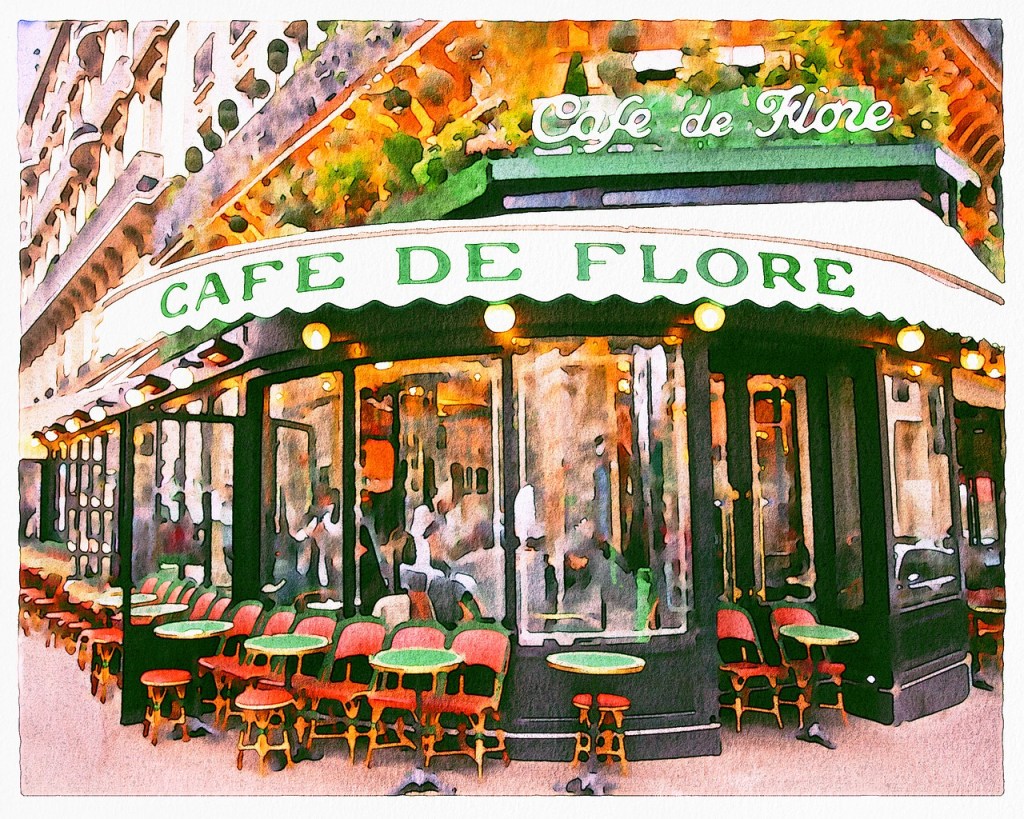
His mind stretched next to a summer evening in Paris, the sun dipping, the sky turning scarlet-blue. He was in a café at the edge of a narrow cobblestoned lane, where a young couple stood kissing, a musician played the accordion, a group of girls giggled past, and a man walked his dog.
“Bonjour, Monsieur, Merci, Au revoir,” Mr Dutta said aloud, taking his time, articulating each syllable in the best manner he could. This was all the French he knew.
A silly chuckle left his mouth, and he reached forward. His hands trembled as he held the teacup. He sipped the milky-brown liquid with a long slurp and closed his eyes once again. He was now in the land of the rising sun, walking barefoot along a trail flanked by delicate pink cherry blossom trees.
Mr Dutta’s dream was born on a mushy summer evening sixty-seven years ago. He was at his friend’s place, hunched over a photo-album, looking agog at the photographs from across the globe. Every single picture captured his imagination, and in his mind, he began replacing his friend’s father—a stout, balding man having a pencil moustache with a tall, handsome young man, which he had no doubt he would grow to be.
His friend’s father, Uncle Jodu was in the merchant navy. Listening to him speak about his journeys, and watching him bounce about the room like a clockwork toy fetching little souvenirs; a key chain from London, a bottle of Vodka from Russia, a purple hand-fan from Japan, set Mr Dutta’s heart pounding furiously. He felt a flutter in his guts and knew in that precise moment that he had no other option than to join the merchant navy and sail as far as the seas stretched.
Since that evening, all Mr Dutta could do was daydream. He couldn’t sleep, couldn’t eat, couldn’t study or even speak. He was lost in a world of his own; travelling places, tasting exotic dishes, speaking new languages, making friends… Every day, he sat by his window, reading travelogues and maps, scribbling itineraries in a little red notebook, which, when he slept, found its place tucked safely under his pillow.
After finishing school, Mr Dutta went to college, still with his little red notebook in his pocket, and with the photos of that photo-album riveted into his memory. But he hadn’t planned against the misfortunes of life. His father’s business, which was small but sturdy until then, plummeted, and in the process, his father’s health faded too. With his father’s death, after a year of doctors and medicines, Mr Dutta had no other option but to drop out of college.
For months, he wandered through the city with letters of recommendation and found a position in a bank as a clerk. Years tumbled by, and one afternoon, while he sat at his desk chewing the excess of his fingernails, he remembered the little red notebook that had been gathering dust in his drawer all these years. The photographs flashed in front of his eyes like the spring sun, and he jumped from his seat, took out his little red notebook, and went to the branch manager’s cabin, to quit. The branch manager blinked at him curiously. Mr Dutta took a deep breath, and the moment he was about to utter the words, the phone rang. It was for him.
His mother was taken ill, and she had expressed her desire to see her son for the last time. Mr Dutta hurried to attend to his ailing mother, unaware of the consequences. The old lady, breathing heavy, took hold of his hand and whispered into his ear her death-wish. In a week, Mr Dutta was married—with his mother totally recovered, alive, with a mischievous grin.
.
Mr Dutta had known his wife since their childhood. Their families were close, and as a kid, Mr Dutta had always heard them reiterate how perfect they were for each other. So married life didn’t offer many surprises, apart from the fact that his responsibilities mounted and that he could barely save any money or time for his unfulfilled dream.
A year later, his wife gave birth to a son, and Mr Dutta holding that tiny creature in his arms felt immense joy. But deep within, he was confounded by fear. He struggled from that moment on, juggling his role as a father and simultaneously maintaining his identity as a wanderer. It was exasperating to be rooted and possess a soul that wanted to expand limitlessly. He woke up often in the middle of the night, weeping; thinking of abandoning everything and running away. But something held him back.
As Mr Dutta’s son showed promise academically, he wanted his son to go abroad for higher studies. He revisited his dreams once again and expressed a desire to accompany his son. But the expenses were too high; he had already taken a loan to support his son’s expenditures, besides he couldn’t dream of going without his beloved wife. The day his son left for the USA, Mr Dutta pressed his forehead against the glass window at the airport watching the flight take-off; consoling himself that at least a part of him was off to see the world.
The year Mr Dutta retired, his son completed his education, returned to Calcutta, found a suitable girl, married, and announced his decision to settle in the USA. Mr Dutta had been awaiting the news secretly and knew it was only a matter of time before his son would ask them to join him.
He waited.
Each evening, as the old couple sat on the balcony expecting their son’s telephone call, Mr Dutta would fetch his little red notebook. He would announce his plans of travelling across the Americas—from Alaska to Argentina—with a must-do list:
Watch the sunset at The Grand Canyon
Gamble in a Las Vegas Casino
Take a boat ride along the Amazon (catch a glimpse of an anaconda)
Walk barefoot over the salt flats of Salar de Uyuni.
Experience the lost world of the Incas
Visit the Galápagos Islands…
His wife would listen, smile assuredly, but make no comments.
One evening, as Mr Dutta extended his plans further south to Antarctica, his wife suffered a stroke. She died a few days later.
At her cremation, his son hugged him and said that it would take another year before he could come and stay with them. He appointed an attendant for the old man and left. Days turned into months, and months turned into years. Mr Dutta’s vision was fading now, and in his knees, gout had set in.
The telephone rang as Mr Dutta finished his evening tea and an extensive tour of the central African rainforest. The attendant received the call and handed it over. Tears trickled down as he listened to his son. He couldn’t speak; so unbound was his joy. Finally, he was going across the Atlantic.
The sun had now set, and Mr Dutta sat still.
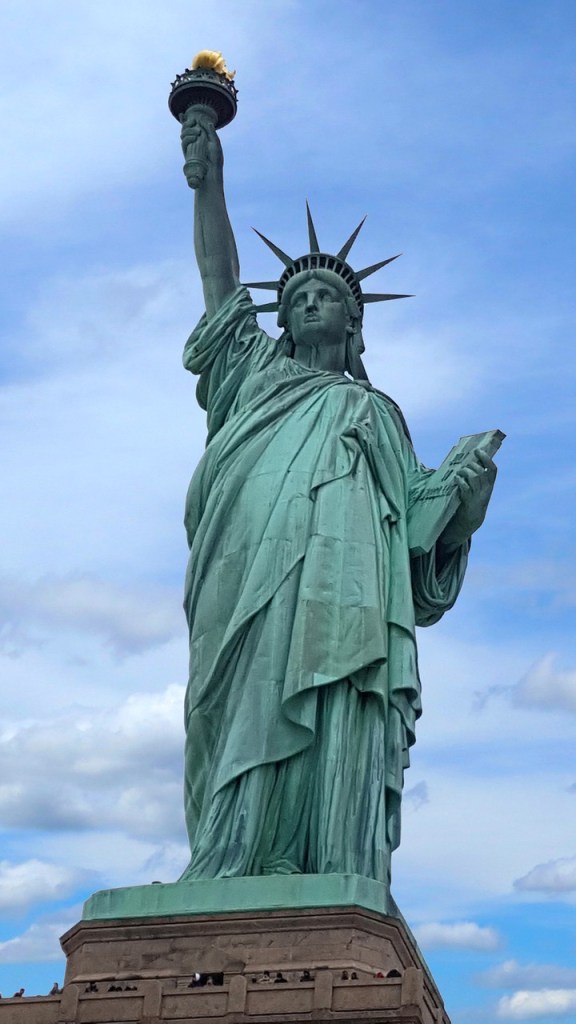
In the distance, a figure was appearing out of the mist. Mr Dutta strained his eyes to discern the outlines of it—the Statue of Liberty. He grinned. A flock of seagulls circled overhead, and the waves crashed against the ferry. A crimson sun was dawning against a greyish-orange sky…
Atreyo Chowdhury was trained to be a mechanical engineer and has a postgraduate degree from IIT Guwahati. Besides writing, he shares an equal passion for music and travelling. He can be found at https://atreyochowdhury.wordpress.com/
.
PLEASE NOTE: ARTICLES CAN ONLY BE REPRODUCED IN OTHER SITES WITH DUE ACKNOWLEDGEMENT TO BORDERLESS JOURNAL.









 Borderless