The ocean breeze swipes the water page after page turned in waves of succession,
one after another sweeping the air and stirring it in the sounds of coming and going.
The waves move as the wind dictates: some taller, some more shallow, still others less certain.
These are the waves of times, when Fall just begins and the air knows nothing of Summer—
in days blessed by what came but were cursed when they left, with just the newest day now with me,
where only what left is what I wanted— where only waves of its time came and are now over.
Water comes then recedes motion upon motion, each one pulled from the edge of the sea,
each one returned to where it once came. I do not see its subtle direction-change
except its withdrawal, except to see them extracted in distant sentiments of their own.
Can it be that this is what was always meant to be, and did I miss more than I could have remembered?
Did I not notice them when they were there one after another in chances I hadn’t realised were given?
But now I see I was wrong: each day the shore doesn’t forget each wave’s sentiment,
each wave holds its own where there is no end to them, where I’m offered a memory wrapped by the pain
of their leaving, but stays bound to every one where I hold on to the gift each one carried. DESIGNS
so much of what consumes me is mired in redundancy mental gymnastics wound ‘round and ‘round like an old watch spring and even when encased as permanent and making promises of permanence revolve with the earth in an air of inconsistency— both tensioning and reverting
maybe sorrow was designed this way maybe it was honed from some common metal where fissures stayed hidden but are the cause of its denigration over and over daylight comes deepens then fades mired in a cycle where change speaks only to change ‘round and ‘round in steps that hold its own brightness
A STEP AT A TIME
I can’t walk far once sunlight begins leaving, once the sweet music of unnamed birds begins to end, after rain fell again in the morning and clouds regrouped in early evening, the day without a before or after, only itself with two hands giving all I come to breathe— the two of us here in waning sunlight remembering: another day only mine to take, only the day to give— whether I cherished it or had choices when it ended, a day in the light that remains with an intensity of its own.
SR (Salvatore Richard) Inciardi was born in New York City and attended Brooklyn College and New York University. SR Inciardi’s poetry has appeared in the USA and in Europe in various online and print magazines including Green Ink Poetry, Harrow House Journal, Grey-Sparrow Journal, Borderless Journal, Written Tales,among others. He was a contributor to Green Ink Poetry for their publication on Kennings: Equinox Collections: Autumn released on Amazon in October, 2024.
.
PLEASE NOTE: ARTICLES CAN ONLY BE REPRODUCED IN OTHER SITES WITH DUE ACKNOWLEDGEMENT TO BORDERLESS JOURNAL
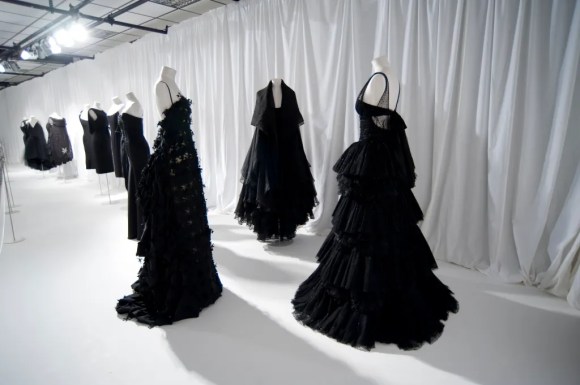
Every day at three o’clock, as the afternoon sun fought through the dusty windows and escaped the obstruction caused by the high school down the street, a teenage girl would slip quietly into a boutique. She never spoke, never bought anything, just wandered to the same rack and lingered over a particular black dress. Minerva watched her, recognising the weight of grief in the girl’s eyes she knew too well.
The girl would lift the simple black satin dress off the rack and wrap it around her as if embracing somebody very special.
After a few moments with the dress, the girl returned it to the rack and quickly left the store without a word spoken with tears streaming down her face.
*
Minerva used her late husband’s life insurance money to buy a little boutique she’d admired for years. The shop sold consignment women’s clothing and served as a sanctuary for Minerva to pour her sorrow into something tangible, to help women and girls find joy in clothing and accessories. The shop was a fragile haven built from a life including love, loss, and longing. Every shelf, every dress, every faded photograph tucked behind the register was a thread in the tapestry of her survival, but a lump found during a breast self-examination ignited anxiety which weighed heavily upon her.
Each morning, Minerva opened the shop, she was certain the lump was a “call” to “fold her hand” as the world felt like it was determined to break her.
*
One afternoon, as the bell tinkled above the door announcing a customer, Minerva looked up from her ledger. The girl was there again; her gaze fixed on the black dress. This time, she hesitated, then approached the counter, clutching the black dress including a second, almost identical dress but in a different size.
“Could I try these on?”
“Of course, dear.
“The fitting rooms behind me.”
A few minutes later, the girl emerged, the black satin dress draping heavy over her small frame. She looked at her reflection in the mirror, then turned to Minerva, uncertainty clouding her face.
“How does it look?”
Minerva stepped closer.
“May I ask, why this one?
“It doesn’t seem to fit you properly.
“I believe the black cotton dress will fit you perfectly.”
The girl hesitated, her fingers twisting the hem of the satin dress.
“My friend and I… we wanted to dress up and go to the prom together. She was killed in a hit-and-run accident. I can’t stop thinking about her. This black satin dress… it’s the only thing she tried on here. It’s all I have left of her.”
Minerva’s heart clenched. She spoke as if embracing the girl, her voice soft.
“I’m so sorry, sweetheart. Loss is a heavy thing to carry.”
The girl’s eyes shimmered with tears.
“I just… I wanted to feel close to her again. I thought maybe, if I wore the black satin dress, I could remember what it felt like to laugh with her.”
Minerva nodded, her own memories surfacing including her daughter’s laughter, a husband’s steady presence, and the ache of their absence.
“I can only imagine the emotional trauma you’re suffering, but please, allow me to share my sorrow with you, and together, we might lessen our heartache and move forward, stronger. I lost both my daughter and husband. Once, my world included a loving husband, Paul. He was a hard as nails career Marine whose stern exterior hid a heart that beat for his family. Marrying Paul provided me an opportunity to escape the role of only daughter to dysfunctional parents rooted inside a small town offering no prospects for self-fulfillment or escape.
“Marriage to Paul included a patchwork of military bases and hurried goodbyes, of late-night phone calls and the constant ache of uncertainty whether he’d be called to war. I learned to be strong; to pack up our life at a moment’s notice, but I also learned to find beauty even inside environments built for war. I found work inside clothing stores wherever we landed because I was drawn to the way fabric could transform a person, and how a simple dress could make a woman feel alive, special, or different even for one occasion.
“I apologise for tearing, but you remind me of our daughter, Emily, the light of my life. Emily’s spirit was wild and restless, her laughter echoing through the cramped military apartments and purring inside my heart. Emily drifted away to somewhere unknown inside her mind as if being pulled by currents I couldn’t fight including Paul’s ’tough love’ and frequent physical admonishments also inflicted upon me.
“The phone call came on a cold November morning: Emily was gone, lost to a Fentanyl overdose on a bed inside a stranger’s home. The grief rolled over me like a tidal wave, relentless and suffocating. Paul tried to be strong, but the loss hollowed him out like no weapons he’d ever known.
“Less than a year later, his heart stopped forever, leaving me with nothing but memories and the silence of an empty house we purchased after Paul retired. Some days, the memories are all that keep me going.”
The girl looked up, surprised.
“Does it ever get easier?”
“Not easier, but you learn to live with the pain of loss. I’ve learned kindness helps stitch the pieces back together.”
The girl glanced at the price tag, her face disappointed.
“I can’t afford both dresses.”
“You don’t have to. These are my gift for you.”
“But… why?”
“Because I know what it’s like to need something to hold onto. Giving is the only way I can heal.”
Tears spilled down the girl’s cheeks.
“I don’t know what to say.”
“You don’t have to say anything,”
Minerva carefully folded the dresses and placed them inside a gift box including a pink ribbon adorned with small hearts around the box.
“Promise me you’ll remember the good times and let yourself laugh again, when you’re ready.”
The girl nodded, clutching the box to her chest.
“I will.
Thank you.”
Minerva watched the girl slowly leave the shop and turn towards her before exiting. She mouthed the words,
“I love you.”
The girl left and the slight spring in her step signaled to Minerva signs of hope flickering in the ashes of her sorrow, and although Minerva didn’t get her name, she instinctively knew it was a brief encounter with her beloved Emily which gave her the final contact she desperately needed.
*
The doctor diagnosed Minerva with metastatic breast cancer. Minerva remembered staring at the ceiling in the doctor’s office, feeling as if her body was telling her the fight against grief was soon to be completed and she could join Emily and Paul in the afterlife.
The hardest blow came when the doctor informed her,
“The treatments will include a double mastectomy surgery, chemo, and radiation. If you want a chance of beating the cancer, it will require your complete devotion to rest and recovery. You won’t be able to keep up with the demands of operating the business.”
*
The words echoed in her mind as she stared at the racks of dresses, the sunlight struggling to pour through the fabrics mirroring the tears behind the black veil Minerva wore at two funerals and today, a struggle for her own life. Closing the shop felt like losing another piece of herself.
She lingered by the window, watching the sun dip below the horizon. She thought of her daughter, husband, all the moments lost, and the memories that remained. In giving the girl those two black dresses, Minerva was reminded that even in the depths of loss, kindness could stitch together the torn fabric of a broken heart. She had hoped to hear the familiar chime above the door open one final time and reveal the lovely girl. Minerva knew she was off chasing her own life which would reveal twists and turns. Minerva prayed the girl would be guided by kindness and knowing loss and misery is universal.
Recalling the happiness in the girl’s face carrying both dresses helped Minerva find the resolve to survive. She turned the sign on the door to “Closed,” knowing she would never open it again. But as Minerva locked up, she felt, for the first time in a long while, that she was not alone and would confront her illness head on with a newfound resolve to live.
From Public Domain
Jonathan B. Ferrini is the published author of over seventy fiction stories and poems. A partial collection of his short stories may be found in Within Hearts Without Sleeves. Twenty-Three Stories at Amazon. Jonathan also writes and produces a weekly podcast about film, television, and movies named, “The Razor’s Ink Podcast with Jonathan Ferrini.” Jonathan received his MFA in motion picture and television production from UCLA. He resides in San Diego.
.
PLEASE NOTE: ARTICLES CAN ONLY BE REPRODUCED IN OTHER SITES WITH DUE ACKNOWLEDGEMENT TO BORDERLESS JOURNAL
It’s those words in the smaller pairings that offer imagined depth but inexact dimension with eyes that cannot see newness in weakened light absent colour words that can be read from the ashes of what never was in a time escaping into the dimming sunset: if only I could see my choices replayed if only I could hold them when the air was younger when they floated on a gentle breeze and were touched by an earlier sunlight when I knew what it was to be in the moment and I was captured by words still to come. If only they were here if only the words I heard then continued to speak now.
SR (Salvatore Richard) Inciardi was born in New York City and attended Brooklyn College and New York University. SR Inciardi’s poetry has appeared in the USA and in Europe in various online and print magazines including Green Ink Poetry, Harrow House Journal, Grey-Sparrow Journal, Borderless Journal, Written Tales,among others. He was a contributor to Green Ink Poetry for their publication on Kennings: Equinox Collections: Autumn released on Amazon in October, 2024.
.
PLEASE NOTE: ARTICLES CAN ONLY BE REPRODUCED IN OTHER SITES WITH DUE ACKNOWLEDGEMENT TO BORDERLESS JOURNAL
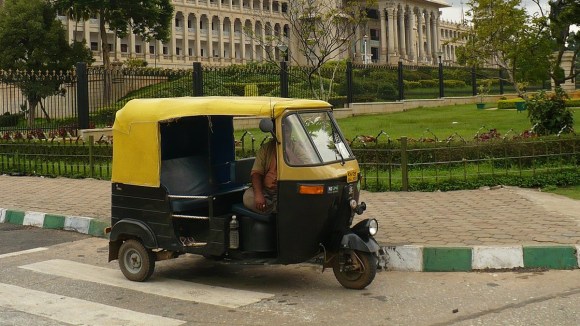
The December breeze had turned nippy in Bengaluru, carrying with it the aroma of roasted peanuts and freshly fried banana chips from roadside stalls. Fairy lights blinked across MG Road, and plastic Santas dangled from shopfronts. Ravi watched the sparkle through his rear-view mirror as he waited for his regular passenger, Ananya, to emerge from the Barton Centre, where she worked at a real estate firm.
“Sorry, Ravi bhaiya,” she said, sliding into the back seat. “The office party ran late. You know how these Christmas celebrations are: too much food, too little meaning.” She sighed, glancing at her half-open goody bag stuffed with unopened chips and chocolates.
Ravi smiled politely. He liked Ananya. Always punctual, always courteous, never haggling over the fare. But her words lingered. Too much food, too little meaning.
That night, after parking his autorickshaw near his rented room in Ejipura, Ravi noticed a group of slum children huddled under a flickering streetlight. They were watching a television through the open window of a well-to-do home. A Christmas carol drifted out, and the children sang along, slightly off-key.
“Santa will come!” one of the younger ones shouted.
“Arrey, fool,” another replied, “Santa only goes to rich houses.”
Their laughter carried a quiet truth. Ravi walked past them slowly, his chest tightening. What if Santa came here—just once?
The thought stayed with him.
The next morning, Ravi tied a cardboard sign inside his auto:
CHRISTMAS DONATION BOX – HELP BRING A SMILE TO CHILDREN LIVING IN SLUMS
An old plastic box sat beneath it. Some passengers glanced at it and looked away. Others smiled. A few dropped in coins or notes.
“What’s this for?” many asked.
“I want to buy small gifts for the children near my place,” Ravi explained. “Like Santa.”
An elderly woman patted his shoulder before slipping in a hundred-rupee note. “Good man. May God bless you.”
Within days, the box filled faster than Ravi had imagined. One evening, he counted the money: over three thousand rupees. More than a week’s earnings. His hands trembled slightly as he folded the notes.
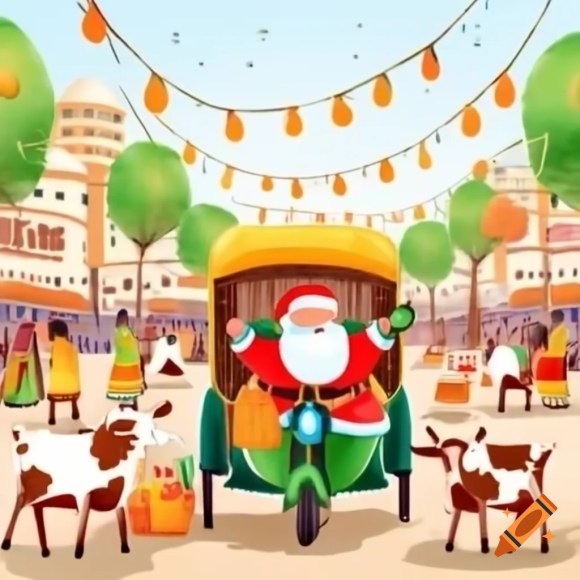
At the market, he bought candy packets, crayons, and small notebooks. In a second-hand shop near Shivajinagar, he found a faded red Santa coat, a cotton beard, and a cap. It wasn’t perfect, but it would do.
On Christmas Eve, Ravi transformed his green-and-yellow auto. Fairy lights ran along the roof. Paper stars swayed gently. A hand-painted ‘Merry Christmas’ sign was fixed to the back.
His neighbours laughed. “Ravi, have you gone mad? You’re a Hindu. Why Christmas?”
Ravi grinned. “Santa doesn’t ask who you are before giving gifts, right?”
By evening, the narrow lanes were alive with whispers and giggles. When Ravi stepped out dressed as Santa, a cheer erupted.
“Santa has come! Real Santa!”
He handed out candies, crayons, and notebooks. Laughter echoed between the tin roofs, mingling with jingling auto coins and distant church bells.
A barefoot little girl with bright eyes tugged at his sleeve. “Santa uncle, will you come next year also?”
Ravi bent down, his beard slipping sideways. “Only if you promise to study well and share your chocolates.”
She nodded gravely. “Done.”
Ravi laughed, blinking back, gripped by a sudden ache in his throat.
Later that night, he removed the Santa costume and counted the remaining money. Rs 1,800 still lay in the box. Someone had quietly slipped in two Rs 500 notes during the evening crowd. Ravi sat silently for a long moment, overwhelmed.
The next morning, he went to the Hanuman temple, where he prayed every Tuesday. He placed the leftover money before the priest as a thanksgiving.
The priest, an elderly man with cataract-clouded eyes, listened patiently as Ravi explained: the happiness he had brought to the slum children with the donation box, the costume, the Christmas star.
“I know it’s not our festival, Swamiji,” Ravi said apologetically. “But I wanted to do something good.”
The priest smiled. “Tell me, Ravi, did you ask those children their religion before giving them sweets?”
“No, Swamiji.”
“And did they ask yours?”
Ravi shook his head.
“Then where is the difference?” the priest said gently. “Whether one calls Him Krishna, Allah, or Christ, God smiles when His children care for one another. This is the true spirit of dharma[1].”
He placed his hand on Ravi’s head. “May your auto always carry light, not just passengers.”
That evening, Ravi drove through Bengaluru once more. Some fairy lights on his auto had dimmed, but a few still twinkled. The donation box remained inside. Though Christmas had passed, coins continued to clink into it.
For the first time, Ravi understood that Christmas wasn’t about religion, decorations, or abundance. It was about sharing warmth in a world that often forgets to care.
The road stretched ahead, glowing with city lights that shimmered like stars. And in the soft hum of his modest auto, Ravi felt as though he carried a small piece of swarg[2] through the streets of Bengaluru.
Snigdha Agrawal (née Banerjee) is the author of five books, a lifelong lover of words, and the writer of the memoir Fragments of Time, available on Amazon worldwide. She lives in Bangalore (India).
.
PLEASE NOTE: ARTICLES CAN ONLY BE REPRODUCED IN OTHER SITES WITH DUE ACKNOWLEDGEMENT TO BORDERLESS JOURNAL
“My gang members are lookin’ for a score and think there’s money inside a storefront full of old pianos.”
“How’s your gang going to steel a store full of pianos?”
“Those are Steinway pianos and handmade from the finest woods, metal, and copper. We’ll bust ‘em apart and sell the salvaged metal and wood. Get your ass over there and scope out the inside of the store for me.”
“You have until the end of the week or I’m throwin’ you out on the street.”
*
I never expected to find friendship in the most unlikely place, a dusty old piano store on Whittier Boulevard in an East Los Angeles barrio[1].
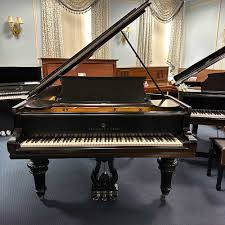
I stepped inside, greeted by the musty scent of wood and rusting metal. The store was quiet, almost sacred, and I was drawn to a black grand piano in the corner. As I pressed the keys, their voices rang out clear, strong, and unexpectedly comforting.
Suddenly, a head popped up from behind the piano.
“What are you doing here?”
“I just came into look around, Sir.”
“I’m Saul Bernstein, the store’s owner and a piano tuner by trade.”
“I’m Lupe Jimenez.”
“Do you play the piano?”
“No, but I’m curious about all these pianos. Do you sell them?”
“I run an orphanage for Steinways. These orphans are used, broken, abused, and seldom sell. They have souls and require a home just like people.”
“Where do they come from?”
“Some were rescued from burnt out homes, piano teachers with arthritic fingers who could no longer teach, and some from great performers who passed away. I gave them all a name. The gold grand Madame is ‘Goldie’. ’Red’ was owned by a famous singer songwriter who used it in his longstanding Las Vegas act. The others are called ‘Blackie’, ‘Ginger’, ‘Mira’ and ‘Rose’.”
Saul showed me the intricate insides of the Steinway, explaining how each string and key were crafted from beautiful wood and metals. The Steinways, he said, had personalities and stories including joy and tragedy just like lives. I watched as Saul spoke to them, dusted their keys, and shared memories of their former owners. In those moments, the store felt less like a place of business and more like a House of Worship.
Saul beckoned me over to “Goldie”, his hands steady as he opened the lid to reveal the intricate strings and hammers inside.
“Tuning a piano isn’t just about tightening strings. It’s about listening to what each note wants to say.” He pressed the key, and a slightly sour note rang out.
“Hear that? It’s off. Now, watch.”
He placed the tuning hammer on the pin and gently adjusted it, his ear close to the strings.
“You don’t force it. You coax it, like you’re persuading an old friend to sing again.”
He invited me to try. My hands trembled as I fitted the hammer onto the pin. Saul guided my fingers, showing me how to turn just enough, then play the note again.
“Now, listen for the waves resemble a beating sound. When the waves slow down and disappear, you’re in tune.”
I listened, adjusted, and played the note. The sound grew clearer, steadier. Saul smiled. “That’s it…You’re tuning not just the piano, but learning patience, care, and respect for the instrument.”
Saul became my mentor and friend. He taught me how to tune pianos, how to listen to the subtle differences in sound, and how to care for each instrument as if it were alive.
His passion was contagious, and I found myself returning day after day, eager to learn more.
*
My uncle pressed me for information, convinced the Steinways were worth a fortune if stripped for their materials. Torn between loyalty to my family and my growing affection for Saul and his Steinways, I invented stories to delay any plans for theft. Each day, the risk grew, but so did my resolve to protect the store and the friendship I’d found there.
The bell rang above the doorway one day and an ominous looking man with arms of steel, full of tattoos, wearing a red cap embroidered with “Ace” approached the counter. I witnessed that look of desperation in a man’s face many times before and feared for Saul’s safety.
“Where’s Saul?”
“Saul is over here tuning ‘Blackie’. How may I help you?”
“I’m Ace Menendez. You sold me a piano on an installment plan for my little girl.”
“I seem to remember you and a friend came in a big truck and picked up the piano. Is the instrument out of tune?”
“No, Sir. I’ve come to apologize for being three payments behind and ask for more time to bring the account current. My trucking business hauling shipping containers is suffering due to the strike at the port, and all the truckers in the neighborhood are struggling financially. It would break my daughter’s heart if you came to repossess the piano. My wife and I fear that without the discipline and love for the piano; she’ll fall victim to the crime elements in our poor neighbourhood.”
“When you’re ready to settle your account, just stop by.”
“Thank you, Mister Berstein. You have a big heart.”
“Tell that to my family wanting me to sell this joint. Vaya con Dio’s, Ace.”
I came to learn, Saul, ever generous, offered installment plans and low interest rates, caring more about the music and joy the Steinways brought than about profit.
He lived a sparse existence upstairs with only a cot, hotplate, while surviving on canned food, crackers, fruit, and his love for the Steinways sustained him.
Saul shared stories of the Steinways he tuned over the years, each with its own history and quirks.
“Every piano has a soul. And every tuner leaves a little piece of themselves behind.”
With each lesson, I grew more confident not just in tuning, but of myself. The shop became a place of transformation, where the music we coaxed from the old Steinways echoed the changes happening within me.
Saul watched as I gripped the tuning hammer, my knuckles white with concentration. I turned the pin, but the note wavered, stubbornly out of tune. Frustrated, I pressed the key again, harder this time, as if force would tune it into harmony.
“You’re fighting the piano. It’s not about strength. It’s about finesse.”
He took the hammer from me and demonstrated his movements slowly and deliberately.
“Hear those waves? That’s the sound of disagreement between the strings.Your job isn’t to overpower them, but to guide them into agreement.”
He handed the hammer back.
“Try again, but this time, breathe. Turn the pin just a hair, then listen. Let the sound tell you what it needs.”
I followed his instructions, turning the pin more carefully, my ear tuned to the subtle changes. The waves slowed, then faded. The note rang true.
“Remember, tuning a piano is a conversation, not a battle. If you listen, the piano will tell you when it’s ready.”
Saul wasn’t just teaching me about Steinways. He was teaching me patience, respect, and how to listen, not just to music, but to the world around me.
“Let’s tune ‘Mira’ who I rescued from a closed piano bar. She was soaked in decades of spilled booze and witness to trashy cocktail bar conversations.”
Saul watched as I struggled with the tuning hammer, frustration tightening my grip. The note wavered, refusing to settle. He gently placed his hand over mine, stopping me.
He took the hammer and demonstrated, his movements calm and precise. “Tuning a piano is like tending a garden. You can’t yank the weeds or drown the flowers. You have to be patient, gentle always giving each note what it needs to grow strong and true.”
He struck a key, letting the sound linger. “If you rush, you’ll miss the moment when the music is ready to bloom. But if you listen, really listen, you’ll hear when everything comes into harmony.”
He handed the hammer back to me. “This time, treat each string like a seed you’re coaxing to life.”
I breathed, relaxed my grip, and turned the pin with care. The waves in the sound slowed, then faded. The note rang clear and bright.
Saul smiled. “With patience and respect, you help the piano find its voice and your own along the way. Life is much the same. Sometimes, you can’t force things to happen.You have to listen to what life is telling you, make small adjustments, and trust that, with time, things will come into tune.”
I realized Saul wasn’t just teaching me about tuning a piano. Saul taught me how to live a life of harmony.
*
The next time my uncle pressed me for information about the store, I remembered Saul’s advice.“You have to listen to what life is telling you, make small adjustments, and trust that, with time, things will come into tune.”
I paused and listened to my conscience. I could make small, careful choices to protect what mattered. I lied telling my uncle that the store was under CCTV surveillance including a silent alarm system, a warning that steered him away without confrontation.
*
When I struggled at public school, frustrated by lessons that never seemed to stick, I recalled Saul’s metaphor. I stopped blaming myself for not learning as quickly as others. Instead, I adjusted my approach, asking for help, taking breaks, and celebrating small victories. Gradually, things began to make sense, and my confidence grew. I was told I could earn a scholarship to college to study music. I wanted to share the good news with Saul.
After school, I ran to the store and found Saul on his knees gripping his chest. I phoned for help. The paramedics told me Saul suffered a heart attack and invited me to ride to the emergency room with them. Saul gripped my hand and smiled. “I’m as tough as piano strings. I keep a card inside my wallet with my family emergency contacts for the hospital.Remember what I told you, ‘…every tuner leaves a little piece of themselves behind.’I hope a little piece of me is left behind inside you, Lupe.”
The doctor informed me Saul passed away, and the family was on its way. He handed me the keys to the store saying Saul had instructed him to place them in my possession.
Saul took a big piece of me with him to the beyond and the fate of the Steinways hung in the balance. I faced a chorus of doubts and obstacles, remembering,“Don’t force, listen.”
*
I reached out to the community, listened to their ideas, and coordinated efforts with patience and care. I was told to visit the neighborhood parish and speak with the priest who took me to a school for developmentally disabled children.
It was a room of beaten up, out-of-tune, upright pianos with eager students stridently following the teacher’s instructions. Others simply tried their best, pounding on the keys.
“Piano music is a miracle and enables these learning-disabled children to find joy and a sense of accomplishment in playing the piano. I’ll make inquiries with fellow priests, and we’ll pray for a home for Saul’s Steinways. The logistics of moving those heavy Steinways may be insurmountable.”
I learned to trust the process, and to believe that, with time and care, even the most troublesome moments could come into harmony like Saul’s garden metaphor.
*
Night had fallen over Whittier Boulevard. The streetlights flickering outside the dusty windows of the piano store. I stood inside the store, surrounded by the silent witnesses of my transformation, Saul’s beloved Steinways.
My uncle’s voice echoed in my mind, his demand clear:
“Tonight is the night!”
The gang was waiting. All I had to do was unlock the door and let them in.
I gripped the tuning hammer Saul had given me, its weight familiar and comforting. Memories flooded back about Saul’s gentle guidance, his stories, the metaphor he’d shared: “Tuning a piano is like tuning your life. You can’t force harmony; you have to listen, make small adjustments, and trust that, with patience, things will come into tune.”
My heart pounded. I could betray Saul’s legacy, give in to fear and loyalty to my uncle, or I could honour the music, the lessons, and the hope these Steinways represented.
I closed my eyes and listened to the notes from each piano signaling my decision. I imagined more children, their faces alight with joy as they played the rescued Steinways. I remembered Saul’s faith in me, his belief that I could choose a different path.
With trembling hands, I locked the door from the inside and dialed the police. As sirens approached, I stood by the Steinways, ready to face the consequences of my choice.
The gang sped away, but I remained, surrounded by the instruments that had given me a second chance. In that moment, I understood Saul’s lesson fully, “Sometimes, the hardest notes to tune are the ones inside us. But with patience, courage, and a willingness to listen, even the most discordant life can find its harmony.”
*
Without Saul, the piano store no longer felt like a happy orphanage for rescued Steinways but a dark, soulless, graveyard. His family, overwhelmed by grief and unable to afford to move the Steinways, decided to dismantle them for scrap. The thought of those beautiful instruments, each with its own story, each witness to Saul’s kindness being destroyed was unbearable.
Desperate, I remembered Saul’s lesson: “You can’t force harmony; you have to listen, make small adjustments, and trust that, with patience, things will come into tune.”
I reached out again to the community and anyone who might care. The parish priest had found a network of schools inside Mexico in need of pianos. Word spread, and soon a group of neighbourhood truckers led by Ace volunteered their time and their trucks. The plan was bold: we would transport the Steinways to poor schools in Mexico, where children with learning disabilities and limited resources could discover the joy of the Steinways.
*
On the moving day, a procession of battered trucks lined up outside the store. Men and women from the neighbourhood, some who had never set foot in the shop before, worked together to carefully load each piano. The journey was long and uncertain, but the spirit of Saul’s generosity guided us.
The Steinways found new homes in schools where children’s laughter and music filled the halls. I watched as students, many barely able to speak, some communicating only in sign language, sat at the old Steinways and played with wonder and delight. The instruments, once gathering dust, now sang again.
After betraying my uncle and the gang, I couldn’t return home. The priest arranged for me to move into a parochial school with boarding facilities run by a nunnery.
*
Years passed. I grew up carrying Saul’s lessons with me. Eventually, I returned to one of those schools, this time as a teacher. On my first day, I walked into a classroom filled with the very Steinways we had rescued. Their familiar shapes and worn keys greeted me like old friends.
“Hello, class. I’m Ms. Jimenez, your piano teacher. I was once a young person like you sitting in front of a grand piano called a Steinway. Don’t fear it’s size or complexity. Make it your friend, trust it, and it will take you on a journey into happiness you can’t yet realise.”
I realised that Saul’s legacy lived on inside me, not just in the music, but in every child who found their voice through these instruments. The harmony I had sought for so long was engrained inside my soul and spilled into the lives of those who needed it most.
And in the quiet moments, when the sun set over the schoolyard and the last notes faded, I would whisper a thank you to Saul, knowing that, together, we had tuned not just Steinways, but futures.
“With patience and respect, you help not just a piano, but your own life, find its voice.”
Jonathan B Ferrini has published over eighty stories and poems. A partial collection of his stories has been included in Heart’s Without Sleeves: Twenty-Three Stories available at Amazon. Jonathan hosts a weekly podcast about film, television, and music, titled “The Razor’s Ink Podcast with Jonathan Ferrini”. He received his MFA in motion picture and television production from UCLA and resides in San Diego, California.
.
PLEASE NOTE: ARTICLES CAN ONLY BE REPRODUCED IN OTHER SITES WITH DUE ACKNOWLEDGEMENT TO BORDERLESS JOURNAL
Spring, summer, and autumn, while the birds sang their seasonal tunes humans beat loudly their own drums.
The bees collected their nectar well while swans in the lake nearby found their life-long mates and yapped their love notes,
while sound and sights captured much of the yearly gifts to bless, while in silence, a rose bush gave her cloying fragrance and red flowers.
In life, we give of ourselves: the best of what we have.
HOPES AND DREAMS
The year 2025 found the world at a crazy stage on which life danced.
Amidst the maddening politics, natural calamities and wars took the hardest hits. In the turmoil, I feel like an ant under an elephant
When I wish to make a difference in life for someone in need — what have I to give?
Mother Teresa’s advice echoes “If you cannot feed a hundred people, then feed just one.” I get up and venture out.
Surely, since I am alive and well; there is something I can do for someone?
When hope for a better world crumbles like sand, I send prayers up to heaven--- I know, they can move mountains. And with prayers, I plant new seeds of dreams for a peaceful world of tomorrow.
Tulip Chowdhury, a novelist, poet, and columnist, writes from Georgia, USA. Her books are available on Amazon.
PLEASE NOTE: ARTICLES CAN ONLY BE REPRODUCED IN OTHER SITES WITH DUE ACKNOWLEDGEMENT TO BORDERLESS JOURNAL
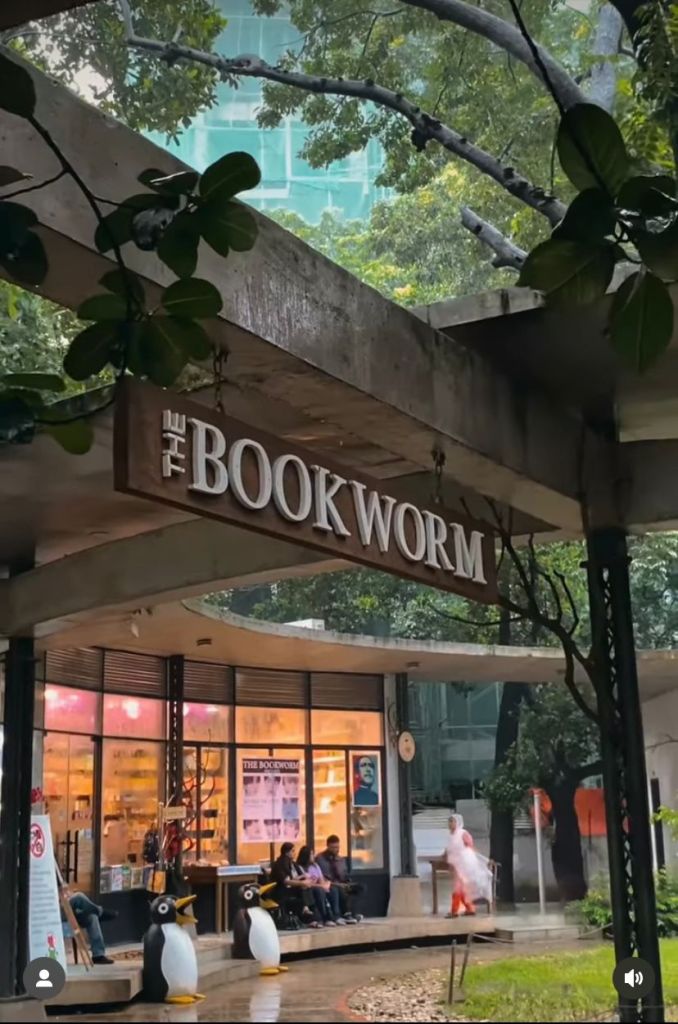
An interview with Amina Rahman, owner of Bookworm, Dhaka
In a world, where online bookshops and Amazon hold the sway, where people prefer soft copy to real books, some bookshops still persist and grow. There are of course many that have closed business or diversified. But what are these concerns that continue to show resistance to the onslaught of giant corporations and breed books for old fashioned readers? How do they thrive? To find answers, we talked to a well-known bookshop owner in Bangladesh.
Amina Rahman is an entrepreneur who runs such a concern called Bookworm, a haven for book lovers in Dhaka. Schooled in Italy, India and America, Rahman married into the family that owned a small bookshop. Started by her father-in-law, it was a family refuge till she took over the running and created a larger community – a concept that she believed in and learnt much about during her youth spent on various continents. She believes that just as it takes a community to bring up a child, a bookshop has to be nurtured in a similar vein. Bookworm started at Dhaka’s old airport in 1994 and eventually moved to a more community friendly locale at the town centre. Rahman took over in 2012, rebranding it, repurposing and breathing new life into it.
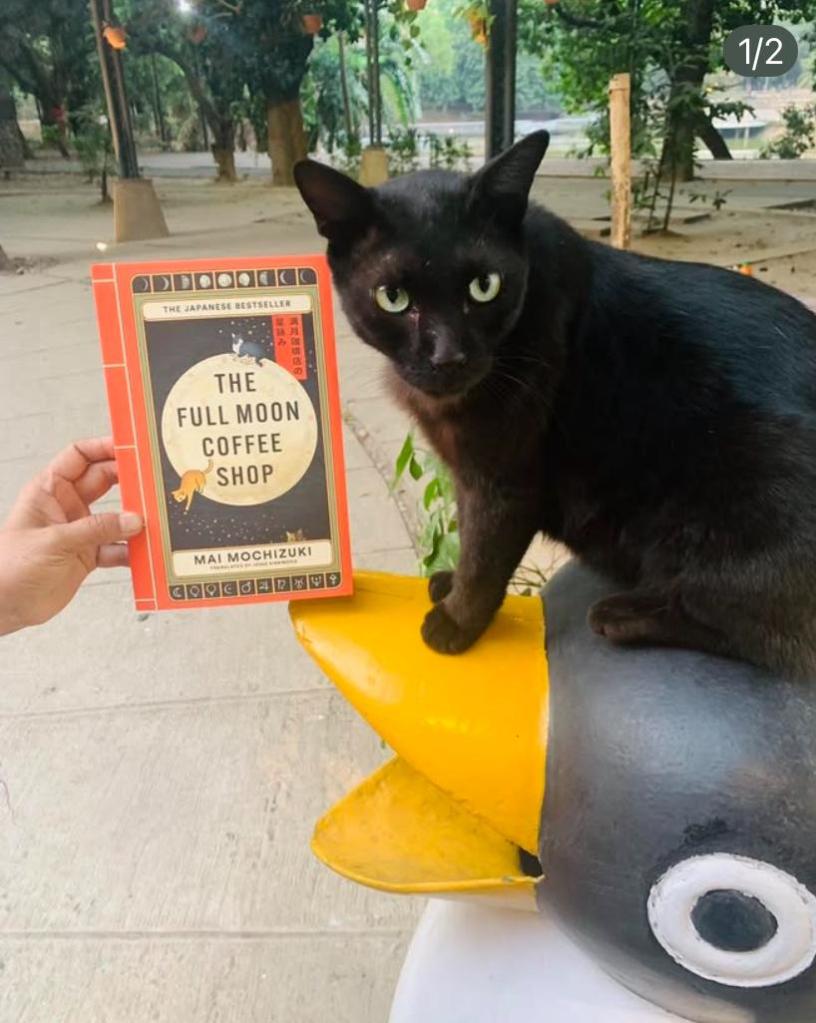
Bookworm houses books from all over the world, holds special launches, as they did recently of Sam Dalrymple’s Shattered Lands:Five Partitions and the Making of Modern Asia, and of many other local and foreign authors, like Vikram Seth and Aruna Chakravarti. They have even been adopted by the cats in the park! This month they are opening a book-café. Rahman has a unique outlook that makes her redefine ‘success’ and here she also talks about how she evolved into her dream project to make it a reality.
Sam Dalrymple at his launch on 9/11/2025A local launch
You studied environmental policy and environment, worked for several NGO’s and multinational concerns. What made you turn to or opt to run the bookstore over your own career options?
My choice of subject in university was impacted by a fantastic biology teacher I had in middle school at Rome. He took us out on regular field trips and made us collect garbage to learn about the environment! You can imagine — in 1984-85, when we were kids, he would pick up garbage and show us how diapers and cigarette butts were completely not biodegradable. Disgusting but effective. He told us it would take years before they deteriorated and dissolve into the Earth. These things stick in your mind.
To be honest, I followed the Environment path and ended up working for the King County solid-waste department in Seattle which was all about garbage and recycling and so fascinating. But as you get older and you travel through Asia, you realise the pointlessness of it all as none of it is applicable in the same way in our region. Bangladesh and Asia were green in those days until plastics were introduced in a big way about fifteen years ago. At the end of the day, the community is at the heart of taking care of everything, and if everyone takes care of their particular communities, it’s a better world. And this resonates with why I went into running the bookstore – to make community.
I realised that I was missing some kind of dynamism and I wanted to move forward. I wanted something more to happen. This had been a consistent strain I had with everything. You worked for organisations. They would become very top-heavy. Change happened slowly. When I shifted into the corporate world in Dhaka, I felt that was the most dynamic thing — it was fast moving. I learnt much. Then I went into market research, which was incredible research into human behaviour but was completely tuned into making money at whatever cost. It all was very self-serving and opposite of a welfarist approach towards the community. Corporations trumped community here.
I lost inspiration.
My father-in-law and I had a mutual love for books. I fell in love with my husband over his books. I married in 2004, and it was in 2012, when I was taking time out to assess my goals that my father-in-law suggested I spend time in his bookstore. So, I did. What was an amazing coincidence, was that the Dhaka LitFest started the same year! And the chief organiser asked if Bookworm could be part of the it and I agreed. Vikram Seth was the star guest that year.
Amina Rahman
Can you briefly tell us the story of Bookworm?
When I joined the Bookworm, it was almost a forgotten venture. The family had moved on to other interests. It was used more as a refuge for relatives, old staff, dusty books, unpaid debts and stalled time.
I had never run a business in my life before. For the book business I literally had to climb from the bottom up. It was definitely not easy. I had to figure out the book world, the suppliers, the publishers, the distribution network. Customer preferences, not to mention accounting, taxes, salaries and taking over a small business and the responsibilities that go with it.
The publishing world and the distributing world is a whole different ball game from every other business. It’s a supply chain of such remarkability from the packers and warehousing to the authors and customers. You go from the very basics to the highest and that is so fulfilling. Nothing can compare to that.
Besides, the love of books, one thing I knew was at bookstore was community. It is the ultimate community for booksellers and writers to connect with the world. As you will know, we hit every audience — everybody from the newborn baby to the old man or woman to young adults to school students to university goers to the erudite pursuing literature. We cover just about everything. Ultimately a physical bookstore is where the community meets, and that’s where the ideas are shared, that’s where if you put attention to it people meet inspiration.
While the Dhaka Literary Festival, in whose first iteration Bookworm was a participant, seems to have petered off, Bookworm continues to hold launches on its own. Do you see the shop as a substitute for the festival?
Absolutely not. I mean book launches are wonderful and are a must for every physical bookstore. They connect the people, and as I tell everyone, if you want to sell your book, even if you written the greatest book, you need to work hard at promoting the book. So, every writer needs to have venues whether small or big to launch their books.
Every city needs to have a LitFest, and it is a must. Dhaka is absolutely famous for having our Boimela[1]. That is a real heritage.
What is it you offer readers other than books? Do you have a café?
Actually, we are opening one now.
We didn’t have a cafe in the store, but we’ve had very interesting sort of cafe and bookstore combination when we were in the old airport. We had a cafe next-door to us, which I finally assimilated, also adding to more space for the books. And that became our own little cafe. It wasn’t really anything great; it was just regular we did not even have a coffee machine. Coffee was the old fashion Nescafe, but it did the trick. The whole set up had a very local flavour. Most of all people just like having an area to sit and drink something hot while freely reading books. And this sufficed.
That was wonderful. That store was in the old airport, which we loved with all our heart, and we were there for 30 years. Then we left. I opened up a branch in Dhanmundi, which is probably the best place for books sellers because the book reading population is huge there. We also got the opportunity to open up our bookstore inside a very famous Coffeehouse called Northend. They had a huge base, and they asked us if we’d like to take some of it and we did and that was fantastic.
We had to close that for Covid. Many say they miss it. And that was the first time we had ventured out of our space and opened a new store like a second branch. Then we got this chance to be in a park where we don’t have a cafe inside of our bookstore, but on the other side of the park, which is why we opened a café in our store.
What do you see as the future of bookstores like yours with the onset of online giants like Amazon? Does that impact you?
Yes. Amazon has had a huge impact. Luckily, we don’t have Amazon in Bangladesh. Amazon has had a very negative impact on our fellow booksellers in India and other places. I won’t even bother to compete with them.
I think everyone’s realised that there is a big difference with access points and how Amazon works. At the end of the day, people who come to our bookstore for the experience, for meeting other people, authors too, and talking to their bookseller. It’s more than just getting the book you want to read — that’s part of it — but it’s also about browsing and finding quiet time.
I think that my great experience with books was in bookstores I didn’t have to buy a book. I could browse. Sometimes, you may not be able to afford the book, but you can open it on any page. You could just read a passage, and that might change you. You could come back and buy it or the passage could just stay with you forever. You know it’s those sort of fleeting moments that you have when you’re browsing a book that makes a bookstore precious. That’s a very different experience from Amazon.
Amazon is much more utilitarian. Both have their ups and downs, I guess. You can’t have book launches on Amazon, but I think, Amazon is a big competition… in the sense that it also gives so many discounts.
What kind of books does your store offer? What kind of writers?
I tried to offer everything. In the beginning when we started, I started to try to figure out what books to get. I started with the catalogues, and it was a bit of hit and miss. You slowly start to realise what works. One of the worst experiences for bookstore are books that sit on shelves and don’t move. Sometimes you can buy what is really number one on the best seller list and it just doesn’t move because it’s irrelevant or it’s number one in a different country. You learn by trial and error and then you start to figure out your customers. It was painstaking yet enjoyable.
We use social media to draw readers to our shelves.
As a wholesome bookstore, we have a bit of everything from literature to history, kids’ books, romance, young adult fictions, thrillers, bestselling thrillers, to fantasy. Christie, Sydey Sheldon, Gabriel Garcia Marquez, Manga, graphic novels, spiritual and religious books to Bangla books and collector’s items, special editions to lighter books that just bring solace. We see your customer choices and learn. You do not stuff literature down their throats. It has to be relevant to our customers.
What are the challenges of running a bookstore like yours in a country where English is not the first language?
I think actually it’s a challenge to run a bookstore anywhere in, especially with the new market forces of Amazon and online shopping and the digital world. Having physical stores is becoming a challenge. I have travelled to bookstores all over the world and learnt from the experience. A bookstore is more of a tactile experience for all people, readers and non-readers. Humanity has learnt from tactile experiences and to touch and smell a book, browse and sit amidst books is very much that. When realised that people were not coming to me, I took the books to them. I took our books to every mela(fairs). Social media was the next big thing. The ultimate was of course the Dhaka LitFest. People were excited to see our English books, and they all sold. Bangladeshis would travel to other countries to buy books as Bengalis love reading.
The LitFest helped a lot. It brought big authors, like Vikram Seth, for they were interested in exploring new readers.
We also started a delivery service. Some customers said it was hard to get to our store. So, we started a thrice week delivery service and then increased it. We bought a cycle for the rider. He went out and delivered the books that readers had ordered and paid for.
When Covid hit, it was prime time for many to turned to books and we had everything in place – our social media and our delivery service. We did well during that phase, though that is not a good thing to say.
What do you see as the future for your bookstore? There are chains like Takashimaya, Times Books and others — which despite having shrunk, post online bookstores, maintain an international presence. Do you see yourself as a chain that will grow into an international presence?
I think a chain store goes beyond the community. It is a model for more profit-oriented sellers. I would rather have a community-based culture where all people are welcome and find something that draws them and gives them a sense of quiet.
A lot of people mistake success with earning huge profits and if that’s what you’re in for that’s fine too — that’s business but what I do isn’t that. I get fulfilment out of other things –- community health and happiness, and you know just interaction. I think one of the ways to make a very powerful long-lasting brand and business is trust and good service. There’s no substitute for hard work and passion. When you love something, you really put your mind to it. And that helps you keep your friends forever.
(This online interview has been conducted over transcribed voice messages in What’sApp by Mitali Chakravarty. All the photographs have been provided by Amina Rahman.)
PLEASE NOTE: ARTICLES CAN ONLY BE REPRODUCED IN OTHER SITES WITH DUE ACKNOWLEDGEMENT TO BORDERLESS JOURNAL
There’s a slowness to packing boxes when there’s nowhere to take them. It’s the deliberation that surrounds every item of clothing as it’s neatly folded, placed gently with the others.
With the child, there’s an even greater sluggishness when it comes to the dolls and stuffed animals, an unwillingness even for fear that there won’t be enough room to fit them all.
For haste in that apartment house, you’d need to look to the landlord’s first floor apartment, the tapping of his fingers on the kitchen table, like tiny impatient jackhammers.
For mother and child, the sidewalk awaits. It’s both leisurely and brisk… and indifferent, which is not a speed at all.
KISS AND MAKE UP, THE LATEST ITERATION
Your words slap my face around. Now you have me where you want me – an effigy of everything you hate.
My response is a prison-riot of old angers.
Pain doesn’t travel well so hurting others is our go-to.
We learned it from our parents. We were taught it in school.
To be cruel is a mega-aspirin, a vein-load of morphine.
But we love each other. Our harshness knows this. Our rages are intrinsically aware.
So our voices soften. Red cheeks whiten. Flaming eyes are doused by tears.
Then it’s kiss and makeup time. Our mouths are like tunnels in a mountainside. Tongues collide but there’s little collateral damage.
.
John Grey is an Australian poet, US resident, recently published in Shift, River And South and Flights. His latest books Bittersweet, Subject Matters and Between Two Fires are available through Amazon. He has upcoming work in Rush, Spotlong Review and Trampoline.
PLEASE NOTE: ARTICLES CAN ONLY BE REPRODUCED IN OTHER SITES WITH DUE ACKNOWLEDGEMENT TO BORDERLESS JOURNAL
The coppery husk of a cicada clings to the neighbour’s concrete, pertinacious in its position, carapace, crust open to the air, denizen departed old long since
in summer’s singing night after seventeen years for this former flier, now a clawing remain that will in weeks, months crackle like a tasty treat needing only salt pinch,
at last falling under some casual foot encased whose owner will not distinguish exoskeleton from spent leaf—just another crunch punctuating the surface prone to popping
in the naked weather under seasoned time
SIEVE
I was carrying sand in plastic bags that weighed down the cousin plastic crate in which they, jumbled, sat—
for seconds after I lifted the frame
then splinter! crash!
the assemblage lay in shards and grains upon the sidewalk and adjacent grassy ground
except some bags in my suddenly relieved arms, which bled white quartz, slipping, slipping—
I was out of time with no hourglass’s pinched channel between now and the safe back then
below me the resting place not my choosing, the order now a sprawling mess
due to my underestimation of the desert’s weight in my charge—
or hubris at the thought of carrying what the wind will carry away to invisible
(How heavy could it be?)
unequal to the strength of my arms and back accustomed to gravity’s pull upon much more dense concerns
John Zedolik has published five collections of poetry: Lovers’ Progress, 2025; The Ramifications, 2024; Mother Mourning, 2023; When the Spirit Moves Me, 2021; and Salient Points and Sharp Angles, 2019.
.
PLEASE NOTE: ARTICLES CAN ONLY BE REPRODUCED IN OTHER SITES WITH DUE ACKNOWLEDGEMENT TO BORDERLESS JOURNAL
The kids in the seat behind me are already pushing and shoving each other. They’ll be bored out of their tiny skulls before the bus even gets to Worcester. We take Grand Street out of town, and pass an estate sale at one of the mansions that once housed prosperous mill-owners.
The sloping front lawn is like a giant green shelf piled with boxes and evening clothes, antique chairs and tables and, as a genuine gift to poets, an escritoire and an armoire. I didn’t need to see this to know it was time to leave this dying town. But the buyers sure do look like vultures as they pick among books and jewelry. My guess is they’re not from around here.
The kids, done fighting, are now whining to their parents, “We got nothing to do.” So take a bus out of here, I want to tell them. But wait – they’re already doing that.
NARRAGANSETT BEACH IN AUGUST
This is a town of seaside pleasure from barefoot steps on sand to flights of terns and shearwaters.
The beach is fragmented by waves coming and going, skittery sandpipers, darting sanderlings, but there’s enough wet and dry for all.
Here the world is bird-nesting cliff-face dunes that rise soft as clouds and rocks offshore that bear the brunt of brief battering.
Fun is democratic: old man and woman in chairs shaded by umbrella, young women on towels tanning gently, children splashing in shallows, older siblings bobbing in the deep.
The sky towers overall. The sun smells of salt. And, every now and then, somebody laughs for no reason.
Little used on the day, the mind doesn’t mind at all.
From Public Domain
John Grey is an Australian poet, US resident, recently published in New World Writing, River And South and The Alembic. His latest books, Bittersweet, Subject Matters and Between Two Fires are available through Amazon. He has upcoming work in Paterson Literary Review, White Wall Review and Flights.
.
PLEASE NOTE: ARTICLES CAN ONLY BE REPRODUCED IN OTHER SITES WITH DUE ACKNOWLEDGEMENT TO BORDERLESS JOURNAL












 Borderless