Influential people and poseurs in our country place boards inscribed with professional tags like ‘PRESS’, ‘DOCTOR’, ‘ADVOCATE’ etc. behind the windshields of their cars. They do this with calculated designs in mind. Displaying their real or assumed professional identity, they can avoid unnecessary police interrogation in the street or can enjoy the prerogative of using untrodden and prohibited tracks to avoid traffic jams.
Mr. Nasir was going to the terminal point of the city, the airport. He had only one hour at hand. Within this time it was virtually impossible to sail through the vast ocean of traffic and swarming crowd in Agrabad Commercial Area and Chattogram Export Processing Zone.
He brain-stormed and contemplated. After surveying the cartography of his problem-solving cognitive domains, this pandemic-day Buddha jumped out of his sofa with a loud, near-20K dB sound, “Eureka, Eureka!”
His wife, consumed with ‘I don’t have any faith in my husband’s conjugal fidelity’-attitude, meteor-like appeared before him from the kitchen wielding her lethal weapon, khunti*.
“Which Rekha are you talking about so loudly in this holy times of Ramadan, you shameless old man?”
“It’s not any blossomed beauty or Tinseltown Rekha, my intelligent Home Minister. I said, ‘Eureka’ meaning ‘I’ve got it’. I’m celebrating my solution to the heavyweight problem of going to the airport in time.”
“Thank God, you aren’t philandering then,” with these words, the relieved better-half resumed her full-queenship in the kitchen.
The king prepared a paper-board and bidding adieu to the queen, boarded the car. The driver, confused and skeptical, gave his unsolicited verdict that they would not be able to make it to the airport in time. The de-stressed Mr. Nasir just nonchalantly commanded his driver to place the board behind the windshield a la mode the self-styled VIPs and drive. The driver complied.
At a busy intersection, an arrogant traffic police aggressively approached the car, but a glimpse of the inscription melted his anger and he quickly made way for them. Mr. Nasir’s triumphal march met another opposition within the next five minutes — at Agrabad area, a troop of patrol police halted the car and asked why they were driving during the lockdown.
Mr. Nasir, wearing a grave but gloomy look, drew their attention to the board non-verbally. The enigmatic writing on the board almost froze the cops! With unbelievable haste and apparent respect, they let him go. At the busiest EPZ area, other vehicles, made way for Mr. Nasir’s car as if they had seen a ghost car!
They kept receiving this preferential and reverential treatment at every point and consequently reached the destination much ahead of scheduled time.
Amazed and pleased, the driver asked, “What magic words have you written on the paper, sir?”
“You see, if you have substance inside your head, you can manage even to run on water,”boasted Mr. Nasir gloatingly.
“I can’t disagree with you, sir. But what are the miracle-words?” the driver impatiently tried to penetrate into the secret success-code of his boss.
Smuggly, the puffed-up Mr. Nasir revealed, “Ex-Covid patient driving a new one home.”
*khunti: A metallic spatula
Sarwar Morshed is a Professor of English at the University of Chittagong, Bangladesh. His works have appeared, among others, in The Bosphorus Review of Books, The Bombay Literary Magazine, City: Journal of South Asian Literature, Star Literature & Reviews, Contemporary Literary Review India, Mahamag and the Ashvamegh. Mr. Morshed’s books have been reviewed at home and abroad – in the Asiatic (IIUM, Malaysia), Transnational Literature (Flinders University, Australia), the Ashvamegh (India), Star Literature & Reviews,Observer Literature, daily sun and Dhaka Courier (Bangladesh).
.
PLEASE NOTE: ARTICLES CAN ONLY BE REPRODUCED IN OTHER SITES WITH DUE ACKNOWLEDGEMENT TO BORDERLESS JOURNAL.
“Hi Nandini… you are still with the text books? Don’t you get bored? Why are you always busy with studies? See we are planning a picnic. Do you want to join? ”
Nandini’s concentration was disturbed and she got annoyed. Her friends, Mini and Renu, were looking at her in anticipation. To their dismay she replied, “Sorry, I am not coming, I am left with enormous amount of studies. Don’t you both remember exams are next week? ”
“We do not want to hear anything. Today you have to come with us. You will be enthralled to see our picnic location. You know we are going to that ancient Fort on the hilltop.” Mini said.
Nandini’s face brightened with a smile. She always wanted to visit that fort. The old fort on the hill was a historical monument.
Nandini and her friends Mini, Renu, Suma and Rajani were excited when they started their journey uphill along the narrow path towards the fort. The majestic fort was seen standing tall atop the hill. Whenever Nandini glanced at the fort, an unknown force had seemed to draw her towards it.
“Oh, what a strenuous climb! We are exhausted and literally gasping for breath. Let us rest for a while, okay? ” Renu suggested. Nandini and her friends relaxed on the lush green lawn in front of the fort.
There was an eerie silence with just distant cooing of pigeons at the hilltop. Suddenly some of them flew away flapping their wings. Nandini was startled but chose to look past it. Melodious bhajans and chants with ringing of temple bells could be heard from the valley downhill. Sunset was close. The sky was painted in hues of red, crimson and purple. Within minutes dark clouds converged in welcoming the calm night. Nandini could feel a chilling hollowness in the air. There was a bizarre feel to the breeze that grew cooler as they climbed.
“Friends let us get back before it is too dark,” Nandini spoke in a tense voice.
“Look at Nandini, all frightened and sweating. Are there any ghosts here, Nandini? ” Suma teased her with a wink and grin.
“Of course, a spirit will come and take our Nandini away. A spirit of a handsome young man, isn’t it Nandini? ” Others laughed when Rajani said this.
“Stop it! Please! Let us just quickly see the fort and head back at the earliest,” Nandini retorted.
They reached the fort entrance. The main gate was open. The cobble stoned pathway leading to the monument was adorned with trees and bushes on either side. The heavy antique iron door had an enchanting brass handle with tiny contemporary bells hanging from it.
Nandini felt an uncanny presence around herself. The air had a sweet fragrance of evening primrose flowers, though there were none in the vicinity.
“You know girls? This fort is haunted by the spirit of a Prince! It is believed that he attracts beautiful girls! People reported hearing strange sounds and music from this fort. But nobody has seen the ghost of the Prince. Today is a full moon night. The Prince may just walk in…spooky, no?” Mini whispered.
Nandini felt an unknown presence in the courtyard. And a strange fear was enfolding her in its grips. They entered the fort. The fragrance of sandalwood and roses wafted to Nandini’s nostrils. The atmosphere was serene and silent. For a brief moment, she felt as if a pair of eyes were following her.
“Oh it is nothing… probably a figment of my imagination.” Nandini convinced herself and rushed to catch up with her friends.
She reached the courtyard. The open space appeared radiant under the moonlight. The calmness of the night swept through her being like a newlywed bride creating a romantic ambience.
Moving into the main quarters, Nandini continued feeling the presence of the unknown eyes. She shuddered when a cool breeze embraced her. Next moment she felt the gentle touch of an unknown breath caressing her cheeks like a solace.
“Girls, you know something? The Prince used to sleep here and it is claimed that people can still hear the tunes of Gandharv Veena from a distance on moonlit nights! Isn’t that interesting?”
“I so wish I could meet the Prince,” chuckled Rajani. For a scary moment Nandini felt a chill down her spine. What if I had a spooky encounter tonight?
Nandini was looking at the rich design and architectural details which were discretely lighted with concealed bulbs that lit up the darkness of the rooms as the sun set. They had been installed by the archaeological department that maintained ancient buildings. The other girls went on to explore the rest of old fort.
This time suddenly a feathery touch fondled her and gently held her hand and whispered into her ears, “Nandini, can’t you see me? This is me! Have you forgotten me? ”
“Who was that? Who whispered in my ears? Girls, it is not funny,” Nandini turned around suddenly but there was nobody around. “Nandini! You are just being silly now. You are imagining things now,” she reprimanded herself.
There was a primeval majestic Veena at one of the corners. Nandini was fond of musical instruments. She ran her fingers through the rusted strings. A low pitched musical note echoed and she felt a soft kiss on her cheeks. She turned around in shock. The room had ornately carved sculptures of courtesans holding lamps.
Instantaneously the lamps lit up on their own. An unknown, unseen force led her to the featherbed in the centre and she sat there. It was like a fantasy castle… tantalizing music of sitar and veena… fleeting melodies of court music playing in the background. Wind chimes were ringing softly. She was astonished to see a handsome prince lying on the bed decorated with flowers. He was looking at her with anticipation — as if he was waiting for her. She fell for him the very moment she saw him. It was love at first sight!
Lovebirds were cooing at a distance. Romantic melodies enraptured her senses. It was the night of lovers, the night of the union of two souls in love. The prince embraced and kissed her. A symphony of love notes wafted in the air. Nandini closed her eyes. Her mind drowned in the oblivion of romance. She flew like a bird in the sky and then settled down on the branch of a tree with her lover bird.
“Love birds…. see how cute!” Suma exclaimed.
“Ok everyone, come let us go back now. What happened Nandini? Now you don’t seem to be in hurry. It is getting dark. Let us head back to the hostel.” Her friends called out to her.
“No! Where is my prince? I want to sit here for some more time. I can’t go back without meeting my Prince,” Nandini murmured.
“What is wrong with this girl? Come Nandini. ” They dragged her out of the mysterious quarter.
In a calm, low tone she heard him again, “Nandu, why are you getting upset? We are inseparable darling. I was always with you. I am here for you. We are eternally bound. I waited for you over so many decades. I knew you would come for me. Now that we are together, please don’t think of leaving me and going. I can’t bear the sorrow of our separation ever again. We were made for each other Nandu.”
Those words echoed in her ears while his loving fingers caressing her hair… She could feel him… Her unknown lover.
Nandini was forced to depart from her strange reality. Others dragged her out. They were waiting for her. On her way back, she felt euphoric. She seemed to be lost in a trance. Her face was glowing with love. Her lips had a sweet smile. Her eyes were half closed in ecstasy as unknown lips caressed her like soft flower petals. She felt like a feather floating in the air. She felt her passion simultaneously burn with the flames of a hot fire and cool her soul like dew drops that enveloped her heart and soul.
She could feel the longing and deep affection of her lover. Both of them flew towards the horizon like a pair of golden love birds. Her soul had yearned to merge with his soul. His captivating smile, dazzling personality, mesmerising words and eloquent eyes drew her towards him magically. She could feel the warm breath and heartbeats of her Prince — the heart which was beating for her. There was a haunting eeriness in the evening winds.
She gradually started feeling like a princess. She wished her dream would never end or was it real? She wondered.
When Nandini finally reached below the hill, she turned around to take a last glance at the fort. The fort seemed to be glowing with a mystifying aura. Amid all that was strange, she could see the silhouette of her Prince waving at her.
A cool breeze grazed her cheeks. A soft voice whispered in her ears again, “I will ever be yours. You are and will always be my princess. ”
The regal fort was looming against the dark blue sky — the fort of unrevealed stories, the fort of unrequited love, the fort with mysterious secrets.
.
Dr. (Major) Nalini Janardhananis a Family Medicine Specialist who served in Indian Army Medical Corps as an Army Medical Officer in the rank of Major. She is a popular writer of Kerala who got Katha Award and a writer of many medical books for which she got IMA Sahithya Award. She is an All India Radio and Doordarshan approved artist of Ghazals and Bhajans[Light Music].She is felicitated with many awards for her contributions towards society as a doctor,singer, writer ,army officer and for her social service.
.
PLEASE NOTE: ARTICLES CAN ONLY BE REPRODUCED IN OTHER SITES WITH DUE ACKNOWLEDGEMENT TO BORDERLESS JOURNAL.
Ever since Hasan came to Cox’s Bazar, he noticed a child in a vegetable shop, close to his residence, sitting by her father. He always praised the child to his colleagues. He felt her eyes were the repository of all kindness in this world.
She was, maybe in between seven or eight, a thin, brownish girl with her hair in a bun. She wore an off-white T-shirt with night pajamas. Hasan always looked at her when he passed the shop, and she looked back till he merged into the distance.
One day, it was drizzling, and Hasan went to the shop to buy some vegetables, while the girl helped her father choose the fresher ones for him. All his purchases fitted into four polythene bags. It was difficult for him to hold all of them in one hand and carry an umbrella on the other.
“Would you mind if I carry two bags for you?” she asked.
“It’s fine. I myself can manage.”
“Sir, I’m used to, and not as young as you think.”
“Please allow her to take you home,” said her father.
“Okay, come under my umbrella,” Hasan responded.
They both were walking on the muddy road and Hasan asked her, “Do you go to school?”
“Yes, I do.”
“Which class (grade)?”
“Two.”
“Wow, is it? Really, you are not little at all.”
“How many books do you need to study?”
“Three.”
“What’s your name?”
“Maya.”
The single word reply made him uneasy – Maya in Bengali meant illusion!
“Sir, we’ve already reached your flat; please take your bags.”
Hasan was looking deep into her eyes, not uttering even a single word. It seemed to him that within a fraction of a second, the child disappeared.
***
One week later, Hasan happened to meet Maya in Kalatoli beach, one of the most crowded spots in Cox’s Bazar.
“Why are you dabbling in this unclean water?” Maya asked as Hasan walked bare feet in the sea water.
“I love to wet my feet in the sea water, and what more I can expect in the beach; the water is the same in all the beaches.”
“True. But, haven’t you gone to the beaches in the southern part while commuting to the Rohingya camp through marine-drive road?”
“Yes, the water does seem bluer and clearer in those areas. Maybe because there are less visitors there. Would you mind walking with me?”
“Why not?”
Both began to stroll along the beach strewn with wastes left scattered by visitors. The seawater was littered with polythene bags, coconut remains, plastic bottles, and chips packets afloat. Hasan was feeling sad thinking of the world longest sea beach’s potential to compete with Galle in Sri Lanka or Pattaya in Thailand– renowned beach holiday destinations– while passing a turtle that lay dead on the sand.
Recently, the Cox’s Bazar’s Teknaf Sea beach had been declared an ecologically critical area by the department of environment. They had prohibited all sorts of activities that would adversely affect the water, marine life, air and sand of the beach — immediately after the publication of a recent study by Bangladesh Fisheries Research Institute, which found the presence of micro-plastic in fish and salt collected from the Bay of Bengal.
Straight away Maya pulled Hasan’s baby finger and said pointing to some hotels somewhat away from the beach, “This area was a small forest of tamarix and just beside it there were hills, hilly forests and hillocks. Even the seawater you see polluted now was clean; fishes used to be seen jumping out of the water and doing somersaults contorting their body,” she added.
“But this is now a history only; how do you know all these?”
“My father said. He also heard them from his father.”
Taking a deep breath and with a tone of disappointment he replied, “I see.”
“Sir don’t get disappointed; nature is going to reclaim its space very soon. You will soon see what my grandfather or ancestors saw many years ago. No one can fight nature.”
***
It was March 2020; people were getting infected with a new disease named COVID-19, caused by a newly discovered coronavirus in China on December 2019. Being much contagious in nature, the government announced a complete lockdown of the country. People left the city immediately after the declaration; all the government and non-government institutions were closed, except a few working on emergency services.
Hasan was not on leave amidst the lockdown as he was a development worker in an emergency project for Rohingya refugees from Myanmar, run by a Switzerland based non-government organisation– Fondation Hirondelle– in Kutupalong Rohingya camp, the largest refugee camp in the world.
In the afternoon, he ventured out wearing a mask to buy some daily necessities. He found the vegetable shop closed; Maya’s father left the city too in fear of the outbreak. Law enforcing agencies were patrolling the street to control people’s movement. People were told to stay quarantined at home to combat the spread of the virus.
On that beautiful March morning, Hasan was sauntering on the shore of Kalatoli, where there was no sign of human activity. All the seats installed for tourists were empty. The normally brownish seawater was looking blue; some turtles were crawling on the beach as if they had been playing with the crabs.
Hasan heard some sounds of splashes in addition to the roar of the seawaves and he turned his head toward the ocean. To his surprise, dolphins had returned to the beach at Cox’s Bazar and were jumping and doing multiple somersaults. The dance of these creatures with the multiple spiral shapes of the crystal water seemed to him like the smiling face of Maya.
Mohin Uddin Mizan is a Publication Officer at the Bangladesh Institute of Development Studies (BIDS) and the National Consultant at UNDP Bangladesh. He has published book reviews, poems, articles in The Daily Star, The Daily Sun, The Financial Express, The Daily Observer, The New Age, The Dhaka Courier, Indian online journal The Ashvamegh, and so on.
.
PLEASE NOTE: ARTICLES CAN ONLY BE REPRODUCED IN OTHER SITES WITH DUE ACKNOWLEDGEMENT TO BORDERLESS JOURNAL.
The Ape was their chosen leader, as he was considered by the rest of the heterogeneous assembly, the nearest cousin of the people who had terrorized them for centuries but were now behind the bars, refusing to come out of their hide-outs, due to the pandemic.
Besides that, the apes were generally regarded as intelligent primates, almost rivals of the creatures that walked on the two legs. The apes understood the humans better but were repelled by their behaviour and action.
The meeting was essentially a stock-taking exercise in a locked- down city.
The animals were openly roaming the waterfronts and boulevards, earlier places of terror, capture and possible death. They enjoyed these outings, reclaiming the city from its architects. They were not afraid of being run over by the traffic or caught in a trap.
The Ape was young and confident. He was trained by a reputed scientist in a huge lab but had managed to escape captivity and gone on living in the woods that bordered the city, as a fugitive. The Ape was huge but gentle in demeanour, never hurting anybody in or out of captivity. He knew the ways of the “civilized” masters and was a painter and wore frocks in his earlier life in the camp, where labs were run by a crooked man — who owned half the burgeoning city — for developing serums for the biological warfare.
As an elected boss, The Ape was tasked to strategise and lead the campaign of the equality as the animals felt they were often mocked, called dumb in the zoo or hit on the streets, by the drunks and the kids alike.
He told the mixed gathering of different species assembled in the Central Park, “Friends, welcome to the New World Order. All the bipedal tyrants have been locked in their vertical cages, thanks to the COVID-19. What a joke! An invisible virus can stall the manic world of mad humans! We are free now.”
“And we thought the human masters were invincible, these spoilt and arrogant people, most ungrateful!” exclaimed an abandoned horse, in anguished tone, “Serves them right.”
“These guys called us animals! See their temerity. Always treated us as inferiors. Tortured us. In fact, they are the true animals,” an African grey parrot retorted.
“They kept us in the cages. For display. Fun. Small cages that almost killed us. Now they understand our pain,” a gold finch observed.
“And us, on tight leashes and muzzles,” joined in the German Shepherd Dog, barking ferociously. “Breeding us for business. Training us for their ways. Expecting us to obey their commands. We are their pets and slaves. Then shot dead by them. They must be punished.”
The elephants, lions, foxes, monkeys, squirrels that had escaped from circuses and menageries chorused a loud, “Yes.” And the wise wolf added, “Real brutes! Tormentors! Killers. They whip, starve and tame us for profits, always, everywhere. Keeping us all in cages and chains, the cruel raiders of the jungles. Shame on them! Now they are in the cages. Serves them right, the bastards.”
“Shh!Shh!” the old mama bear cautioned. “Mind your language, friend. There are many children and women here. We never curse like them. Bad manners!”
“The most cunning species in the world! They label us as cunning. Ironical! Is it not?” asked a hurt fox. “Always judgmental! Always treating those unlike them in dress, skin-tone, language, region and creed, as the perpetual Other. Never trusting each other. Killing their own for property or woman or money. We never kill our tribe.”
Everybody praised the fox for her “clever” observations and contrasts with the incarcerated humans that walked clumsily and dressed in outer skins and wore heads on their heads called hats!
“Now do not talk and act like the human masters,” cautioned the old bear. “Let us be ourselves. We must never imitate them. Never pretend to be like them, our oppressors. Mind it friends, we have our own code. Be natural. Be yourself.”
“Right. They term us as predators and kill us for hides and body parts and tusks,” said a senior tusker, towering over the gathering, trunk raised; one tusk missing, another broken. “Fact is they are the greatest predators on this crowded planet.”
“And looters and invaders,” replied the woodpecker. “They have destroyed nature and our nests.”
“Poisoned our rivers,” shouted an otter. “We cannot breathe regularly. We are dying along with the fish and other creatures. Plastic and garbage choke us. Oil spills worsen the living conditions. It is a watery hell!”
“Now,” commanded The Ape, “We must destroy their nests. Gardens. Streets. Vehicles. We must shake down the very ground underneath their feet. Show our strength to these brutes.”
The animals immediately agreed. They wanted to get even.
“Let us take back their spaces, as they did with us,” thundered the Orangutan, “Virus or no virus.”
The enraged animals first declared themselves as Free Species of the Quadrupeds and the Gentle Vertebrates and the city and woods as their New Republic.
Then, during the lockdown, they took over human habitats rising towards the sky like a hive of vertical columns.
The unexpected take-over by the animals filled the trapped inmates with fear and dread of another newly-arrived threat.
There were many scary encounters reported on the blogs or social media, with pictures or videos posted of the uncanny sightings.
One account said:
“Friends of the besieged city — here comes a fresh danger. Early morning, I opened up the French windows of my ground-floor bungalow…only to stare into the red eyes of a hungry tiger looking straight into mine! Believe me, I stood paralyzed, mind and body benumbed with cold fear, a trickle of sweat prickled down my spine, the bad hangover gone. I faced certain death. The tiger lazily yawned, baring deadly fangs, eyes glittering, this huge striped animal– one paw swung at me and I would be gone. My body stiffened. Never expected such a deadly morning guest on my porch! He saw my rifle and mounted trophy on the wall and emitted low roar. His eyes were filled with revulsion. Yes, I would never forget that look of hatred!
“Just then my grand kid walked in and smiled and said, ‘Hullo, tiger!’ She giggled and walked up to the ferocious beast, this six-year-old innocent. My old heart leapt into my mouth. I was reminded of a hunting expedition where, years ago, I had shot dead a tigress before her cubs! There was an instant transformation and the big cat dropped his head and did not growl.
“They played with each other and as her mom came searching for her, the tiger vanished! Disappeared into thin air. I thought I was dreaming the whole thing. The excited child said, tiger, tiger! Her mom could not understand her. She told the kid, ‘Okay, we will bring you a tiger soon.’ The poor child could not explain her joy of meeting a real tiger on the porch. Strange but true encounter with the beast, truly majestic—never thought it could happen and end like this, real time, in my house! Thank God we escaped death by mauling. It was Him who turned a ferocious beast into a lamb! A miracle only! Praise to the Lord.”
There were other interesting accounts of simian, reptilian and mammal surprise visits to homes. The most common experiences from the humans were utter shock, dread, intimations of mortality and a sense of deep disbelief from this unexpected rendezvous in most unlikely urban settings. Most narratives ended with the question: Was it real? Or, imagined?
As the animals gained confidence and COVID-19 pushed humans further into isolation, self-isolation and quarantine, the general fear of the animals spread like another contagion. People were bewildered. Infants wailed inside their little airless homes. The old and sick and the chained dogs were getting restless over the long summer days and hot-humid nights in that coastal city. Overpopulation did not help either.
And compounding their collective miseries was the daily appearances of animals in their midst, on their well-landscaped and maintained properties and other glitzy places.
The superstitious found indications in hostile stellar positions.
The religious chided the younger generation for abandoning faith and their dissolute ways — things that brought down the plague on a prosperous, modern city.
The youngsters called them hypocrites and blamed wars, famines and flooding to the older generation’s selfishness and indifference.
The city changed — an open-air zoo run by what they earlier called ‘wildlife’!
The only change: The previous spectators were behind the bars and the timings of activities. The new arrivals freely roamed any time of the day and the nocturnal ones, in the night, enjoying the sites.
The media blamed the virus and the country of its origin for this new mess. Others called it racism and dirty politics. Power blocks were formed. Politics played itself out along predictable lines.
Meanwhile, the capitalists sensed a good opportunity to fire half of the working population, citing recession and losses. Social scientists called it downsizing! Academia studied the development clinically and conducted webinars — mere sound and fury signifying nothing, as they used to quote often.
“One virus! It has overturned their world!” declared The Ape, during one of his meetings in the Central Park, now totally theirs!
As the days rolled down in flat succession — uneventful; dull; seamless stretch of darkness and light, and, one date followed another — the citizens felt breathless, stressed-out and despairing. They envied the freedom of the birds and animals moving around on the spaces once the privilege of the human race only.
And cursed foreign bats for the outbreak of the deadly virus!
It was a painful reversal of fortunes!
The masters were now slaves.
Slaves, new masters.
Each one of the citizens were afraid of the other and maintained social distancing. The class and caste persisted in the subtle play of power from earlier. It got more complex by the presence of this tiny virus that could not be seen by the naked eye. Corona — the general lament went on– had dramatically changed the communal life style of the people that were earlier unbeatable. Now, they cowered before the invisible threat. It was a leveler also. Elites were quarantined but were slightly better off than the others.
The Ape called his Council and declared, “We have no enmity with the masses. Our fight is with the Club that runs this city and the country. We will not spare them in case of a war against us. We will target the Club and its militia.”
“What is that Club?” asked the donkey.
“The Club is run by the wealthy and powerful– five-ten folks. Some of them are into drugs, weapons, prostitution, wars and other illegal activities. They enter politics and gain power, position and respectability. And decide the agenda for the rest.”
“The rogues. Ha!” exclaimed the donkey as the others of the Council hissed in sheer contempt for the shenanigans of the corrupt ten.
“The Club runs the politicians and public offices. Nobody can cross these raiders. Those defying get killed. It is a dirty world out there.”
The Council agreed with the summing up of the “civilised” by one of their best from the “wild” side of the divide.
“Be prepared!” The Ape warned. “These guys can attack us any time. Very deceptive!” “How?” asked the donkey again.
“They attack their own. Family. Community. Nations. They fight and kill each other. We never do that. We follow our herds and never kill for money, land or profit. Or sex.”
The donkey brayed in full agreement, “I have seen this with my mistress many times, this digression.”
The animals laughed at the un-satiated appetites of the humans.
Few days later, the fox woke up The Ape.
“The Club is meeting in the Town Hall. Planning to hit us. Let us give them a visit.” The fox said, “One of the humans sympathetic to the animals and their rights told one of our mutual friends. They are meeting after midnight.”
The Council agreed to pay a sudden visit.
The humans were completely taken by surprise as the animals entered the Hall by disarming their police outside. In fact, the cops quivered and ran away after seeing the real brutes coming towards them. They stood no chance.
“What do you want?” The Chair asked, surrounded by his body guards who cowered before the Ape and the Gorilla and Lion and Tiger. The quadrupeds could smell fear in the stale air of the large Town Hall—and relished it.
The Chair was tall, wiry with bulging eyes. He began aggressively: “Yes. What do you want, you a bunch of intruders?”
He tried to act brave, but the bluff was called-off in a minute; in fact, his raspy voice croaked and he gasped for breath, hands shivering, as the mighty animals surrounded his gilded high throne.
The other members of the Club hid behind the chairs, eyes closed as the Lion filled the chandeliered room with a blood-curdling roar that shook the silver ware and lamps and windows. The Tiger growled and the Gorilla screamed a waaaaaaah. That scared the entire assembly of the two-legged creatures. Many bipeds shouted and fainted, so terrified they were of their new guests and their controlled aggression.
The Chair got disoriented by the general racket but willful as he was, recovered fast and said in a softer tone, and with a false smile, “OK. What do you want? Tell me, pals.”
“You tell us, Boss,” mocked the Ape. “You run illegal mining and extortion and killing of wildlife operations. Tell us what do you want? A campaign to finish us off permanently? Finish off the jungles and the life there?”
The Chair grew very friendly, “No, Mr Ape. Never, ever. You are our distant cousins, remember? We are all related. Ha. Why would, er, should, er, I think of mass extermination?”
“Then, what is the problem? Why this clandestine meeting in the night?” demanded The Ape, hairy hands clenched tight, nostrils flaring.
“We want you beasts to leave our land, please. That is all. LEAVE us ALONE.” The Chair almost commanded.
That was a terrible mistake.
“Who is the beast here?” asked the Gorilla as he stood up and thumped his chest. “You are the beasts. Leave our land. You beasts of the two legs.” And the Gorilla did his chest-thumping again and released a wave of the classic sound: waaaaaaah.
The humans shrank further by this dual assault — aural and physical –in that closed space. Some searched for the exits but those were blocked by the animals that were enjoying the discomfiture of their former tormentors.
The air was getting thick with the stench of urine and sweat.
“And what land you are talking of? Is it not our land also?” asked the Ape. “It belongs to us as well. Not your monopoly. It is our land now.”
“But…,” whined the Chair.
“But?” asked The Ape.
“We have…I mean…hmm,” stuttered the Chair.
“Go on.”
“OK, Mr. Ape. We have cleared the land and invested millions in developing the land, you know, the infra, you know…”
This time the Gorilla spoke: “Developing or destroying the land, hills, rivers? You call it development? You have totally ruined the planet by now. Understood? Time to payback now.”
“Made extinct many species. Destroyed rain forests. Created a hole in the Ozone layer,” added The Ape furiously. “And you capitalists and leaders never cared! Never listened to the saner voices!”
The Chair was taken aback. “How do you know all this, big and brainless monkey…I mean, Mr. Ape?”
The Ape stared hard. “I was trained by one of the top scientists in your labs only. One of the best minds. Later on, he went mad, feeling betrayed by you and your greed for more and more. In that notorious virology lab, he committed suicide for betraying ethics of science and applied research, that fine mind duped by your glib talk of patriotism and all that shit.”
“Oh!” the Chair grunted, going slightly pale. “The poor man! Most scientists are mad anyway.”
The Ape did not like this, “You are a bastard!”
Both the sides faced each other now.
“You speak our language well. Even the cuss words so well,” fawned the vice-chair, “How come?”
He sounded condescending, despite the efforts to be otherwise.
“Learnt your language but you have forgotten our language, you, the hunter with a rifle. The language spoken by nature. Sad! That is the cause of the present crisis, this imbalance.” retorted the Tiger. “You killed many of our species, but I spared your cub that day. Remember, hunter?”
The hunter said nothing. He was past that emotion of contrition or feeling sorry for his wanton acts of destruction and cruelty.
Killing gave him a libidinal high, as money did to the capitalists.
There were tense moments. The confrontation was becoming inevitable.
Both waited for the other to blink first.
Finally, the Chair coughed discreetly.
The Ape looked at him hopefully.
“We apologize, friends for our foolish acts of the past,” said the Chair. “We mean no harm. We can share the same spaces with you guys. Now leave the Hall as there are some women here who have fainted and need hospitalisation.”
The Ape agreed to withdraw, after seeing the plight of the fair and pale women, mere appendages of the wealthy.
Before leaving, the Ape said to the Chair, “If you break your promise, there will be mayhem.”
The Chair promised on his holy book never to attack friends who did not look like them, as the words beast and savage and brutes were found offensive by the guests radicalised by the human language, and therefore, banned.
“I do not trust them,” said the fox, once outside.
“Let us see,” said the Ape. “Let us give them a last chance.”
***
Three days later, the animals were brutally attacked.
A family of deer were sitting in the park when they were killed by the bullets of hunters.
More attacks followed on the animals roaming the streets. The Ape met the Council.
They launched a counter attack on the humans and destroyed their vehicles and labs and released animals from zoos, private and public.
Many humans were badly mauled. Some died of fright and shock and bleeding.
The pitched battle continued for the control of the territories during the day and night.
The hunters and the army used tranquillizers, guns and darts. But the primates were smart and dodged these tactics. Their agility was superb and might, matchless. They climbed the trees and buildings swiftly and could immobilise the militia by their screams and swinging fists and flinging trees at them.
Throughout the night, the battle went on.
The Chair was keen to trap The Ape, but the latter was as evasive as a trained assassin.
Next morning, the Chair and his goons adapted a new tactic to capture The Ape, the leader of the animals: They used a baby chimp from a private zoo as bait and asked The Ape to surrender or they would roast the baby alive on the live coals for its tender meat.
“Barbeque the babe!” That was their chant over the public address system.
“Surrender! Surrender, you beast!” They taunted The Ape.
Despite the Council’s reluctance, The Ape decided to surrender in order to save the baby chimp as he could not bear the hapless wailing of its young mother. The Chair was jubilant and put him in the shackles and lashed the big guy mercilessly and then something strange happened.
It began raining heavily. The skies darkened. As the hunter aimed to kill the shackled Ape before the mass of cameras — the ritual killing was to be televised live as some kind of reality TV, with the commentary by the triumphant Chair, as the vindication of the superiority of the homo sapiens over the dumb, witless brutes of the lower order before an audience of millions lusting for blood, as done earlier, in the Roman era, by the wild crowds— a troupe of baby monkeys sprang into view. The hunter was astonished to see his granddaughter, the six-year-old, leading one of the simian babies, and, hold your holy breath; the teenage daughter of the Chair and other school children formed a human chain and moved forward.
What the hell! The Chair shouted over the public address system.
The teenage daughter named Gaia by his third wife looked straight into the cameras and said, “Dad, shoot us before you shoot The Ape!”
And hundreds of uniformed kids and old women stood around the shackled Ape and shouted in unison, “Kill us! Kill us, first! We will not allow you to murder such a fine creature.”
The hunter’s grand kid shouted, “Tiger! Tiger!” as the same tiger came out of shadows and joined the human protestors, all unarmed. The kid said, “Tiger! Come here!” He did and nobody panicked. They all stood still, linking arms together, facing the hunter and his goons, as it rained.
The hunter and his killers were stunned by this turn of events.
Gaia said, “Today, it is a virus. Tomorrow, more pandemics will follow, if you kill the wildlife so brazenly. Learn to respect these creatures of God. Beware. We are wild, not them. If they are destroyed, we will be totally annihilated.”
“Kill us! Kill us!” The children and women shouted, daring them to shoot.
More animals joined the protestors in the main plaza as millions watched on their TV screens.
The children hugged the wounded Ape and patted him lovingly, applying turmeric and herbal medicines on his wounds.
The Ape cried for the first time in is life of struggles and humiliation.
The militia waited.
The chain of humans increased in length.
So did the chant: “Respect them. Respect Nature, our mother!”
There was thunder and lightning.
And the rain beat down furiously on the players on that open stage, witnessed by the rest of the world, on that memorable day…
.
Sunil Sharma, an academic administrator and author-critic-poet–freelance journalist, is from suburban Mumbai, India. He has published 22 books so far, some solo and some joint, on prose, poetry and criticism. He edits the monthly, bilingual Setu: http://www.setumag.com/p/setu-home.html For more details of publications, please visit the link below: http://www.drsunilsharma.blogspot.in/
.
PLEASE NOTE: ARTICLES CAN ONLY BE REPRODUCED IN OTHER SITES WITH DUE ACKNOWLEDGEMENT TO BORDERLESS JOURNAL.
He did not like animals. Or so he said. In any case, the children were discouraged from harbouring dreams of ever having a pet.
He was an asthmatic. Viewed from that perspective, it made sense. “Father’s allergy will be triggered by pet fur,” they were told.
He was also a stickler for hygiene. He disapproved of children playing with animals, even the pets of friends and relatives. “Wash your hands!” he would say. “Don’t let them jump onto the bed! They must be harbouring all kinds of germs and parasites… And they’ll shed their fur all over the place!”
And so on, for years.
It was a rainy day. The family was away visiting the maternal grandmother, but he had come home for lunch as he always did. He had flexible timings and he wasn’t planning to go back this afternoon. He could work on the research paper he was writing, from home.
He had his lunch, then listened to songs on the radio until he drifted off into afternoon siesta. When he woke, the downpour had increased. It was only 4 p.m. but the overcast skies made the world look dark and gloomy.
He rose slowly, put on his slippers and listened to the sound of the rain increasing in volume. He went around the house, shutting the windows that were still open. Then it was time for his coffee.
He brewed fresh decoction and heated milk in a pan, all the while watching the rain through the kitchen window. After he mixed himself a cup of strong coffee, there was still some warm milk left. Covering the pan with a lid, he took his cup out into the living room to have it in the comfort of his favourite armchair.
The room was now quite dark. He switched on the light and as he did so, he thought he heard something on the verandah and paused to listen.
The sound was very faint, but then he coughed involuntarily, and he could now hear it again, loud and clear. It was a cat! No doubt seeking shelter from the rain in the safety of the verandah, and having heard him cough, responding to him.
“As long as you stay there!” he muttered to himself as he went to sit down. But the mournful mewing only grew louder.
He tried ignoring it for a while, but the incessant wailing soon began to get on his nerves. In addition, the creature was now moving backwards and forwards outside the verandah door, and each time it passed, would thump against it.
He could not enjoy his coffee.
“Shoo!” he called out loudly. “Go away or be quiet!” But this only made the cat more persistent in its clamour to get his attention.
He took another sip of his rapidly cooling beverage and as he did so, there was a difference in the sound of the rain as it seemed to change direction. He could see from the window that it was now pouring in a slanting fashion, at about forty-five degrees to the ground.
The verandah must be completely wet, he found himself thinking. He listened carefully but couldn’t hear anything now. Hope it’s gone away.
He needed some more coffee, a piping-hot cup this time. But when he rose to go back into the kitchen, he paused for a moment, then changed his mind and moved towards the verandah. He walked softly, making as little noise as his slippers would allow him, and pressed his ear against the door. Just the steady, monotonous sound of the rain.
Still, he could not turn away. Curiosity — or perhaps, something more — compelled him to linger a moment longer. He thought he heard something now, very faintly.
He had to know.
Very, very gently, he turned the doorknob and using his knee, carefully nudged the door open a crack.
He was greeted by a loud and pitiful yowling and at the same time caught sight of what looked like a damp black rag, which immediately unfurled itself and started pacing frantically, barely keeping an inch away from the door.
He hesitated. He could hear the rain, smell the fresh, damp earth, and feel the chill through the sliver of gap between the door and the jamb. He could also see that the entire verandah was drenched, right up to the door.
He wrestled with something within himself, then made a sudden decision. “Move aside,” he said. “I’m going to open the door now, move…!”
As he carefully pushed the door open still further, the cat’s yowling hit his ears like a blast of wind, even as the elements themselves tried to pour into the room. He stepped back a little, and emboldened by his moving away, the little bundle of fur slunk towards the door, then shot quickly past him and into the warmth.
He shut the door again.
They eyed each other warily for a moment, and when he did not make any threatening movements, his unwelcome guest started mewing pitifully again, all the while looking up at his face.
“Stop that now!” he said sternly. “I’ve let you in, haven’t I? Now sit still and leave me in peace!”
But it wouldn’t.
It stepped closer to him and before he could realise what it was doing, started rubbing its wet little body against his legs. It took a moment for him to recover from the shock, and then he gave a yell and stamped his feet to chase it away.
“Stay away from me!” he ordered crossly. “Go, go!”
He went back to his armchair and sat down, keeping a stern eye on the cat all the while. When it found that he had no intention of moving again for the time being, it jumped onto another chair nearby and settled into a snoozing position, intermittently making faint mewing sounds which gradually tapered off.
He watched it like an eagle until he felt fairly certain that it had finally dozed off. Its eyes were shut and its paws were tucked snugly beneath its little body, and its breathing was soft but sounded — as if it were wheezing…
It sounded just likehim.
He listened for some time, lost in thought, and when he finally looked down at his coffee cup, he was almost surprised that it was empty; he had forgotten.
Well, it was time for a refill!
But as he stood up, the feline sprang to life, jumping off the chair and running to him with loud, hungry mews. Once again, he stamped his feet and ordered it to keep away, but though it moved away from him, it continued to yowl and tried to approach him from a different direction.
Scolding, stomping, slapping his free hand on the surfaces of furniture, he managed to make his tortuous way into the kitchen and shut himself in. “I better stay in here if I want to have my coffee in peace!” he muttered to himself.
As he lit the stove to warm the milk again, the mewing and yowling continued outside the kitchen. The periodic thumping against the door too resumed.
He switched off the stove and tried to peer through the window. The visibility was so low he could barely see the trees outside, and the rain showed no signs of abating.
He sighed.
***
He found a soft slice in the bread box. Rummaging in the cupboard turned up a shallow unused dish. He tore the bread into small pieces and put them in the dish.
Then he reached for the warm pan, and as he poured, the dish filled with the milk of human kindness.
***
Revathi Ganeshsundaramtaught in a Business School in South India for several years until she recently decided to take a break to study Counseling Psychology. A self-professed introvert, she is comfortable in the company of family, books, and herself — not necessarily in the same order. She finds the written word therapeutic and, hence, loves reading and writing fiction, sometimes dabbling a little in poetry.
.
PLEASE NOTE: ARTICLES CAN ONLY BE REPRODUCED IN OTHER SITES WITH DUE ACKNOWLEDGEMENT TO BORDERLESS JOURNAL.
By Sayad Zahoor Shah Hashumi translated by Fazal Baloch
This is a chapter from Nazuk, the first novel written in Balochi language. It was first published in 1976 and has been translated into Urdu and Persian. It depicts everyday life and experiences of the people living around the coastal area of Makkuran especially Gwadar and its surroundings.
.
.
The old man fell ill and stayed in bed for around eight days. He recuperated later, but remained quite frail and weak for a few more days. Nazuk looked after him like her father. Whenever she did him a favour, she would recall her father. But she was surprised to notice that sometimes the old man would slide into deep thoughts, and tears stream down from his eyes.
When he finally regained his strength, he expressed his desire to leave for his home but Nazuk did not let him go. She said: “Look uncle! I am a woman and alone with my two children. I don’t have anybody to chat with to while away the night. Ever since you have arrived, I feel like my father has returned. I would rather be glad to see you here. We would live like father and daughter and share our grief and sorrows with each other. From today onward you are my father and I am your daughter”.
The old man’s eyes welled up. He held and kissed Nazuk’s hand and broke out crying madly. Nazuk was astonished. After having consoled and comforted him she said: “Father! I am going to ask you something but don’t mince your words.”
“Come on my daughter. If I wouldn’t tell you the truth, then who would you think I am going to?”
“It’s alright. Whenever I speak to you, all of a sudden, your eyes well up. Why?”
“Yes my daughter. It is a long tale. I had a daughter whose name too was Nazuk. But she was pitilessly forced to die.”
“How did it happen?”
“Ah! I don’t know how to begin the story, daughter. Whenever, I look at you, I recall my poor daughter and can’t hold back my tears. I had never been as poor as I am now. Once I owned three boats. One I rowed myself and for the remaining two I hired two sailors. I was in fine fettle then. One night I was asleep when the anguished cries of a woman joggled me awake. It was coming from my neighbor’s house. I knew her husband had gone to fishing at sea. I jumped over the wall and found someone trying to make advances at her. It was dark and I couldn’t see his face clearly.
“I grabbed him from his waist and lifted him up and slammed him on the ground. He held his breath right there and I assumed he was dead but a moment later he beguiled me and sprinted out of the door. Some receding footfalls followed him. I knew he was not alone. I lit the lamp. The woman’s shirt was in tatters. I asked her about the man but she feigned ignorance. She also pleaded with me not to mention this incident to her husband otherwise he would divorce her. I assumed she knew the man but was afraid to disclose his identity. Till this day I haven’t shared her story with anybody.
“Six month later, one night, one of my sailors woke me up. He told me that he had docked my boat somewhere on the shore but it had disappeared. We went there and exhaustively searched for it but all our efforts ended up in smoke. Someone had stolen it. Six month later, they repeated the cycle and stole my second boat. Each time I went to village’s elder, Shugrullah. He was at a loss himself that nothing had been stolen from anybody but only me. His son Gazabek, who was sitting there, said: “You might have wronged someone and now they are paying you back.”
“I didn’t say a word. Nor I was offended by his remarks. But I lamented that I had been robbed of my two boats without any reason.
“A few months later Shugrullah’s brother invited all the sailors at the launching ceremony of his boat. One by one all the fishermen, were turning up at the seashore. Shugrullah’s son was lashing everybody with a whip to move quickly. He walked over to me and without any warning whipped me. And I without any delay lifted him up in the air and hurled him on the ground. For a moment he held his breath right there on the ground and a while later he sprinted off. I assumed he was the very man who had broken into our neighbor’s house on that distant night. When I grabbed him I felt the same plump body in my arms. His follow through further convinced me that he was the very man who had stolen my boats. Though I never accused him in public, between the lines I tried to throw hunches at Shugrullah. But as poor’s truth is always taken as a lie, everybody castigated me instead. Thus I kept quiet. It was followed by another tragedy. May God let nobody witnesses such doom. I wonder if you know, Gazabek enticed my young and innocent daughter Nazuk.”
“Father! Should I ask you something?” “Yes daughter.” “Well, what is your relationship with Zaruk?” “Zaruk? Her aunt was my wife. But why are you asking this question?” “It means your daughter Nazuk was Zaruk’s cousin who died at childbirth. It all happened because of Gazabek.”
“Yes, my daughter,” the old man broke into tears.
“Now I know it is the tragedy with your daughter that often makes you cry. From today onward I am your Nazuk, your daughter and you are in place of my father. No doubt God is great. Gazabek and his family will have to pay for the wrongs they have done to you.”
For a whole year the old man stayed with Nazuk. She looked after him like her late daughter. When the old man fell ill, he would anxiously grumble, “O God how long will it take your millstones to grind? The revenge you extract after I am dead will not bring me any relief.”
As luck would have it, the next day news spread that last night a thief broke into Gazabek’s house and cleverly left without leaving any trace behind. Next night everybody was on the alert yet he hoodwinked them and broke in again. When the old man received the news, he desperately called out Nazuk.
“Nazuk! Come on Nazal! Come on my mother!”
Nazuk hurried towards the old man and asked him anxiously: “Yes Abba I am here. Tell me what’s the matter?”
“Nazuk my daughter! I wouldn’t lament at all if God takes my life at any moment now.”
“What are you talking of? What happened?” “Hey! Don’t you know what happened?” “No. Tell me what is the matter ?” “Daughter! Gazabek’s family has been dishonoured. A woman in his house is having a secret affair with a man.”
“That’s not fair father. The man who forced himself must have been only a thief.” “No my mother! He was not a thief but a shrewd man and Gazabek was well aware of everything but lacked the courage to reveal anything. Indeed your millstones grind late but they grind fine. Thank you, O Holy Lord!”
A few days later the old man was summoned by God’s glory.
.
PLEASE NOTE: ARTICLES CAN ONLY BE REPRODUCED IN OTHER SITES WITH DUE ACKNOWLEDGEMENT TO BORDERLESS JOURNAL.IT CANNOT BE REPRODUCED IN FULL ON FACEBOOK OR ANY OTHER SOCIAL MEDIA — PLEASE DO USE THE ONLINE LINK ON SOCIAL MEDIA.
.
Sayad Zahoor Shah Hashumi (1926-78) is known as the pioneer of modern Balochi literature. He was simultaneously a poet, fiction writer, critic, linguist and a lexicographer par excellence. Though he left undeniable marks on various genres of Balochi literature, poetry remained his mainstay. With his enormous imagination and profound insight he laid the foundation of a new school of Balochi poetry especially Balochi ghazal which mainly emphasises on the purity of language and simplicity of poetic thoughts. This school of poetry subsequently attracted a wide range of poets to its fold. He also authored the first ever Balochi novel ‘Nazuk’ and compiled the first comprehensive Balochi-to-Balochi dictionary containing over twenty thousand words and hundreds of pictorial illustrations.
Fazal Baloch is a Balochi writer and translator. He has translated several Balochi poems and short stories into English. His translations have been featured in Pakistani Literature published by Pakistan Academy of Letters in 2017 and Silence Between the Notes — the first ever anthology of Partition Poetry published by Dhauli Books India in 2018. His upcoming works of translation include Why Does the Moon Look So Beautiful? (Selected Balochi Short Stories by Naguman) and God and the Blind Man (Selected Balochi Short Stories by Minir Ahmed Badini).
When Shefa Nanu died, I was about fourteen years old. It was an awkward age to be honest. I was neither a woman, nor a girl. When people said, “O my, isn’t she all grown up,” I felt awfully conscious of myself. Sometimes I wished to be invisible, and half the times I didn’t want to go visiting. But Shefa Nanu’s death was an unavoidable occasion and I had to tag along with my mother and grandmother.
Shefa Nanu was my maternal grandmother’s first cousin. She was also the widow of a well-respected lawyer and the mother of an important political figure. I had been to their large house in Elephant Road many times. Even though she was the mistress of a very busy household, she always had time for my Nanu. They were not merely cousins but bosom friends as well. I used to play with their two cats, Abby and Minnie while the two grandmothers chatted away like teen-age girls. Shefa Nanu was the only person alive who could call my Nanu by her first name. I would feel guilt-ridden if I did not go. So, I braced myself for the inevitable.
You can only guess that my Nanu had cried her heart out by the time we reached the two storied house near Mallika Cinema Hall at Elephant Road. Shefa Nanu had died in the middle of the night and it was around 9:30 in the morning when we reached the house of the dead as they call it. The entire house was full of people and I could not spot one face that looked familiar.
This is one reason I hate visiting the dead. There are always too many people; all the forgotten and half-forgotten relatives and friends turn up when someone dies. Suddenly, a woman in shabby brown threw her arms around my mother and cried, “O Runu Apa, you’ve come at last! What will happen now that Amma is gone?” At her wailing I realised it was Shefa Nanu’s daughter-in-law, Naina Auntie. I gaped at her in surprise because she was all covered up. A well-endowed lady, she had always shown too much skin. Shefa Nanu was forever criticising Naina Auntie’s ways, while Auntie too was always complaining against her mother-in-law. But why was she crying like this? Didn’t she want to go away from this hell-house and live elsewhere?
Then I saw Lubaba and Shababa, her two daughters. Shababa was about eight years old and Lubaba was slightly older than me. Both of them were attired in old, wrinkled clothes and I was even more surprised because Naina Auntie always made a point to keep them spotless and well-dressed in company. What had happened to them?
I was about to ask something when Lubaba motioned us all to go inside. We learnt that the body was in the freezer and not inside the house. They would bring her in as soon as Shefa Nanu’s eldest daughter and youngest son arrived. I remembered Shefa Nanu’s youngest son Tushar Mama quite well. He went abroad to pursue higher studies and among his six siblings he was the only one not yet married. So, he was flying in from the US and Samina Auntie from Australia. Both were supposed to be coming in by mid-noon. They had boarded the planes as soon as they had heard about Shefa Nanu’s hospitalisation.
Lubaba whispered to us that Tonuka Auntie wouldn’t make it as she was in an advanced stage of pregnancy. Her husband would not allow her to travel all the way from New York. I saw Tuhin Mama and his wife greeting the guests. They seemed composed even though I could see that both of them had been crying.
As we occupied three chairs in the room adjacent to the drawing room where the men were seated, my eyes fell on a tall woman dressed fashionably in a black lace saree. She had sharp features and a complexion too white. Did she put on make-up? I had never seen anyone wearing make-up when they attend funeral or visit a house where someone has died. I could not help staring at her when I heard a most interesting thread of conversation.
A fat lady in pale green shalwar-kameez started to prattle, “I don’t know why Shakil is still missing and why Naina is putting up all that show of grieving. She must be awfully relieved that her mother-in-law is gone.” Then she lowered her voice and asked another lady sitting right beside her, “Did you hear, by the way, about Shakil’s affair with that other woman? … the young widow of Pintu Shikder? Now that his mother is not there anymore, I wonder ….”
“Shush,” replied the other lady, “Don’t talk about these things now.” She paused and said rather philosophically, “But what will happen, will happen.” Then she too lowered her voice and whispered loud enough for me to hear, “I doubt Naina has anything to fear right away. The elections are near, and he won’t get nomination if he divorces his wife now.”
My mother and Nanu were too stricken to pay attention to any of these. But I was gobbling up the bits of gossip round-eyed and wondered how much truth they contained. My still young heart could not fathom why Shefa Auntie would stop her son from getting married to another woman when his current wife was a wicked one. Suddenly, we heard some male voice wailing in the next room, “O Bubu, my sweet Bubu, why did you leave me like this? I am a useless creature—who will feed me now? (Sound of sobbing) My children and I will perish in the streets… O Bubu…”
I sat astounded. Now, who was that? Then I remembered that Shefa Nanu had a younger brother called Shamsul, who was the black-sheep of his family. He had gambled away his share of the property inherited from his father. Shefa Nanu provided his family a regular allowance to save them from destitution. He even lived in the apartment Nanu had got as her share in her father’s property. What a scumbag!
At this point, several ladies entered the room where we were sitting. They had prayer beads in their hands, and they were asking people how many times they had recited the Darud Sharif. The women stopped whispering and started nudging each other and speaking in more audible tones. A young woman with downcast eyes was writing down the figures. When she left the room with another woman, my mother asked, “Who’s she? I don’t think I’ve seen her before.”
“Oh that?” A lady in hijaab replied, “That’s Tultul’s wife.”
“Tultul’s wife?” echoed both my mother and Nanu. “And who’s Tultul?”
Suddenly, people around us looked confused. Nobody seemed to know who Tultul was. Someone muttered, “Well, she introduced herself as Tultul’s wife. And since nobody objected, I assumed everybody knows Tultul.”
An old lady in white said, “Probably, he is one of the distant cousins. What does it matter? She is very helpful.”
Then we heard fresh commotion outside. Someone screamed, “Samina has arrived. Ah, Sami — your ma is no more. You’re all orphans now…” A fresh bout of wailing started and in the middle of all the hubbub, the lady in black asked, “Is there a landline somewhere? I need to call my husband in Chittagong. My cell-phone charge is gone.”
The way she moved and spoke, out of the blue I was reminded of a snake. This woman could easily be dubbed as Rupashi Nagin (beautiful snake woman). Then suddenly, my eyes fell on her wrist: a tattoo of a green snake in the shape of a bangle entwined one of her wrists, and on the other was a fat red frog. This time, my jaw dropped, and I could not take my eyes off her tattoos.
Then someone showed her a land phone hanging on the wall in the far-end of the room. There she continued to talk oblivious to her surroundings.
I frantically wished I could go home. I never liked being in the house of the dead, but it is one of those responsibilities one cannot avoid. I wondered miserably the point of attending such a farce where most people were actually acting crazy. Around 2:30 we were all ushered in a large room near the kitchen and had lunch that consisted of khichuri (porridge of dal and rice) beef, salad and fried eggplants. Someone was sniffing, “Khala (aunt) loved fried egg-plants. She just loved to eat and she had to be diabetic too! She suffered so much!’
A wave of hysteria was bubbling inside me when someone cried, “Tushar is home. Ah, Tushar, your mother missed you so much….” I wondered if I was going crazy too like the rest.
So, everybody that was expected to arrive, had come. I felt tired and down. I could not understand why people acted so strange under these circumstances. Someone announced that the dead body was brought in and my Nanu and mother went to see her for one last time. I shook my head and went to stand in the veranda. I was feeling really sick.
As I watched the crowd, as I saw the ridiculous way people acted, I did not know how to react. I felt awkward and out of place. But as I kept on looking, suddenly, a strange idea came to my mind.
I thought I could discern how death was one phenomenon nobody really knew how to deal with. I felt awkward and out of place. We were so afraid of death, of the unknown, we just acted strange. Our regular thoughts went awry, and we did weird stuff. We talked of scandals, weddings, regular activities that we engage in everyday. Those regular everyday things seen from perspective of the death, verged on the border of ridiculous. The normalcy disappeared. And yet, wasn’t everyday life bubbling around the corner?
I spotted my grandmother standing on one side of the yard, crying silently, holding on to my mother. I felt like hugging her, but I was rooted to the spot with the knowledge that someday in near future, I will lose her too. The world became hazy and I, too, started crying.
Sohana Manzoor teaches English at the University of Liberal Arts Bangladesh.
Snow. All around us. A thick blanket of barren white broken by faces of rocks that dare to peek out. In this snow cold grows fangs and fingers and a snaking tongue. The tongue slips under the collar of your parka, the fingers slide down inside your shoes, freezing, and the fangs rip through your wretched bones.
The land is so barren and the passes so high that only the best of friends and the fiercest of enemies ever come by. The latter is what we are. On the opposite side of the barbed wires. The hundred twenty metres of frozen land between us is riddled with mines. Barring the days of blizzards, we are able to see each other. It’s what keeps the status quo possible. Today, I see the bearded one clearly, steady as a rock behind the butt of his machine-gun, a standard issue Rheinmetall MG3. There are four other soldiers in his bunker, three more than the usual manning.
The change raises my hackles. I watch on as one of the new soldiers slides a grenade from his belt, pulls out the pin. I can hear the slink of metal scraping against smooth metal. Or can I? Do I imagine sounds in this isolation? I watch his hand move in a semi-circle. It’s like watching a slow-motion video. His fingers open a moment before the palm crosses his right ear. The grenade soars and lands into the no man’s land.
The blast sends shards of ice flying.
As a child, father taught me how to measure the distance of a storm. “Count your breaths between the lightning and the roar.” I count four breaths before firing into the thin mountain air, making sure to angle the barrel towards the wounded red of the sun. The bullets mark a faint parabolic trajectory against the sky. That’s how we say hello — a friendly exchange — or as friendly as we can hope to get in the circumstances.
If they had meant us harm, they would have fired right at our bunker.
Unfazed, my partner, Chand Singh, is cutting open a tin of stewed apple. It will take over an hour on the flame to thaw. And even then, it will be the most miserable apple we have ever tasted. The dog is snoozing at my feet, snoring gently. His shaggy body under the spare parka heaves every now and then. There are flecks of snow on his muzzle, and when I wipe them away, he shifts slightly, nuzzling into my palm. I don’t think he likes stewed apple any more than I do. But he would make do. We always do.
It’s been thirteen days since our company climbed the Himalayas to this outpost. We were a hundred and twenty soldiers and fourteen mules. Two soldiers to every bunker along the Line of Control. The mules are essential in this part of nowhere. They haul rations, ammunition, and provisions from the base station to the outposts. Often, they need to carry dead soldiers back. It’s a seven-day trek if the weather remains kind. On the fourth day of the trek, a dog slunk out from under a ravine and joined the group. He wasn’t a wild one by the looks of it even if there was no collar around his neck.
“He’s a Bhutia,” Chand Singh told me, “quite common in the lower regions, unheard of at this altitude. He must have belonged to a Sherpa.”
I wonder what happened to his master. When we stopped next, I emptied my tiffin in front of him. He finished every last morsel.
Early on the seventh day Chand Singh and I relieved the two men who just wanted to get back to the base station. To a hot bath and a warm meal.
“And a warm pussy,” Havildar Thakur had said shouldering his backpack, “don’t you forget that.”
It’s surprising how basic ones needs really are. And how clear ones priorities get after a month or so here. There are small bunkers like ours dotting the line of control — one of the most volatile borders in the world — each manned by two soldiers for six weeks at a stretch.
***
I wake up in the middle of the night. Chand Singh is whistling. A curious tiny sound escapes his puckered lips and hovers around before deflating into meek silence. I look at my watch, the numbers take a moment to come in focus. It’s twenty-five minutes past twelve.
“Oh, you are up,” he says, relief flooding his voice. “The dumb dog has decided to take a walk.”
I prop myself up on my elbows. Still groggy.
“Shit,” is all I can say. It’s all that makes sense.
“I tried to stop him. He wouldn’t listen.”
The dog is roughly at the mid-point between our bunker and theirs. A black wraith moving deeper into the darkness, he stops for a moment to sniff something, then takes a few more tentative steps. It’s a miracle that he hasn’t stepped on a mine yet. A floodlight comes on from the other side. It hovers over the night for a few moments, unsure, unsettled. And then bathes the dog in white.
“Come back, idiot,” I holler standing up, “here boy, come back Bhairav.” I scarcely believe that the name I gave him a few days ago would make him turn around. But I try.
Rat-a-tat-tat.
The bullets cut open the darkness along its seam. Liquid gold pumped into the night. These are warning shots, meant to scare the animal. They haven’t decided to take out the dog, which is a surprise, given that he is trying to cross over.
People have been killed for a lot less.
“Just a dog,” I shout and wave, hoping that my voice will carry over. Praying that it does. For all they know, the dog could have a bomb strapped to his chest. Fear is a powerful motivator. Distrust, even more so. In this valley, across this border, both fear and distrust are in abundance.
***
It’s late in the afternoon; more than sixteen hours since I woke up. I haven’t slept a wink since. Add another six hours of the watch before that. With the oxygen levels at this altitude, it’s like going without sleep for six days in a row. Fatigue settles over my muscles like snowflakes, each bone a different crystal of sleep deprivation.
Bhairav crossed over to the other side at a little past one last night. Somehow, he knew the path to take, weaving through the barren snow-laden land, as if he could smell the mines, stopping for minutes on end before moving ahead stoically. He looked back a couple of times, but never once turned around. When he reached the other bunker, the bearded man came out and sat on his knees by his side. He ran his hands all over the dog’s body — to check for hidden bombs or wires, I presume — and then took him inside.
Would they split him open to send a message? His warm blood soaking into the snow in front of our eyes, a slowly expanding patch of red turning black. I have heard that it’s the metallic stench of death that gets you. Like a disease. I cock my gun, the trusty MAG 58.
“You are not doing that,” my partner says without looking at me. “Do you realise how quickly it will escalate to war?”
***
As the sun begins to dip behind the mountain face, I see the dog’s heavy shape reappear at the mouth of their bunker. I close my eyes in relief.
And then he begins his walk back, slow and deliberate, just like the night before. My partner puts a kettle on. He needs his evening tea.
Subedar Chand Singh, was my gunnery instructor at the Academy. He is a simple man. A good man. He has taught me everything I know about war. How to kill and to be killed. Or at least what those are supposed to be like. He has been through three postings in the valley, seen death in the eye. War is a lot of different things different people. For him it is purpose. I, on the other hand, have been commissioned as an officer six months ago. I am yet to fire on a man and watch his legs collapse under him.
When Bhairav reaches back, I bury my face into his fur. I don’t want Chand Singh to know about the tears welling up in my eyes. Bhairav gives my face a long, languorous lick.
There’s a small packet tied to his neck. Four Gold Leaf cigarettes tied up in a biscuit wrapper. The bearded one is standing outside his bunker, waiting, I believe to see what I think of this little gift. I put one of the cigarettes to my lip and strike a match. I have never smoked a Gold Leaf. I take a long drag, feeling the taste of unfamiliar tobacco in my throat. The cigarette burns up with a soft crinkle, licking up the dry paper.
The bearded one turns around and goes back inside his bunker.
Chand Singh comes over with a mug of hot tea and I offer him a Gold Leaf. “Who would have thought the dog would come back alive?” he wonders looking at the bunker across.
“I would have pumped them full of brass.”
“I don’t like this cigarette,” he says, crushing the half-smoked Gold Leaf under his heel. “It tastes like death.”
***
A day later, I wrap some almonds and walnuts in a strip of flannel and tie them around Bhairav’s neck. He is eager to set out on his little adventure again.
On his way back the next afternoon, he comes bearing dried dates.
“Could this really be the answer, Chand Saheb?” I can barely keep the tinge of hope from my voice.
“What this is, is gone to the dogs, Lieutenant Saab,” he uses my rank, and I know he is upset. This fragile warmth goes against his very nature. I do not hold it against him. How can I? His misgiving is but a lasting legacy of how our country was ripped apart more than seven decades ago. We have forgotten the colour and taste of peace. I don’t think anyone even wants it anymore. And when it trickles down like a rill, we recoil and revolt, lest a river, is born.
“Those enemy are treacherous,” his eyes are laced with red. “You haven’t seen what I have. Come to think of it, how many years have you even lived, sir?” He spits out the honorific, making it sound weak and spineless.
“It’s above you and me, Chand Saheb.”
“It hasn’t even been two years since they chopped the heads of our brave brothers.”
“And we gunned their men down.”
“Those bastards started it,” he says, standing up. He is an impressively built man. One that I wouldn’t want to cross paths with in a battle. And he fears little in life. “You are a disgrace, sending gifts to our enemies. How can you betray your motherland? I am reporting this to the base unit.”
“You will do no such thing,” I try to keep my voice level.
“Try and stop me.” His eyes flash in defiance, hand hovering over the radio set. But I also see his body contort with the struggle of going against an implicit order. The years of training locked head to head against a lifetime of conditioning.
“Chand Saheb,” I push further, “If it ever comes to it I will not hesitate to take them out. I promise you that.”
“If you do. If you hesitate for one moment, I will slit your throat before I kill those bastards.”
***
It’s been thirty-six days out here at the Line of Control. Winter has eased up a bit, the days are longer and brighter. Bhairav has been to the other side eleven times. Each time he brings back a small gift. He seems happier after the visits. Sometimes at night, he barks at the moon and the valley answers back.
On the ninth trip, Chand Singh insisted that we send them a tin of stewed apple. “Why should only we suffer this shit?” he had said shrugging his shoulders.
***
The base station has confirmed that our replacements have begun their trek. They will take seven days to reach us. Both Chand Singh and I are looking forward to the first hot meal in what feels like forever. We are waiting for Bhairav to return again, hot mugs of sweet milk tea in our hands, cigarettes dangling from our lips. I have gotten used to the Gold Leaf from the other side. It’s pretty much all I smoke these days.
Bhairav returns with a packet, as usual. It’s wrapped tightly in a brown paper — a perfect small rectangle. There’s a slab of chocolate and a slim book of poetry within. Neither I, nor Chand Singh know how to read Urdu, but I do know that it is read from the last page to the first, from the right margin to the left. And that’s how I trace the alphabet, running my gloved fingers over the words that snake over the page.
The last page of the book has a small note written in a blue pencil.
“By the grace of Allah, I have been blessed with a daughter. The mother and the child are well. I leave for my village tomorrow. I wish I had a picture to share with you. Will keep you in my thoughts. Khuda Hafiz.”
– Rub Nawaz
I pass the book to Chand Singh and step out of the bunker. I am sure that Rub Nawaz is packed and ready to leave. It will be a long impatient way back for him to the base and then to his little village, wherever it is.
How long should a father have to wait to hold his new-born child?
I raise my hand up in the air, and he mirrors me. I hope he will tell tales of the dog and the friendly soldier on the other side of the line of control to his daughter. And she in turn will recite it to her friends, who will then tell the tale to their friends. I hope the story will go bigger with each telling, that eyes will go wide in surprise when the villages, the towns and the country hears it.
***
The sun has been getting pleasantly warm. Chand Singh and I are having our afternoon tea out in the open. It’s been three days since Rub Nawaz left for his village. Three days since Bhairav visited the other side. He is getting restless.
I wrap a pack of Four Square cigarettes. I believe it would be a perfect first gift. Whoever thought a dog would be the most welcome emissary of peace between the two nations?
He sets off at his gentle pace. The valley is changing face every day now. The snow has begun to thaw and dead trees have started to reappear like skeletons long-buried, their twisted arms raised in supplication.
Rat-a-tat-tat.
The bullets are fired without any warning. It happens in the blink of an eye. One moment, Bhairav is peeing on a rotting log. The next, he crumples over it. As if a rug has been suddenly and unexpectedly pulled from under his feet. His blood soaks into the melting snow — a slowly expanding patch of red turning black. But it’s the metallic stench of death that gets me. It’s like a disease.
Count your breaths between the lightning and the roar.
I don’t. I can’t even breathe. I cock my MAG 58 and aim it at their bunker.
.
.
Paresh Tiwari is a poet, artist and editor. He has been widely published, especially in the sub-genre of Japanese poetry. A Pushcart Prize nominee, his work has appeared in several publications, including the anthology by Sahitya Akademi, ‘Modern English Poetry by Younger Indians’ released to celebrate 200 years of Indian English Poetry. ‘Raindrops chasing Raindrops’, hissecond haibun collection was awarded the Touchstone Distinguished Books Award in the year 2017. Paresh has co-edited the landmark International Haibun Anthology, Red River Book of Haibun, Vol 1 which was published by Red River Publications in 2019. He is also the serving haibun editor of the online literary magazine Narrow Road.
Surabhilata was beside herself with joy as she strode up the stairs of her elder daughter Anuradha’s residence on Park Street. Anuradha’s husband Soumendra was an eminent lawyer, good looking and well-respected. He lived in his ancestral house striking a happy balance with his parents. Anuradha cared for her in-laws, looks after their needs, and had taught her own children to love and respect their Dadu and Thamma.
Surabhilata entered the house to find a stellar congregation in the drawing room. Her younger daughter Bishakha was there with her just-returned-from-US husband Dibyendu. Surabhilata’s husband’s nephew, Aloke, is the bosom friend of Dibyendu – not so surprising that he had joined them with his chubby and cheerful wife Radhika, who happens to be the daughter of Surabhilata’s younger sister. What fun!
“You here all by yourself?!” Anu and Bishakha chimed in unison the moment their mother stepped in. “Didn’t bring Baba along?” Her sons-in-law were well aware that Surabhilata had a keen sense of self-respect and dignity. They cut in, “And why not? It’s so good that she’s come over today – when we are all here together!”
Bishakha and Radhika have both been raised by Surabhi like siblings. The two of them came over and sat down flanking her on either side. Short and plump Surabhi was used to covering most of her sojourns on foot. That day, as usual, she had alighted at the corner of Park Street and walked down this distance. But, that day, she was perspiring.
“Why didn’t you call up once?” the daughters complained. “We would have picked you up. So much trouble! Aren’t your son and daughter-in-law at home? Why didn’t they drop you?”
Surabhi replied that she did not inform Anup that she was going to visit her daughter. “And why fetter my freedom of movement!”
Surabhilata’s husband Shantimoy Sen was a highly placed Government Servant who was soon to retire from his job. Anuradha had been married for almost 15 years. Bishakha for about five years. Their only son Anup, second of the siblings, had been married for less than two years. Both Surabhi and Shantimoy adored on the daughter-in-law. The reason? Both her daughters were extremely good looking – they had taken after their father. Anup was a copy of his mother – perhaps that was why they had a tough time getting a pretty, educated, stunning- bride for him despite his academic qualifications and a well-paid job.
Surabhi and Shantimoy were on the verge of depression. Almost by a divine intervention a proposal came out of somewhere – and she was a dream come true. There was no question of dilly-dallying any more. Another six months and the younger son-in-law Dibyendu would have come back from the States but no, they did not wait for even that. In the midst of summer, they ceremonised Anup’s wedding with great fanfare. And the Trinity of father, mother and son seemed to find salvation in the newly wed Bride. Pray why not? Chandana was not only fair complexioned, she had light eyes that seemed to smile at you all the while. The slim and sunny girl won over everyone soon as she arrived. She was Shantimoy’s ‘Mamoni’ and for Surabhi she was ‘Gopal’.
“Whoever’s heard of addressing the daughter-in-law as Gopal? It’s a term of endearment for grandchildren,” said her sister Madhabilata to Surabhi. “Don’t go over the top even in showering affection,” she cautioned. “Excess of anything is bad even for the health of a relationship.”
Bishakha and Anuradha could not agree more. Both of them are married to only sons but their mothers-in-law still ruled over both their households, their wish continued to be the command for the sisters. “All the rules are only for us!” they whispered to each other. “How we feared Maa! Now, the bride has changed Maa’s personality…”
“What to do!” Surabhi would smile. “The minute I set my eyes on her, I noticed the mischievous smile in her eyes – and was reminded of the baby Krishna. That’s why I address her as ‘Gopal’. But dears, she takes no offence on that count. She is also a convent-educated, modern girl. With her parents she has travelled through America, not once — but twice. If she has no problem with my calling her Gopal, why are you so bothered? She is so happy if you visit us and the children are so full of Mami, Aunty!”
In fact, Surabhi’s house was always filled with visitors, relatives and friends of every age and gender. Surabhi was soon to retire from her job, and so was increasingly busy with Women’s Welfare and Literary Circle. Every now and then she was occupied with penning her thoughts – if not a speech. Shantimoy was not too pleased with these ‘Social Welfare’ activities at the cost of familial welfare. “But what to do?” Surabhi had an infallible logic: “My children are all grown up, well raised and doing well on their own. I have fulfilled all my responsibilities. I don’t take any money from you nor do I waste money on any luxury. So why should anyone grudge my spending time in these activities?”
The sons-in-law fully supported her endeavours. Her daughters were also in her favour: “We have earned our various degrees but writing still doesn’t come easy to us. To top it, Bengali seems to be a particularly tough language to express ourselves in. So, if Maa is good in this, why object? Chandana is so keen about cooking, she’ll be able to handle the kitchen…”
Surabhi wasn’t exactly prepared for what this entailed. Chandana was keen to experiment in the kitchen but it all had to be organised by Surabhi, personally. “This is missing”, “how can it taste authentic without that” — each ‘lacking’ prompted Shantimoy to rush to the market. Every evening Anup and Chandana went out. “This is the age to enjoy, let them do so…” Surabhi and Shantimoy were in agreement on this. Dinner? Surely Surabhi could take care of that; she was not going out, was she?
But when Surabhi had to attend a Sahitya Chakra or some other literary meet? Or, perhaps a Ladies’ Circle gathering? Most of these were scheduled in evenings after the office hours and finished late. So invariably Surabhi would be back only at 10 pm, to find Anup-Chandana were yet to return. Or if they had, she was too tired to step into the kitchen. So Shantimoy has set the table for four and waited with a long face. On some days a kith or kin would drop in. If she asked her ‘Gopal’ to serve tea or sherbet, she would not pull a face as much as Shantimoy or Anup would. Surabhi would recite the lines from Tagore to herself: “The courtiers complain a hundred times more than the king himself…”
Chandana’s mother happened to be a very prim and proper lady. Ever so often she came to visit her daughter – accompanied by her Americanised nephew, Ratul. He had gone to the United States on some deputation or the other but the four months he spent there were enough to turn him into a Mr Know-It-All! Anything that does or can happen within the Americas – he knew all about it. Surabhi had yet to fathom how he managed to mutate himself in mere four months and replace every custom and behaviour learnt over 28 years with new ways, new likings, new lifestyle.
Still, Surabhi was pleased when they visit because her ‘Gopal’ was delighted, even if Anup was visibly discomfited. Just a day before Chandana’s mom and Ratul had terminated their week-long stay and gone back to Ghaziabad. Surabhi was too preoccupied with her chores to call up or chat with her daughters. She had overheard some whispering about going to some destination of her choice in order to celebrate her impending 60th birthday. Dilapidated remains and undated temples had always been of much interest to Surabhi. Panchalingeshwar in Balasore district of Orissa had a forceful rivulet running down a mountain slope. Under the waterfall in the midst of verdant green, you could reach out to touch the five Shiv Lingas that were supposed to be the icons of sage Parasuram in the distant past! Ever since she heard this, Surabhi has been lamenting that there had been no occasion for her to visit the site. And so Soumendra and Dibyendu had been planning to give their mother-in-law a surprise Birthday present — a trip to Panchalingeshwar. To plan that in secret, the fivesome had gathered that day. Surabhi’s sudden appearance led them to change the topic of discussion within the flutter of an eyelid.
Radha smiled as she enquired of Surabhi, “What have we learnt anew about the US of A, Mamoni?”
“Yesterday at the dining table Ratul spoke at length about Mother’s Day Celebration in America. Gopal let out, ‘What a coincidence? The 12th of May happens to be Mamoni’s birthday! So we will celebrate Mother’s Day on a grand scale. Don’t entertain any other programme that day Mamoni – I’ll be really upset if you do!’”
This was what had brought Surabhi rushing to Anuradha’s house. She would be the protagonist of that day’s celebration.
“It will be a day of all play. No work,” her Gopal had declared.
Bishakha raised her arched brows on hearing this. “What are you saying Maa? A full day’s holiday? Your Gopal has not, out of sheer love for you, requested you to prepare a signature dish for her? I hope it won’t transpire that you refuse to join us on a special outing that day and ‘Mr America’ Ratul ensures that you get left out of Chandana’s ‘Mother’s Day’ do!”
Surabhi could not take kindly to Bishakha’s snide remarks.
“Why are you so full of negativity?” she asked. “Only last night Chandana’s mother and Ratul returned to Ghaziabad. Is it likely that they will come back in five days flat?”
“What did your son say on hearing his wife’s plan?” Anuradha asked Surabhi.
She replied, “Gopal is quite naughty – she did not elaborate exactly what she plans to do, or where… ‘All in good time’- she kept repeating with a Monalisa smile. ‘Wait till 12 noon of 12th May – you’ll know it all.’ None of you ever celebrated a Mother’s Day – are you jealous because Gopal is planning one?”
“Why would we Moni? We’re happy so long as you are happy. Whether your Gopal has planned it or us is immaterial.”
“You know what,” Surabhi now shared what had been on her mind. “I am myself keen to see how Gopal celebrates the day centred round me. She has never had to take full responsibility of anything. She spoke with such enthusiasm in front of her mother and brother! How would she have felt if I had not accepted her proposal? So great was her excitement that Ratul burst out, ‘Oh Chandana, you are such a spoonfed silly babe! The Mother’s Day is for your mother.’ Gopal was furious, ‘So what?’ she’d asked.”
May 11 arrived. In the evening, on their way to Panchalingeshwar, Soumendra and company stopped at her house with a sari, a gold-covered nowa, the auspicious bangle for married women, and two kilos worth of Manohara Sweets. They pressed on the calling bell and got no response. They peeped in to see no lights were on, either on the ground floor or the one above; only a single lamp in the courtyard was keeping the darkness at bay. All of a sudden an unknown fear gripped Anuradha and Bishakha – they tugged at the iron grill and shrieked, “Maa! Maa!!”
Surabhi’s voice brought them back to normalcy. She rushed out of the kitchen trying to hold up her pallu with pea-paste smeared hands and stopped short on seeing them. “What’s the matter?” they called out in unison.
“No one at home? Where’s Raghua? Hasn’t Baba come home from office? Where’s Anup- Chandana? What are you doing in this darkness?”
Surabhi smiled to cover her embarrassment. “Won’t you come in? Or do you want to finish your interrogation at the gate? Raghua has been in bed with high temperature for the last three days. So I have sent him off with his brother to see the doctor. Gopal has gone out with your Baba to streamline her top secret arrangements for tomorrow. Anup had to leave for Pune this morning to attend an important conference. That is why you see no one at home. This past hour I have spent in grinding peas to make kachori – that’s why I could not switch on the lights. See how you’ve worked yourself up for no reason!”
“But why bother to make kachoris when Raghua is indisposed?” the daughters demanded of Surabhi. “What could I do?” she lowered her voice to explain. “Gopal was so keen, she said, ‘Mamoni your kachoris are to die for! Why not prepare about 100 kachoris and 50 banana-flower chops? Incomparable! Everything else I’ll manage!’ I couldn’t refuse her, you know! Everything’s ready, first thing tomorrow morning I’ll fry the chops and kachoris and store them away in a hot case. Dum Aloo is already done – why don’t you kids try some?”
Bishakha, being the youngest, still spoke to her mom. “Listen to me, I say; there’s still time for you to pack and come with us. This Panchalingeshwar trip was planned because you are so keen about the destination – and you want to spend your birthday in the kitchen frying kachori and Mochar chop! Make sure that you are not left at home while the others make a feast of these!”
“Don’t you dare to think evil,” Surabhi scolded her daughter. “Go on and enjoy yourselves without a single care. When you’re back I will tell you how I enjoyed Mother’s Day!”
They waited for another 15 minutes, but since Shantimoy and Chandana were not back, they set out just the way they had come, creating hullabaloo. Surabhi put the latch on the door and paused. She felt that she had unwillingly created a grudge in her daughters and sons-in-laws.
“What!” Shantimoy burst out when he heard about the Panchalingeswar trip. “You let go of such a golden opportunity?! hope you don’t have to regret this decision…”
But he just wouldn’t divulge what has been planned for the next day. He simply said, “I am honour bound not to utter a word about it. Have patience: it bears you the sweetest of fruits.”
On 12th of May Surabhi was up really early.
She had a bath, finished her prayers and entered the kitchen. She fried the kachoris and chops, and packed them neatly. The dum aloo and chutney had been already put away the previous night. Now she placed the box of sweets next to them.
Chanadana came down the stairs neatly dressed and holding a bouquet of flowers in her hand. She touched Surabhi’s feet, gave her the bouquet and said, “Mamoni I haven’t brought any sari or jewellery for you because I wish to give you what you will truly enjoy. Please don the sari that Didi has got you and be ready by about 1 pm. Baba will come directly from his office. I am going in your son’s car – someone will pick you up sharp at 1. I’m taking the food with me – they’ll all lick their fingers to the bones! I’m feeling awful that I could not help you one bit – I had to run around so much to arrange everything on a grand scale! You will see for yourself when you get there Mamoni.”
Chandana spoke at one go, picked up the car keys and left. Just as Chandana started the car the phone rang. Shantimoy called out – “Your phone, ducky!”
Surabhi noticed that Chandana stood at one corner of Shantimoy’s room and spoke into the phone, intermittently pausing to listen. Almost five minutes later she put down the phone and drove off. From the kitchen itself Surabhi could sense that something had gone awry with Chandana’s plans for the day…
“Who was that on the line?” she called out to Shantimoy. “What were they talking about?”
“No idea.”
While leaving for his office Shantimoy told Surabhi, “It’s a red-letter day for you! Wish you the best of luck and many, many happy returns of the day. See you in the evening.”
“Where are we to meet?”
Shantimoy put a finger on his lips as he replied with a sly smile, “Top secret!”
In a flash Surabhi could almost see Shantimoy of forty two years ago – when they had just got married. She shut the main door and sat down on the cane chair in the veranda. She could see the years in her mind’s eye… So true! She would complete six decades! It seemed just the other day when she left her degree course incomplete to step into this household as a bride. Time, the Ultimate Helmsman, had rowed her life upstream, through every conflict and inclement tide…
Presiding on a pile of unleashed memories Surabhi had perhaps released herself into the past. She was forced to return into Time Present by her parakeet parroting, “Oma, where’s my food?”
Chandana, in her hurry, had probably left her pup locked in her room – that too was barking its head off. Surabhi was back on her feet with soaked gram for the parakeet. Soon as she let out the pup it started jumping around her feet, indulging in his favourite game of tugging at the end of her sari. She fed him with biscuits and milk, then entered her room to dress up for the day.
A glance at the watch startled her. It was 12 noon already! The car would be here at 1 pm to pick her up. Her heart was aflutter with anticipation and the uncertainty of it all. Still, she got dressed as fast as she could. At the stroke of 1 she locked all the rooms and came down to the ground floor hall with her vanity bag. Waiting for the car to arrive she took a deep breath. Waiting is one act that doesn’t let you rest in peace. Time does not wait for anyone, the watch tells us. Surabhi could not focus on anything and started worrying. Where was she supposed to go? Chandana had not told her anything, nor had Shantimoy. The surge of excitement she had been riding on these past few days was losing its sheen. A sense of disappointment was raising its head. To quieten it, she started leafing through 100 Images of Maa Sarada. Every time she read this spiritual biography she felt at peace with herself and the rest of the world…
Surabhi did not realise at which point she had fallen asleep. The relentless ring of the telephone woke her up. She sat up with a start, fearing the worst.
“Where were you all this while?” Shantimoy at the other end sounded extremely worried. “Listen, an unexpected situation has developed – and it’s rather disgraceful. Knowing that you would love to watch the solo ballet of Mamata Shankar, Chandana had booked four front row seats days in advance. I entered the hall at the start of the show and found Chandana’s mother and Ratul in the seats meant for you and Anup. They arrived in the afternoon, and that is why the car could not go to pick you up. I have no interest in watching this show but Chandana is feeling miserable. Tell me, what should I do? We are the elders – we must excuse them even their lapses, right?”
Surabhi wasn’t prepared for this. She could only think of a line from Mother Sarada’s biography: “If you desire peace in life, don’t find faults with others. Instead, look for the faults within you…”
Calmly she spoke to Shantimoy, “No, why will you come away without watching the ballet? But listen, you have the front door keys, please don’t wake me up as you come in.”
No matter how much she tried, Surabhi could not look for the faults within herself. The rush of ceaseless tears just would not let her do so. Her Gopal had already got an inkling of this on that sudden phone call, so why did she keep up the pretence? Was it because she is only her mother-by-marriage?
Sandhya Sinha resumed studies 17 years after marriage, completed her Masters in English, embarked on a teaching career and retired as a senior English teacher from the women’s college, Nari Shiksha Niketan.Many of her articles were published in the magazine of the Bangiya Sahitya Samaj in Lucknow, of which Sucheta Kripalani was a founder member. At the age of 75, she embarked on a career of authorship, having successfully played the roles of a mother, a social worker, mentor, community leader, spiritual aspirant. Through these years, in her free hours she would put her thoughts, ideas, convictions and experiences into short stories and essays. Now she turned her spare time habit into a full-time vocation of love and remembrance which she would gift to her children and grandchildren.
Ratnottama Sengupta turned director with And They Made Classics, on the unique bonding between screen writer Nabendu Ghosh and director Bimal Roy. A very senior journalist, she has been writing for newspapers and journals, participating in discussions on the electronic media; teaching mass communication students, writing books on cinema and art, programming film festivals and curating art exhibitions. She has written on Hindi films for the Encyclopaedia Britannica; been a member of CBFC, served on the National Film Awards jury and has herself won a National Award. The former Arts Editor of The Times of India is also a member of the NFDC’s script committee. Author of Krishna’s Cosmos and several other volumes, she has recently edited That Bird Called Happiness (2018/ Speaking Tiger), Me And I (2017/ Hachette India), Kadam Kadam (2016/ Bhashalipi), Chuninda Kahaniyaan: Nabendu Ghosh (2009/ Roshnai Prakashan).
Satish never thought that one day he would become a character from The Plague.
He had enjoyed Camus and the pop Hollywood films on disaster and pestilence but soon lost interest.
Unbelievable! Absurd!
Doomsday-projections.
Content produced for the core buffs thrilled by a grim future: catastrophes destroying civilisations; the bleak sci-fi talk of the mid-space interstellar collisions; meteorites decimating populations; apes or aliens taking over as masters — invasions of another kind, unpredictable, unseen events with tragic consequences. An Earth endangered. And a hero, as the last survivor of a devastation, impossible in real time, at least for him.
A big turn-off.
Yet, deep down, the end-of-the-world scenarios— extreme climate change; humans-turned- zombies; androids, apes running the world—exercised a morbid fascination also.
Was it a possibility?
Yes. Floods. Famines. Smog. Pollution. Melting ice. Pessimistic news that could no longer be denied.
One thing he could not escape was this terrible condition — the unseen fate of being overwhelmed by a tragedy of epic scales. Once it began to unravel without a warning, it could leave the planet paralysed.
Apart from terror and racial violence, disease and virus have emerged as new existential threats.
Pandemics could make the master race vulnerable, despite advancements of science and tech.
Naturally such disasters fascinated and repelled the mind.
Now arrives COVID-19.
***
His Mumbai apartment — his entire universe, post-work, shrank down to a cluttered space of 650 square feet. A mere glass cage, suspended in air; the Eastern Express Highway and an arching flyover, few kilometres away, as the bustling backcloth, signs of a busy mega city that never sleeps, a manic Mumbai in over drive — currently, it was in the quiet of a tough quarantine.
A state he never imagined could happen to him or the dream city.
But it was happening, like a nightmare, unspooling like a pestilential movie from Hollywood.
Fantasy becoming real!
He was both horrified and terrified.
Mumbai stalled.
Satish had never seen such a scene — a city of millions in lockdown.
Plague was an actuality.
And he was stuck inside his rented apartment, like a fluttering insect in a glass jar.
From the glass-window, he stared at the deserted highway. Half-an-hour later, he was watching the opposite tower, from the balcony, where families leant out or sat in view of the windows, bored to death by the lack of activity and movement.
It was lockdown.
Fear!
Nothing could ground the wheels of a community like fear.
Mumbai had come to a standstill– like India — first time in history for this length of time.
He was in self-isolation.
For 21 days!
The Plague and Hollywood look convincing, plausible—almost prophetic.
Sometimes art points out the way and correctly maps responses, individual and collective, to a gigantic apocalypse.
I plan to read Camus again and watch pestilence-themed Hollywood flicks.
Satish wrote in his journal.
Some genius suggested in one of the WhatsApp groups, to blog, vlog or write in a diary, one’s innermost thoughts, ideas, fears, joys of living in the vice-like grip of corona virus: “Better try the diary, friends! Write in a neat hand the trials and tribulations of getting quarantined in your own home! Diary writing is a vanished art now! Revive it. Pour out your thoughts, stories, moods, views there. Call it the ‘Jottings of a plague journal’. Or any other name. The important thing is an account of the days and hours spent inside a home turned restricted space, sanctuary, fort or cell—whatever—where an inner or outer transformation takes place. Be creative!”
The idea sounded good.
The only modification: He created an online diary.
He had never felt this limited, immobilized!
For twenty-one days, you were asked to stay inside.
There were rumors galore.
Suddenly, the virus had become global obsession.
Catch-22: If you went out, you would get caught by the cops or the virus or both; if you stayed indoors, you stayed safe. But there was an uncomfortable sense of suffocation within the walls.
He wanted to rush out into the open.
Such moments were terrible!
A sense of claustrophobia and an urge to go to the garden in order to gulp fresh air, reclaim the empty streets, to run and shout from the intersection; talk to the trees and birds — activities never thought of as desirable for a 32-year-old business executive with a travel agency in the Fort area haunted his being.
Break out!
Creativity offered liberation.
Writing.
Music.
These can set you free and make you wander unknown realms!
Satish jotted down his fleeting ideas in the journal, sometimes in italics. Earlier, he had maintained a diary, writing down his feelings as he could not share the pain and sadness of being a shy and poor teenager in a small town. There were things he could not trust with his two close friends.
That is the power of the word.
Life caught on and Satish had forgotten his diary.
Writing had given him an outlet.
He was reminded of the packed guitar.
I will play the guitar.
He jotted down.
Guitar.
Given with this message: “You wanted to play the guitar. A sister’s humble gift to a younger brother. Love from Boston!” He had cried the whole night.
He took out the Hawaiian guitar, unpacked it and felt nostalgic.
***
A home in Ghaziabad. A widow gave tuitions and raised two children.
The sister worked part time and excelled academically. Later on, she went to America on H-IB visa. She sent money to her mama regularly from Boston where she eventually married an Irishman.
Few years later, Satish too joined the agency and moved to Mumbai.
The sacrifices of the mother and sister!
I will write to mother. Request her to come down here.
***
It all started on Saturday, April 4.
It began like the previous day — ordinary and dull.
At 8.30 am, the boss sent a note: “Temporary staff terminated. More heads to roll soon. Recession takes its toll.”
He panicked. What would happen, if I he got fired?
“Wait and watch,” said the boss.
Satish was on the edge of an abyss.
Instalments? Bills?
Another entry.
“First time I felt vulnerable. Uncertain future. I now understand the pain of the downsized whom earlier I dismissed as incompetent and poor performers.”
9.30 am:
Call from a co-worker. She was tearful: “How should I cope? They fired a lot of people. My husband is already out of job. Two kids. Old mother-in-law in need of medical attention. What should we do?” And more weeping.
“Please, Janet. We are with you. You need anything, let me know. I have saved some money. I can spare something.”
“No, dear brother! Thanks…” Her voice trails off.
And the call gets disconnected
Moved, Satish writes:
Hope! It sustains the humankind in crises.
10.30 am:
The birdsongs.
It was a revelation. God exists.
Divine notes.
I see the flight of storks, parrots, pigeons, sparrows and crows. And a regal kingfisher.
The birds chirp.
Parrots squawk.
Mynas chatter.
And the song of a nightingale wafts on a fresh breeze from across the salt pens and few wetlands, at the back of the building.
I am hearing these natural sounds in a metro centre — after years.
Sheer delight, this heavenly symphony, confirms the presence of God again for me.
10.55 am:
…I want to fly freely in the space, like the birds!
How precious this freedom!
Give me wings, God, please!
I want to fly.
11.25 am:
Food.
The maid cannot come. I have to cook meals for the day.
Now I understand the value of home-cooked meals made by the women of family.
Wife!
Sakshi is at her maternal home. Must thank her for her daily loving meals that I often did not appreciate. As I have to cook daily, I, now, appreciate the value of her cooking and caring.
Resolution: I will write a thank-you note to mama, sister and Sakshi tonight.
***
Urgent: I must check with the domestic help, if she needs money.
Is she getting her daily meals during the lockdown?
11.55 am:
No response from the help.
God protect her and her family!
What about Chottu? Is he safe? Is he getting meals daily, this young boy from Bihar?
When Sakshi is not here, I go to this street-side cart where Chottu serves hot and sugary ginger-tea in little glasses. He always has a sweet smile, this frail kid with a mop of curly hair. Clad in the brown half pants and a yellow oversized T, bare feet, flitting between the customers and stall owner-cum-tea maker; washing the glasses quickly and then going to the shops nearby for the delivering the orders — it is like a one-boy show.
Everybody calls him Chottu. And loves his golden smile. Some regular patrons sometimes give him small tips. In the night, the boy sleeps in the hand cart only.
I must find out.
And Kaul Saab!
The elderly Kashmiri uncle, two floors above. Kind. Soft-spoken.
Once Sakshi had slipped down in the courtyard of the building, Kaul uncle immediately took her to the doctor in his car—and back.
Evening, he brought fruits to “my daughter Sakshi and son Satish. Anything you guys need, let me know. The retired person will be happy to be of some help.”
We both had felt indebted to this tall and gracious widower living alone in the teeming city.
Afterwards, we occasionally met in the elevator or the lobby and exchange few words.
How is he managing without his domestic help?
I will check with him also on phone, in case he needs something.
12.30 pm:
Got both on the phone!
Chottu was delighted and asked again, “Saab, you sure paying for my meals through the food- delivery app?”
“Yes, son. Sure.”
“Thanks, Saab.”
Kaul uncle was also happy. “Daily meals? Wow! Not tech savvy, though. Cannot handle these basic apps. Much appreciated! I will pay in cash.”
“No, Uncle! Let your son pay.”
“Thanks again for remembering your old uncle.”
5.30 pm:
I have this strange experience:
…I am getting lighter. The sky invites. Birds beckon. The sky is blue and beautiful. There is no smog. The air is intoxicating. I pray to God: I want to soar bird-like in the divine vault and savour the freedom of a vast expanse. Please, God!
Freedom!
And, suddenly, I get smaller, fly out of the window, grow instant wings, begin exploring the heavens, a man-bird in reality.
Amazing!
Up in the air.
The sun winks.
The clouds kiss my flushed cheeks
The birds include me in their joyous flights. I circle with them and describe patterns in the sky, like an expert.
I continue to soar above a city made better by the sights of strays being fed by solitary men; migrant workers being given rations or meals twice every day; cops served with tea and water bottles; the medical professionals presented with flowers — new unsung heroes and heroines — by strangers; trees and flowers grow fast; rivers cleaner; streets quieter; visibility increased: stars appear clearly before my startled eyes.
It is sheer magic!
This post-industrial world unseen, thanks to Corona, opening up, as a dream.
And me — flying and inhaling the fresh wind, so invigorating — over this altered landscape, freely, joyfully; I first time understand the meaning of life, positive living, despite the pandemic, COVID-19, the lockdown, the huge threat of infection and confinement.
The virus has completely destroyed the arrogance of humans as a master race.
Nature is taking back control. And giving lessons.
I keep on flying in my new avatar.
The towers and the city gleam beneath my gossamer wings and a full heart.
The network of twisted roads, almost empty of traffic.
No pollutants to sting skin or eyes.
Birds hop on the asphalt!
As I soar higher, I see the creatures out in the alleys and the highways, people reaching out, in a grand gesture, to those in need, like in a big community.
Liberated!
Free of earthly bonds, at last!
I fly lighter and higher into another realm of evolved consciousness, reality.
Ecstatic, I become one with the elements, in an odd transformation, in time of a pandemic…
Incredible! Is it not?
Sunil Sharma, an academic administrator and author-critic-poet–freelance journalist, is from suburban Mumbai, India. He has published 22 books so far, some solo and some joint, on prose, poetry and criticism. He edits the monthly, bilingual Setu: http://www.setumag.com/p/setu-home.html For more details of publications, please visit the link below: http://www.drsunilsharma.blogspot.in/
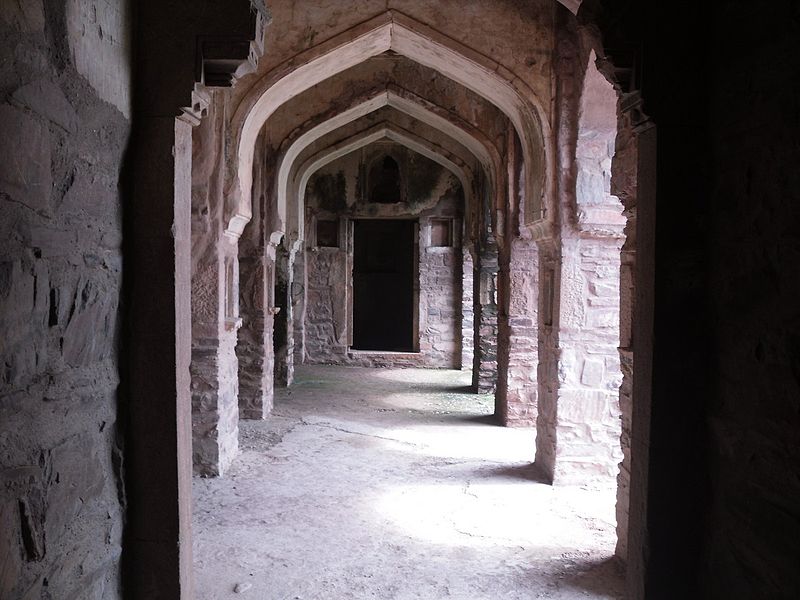










 Borderless