Categories
Poetry

Confidences & More…

By Anasuya Bhar

Garden of the Painter at Saint Clair (1908) by Henri-Edmond Cross (1856-1910). Courtesy: Creative Commons
Confidences

After a time 
You do not talk
Or even feel the need 
To unburden.
You look for peace
You sift your thoughts 
Into chapters that are closed. 
You begin to look within
Into the paths travelled,
The detours made,
The encounters, the altercations
Before you reached the thoroughfares
Of life and living. 
It is always the going, 
The quest that matters.

Routine 

There is some peace
In these familiar chairs
Though austere, stark, 
They bring tangible comfort, 
A sense of belonging.

These wide windows
Invite the gaze across
To the greenery beyond, 
Where the breeze 
Arrests the swaying branches.
Dry twigs, brittle leaves
Gather into brown heaps
All into a cyclical routine.

The chalk, the duster and 
The intellectual debate
Amid eager minds,
Share learning,
A part of the routine.  
But even so, 
Lost is the aura
From the past – 
We return with stories 
Of loss and care
Stowed in our bags
To travel anew on tracks
Of familiarity. 

Dr. Anasuya Bhar is an academic teaching English literature in St. Paul’s Cathedral Mission College, Kolkata, India. She would also want to be known as a poet.

.

PLEASE NOTE: ARTICLES CAN ONLY BE REPRODUCED IN OTHER SITES WITH DUE ACKNOWLEDGEMENT TO BORDERLESS JOURNAL

Categories
Poetry

Poetry of Michael Madhusudan Dutt

Ratnottama Sengupta translates Bengali poet Michael Madhusudan Dutt’s Bijoya Doushami (the last day of the festival of Durga Puja when the Goddess is supposed to return to her own home from her visit to her parents). This poem is a lament of Durga’s mother, who addresses her daughter as ‘Sati’ in the poem.

Bust of Michael Madhusudan Dutt at his memorial in Jessore, Bangladesh. Courtesy: Creative Commons

Michael Madhusudan Dutt (1824-1873) was a poet and dramatist who was a prominent precursor to Rabindranath Tagore. In his youth, he converted to Christianity (1843) and wrote in English and later turned to writing in Bengali. A product of Western education and the Bengal renaissance, he challenged the traditional literary systems. Multi-lingual and cognisant of several Indian and European languages, including Bengali, Tamil, Sanskrit, Greek and Latin, Meghnadbadh Kavya (1861) was his most important composition, an epic on the Ramayana theme and a tribute to Milton’s Paradise Lost. His repertoire includes Sarmistha (1858), based on an episode of the ancient Mahabharta, Brajangana (1861), a cycle of lyrics on the Radha- Krishna theme; and Birangana (1862), a set of 21 epistolary poems on the model of Ovid’s Heroides and much more.

DEPARTURE

“Do not, O night sky, leave
tonight, with your lot of stars --
Once you go, blissful night,
So will my heartbeat!
Once the merciless sun is up
in the East,
The apple of my eye will lose her shine!

“Full twelve months she shed true tears
before Uma came home. What a balm!
In mere three days, tell me
Oh starry-tressed,
can one have a fill
of delight?
The golden glow of brass lamps
has driven afar darkness
within and without.
Words, the sweetest of creation!
have circled my ears.

“Darkness twice as thick, I know
will engulf this homestead
once you blow out this lamp...” 
Entreated the Queen of Girish,
at the close of the ninth night...

Ratnottama Sengupta, formerly Arts Editor of The Times of India, teaches mass communication and film appreciation, curates film festivals and art exhibitions, and translates and write books. She has been a member of CBFC, served on the National Film Awards jury and has herself won a National Award. 

.

PLEASE NOTE: ARTICLES CAN ONLY BE REPRODUCED IN OTHER SITES WITH DUE ACKNOWLEDGEMENT TO BORDERLESS JOURNAL
Categories
Poetry

Two Poems

By Anuradha Vijayakrishnan

JASMINUM

I wake in the deep of moonlit nights
welcomed by pale fleeting moths, glossy thickets 
of whispering leaves, hushed birds. I am greeted
with joy by the woman who lives in the endless 
garden, who does not sleep, whose voice
is silence. My heart wells with my fragrance –
young snakes coil at my feet, shy kiss of dew 
pool over my new petals, spreading tenderly
inside my veins. I bloom, I am 
proud.

The woman who visits – she has heaven
coloured eyes and a nose ring like stars.
She drifts on a low cloud, laughing, breathing
my scent, sighing, never touching.
Sometimes I too rise on the coil of such 
a dream, wings of silver owls, startled feathers 
of sleep-woken parrots. Sometimes I gaze down 
with love at the world filled with such sacred
darkness, seasons of hope, radiant pain, crimson lashings 
of anger, toss and turn of uneasy desire.  

This night is my whole life, these 
are the only words I will speak.

LAST RITES FOR GRANDMOTHER

Her eyes were closed with cotton.  Forehead smoothened, feet brushed with oil and holy 
offerings.  We cradled her one more time in our arms and gave her to fire, 
then water, then earth, then sky and waiting birds. There was rain, 
an earth storm wailed for seven nights. She went like Seeta 
leaving no trails. She went alone without 
looking back.

Her children sprouted from soil: green shoots, shiny brown skin, curly hair 
flying in the wind. 
Her children sweep from day-bright clouds: blue feathered grey throated 
birdlings squawking from palm fronds 
taking off into light.

Her children rise as tall sea-waves 
to reclaim our land. 
They slither down mountains
to swallow us whole. They creep through
our homes as dreams -- 

We light a lamp, the only language we have. 


Anuradha Vijayakrishnan
 is an Indian writer living in UAE. Her work has appeared in Kenyon Review, Magma, Everyday Poets, CVV2 and The Madras Courier, and was recently featured in the Yearbook of Indian poetry in English (2020).

.

PLEASE NOTE: ARTICLES CAN ONLY BE REPRODUCED IN OTHER SITES WITH DUE ACKNOWLEDGEMENT TO BORDERLESS JOURNAL
Categories
Poetry

Murrel

By Syam Sudhakar

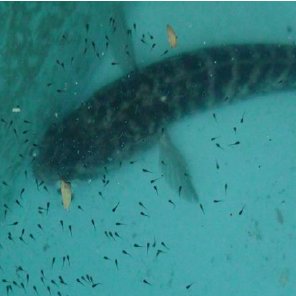
Murrel fish and its spawn. Courtesy: Creative Commons
Murrel

A monsoon afternoon.
I was coming back home
shouldering hunger and my bag.

Beside the road
the sun glimmered 
in the open drain 
and there bloomed a dream
in a flash of lightning. 
Unfazed by the rain or sun
with head high
a slick arrow, alone 
in its trajectory
darted with its tail
against the current.

Never had I seen
such frenzied motions
to claim a mate.
No shooting star could 
outshine its charm.
No warship could boast 
such feral grace.
Swift and agile,
gills throbbing with lust,
a finger of the night
dropped into the heart of noon,
the rhythm of water, an ecstasy.

I never encountered
anyone like him, ever again.

But after the rains,
in the field I saw
with a constellation of 
a thousand spawns
a radiant she-murrel.

Syam Sudhakar is an award- winning and widely  published young academician and bilingual poet from Kerala, writing both in native Malayalam and English. His poems are rich in native imagery and a sound pattern.

.

PLEASE NOTE: ARTICLES CAN ONLY BE REPRODUCED IN OTHER SITES WITH DUE ACKNOWLEDGEMENT TO BORDERLESS JOURNAL

Categories
Poetry

Arthurian Legends by Michael R Burch

At Tintagel

The legend of what happened on a stormy night at Tintagel is endlessly intriguing. Supposedly, Merlin transformed Uther Pendragon to look like Gorlois so that he could sleep with Ygraine, the lovely wife of the unlucky duke. While Uther was enjoying Ygraine’s lovemaking, Gorlois was off getting himself killed. The question is: did Igraine suspect that her lover was not her husband? Regardless, Arthur was the child conceived out of this supernatural (?) encounter.


That night,
at Tintagel,
there was darkness such as man had never seen . . .
darkness and treachery,
and the unholy thundering of the sea . . .

In his arms,
who can say how much she knew?
And if he whispered her name . . .
“Ygraine”
. . . could she tell above the howling wind and rain?

Could she tell, or did she care,
by the length of his hair
or the heat of his flesh, . . .
that her faceless companion
was Uther, the dragon,

and Gorlois lay dead?

Isolde’s Song

After the deaths of Tristram and Isolde, a hazel and a honeysuckle grew out of their graves until the branches intertwined and could not be parted. 		

Through our long years of dreaming to be one
we grew toward an enigmatic light
that gently warmed our tendrils. Was it sun?
We had no eyes to tell; we loved despite
the lack of all sensation—all but one:				
we felt the night’s deep chill, the air so bright
at dawn we quivered limply, overcome.

To touch was all we knew, and how to bask.
We knew to touch; we grew to touch; we felt
spring’s urgency, midsummer’s heat, fall’s lash,
wild winter’s ice and thaw and fervent melt.
We felt returning light and could not ask
its meaning, or if something was withheld
more glorious. To touch seemed life’s great task.

At last the petal of me learned: unfold.
And you were there, surrounding me. We touched.
The curious golden pollens! Ah, we touched,
and learned to cling and, finally, to hold.

Michael R. Burch’s poems have been published by hundreds of literary journals, taught in high schools and colleges, translated into fourteen languages, incorporated into three plays and two operas, and set to music by seventeen composers.

.

PLEASE NOTE: ARTICLES CAN ONLY BE REPRODUCED IN OTHER SITES WITH DUE ACKNOWLEDGEMENT TO BORDERLESS JOURNAL

Categories
Poetry

A Poem for the Earth

By Ms. Mathangi Sunderrajan

A NEW BEGINNING

The dry, cracked lake bed hurts my eyes.
I shade them with my hand and squint 
Against the blinding glare of the fiery incandescence.
I look up to the azure canopy strewn sparsely,
With bright white cotton candies -- wispy, fluffy
Pretty too, but without a hint of a promise.

Mother Earth, not patient nor forbearing, 
But angry and thirsting, has drawn every of drop
Of the elixir, into her withered womb, shrivelled
From the constant sucking of insatiable Greed.
The gnarled tentacles of Her sole Saviours who escaped
The axe have probed the underground feverishly for survival.  
 
Not long ago, the surfeit basin had glistened 
In the soft sunshine of the kinder months.
Now cattle and human stroll the parched, sun-baked bed.
All has run dry akin to my poetic flourish.
Where are the words and the emotions they thrived on?
Has the thirst for the mundane or the roots of apathy taken hold?  

Shouts of laughter break my reverie. Village urchins --
Their dark chocolate skin blending with the bare Earth.
Freed from the confines of dreary, sultry classrooms- 
The arid bed a perfect pitch for 
a game of cricket--
Crude sticks for stumps, a coarse log for a bat,
And a joyous spirit untouched by the dry land and the harsh sun.

I look up again at the bright white cotton candies.
Charming cumulus! A hint of darkening edges?
A promise of an evening thunderstorm.
I picture the urchins frolic in the downpour
And splash in the muddy brown slush.
I hurry home with new insight and hope.

Mrs. Mathangi Sunderrajan has been teaching English for nearly 15 years across various boards- state, central and international. Having been an avid reader all her life, writing poetry has became a hobby , as well as  a means of expression about the things  that touch her, besides being therapeutic.

.

PLEASE NOTE: ARTICLES CAN ONLY BE REPRODUCED IN OTHER SITES WITH DUE ACKNOWLEDGEMENT TO BORDERLESS JOURNAL
Categories
Poetry

Odd Shoes in Hands

By Ivan Peledov

ODD SHOES IN HANDS

The days pass in a desolate universe:
Dogs stumble over shiny tresses of the sky,
sunflowers imbibe coughs and sneezes,
cars desperately try to turn themselves inside out,
wasps spit out the shreds of yesterday’s sun,
weeds scratch at basement windows.
The secret assassin of pretty things
has lost all his clocks, all his socks,
all his aquatic mates.
His dreams are brimming with the music
he cannot catch.

Ivan Peledov lives in Colorado. His poems have been published in Artifact Nouveau, Sonic Boom, Eunoia Review, and other magazines. He is the author of the book Habits of Totems

.

PLEASE NOTE: ARTICLES CAN ONLY BE REPRODUCED IN OTHER SITES WITH DUE ACKNOWLEDGEMENT TO BORDERLESS JOURNAL
Categories
Poetry

Robot Poems

By Rhys Hughes

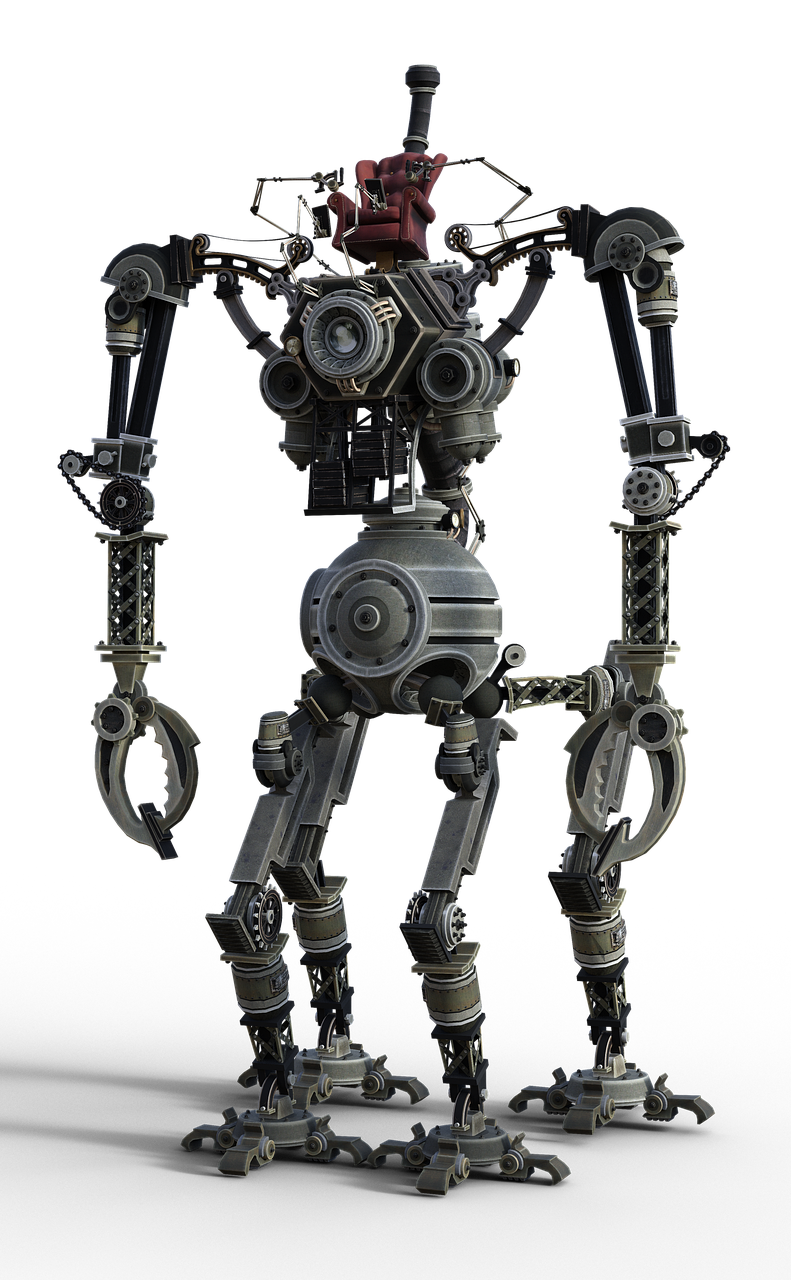
BALL BEARINGS

My attitude is very caring
even to metal men
who come in sections.
Yes, I gave directions
to a robot today.
He was far out of his way
because he had
           lost his bearings.


ON MY SHOULDER

There’s a robot on my shoulder
and he’s looking rather older
as the rainy days rust him away.
He’s an electromagnetic parrot
with an expensive taste in claret
who swears like a hasty sailor
on the rolling cobalt sine-waves
of the stormy feedback sea.
When we are both feeling bolder
I will send him to my tailor
for a suit of golden twine,
the risk of corrosion finally over
for that quantum chum of mine.


CLANKING FRANK

Clanking Frank
would like to thank
the technicians
who fixed his inputs
when they stopped working.
An android with
a battery leak
is afraid to speak
and answer the question:
Watt’s the matter
with you?
He will run out of juice
and never run again.
A powercut
is worse than a papercut
to a mechanical man
but Clanking Frank
continues to trundle
through the urban jungles
of the world,
going with the flow
of his own current.

Rhys Hughes has lived in many countries. He graduated as an engineer but currently works as a tutor of mathematics. Since his first book was published in 1995 he has had fifty other books published and his work has been translated into ten languages.

.

PLEASE NOTE: ARTICLES CAN ONLY BE REPRODUCED IN OTHER SITES WITH DUE ACKNOWLEDGEMENT TO BORDERLESS JOURNAL

Categories
Poetry

Sometimes, Losing is Winning

Written and translated from Korean by Ihlwha Choi

SOMETIMES, LOSING IS WINNING                              

All fights are not a war.
It's not necessary to win all battles.
In some, we do not win even if victorious.
I am willing to lose in that kind of fighting.
Although I lose in such a battle,
I will dance like broad leaved trees.

Losing can be a victory
in the fight which is not righteous.
But losing is not winning
if we must win inevitably.

My comrade has won.
He seemed to lose
but he won after all.

A fight is not the fighting itself
when victory is not won in the right way.
Though we do win doing our best,
now and then,
it's strictly not winning when we look back later.

Ihlwha Choi is a South Korean poet. He has published multiple poetry collections, such as Until the Time, When Our Love will Flourish, The Colour of Time, His Song and The Last Rehearsal.

.

PLEASE NOTE: ARTICLES CAN ONLY BE REPRODUCED IN OTHER SITES WITH DUE ACKNOWLEDGEMENT TO BORDERLESS JOURNAL
Categories
Poetry

Birds

By Vernon Daim

BIRDS

Tangled black ribbons knotting, 
Unknotting, in the fiery sunset sky.
Crossing seasons, the route in their blood.

Musical notation in mid-flight silhouettes,
Melancholic songs of lamentation,
Wind-teased susurration

Among mountains and along rivers
In countries broken and scarred.
See them return once again,

Wintering somewhere warm as blood,
Oblivious to unfolding bloodshed,
Altering borders on the map.

Vernon Daim is a Malaysian writer. His poems have appeared in local and international publications. As an English teacher, he has also presented papers at various ELT conferences.

.

PLEASE NOTE: ARTICLES CAN ONLY BE REPRODUCED IN OTHER SITES WITH DUE ACKNOWLEDGEMENT TO BORDERLESS JOURNAL