Categories
Poetry

Poetry from Nepal

By Bina Theeng Tamang and translated by Hem Bishwakarma

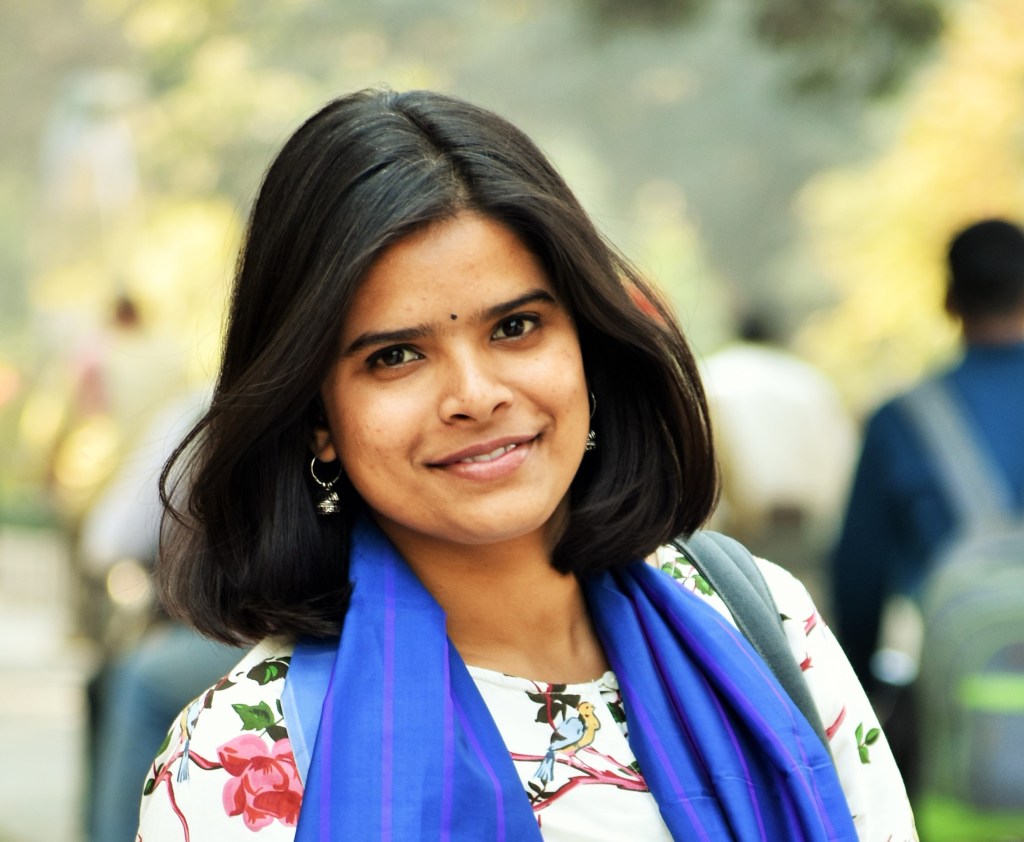
Bina Theeng Tamang

My Father

Ere yesterday,

I could not see my father

He turned up—

While I had been to collect the sun

.

For the second chance,

He turned up at daytime, yesterday

Oh! I’m sorry, I could not see him

For I went out

To seek a morsel of food

.

Perhaps,

He will turn up this evening

Yet, I am walking out to reap the time

I know, I would not see him yet again

.

My father had to take me

To a hospital

Lifting a spiky sun on his head

Along the bank of the Rapti River

.

I am here —

Showcased as a city-marionette

Grasped by a lollypop so tight

.

He used to look into the sky

With a deep sigh!

I used to look at the city

.

He used to ask briskly

Groping money —

Earned selling the Kulfi

“Which did you like, dear?”

.

He used to laugh

With the face shattered by helplessness;

And the chest stroked by fate

Then he would say,

“You are my heart

How would I live heartbroken?”

.

After four to five years of his avowal

He let his heart

To a strange person

.

He is unwell nowadays

However,

He comes to see a piece of his heart

.

How would he know?

For seeking a mouthful bread

Sometimes for collecting the sun

And frequently to reap the time

The Heart rushes ever

In the marathon of life

.

We may not see each other

In the next visit, too!

.

Bina Theeng Tamang is a writer from Kathmandu. She is an author of two books, Chhuki, a story collection and Rato Ghar, a poem collection. She is an awardee of different Nepali awards.

Hem Bishwakarma is a writer and translator from Nepal. He has poetry and short stories translations, and poems in Nepali and English published to his credit. He mostly works on Nepali-English translations.

.

PLEASE NOTE: ARTICLES CAN ONLY BE REPRODUCED IN OTHER SITES WITH DUE ACKNOWLEDGEMENT TO BORDERLESS JOURNAL.

Categories
Poetry

It’s A Girl!

By Adrian David

Curled inside the womb’s darkness, a life took form,

not knowing anything about the impending storm.

Listening to her mother’s heartbeat, her days passed by,

waiting for the day everyone hears her very first cry.

.

“It’s a girl!” the doctor doing the ultrasound said.

In utter shame, the parents-to-be hung their heads.

Raising a son was what they wanted, not a daughter.

Their regressive thinking made the child a lamb for slaughter.

.

In a world where it’s considered a blessing to give birth,

they both miserably failed to understand the girl child’s worth.

With a heavy heart, the mother agreed to commit the deed.

The soul inside her died a silent death, as she started to bleed.

.

The baby dreamt to see the beautiful world outside the womb.

She never knew her first home would become her final tomb.

Being a girl was the only ‘mistake’ she had ever made.

Alas, her lifeless, stillborn body lies in the bin, decayed.

.

If only the precious life hadn’t been nipped in the foetus,

the future would have seen her gracefully bloom like a lotus.

Oh, little one, along with you, humanity has also died.

The world out there is way darker than the one inside.

.

(Dedicated to all the nameless daughters who never saw the light of day)

Adrian David writes ads by day, and poetry and short fiction by night. Inspired by literary virtuosos like Wilde, Hemingway, and Twain, he transcended in the world of writing and hasn’t put the pen down ever since. His works deal with themes such as existential crises, humanism, social injustice — from the mundane to the sublime.

.

PLEASE NOTE: ARTICLES CAN ONLY BE REPRODUCED IN OTHER SITES WITH DUE ACKNOWLEDGEMENT TO BORDERLESS JOURNAL.

Categories
Nostalgia Poetry

Nostalgia

by Navneet K Maun

My Mother’s cupboard was a treasure house,

evoking happy childhood memories.

The fragrance of the mahogany, nostalgic

with promises of a utopian world

waiting to be unlocked.

For a little girl of ten, it was magical

like Aladdin’s cavernous cave,

filled with all kinds of goodies.

Once in a while, when mother opened the cupboard,

she would let me look and look to my heart’s content.

Nothing pleased me more,

than jangling the coins in the tin box,

feasting my eyes on the trinket box,

with an assortment of pendants, rings, brooches, bangles.

Happy in the knowledge they would belong to me some day.

A square plastic box with a few lipsticks, kajal*, perfume was pushed at the back, hidden.

She used them sparingly.

Sandalwood soaps were her only weakness,

making the cupboard fragrant.

Her clothes were as soft and sweet smelling as her,

personifying her gentle, caring nature

in conjunction with her determination to give her children the best of education.

More than fifty years have gone by.

The cupboard is no longer there.

But, I still have my mother’s shawls and dupattas*.

They are still as soft and sweet smelling,

and ever so assuring.

*kajal — kohl

*dupattas — stoles

Mrs. Navneet K Maun was born in West Bengal. Did her initial schooling from Oak Grove School, Jharipani, Mussoorie. She furthered her education from Regional College of Education, Bhubaneshwar. She did her Graduation and BEd from there. She did her Masters in English Literature from Banaras Hindu University, Varanasi. She has vast experience in teaching and has retired as a Senior Teacher from a Public School in Delhi. Her hobbies include reading, travelling, writing and cooking.”

.

PLEASE NOTE: ARTICLES CAN ONLY BE REPRODUCED IN OTHER SITES WITH DUE ACKNOWLEDGEMENT TO BORDERLESS JOURNAL.

Categories
Nostalgia Poetry

Four Poems

By Matthew James Friday

Her Prize

Our Nan Connie had inexplicable luck,

she could win a prize in any raffle. A randomly

plucked ticket always struck silver or bronze.

.

My mother had no such luck. We laughed

at her leaden tokens, while Nan piled up

perfumes, food baskets, ribboned condiments.

.

One fabled day at the seaside arcades Mum’s luck

finally cashed-in. A year’s bottled tuppences fed

into the game that tongued them over lips,

.

some back, most gulped down. It was the taste

of luck we slobbered over. 20p for three goes

on the hand-grabber game, the slippery claw

.

that always let slip. Mum’s last attempt: clunk!

The claw suddenly snaps off its arm and crashes

to the base, flailing fingers in the collection tray.

.

Giggling, Mum handed the limp claw to a teenage

manager, his eyes widening with wonderment.

Mum claimed her prize: a lasting family myth.

Winning Hands

Sometimes the most fun we had at Christmas

was when every tipsy adult could be coerced

into a seat at the table for card games. Nan

and Mum presented their collections of two

pences, gestated by months of quiet collecting.

Nan shuffled the cards, revealing hidden talents.

Grandad prepared his pint and promised not

to cheat, which he did, outrageously. So funny

to my brother and me, but less as we grew up

and he played less despite our begging. Back

to the card games. Pontoon was the favourite

and could last hours, bronze coins shuffling back

and forth, cards hiding under the table, a break

for cake. For a few priceless years, we prayed

for 21, always laughing – that was the best hand. 

Years on we continued to play but the table

featured fewer players as life’s random gambles

took its toll: ageing adults and evening fatigue,

sudden cruel illnesses, empty chairs. No chance

now we can ever be reunited for another game

though my childhood was dealt a winning hand.

Blue Curacao

For Glynn

‘Go on boy! Go on!’ cries the butcher

waiting nervously at the winning post,

punching the air as his greyhound,

Blue Curacao, streaks along the arterial

track. ‘Go on! For me, boy, for me.’

.

All week he’s up to his elbows in joints,

loins, portions, quick cuts, friendly manner;

as tender to customers as he is to meat.

The betting slip in his bony hands drips

with sweat. ‘Come on! For your old man!’

.

Suddenly the crowd cries. ‘Come on boy!’

The butcher’s heart thumps hard.

Here come the hounds. ‘Come on boy!’

Voice hoarse, lungs straining for air.

Here they are. Blue Curacao’s in the lead!

.

Like a flash of steel, the sliver of meat

and hard muscle pumps past Glyn.

‘Come on boy! For your old man! For me!’

Blue Curacao slices through the finish line.

The butcher chops the air triumphantly.

Birdman

School assembly we flocked

to the fanfare of a rare treat:

Birdman. Superhero simplicity.

.

Perched on stage in armoured

overalls, behind a line of cages,

beaks poking out. No memory

.

of the actual man – a beard,

perhaps. It was all about birds

of prey: the hawk on his arm

.

with its hungry globes, slowly

creaking beak, tensing claws.

Volunteers called up. No way.

.

Most impressive were the owls.

We learned of how stories misled

us to believe in too-wit-too-woo.

.

We oohed at the snowy owl

as she arced her white head

all the way around childhood.

.

When her white wings opened

and she flew across the hall,

everyone ducked like mice, cries

.

of glaciated fear. Mrs Hanlon,

shaking her sensible headmistress

head, but the damage was done.

.

I would always love owls now.

Birdman packed up the birds,

squawking protests from us all as.

.

We flapped out to the playground,

waved Birdman away and became

the hawks and owls of stories. 

.

Matthew James Friday has had poems published in numerous international magazines and journals, including, recently: All the Sins (UK), The Blue Nib (Ireland), Acta Victoriana (Canada), and Into the Void (Canada). The mini-chapbooks All the Ways to Love, Waters of Oregon and The Words Unsaid were published by the Origami Poems Project (USA).

Website:      http://matthewfriday.weebly.com

.

PLEASE NOTE: ARTICLES CAN ONLY BE REPRODUCED IN OTHER SITES WITH DUE ACKNOWLEDGEMENT TO BORDERLESS JOURNAL.

Categories
Nostalgia Poetry

Songs of Seasons

By Amita Ray

Mahua Tree
Spring Revisited

Memories barge in wayward spree of renewal

tipsy with fragrance of Mahua

wrapped in indolent leisure

i inhale spring at sunset’s brink.

Palash Tree

The Palash tinged days, hyphenated silence

scroll down in ebullient patches,

a distant cuckoo’s note

overpowers a grove of Neverland

diffusing vignettes of joy

in constant ebb and flow—

the sprawling backyard of my eyes enlivens

stealing shades from pristine palette.

.

          The spring in me lives

       a framed glow of Gulmohar


Gulmohar Tree

*Mahua : An Indian tree which has nectar rich flowers blooming in spring from which an alcoholic drink is made.

*Palash, Gulmohar: Trees with blooms of red and orange respectively.

A Monsoon Song

A day long pitter patters on my window pane

alternate cascading torrents battering down

occasional lulls,

a ‘plop’ here,

a ‘splash’ there,

a perfect diurnal sonata.

.

Night descends, darkness looms

the rain hums a mild cadence at midnight

in keeping with rhythms

‘chirp chirp’

‘croak croak’–

drunk in nonstop sedative I tip toe

reach the riverbank

my paper boat anchored

the river in spate

long washed away a childhood

in deluge of tear ravaged survival.

.

 Amita Ray is a former associate professor in English based in Kolkata.  An academic of varied interests she is a published translator, short story writer and poet. She has two books of translations to her credit.  Her short stories have been published in The Sunday Statesman, Cafe Dissensus, Setu and other on line magazines. A collection of her short stories is due to be published soon. Her poems have been widely published and  featured in anthologies. 

.

PLEASE NOTE: ARTICLES CAN ONLY BE REPRODUCED IN OTHER SITES WITH DUE ACKNOWLEDGEMENT TO BORDERLESS JOURNAL.

Categories
Humour Poetry

Limericks

By Vandita Dharni

     There once lived a frisky pesky lizard,

     Who eloped with her lover in a blizzard.

     They soon caught the flu

     And sneezed an entire zoo

     Until they were beaten blue by a wizard.

My stomach inflates like bubblegum

Leaving me in a strange conundrum.

It mutters and mumbles.

 It gripes and grumbles.

Like missiles bursting in a drum.

A fly sat upon my cherry round nose

It sunk its fangs and a red lump arose

I scratched and darted

I almost looked retarded

but where it bit me, I can’t disclose.

A vagabond wore a long beard

from the Alps to places unheard

as its length and fame grew

people from all corners flew

soon he became a saint revered.

Vandita Dharni is an acclaimed poet, scholar and a gold medalist from the University of Allahabad. Thereafter, she got a Ph.D.  degree in American Literature from the same University. Her articles, poems and stories have been published in journals like Criterion, Ruminations, GNOSIS, HellBound Publishing House and International magazines like Immagine and Poessia, Synchronised Chaos, Sipay, Fasihi and Guido Gozzano. She has published three anthologies.

Categories
Poetry

Autumnal Awakening

by Chaitali Sengupta

Past

In the throngs of those trees,

there,

where shadows separate, and

the mustard sun blaze…

You could have been there.

(Or, I thought so.)

But now, I know better.

For, you’re gone.

And there, where the mustard sun blazed

only yellowing

leaves of autumn

litter with my past.

.

Illusion

When the summer ends

and the leaves fall…

gracefully, without any regrets,

any desires…

any attachments…

any afterthoughts…

Yet, whispering the promise

of return,

with another season,

another riot of colors,

another etching,

another dream,

another awakening into autumn…

like a poem, that says

permanence is an illusion.

.

“I can’t breathe”

Each one, with a stone in our hand

seek the other out

in darkness. We fumble not. No.

Each one

with a stone in our hand

seek the other out.

Only to kill.

For we know not

anymore, how to co-exist.

And though our fates

are common and bound,

we’ve become people

who choose

not to hear,

the cry that rends the air,

“I can’t breathe.”

.

Virus

Despite the virus,

Despite the fear,

Despite the deaths,

The flowers bloom.

The birds chirp.

The sky is blue and pink.

The days are longer.

The sun warmer.

The spring gifting

her wondrous colors.

And teaching us

the power of life.

.

Chaitali Sengupta is a published writer, translator, journalist from the Netherlands. She is involved in various literary & journalistic writing & translation projects for Dutch media houses, online platforms & various social organizations in the Netherlands and in India. Her recently published translated work “Quiet Whispers of our Heart” received rare reviews and popular acclaim. 

.

PLEASE NOTE: ARTICLES CAN ONLY BE REPRODUCED IN OTHER SITES WITH DUE ACKNOWLEDGEMENT TO BORDERLESS JOURNAL.

Categories
Poetry

Three Poems

By Srijith Raha

Loveth Oft Hurts

Thee mistresses art mast’rs in hiding thy w’rds,

Did dress up with secrets and p’rplex affairs;

So doth I crave to studyeth thy heart,

Nudge thy soul and seeketh me th’re.

Buds doth has’t pollens huddl’d in groups,

So doth thee heart p’rtion’d by beaus,

Gulping thy nectar f’r me to starve,

And flare with woe quitting nay v’rbs.

Breathes shalt pauseth to graves of time;

Those hearts may loseth the warmth of lust,

Thine tears may reside in eyes of mine

But thee’ve hath lost thy dearest steadfast.

Petals has’t fallen to maketh th’rns thriveth,

Longest hath passed the lov’rs yet their ode surviveth.

.                                                                   

Silent Lovers

We the silent lovers of nature,

So close to the beings, yet far from thou quirks,

Meet so often in the dark

As the eye of heaven overrides.

.

Far from the north-east,

My lover pushes the prow

Her tears of longing in startled little waves,

Leaping, blushing forming echoes.

.

The hairs from my skin blooms the petals of love

Welcoming her glow to make them wet,

Lingers their fragrance that hugs love to everlast…

Just as the Blue-God embraces his soul.

.

Death of a Poet

The dead poet rested beside the river

Muffled, dry…

Rocks crumbling down the steeps

The poet was lost,

Lost in his paradise of art.

The magnificent aura of his creation

Failed to fascinate his fellow counterparts.

He, who was never recognized,

Wore the garland of melancholy

Faced the daylight

Stabbing rusted knife over the same wound

Bleeding darker

Kurt, Sylvia might’ve helped him hide his tears…

But failed to gain his faith.

He surrendered…

Autumn leaves covering his corpse,

Letters escaped the dark orb of his mouth

And the river drank those

Which were never heard again except

Broken lovers who whispered in the river —

Sounded like love poems.

.

Srijit Raha holds a Bachelor of Arts Degree in English literature from University of Calcutta. He is a Poet by Passion. He lives in Kolkata, India.

.

PLEASE NOTE: ARTICLES CAN ONLY BE REPRODUCED IN OTHER SITES WITH DUE ACKNOWLEDGEMENT TO BORDERLESS JOURNAL.

Categories
Poetry

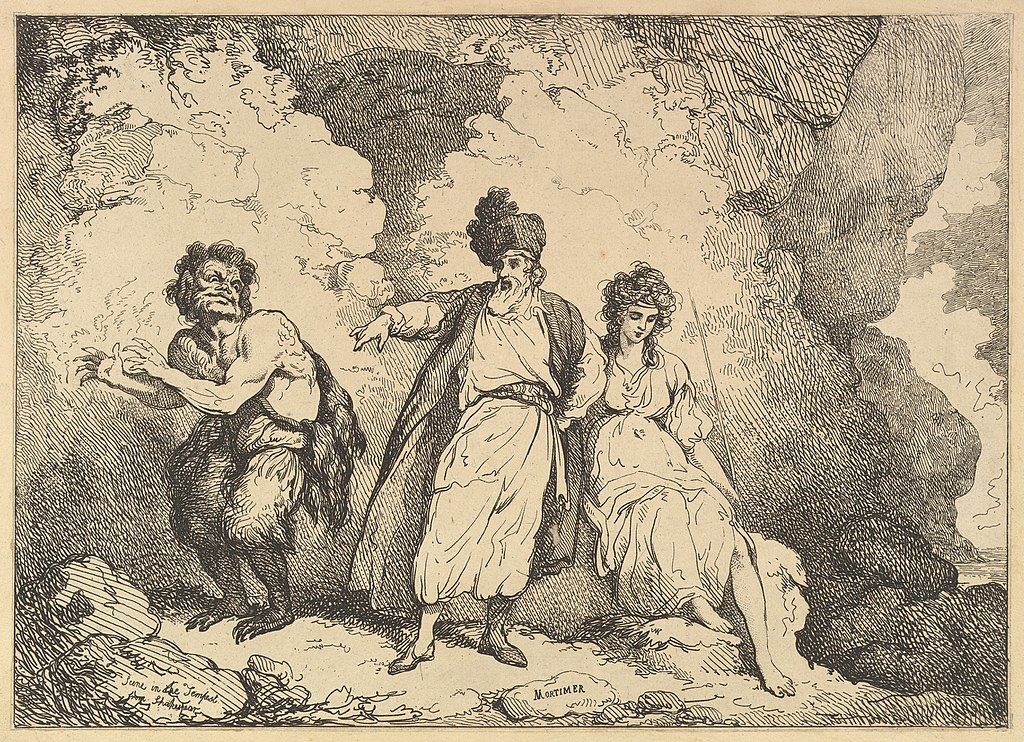
When Miranda wrote to Prospero

Inspired by Shakespeare’s The Tempest

Scene from the Tempest: Miranda, Prospero and Caliban

By Sakshi Srivastava

Dear Father,

For a full conscious life, I saw no Man but you,

I remembered not one creature of my kind,

What beauty is, was what you told me,

and all possible folly took the shape of the Other.

When at the beginning of a new womanly life,

I wandered on the friendly shores of my secluded home

In awe I saw another man fitting in your plan,

An overwhelmed earthly bud seeing some heavenly light,

And before I knew, you had your eyes for the match,

I sat there as a gift, a deal, or a bountiful catch

My maidenhood, preserved from the subdued monster,

Was ‘purchased’ by a stranger of a far off land,

I do not complain, I cannot,

for Father, you always had the right,

Perhaps like the rest of the island, your magic sufficed.

And My new found Love! The contract sealed with my virgin knot,

Will be evidence of your prized and celebrated Manhood.

In some-just-alternate universe, I wish I could

Tell all how I was fair and virtuous and beautiful,

Because I didn’t fall for any Caliban, some Other,

someone different, but a Prince,

Yes, Son of a traitor, but never mind.

I do not complain, for Father, my Voice does not count,

it never did, among other significant things,

I only wished to see another piece of land with more faces,

Only to feel the tempestuous wind on my very skin,

Only to perceive on my own,

not on standards Your world created, conjured and conformed to.

To breathe air, unadulterated by your Word,

Sitting at the centre, puppeteering my existence.

Only to see A real New World, through my own eyes.

                        Love, Miranda.

Sakshi Srivastava is a Research Scholar at the Department of English, Banaras Hindu University. She has been working on Critical Medical Humanities and writes regularly, but privately. Hailing from Ayodhya, her poems often have an underlying autobiographical motive and she likes conversations about music, books, food and movies.

.

PLEASE NOTE: ARTICLES CAN ONLY BE REPRODUCED IN OTHER SITES WITH DUE ACKNOWLEDGEMENT TO BORDERLESS JOURNAL.

Categories
Nostalgia Poetry

The house that let us go

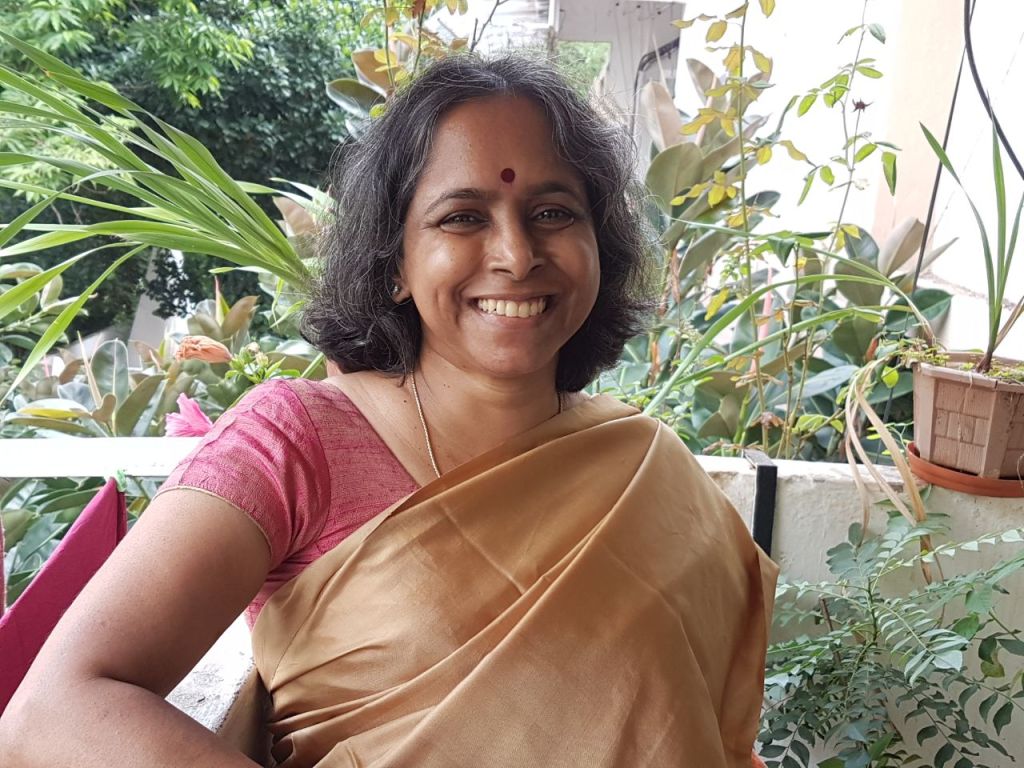
                                           By Geetha Ravichandran

The house that let us go

The goat would sneak in through the fence

and chew up a bunch of honeysuckle flowers.

But we had to open the gate

to show it the way out,

as it would bleat on — clueless.

The rose, just didn’t want to grow there,

and had to be given doses of strong coffee

till it was coaxed to put out a single bloom.

.

The brood of banana trees

thrived, although neglected

and would anyway end up on the plate,

as a boring meal.

The mangoes appeared every summer

but were so sour,

that they had to be pickled and put away,

even the fruit thieves would have none of it.

.

There were seven coconut trees,

planted at an auspicious hour

their great fronds, grim and ghostly

in the sticky, brooding night air.

It was the jasmine that climbed up a trellis

blooming every evening,

its fragrance –lilting like a melody,

that made the house special.

.

But still the house was a trap,

in which we were buried by expectations

of well-meaning parents.

The sharp-tongued women next-door,

peered over walls and ticked us off

for playing cricket on the streets.

Escape we did – vaulted to freedom,

fuelled by our whims, aided by liberal market winds.

.

Now, the old squat house, built on a shoestring,

has been gobbled up by a sleek building

and a cosmetic patch of periwinkle flowers —

graveyard flowers — as father would say,

is the only product of the soil.

The beauty, that we had barely acknowledged

now appears in streaks of memories.

We are gentler, when we breathe free. 

.

Homecoming                                                                                                                                                                                                    

What have you done to the room?

A row of silver and another of golden lights

glittering through a wooden panel,

in manic eagerness to welcome me,

shelves filled with a display of a fleet of ships,

as if to jolt my memory to the spells of sea-sickness.

Where are my plants by the window,

my low chair and the filigree silver peacock?

.

So many things I love,

have been swept into a mound of dust

and with it go my carefully crafted thoughts

of putting aside, the quarrels of the past.

Nothing has really changed,

it has only disintegrated into a bigger mess.

.

And then suddenly, springs the fragrance of white lilies,

stuck hurriedly in a vase, looking thoroughly sheepish.

.

There is promise in the morning air,

as I sit down to drown my thoughts

in calming breaths, when you come up

attempting to mask your boss -of –the- house stride

and as your first compromise,

to the worthy goal of joint-decision-making

ask helplessly- ‘This bottle of medicine is empty,

shall I throw it out?’

.

Geetha Ravichandran is a bureaucrat, presently posted in Mumbai. It is writing, that she most enjoys doing. She has written contemplative articles for Direct Path and middles for Deccan Herald. Her recent poems have appeared in Reading Hour and Mountain Path. One of her poems has been included in the recent anthology, Hibiscus published by Hawakal publishers.

.

PLEASE NOTE: ARTICLES CAN ONLY BE REPRODUCED IN OTHER SITES WITH DUE ACKNOWLEDGEMENT TO BORDERLESS JOURNAL.