In conversation with the editor of SETU, Sunil Sharma
Sunil Sharma
Sunil Sharma writes multi-layered fiction. His stories delve into the depths of human nature and often suggest to us what is worthy. They experiment with different narrative techniques and reflect his erudition. Sometimes, he writes poetry about the downtrodden. He has also written a highly symbolic novel that weaves mythology, different lores and cultures into a rich tapestry for the readers. Sharma is a Mumbai-based senior academic, critic, literary editor and author with twenty published books — seven collections of poetry, three of short fiction, one novel, a critical study of the novel, and, eight joint anthologies on prose, poetry and criticism, and, one joint poetry collection. He is also an editor par excellence. Today, we celebrate him for running one of the most popular online journals – SETU, an e-magazine that hopes to build bridges across cultures and the best in literature. Let us explore this facet of Sharma in this exclusive interview.
SETU has completed four years of virtual existence. What started you on this journey?
A casual conversation with my cousin Anurag Sharma– a distinguished Hindi author and tech professional– from Pittsburgh, USA, for the need of a bilingual platform to showcase serious writings committed to a secular and democratic worldview and best ethical practices as citizens and individuals. In brief – the finest values and their artistic transmissions in various forms. The idea clicked and we both started a cultural journey for a better world or a dream thereof. Both the Hindi and English monthly editions — released from Pittsburgh — are autonomous content wise. We often consult each other on many common editorial issues and work as a strong team. We both enjoy this kind of service to the community.
What arethe principles on which SETU runs?
A: Merit. Objectivity. Transparency. Accountability. Preference for quality.
Tell us about your team. How many are you and how many languages do you support?
So far two principal players. And some good friends as our enduring editorial support. Though the journal is bilingual, we often publish translations from many languages, including European ones. So, open to all the language-systems of the world. Every talent, welcome.
You often have issues being guest edited — what do you look for when selecting a guest editor? Why guest edit?
Impeccable credentials, integrity, transparency, cooperation and scholarship. The why of it — to engage more and more writers in an ongoing and expanding dialogue, multi-cultural and multi-dimensional
What kind of submissions get accepted in SETU?
A: Quoting an excerpt from Duotrope interview:
—The one conforming to the guidelines and vision of the journal. —One providing epiphanies most preferred. —Form-content dialectics, must. —Narcissism—big No. —Social conscience—big Yes. (Please check the link: https://duotrope.com/interview/editor/26995/setu)
Additionally: Of course, well-written texts, error-free; demonstrating native talent and judicious use of words and imagery.
What do you see as the future of SETU?
We would like to see it evolve as a sustainable platform for writers, artists and readers as a truly global home of quality; an interactive mode; a continued conversation; a way of recognizing talents through our humble awards — to spread positivity, peace and harmony.
SETU is bringing out books too now. Can you tell us a bit about that?
We bring out very select books only on no-profit-no-loss basis. It is another service extended to those willing to publish with a small press. Details can be found on the Setu site. (Please check the link: https://www.setumag.com/p/write-for-setu.html)
As a writer, how has SETU helped you? Has it enriched you in any way? Has it impacted you?
Not much. It often acts as a distraction — but now, it has become a habit, part of doing my bit for the field. As a reader and editor, one gets in touch with the current literary thinking and trends and varied writing styles and content.
Your stories and poems centre around Mumbai. Why? What happens when/if you move out of Mumbai?
I am afraid it is not that, although frequency of Mumbai might be more. I have written about Europe, China, Canada and USA as well, cities that I have visited in my avatar as a tourist. Written about Delhi and Ghaziabad, where I grew up. About other cities also, imagined or real, in my recent fiction.
Mumbai is my present location — my muse. Hence, more references to the megacity. It acts as a background or a main character, in my fictions and poetry — its rich contradictions; pull; dynamism; professionalism; multi-ethnicity and vibrancy.
You cannot escape your place, city, town– the spatial reality, its geography and history and memory.
Place has its own value. It shapes you up and the host community and its overall personality.
How many languages do you write in? Do you translate? If so from how many languages?
I am a bilingual. But lately, I have been writing in English only. I occasionally translate Hindi-to-English and vice versa.
What are your future plans?
To write novels, other things being equal and His grace. Let us see.
Thanks.
Thanks for taking your time to satisfy all our reader’s curiosity.
Novel by Sunil Sharma which is currently being serialised in SETU
This interview was conducted online by Mitali Chakravarty.
.
PLEASE NOTE: ARTICLES CAN ONLY BE REPRODUCED IN OTHER SITES WITH DUE ACKNOWLEDGEMENT TO BORDERLESS JOURNAL.
Aysha Baqir, an expat in Singapore, grew up in Pakistan. Her time in college sparked a passion for economic development. In 1998 she founded a pioneering not for profit economic development organization, Kaarvan Crafts Foundation, with a mission to alleviate poverty by providing business and marketing training to girls and women in low-income communities. Her novel Beyond the Fields was published in January 2019 and she was invited to launch her book at the Lahore and Karachi Literary Festivals. She and her book were also featured in the Singapore Writers Festival and Money FM Career 360 in Singapore. In this exclusive, she talks of her work in Karvaans and her writing, telling us how it all happened.
You have been working on development of women in Pakistan and writing. Which came first, writing or the developmental work?
My development work in the villages of South Punjab from 1998 to 2012, in part, inspired me to write the fictional novel, Beyond the Fields.
I grew up in Lahore, Pakistan. Graduating as the valedictorian of my class I won a scholarship to Mount Holyoke College. My classes in International Relations and Economics sparked a passion for economic development and opened my eyes to the poverty around the world and in my home country, Pakistan.
Upon my return to Pakistan, I saw that the poor didn’t need my sympathy — they needed access to economic resources and networks before they could voice their demands for social justice. In 1998, armed with an MBA from LUMS, I led an enterprise development program that later emerged into a pioneering not for profit economic development organization, Kaarvan Crafts Foundation, focused on poverty alleviation through the provision of business development and market-focused trainings for girls and women in low income communities.
In 2013, I relocated to Singapore. The spark in my writing process came from the time I spent in the villages and the voices of the village women. During the time in the villages, my life interfaced closely with girls and women and my admiration and respect for their determination, strength and humour in times of despair grew immensely — with so little they managed to achieve so much. The characters in the novel are fictional but the voices are real. Zara, the protagonist in Beyond the Fields challenges the roles that have been defined for her, determined instead to persevere, fight for justice, and achieve her dreams.
When and how did Karvaan foundation start? What are the kinds of people you aim to empower and why?
According to the World Economic Forum’s Global Gender Gap Report 2019, Pakistan ranks 151th in a list of 153 countries. The institutional and structural provisions for women to live their lives are non-existent, and there is a dearth of basic freedom for women across the country. Kaarvan Crafts Foundation is a not-for-profit organization based out of Lahore Pakistan that works for the empowerment of women while implementing United Nation’s Sustainable Development Goal 5, to achieve gender equality and empower all women and girls on the ground in Pakistan.
I founded Kaarvan Foundation in 2004 with the objective to strive towards global development goals on a local level by creating opportunities for income generation among girls and women in poor communities, by strengthening their skills, business capacities, thereby facilitating them in accessing market linkages and economic opportunities and improving their quality of life and that of their families. The Foundation works in over 1000 villages across 15 districts in Pakistan. It has trained over 24,000 women entrepreneurs in 250 development centers and linked over 8000 women sales agents to markets to date.
Tell us about the work this foundation is doing. How many volunteers do you have?
The Foundation is a Not for Profit Company that trains girls and women to access market opportunities directly through providing them with the relevant focused trainings under Value Chain Development Programs. The Foundation has full time and project employees and encourages volunteers to join the summer internship program.
You have many sponsors. How do these sponsorships help you?
Kaarvan Foundation works with international aid agencies to implement programs that enable women and girls to directlyaccess market opportunities. The International Sponsorships provide funds to the Foundation to implement the projects and the benefits of accessing markets and getting orders continue to accrue to the girls and women long after the projects close.
Living in Singapore, are you able to still contribute to Karvaans? If so, how?
I continue to be on the Board of Kaarvan Foundation and contribute to the strategic growth and development of the Foundation.
You have written a powerful novel, Beyond the Fields, centring around two sisters and the Hudood ordinance. Tell us about it.
Beyond the Fieldsis a gripping tale of resilience and reclaiming honor in which the rape of a fifteen-year-old girl living in a remote village of Pakistan drives her twin sister on a dangerous quest for justice. Set in the early 1980s against the backdrop of martial law and social turmoil, Beyond the Fields, brings up close the fears and hopes of women in Pakistan. It is a riveting and timely look at profound inequality, traditions that disempower women in our world, and survival as a dance to the beat of a different future.
What inspired the story?
Beyond the Fields is story is about a young village girl called Zara. Zara is carefree – she has dreams, she want to study, and wants to become someone important. She loves kairis (raw mangoes) so she disobeys her mother and steals into the orchard. And then on one ordinary day, Zara’s twin sister, Tara, the one she is closest to in the whole wide world, is kidnapped from the fields while they are playing a game of hide and seek and raped.
Having worked in the villages of Punjab, Pakistan for over fifteen years, I wanted to show the plight of village girls and women. Thousands of girls and women are assaulted each year and the abuse continues without any substantial family, community, or legal support. And, just not in Pakistan, but across cultures and continents.
I deliberately set the story under Zia-ul-Haq’s regime. I was twelve years old when my mother dragged me to a march called by WAF or Women’s Action Forum. Being an introverted teenager studying in American School, I didn’t want to go. But my mother insisted saying it was important for me to see what was happening in our country.
The protest was for Safia Bibi — a young blind girl a few years older than me — who had been raped by her employer and his son. She didn’t report the crime. Because she showed clear signs of pregnancy and was unmarried, it was assumed she had premarital sex. Her failure to prove that she was raped prompted the judge to sentence her (under the Hudood ordinance) to three years of imprisonment and 15 lashes. The ruling cast her as the perpetrator instead of the victim. Her rapists were never prosecuted and did not spend any time in jail.
At the protest, I stood with my mother along with hundreds of other women — and the memory of us standing under the sweltering sun for hours with other women protestors jammed across the mall road demanding justice for Safia Bibi haunts me to this day and to this day I shudder thinking that if it wasn’t an accident of birth, it could have been me. I wrote Beyond the Fields to start a discussion to challenge the unjust mind-sets that condemn and punish girls and women who have been raped. I wrote the novelto start a conversation about rape and sexual assault and I hope we don’t stop talking about the issues until we create the change we owe to girls and women across the world.
Finally, I wrote Beyond the Fields, to allow the readers to see the lives of village folk in Pakistan — they possess incredible strength and resilience. It is a glimpse into what makes them laugh, cry, betray, and come together.
Do you think your novel has impacted the world in a way to change it for better?
I have been overwhelmed with the number of women reaching out to me to share their stories not just in Pakistan but from all over the world. According to World Health Organization (WHO), estimate nearly one in every three women worldwide has been physically or sexually abused by their partners or experienced non-partner sexual violence. Rape is a silent epidemic. And we need to take action now.
Has Kaarvan impacted the women you aimed to help?
Kaarvan’s work has had a significant impact on the girls and women not only in the target and neighbouring communities. The impact can be measured through economic indicators such as increase in income, change in asset base, changes in diet and schooling of children and social indicators such as changes in decision making, changes in household chores, and mobility. You can read more about Kaarvan’s social impact on its web page (www.kaarvan.com). During the COVID19 pandemic Kaarvan, through remote learning workshops, prepared the women entrepreneurs for digital readiness and “Digital Enablement”, which constituted of a range of trainings given to group of micro-entrepreneurs who connected remotely from their mobile phones on platform best suited for the training. Kaarvan facilitated Digital Market Linkages through enabling the entrepreneurs to participate in two online exhibitions.
Do these women teach you? If so, what have you learnt working with them?
The Value Chain Development approach focuses on understanding the needs of women entrepreneurs and they are viewed as the customers of the program rather than the beneficiaries. Hence, there is constant learning from women about how they take decisions, how they want to grow their businesses, how they overcome their challenges. The learnings are documented in the internal and external impact reports and well as the case studies.
You are working on a new novel. What is it about and when can we hope to read it? What are your future plans for your writing and Karavaans?
My work in progress,Forsaken for Saints, is a fiction about longing, deception, and betrayal that delves into a web of conspiracies that extends from expat cosmos to the walled city of Lahore. I am privileged and blessed to continue to write because it enables me to explore critical and pertinent issues through stories and to share them with the readers to question and comment.
This interview was conducted online by Mitali Chakravarty.
.
PLEASE NOTE: ARTICLES CAN ONLY BE REPRODUCED IN OTHER SITES WITH DUE ACKNOWLEDGEMENT TO BORDERLESS JOURNAL.
She is vivacious with what she describes as a “whacky” sense of humour and a passion for Gandhi. She has written a ballad on Bapu. You have guessed who she is – Santosh Bakaya. The thing that most impressed me about her was the way her students responded to her – students who are leading lives away from her academic umbrella even to this date. A strong influencer, who helps mould younger minds, she writes books to change her student’s lives and is a writer in her own right. Bakaya is not only an academic but a poet, essayist, novelist, biographer, editor, TEDx Speaker, and creative-writing mentor. She has been internationally acclaimed for her poetic biography of Mahatma Gandhi, (Ballad ofBapu). Her Ted Talk on The Myth of Writer’s Block, is very popular in creative writing Circles.
She has published multiple books of poetry, a novella, essays and biographies. A winner of multiple awards, her long, narrative poem, Oh Hark! which earlier figured in her book, The Significant Anthology, is now a book with illustrations by Avijit Sarkar.
Bakaya has given Borderless an extensive interview on her perception of Gandhi and Gandhism and its relevance in the current crisis filled world, punctuated with snippets of interesting vignettes from her teaching career, confirming well her characteristic of being a strong influencer in her students’ lives. Let us explore her principled, courageous and humorous outlook with her own words.
You have written a whole book and more on Gandhi. What developed your interest in Gandhi?
Gandhi, nay Bapu, was very much a part of my growing up years. My dad, (a very popular professor of English, in Rajasthan University, Jaipur), when faced by a dilemma, would invariably ask himself, what would Bapu have done in such a situation, and would go on to do what he thought Bapu would have done in that circumstance.
He never asked us to read books on Gandhi, but ignited our interest in this enigmatic man, who seemed to have an answer to everything. Was he a magician, we youngsters wondered! He would get books on Gandhi from the university library, and they would be lying at strategic points in our house; we would quietly start reading, imbibing and asking questions.
Later, it was while taking an MPhil class in the year 2012 that there was a heated discussion in the class on Bapu and his relevance. In a class of twenty students, there was just one girl who was defending the values of Bapu, the others were going all out to denigrate him.
“How much have you read on Gandhi? Can you give me the names of five books about Gandhi that you have read? Have you read his My Experiments with Truth?”
Then one student, who prided himself on being a poet, chipped in, “Madam, why don’t you write a poetic biography of Gandhi? Poetry will appeal more to us.”
This challenge hit me hard, (I am always on the lookout for challenges), but this appeared too difficult a task. Nonetheless, I took the challenge, and began by writing a few verses on the aa-bb-a rhyme scheme and got addicted, so much so that I went on to complete 300 pages of poetry on Gandhi, which was later published by Vitasta Publishers, Delhi, and is now a bestseller, critically acclaimed.
Gandhi was an ordinary man not without his fears, whims, apprehensions, a boy who was afraid of ghosts, robbers, multiplication tables, who rose above these fears to emerge as a moral icon, gaining an extraordinary status to be revered all over the world.
You wrote another book on Martin Luther King as he was influenced by Gandhi. Can you tell us what led to this book?
This book also was the result of another remark of another of my MPhil students.
Before that, while I was researching for my PhD thesis on Robert Nozick at the American Centre, Delhi. I came across the autobiography of King (edited by Clayborne Carson), I was completely fascinated by his life story and read all the books that I possibly could at the Centre — ignoring Nozick in the bargain. At that point of time, I thought maybe I’ll do my post-doctoral research on Martin Luther King, Jr. some day.
Later it was during another of my Conflict Studies’ lecture that one of my students (not a belligerent one this time) asked me to write a book on King. So that got me thinking and the book happened. It is a year since the book has been published, once again, by Vitasta Publishers, Delhi, (it has one full chapter on his India Connection) and I am happy readers have good words to say about it.
You are a fabulous teacher. Do you think your books made an impact in the way you wanted? Or was it more what you said?
I don’t know if I am a fabulous teacher, but yes, I know I am a very passionate teacher.
Yes, I think so. Let me cite an example. The MPhil student who had nudged me into writing a poetic biography of Mahatma Gandhi, and who was a great critic of Gandhi, on my insistence, read many books on Gandhi and right now, this critic of Gandhi has become a supporter of Gandhi and has become a lecturer in Political Science, specialising in Gandhian studies.
I was delighted when readers wrote saying that my book impacted them in a positive manner and since it was a poetic biography, they kept going back to it. In fact, Ballad of Bapu received more love than I had anticipated, so much so that I have given a number of talks on the book and conducted many workshops in many educational institutions followed by very fruitful and intellectually stimulating discussions.
Do you think Gandhi is pertinent in the current world? Why?
Gandhi can never be irrelevant in the world. Gandhi and Gandhism are for all times. He stood for truth and non-violence and truth and non-violence can never be irrelevant. Martin Luther King Jr. had followed his principles, time and again reiterating, that it was Gandhi who had inspired them during the Montgomery Bus Boycott and even later.
Gandhi was an ordinary man not without his fears, whims, idiosyncrasies and apprehensions, a boy who was afraid of ghosts, robbers, multiplication tables, and who rose above these fears to emerge as a moral icon, gaining an extraordinary status to be revered all over the world.
His values of Truth and Non-violence can never lose their relevance in this topsy-turvy, highly materialistic, self-centred and consumerist world. How can we ignore his supreme humanism, his overpowering love for everyone — even his enemies?
The Dalai Lama very rightly says, “He implemented the very noble philosophy of ahimsa in modern politics and he succeeded. This is a very great thing.” While the other ancient philosophers merely preached the philosophical aspects of Truth and Non-violence, his very life was a series of experiments with truth. He was a man forever evolving, trying to better himself in every way. Beleaguered humanity desperately needs to rededicate itself to the eternal values of nonviolence, truth, world peace and altruism otherwise, things will continue to be bleak.
What values of Gandhi do you think are the ones that are most relevant?
Truth, non-violence, love and compassion are values that will always be needed in this bleak world. An eye for an eye, will make the whole world blind, as he so powerfully believed. Why crave for this blindness and hurtle down an abyss?
Such peace revolutionaries like Nelson Mandela, Dalai Lama, Desmond Tutu, and Martin Luther King Jr. wouldn’t have been inspired by Gandhi had his values not been so precious. “If humanity is to progress, Gandhi is inescapable. He lived, thought, and acted, inspired by the vision of humanity evolving toward a world of peace and harmony. We may ignore him at our own risk,” Dr. Martin Luther King Jr had so eloquently said, reiterating time and again that Gandhi taught him his operational technique of fighting for civil rights.
Barack Obama, who holds Gandhi in great esteem had said:“I have always looked to Mahatma Gandhi as an inspiration because he embodies the kind of transformational change that can be made when ordinary people come together to do extraordinary things.”
The co- founder ofApple, Steve Jobs, maintained that Gandhi “showed us the way out of the destructive side of the human nature. Gandhi demonstrated that we can force change and justice through moral acts of aggression, instead of physical acts of aggression. Never has our species needed this wisdom more.”
So, we need the Gandhian wisdom and perception of love, truth, peace, moral acts of aggression and forgiveness, otherwise there is nothing but a grave new dystopian world staring at us. Has reading and writing on Gandhi impacted your life?
Yes, it definitely has. In fact, the first Gandhian that I came across was my father. My grandmother was aghast when one day the sweeper had not come, he picked up the broom and cleaned all the toilets in the house. And another day he made him have tea and breakfast with us. My granny was once again indignant, but later many interactions later, she also started subscribing to his point of view and was almost embarrassed of her earlier behaviour and developed a deep love for the underprivileged.
My father’s library was a bibliophilic treasure and I read all the books on Gandhi, later I got books from the school library too. As a collegian, I read many books on Gandhi and they had a great impact on me.
Let me cite an incident from my career. It was my first year as a college lecturer in a post-graduate government college for boys, which was known for its notorious elements. Straight from the university, I was brimming with idealism and Gandhian ideals and fired with an ardent desire to change the world (still am!). During an invigilation, I found a hulk of a boy brazenly cheating, while the senior co-invigilator looked the other way. I dashed towards him and was appalled to find a big knife stuck to his desk. I quickly pulled out the chits from under his answer sheets and raced towards the Principal’s office, his threats following me with a full- throated stridence. Tumko dekh loonga. Mera Career barbaad ker diya [I will teach you a lesson, you spoilt my career].
Later, that evening, I met him at the railway station. He was going to Mathura and I, to Delhi for the weekend. He didn’t recognise me, but I did. I walked up to him and said, you had said, that you would see me – “See me, I am right here. Do you want to beat me up? Come do it?” Dumfounded, he looked at the chit of a girl standing before him, and when he realized who I was, he fell at my feet, apologizing profusely. He now says, that was the turning point in his life.
At the risk of sounding pompous, let me say, that it has become my second nature not to nurse grudges, and I try to spread as much love around me, as possible. Yes, Gandhi and Gandhism have impacted me in a big way.
Do you think Gandhi can impact the younger generation?
Gandhi can definitely impact the younger generation if he is presented to them in a very interesting manner, through role-playing, skits, workshops etc. His values of truth and non-violence transcend all geographical boundaries and time. Bapu had fought for human rights in South Africa, achieving unprecedented success. He was indeed “a powerful current of fresh air –like a beam of light” as Nehru described him. We need this beam of light, this powerful current of fresh air as never before.
We should not forget that he was an ordinary man who rose above his ordinariness by sheer moral force, even calling off the Non-Cooperation Movement at the height of its popularity, because the violence that was unleashed at Chauri Chaura, on 4 February 1922 (a village in Gorakhpur District of Uttar Pradesh), was not in conformity with his ideology of non-violence, and he did penance for what he saw as his culpability in the bloodshed. Only a man with great moral fibre could have taken such a decision, fully aware of the criticism that would follow in its wake. Such incidents as these, need to be presented to the youngsters in a proper manner, so that their minds are cleaned of prejudices and misconceptions.
For Gandhi, cleanliness was very important, and who can deny the importance of cleanliness? There was a time when the iconic film Lagey Raho Munna Bhai had created a revolution in young mindsets, I myself being a witness to many such heart-warming scenes. When a parent who had come to drop his daughter to college, aimed tobacco spittle in the college premises, a boy picked up the broom lying nearby and swept it away, to the intense chagrin of the daughter, and the father, realizing his mistake, apologized profusely.
But things are changing fast, so are young mindsets, a sort of skepticism is setting in, so we need to present Gandhi to the younger generation with a conviction which is more robust than before.
Should we be propagating his ideals? If so, what would be the most effective way of doing so?
Of course, Gandhi’s ideals need to be propagated especially in these dark, despairing ages when the forces of fascism are wreaking havoc throughout the world. “Be the change you want to seearound you,” Bapu had said, so we should try to be that change, wherever we feel the need for change. Preachy pedagogy can only boomerang, so we should make his principles a way of life, so that the youngsters learn from them. We need to change ourselves first, if we want to spread his principles. Gandhi had said, “Power is of two kinds. One is obtained by the fear of punishment and the other by acts of love. Power based on love is a thousand times more effective and permanent than the one derived from fear of punishment.” (Young India, January 8, 1925).
To many naysayers, this might smack of naiveté, but no one can deny the fact that love and positivity are the weapons in our hands, which should be amply used to positivize the negative forces around.
As an academic, should Gandhi’s autobiography, My Experiments with Truth, be introduced as part of the school curriculum in India? Do you think that would have a good impact on young minds?
From my experience as an academic, I can say this very confidently that students prefer to crinkle their noses at course books. My Experimentswith Truth as part of the syllabus is indeed a great idea as a symbolic gesture venerating the great soul, but what I sincerely feel is that it is the need of the hour to devise such courses where My Experiments with Truth is part of supplementary reading. I believe, students should read it out of curiosity and not out of compulsion. Understanding the essence of Gandhian philosophy should not be forced on young minds. Yes, short-term courses and interestingly designed workshops can go a long way in inculcating the Gandhian spirit in youngsters.
Let me make myself clearer. Some years back, I was very happy to see youngsters at the Delhi Book Fair flocking to buy My Experiments with Truth. When asked the reason, they told me they were buying the book because in their first year of under-graduation, it was prescribed as a reference book for a course they were undergoing which, was meant for students of all disciplines. It is heartening to know that My Experimentswith Truth continues to be a bestseller. Both the supporters and the detractors, own copies of it.
What do you see as the future of Gandhism in India?
With Gandhi’s assassins being glorified with impunity, and his ideals given lip service to, only during particular days, Gandhism’s future looks bleak. But it is the responsibility of all the right-thinking individuals to pick up cudgels on behalf of this moral icon and disentangle him from the clutches of the naysayers and detractors. At a time when Gandhi’s killers are being venerated, Gandhi and what he stood for, needs to be revived. Martin Luther King Jr. had been influenced in his crusade for civil rights and non- violence by Bapu; he visited India in 1959, calling his visit a pilgrimage. During his visit he remarked that the spirit of Gandhi was very much alive in India, but alas, we are slowly forgetting the saint in beggar’s garb. Youngsters have no qualms about heaping venom at Gandhi, forwarding fake WhatsApp messages denigrating him. As I mentioned earlier and I repeat: we should not forget that he was an ordinary man who rose above his ordinariness by sheer moral force, as illustrated in his calling off the Non-Cooperation Movement at the height of its popularity, because the violence that was unleashed at Chauri Chaura, on 4 February 1922. This did exhibit his immense moral fibre.
Who can deny the importance of truth, forgiveness and non-violence in this age of crass materialism and consumerism! Gandhi had said, “Be the change you want to see in the world”, so we have to bring about the revolution within ourselves and change the world for the better, otherwise the world is doomed. In this context, allow me to quote Martin Luther King Jr, “Over the bleached bones and jumbled residue of numerous civilizations are written the pathetic words, ‘Too Late’”. Why should we wait for it to be ‘Too Late’?
As a teacher I have had the opportunity of interacting both with the millennials and the Generation Z and notice a world of difference between their mindsets.
I know of many youngsters who are running organizations, the mission of which is to create a more equitable and inclusive society. I had a very fruitful discussion with a young NRI nephew who was in India six months back and the essence of what he said boiled down to this, “The world is fighting the evils of discrimination, race, gender, and we cannot forget that Gandhi was a pioneering force in this direction. More and more people should come forward to run programmes which are consistent with his constructive programmes.” He heads one such programme which is very popular.
Then there are some from the hypercognitive Generation z who vociferously argue, “How can the oppressors rid themselves of the guilt of what the guilty have perpetrated in the past — how can they justify their oppression? We need to be proactive — and need to follow Malcom X and Not King or Gandhi. No more candlelight marches, no more offering of roses to our oppressors! We need to hurl stone for stone. You got your jobs in golden platters, our generation has no jobs, no economic security, no health security, we are surrounded by environmental hazards of all sorts, and we need to do something.”
Well, we cannot save ourselves from the guilt of the devastation that we have wrecked on the young generation but in these crosscurrents of hatred and enmity, it is humanity which is suffering, and needs to be resurrected. No matter what rampant negativities we are surrounded by, I staunchly believe, that the tenets of Gandhism will have to rise from their ashes and come to the rescue of a doddering, staggering humanity. Otherwise we are doomed.
Thanks a ton for this great opportunity, Borderless journal and Mitali Chakravarty. It was an honor answering these questions.
Thank you for giving us your valuable time, Santosh Bakaya.
This online interview was conducted by Mitali Chakravarty.
PLEASE NOTE: ARTICLES CAN ONLY BE REPRODUCED IN OTHER SITES WITH DUE ACKNOWLEDGEMENT TO BORDERLESS JOURNAL.
.
Disclaimer: The opinions expressed are solely that of the interviewee.
Teresa Rehman is a journalist with a difference. She is woman who feels and conquers with her pen. She does not hanker for anything more than being the spokesperson for voices in the remote areas of North-eastern India. In that spirit, she started her own magazine: The Thumb Print, and also wrote a couple of books which have found their way to even the Strand Bookstore in New York.
Rehman, an award-winning journalist based in North-east India, is known for her resolute grit and matter-of-fact approach to stories. She has worked for years toward bringing the different facets of the region, its diversity and distinct ethos into mainstream media. Rehman’s work in journalism spanned through India Today, Telegraph and Tehelka before she decided to put in all her resources into launching The Thumb Print e-magazine that she edits currently. She has managed to bring in the gender perspective to her stories.
Rehman is known for her unassuming persistence on getting the details, and sensitivity. She was featured in the Power List of Femina magazine in 2012 and has written three books. The Mothers of Manipur (Zubaan Books) and Bulletproof (Penguin Random House India) are among them. Borderless in this exclusive, unravels, Rehman’s journey as a journalist.
You said in one of your Thumb Print conversations, you are a journalist and not a writer. What do you see as the difference between being a journalist and being a writer? You have written a number of books. Does that not make you a writer?
I would always prefer to call myself a journalist and a chronicler who is trying to tell the stories of the men, women and children of one of the most underreported regions of the world, i.e. Northeast India. And the books I had written are journalistic narratives without any frills, of my journey as a reporter into the nook and crannies of the region and the stories behind the stories. I am a reporter who loves her job.
How many newspapers/ magazines have you worked for?
I started off as a cub reporter for the local dailies. And after completing my studies in journalism from the Indian Institute of Mass Communication, New Delhi, I started off as a trainee journalist at the editorial desk of India Today magazine in the capital city. After that, I relocated to Guwahati and started working as a Correspondent with The Telegraph newspaper and later reported for the entire region for Tehelka magazine. Thereafter, my life took a different turn and I became a media entrepreneur by launching the webzine, The Thumb Print in 2012. I have also written about specialised issues like media analysis for The Hoot, climate change for Alertnet Reuters, the environment for The Third Pole and gender for the Women’s Feature Service.
How long have you been a journalist? Does journalism clash with family life more than other professions?
I have been a journalist for almost two decades now. I feel, once a woman steps out of the house for work or any other activity, there are changes in her family life — for some these changes are subtle and for some these changes may be earth shattering. And if a woman finds support at home, she can break any kind of glass ceiling at her workplace. A woman is exploited the most at home. And any kind of changes in her professional life begins and ends at home. I have been quite fortunate to have had a congenial atmosphere to be able to pursue my unconventional career as a journalist. I am a first-generation journalist in my family and though I had erratic working hours, I always managed to create a support system at home. However, not all women are fortunate like I am.
You have been to many places as a journalist that a common person would not visit. Are they all centred in the North- East? Is there a reason you work from this area. Tell us a bit about your experiences in such areas.
A senior journalist had once told me “your location is your disadvantage”. On the contrary, I feel that northeast India is a paradise for journalists. There are so many untold stories waiting to be told. I feel blessed that the region is my home and I chose to work from this difficult space — a region that has witnessed several decades of violent insurgency coupled with a hostile geographical terrain. My experience has been novel, vivid and interesting compared to the rat race in the journalistic circles in the metropolitan cities and the glitz and glamour of television channels. I choose to tread on the untrodden path, in the midst of virgin nature and unwritten stories. I have written about my experiences in reporting conflict in my book Bulletproof (Penguin India). I am glad that internet has opened up immense possibilities and I can work from any place in the world and get my story across to the world.
You are an award-winning journalist. Can you tell us the work that led to these awards? Did you do the work with the intent of getting the award or was that incidental?
It feels good to be recognised for your work. But I never went hankering for awards. I guess your good work speaks for itself. I had bagged some of the most prestigious awards for journalism in India that include the WASH Media Awards 2009-2010, the Ramnath Goenka Excellence in Journalism Award for two consecutive years (2008-09 and 2009-10) for the category ‘Reporting on J & K and the Northeast (Print)’, the Laadli Media Award for Gender Sensitivity 2011, Sanskriti Award 2009 for Excellence in Journalism and the Seventh Sarojini Naidu Prize 2007 for Best Reporting on Panchayati Raj by The Hunger Project. In fact, the WASH Media Award which is given for writing on water, sanitation and hygiene and is sponsored by the Water Supply and Sanitation Collaborative Council (WSSCC) and the Stockholm International Water Institute (SIWI) was given for a story I had done based on the life of my domestic help and her associates. This goes to show that in order to bag a good story, you need to keep your ears and eyes open.
Why did you feel it was important to record your experiences in books? Was writing a book different from writing for a newspaper or magazine?
A book definitely has a longer shelf life and its reach is tremendous. I was surprised to see my book on sale at the Strand Bookstore in New York. A book remains and becomes an important document for posterity as it can also be stored in the libraries of the world. A book has a life of its own compared to newspaper clippings and write-ups. It can travel far and wide.
Tell us a bit about your work in Thumb Print. What started you on Thumb Print?
The Thumb Print was a very angry reaction. When I had to struggle to find space for my stories in the so-called ‘National’ media, I decided to create my own space. This was when I had discovered the might of the internet. The Thumb Print is more like scaffold trying to reach out to the world and bring the world to our doorsteps. We proudly call ourselves an ‘international magazine with a north-eastern soul’.
You do these online interviews with writers, currently on “Why women write?” Why would you choose this topic? Did you face a lot of discrimination as a woman in journalism?
When I started doing hardcore conflict reporting, I realised that I was stepping into an old boy’s club. I was treading into masculine space and I had to manoeuvre my way all by myself. I got no support from my male colleagues. Women, all over the world, face different layers of discrimination when they step out to do something unconventional. That is why I felt that it was important to address this question of ‘Why and how women write’.
Are you planning a new book? What are your future plans?
Yes, I am working on another book on an important aspect of contemporary northeast India. And of course, I intend to dabble with different aspects of media which is trying to keep pace with the fast evolving technology.
Any message for upcoming writers/ journalists?
Yes, journalists should not forget the basic values of good old shoe-leather journalism. A value of a well-told story can never change — though the medium or external packaging might change. In trying to keep pace with technology, we should not forget the values of telling the truth that should be the primary concern of a journalist.
This interview was conducted online by Mitali Chakravarty.
.
PLEASE NOTE: ARTICLES CAN ONLY BE REPRODUCED IN OTHER SITES WITH DUE ACKNOWLEDGEMENT TO BORDERLESS JOURNAL.
Each day, he brings out a variety of poems from all over the world. Some of it is translated from multiple languages and some are in English. The blog is called Atunis. He is a well-known figure in the Albanian literary world, Agron Shele.
A multifaceted individual, Shele has authored novels and poetry collections and brings out anthologies regularly featuring writers from all over the world in the form of an annual publication called, Atunis Galaxis. Trained by various United Nations bodies, he is the chairman of the “Environment and Community” and “Children and youngsters” societies and the recipient of various literary awards in Albania. Currently, he resides in Belgium and continues to dedicate his time and efforts to publishing literary works with universal values. Universal values and spiritual development through literature for the benefit of mankind is a recurrent theme of this discussion. Let us now, plunge into the world this humanitarian visionary poet opens up for us.
What made you turn to writing? What languages do you write in?
My passion for writing came early in life and it relates to my childhood memories, as I initially began to read stories and legends by different authors. Fascinated by the majesty (beauty) of the descriptions of local and foreign authors, and the natural beauty of my homeland, I was inspired to write and research about written art, as one more form of communication; individual consciousness — contact with literary experiences (from mythology to postmodernism today) — the inner spiritual world. I write in Albanian, but my reading is not restricted to Albanian as I read in different languages as well.
You are also a professional management personnel. Does it affect your writing?
Of course, management also has a great influence on my work, as my collaboration is always with professional authors, with whom we do not only finish a single page of writing, but we also discuss the principles of a whole variety of different art themes, creative forms and structures on which a poem or prose is based and ultimately the latest trends and developments of universality thought.
When did you start Atunis? Tell us more about your blog. What is the intent of your blog?
Atunis Poetic Galaxy is an international link of writers, poets, and painters, which unites different nationalities with creative innovation but with a wide spiritual basis, to help the transmission of art in all ethical-cultural-social forms. Respect for diversity and different cultures forms a free literary spirit of communication between authors with full global literary identity. This is the goal of Atunis, a muse that circulates inside a global literary galaxy, where the journal explores art in the service of development, emancipation, divine justice, and human respect. The authors are united by the common literary spiritual force, described by a deep sense of aesthetics, motivated by an essential creative character and the revival of cultural values on the most civilized international scale. Atunis Poetic Galaxy was founded in 2011, registered under the Legislation and functions as a literary link, always in collaboration with other sister links and professional authors.
What does the name Atunis mean?
Atunis is a Pelasgian word. Fortunately, this word is preserved even today in the Albanian language and has the meaning: The father left, the horse left (definitive meaning) — Good luck!
How many poets have you published in your blog? Do you publish prose in your blog? What languages does your blog carry?
The Atunis Literary Page has many authors’ publications, for the simple reason that this site publishes authors from all over the world and in many foreign languages. It is currently a site that has over 1.2 million viewers, but what makes it special is not the quantity of publications, but the quality and elevated level of presentation. So not everyone can be published on the Literary Page. In terms of publications, Atunis publishes in all genres: poetry, prose, drama, translations, literary criticism, reports, etc.
The languages on the Atunis literary site are English, Albanian, Italian, Spanish, French, and Dutch.
You bring out an anthology regularly. What is the frequency and what do you look for in finding poets for your anthology?
The Atunis Literary League publishes the Atunis Literary Magazine and the Atunis Anthology. We have published Literary Magazine (hardcopy): Atunis (1,2,3,4,5,6,7,8) — (Albanian, English, Italian) and literary anthologies: Atunis Galaxy Anthology (2018, 2019, 2020). The authors are represented through the literary correspondence of the members of the Board of Directors with professional authors and with other International Connections (IWA-USA), IPTC (Asia), WPS, and many other connections in Europe and Poetas Del Mundo (Latin America).
Is your anthology always in English? Tell us more about the anthology.
Of course, it is. Atunis Galaxy Anthology is published in English and annually selects the literary feeds of successful authors. The magic of the word is the best articulation of synthesis and symbiotic memory and when words are raised into art, the expressed power touches on the apex at a new important level. Literature with its magical touch and its mysticism has always attracted many turbulent souls, souls that are reborn over the flirting of creational beauty, the beauty of life, natural beauty. Literature reflects the aspirations, values, and the purest thoughts on humanity. It captures such an important level of human vitality, where the word is transformed into a myth, into the production of genius ideas that moulds and shapes endlessly our civilization.
How do you tackle a variety of languages? Do you have a team or manage yourself?
Atunis Poetic Gakatika is a literary link managed by the Board of Directors, where each member of the Board is responsible not only for the country he represents, but also a basic language through which an author is introduced.
How do you juggle time between your development as a writer, the blog, and anthologies?
My free time is not only managed as a publisher but also as a creator. In my spare time, I edit books of colleagues, write in prose or poetry, and I write prefaces to books written by different authors.
Do you translate too? Poetry? Do you find the original and the translation at variance?
I am not a translator and I consider the translation of a poem or a fragment very sacred because, in my opinion, the field of translation is not simply the reflection of an entire creative world of an author, but also an attempt to unify the cultural diversity that it represents.
Edward Fitzgerald spoke of translating the essence of Omar Khayyam’s Rubaiyat and not the literal text. Does that hold true for translations you use?
Omar Khayyam has been translated into Albanian language by the master of translation of many works of Shakespeare, Theofan Stilian Noli, and what I would describe is that his literary, Rubaiyat, not only stands as a pearl in World Literature, but continues to influence today’s poets in their lyrical spirit. When you read Rubaiyat, it is like traveling to another world, which grabs you and transports you to another poetic galaxy. Khayyam is always inspiring and quite influential even today. Unrepeatable with his lyrics, this Persian uses this phrase as his motivational quote: “it is not known whether Persian created poetry or poetry created Persian”.
What future do you see for Atunis and yourself?
The Atunis Literary League is already home to many authors who, thanks to their cooperation, have enabled the exchange of ideas and unified elite literary thought through mutual translations, and as such, thanks to creative alternatives, they have become missionaries for more peace, divine justice, and civilization of human society.
Any advice for upcoming writers?
I would recommend that young authors and poets read as many selected works as possible. This would help them build their foundation and develop their talent and generate new ideas that would lead to beautiful works of literary art.
.
This was an online interview conducted by Mitali Chakravarty
.
PLEASE NOTE: ARTICLES CAN ONLY BE REPRODUCED IN OTHER SITES WITH DUE ACKNOWLEDGEMENT TO BORDERLESS JOURNAL.
An exclusive interview with Kathleen Burkinshaw, author and the daughter of a survivor of the first nuclear blast that bloodied the history of mankind three quarters of a century ago
Kathleen Burkinshaw
The best introduction to Kathleen Burkinshaw is that she a humanitarian. She wrote a novel that has been taken up by the United Nations as a part of its peacekeeping effort. She has been actively participating in efforts to ban nuclear weapons, including presenting with Nobel Laureates. Kathleen Burkinshaw, the author of The Last Cherry Blossom, a book that is in the process of gathering further accolades, is a peace activist who talks of the effects of the nuclear war. She is the daughter of a hibakusha, a survivor of the Hiroshima blast that took place seventy-five years ago. Burkinshaw still suffers the impact of her mother’s exposure to the Hiroshima blast, where the protagonist of The Last Cherry Blossom, based on her own mother, sees her father die of the exposure and loses her best friend in the middle of a conversation. In this exclusive, Burkinshaw talks of the book, why and how it came about and the impact the bomb continues to have in our lives.
Why did you write your book? Tell us your story.
When my daughter was in the seventh grade, she came home from school terribly upset. They were wrapping up World War II in their history class, and she had overheard some students talking about the ‘cool’ mushroom cloud picture. She asked me if I could visit her class and talk about the people impacted by being under those famous mushroom clouds, people like her grandma.
I had never discussed my mother’s life in Hiroshima during World War II. My mother was a very private person and she also didn’t want attention drawn to herself. But after my daughter’s request, she gave me her consent. She bravely shared more memories of the most horrific day of her life. Memories that she had locked away in her heart because they had been too painful to discuss.
The main reason, my mother agreed (aside from the fact her granddaughter asked her), was that she knew students in the seventh grade would be around the same age she was when the bomb dropped. She was twelve years old. She hoped that students could relate to her story and by sharing her experience, these future voters would realise that the use of nuclear weapons against any country or people, for any reason, should never be repeated.
I received requests to visit other schools the following year. I began to write about my mom after teachers requested a book to complement their curriculum. I told my mom about this request.
Later that week, she sent me a copy of her most treasured photo from her childhood. It is the one of her and her papa (which is in the back of the book). When I looked at the photo which I remembered from my childhood because it always had a place of honour in our home, I realised there was more to her life than just war and death, she had loving memories as well.
That’s when I knew I needed to start the book months before the bomb was dropped. I wanted to show the culture, the mindset and the daily life in Japan during the war. I intended to give the reader the view of the last year of WWII and the atomic bombing through the eyes of a twelve-year-old Japanese girl—something that has not been done before.
That’s when I knew I needed to start the book months before the bomb. I wanted to show the culture, the mindset, and the daily life in Japan during the war. I intended to give the reader the view of the last year of WWII and the atomic bombing through the eyes of a 12-year-old Japanese girl-something that has not been done before.
Your book explores colours of Japan. How different is it from US?
The Last Cherry Blossom (TLCB) discusses life in Japan during WWII. I wanted to show how the Japanese citizens viewed their political leaders — very different from the US. I also wanted to show that Japan had been at war for 14 years (they invaded Manchuria in 1931) by the time of the atomic bombing — they were out of so many natural resources, as well as the young soldiers. The majority of the Japanese soldiers were fighting out in the Pacific. So even though Hiroshima was once a strong military port, in 1945 it was mostly elderly, women, and children. In addition to that, the firebombs dropped on Tokyo decimated that city and other areas in Japan had endured Allied bombing. The US did have the horrific Japanese attack of Pearl Harbor, bringing the US into the war — but no other US cities with citizens endured bombing after that. However, what I really wanted to emphasise was the similarity between the two countries. The children in Japan like my mom, loved their families, worried might happen to them and wished for peace. Exactly the same as the children in the US.
When and why did your mother move to US? Did your mother find it difficult to adjust?
My mother met my dad (a white American serving in the Air Force at a base close to Tokyo) in Tokyo. They married at the US Embassy in Tokyo in 1959. His time serving ended shortly thereafter and they moved to the United States.
Yes, my mother found it difficult to adjust. My mother didn’t expect the prejudice and racial slurs against her. She figured it was 14 years after the end of the war and she was on the losing side. She didn’t tell them about the atomic bombing-she wanted to have the least amount of attention. She told everyone she was from Tokyo. I didn’t even know she was from Hiroshima until I was 11.
She wasn’t a shy person. She was intelligent and determined. She learned English and became a citizen within 5 years of arriving in the US. She had a job at an electronics company and made circuit boards that were on Apollo 11. Unfortunately, the town we lived in had very few Asian people and none of them were Japanese. When I was born, she “Americanised” (her word) our home. She wanted people to know that I was an American so I would not experience racist actions. However, being one of the few Asians in elementary school, I experienced quite a bit of prejudice and racial slurs, anyway.
My mother was the bravest person I will ever know. She lost so much on August 6th, 1945. Yet, she never lost her ability to love.
The UN has taken up your book as part of its peace process. Tell us a bit about that.
In December of 2018, John Ennis, the Chief of Information and Outreach at the United Nations Office of Disarmament Affairs (UNODA) contacted me after reading The Last Cherry Blossom. He felt very strongly that the book should be used in classrooms to future voters. Nothing like it has been written before from this point of view of a 12-year-old girl. He told me that it would be designated a UNODA Education Resource for Students and Teachers. I was beyond happy that a book honoring my mom and what she experienced would be on that list. Later in 2019 UNODA invited me to the United Nations in NYC to discuss my book at the UN Bookshop as well as to participate in a workshop for NYC teachers on how to add nuclear disarmament to their curriculum. It was a surreal honour to be a presenter with Noble Peace Prize winners Dr. Kathleen Sullivan and other members under the International Coalition Against Nuclear Weapons (ICAN) for the Treaty to Ban Nuclear Weapons!
What exactly do you do to create an awareness about the nuclear issue?
In addition to interviews like yours I have spoken at teacher conferences, school librarian conferences throughout the United States. In addition to that TLCB has been on many school lists so I have had opportunity to speak with students, future voters all over the world! For example, I have had the joy to speak with students in Hiroshima who have chosen TLCB to be their 6th grade read for 4 years in a row. The students also made my first book trailer. The latest group of students I had the joy to speak with were in India!
I feel that the more I can discuss my mother’s experience so that students can relate and connect to the devastation, horror, and loss my mother and her family endured — they leave that classroom as future voters knowing that nuclear weapons should never be used again.
Do you think after the holocaust another nuclear war is likely? How do you see the role of your book propounding peace?
People have asked me 75 years later — why should these stories still be told? Well time passes, and technology changes but the need for human connection through emotions is timeless. So, I feel that while statistics and treaties are very important — if we can’t get people to understand/relate to the humanity under those now famous mushroom clouds, then none of the numbers or science is going to matter. And if it doesn’t matter because there is no connection, then yes, we are at risk of repeating the same deadly mistakes again.
I hope that TLCB relays the message and an emotional impact that two paragraphs in a textbook could never do. I want readers to understand that NO family should ever have to endure the hellish, horrific deadly destruction that MY family has.
I lived with the scars of the atomic bombing during my childhood watching/reacting to the post-traumatic stress disorder (PTSD) effects on my Mom and I still live with it each day with Reflex Sympathetic Dystrophy (chronic, progressive neuro pain disease that affects the sympathetic nervous system). Doctors have said that the damage to my immune system from the radiation my mom was exposed to from the atomic bomb, attributed to this.
.
This was an online interview conducted by Mitali Chakravarty
.
PLEASE NOTE: ARTICLES CAN ONLY BE REPRODUCED IN OTHER SITES WITH DUE ACKNOWLEDGEMENT TO BORDERLESS JOURNAL.
Click here to read the review of The Last Cherry Blossom.
Uma Trilok in conversation with Nalini Priyadarshini
Uma Trilok holds a doctorate in Education management and has taught Philosophy and Education at various university colleges. She has been Principal in a women’s college.
Trained in Hindustani classical vocal music and Kathak dance, she has been performing at various forums such as All India Radio and Triveni Kala Sangam, New Delhi. She is a research scholar and has presented her papers in various national and international conferences, which have been highly acclaimed.
Uma Trilok is proficient in both in English and Hindi and writes poetry, short stories and novels. Her short stories and novels have been staged as plays and are also being produced as web series.
Uma Trilok has written eighteen books including much acclaimed, Amrita Imroz- A Love Story, published by Penguin which has been translated in 11 Indian languages. Her poems have also been translated in a number of foreign languages.
Nalini: How does a poem start for you, an image, a concept or a line? How does it develop?
Uma Trilok: Poetry flows on its own with its inherent elegance. It is so fragile that it cannot be forced into a determined design. Poetry is a moment, that gets expressed suddenly. A word, a gesture, a sound, anything can trigger a poem. It overpowers the poet to get itself revealed.
Its texture and its ambiance is its own, which unfolds itself. In fact, a poem soars within you, takes its own shape and expresses itself in an idiom, which is very peculiar of its own nature. Images collide with each other and bring about kaleidoscopic designs, so much so that sometimes even the poet wonders over its final outcome.
A poem is unexpected, it enlivens suddenly, discovers and invents its own vocabulary, which takes it to various by-lanes. It enjoys its surrounding beauty before it reaches the end. Its voyage is as important as its goal. The reader enjoys both its “ways” and “way to”.
Nalini: What did you like to read as a youngster? Would you please share something about literary influences that moulded your literary sensibilities?
Uma Trilok: As a youngster, while I was trained in vocal classical music, I was introduced to the poetry of Urdu poets like Faiz Ahmed Faiz, Shakeel Badaauni, and the likes of Sahir Ludhianvi, whom I loved to sing on the stage as well as on the All India Radio.
Though I did not study literature, Hindi or English, systematically, in college but I read works of Maya Angelou, Octavio Paz, Pablo Neruda, Rilke, Rumi, Khalil Gibran and Rabindranath Tagore with great relish and admiration.
In Hindi, I admired Mahdevi Verma, Nirala, Pant, Dinkar, and Dushyant Kumar to name a few.
In Punjabi, Amrita Pritam and Shivkumar Batalvi were my all-time favorites. Dharmaveer Bharti, Munshi Prem Chand, Bheesham Sahni and Kamleshwar are also some of my most favorite authors.
When you read, enjoy and admire writers and poets like these, you definitely tend to get influenced by them in sensibilities as well as in style.
Nalini: Poetry is often considered a stronger medium of expression in comparison to prose. As a writer, who is equally proficient in both, what is your opinion?
Uma Trilok: A poem is a capsule of messages of semi-elaborated issues of great concern, with the capacity to hit to which readers cannot help but respond. It has its advantages as well as it handicap — ambiguity and brevity. On the other hand, prose has a setting, a plot, a point of view along with a theme and a mood. There is a difference in the composition of both. The effectiveness of both depends on the treatment given.
Prose can be written in a poetic style, using emotional effects and heightened imagery. Poetry can also be written like prose with no rhythm or rhyme. I believe prose has a little raw element in it, whereas, poetry is brewed, distilled and refined.
A poem is like a shot of liquor and prose is like a glass of chilled lemonade. Both are refreshing, though. For example, if I were to recite following two lines of Dushayant Kumar, they are equal to a couple of chapters in prose,
” Kaun kehta hai aasmaan mein suraakhnahi ho sakta
(Who says the sky cannot be punctured with holes)
Ek pather to tabiyat se uchaalo yaro “
(Friends throw a stone and see)
Or, if we were to read lines of Nazim Hikmat,
“Being captured is beside the point,
The point is not to surrender “
The lines are loaded with meaning, but are said in so few words.
Nalini: Has the world become accepting of female poets with out of the ordinary thought process? From Plath to Amrita Pritam, what has changed, what hasn’t and what needs to?
Uma Trilok: In literary history of the world, through the ages women poets have raised their voices as catalysts against the atrocities and injustice against women. There are countless women poets who deserve acclaim. There are many loud and meaningful voices who have kept the flame of protest burning after Sylvia Plath and Amrita Pritam.
Maya Angelou was surely one of the phenomenal poets who won admiration from millions of people. She wrote poetry, essays, and autographies.
Mary Oliver, who through her very powerful poetry, called upon the women to claim and occupy their due place in the world. Rita Dove, a Pulitzer award winning poet has been named U.S. Poet laureate in 1993, youngest to date. Aditi Rao is another name, whose poems speak of griefs, wounds and exhilaration that women suppress.
Arundhati Subramaniam is yet another very prominent poet, writing upon issues that directly concern women. Rupi Kaur writes powerful poems on most forbidden topics such as menstrual taboos and sexual violence. She writes,
“our backs/ tell stories / no books have / the spine to carry “.
She also writes,
“the earth has waited its whole life for us “
The younger generation of female poets has attracted millions of online viewers, who take poetry quite seriously. Poetry of female poets is being sold much better than ever before. Figures tell that U. K. Market alone has grown by 48per cent. Wendy Cope managed to sell almost as many volumes of her own poetry as the all-time favorite Sylvia Plath could. And Rupi Kaur made nearly £ 1 million from poetry sales last year.
If this be taken as one of the reasons of their popularity and the prizes, awards and acclaims which they have won, I would say the female poets are being recognized well. There is an upswing. There is bristling activity, which is very encouraging.
Nalini: You had the opportunity to closely observe and know Amrita Pritam, who happens to be an icon of feminist writing in India. Has it influenced your sensibilities and writing style?
Uma Trilok: Interacting with Amrita Pritam was a golden opportunity for me. To know a person of her stature so intimately and not be influenced by her is not possible.
She did influence my sensibilities and quite deeply. But for her style of writing I am not conscious, how much that has affected my writing style, I don’t know. But people do say that our reactions to situations are similar.
Nalini: Please share some of the challenges you faced while writing Amrita Imroz, A love story. How has writing this enriched you?
Uma Trilok – One of the biggest challenges that I faced while writing Amrita Imroz, A love story was to ryo to avoid not to deviating from the reality of the two characters I was handling. They were living legends already. They were known all over. In fact, people had known about them but they had not known them as I saw them, the ardent lovers that they were, especially Imroz. The reality of Imroz was misconceived by them for years, I had to put it straight.
The book is a unique love story, quite an unbelievable in modern times. I had to make it sound unusual as it was and yet true. The story also is very delicate and fragile; my presentation of it, also had to be very non- interfering. In every story, there is always a scope of fictionalizing it but in Amrita Imroz, A Love Story I was only an amazed onlooker, who put the story as it was without fiddling with it in the least.
I was deeply impressed by the story of such intense love. I had to bring out Imroz, who was so misunderstood. His true self came into light through this book. I was so happy that I was instrumental in doing that. People came to know how giving and sacrificing he was towards Amrita. We all wondered how can any man in this world be so egoless. In fact, one has to be gallant and heroic to give so much and yet not demand anything in lieu of that. His unassuming self, expressed his large heartedness, but his modesty and humility has been misunderstood by people as debility which I firmly believed, had to be corrected. The book was a step towards it.
Nalini: How important are literary groups and readings.? Do you have circle of writers with whom you share your work?
Uma Trilok: Readings in small literary groups in dim lights, preferably when listeners sit around in an immersive mood, is the best way to read and listen to literary work, especially poetry. The word has an image to visualize, it also has a sound to listen. Sound enriches the word. Spoken word has its own very energizing connotation. In this type of gatherings, listeners can ask questions and ask for a repeat also. The ” Mehfil ” environment is very conducive to good reading and good listening.
Yes, we have groups of poets and writers, who meet and read to each other and get unedited feedback on their work. We, as a group, had a regular coffee table meets every weekend, where poets like Keshav Mallik, Rakshat Puri and Keki Daruwala and the like, participated along with us. We enjoyed cups of coffee and read poetry to each other.
Also, every month end we met at Aparna Art Center, Siri Fort to enjoy our own poetry and also the poetry of poets who were invited from outside. This type of meetings are very enriching and fulfilling.
Nalini: Has poetry taught you anything about yourself that had not occurred to you earlier?
Uma Trilok: I cannot fully analyze the value of poetry in my life, but the first word that pops up is emotional resilience. For example, when I write about hatred, anger and violence, I have love, empathy and fellowship at the back of my mind.
Poems take away stress and gift out serenity, contentment and congeniality. A poem speaks for all, for ourselves and also for those who cannot speak for themselves. you expand your purview of experience.
Nalini: What is the role of the personal in poetry? When you write, is it for you or the reader?
Uma Trilok: I write when I am fully filled with emotion, which I cannot carry any further. It is a compulsion for me, it is not a choice. The events that affect my feelings, my sorrow, my anger, my desperation force me to write. That is the time, a poem holds my hand. In fact, I don’t write a poem, it is the poem that writes me.
I do not change my words, make them mild or strong, to suit the audience. I say, what I want to say, irrespective of how the audience take it or ignore it.
Nalini: Any words for the aspiring poets and writers.?
Uma Trilok: In my view, the younger generation of poets and writers are doing very well. They are quite conscious of the environment around and are taking up issues, which were a taboo earlier. They are inventing new idioms to express in their own unique way. The female writers are being recognized and awarded for their work. They have been able to make poetry more popular and relevant by using new ways through print and social media. I want to say only one thing to the youngsters that they read more, more and more. Because if we don’t deposit, from where will we withdraw.
Thank you, Uma for taking time for this thought-provoking conversation and your insights about poetry and creative process.
.
Nalini Priyadarshni is a feminist poet, writer, translator, and educationist though not necessarily in that order who has authored Doppelganger in My House and co-authored Lines Across Oceans with late D. Russel Micnhimer. Her poetry, prose and photographs have appeared in numerous literary journals, podcasts and international anthologies including The Lie of the Land published by Sahitya Akademi, New Delhi. A nominee for the Best of The Net 2017 she lives in Punjab, India and moonlights as a linguistic consultant.
.
PLEASE NOTE: ARTICLES CAN ONLY BE REPRODUCED IN OTHER SITES WITH DUE ACKNOWLEDGEMENT TO BORDERLESS JOURNAL.
Binu Mathew, Founder and Editor of Countercurrents.org, in conversation with Mitali Chakravarty
Binu Mathew
Can you interview an online site?
You can’t. So, I did the next best thing. I interviewed Binu Mathew, the man behind the award-winning million readers a month or three million-page views a month online journal, Countercurrents. Mathew claims this is not a big thing except that his journal is based on ideology and openness. He calls it a “people’s journal” in his you tube interview.
He has also started a ‘People’s Manifesto‘, a campaign that will be released by August 15, 2020. He is asking people to give an alternative vision to the government for a post-COVID 19 India. Mathew grew up in a farm on Kerala and turned to journalism. He has talked of his life in an interview with John Scales Avery, a theoretical chemist who is a part of the Nobel Peace Prize winning Pugwash Conferences.
Mathew is a man who finds links and interlinks between major world issues from climate change, COVID to economics and politics. What impresses me most about Mathew is that while almost all writers and journalists see their journeys at an individual level, he completely identifies with his journal and lives by his ideology. Here in this exclusive, we have Mathew himself unravel his ideology.
You have been running Countercurrent.org for 18 years. Tell us how it was conceived and why?
I was working as a journalist in Malayalam language news paper. It was a mundane job. Although the job gave me some financial security, it didn’t satisfy my intellectual curiosity. My desire to do something positive for the society kept nagging me. The job itself was a monotonous one, doing local beats and making local pages.
Some of my college mates and I had some discussions about starting an alternative weekly or monthly in Malayalam language. But the financial cost was huge, and it was beyond our capacity.
By the year 2000, internet infiltrated into our homes. There I chanced upon Znet, Electronic Intifada and many such fascinating websites. It was a revelation to me. Znet was a great source of left intellectual literature. Noam Chomsky, the rock star of intellectuals was free to read at the click of a mouse. In those days it was very expensive to buy books by Chomsky. In other websites, I found people telling stories from Palestine and other conflict zones.
In around the same time, I read the book, When Corporations Rule The World by David Korten. It was an eye opener. I thought I had to do something more than doing the local beats for my paper. Internet gave me the opportunity to do this. I decided to start a website like Znet.
I had zero knowledge in computing language. So I joined a basic html course. I and some of our friends had a brain storming session and decided on the name “Countercurrents“. I took a loan from bank and bought a computer. It was a 20GB hard disc, 256 MB RAM computer. It cost me Rs 40,000 at 18% interest! I paid it back by monthly instalments from my salary.
It was also the time a pogrom in Gujarat against Muslims was going on, in which at least 2000 Muslims were killed. We decided to launch the site as soon as possible.
Artist Razi designed the site, Ajith Kumar B converted it into html. I translated an article from Malayalam by the well-known writer Sarah Joseph titled, “The Womb and the Sword”, on the attack on pregnant Muslim women in Gujarat, in some cases where the pregnant women’s belly was cut open and the foetuses were thrown into the fire. That’s how I became the editor of Countercurrents. It was on March 27, 2002 the first article was published. Since then more than fifty thousand articles have been published. Thousands of well-known and young people have written for CC. Some of them went on to become big journalists or activists.
Tell us about your team and what makes you tick?
I don’t have a team to speak of. Most of the editing work is done by me. There are people like K.P Sasi and Satya Sagar who help me with their intellectual inputs. There are also many other people who are part of the Countercurrents Collective who don’t like to be named. In that way, I’m very fortunate and extremely thankful to them.
What is the philosophy of Countercurrents?
Humanity is facing its greatest existential threat ever with climate change and resource depletion and environmental degradation. This is not a crisis waiting to happen in the future, but it is already here and manifests itself in the COVID-19 pandemic we are facing today. Many resources wars continue to rage in several parts of the world, rising food and fuel prices, growing hunger, natural calamities of horrifying proportions, water scarcity, debt crisis, unemployment, social tensions among communities, growing human rights violations and unprecedented ecological degradation. Unless we take urgent action to change the way we live, trashing our only home, this beautiful planet, this crisis has the potential to wipe out the entire humanity and a majority of the other species from the face of this Earth.
The objective of Countercurrents.org is to spread awareness about this crisis and search for meaningful solutions. We believe that energy intensive globalization should end and it must be replaced by a low energy, ecologically sustainable local economies. If humanity is to survive, the destructive system of capitalism and consumerism must be replaced by an economic system which is based on just equitable distribution and need based use of resources.
Your motto says —“Educate! Organise! Agitate!” How do you explain it?
Susan B. Anthony (February 15, 1820 – March 13, 1906), who was an American social reformer and women’s rights activist and played a pivotal role in the women’s suffrage movement said, “Organise, agitate, educate, must be our war cry.”
In the Indian context Dr Ambedkar gave the call “Educate, Agitate and Organise.”
We combined both the slogans and took as our motto —“Educate! Organise! Agitate!”
We thought of it as a revolutionary call for caste annihilation and women’s empowerment, two of the major concerns in the world today. It also envisages a new kind of journalism which ‘educates’ instead of entertains as in ‘infotainment’. Organisation is necessary for social change. Without organisation, we cannot make any social change. However, it is not the duty of Countercurrents to establish an organisation. We hope that an organisation would emerge organically from the masses. An example is ” Fridays For Future” initiated by Greta Thunberg. Countercurrents has been educating the world about the danger of climate change from its inception. It is happy to see organisations emerge organically, especially on critical issues like climate change. Agitation is the final push for social change. It will happen or it should happen. Otherwise, we are all going to perish.
You have many hallowed names attached to your journal, like noted intellectuals like John Scales Avery, Magsaysay award winners, Sandeep Pandey and Prafulla Samantara and social activist Ram Puniyani. What do you think made them pick your journal over others?
I respect and love all these people. They are regular writers of Countercurrents too. They must have seen Countercurrents as an engine of social change. Otherwise they would not have endorsed CC.
You have recently started a section called Citizenship Amendment Act and it has won some recognition from US universities. Can you tell us a bit about this initiative and the subsequent recognition? How will this recognition help Countercurrents or your initiative?
Countercurrents was covering the Citizenship Amendment Act from the initial days of this controversial pact and the resultant agitations across the country. We were happy to know that Ivy Plus universities in the US decided to include it in their digital library for the benefit of faculty and researchers. Their communication said, “The Ivy Plus Libraries Confederation has selected your website — https://countercurrents.org/tag/citizenship-amendment-act — for inclusion in its India’s Citizenship Amendment Act Protest Movement Web Archive. The Archive is an initiative developed by librarians at Columbia University, the University of Pennsylvania, and New York University, under the auspices of the Ivy Plus Libraries Confederation. The Archive contains material related to protests against India’s new Citizen Amendment Act and the National Register of Citizenship, and was created to preserve and expose this content for academic research in politics, religion, sociology, and interdisciplinary South Asian Studies.”
It is extremely heartening to have this recognition from such prestigious universities, especially in this age of fake news. This speaks volumes of the authenticity of the content Countercurrents publishes. By the way, Countercurrents is archived in the US Library of Congress too. That too is an immense recognition
What kind of contributors do you look for?
Whatever the articles that Countercurrents publishes have some insights, give a new perspective to the reader. We won’t publish articles that don’t fit this criterion. We have contributors from Nobel Prize winners to grade ten students. Achievements doesn’t matter. Insights matter.
What kind of readership do you have?
We have readership from around the world. I get emails from even a remote village of Nicaragua.
What do you see as the future of Countercurrents and your own?
The future is beyond our control. We do our best while we can is my motto, the rest is beyond our control. If I die tomorrow, I hope someone will be willing and capable enough to take over.
You Tube interview of Binu Mathew with Vidya Bhushan Rawat, a social and human right’s activist
.
PLEASE NOTE: ARTICLES CAN ONLY BE REPRODUCED IN OTHER SITES WITH DUE ACKNOWLEDGEMENT TO BORDERLESS JOURNAL.
A brief journey into the world of founder Nidhi Mishra and co-founder, Archana Mohan.
Nidhi Mishra(Left)&Archana Mohan(right)
What is the smell of a book? Bookosmia.
Bookosmia is also a publishing house that aims to promote reading among children, curates writing from youngsters and brings out books for youngsters in both hard and soft copy as well as audio books in varied languages. It was conceived by Nidhi Mishra who pivoted to children’s publishing from a 10-year banking career, post IIM, in 2017. After a fast paced career, she quit as Vice-President of HSBC (Hong Kong & Shanghai Banking Corporation) to create something from scratch in a space she was passionate about, making better use of her time and skills. Nidhi teamed up with Archana Mohan two years ago. Mohan had worked as a journalist, corporate blogger and editor working with names like Business Standard, Woman’s Era, Deccan Herald, Chicken Soup for the Soul and Luxury Escapes Magazine. She won the Commonwealth Short Story contest’s ‘Highly Commended Story’ award in 2009.
In this exclusive, Mishra, founder and CEO of Bookosmia, and Mohan, co-founder and head of content, tell us about their journey.
When and how did Bookosmia come about?
NM*: Bookosmia was launched in 2017 as a disruptive children’s content company, hoping to make kids fall in love with reading, writing and everything else around stories. While an already cluttered space in India, children’s content was either always educative, western or inappropriate. No one wanted kids to just enjoy a good story without necessarily helping them in academics or teaching moral values. We wanted to change that.
But what kind of stories do kids really like? What better way than to ask them directly. Hence our key premise that kids are perfectly capable and deserving, of telling their own stories, is the biggest differentiator in the market.
What does Bookosmia do?
NM: Bookosmia is India’s premier writing platform for kids, publishing over 100 original digital stories a month with young writers from lesser known Indian districts like Kiccha, to the bustling metros, from Munich to New Jersey. Bookosmia recently launched its brand persona— a 10 year- old athlete Sara, fondly hailed as “our new best friend” by The Hindu recently. Sara has India’s premier and largest repository of stories for kids, by kids. Additionally she brings a whole host of fun and age appropriate content to kids through digital stories, video stories, audio stories and lots of fun activities for kids for perfect engagement for kids. That is what we offer from a product perspective.
However, we are onto a larger mission– to create a new ‘category’ of kids content, which strongly hinges on a “stories for kids, by kids” philosophy. Children lead their lives with a constant inflow of inputs. Parents, schools, teachers rarely pause to ask them for their original output. How are they feeling?
At Bookosmia, we are different from other content companies and publishers because we have a two-way conversation with our audience. Yes, we have digital and video stories to engage children meaningfully. But we also have the intent to ask them and publish how they are feeling in the lockdown, during a world cup final, after listening to our science stories. We feel making young kids feel valued and heard will help in the following ways:1) They will be able to process their emotions and launch their imagination better, instead of hopping from one activity to another. For example, we love the stories 6-year-olds write to us where animals feel lonely, are behaving badly only because they are looking for a best friend. 2) It will help them boost their self-confidence. A child who feels empowered today will grow up to be a more engaged citizen tomorrow. For example, we have older kids writing to us on issues of racism, taboo around periods, refugee situations and more. 3) It will help children feel more positive, hopeful and raise awareness by evaluating what they can be grateful for. For example, our “Gratitude during Covid” series was a perfect example where even little kids sent us entries recognizing there is a lot to be thankful for, even in these difficult times.
How did you conceive Sarachats?
AM*: At Bookosmia, we take our ‘by kids, for kids’ mantra a little too seriously! This is a company where children call the shots. Our young friends decide the topics they will write on for the month, activities and new features to be added. So, the obvious thought was why not have a young character representing us in all our interactions as a brand? That was when Sara was born.
Ms Sara
Sara isn’t a genius, nor does she possess magical powers. She is a curious and happy go lucky kid and every child will identify a bit of themselves in her. With her young friends from across the globe, Sara reads stories by kids, she listens to story tellers, she tells stories to little ones, she does fun activities and she even chats to cool older people to know more about their lives.
To us, Sara is a heart child. She has not one but many mothers! She was designed by the brilliant Parvati Pillai, ex design head of Chumbak. Our chief visual designer Aayushi Yadav has adapted the design fabulously and brought in her trademark humour, enriching Sara’s personality. As for how Sara talks, behaves and the capers she gets into, blame that all on the rest of us!
In a very short span of time, Sara has made quite an impression on our young followers. Everyday, Sara’s inbox is flooded with messages by her friends across the world who love to share their thoughts and wait to hear back from her. For them and for us, Sara has become an inseparable part of our lives.
How many children have responded to Sara chats?
AM: We publish over 100 young writers a month, so the answer is, quite a few! But it’s not just about publishing. Some of our young writers are from lesser privileged backgrounds, so the whole concept of expressing themselves in a medium like the short story, is an alien experience to them. But guess who instantly connects with them and draws them out of their shell– their friend Sara.
Similarly, some of our young writers have great ideas but lack proficiency in English and it is Sara who writes to them regularly encouraging them to put their thoughts into words without being boggled by vocabulary. We believe that every child has a story to tell and our global platform through a much-loved ambassador like Sara gives children an opportunity to express themselves and feel heard in a safe and non-judgemental space. From writing about their dreams, their family to topics like periods, disability, grief to bullying, our young writers are unafraid to write about subjects that move them. To say their refreshing optimism and understanding of the world stuns us, would be an understatement.
What made you think of the icon of Sara?
AM: Our girl Sara, is a stereotype buster. She is the answer to generalisations like “all girls like pink” and “sport is for boys”. Sure, she is notorious for breaking a windowpane or two with her football, but she is no different from any other girl in the world. She represents every child who gets picked on for ‘being different’, for daring to think out of the box and for questioning norms that don’t make sense to them. Does loving sport instead of playing house make her any lesser of a girl? Absolutely not. And that’s the message Sara brings to every child of the world. You are you. Don’t feel pressurised to change just because you don’t fit into someone else’s mould.
Is this a voluntary organization?
NM: No, Bookosmia is a for profit private limited company.
Tell us how Ms Sara serviced children across borders through the trying times of COVID.
AM : Like we always say, it is the kids who drive this company and so it should come as no surprise that our much lauded ‘Gratitude During Covid’ series was conceived out of children’s conversations with Sara where they spoke about how their lives had changed post Covid. While most adults chose to binge watch during the lockdown, children from far flung corners of the country and even abroad, took up on our call to write essays, poems and short stories about ‘gratitude’, exhibiting an incredible amount of maturity in handling an unprecedented situation.
And what delightful takes they had! While the younger ones were thankful for the cleaner air, food on the table and more time with their families, the teenagers wrote about how they had become conscious of their privilege, developed empathy for their domestic help and learnt to go ‘within’.
As a company, we felt validated. Clearly, by engaging with them meaningfully, we had been able to make children feel valued.
Are you still into bringing out books online? Or has it suffered from the pandemic too? Has the pandemic affected Bookosmia?
NM: Yes, the pandemic has affected Bookosmia, but only for the better. We have doubled our audience every month and it only speaks of the strong need that exists for safe, meaningful yet fun screen time for kids .We like to think of ourselves as the intersection of a parent’s need ( to keep their child meaningfully engaged) and a child’s want (to find relatable content).
We publish 4 free digital stories, written by kids, on our website everyday. Yes, we are releasing fewer online paid ebooks but that is mainly because our focus right now, through these tough times, is to make our free content available to as many kids as possible and build a community.
What are your future plans for both Bookosmia and Ms Sara?
NM: In question two, I touched upon our intent to create a new “category” of kids content. A few years back I used to be very judgemental of the new generation of teens. Always on social media, gunning for more likes and comments, with dwindling attention spans and enormous need for approval. Over the years, I have realized the problem was not in that generation but in the world we have created for them. Yes, they are active on Facebook and Instagram and snapchat, but which other platforms value them. We have to give these young minds a platform where they feel safe speaking up, sharing their views and stories, not afraid of being dismissed with a ‘too young’ tag.
Yes we have some excellent writers who share their stories with us. And it can be expected that children can create content(stories/ essays/ poems) that other kids will like more. Purely because it is first hand and organic. But we are not looking to churn out great authors, we are looking to make young voices feel valued.
Sara has found great relatability with children. She looks, talks and thinks like them. They have a lot less inhibition in writing to her than they would to a publishing house. We want Sara to take these stories from kids, far and wide across the globe and not be tied down to a particular country. Like any other kid, Sara is also upto a lot of things. Good at some, like sports and curious about others like Science, Art or Nature. So you will see Sara introducing kids to a whole range of topics and not limit herself to reading and writing. Also conscious that there is nothing more joyful than holding your beloved characters in your hand, Sara may soon be seen in a physical format.
*NM : Nidhi Mishra, Founder and CEO of Bookosmia.
*AM : Archana Mohan, Co-Founder and Head of Content, Bookosmia.
.
PLEASE NOTE: ARTICLES CAN ONLY BE REPRODUCED IN OTHER SITES WITH DUE ACKNOWLEDGEMENT TO BORDERLESS JOURNAL.
Dustin Pickering in conversation with Mitali Chakravarty
He talks of love and religion and writes poetry that is often critiqued by some as similar to verses from the past. And his role model is from the Renaissance — Michelangelo. To some, he is a loyal friend in need, a person who whips up essays and articles on demand. He is often published within India, which could well be his second literary home. He is prolific with his writing and publishing. He also does paintings and sings songs with a guitar on you tube. Some might have guessed by now — he is Dustin Pickering.
Pickering is the founder of Transcendent Zero Press. This year one of their books, Neon Apolcalypse by Jake Tringali, has been nominated for the Elgin Award 2020 along with names like Ilya Kaminsky, Marge Simon and Brian Dietrich. Pickering is also the founding editor of Harbinger Asylum, which was nominated for best poetry journal by the National Poetry Awards in 2013. That same year, Pickering participated in Houston’s Public Poetry reading series and was interviewed on 88.7 KUHF. He has been a featured poet for Ethos Literary Journal, a contributor to Huffington Post, and has published essays in Cafe Dissensus, Countercurrents, Borderless, Journal of Libertyand International Affairs, as well as reviews in The Statesman (India), Tuck Magazine, Lost Coast Review, World Literature Today, and Inverse Journal. He placed as a finalist in Adelaide Literary Journal‘s 2018 short story contest, and was a Pushcart nominee in 2019.
His books include The Daunting Ephemeral, The Future of Poetryis NOW: bones picking at death’s howl, Salt and Sorrow, A Matter of Degrees, Knows No End, Frenetic/No Contest, The Alderman: spurious conversations with Jim Morrison,O’Riordan: spurious conversations with Dolores, The Madman and Fu, Be Not Afraid of What You May Find, The Red Velvet Robe, The Forever Abode, and a collaboration with Dory Williams called Imitations of Love Poems. He recently attended New York City Poetry Festival, and has been a reader at Austin International Poetry Festival many times. He hosts the interview and oddities for authors site thedailypoetsite.com. He co-edited the anthology Selfhood: Varieties of Experience, and published its companion Epiphanies and Late Realizations of Love. He has written introductions for books by Amit Saha Sankar, Kiriti Sengupta, Bitan Chakraborty, and Jagari Mukhergee. He was given a Jury Prize at Friendswood Library’s Ekphrastic reading in 2019, and was awarded with honourable mention by The Friends of Guido Gozzano in 2019. He lives in Houston, Texas, USA. In this exclusive, Pickering reflects on his journey as a writer.
Why do you write?
Within me, there seems to be a deep passion and yearning for something inexplicable. I also write to combat doubts, leave a record of my thoughts for myself, and to tell the world whatever interior mysteries I uncover within my own mind and studies.
When and why did you start writing?
Very young. One boring day at home in 1st grade, I asked my grandmother what sort of activity I should do. She suggested I write a story about something I wanted but didn’t have. I wrote a children’s book called The Little Red Wagon about a child who loses a wheel on his wagon. He looks everywhere for it and finds it behind a tree where he least expected to find it.
What form came to you before — poetry or prose?
Prose, but poetry is always more natural to me.
Lots of your essays and poetry have to do with God or spirituality. What makes you weave these into your lore?
I was raised Catholic, and as they say, “Once a Catholic, always a Catholic.” I model myself after an early hero of my teen years, Michelangelo. I consider myself a person of Renaissance nature. I also believe we are in a pivotal moment in human history where the guidance of God and Spirit is needed. I think poets are the best people to bring this message to the world, that science and faith are compatible.
You have a whole book dedicated on God, I believe, which did rather well — Salt and Sorrow. Do you believe in God or are you an atheist? Do you believe in any religion? If you are an atheist why do you write on God?
I counted myself an atheist for many years, beginning at age 13. I was probably led there by the punk band Bad Religion and may have inherited it from my mother whose father was also an atheist. Yet some part of me felt connected to the mysteries of Spirit I could not apprehend and did not want to. Something moves the world and the universe, but I believe that is something I am inclined to believe is sentient, not merely pure accidental motion. I believe this because my life has always felt purposeful to me. I also borrow from Christian humanists such as Erasmus, the Renaissance artists, Shakespeare, many others who share a love for humanity and a sense of purpose for our existence. Although Macbeth did say:
“Life’s but a walking shadow, a poor player
That struts and frets his hour upon the stage
And then is heard no more: it is a tale
Told by an idiot, full of sound and fury,
Signifying nothing.”
The use of the word “signifying” is mysterious to me. It seems to designate a sense of randomness or entropy — perhaps humankind is the idiot? Yet life is a tale told, passionately!
You have published Salt and Sorrow in India. Was there a reason for that?
I connected with publisher Kiriti Sengupta a few years ago after publishing the acclaimed Indian poet Usha Akella’s masterful work The Rosary of Latitudes. He saw a lot of my Facebook posts at the time concerning spirituality and asked me to write a collection that brought out “the God of the Bible.” For some reason, perhaps my sensibilities, I have developed a strong presence in India. I have never visited, but I hope to someday!
You often refer to fossil in your poetry, especially in your upcoming collection, The Skin of Reality, you have a poem that says, “I stare but see an empty fossil:/ what is final is never the end.” To what purport do you see the fossil? Is it a relic from the past? Why do you use the image of fossil?
The simple answer is I am fascinated by rocks, fossils, embodiments of history. What came before. It is still present in the very earth we walk on. I believe the human genome is a record of where we have been, and it also records where we are individually and contains a lot of animal history. Jung’s archetypes and collective consciousness seem to indicate this as well. As a child age 5, I used to sit on the playground where there were a lot of rocks. I picked them up, observed them. I kept some but the teacher told me I could not take them home. I told her they were fossils. She examined them herself and agreed, surprised. She allowed me to take one home. I still have it. That line seeks to illumine the truth I see that death is not final—who we are leaves an impression on the world irrevocably.
Where will you be bringing out this collection? In India or US?
I don’t have a publication plan right now. It is still in its infancy.
Where do you find/seek your inspiration?
Most of my ideas come from a lot of readings and thought. I don’t even entirely understand a lot of what I read, but it shapes my creative impulse in an extraordinary way. I am very forgetful too, so I have to continuously reinvent myself and how I choose to express my ideas. A lot of my imagery comes from life, including my long battle with mental health struggles.
Which writers fascinate you the most? Have any of them influenced your writing?
I cite as my primary influences in thought and writing the German philosopher Friedrich Nietzsche and The Holy Bible, particularly The Old Testament. I also am intrigued by mystical writings from the Kabbalah, St. John of the Cross, sacred Hindu texts such as The Upanishads and Bhagavad Gita, St. Francis of Assisi, and the endless list of mystics. I also found metaphysical poetry interesting in my college years. I accidentally stumbled upon John Donne and found him interesting. Milton influenced me in my teen years as well. My senior yearbook quote was, “The mind is its own place and in itself can make a hell of heaven, a heaven of hell.”
I love the surrealist poetry of David Gascoyne. I read all of William Blake, W H Auden, and a long list of others, but those seemed to have left the strongest impression. I’m also interested in psychoanalysis and have read a lot of Anthony Storr, Freud, Jung, Kay Redfield Jamison, and several others.
I appreciate philosophy too, and enjoy works by Plato and Aristotle, Heidegger, Sartre, Emerson, Burton, and many others. Among fiction writers, I enjoy Henry James, Tennessee Williams, James Joyce, Samuel Beckett, Hermann Melville, Dostoevsky, and many others. I especially love Dostoevsky’s psychological acumen in The Double. I tend to prefer short fiction but have read all of Joyce. Nietzsche has invaluable insights into the art of writing, but you have to mine them.
You bring out a popular quarterly, Harbinger Asylum. Did you start that? When and why?
I founded the journal in 2010 with my longtime friend Alex Maass who sometimes writes the “Not Quite a Political Column” and suggests themes. I started it after a poetry gathering at University of Houston-Clear Lake. I was invited by my new friend at the time Dru Watkins, who was an early contributor, and after coming home I thought about how I could better serve the literary community. The journal started with an anarchist bent and I published a lot of libertarian writing. I also included writing by friends. Over the years, we’ve had submissions from highly regarded poets such as Simon Perchik, Joseph Bottone, and others whose names I ran across before getting their submissions. Later on, we acquired two new editors Z. M. Wise and Stuti Shree. Z. M. is my good friend and business partner, and Stuti is a university student in India.
You run a blog that belongs to Transcendent Zero Press. It is a strange name. Any reason for calling it as such?
Transcendent Zero Press is the company through which I publish Harbinger Asylum, as well as other books. It’s the name of my publishing company. Years ago, it was my punk band that never happened. I liked the concept. So, I re-made it into the publishing company.
It began with a word I read in the dictionary combined with the popular song “Zero” by Smashing Pumpkins. I thought it had a distinct conceptual flavor. Ultimately, I also designed the logo to be conceptual. On one side of the zero, there is a dark crescent. The other side has a bright crescent. This symbolizes Ultimate Nothingness, the idea that all is in harmony. Essentially my own mystical concept. Then a “T” crosses it, symbolizing the axis of the universe. I also conceived of God as having the qualities the Tao ascribes to great leaders. A person who does nothing yet let’s all happen. Lao Tzu wrote, “A leader is best when people barely know he exists, when his work is done, his aim fulfilled, they will say, we did it ourselves.” Zero signifies such an approach to life.
What are your future plans as a writer, editor and publisher?
We recently expanded into publishing literary criticism. So far, the books have dealt with Indian works in English. I would like to publish more literary criticism but about literature in other countries. We will soon have an anthology of Albanian poetry released. I’m interested in Southeast European literature as well. I may publish a broad collection of Edgar Lee Masters’ lesser known work. I have a friend, Dr. Ryan Guth, who plans to work that out for us.
Any message for aspiring writers?
My English teacher in high school Mrs. Teltschik used to say, “Write because you have to.” Something in you must answer a call. Write to contribute but write for yourself. It is hard to break in at all. Don’t shoot high if you are young unless you have exceptional talent, connections, or both. Work your way through. Don’t be afraid to learn. Be thankful and mindful of all your successes, and consider failure and rejection an instructor, not an obstacle. Don’t fear revision. Stay focused. Write a lot. Read a lot. Find what makes you spin rapturously and write about it. Keep a journal, especially if you are young. Don’t throw away your writing. Mine old material or edit when you are dry on inspiration. Most of all, learn to enjoy! Live as well as write. Travel!
.
PLEASE NOTE: ARTICLES CAN ONLY BE REPRODUCED IN OTHER SITES WITH DUE ACKNOWLEDGEMENT TO BORDERLESS JOURNAL.


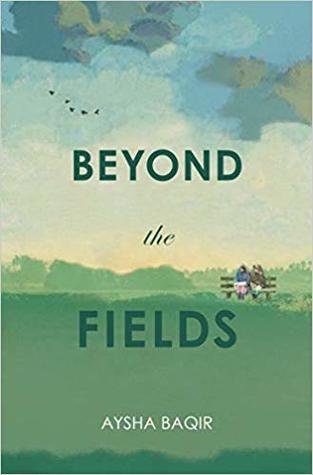


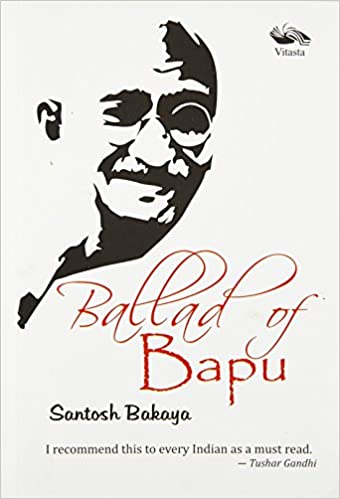
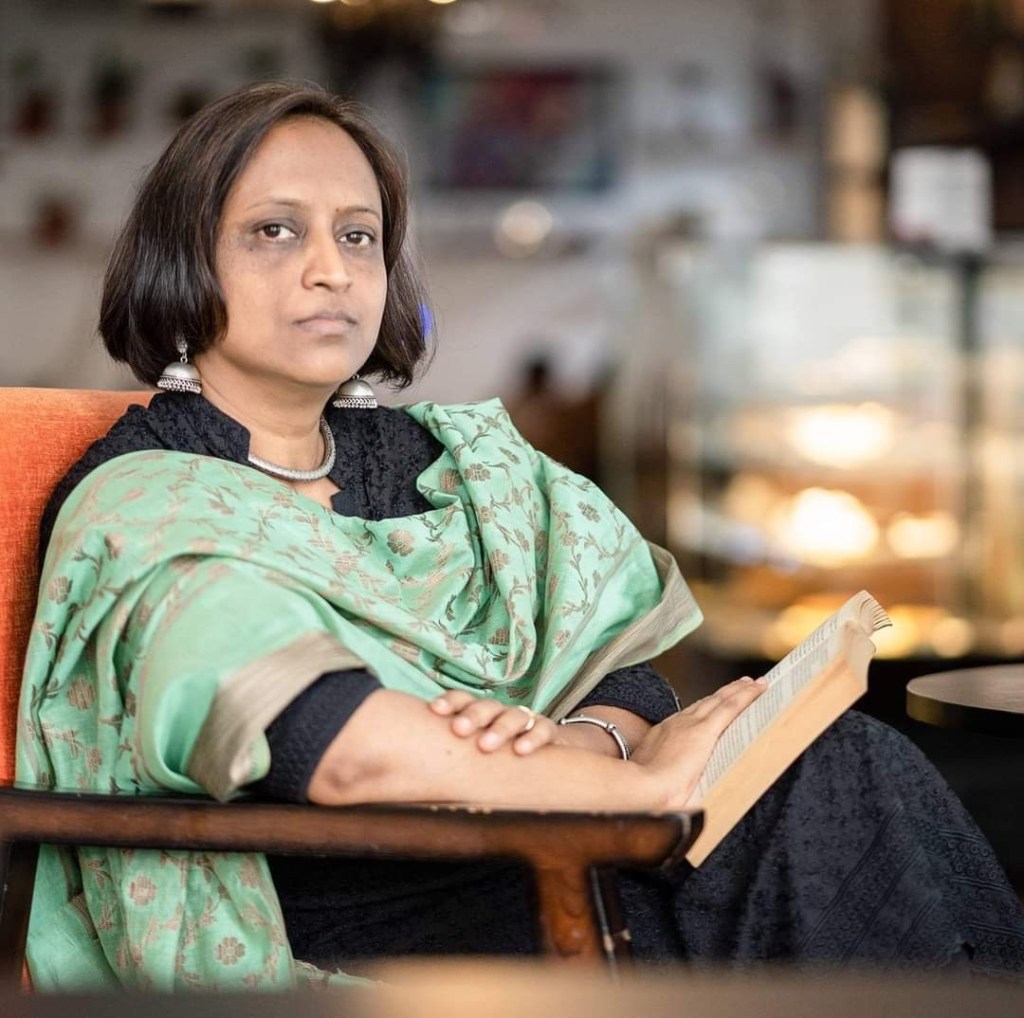
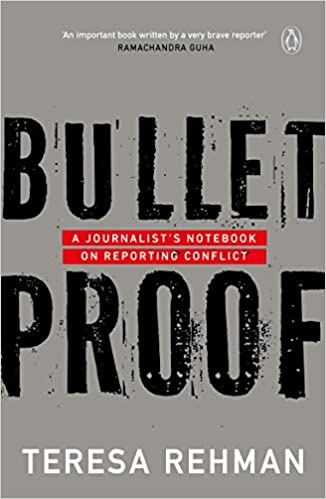
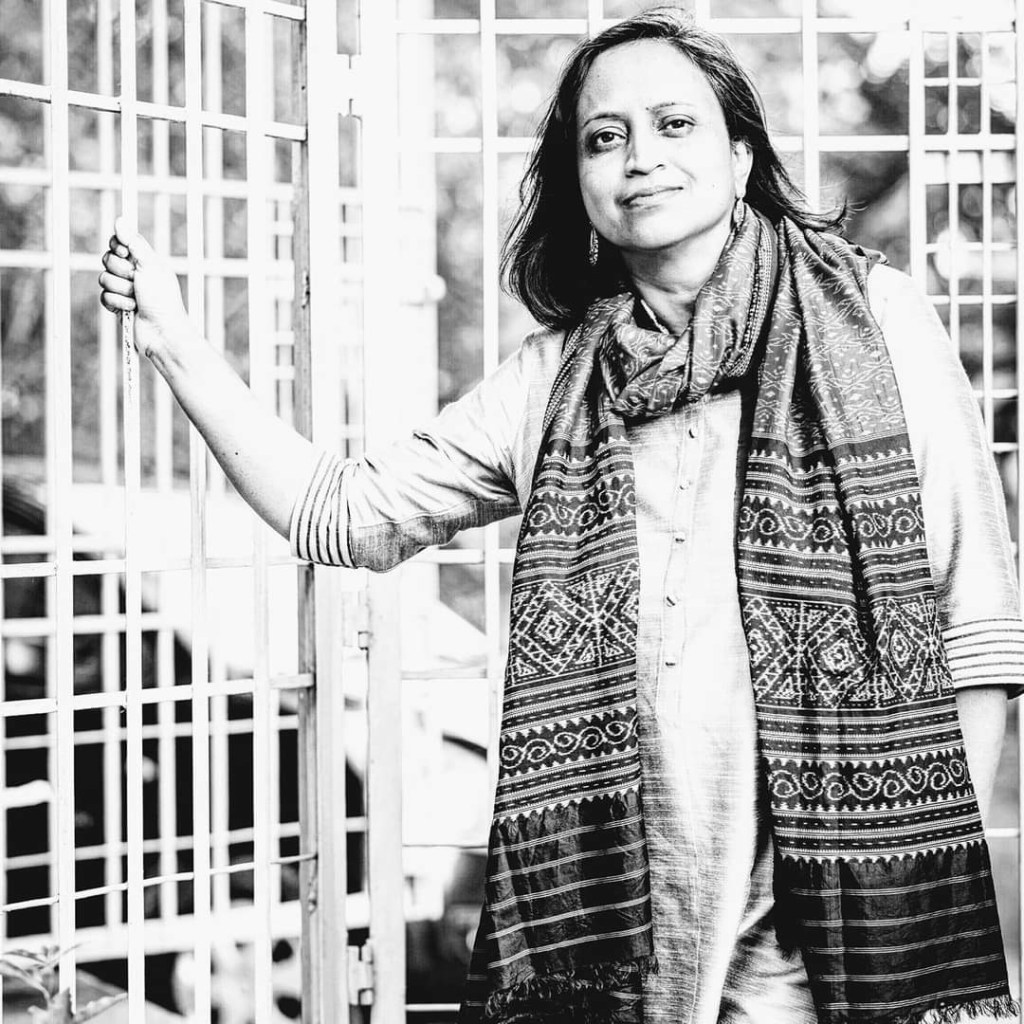


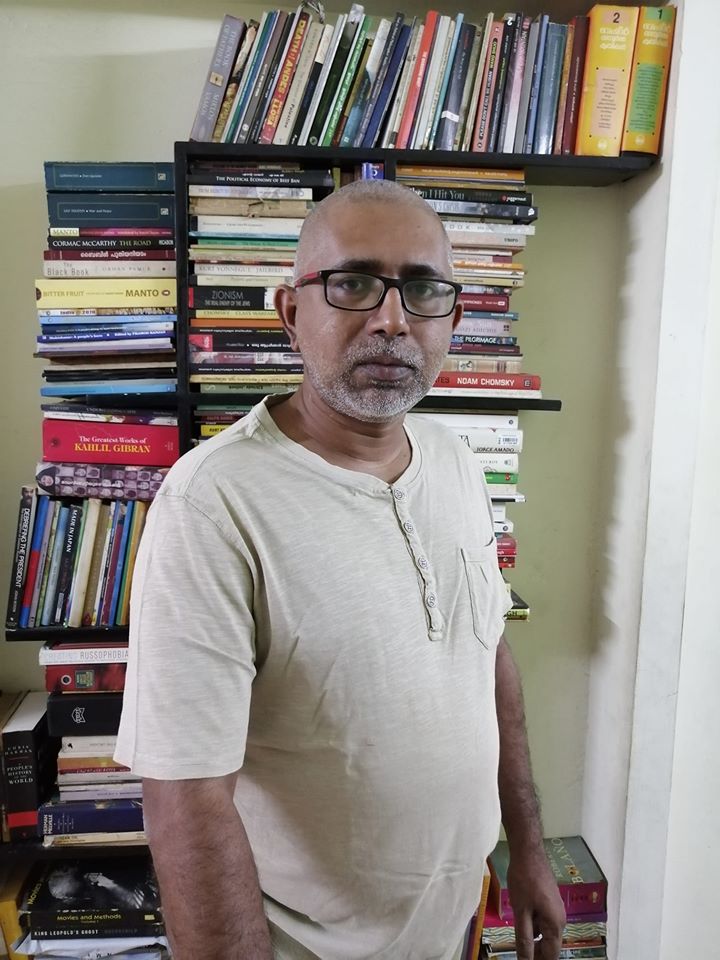



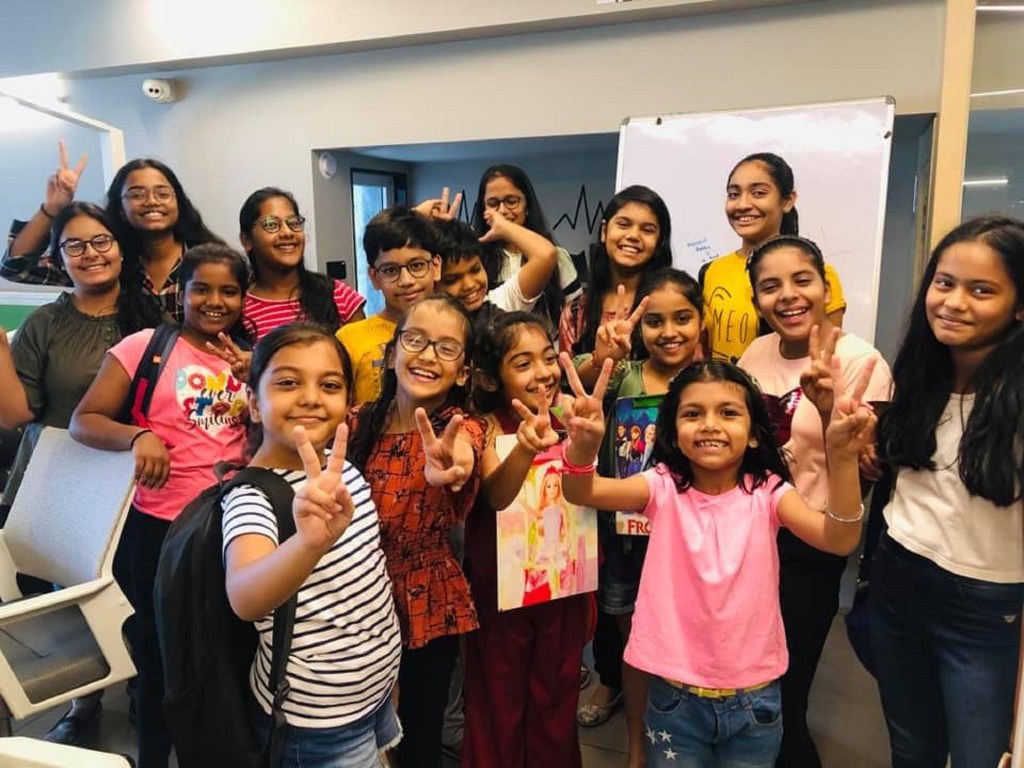



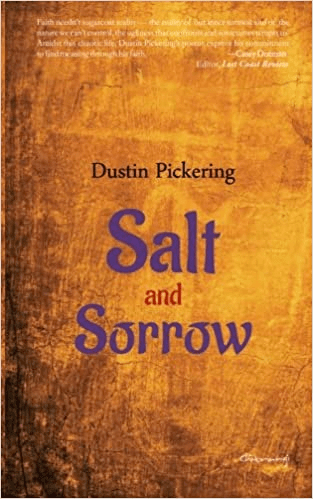
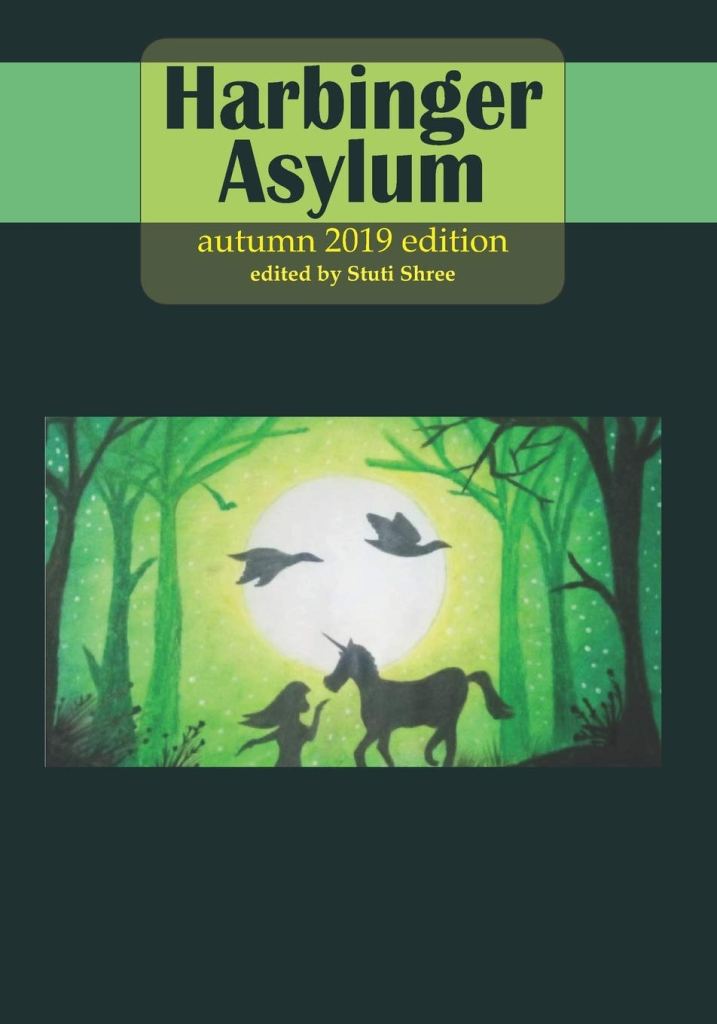

 Borderless