If you do not know poetry beyond high school, all poems are odes. They go O…! Haven’t read any contemporary poetry? Haven’t seen poetry recitals except on primetime tv? All poems still go O…! Do not share your new poem in a circle of school friends or relatives. Even if you do, hear their comment ‘Wow! Awesome! Lovely!’ as ‘grow up to an ode that goes O…’. The retired revolutionary poet glances through your poem and says: not even worth the Z-division league of O Germany, Pale Mother. Not even a shadow of O, We are the Outcasts, reminds the senior postmodern poet. Poems titled Orange, Omelette, Oxygen aren’t quite the O poems, declares the lyric poet who reads O Blush Not So! twice daily. A tired and old O Do Not Love Too Long and his pal O Western Wind confess to a friendly new prose poem: we long to idle in our graves. But alas! Here they are, in ill-fitting attire of teleported primitives, holding centre stage in a bandwagon that fades around the corner. As good as a failed interworking attempt between H.323 and SIP or a brand-new showroom of CRT televisions. A retro hackathon in Fortran, an MMO Pacman event or the B side of an old VHS tape. The street is a river, a carnival of clichés and bygones.
Note:
O Germany, Pale Mother by Bertolt Brecht/O, We are the Outcasts by Charles Bukowski/O Blush Not So! by John Keats/O Do Not Love Too Long by W.B. Yeats/O Captain! My Captain! by Walt Whitman
.
Aditya Shankar is a Pushcart and Best of the Net nominated Indian poet, flash fiction author, and translator. His work has appeared in international journals and anthologies of repute and translated into Malayalam and Arabic. Books: After Seeing (2006), Party Poopers (2014), and XXL (Dhauli Books, 2018). He lives in Bangalore, India.
.
PLEASE NOTE: ARTICLES CAN ONLY BE REPRODUCED IN OTHER SITES WITH DUE ACKNOWLEDGEMENT TO BORDERLESS JOURNAL.
“Pick up the phone, can you not hear it?” The Principal had the habit of not picking any landline call, as most of the landline calls were from the Directorate of Higher Education, and the Principal whose superannuation was just a couple of months away, was wary of attending to the calls, afraid of some calamity falling on his head, delaying the financial benefits accruing post- retirement.
So it was the personal assistant(PA) who picked it up on the extension in his room, while the Principal’s ears pricked up as he craned his neck in the direction of the room from where the PA dashed towards him, forehead creased.
“Sir, sir, the call was from the Directorate, the Chief Minister is coming here with his entourage.”
“What on… earth… for?” The Principal stuttered, springing up from his chair, almost lurching — a ship in a storm-tossed ocean. A crushing sense of misery gripped him as he felt the riotous waves crashing against him with ominous messages. Then he gave vent to a series of curses that embraced the whole directorate, politicians, bureaucrats, clerks, peons, students and even the dogs and cats loitering outside his chamber.
“Next week, they will be headquartered here for a couple of days and will have the jansunvai [Public hearing] here”. The PA remarked in somber tones, as if bent on rubbing salt on the Principal’s already lacerating wounds.
“The college building is a mess, what will they do here? The toilets are so pathetic. Even if they stay here for a couple of hours, we need to dismantle and renovate the toilets. The Indian style toilets will have to be replaced by western style toilets, there will be many bureaucrats and the PA of the chief minister is very suave and sophisticated — he was my friend once. I am done for.” He banged his head, almost on the verge of pulling out his hair, but sheepishly realized that it was a wig that he was wearing and wisely dropped the idea — and of course the hand from his head.
“So, what if he is suave and sophist…icat…ed?” The PA asked, almost stumbling on the word, sophisticated, one eyebrow raised strategically.
“Damn it! How foolish can one be! How will they use these Indian style toilets, tell me?” The Principal smirked.
“Are they not Indians?” The PA asked, this time raising the other eyebrow.
A couple of boys had entered the office, holding on to two pieces of paper, when pieces of this conversation fell into their ears. They dashed out with this information, and blurted it out to the students, embellishing it with some tidbits of their own.
“You know, the Chief Minister is coming here with an army of people and the college authorities are going all out to make them comfortable.” One of them informed them in breathless excitement. This was followed by a collective gasp of indignation from the students and clucking of tongues and voicing of raucous dissent.
“Imagine the cheek of these college authorities! They are not able to solve the water-crisis in the college, but are conveniently thinking of jaguar toilet fittings for the VIPs!”
“They are installing air-conditioners in the toilets. We are done for!”
“Our throats are getting parched, and they are being provided with mineral water.”
Inside the chamber, the Principal was moving around like a scalded cat; not mewing like a cat but barking incomprehensible orders, suddenly sitting on the chair, and then springing up as though pricked, pacing the room, looking at the ceiling, perhaps for some divine intervention, and then bursting out in perspiration. The impeccably dressed Principal now looked disheveled, shouting and cursing, making grotesque gestures and flailing his arms. He leapt and skipped and then absolutely tired and snuffed out, hop-scotched towards his chair, flung himself on it and soon fell asleep, absolutely wilted.
“How will we manage in a week?” He whelped, leaping up suddenly, holding his stentorian snores in abeyance while the dog outside his cabin, which had been at the receiving end of his invectives, rolled up on a coil of rope, and forgiving the perpetrator of indignities, added his snores to those of the perpetrator, in a symbolic gesture of a truce.
“Toilets kaisey banengey (how will the toilets be made)?” The Principal barked anew, between two roof-shaking snores.
For one week, the Corridor of Learning buzzed with the topic of renovation, while the Principal’s chamber also buzzed on and on. There was buzzing in the washroom, there was buzzing in the student circles, and there was buzzing in the Principal’s ears. The washroom was getting a facelift, while the faces of the students fell.
“You know, they are using the students’ funds for renovating the washrooms.”
“How dare they? This is unfair.”
“Very, Very unfair.”
“We will go on a strike.”
“Yes we will. TaanashahiNahi chalegi (Down with dictatorship)!”
The seat of power was threatened by a toilet seat, things had come crashing down from the almost-ridiculous to the utter ridiculous.
But the tragic irony of this entire fracas was that the caravan did come, but alas, none of the ‘sophisticated and suave’ men used the newly renovated and highly sophisticated washrooms that had been designed especially for them. All the money spent on the refurbishing and renovation of the toilets went down the drain. What did not go down the drain, but down the delegates’ gullets and into their stomachs, was the absolutely lavish feast laid out for them so magnanimously by the college authorities. The students strongly suspected that this money was also purloined from the Students Union Fund.
Dr. Santosh Bakaya is an academician, poet, essayist, novelist, biographer, Ted Speaker and creative writing mentor. She has been critically acclaimed for her poetic biography of Mahatma Gandhi [Ballad of Bapu]. Her Ted Talk on the myth of Writers’ Block is very popular in creative writing Circles . She has more than ten books to her credit , her latest books are a biography of Martin Luther King Jr. (Only in Darkness can you see the Stars) and Songs of Belligerence (poetry). She runs a very popular column Morning meanderings in Learning And Creativity.com.
.
PLEASE NOTE: ARTICLES CAN ONLY BE REPRODUCED IN OTHER SITES WITH DUE ACKNOWLEDGEMENT TO BORDERLESS JOURNAL
Rhys Hughes has lived in many countries. He graduated as an engineer but currently works as a tutor of mathematics. Since his first book was published in 1995 he has had fifty other books published and his work has been translated into ten languages.
.
PLEASE NOTE: ARTICLES CAN ONLY BE REPRODUCED IN OTHER SITES WITH DUE ACKNOWLEDGEMENT TO BORDERLESS JOURNAL.
Sunil Sharma is Mumbai-based senior academic, critic, literary editor and author with 21 published books: Seven collections of poetry; three of short fiction; one novel; a critical study of the novel, and, eight joint anthologies on prose, poetry and criticism, and, one joint poetry collection. He is a recipient of the UK-based Destiny Poets’ inaugural Poet of the Year award—2012. His poems were published in the prestigious UN project: Happiness: The Delight-Tree: An Anthology of Contemporary International Poetry, in the year 2015.
.
PLEASE NOTE: ARTICLES CAN ONLY BE REPRODUCED IN OTHER SITES WITH DUE ACKNOWLEDGEMENT TO BORDERLESS JOURNAL.
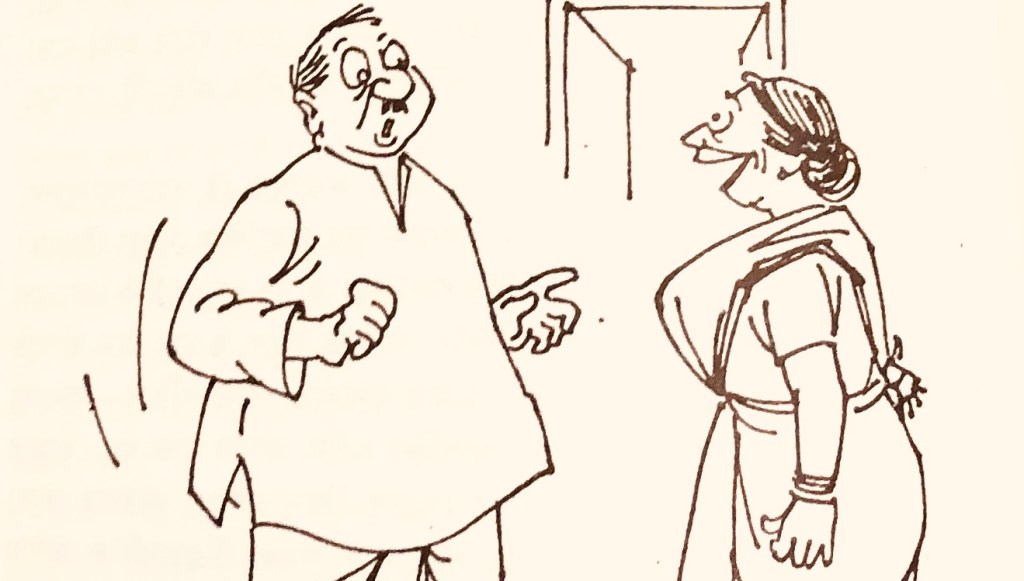
Panchanan Da, often fondly called Ponchu Da, had a humongous paunch which made a person standing two feet away feel quite close. It felt as if they were touching each other inappropriately. His protruding paunch was a combined result of taking siesta immediately after having a plateful of maach bhaat*, total lack of any form of exercise and a genetic predisposition to fill up in all the wrong places. Mischievous kids would often purposely pronounce Ponchu da as Paunchy da much to the protagonist’s displeasure who would wag his forefinger threateningly knowing fully well that he was incapable of doing anything beyond that.
Hailing from Poschim Bongo*, Ponchu da had a penchant for punjabis* (not to be confused with the people of Punjab of the five rivers fame, not that they were not worthy of his fondness). These punjabis, especially made from muslin, is the most proffered favourite of many pedigreed Bengalis. Come summer and you will notice such punjabis (of the garment fame) in every possible hue with exquisite embroidery covering differently (or is it indifferently?) shaped torsos of babu moshais*.
Now coming back to Ponchu da, who was the most ordinary of human beings in his ordinariness, had the most pallid and poker face. Nothing but nothing could bring a flicker of animation on his podgy pudgy face. The only time his eyes would have the glazed look would be when his wife, Putul di*, would call him to partake of his food at the dining table.
Ponchu da‘s preference for pickles could not be ignored. He just loved licking and smacking his lips while gently slurping, running his tongue lovingly over the tart pickles of any and every variety. Drooling over them with a particular ‘Tthat! Tthat!’ sound that his tongue made while smacking the roof of his mouth with it!
Though he gave the impression, he had never ever actually been pregnant his entire life. He became like a petulant child when the dinner table was not adorned by an assortment of jars beaming proud pickles in their glassy splendour.
Now it so happened that one day, Putul di saw our home grown Ponchu da drubbing his forehead. Now this was a gesture that denoted that dear Ponchu da was taxing his fast depleting grey matter to recall something and those gooey cells were playing hooey with him. Often his poor head would throb at such a herculean task and poor dear Putul di would have to spend an entire half hour rubbing half a jar of Tiger balm till dear Ponchu da would deem it fit to doze off into an apocalyptic sleep , often tiger-grunting inaudible gibberish in a feverish manner much to the chagrin of his wife who wanted absolute quiet after such an exhaustive exertion .
Coming back to the drubbing of forehead, Putul di had a premonition that her afternoon nap was hanging in balance on the outcome of the drubbing. To avoid looking at the tension filled scene she escaped to her pantry trying to potter around taking stock of the things stored. It was almost the end of the month and she would have to replenish her stock in a week.
Suddenly, she heard her husband calling her, “Ogo shunchho*”(now this is a very watery sort of a word, but it assumes its colour and dimensions from the tone used). Hearing her placid husband’s insistent high-pitched call Putul di stopped her pottering around. She rushed out to see Ponchu da‘s face turning purple.
On enquiring what the matter was she learnt that her husband was unable to recollect where he had kept his favourite but well-worn out faded pink punjabi (of the garment fame). They both searched for it. Putul di in her best placating voice telling that even if they couldn’t find it, it was no loss as it had long outlived its time. Its shapeless sagging form doing nothing to elevate its position in the hierarchy of punjabis. Ponchu da‘s wail almost lead to both of them having respiratory spasms leading to the stopping of the pump, I mean their heart. “You don’t know how comfortable and how soft it had become,” wailed Ponchu da. At her wits end she told her husband to search his cupboard while she volunteered to search the clothesline and alna*.
In the midst of this, a sudden bolt of lightning struck our dear Putul di. She rushed to her pantry and stopped dead in her tracks. Like a flashback her mind unspooled the happenings of the previous week. Upon her invitation her Punjabi (of the five rivers fame) friend, a pro in matters of pickling, had volunteered to teach her by demonstrating step by step method of pickling mangoes, tamarind, lemon, jackfruit and various other vegetables. They had spent two afternoons pickling all these items. In front of Putul di‘s eyes danced various jars and ceramic containers in progressive stages of pickling. Their mouths neatly tied with the cut pieces of ‘the faded pink ‘ punjabi (of the garment fame)!
Putul di remembered her personal supervision in cleaning the perspiration out of the worn punjabi and repeatedly dunking it in Dettol to sanitise it. She would have swooned had not the pungent gases released by the various jars in various stages of pickling stopped her spell and acted as smelling salt.
Our Putul di‘s, mind whirred like a new fan. Immediately she left for the market saying loudly to no one in particular that she would be back in an hour. Her afternoon siesta went out for a toss. She headed straight to the punjabi (of the garment fame) store, eyed the only available pink punjabi with purple embroidery without pernicious prejudice, bought it, gift wrapped it and left for home.
Her mind doing mental acrobatics trying to adjust the purse handed to her for mashkabari (monthly expenses) for our dear paunchy Ponchu da was parsimonious in pecuniary matters.
Preparation was always the key for Putul di to counter Ponchu da’s insistent persistence. Putul di knew from past experience that she had to create an opening by leading from the front and then seize the moment by the scruff of its neck and give it a good shake till it hung limp and pliable. Patience but no passivity and only frontal attack to tide over the fraught situation.
The scene that hit her on entering her bedroom stirred certain primordial primitive emotions while her bosom heaved passionately. Mounds and mounds of clothes lay haphazardly piled high. The cluttered room looked frighteningly overstuffed. Even Putul di’s almirah was emptied in the hope of finding ‘the elusive faded shapeless punjabi‘ (of the garment fame).
Ponchu da was nowhere to be seen. Putul di with the posture of a Pitbull terrier hollered, “Ogo shunchho*!” Out of the corner of an eye she detected a certain mountainous mound move. It was Ponchu da trying to extricate himself from layers of clothes with a woebegone expression plastered on his face. “Eta ki*?” gnashed Putul di gesturing at the scene of devastation of their room. Seeing that his wife was on the warpath Ponchu da tried to placate her by saying in a mollifying tone that his favourite punjabi (of the garment fame) could not be found.
Seizing the momentous moment Putul di took her turn of pointing her forefinger at him wagging accusingly and saying, “You have done this now you will sort them out just the way they were” in a frightfully frightening tone that shook the nebulous core of Ponchu da.
Poor Ponchu da broke out in cold sweat. Casting a look all around the tornado hit room he started scratching his head. His head as such didn’t feel it belonged to him. It felt too heavy and too woody. What with all the physical activities of throwing out the clothes randomly from the cupboard and heaping them up, in his quest for his well-worn shapeless punjabi he felt totally without life’s bubbling stream flowing in him. Trying to find an escape route from rearranging the mounds of clothes he plonked himself down on the heap nearest to him and said pitifully that he would not until his punjabi was found. Hearing this Putul di quickly closed the gap and hissed in a dangerous undertone much to the surprise of Ponchu da who was having difficulty processing the fast-paced happenings around him. He never had a stomach for anything that was paced fast. He heard his queen’s hissed proclamation that she had snipped his favourite punjabi and thrown it in the gutter and if he didn’t organise the room to its old cluttered self all the pickles, pickled and pickling, would meet the same fate.
Psychedelic nightmares flashed through his slow-moving dome. He was quaking and wobbling like a jelly as visions rose of jars and jars of pickles lying abandoned and broken in the filthy gutter mixing up their divine aroma with that of the unbearable stench.
Well to cut a very long story short, Ponchu da took the entire evening and a substantial part of the night to do the bidding of his wife under her expert but severe glance and guidance. His paunch too reduced by a few decimal points and sagged at the exertion.
At the late dinner hour, he was thankfully pleased to see quite a few new types of pickles adorning the dining table and next to them was a gift-wrapped rectangular packet. Not daring to speak he began the ceremonial ritual of opening each jar and heaping a spoonful of it on his plate. He had built up a very good appetite. After finishing his meal his wife siddled up to him, giving him the credit of a job well done and thereby mollifying her, she handed the shiny rectangular packet to him and said with coyness that it was a token of appreciation from her for doing a yoeman’s job.
Theatrics at short notice was Putul di’s forte. A Prima Donna of melodrama.
*maach bhaat – fish curry and rice
*Poschim Bongo – West Bengal’s new name, a state of India
*punjabi- a fine cotton loose garment ideal for summer
*Babu moshai – Gentleman
*alna – An open wooden bracket for stacking clothes
*Ogo shunchho – Darling are you listening or darling come here
*Eta ki – What is this
*da – brother
*di- sister
Sudeshna Mukherjee‘spoems and stories deal with varied human nature. A keen observer she chronicles the happenings around her and writes with a tinge of humour. She is the recipient of The Golden Vase award for her humorous and satirical writings and many of her short stories and poems have been published in e-zines. Mélange and Meanderings of the Mind are her published book of poems.
.
PLEASE NOTE: ARTICLES CAN ONLY BE REPRODUCED IN OTHER SITES WITH DUE ACKNOWLEDGEMENT TO BORDERLESS JOURNAL.
Dr. Piku Chowdhury is a teacher in a government aided post graduate college of education and an author of 8 books. She has published more than 70 articles in international journals and acted as resource person in many national and international seminars and symposia.She has published poems, acted as editor, translator and core committee member of curriculum revision in the state.
PLEASE NOTE: ARTICLES CAN ONLY BE REPRODUCED IN OTHER SITES WITH DUE ACKNOWLEDGEMENT TO BORDERLESS JOURNAL.
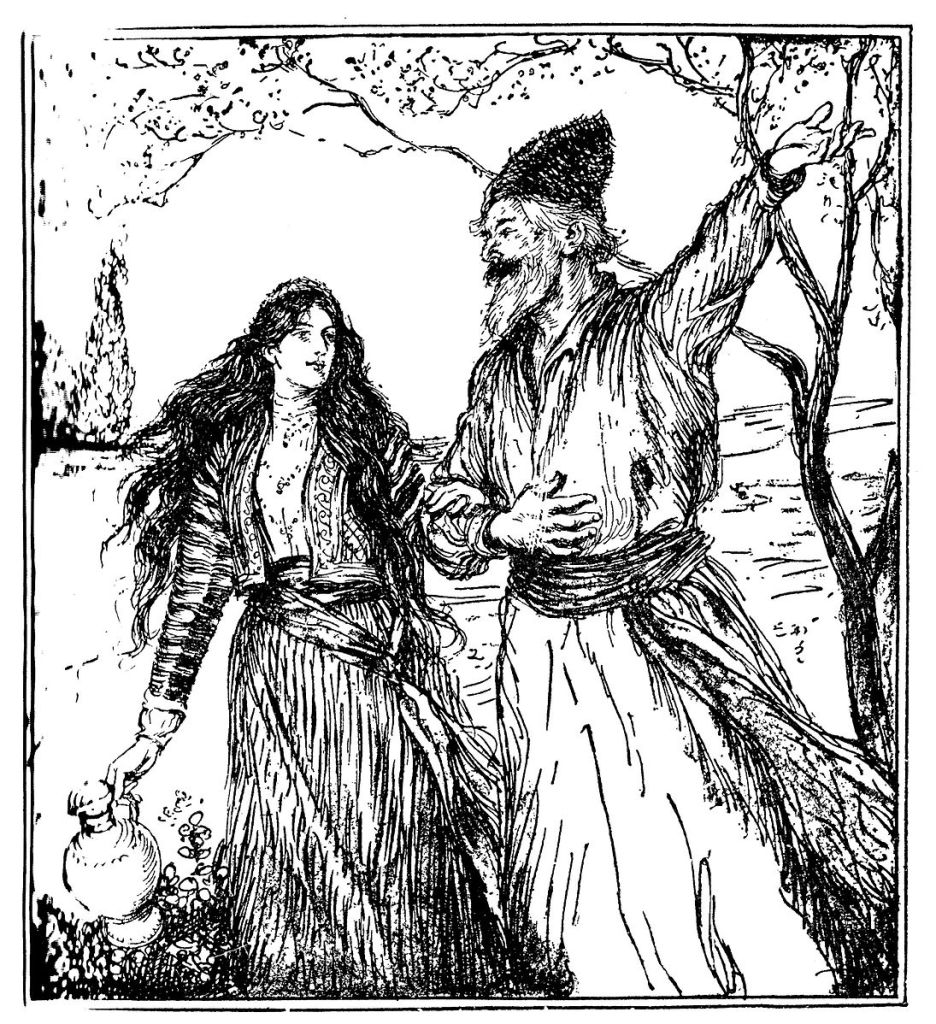
(With due apologies to Amir Khusrau and Omar Khayyam)
I left the tavern empty cup in hand
seeking my only love in the land.
.
I follow behind the earthly caravan
as eyes from the Beloved blissfully command.
.
My bare feet draw solace from the sand.
What love was left is now forever damned.
.
The moonlight scolds my gaze to reprimand.
I quietly fill my belly with wine from Your hands.
.
Once drunk I understood love’s immortal bands.
A song filled my heart, both true and grand.
.
Dustin Pickering is the founder of Transcendent Zero Press and editor-in-chief of Harbinger Asylum. He has authored several poetry collections, a short story collection, and a novella. He is a Pushcart nominee and was a finalist in Adelaide Literary Journal’s short story contest in 2018. He is a former contributor to Huffington Post.
.
PLEASE NOTE: ARTICLES CAN ONLY BE REPRODUCED IN OTHER SITES WITH DUE ACKNOWLEDGEMENT TO BORDERLESS JOURNAL.
When I read some short stories and found the writer dragged to court for writing bold stuff, I felt that the author created a larger ripple when slapped with a lawsuit. I was fully prepared to face any trial, waiting for a nerd or herd to feel offended and seek umbrage. The glorious phase of my literary career would begin once it gets caught in the legal whirlpool.
While they did not wish to be hauled up or put behind bars for their no-holds-barred writing, there exist a few brats who love to foment trouble at the drop of a hat. If only I could join their folds, the newspaper headlines should scream my name on the front page in bold font and accuse me of writing the most contemptible contemporary fiction. A liberal dose from the libellous story would generate further interest in my writing. Courting controversy would offer me the bliss of joining the august company of iconoclastic — and iconic — authors who served a sentence for writing those profane sentences.
Despite more than a hundred short stories and articles published in various journals and magazines, not a single reader from any part of the world deemed it fit to charge me with obscenity or something similar. This is shocking and insulting for a writer who claims to command a global readership in the digital age. Forget the new generation of millennial readers, some old fogey somewhere should have pounced on me by now. I did forensic reading of my stories again but failed to gather why the sensibilities were not outraged with the intimate passages contained in them. I began to doubt whether these had been read by the right kind of people. I grew intolerant with the growing level of tolerance among discerning readers.
I was sure that my content could trigger a wildfire, enrage some religious head or a fanatic to assign a big prize on my head. A new kind of literary prize launched for my prized head that scatters contagious thoughts of ruin. Despite the looming threat to my inconsequential existence, I would remain safe under my sturdy teakwood bed, studying and stirring up fantastic stories with gay abandon. In case the threat mounted, I would shift to my neighbour’s villa for extra security provided by his pets and home guards. Halt the train of evil thoughts and instead focus on lawsuits for the time being.
I shared samples of short fiction with my conservative friends to create friction, urging them to forward the published links to their relatives and friends, with the fond hope that a case somewhere – even in a remote district court – would be filed against any of those stories. I could then highlight this achievement in the cover letter to the leading publishers who would merrily offer a three-book deal on the basis of the legal tussle, hailing me as the most controversial author in recent times on the book cover in order to launch a marketing blitzkrieg.
Unfortunately, my friends pronounced a favourable verdict. My writing was non-toxic and most unlikely to offend the prickly and hyper types spread across the planet. There was nothing potentially unsafe to mislead the youth, to create rebels or pollute their impressionable minds with dissent. They found my passionate stories layered with a good message in the climax. This relief was a disappointing confirmation that my literary output would never become controversial and sensational.
I was almost convinced that the rugged path to great writing went through the dense jungles of controversy. I should think of something ahead of the times in terms of plot and narrative in my forthcoming collection of stories. I should ruffle feathers, shake the branches, and strike at the roots to raise a literary storm.
When I showed the first draft of my new stories to a friend, she said there was nothing mildly, faintly, or remotely controversial. She said she had read bolder stuff and even those pieces were unable to stir any controversy. Becoming a controversial author, she suggested, was far more difficult than becoming a good author. Perhaps the surest way to raking up one was to do something controversial in real life instead of trying it on the pages.
This feedback received further boost when I was told that I was a timid writer pretending to be a bold one. The person who diagnosed my frailties was my former English teacher and he advised I should give up the romantic notion of becoming a controversial writer as I did not possess that streak. I was advised to write what I enjoyed writing in a freewheeling manner, with large doses of humour.
The sight of a cop at the traffic light scared me. An open window generated fear of thieves and kept me awake the whole night. A person horribly scared of snakes and dogs was most unlikely to show symptoms of bravery on the page. No point visualizing myself being grilled inside a packed courtroom, in front of a battery of lawyers, accused and sued for hurting and offending sensibilities with my writings.
I re-read some of the authors who hit big-time because their stories took them to court and thence, put them in spotlight. There was nothing derogatory or defamatory in terms of content that made them face the ordeal they did. So, there was a glimmer of hope that a lawsuit does come your way even if there is nothing objectionable or hurtful. Just as the writer is creative in weaving stories, some people turn creative in finding controversial elements. Such critics cross the writer’s path only if they are sure to gain something bigger for stoking it in favour of the wordsmith.
The desire to be hauled up and slapped with a lawsuit turned real and raw when a self-publishing project deal ran into rough weather recently, with the publisher demanding an upfront payment since the pre-orders for my book, despite sending the pre-order links to all my friends, relatives, and colleagues, failed to cross the agreed threshold number of copies. The publisher threatened to sue me for failing to shell out the money and I decided to shoo him away. To save my soft skin and all the vital organs I needed to lead a healthy life, I initiated the cancellation process but the advance paid was forfeited. The harrowing experience of writing an unpublished book and facing legal threats for non-payment jolted me. I realised there is no frisson of excitement in a legal battle as it rattles the mind and affects the writing output every day. The dream of being a controversial author was finally aborted after this nightmarish experience.
.
Devraj Singh Kalsi works as a senior copywriter in Kolkata. His short stories and essays have been published in Deccan Herald, Tehelka, Kitaab, Earthen Lamp Journal, Assam Tribune, and The Statesman. Pal Motors is his first novel.
.
PLEASE NOTE: ARTICLES CAN ONLY BE REPRODUCED IN OTHER SITES WITH DUE ACKNOWLEDGEMENT TO BORDERLESS JOURNAL.
Dr. Santosh Bakaya is an academician, poet, essayist, novelist, biographer, Ted Speaker and creative writing mentor. She has been critically acclaimed for her poetic biography of Mahatma Gandhi [Ballad of Bapu]. Her Ted Talk on the myth of Writers’ Block is very popular in creative writing Circles . She has more than ten books to her credit , her latest books are a biography of Martin Luther King Jr. (Only in Darkness can you see the Stars) and Songs of Belligerence (poetry). She runs a very popular column Morning meanderings in Learning And Creativity.com.
.
PLEASE NOTE: ARTICLES CAN ONLY BE REPRODUCED IN OTHER SITES WITH DUE ACKNOWLEDGEMENT TO BORDERLESS JOURNAL
It took more than an hour for Rupa to reach her destination. After paying the fare she started walking past the pet shops in Katabon. The first one had birds and fish and aquariums of different sizes. She also noticed some curious looking cages. After three shops she found one sporting caged dogs. Two black ones were sleeping, a white poodle dozing, while a big wolf continued eying her wearily. Obviously, they too felt the heat. She stopped to see if there were cats too. An elderly, wiry looking fellow was smoking. He came forward and observing Rupa’s frowning face, extinguished his bidi by tapping it against the top of a cage. Then he pushed it over his ear like the tailors tuck in their pencils. Obviously, he planned to smoke later, and not waste his precious bidi*. He grinned and Rupa could not help noticing a single gold tooth that glittered among his nicotine stained set of dark brown teeth. “What would you like, apa*?” the man asked. “We have very good dogs here—a poodle, a German Shepherd… all pure-breed. We can get you more…” There was something very obsequious in his manners that made Rupa grit her teeth.
She shook her head, “I am actually looking for a cat,” her eyes following a thin white cat that had just popped out from behind some boxes. The guy immediately picked it up and said, “You can take Minnie; she is a great mouser.” He looked at it and beamed, “Aren’t you, Minnie? You’re such a darling!” His ‘darling,’ however, turned her snout away from him as if something in his breath bothered her, and struggled to get down, while whining and trying to scratch him with her hind legs.
Rupa looked at the rickety form of the cat the man was holding. She could tell that even though she looked small, she was quite old—at least two to three years. She felt sorry for poor underfed Minnie, but not enough to adopt her. So she asked, “Do you have any other?”
The man let go of Minnie unceremoniously and said a little peevishly, “No. We did have a few more, but they have been sold.”
As Rupa turned to leave, the guy said, “Minnie is a real hunter. She caught a mouse even last night.”
But Rupa was not particularly interested in a hunting cat; she wanted an adorable kitten. This guy probably thought that the only use of a cat was to catch mice. At the next shop a young couple had just bought a pair of white rabbits. As they stepped out of the shop with the caged rabbits in hand, a man balancing on a bicycle cried out: “O bhai*, what have you got in there? Surely not rabbits? Your entire house will stink like the cages in Dhaka zoo!”
Rupa along with the couple stared at the man blankly. What was he babbling about? Probably, some crackpot up to his antics. You can trust the people of Dhaka to offer unsolicited advice at any time. But as Rupa went inside the shop the couple had just got out from, she detected a stench that was worse than all the other shops she had passed by so far. She wondered if it was because of the rabbits. The shopkeeper and his assistant showed her three black kittens claiming that they were Siamese cats. Rupa could not be sure if they were Siamese, but she was willing to bet that they were previously owned by some evil witch. They glared at Rupa with open hostility, their bright eyes burning like green fire. Rupa shook her head negatively and walked toward the next shop.
A boy of around 12 or 13 years of age beckoned her to a box like cage where she saw the kitten. It was small, surely not more than a few weeks old. The orange tabby looked up at Rupa with its large brown eyes and sneezed. Rupa held out her hand gingerly to feel it when she heard a faint mewing sound from elsewhere. She looked inside the box and saw another kitten, a black and white one, whimpering. She continued meowing piteously as Rupa turned to look at the tabby and took it from the boy. Dirty and malnourished, the tabby yet seemed absolutely adorable to Rupa.
“How much?” she asked.
“Five hundred taka, apa. It’s pure breed.”
“What breed?”
The boy mumbled something unintelligible. Another guy spoke up, “You can see the stripes. It’s a foreign cat.”
“Sure,” Rupa grimaced. “It’s just a regular deshi* cat, mixed breed at best.” The other kitten was still crying for its friend. Rupa calculated something quickly, and said, “Okay, I will accept your price, but I want that other kitten for free.”
The shop keepers started arguing, “But you won’t get two cats for 500! And they are first rate kittens.”
“Then I am not taking any,” she placed the tabby in the cage and turned away, even though her heart cried out for the poor kitten. She had not taken two steps when she heard the elder guy, “Okay, okay, they’re yours.”
Rupa took out a five hundred taka note and asked, “Do you have any box I can carry them in?
“No boxes. But we’ll wrap them up for you.”
Wrap up living cats? Rupa waited to see what kind of wrapping they provided.
After about 5 minutes she was staring dumbfounded at the boy holding out the kittens in two brown paper bags. How he got them inside the paper bags so quickly, and without any tearing was a mystery to Rupa.
“Are you mad?” she spluttered. “I am going home in an auto-rickshaw. Those two will tear out of the bags in minutes. Get me at least a net bag or something.”
The boy put the paper bags of cats in a large fluorescent green net bag. Rupa took the bag cursing herself as well as the shopkeepers and hopped on a CNG auto-rickshaw for a hundred taka extra. She should have come the next day with their driver.
Surprisingly, the kittens were quiet in spite of all the noise emitting from the auto-rickshaw and the vehicles in the surrounding streets. Rupa suspected that they were just too weak to protest. After about 10 minutes, however, Rupa heard a rustling sound, and she saw a small orange muzzle tearing from a brown bag. “Baghu,” thought Rupa. “I’ll call him Baghu.” It was a male cat, she had already noted, whereas the black and white one was female. She could be Nishi. Nishi made no sound at all, but Baghu kept on rustling and clawing at the paper bag until half of his body came out. Then he was pushing against the net. “He does have spirit, after all,” thought Rupa. But she certainly did not want him out of his bag right now. So she put the bags and cats all on her lap holding on to them tightly, praying all the while that they didn’t pee on her. And she hoped that she got home without any trouble.
bidi* — a tendu leaf cigarette
apa*— sister
bhai* —brother
deshi* — local
(Published first in Daily Star Literature)
Sohana Manzoor is an Associate Professor of English at the University of Liberal Arts Bangladesh.
PLEASE NOTE: ARTICLES CAN ONLY BE REPRODUCED IN OTHER SITES WITH DUE ACKNOWLEDGEMENT TO BORDERLESS JOURNAL.








 Borderless