The narrow river, the vast fields and the family deities.
The jamun tree with its low swinging perch,
Tastes and smells, flavours and hues —
What brought this abundance, no one had a clue
The refinement of the baithaka*, had us in awe —
The only sign of grandeur without a flaw.
The incessant card-games, sultry summer,
The Awadhi dialect which had its own candour.
Our Grandmother’s small frame had amazing strength,
Her frail body belied its own health.
Her education, her words of wisdom, and her affection
Mingled with her devotion.
The village was her whole sphere —
Never did she wish to be elsewhere.
We fought and we cried: we roamed, we lied.
We led a life of abundance and freedom.
It has all seeped somewhere.
Today while checking my email,
The memories gushed out…
So much has changed.
The abundance has given way to depravity.
The house looks desolate and not what it used to be.
Even the faces in the photographs seem remote
It is best to cherish the memories.
That world was my childhood… I must hold it tight
Lest it slip away.
* baithaka — A formal drawing room
Dr Gauri Mishrais teaching as Associate Professor in the department of English at College of Vocational Studies, University of Delhi. She likes to dabble in poetry and short fiction from time to time. She is very passionate about teaching and also heads the placement cell of her college.
.
PLEASE NOTE: ARTICLES CAN ONLY BE REPRODUCED IN OTHER SITES WITH DUE ACKNOWLEDGEMENT TO BORDERLESS JOURNAL
Ratnottama Sengupta journeys to show how past and present are interlinked in artand pays tribute to a polyglot
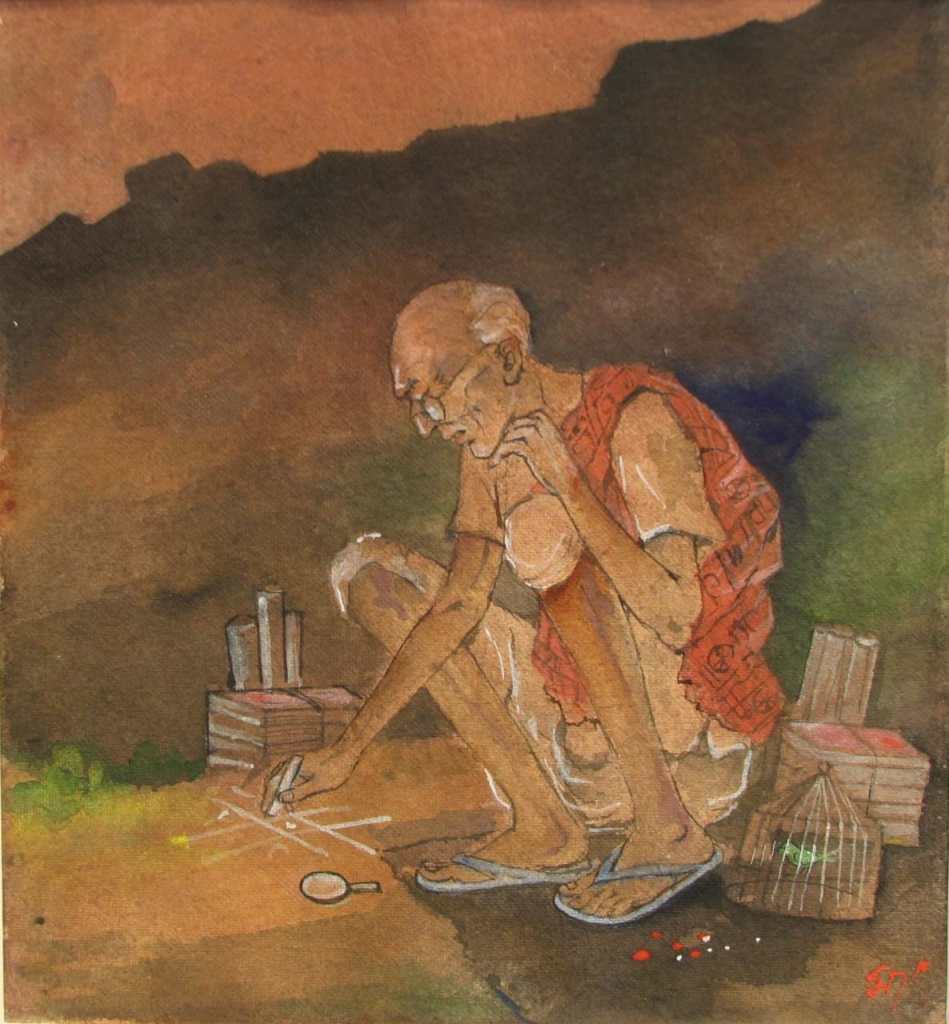
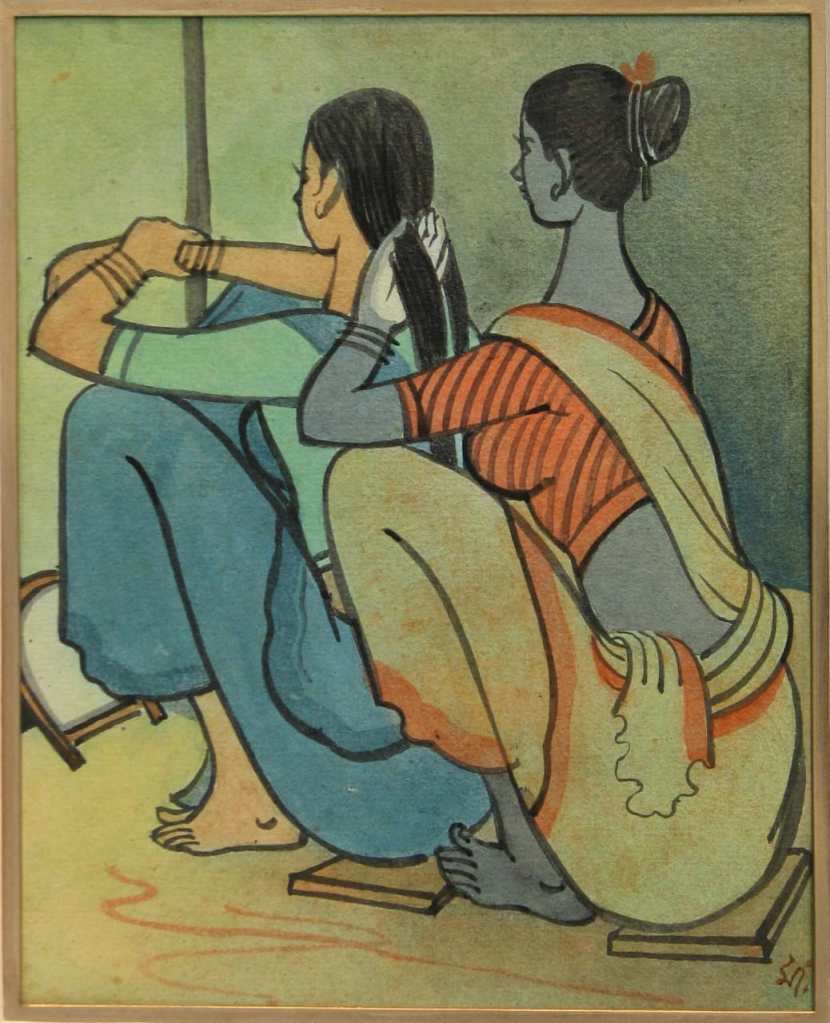
I must have been six or seven years old then. I had already developed the habit of looking attentively at visual images even before I could discern the letters of the alphabet. For, even as a child I would leaf through Baba’s* books that were everywhere in our house — in the bookshelves, on the table, on the beds and even under the beds. So, when I loitered out of our home into those of our neighbours, I was drawn by the ‘Merry Christmas’ cards overflowing the mantel shelves of some and the ‘Diwali Greetings’ lining the walls of others. Later I started collecting them, and some years down, when my elder brother went off to medical school, I inherited his stamp collection. In all of these, I would involuntarily seek out Indian scenes: women plaiting hair, farmer ploughing his field, Koli* fisherfolks with their nets, boatman in the river, cow and calf, lady lighting a diya*, an itinerant sadhu, a Baul* singer…
Why was I drawn to these ‘Indian’ stories? I was, after all, growing up in Bombay of 1960s, where the citizens were commuting by train to eke out a livelihood in the mills and factories, in the corporate offices and film studios churning out tinsel dreams. I never posed these questions then but almost six decades later I have the answer:
In the rapidly industrialising country, people coming out of a glorious past were forging a new identity for another tomorrow. But even an India of new dreams could not be divorced from the lived reality of the forefathers, right?
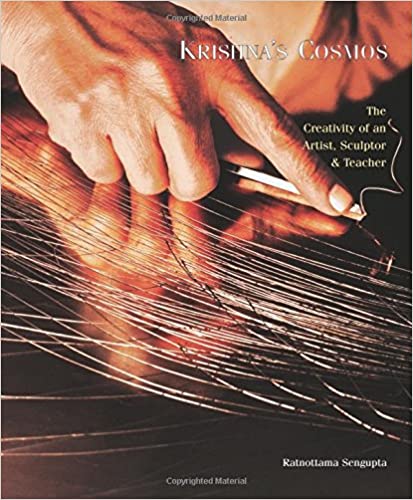
This realisation came to me after I visited Santiniketan, had the good fortune to interact with pathbreaking artists like Sankho Chaudhuri, K Subramanian, Ramananda Bandopadhyay, Debabrata Mukherjee — and when I penned Krishna’s Cosmos on the art and life of pioneer printmaker Krishna Reddy. Through them all, I understood that the need for a self-perception of a ‘Bengal’ identity — both biographical and cultural — was very much alive post Partition.
Although Krishna Reddy had a divergent journey in Art, Maniklal Chatterjee, was also moulded in the same crucible as the printmaker, under the watchful eyes of the iconic Nandalal Bose. And, in a certain way, Maniklal carried on the famed Master Moshai’s* Haripura Congress tradition of capturing the everyday life of farmers and labourers, artisans and housewives. It came out of his innate love for nature and the pastoral world in the lap of mother earth. In other words, it was rooted in Life as it was lived in erstwhile East Bengal, that end of the land which was lopped off by the Radcliffe Line, forcing Maniklal to seek a new roof to shelter his homestead — and a new haven through lines and tints.
Krishna Reddy, moving in 1950 to post World War II London and Paris, realised that while Europe was seeking as escape from the horrifying memory of the holocaust, by negating human figures and going into Abstract art, Cubism, Op art and Pop art, India was looking back to its pre-colonial heritage in art: the Mughal miniatures, the folk traditions of Bengal, the bazaar art of Kalighat, the Patachitra of Puri and the homely Madhubani. It was this fount of inspiration that Maniklal Chatterjee appears to have made his own. He did not use his inborn skill to counter the influence of Academic training, nor was he being Progressive by adapting Modernism. Born of a different history and rooted in a different culture, he compulsively looked back to the home he had left behind in Barishal and drew upon the wash technique, the tempera and water colour of Santiniketan that has welded diverse art inheritances in its quest for an Oriental universality.
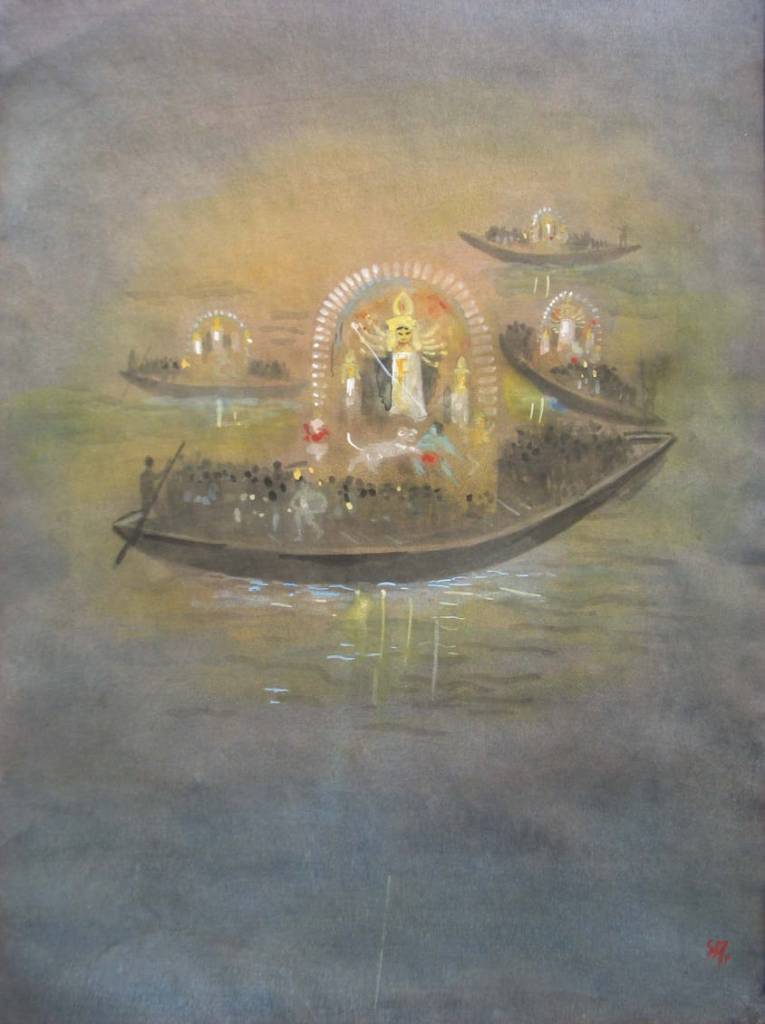
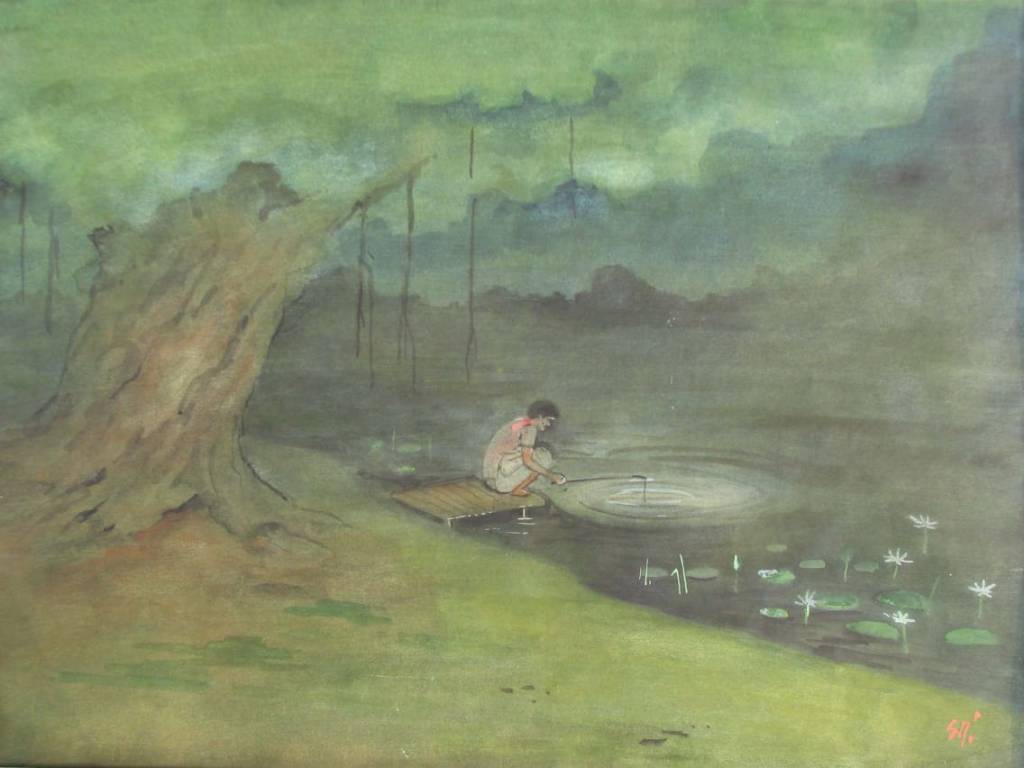
Paintings by Maniklal Chatterjee
In short, it was this artist’s way of retaining an identity that was as much him as his Bangal accent and his commitment to Communism. Yes, he committed his grasp over the formal and technical basics of the Santiniketan/ Bengal School of painting to talk about Everyman. His imprint of life of his suffering countrymen bore the aesthetic sophistication of the hallowed School but was charged by the love for an idyllic India. A withering workman’s India. An unspoilt India now relegated to memories.
But though he dipped his brush in the colour of nostalgia, Maniklal’s art was imbued with serenity and joy. The women and men, the kids and calf pulsated with lived energy. The ‘sarbohara‘ who has lost his all — the uprooted refugee as much as the man who has nothing to lose but his chain, these were the heroes for Maniklal Chatterjee.
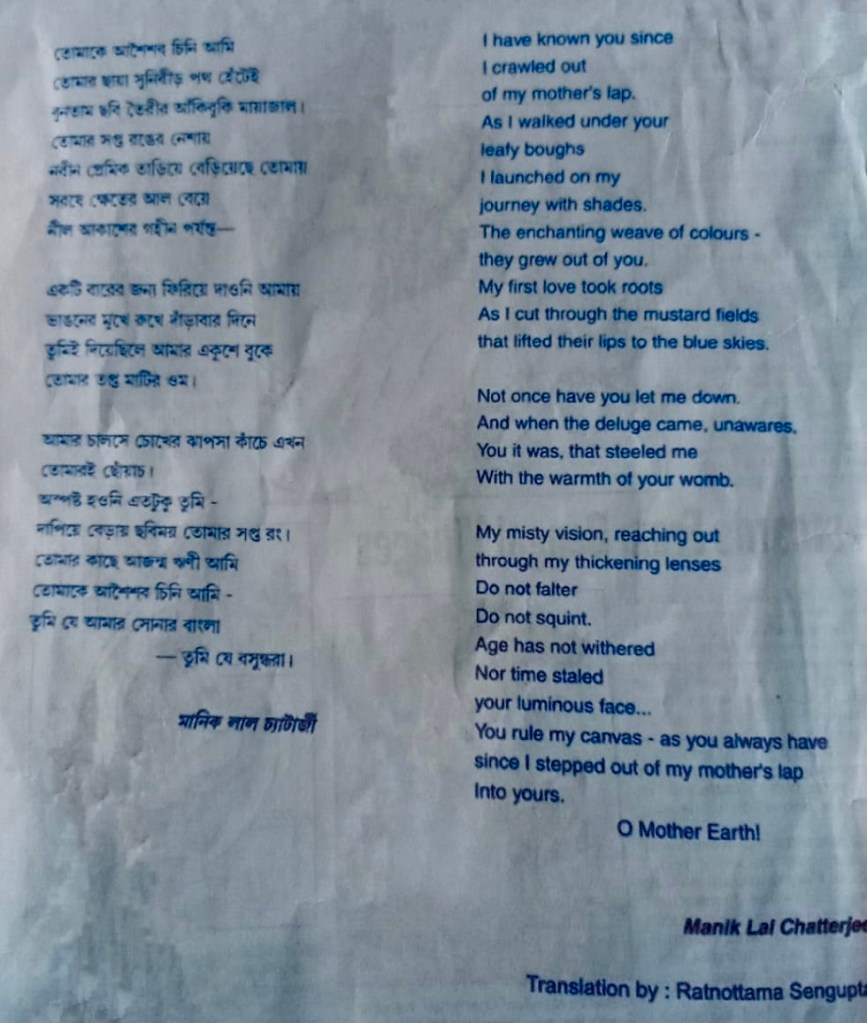
Those were the glorious days of IPTA (Indian People’s Theatre Association). Remember the film, Do Bigha Zamin (Two Acres of Land)? The rickshawala on foot racing with his cart against a horse drawn carriage, not just to reach his human brethren to his destination but also to earn two square meals and — more urgently — to save his two acre land, back in the country’s hinterland, came to signify the rapidly industrialising India of 1950s. It was this set of lives that Maniklal Chatterjee chose to iconise. His art sang of those deprived, but not downtrodden. Not for nothing were these celebrated as ‘Postcards from Bengal’. The poet within the artist wrote, “Tomar kaachhe aajanma wrini aami — tumi je basundhara (I am beholden to you Mother – you are the Earth).”Age cannot wither nor time stale this luminous face of Mother India — be it for Maniklal Chatterjee or for you and me. Because art for him is the expression of a deeply rooted emotion. It is as personal a portrait of his life and times as the photograph of my parents taken in a studio after their marriage: It is a time wrap, but one we will always be grateful for.
*Baba: Father. Her father was the late Nabendu Ghosh, an eminent writer in Bengali and a personality in film scripting and directing.
*Koli: Fisherfolk in Mumbai.
*diyas: oil lamp
*Baul: mystic minstrels or bards in Bengal
*Master Moshai: Teacher or Maestro in Bengali
Ratnottama Sengupta, formerly Arts Editor of The Times of India, teaches mass communication and film appreciation, curates film festivals and art exhibitions, and write books. Daughter of Nabendu Ghosh, she has authored Krishna’s Cosmos, a biography of the pioneering printmaker Krishna Reddy, among many other books She has been a member of CBFC, served on the National Film Awards jury and has herself won a National Award.
.
PLEASE NOTE: ARTICLES CAN ONLY BE REPRODUCED IN OTHER SITES WITH DUE ACKNOWLEDGEMENT TO BORDERLESS JOURNAL
The man committing theft, The man committing adultery, The man committing murder, Each keeps his secret.
Man takes His name in vain. God is tired and worn out.
Distinguishing the crimes one by one, Forgiving, consoling and loving again, He is in pain — sorrowful and lonely.
He is not joyful at the sound of the psalms —
Plumbing the dark sides of people’s minds, Looking into their enmities, hatred and greed.
God is rather intolerant When people try to execute you.
God is very dangerous.
.
Ihlwha Choi is a South Korean poet. He has published multiple poetry collections, such as Until the Time When Our Love will Flourish, The Color of Time, His Song and The Last Rehearsal.
.
PLEASE NOTE: ARTICLES CAN ONLY BE REPRODUCED IN OTHER SITES WITH DUE ACKNOWLEDGEMENT TO BORDERLESS JOURNAL.
A story about Man and Nature written in Bengali by Rabindranath Tagore in 1928, translated by Chaitali Sengupta.
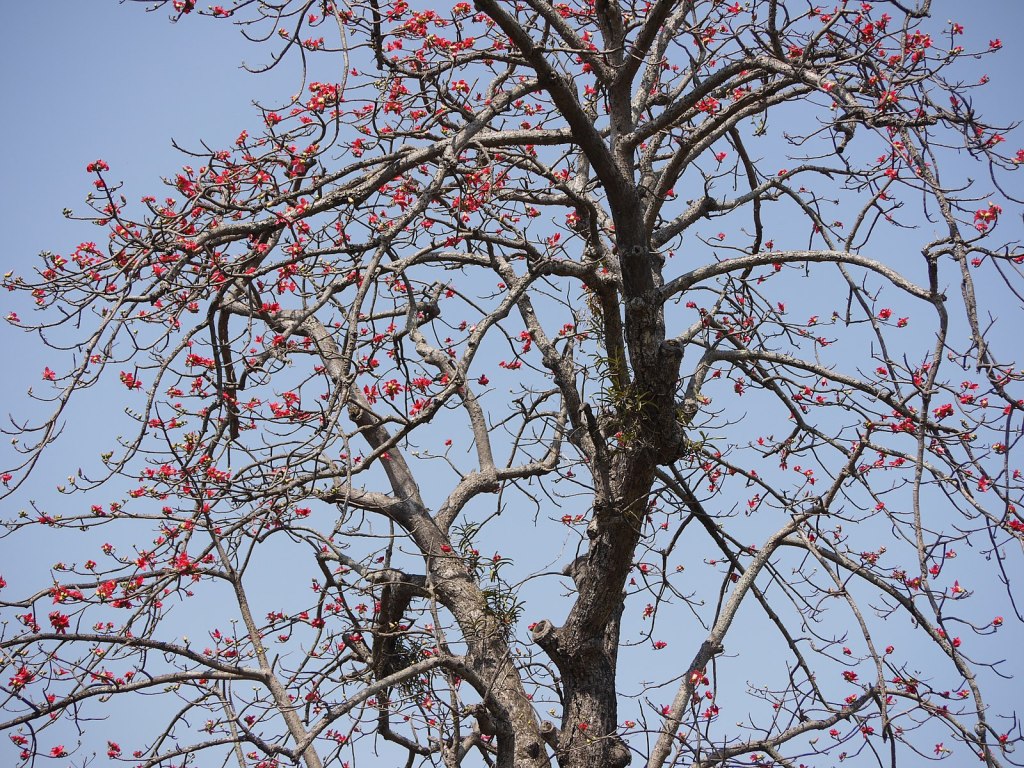
Simul tree, also known as Rokto Simul in Bengali. Photo Credit: Wiki
It is often said that human life is a culmination of various other life forms in this world. In our daily lives, most often, we come across diverse characteristics of other animals in a human being. Honestly said, in the character of a human, we see a blend of attributes usually found in animals. The domesticity of a cow and the ferocity of a tiger reside in the same human; it is, as if, the snake and the mongoose are both put together. It is somewhat like the melody that is created when the entire range of notes come together. Only then, a raga is formed. However, in a raga, one note can be more prominent than the other.
In the character of my nephew Bolai, I believe the affinity for flora and fauna, perhaps, reigned supreme. He was an observant child rather than an active one. Even at an early age, he’d quietly observe Nature around him. The dark, billowing clouds in layers, on the eastern sky would collect and pour. They would moisten his heart and bring forth the untamed breeze of the forests. It was, as if, his entire being could hear the pitter-patter of the rain.
He seemed to want to fill his being with rays of the departing sun, perhaps, in an attempt to collect something precious from it. In the end of Magh (the month of January), when the trees would be laden with the tiny fruits, an intrinsic, deep happiness, a joy defying description awakened in him. His inner nature would blossom forth, expand and take on a deeper shade of colour, much like those flowering Sal trees, with the advent of Falgun (the month of February). In those moments, he had a deep urge to sit in solitude, in conversation with himself, piecing together the various tales he’d heard. Like the story of that very old pair of birds, who had made their nest in the deep crevice of the ancient banyan tree. He never talked much, this wide-eyed, staring boy. In the silence of his being, his thoughts ran deep.
Once, I took him along on a trip to the mountains. His joy was immense, when he saw the lush carpet of the green grass, sprawling across the valley from our house at the top. In his mind, the grass carpet on the slope was not an inanimate, lifeless thing; he felt it to be a living one, that rolled playfully down. Often, he would roll down the slope, become a part of the grass, enjoy it tickling his back. He giggled aloud.
After a rain-washed night, when the first rays of sun gently broke free, and its golden light kissed the tops of the clustering deodar trees, he would tip-toe out of our home, alone. He would walk to those tall trees, and stand in awe, watching the motionless mighty trunks. In them, he’d envision a living spirit, a human presence, as it were. The spirits who wouldn’t talk but would know all our secrets like our ancestral grandfathers, from times immemorial.
His deep-thinking eyes weren’t always heavenwards. Many a times, I’d seen him roaming in my garden, his eyes on the ground, as if in quest something new or unusual. His curiosity knew no bounds, when he discovered new seedlings piercing out of the soil. Each day, bending down, he would talk to them, as if asking, “What’s next? Now what?” Those were, like his eternally incomplete stories — like those new, tender leaves, with whom he shared a strange affinity, verging on companionship.
And they, too, would be eager to ask him questions. Perhaps, they asked him his name. Or, about his mother, where was she? In his mind, Bolai perhaps would reply, “But I don’t have a mother.”
When someone plucked a flower from the tree, it hurt him. He realised soon enough that his concern or hurt was not at all important to others. He tried to hide his pain. When the young boys of his age threw stones at the trees, trying to bring down amlokis (gooseberries) from fully laden branches, he ran away from the scene. To tease him further, his companions would walk through the garden, thrashing the row of shrubs on both sides with their sticks; they would tear the branch of the bakul tree (Minnesap species) — he felt like crying but couldn’t. Then, others might have thought of him as mad. The worst days in his life were when the grasscutter came to mow the grass in the garden.
For he would have noticed the small tendrils of creepers, rousing their heads within the patch of grass, and those purple-yellow tiny nameless flowers, embedded with them. Here and there, the kantakari (wild eggplant) shrubs, with small bluish flowers sporting a speck of gold in their hearts. Those creepers of kalmegh (bitter medicinal plant) near the fence borders, and the anantamul (a medicinal plant) displaying their leaves; the sprouting neem that blossomed forth out of the seeds dropped by birds, how beautiful they looked! And all these were brutally mowed down by the cruel grass mowing machine. Nobody listened to their pleas or protests, for these were not the most sought-after plants in the garden.
Somedays, Bolai would come to his aunt, sit on her lap and wrapping his small arms around her neck. He would only say, “Why don’t you ask those grasscutters not to kill my plants?”
His aunt replied, “Bolai, don’t be a fool. These are overgrown weeds, almost a jungle, these must be cleaned.”
Bolai had by then understood that there were some pains, some sorrows, that were exclusively his own. Those never resonated with others.
Bolai probably was truly born in that age and time, when the universe first swam out of the womb of the ocean, taking its first breath, eons of years ago. At a time, when on the newly formed layers of mud, the nascent forests rose and cried out for the first time. Then, there were no birds, no noise, no life — only layers of rocks, slime and water. Those tall trees, heralding other life forms on the path of time, calling out to the glowing sun, with their raised hands, saying, “I’ll live, I’ll exist, I’ll survive, like the eternal traveler, through the cycles of death, through days and nights, rain and shine, I’ll progress on the path of my growth, my evolution.”
Those murmurings of trees can be heard still, through the forests and the hills; on the tendrils of their leaves the life force of Earth murmurs, “I’ll live, I’ll exist.” These mute trees, like foster mothers of the Earth, have milked the heavens for endless time, to gather life’s nectar, it’s radiance, for this planet. And endlessly, they raise their eager heads to the air, expressing their soul’s call, saying, “I’ll live.” In some strange, miraculous way, Bolai could hear that calling in the blood that coursed through him. The very thought had made us laugh.
One fine morning, as I was reading the newspaper, Bolai came up and took me to the garden. Pointing out to a small shrub, he asked me, “Uncle, what’s that plant?”
It was a small shoot of a simul (silk cotton) tree, growing through the crack of our gravel road. Bolai had made a mistake by bringing me there.
The sapling was a tiny one, just like the first babbling of a child; it was then that Bolai noticed it. Thereafter, Bolai had himself tended to the plant, watering it, checking it earnestly to monitor its growth, each morning and evening. Though the silk cotton plant grows fast, it could not keep pace with Bolai’s eager wait. When it grew to a certain height, Bolai observing the beauty of its rich leaves, was certain it was a tree of a special kind. His observation was quite similar to that of a mother who after observing the first hint of intellect in a child, marks him as a wonder. Bolai, too, had thought that he’d astonish me with his tree.
I said, “I’ve to tell the gardener to uproot the tree.”
Bolai was aghast. Those words were terrible for him. He said, “No Uncle, I beg of you, please don’t get it uprooted.”
“I truly don’t understand you,” I told him. “It stands right on the middle of the path. It’ll spread cotton all over, once it grows bigger. It’ll be a nuisance.”
Bolai realised it was no use arguing with me. The motherless boy then went to his aunt. Sitting on her lap, with his arms around her neck, he sobbingly said, “Aunt, please tell uncle not to uproot the tree.”
His plan worked. His aunt called me and said, “Oh listen, please let his plant be.”
I let it be. Had he not shown me the sapling, I would have surely not noticed it. But now, I notice it every day. Within a year, the tree grew taller shamelessly. As for Bolai, he reserved his best adoration for this tree.
The tree continued to grow in a ridiculous manner, without paying any respect at all to anyone around. It grew to its full height, standing on that inappropriate spot. Whoever saw it, wondered why it was placed there. A couple of times more I proposed to uproot it. I tempted Bolai with my offer of nice, high quality rose saplings. I also proposed, “If you still opt for the silk-cotton tree, then let me get you a fresh sapling. We can plant it next to the fence. It’ll look pretty there.”
But any talk of uprooting it, alarmed Bolai. And his aunt said, “Oh, it doesn’t look that bad there.”
When Bolai was an infant, my sister in-law had passed away. The grief, perhaps, made my elder brother careless; he went abroad to study engineering. Motherless, this child grew up in my childless home, in the lap of his aunt, my wife. Ten years later, my brother returned and took Bolai to Shimla to school him so that he could accompany his father abroad. He was given western education in Shimla.
Bolai cried inconsolably as he left our home, turning it into an empty house.
Two years passed. During this time, Bolai’s aunt, saddened by his absence, dried her tears in solitude, and spent her time in Bolai’s room, arranging and rearranging a single torn shoe that he wore, a damaged rubber ball he played with and that picture book of animals. She wondered if Bolai had outgrown all these by now.
In between, the wretched silk cotton tree continued to grow shamelessly; so tall it had grown, that it was now absolutely mandatory to cut it down. I chopped it down one day.
Very soon after this, Bolai’s letter reached us from Shimla. “Aunt, do send me a photograph of my silk-cotton tree.”
Before going overseas, Bolai was supposed to come and meet us once. But since that had now been cancelled, Bolai wished to take his friend’s photograph along.
His aunt called me, saying, “Listen, please bring a photographer.”
I asked, “Why?”
She showed me the letter in Bolai’s childish handwriting.
I said, “That tree has already been chopped off.”
Bolai’s aunt didn’t touch food for the next couple of days and stopped communicating with me for even longer. When Bolai’s father had taken him away from her, it was the severing of her umbilical cord; but when Bolai’s uncle uprooted his favorite tree forever, it shattered her world and deeply wounded her heart.
For, that tree was, to her, a reflection of Bolai, his substitute image.
Amloki tree
Author’s Bio:
Rabindranath Tagore (1861 to 1941) was a brilliant poet, writer, musician, artist, educator – a polymath. He was the first Nobel Laureate from Asia. His writing spanned across genres, across global issues and across the world. His works remains relevant to this day.
Translator’s Bio:
Chaitali Sengupta is a published writer, translator, journalist from the Netherlands. Her works have been regularly published in both Dutch and Indian literary platforms, her poems also been anthologized in many acclaimed collections.
.
PLEASE NOTE: ARTICLES CAN ONLY BE REPRODUCED IN OTHER SITES WITH DUE ACKNOWLEDGEMENT TO BORDERLESS JOURNAL.
Soma Debray, Assistant Professor in English, Narajole Raj College, West Bengal, lives in a constant state of wonder at all the possibilities life has to offer. She enjoys being a woman lapping up the challenges of womanhood. Writing for her is a joyride she waits to happen.
.
PLEASE NOTE: ARTICLES CAN ONLY BE REPRODUCED IN OTHER SITES WITH DUE ACKNOWLEDGEMENT TO BORDERLESS JOURNAL
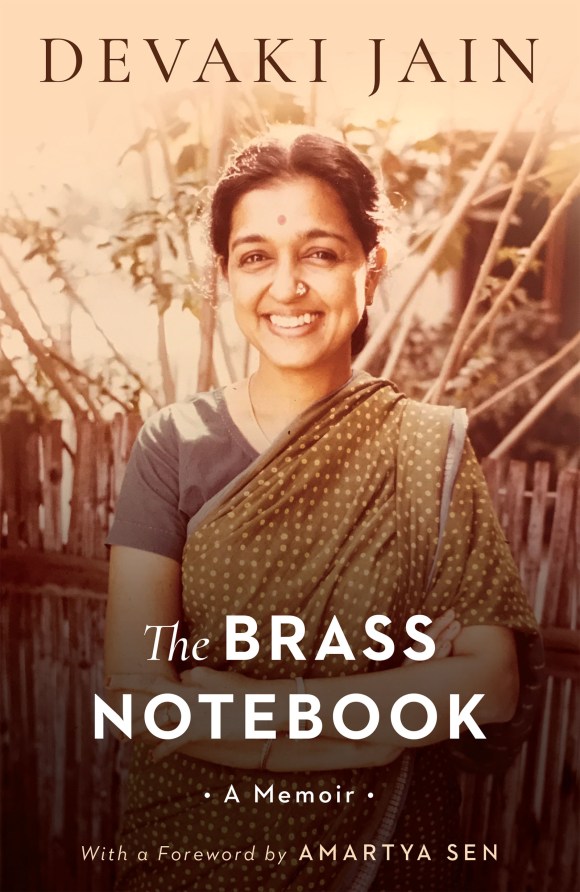
Devaki Jain: With Permission from Devaki Jain and Speaking Tiger Books
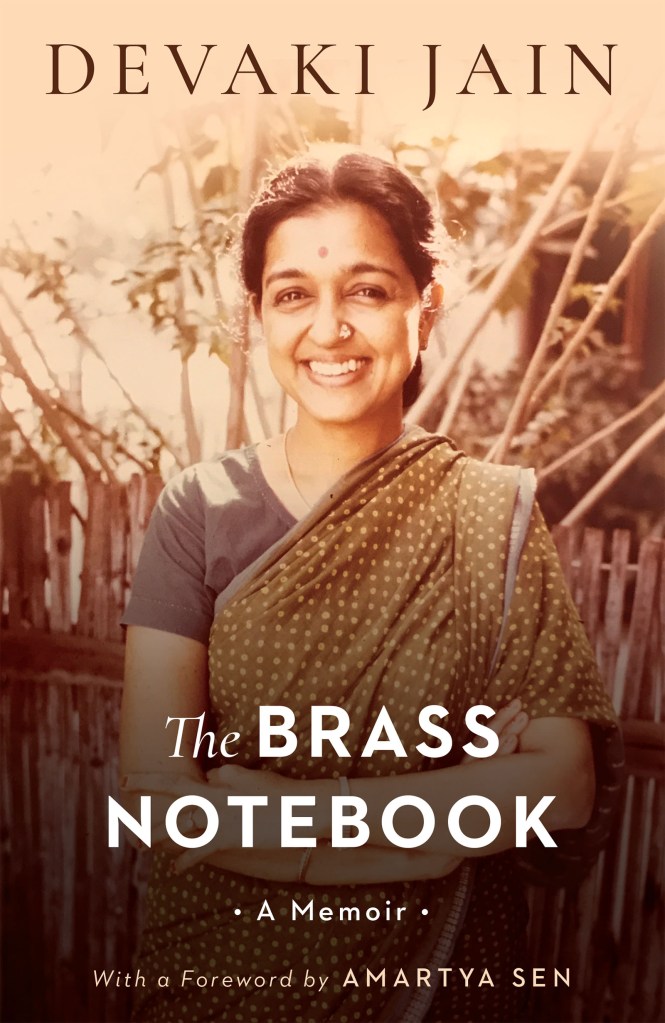
A woman who at eighty-eight brought out her autobiography based on the urgings of among others, Alice Walker, author of the Pulitzer Prize winning novel, The Colour Purple , and Doris Lessing, the Nobel Laureate — only much later. Like Lessing’s The Golden Notebook, her biography is calledThe Brass Notebook. Does it talk anti-war or feminism or womanism? I am not sure. What it does show is a woman who despite being surrounded by patriarchal norms managed to live her life as she wanted without resorting to schools of ‘isms’ or feeling injured. In the process, she met many great people and tried to bring in changes or reforms.
Devaki Jain, born in 1933, graduated in economics and philosophy from St Anne’s College, Oxford and is an Honorary Fellow of the college. She is a recipient of the Padma Bhushan (2006) and an honorary doctorate from the University of Westville, Durban, South Africa.
Needless to say the best introduction to her work and her person comes from well-known feminist journalist, Gloria Steinem: “Your heart and world will be opened by reading The Brass Notebook the intimate and political life of Devaki Jain, a young woman who dares to become independent even as a country of India does. Because she’s also my oldest friend I can tell you there is no one like her, yet only here in her writings have I learned the depth, breadth and universality of adventures.”
The interview probably reinforces her non-conformist outlook. In an age when intellectuals bicker over terminology and social media becomes the fulcrum of our lives, she lives by her convictions. Despite writing an absolutely gripping autobiography, she has revealed only a bit of herself. Through the interview, I tried to entice more but I got only a very brief glimmer. Her autobiography painted a liberal, liberated and open thinker who fearlessly fought her way against patriarchal and colonial mindsets. In this exclusive, I invite you to savour her spirit at a stage in life when most talk mainly of geriatric issues. Devaki Jain for you —
You were a very independent lady for your times. Could you find parallels of women like yourself in diverse cultures?
Women have been revolutionaries, radical thinkers, resistance leaders, dissenters for centuries. There are not many records of this but one of my colleagues found that there were groups of women, for example, in China even as far as the 12th century who were dissenters. Therefore, the knowledge may not have been recorded but striking for independence and striking for justice has been a part of women’s lives for centuries.
What drove you to be as you were? What made you feel that marriage was not the ultimate aim of all existence in the 1950s and 1960s?
(a)What drives people to do things differently? This is not an easy question to answer, people are born differently with different aspirations and different nervous systems. It is like asking an artist what helped you to be such a brilliant artist. Such questions are not appropriate.
(b) I think this question is badly framed that I felt that marriage was not the ultimate aim, it was not like that. It was just that I felt there were other things that I wanted to do.
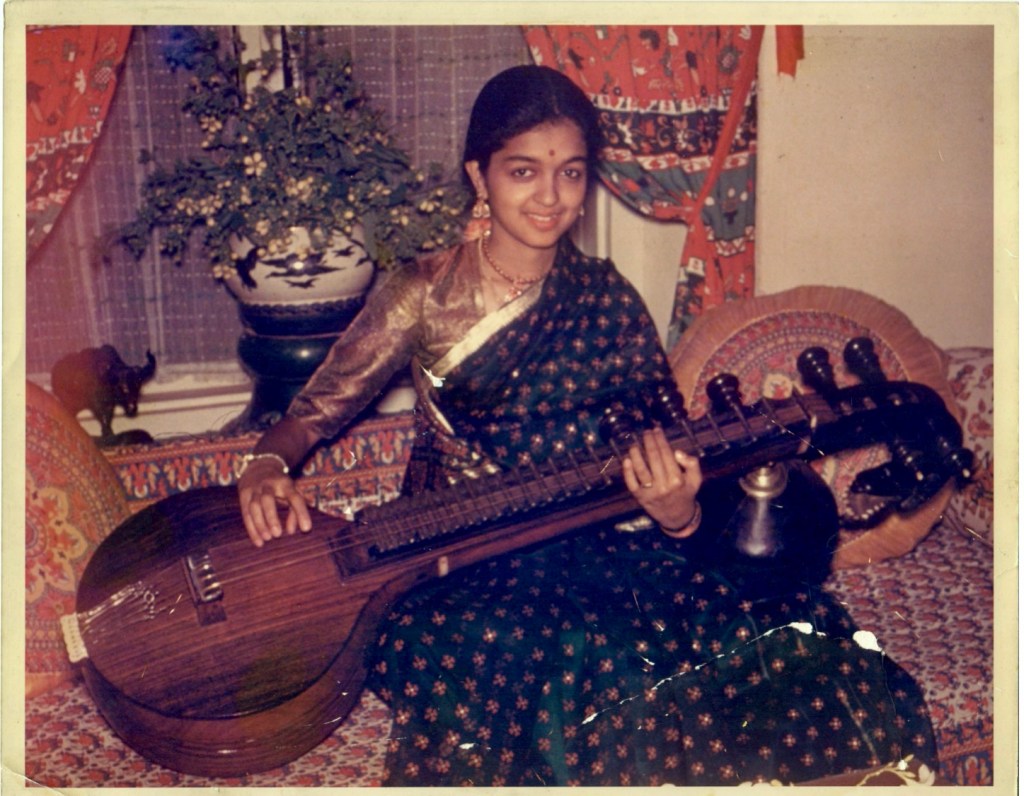
A young Devaki Jain. With permission from Devaki Jain & Speaking Tiger Books
How supportive was your family, especially your father, of your sense of independence?
My father was an enigma, while he wanted to submit to orthodoxy, he was also very respectful of those who wanted to do things differently. So, in a sense, I think he was supportive of my desire for independence.
You did face some amount of familial sexual harassment. Did it scar you for life? How did you get over the trauma?
My uncle’s sexual assault on me did not scar me for life, there was no particular need to get over the trauma. In a situation of living in cloisters with family bounds there is no space for lifelong traumas.
You spoke of how funding went inadvertently hand in hand with a different kind of colonial outlook. Would you say that is still true?
No, currently I think both the donors and the receivers have understood the difference and respect the difference.
Womanism is a term you have spoken of in your book. How is this different from feminism in your perspective?
I was basically supporting Alice Walker’s definition and I support her perspective. Please refer to my quotation from Alice Walker*.
[*Alice Walker quote from Pg 173-174, The Brass Notebook, Speaking Tiger, 2020: “As long as the world is dominated by racial ideology that places whites above people of colour, the angle of vision of the womanist, coming from a culture of colour, will be of a deeper, more radical penetration. This is only logical. Generally speaking, for instance, white feminists are dealing with the oppression they receive from white men, while women of colour are oppressed by men of colour as well as white men, as well as by many white women. But on the joyful side, which we must insist on honouring, the womanist is, like the creator of the word, intent on connecting with the earth and cosmos, with dance and song. With roundness, thankfulness and joy. Given a fighting chance at living her own life, under oppression that she resists, the womanist has no or few complaints. Her history has been so rough—captured from her home, centuries of enslavement, apartheid, etc—she honours Harriet Tubman by daily choosing freedom over the fetters of any internalized slavery she might find still lurking within herself. Whatever women’s liberation is called, it is about freedom. This she knows. Having said this, I have no problem being called “feminist” or “womanist.” In coining the term, I was simply trying myself to see more clearly what sets women of colour apart in the rainbow that is a world movement of women who have had enough of being second–and third–class citizens of the earth. One day, if earth and our species survive, we will again be called sacred and free. Our proper names.”]
Do you think women’s issues across the world are similar? How should they be dealt with?
It is believed that women’s oppression comes from patriarchy which of course is worldwide. I do not think I can answer the second part of the question – “how should it be dealt with?” — except writing three other books.
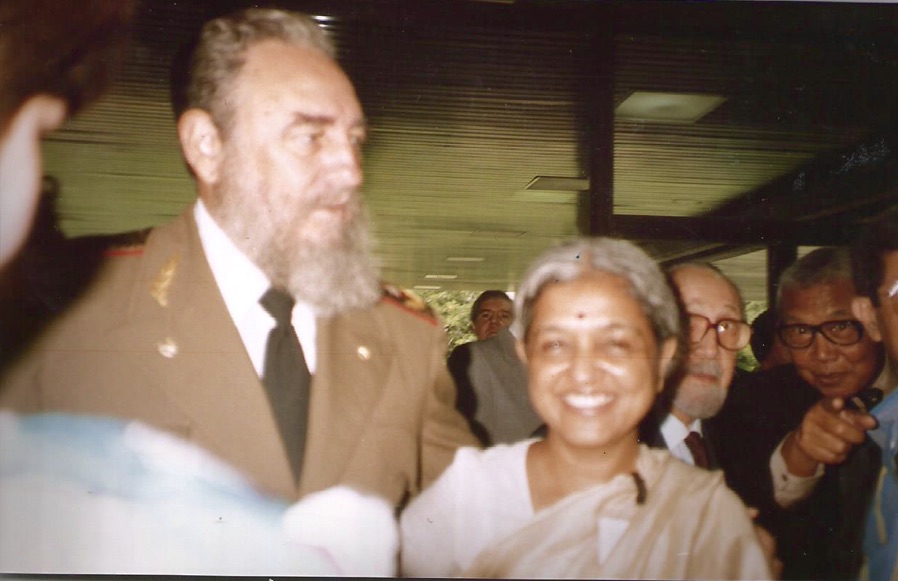
With Fidel Castro in Cuba as a member of the South Commission. With permission from Devaki Jain & Speaking Tiger Books
You have spoken of how the South Commission fell through. Can you tell us why? Is this what happens very often?
The South Commission fell apart because of a failure of solidarity between the south countries. It was a political statement to join the South together as an economic platform. When it failed, it failed all that.
You tried to bring many changes for the welfare of women across India and beyond. Will you tell us a bit about the perceived problems and solutions that we could find?
I do not think I attempted to bring changes for the welfare of women. I think I was basically pointing out the contribution that women made to the economy and how they were being discriminated against.
What are your future plans, presuming you are going to be a grand dame of 150 years?
I would like to write, write and write.
What would be the advice you would like to give young women living in today’s world?
Follow your dreams and don’t be frightened of orthodoxy.
Thank you for giving us some of your time.
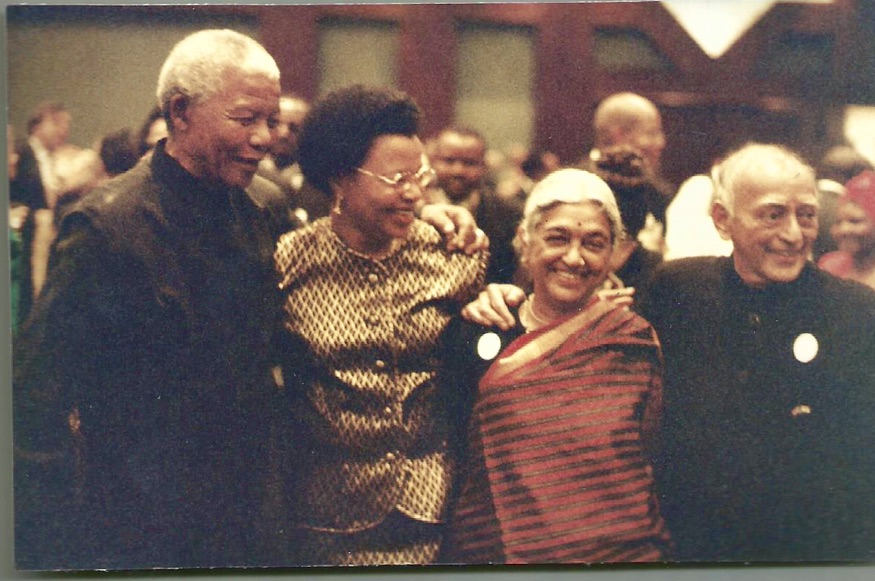
Nelson Mandela, Graca Machel, Devaki Jain, Lakshmi Jain at a reception. With permission of Devaki Jain & Speaking Tiger
With Dr Julius Nyere (centre) in Cuba, 1989. With permission from Devaki Jain & Speaking Tiger Books
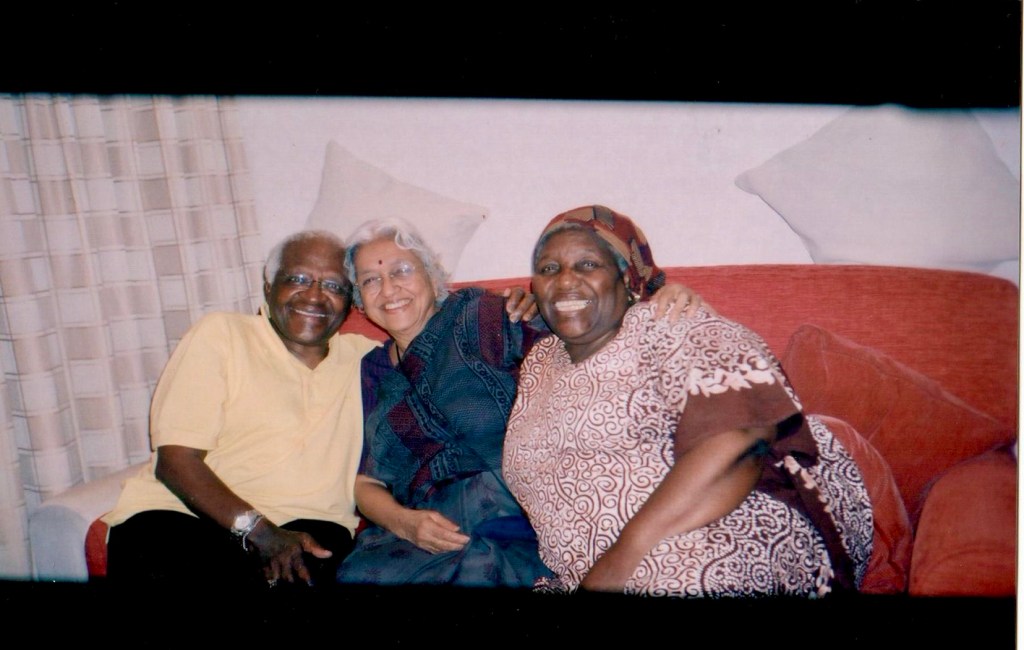
With Desmond & Leah Tutu, Pretoria, 1998. with permission from Devaki Jain & Speaking Tiger Books
All the photographs are published with thanks to the author, Devaki Jain, and the publisher, Speaking Tiger Books.
.
This has been an online interview conducted by Mitali Chakravarty.
PLEASE NOTE: ARTICLES CAN ONLY BE REPRODUCED IN OTHER SITES WITH DUE ACKNOWLEDGEMENT TO BORDERLESS JOURNAL
A Nepali poem by Swapnil Smriti, translated by Pranika Koyu
Swapnil Smriti
Dear son,
You have a right to ask every question.
.
That ageing Himalaya is your ancestor.
The deep sky is your wish.
The playful breeze bustling from one tree to the other
Is your life.
Those winding roads, hanging around the hills across, like the strings
Are your dreams.
.
Your two eyes and
The innumerable stars are kin.
All the snow of the winter,
All the flowers of the seasons,
Are like a transient rainbow.
And a short kiss I plant on your cheek —
It is our life.
.
The one who bore and raised you,
And made you this lovable
That is the Earth.
She is our mother — both yours and mine.
.
My dear son!
Be ready with questions of all kinds.
However,
About the moon by the bamboo grove
That wanes for fifteen days
And waxes for fifteen days
Never, Never, ask …
Why, at times, does it rise in the afternoon?
Why, at times, does it become a crescent?
Oh simpleton, it is like that only…
.
Why?
.
I replied —
That is the long-lost love of your father’s youth!
.
Swapnil Smriti (b. Nov. 14, 1981), a contemporary Nepali poet, hails from Panchthar district, and resides in Lalitpur at the present. He works at Nepal Academy of Music and Drama. He has to his credit two anthologies of poetry: Ranggai rangako Veer (2005) and Baduli Ra Suduura Samjhana (2011). Smriti is of the opinion that poetry is an artistic outburst of the subconscious mind.
Translator’s Bio: Pranika Koyu is a poet and human rights activist. Her poems highlight socio-political context of women in Nepal. Bhaav is her first anthology. Her poems translated in English have been have been published in Zubaan and Mitra. She is the editor of Chronicles of Silence.
.
PLEASE NOTE: ARTICLES CAN ONLY BE REPRODUCED IN OTHER SITES WITH DUE ACKNOWLEDGEMENT TO BORDERLESS JOURNAL
Excerpted from The Brass Notebook: A Memoir by Devaki Jain. Published by Speaking Tiger Books, 2020.
Upturning Hierarchies
‘She has wheels on her feet’: I think this phrase is used in several Indian languages to describe women who are constantly travelling (‘kaalile chakram’ in my own language, Tamil). The phrase sometimes carries with it a sense of exasperation or dismissal: why can’t she stay in one place? I was just the sort of person to whom that phrase applies. In retrospect, it amazes me to find that over a span of about fifty years, starting 1955, I have travelled to ninety-four different countries. I have also had the privilege of visiting every one of the twenty-nine states and seven Union Territories in India. In most of them, I have visited some of the poorest and most marginalized villages to meet women and to try to understand their struggles. Very little of this travel was for tourism or holidays. Nearly all of it was professional travel with my costs covered.
This cycle of constant travel began in a sense in childhood, when I accompanied my father on his trips and safaris. So many of my memories of childhood are of me in the back seat of a car, en route to somewhere unfamiliar. But I really became a self-sufficient traveller in my own right in 1962, when I found myself part of an unusual, and now almost impossible, overland trip from Oxford to Delhi. The leader of this bold travelling party was Elizabeth Whitcombe, an Oxford student who had studied ‘Greats’: that is to say, the four-year degree in Greek and Latin languages, literature, history and philosophy. She had only two conditions for members of her party: one had to be able to drive, and to contribute £100 to the kitty. In the end, there were four of us: two men and two women in a hardy Land Rover.
We started, of course, from where we were, in Oxford, and took the ferry across the English Channel into France. We drove across France and Switzerland, all the way down to Greece and then Turkey. Throughout, we stayed in what were called ‘mocamps’—camps for motorists to park their cars and spend the night. Sometimes, we slept out in the open in our sleeping bags. Elizabeth, a seasoned camper who had climbed mountains in New Zealand, brought all the necessary equipment. A well-read scholar, she could educate us about the antiquities in Greece and Turkey—archaeological sites and ancient monuments—that we visited.
From Ankara in Turkey, we went on through Trebizond, Batumi, Erzurum, Tabriz, stopping in each town, walking through and occasionally shopping in the bazaars. We all bought leather coats in the market in Istanbul, where the sturdiest and cheapest leather goods were to be found. The one memory of that part of the trip that stayed with me as a traumatic experience was seeing the decapitated heads of cattle being used to hang things on—bags, hats and so forth. The heads still had eyes and it was like they were staring right back at me when I looked at them.
One of my co-travellers, a mathematician from New Zealand called David Vere Jones, wrote to me recently with some of his memories from this leg of the journey: of a mosque with a wooden floor and many squares of old carpets, of leaving the mosque after dark in search of a camping ground, of eventually settling down for the night in a dry riverbed where some nomads were camping opposite. Some of the children and old men in their encampment came to visit us, bringing us melons; we accepted gratefully, offering them cigarettes and brandy in return. They sang for us, and one old man chose a particularly bawdy number that sent his companions into convulsions of laughter. David can also remember swimming in lakes, and the constant stomach upsets to which we all fell prey during the journey.
About the Book:
In this no-holds-barred memoir, Devaki Jain begins with her childhood in south India, a life of comfort and ease with a father who served as dewan in the Princely States of Mysore and Gwalior. But there were restrictions too, that come with growing up in an orthodox Tamil Brahmin family, as well as the rarely spoken about dangers of predatory male relatives. Ruskin College, Oxford, gave her her first taste of freedom in 1955, at the age of 22. Oxford brought her a degree in philosophy and economics—as well as hardship, as she washed dishes in a cafe to pay her fees. It was here, too, that she had her early encounters with the sensual life. With rare candour, she writes of her romantic liaisons in Oxford and Harvard, and falling in love with her ‘unsuitable boy’—her husband, Lakshmi Jain, whom she married against her beloved father’s wishes.
Devaki’s professional life saw her becoming deeply involved with the cause of ‘poor’ women—workers in the informal economy, for whom she strove to get a better deal. In the international arena, she joined cause with the concerns of the colonized nations of the south, as they fought to make their voices heard against the rich and powerful nations of the former colonizers. Her work brought her into contact with world leaders and thinkers, amongst them, Vinoba Bhave, Nelson Mandela, Henry Kissinger, and Iris Murdoch.
About the Author
Devaki Jain graduated in economics and philosophy from St Anne’s College, Oxford and is an Honorary Fellow of the college. She is a recipient of the Padma Bhushan (2006) and an honorary doctorate from the University of Westville, Durban, South Africa.
PLEASE NOTE: ARTICLES CAN ONLY BE REPRODUCED IN OTHER SITES WITH DUE ACKNOWLEDGEMENT TO BORDERLESS JOURNAL
Meredith Stephens gives a first person account of how the pandemic free South Australia is faring balancing fears
Not only does Australia feel geographically isolated, South Australia feels isolated within Australia. Thanks to this isolation we somehow feel immune to the pandemic and enjoy months of zero cases. We look at the evening news aghast as cases soar in Europe and America. Finally, our neighbouring state Victoria gets the numbers under control, and travel between the states becomes possible. Alex has been looking forward to the borders with Tasmania opening so he can sail there from Adelaide and circumnavigate the island. First, he will sail to the historic town of Robe in the south-east of the state, and from there he will sail to Tasmania, weather permitting. He enjoys the extensive preparation, ordering a new inflatable life raft, a new dinghy, a new chart plotter, and installing a wind turbine. He has the standing rigging replaced too.
I want to sail with Alex but can’t because I’m teaching online. I wouldn’t be able to readily access the internet at sea due to the slow satellite connection. I ask Alex to prepare one of his T-shirts for me to take to bed in his absence. He wears the same T-shirt for several days in order to permeate it with his scent.
Suddenly there is news of a six-day lockdown. We have been spared lockdowns to date as we have smugly watched television news of excruciating lockdowns elsewhere. We have until midnight to attend to immediate business. The Chief Medical Officer appears on television and tells us we must decide where we will stay for the next six days. I opt to stay with my ailing mother and take Alex’s T-shirt with me to comfort myself.
I part from Alex and dutifully head to my mother’s home. After making her dinner and cups of tea, I accompany her to her bed, and make sure she takes her medicines. I heat her wheat bags to place behind her neck and on her toes. I watch some television to distract myself, and then exchange texts with Alex. Next, I have to face the night away from him. I don his T-shirt and hope his scent will soothe me to sleep, but it’s no substitute. I wake up with pain throbbing in my right temple and shooting up the right side of my neck. I touch my temple and feel the familiar dilated vein.
I must teach two classes online. I want to cancel because of my migraine, but if I do so I must make up the classes, so I persist with the lessons. The bright light of the screen pierces my eyes, but I find relief when I usher the students into breakout rooms and lie down for five minutes each time they interact with one another.
I search the house for pain relief. I beg Mum for some of her prescribed opiate tablets. She only has two left and permits me to have a quarter of one which she has cut out with the tablet cutter. Then the pain intensifies. I cannot find any aspirin but manage to find some Panadol from an expired blister pack. This gives me no relief. I am not sure I could get a doctor’s appointment at such short notice. Going to the emergency room would be counterproductive during a pandemic. I resolve to go to my daughter’s house. I know that she has two left-over prescribed opiate tablets. I determine to make the long drive despite the injunction not to leave the house. I go into Mum’s room to explain, but she is sleeping. So I leave a note on her bedside table. I leave my laptop there because I will be back in the evening.
I venture onto the deserted main roads. Will I be stopped and questioned by the police? After twenty minutes of driving, I see ten police cars on the opposite side of the main road, stopping drivers. I resolve not to take that route when I return to Mum’s. When I arrive at my daughter’s house, there is a text from Mum:
“Where are you? Are you okay? I am worried about you. I heard you leave.”
“I left a note by your bedside table. Didn’t you see it?”
“No. I missed it.”
“I’ll come back tonight.”
“No, Darling. I’ll be okay for the night. It’s too dangerous for you to drive in your condition.”
“Okay then. I’ll pop back tomorrow morning in time to Zoom my classes.”
Then my sister Rebecca texts me and asks after Mum. I explain that I have had to leave her in search of pain relief. I continue that I am worried about having left the house, but then my other sister Jemima forwards me a government message from social media saying that you may leave the house to care for an infirm relative or friend. Now I can consider my daughter’s house to be my base, and my trip to Mum’s to be legitimate. Rebecca and Jemima offer to take turns to stay with Mum until I recover.
I retrieve one of the prescribed opiate tablets at my daughter’s house, but the pain persists until the morning. I telephone the local clinic and make a telehealth appointment. The doctor calls me back at the appointed time and texts me a script.
Alex texts me asking how I am, and I send him the government message indicating that movement to care for someone who is unwell is legitimate. He offers to visit me and pick up the medicine on the way. My daughter shows me how to forward the script to him on my phone. Alex receives it and promises to come. I absorb his resonant voice, gentle tone, and the calm in his measured and carefully articulated speech. The tension eases and somehow, I find myself explaining to him that I am finally without pain.
Alex arrives at my door with my prescription tablets, but by now the pain has subsided. Knowing that I have left my laptop at Mum’s, he has brought me one of his. Not only that, he has brought South Australian yellowfish tuna which we can eat as sashimi, oysters, and some salmon. We sit down together while he explains to me how to use the Chromebook laptop, but rather than fixing my eyes on the screen I fix them on him, and once again imbibe his scent. We enjoy each other’s company for an hour before Alex has to return home.
Then my daughter informs us that the lockdown has been shortened. It appears that there was a misunderstanding during one of the contact tracing interviews and that the lockdown period will be reduced to three days. Travel within the state will be permitted.
Alex is relieved that at least he will not have to forego sailing, even though the circumnavigation of Tasmania will have to wait. Instead, he will sail into Spencer Gulf, within the state. The ocean is beckoning him, and he is grateful that he can now heed her call. The months of planning equipment, meals, and reading material will have paid off; he can resume his position at the helm, catch fish and squid for his meals, make use of his instinctive sense of wind direction, and be free to move or to stay according to whim, without a single care for COVID.
Meredith Stephens is an applied linguist in Japan. Her work has appeared in Transnational Literature, The Blue Nib, The Font – A Literary Journal for Language Teachers, The Journal of Literature in Language Teaching, The Writers’ and Readers’ Magazine, Reading in a Foreign Language, and in chapters in anthologies entitled What’s Cooking Mom? Narratives about Food and Family, The Migrant Maternal: “Birthing” New Lives Abroad, and Twenty-First Century Friendship, all published by Demeter Press, Canada.
.
PLEASE NOTE: ARTICLES CAN ONLY BE REPRODUCED IN OTHER SITES WITH DUE ACKNOWLEDGEMENT TO BORDERLESS JOURNAL
 While morning yet was rose,
 not thorn,
 earth glistening
 as if newly born,
 I came across
 a romance here:
 he hadn't seen
 the shadows clear,
 nor seemed
 to be at all aware;
 she watched,
 and was content to stare.

 I thought of how a love began,
 of Eden, too,
 the dawn of man
 and how that garden
 turned to grief;
 of sorrow
 borne without relief;
 and yet,
 I did not fail to bless
 the tainted cup of happiness,
 nor reverently to tiptoe by
 this sleeper in the flower's eye.
Poems by Tom Merrill have recently appeared in two novels as epigraphs.He is Poet in Residuum at The Hypertexts and Advisory Editor at Better Than Starbucks.
.
PLEASE NOTE: ARTICLES CAN ONLY BE REPRODUCED IN OTHER SITES WITH DUE ACKNOWLEDGEMENT TO BORDERLESS JOURNAL








 Borderless
_(5486246516).jpg)