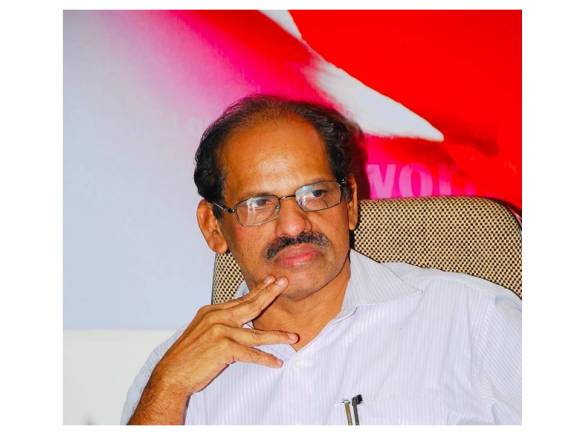
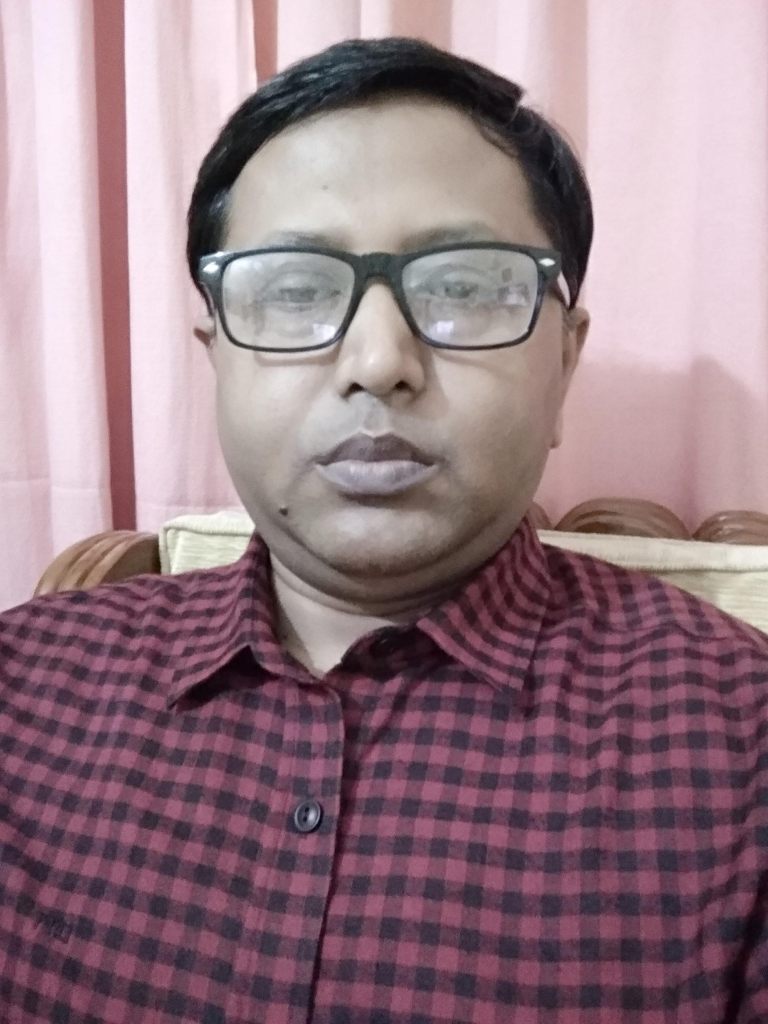
Pravat Kumar Padhy has obtained his Masters of Science and Technology and a Ph.D from Indian Institute of Technology, ISM Dhanbad. His poetry has been featured in many journals and anthologies. His poems received many awards, honours and commendations including the Editors’ Choice Award at Writers Guild of India, Sketchbook, Asian American Poetry, Vancouver Cherry Blossom Festival International Haiku Honourable Mention, UNESCO International Year Award of Water Co-operation, The Kloštar Ivanić International Haiku Award, IAFOR Vladimir Devide Haiku Award, and others. His work is showcased in the exhibition “Haiku Wall”, Historic Liberty Theatre Gallery in Bend, Oregon, USA. His tanka, ‘I mingle’ is published in the “Kudo Resource Guide”, University of California, Berkeley. His poem, “How Beautiful” is included in the Undergraduate English Curriculum at the university level. His haiku, tanka and other poems on Corona pandemic have been published in Country Roads, Covid 19 Haiku Anthology, Lockdown 2020, Penning The Covid,The Alipore Post, and others.
.
PLEASE NOTE: ARTICLES CAN ONLY BE REPRODUCED IN OTHER SITES WITH DUE ACKNOWLEDGEMENT TO BORDERLESS JOURNAL.
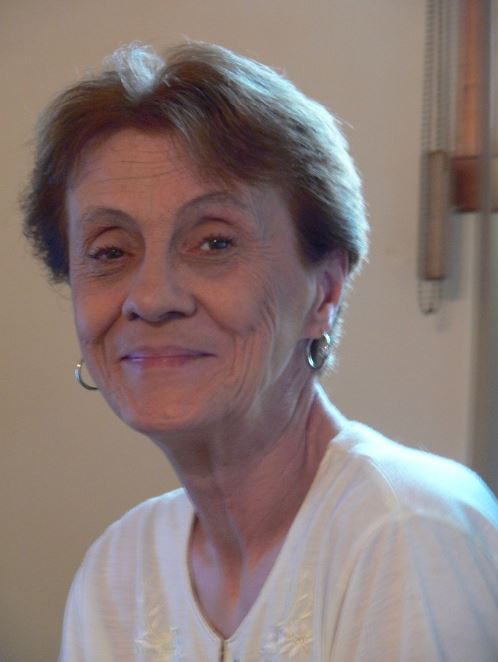
Huguette Bertrand is an international French-Canadian poet, editor and digital artist, born in Sherbrooke (Québec), Canada. She has been writing and editing French poetry for 37 years and has published 38 poetry books some of them with artist’s artworks. Her poems were published in many international journals and anthologies and translated in multi languages. Besides her publications, she participated to poetry readings, book shows, art exhibitions of her poetry paired with artworks in Québec, France and Norway, gave workshops in Quebec and France.
Sreedevi Anumula writes short stories and poetry both in Telugu and English. She has published her poetry and research articles in national and international Journals. She teaches Modern British Poetry and American Literature at the Department of English, Osmania University, Hyderabad, India.
.
PLEASE NOTE: ARTICLES CAN ONLY BE REPRODUCED IN OTHER SITES WITH DUE ACKNOWLEDGEMENT TO BORDERLESS JOURNAL
Influential people and poseurs in our country place boards inscribed with professional tags like ‘PRESS’, ‘DOCTOR’, ‘ADVOCATE’ etc. behind the windshields of their cars. They do this with calculated designs in mind. Displaying their real or assumed professional identity, they can avoid unnecessary police interrogation in the street or can enjoy the prerogative of using untrodden and prohibited tracks to avoid traffic jams.
Mr. Nasir was going to the terminal point of the city, the airport. He had only one hour at hand. Within this time it was virtually impossible to sail through the vast ocean of traffic and swarming crowd in Agrabad Commercial Area and Chattogram Export Processing Zone.
He brain-stormed and contemplated. After surveying the cartography of his problem-solving cognitive domains, this pandemic-day Buddha jumped out of his sofa with a loud, near-20K dB sound, “Eureka, Eureka!”
His wife, consumed with ‘I don’t have any faith in my husband’s conjugal fidelity’-attitude, meteor-like appeared before him from the kitchen wielding her lethal weapon, khunti*.
“Which Rekha are you talking about so loudly in this holy times of Ramadan, you shameless old man?”
“It’s not any blossomed beauty or Tinseltown Rekha, my intelligent Home Minister. I said, ‘Eureka’ meaning ‘I’ve got it’. I’m celebrating my solution to the heavyweight problem of going to the airport in time.”
“Thank God, you aren’t philandering then,” with these words, the relieved better-half resumed her full-queenship in the kitchen.
The king prepared a paper-board and bidding adieu to the queen, boarded the car. The driver, confused and skeptical, gave his unsolicited verdict that they would not be able to make it to the airport in time. The de-stressed Mr. Nasir just nonchalantly commanded his driver to place the board behind the windshield a la mode the self-styled VIPs and drive. The driver complied.
At a busy intersection, an arrogant traffic police aggressively approached the car, but a glimpse of the inscription melted his anger and he quickly made way for them. Mr. Nasir’s triumphal march met another opposition within the next five minutes — at Agrabad area, a troop of patrol police halted the car and asked why they were driving during the lockdown.
Mr. Nasir, wearing a grave but gloomy look, drew their attention to the board non-verbally. The enigmatic writing on the board almost froze the cops! With unbelievable haste and apparent respect, they let him go. At the busiest EPZ area, other vehicles, made way for Mr. Nasir’s car as if they had seen a ghost car!
They kept receiving this preferential and reverential treatment at every point and consequently reached the destination much ahead of scheduled time.
Amazed and pleased, the driver asked, “What magic words have you written on the paper, sir?”
“You see, if you have substance inside your head, you can manage even to run on water,”boasted Mr. Nasir gloatingly.
“I can’t disagree with you, sir. But what are the miracle-words?” the driver impatiently tried to penetrate into the secret success-code of his boss.
Smuggly, the puffed-up Mr. Nasir revealed, “Ex-Covid patient driving a new one home.”
*khunti: A metallic spatula
Sarwar Morshed is a Professor of English at the University of Chittagong, Bangladesh. His works have appeared, among others, in The Bosphorus Review of Books, The Bombay Literary Magazine, City: Journal of South Asian Literature, Star Literature & Reviews, Contemporary Literary Review India, Mahamag and the Ashvamegh. Mr. Morshed’s books have been reviewed at home and abroad – in the Asiatic (IIUM, Malaysia), Transnational Literature (Flinders University, Australia), the Ashvamegh (India), Star Literature & Reviews,Observer Literature, daily sun and Dhaka Courier (Bangladesh).
.
PLEASE NOTE: ARTICLES CAN ONLY BE REPRODUCED IN OTHER SITES WITH DUE ACKNOWLEDGEMENT TO BORDERLESS JOURNAL.
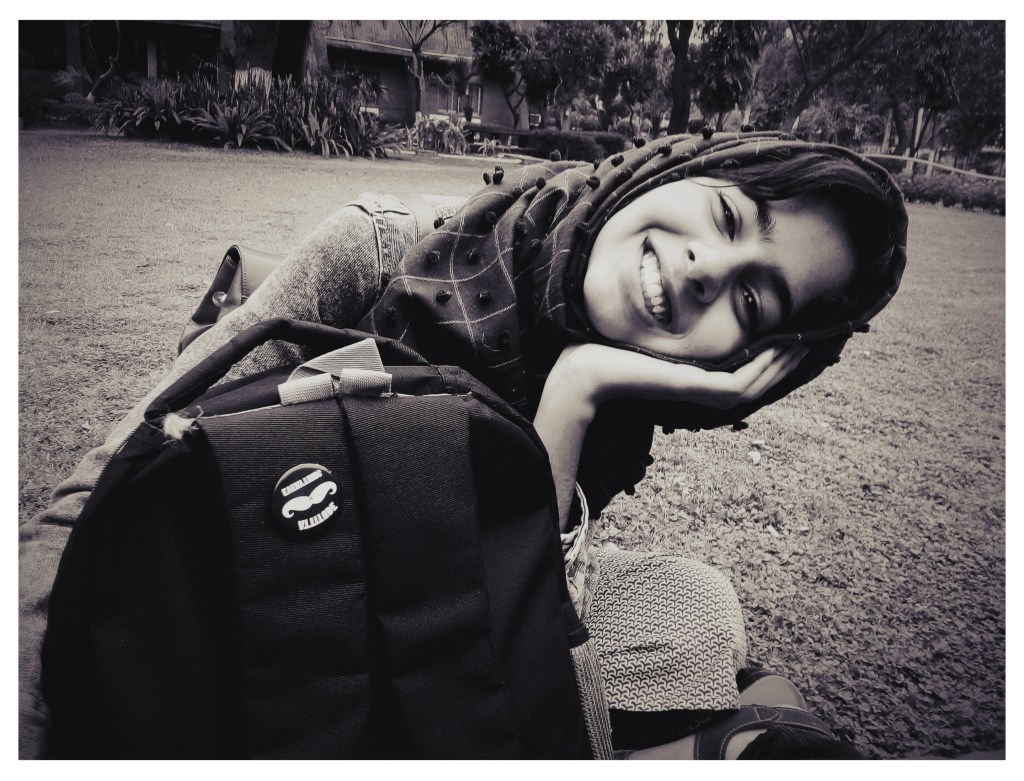
Zeenat is a young and self-critical poet of 19. She lives in Delhi and doing her graduation in English honours from Vivekananda College, DU. She is a passionate reader of poems and lives. She started writing in 2020.
.
PLEASE NOTE: ARTICLES CAN ONLY BE REPRODUCED IN OTHER SITES WITH DUE ACKNOWLEDGEMENT TO BORDERLESS JOURNAL.
Tamoha Siddiqui is a teacher-researcher and poet from Bangladesh. She’s a Fulbright awardee currently housed at Michigan State University as a graduate student. In 2018, Tamoha founded a bilingual poetry collective in Dhaka, working as a performer, organizer, and facilitator of local poetry shows and workshops. Furthermore, she debuted as a performance poetry artist in America in 2019 through events hosted by the The Poetry Room, Michigan. Her work has been highlighted in a number of Bangladeshi newspapers and anthologies.
.
PLEASE NOTE: ARTICLES CAN ONLY BE REPRODUCED IN OTHER SITES WITH DUE ACKNOWLEDGEMENT TO BORDERLESS JOURNAL.
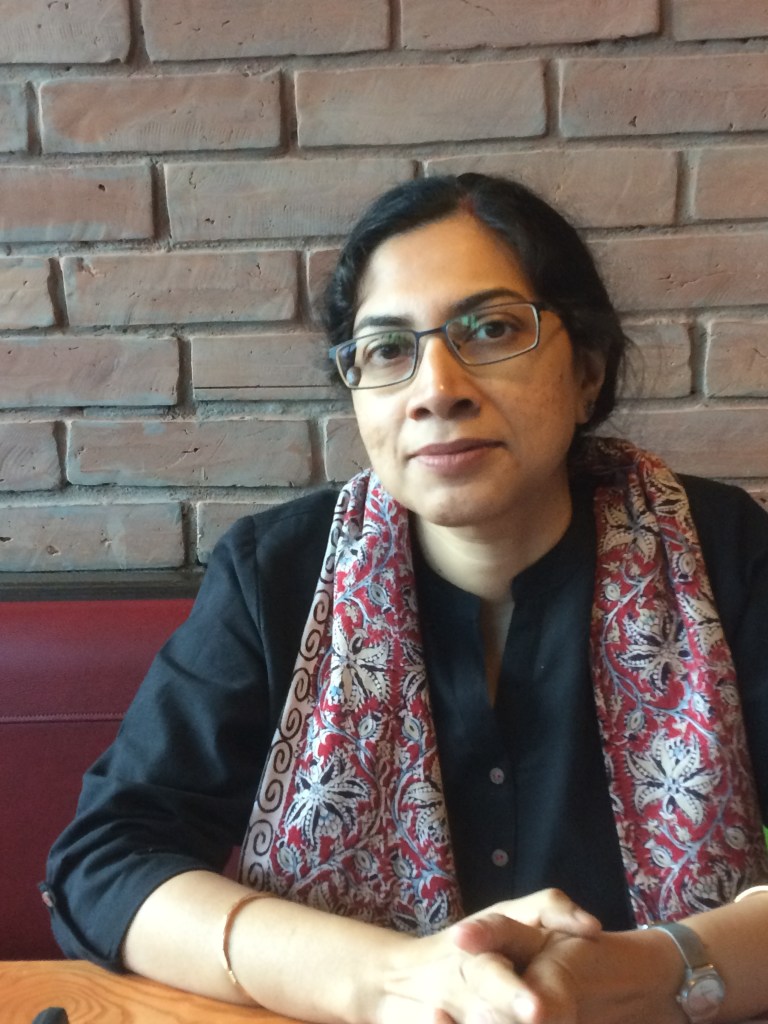
Dr. Anasuya Bhar is Associate Professor of English and the Dean of Postgraduate Studies in St. Paul’s Cathedral Mission College Kolkata. She is also a Guest Faculty at the Department of English, University of Calcutta. Dr. Bhar is the sole Editor of the literary Journal Symposium http://www.spcmc.ac.in/departmental-magazine/symposium/, published by her Department. She has various academic publications to her credit. She is also keen on travel writing and poetry writing. She has her own blog https://anascornernet.wordpress.com/.
.
PLEASE NOTE: ARTICLES CAN ONLY BE REPRODUCED IN OTHER SITES WITH DUE ACKNOWLEDGEMENT TO BORDERLESS JOURNAL
In the times of the pandemic when social distancing has become the new norm, emotional distancing has come out as a byproduct. Somewhere this conflict has delineated the boundaries, traversed species. It is evident in the way changed perceptions have led to the dwindling number of stray dogs on the homely streets. And though this is a welcome development it is not the result of a conscious effort to rehabilitate such wandering souls, it is the result of a changed attitude that fed on the guile that dogs are a carrier and spreader of the dreaded Corona virus.
Driving along the familiar roads we had been so habituated to see some of these strays that we always remember them as we passed by their favourite haunts.
A certain white female with a pink nose would always sit outside a particular house as if awaiting her morning nashta or breakfast. We nicknamed her the pink nosed dog. Her eyes, the shade of pale yellow, jaundiced with the desire to have more, yet unable to ask for it. But how could a modest household splurge on a stray dog. A dog that would not be a guard and yet sit outside their house. A seeker of alms. In times of pandemic this generosity of sparing the scraps seemed to have died down.
We know that a pair of brown female dogs were together day after day often making us wonder if they were related to each other by kinship. They would be found at their usual spot, a blind turn that masked a road but was the private entry to a house, early mornings, late afternoons, slouching in the sun, keeping company, sharing a territory and the benevolence of the people in the form of food and knick-knacks. They are missing. The blind turn now desecrated by the foremost fear of saving human lives have let go off the strays.
And there was the territorial shrine dog, with a peculiar elongated face, who would stand stiff, serving as the sentry to this religious place. He became my muse for an article that ended up getting published putting him at a cherished spot on my list of favorites. I would look up to greet him with a gentle nod which often went unacknowledged. Too stiff in his demeanor, too rigid to have beneficence encroaching his life he did not like affectations bothering him.
During times of lockdown I spotted lesser stray dogs on the road and none in their regular haunts. The pink-nosed dog is missing, the sisters gone, the shrine dog sank into oblivion. Either they have been driven away or they lost out on the generosity of the hands who fed them making them move out of those places, their self-proclaimed homes.
It’s not only the strays who burnt the ire of misconceived notions but the pets in loving families too were at a risk of being labelled unwanted. A friend who owns an affectionate Labrador was faced with a dilemma when the family objected to the howling of the animal at a particular time in the night. The times of Corona, rising cases, imposition of lockdown not only necessitated the perpetuation of unusual reasoning, it lead to a strange kind of fear. The elderly matriarch drew visions of Yamraaj (the god of death) visiting their home to claim its share of life in the wails of the animal.
The relatives when consulted advised the family to consult a certain Babaji who was kind to offer advice on phone empathizing with the family and reiterating the same facts. The dog was indeed peculiar and the howling was definitely a bad omen. It had to go. When I got call from this harassed friend to save her dog from home displacement by prescribing a medicine to put an end to its howling I was confused. Our adopted mongrels often howl in the dread of the night when the pups in the neighboring kennel create a ruckus. They respond to a stimulus.
There was no letup in the animosity against this dog, the family stood firm in the castigation of this canine for an innocuous crime. But after a few sleepless nights my friend had uncovered the stimulus in this case. A patrolling police van crossed their home precisely at the same time. The siren was the stimulus.
The family not satisfied with this logic has decided to call the faithful Babaji once again, this time for a personal visit. The animal in question, bereft of the impending doom, unaware, romps merrily all over the house, a place where it has thrived since its arrival as a little pup. I hope the maw of these uncertain and testing times do not swallow home of a loving animal. I hope they let it be and let it stay.
Our adopted mongrels refuse to touch the pedigree, the dog feed, some days. A crease of disappointment crosses my face when they act pricy. The feed is expensive, I take out the money out of my precious salary to buy them this treat. My resources are limited but they do not seem to care. The crows which live on the silver oak boughs have an eye for this tasty treat. When the dogs refuse to touch their bowls, they circle around the food to have their peck. I am disappointed by this behavior of my canines. They disrespect food bought and brought with love and care.
I let the crows have their fill not before displaying my remorse in front of the mongrels but I am not too strict to castigate them.
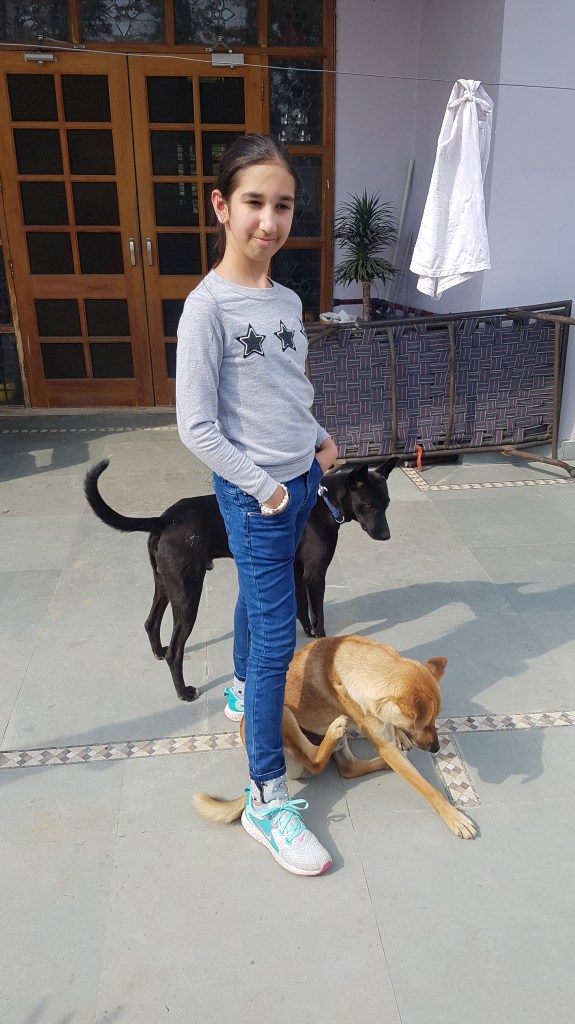
We do not tie them, they are living by their free will on our property, they can howl, bawl, be whimsical. We have accepted them as they are. Their soft moans at our approach and that subtle wagging of the tail tells me they are happy with us. This fear of Corona did not pervade our home, we did not drive them away. For now, their territories are safe. They future seems secure as long as they do not feel tethered in the confines of our home. Outside, the world is brutal. I wish I could explain this fact to them but they close their eyes and place their snouts on my feet, beseeching, pleading for a rub on their backs. They are not aware of the outside world around. For now, they are happy to be choosers in this house which they have adopted as their home. They have chosen us to be their benefactors and we are glad to have them.
Rana Preet Gill is a Veterinary Officer with the government of Punjab, India. Her articles and short stories have been published in The Tribune, Hindustan Times, The Hindu, The Statesman, The New Indian Express, Deccan Herald, The Hitavada, Daily Post, Women’s era, Commonwealth writers. org, Himal, Spillwords press, Setu Bilingual, Active Muse and Indian Ruminations. She has compiled some of her published pieces into a book titled Finding Julia. She has also written two novels – Those College Years and The Misadventures of a Vet.
.
PLEASE NOTE: ARTICLES CAN ONLY BE REPRODUCED IN OTHER SITES WITH DUE ACKNOWLEDGEMENT TO BORDERLESS JOURNAL.
Dr. Santosh Bakaya is an academician, poet, essayist, novelist, biographer, Ted Speaker and creative writing mentor. She has been critically acclaimed for her poetic biography of Mahatma Gandhi [Ballad of Bapu]. Her Ted Talk on the myth of Writers’ Block is very popular in creative writing Circles . She has more than ten books to her credit , her latest books are a biography of Martin Luther King Jr. (Only in Darkness can you see the Stars) and Songs of Belligerence (poetry). She runs a very popular column Morning meanderings in Learning And Creativity.com.
.
PLEASE NOTE: ARTICLES CAN ONLY BE REPRODUCED IN OTHER SITES WITH DUE ACKNOWLEDGEMENT TO BORDERLESS JOURNAL.
Christopher Manners has had 2 poetry books published by Sophia Perennis. He has also had poems published by Harbinger Asylum. Born and residing near Toronto, Canada, he has a Bachelor of Arts with Honours from York University. Manners is the founder of poetryimmortal.com, a poetry blog and encyclopedia dedicated to the classics.
.
PLEASE NOTE: ARTICLES CAN ONLY BE REPRODUCED IN OTHER SITES WITH DUE ACKNOWLEDGEMENT TO BORDERLESS JOURNAL.






 Borderless