Aditya Shankar translates Sandhya NP‘s poetry from Malyalam to English
Sandhya NP
 Photograph

 This photograph
 Like the solitary bogie
 That was arrested to a halt
 Even as the rest of the train
 Sped past.

 (Photo, translated from Malayalam by Aditya Shankar)

 Solitary

 Would the yolk of the egg
 Be wondering
 If it is alone in this world?

 Even if it assumes so,
 Would it consider
 Posing that query to anyone?

 Once the egg hatches,
 It would know by default—
 Even the 'I'
 Is absent in this world.

 (Otta, translated from Malayalam by Aditya Shankar)

 Light at the Bottom of the Pond

 The sun gleams on me
 just as it does
 At the bottom of the pond.

 I will wipe it off with a cloth
 And go to bed.

 (Kulathinadiyile Velicham, translated from Malayalam by Aditya Shankar)
Sandhya N.P (b.1981) completed her education in Brennen College, Thalassery. Her poetry collection Svasikkunna Shabdam Mathram was published by Current Books, Thrissur.
.
Aditya Shankar is an Indian poet, flash fiction author, and translator. His work has appeared in international journals and anthologies of repute and translated into Malayalam and Arabic. Books: After Seeing (2006), Party Poopers (2014), and XXL (Dhauli Books, 2018). He lives in Bangalore, India.
.
PLEASE NOTE: ARTICLES CAN ONLY BE REPRODUCED IN OTHER SITES WITH DUE ACKNOWLEDGEMENT TO BORDERLESS JOURNAL
A translation from Bengali to English by Dipankar Ghosh of Nabendu Ghosh’s Traankarta, a story set during the Partition riots
Nabendu Ghosh
The bad news reached here too, the news of the rioting. The roads looked tense and empty. Even the pariah dogs that usually roamed the streets had disappeared. Only a few brash teenagers were bunched up in a group at the head of the lane, swaggering around with cigarettes hanging from their lips.
On the other side of the city, fires were raging, severed heads rolling on the blood-bathed streets; teenaged girls had their breasts cut off and little babies had been thrown head down into concrete floors. Tonight they were paying homage to Satan in the stygian darkness, on the other side of the city. The news wafted in the gentle breeze, and the horrifying tales of the day’s events spread through the grapevine to every household.
Gloom descended on everyone. They felt benumbed, paralysed, by a tidal wave of fear. Fear, unspoken fear. Fear that made the heart palpitate madly in the breast. Fear that made you seek the company of a crowd. Awful fear. The kind of fear that deprived one of the will to live.
The ladies proceed silently with their chores. Not too many items on the menu for tonight. Rice and boiled vegetables. The children don’t understand much, occasionally they were bursting out into giggles, running noisily up and down the stairs, squabbling amongst themselves. But, now and then, an older person would burst out like a sentry, “Silent! Or I’ll behead you with a smack!”
But they could think of very little that they could be done to save their own heads from the approaching holocaust. Everyone was discussing behind barred doors, what to do. Not just bad news, but terrible news that the people from the other side intend to attack them tonight. A cold wave of fear ran down their spines when they got the news. What to do, what on earth should they do?
The house of Mr Bose, a barrister who was the local leader, was brightly lit up. Arun was planning to quietly slip out, how long could one possibly stay cooped? But Mr Bose had his searchlight eyes on every possible exit, making it impossible for anyone to either enter or leave his fortress of Lanka without his knowledge.
“Where do you think you are going?” he asked in his deepest voice.
“Just out – for a dekko.”
“Just out! Forget it. Are you not aware of what’s going on in the heart of this city?! Go, get back and stay put in your room.”
Arun returned to his room.
His daughter Ruby came out. There were dark circles of anxiety under her large almond eyes. Her curly black tresses were floating in an unruly fashion, her usually healthy pink glow was replaced by sallow pallor. She was depressed, and fear had put its mark on her. Movies, parties, and picnics were suddenly out of question, the desire to fly around the flowers and taste their honey at will had suddenly flown out of the honey bee. Ruby was lost.
“Daddy –”
“Yes?”
“Will you take us to uncle’s house?”
Meaning Bhawanipore. Meaning a predominantly Hindu area, where perhaps she could put on her crepe silk sari and wander around at will, shaking her long coil of hair.
Mr Bose shook his head in frustration, “Uncle’s house? Now? Impossible! The roads are barren, not a man or a car about, we will have to cross many localities, driving through corpses and rivulets of blood, and more importantly, sudden unprovoked attacks! That important thing called life that we are trying to save, could very easily be ended en route! Stop making silly suggestions, go up to your room and stay there Ruby –”
But how on earth could Ruby sit calmly in her room! She felt frightened out of her mind. Occasionally the sound of shouting was floating in from afar. Awful noises. Last night she had seen the sky flare up in the east. She had heard all the beastly tales. It had all left a fearful imprint on her mind and every now and then, a spark of fear would set off a burst of anxiety in her mind. The nervous pulsating of the vessels under that pink alabaster skin of hers bore witness to her angry, frightened state of mind.
Now, it was one thing browbeating Arun and Ruby, but Mrs Bose? Perpetually conscious and tense about her obese abundance, she was an entirely different proposition. No doubt the dreadful news of the riots would put her in a fairly explosive state of mind — of that Mr Bose was certain. Therefore, when the substantial lady made her appearance Mr Bose felt a bit intimated, fairly aware that if he tried to browbeat her, the result could be counter-productive.
“Listen, I can’t go on like this — this suspense, this danger, it is unbearable.”
“But what — tell me what am I to do dear?” Mr Bose protested weakly.
“Do something, for Heaven’s sake! Don’t just sit still, quietly—”
“I am not sitting still. I am trying to think. Besides, we have two rifles, five hundred rounds of ammunition, we have a sentry, a bearer, a man servant and also a chauffeur, so what are you worried about?”
Mrs Bose collapsed on the sofa, there was a glint of fire in her bluish eyes, sharply she said, “Spare me a list of your rationale, please — your little group would disappear in front of a massive crowd. I’d like to see you stop them with those five hundred rounds. You don’t consider that an unending supply, do you? No, I’m sorry that is not enough to reassure me — I’ll faint any moment under the strain!”
Knock, knock. Somebody at the door.
“Sir,” the sentry’s voice outside the door.
“What is it Tiwari?”
“Some people of the community want to meet you Sir.”
“Offer them seats,” he spoke aloud, then continued to assure Mrs Bose, “Now listen, don’t get overexcited. Let’s wait and watch. We are due to have a meeting of the local defence committee. It is such a large community I am sure they are all willing to fight to protect us all. Don’t be nervous dear. If the situation deteriorates then of course we will have to take a risk — but the car will be ready to leave at a moment’s notice.”
*
In the margins of the so-called civilised society, at the end well-to-do side of the neighbourhood, separating them from the Others on the opposite side, lived a group of people who considered themselves a part of the same community. They were the untouchable Doms. Living in pigeon hole sized tiny hovels, they just about carried on living. They swept the roads, carried water for folks, washed their drains and lavatories. They collected night soil, got into manholes and extracted rubbish from them, they cleaned refuse bins and manned the garbage carts of the municipality. Their hovels were plastered with mud, and they ate from chromed metal plates of their dirt mixed rice. They sat in the light of little kerosene lamps and got boisterously drunk in the evening. And although they considered themselves to be part of the community, to the more genteel and affluent part of the community they were always a bit of an embarrassment.
These people in the no man’s land between the two communities numbered some two hundred. And the only man who had the absolute obedience of these two hundred odd bods was called Jhagru. Such was his hold over them that, if he chose to call daylight as night his men would do so without batting an eyelid. He was their unopposed and unanimous chief, their sardar.
Jhagru’s men had come to him. They had seen bits of what had happened on the other side, heard most of all the atrocities that had taken place, they had even helped the frightened people who had managed to flee from the fortress-like bounds of the place, and taken them to safety. But the question was, what would they do today? If what they had heard on the grapevine was proven true, then how were they to react?
Having binged on some onion bhajis (fritters) and the potent rice-wine of Tari, Jhagru was feeling content. The capillaries of his eyes were bloodshot, and in the cool evening breeze his large figure deemed ready to take off like a well inflated balloon. He eyed his wife’s, Suratiya’s, generous proportions as he was preparing himself for some decent basic entertainment for the evening, his men all descended on him with the bad news, and spoilt his mood.
“Bugger off !” he said crossly in Hindi. “What will be, will be. So what if they attack?”
Ranglal said, “But surely we must do something -”
“You buggers have ruined my drinking,” Jhagru barked at them.
Waving a hand, he demanded, “What the hell is there to worry about? If they attack, we will fight. What else? The main thing is, be prepared with your weapons, when the gong is rung, jump on them — end of story –”
“But sardar–”
“No buts, you all run off. Sitting here with my toddy, let me enjoy my drink — you blighters get back to your homes.”
They all left.
Munching his onion bhaji, he sipped from his earthen cup. Slowly but surely the warmth off the stinging spirit made his ears ring, his breathing got heavier, his eyelids drooped, his sight got hazy. Jhagru was drunk. In that state he was pleasantly surprised to notice that Suratiya had turned into an exceptional beauty, like an unattainable princess of a fairy tale.
“Suratiya dear –”
“What?”
“Come on, over here –”
“Unh-hun –”
“Have a bit of tari?”
“NNo – I won’t –”
In his stupor Jhagru was suddenly enraged by this rejection, and got headstrong.
“You coming here or not — you bitch!”
“No I won’t — I’ve enough work still to finish –”
“Then suffer the consequences –”
Jhagru got up. Walking with unsteady gait like a child, he reached Suratiya, caught hold of her and lifted her in his arms.
“You’ll kill me,” Suratiya screeched, “you’ll break every bone in my body!”
Pulling his wife close to him Jhagru guffawed loudly, “You frightened? Don’t be, woman. Go on, sit in my lap.”
Jhagru was drunk like a lord. No way could he hold on to a strong woman like Suratiya in his drunken state, let alone have his way with her. Giggling loudly, Suratiya ran away.
Ten or eleven o’clock in the morning. If it were an ordinary day, Jhagru would be up to his neck in work. But since the rioting was a good excuse not to be at work, why not have some fun.
“Ran away,” Jhagru laughed. “Bloody woman.” Got to do something, he thought to himself. The tari was finished, he was drunk, and Suratiya was gone. So he needed to do something. But what?
Suddenly in a dusty corner he noticed his forgotten dhol (drum). He pulled it out and started to beat it enthusiastically. He would sing. Never mind, if it scared the daylight out of people, Jhagru could not desist. He was in the mood for some singing, and sing he would.
Vigorously beating the drum, Jhagru started to sing widely. Amongst the incoherent lyric the audience could have deciphered only one line, which he kept repeating in a refrain:
Chhappar par kauwa naache, Bug bugoola/ Hanh hanh bug bugoola…
(The crow dances on the rooftop, bug bugoola)
Ya, Ya, bug bugoola —
What wonderful tune! What incredible control of voice! What melody and feeling in rendition! The entire slum of untouchables woke up to fact that Jhagru was drunk and was singing.
Respectfully they whispered, “Sardar is singing, by jove he is singing.”
*
The Defence committee meeting was on at Mr. Bose’s house. He himself was the chairman.
Almost all the important folks of the locality were gathered there. Venerable teacher Nibaran Mukherji, solicitor Haridas Mitra, Dr. Santosh Dutta (MBE, RCS), and iron merchant Sukumar Roy. There were also the young representatives of the Saraswati Orchestra Group, Youth Body-Culture Samiti, and the Evergreen Dramatic Club. A large blanket had been laid on the floor of Mr Bose’s inner courtyard. Seated on it, all the members were earnestly discussing the situation.
In a room across the corner Ruby had drawn the curtain aside to watch the proceedings. Sheer curiosity. Unable to get out of the house, the lack of parties, movies and picnics was getting unbearable. The meeting was an interesting diversion. If nothing else, she would see a wide spectrum of people. Ruby did not watch them passively, she tried to instinctively assess them. It pleased her to do so.
Mr Bose started in a deep, appropriately grave presidential voice. “You are all aware of the reprehensible events that have started in our city yesterday. Some of you may have witnessed the carnage. This is not the time, and I’m not the person, for long drawn speeches. Suffice it to say that we, especially us Bengalis, are witnessing the beginning of an evil period. Today we must bind together against this medieval barbarism. We have to fight it and stop it — meaning, we have to stop this aberration. We must forget the differences of our castes, our classes, high or low, who is untouchable and who isn’t– remembering only one thing– that we are Hindus and nothing else.”
Mr Bose stopped for a moment, took a hanky out of his pocket, wiped the tension-induced sweat off his forehead. Opening his cigarette case, he offered the expensive ‘Black and White’ cigarette to the assembled elders and lit one for himself. There was a murmur of appreciation in the gathering for his opening speech, Ruby was flushed with pride.
The iron merchant said, “Absolutely, there’s great merit in what you have just said. The time for squabbling about class, caste et cetera is gone — from now on we are all equal, we are all Hindus.”
Mr Bose said, “Now let us determine how we should go about it.”
“Right, right,” they said in unison, and leaned forward.
The venerable teacher said, “Let’s divide the neighbourhood into four parts, each one keeping guard in their side of the four directions.”
The solicitor said, “Let’s use a siren or conch shells to signal danger to others.”
The doctor said, “A group of youths should stand guard, by rota, and blow on a conch three times at the first sign of danger. The siren should go off then. There should be red beacons in the last row of houses in the four main directions, and if danger approaches, the beacons should be lit up to let the others know which direction the danger is approaching from.”
The industrialist said, “The women, children, and the elderly should remain in the top floor or in the terrace armed with bricks and stones. The men should stay on the ground floor, armed with sticks and other weapons.”
All the suggestions were passed. The defence committee meeting was progressing nicely, but suddenly, a young lad called Jatin, created a problem. He wore clothes of hand woven khadi, which meant he was a nationalist, he had short cropped hair, and he was rough-spoken.
He said, “You have arranged everything. But if they really do attack us, then who is going to engage in a hand to hand fight?”
It seemed like a bomb had been set off. Everything felt hazy and nebulous like smoke. Not for a moment had they considered this! Really worth thinking.
The industrialists said, “Why, won’t we all fight them? Let all of us get to grips with them.”
The teacher shook his head in dissension, “That does not sound reasonable. It would mean that a group of people would always have to be outside to fight the enemy. In other words, they would have to be prepared to sacrifice their lives. Can all the able-bodied men do that, or be willing to do that?”
Another explosion. Really, who should fight on ground, if there were a fight? If their worst fears materialised and thousands of people attacked them suddenly, then would people in individual houses, like disparate little islands, battling the enemy with bricks and sticks be able to save themselves?
Jatin said, “So, in spite of our well-organised meeting, and all our arrangements, we will not be able to save ourselves. So consider what ought to be done–”
Mr Bose was an intelligent man, having passed his bar at Law in the distant land across the seas had sharpened his instincts even more. He realised that since Jatin had raised this insoluble problem, it was fairly certain that he had pondered on the answer to it. And truly it was a serious point. He said, “I really have no solution to the problem Jatin has set before us, so I must request Jatin himself to show us a way out of this dilemma.”
Jatin smiled. “Fine,” he said, “I will resolve the problem. Have you any idea knowledge of the poor people who live between ‘Them’ and ‘Us’?”
“The Doms?”
“Yes. They don’t belong to the other community, they consider themselves part of us Hindus. And, although they cannot enter the Shiva temple at the other end of our colony, they worship the idol in that temple. Meaning, they are Hindus –”
Mr Bose smiled appreciatively at him, “The idea.”
Jatin continued, “They might earn little and eat less but they are hardy and strong. The instinct that we have lost, which is presently making us timid despite our numbers, is fully active in them. So if you really want to perform as a defence committee, and live on, then you better bring them into this meeting. And raise a fund-immediately!”
The mention of money made the industrialist take note, “Fund for what?”
“It is best to give some salted yeast to the cow when it’s in milk,”Jatin smiled.
“Meaning what? Cough a bit freely, son –” the industrialist said, testily.
“The meaning is self-evident. We must give them weapons, good food, and a decent flow of liquor.”
“That is true. Those who are going to put their lives on line must be well tended,“ Mr Bose agreed with Jatin.
“Don’t waste time in thinking,” Jatin stressed. “Atrocity has to be stoutly countered with ferocity, so we must be prepared. And let there be no doubt in your minds that they will attack us tonight.”
There was a rustle of notes and coins changing hands. Then and there a collection of fifty rupees was raised, more funds would be forthcoming later. Who could object to a bit of wise investment when one’s life was at stake? Nothing is quite as deep as one’s life — so let the blighters have good food and potent country liquor. Not a lot to pay for the bargain. They might attack this very night. If the cruel pack of animals descend in the dark of the night, then these men will pour out their life blood for our protection. Wasn’t this the least one could do for them? Surely they would serve them. It would be a good deed. Not just the joy of being alive but also the gratification of doing a good deed, by giving the money. So let them eat, let them get drunk.
*
Jhagru suddenly tired of the drum and put it down. He kicked it to a corner, swearing, “Hell, I think I’m sober –”
No work today. How long can a person enjoy staying within the house? It would be fine if there was toddy around. That was gone. A bit of monkey business with Suratiya might have been fun, but she, wretched girl, had scampered. Maybe she really had work to do. Even bonking wasn’t much fun any more, but what he did enjoy was good liquor. This approaching sobriety, clearness of vision, reality creeping into the drowsy stupor of alcoholic haze was most disagreeable to Jhagru. What was termed as normal life was totally abnormal as far as Jhagru was concerned. To him normalcy was epitomised by gallons of drinks followed by drunken fisticuffs, singing and dancing bare-assed, puking the guts out and lying down inebriated.
This was rotten. Must get some more toddy. Must get back into the mood.
“Suratiya –O Suratiya–”
“What do you want?”
“Give us a couple of annas, dear.”
“Don’t have any.”
Jhagru jumped up and roared, “You going to give me the money without hassle, Suratiya?”
Suratiya answered back in the same pitch, “No hassle, no tassle — simple fact, I don’t have the money.”
Suddenly, Jhagru lunged at Suratiya — pulling her by her short pigtail he thumped a few hefty blows on her back, “You ungrateful slut–”
“Oh my Ma — he’s killing me!” Suratiya wailed out loud. There was no need for the wailing, but Suratiya had talent for dramatic exaggeration.
“Are you gonna gimme the money or not, you wretched witch?”
The people of the hovels took note, and respectfully whispered amongst themselves, “Sardar is giving his wife a thrashing, a good hiding.”
It was at that moment they heard two or three voices call out, “Jhagru? Is Jhagru in?”
The voices were barely audible above Suratiya’s caterwauling. Again the voices were heard, this time a notch higher, “Jhagru? Jhagru sardar— are you in? Jhagru–”
Suratiya stopped her yowling, looked out and said, “Some people looking for you –”
“Me?”
“Yes, some gentlemen.”
“Gentlemen?!”
Caught unawares, Jhagru tried to collect his thoughts as he came out to meet the three ‘gentlemen’. Jatin was one of them.
“Are you Jhagru?”
“That’s me.”
“You have been sent for.”
“Who has sent for me?” Jhagru was a bit puzzled.
“Bose Saheb, the barrister– don’t you know of him?”
Jhagru’s pupils dilated anxiously, shaking his head vigorously he said, “Sure I know him sir, of course, yes.”
“He has sent for you — now–”
“Me? Oh my lord, what would he want with Jhagru Dom?”
“He needs you. Won’t you come?”
“Yes, yes, certainly I will come, sir. Barrister Saheb has sent for me, goodness–”
“Salaam squire, salaam babus–”
Jhagru stood in front of the defence committee. He was still rather drunk, he swayed a bit on his feet as he waited. They all gazed at him. There was a fine sheen of sweat on his hairline pate, and the pupils of his small eyes flickered a bit anxiously. He was wearing a dirty torn loincloth and a thick loose shirt, an angry boil on his left cheek. That was Jhagru.
Ruby stood close behind the curtain. Her nose in the air, she muttered to herself, “How ugly and dirty!”
All the inspecting keen eyes seemed to pierce Jhagru like needles.
He smiled a bit uncomfortably, blurting out, “Forgive me sirs, I am a bit drunk on rice wine–”
Mr Bose leaned forward to ask, “So you are Jhagru?”
“Yes sir, Jhagru Dom.”
“And you are drunk?”
“Yes sir.”
“You enjoy your booze?”
Hanging his head, Jhagru said, amused, “Certainly do sir.”
A bit more forcefully, Mr Bose asked, “Are you the leader of the Doms?”
“Yes sir.”
“Well then, listen Jhagru. We will let you, and your comrades, have as much drink as you want. And not just drinks, we will give money for food too.”
Jhagru wondered if he was dreaming. He looked all round, somewhat warily. No, everything looks quite real. He wondered if he was he awfully drunk. Never, he had barely wet his snout. It wasn’t false, it was all true, real.
“You are very kind sir, but –”
Mr Bose interrupted, “I’ll tell you. You have heard about the disturbances, haven’t you Jhagru?”
Jhagru nodded, yes.
“Tonight they might attack us here.”
“Yes sir.”
“We are Hindus, and you all are also Hindus.”
“Sir.”
“If Hindus don’t save Hindus then who will save them?”
“Certainly sir, absolutely right.”
“If they attack us, you will all fight? We — we shall certainly join you, we will fight together.”
Suddenly, Mr Bose noticed that amidst the seated gathering Jhagru was the only one standing up. In an excited voice he said, “What’s this Jhagru, why are you still without a seat? Come take a seat, sit.”
Jhagru’s was stunned. The sudden, unexpected cordiality overwhelmed him, he uneasily said, “But –”
“No buts, no formalities, don’t be shy, take a seat.”
“I am an untouchable Dom, sir.”
“Dom?” Mr.Bose lifted his eyes to heaven, his voice quivering with feeling he said, “Dom so what? Untouchable?! You are a human being just like us. A Hindu just like us. Sit down, brother.”
Suddenly, to emphasise that he meant what he had uttered, Mr.Bose walked up to Jhagru, took the astounded man’s arm and sat him down on a chair.
Jhagru tried to say something but his chocked vocal cords would not cooperate. The man who could talk nonstop even when he was completely inebriated, was struck dumb through a combination of amazement, gratefulness, and a feeling of unprecedented happiness.
The soft crackling of notes being counted could be heard.
Moments later Jhagru came out of the house.
On his way back home, as he passed by the temple of Lord Shiva, Jhagru stopped short. He went up to the temple, moved his calloused hands over its mossy wall, and chuckled, “Lord Shiva, you are so kind, so good.”
*
All at once an air of festivity engulfed them all in the slums. Ramprasad Singh’s distillery of illicit liquor was drained within the hour. Banwari’s Confectionery shop had empty shelves, so had Tiwari’s eatery.
Occasionally the sound of a clash in the distance would float in. The battle-crazed sound of destruction, “Allah-Ho-Akbar!” It sounded like the sea from a distance, like waves the sound overpowered the senses.
Every now and then, a dog or two would respond to the danger of the distant noise. In the deepening silence of the dark night, the leader of the slum-dwelling Doms sat awake and alert. His eyes pierced the unknown before him, his ears pricked, attuned to every sound and echo.
At about one o’clock in the morning They declared war.
“Allah-ho-Akbar–”
“Pakistan zindabad–”
Jhagru started to beat his drums. Doom-doom-doom-doom. Every slum-dweller was awake. Without a word, they all ran out to the meeting point.
They came playing a band, with torch flares alight. A feeling of hellish surreality descended with them. Like a mass of primitive malevolent spirits, some blood-thirsty phantoms seemed to have taken possession of their dark souls.
The main assault was aimed at the Shiva temple, the purpose being its destruction and after that, the colony beyond.
The entire neighbourhood was overcome with fear. Sirens were blaring, the blood-red lights at the top of the buildings sent out a morse flicker of fright, children could be heard crying as windows banged and doors rapidly closed. The sound of fleeing feet was challenged by the conches.
The whole colony in fear roared, “Vande Mataram* –”The battle cry that was used to liberate the country from foreign rule was the very one they now used to strike at their own countrymen.
Jhagru had stopped beating his drum by then. Quietly they waited.
“Make no noise brothers– let them get close–” Jhagru directed them.
“Allah-ho-Akbar–”
Suddenly they descended like floodwater. In the bright light of the torches their knives and swords gleamed wickedly.
Jhagru was swaying to the beat of the band music, now he shouted, “Go strike now brothers– let’s clear this rubbish–”
The slum-dwellers let out a roar.
The Shiva temple whose walls had never granted them entry, the deity whose blessings they sought merely by touching its moss-covered walls, whom they prayed to and sought solace by beating their head in despair, the unresponsive stony God who never objected to the poverty and deprivation of His people, in His name, Jhagru joined the battle today.
“Har har Mahadev– Jai Shivji ki jai—” Glory to the God of Gods–victory to Lord Shiva.
Then, it seemed as if two mountains had clashed. Not soft mud-hills of earth but two primordial masses of rocks.
Blood flowed in streams. Arms, legs, and decapitated heads fell and floundered on the soil. Shattered skulls poured out their contents like an outpouring of ghee. The sharpened knives pierced a chest or belly and emerged victorious, dripping blood.
Overhead, in the dark blue of the eternal sky the stars flickered weakly. Scraps of cloud floated noiselessly. Somewhere in the sooty night surely flowers were opening their petals, some child was peacefully sleeping, a lover was holding his beloved to his chest motionlessly. Somewhere, surely people were dreaming, someone was singing, making love. And yet…
*
The rioting stopped. They accepted defeat and retreated. Jhagru’s band had cooled their ardour for battle. The Shiv temple stands untouched.
But many had lost their lives. On both sides. On this side, only the Doms. All the genteel folks were watching the rear end of the battlefield, but the battle did not extend that far. If it had done, of course they would have pitched in, sacrificed their lives.
In the deserted battlefield only the corpses remained. The stench of spilt blood and decomposing bodies was stifling the breeze.
Outside Mr Bose’s house the car stood with its engine idling in the semi-dark of early dawn. Next to it stood an army truck, with four armed soldiers.
“Are you all ready, Ruby?” Mr Bose urgently called out. “Hurry up, the military escort will not hang about much longer.”
Ruby nodded in assent, “Yes, we are ready, let’s go. You know Daddy, Maa is still in a shock.” They all came out.
“Quite natural,” Mr Bose said, “Do you think I am my own self? The good Lord saved us so we are alive to talk about it. Now hurry up.”
Mr Bose got into the car. It sped off. They were going to the safety of Bhowanipur.
Arun said, “Jhagru was our saviour, dad! The man put up some fight.”
Mr Bose lit up a cigarette, until now he did not have the state of mind to do so. Letting off a mouthful of smoke, he said, “Hunh — it was their kind of work. Do you think you all could have done that? Certainly not. Anyway, we did not fail to compensate with money, he was well paid.”
Ruby heaved a sigh of relief, what a close call. Thankfully picnics, parties, and movies would not go out of her life, the butterfly had not come to the end of her days.
The car disappeared into the distance.
In the slums of the untouchable community, the women mourned their dead.
Numerous women had lost their fathers, brothers, husbands and sons. Their cries of mourning rose like a flame into the morning sky.
Suratiya wept. Jhagru was dead.
Yes, Jhagru is dead, but then people like him are born to die so that may save the Mr Bose of this world. Without five sacrificial deaths in the highly combustible lac house of Jatugriha, the five Pandav princes of Mahabharat could not have been saved.
.
*Vande Mataram — A song by Bankim Chandra written for his novel Ananda Math in the nineteenth century and used during the Indian independence movement widely.
(Published with permission of the translator’s and writer’s families.)
Nabendu Ghosh‘s (1917-2007) oeuvre of work includes thirty novels and fifteen collections of short stories. He was a renowned scriptwriter and director. He penned cinematic classics such as Devdas, Bandini, Sujata, Parineeta, Majhli Didi and Abhimaan. And, as part of a team of iconic film directors and actors, he was instrumental in shaping an entire age of Indian cinema. He was the recipient of numerous literary and film awards, including the Bankim Puraskar, the Bibhuti Bhushan Sahitya Arghya, the Filmfare Best Screenplay Award and the National Film Award for Best First Film of a Director.
Dipankar Ghosh (1944-2020) qualified as a physician from Kolkata in 1969 and worked as a surgical specialist after he emigrated to the UK in 1971. But perhaps being the son of Nabendu Ghosh, he had always nursed his literary side and, post retirement, he took to pursuing his interest in translation.
.
PLEASE NOTE: ARTICLES CAN ONLY BE REPRODUCED IN OTHER SITES WITH DUE ACKNOWLEDGEMENT TO BORDERLESS JOURNAL
 Danka’s Poem

 It was at the Gates of Auschwitz.
 Or was it Auschwitz? I’m not sure.
 I said I was nine years old.
 My brother said I was ten.

 When I went to have my number erased
 The doctor got angry: You should be proud of it.
 I don’t remember my number now.
 John once wrote it down somewhere.

 A man in Holland discovered some papers.
 I was the first out of Belsen-Bergen.
 That’s how I came to know my age.
 I was in Auschwitz only three days.


 Włodka’s War

 She was in the Warsaw Ghetto
    and someone got her out
       over the wall.
   But she lost her shoes.

 They led her to a Polish village
    where a Catholic family
       took her in.
   But she had no shoes.

 Russian soldiers liberated the village,
    sang and danced and
       asked for food.
   But she had no shoes.

 Someone came, took her
    to a room in town.
 But she couldn’t go out
    for she had no shoes.

 And there her father found her.


 The Partition of India

 The neighbours were good to our family,
 Grandpa tells me,
 though of course we had to leave the house
 and everything that was in it.

 There wasn’t any trouble along the way
 that Grandpa can remember,
 though a lot of people were travelling
 and in a hurry.

 Of all the terrible things that happened
 at that time
 nobody says anything,
 they do not talk about it at all.

 What Grandpa does remember is
 wherever they went
 people came out in the streets
 and gave them ludoos*.
 He never ate so many in his life.


 A child’s vision? Songs of Innocence? Bland optimism?
*ludoos — Indian sweets
Cinna, the poet or John Drew has been a university teacher on both sides of the Himalaya and of the Atlantic.
First published in Points of Departure (CPW Eds, 2017)
.
PLEASE NOTE: ARTICLES CAN ONLY BE REPRODUCED IN OTHER SITES WITH DUE ACKNOWLEDGEMENT TO BORDERLESS JOURNAL.
Title: Beyond Dharma – Dissent in the Ancient Sciences of Sex and Politics
Author: Wendy Doniger
Publisher: Speaking Tiger Books, 2020
When one of the world’s most acclaimed and charming scholars of Hinduism presents a trailblazing interpretation of ancient Indian texts and their historic influence on subversive resistance, the book ought to be of more than ordinary interest.
Eminent Indologist Wendy Doniger’s book was published by Yale University Press earlier under a slightly different title. It has now been republished in India by Speaking Tiger Books, thus widening the scope of readership.
Their blurb on the book reads: “Ancient Hindu texts speak of the three aims of human life: Dharma, Artha and Kama. Translated, these might be called religion, politics and pleasure, and each is held to be an essential requirement of a full and fulfilling life. Balance among the three is a goal not always met, however, and dharma has historically taken precedence over the other two qualities, or goals, in Hindu life.”
Doniger is the author of several acclaimed and bestselling works, among them, The Ring of Truth: Myths of Sex and Jewelry; Hindu Myths; On Hinduism; Siva, the Erotic Ascetic; Dreams, Illusion and Other Realities and Reading the Kamasutra. She is the Mircea Eliade Distinguished Service Professor of the History of Religions at the University of Chicago and has also taught at the School of Oriental and African Studies, University of London, and the University of California, Berkeley. Then, she has also been a controversial historian. Her earlier book The Hindus: An Alternative History was banned in 2009 because of some disruptive exemplifications of Hindu gods.
In the present book, she offers a spirited and close reading of two ancient Indian writings—Kautilya’s Arthashastra and Vatsyayana’s Kama Sutra. She argues that scientific disciplines have offered animated and continuous criticism of dharma over many centuries. While she chronicles the tradition of veiled subversion, she uncovers connections — to voices of dissent all the way through Indian history.
The book offers deeper insights into the Indian theocracy’s subversion of science by a limited version of religion these days. In the preface she contends: “Prime Minister Narendra Modi’s attempts to replace genuine science with ludicrous religious science debases not only the work of real scientists working in India today but a strong ancient tradition of scientific opposition to religious dogma, a tradition that we can see at work in the two great texts.”
The Hindu belief system has always encouraged deliberations, debates and questioning of not only one’s beliefs but also, of all the ancient Indian texts — whether they are religious or impious. Consequently, Doniger’s book offers to the readers an occasion to deliberate on Indian texts in the modern day context.
The book with its exemplary research is insightful and also somewhat controversial as it attempts to define the elusive word dharma and its overall place in human life. It is not just about the philosophical aspect of dharma, rather it draws parallel between Kautilya’s Arthashastra and Vatsyayana’s Kama Sutra and how both oppose what is mentioned in the Dharmashastras.
The book picks up popular terminologies from Hinduism, such as moksha (freedom from the cycle of birth) and provides different views of the word when mentioned in Arthashastra and Kama Sutra.
While talking about Hinduism and dharma, it is impossible to not talk about Manu. Doniger argues, “There are many other dharma texts, with significantly different ideas on many of the subjects that concern us here; some are older, some later than Manu… But Manu’s text remains the gold standard that later texts either accepted or rebelled against, and it provides a base against which we may measure the other two texts that are our main concern.”
Doniger makes some interesting observations that exists in the two ancient texts. For instance, in the section ‘Spying and Seducing’, the author brings out exhilarating facts. “The paranoid psychology of the political text casts its shadow over the erotic text. Eternal vigilance is the price of tyranny — but also the price of adultery.”
Divided into eight chapters, the book pronounces, “As not only Protestants but Victorian Protestants, the British rejected as filthy paganism the sensuous strain of Hinduism, both the world of kama and much of Hindu theological dharma, with what they saw as kitschy images of gods with far too many arms. It reminded them of Catholicism.”
In the epilogue, Doniger brings forth the colonial impact on these texts. She says, after the British colonized India in the eighteenth century only a sanitized version of the Kamashastra arrived.
As a whole, Doniger’s book must be read with panache. Even though it is a well–researched book with a liberal outlook, her point of view would surely give rise to opposing discourses.
.
Bhaskar Parichha is a journalist and author of No Strings Attached: Writings on Odisha and Biju Patnaik – A Political Biography. He lives in Bhubaneswar and writes bilingually. Besides writing for newspapers, he also reviews books on various media platforms.
.
PLEASE NOTE: ARTICLES CAN ONLY BE REPRODUCED IN OTHER SITES WITH DUE ACKNOWLEDGEMENT TO BORDERLESS JOURNAL
 ‘World Class’ City

 The city that never sleeps
 Partying till dawn
 Drinks poured down bottomless pits
 You can hear the city all night
 Siren of the ambulances
 Cry of the infant on the pavement
 The city’s primal heart
 Can take it
 This ‘World class’ city
 Muffled sounds of begging
 Hungry, cold, and shivering
 The sound of speeding BMWs
 Drowning out conscience
 Orange and saffron shadowing
 The marks of a ‘home’ on
 Dusty pavements
 Deep veins of pain
 Run through the streets
 This ‘world class’ city
 Built on the backs of millions
 The trees, the bees,
 Remember all the broken dreams.
Achingliu Kamei is a short story writer, poet, and an ultra-runner. Her work has appeared in international journals and anthologies. She is currently residing in Delhi, India, with her husband, two daughters, and Haru, the cat.
.
PLEASE NOTE: ARTICLES CAN ONLY BE REPRODUCED IN OTHER SITES WITH DUE ACKNOWLEDGEMENT TO BORDERLESS JOURNAL.
A mysterious woman in a lonely house… a story by Sohana Manzoor
The ride from the train station to their old house would take about fifteen minutes. Tana’s eyes tried to understand the changes which did not seem to be too many. Things in the cities change fast, but here, in the backwaters of their old town, the houses and the narrow alleys seemed pretty much the same. There were a few changes, of course. The famous Neeldubi Pond seemed to have shrunk in size and the waters did not seem as clear as before. She also noted that even though it was around noon nobody was washing at its banks. Tana could understand that the old custom of washing and bathing at the pond was probably gone.
The auto-rickshaw turned to the very familiar lane where her grandparents’ house was. And her heart stopped beating for a few seconds. The small brick house of the red witch down the alley was there still.
Tana had not been to Tushapur for over ten years now and even this visit too was purely out of necessity. Their old ancestral house was being sold. It has been many years since she and her siblings had moved out. After her grandmother died about eleven years ago, Tana had not had a chance to come back. The years went by too fast, but the memories of Tushapur were frozen in a globe of timelessness. The shuttered house made of red bricks where once upon a time a lone woman lived did the magic of opening the memory box.
Tana had not thought about her any time in the recent past. She had lived there as far as Tana could remember. When Tana was a little girl, the woman never came out of the house. But once every month a man used to visit her and buy packets of things. He would also deliver some large packages and boxes. Once, someone had whispered that she used to sell herbs and magic medicines. She did have a small garden at the back of her house where she grew vegetables, flowers and strange smelling plants.
Tana and her friends found this lonely woman really strange. Everybody knew her but avoided her for no palpable reason. Moreover, she lived just by herself. There were no children, no husband and no elderly parents. In those days, there was no other woman in their vicinity who lived all by herself. It was strange indeed. There was some kind of secret, the children could sense it, but nobody told them anything. The adults and children might have lived side by side, but they always had their very own secrets which they jealously guarded against the other.
Hence one dove-cooing noon, three curious children jumped over the mossy brick wall to walk around the strange grove. The cluster of mango and tamarind trees had cast a spell of shadows and light in the garden. A tall acacia seemed out of place with sunlight reflecting on the topmost branches. There was a bushy bokul at the corner of the garden with small pale-coloured flowers which one could smell from afar. They wondered what the creeping vines of orange and blue bulbs were. Then there were those herbs that emitted strange smells– some pungent, some intoxicating and some dizzyingly sweet. They all recognized amla and bay leaves. Shojon whispered the named the haritaki tree because his grandmother used to have the fruit on a daily basis. But what were the others? Then, Husna, who was always a bit jumpy, noted the bats hanging upside down in the branches of a shaggy tree. And a strange voice said, “Wookkuuu!”
They ran for their lives. Tana looked at the house one last time and saw a black cat sitting on the sun shed as if keeping vigil of some kind.
Later Husna swore that she saw a small dome-like thing sticking out of the ground. Stories grew after that– strange stories that made no apparent sense. Rokon said that creatures walked upside down in that garden. Piyal was sure he had seen a large caterpillar the size of a side-pillow crawling on its walls. Nobody wanted to go around that house after dark. They called her ‘the woman who lives down the lane’. Mushfique was ready to swear that when he was passing by that house late one night with his father, both of them had heard sounds of crying. His father had later said that it was either a kitten or a bat, but they all sat silent with apprehension as Mushfique regaled them with his tale. Some went as far as calling her ‘the red witch’.
As years passed, the stories grew longer and darker. However, no matter what they said, the adults seemed either unconvinced or oblivious to their fears. But she was nobody’s aunt and only once Tana’s mother had mentioned casually that her name was Surma and in a long forgotten past they used to go to school together. Then Tana’s grandmother hushed her up. The information sounded so foreign to little Tana that she pretended not to have heard it. She certainly did not want to destroy the web of enchantment they had woven around her. So, the little shabby house down the lane grew shabbier and darker while its lone inhabitant continued to be an enigma.
Tana reached the two storey-house, where she had spent her childhood. Two of her cousins still lived nearby. Tana was supposed to live with them till the papers were signed. Her other siblings lived abroad, and Tana was carrying documents that gave her the power of attorney to sign on their behalf. Ruby, a daughter of her phuppi (paternal aunt) had mentioned that she had a few trunks that belonged to her parents and Tana would have to go through them to see if there was anything valuable. Tana went to stay at Ruby’s house that was right beside their old home. After lunch, they sat down for a cup of tea at the veranda. Tana asked, “Does she still live in that house at the end of our lane?”
“What house and who?” Ruby seemed to have forgotten all about the red house.
“That old red brick house. Remember, we used to call her ‘the red witch’?”
“Oh, her!” Ruby said. Then she shook her head. “She died two years ago.”
Tana said, “And her house?”
“The house has been sold. They are going to demolish it soon and turn it into a fancy cottage we hear.”
“Who sold it?” was Tana’s quizzical question.
Ruby knitted her eyebrows as she said, “There was quite a hubbub, actually. It seemed that she was a cousin of Mahbub chacha(uncle). But for some odd reason, there was no connection. But after she died, his mother started to cry claiming her as her niece. And some of the older people seemed to know all about it. So, they buried her in their family graveyard and Mahbub Chacha’s sons later claimed the property as theirs.”
Tana was suddenly at a loss. All those stories of ghosts and witches around that house suddenly had such an ordinary ending!
“But why were they estranged?”
“I have no clue,” Ruby shrugged.
Tana looked at her cousin a little distastefully. Ruby never had any imagination. Even now as she was telling Tana the tale of the strange woman, there was no excitement.
“Such a bore!” Tana muttered to herself.
The few days that Tana stayed at Tushapur were devoid of any extraordinary events. People seemed to have accepted that the mysterious woman whose real name was Shahanara Khatun, and who went by the name Surma, was a cousin of Mahbub Talukdar. Apparently, there was some kind of family feud. Then her husband died as did her baby boy. But she continued to live alone.
Tana felt there was a missing link somewhere. And what about all those weird creatures and crying in her house?
As Tana was going through the trunks, she wondered at the discolored brass trinkets with greenish hue. Some of them were ashtrays and ornate cups. An antique coffee pot with turquoise stones raised its head from the mass of junk. There were some wooden dolls and boats. She touched the trays of dull silver and wondered if they were real silver. At this point, she espied a diary. A leather-bound diary that was faded with age. The front cover was badly discoloured, as if someone had spilled liquid on it. Tana’s eyes widened as she opened and saw the name on the first page — Gul Nahar Sultana. It dated from the 1980s, more than thirty-five years ago. Gul Nahar was her mother’s name. But Tana could not recall ever seeing the diary before.
Finally, when Tana left Tushapur, she had reduced the three trunks into one. She still was not sure why she was even taking this one back, but she did. The relics of the past were not easy to give up.
After another month and a half, Tana finally found some time to look into the things she had brought back from Tushapur. The first thing she picked up was the diary. Two poems. A fragment of a story. There were some sketches of human figures. Tana felt a pang as she knew her mother once wanted to be an artist. Most pages were clean, just slightly yellowish. She thought that was it. But then she saw some pages at the end, filled up with closely knit writing.
The name “Surma” caught her eyes.
“I went to visit Surma yesterday. Amma tells me not to go again. She is an outsider now. A high price to pay for marrying a man of a different religion. But I had to go and help her with the last rituals of her baby. They did not allow her to bury the child in the graveyard because his father was not Muslim. With Tapan dada gone, what can she do by herself? She buried the poor thing under the Bokul tree in her garden. I can hear her cry at night. And all those cats in her house wail through the night too. Sometimes I think, I can hear the baby cry. She could not even get a doctor for the mite. Am I going crazy? Perhaps I should not go. Sometimes, it is wiser to shut our eyes and not see others suffer. That’s the only way to be happy, they say.”
Tana sat there immobile. The mystery of the woman who lived down the lane was finally solved. But how will she ever remember the magical childhood now without feeling guilty? The days of innocence are not so innocent after all.
.
Sohana Manzoor is an Associate Professor, Department of English & Humanities at the University of Liberal Arts bangladesh. She is also the Literary Editor of The Daily Star.
.
PLEASE NOTE: ARTICLES CAN ONLY BE REPRODUCED IN OTHER SITES WITH DUE ACKNOWLEDGEMENT TO BORDERLESS JOURNAL
 Big Kid

 Kids play street hockey.
 Orange pucks clack
 from stick to stick.

 Matt has at least a head
 on all the others.
 And he’s wider
 than any two of them.

 “Shoot it Matt!”
  screams a teammate.
 “Thump him Matt!”
 yells a voice from the sideline.

 But Matt doesn’t shoot.
 Nor does he thump anyone.

 He fears what his powerful shot
 would do to the face
 of that trembling knee-trembling goalie.
 He worries that a body slam
 could be some poor opponent’s death-knell.

 His body’s the biggest,
 the strongest, there is.
 But he only occupies a part of it.


 The Eel

 The eel is long,
 slithery,
 snake-like,
 a bottom-dweller,
 round in front,
 flattened behind,
 its tiny-scaled skin
 coated in slimy mucous.


 The creature is silvery-brown above,
 paler below.
 Its fins are low

 its dorsal continuous with tail.
 But its mouth is large,

 with pectinate teeth,
 and the lower jaw protrudes slightly.


 One or more of them
 are somewhere down below
 these brackish waters.
 Their bite is harmless to humans

 but their ugliness is not.


 Spring Morning as played on a Flute

 I hear what I hear,
 not a single reed.
 That’s about it.
 A sigh for the unspoken.

 Today is one
 for the heart to memorize,
 a lovely day
 to tweak the fingerholes.

 The forsythia is game,
 blown through a woodwind,
 with fluted bright yellow,
 a perfect chord.

 It lines the busy street,
 so perfect, so perfect,
 and stretches as far
 as the one note off key.
John Grey is an Australian poet, US resident, recently published in Orbis, Dalhousie Review and Connecticut River Review. Latest book, “Leaves On Pages” is available through Amazon.
.
PLEASE NOTE: ARTICLES CAN ONLY BE REPRODUCED IN OTHER SITES WITH DUE ACKNOWLEDGEMENT TO BORDERLESS JOURNAL.
A discussion by Candice Louisa Daquin based on reading Candace Owens’ book Blackout: How Black America Can Make Its Second Escape from the Democrat Plantation
According to the author, Candace Owens:
Hilaría Baldwin is NOT Spanish. Rachel Dolezal will NEVER be black. A biological man is NOT a woman. A biological female will never be a man.
These people are just ‘playing pretend’ and as such, it’s not real. Obviously, her rhetoric has caused a mixed response. Many would agree with the first two examples, and be offended by the last two. Yet in some ways, the same argument is being used. Let’s pick this apart some.
When white people (identified as people with white skin) appropriate ‘white guilt’ they can be argued to be patronizing the experiences of the non-white on behalf of whom they experience guilt. It is worth pointing out, few of us come from one racial lineage, few, aside ironically the Nazis, have ever put a ‘number’ on the quota of DNA we need to possess to ‘belong’ to a single group (Native Americans and Jews define based on blood quota but they also accept people into their groups who do not possess this specific blood quota, through marriage and religious conversion). As much as we may want to quantify ‘belonging’ using race, it’s immediately challenging when we get clear exceptions to the stereotype of what we ‘perceive’ as solid racial identifiers, and that’s happening more and more as we become more homogenized and universal.
It used to be we argued a man’s propensity for violence, criminality, lunacy, based on his physiognomy and that perspective of ‘telling what someone is by how they look’ hasn’t left us as much as it should have. Whilst we may have stopped assuming men with big noses are Jewish, we continue to judge when we say someone is black because their skin is not white, or white, because their skin is not black. It leaves too many in-betweens out.
It can be argued that the guilt associated with past historic colonialism or racism is owning one’s ancestors’ ‘mistakes’ or, contextualizing based on the past culture and the time-period by stating that such practices are not longer socially acceptable and were never acceptable morally. Surely that is a very good thing?
The reverse argument looks unapologetically at things in their time period and context only. If a former President used a racist word, it may have been the usage in a racist society, and we are not in that context any longer. Nonetheless racism is racism. So, was it the President who was racist? Was the use of the word racist? Or was it par for the course and if so, is that acceptable in historical context? Should we eradicate any mention of that President, should we give reparation? What should we do to ensure we’re inclusive today about something we feel is intolerable?
For example, when we tear down ‘heroes’ of the past for being racist, we demolish role models who have been beloved for centuries. This causes very strong feelings from both sides. Winston Churchill was apparently quite the racist, but he also saved a continent in WW2, do we eliminate his statue and eliminate him or do we forgive him (and can we ever condone forgiveness for an atrocity, and what constitutes an atrocity versus ignorance) for his racism in context or do we put it in its social milieu? Those are all questions that have many aspects to them.
Take a President who has mixed-race children in a consensual relationship with a black woman, and who loves all his children, but still uses the ‘N-Word’ and has slaves? What about the black men who had black slaves? What of the child who is of mixed-race but passes as white? How about the woman who chooses to be with the President even though she’s at a disadvantage? Where do we quantify the level of disadvantage to understand the inequity and thus, discover the guilty party and misjustice committed? Why would we use this calculation for some scenarios but not others? Why do we pick and choose our outrages?
Imagine you are a woman who was raped, can you understand people like Steven Spielberg saying that Roman Polanski should be ‘forgiven’ because he’s paid his dues (by being exiled, which was really him on the run for decades, in relative luxury) for his child-abuse and other sexual assault charges (which he absconded to Europe from, instead of facing justice). Do you condemn Spielberg et al as being ‘male heterodoxy’ or patriarchy gone wild? Same with Woody Allen. Same with Bukowski. We pick and choose our villains. We could even argue, if we changed the colour of the villain would our response be different and if so, why?
The argument in the artworld, given how many ‘creatives’ commit atrocious acts, has always been ‘try to separate the artist from the act’ but when do you stop doing that? If you found out Woody Allen called black people the “N Word’ would you say that’s enough I can’t support him? What if he called gays, “fags and degenerates” — would that be enough? When David Bowie died and it came out, he wasn’t the paragon of virtue, people said; Oh, but he was so talented, he is my hero, I can’t give him up. When Michael Jackson was revealed to be a paedophile, people said; But he had a hard childhood it wasn’t his fault. When we excuse one and not the other, what message are we sending? Same with Bill Cosby and those ‘father’s we adored on TV growing up.
When Larry King died, the dialogue focused on his positive impact in society and little was said about the accusations of sexual misconduct that caused him to step down from his late-night show. Is that because ‘now is not the time to mention those things?’ When did that rule get applied? What if we changed the gender, would men be as forgiving of not mentioning it? Look at the discrepancies given in sentencing between those with money and influence versus those without and men versus women. Had Aileen Wuornos more money, maybe she wouldn’t have got the death penalty? How much of why she was punished that harshly was to do with not understanding the body politic and the survivor? Just as we dismiss those without celebrity attorneys. We know ‘justice’ isn’t blind or fair, but what about us? Do we analyze and judge fairly?
Is it right of us as a society and as an individual to ever pick and choose ‘what is enough’ and if we do, what are we saying about those things we decide are ‘not’ enough? In other words, if we argue that we like Bukowski because we divorce who he was in his personal life from his life as an incredibly talented writer, then we’re saying those acts were ‘not enough’ but if we find out he used the “N Word” how many of us would then agree it ‘was enough’ to condemn him and divorce him from his artistic-license?
In other words, is it ever acceptable to pick and choose without diminishing what we ‘choose’ not to condemn a person for?
I suspect, if any large name white artist of any kind were to go around saying the “N Word” and “fags and degenerates” many people would stop supporting them. But if that same artist were to go around saying “I’m anti-Muslim” or “I’m anti-Jewish” or we found out they were implicated in a #metoo outcry, we might say, “I’m going to separate the artist from the act.”
If the same artist were black, they would be socially permitted to use the “N-Word” because it’s acceptable in society to reappropriate a racial word and use it on your own race. We have some strange tolerances and rules as a society don’t, we? The same is true with friendships. How many people do we know say things like: “If you support Trump unfriend me now”, whereas if someone supported ‘Pro-Life’ even all their friends were ‘Pro-Choice’ they may not cut them off. Why do we have a notion of what is a breaking-point and what is not? Is it entirely our own breaking-point or deeply influenced by cultural perceptions of the moment?
Only fifteen years ago, people didn’t defend or talk of LGBTQX anywhere like they do now. Nobody thinks fifteen years is a long time. Social media makes ‘trends’ come and go; we change without realizing how much we are changing. What we applaud, stand for, condemn, all shift according to the whim of a mass which is greater than our singular sum. Fifteen years ago, when I told friends it ‘hurt’ me to see signs saying ‘marriage equals a man and a woman’ all over my town, they nodded and said nothing. Now it would be a march and a hash-tag. Then there’s the nuance behind the nuance, like ‘pretend acceptance’ but you’re still not invited over to their house, so it’s superficial at best. That’s rampant. Do we talk about that kind of pretense too?
Some of this is about what is perceived and what is the breaking point, or the socially perceived intolerance. Ask yourself, are you doing this because of inflamed momentum or are you being hypocritical? In theory, if you don’t have the same responses to all the things you believe are wrong, should you have any at all? Likewise, there are critical themes to most people’s personal sense of morality, that they rarely shift from. This explains why a Latino could vote for a politician who is blatantly being racist toward Latinos. They are not voting because of that; they are voting because that politician represents a party who is Pro-Life and Pro-guns and maybe that’s what their core values are.
It’s never as simple as we like to think it is. In an ideal world we’d all have a shared moral compass but we really don’t. For some, the freedom to bear arms far outweighs climate change, or women’s rights or immigrants’ rights, and we may condemn them for that, but we should consider for a moment if we are just as rigid. We may defend a Pro-Choice candidate who is against Israel even as we are Jewish. It’s never about one thing. It’s often not about what you think it is.
One might argue, this is black and white thinking and it is. But that’s where we get into trouble, by thinking dogmatically about complicated things. It’s simply not that simple and that’s part of Owens’ over-arching point in her book Blackout: How Black America Can Make Its Second Escape from the Democrat Plantation.
Some non-black people will be offended or angry that they are not being ‘included’ in the right to be outraged about racism. After all weren’t most of the protesters in Portland, Oregon white? And didn’t they protest for #BLM for weeks? Why doesn’t that count?
It does count. But every time a non-black person stands up for a black person, Owen says, it discounts the black person’s response by appropriation. And this well meaning ‘white guilt’ overlays the natural response of black people to oppression and prejudice and racism. It’s just another way of keeping (the black person) on the plantation, according to Owen.
Owen is brave to write this, because it’s poking the bear. Another example would be the women’s movement in the 60/70s and how ultimately the black women’s movement divorced from the white women’s movement for that exact reason. Appropriation. But is Owens’ right about all of it? Some cases are more easily dissected than others. Let’s look at her examples:
Hilaría Baldwin is NOT Spanish. Rachel Dolezal will NEVER be black. Those are accurate. Rachel Dolezal has gone on to ‘identify’ as Black, the argument being, whilst she knows she is not biologically black she identifies as black. Owen’s points out, whilst this may be the case, she cannot know what it is like to be prejudiced against for the color of her skin because she was born white and remains biologically white.
The argument is similarly applied to Baldwin. But there’s another side to this. Many of us know black people who don’t look black but are biologically black (take Wentworth Miller from Prison Break). We know people who look black but are not nearly as black as others who don’t, and we know people who are Spanish but don’t speak Spanish or relate to it. It’s simply not as easy as that … or is it?
Dolezal was born white, she inherited ‘white privilege’ and now identifies as black and has black biological kids. She may have had no more white privilege than some black women who do not look black and ‘pass’ as white just as she tried to ‘pass’ as black. The difference being, Dolezal was NOT black. Where do we draw the line? Are we angry at what she did more than the reality of her experience? Are we punishing her or really trying to define something that isn’t always as simple as it seems?
Just as much as there is a black and white set-in stone, there is not. Twins can be born one black and one white, does the white one says ‘I am white’ and the black one says ‘I am black’ and that’s all there is to it? They can say mixed-race but what do people see? Do we need disclaimers? Or are things based on snap-judgement of perception. I would say the later, and as such, we are all prejudiced because black people make snap judgements about black and white faces as much as white people do.
The difference here is the power in society and what you can do with it. Historically white oppression meant if a white person WAS prejudiced because of a person’s skin colour they would be racist; whereas if a black person was prejudiced because of a person’s skin colour, it would be seen as a response to the racism inherent in society.
But how do we know this?
Within all cultures there have been casteism and racism and prejudice among similar groups, based on skin colour and other aspects. If a black person says to a darker skinned black person, they are inferior, they are technically not being racist, they are thought to be appropriating racial bigotry. But isn’t that patronizing and assumptive?
In India because they were a colonial country, they inherited casteism that came with prizing fair skin over dark, and it is argued, the white man bequeathed this. But many Indians have since said, this predated the white man, just as slavery predated the white man in Africa. Whilst nobody is taking away the damage and harm done BY the white man, it’s never as cut and dry as it seems.
What we can use as an ultimate determinant is our biological status. I am biologically mixed-race; nobody can change that. But what of a biological gender?
Owen’s says; A biological man is NOT a woman. And a biological female will never be a man. So, all the arguments earlier, are moot. If your biology is NOT black you are not black. If your biology is not Spanish heritage you are NOT biologically Spanish, even if you identify as such, bad luck. How does this work when looking at transgender folk?
The very nature of being transgender is you are biologically born as one gender and you may wish to physically alter that gender, but you ‘identify’ as either no gender (androgynous) or another gender than your biological one. In recent years, identification has soared in terms of youth especially, identifying as non-binary or not wishing to label themselves with a gender. But ‘trans’ is different to someone who wishes not to identify as a gender, it also means they may wish to physically change their inherent biological gender.
If someone born female undergoes gender reassignment surgery, they are F2M. If they identify as male and do not undergo gender reassignment surgery, they will still call themselves male even if they continue to have the biology of a woman, because they ‘identify’ as male. Thus, it is ‘identity’ that is the key here, NOT the absolutism of biology which no matter what you do, you cannot completely alter.
Owens’ argues that using this logic, a woman who ‘identifies’ as black cannot be black because identity doesn’t trump biology. And therefore, transgenders are not what they ‘identify as,’ they continue to belong to the gender of their birth. She uses this as partial argument for why she does not believe transgender should be permitted into the military in the USA.
It’s quite a bold argument and she’s received a huge amount of backlash from it, although the LGBTQX community has been quieter than had Owens’ herself not been black because of course, if you are calling a black person out for calling you out, that’s another hornet’s nest. The cardinal rule book has been thrown out because it really depends whom you are accusing of what and when. One person will be forgiven if they apologise, because we like them, the next person will be vilified because we do not like them so much. Our double standards dictate our sense of truth as much as truth does.
Ultimately a liberal might say: Where is the HARM in identifying as anything as long as it doesn’t hurt someone? But Liberals were especially mortified at the two cases of women identifying as a different race/culture, because they thought it was offensive. Again, we have a group of people ‘defending’ another group by being offended on their behalf. Ironically most people of colour laughed it off and thought it was madness. Some pointed to the unfairness of Dolezal getting a job on the basis of being considered black as she was seen to benefit from a falsity. Some thought it smacked of white appropriation at its worst.
People who have an issue with trans, typically feel they are pretending to be another gender and they take issue with that because they don’t want them in the ‘wrong toilet’ or ‘peeing next to my son’ – the thought there being: there’s something dangerous or wrong or threatening.
Let’s look at that. Are trans more likely to commit a crime? No. Are they more likely to be paedophiles? No. So the ‘fear’ is more the fear of the unknown, something they do not understand. Can the same be said of white people appropriating the black culture, or a non-Spanish person pretending to be Spanish? Is it more a case of cultural/racial disrespect? In which case what is disrespectful about a man identifying as a woman or vice versa? Where is the harm?
It is about harm? A biological man can rape a biological woman. Harm and its myriad definitions, is as much about a deep-rooted sense of fear. What Roman Polanski did to kids was ‘harm’ but some say ‘let sleeping dogs lie, he’s paid for it.’ Does harm have an expiry date or a forgiveness quota? One thing I notice is, when it comes to women being sexually assaulted, it’s relatively diminished by society if you look at how many convictions occur. When it comes to famous people committing crimes, more people defend them. When it comes to talented people committing crimes, more people say, ‘separate the artist from the act’.
If brick layer Barry down the road, slept with a 12-year-old I’m not sure people would be saying ‘separate the art from the act’. So, are we giving talented people we admire, an out?
When we talk of harm, we can consider Economist Dierdre McClusky, who M2F claims she can understand the oppression of women now that she is one. Some Feminists argue a M2F is the ultimate appropriation of gender and men dictating the female. Just as it can be argued a man cannot truly understand a woman’s experience any more than a non-black can be black. Conversely, Theorist Kamla Bhasin believes: “Feminism is not biological. Feminism is an ideology.” Can being black be an ideology? No. So why can being female be an ideology? Can you experience by proxy or is it the lack of ‘born into it’ experience that denies true understanding rather than chosen experience? What of those within a group who don’t understand their own racial or gendered experience?
Likewise, are we too quick to condemn say, someone we do not understand, just because it makes us feel uncomfortable? How much is influenced by those factors we don’t even consider, but colour our sense of how far we go on any given subject? How much is natural bias versus appropriated outrage, versus subject du jour? Owens’ points out that white protests were as much about whites as about blacks and as such, they defeated the purpose and were patronizing and insulting to blacks. She believes blacks need to do their own things, and not get re-appropriated by white groups seeking to ‘defend’ them. Is there any merit to that?
When I grew up it was de riguer to say things like: “Your mum’s a lezzie”. And no way was I going to come out during those days and admit to being queer. Nowadays we can come out to things far more easily, and some argue, it’s a slippery slope, what’s next? Where will it end?
As much as you want tolerance and acceptance and an end to prejudice, racism, bigotry, you are also opening a flood gate. Some think, next it will be polyamory, just as it went from marriage to divorce — living together unmarried — gays living together — gays marrying/adopting — more than two people living together in a sexual relationship. If we apply the ‘if it’s not hurting anyone’ rule, then so what? But what about possible next steps? Already organisations of paedophiles, including under-age children, have been lobbying for recognition.
Paedophiles believe, if it is consensual then there is no harm, and their kind of love should be accepted. BDSM groups are doing the same. Whilst in theory we should be able to deal with this by applying the ‘do no harm’ rule, it begins to get more cloudy, as more complicated elements are under consideration. After all, human beings are perverse folk at best.
One might argue, there is a black and white. A wrong and right. A good and bad. A woman and a man. And there is a comfort in reverting back to those old tropes because they’re immutable. Until they’re not. And what we say in polite company as we all know, is quite different to what we say behind closed doors. How often do my LGBTQX friendly neighbors call me ‘the next-door lezzie’ even now? What would they say if I had a non-binary child? How often do my friends roll their eyes at ‘another Jewish post’ and how many times do black people get sick of white people talking about black issues?
On the other hand, if we do nothing and are true armchair liberals/conservatives, then ‘nothing comes from nothing.’ How do we give people the respect they deserve in how they identify, as we continually evolve a sense of what is permanent, biological, social, emotional, psychological? Where does that end? When an eight-year-old decides they are trans and wants an operation at thirteen, do the parents respect their right? Or worry about if they’ll change their mind in adulthood? How can you accomplish both? None of these subjects are easy. Many believe they are overly pathologized, but there remains some value in seeking therapy if nothing else, to work through the myriad considerations of any life-altering change.
Questioning these things leaves most of us really perplexed and possibly frustrated. Not questioning them is worse. We should not condemn those who have the courage to question them, even if we disagree. We have often learnt more from contention than from agreement. Whilst I may not agree with Owens’ in many ways, I appreciate her willingness to engage.
Candice Louisa Daquin is a Sephardi immigrant from France who lives in the American Southwest. Formerly in publishing, Daquin is now a Psychotherapist and Editor, having worked in Europe, Canada and the USA. Daquins own work is also published widely, she has written five books of poetry, the last published by Finishing Line Press called Pinch the Lock. Her website is www thefeatheredsleep.com
.
Disclaimer: The opinions expressed are solely that of the writer.
.
PLEASE NOTE: ARTICLES CAN ONLY BE REPRODUCED IN OTHER SITES WITH DUE ACKNOWLEDGEMENT TO BORDERLESS JOURNAL
(A poem written as a protest against the discriminatory caste system.)
Sutputra Radheye is a young poet from India. He has published two poetry collections as of now- Worshipping Bodies (Notion Press) and Inqalaab on the Walls (Delhi Poetry Slam). His works are reflective of the society he lives in and tries to capture the marginalized side of the story.
.
PLEASE NOTE: ARTICLES CAN ONLY BE REPRODUCED IN OTHER SITES WITH DUE ACKNOWLEDGEMENT TO BORDERLESS JOURNAL.
Excerpted from the Introduction of a book of travel essays
Title: Across and Beyond, Essays on Travel
Editor:Nishi Pulugurtha,
Publisher: Avenel Press, 2020
Small little things – a place, a book, a poem, an image, an incident, an anecdote, the memory of a journey, a short walk, a sight, a monument, a photograph, a magazine article, a snippet of history, the train whistle, a meal, a trinket, a souvenir, someone I met, help received at some point of time — these and many more things like these often remind me of journeys, of my sojourns, some taken, some still to be taken, a story that is waiting to happen or a story that has become a part of my being. Nostalgia, memory and longing are closely intertwined in my mind whenever the word travel comes to mind.
Travel is about negotiating with the known and the unknown, the familiar and the unfamiliar. It brings in ideas of negotiation, urban planning, history, architecture, space, food, memory, exile, emigration, and colonialism. As a free, voluntary, spontaneous movement, travel could be contrasted to ideas of displacement. This brings into contention as to who can and who cannot travel, an important idea in today’s world, where violence has caused forced displacement of people. There are places where one cannot travel to because of restrictions. This counters the basic idea of travel as a free, spontaneous movement. There is also the travel of certain people that is necessitated by work – for instance, journalists travelling to war ravaged zones.
*
Since time immemorial travel has excited and enticed people. Inspite of the fact that not all travel has had or has happy associations, people have written about their voyages in strange and new lands, opening new vistas, people and places. These works of travel, of experiences and adventures have enriched literature, and have worked at recreating social, cultural, political and economic history.
Travel writing is not just about travel. It is about one’s experiences, about places, people, culture. It is the subjective that matters more, or should matter more. Travel is about observations, it is about lives lived differently, in places that are so very different from what one is used to, the land, the history, the culture, the people, the food, the music, the textiles, the sights and sounds, the weather, everything that one gets to see is so very different. The personal, the subjective, becomes important, whether it is a personal narrative, or one that has a particular agenda to serve, whether it is about experiences pleasant or those unpleasant. Memory plays an important role in writing about travel experience. History, politics, geography, almost all branches of life feature prominently in works that talk about travel.
Travel and writing on travel bring up various issues and themes. What makes people travel? How does the idea of travel work to re-present one’s lived place? How do the familiar and well-known take on a charm so very different? How do people and places seem to interact to create a sense of lived experience? What role do memory and nostalgia play in travel? Does writing about travel bring about a re-living of the whole experience? How do bad experiences while travelling colour one’s experience of the place visited? Who travels, for what purpose, and how does the purpose or nature of travel determine itineraries? Do images/ narratives/ descriptions produced by travellers influence or present constructions of identity? What is the role of travel writing in colonialism? How does travel writing work to present the little known or almost forgotten places and people? At a time when more and more women are beginning to travel alone or in women-only groups for pleasure, how do their experiences of travel add to the genre of travel narratives? Could travel writing be gendered?
The essays range from personal accounts of travel that interweave food, music, textiles and books into them, that speak of the nuances of language and words, of culture and its influence on things, of place and memory, critical essays on literary texts which have travel as an important aspect of their narrative or deal with travel as a metaphor, essays that deal with travel in the nineteenth century, to essays that talk about the fear that instinctively comes to the mind of a solo woman traveller conditioned socially to be wary of people and /or places, travel in popular culture, essays that bring together notions of identity, politics, diplomacy, geography and history, of work related travel and the experiences wrought thereof.
About the Book
An edited volume of a collection of essays by travel enthusiasts and scholars that range from personal accounts of travel that weave together food, music, textiles and books to essays that speak of the nuances of language, words and culture, of place and memory. There are essays that speak of travel in popular culture and bring together notions of identity, politics, geography and history. The volume also contains critical essays on literary texts which deal with travel, essays on travel in the nineteenth century, to essays that reveal the experiences of the solo woman traveller.
About the Editor
Nishi Pulugurtha is an academic and creative writer. Her research areas are British Romantic poetry, Indian Writing in English, diaspora literature, Shakespeare adaptations in film and she has presented papers and published in these areas extensively. She writes short stories, poems, essays, travelogues, and on Alzheimer’s Disease. Her creative writings have been published in anthologies, journals and magazines. She is the author of a monograph on Derozio (2010), a collection of essays on travel, Out in the Open (2019), and has a volume of poems, The Real and the Unreal and Other Poems (2020).
.
PLEASE NOTE: ARTICLES CAN ONLY BE REPRODUCED IN OTHER SITES WITH DUE ACKNOWLEDGEMENT TO BORDERLESS JOURNAL


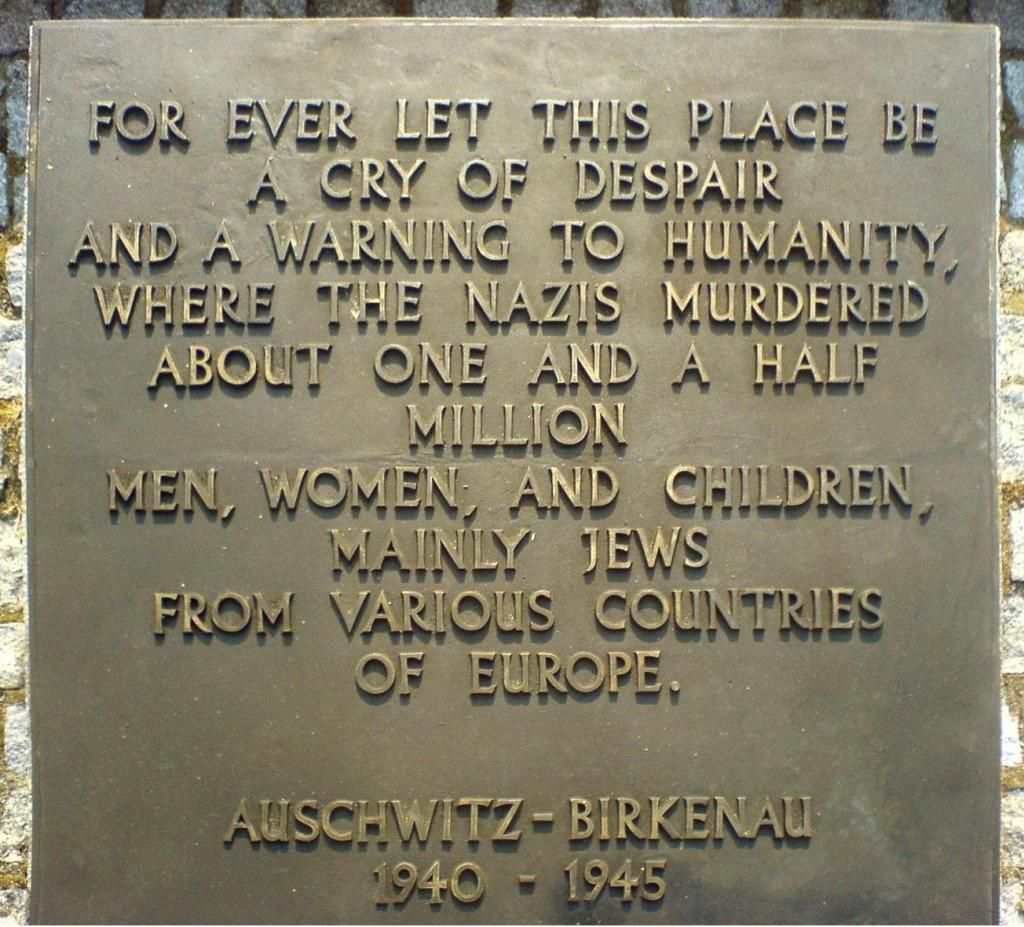





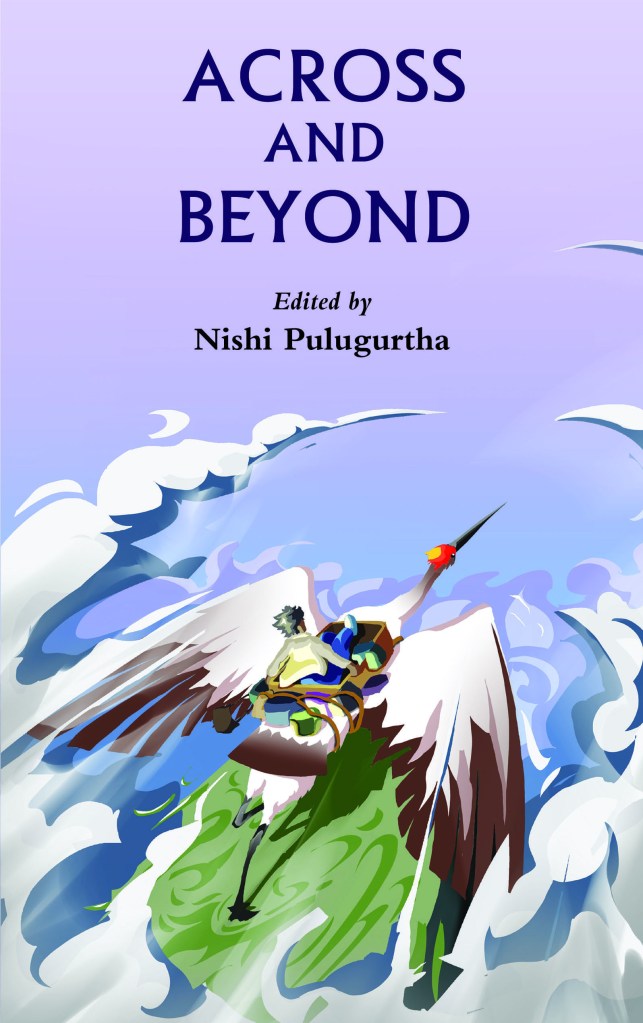
 Borderless
