Configuration

(Glen Cooper Henshaw, American impressionist,
was born in Windfall, Indiana, in 1880 and
died in Baltimore in 1946)

What I first knew of a life of art
was what he touched last -- the summer studio
where I was allowed to wander as a child
through high-ceilinged rooms, up stairways
lined with tapestries unraveling: bronzes
gathering dust, wrought candlesticks, rows
of Chinese vases, the August light shuttered
like strands of Aunt Carolyn's uncombed hair,
the huge easels with their unfinished seascapes,
the closets thick with stacks of pastels
where mice made burrows, and damp seeped.

Beginning there, at the last turn
of the stairs, at the view of the Salute
by moonlight, in its great gold frame –
beginning with the packets of letters,
the yellowed clippings, the photograph
with the calico cat perched on his shoulder –
I followed him from farm, school, bistro,
through the sketchbooks of Market Street
and the Lower East Side, the pushcarts
and railroad flats, the life classes
in the blue cold of the old Academy rooms
in Munich, the boat trains to London,
the first commissions and sittings,
the laughter in the salons, the bare shoulders
of the soprano who stands beside the piano,
the young women with braided, coiled hair
lifting their skirts as they come up the stairs,
the afternoons wandering among the bookstalls,
the cafe conversations with Matisse –

all this rippling from a single stone –
and the force that carried it gone, leaving
only the slow parchment whispering
of old voices in nursing-homes, recollections
of places where they met and talked, seances
around an oak table, a picnic at Fontainebleau,
the crowds in Maxwell Street before the War.
Gradually the surface resumes a smoothness:
second wife buried, paintings knocked down
and scattered, studio burned, each letter
traced, each name marked off, finally
only the quiescence of paperwork – index cards
and conjectures, learned comparisons, polite
notes of inquiry from graduate students,
the curator's handwritten invitation for brandy,
spools of microfilm humming in the machine.

What I first perceived, then, wandering alone
among those vanished rooms; what I last
have come to understand, having followed
that trajectory even as it began to merge
with my own: the face in the photograph, taken
when she left Boston to come to him
on the Rue Monsieur-le-Prince
in the springtime of that fresh year,
that new century.  Her long auburn hair
enveloping that nakedness, the purl
of gas jets turned down in the hallway,
the bell curve of the lamp chimney
by the bed, the swirled perfection
of her sleeping: the configuration
of time, of love, of youth, of art
like an elaborate watermark visible
only when held up to the light.

(First published in University of Minnesota Research)
Jared Carter’s most recent collection, The Land Itself, is from Monongahela Books in West Virginia. His Darkened Rooms of Summer: New and Selected Poems, with an introduction by Ted Kooser, was published by the University of Nebraska Press in 2014. A recipient of several literary awards and fellowships, Carter is from the state of Indiana in the U.S.
.
PLEASE NOTE: ARTICLES CAN ONLY BE REPRODUCED IN OTHER SITES WITH DUE ACKNOWLEDGEMENT TO BORDERLESS JOURNAL
With what word to reach into the future,
With what word to defend human happiness --
It has the smell of freshly baked bread --
If the language of poets cannot search out
Standards of use to later generations?
	Czeslaw Milosz
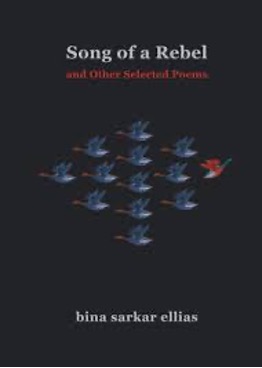
For centuries, poets have vested ardent faith in the ability of poetry to not just effectively describe the world but also to contour, transfigure and transform it by its disruptive power, its clairvoyance and its messianic faith. In light and dark, hope and despair, and accomplishment and loss, poetry has stood firmly beside life as a pathfinder and witness, leading it to refinement and wisdom. Questioning the world’s logic, battling its ideas and speaking truth to power, poets continue to be its “unacknowledged legislators”, speaking eloquently and memorably on behalf of its disillusionment, rage and suffering, and leading the way for constructive social action. Bina Sarkar Ellias’ Song of a Rebel and Other Selected Poems is a fine collection of fifty-one poems that engages with the injustices of the world in this fiery spirit of moral questioning.
Poet, writer and art curator, Bina Sarkar Ellias is the founder, editor, designer and publisher of International Gallerie, an award-winning global arts and ideas publication from India. Song of a Rebel and Other Selected Poems is her fourth collection of poems, her earlier collections being The Room, Fuse and When Seeing is Believing . An experienced art-critic, her poetic voice draws richly from her committed engagement with art and her poems have found a home in many languages of the world through translation.
“It happens that we live in a world fraught with fragility,” writes Ellias. “There are certain forces that prefer to divide and disrupt humanity and there are certain forces that feed our souls with peace and serenity. Through time, the poems in this book arrived unannounced as all poems do; each time, it was an outrage or a helplessness that compelled a response to assaults on humankind by scheming minds.”
In putting forth a narrative of megalomania and oppression, the book, indeed, documents the keen angst of a sensitive and thinking mind in a callous, unprincipled world. Here are poems that emerge, wave-like, from the depths of fury and despair to speak out against the looming issues of our times – cultures of dictatorship, suppression of the forces of democracy, stifling of plurality, erasure of rights, jingoism, colonisation of nature, blatant capitalism, identity-conflicts and violence against women, amongst others. Ranging from the sufferings of Syria, Zimbabwe, Kashmir, Bangladesh, Istanbul, Baghdad, Lahore, Manchester, the Indian farmers, the Rohingyas, Nirbhaya, our imprisoned student activists and so much more, Ellias poignantly conjures before our eyes a global collage of infringement, discrimination and injury.
In Ellias’ poetic narrative, the only division that exists in the world is between the callous and the compassionate. The former dwell in an unending wilderness – “these minds/ that cannot/ decipher/ the essence/ of humanity/ these minds/ that are mowed/ and manicured/ to erase all/ reason;/ that believe/ a gun or grenade/ can complete/ the circle/ of life; can part/ the sea/ of reason so the/ bludgeoned brain/ and sterile heart/ may cross.” (‘If it’s Not Me, it Will Be You’)
In ‘Cement in Our Souls’, the poet laments the world’s stark sterility – “the dignity/ of life drowned/ in a desire so distant/ from Van Gogh’s/ lust for life/ or Monet’s tranquil pond/ so far from/ Hiroshige’s pastorals,/ so distant/ from Tagore’s/ Song of the Road/ so removed from Lennon’s/ Imagine./ must we celebrate/ concrete?/ must we be robots/ and cement/ our souls?”
For the committed activist that Ellias is, a poem is no leisurely arrival into the world but an urgent statement of its status, “an invasion of clean air.” (‘This is Not a Poem’) Her language, in its fidelity to the colloquial rhythm and its determined, energetic flow across difficult sentiments does away with all impediments of punctuation so that the overall impression that the book offers the reader is one of a tremendous, roaring waterfall intending to sweep all in its restless questioning. Note the primal power of ‘Assault’, for instance, a poem worth quoting in its entirety:
assaulted by malls and high rises
that tower like beasts on the streets
suffocating your breath assaulted
by robotic yearnings for more and
more assaulted by neons that wink
and beckon like lecherous pimps
on the wayside I navigate the city
walking warily through mine fields
of consumption that suck the
energies out of every cell, every pore
of my untrained body that craves to
curl into a cave of nothingness.
The beat of the poem fills one with a sense of desperation, exhaustion and collapse – the exact emotive signification of the idea of ‘assault’. And yet, in the midst of this roaring disquiet, the poet does not fail to remind the reader that her chosen genre of protest is poetry and not prose. Every now and then, she lets fall a rhyme for the perceptive ear and as her lines flow relentlessly, often unforgivingly like rain, the chaos of the world is watermarked by the poetic faith of hope’s resurrection. Mark the following lines in ‘Manufactured Fear’:
manufactured fear
i do not dread
fear that is force-fed
into my flesh
fear of who i am
and who i cannot be
fear of flags
that dictate my identity
fear of food
that betrays my religion
or my lack of one
is seen as blasphemy.
Ellias’ images are assiduously wrought as she consistently attempts to summon both shock and tenderness to her verse. In ‘Intangible Knowing’, conformity is the myopia of those who live “barren linear lives” with “mathematical/ precision,/ and weigh/ life’s moments/ with the entitlement/ of acquisition.” In ‘This Skin of Freedom’, freedom is the fragile skin that all have the right to lay claim to. Rivers become arteries in ‘Ode to Bangladesh’. ‘Call of Resistance’ visualizes the hammering of the coppersmith barbet as a ceaseless call of resistance. In ‘It Was Then’, Shaheen Bagh and Mumbai Bagh are “sister fields – fertile/ with bloodied wounds” that blossom “when the fires of hate/ had burnt them.” The poet selects her allusions from a sprawling cosmopolitan canvas of art and life as she steadily links minds and agonies across the cultures and conflicts of continents in a seamless whole. In ‘Ode to Utopia’, utopia assumes the form of a diffuse oneness of mind – “it was as if raag bhairav/ was in dialogue with/ Mozart’s Nocturne/ and a shamisen strummed/ to the tinkle/ of the African kalimba -/ it was as if/ spring had migrated/ into our lives/ for permanent/ residency.”
Making way into the world of Song of a Rebel and Other Selected Poems is to be receptive to the poet’s testimony of the acute disjointedness of our times and the imperative for healing through acknowledgement of the need for dissent. In ‘Rebel’, the poet compares the rebel to “a tired/ moth-eaten/ leaf/ that once/ knew/ its green/ shield/ could battle/ arrogant winds/ that swept/ over its/ tree abode.” It is easy and legitimate, perhaps, to bow down and give in to helplessness and dismay in the face of the rampancy and ruthlessness of our times. However, as Ellias reminds us, the act of resistance is a duty both civic and humane:
life can be bitter –
but you can dwell
with love and courage
if you repel.

life can be better
if you repel-

life can be better
if you rebel.
In ‘books’, the poet writes, “a book is a river; a voyage into the unknown/ on a paper boat.” Bina Sarkar Ellias invites her readers to make this voyage with conviction and faith in the possibility of a better world. To rebel, as her poems point out, is no more a philosophical choice but a compelling necessity given the depravity of our times. We are living through an important moment in history dominated by tales of “tattered democracy” and “new age fascists” (‘I Hear’). The choice is no longer between whether to rebel or hold on to silence but overwhelmingly now, a question of life and death.
Song of a Rebel and Other Selected Poems is a wake-up call to humanity worldwide to adopt defiance as a mode of life if being is to chosen over annihilation.
Basudhara Roy teaches English at Karim City College affiliated to Kolhan University, Chaibasa. Her recent (second) collection of poems is Stitching a Home (New Delhi: Red River, 2021). She loves, rebels, writes and reviews from Jamshedpur, Jharkhand, India.
.
PLEASE NOTE: ARTICLES CAN ONLY BE REPRODUCED IN OTHER SITES WITH DUE ACKNOWLEDGEMENT TO BORDERLESS JOURNAL
Versus


On a piece of paper
The work of a pen is
a complex tale
of love and war:
It is a history
of breaths, carcasses and rebirths;
And an inky body
of evidence for life
in the Mars of minds
and the Venus of hearts.
On a screen, though,
It seems a simple story,
its flow stripped
of effort and emotion:
It is a mystery
of words which haven’t fought wars;
And an empty cloud
which shrouds, like death,
the moons of mood
and the stars of thought
Srinivas S teaches English at the Rishi Valley School, India. His poems have found a home in places such as Indian Ruminations, Amethyst Review and The Hong Kong Review.
.
PLEASE NOTE: ARTICLES CAN ONLY BE REPRODUCED IN OTHER SITES WITH DUE ACKNOWLEDGEMENT TO BORDERLESS JOURNAL
A parable by Louis Couperus (1863-1923), translated from Dutch by Chaitali Sengupta
Statue of Louis Couperus
Museum in The Hague
Portrait of Louis Couperus
Louis Couperus is one of the foremost figures in Dutch literature. Courtesy: Creative Commons
The forest was somber, and the air dark; it was a long night without the solace of the stars, it seemed to sink into infinity, sink deep into all that was mortal in this world. It was at a time like this when the young boy woke.
He was a boy of some years, and he did not remember anymore, whether he was lost or abandoned in that forest, because he had slept for such a stretching length of time. Shuddering, his eyes large and full of fear, he looked around himself. But the way forward was lost behind him.
“Where am I,” the little boy thought, in that soul-shattering darkness. “And who am I and where am I to go…”
A vague remembrance stole upon him, a memory of shimmering light and warmth. Like a weeping, wafting out of the warm sun palace. But more than the weeping, he remembered nothing much. Now, fully awake, he became aware of being alone, abandoned, lost in a forest of horror.
The very thought made the little boy cry out in childish despair. The fear of beasts and that of robbers assailed him. Then, he saw a silvery twilight moving across towards him, in silence. Was it the wild man, he wondered? In his deep consciousness, the thought rose death-like. His little heart throbbed wildly in his throat and his small eyes bulged out in terror.
Soon, he realized the beaming twilight, that glided on his way, was not the wild man; it was a white woman.
The little boy, in the twinkling of an eye, thought he recognized her: a woman, very white, the kind of white woman he liked. With mingled fear and expectation, the little boy ran up to her.
“White lady!” he begged, folding his hands in a gesture of prayer that perhaps he had been taught in the sun palace, many, many years ago.
Tall and slender, the white woman’s veils were the whitest white, flashing against the gloomy, dark depths of the forest. She bent over the child, and her gaze caught him through her veils; her white hands were briefly extended, as if she wanted to see better; better, with her deep dark eyes, as deep as the black, shadowy forest.
“White lady!”, the child pleaded again.
“Who are you, my child?” asked the white woman. Her voice sounded primeval, thick and dark. “And where have you come from and where are you going?”
The small boy began to cry again; the woman’s voice frightened him, and he did not know who he was, where he had come from, or even where he was going…
“Come with me then”, said the white woman gravely, and she stretched out her hand to him. The little boy held out his hand to her too, and went beside her, with weeping eyes.
“Don’t cry anymore,” said the white lady. “Hold my hand safely, let me lead you: do not be afraid. In this forest, there are no beasts or robbers.”
The child felt a gentle trust wash over him, especially now that the cold hands of the white lady were warmed by his own small, warm one, but he still stumbled very often, and his short legs grew tired soon.
“Then, let me carry you, my dear.” Saying so, she lifted the child to her breast and held him very lightly between her white veils: her footfalls were light, floating, like unheard-of steps. In her arms, the child fell asleep and dreamed of the sunshine and white women, and also of white children. She walked on.
When he awoke, the child smiled and peered into the dark depths of her eyes.
“You are a good white lady, aren’t you?” asked the child, as confidence sparkled in him. He wrapped his little arms around her neck.
“Yes,” said the white woman. “I am a good white lady, my child.”
“Are you not tired of carrying me, good white lady?”
“No, my child, I am not tired. I never rest, I always go.”
“Always?”
“Always.”
“Through the whole forest?”
“Through the whole forest. See, the morning breaks magnificently, through the branches, and the way ahead seems clearly visible.”
“Now I can walk again, white lady.”
The white lady put him down, carefully on his feet, and wrapped herself closer in her veils. The child walked on beside her, happy now that all the mystery of the night had been resolved in the smile of the morning.
“Oh!” cried the child; “See what a beautiful flower that is!”
“And there, what a beautiful butterfly!”
“Oh!” said the child joyfully. “I would like to have them, the butterfly and the flower.”
“I shall give you the butterfly and the flower,” said the white lady; “but then, you must also give me something in return.”
“And what can I give you, white lady?”
“In lieu of the butterfly and the flower, my child, you must give me this morning hour.”
“Oh, beautiful is the flower, and beautiful is the butterfly: oh, white lady, I gladly give you this morning hour, in return!”
The white lady smiled. With a mysterious, dark look she looked at the child.
Then she caught the butterfly in her veil and bent over the precipice to pluck the blue flower. She offered both to the child, who rejoiced with happiness.
“O white lady, O white lady,” the happy child spoke out in joy. “How happy I am with my flower and my butterfly!”
But in his joy, the boy squeezed the butterfly to death and the flower withered in his little hand. “Oh, but how soon, O white lady, is my flower wilted and my butterfly died!”
“But dear child, butterflies do not live long, especially not in the hands of children, and flowers wither even faster. But if you give me this new day of spring, I will bring up thousands of butterflies and thousands of flowers, by magic, all along your path today.”
“A thousand of butterflies and flowers! Oh, white lady, for so many flowers and butterflies, I will gladly give you my day in spring.”
Now the glowing sun had completely burst forth, and the forest no longer wore a black garment; it sparkled with golden-green spring. And along the shining road, the child walked in springtime, and picked the blooming flowers and caught the colorful butterflies, for they bloomed and fluttered all along the road.
But by evening, the flowers had wilted, and all the butterflies were dead.
“Still, it was a lovely spring day,” said the cheerful child, now with sleepy eyes. Exhausted, he wrapped his arms around the white lady and slept on her heart, between her ephemeral white veils.
Night fell, the white lady walked on, and in the depths of her shadowy eyes, a peal of wistful laughter broke quietly. “But that glorious spring day is now mine!” murmured she, in a nameless, deep, dark voice.
The white lady took the little boy to the city, among other people and children. The child grew up there. He became big and strong among those he assumed were his parents, his brothers, and sisters, relatives, and friends.
Many seasons later, the white lady appeared to him again. The white lady of his yesteryears, the one whom he had forgotten completely. Now, her deep dark eyes frightened him, even though he was now a young man of eighteen.
“My son,” the white lady called him. “I have not forgotten you.”
“I was ungrateful, white lady,” confessed the young man. “You saved me, a lost and forsaken child, from the gloomy forest of night And, you gave me butterflies and flowers.”
“Yes, thousands of butterflies… in exchange for one spring day!”
“Yes… thousands… for one day in spring. You brought me to the city, and I found my parents.”
“And they fed you and cared for you until you became a man, my son, a young man of eighteen. But don’t you remember, the promise? What returns would you give me now?”
“Oh, yes, white lady, I remember very well. A spring day in exchange for the butterflies and flowers. I also remember the eighteen spring seasons of my life, which you demanded to bring me into the city where I could be with my parents, and they would raise me with my brothers and sisters, and with my relatives and friends.”
“If you still remember that promise, my son, the white lady is now content… And she’s happy. In exchange of just eighteen, withering spring seasons, you have received youth and a youthful time of pure happiness.”
“But now, white lady, my happiness is over, and I am bitter with grief,” cried the young man. “For I love a girl as beautiful and as soulful as no other girl in the world, and I should like to call her my wife. But alas! She does not love me. I have but little possessions and one among them is my anguish, that I cry out on my violin.”
“My son, you know how much I love you. If you can give me, no more than twenty blooming summers of your life, I will gladly give you happiness, a consort, and money. Twenty blooming summers, in exchange for the bride, and the gold that will make you great among men. Do not lament in music anymore; music must fill the void and is more transient and rarer than what I’ve asked of you…. Your spring days and summer months…”
“But music has comforted me, white lady.”
“Yes, live happily then, my son,” said she. “Be happy with what I give you, with your bride and the money…”
“Oh, white lady, oh white lady, for so much I’d willingly give all my blooming summers to you!”
The white lady looked with deep dark eyes at the young man, and she did not come back in years.
The young man married the lady of his dreams, the one whom he desired much, and as the years slowly turned, he attained prestige, wealth and power, until the war erupted. Then, the country was in turmoil, and the smoke of crumbling, burning cities darkened the sky and the horizon.
The white woman appeared to her foster son for the third time. She looked terrible to him. Her face was lean and sunken, her arms bony and her outstretched hand, threatening.
“O white lady, O white lady,” exclaimed the man, full of passion. Worries had already wrinkled his face; pride was scorching his soul. “Years ago, you offered me happiness in exchange for twenty summers of my life. But I never found happiness… Like the flower and the butterfly, my love died and wilted, and my wealth never brought any joy. Now I only wish to be very powerful, for if I attain supremacy, that must surely bring happiness. I wish for a crown that would sit on my temple.”
“Foster son,” said the white lady, “my dear child, I never forgot you: if you will give me in exchange for the crown of this land, fifty purple autumn seasons of your life, I will cause a happy outcome in the war; it would make you the king of this land.”
The ambitious man hastily accepted the exchange, and a terrible battle raged for seven days. The battlefields were strewn with corpses: death seemed to reign supreme. The foster son of the white lady took a sword in his hand, fought fiercely in the front lines, and a mysterious power seemed to protect him and make him invincible in the heat of the war. He, at the head of the troops of the country, gained the victory, and they pressed the crown on his head.
He grew old under the weight of that crown, until war raged again, and rebellion broke out. Deserted by all his people, he fled the land half-naked, feeling miserable. He reached the same gloomy forest, collapsed there, where he had been once found as an abandoned boy by the white lady.
Old and dejected, he lay down in the twilight of the sinking evening, when she appeared before him, looking like a terror: gray hair fanned out around her face, which grinned like a skull; and now, she had hollow eyes.
“O white lady, O white lady,” cried the unhappy king. “You thought to gift happiness to me with this crown. You turned the war in my favor, in exchange for fifty purple autumn seasons of my life. But this crown has only brought me trouble, nothing else. I’ve never known happiness, except perhaps for that very first day of spring, when you conjured up butterflies and flowers for me! And yet I considered you to be my life! Why have you been so cruel? O white woman, O white lady! Now that I lie here, feeling miserable, abandoned, I beg of you. You who are so powerful, please bring a glimpse of happiness and life, to my poor suffering subjects, to my children… in whichever form it may be, flower, butterfly, bride, gold, or crown…”
“O my son, O my son!” raved the white lady. “You’ve always been ungrateful. You’ve cared neither for the flower, nor for the butterfly, nor bride or wealth, not even for the crown. But if you give me this last icy winter hour, well then, I’ll grant your children and your subjects life, and a glimpse of happiness.”
Helping him stand up, she led him on. Sobbing now, he entrusted his last winter hour to her. And she led him to a monument, whose bronze door she opened out for him.
“Get in there,” she said threateningly now. “So that I may receive everything: all the days of spring, summer and autumn, and also the last hour of winter: all that you have promised me, in exchange for my countless favors.”
The old king stumbled and staggered.
“But… but… this is a tomb!” he said, looking at the monument.
“This is a king’s tomb,” she corrected him. “Tomorrow your praise singers, O son, will engrave upon it, the words of glory, glorifying you for eternity. Get in there now, so that I may receive what you owe me.”
And she held open the bronze doors for him.
“Were you not my life then?” asked the King, on the threshold of the sepulcher. “Oh, tell me… Aren’t you, my life?
“No,” said the white lady gloomily. “I was never your life. I am not Life. I am Death.”
And she pointed him to go inside.
He obeyed; slowly, she turned the bronze door, which creaked in heavy hinges.
“And my life?” asked the old king in a begging voice, anxious, as he peered through the still open crack of the slowly closing tomb door.
The white lady said more softly, “You’ll get your life, but only when you have paid me your debt of the days and the seasons…
Then she closed the door, for thousands of years.
Louis Couperus (1863-1923) is one of the foremost figures in Dutch literature. His oeuvre contains a wide variety of genres, including lyrics, poetry, short stories, fairy tales and historical novels. Over Lichtende Drempels (About luminous thresholds) is a collection of four fairy tales and an accompanying story by Couperus. Published in November 1902 by LJ Peat, in Amsterdam, “Of Days and Seasons” (Van dagen en seizoenen) is a parable from this collection.
Chaitali Sengupta is a writer, translator, a language teacher, and a volunteer journalist from the Netherlands. Her first prose-poem collection Cross-stitched Words was published in February, 2021. Her published works also include two translations “Quiet whispers of our heart” and “A thousand words of heart”.
.
PLEASE NOTE: ARTICLES CAN ONLY BE REPRODUCED IN OTHER SITES WITH DUE ACKNOWLEDGEMENT TO BORDERLESS JOURNAL
In recent years, the increasing influence of the media has changed the shape of politics all over the globe. Consequently it has raised provocative questions about journalism’s role in the political process. There are questions about the media’s effect on the political system and the subsystems — including the legislature, the executive and the lobbies.
Is media power in politics a myth or an exaggeration? Who influences whom? When does the media power peak and when does it touch the bottom — these and similar other questions, however, defy any clear-cut answer.
Research over the decades suggests that the media effect on politics cannot be answered in broad generalities. There are various types of effects, on different types of political dispositions, at various levels of political activity, under various conditions. Further, the mass media are highly diverse in content and include a very wide range of activities of which politics is only a miniscule part.
In politics, the mass media influences not only individual opinion but also the way politics is conducted. Today, if political roles are changing, so are the expectations of politicians. Changes take place even between the relationship of followers to leaders, and, perhaps, also some values of political life itself.
Walter Lippmann, a renowned American journalist and political analyst, once said that journalists point a flashlight rather than a mirror at the world. Accordingly, the audience does not receive a complete image of the political scene. Instead, it gets a highly selective series of glimpses. Reality is also tainted. It was his view that the media cannot possibly perform the functions of public enlightenment that democratic theory requires. He reasoned that the mass media cannot tell the truth objectively because the truth is subjective and entails more probing and explanation than the hectic pace of news production allows.
Images of reality the mass media portray differ from country to country. Judging by their respective media, audiences are apt to form quite varied images about events and their international ramifications. Different media produce different opinions when journalists disagree about which political actors and actions deserve the spotlight and which should be regarded positively, negatively or as neutral.
Influence also depends on the credibility of the media and on the esteem with which their audiences regard them. Usually, the media have negative ratings in European countries, but a positive score in the United States. Despite credibility problems, most audiences in Europe believe that the media have much less influence on the three branches of government, while Americans credit the media with a great deal of influence over governmental institutions.
Alexander Solzhenitsyn, a Russian writer, remarked in 1947 while delivering a talk at Harvard University, that the press had become the most powerful force in Western countries. It had surpassed in power the executive, legislature and the judiciary.
Nearly everyone acknowledges that the media plays a powerful role in our public and private lives. Also, opinions about the media and estimates of their influence on society’s other institutions are important barometers of democracy’s functioning.
On the other hand, attitudes about the media have been highly critical. Critiques of the press have spanned a century and several continents. Balzac (1799-1850), the French novelist and dramatist, wrote in 1840 : “In France, the press is a fourth power of state; it attacks all, yet no one attacks it. It reprimands recklessly. It asserts domination over politicians and men of letters that is not reciprocated, claiming that its protagonists are sacred. They say and do horribly foolish things; that is their right! It is high time we took a look at these unknown, second-rate men who hold such importance in their time and who are the moving force behind a press with a production equal to that of books.”
A Louis Harris survey in 1987 revealed that as compared to America, Germany, Great Britain and Spain had little or no confidence in the media. The pluralities in these three countries said the media had too much power. This survey assessed the media’s influence on three central institutions of government-the legislature, the executive and the judiciary. Some respondents accused the media of undermining the separation of powers that is the foundation of democracy.
Whether the media actually impedes the operations of the other three organs of democracy is difficult to say, but as the Indian experience shows, the media has a more abiding influence on government and its institutions rather than the other way round.
The American humourist, Will Rogers,contended, “All I know is just what I read in the papers.” For many Indian politicians, there is a good bit of truth in this aphorism — what they learn about ongoing political events comes primarily from the news media. Therefore, the media as a supplier of information moulds public opinion and influences political decisions. If the media guides citizens’ attention to certain issues and influences their thinking process, the media also influences the choice of issues that will be matters of political concern and action. That is the reasoning behind the agenda-setting hypothesis of scholars like Maxwell E. McCombs and Donald L. Shaw.
Agenda-setting or the ability of the media to influence the course of events in the public mind has been part of the political culture of the United States of America for nearly a century. The assumption of media power has been asserted by political journalist and historian, Theodore White, during the presidential elections of 1972. According to him, the power of the press in America is primordial. It sets the agenda for public discussions; and this sweeping political power is unrestrained by any law. It determines what people will talk and think about — an authority that in other nations is reserved for tyrants, priests, parties and bureaucrats.
The idea of agenda-setting asserts that the priorities of the press become the priorities of the public. What the press emphasises is emphasised privately and publicly by the audiences, asserts White. The press largely structures voters’ perceptions of political reality. It can also influence which issues make up the agenda for any particular elections.
In 1952, the Republicans led by Dwight Eisenhower successfully exploited the three Ks — Korea, Corruption and Communism — in order to regain the White House after a hiatus of twenty years. The prominence of those three issues, cultivated by press reports extending over many months and accented by partisan campaign advertising, worked against the incumbent Democratic party.
There are numerous instances of how popular American presidents’ actions and statements reported in the media affected public opinion. These include President Nixon’s persistent opposition to speeding up troop withdrawals from Vietnam during 1969,1970 and 1971; Reagan’s 1981 argument of AWACS airplane sales to Saudi Arabia; Carter’s 1977-78 increased attention to Arab countries, his 1982 bellicose posturing towards the Soviet Union; Ford’s 1974-75 defence of military spending and Carter’s advocacy of cuts in domestic spending, et al.
In contrast, unpopular presidents had little success at opinion leadership. In several cases, unpopular presidents made serious efforts to advocate policies but failed to persuade the public.
In no area of public life have practicing politicians taken media effects more seriously than during elections. Political campaign organisers spend much time, effort and money to attract favourable media attention to candidates for major electoral offices. When their candidates lose, they frequently blame the tone of media coverage, or rather the lack of it.
There is an old saying that there are many slips between the cup and the lip. It is one thing for politicians to create a particular image and another for that image to be conveyed to news people and, through them, to the voting public.
Systematically establishing the impact of election communication on the public’s opinions and behaviour is a real challenge. The nature of campaign coverage has also a profound impact on the way people vote. This is confirmed by how people tended to view the candidate — as the winner or the loser. As for the media ,that old line of legendary coach Vince Lombardi – “Winning Isn’t Everything, It’s The Only Thing” — is taken to heart and the public response usually follows suit.
Ever since the television age of politics was born in the 1952, American presidential stakes between Dwight Eisenhower and Adlai Stevenson, the ability to use the medium has been increasingly essential to electoral success. In 1960, John F Kennedy’s video persona in his televised debate with Richard Nixon proved his margin of victory.
Similarly, in 1976, Jimmy Carter co-opted television in the Democratic primaries to help him create a candidature that was larger than life. Ronald Reagan throughout his presidency proved that the visual medium had become the political message. Reagan’s White House advisors understood early that in areas of government policy and global complexity the nature of the medium is tedium. And so, by controlling the pictures, they could control the pacing of the news shows.
The media effects politics in a variety of ways. They also affect public policies. By mobilizing hostile public or interest group opinions, the media may force a halt to political choices. But, as a general rule, journalists should disclaim any motivation to influence public policies through their news stories. Except for the editorial pages, their credo calls for objective, neutral reporting. Only investigative stories may be the major exceptions to this rule.
Contemporary political folklore pictures the media as adversaries of officialdom who alert the citizens to governmental misdeeds or failures. In reality, there are, or may occur, many situations when officials and journalists work together to bring about needed action.
The power of news people rests largely in their ability to select news for publication and feature it as they choose. Many people in and out of government try to influence these media choices. But in the ultimate analysis, it is the editor and news directors — the gatekeepers in news media- who, in an ideal situation, decide which item to clear and which one to reject.
(First Published in The Frontier Post)
.
Bhaskar Parichha is a journalist and author of No Strings Attached: Writings on Odisha and Biju Patnaik – A Political Biography. He lives in Bhubaneswar and writes bilingually. Besides writing for newspapers, he also reviews books on various media platforms.
.
PLEASE NOTE: ARTICLES CAN ONLY BE REPRODUCED IN OTHER SITES WITH DUE ACKNOWLEDGEMENT TO BORDERLESS JOURNAL
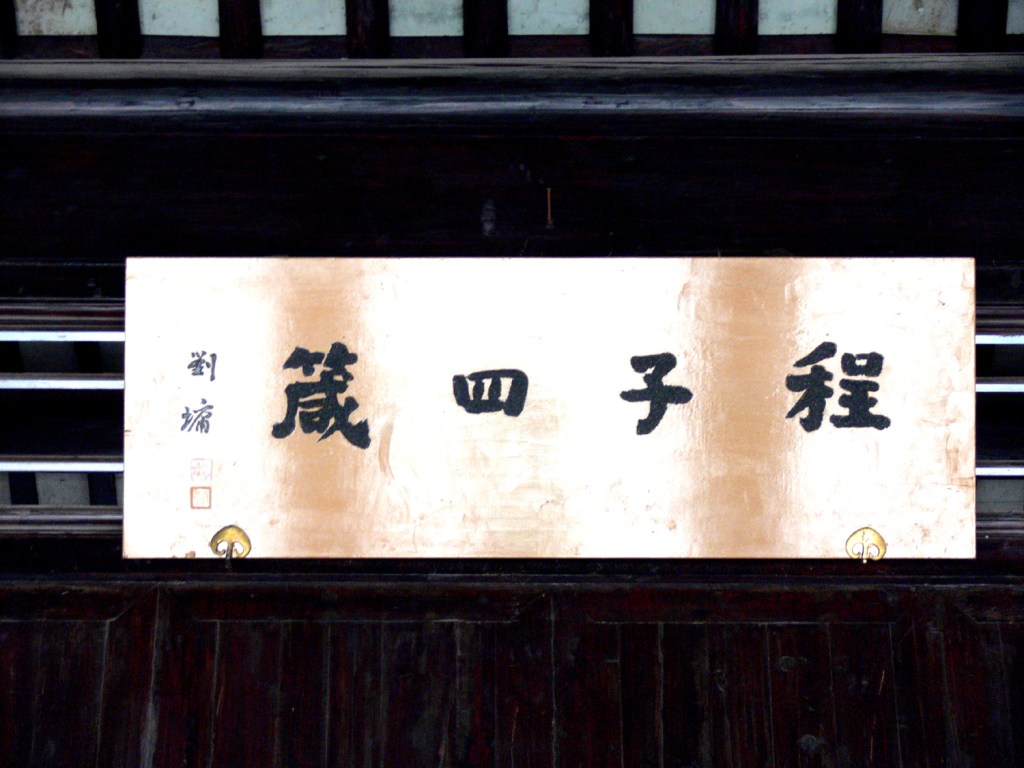
Liu Yong calligraphed an inscription on a board at Emperor Qianlong‘s travel residence in Mudu, Suzhou
Liu Yong was a minister in the Qing Dynasty and was regarded as a most influential calligrapher. Courtesy: Creative Commons.
THE TIMELESS IN TIME
(After Liu Yong)

A cold wind blows dead leaves
down the empty street,
as my faucet drips
in the dark.
My smile is like an
empty cob of corn,
half sad, half irony.
I still have my teeth,
but the future looks dim.
I think of the past,
of the friends I knew,
but friendships don’t last.
How to be strong?
It’s wrong to dwell on
what is gone. The moon
and the stars remain
in that vast empty sky.
That won’t cheer me.
I’m not a fool.
I knew that all along
George Freek’s poetry has recently appeared in The Ottawa Arts Review, Acumen, The Lake, The Whimsical Poet, Triggerfish and Torrid Literature.
.
PLEASE NOTE: ARTICLES CAN ONLY BE REPRODUCED IN OTHER SITES WITH DUE ACKNOWLEDGEMENT TO BORDERLESS JOURNAL
A Rondo-Minuet Hybrid on My Daughter Learning Tae Kwon Do

“Can one be a saint without God? – that’s the problem, in fact the only problem, I’m up against today.” Albert Camus, The Plague

Her mind’s in ready stance. A brush
With beauty is a deadly brush: what dragons
Learn too late is plush
In her. She masters poomsae. What’s that fragrance?
That’s her mastery. No push

Is hard enough to silence her skull-crushing
Keup. It’s not to brag
When I point out the sky’s concussion
Had a telling lag…
It came on the heels of her axe kick! Confusion

Hates this third-grade student’s skill,
Her dojang concentration. Every spreading
Block is logical –
Fearfully made, in fact – so punches heading
For her head wind up in school.

Elegant gales and ludicrous joules Achilles
Would envy can’t be read
By dobok-wearing silly billies.
Then she bows, and dread
Is blown into my lesser heart’s Antilles.
Jake Sheff is a paediatrician and veteran of the US Air Force. He’s been published widely, and nominated for the Pushcart Prize. His chapbook is “Looting Versailles” (Alabaster Leaves Publishing). A full-length collection of formal poetry, “A Kiss to Betray the Universe,” is available from White Violet Press.
.
PLEASE NOTE: ARTICLES CAN ONLY BE REPRODUCED IN OTHER SITES WITH DUE ACKNOWLEDGEMENT TO BORDERLESS JOURNAL
In his book Every Man His Own Detective (1887) former Police Inspector R. Reid describes a case that was a cause célèbre in its time and is largely responsible for the formation of the Detective Department of the Calcutta Police. At 3 o’clock in the morning of 1st April, 1868, an Indian constable patrolling his beat in Amherst Street saw by the light of his bull’s eye lamp “something resembling a heap of female wearing apparel lying on the west side of the main street.” On closer observation, he found it to be the corpse of an Indian woman, recently murdered. A gas lamp was burning across the road opposite the spot where the body was found. The constable had passed the spot just an hour earlier finding the space clear and during his patrol through the adjoining lanes and by-lanes had not heard any voices or any sounds of carriages. The Inspector of the local thanna (police station) arrived at the scene just as the clock of the Trinity Church on Amherst Street was striking 4 a.m. Reid’s description is gripping for the almost tangible sense of atmosphere and topography it evokes.
The body was duly examined by the Police Surgeon and lay unidentified at the dead-house of the Medical College Hospital for four days before being buried, but it had been photographed by M/s Saché and Westfield on 2nd April. Copies of the photograph were circulated throughout Kolkata and the suburbs and a reward of 100 rupees was announced “by beat of tom-tom” for any relevant information. This proved to be the first case in India where photography was successfully used by the police for the identification of a victim. Dr. Norman Chevers, Principal of the Calcutta Medical College, includes the photograph of the cadaver in his learned volume A Manual for Medical Jurisprudence in India (1870). He notes that the body was identified based on “the presence of a small pointed supernumerary tooth, between the middle incisors of the upper jaw.”
The deceased was revealed to be one Rose Brown, an Indian Christian woman. Further investigation led to the arrest of her paramours, named Kingsley and Madhub Chunder Dutt. Reid relates in detail Madhub’s statement, describing his stroll with the victim on the fateful night along gas-lit streets of central Calcutta, from Baithakkhana Lane through Bow Bazar Street, Wellington Street, College Street, Colootollah Street, Chitpore Road, Lall Bazar and back to Bow Bazar. Madhub reported that they had been surprised by Kingsley during their promenade and he ran away for his dear life. Hidden in an alley, he watched Kingsley and Rose walk slowly towards Amherst Street.
After this tremendous build-up, Reid brings his story to an abrupt halt. He tantalizingly decides to “leave the solution of the problem, which of these two men, Kingsley or Madhub, murdered Rose Brown? [sic] to the intelligent police officer.” As if this was not frustrating enough, one learns from Dr. Chevers’s book that “the accused escaped”. Chevers discusses in detail the report of Dr. Colles, who had conducted the autopsy, and supports the court’s decision that Rose Brown was not murdered but committed suicide. As for Reid’s account of the case in his book, he not only omits the official verdict on the case but also withholds his own judgment. His agenda is to provide a do-it-yourself lesson in detection and not to serve a whodunit on a platter.
Reid’s account appears like an unfinished Victorian mystery, falling just a bit shy of supplying the requisite number of clues. Reid advises his pupils that the procedure to be followed for cracking the Rose Brown case is that of the previous case described in the book and analyzed by himself clause by clause for their benefit. The previous case is incidentally that of Leah Judah of 5 Pollock Street, wife of a Jewish opium merchant, who was murdered by her paramour Nasseem Shallome Gubboy and his accomplice Ezekiel Shurbanee in the wee hours of 30 September 1868.
The Detective Department of the Calcutta Police came into existence on 28 November 1868, in the same year as the Rose Brown and Pollock Street murder cases. It was the first time that a permanent and designated elite contingent of specialised investigators was formed in India, a decade before an equivalent body, the Criminal Investigation Department, was set up at the heart of the empire in Scotland Yard. Reid rose to the position of the Superintendent of the Detective Department and was also appointed as the Prince of Wales’s personal bodyguard during his sojourn in Calcutta in 1875-76. Reid published Every Man His Own Detective eight years after he had resigned from the post of the Superintendent of the Detective Department of the Calcutta Police. His other publications including Romance of Indian Crime (1885), Revelation of an Indian Detective (1885), Reminiscences of an Indian Detective (1886) attest to his continuing sense of vocation.
Reid in this book deals with various types of swindling and theft, apart from murder. A common motif set by Reid’s accounts is that criminals exploit Calcutta’s status as the hub of administrative and commercial networks and the detective chases them beyond the city’s limits to bring them back to the colonial capital for their trial and punishment. For example, Reid narrates the case of a Dunbar who swindled several leading firms of Calcutta and absconded, constantly changing his location and adopting new identities as he went on cheating more people. At one point he impersonates one Mr. Reid of the Calcutta Detective Police, and causes Reid to be briefly detained as Dunbar himself. Reid follows his scent to Allahabad, Muzaffarnagar, Roorkee, Jabalpur and Shapore, before arresting him in Bhopal.
In another case, Reid and his team sail in a luxurious boat to Chandernagore, then a French colony about 45 kilometres north of Calcutta, in order to capture an absconding swindler. The criminal is lured aboard with dance and music, and the arrest is made just as the pleasure boat is drifting away from the French soil. Reid also reports an ingenious case of salt smuggling on the Hooghly River and an illegal sale of postage stamps carried out by a Jewish merchant in Howrah just off the city limits.
A notable feature of Reid’s accounts is their cross-cultural or multi-ethnic ambit. The peculiarity of his vocation provided the detective a unique vantage of Calcutta, cutting across ethnic and class boundaries. Reid, for example, interacts with a wide range of people from Indian servants and gentlemen to the movers and shakers of the colonial administration.
Reid sets great store by “physiognomy,” the then-fashionable art of judging characters from facial expressions, although it has long been discredited as a pseudo-science. He devotes an entire section of his book to physiognomy and smugly observes that almost every face in “the opium dens and gambling hells of Calcutta” shows a “grotesquely hideous mixture of imbecility with low cunning, greed, and cruelty”. He hastens to add with what seems to be the literary equivalent of a knowing chuckle, “If a man is wanted for the murder of a child for the sake of a silver ornament worth, perhaps, only a few annas, you find him here.”
Reid has hardly any qualms about the ingrained racism of his outlook. While discussing the Pollock Street murder, he observes, “The phlegmatic Englishman may seek satisfaction in the Divorce Court, and the susceptible Frenchman secure it at the point of his rapier, but the Hebrew will be satisfied with nothing less than the life” of the disloyal woman. Besides, Reid is irritated by the deceptive stupidity of Indian domestics and does not think much of Indian policemen either. He uses the term “native” for the Indians throughout. Nevertheless, he is quick to honour merit when he sees it. Once, a lost child of two and a half years was placed at the police station and was seen arranging a handful of grams like the breaking and distribution of type in a printing press. An Indian constable came to the decision that the child’s father was a compositor, which was subsequently found to be true. Reid recommended the constable to be attached to the detective department, and felt thoroughly insulted when his suggestion was brushed aside by the higher authorities.
Reid’s narratives refuse to grant the upper hand to crime. If they accept crime to be integral to life in the bustling, chaotic second city of the empire, they also project the detection of crime to be an equally remarkable part of the less-than-perfect urban experience. A Bengali translation of the book, Engrej Detectiver Chokhe Prachin Kolkata (Old Calcutta in the Eyes of an English Detective, 1966) by the journalist and belle-lettrist Parimal Goswami did not find much favour in its time and its reissue in the new millennium has gone equally unnoticed. Reid’s wise saws, avuncular attitude and readymade formulae for investigation may appear quite off-putting, but Every Man His Own Detective has a fair share of thrill and old world charm to make for a memorable read.
Parimal Goswami’s translation of R.Reid’s Every Man His Own Detective
Abhishek Sarkar teaches at the Department of English, Jadavpur University. His research interests are the literatures and cultures of early modern England and colonial Bengal.
.
PLEASE NOTE: ARTICLES CAN ONLY BE REPRODUCED IN OTHER SITES WITH DUE ACKNOWLEDGEMENT TO BORDERLESS JOURNAL
Every year, new words appear in the dictionary. There is also a contest of sorts among the new entrants and one gets elected the ‘Word of the Year’. A few years ago, the coveted title, awarded by a reputed authority in the field, went to ‘post-truth’. It is a matter of relief that while new entrants are feted, all the older ones are not given a ceremonial exit. Imagine the state of affairs if ‘truth’ were to be given a send-off!
One word that I would personally like to see erased is ‘breaking news’. After watching news channels religiously for so many years, I have still not figured out why news is ‘breaking’. Or, more particularly, why is it claimed that news is breaking, even after it has been broken. I think it would be a refreshing change to hear the ‘whole’ story or get wholesome news. Maybe, if the news is actually explosive it could be called ‘shattering news’. Or even news quake, if the idea is to draw viewership by sound bursts and stop viewers from flipping channels. However that may also prove to be a damp squib, as by now it is well known that ‘explosive disclosures’ do not cause earthquakes.
Seeing some words grow and acquire nuances is as interesting, as seeing some others shrivel and fade away. The word ‘like’, for instance is increasingly used in conversation today, as a verbal comma. The word ‘hot’ is rapidly being replaced by ‘cool’ to convey approval. Today, everything in spite of global warming, is described as ‘cool’. Along with its derivative ‘chill’, it is the most expressive response one can expect from millennials.
Earlier, it took a Shakespeare to enrich language with a few thousand words. Today, the creative genius of many anonymous sources finds its way into circulation, before being elevated to the columns of dictionaries. The software programmes which are in use for word documents, underline in red many multi-lingual words that are commonly understood by everyone but the programme. On being prompted by the programme, whether the unrecognised word is to be ignored, corrected or added to the dictionary is a decision that has to be made. I for my part, contribute generously to the idea of adding new words. For, it’s a warm feeling when fringe words are acknowledged and given their due.
I have heard the word ‘timepass’, used decades ago by vendors who would clamber up the compartment as our train neared the Bombay (now Mumbai) station to hawk everything from peanuts, to magazines, to rattles and toy cars. Now, the word has wide currency, describing a range of activity from listening to music, idling with a phone, blanking out in class or doing nothing. I am not sure whether lexicons have accepted this, but that does not seem to matter.
What we may well see in the future, is further elasticity in the use of language. The predictive text, which often behaves as if it is presumptive text, seems to know what has to be said. Need for any references or even the need to know how to spell have been considerably reduced. The idea, after all is to be understood.
In post-truth times – anything goes.
.
Geetha Ravichandran lives in Mumbai. When she is not working, she watches the sky and the sea. In the past year, her poems have been published in Borderless, Setumag and included in a couple of anthologies published by Hawakal.
.
PLEASE NOTE: ARTICLES CAN ONLY BE REPRODUCED IN OTHER SITES WITH DUE ACKNOWLEDGEMENT TO BORDERLESS JOURNAL
The A to Z man

Kalai claims he is A to Z man.
In my language Kalai means art.
I hear him explain his services are from A to Z,
Covers all that needs to be done,
He’d come in at the appropriate moment in my life -
I didn’t know such services been on offer until I died,
I look at him through closed eye-lids --
Except for few warts around his nose
And a shiny scar on the forehead,
His bona-fide is not in doubt.
The scar does not trouble me
Anymore, although it starts
From near the tip of the left eyebrow
And travels up till the hairline
Where the left separates from right --
Life is a salad of incongruences,
Now the process of incongruences stopping starts.
He names the price, Kalai, and lists what A to Z meant,
Though a few things I could do without --
I am un-ritualistic - really. Truly.

Peace comes over my son’s dithered face,
He is left now to grieve
Not bother about the things to do;
He looks at my face for my nod
Grieving is easier done than doing --
Like all dead men, I wish my son to grieve --
Arranging my last trek on the pall
Is left to Kalai, in which I have no say,
The A to Z things.
Saranyan BV is poet and short-story writer, now based out of Bangalore. He came into the realm of literature by mistake, but he loves being there. His works have been published in many Indian and Asian journals. He loves the works of Raymond Carver.
.
PLEASE NOTE: ARTICLES CAN ONLY BE REPRODUCED IN OTHER SITES WITH DUE ACKNOWLEDGEMENT TO BORDERLESS JOURNAL










 Borderless