Categories
Stories

Hard Choices

By Santosh Kalwar

The puppies’ mother accepted the baby girl, who was left in an alley unknown to anyone. The puppies all saw the baby girl and licked and jumped atop her. When it rained, the mother dog provided shelter for her and the rest of her pups. Then night fell, and the Nepalese streets were beset by dangers.

The alley was ripe with evils in the form of thugs and perverts. The mother dog knew that she had to guard her puppies. The men weren’t interested in the dogs, though. They were only interested in the tiny girl being protected by them. They wanted to hurt the girl. They enjoyed such distractions. However, the mother dog saw the girl as her own and growled at the men, baring her teeth. They got scared and ran away as the mother dog curled against the child, keeping her safe and warm until morning.

In a lowland region in southern Nepal, a girl child was a very different proposition for the human mother. She had not wanted to know the sex of the child. When she gave birth and the doctors told her that it was a girl, the entire room fell silent. There would have been celebration and adornment if it had been a boy. A hard decision would need to be made for the newborn girl that rested in her arms.

The mother wasn’t from a rich family and having a girl was forbidden. It was considered a curse on the family. Going home with the daughter would have caused an intense strain. Her husband would have deemed her a curse for giving him a daughter instead of a son and possibly leaving her for another woman that would give him a son. That didn’t include the intense financial strains to raise a girl in such a patriarchal ambience.

The mother looked down at the newborn daughter and knew that she would be living a harsh life no matter what. If she kept the girl, she could be left without money or resources to care for her. But as it was her daughter, she contemplated fighting for her. A girl in Nepal wasn’t only a curse to her husband’s family and her family. They would berate her and possibly disown her, leaving her with no husband and no family in her life.

First, this girl would not grow up with an education, for money would not be spent on educating a woman as she was seen to add no value to family coffers. On the contrary, the family would have to pay a large sum for her dowry. So not only would her daughter be subjected to illiteracy, but she also wouldn’t be able to marry a man who could care for her.

She left the hospital with the girl still in her arms tightly and was trying to make up her mind. When she came across an alleyway, she saw a mother dog taking care of all her puppies. This made the woman smile and cry. This mother didn’t need to think of the hard choices like she did. She knew she had to protect her puppies from harm, and the rest would work itself out, whether the puppy was a boy or a girl.

She felt lost staring at the dog protecting her babies. She looked at her own baby. She silently cried as she approached the alley and started to lower the baby to the ground. She didn’t want to leave her newborn baby. But, she felt left without a choice. She didn’t leave the newborn because she herself thought it was a curse for her and her family. She felt the baby would be unfortunate for being part of a family that couldn’t give her what she needed. She took off, walked fast, fearing that she would change her mind and turn around to grab the baby.

She lied and told her husband that a boy had died during childbirth.

Back in the alley, as the sun was rose, the baby was wailing, and the mother dog didn’t know what to do. She wouldn’t latch on like the other puppies and knew she couldn’t take care of her still, though she had compassion like a mother and tried to calm the baby down the best she could. Even her puppies didn’t jump and play rough, knowing that the human child needed a gentler touch. Finally, the noise from the crying baby drew the attention of a woman, who approached the child. The mother dog was weary and started to growl at the strange woman.

The woman only smiled and gently picking up the baby. The baby stopped crying. This woman didn’t know the baby or the dogs but saw what the mother dog was trying to do, though it belonged to a different species.

This woman had money and knew she could pay to educate the newborn and give her a decent life.

Santosh Kalwar’s new non-fiction, “Why Nepal Fails”, is forthcoming. His recent works have appeared in Every Day Fiction, Vine Leaves Press, 50-Word Stories, and Molecule. For more info, please visit: kalwar.com.np

.

PLEASE NOTE: ARTICLES CAN ONLY BE REPRODUCED IN OTHER SITES WITH DUE ACKNOWLEDGEMENT TO BORDERLESS JOURNAL.

Categories
Essay

Hiking in Himalayas with Nabinji

Narrative and photography by Ravi Shankar

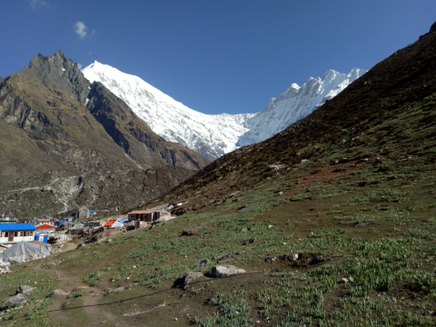
Mountain views, Langtang

The Sun had already set behind the hills. Dark clouds were gathering all around us. We could see occasional flashes of lightning and peals of thunder. The trail was getting difficult to see and was rough and slippery. The forest was dark. It started raining. Our only option was to continue till we came across a lodge. Eventually, we reached a clearing and a lodge by the trailside. The room was fine but the toilets were not in good shape. Trekking articles about Nepal always talk about toileting. Over the years we have got used to comfortable and hygienic toilets and want our time spent there to be as pleasant as possible.

Cellular services were now available. The night was peaceful, and we got up early the next morning. We set out early the next morning as we had a long way to hike. Our target was to reach the settlement of Tiwari and walk to the road head at Syarubesi, the following morning. The hike was long, and it was only after sunset that we reached the Bob Marley guest house at Tiwari. The last part of the hike was along the newly constructed road. The guest house is colourful and located on the banks of the Langtang River. The lodge is well designed but may be past its days of glory. A variety of factors ranging from new road heads, alternative trails, and different trekking groups can make a lodge less popular and lodge owners usually cannot do much about it.

Nabin Ban (Nabinji) is our all-purpose man at Kathmandu Medical College in Lalitpur and has been with the institution from the very beginning. He is a musician, videographer, farmer, craftsman, and small businessman. He is from Bhaktapur in the Kathmandu valley, and his village is on the way to the tourist resort of Nagarkot. He farms his land and raises chickens and breeds dogs and other animals. He is a resourceful and kind person and very useful in an emergency. I was back in Nepal after a long gap and was doing the Langtang trek, the nearest trek to Kathmandu which puts you among the snow-covered mountains.

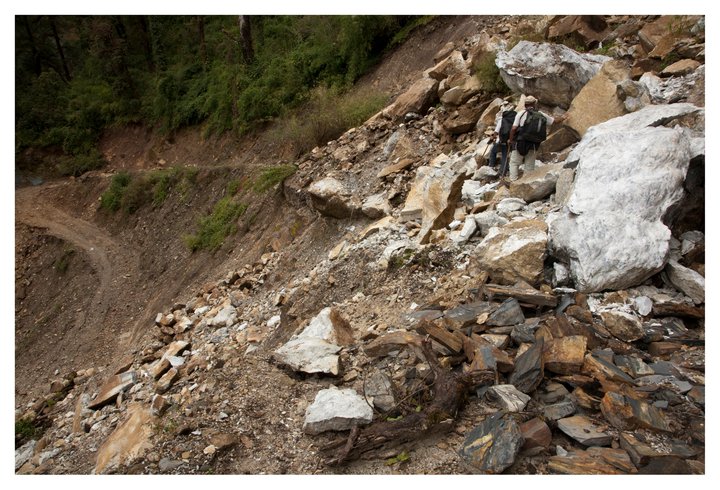
The 2015 earthquake had hit this region hard and the old Langtang village was still buried under the rubble. We stayed in newly built lodges in the village. The views of the Himalayas were spectacular. I was finding the going difficult. The trail was rough, and I was carrying my winter gear and other necessities. Nepalese usually trek lighter and manage with the clothes they have on them. A large group of Nabin’s classmates were also hiking and planning to visit Gosainkund, the holy lake.

Nabin loved to travel and had hiked in various regions of Nepal. In the less touristy areas, the trails are rougher and the accommodation more basic. Nearly a decade ago we had hiked in the Gauri Shankar region. This trekking region was newly developed and had community lodges built in different villages. Each lodge would also serve as a gathering place for the villagers and had a local store. Dr David Wells, a chiropractor and applied kinesiologist from Singapore accompanied us on our trek.

We took the local bus to the village of Barabhise and started climbing and our first night was in the village of Karthali. The community lodge is situated among smiling mustard fields. Each lodge is built along similar lines. They have a store, a kitchen and dining room on the ground floor, and three bedrooms with bunk beds on the first. There is a balcony on the first floor. Organic fruits and vegetables are grown around the lodge. Karthali is in the gently sloping mid-hills. The next day we climbed steadily to the lodge at Dolangsa, a Sherpa village. The mountainous terrain has both blessed and disadvantaged Nepal. The crinkled landscape ensures a much bigger surface area for the country. There are several hills of around 5000 m in height. People who follow Hinduism stay at the lower elevations in caste-based villages while people of Tibetan descent reside higher up the hill.

From Dolangsa it is a steep and difficult climb to the Thingsang pass. The forests looked dark and menacing and prayer flags and stones were everywhere. David mentioned that he could sense evil vibrations and the shrines were to protect the valley from evil forces. The path eventually reaches flatter grasslands dotted with ponds. It often rains here. The Hindu shrine of Kalinchowk is nearby. On a clear day from the pass, the Gaurishankar and Rolwaling massif can be seen in the distance.

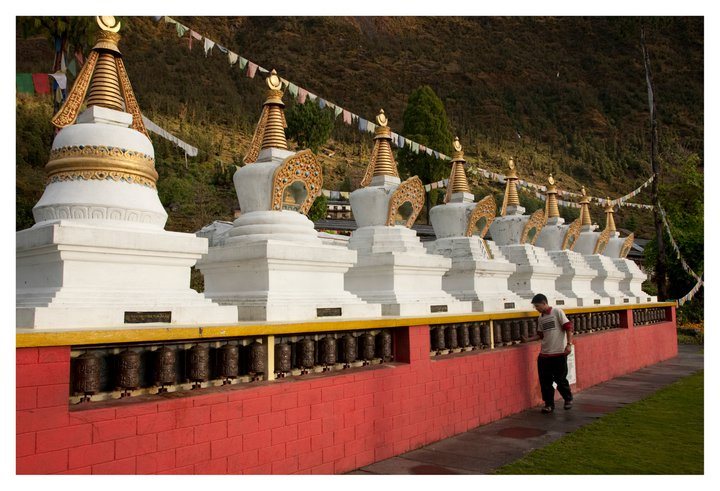
The descent to the settlement of Bigu is long and you descend through a hillside charred by a forest fire. The community lodge at Bigu painted a dark orange is my favourite. The didi[1] at the lodge prepares delicious food and I enjoy having pooris and aloo sabzi[2]for breakfast. The settlement is dominated by the Bigu gompa[3]. Most visitors start their day with a trip to the gompa and attend the morning prayers. The gompa is huge and has an interesting history. After the devastating 1934 earthquake, a Drukpa lama along with the headman of Bigu constructed the monastery. There is a huge population of nuns in residence. The nuns had played an important role in the construction of the monastery and were said to be engaged in long-term silent meditation retreats in caves high up the mountain.

Gompas at Bigu

After a heavy breakfast, we set off to the Chettri[4] village of Loting. The lodge is surrounded by fields and is in the middle of the village. Nabin and David were engrossed in playing Baghchal, a Nepalese board game. The lodge has good views of the settlements on the surrounding hill across the river. Laduk is a large village, and the lodge is next to the village school. David was attracting a lot of attention from the village children. We passed through the old farmhouses of Bulung and the settlement of Orang. The sky was cloudy, and it started raining. Just below the lodge were the fields and a farmer was carrying a huge plough on his shoulder. The clouds parted and we had a clear and spectacular view of Gaurishankar. A young lady studying in Kathmandu had come home for the Dusshera holidays and efficiently took care of us.   


Sunrise

Singati at 1100 m is the headquarters of the Eco Himal project and a major local centre. Red flags were everywhere, and I later read that the area was an important base of the Maoists during the civil war. With increasing access to information and travel people are becoming aware of the world beyond their villages. They become better informed and unhappy with their lot. There has been a population explosion in the hills and most young people are unwilling to till the land and live the meagre life of their parents and grandparents. There was a landslide on the road to Charikot, and the road was not passable to buses.    

We stayed in a hotel and took a jeep to Charikot the next morning. From there we took an extremely crowded bus to Kathmandu. Many were returning to the city after the Dashain celebrations. Trekking with Nabin is always fun. He is adaptable, resourceful, and enterprising. He has travel in his blood and music in his soul. I look forward to more journeys with Nabinji!    


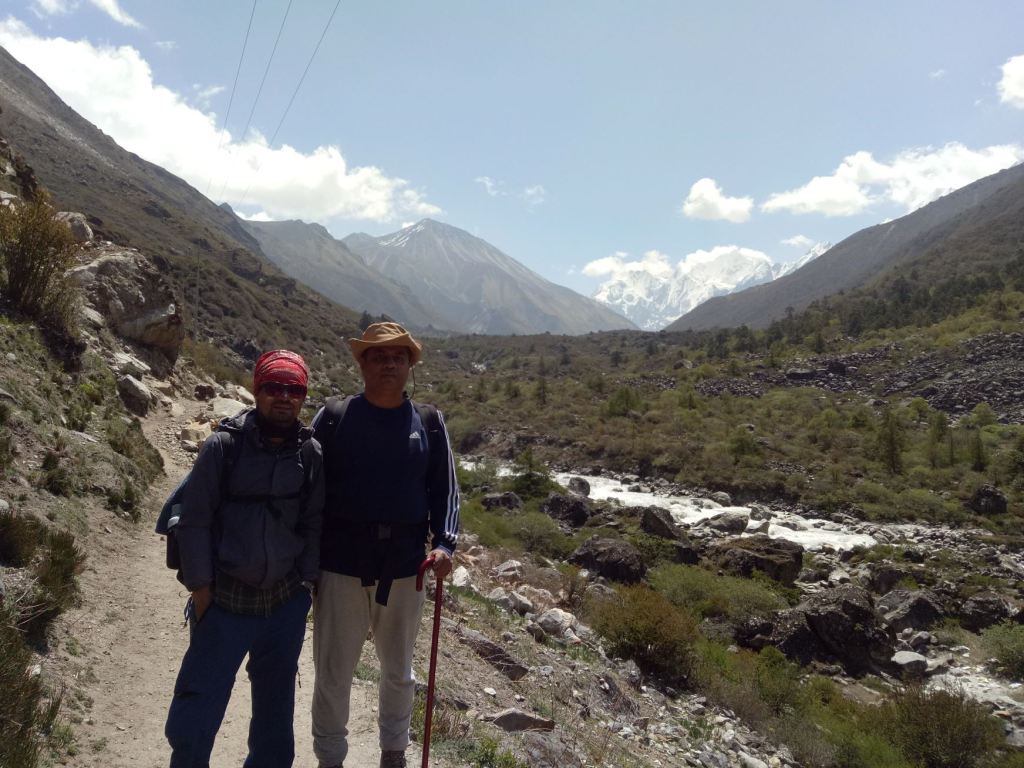
Nabinji (in sunglasses) & the author

[1] Elder sister literally but here used as a term of respect

[2] Potato curry

[3] Buddhist religious building

[4] The Kshatriya caste or warrior clan

Dr. P Ravi Shankar is a faculty member at the IMU Centre for Education (ICE), International Medical University, Kuala Lumpur, Malaysia. He enjoys traveling and is a creative writer and photographer.

.

PLEASE NOTE: ARTICLES CAN ONLY BE REPRODUCED IN OTHER SITES WITH DUE ACKNOWLEDGEMENT TO BORDERLESS JOURNAL

Categories
Poetry

We Have Poetry

By George Freek

Courtesy: Creative Commons
WE HAVE POETRY 
(After Du Fu, a Tang Dynasty poet) 

During nights of 
interminable darkness,
I curse the sky.
But that’s foolish.
The sky is merely a graveyard,
where dead stars lie.
In my chest there’s a vacancy,
where something else
should be,
something like a clock,
but its mechanism
is worn and faulty.
As stars look down,
they shine like jewels
on a false beach.
They mean nothing to me.

George Freek’s poetry has recently appeared in The Ottawa Arts Review, Acumen, The Lake, The Whimsical Poet, Triggerfish and Torrid Literature.

.

PLEASE NOTE: ARTICLES CAN ONLY BE REPRODUCED IN OTHER SITES WITH DUE ACKNOWLEDGEMENT TO BORDERLESS JOURNAL

Categories
Poetry

In Memoriam

Tanvi Jeph mourns the passing of her grandmother

PHOTO

He looked at her again and again
Filled with tears and despair
Yet his eyes glimmered with love
 
He was scared that a tear might fall
He looked down, holding them back
Caressing her through the picture
 
A crinkled, dry photo in his hands
It was black and white
Still, it seemed colourful
 
It was a photo of two people
Looking at each other
Holding books in their hands
 
They seemed young but lovers
Wearing sunglasses
Smiling at each other
 
The lady whom he secretly admired
And a man she truly loved
They were real love birds
 
Spent fifty-two years together
But one bird flew away, to heaven,
While other still sits alone, waiting

Tanvi Jeph is a high school sophomore who enjoys writing poetry and riding bicycles. She also has her own organization, The Dried Review, which she founded in April 2022

.

PLEASE NOTE: ARTICLES CAN ONLY BE REPRODUCED IN OTHER SITES WITH DUE ACKNOWLEDGEMENT TO BORDERLESS JOURNAL
Categories
Review

Requiem in Raga Janki

A book that highlights the independence and achievements of a lone woman in the Raj era where majority bowed to patriarchal norms even in the West, revisited by Rakhi Dalal

Title: Requiem in Raga Janki

Author: Neelum Saran Gour

Publisher: Viking

Janki Bai Illahabadi (1880-1936) was one of the first recorded artists of India, an artist whose records can still be found and whose voice can still be heard. She was a courtesan, an Indian classical singer with an extensive training in the field by great maestro Ustad Hassu Khan. Born to Shivbalak and Manki, a family of sweets sellers in Benaras, tragedy befell her family when her father left the house in search of his mistress. Her mother was then betrayed and duped by one of her friends and sold to a kotha[1] in Allahabad. It was then that Janki was introduced to those dingy alleys of Allahabad where she could have easily faded into oblivion amidst the sea of unfortunate women like her. But that wasn’t meant to happen. For her mother recognised her talent and arranged for her to be mentored by the great master. The rigorous training bore fruit when she was invited to sing in a royal court. So enchanted was the Maharaja that she was lavished with riches along with a high praise. She then rose to become one of the greatest singers of the time and performed alongside legends like Gauhar Jaan (1873-1930).

One of the famous anecdotes about her life is that she had received fifty-six (chhappan) knife wounds while very young but had miraculously survived them. She then came to be known as Chhappan Chhuri Wali[2]and slowly, over time, it acquired the meaning we are now acquainted with. Today in Hindi, the phrase is used to refer to a haughty woman.

Requiem in Raga Janki is a heavily fictionalised biography of the singer written by Neelum Saran Gour who works as a Professor of English Literature at the University of Allahabad. She has authored six novels, four short story collections, two works of non-fiction, and has translated one of her novels from English to Hindi. Requiem In Raga Janki had won The Hindu Prize for Fiction in the year the book was published, 2018.

In her attempt to tell the story of the once famous songstress, the author succeeds in making Janki Bai come out of dark alleys of obscurity and claim her long lost place of recognition. Gour not only explores her journey to becoming a famous courtesan but also, through her vivid imagination, she tries to explore Janki as a woman fraught with anxieties about love, religion, relationships and fame. Gour undertakes to give her a voice since voices like hers have easily been forgotten and have not been accorded due reverence in the popular culture.  To forget these voices is akin to forgetting a past which is as much a part of our history as it is of our musical heritage. Gour’s work thus deserves more recognition.

To begin with, author’s depth of research — on Janki, on the time she lived in, the customs and social mores, on the history of classical singers and on the knowledge of ragas, is apparent in her writing. Add to it her flawless writing, attention to detail, an evident grip on the vernacular, lucid and almost poetic prose and what we have is a book that is unputdownable from beginning to end. 

In the very well-crafted narrative, we not only become privy to the real incidents in Janki’s life, her journey to fame but also to the fact that she was a gifted poetess as well. At author’s deft hand, Janki’s conversations with famous poet, Akbar Illahbadi (1846-1921), with whom she shared a good rapport in her lifetime, glitter with beautiful couplets. Though Janki’s couplets are mainly taken from her work Diwan-e-Janki, the couplets that had been attributed to poet Akbar are composed by Gour herself, whose eloquent rendition leaves the reader enraptured.

This book is a beautiful tale of the life a singer who carved her own destiny and lived life on her own terms, in times when women were generally subjugated and confined to roles given by society.


[1] Brothel

[2] Survivor of 56 stabs by knife

.

Rakhi Dalal is an educator by profession. When not working, she can usually be found reading books or writing about reading them. She writes at https://rakhidalal.blogspot.com/ .

.

PLEASE NOTE: ARTICLES CAN ONLY BE REPRODUCED IN OTHER SITES WITH DUE ACKNOWLEDGEMENT TO BORDERLESS JOURNAL. 

Categories
Poetry

Absurd Poems by Ron Pickett

WRITERS, WRITERS

Writers, writers everywhere.
Writers, writers floating in the air.
Writers, writers tearing out their hair,
Writers, writers’ souls laid bare.

Poets, poets searching for a rhyme.
Poets, poets stretching space and time.
Poets, poets praying for a meter.
Poets, poets iambic pentameter.

Mysteries, mysteries where’s it going next?
Mysteries, mysteries the clues are in the text.
Mysteries, mysteries guilt will rise and fall.
Mysteries, mysteries now it’s time - reveal it all.

Romance, romance stories far from truth.
Romance, romance written just for youth.
Romance, romance delight, joy, and sigh.
Romance, romance never a leave a dry eye.

Drama, drama the play’s the thing.
Drama, drama a real drama queen.
Drama, drama work it all out.
Drama, drama it can end with a shout.

Scriptwriters, scriptwriters Act one, two, three,
Scriptwriters, scriptwriters full of unbridled glee
Scriptwriters, scriptwriters working In a team
Scriptwriters, scriptwriters living the dream.

Writers, writers everywhere I look
Writers, writers pitching their new book,
Writers, writers please please me, do.
Writers, writers can I be one too?


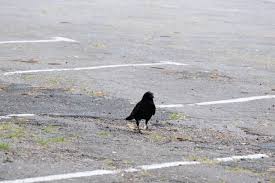
I WANT TO WALK LIKE A CROW

I want to walk like a crow.
I want to place one foot in front of me.
I want to move with purpose and grace.
I want to fly!
But I’ll settle for walking like a crow.
I see them on the tile roofs next door.
They don’t care!
Crows don’t care!
They are what they are.
All that they are and damned if they care what you think.
I want to walk like a crow!
Don’t care! Don’t worry! One foot in front of the other.
Move with ease and certainty.
Never trip or stumble!
I want to walk like a crow.
I’ll never fly.
There is a bright flash of sunlight reflecting from my chest – 
My black shiny feathers tell the world a lot.
I’m strong healthy and available. definitely available.
I take the high spot, the crown of the roof.
My landings are a show of airmanship.
My legs take the shock.
My wings ease the weight onto the surface – any surface.
Watch me!
I just want to walk like a crow.
I’ll never fly.

Courtesy: Creative Commons

Ron Pickett is a retired naval aviator with over 250 combat missions and 500 carrier landings. His 90-plus articles have appeared in numerous publications. He enjoys writing fiction and has published five books: Perfect Crimes – I Got Away with It, Discovering Roots, Getting Published, EMPATHS, and Sixty Odd Short Stories.

.

PLEASE NOTE: ARTICLES CAN ONLY BE REPRODUCED IN OTHER SITES WITH DUE ACKNOWLEDGEMENT TO BORDERLESS JOURNAL
Categories
Musings of a Copywriter

A Bone in My Platter

By Devraj Singh Kalsi

The customer polished off the chicken biriyani – leaving behind no trace of a single grain of polished saffron rice on the ceramic plate with golden borders. The solitary bone relaxed in spacious palatial comfort but soon became the bone of contention. He complained to the manager about the poor taste while making the payment. 

The young waiter, a lad of eighteen, standing nearby, heard everything. He went and took the bone from the plate and lobbed it at the shining bald pate of the customer while he was walking out with a toothpick clamped between his fingers. It hit him right in the middle. He quickly turned back to see what missile was that. He found close to his feet the same chicken bone he had left behind in the ceramic plate. He picked it up, took a studied look, and sprinted to the counter to lodge another complaint with the manager, alleging he was hit on the head by some crazy staff with the chicken bone, hoping for prompt, punitive action.  

Like a forensic expert, the manager took time to identify the piece of evidence, perhaps wondering whether the clever customer had brought it in his bag to levy a false charge and create a scene. There were endless possibilities, and the manager was in no mood to hastily accept the charge without cross-examining the customer.  

Sensing that the manager was employing delaying tactics to let the culprit chicken out, he rushed to grab the collar of the prime suspect and sought a confession under coercion. Accusing the young waiter of insulting and assaulting him, he dragged him to the manager’s cabin, threatening to get him arrested for causing physical harm intentionally with a lethal weapon that could crack his skull or lead to severe brain injury. He threatened to shut down the operations unless the manager tendered an apology.  

The manager explained the waiter had no such sinister intent as he was trying to throw the remnants out of the open window for stray dogs. Somehow it turned out to be an odd in-swinger, moving inside in the wrong direction and landing accidentally on his head. The customer remained defiant and unwilling to buy this defence. Finally, the young waiter had to mumble an apology before serving other customers, placing clean dishes, and pouring water into glasses. The angry customer flagged an alert regarding the violent streak observed in the waiter — but he sported a fixed and deceptive smile to ward off such grave charges.    

The customer staged a demonstration in front of the manager’s fancy table, thumping it with his fist and refusing to accept the diluted version: unintentional mistake. Finally, the manager stood in front with folded hands and begged forgiveness to wrap up this matter before it snowballed further. The aggrieved customer was adamant and sought a complete refund, or else he would report it to the local politician. To stave off further aggravation, the manager refunded the entire amount paid for the chicken biriyani plate but cursed him in his mind with digestive issues like unstoppable bowel movements at night.   

When the pacified customer finally vamoosed from the eating joint, the manager summoned the waiter to explain his behaviour. He told the bald customer gave incorrect feedback as there was nothing wrong with the food. Because the customer lied about quality, he got miffed. He confessed he was surprised he was so good at hitting the target. He had hoped it would land in some other direction or edge past his ear like a bullet. 

Many customers relished stale food and paid generous compliments on the rich taste. Whenever the chicken was served fresh, customers had complaints regarding the fare. Sometimes it was not spicy enough, or the taste lacked something they could not express in words but feel on the tongue. Such vague feedback was responded with an ersatz smile and an earnest promise to serve better fare next time. Most negative comments poured in when the bill value crossed the expected mark. There were several examples of customers who ate more than they could pay. They came to the manager and quietly promised to clear the deficit balance the next day. But they did not turn up for several months, hoping the manager would forget the matter. Dealing with such clients was always a challenge.  

There was a demand for cabins with curtains from couples, married or otherwise. The waiters exercised their discretion to overcharge for privacy. The manager was helpless in getting it vacated because the food was served late — and they ate very slowly. Even after an hour, the couple would not finish a fish cutlet while others sitting in the open zone gorged on a full plate of chicken and Badshahi Mughlai. The romantic busybodies tipped the waiter and ordered a bottle of cold drink when pressurised to vacate the cabin. Some new customers came and stood shamelessly in front of these cabins. The curtains — flying high in the breeze generated by the ceiling fan — revealed what the couples were up to. They had to quickly get up and clear the table without bothering to empty the cold drink bottle or finish the cutlet on the plate. Eating was an excuse for love birds as their hunger was not food-related.

Managing the restaurant included managing the kitchen as well. There was a tendency to poach the cook with extra salary and perks by rival restaurant owners. It was a big headache – unethical poaching like horse trading in politics. On many occasions, the chefs used to run away and join a rival restaurant without informing just after the day of salary credit. As a result, the slot fell vacant, leading to the cancellation of several specialty dishes till a new chef was hired. Customers returned disappointed, but dishing out excuses did not work, resulting in a steady decline in customer loyalty.  

When the new chef came on board, his quality was not always up to the mark. There was a litany of complaints from customers who missed the earlier fare. There was nothing to be done except serving a formal assurance of improving the quality as soon as possible.  

The overhead costs of operating a restaurant were high. The profitability dipped. The tipping point reached when the reputation hit the nadir. Customers did not get the menu of their choice. They had to wait before being served. A couple of years of running and ruining a family restaurant made me realise I had no potential to become a manager and manage a business well. I pulled down the shutters of the family-owned restaurant and presided over the end of its glorious run after two decades. The flop outing did not fill me with the passionate drive to prove detractors wrong – like being the author of an unsuccessful book has egged me to bake another one.  

Devraj Singh Kalsi works as a senior copywriter in Kolkata. His short stories and essays have been published in Deccan Herald, Tehelka, Kitaab, Earthen Lamp Journal, Assam Tribune, and The Statesman. Pal Motors is his first novel.  


PLEASE NOTE: ARTICLES CAN ONLY BE REPRODUCED IN OTHER SITES WITH DUE ACKNOWLEDGEMENT TO BORDERLESS JOURNAL. 

Categories
Poetry

From the Corners of Crowded Streets

By Sambhu Nath Banerjee

Courtesy: Creative Commons
A HAPPY FAMILY

During the busy hours, I see them
Sitting in the crowded street.
She is holding her sari by the hem
Stretched in front, covering her bare feet.

He is busy with their little child
Playing with his dishevelled head,
People move about their jobs,
No time to spare a glance.

They sit fearless, with no masks,
Not bothered by the deadly disease,
They struggle from morning to dusk
To try to survive in the mad race. 

Passing by the street, the other day,
I saw a man in casual dress give
A fifty rupee note with grace,
An honest effort no doubt to lessen their stress.

The aid seemed to be insignificant
But enough to bring a smile on the face of the child. 
I saw their tears start to fall
And left them alone for a while.

A new dawn begins, the same old story
Again the search for money and food,
Nothing new for the family that sits 
And waits for its future to unfold.


THE FINAL MOMENTS

I got a strip of a letter, you wrote 
Two years before you breathed your last.
Having survived the ventilation scare
You used to sit all the day on the sofa,
Eyes often closed, rarely open in despair.


'Loneliness so painful,'
You wrote,
'But we all have to go.'
You had been surrounded by us,
Still you were so lonely!
Does loneliness come with age?
You often recalled Tagore's lines,
'Life, Youth and Wealth run off 
In the flowing tide.'


Alone in space and time
You seemed to live and mix
With old memories,
Everlasting 
Childhood, and thereafter,
Some events which were
Hard to forget.
Your mind didn't want to leave
The caring milieu-
But you did know the truth,
And quoted the famous lines
Of Michael Dutt in the letter,
'Life always ends in death–
Nobody is immortal
Water of a running stream 
Can never be short of breath!'

I can now feel
What was going on in your mind.
Can imagine how my final moments 
Will unwind!

Dr. S N Banerjee has a great passion for travelling, photography and writing. His articles have featured in Cafe Dissensus, Muse India, and Briefly Zine.

.

PLEASE NOTE: ARTICLES CAN ONLY BE REPRODUCED IN OTHER SITES WITH DUE ACKNOWLEDGEMENT TO BORDERLESS JOURNAL

Categories
Excerpt

The Dreams of a Mappila Girl

Title: The Dreams of a Mappila Girl: A Memoir

Author: B. M. Zuhara Translator: Fehmida Zakeer

Publisher: Jointly published by SAGE Publications and Yoda Press under the Yoda-SAGE Select imprint

The kitchen was a woman’s world in those days. Work started there soon after the morning prayers. Each morning, Ummambiumma and Ummatha had the job of grinding parboiled rice that had been soaked in hot water. The clacking of the grinding stone resounded through the nalapad and the central hall during the early hours of the day. A half wall divided the big kitchen into two sections. On the ground in the main section, facing east, were five firewood stoves. Squatting on the floor, Kunhamina got these stoves burning every morning. Three grinding stones, one large and two small, were placed on a ledge built against the half wall. Ummambiumma called the big grinding stone Bombayiammi, after the city from where Valippa brought it. 

‘The master brought this ammi from Bombay especially for grinding the rice for pathiri. If the consistency of the dough is not correct, the pathiri will not be good. The pathiri we make here is famous,’ said Ummambiumma, her tone full of the pride she took in her work.

The ammis operated from morning until afternoon. Once the rice for the pathiris had been ground, the coconut for the curries was ground next, then the items required for making lunch. Ummambiumma and Ummatha kept up a continuous chatter as they worked on the ammis. Kunhamina, seated on the ground and attending to the pots on the stove, joined in their conversation every now and again.

‘If you keep talking like this, your mouths will become dry,’ Kadeesumma who supervised the work in the kitchen would warn. Mostly she went unheeded. ‘Talking helps us to do our work quickly, Kadeestha,’ Ummatha would say.

Since we cultivated rice, we always had either puttu or pathiri made with unpolished red rice for breakfast. At night, it was always pathiri. The curries were rotated on a daily basis—onion, dried fish, drumstick leaves, egg curry. The onion curry was prepared by frying peeled and diced shallots, adding turmeric and chilli powder, and finally mixing in coconut milk. When drumstick leaves were substituted for the shallots, it became drumstick leaves curry; when dried fish was added to the basic onion curry, it became dried fish curry; adding boiled eggs to the onion curry converted it into egg curry. A change in the menu happened only on special occasions or when we had visitors. When the children grumbled about the unvarying fare, omelettes or bulls-eye eggs appeared on the table. Sometimes, they gave us coconut mixed with sugar, a favourite with me.

For breakfast, the side dish for the puttu was supposed to be fish in red gravy. But we didn’t get fish early enough on most days, and so the children were served bananas and sugar with their puttu. The puttu, which was made by steaming rice flour layered with liberal quantities of shredded coconut in hollow logs of bamboo, was delicious enough to eat without any accompaniments. 

In the mornings, the kitchen was a cacophony of sounds. After the morning prayers, Valippa and Uppa were each served an egg along with their morning tea—half boiled for Valippa and hard boiled for Uppa. After he was diagnosed with diabetes, Valippa stopped eating rice pathiris, switching to wheat dosas and oats boiled in milk for his breakfast. The preparation of wheat dosas involved soaking the wheat grains in water the previous night and grinding them into a fine batter in the morning. Valippa liked tomato roast with his wheat dosas. Uppa wanted egg roast for his breakfast, whether it was pathiri or puttu. Egg roast was made by frying onions in coconut oil, adding turmeric, chilli and cumin powders, and finally breaking an egg over the mixture. When we had guests, egg chops replaced the egg roast. Instead of breaking an egg into the onion mixture, hard-boiled eggs were added into it and topped with a layer of finely sliced onions and thin round slices of golden-fried potatoes. Egg chops were Umma’s speciality. She also prepared Valippa’s oats.

Umma supervised the making of breakfast. Ummama avoided the morning rush in the kitchen and came in to oversee the preparations for lunch. When the servants heard the tapping of Umma’s medhiyadi, they would turn down the volume of their chatter.

‘Kunhiammayi is coming. Have you boiled the milk for the oats, Kunhamina?’ Kadeesumma, sitting on the wooden box peeling onions, would ask.

‘I’ve boiled the milk and kept the pan ready.’

Kunhamina would wait with the washed and dried pan. Umma came into the kitchen holding a tin of oats. On the tin was a picture of a man with a white hat that never failed to intrigue me. The tin of oats was bought specially for us at Jambu Stores in Kozhikode. Umma scooped two spoons of oats into the pan placed on the table in the kitchen. She added milk and handed it to Kunhamina who boiled the mixture, cooled it, poured it into a glass tumbler and then covered it with a lid. Meanwhile, Umma sat on a low stool by the stove on the ground. She made the egg roast for Uppa, intermittently giving instructions to Kunhamina who had started preparing the wheat dosas for Valippa.

‘Drizzle some ghee and turn the dosa, Kunhamina. Don’t let it burn.’

Like a shadow, I would stand behind Umma.

‘Move aside, Soora. Don’t follow me like a tail.’ Irritated, she pushed me aside and I started crying.

‘Dear girl, don’t cry, I’ll give you a dosa secretly,’ Kunhamina whispered. I stopped crying.

Assan came into the kitchen. ‘Is the master’s breakfast ready?’

Umma placed the wheat dosas, tomato roast and oats on a tray for Valippa. On another tray, she placed Uppa’s food and asked, ‘Have you laid the supra on the thinna?’

Assan confirmed that he had laid the mat and went to Valippa’s room with his breakfast.

Uppa and the older boys had their meals on the thinna beneath the front staircase. Mats were laid out on the platform before serving the food. Valippa joined them on the thinna for lunch.

About the Book: As a young Muslim girl growing up in the 1950s in a small South Indian village, B. M. Zuhara had simple dreams—to go to the newly opened ‘talkies’ in town and watch a movie, play with her brothers in the rice fields, learn the ancient martial art of Kalari Payatu with them, stand on the bridge and listen to the songs sung by the farmhands as they worked. But she soon realised that even being the pampered, youngest child of her family would not help her in realising some of her dreams because of her gender. Set at the time when Independent India was embracing its new identity as a free nation, this book provides a wide lens for the reader to view life in a semi-rural Kerala village. Zuhara recounts the social mores of the society she lived in and offers glimpses into the secluded lives of Muslim girls and women who, despite obstacles, made the best of their circumstances and contributed positively to their communities.

About the Author: B. M. Zuhara is a Malayalam writer hailing from Thikkodi near Kozhikode. She has written novels and short stories and has been a columnist in regional newspapers. She is the first Muslim woman writer from Kerala. Her new novel titled Pennungal (Women) is forthcoming from Chintha Publications. She won the Kerala Sahitya Akademi Award for her contribution to Malayalam literature in 2008 and has also been a recipient of awards such as Lalithambika Antharjanam Memorial Special Award, Unnimoy Memorial Award and the K. Balakrishanan Smaraka Award. Her novel Iruttu was translated to Arabic recently as part of the Qatar Ministry Cultural Exchange and was launched at the Doha International Book Fair in January 2020. She has also translated Tayeb Salih’s Wedding of Zein and Naguib Mahfouz’s Palace Walkinto Malayalam. The English translation of her novella Nilavu (moonlight) was published by Oxford University Press in the anthology titled Five Novellas. The same novella was translated into Arabic and published as Zooul Khamar while Mozhi (Talaq), another novel of hers, was translated into Arabic and published by IQRani Publishers, UAE.

About the Translator: Fehmida Zakeer is a writer hailing from Kerala. Her work has appeared in Indian Quarterly, Rose and Thorn Journal, Out of Print Magazine, Asian Cha, The Bangalore Review, Quarterly Literary Review Singapore, Muse India and elsewhere. Stories written by her have come out in print anthologies such as Pangea: An Anthology of Stories from Around the World (Thames River Press, UK), Ripples: Short Stories by Indian Women Writers (APK Publishers, India), Happy Birthday to Me (Dahlia Publishing, UK) and others. A story of hers placed first in the Himal South-Asian short story competition 2013 and another was chosen by the National Library Board of Singapore for the 2013 edition of their annual READ Singapore anthology. She was twice on the honourable mentions list of the Binnacle Ultra Short competition (University of Maine at Machias). A story of hers was shortlisted in the DNA-Out of Print short story competition, 2014 and another one was published in the Out of Print magazine issue focusing on Sexual and Gender Violence. An anthology of stories, titled Keeper of Secrets, is forthcoming from Dhauli Books.

(Excerpted from The Dreams of a Mappila Girl: A Memoir by B. M. Zuhara; translated by Fehmida Zakeer. Jointly published by SAGE Publications and Yoda Press under the Yoda-SAGE Select imprint.2022, 228 pages, Paperback, Rs. 550, ISBN: (978-93-5479-280-9), YODA SAGE Select.

.

PLEASE NOTE: ARTICLES CAN ONLY BE REPRODUCED IN OTHER SITES WITH DUE ACKNOWLEDGEMENT TO BORDERLESS JOURNAL
Categories
Poetry

Poetry from Kashmir

By Ahmed Rayees

I AM A FLOWER

My name is Rose.
I bloomed in the heavenly garden,
Sang with birds and butterflies,
Without fear and agony.
I played hide and seek,
Inside my little fantasy world
 
Suddenly...
I lost my way, I lost my songs...
I found myself in a dark corner
Pierced by innumerable scars,
I cried...I screamed...
 
But could not escape those strong claws
I lay withered
In the dark serpentine.
No door opened.
No car stopped.
I cried...I screamed...

My limbs stopped aching.
My lungs stopped breathing.
I died... I died... I died...
Profusely bleeding!
I drenched your city red.

I am your unresolved question
I am your indecisive end --
Getting dissected in the courtrooms
Without getting a fair verdict
I am waiting...
 
My body is broken, but not my soul
One day, I will come back,
I will come back as one among you --
May be as your very own daughter…

Ahmad Rayees is a freelance poet and writer from Kashmir valley, currently working with Claylab Education Foundation as a mentor. Claylab aims to alleviate educational inequity and increase economic mobility by providing affordable, quality, and meaningful education to students. 

PLEASE NOTE: ARTICLES CAN ONLY BE REPRODUCED IN OTHER SITES WITH DUE ACKNOWLEDGEMENT TO BORDERLESS JOURNAL.