Dhruba Hazarika is a novelist, short-story writer and columnist. The Shoot is his fourth published book, the previous three being two novels and another collection of stories. He has also been a columnist for 40 years, writing for The Telegraph, The Sentinel and The Assam Tribune. He divides his time between Guwahati and Shillong.
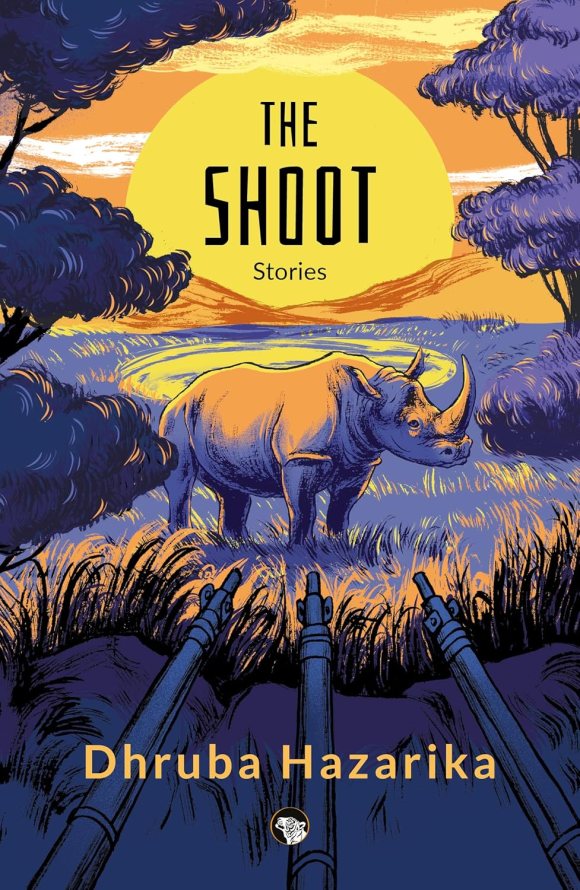
In The Shoot, Dhruba Hazarika offers a remarkable collection of seventeen stories set largely in the landscapes of Assam, where the lines between the human and the wild blur with lyrical precision. These are stories in which rivers, forests, and animals are not merely setting or backdrop, but players in a drama as emotional as it is elemental as we can see in the titular story. Through a careful balance of violence and tenderness, Hazarika conjures a world where the rawness of nature mirrors the inner lives of his characters, and where the most subtle gestures—a bird taking flight, a child stroking an injured animal—carry quiet revelations.
The collection is defined by this tension: the everyday friction between cruelty and compassion, solitude and connection. Hazarika’s Assam is not a romanticised escape into the natural world, but a lived-in, at times harsh territory where poachers and foresters share space with schoolchildren and aging widows. Yet amid the reality of rifles, hunting dogs, and worn-out boots, there is also grace—brief but luminous moments of understanding between humans and animals, or between people themselves.
The story, ‘The Hunt’, anchors the collection in this interplay of brutality and regret. A group of men set out into hills to hunt a deer. The thrill of the chase and the shared camaraderie are abruptly fractured when they confront the full weight of what they’ve killed—a doe carrying unborn fawns. It is a moment as visceral as it is symbolic, capturing how deeply the act of taking life reverberates, especially when one is already grieving. The story unfolds with a slow, almost meditative pace, allowing space for both awe and horror.
In ‘Elephant Country’, a herd of elephants blocks the only road to a village. As the local magistrate faces pressure to use force to reach the village because a woman is in labour, the narrative unfolds with quiet tension, exploring the fragile boundary between human authority and the natural world’s quiet resistance. While the elephants stand as a living barricade, guarding newborns in their midst, the magistrate’s ultimate decision—not to intervene—signals a moment of alignment of human instincts with nature. It is a moment when the animal and human worlds come into uneasy but essential dialogue—reminding us that the miracle of life demands not dominance, but deference.
Another story, ‘Ghostie’, revolves around a group of boys who mercilessly torment a stray dog. The tale, told with an unflinching gaze, does not moralise but instead allows the violence to unfold naturally, in all its thoughtless cruelty. What lingers is not just the fate of the dog, but the haunting change in the narrator—who comes to see, far too late, the cost of such disregard. Here again, Hazarika proves masterful in using small, personal episodes to hint at larger truths: the slow erosion of innocence, the gradual awakening of empathy.
One of Hazarika’s most distinctive strengths lies in his depiction of the natural world. Forests, rivers, birds, and animals are not incidental; they pulse with presence and meaning. A snow-white egret momentarily lifts the spirits of a tired clerk. A solitary crow returns night after night to the same veranda, evoking a sense of memory and mourning. These encounters are never mystical in a fantastical sense, but they carry the weight of the intangible—grief, love, regret, and occasionally, hope.
Woven through many of the stories is an awareness of the political and cultural fabric of Northeast India. Hazarika never foregrounds these themes, yet the region’s complex history—its insurgencies, its marginalisation, its uneasy relationship with mainstream Indian narratives—simmers beneath the surface. There is a sense of a land both remote and familiar, with its own rhythms, codes, and forms of resistance. The occasional reference to tribal customs, local deities, or community rituals further grounds the stories in their specific cultural soil.
Hazarika writes with a light, unobtrusive touch. His sentences are lean and quiet, yet they resonate. He gives space to silence, to gesture, to the unsaid. The characters, too, are often defined more by what they withhold than by what they reveal. A doctor mourning his wife, a boatman with a flute, a young boy who can’t understand his own cruelty—these are not heroic figures, but deeply human ones, faltering and flawed.
Amid the more solemn tales, there are a few that flirt with whimsy or absurdity. These diversions offer tonal contrast without ever straying too far from the book’s central themes. Even the lighter moments carry a trace of melancholy, as if joy in Hazarika’s world is always tinged with loss.
This is not just a collection about the Northeast or about the wilderness. It is about what it means to be tender in a world that wounds, and what it means to live ethically in the shadow of violence—whether that violence is inflicted on others, on animals, or on ourselves. In that sense, The Shoot is both rooted and universal, intimate and expansive.
Rakhi Dalal is an educator by profession. When not working, she can usually be found reading books or writing about reading them. She writes at https://rakhidalal.blogspot.com/ .
.
PLEASE NOTE: ARTICLES CAN ONLY BE REPRODUCED IN OTHER SITES WITH DUE ACKNOWLEDGEMENT TO BORDERLESS JOURNAL
In Conversation with Mitra Phukanabout her latest novel, What Will People Say?A Novel , published by Speaking Tiger Books, March 2023
Mitra Phukan. Courtesy: Speaking Tiger Books
What will people Say? A Novel by Mitra Phukan, a well-known writer from Assam, plays out like a sonata with fugues introducing complexities into the narrative. It concludes in a crescendo of hope with an acceptance of love. At the end, Phukan writes: “It was love. A love great enough to conquer all the ‘What Will People Says’.”
What is remarkable about the novel is the light touch with which it deals with major issues like communal tensions, acceptance of love across divisive human constructs and questioning of social norms. She elucidates: “I have written What Will People Say in a conversational, everyday style, sprinkled liberally with humour, even though the themes are very serious.”
Phukan’s novel moves towards a more accepting world where social norms adapt to changing needs — perhaps an attitude we would all do well to emulate, given the need for a change in mindsets to broach not only divisive societal practices but the advancing climate crises which calls for unconventional, untried steps to create cohesive bonds among humanity.
The story is set in a small town in Assam called Tinigaon. Where the protagonist, Mihika, a widow and a professor, upends accepted social norms with her budding romance to a Muslim expat, a friend of her deceased husband. She has strong supporters among her family and friends but faces devastating social criticism and even some ostracisation. This makes her think of giving up the relationship that drew her out of the darkness of widowhood.
Suffering during widowhood is a topic that has been broached by many Indian writers ranging from Tagore, Sunil Gangopadhyay to many more. Before the advent of these writers, in 1856, the Hindu Widows’ Remarriage Act was brought into play by the efforts of Ishwar Chandra Vidyasagar, who had also written on the issue. But despite the law, has it as yet been accepted by conventional society? And how would such a society which bases its perceptions on rituals and traditions respond further to a relationship that discards marriage as a norm? These are questions that Phukan deals with not only in her novel but in the conversation that follows.
The plot showcases an interesting interplay of different perspectives. In certain senses, it has the delightful touch of a Jane Austen novel, except it is set in India in the twenty first century, where relationships are impacted by even social media. Phukan, herself, sees “ageism” and female bonding and friendship” as major issues addressed in the novel. She says that women’s bonding is a theme that “has not been focused on enough, at least in Assamese writing”, even though, it is a fact that this has been the focus in other literature like, Jane Austen’s novels written in the nineteenth century and in subsequent modern-day take-offs on her novels, like the The Jane Austen Book Club by Karen Joy Fowler, published in 2004. In the sub-continent, Begum Rokeya described a full woman’s utopia in Sultana’s Dream(1905), though Rokeya’s story is essentially a feminist sci-fi. Unlike Rokeya’s book, Phukan’s is not an intense feminist novel. The protagonist, Mihika, has men well-wishers and men friends-cum-colleagues too. The tone is lighter and makes for a fabulous read, like Austen’s novels.
As if rising in a fugue to Mihika’s romance are two more relationships of a similar nature. One is between her daughter and a young boy from a traditional, respected, conventional home. The other, which I found more interesting, and I wish Phukan had explored a bit more, is a relationship between Mihika’s Bihari beautician, Sita, and a tribal boy. While the girl is from a traditional vegetarian strictly Hindu family, the boy is an orphan, a tribal. It is a romance that is outside the conventional affluent, middle-class circle. And is used as a contrast to Mihika’s and her daughter’s experiences. Sita’s narrative highlights how the conventional finally accept the unconventionality of a romance that in the past might have been completely rejected.
The novel rises above victimhood by looking for resolutions outside the accepted norms subtly. The plot weaves the triangular interplay of relationships with notes of harmony. The story, devoid of gender biases and darker shades of drama, delves into serious themes with a feathery touch.
The structuring of the novel arrests the reader with its seeming simplicity but each is fitted into the composition to create a fiction that touches your heart and leaves you pining for a bit more… like the strains of a composition that has the deftness and neatness of a Jane Austen novel, written in the context of twenty first century Assam.
Phukan herself is a trained vocalist in Indian classical, a columnist, a translator and a writer. In this conversation, she reveals more about the making and intent of her novel and her journey as a writer.
You wear a number of hats — that of an Indian classical vocalist, a columnist, a children’s writer, a translator and so much more. How does this impact your work as a novelist?
I feel everything is related; everything flows seamlessly into the other aspects. Yes, I am a trained Shastriya Sangeet[1]vocalist, though I have retired from performances now. But at one time that was my life…even now, I write extensively about music through essays and reviews. And I’m always listening to music, of many genres.
I began writing, hesitantly comparatively late, though I always enjoyed it, getting prizes in school and college. Later, I began to write stories, etc, for magazines such as Femina, Eve’s Weekly. Mainly though it was the paper The Sentinel and its editor D N Bezboruah which gave me a platform through middles, short fiction, essays and other genres. My children were very young at the time, and somehow the children’s stories came to me at that point. Now that they are grown up, those stories don’t come any more…and I regret that.
Translation happened because two stalwarts of Assamese literature, Jnanpith awardee Dr Indira Goswami and Sahitya Akdami awardee poet Dr Nirmal Prova Bordoloi encouraged me to try my hand at it by translating their work. I found I enjoyed it …and the journey continues!
Writing fiction, especially novels, needs the writer to have a wide view of life, I feel. I love storytelling. I write from observation, but also, I learn a lot about the literature of the place I come from, Assam, through the works of the greats in Assamese.
Do your other passions, especially music, impact your writing?
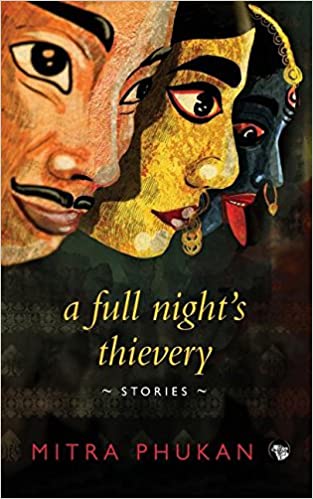
Music, definitely. In What Will People Say, for instance, there are so many references to songs and music, to concerts and musicians. There is an entire chapter devoted to songs in Hindi and Assamese where the theme is music. Besides, my novel A Monsoon of Music is about the lives of four practicing musicians. Many of my short stories from A Full Night’s Thievery have music as a theme …’The Tabla Player’, ‘The Choice’, ‘Spring Song’, and so on.
Also, musical metaphors seem to creep in, unbidden, to my writing…
Among the other passions that are reflected to a greater or lesser degree in my writing are gardening, and of course food!
What led you to write What Will People Say?
My stories, whether long or short, are always triggered by events, people, that I see around me. Sometimes it could even be a sentence I overhear while waiting at an airport, or maybe an expression on somebody’s face. They are based on reality, though they are fictionalised as they pass through the prism of my mind, my imagination.
What Will People Say was triggered by the fact that I see so many older women who have lost their spouses spend their lives in loneliness and sometimes despondency. Yes, their children may be caring, they may have women friends, a profession, but that is not enough. Love, finding a romantic partner, even companionship, is very unusual as a senior. There are so many unwritten codes, so many taboos and restrictions, especially in the small, peri-urban places.
And yet I find that change is coming. After all, people are exposed to other cultures, where going in for a second relationship is not seen as a betrayal of the dead husband, as it tends to be here.
The need for social change and a questioning of norms is part of the journey you take your readers through in your novel. Were these consciously woven into the story or did the story just happen? Please tell us about the journey of the novel.
This was the theme I have had in my mind for a while now. It was a conscious decision, and not always an easy one to implement, because of the binaries involved.
The place where I live, the larger society, prides itself on being “liberal”. And it is, compared to some other places on the planet, or in the country. But in the twenty first century, we are aware that there is much more that needs to be done, a much longer path to be traversed. The theme came first. After which I began to think of the storyline, the characters, the incidents that would make the theme come alive, all in a fictional way, of course.
What Will People Say, the line, is a kind of whip used to keep “straying” members of society, usually young people, within the fold. But here I have inverted it …it is the older members, those who are supposed to uphold the status quo, who are doing what, for many, would be the unthinkable.
Do you still see widow remarriage as an issue? Is it still an issue in Northeast India as your book shows?
Assam is a multi-ethnic, multi-lingual, multi-cultural and multi-religious society.
The community I am describing is what is known as the “caste Hindu” society, in which, traditionally, widow remarriage is not “allowed”. Even now, even in urban Assamese society, it is uncommon. There are unspoken taboos, unwritten codes of conduct. The extreme strictness of the past has lessened no doubt, but also a lot depends on the economic and social status of the woman. I never, for instance, saw my grandmother, a staunch Brahmin, wear anything but stark white after she was widowed. Her vegetarian kitchen was separate from the main kitchen …leave aside meat or fish, even onions, garlic were not allowed there. My mother wanted to follow the same route after my father passed away, but her doctor forbade her from doing that, while her children insisted, she wear colour. Today, my generation of women wear colour and eat non-vegetarian after the demise of their husbands, so things are slowly changing. But a second marriage, or a romantic relationship, in middle age is still very rare indeed.
Your book describes middle class liberals, conservatives as well as immigrants and tribals. What kind of impact have tribals and immigrants had in Assam over time?
There have been many waves of migration into this fertile valley of the Brahmaputra. As a result, it is a rich cultural and linguistic mosaic. Different influences are at play all the time, communities that live in proximity to each other are definitely influenced. But it is a slow process, naturally. And usually takes place over generations.
You have hinted that tribals are more liberal and out of the framework of Hindu rituals. Is that a fact?
Many tribes are, in general, indeed more liberal when it comes to widow remarriage, as are the large Muslim and also the Christian communities. It is the “caste Hindus”, especially those from the “top” of the caste pyramid, who mostly have these taboos. The original inhabitants of these valleys were different ethnic groups, which, because of the riverine, heavily forested aspects of the region, tended to remain in isolation from each other. As a result, cultural practices were unique to each one. Different waves of immigrants from both the East of the region, from Southeast Asia and beyond, and from the rest of India in the west brought in different influences, which were absorbed slowly. We see this in the food practices, the music, the weaves and clothes that we traditionally wear, and religious and social practices, among other things.
How do your characters evolve? Out of fact or are they just a figment of your imagination?
All are creations of my mind, my imagination. But I try to keep them as real as possible. It is all fiction. I love adding layers to them as I go along, till they have their own individuality, their own body language, their own ways of thinking, speaking, their food preferences, everything. By the end, they are “real” to me, though they actually exist only within the pages of a book.
What writers/ musicians/art impact you as a writer? Is there any writer who you feel impacts you more than others?
My music gurus have impacted me in many ways, beyond music. Guru Birendra Kumar Phukan, especially, taught me …through his music …what it means to be steeped in spirituality, and how to aspire higher through Shastriya music, which, to him, and sometimes to me, too, was and is prayer.
As for writers, there are so many I admire deeply. Among the Assamese writers are the scholar and creative writer of the 15th-16th Century, the Saint Srimanta Sankardev, Jnanpith awardees Birendra Kumar Bhattacharyya and Indira Goswami. I am always deeply moved by their humanity. Their works, their characters, are drenched in it.
Among writers that I have read in English are the obvious ones, so many of them …but for style and humour, I think nobody can beat P G Wodehouse, and for irony, Jane Austen. And my Go To book during the pandemic was Three Men in a Boat by Jerome K Jerome, for an instant lifting of spirits.
You have written a lot of children’s stories and written columns. Have these impacted you as a novelist? How is writing a novel different from doing a fantasy-based children’s story or writing a column?
I have written biographies, short stories and essays too. Basically, I see myself as a storyteller, though I write non-fiction too. The children’s stories came from my observations of the child’s world at one time, the way they thought and reacted. My columns are commentaries on society, couched in different “rasas”, including the humorous, but are sometimes a narration in the form of a story. The practice of writing, whatever the genre, and the habit of observation, have all helped me in the marathon task of writing novels!
What can we look forward to from you next? Are you working on a new novel?
Yes. I do have a novel in the pipeline, am giving it some final touches now. But what is due to be published next is a biography of Dr Bhupen Hazarika, a monograph really. He is a musical icon and so much else for us. It is being published by Sahitya Akademi. And then there is a translation of a novella by Sahitya Akademi Awardee Dr Dhrubjyoti Borah, to be published later this year by Om Books. And then of course there are the columns which I really enjoy doing, since the paper that I write for, The Assam Tribune, reaches the deepest areas of rural Assam. Many of the readers of this column, ‘All Things Considered’ are first generation literates, and that makes me really happy.
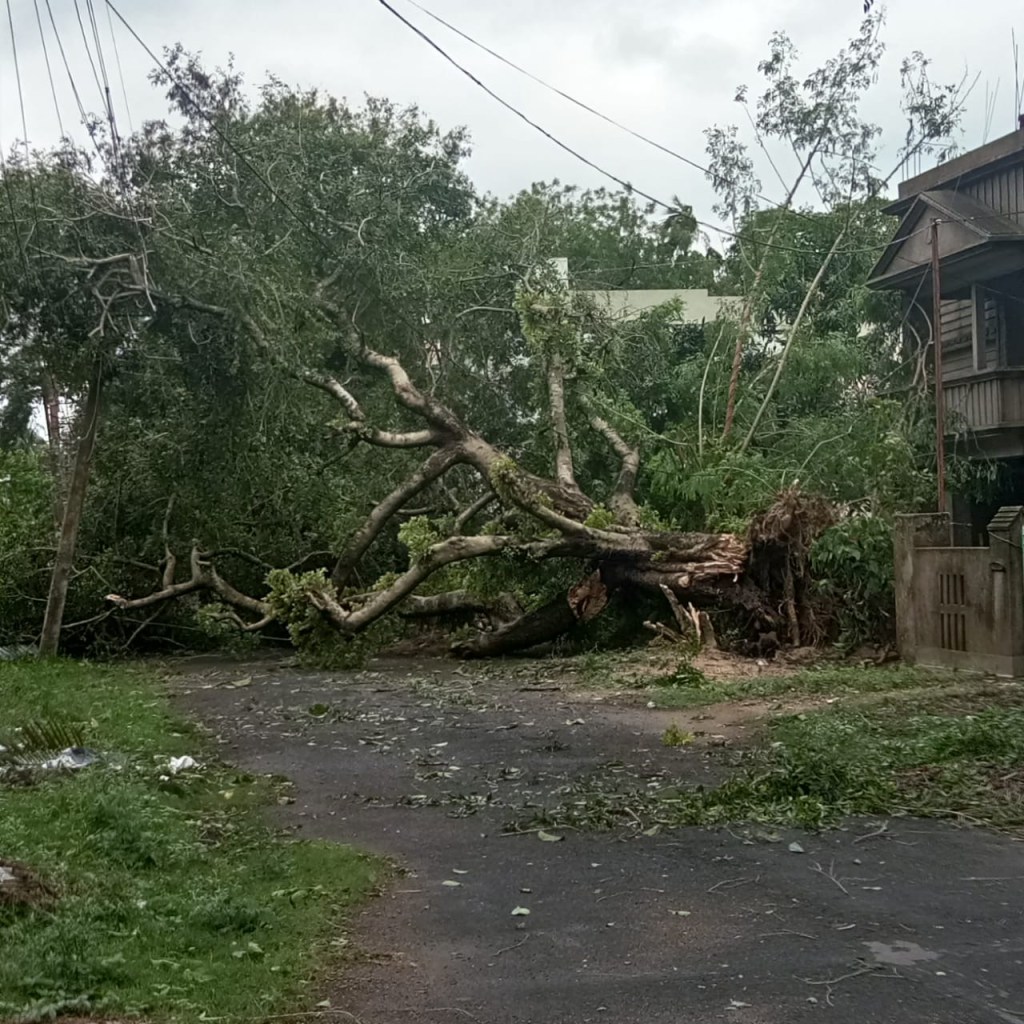
The giant tree was pulled away from the bosom of the Earth after an intense struggle that lasted for several hours in the dark. It was razed to the ground much like the vandalized bust of a dictator overthrown in a coup.
The birds in all their wisdom had chosen to build their nests in the sturdy tree that came with the implicit assurance of a safe haven. The tree that listed several encounters of surviving severe cyclones in its resume had caved in this time after four decades of brawny existence.
Birds asleep quite like passengers in long-distance trains that collide in the middle of the night – a big jolt wakes them up to discover their world turned upside down. Something similar must have rattled the birds when they found themselves closer to the ground through the thick foliage of leaves that cushioned their unceremonious fall.
Imagine those moments of confusion and hopelessness when they extricated themselves from the wreckage to fly off to nearby safety. The swaying electric wires clutched their nervous feet as they tried to make sense of the world during the incessant downpour, vigorously shaking their rattled heads to puff up resilience in their wings, waiting patiently and calling out other members of the family to unite.
In the wee hours of the morning, I woke up to hear fresh new voices in the garden. As I opened the window of my study, the reality outside and my imagination matched like the blood group of two strangers. The guava tree was the makeshift home where the homeless birds had now gathered and perhaps united with their loved ones. Their chirping was probably their excited conversation to chalk out the future plan of rehabilitation. More birds flew in and sat beside their families, sharing updates of empty spaces available in the mango and jackfruit trees where they could build new nests. Agile and faster than human beings in rebuilding homes, some were already flying around carrying pieces of straw and wires in their beaks as the new foundation for cosy, durable nests to cuddle in.
Quite a few of their flock sat still and gazed at the uprooted tree, perhaps fondly recollecting the good times they enjoyed up there. Like us, they were probably fond of living in grandeur. Maybe they were also proud of having an opulent residence in a giant tree that looked like a mansion. With no other tree of such magnificence around, they would now have to settle down with some modest options.
I joined the birds in observing the uprooted tree. The vacant space was brimming with strange, unfamiliar brightness. What stood hidden behind the tree all these years was now clearly visible. The balcony of the neighbour was in full view. The death of the tree had brought us visually closer. I was not too happy with the new reality and I do not think he would be happy either to reveal the colours of his innerwear left to dry on the balcony railing every day.
I was habituated to look in that direction because of the giant tree. I looked at it whenever I was thinking of ideas. The circle of leafy delight energised my mornings. The sight of the tree stirred and stimulated creativity. Now the neighbour would think I was gazing at him or waiting for the beautiful women of his household to stage an appearance there. He would go further to call it an invasion of privacy – the arousal of voyeuristic tendencies.
I suspect my repeated gaze would make him erect a glass window to cover up the balcony area, to stay safe from my ogling. I would still be looking at the giant tree because it is planted in my mind forever. I would still look at it through my inner eye and seek inspiration. Difficult to make people understand that creative folks often fix their gaze at something but they think of something completely different.
The relief team arrived with a truck – hearse to ferry the mortal remains of the tree. They were more brutal than the cyclone as the dead tree was axed further, chopped into small logs to be sold as timber. Only the tree trunk was left behind and people gathered to click its photos for their social media feeds. Some strangers passing by stood silent to mourn its demise more sincerely than the residents around. The uprooted tree created no signs of emotional distress in the people who lived in its vicinity. Perhaps it is true that the death of a family member does not necessarily cause much agony to the survivors in the family – people who have no blood relationship are also likely to shed more tears.
A fleeting thought of grafting its small branch in my garden – with a concrete slab to perpetuate its memory – did cross my mind. And the epitaph recording the cause of its death: Amphan. Does a tree deserve to be immortalised? Does a tree become evergreen in history? Or it remains just like us ordinary mortals who come and go? Enlightenment makes all the difference. We are all uprooted from time to time, in so many different ways. The uprooted tree left behind a lot for me to dig up within.
.
Devraj Singh Kalsi works as a senior copywriter in Kolkata. His short fiction and essays have been published in Kitaab, The Bombay Review, Deccan Herald, The Assam Tribune, The Sunday Statesman, Earthen Lamp Journal, and Readomania. Pal Motors is his first novel.
.
PLEASE NOTE: ARTICLES CAN ONLY BE REPRODUCED IN OTHER SITES WITH DUE ACKNOWLEDGEMENT TO BORDERLESS JOURNAL.
I had never felt the need to move out of the city. Let me correct myself here. I had never felt the urge to move out of the city. All my friends were determined to leave the city after completing their studies. They had convinced themselves that there were no opportunities here. A better future, a dream career was only possible elsewhere. I did not buy this sentiment. I was not swept by the tide of majoritarian thinking. I was a loner marooned on the tiny island of my hardcore beliefs that withstood the winds of change.
I had always felt that a writer does not necessarily need to move out except for commercial compulsions. If he moves out, it does take him away from his roots and the intimate world he belongs to. He writes wistfully of the lost world and tries to draw a connection.
If I wish to write well, I have to read well. This can happen in the small town as well. Why should I leave the city I had grown up in? This was the kind of idealism that restrained me. I was convinced to hear this reassuring voice urging me to lock myself down where I was and just read and write. I listened to it and stayed back. For almost two decades.
While they moved at a frenzied pace made more furious by their ambition within, I was the one who remained out of this race, to enjoy the simple pleasures of life, finding bliss in buying vegetables from farmers, plucking guavas and mangoes, having long walks to breathe in the fresh air, and listening to birds and their different voices. Something must be terribly lacking in such a person who opts for things nobody cares about. Must be a nervous chap afraid of failing who refuses to participate.
Relatives and family members came down heavily, suspecting the lack of the seeds of ambition. Inspirational stories of success abroad were narrated. When these did not push me hard to go out and compete, they realised the futility of it and dismissed my cowardice and lethargy as a tell-tale sign of impending doom. A person who lives to commit professional blunder. Such abuse came my way. I brushed it all aside. Nothing went deep inside to stir me, to jolt me, to make me feel insulted, to feel challenged, to come out and fight the usual survival wars of middle-class existence.
Most of the friends became journalists and editors and rose to the eminence of the kind they had visualised. I was still reading and writing and undergoing the angst of creative puberty, waiting for the first novel to burst out of me. When they heard of my long, endless struggle, they advised me to become flexible and practical, move to a cosmopolitan city and build contacts.
I knew from my college days I had chosen a path less travelled. Okay, I was late in meeting them at the thoroughfare of success. But does it mean I have to change my chosen path now? Their words did not persuade me. I still believed in what I had chosen long ago. I was ready to face the consequences. My experiences of failure kept me grounded. I never thought I was desperate to meet success, never pleading for the gates of success to let me in.
The hectic pace of life never made me change my languid pace. I followed my speed, never rushing into anything. I had the time to stand and absorb the beauty of flowers blooming all around, I had the time to sit by the riverside and watch its languid flow. I had the time to sit under the shady tree and distance myself from the world around me. I had the time to observe hordes of people in the market.
While I did work in advertising as a copywriter for my bread and butter, I stayed away from the stressful world and chose to work from home. It gave me a flexible routine, offered extra time to think and write for myself. I felt I was going to lose this fine balance if I went elsewhere. The ideal state of composure would be lost forever.
A compromise would scuttle my romance with nature. I was convinced even if I had to write for any other medium, I would still do it from my hometown. If the creative output was impressive, the terms and conditions would be made flexible. I was not going to relocate for career gains.
The world is full of stories of people leaving homes for jobs. In the creative world, such stories of migration and struggle are also common. I was perhaps the uncommon kind who was convinced of the lack of the need to go anywhere else. Perhaps, it was true that the urge to make pots of money was not there. Or maybe I always believed big money was going to come if I wrote big stuff. Location was immaterial. Nobody really cares to know where the writer wrote the story so long as his work was good. When I read about respected authors who were grocers, postal clerks, and ration-shop owners, the entire perspective changed.
If I make it, I will be proved right. Perhaps I am wrong to think so. Sometimes, I wonder why I have this stubborn streak.
Is it because I love the city? Or I am afraid of finding myself fighting the same predictable battles as others do? Is it that I hate to come out of my comfort zone? Hurl any such reasoning. I am unruffled.
This makes me think hard again. Is it the love of people and places? Why don’t I try once to leave and see how it pans out? As I tell myself to change, something tells me not to get distracted. Stay on the path I have been following. Do not think like others, say no to herd mentality. But when others question my present life, they do not think I chose it. They think I could not secure a better one. It is a defeat when I have nothing to tell them, to show them, to silence them.
The world I live in is relatively small, but it is nurturing my system well. While the city-based people have also suffered a lot, their success hides everything else. My failures strip me of the barest cover to defend myself.
Take the counterpoint now. If life is so good here, why is your creativity not blooming and booming in the small town? Those city-based ones are writing best-sellers and you make tall claims of being a good writer. When it does not show in terms of success, isn’t it a wasted life?
More important to find out is whether the writer in me feels exhausted or wasted. I have a word with the writer within every morning. He says he is still connected and happy to be here, not regretting the choice I made long ago.
Agreed, creativity did not blossom here for me, but what is the guarantee it would have flourished elsewhere? They argue the chaos of survival, the urge to prove would have brought out my creativity. This slow life did not let it happen. They mean creativity comes out under stress. Well, it is an opinion and a possibility. But for me, I never like to write a single sentence under pressure.
At this stage in life, with nothing worth to showcase as a fancy badge of success, I have no regret for not moving out, of being content with whatever creativity I could muster to tell a few stories. Did I wait too long for creativity to bloom instead of trying to force it? So long as I can create something decent even if it is not conventionally successful, I am happy for myself. Nothing else matters – not even the harshest criticism of my choices.
The creativity I see around is non-competitive and complete in itself. Only humans want their creativity to become competitive, get acknowledged and recognised. I am happy to blossom the way my world wants me to bloom. Even if I do not, absolutely no regrets. Many creative folks have already gone down this path. I am not the first one to disappear without leaving behind a substantial body of work.
But the belief that brilliant stuff does not always have to come out of a metro-centric environment remains firm. All creative folks are not bound to create great art during their lifetime. Much of their existence is dedicated to the admiration of creative beauty in various forms. Forget the charm and trappings of success. Write in the way you love to write. This harmony is more important for the seeker within.
Devraj Singh Kalsi works as a senior copywriter in Kolkata. His short fiction and essays have been published in Kitaab, The Bombay Review, Deccan Herald, The Assam Tribune, The Sunday Statesman, Earthen Lamp Journal, and Readomania. Pal Motors is his first novel.



 Borderless